Cusco Airport Tips
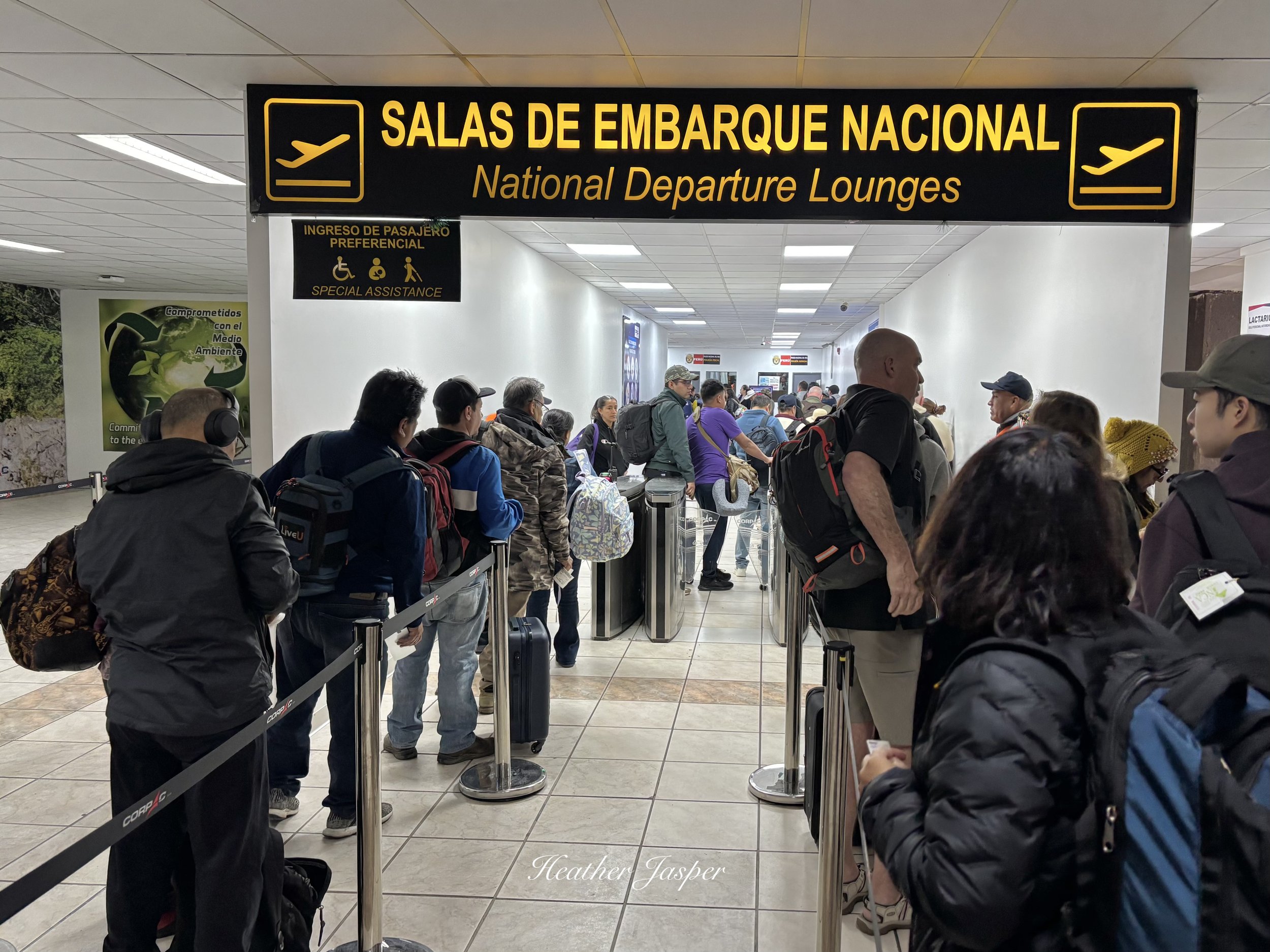
Even when the lines look long to go through security, they move quickly. Cusco’s Alejandro Velasco Astete Airport is easy.
Though I’ve lived in Cusco, Peru since 2019, I put off writing a blog about the airport because I didn’t think I had much to say. It’s small and easy. Then I started writing and found that I have a lot of advice for Cusco’s Alejandro Velasco Astete Airport. Though most people spell the city’s name Cusco, the airport code is CUZ.
This blog covers my recommendations for 1. flying to Cusco, 2. arrivals in Cusco, 3. departures from Cusco and 4. how to take the bus from the Cusco airport.
I put my name on photos so you know these really are my photos of the Cusco airport.
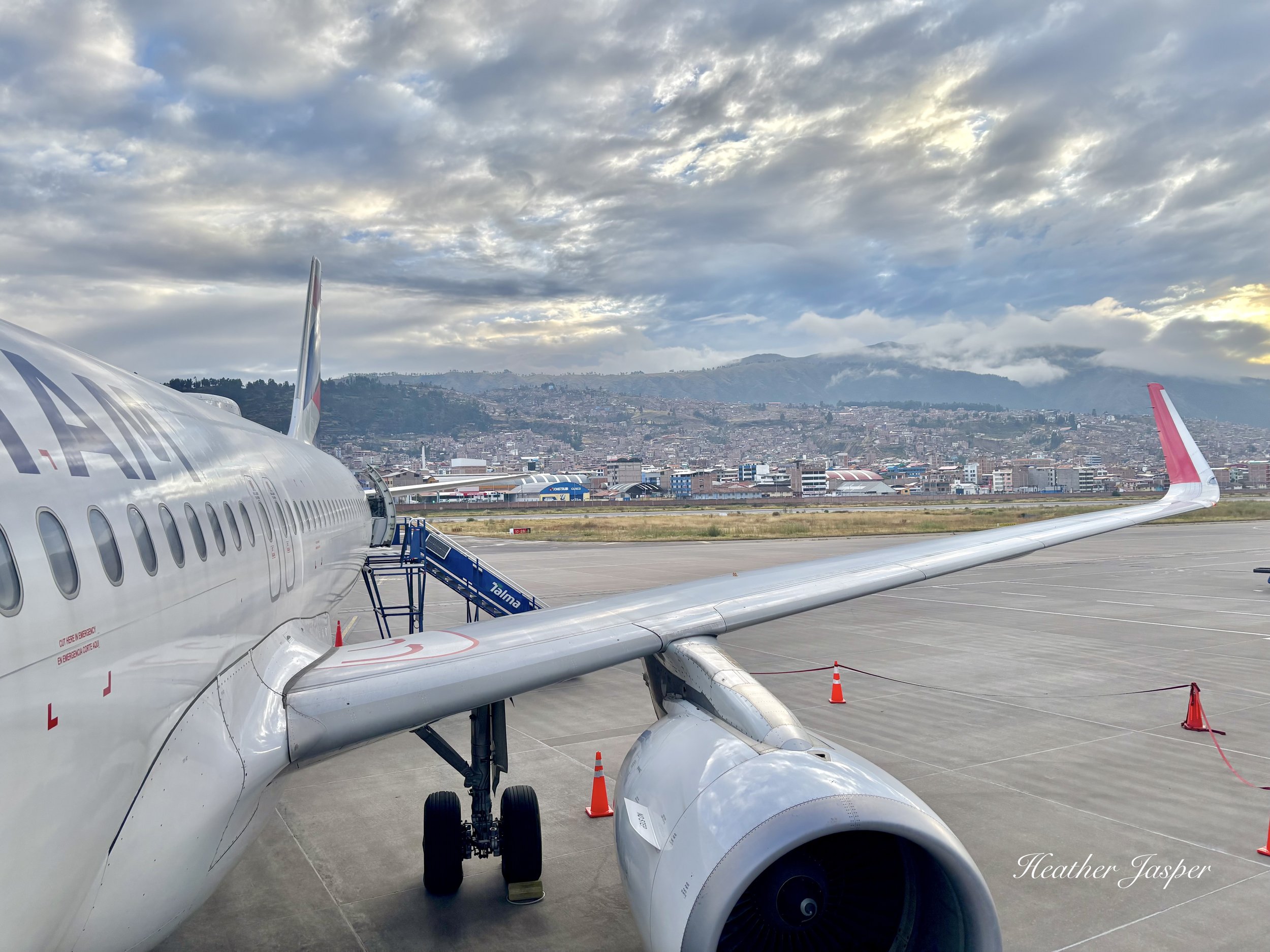
Arriving at Cusco’s Alejandro Velasco Astete Airport, you’ll see it’s right in town.
1. Flying to Cusco
Most people arrive in Cusco on a flight from Lima, but there are a few national flights to Arequipa and Puerto Maldonado, so if you visit one of those places first you can fly directly to Cusco.
There are also direct flights from Bogotá, Colombia and Santiago, Chile. If you’re flying from Europe or the east side of North America, check for flights through Bogotá, rather than Lima. Depending on layover times in Bogotá, it may be both easier and cheaper. If you’re visiting Argentina or Chile before Peru, or if you’re coming from Australia or New Zealand, check flights from Santiago directly to Cusco.
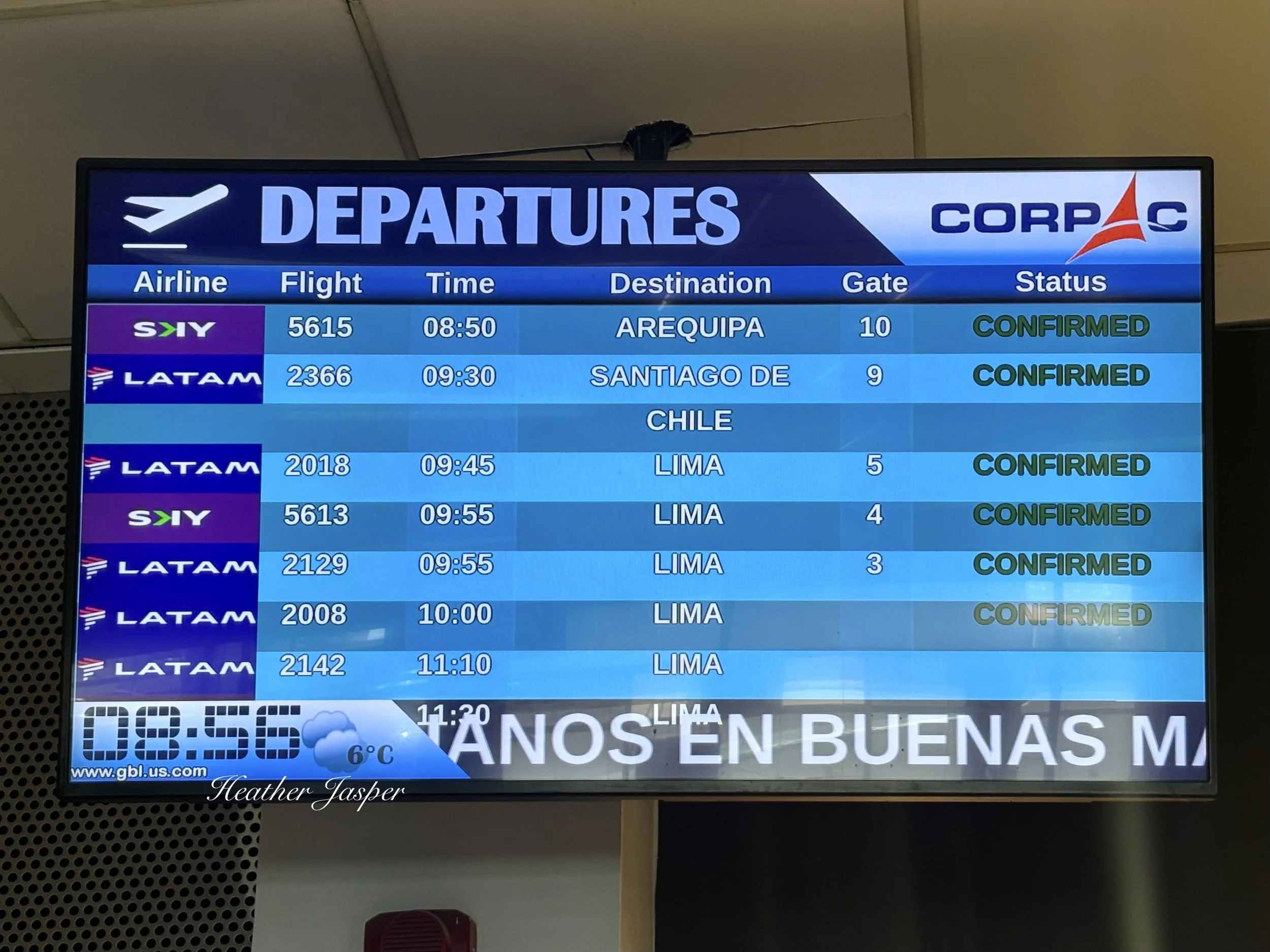
Most flights are to Lima but there are a few flights to Arequipa, Bogotá and Santiago de Chile.
Latam has the most flights to Cusco but there are also a few budget airlines in Peru. If you’re shopping for the lowest prices, check JetSmart, Sky Airlines and Star Peru. Flights from Santiago are usually Latam or its partner Delta and flights from Bogotá are usually Avianca or its partner United.
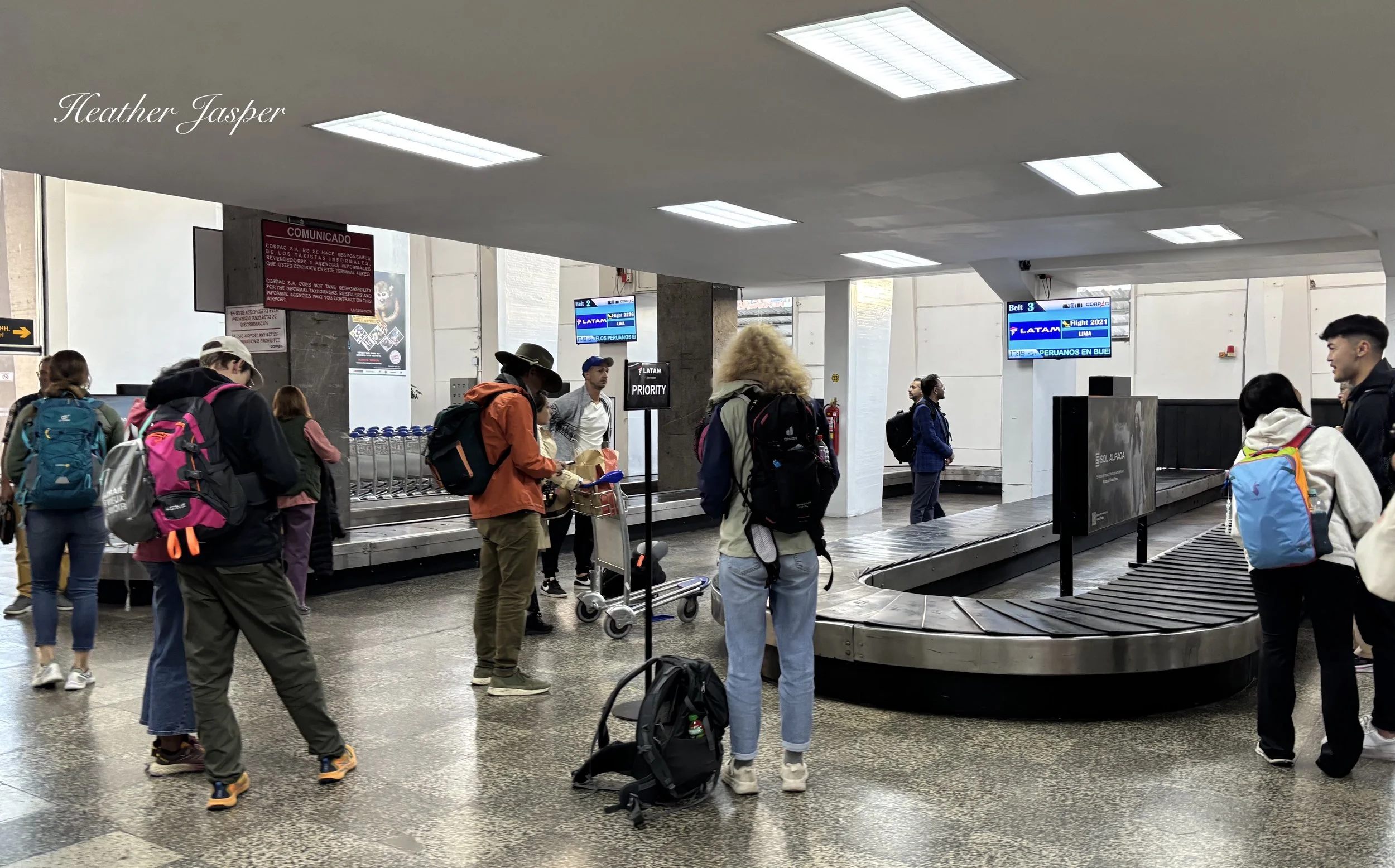
These are the only two belts in Cusco’s baggage claim, oddly called Belt 2 and Belt 3.
2. Arrivals at the Cusco airport
Arriving in Cusco is usually very easy because there’s never more than one flight arriving at a time and the ground crew is pretty quick. I’ve never waited more than 10 minutes at baggage claim before my bags showed up on the carousel.
When you go outside, if you’re expecting somebody to pick you up, they’ll be leaning on the parking lot fence or standing to the left with a sign with your name on it. If you’re taking a taxi or bus to the historic center, go right and walk out to the street. There is always a group of taxi drivers waiting on the sidewalk just outside the airport. You can also get a taxi in the parking lot, but they cost a bit more because they have to pay for parking. Still, if you have a lot of luggage it’s worth the extra few dollars to not walk out to the street.
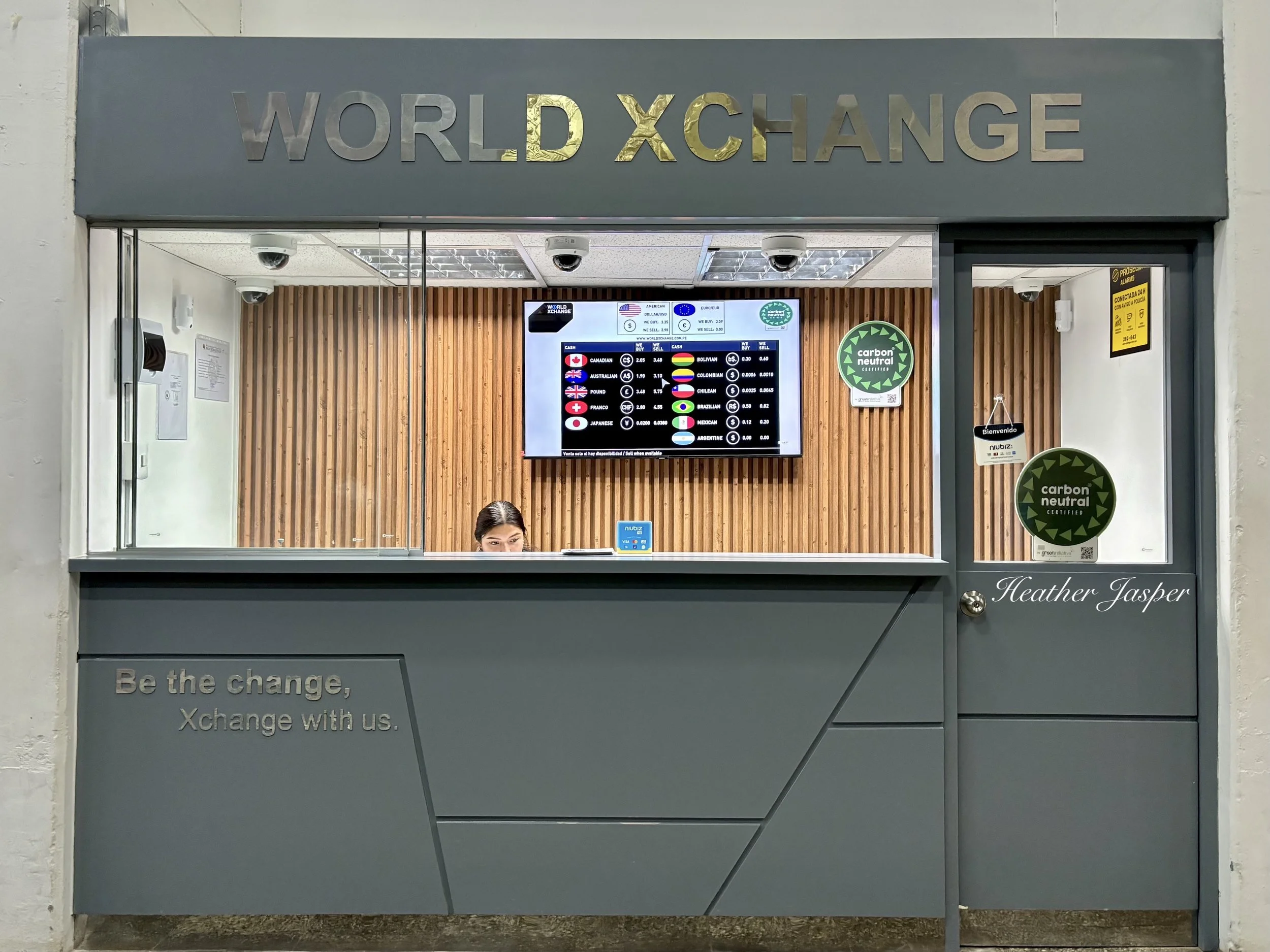
Each currency has the rate they buy in exchange for soles, or sell if you want to get rid of soles you won’t use. This is right at the bottom of the escalator where you go upstairs for national departures.
You need cash to pay for taxis and busses. I recommend getting some from the Lima airport at an ATM because the exchange desk at the Cusco airport has terrible rates. However, if you need to exchange cash at the airport, you have to go outside from the room with baggage claim and then back in by departures. It’s only open normal business hours, so if you arrive at night make sure you already have cash.
The bus stop is a 2-minute walk to the right of the airport, so just keep walking past the taxi drivers until you see what’s obviously a bus stop. My advice for taking the bus is at the bottom of this blog – scroll down.
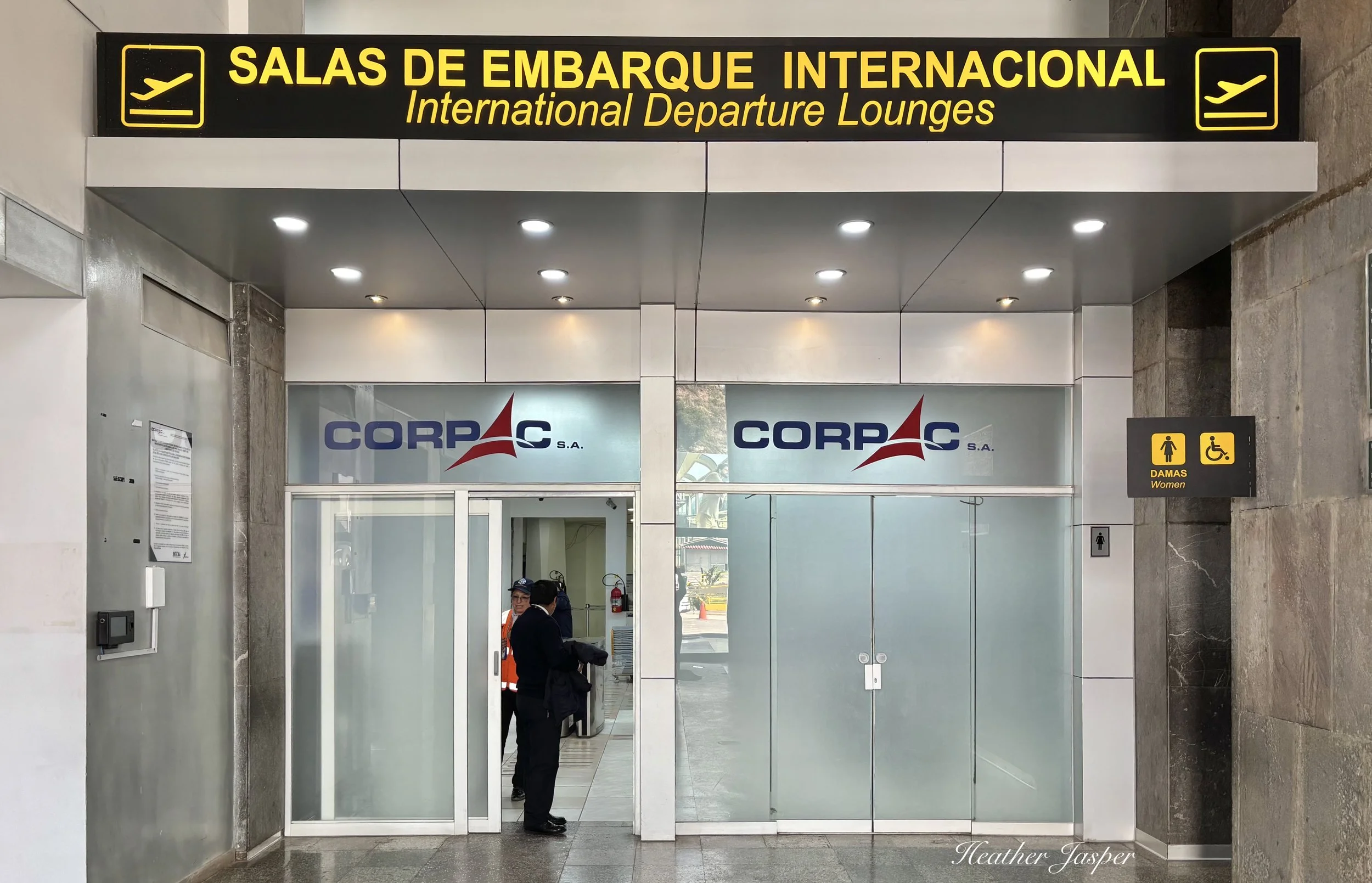
International departures are downstairs and national departures are upstairs. There are international flights to Chile and Colombia.
3. Departures from the Cusco airport.
Cusco is so small that getting a taxi or bus to the airport is fast and doesn’t cost much more than the average taxi around town. Depending on where you are, costs range from s/10-s/20 soles, about $3-6 USD. Hotels that have a shuttle may charge more because they’ll have an English speaking driver and a nicer vehicle than the average taxi.
If I am not checking any luggage, I usually arrive 20-30 minutes before boarding. On the rare occasion that I do have to check something, I arrive about an hour before boarding. Airlines will tell you to arrive 2-3 hours before boarding but I only think that’s necessary for international flights. If you’re just going to Lima, you don’t need to arrive that early.
It’s very rare, but if you’re the last person to check bags and everybody else has already checked a lot, they may say the plane is at weight capacity and that your bags will be sent on the next flight. I think this is because planes have a harder time taking off at 11,000 feet above sea level than at lower elevations, so there the weight limit is stricter. If you have an international connection and absolutely can’t have your bags on another flight, don’t be the last person to check in.
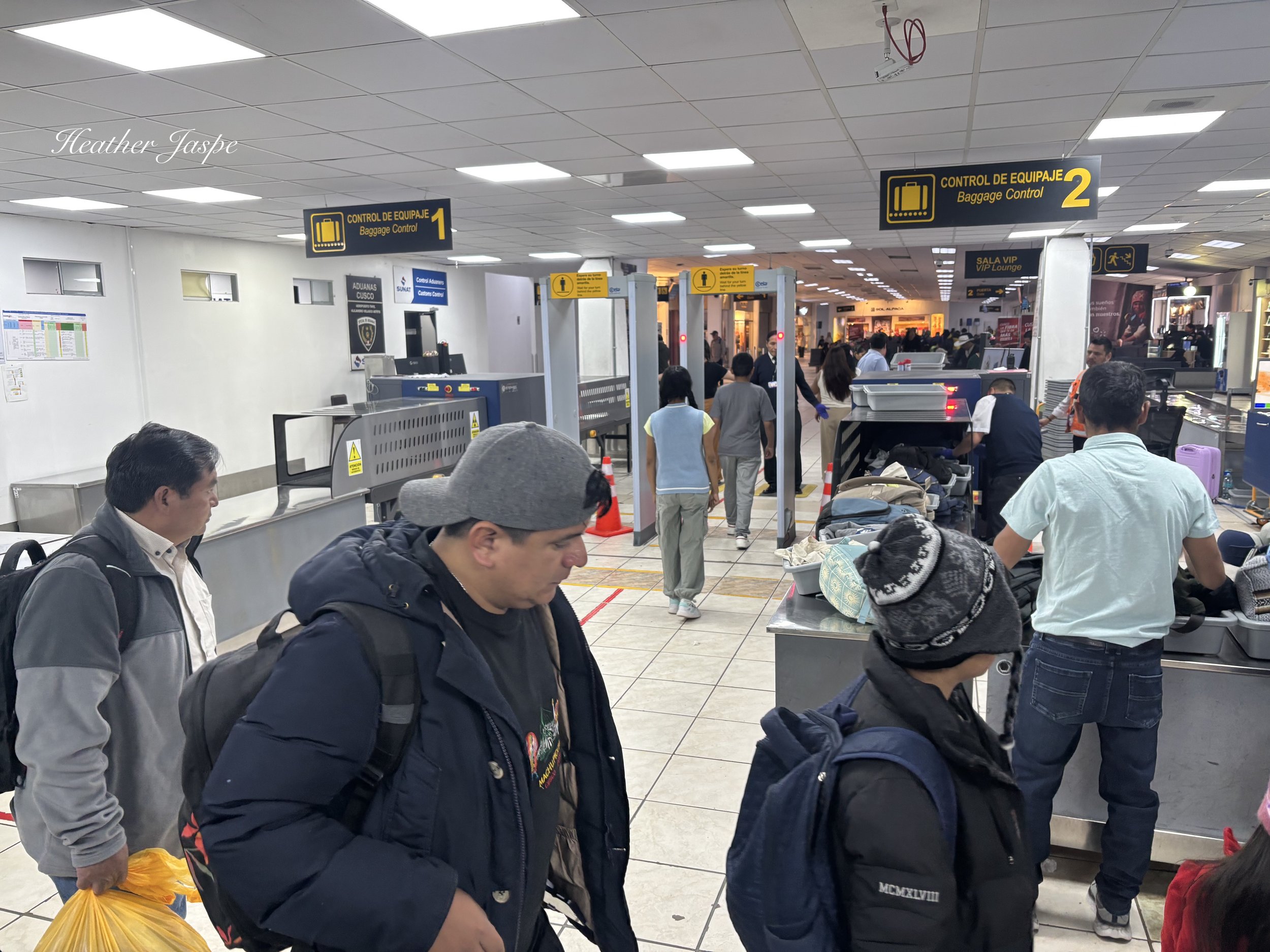
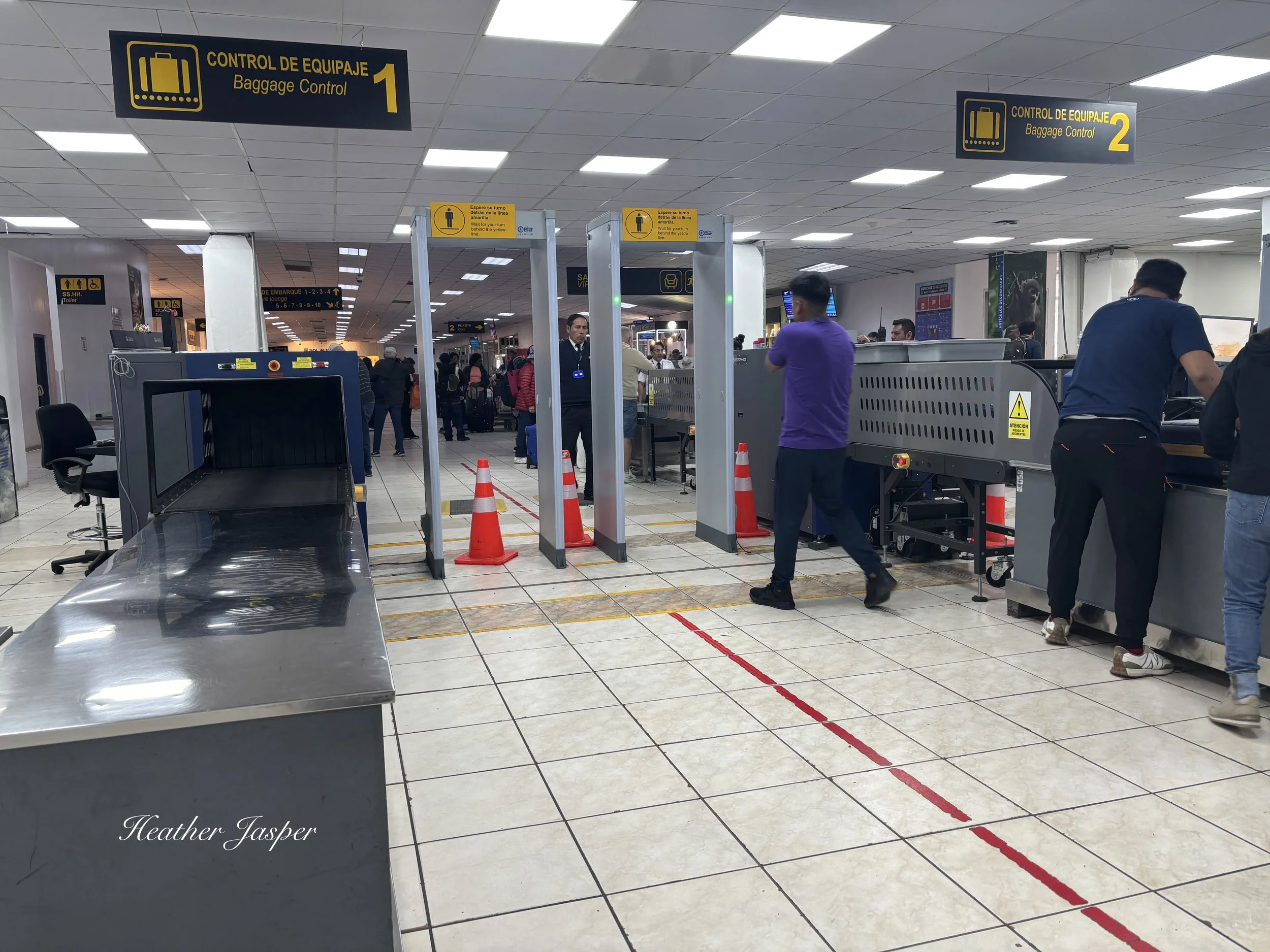
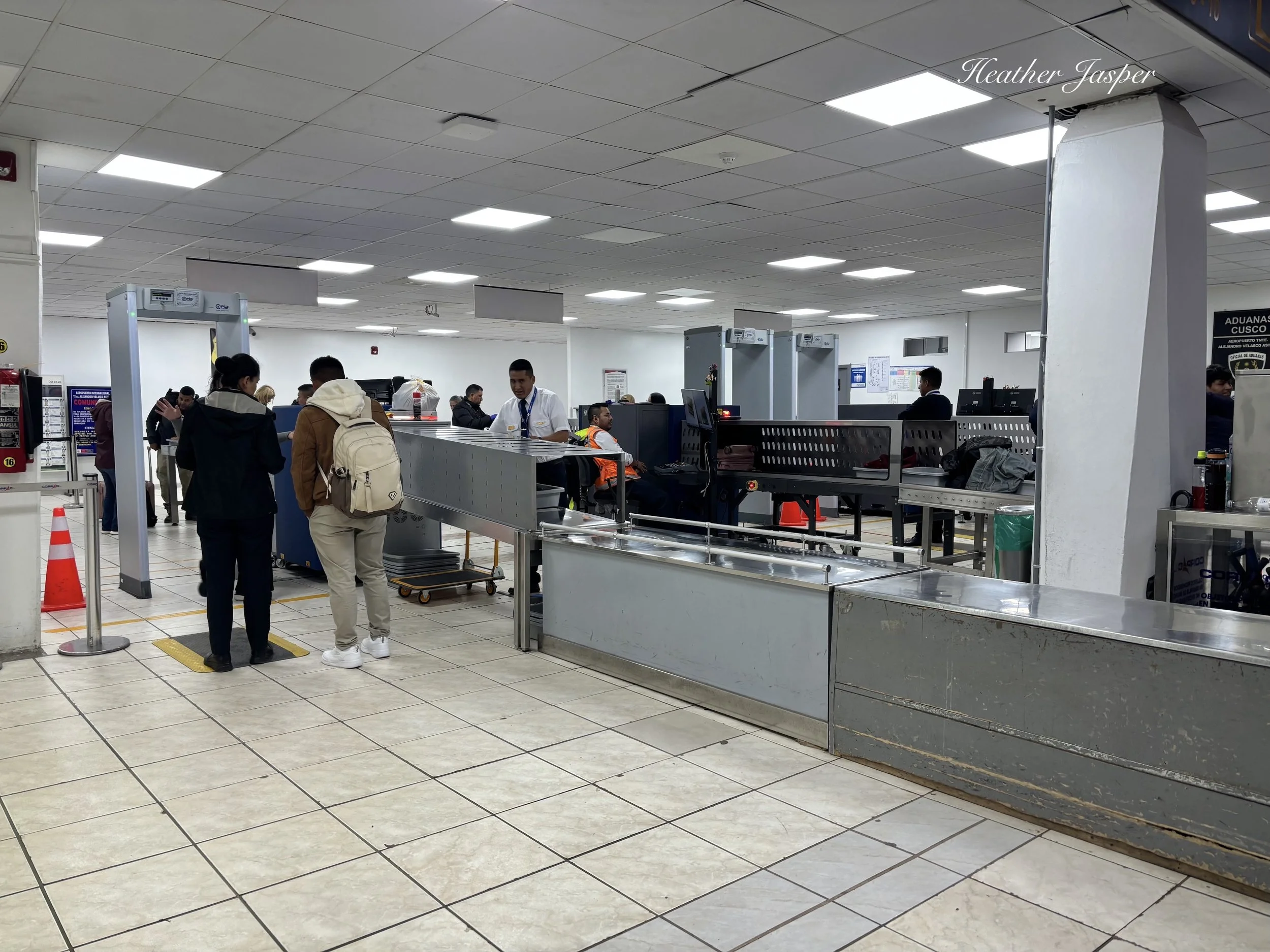
There are three scanners for security but often only one is staffed, because lines usually go quickly. Even if the line is long, don’t expect to be waiting more than 10-15 minutes. In more than 7 years flying in and out of Cusco, I’ve never waited more than 10 minutes to go through security.
Do not chug your water bottle or take off your shoes!
You can take water with you through security in Cusco and all other airports in Peru. Read my Lima airport blog for advice on international flights from Lima. You’ll need to take off belts and take your computer out of your bag, but full bottles of water can be left in your bag. All other restrictions like knives and fireworks apply.
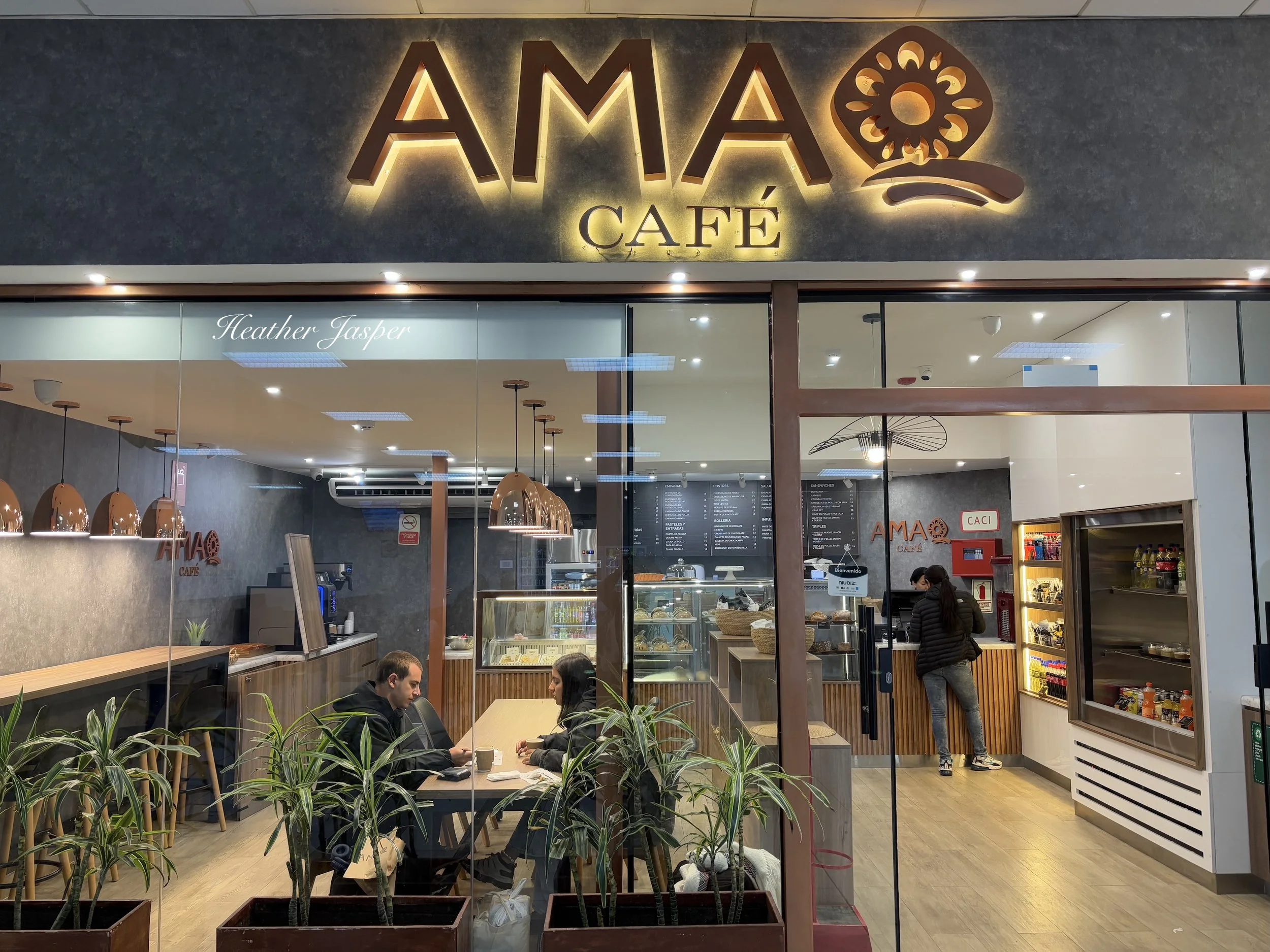
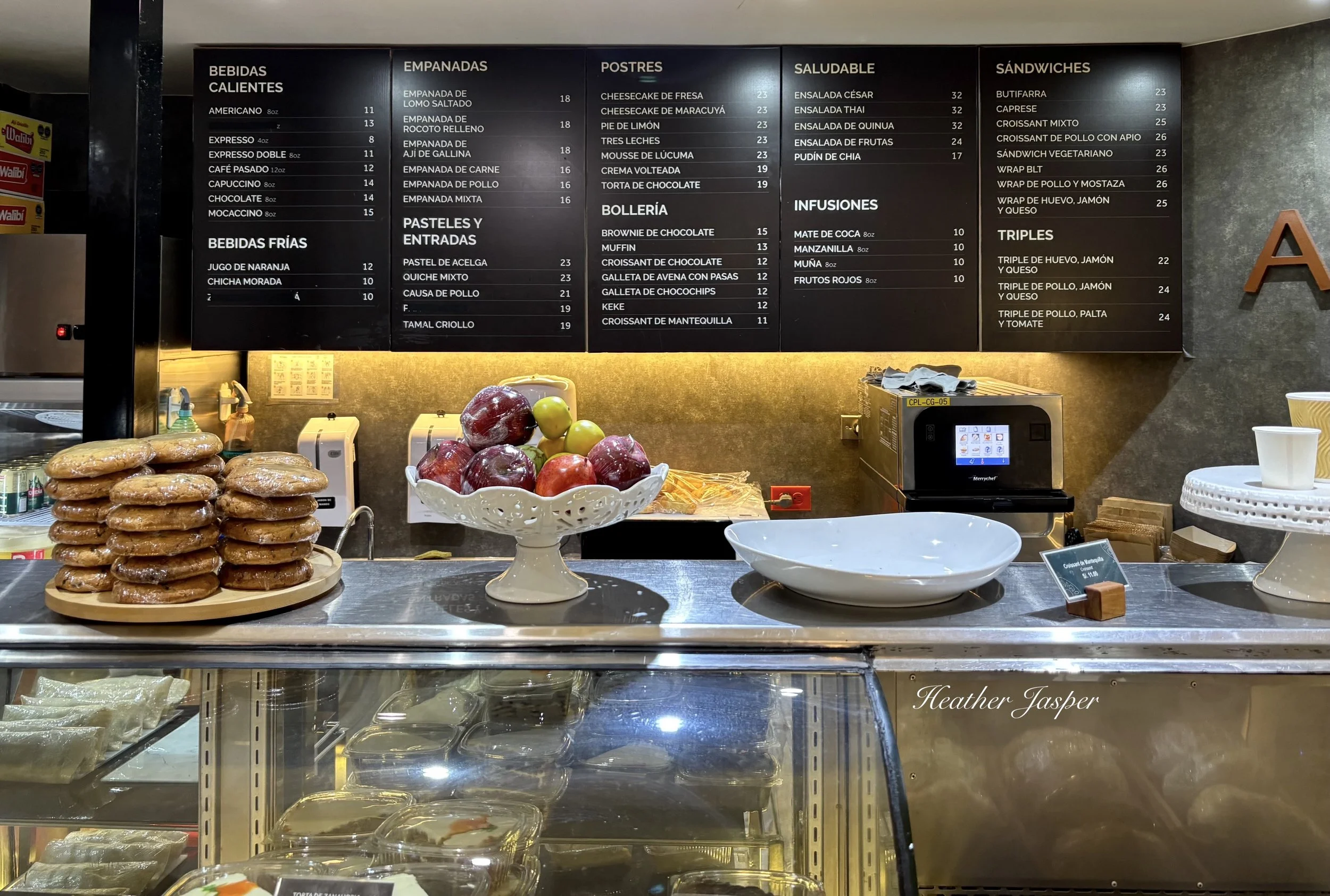
Once you get past security, there’s not much in the airport. There’s one café, three expensive alpaca shops and one shop that sells regular souvenirs and the usual candy and chips sorts of snacks. New in 2026 there is also a little kiosk that sells coffee, but it’s not the best.
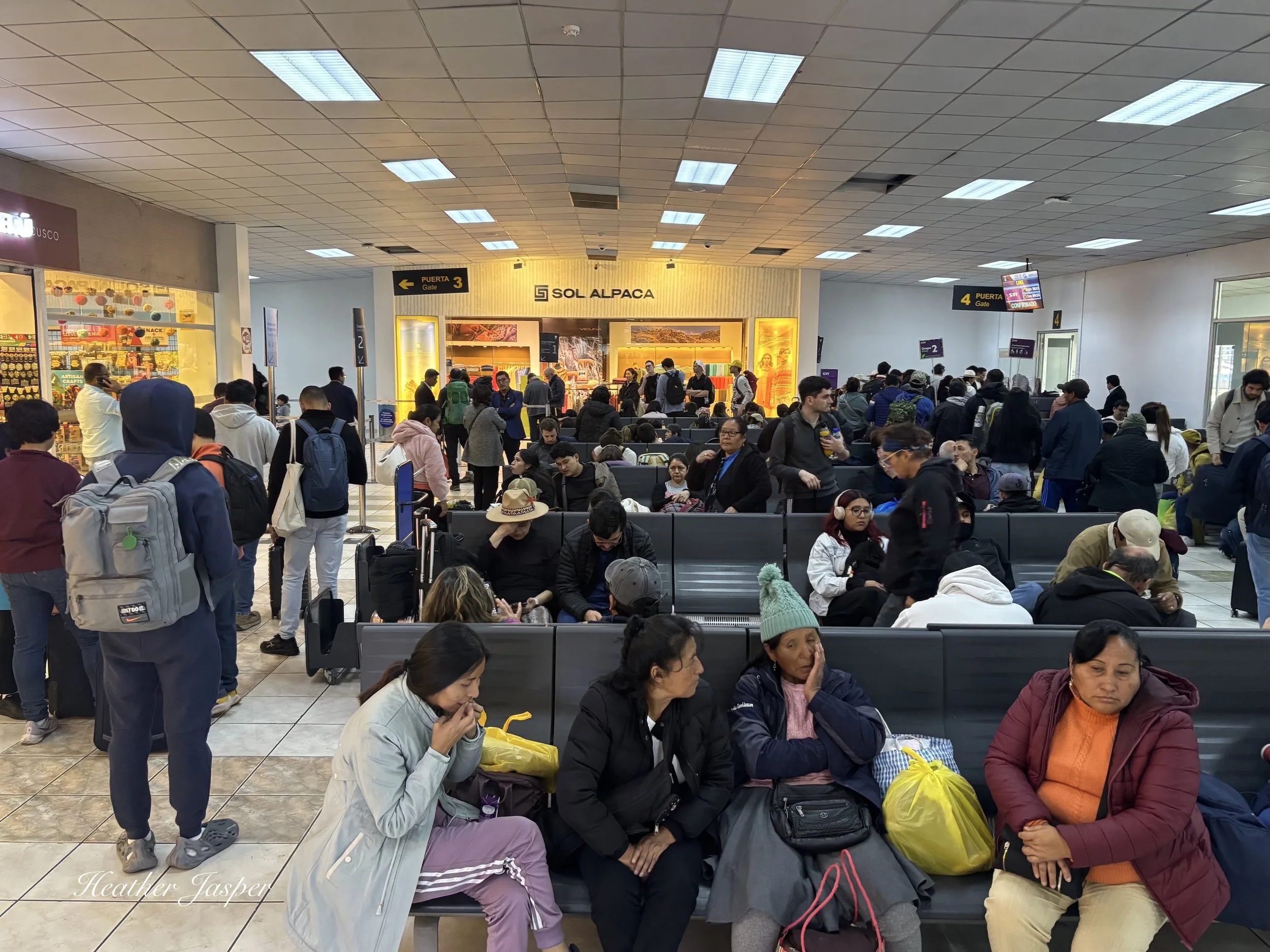
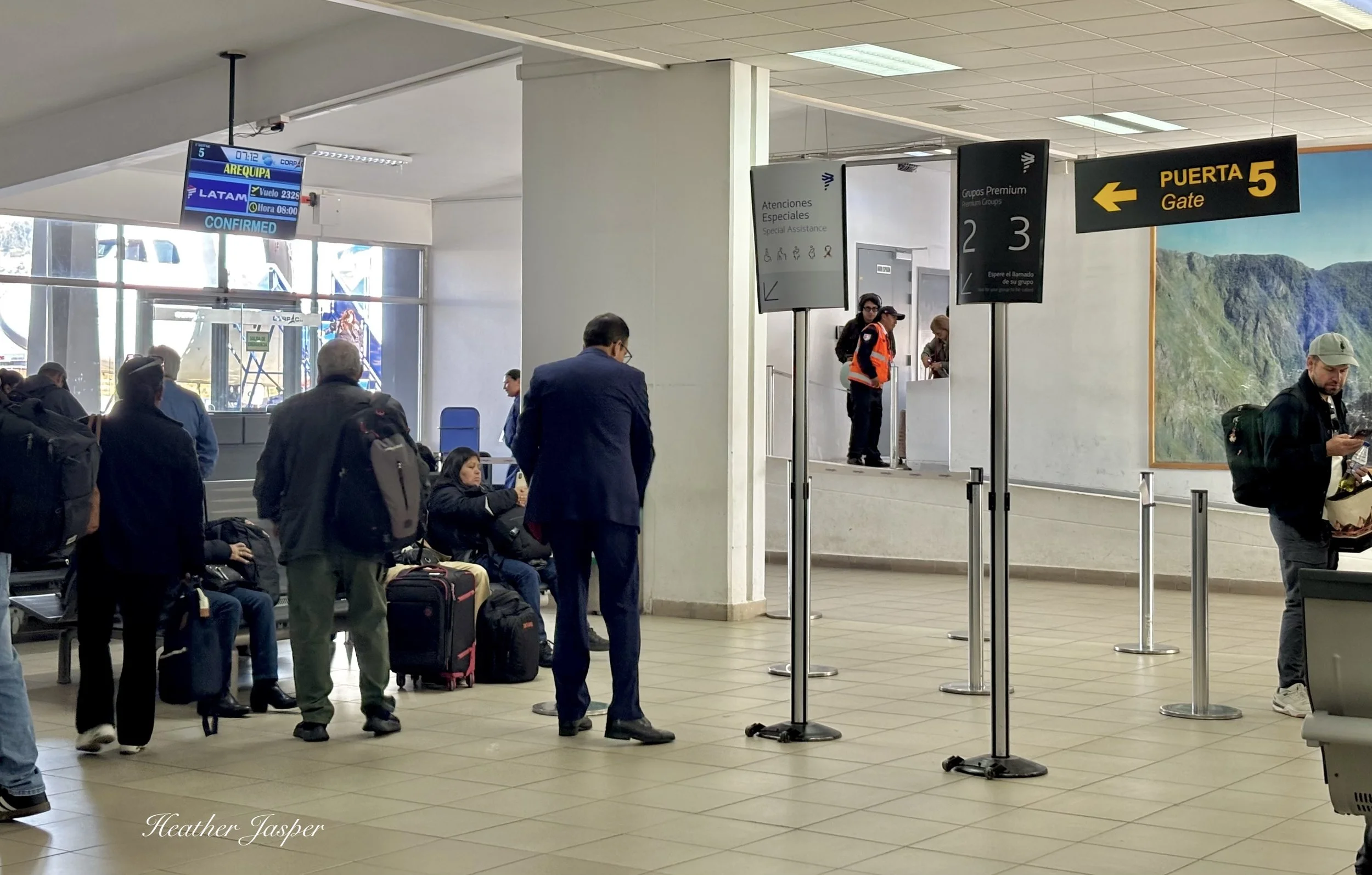
There are four gates upstairs, but they usually only use gates 3 and 4. Downstairs are gates 5-10 but I’ve only ever seen flights leave from gates 5 and 10. Stairs and ramp to downstairs are immediately to your right as you go through security.
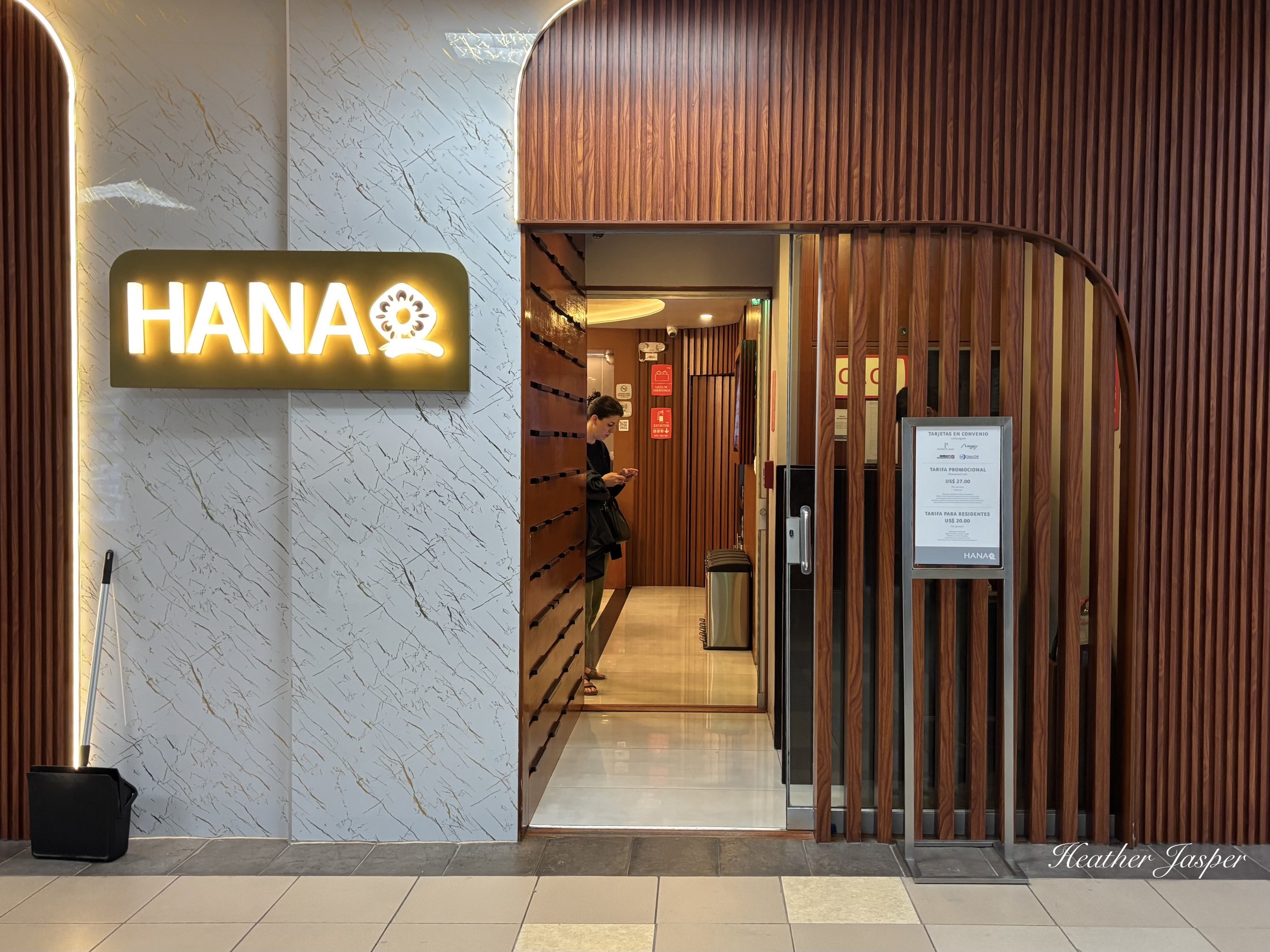
The lounge in the Cusco airport is very small but nice enough.
There is one lounge in the Cusco airport and it’s downstairs. If you’re flying first class, check that it’s included. Otherwise, you can get access with Priority Pass, Lounge Key or Diner’s Club cards, or pay $27. I’ve never gone in because I’m never at the Cusco airport long enough to need a comfortable place to wait. If my flight was delayed two hours or more, I’d probably pay the $27.
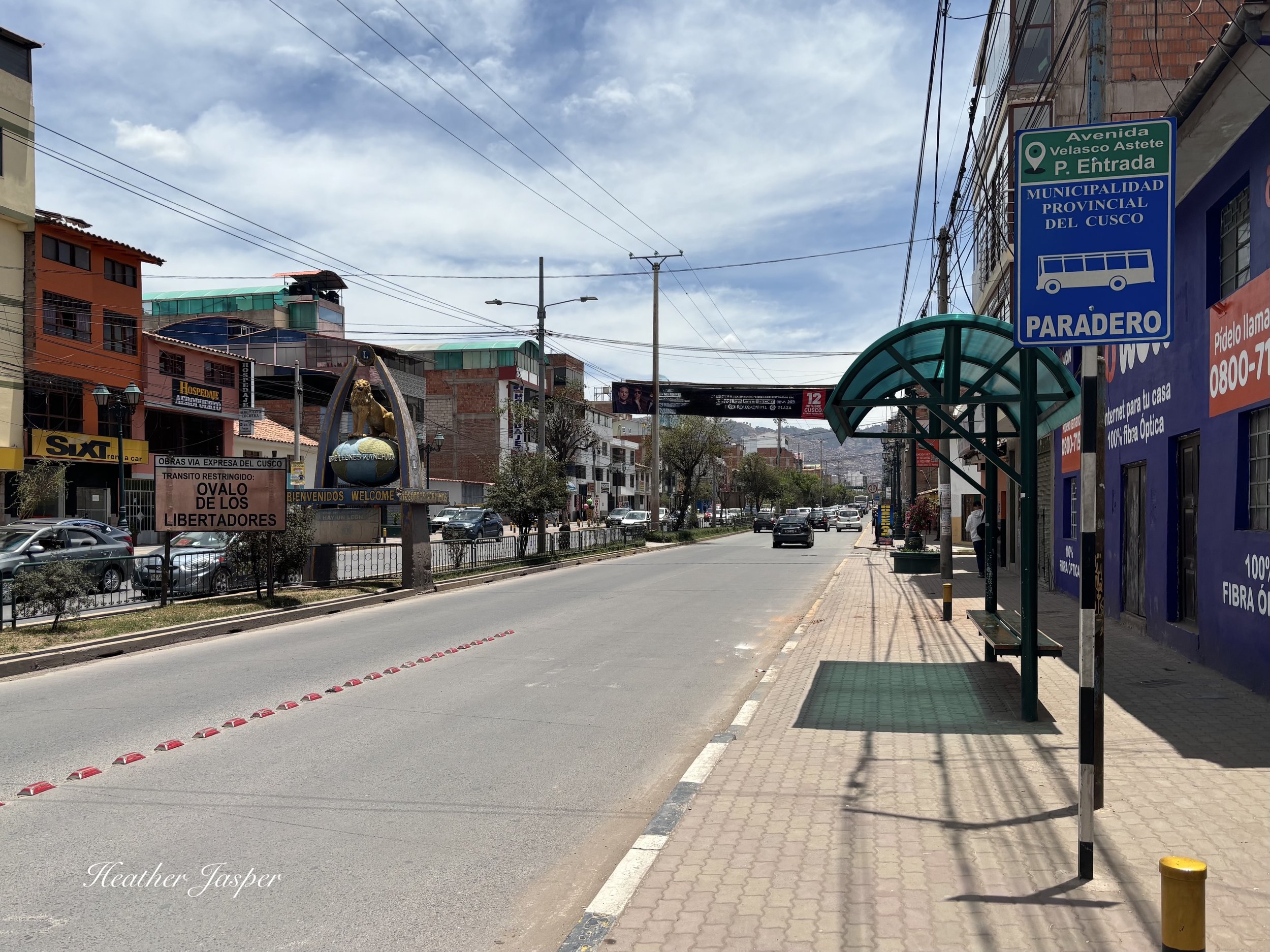
This is the closest bus stop to the airport, about a 2-minute walk. I recommend taking the Imperial or El Dorado busses.
4. Taking the bus in Cusco
If you want to take a bus to town, walk out to the street and past the taxi drivers. Usually they’ll leave you alone if you say no and just keep walking, but sometimes one of them is desperate for a fare and will follow you asking you where you’re going. Just ignore them.
There are two busses that are the best for going from the Cusco airport to the historic center. The Imperial bus is white with blue stripes and on the windshield it says Imperial in big green letters. The El Dorado bus has yellow and purple stripes and also has the name on the windshield.
Imperial goes to Ruinas street, in front of the Marriott. This is the last stop, so you don’t have to worry about missing your stop. Just get off when it stops and everybody who’s left on the bus gets off. Imperial goes the closest to San Blas of any bus in Cusco.
El Dorado goes up Avenida El Sol, on the other side of the Plaza de Armas from the Marriott. When you get on tell the cobrador that you’re going to the Plaza de Armas and they’ll make sure you get off at the right place.
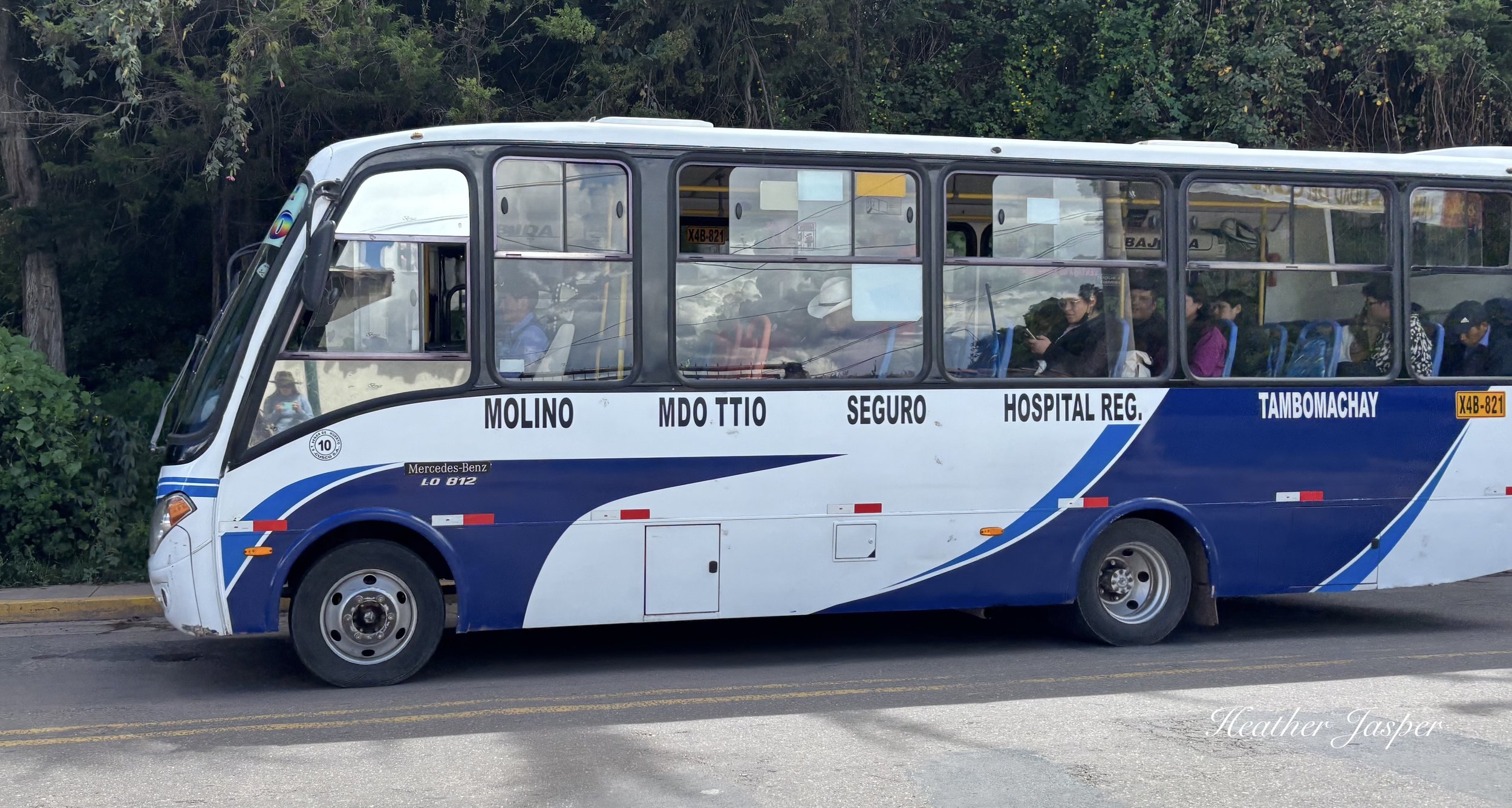
Buses in Cusco have the name on the windshield and some of the places it goes painted along the side. This is El Huerto, which goes to Sacsayhuamán, Tambomachay and Cusco’s other major archeological sites.
The cobrador is the person who takes bus fare and they’ll ask you to pay just before you get off. If you pay when you get on they’ll expect you to get off at the next stop. If you’re taking Imperial they usually ask for everybody’s fare several stops before the last stop, because everybody is getting off. The cobrador can also help you get a suitcase on or off the bus.
Bus fare is normally one sol, but when gas prices went up in 2026 the price increased to s/1.20. In theory, fares will go back down to s/1 when gas prices go back down, but we’ll see. I’ll update this blog if the fare goes back down to s/1.