Santa Teresa
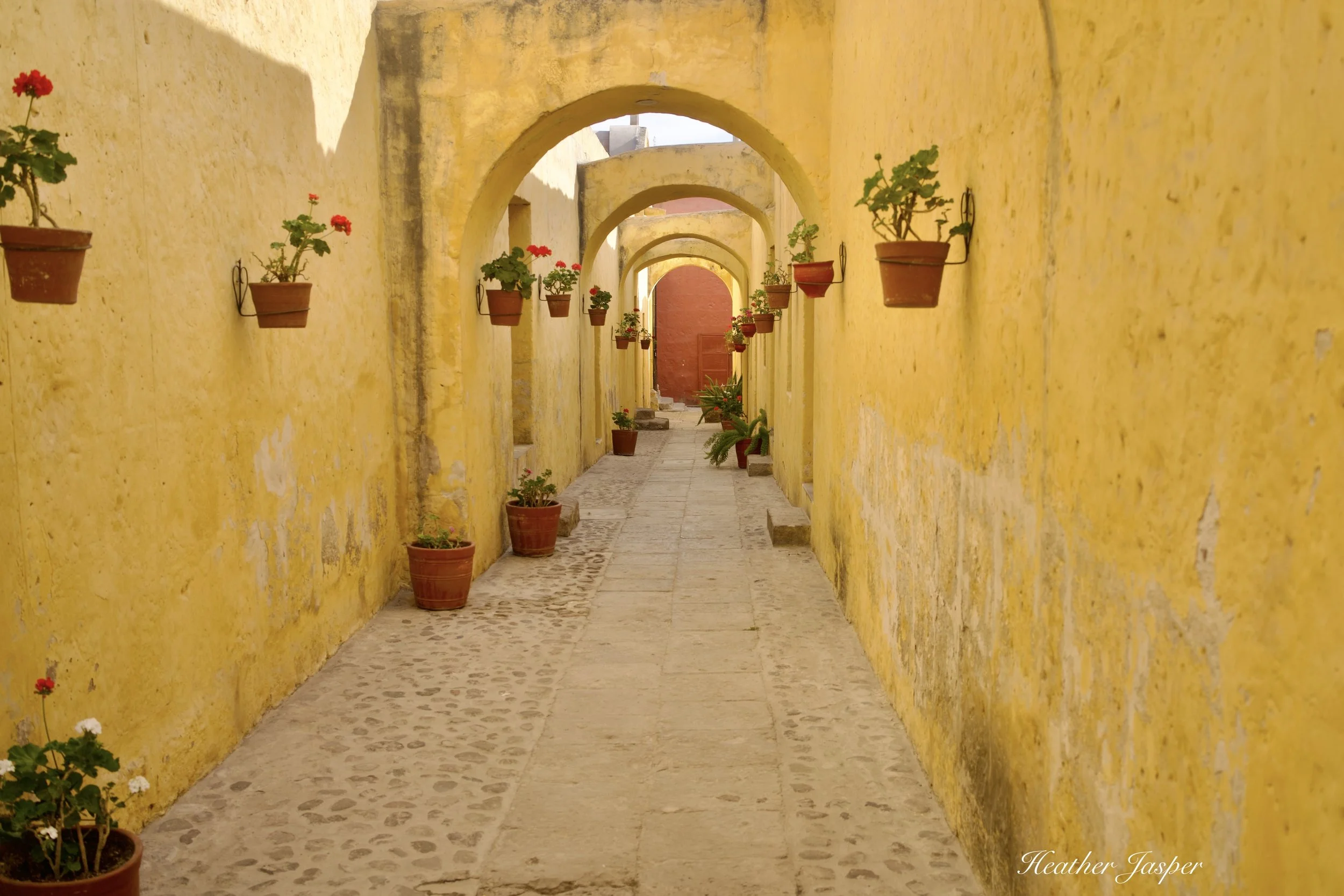
Everybody who visits Arequipa goes to Santa Catalina, but few ever visit Santa Teresa.
The Santa Teresa convent is much smaller, but its museum has a larger art collection and fascinating displays on art techniques used in 16th century religious paintings and figures.
This was my fourth trip to Arequipa, but the first time that anybody told me about the Santa Teresa convent. The concierge at Palacio Guaqui gave me a ticket and told me it’s absolutely worth my time – he was right!
Las Carmelitas Descalzas
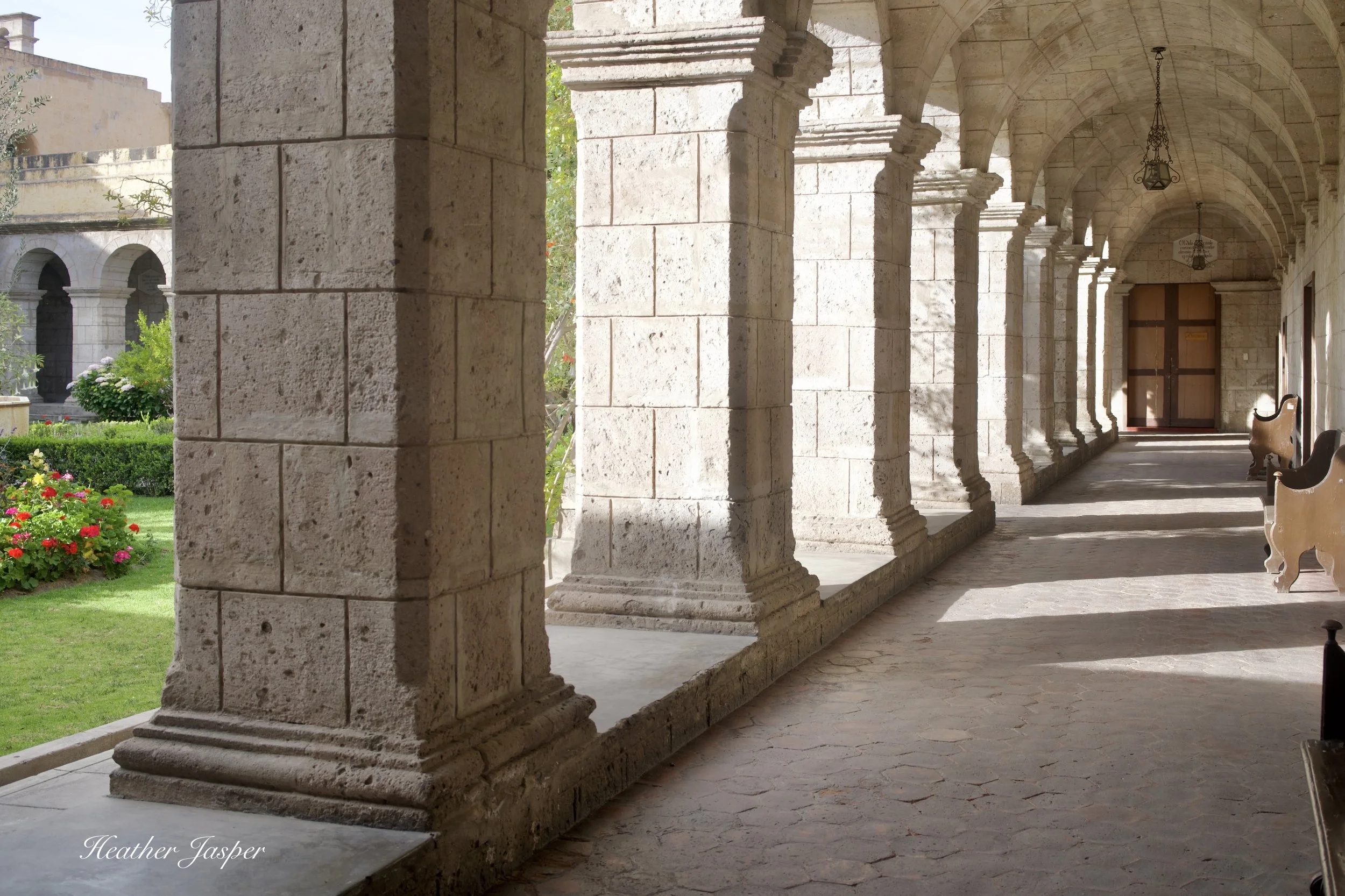
In Spanish, it’s called the Monasterio de Carmelitas Descalzas de San José y Santa Teresa, but in English it would be a convent because it never housed monks, only nuns. Currently, there are twelve nuns and it never had more than 21, unlike the 400+ nuns and servants at Santa Catalina’s peak. The convent was built between 1750 and 1753, and its museum opened in 2005 and occupies about a fourth of the convent.
I recommend getting a guide, but it’s not required. My guide, Edid (a variation of Edith), was very knowledgeable and patient. Though the concierge told me the tour would take about half an hour, I spent over two hours there. The art, artifacts and public areas of the convent were all too interesting for just half an hour.
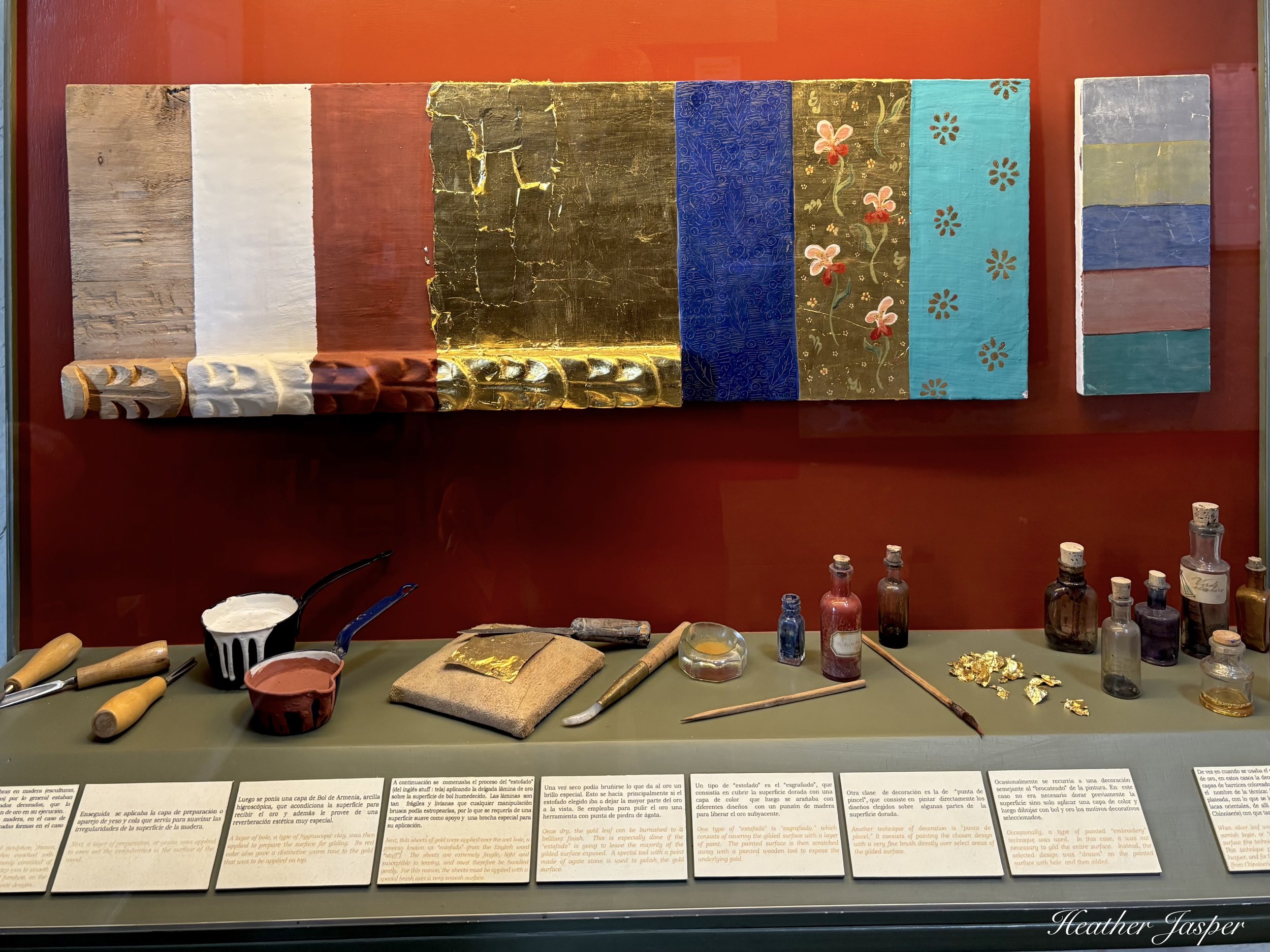
The gold used in gold leaf was mined near Arequipa, in the mountains west of the city.
16th and 17th century art techniques
The first room in the museum has three exhibits on art techniques. The first is how paint and gold leaf are applied to canvas for paintings and the second shows how layers of paint and gold leaf are applied to wooden frames or freshly plastered stone walls.
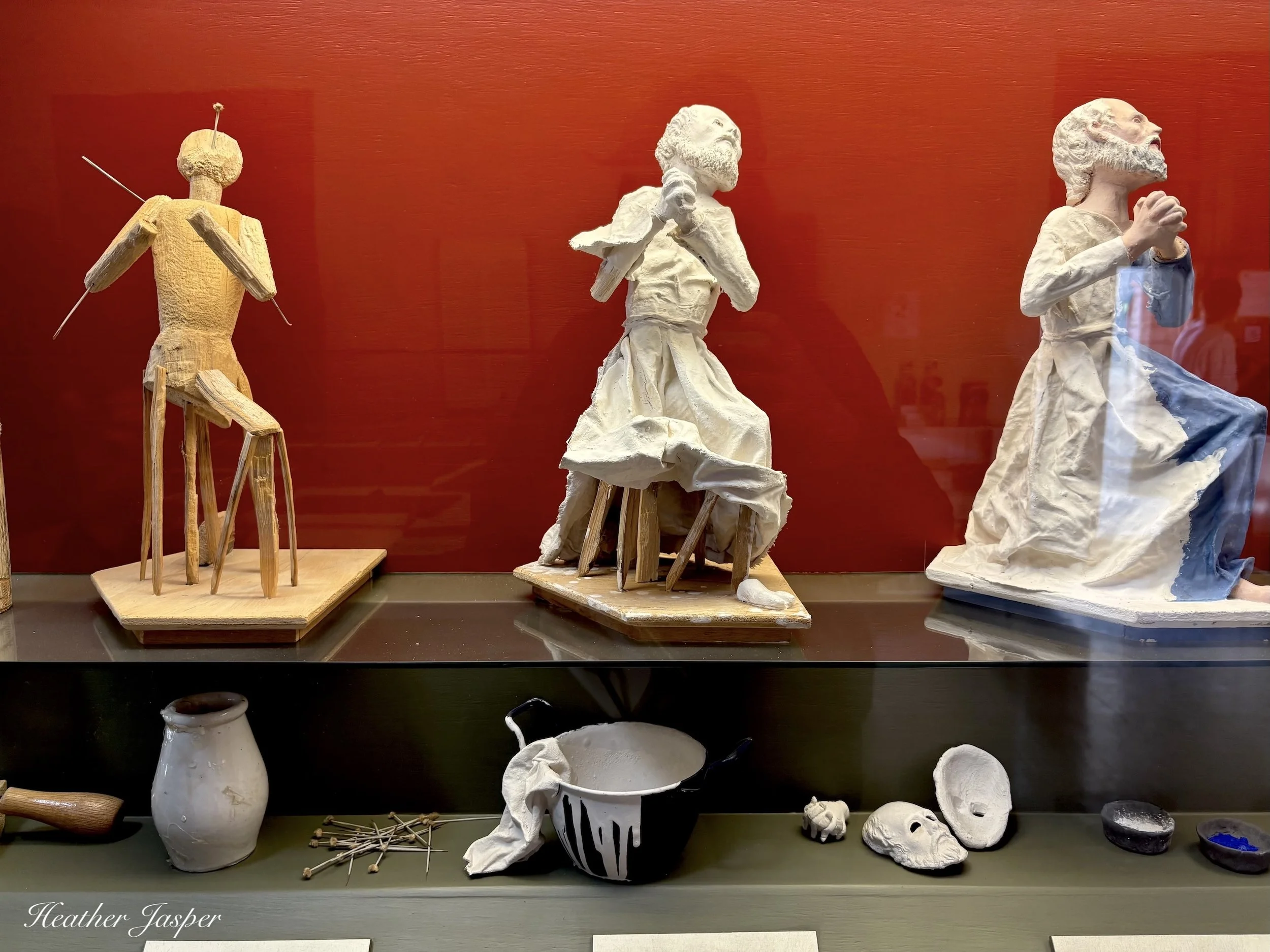
The third exhibit shows the steps to make the many sculptures of saints that fill historic churches throughout Peru.
They used the woody center of the blooms of maguey; a giant succulent also called century plant and a relative of the agave used to make tequila. The dried stalk is very lightweight, since it’s not really wood. The form of the sculpture is made with the maguey and pinned together with cactus spines, then cloth is dipped in a mixture of glue and plaster to shape the clothes. Fine clay is used to make the head, hands and feet.
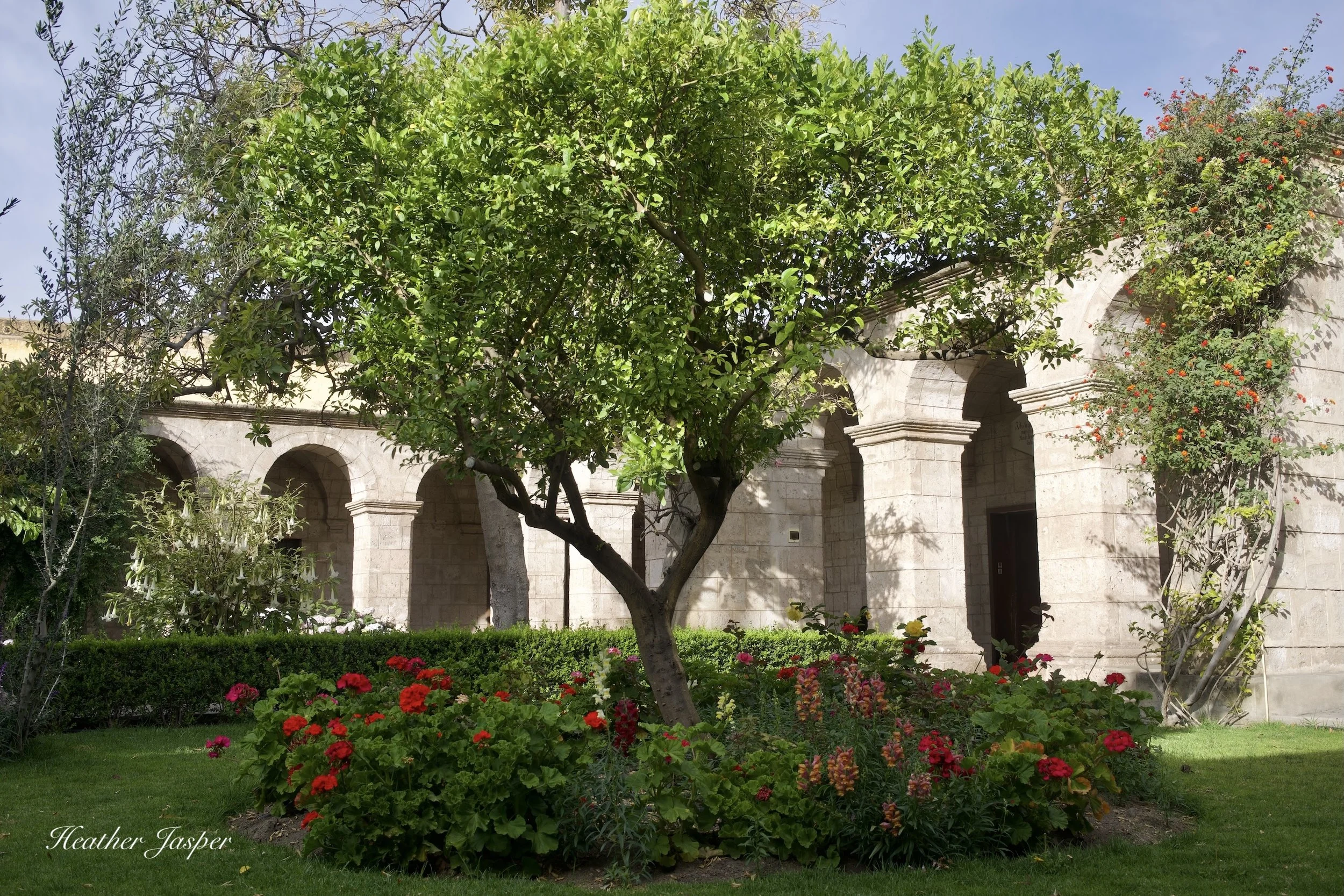
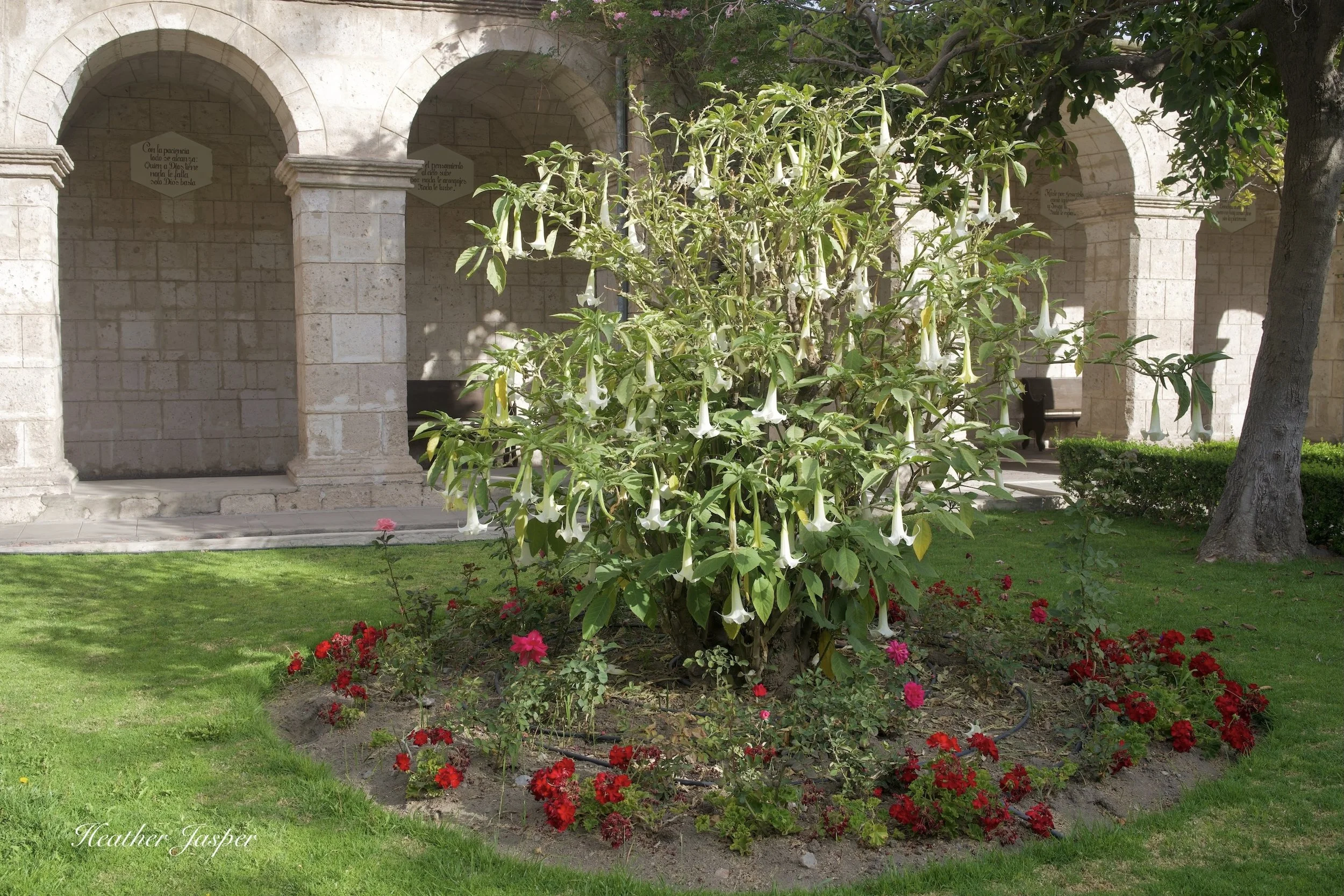
The rest of the museum is a series of rooms around a central courtyard.
The fountain in the center was dry when I was there, but the flowers were all blooming and the birds were singing. I saw sparrows, thrushes and hummingbirds. Fruit trees had finished flowering and were beginning to grow oranges, limes, plums, figs and pomegranates. One of their olive trees is over 300 years old.
Each room was full of historic artifacts.
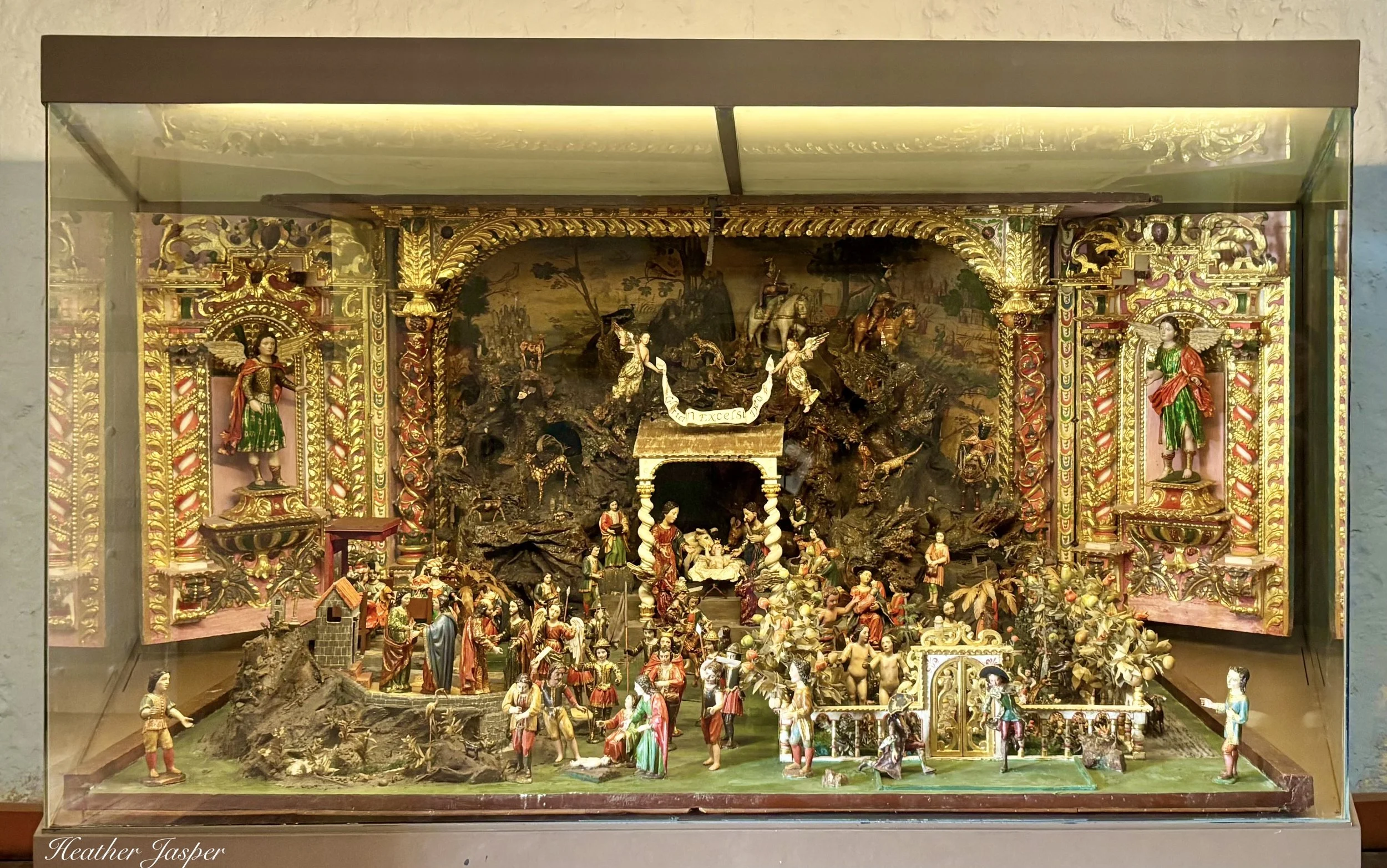
The most impressive artifact is a giant wooden trunk, so big it could easily fit two adults sitting. Edid told me that it used to be open only at Christmas, until the key was lost. It sat locked and ignored for over thirty years, until somebody decided to try every key in the convent and finally found one that unlocked it. When the museum opened and they decided to show it as part of the permanent exhibit, the restoration took a year before it was in good enough condition to display.
The trunk houses eleven biblical scenes, including the garden of Eden, the birth of Jesus, the arrival of the Three Kings, Mary and Joseph leaving Egypt and King Herod’s Massacre of the Innocents. Quartz is set in several strategic spots to reflect light into the darker parts. It is all so well built that when the trunk’s sides are folded in none of the figurines touch.
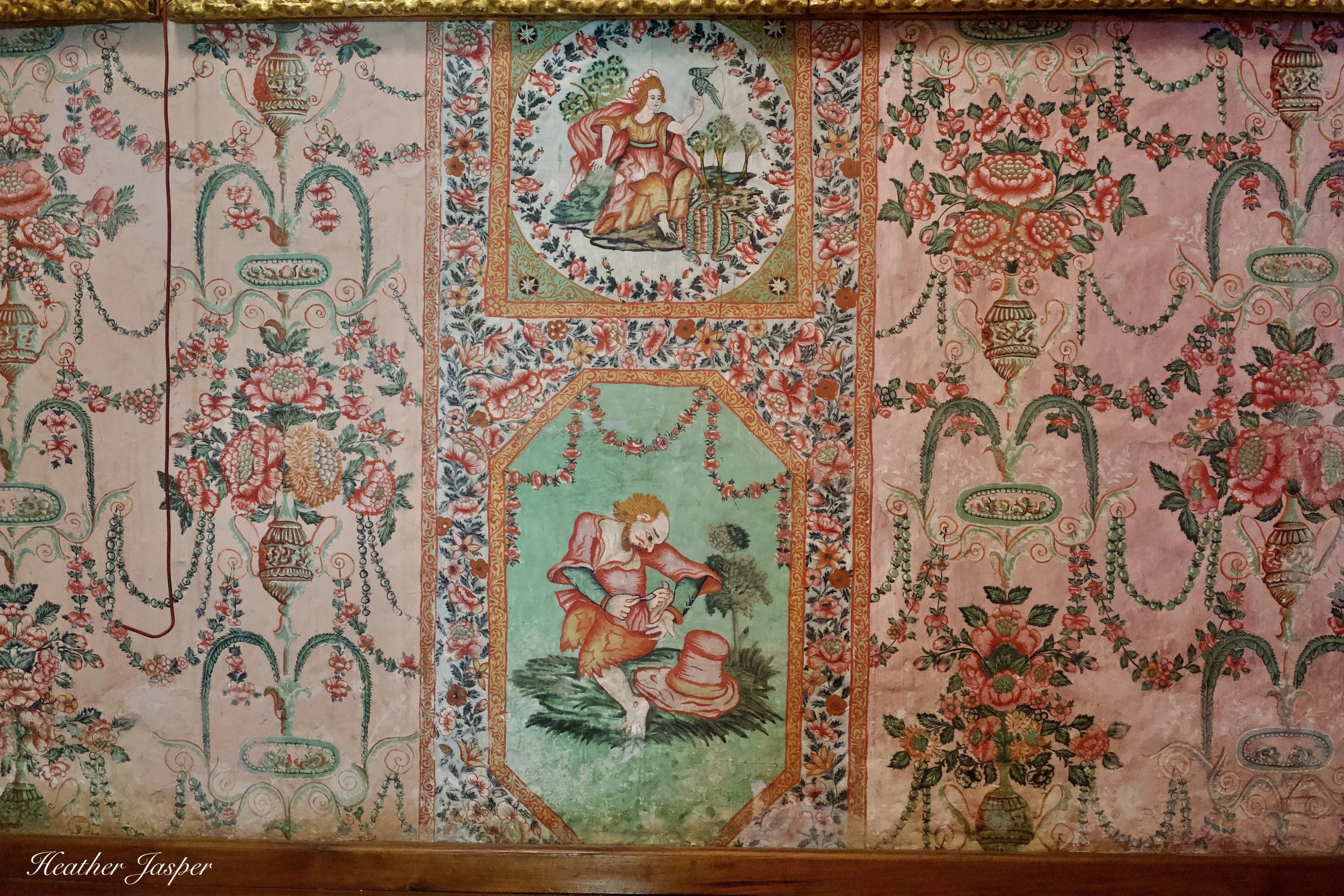
Besides sculptures and paintings of saints and biblical scenes, many of the walls are covered with elaborate murals. Most are religious images but there are plenty of oddities hidden in the murals, like this guy trimming his toe nails.
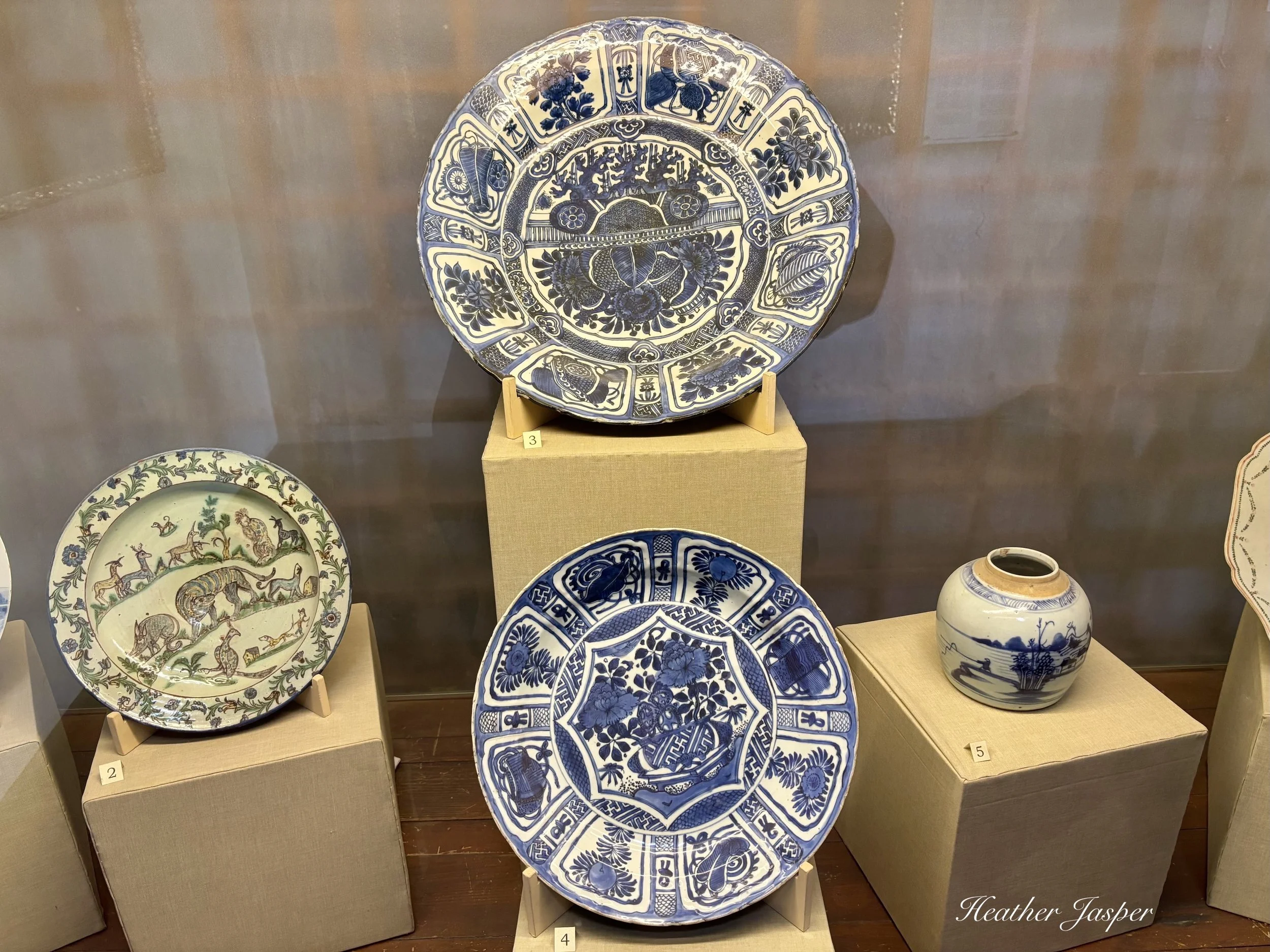
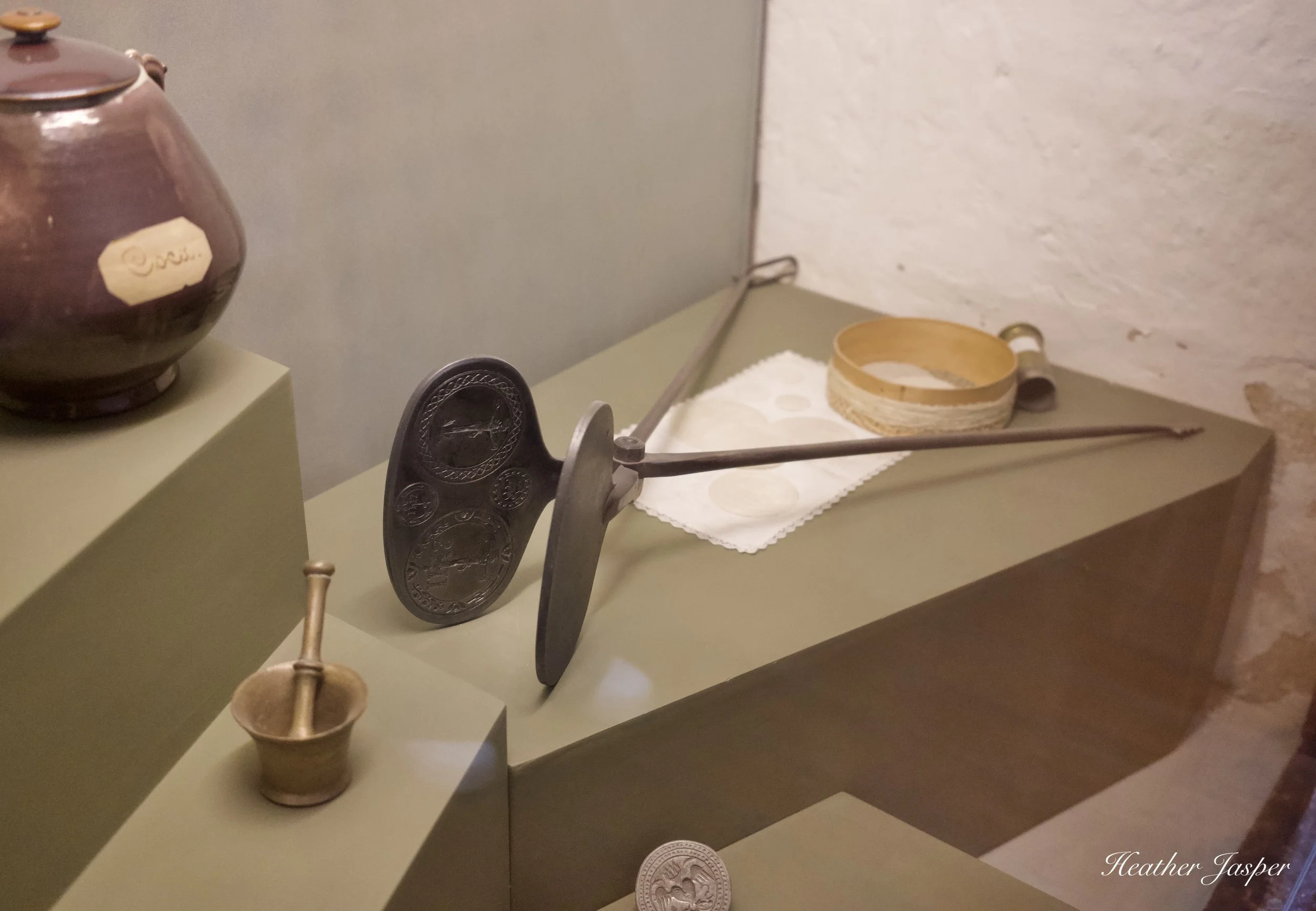
The museum also has the nuns’ personal things.
I was fascinated by the fine ceramics that some of the nuns brought with them to cloistered life, many clearly made in 15th and 16th century China. The exhibit on how the nuns made communion wafers includes the presses they used to both cook and mold the dough.
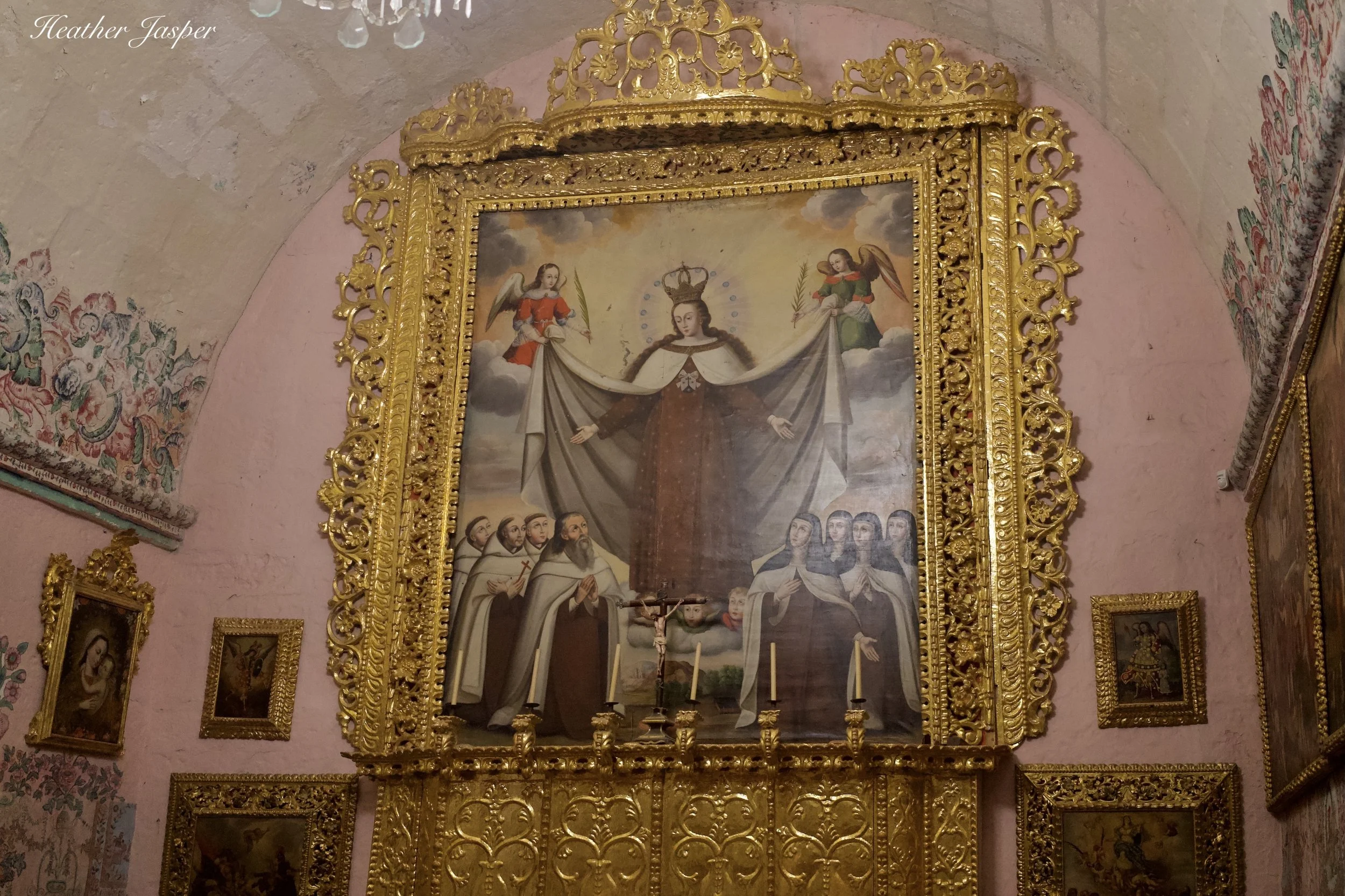
The Virgin of Carmen is known for protecting others with her cloak. (Yes, that’s all real gold).
La Virgen del Carmen
Though the art museum is called the Museo de Arte Virreinal Santa Teresa, the patron saint of the convent isn’t Santa Teresa, it’s the Virgin of Carmen. Nuns who are Carmelitas Descalzas, don’t have to walk around barefoot, though descalza means without shoes. It’s an order of nuns who follow St Teresa of Ávila’s reform from the 16th century. They live a cloistered life of contemplation and prayer, much of it in silence.
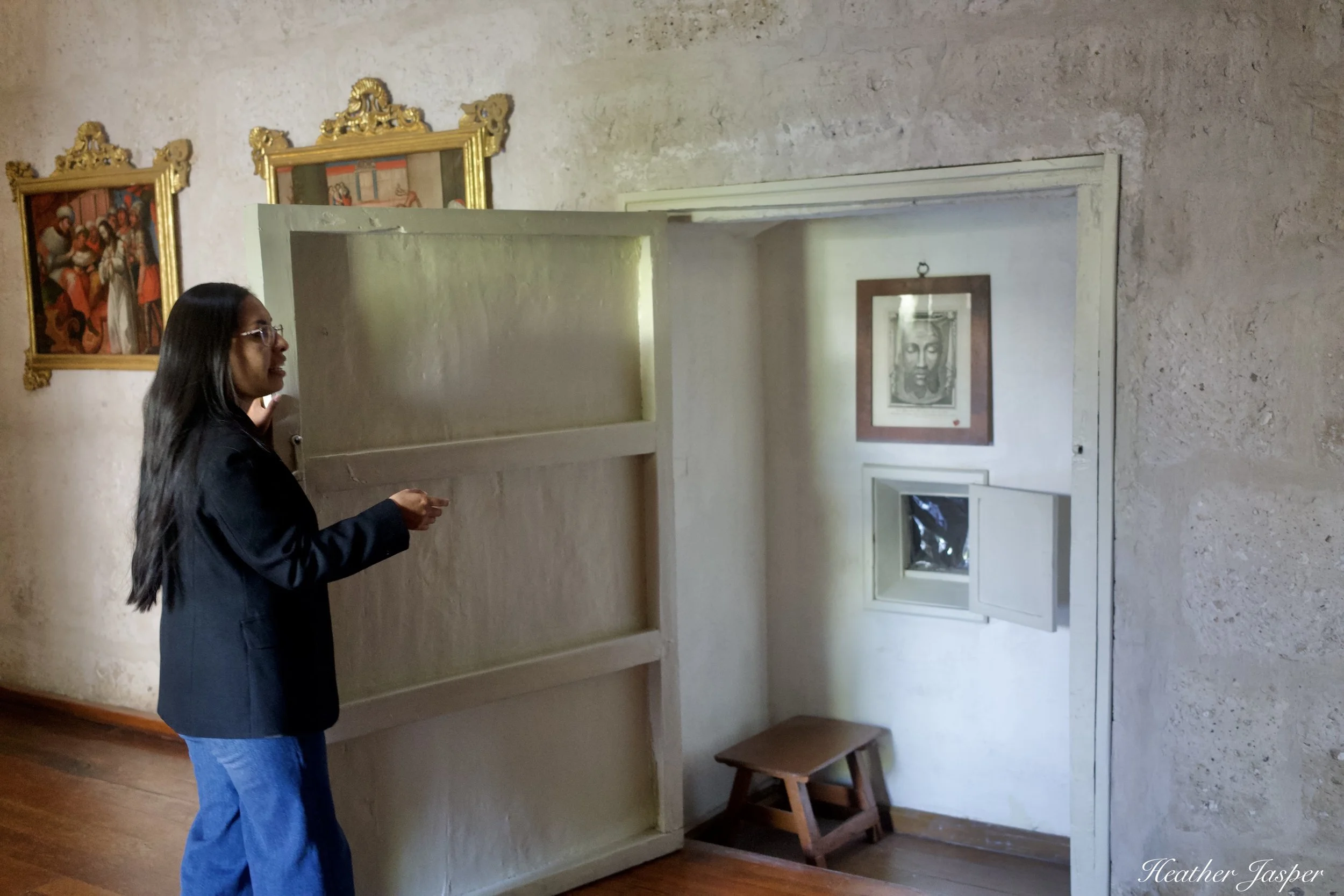
Edid also showed me all the hidden spots in the convent, like this former confessional. The hole goes through to the back of the adjoining church, so the nuns could confess to the priest without ever leaving the convent - or seeing the priest.
How to visit Santa Teresa in Arequipa?
The Santa Teresa art museum is open Tuesday to Sunday, 10am-5pm. It’s on Calle Melgar, next to the Church of San José & Santa Teresa, about six blocks northeast of the Plaza de Armas. Entry is s/20, with discounts for students and visitors over 60.
Guides charge s/15 per tour. (Since my tour went long, I gave her s/20).