Tunquimayo Lodge
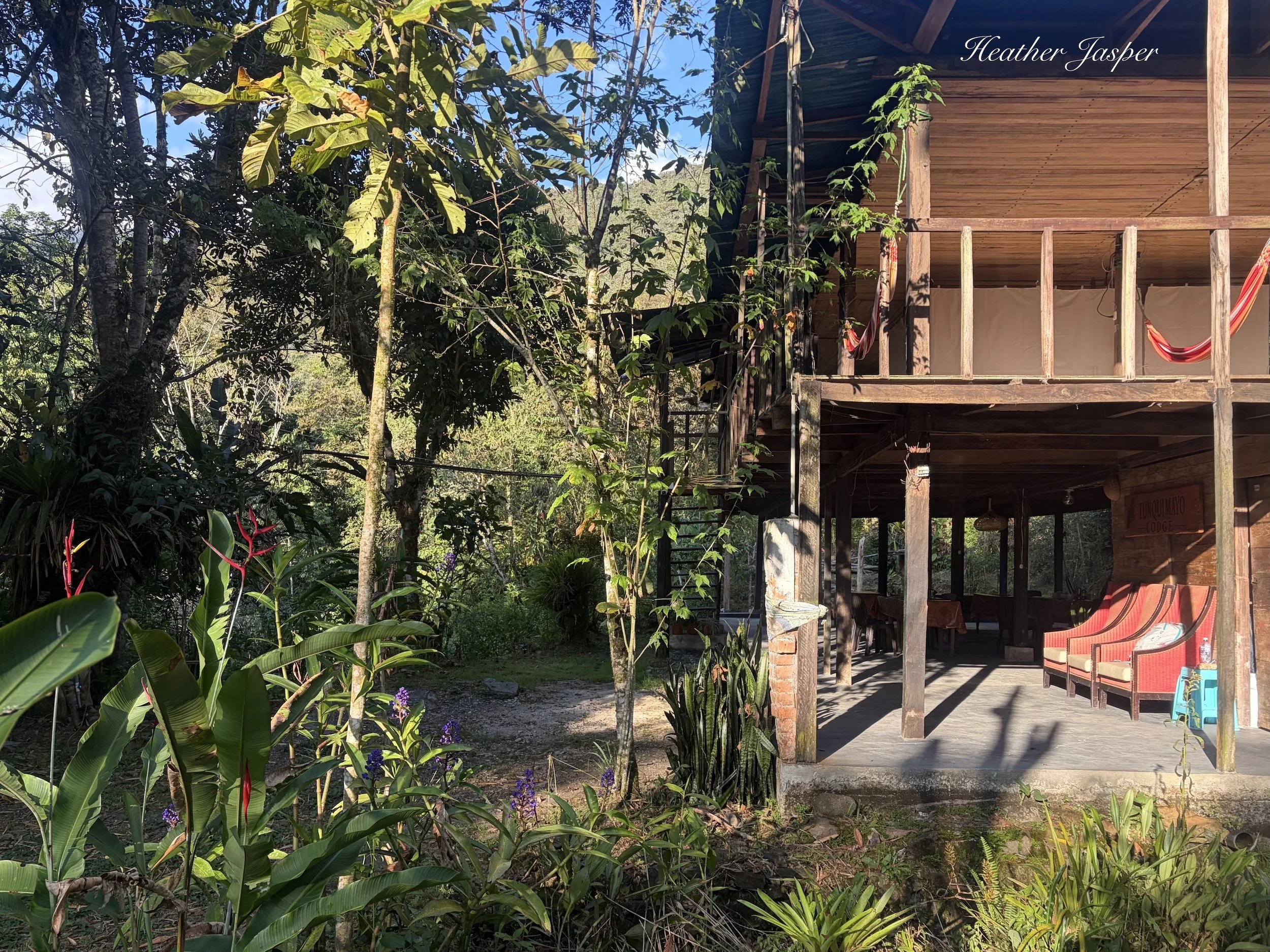
Tunquimayo Lodge is surrounded by gardens that attract wildlife, especially lots of species of birds.
Tunquimayo Lodge is far off the tourist trail, though only about 40km/25mi from Machu Picchu, as the crow (or condor) flies.
Tunquimayo Lodge protects 11 hectares (27 acres) of primary and secondary forest, with three trails. Near the lodge is one of Peru’s best leks for the Andean Cock-of-the-Rock, called Gallito de las Rocas in Spanish.
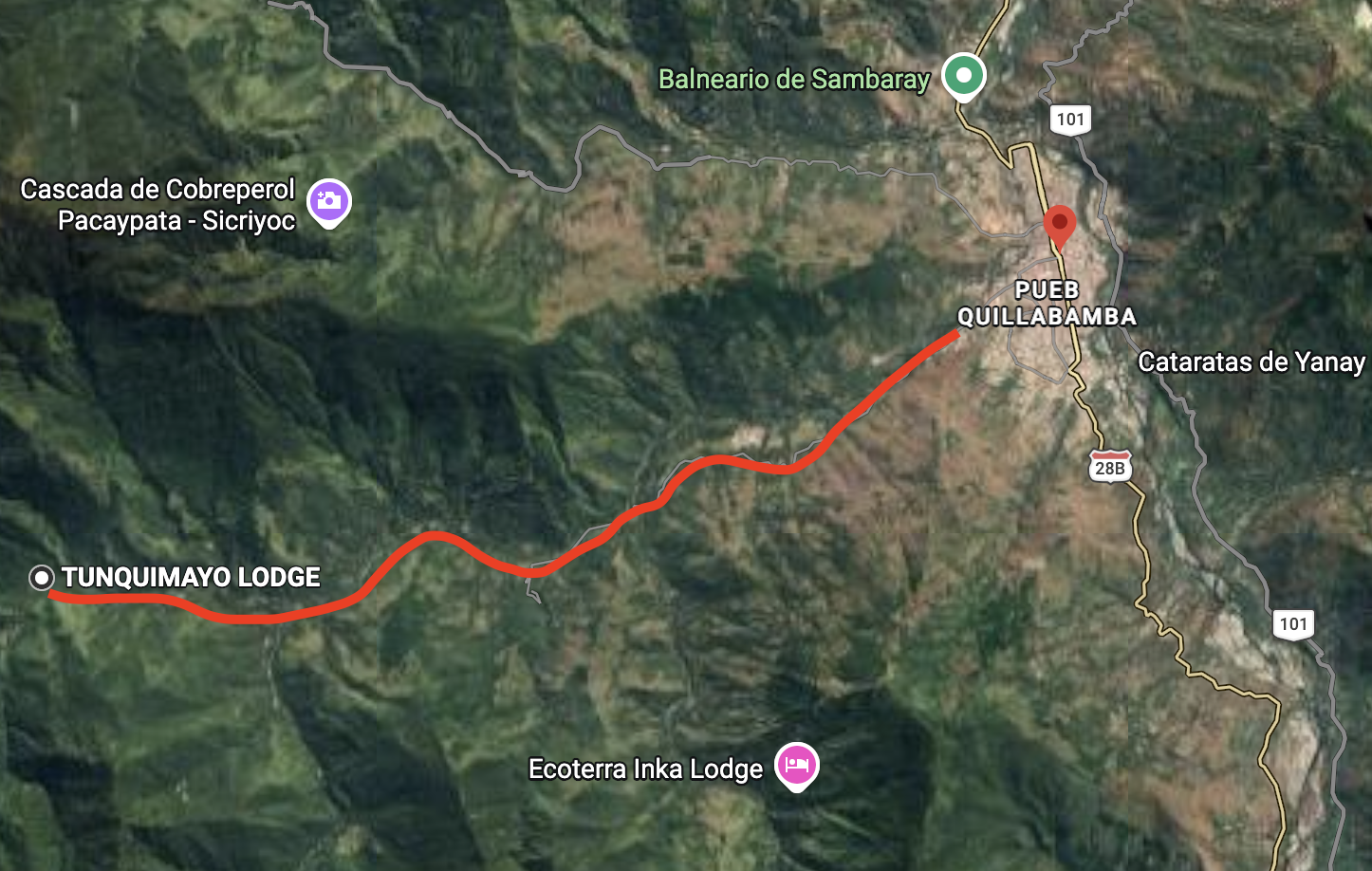
This is a small, exclusive lodge with only four beds, near the city of Quillabamba. Quillabamba is not a major tourist destination for international travelers, so if you get reservations at Tunquimayo Lodge, you’ll likely be the only guests.
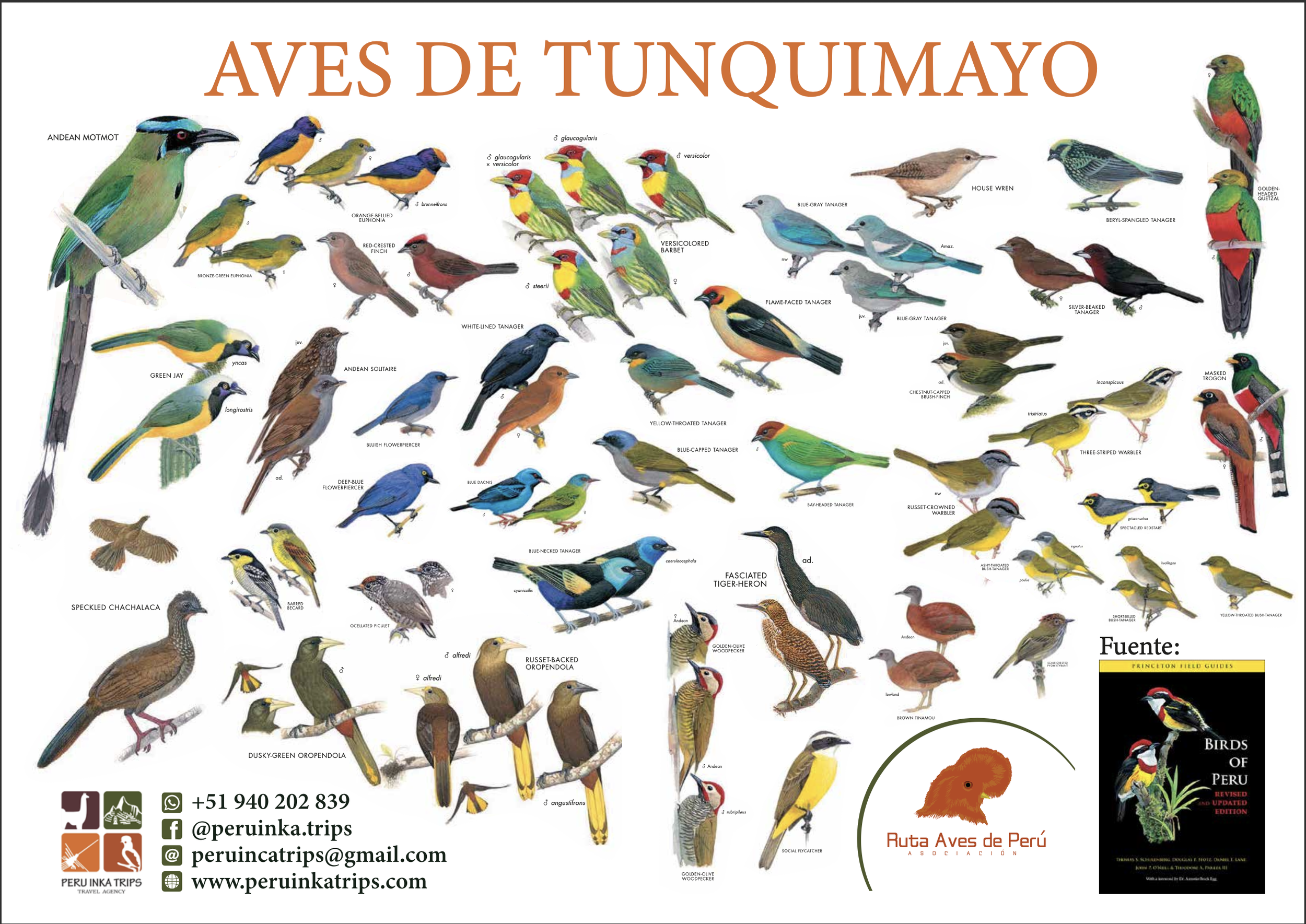
The Andean Cock-of-the-Rock is not the only bird you’ll see at Tunquimayo Lodge. Motmots and quetzals are common.
The River of the Andean Cock-of-the-Rock
The Quechua word for this emblematic bird is Tunqui and the Quechua word for river is Mayo, so the lodge’s name is River of the Andean Cock-of-the-Rock. In Spanish it would be Río del Gallito de las Rocas.
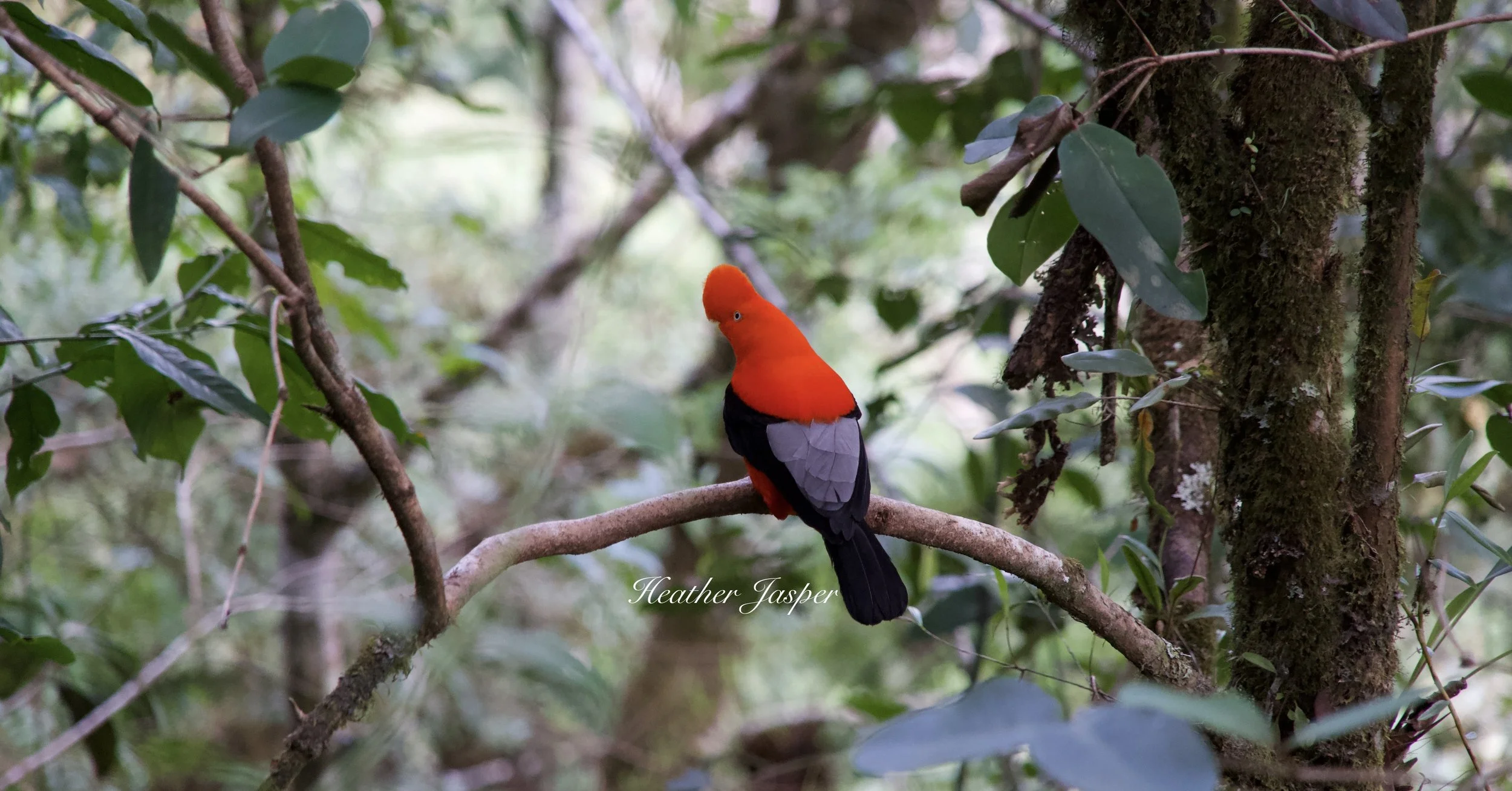
The lek has many branches that the Tunqui have cleaned off to dance on.
It’s a fitting name because only a few minutes’ walk from the lodge is one of Peru’s best leks. Though wildlife is unpredictable, you’re almost guaranteed to see several male Tunquis dancing at the lek every morning and afternoon.
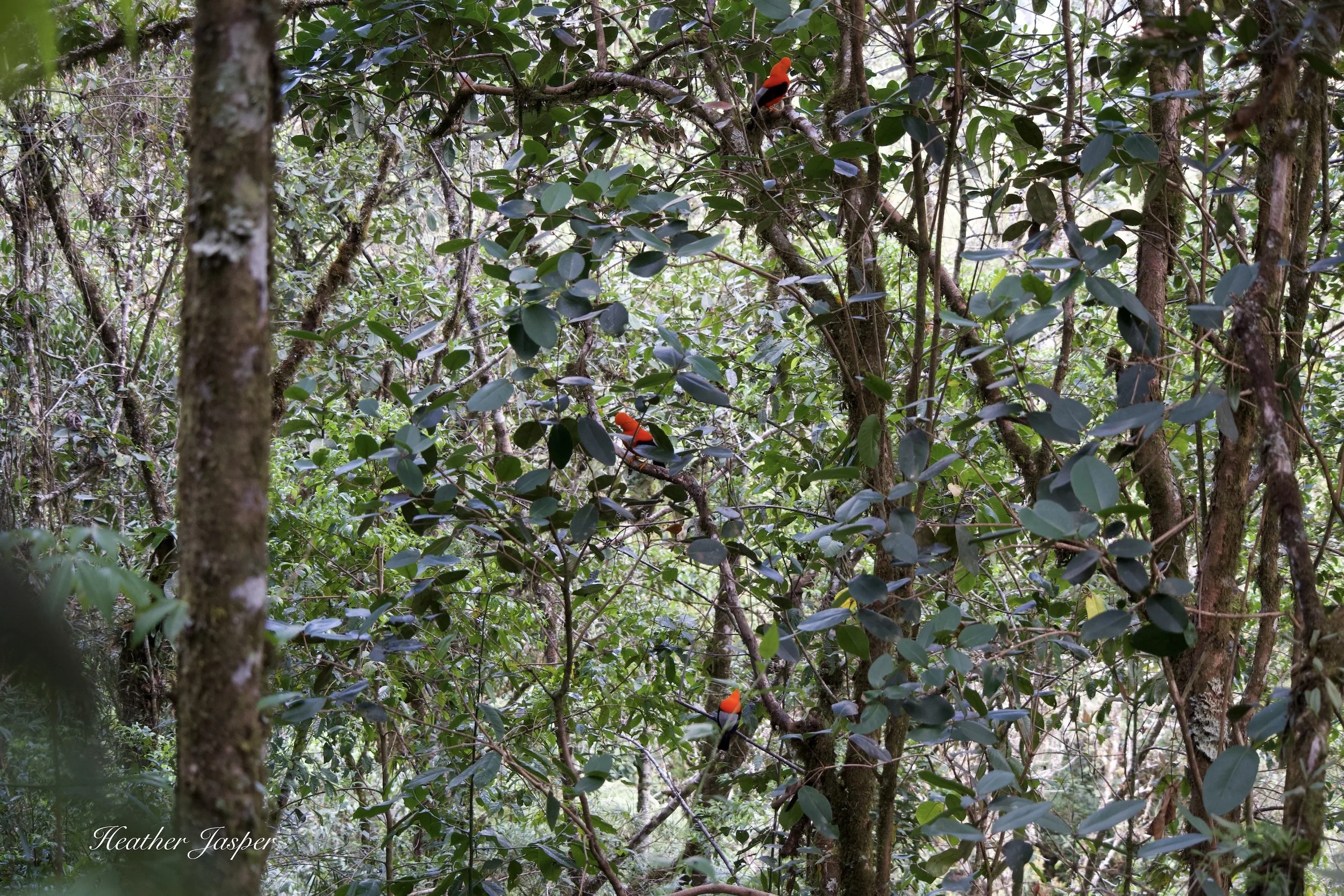
The Andean Cock-of-the-Rock lek
The lek is an area of forest where the Tunquis gather to dance for females and practice dancing for each other. There are three bird blinds around the lek for viewing and photography.
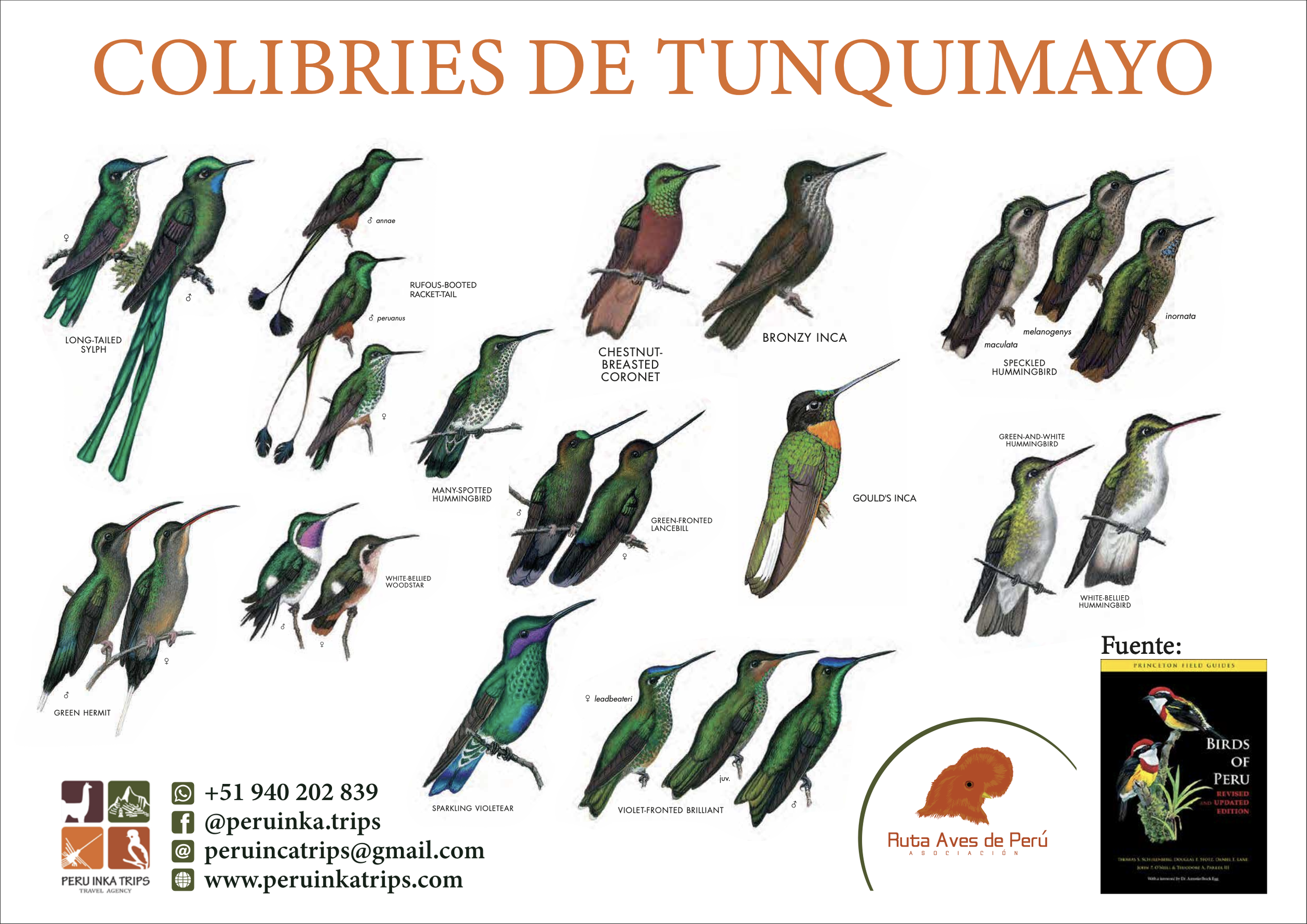
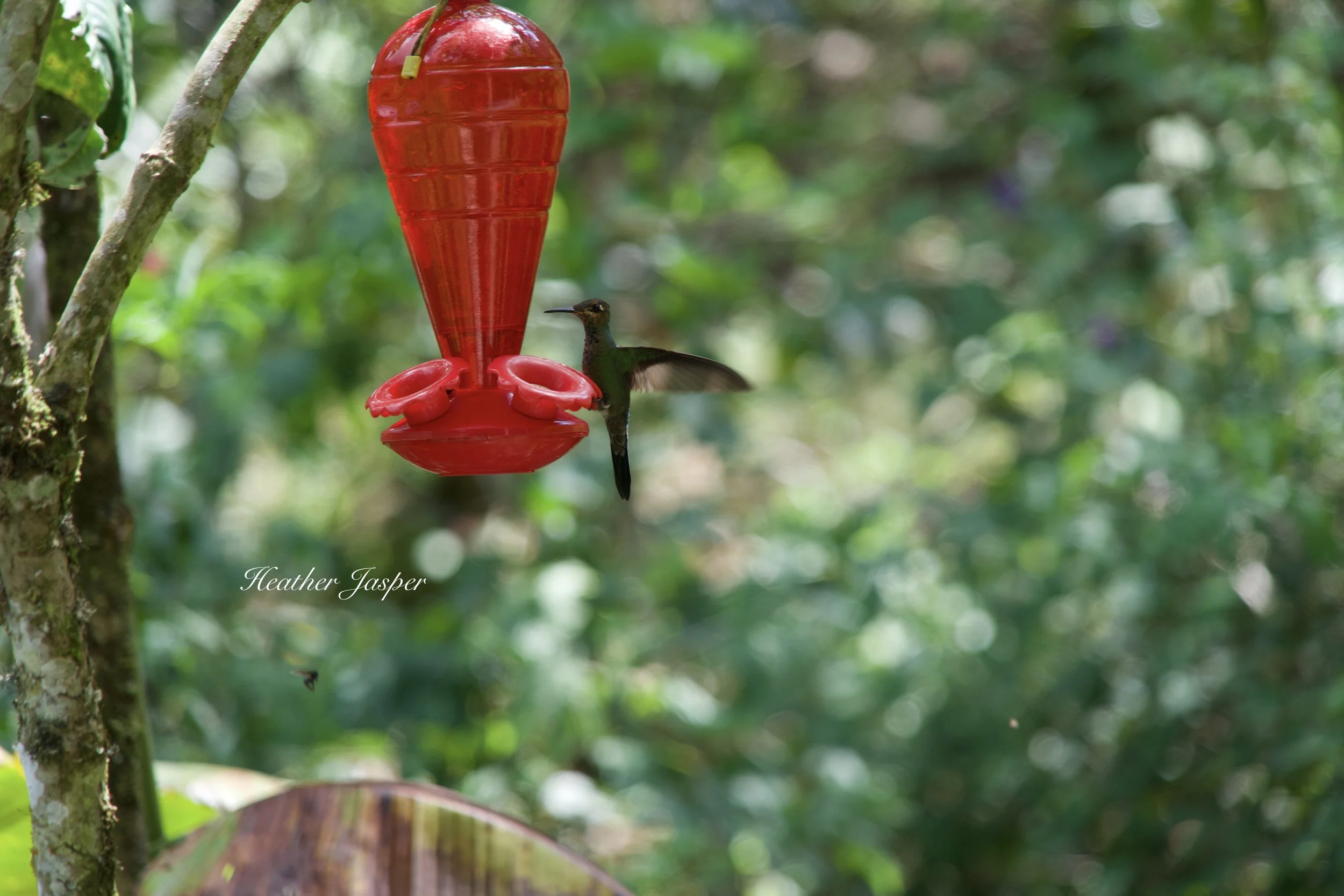
Several species of hummingbirds come to the feeders next to the lodge and others are in the forest.
Hummingbirds at Tunquimayo Lodge
Around the back of the lodge is an area of gardens with hummingbird feeders, where you can see a dozen or so species of hummingbirds. There are also fruit feeders to attract tanagers and other fruit eaters.
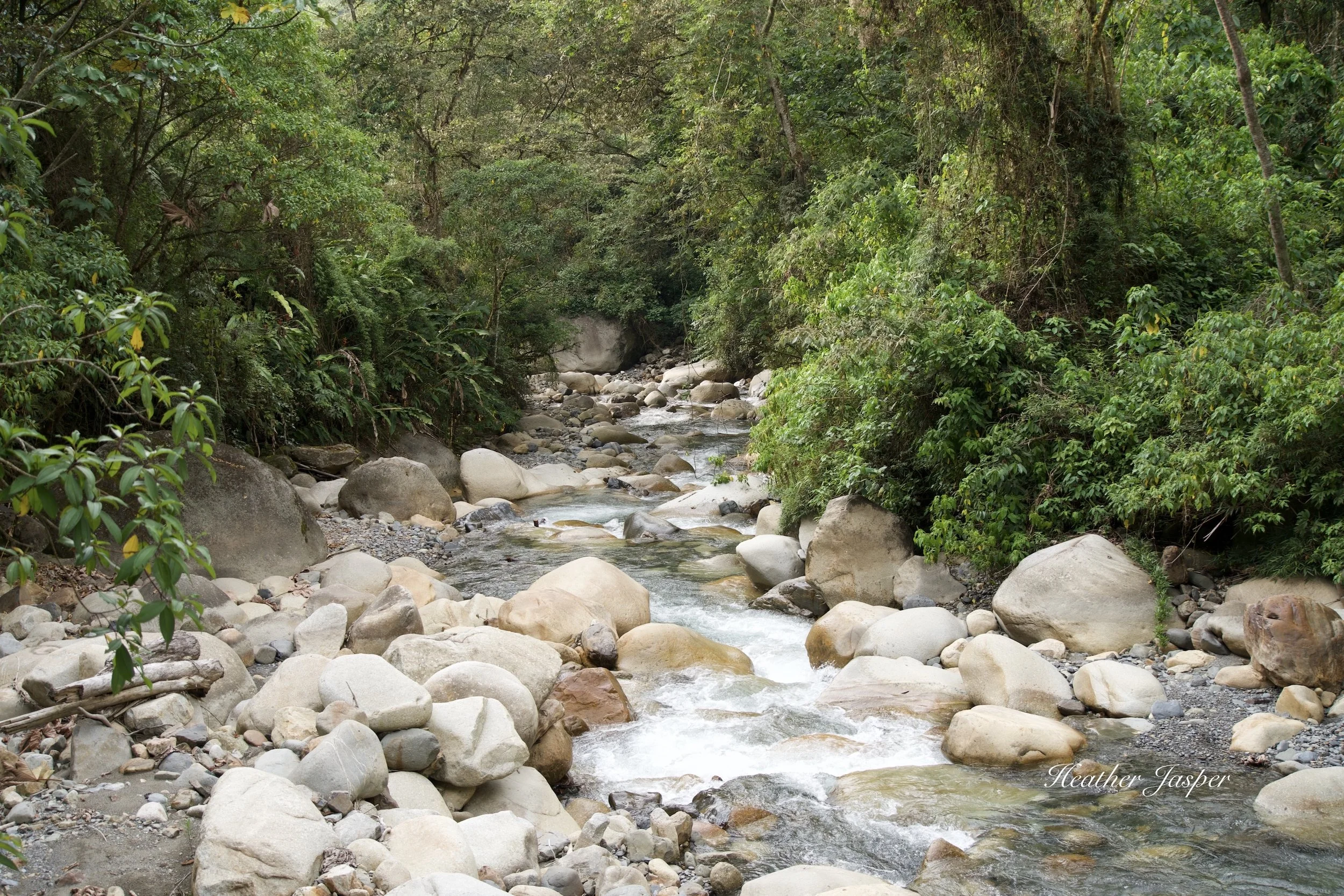
There are several species of flycatchers and tanagers that are commonly spotted along the Chuyapi River.
The Chuyapi River
The road to Tunquimayo Lodge follows the Chuyapi River from Quillabamba. The river provides one of the best places in the area for birdwatching but also for wildlife in general. It’s a dirt and gravel road, with only the occasional motorcycle, so you don’t have to worry about traffic like on other more popular birding places like the Manu Road.
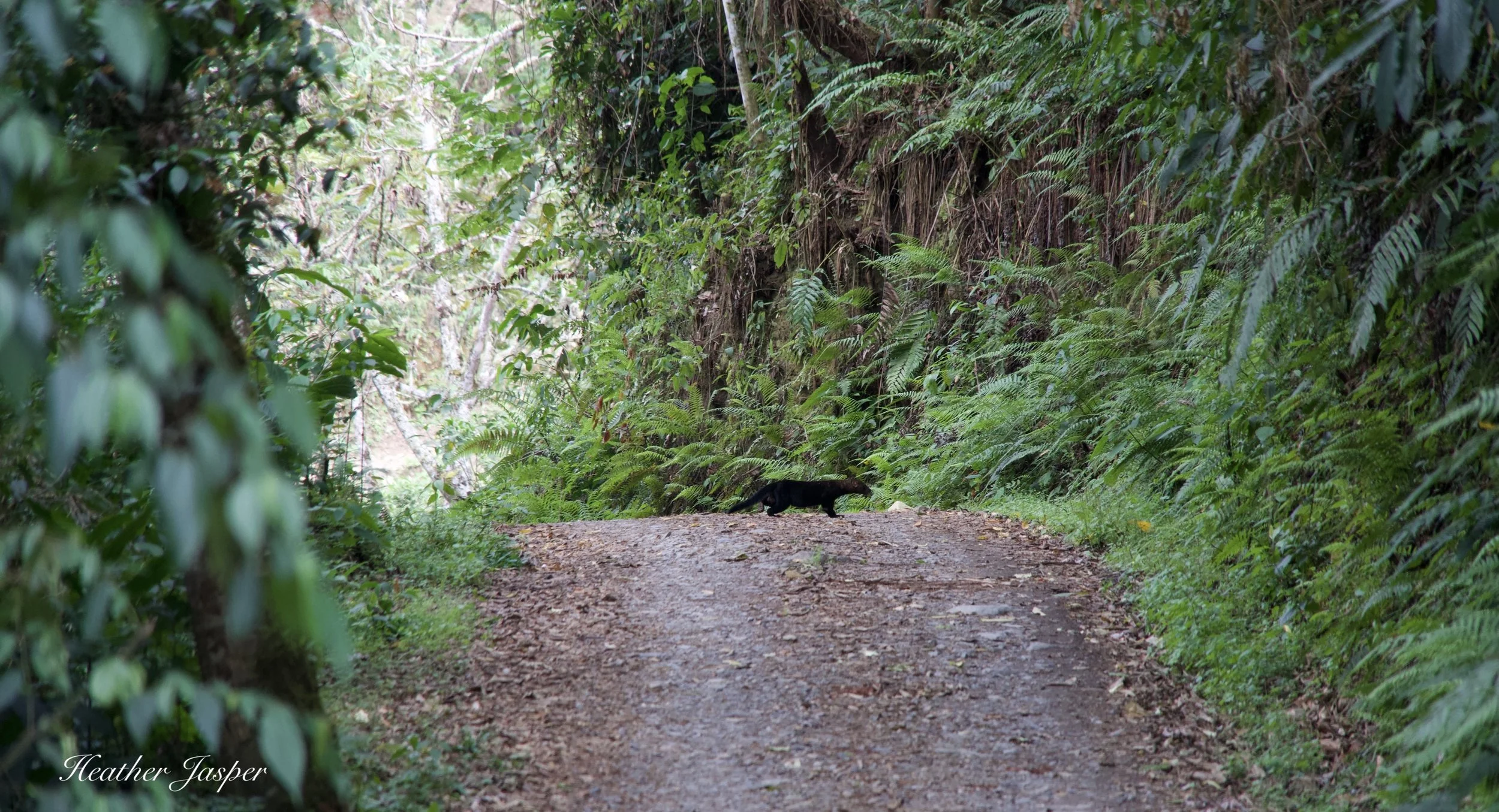
Wildlife at Tunquimayo Lodge
Mammals also live in the forest around Tunquimayo Lodge, like this tayra spotted crossing the road.
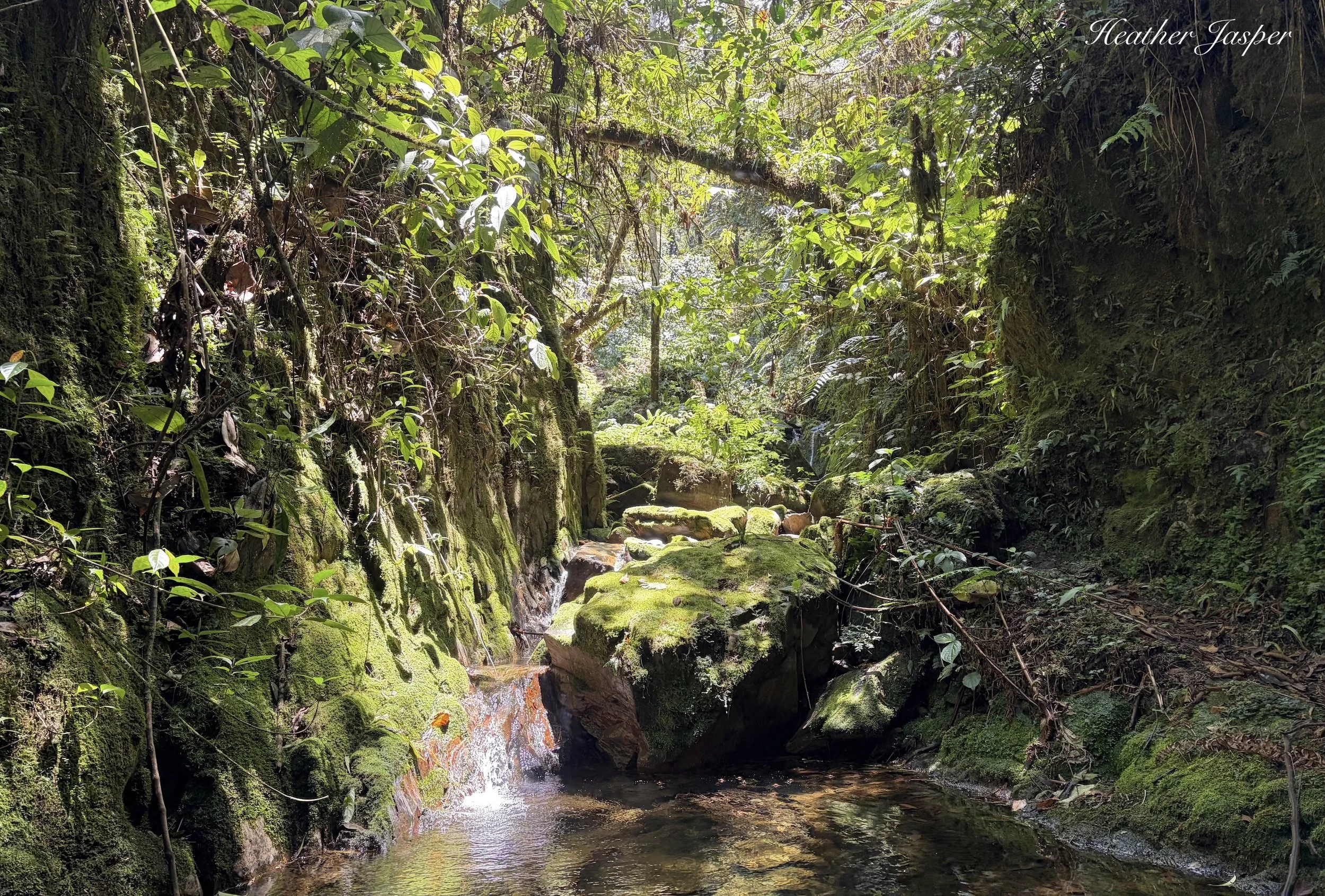
The trail follows this stream past many small cascades for almost 3km/1.8 miles.
Waterfall Hike
The property has a narrow gorge full of small cascades that leads up to a large waterfall. The giant ferns and jungle flora make the trail feel prehistoric and it’s a great place to see birds up close, since the space is so narrow.
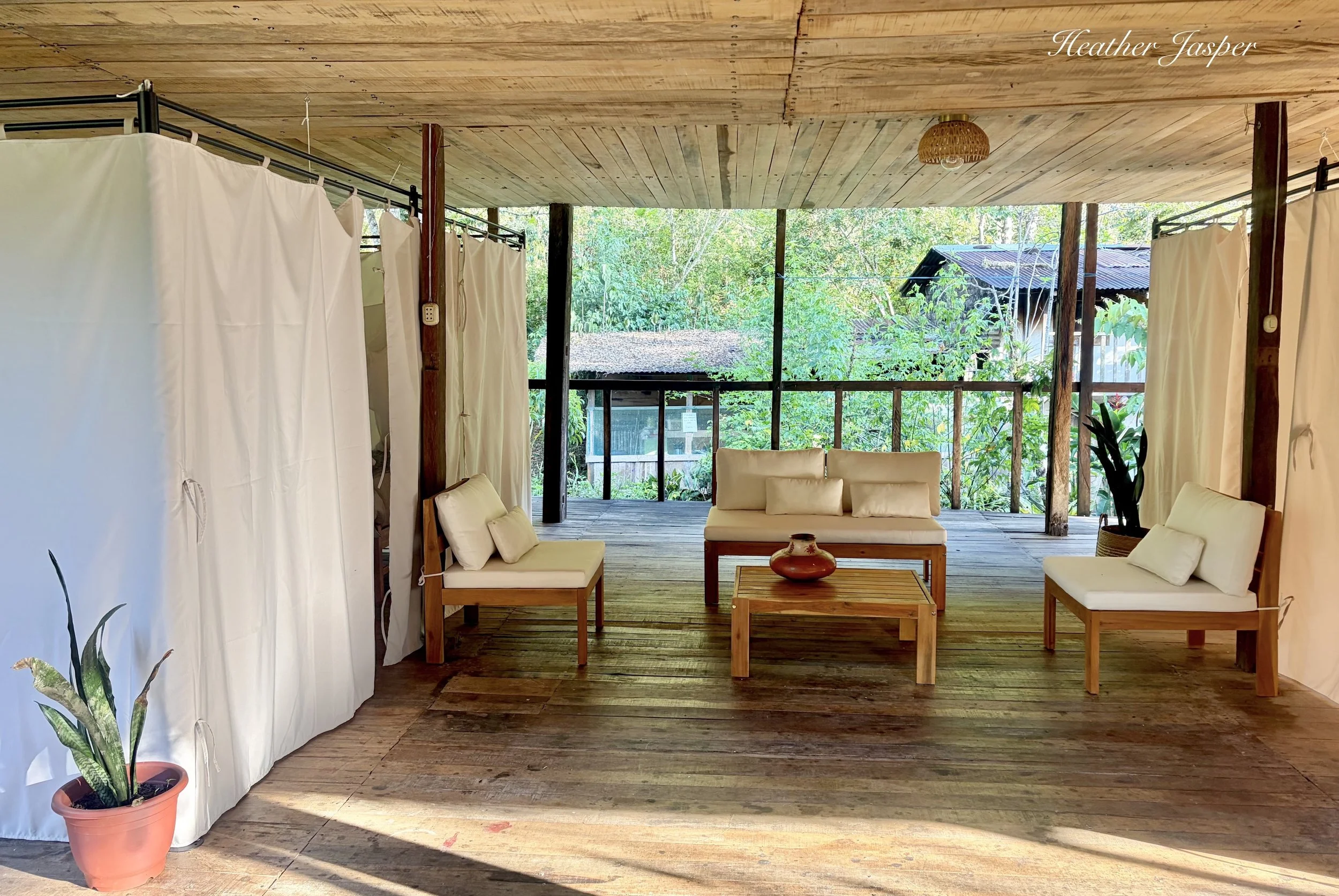
This seating area is upstairs, between the two tented rooms. In the background is the cookhouse.
Tunquimayo Lodge Facilities
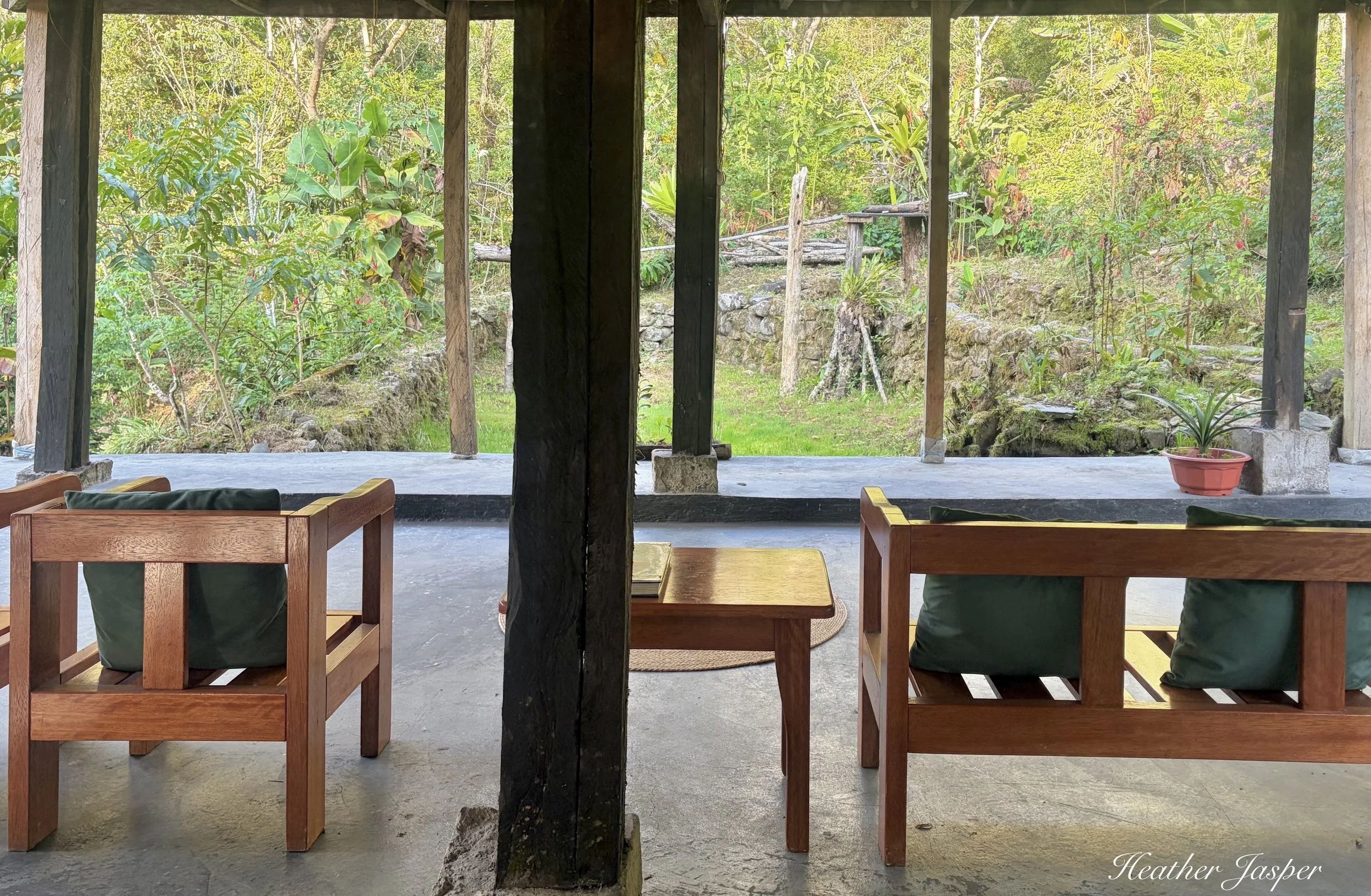
There is one building for guests, with dining room and couches facing hummingbird feeders downstairs and the sleeping area upstairs. The shower and bathroom are upstairs and there is a second bathroom in a separate building a few meters from the guest building.
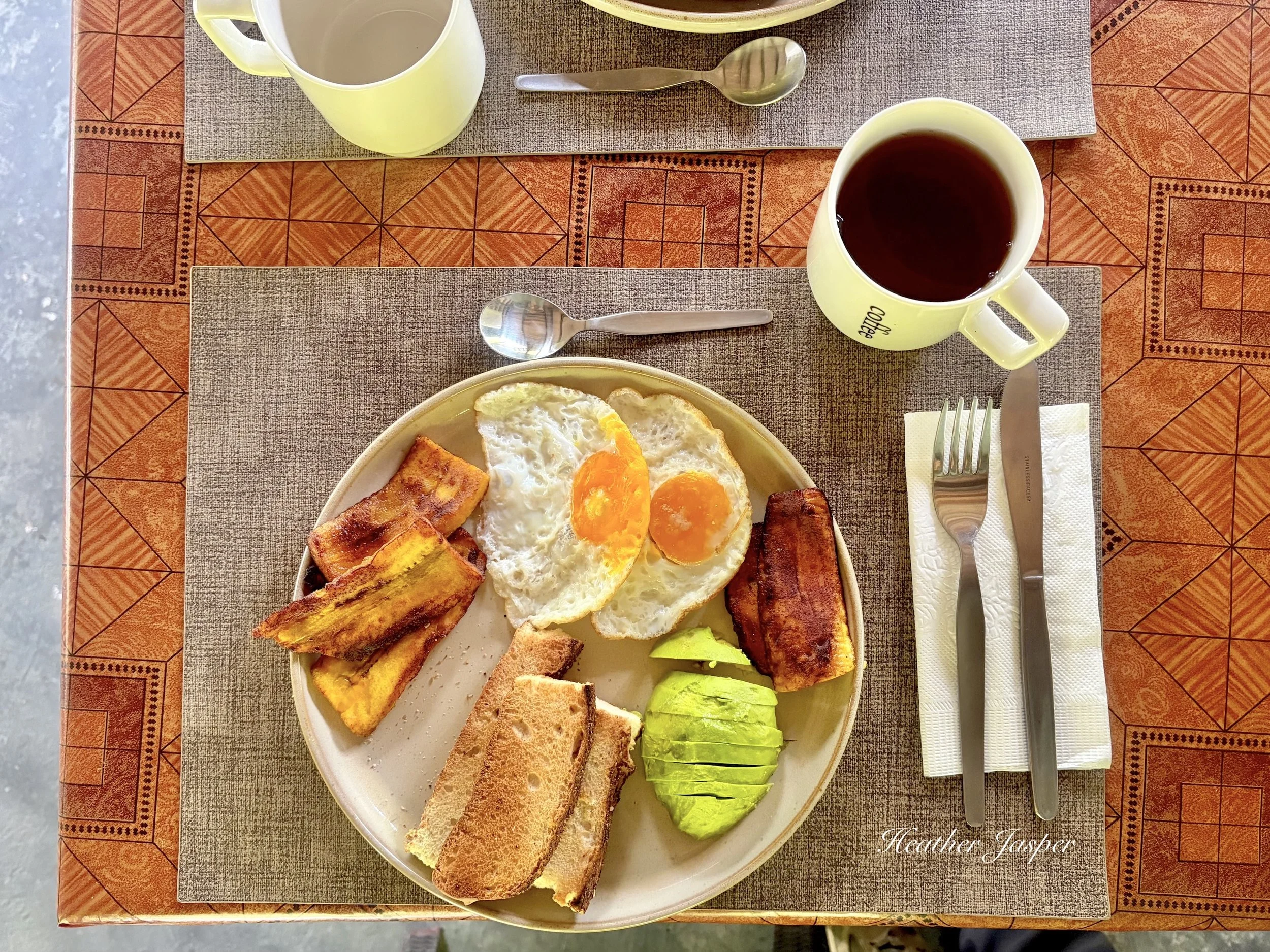
Breakfast at Tunquimayo Lodge
The standard breakfast includes locally grown coffee, eggs, toast, avocado and plantains. Call ahead with requests if you prefer something different.
A separate, nearby building houses the kitchen. The cook serves three meals a day and can accommodate dietary restrictions like vegetarian or vegan but is unlikely to be able to avoid cross contamination for celiacs.
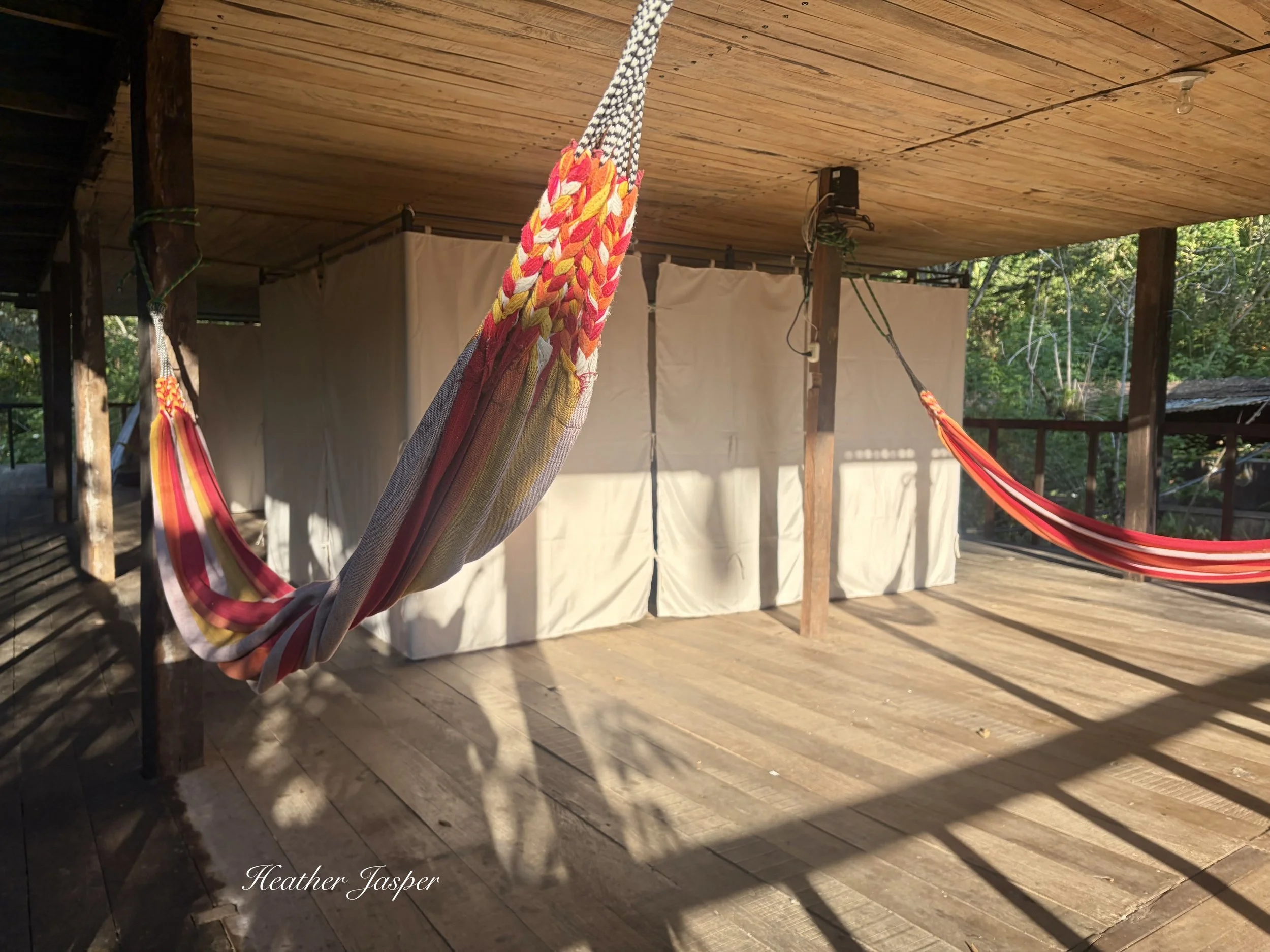
Hammocks at Tunquimayo Lodge
The hammock area upstairs is also a great spot to go with your binoculars in the afternoon to watch the area that a quetzal frequently comes by.
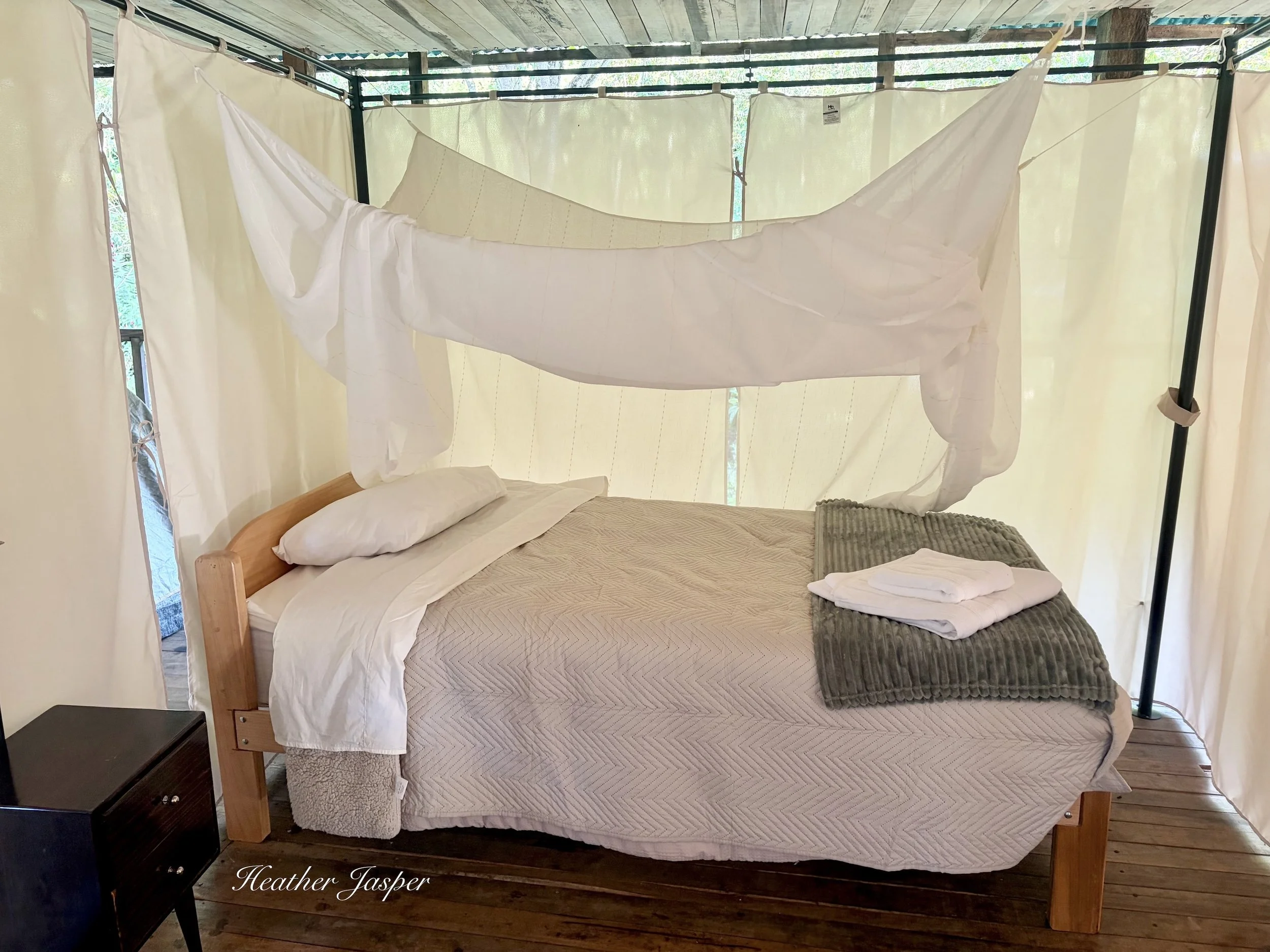
Beds at Tunquimayo Lodge
All four beds have soft mattresses, quality sheets and blankets under a mosquito net, plus fluffy towels.
Tunquimayo Lodge has two rustic rooms, each with two beds under canopy mosquito nets. The area is cloud forest, so it doesn’t have as many bugs as lowland rainforest, but there are still mosquitoes. The region is not known for malaria but has occasional outbreaks of mosquito-borne dengue.
Read about my experience at Tunquimayo Lodge on my blog.
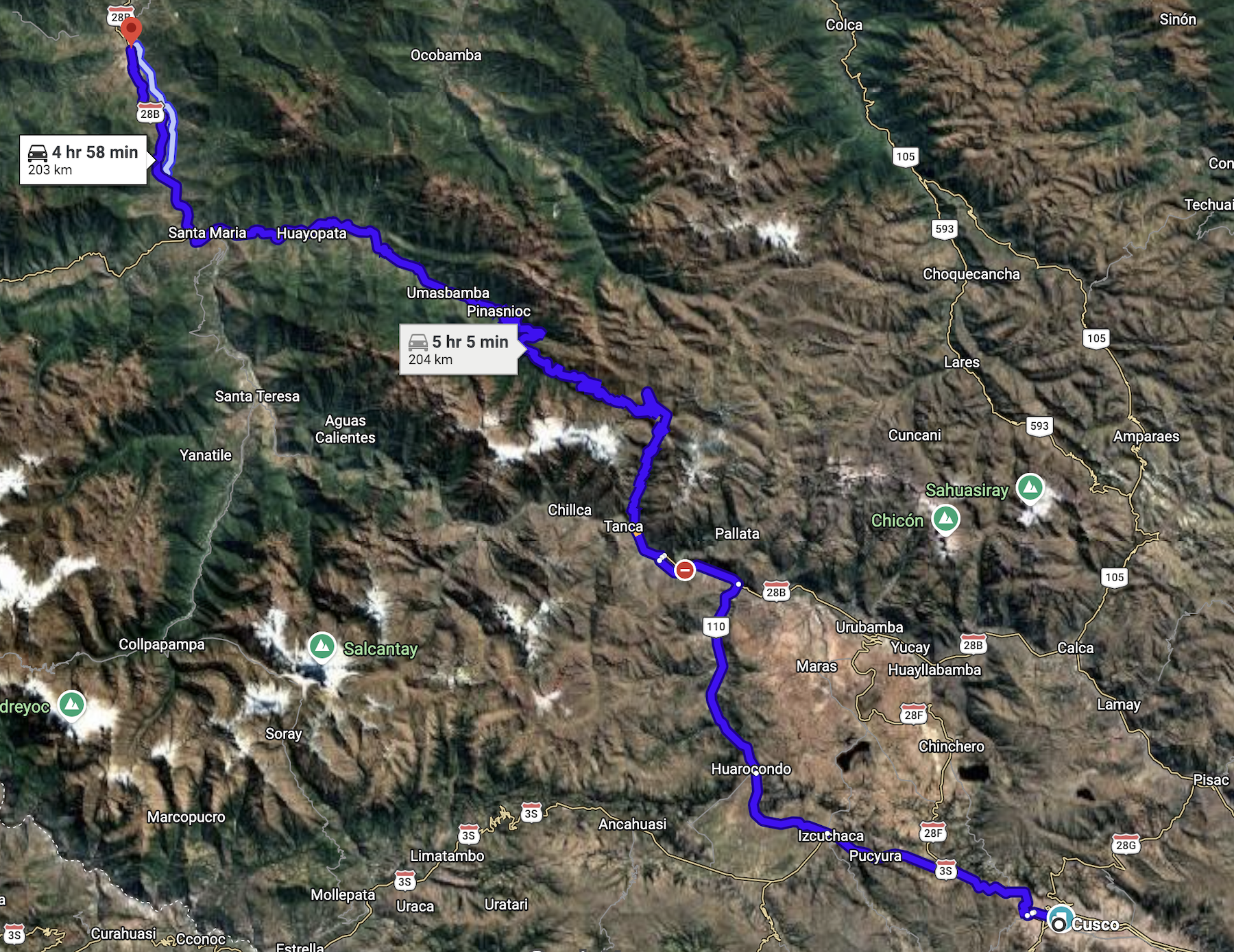
How to get to Tunquimayo Lodge?
Drive from Cusco to Quillabamba, then drive another 40 minutes to the lodge. The drive to Quillabamba goes over the Málaga Pass, another excellent place for birdwatching.
Questions about Tunquimayo Lodge?
Check out the Tunquimayo Lodge website or contact the manager Aracely Mancilla Ríos by email peruincatrips@gmail.com or Whatsapp +51 940 202 839