
Big Day at Tunquimayo
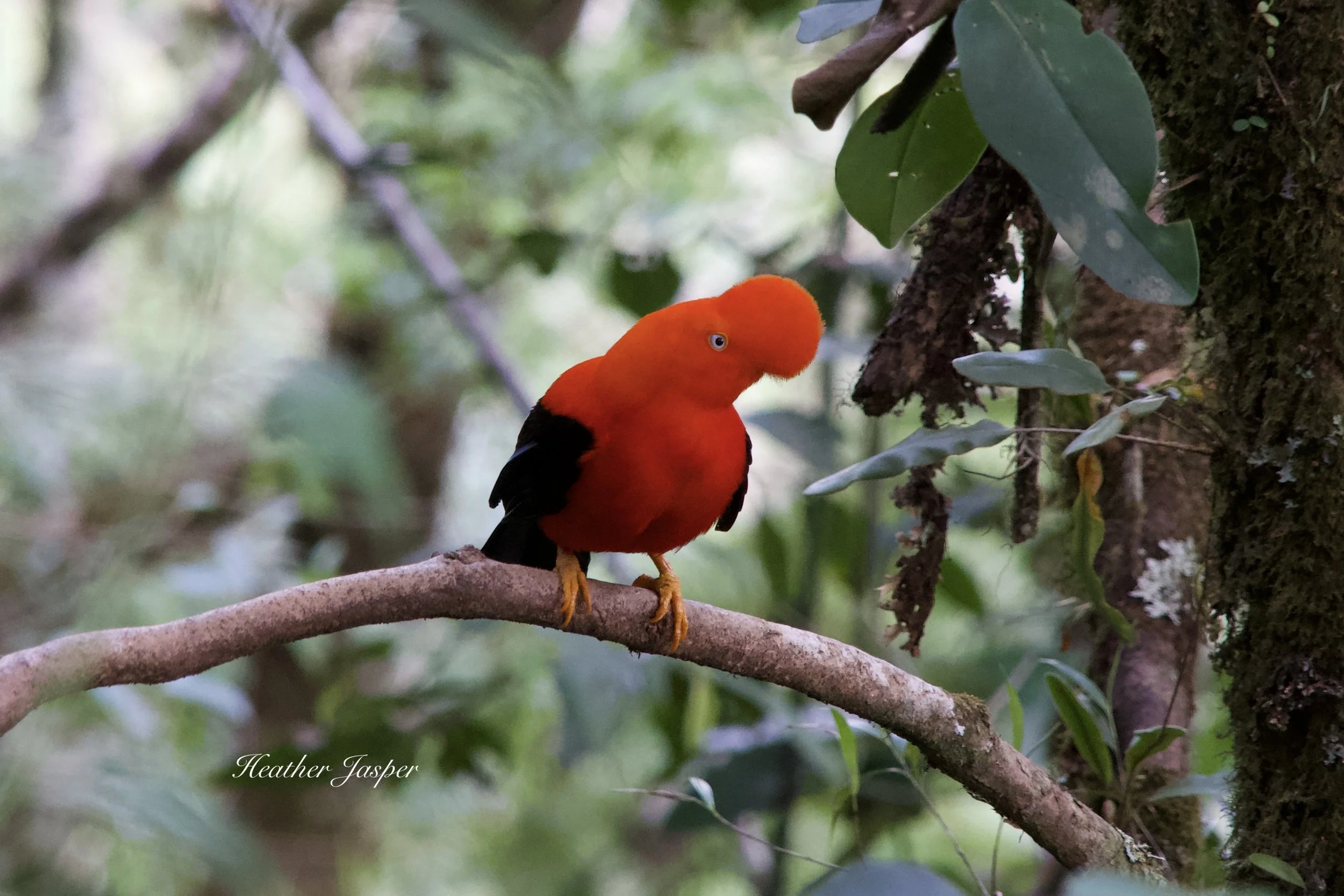
The Andean Cock-of-the-Rock has a fluffy plume of feathers on its forehead that hides its beak.
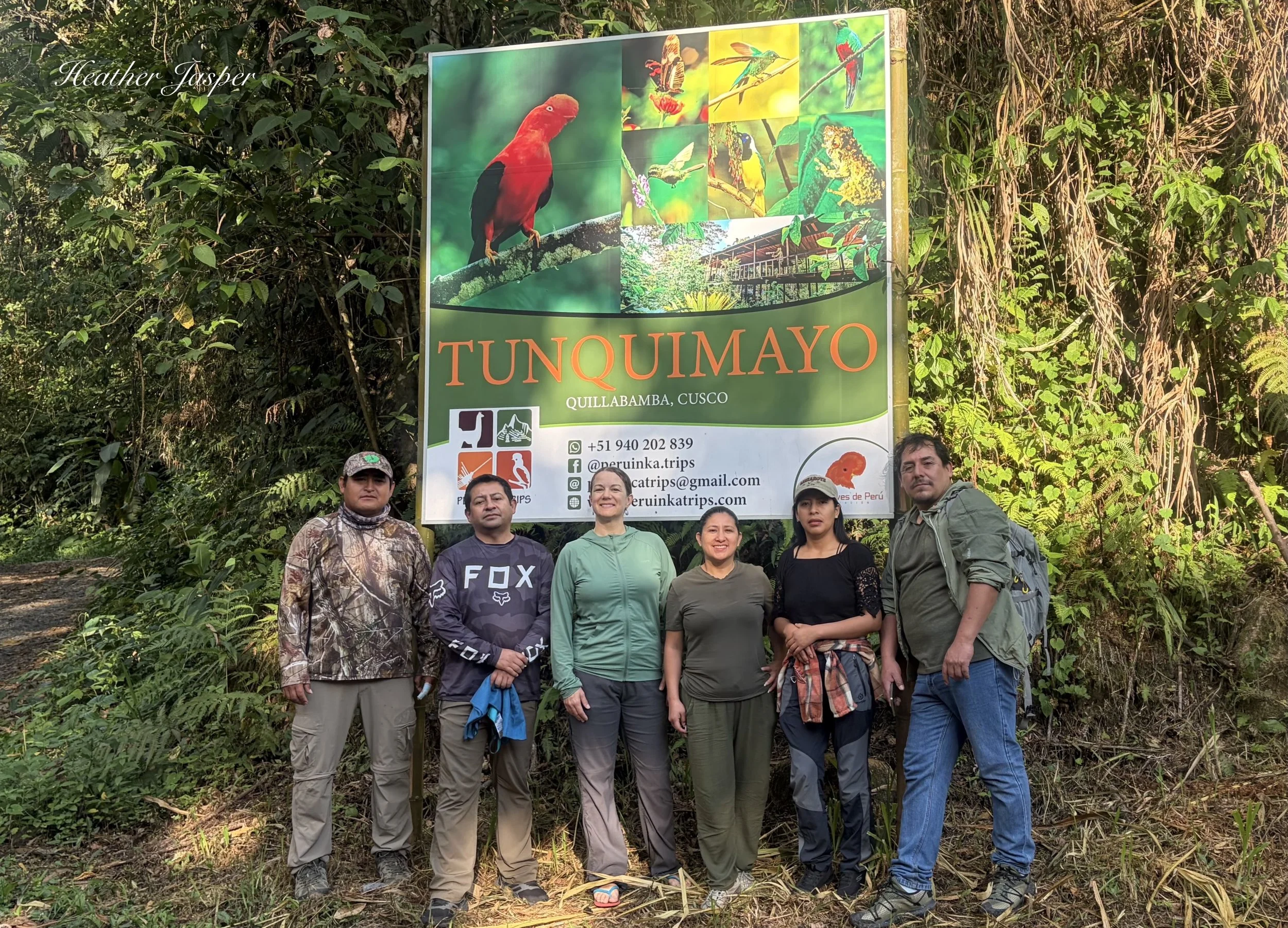
October Global Big Day 2026 was a fabulous success at Tunquimayo Lodge.
My team recorded 67 species, 21 of which were new for me, and I got to add to my life list. (The species list is at the bottom of this blog post). The bird we saw most of was the Andean Cock-of-the-Rock, which the lodge is named for. In Quechua, Tunqui is the Cock-of-the-Rock and Mayo is river.
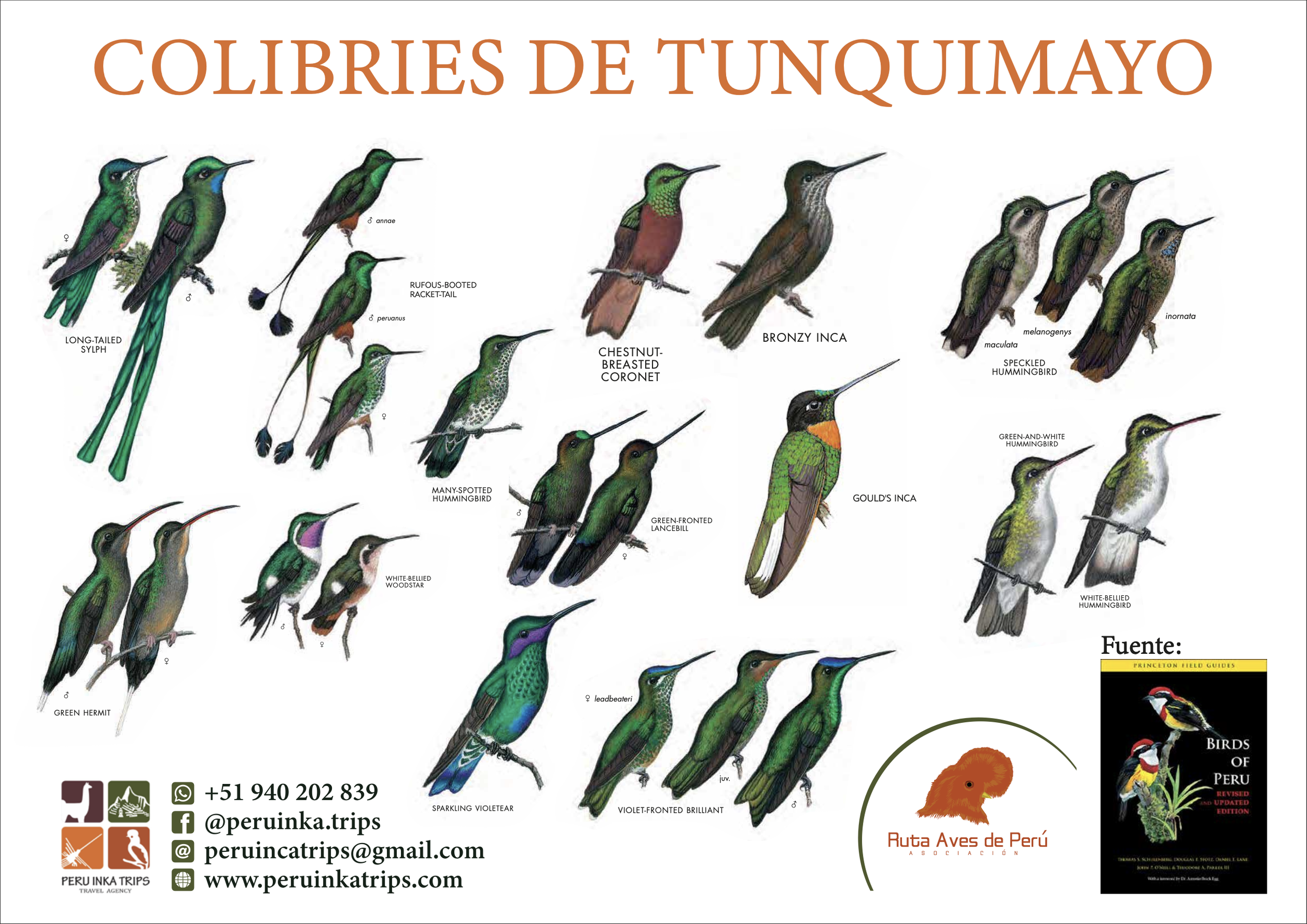
I saw ten species of hummingbirds at Tunquimayo Lodge, mostly in the forest but a few at feeders by the lodge.
What birds can you see at Tunquimayo Lodge?
There is a fabulous diversity of birds, especially hummingbirds, at Tunquimayo Lodge. I think they’re all beautiful and fun to spot in the wild, though one bird stands out as the most popular for birdwatchers. The Gallitos de las Rocas is Peru’s unofficial mascot and one of the most beautiful birds you’ll see in cloud forest areas of Peru, Colombia, Ecuador and Bolivia.
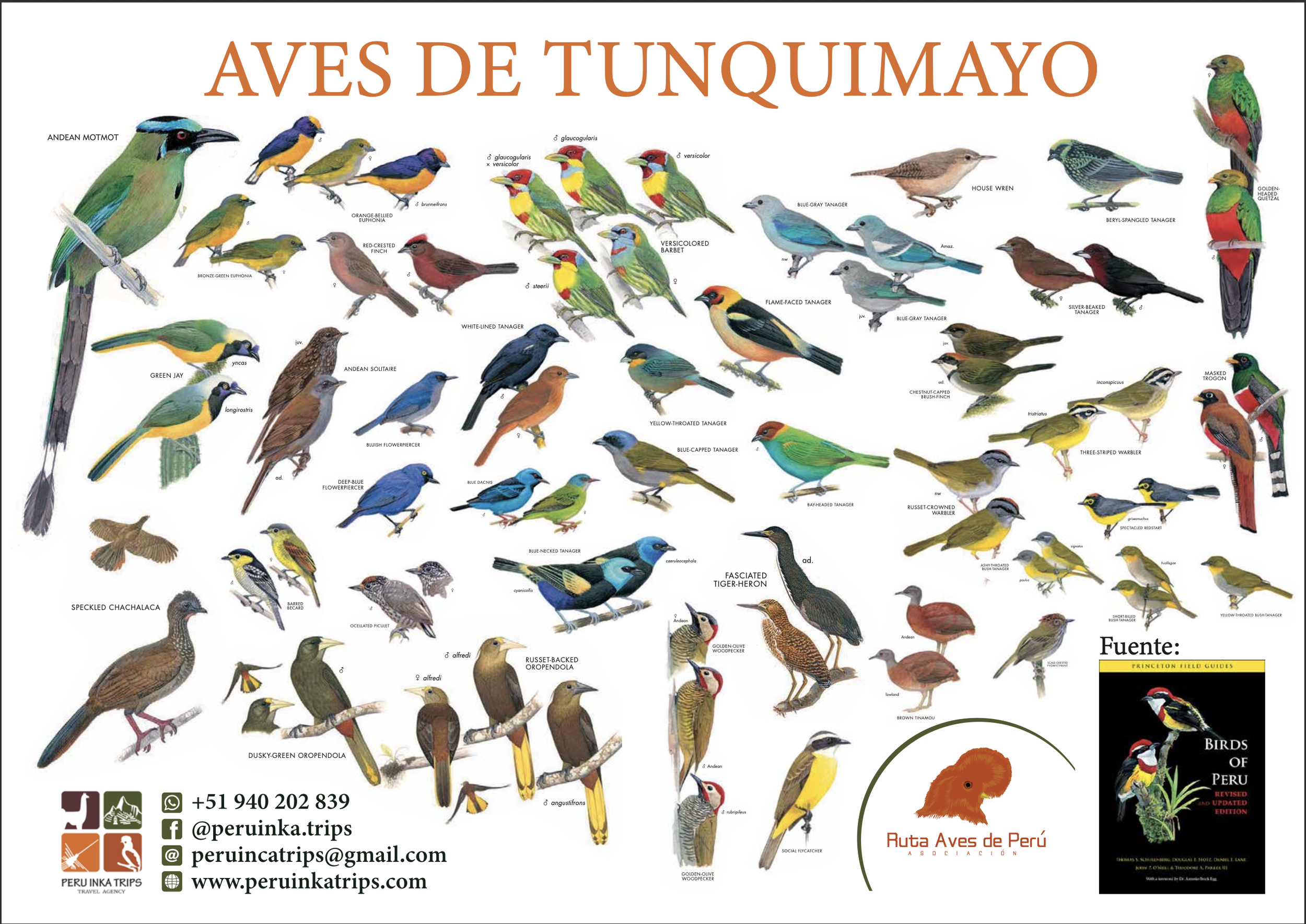
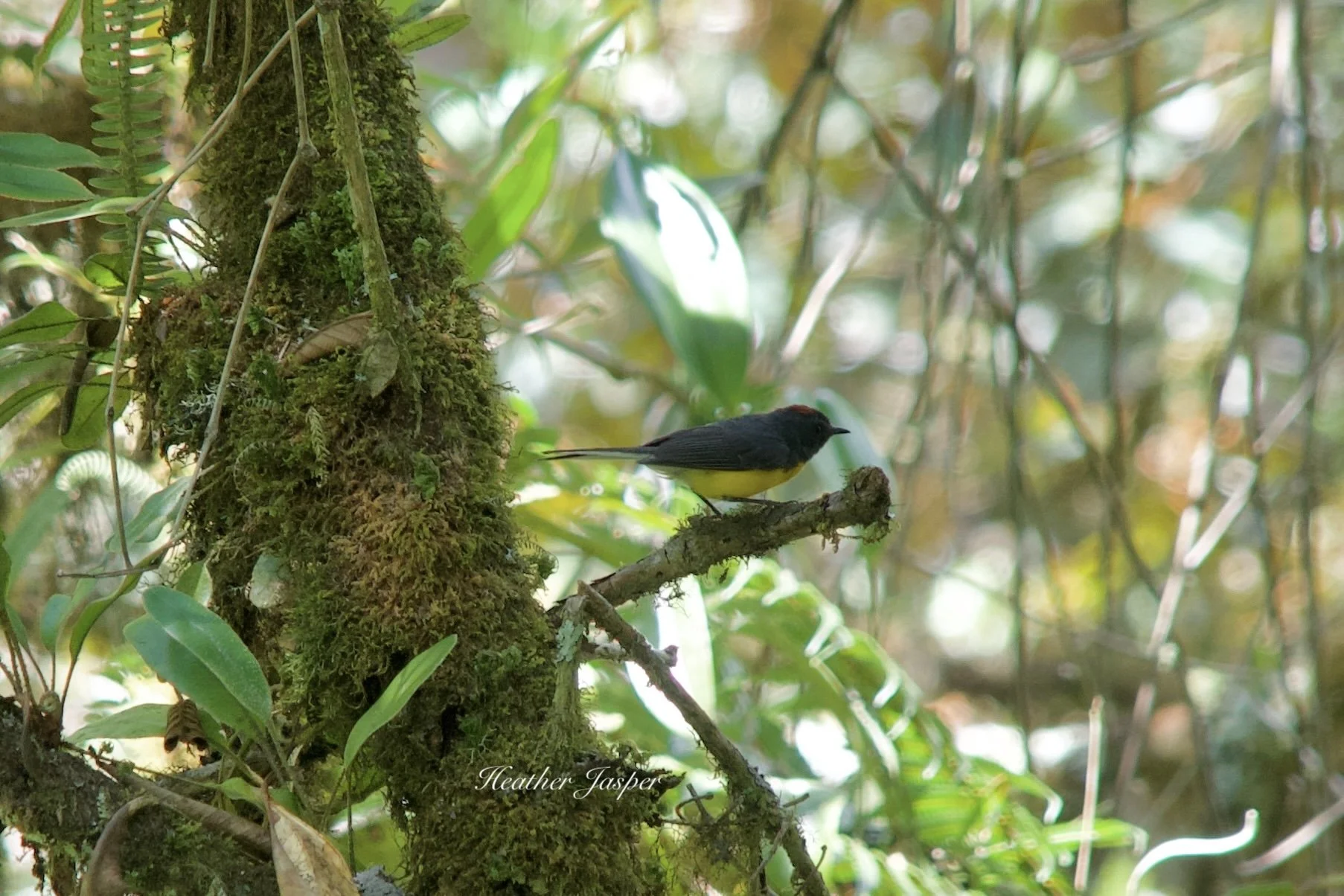
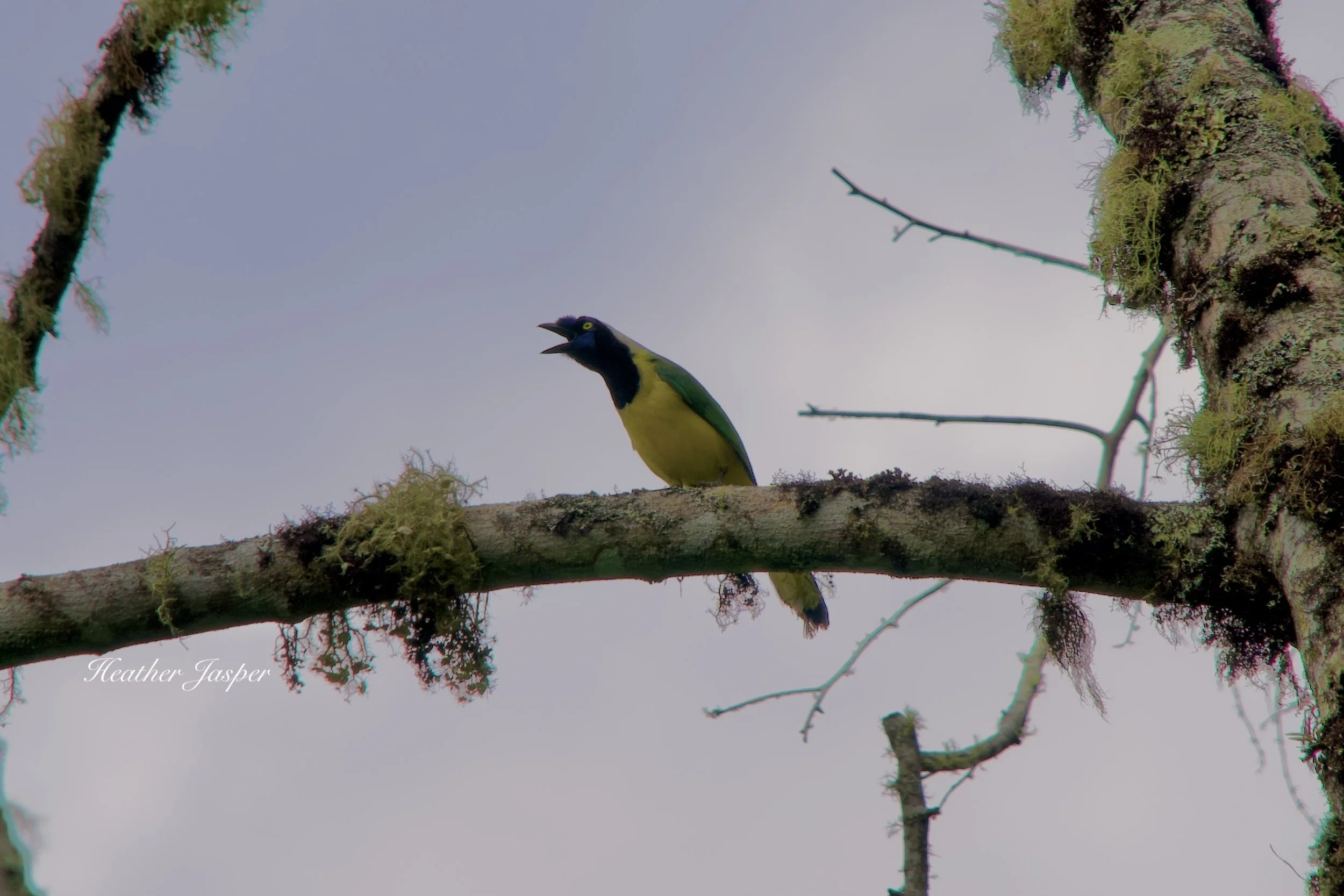
The Andean Cock-of-the-Rock is certainly not the only bird you can see at Tunquimayo Lodge. The ones I saw most were the Green Jay and Speckled Chachalaca, but I’ll have to go back for the quetzal.
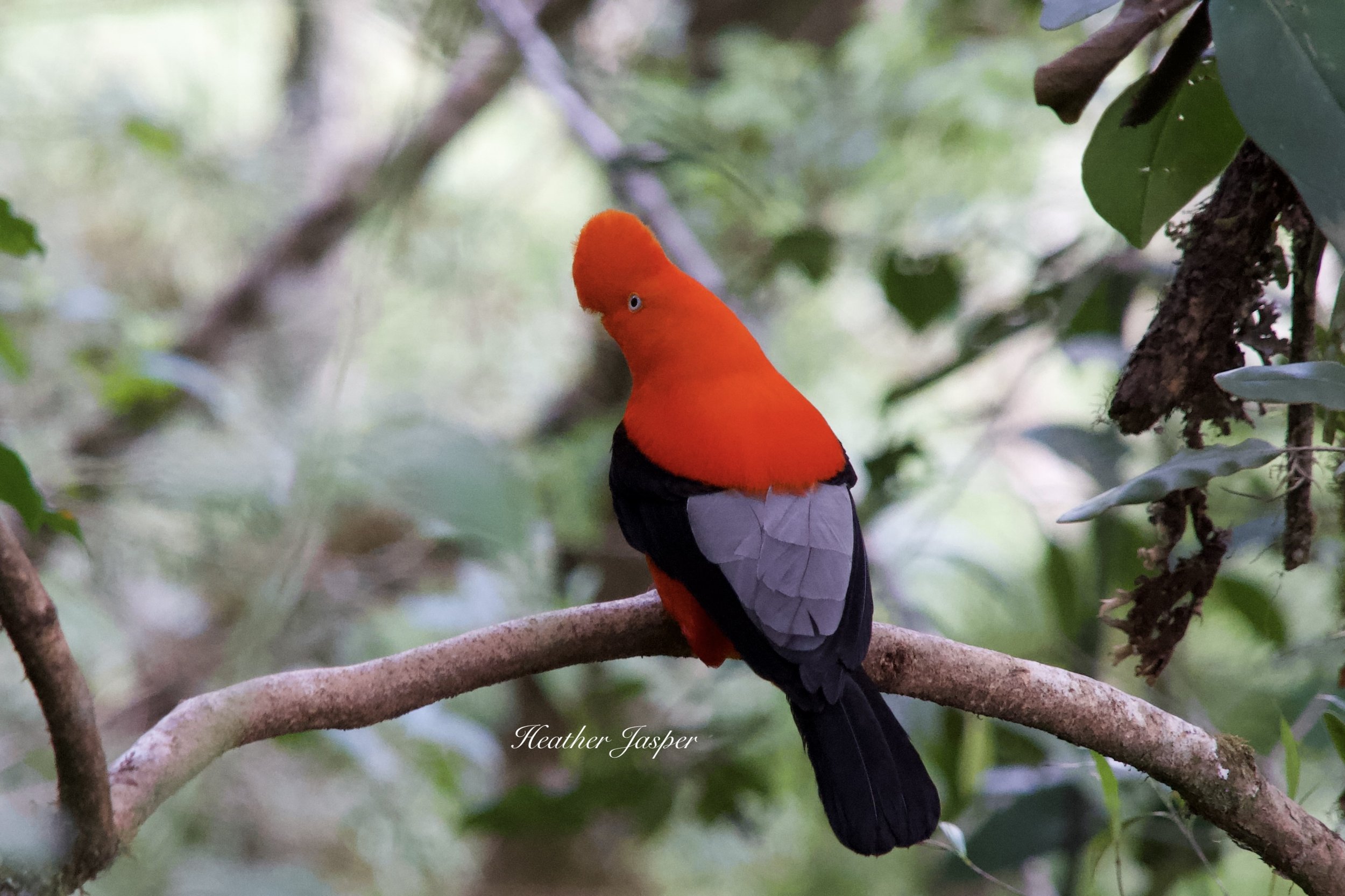
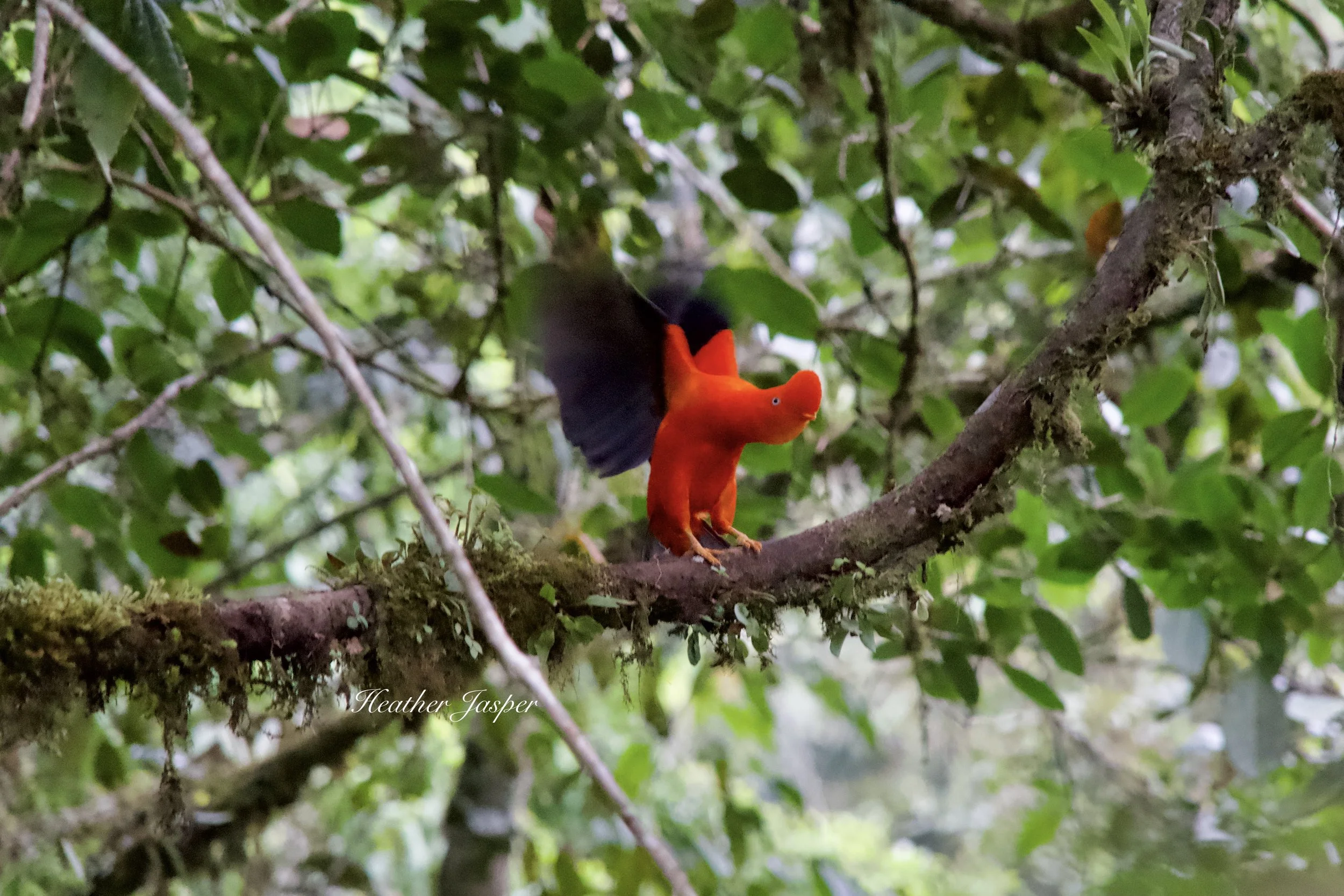
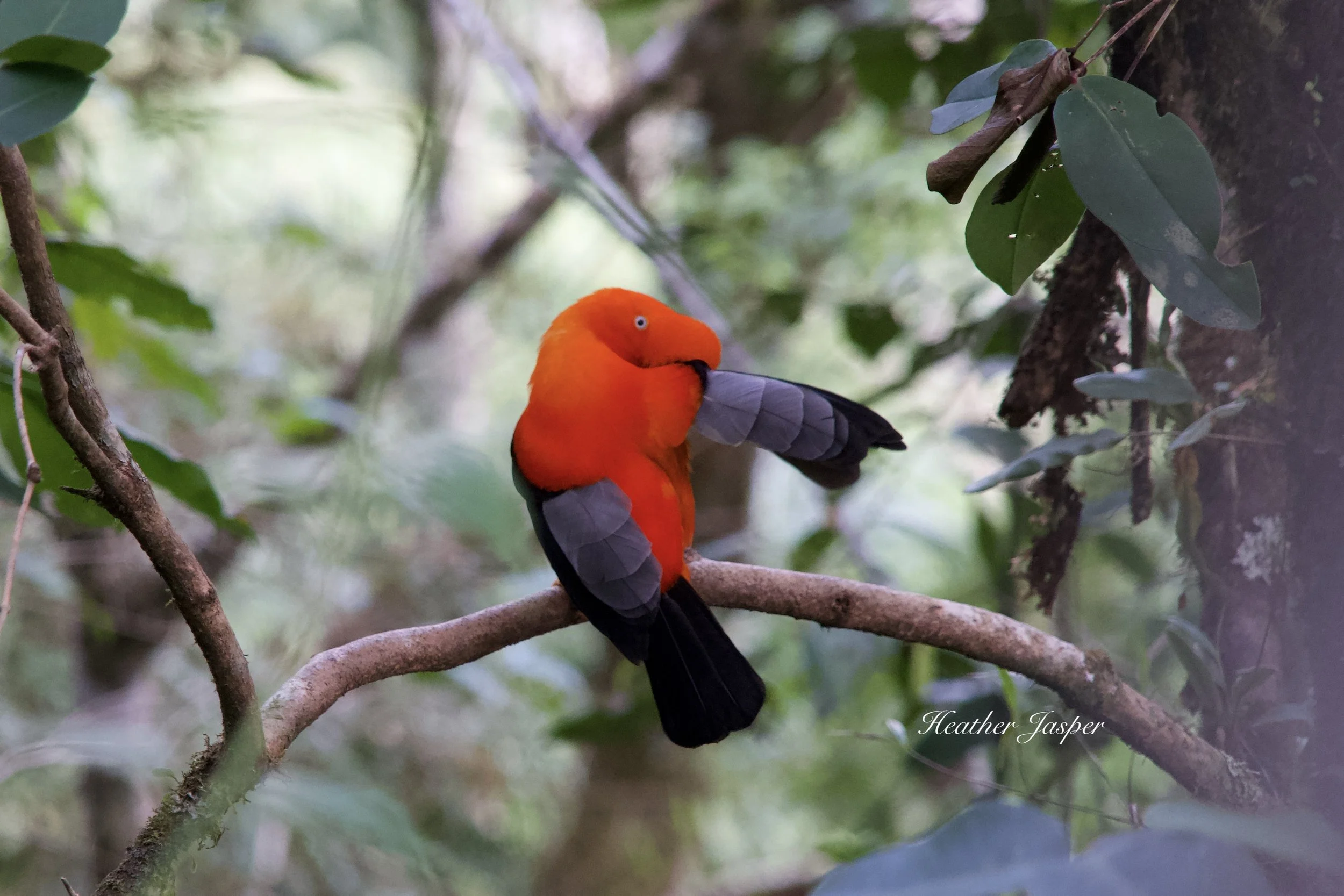
What is the Gallito de las Rocas?
The Gallito de las Rocas, scientific name Rupicola peruvianus, is called Cock-of-the-Rock in English, though gallito actually means “little rooster.” The crest of feathers on its head, which stand up like a cockscomb, gives it the name, along with its nesting sites on rocky cliffs. I prefer the Quechua name Tunqui (also spelled tunki) and saw more of them at Tunquimayo’s lek than anywhere else I’ve gone birdwatching.
I use Cock-of-the-Rock, Gallito and Tunqui interchangeably throughout this post. (Click on the photos above to enlarge them).
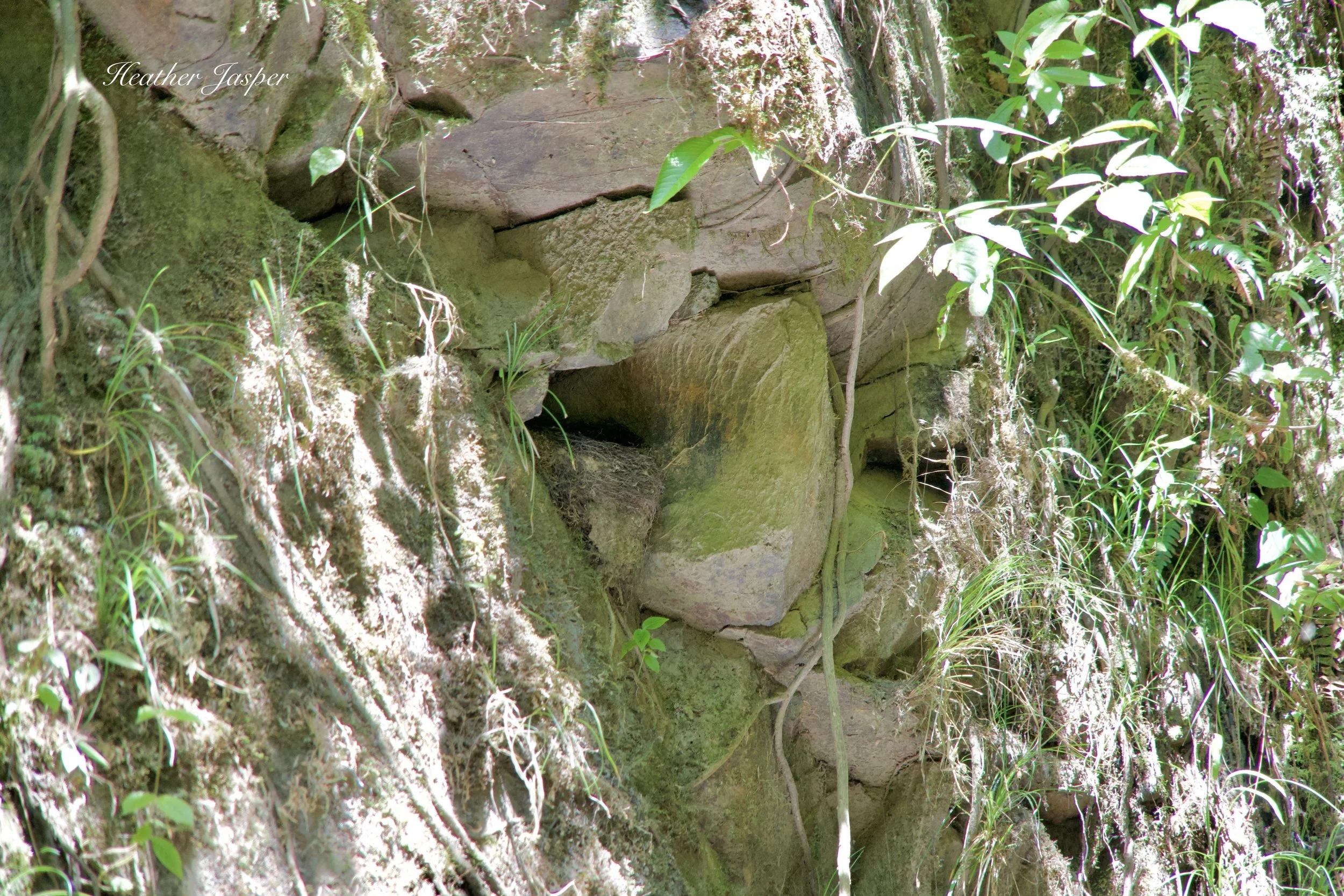
The nest in the rocks
This Cock-of-the-Rock nest is on a steep wall of Tunquimayo Lodge’s waterfall trail that goes up a narrow gorge full of waterfalls.
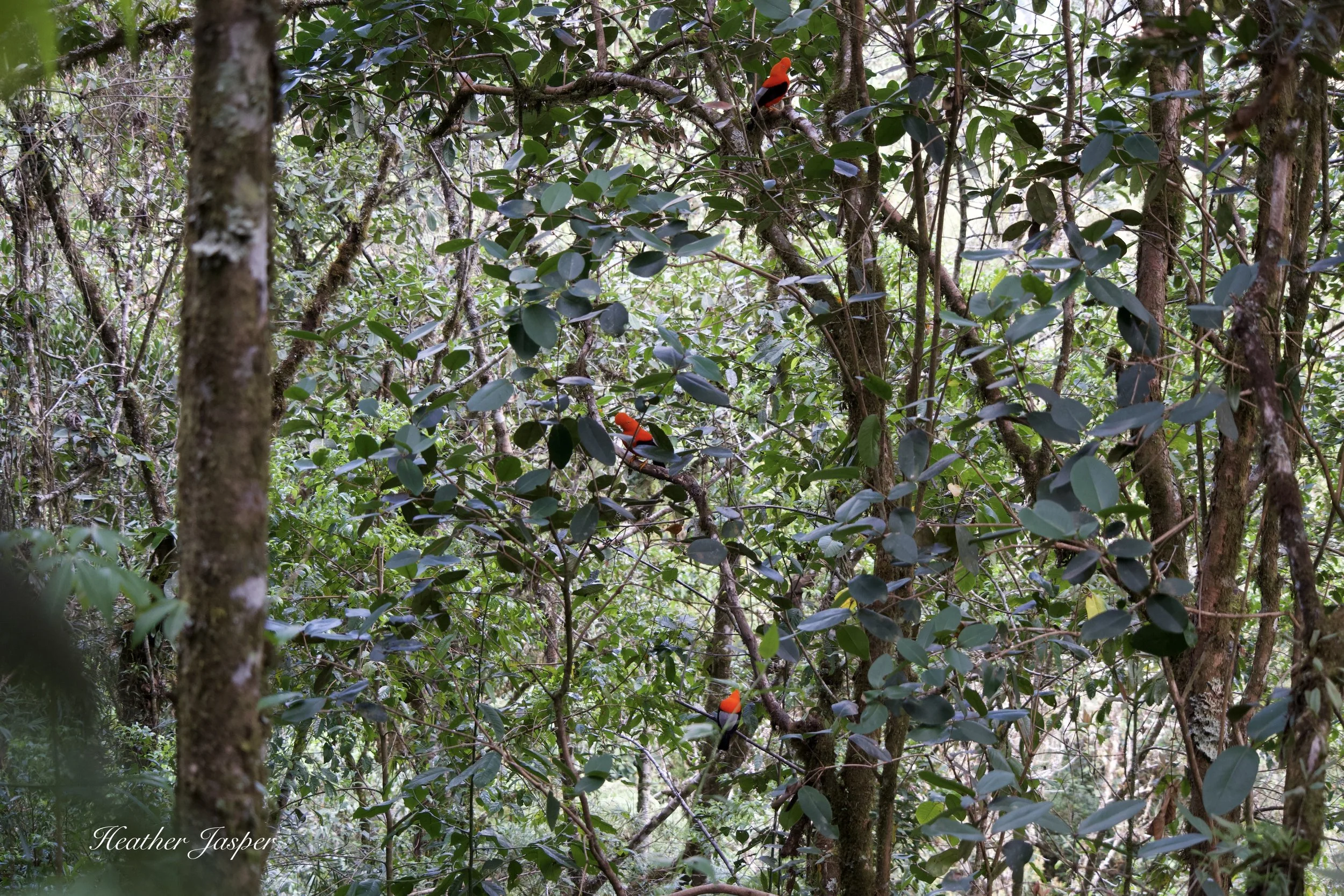
I only got three birds in this shot but there were six male Tunquis squawking and dancing around in the branches.
What is a Cock-of-the-Rock lek?
A lek is where males gather to show off, in the hopes that a female may happen by and be impressed enough to want to mate with one of them. When a female isn’t there to admire their choreography, they practice by dancing for each other.
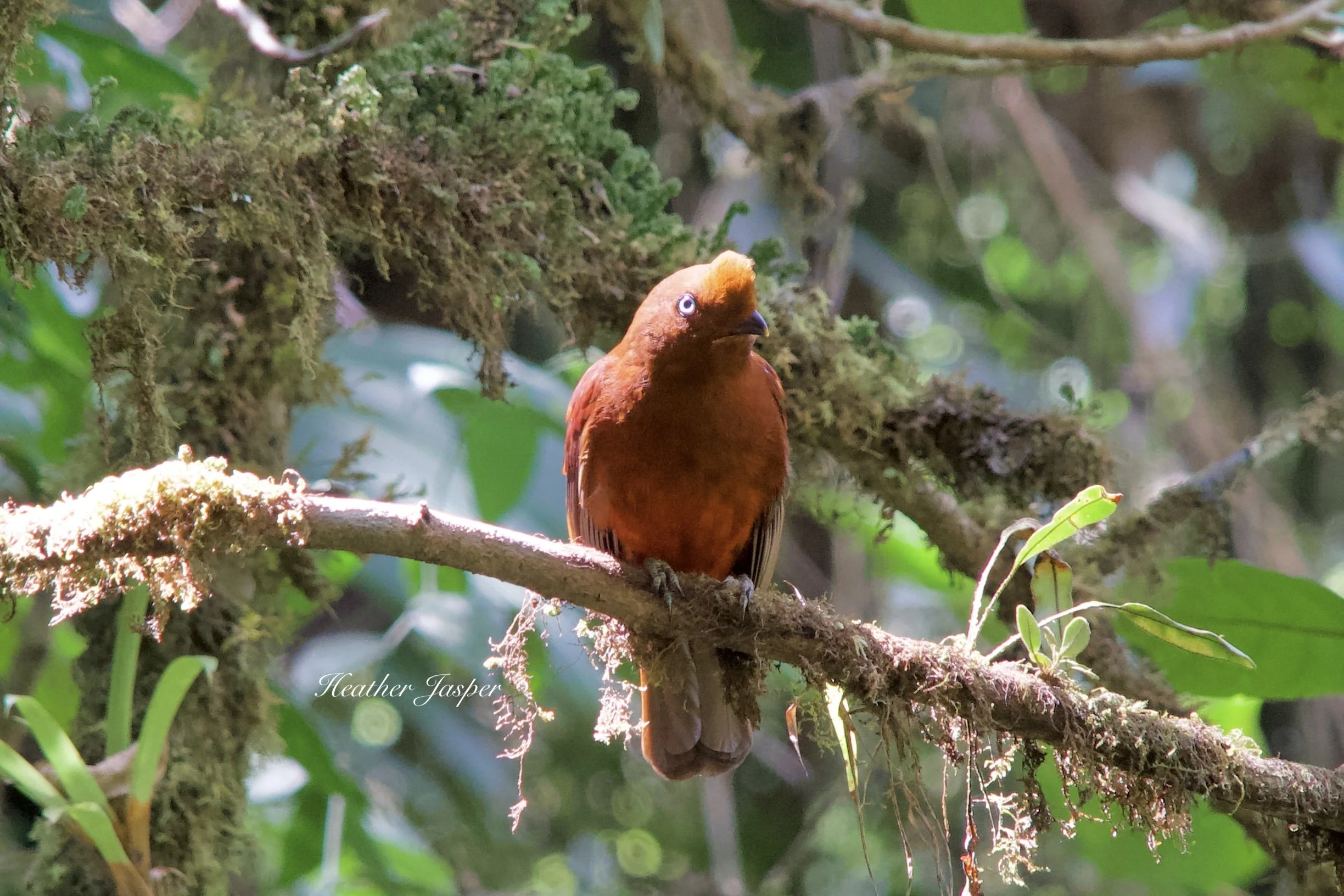
This female Gallito de las Rocas watched the males dance but was apparently unimpressed as she left after a few minutes.
How can you recognize a lek?
A Tunqui lek can be anywhere that a group of males think will be a good dance floor to attract females. The word comes from the Swedish word lek, which means play, since it looks like they’re playing as they dance around. The Tunquis clear lichens, bromeliads and bark off branches for dancing, so even if none are there, you can tell which branches they like to dance on. They may use the same lek for years, until something changes that they don’t like, like a tree falling down or their favorite branches breaking.
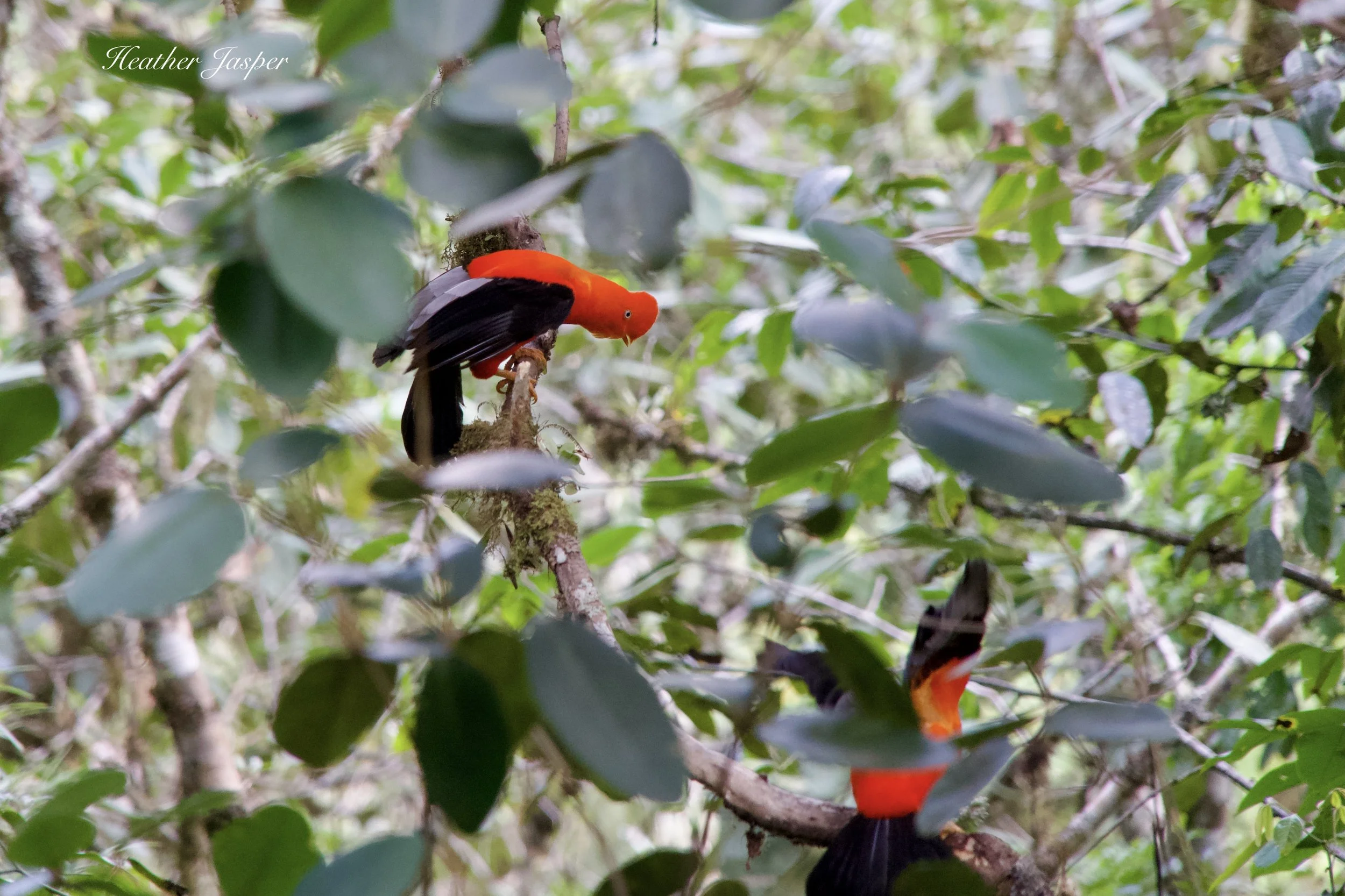
The Gallito above is cawing while the one mostly hidden behind some leaves dances on a section of cleaned branch.
What does a Cock-of-the-Rock sound like?
Do not expect melodious bird calls when you go see the Tunquis. You can hear them at their lek long before you see them because their call sounds like tone-deaf crows. Perhaps the females are indifferent to birdsong or perhaps they like raucous squawking. I like it only because their awful squawks are so hilariously incongruous with their beautiful plumage and choreography.
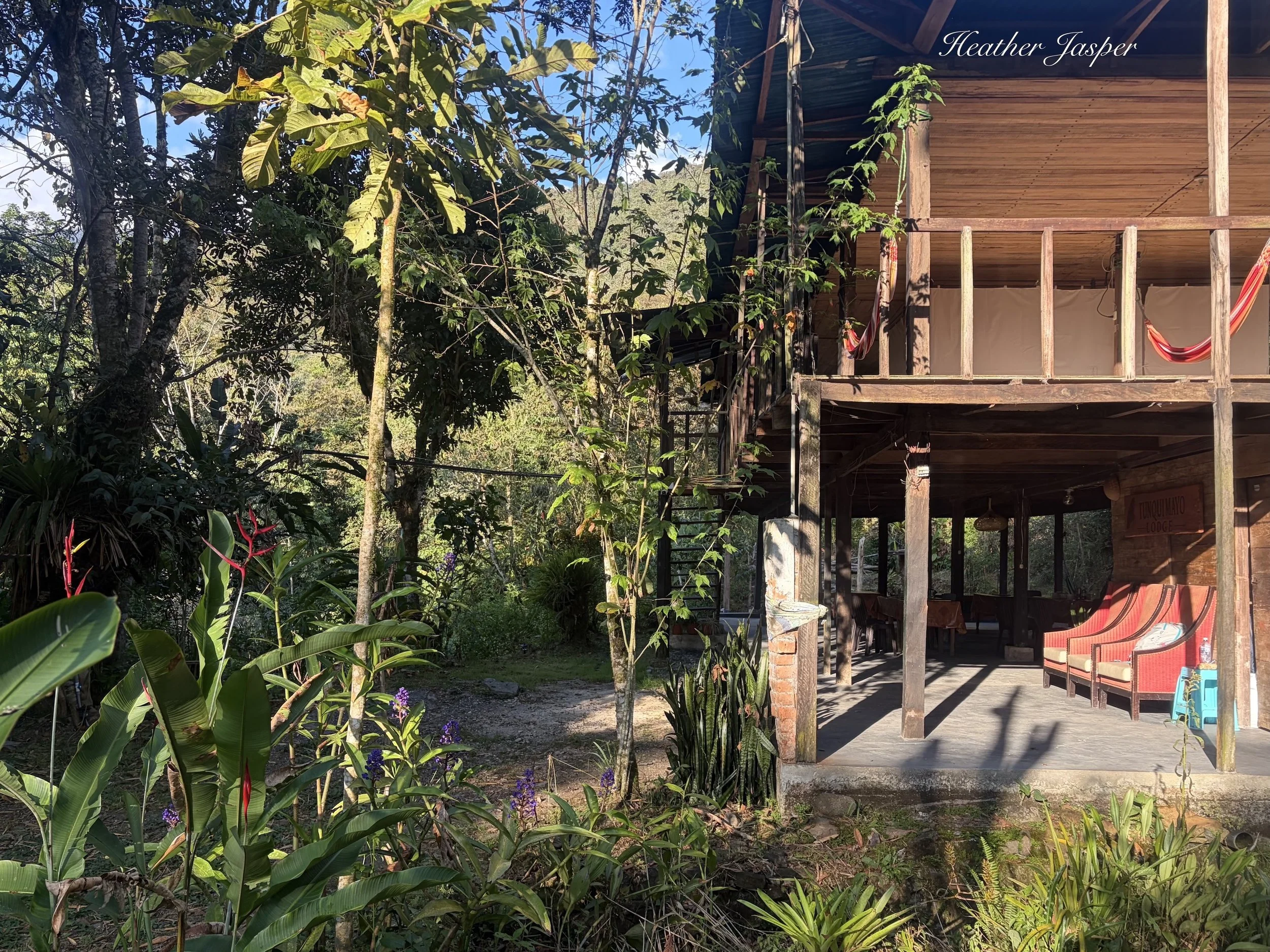
Rooms, hammocks and tents are upstairs, with a dining area and couches facing hummingbird feeders downstairs.
Staying at Tunquimayo Lodge
We arrived at Tunquimayo Lodge on Friday night, ready to bird from dawn to dusk on Saturday. We stayed a second night because the drive back to Cusco takes about six hours.
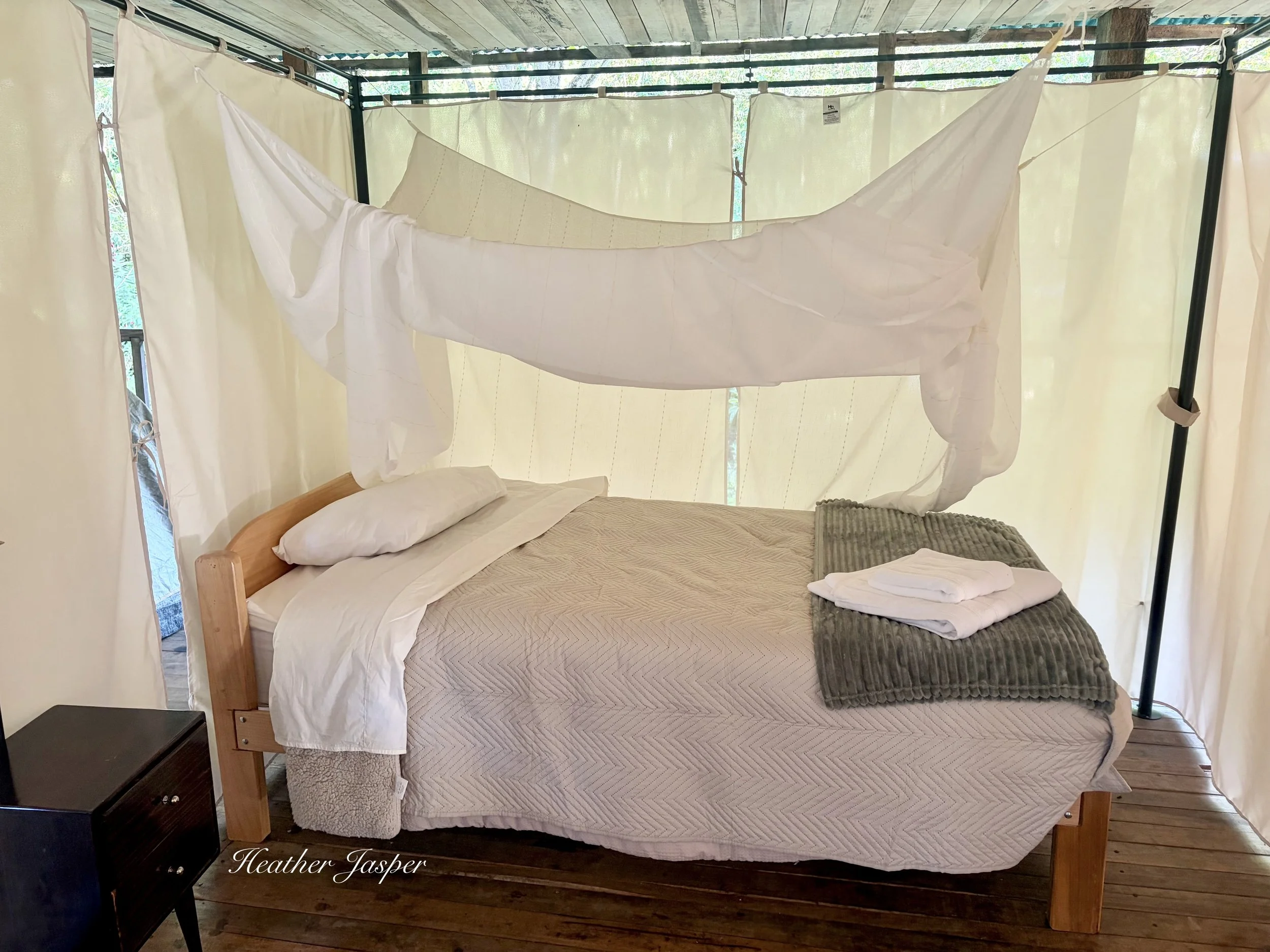
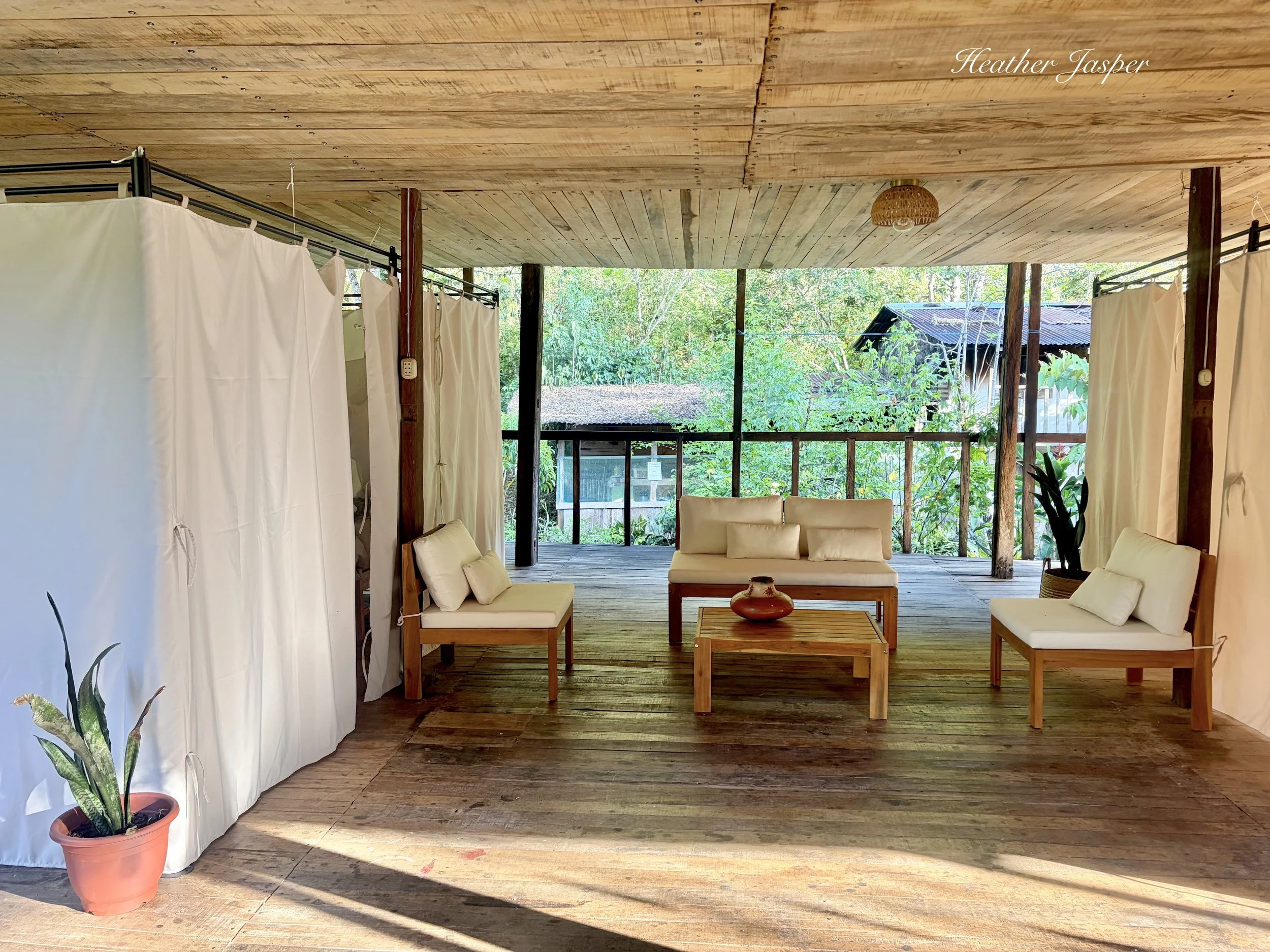
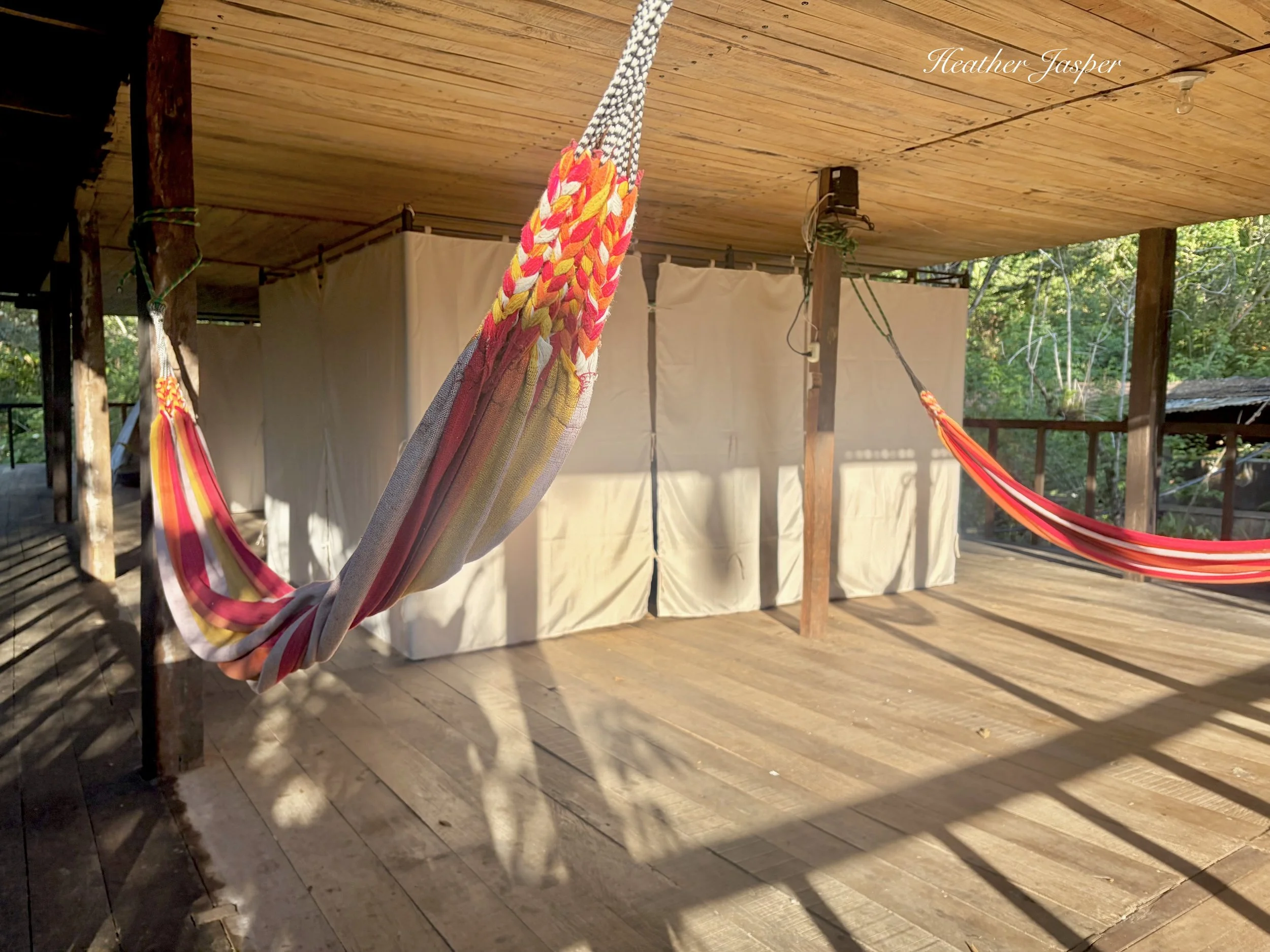
Tunquimayo Lodge has two bedrooms, each with two beds. They’re rustic, tented rooms, on a wooden floor, with a solid roof, like what you would expect on a safari. Each of the four beds has a mosquito net, soft mattress and warm blankets for the chilly nights. The same floor has open space for hammocks and tents, plus more space in the gardens for tents.
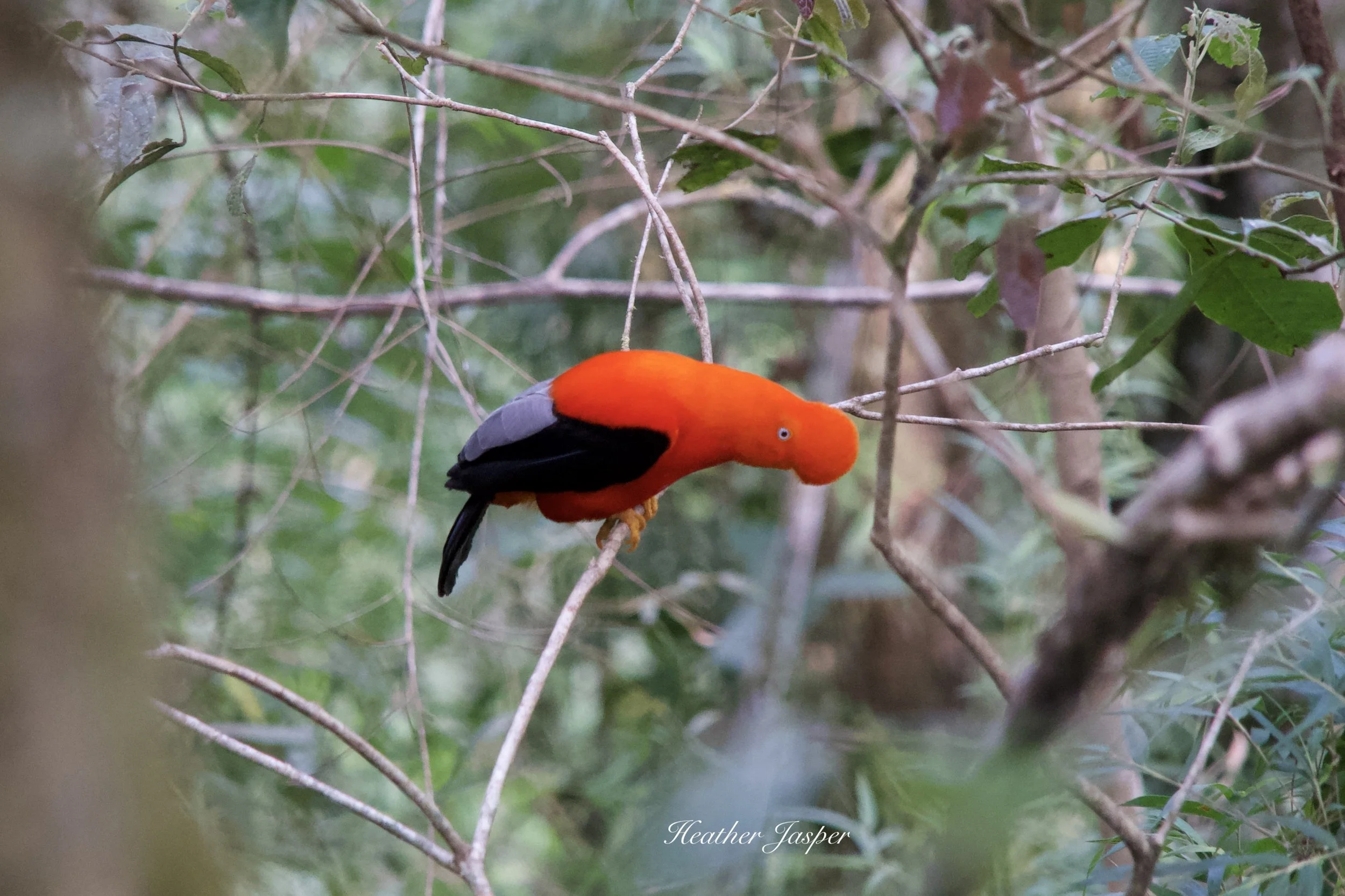
The Tunqui does a lot of bowing, rocking up and down, before he starts dancing with his wings out.
Morning at Tunquimayo Lodge
We got up early to go to the lek before sunrise and I was so thankful that Aracely, the manager, had coffee ready and waiting for us at 5am. The plan was to get in 3 or 4 hours of birding before breakfast. Our first stop was the lek, where we saw 8 male Tunquis and one female. Breakfast, when we got back at 8:30, was hearty, which I needed after getting up so early.

Breakfast at Tunquimayo Lodge
The coffee was delicious, the avocado was perfectly ripe, the eggs local and the plantains cooked just right.
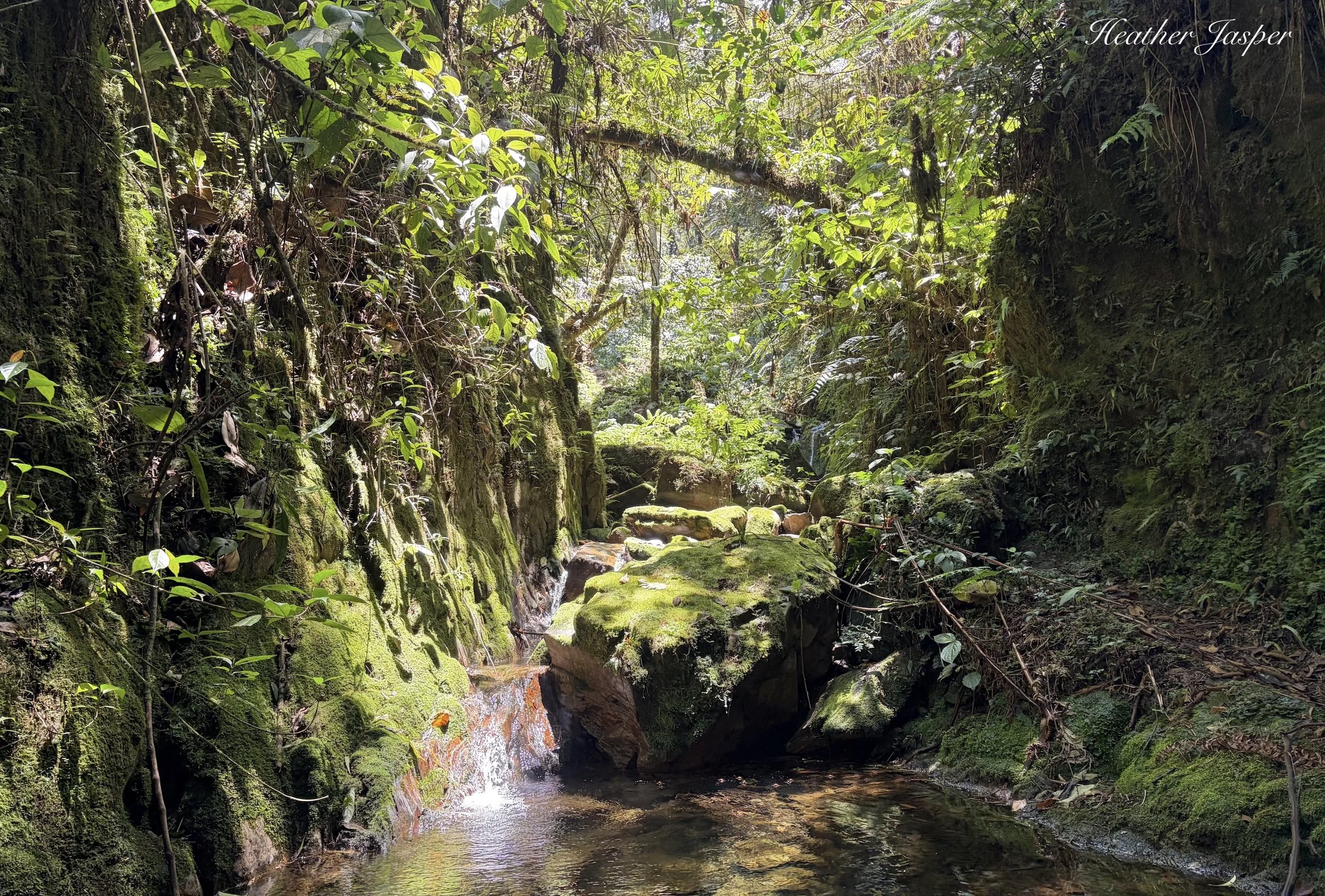
The waterfall hike would be amazing even if you didn’t see any birds. The entire trail goes through beautiful jungle.
After breakfast, we hiked up a narrow gorge full of waterfalls, above. The trail is around 3km/1.8mi but we stopped every five minutes to photograph birds so the hike took us much longer than the usual 45 minutes. It was beautiful, with little cascades all along the trail and a tall waterfall at the top. I loved the giant ferns but we were there for the birds and added lots of species to our list, plus some great shots of a female Tunqui.
Lunch at Tunquimayo Lodge
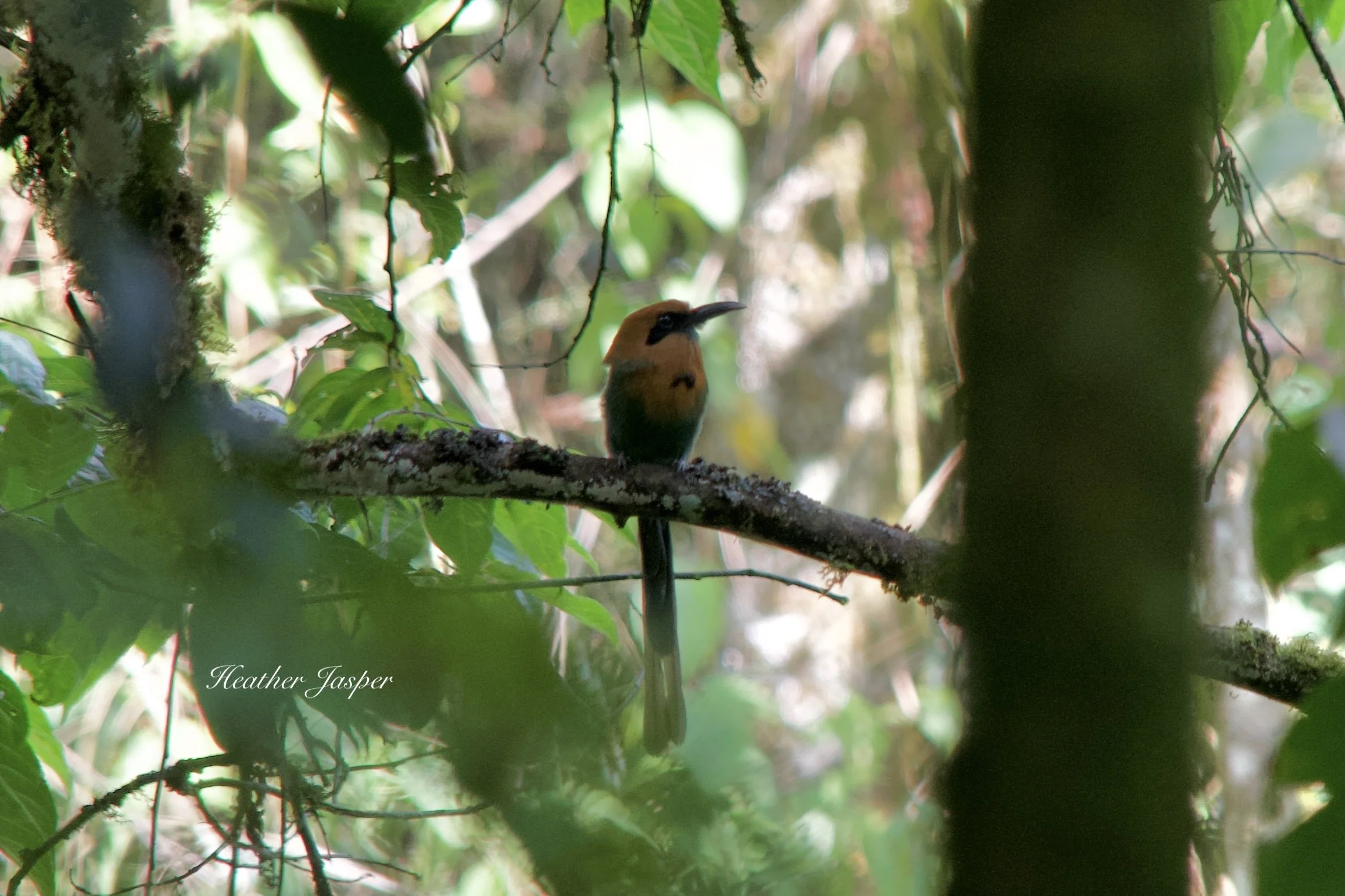
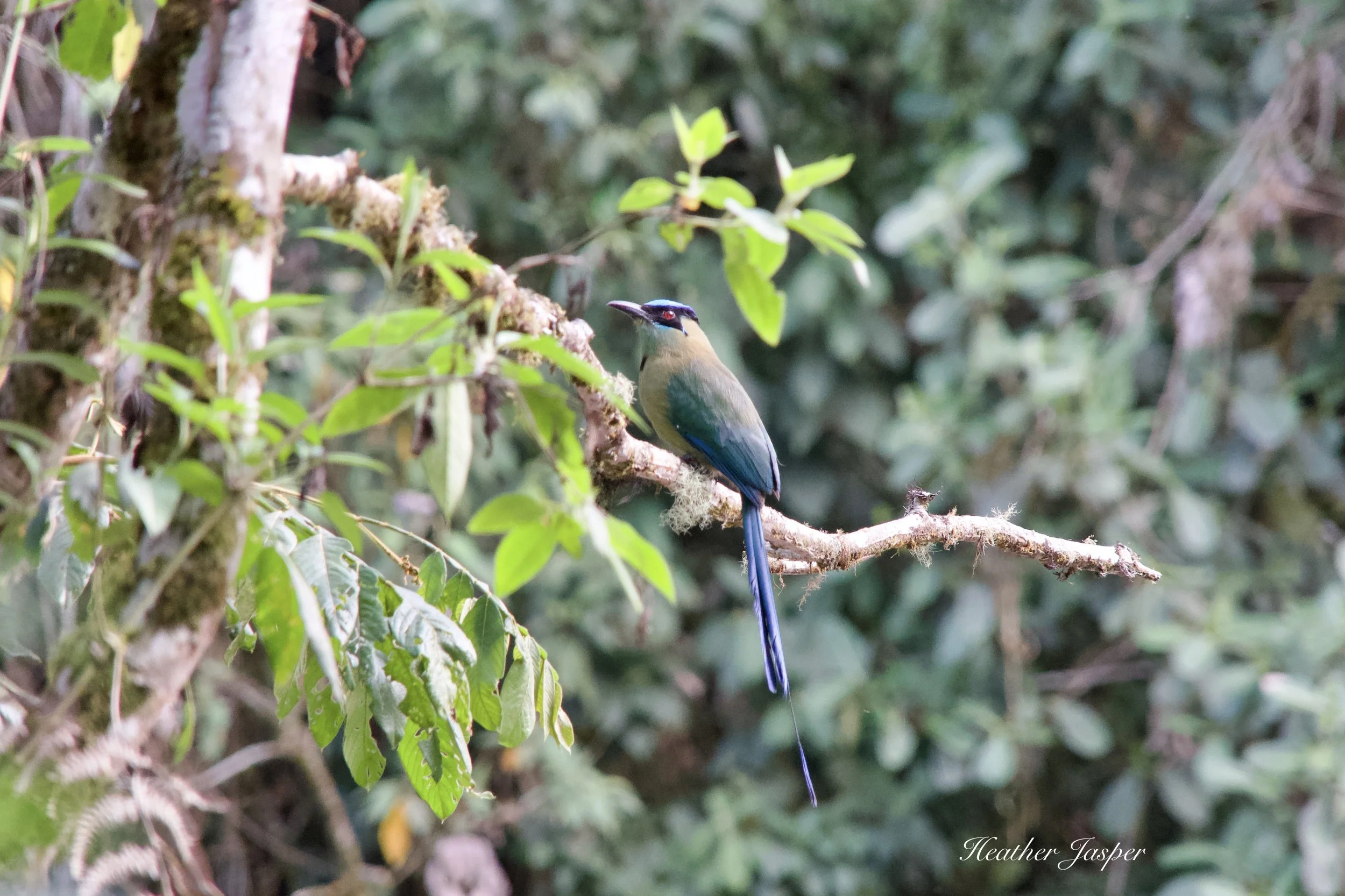
Lunch was fried trout, followed by time sitting by the hummingbird feeders or relaxing a bit in the hammocks. Birds aren’t very active around noon, so there was no rush to get back out. However, I did see two motmots close to the lodge, above. Fely saw the Crested Quetzal, which she says come by every day, so I’ll have to go back. Around 3:30 we went back to the lek, where we saw 6 male Tunquis, though no females came by to see them dance. After the lek, we walked up the road from the lodge to the river.
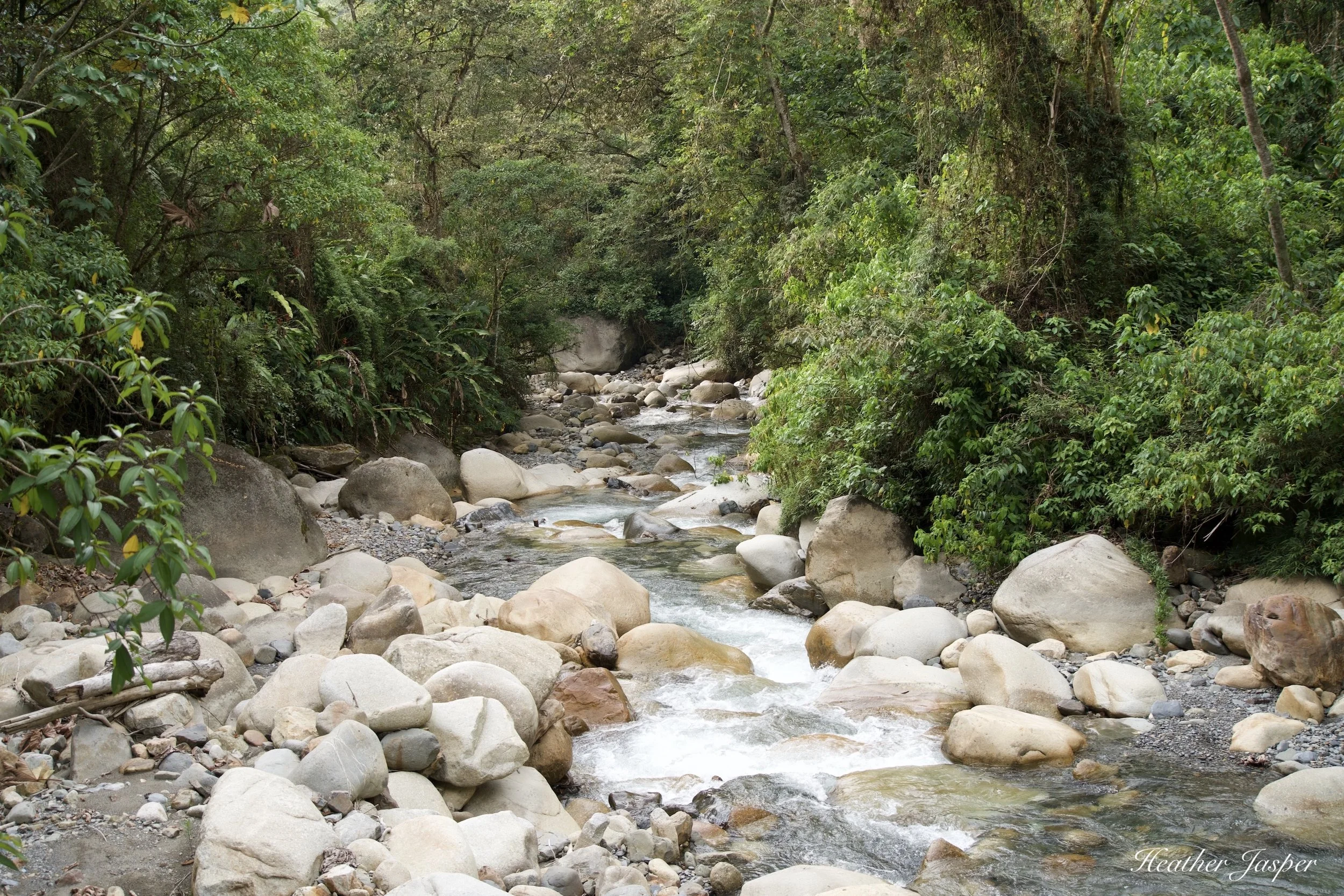
The river, mayo in Quechua, was a beautiful place to spend the late afternoon and had very different birds from the forest and waterfalls.
Evening Birding at Tunquimayo Lodge
As we got closer to dusk, we walked up by the river, mayo in Quechua and the other half of Tunquimayo Lodge’s name. We saw more tanagers by the river, plus a Black Phoebe and lots of flycatchers. I really wanted to see a Lyre-tailed Nightjar and though one person in our group heard one, I didn’t get to see or hear it.
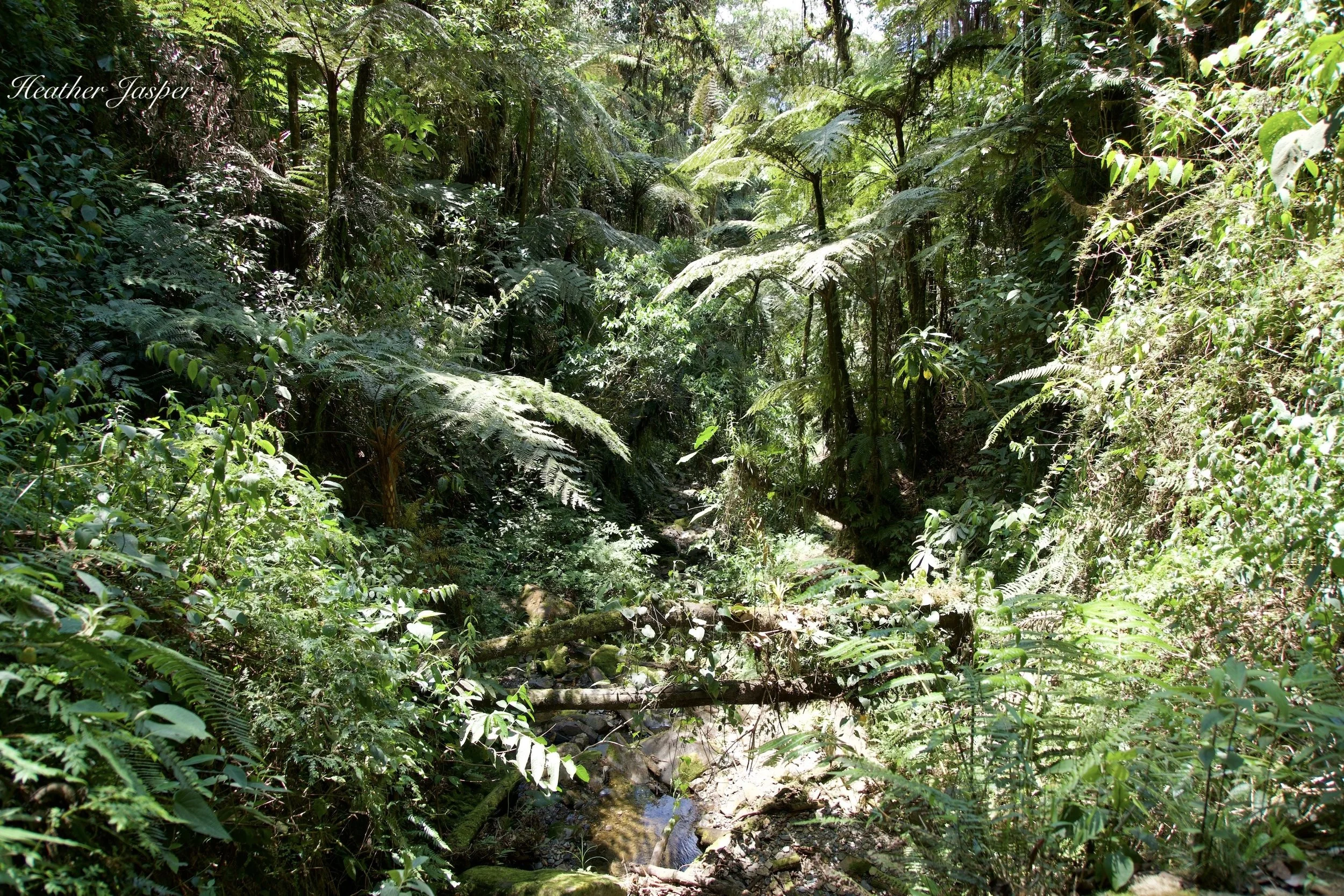
The cloud forest around Tunquimayo Lodge is full of giant ferns and colorful bromeliads.
Peace and Quiet at Tunquimayo Lodge
If you’re looking for birding or peace and quiet near Quillabamba, I highly recommend Tunquimayo Lodge. The manager, Aracely, is fantastic and she did a great job of having meals ready for us when we needed them. She also had Fely, a resident biologist, accompany us since Fely knew where to take us at different times of day and which birds we were likely to see there. I am so thankful to both of them for making our Big Day a success.
What is Global Big Day?
Twice a year, once in May and once in October, birders around the world gather to count as many species as they can. Read about my Global Big Day at Wayqecha on October 11, 2025.
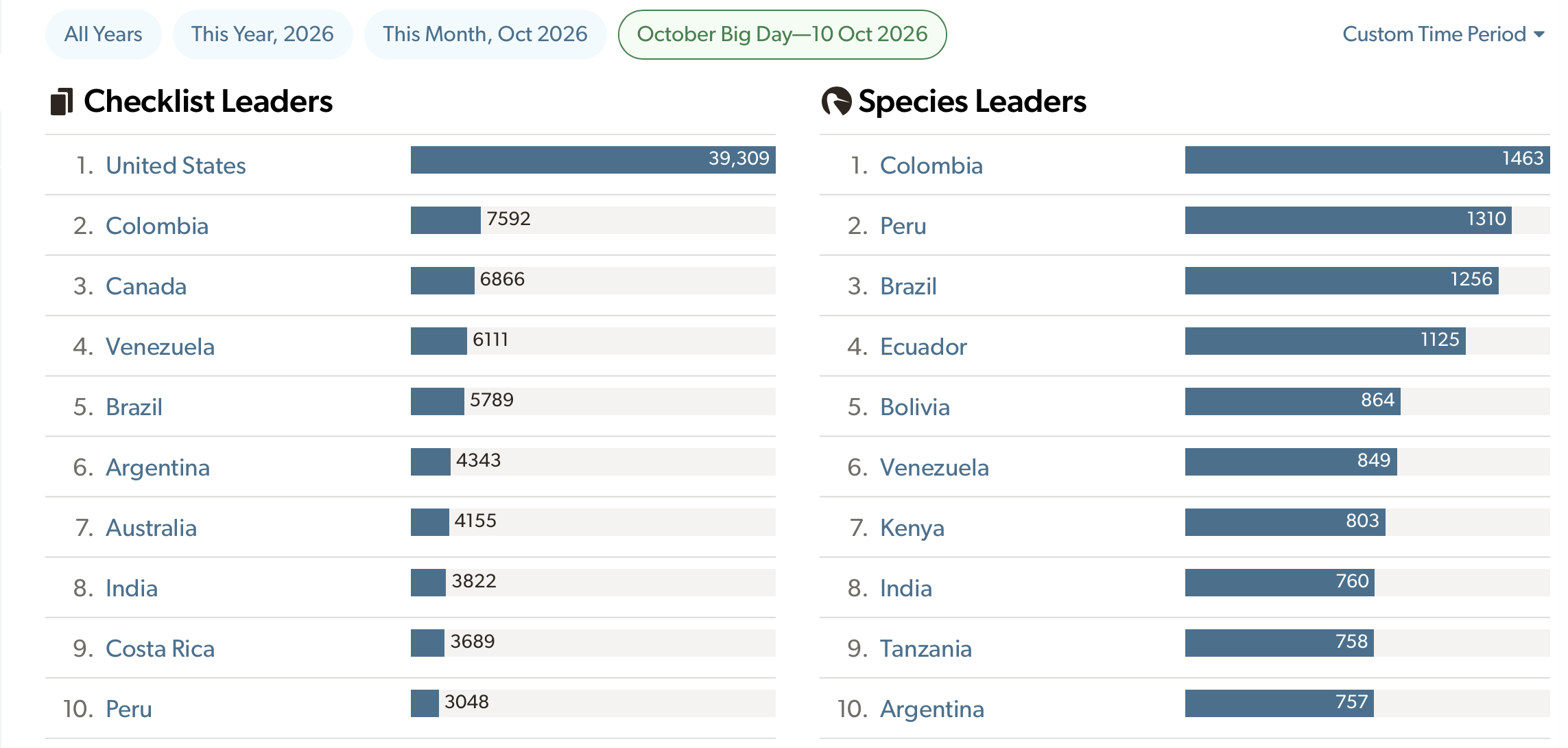
There is a long-standing rivalry between Colombia and Peru, since they are invariably the top two countries on the list of countries that counted the most species of birds. Peru is the underdog in the competition, since more than twice as many people in Colombia submit lists to eBird, which tallies the results.
Who counts more birds?
This year, as usual, Peru was second in the number of species counted, after Colombia. However, Colombia had 7,592 lists uploaded to eBird and Peru had only 3,048 lists. I think that if someday Peru has an equal number of people submit lists as Colombia, we’ll be able to record more species.
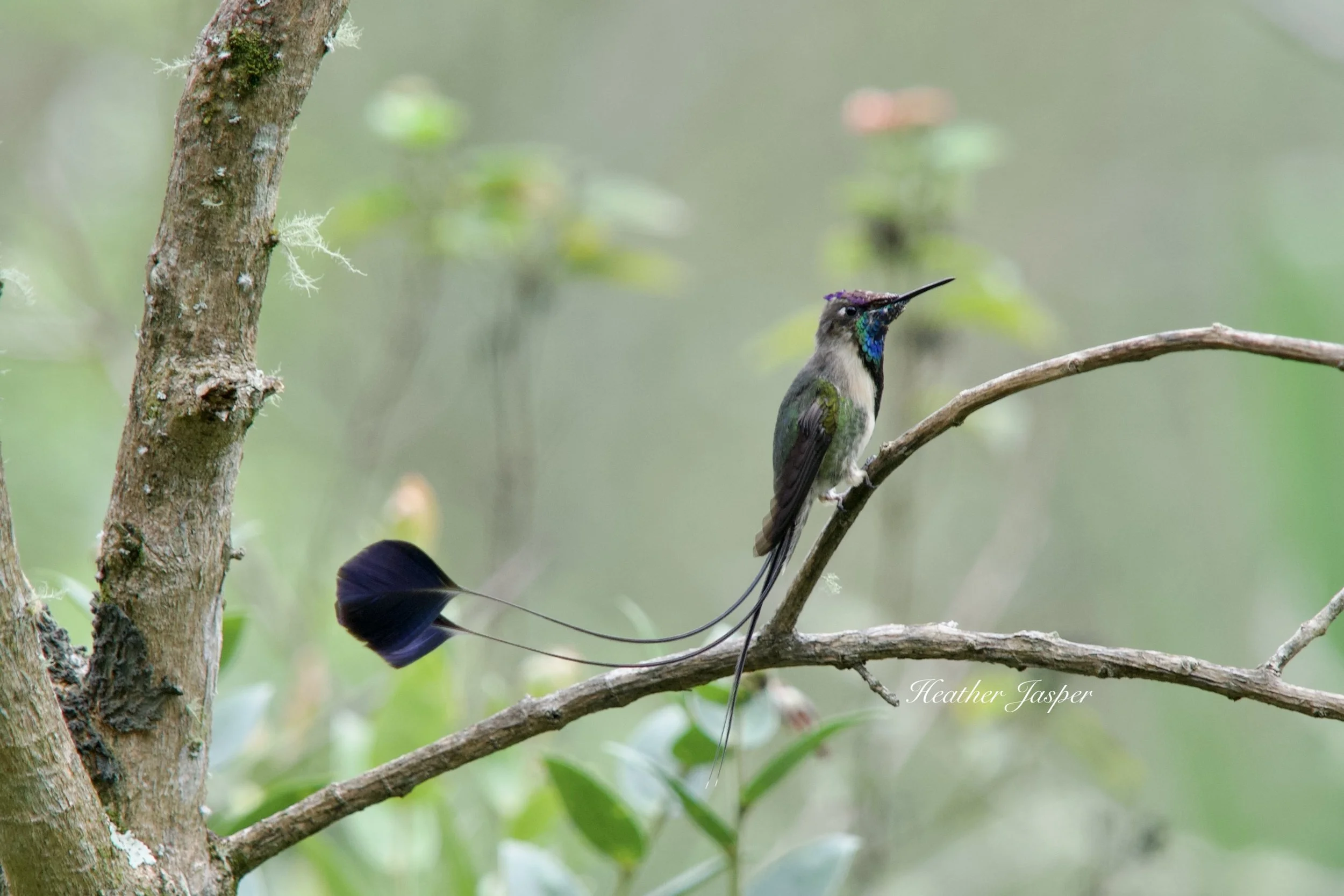
Peru’s most famous endemic bird is the Marvelous Spatuletail Hummingbird, only found in the Utcubamba River Valley.
Why does it matter?
Colombia is world-famous as a birding destination, but Peru lags far behind. As a person who writes about travel and tourism, I want people around the world to consider Peru as a destination for birding trips. It’s already a destination for culture, history and archeology, but too many people come to Peru only to see Machu Picchu. They plan a few days in Cusco and maybe a few more days in Lima or the Sacred Valley. I want them to come to Peru for birdwatching too.
Birdwatching can save the Amazon.
When tourism is a viable economic activity, it competes with extractive industries that cut down the rainforest. In Peru, the worst of these extractive industries are logging and gold mining, both legal and illegal. Whether or not the forest is being cut down legally or illegally, the result is the same for wildlife. Supporting eco-tourism and conservation in the Amazon is one of the best ways to save it.
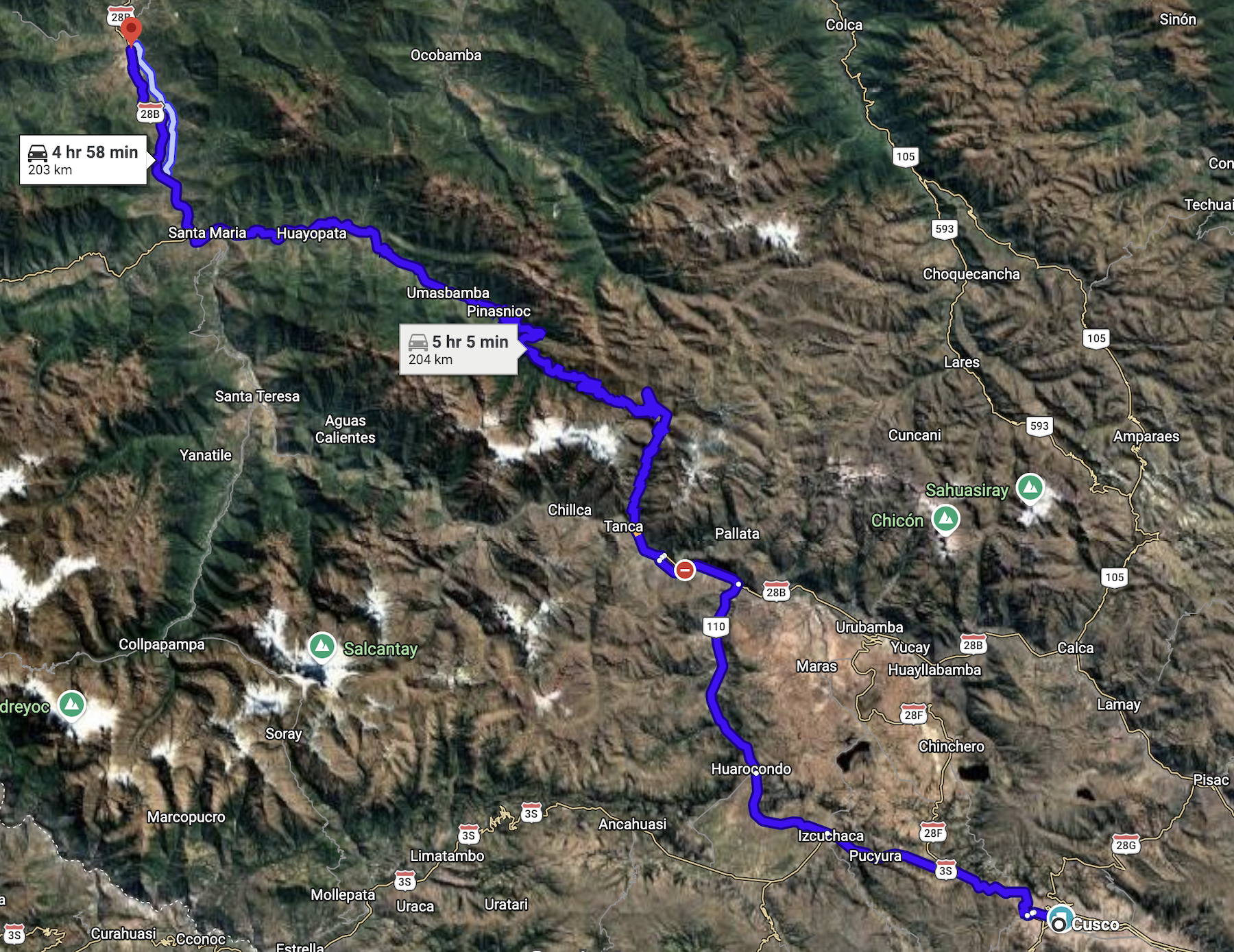
The drive to Quillabamba takes you up and over Abra Málaga at 4,316 meters (14,160ft) above sea level, then down to the jungle.
How to get there?
Tunquimayo Lodge is about 40 minutes driving from the city of Quillabamba, in Peru’s southern jungles. Quillabamba is in the Convención province of the Cusco region and only accessible by road from the city of Cusco.
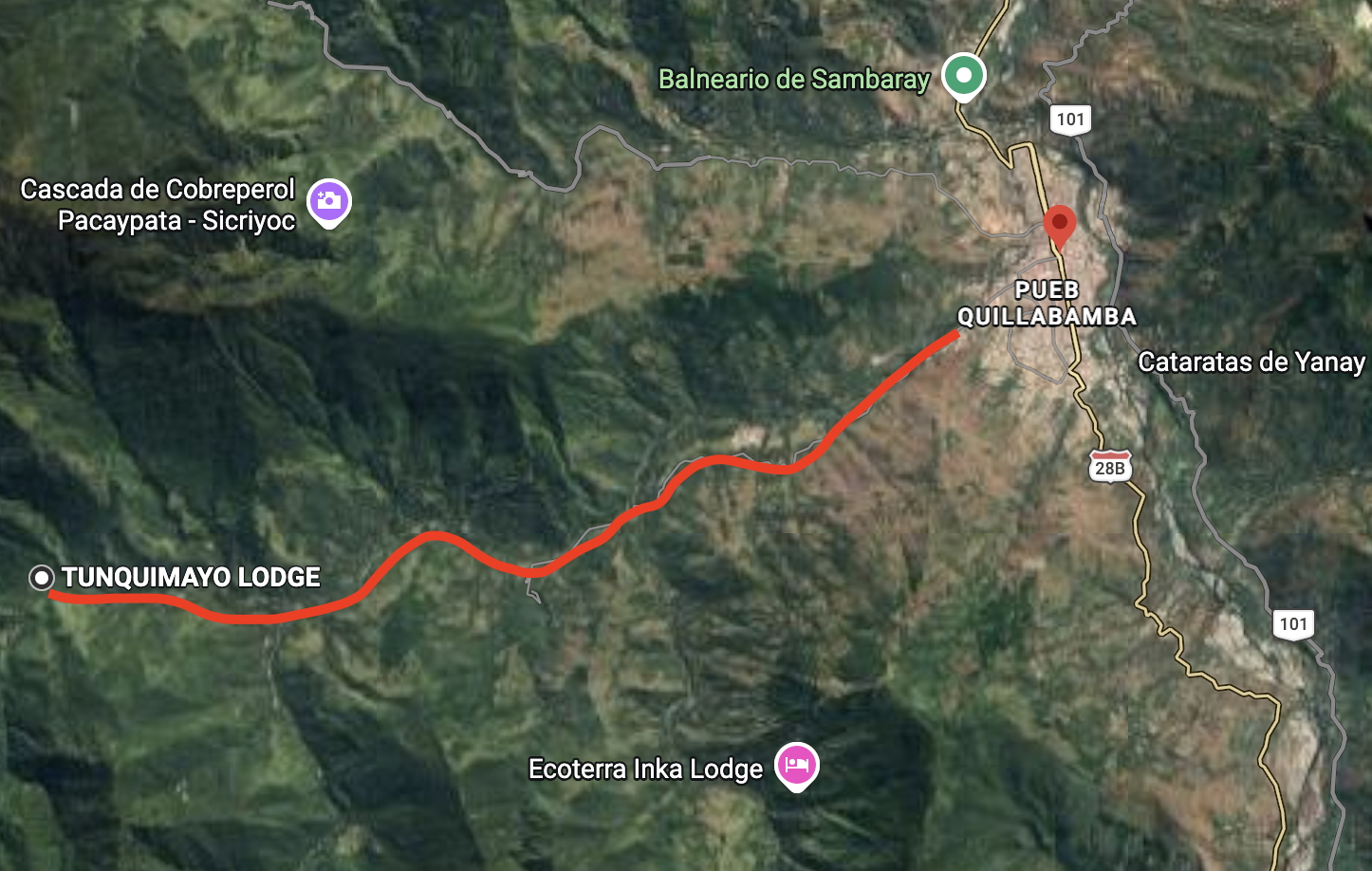
Tunquimayo Lodge isn’t far from Quillabamba, but the dirt road is slow going so it can take about 40 minutes.
Big Day October 10, 2026, Species List
Species below that I added to my life list are marked *. This is the full list from my group that day, though four species, the Crested Quetzal, Flame-faced Tanager, Lyre-tailed Nightjar and the Green-fronted Lancebill, I didn’t see myself.
The birds that are very common at Tunquimayo, or those I saw many of throughout the day: Speckled Chachalaca, Andean Cock-of-the-Rock, Green Jay, Piratic Flycatcher, Southern House Wren, Gray-breasted Wood-wren*, Andean Solitaire*, Hooded Siskin, Tropical Parula, Slate-throated Redstart, Band-tailed Pigeon*, White-tipped Dove, Roadside Hawk, Black Phoebe,* Yellow-browed Sparrow, Russet-backed Oropendola, Palm Tanager, Blue-necked Tanager, Cinnamon Flycatcher, Golden-olive Woodpecker, Andean Motmot, Broad-billed Motmot, Streaked Xenops*, Social Flycatcher, Tropical Kingbird, Silvery Tanager, Crested Quetzal
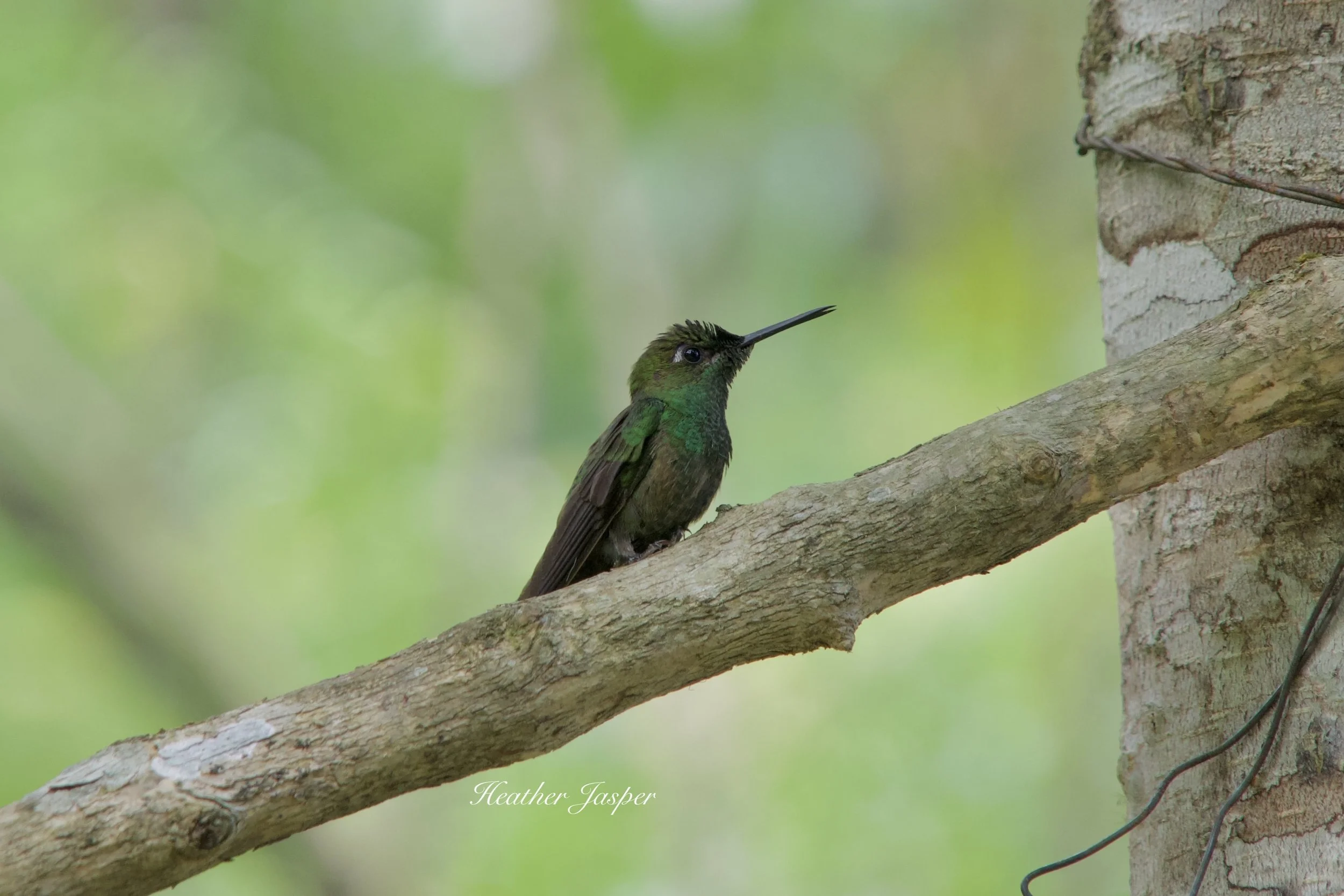
This Violet-fronted Brilliant spent more time guarding the hummingbird feeder than drinking from it.
The hummingbirds: Sparkling Violetear, Lesser Violetear, Speckled Hummingbird, Long-tailed Sylph*, White-bellied Woodstar, Green Hermit*, Violet-fronted Brilliant*, Blue-fronted Lancebill*, Bronzy Inca*, Collared Inca, Green-fronted Lancebill
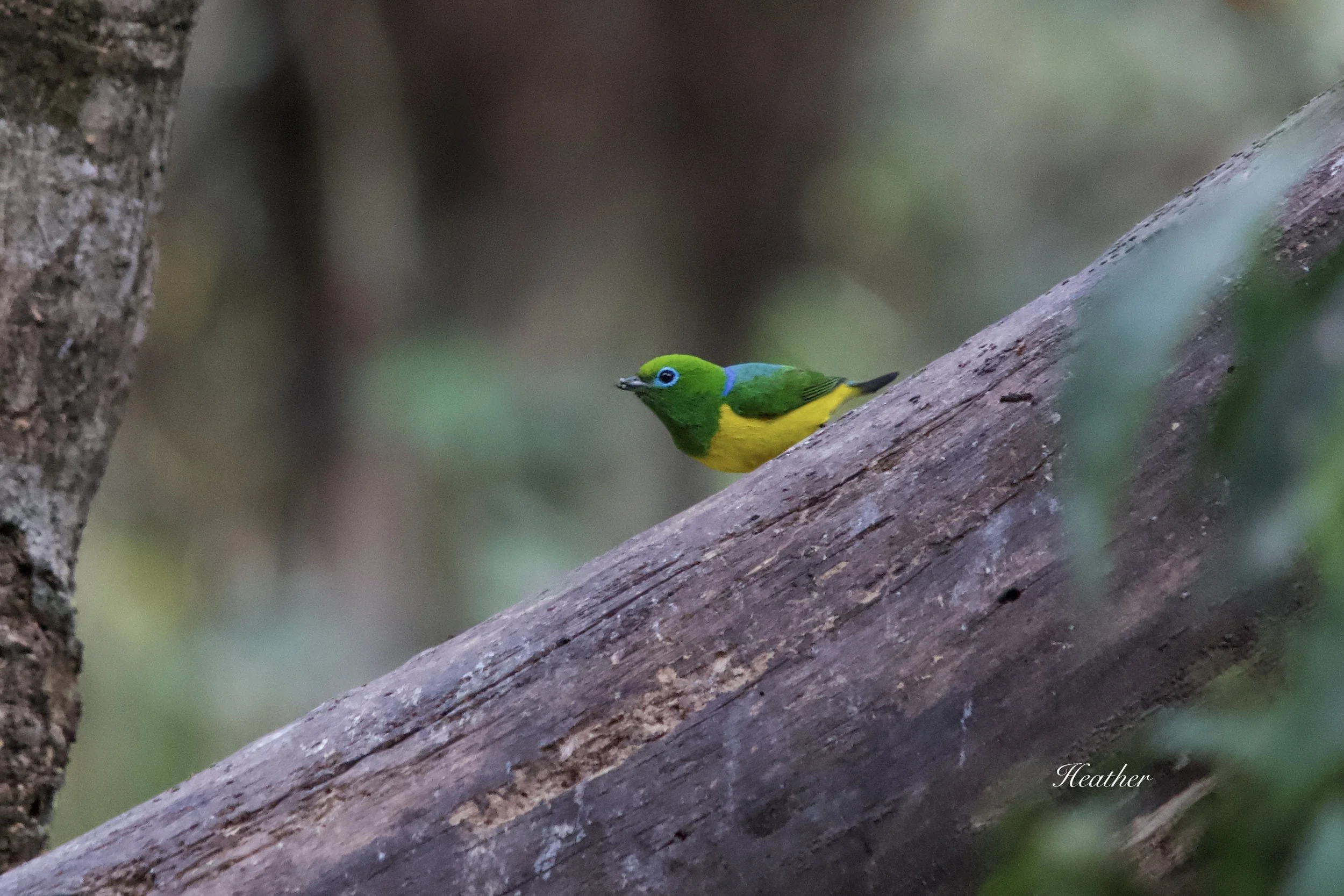
I didn’t get a photo of the Blue-naped Chlorophonia at Tunquimayo Lodge, but here’s one I saw at Inkaterra.
The birds I only saw one of or that are less common: Scale-crested Pygmy-Tyrant, Common Tody-Flycatcher, Streak-necked Flycatcher*, Golden-crowned Flycatcher,* Orange-bellied Euphonia*, Chestnut-capped Brushfinch*, Beryl-spangled Tanager*, Golden-collared Honeycreeper*, Yellow-throated Chlorospingus*, Crested Oropendola, Western Wood-Pewee*, Blue-naped Chlorophonia, Dusky-green Oropendola, Speckled Redstart,* Flame-faced Tanager, Capped Conebill*, Rufous-bellied Bush-Tyrant*, Lyre-tailed Nightjar
Questions? Contact Aracely on WhatsApp: +51 940 202 839 or by email peruincatrips@gmail.com