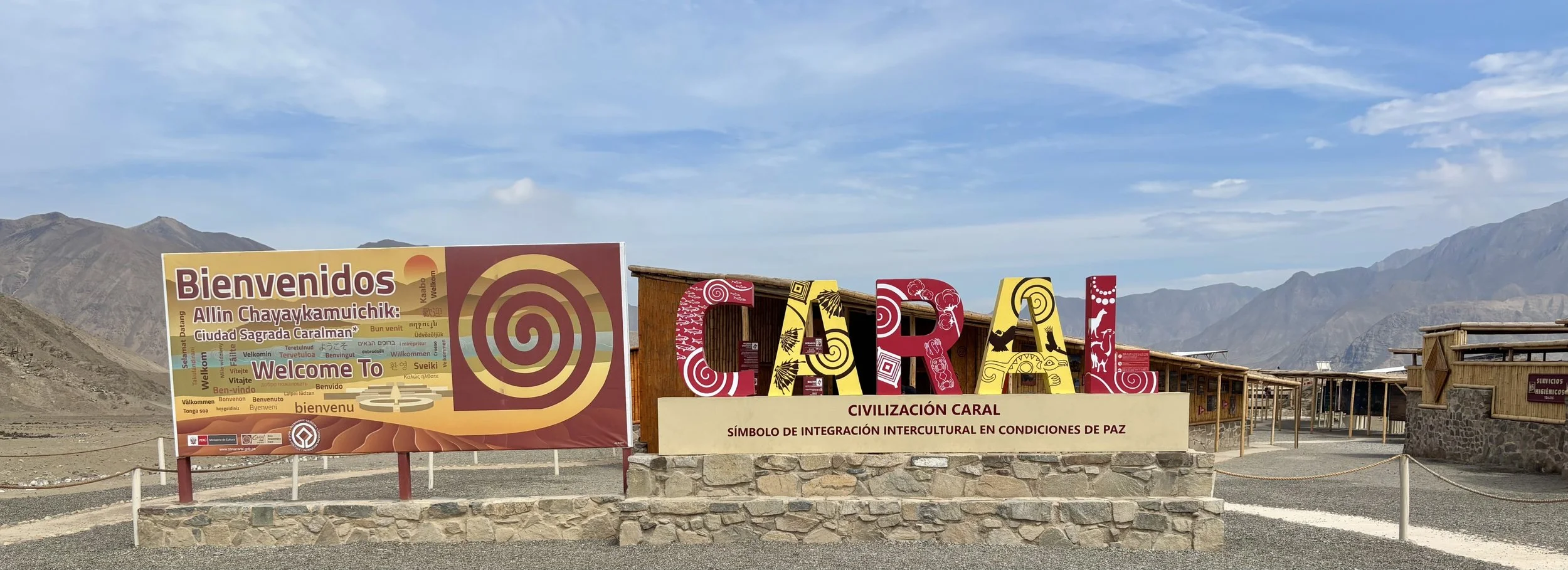
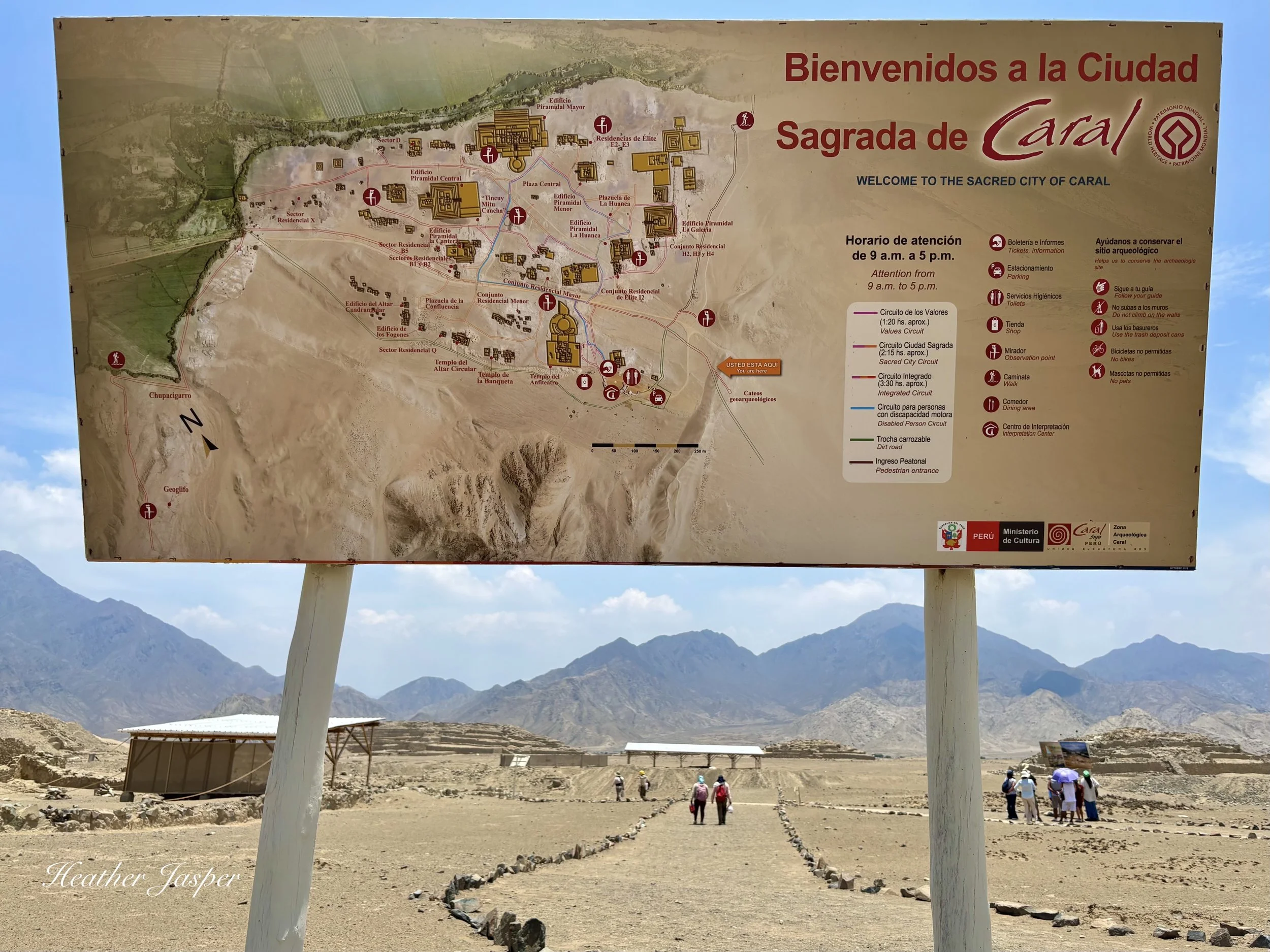
Welcome to the Sacred City of Caral and its fascinating temples, altars, pyramids and plazas.
Peru’s desert preserved the oldest city in the Americas.
It wasn’t easy for Peruvian archeologist Ruth Shady to convince the world that Caral is as old as Stonehenge.
She began excavating Caral in 1994 and was surprised to find only unfired ceramics. There were plenty of small clay figurines, but they were all sunbaked, not fired in a kiln.
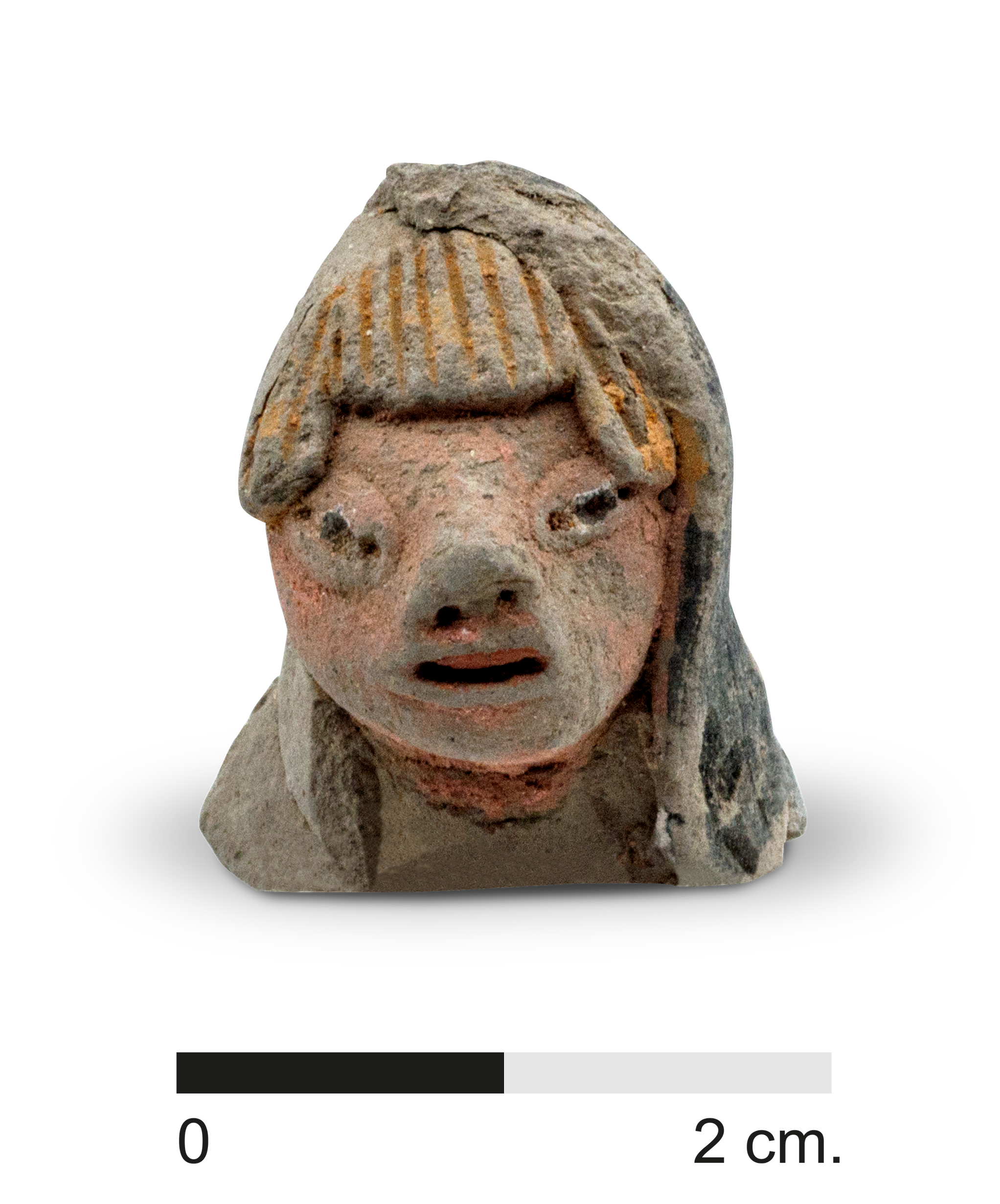
Caral-Peñico Ceramics 3000 BCE
This unfired, clay sculpture was found near Caral at Peñico and is typical of the Caral’s style of ceramics. They were painted but not fired in a kiln.
Read my BBC article about Peñico!
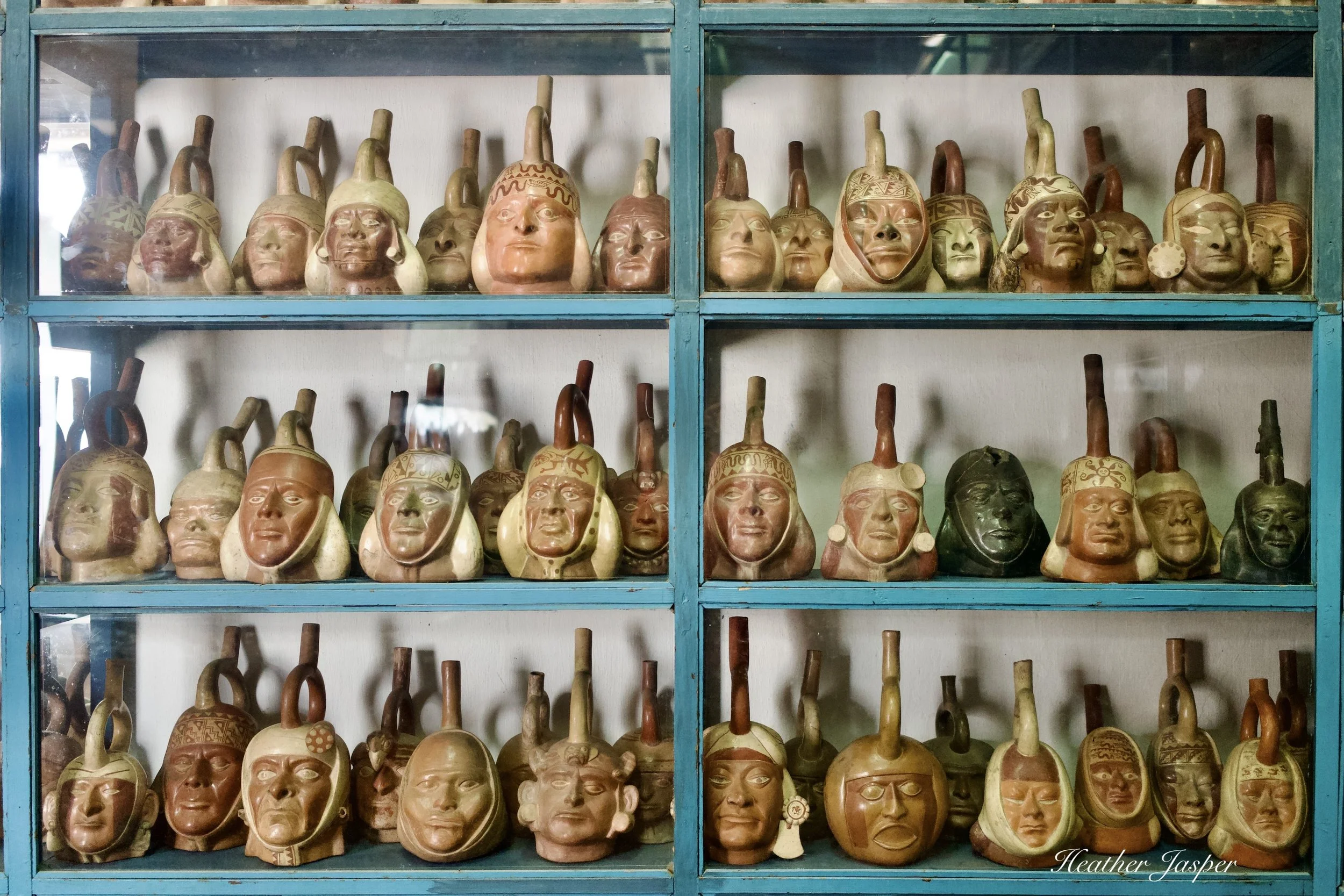
Mochica Ceramics 100-800 CE
3000-2000 years after Caral, the Mochica made ceramics so detailed they may as well have been portraits. These are in the Larco Museum in Lima, Peru.
At first, academics pushed back, saying that Caral must have been a primitive society compared with the fine ceramics of Peru’s other desert cultures, especially the Mochica and the Nazca. Both made fine ceramics and flourished on the Peruvian coast around 100-800 CE, the Mochica north of Caral and the Nazca to the south. Could a group of people have lived on the coast between them and not understood how to use a kiln?
It took radio-carbon dating to show that Caral was as old as the first big cities of Mesopotamia and Egypt, pre-dating the first civilizations in India and China.
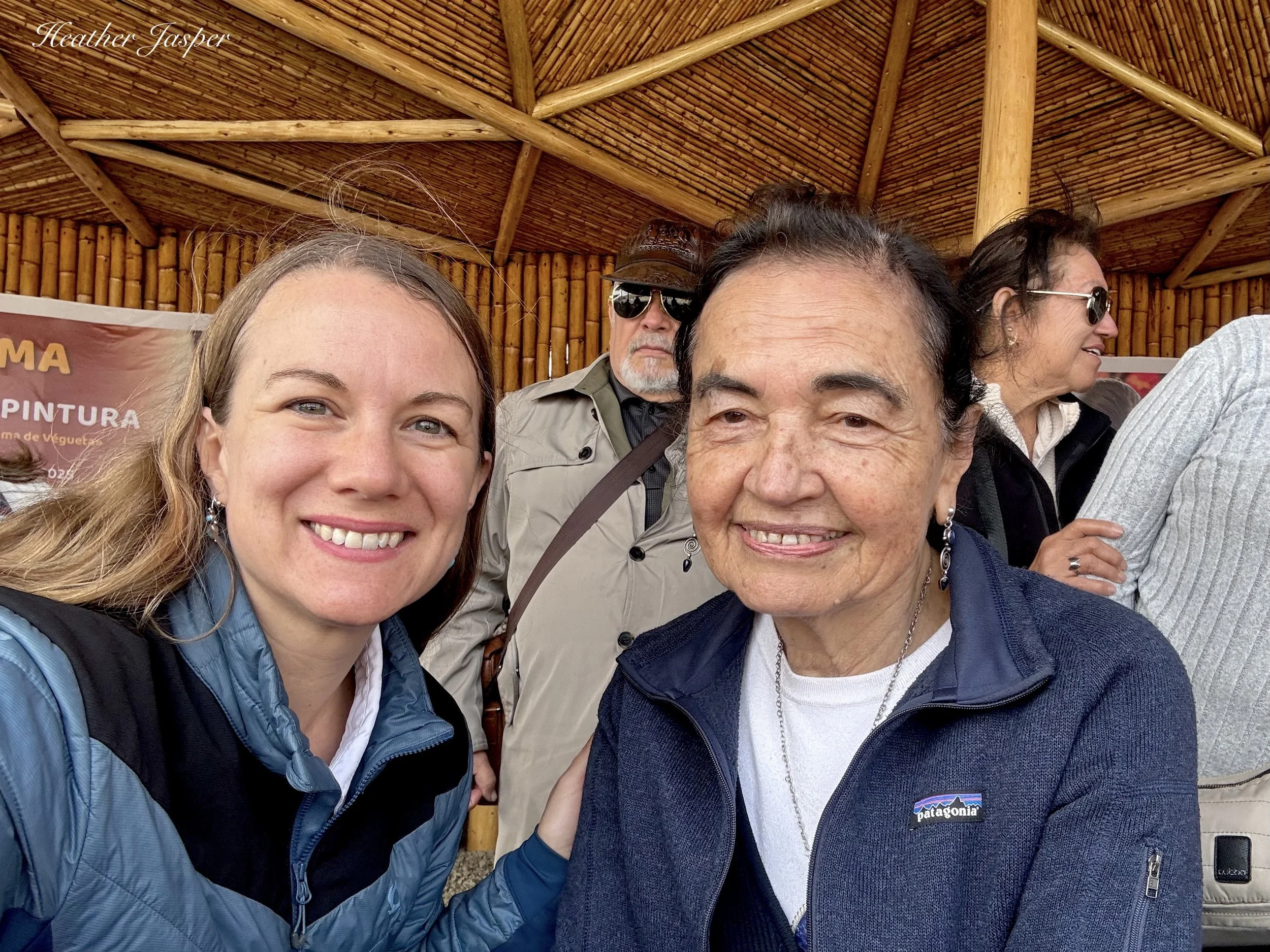
I was very fortunate to be able to meet Dr. Ruth Shady Solís at Vichama in 2025.
Peru’s most ancient desert city
Caral is the oldest city in the Americas, built in the desert north of Lima, Peru, at the same time as the oldest cities in Mesopotamia. This was a thriving metropolis about 5,000 years ago and flourished from around 3000-1800 BCE. Dr Shady says between 1,000-3,000 people would have lived in Caral, as the population fluctuated between 3000 BCE and when the city was abandoned around 1800 BCE.
Why was Caral abandoned?
Around 1,800 BCE there was a major climactic shift that resulted in a drought of about 130 years and caused havoc in all the major civilizations of the time. Scientists call it the “4.2 ka event” and found evidence that Caral was not the only city abandoned at the time. Major cities in Mesopotamia, Egypt and India also became unlivable and were deserted.
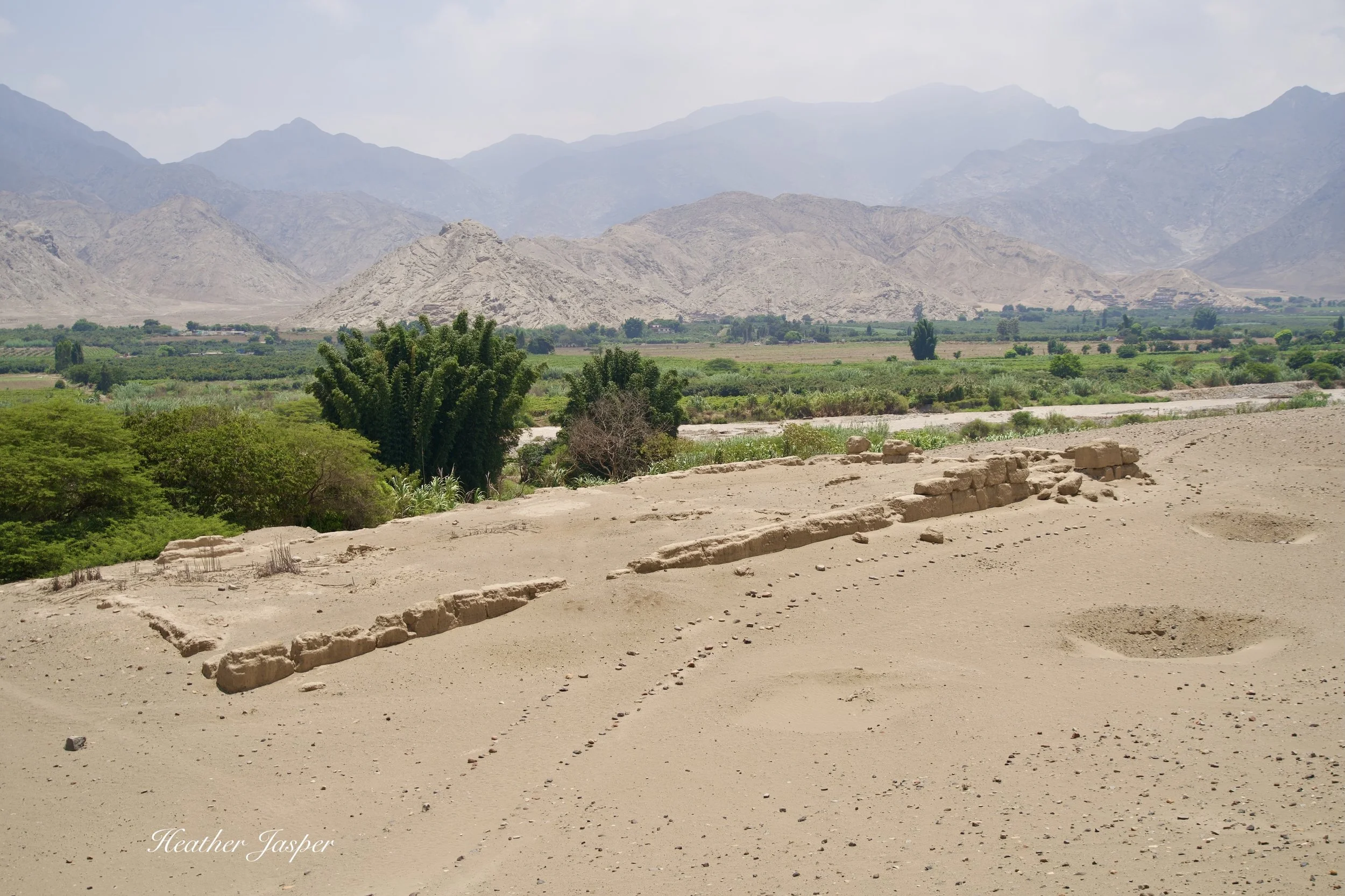
Julio C Tello found this adobe structure, made by the Chancay culture in 1300 CE. The round depressions in the sand are from looters looking for antiquities to sell on the black market.
Why didn’t anybody find it earlier?
In the early 1900s, Peruvian archeologist Julio C Tello (1880-1947) found some buildings from the Chancay culture, near the Supe River right next to Caral. They were built around 1300 CE, so over 4,000 years after Caral, and they were fairly easy to see. Tello never suspected that just a few feet away, buried under layers of sand and rock, was the biggest archeological find of the century.
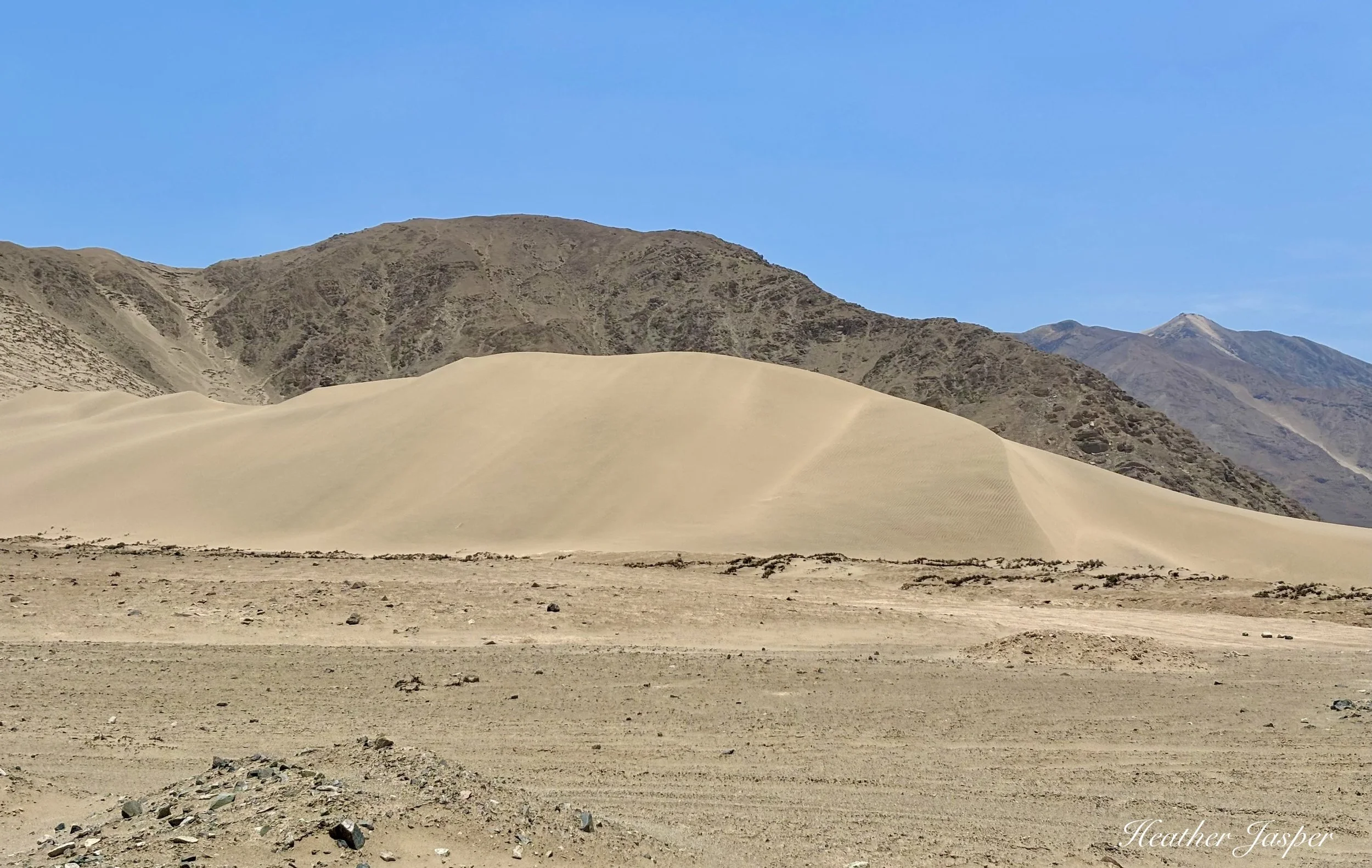
This dune, next to Caral, shows what the site looked like before Dr. Shady began her work in 1994.
Just sand – or was something under the dunes?
When Dr. Shady began her excavations in the 1990s, it was generally accepted that the sand dunes and mounds in the Supe Valley probably hid something. With Tello’s Chancay find, it would have been safe to assume that whatever was under the dunes was probably built by the Chancay. The Peruvian coast has thousands of sand dunes that are just sand, and others that hid monumental buildings from the Mochica, Paracas, Nazca and other cultures.
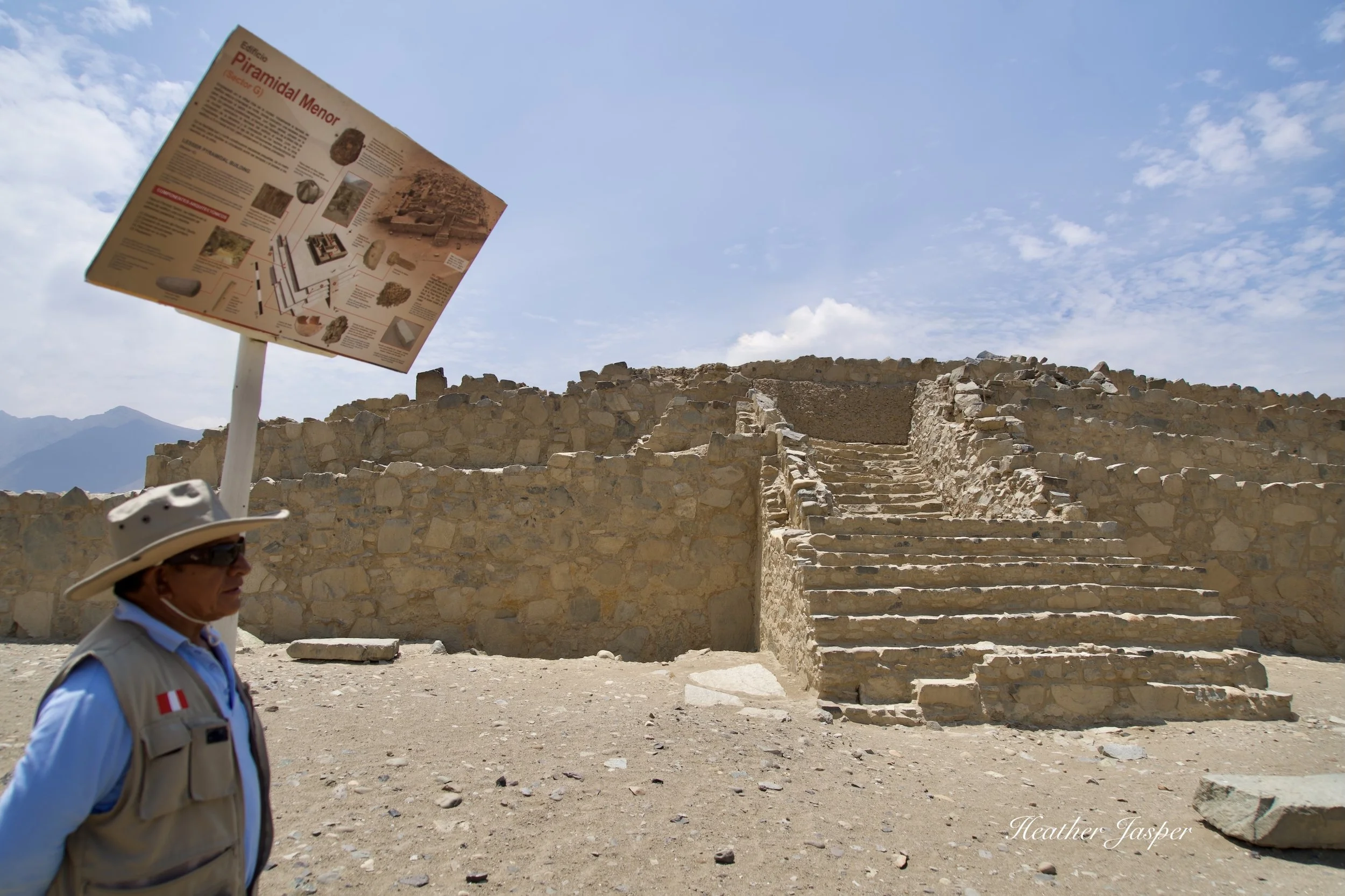
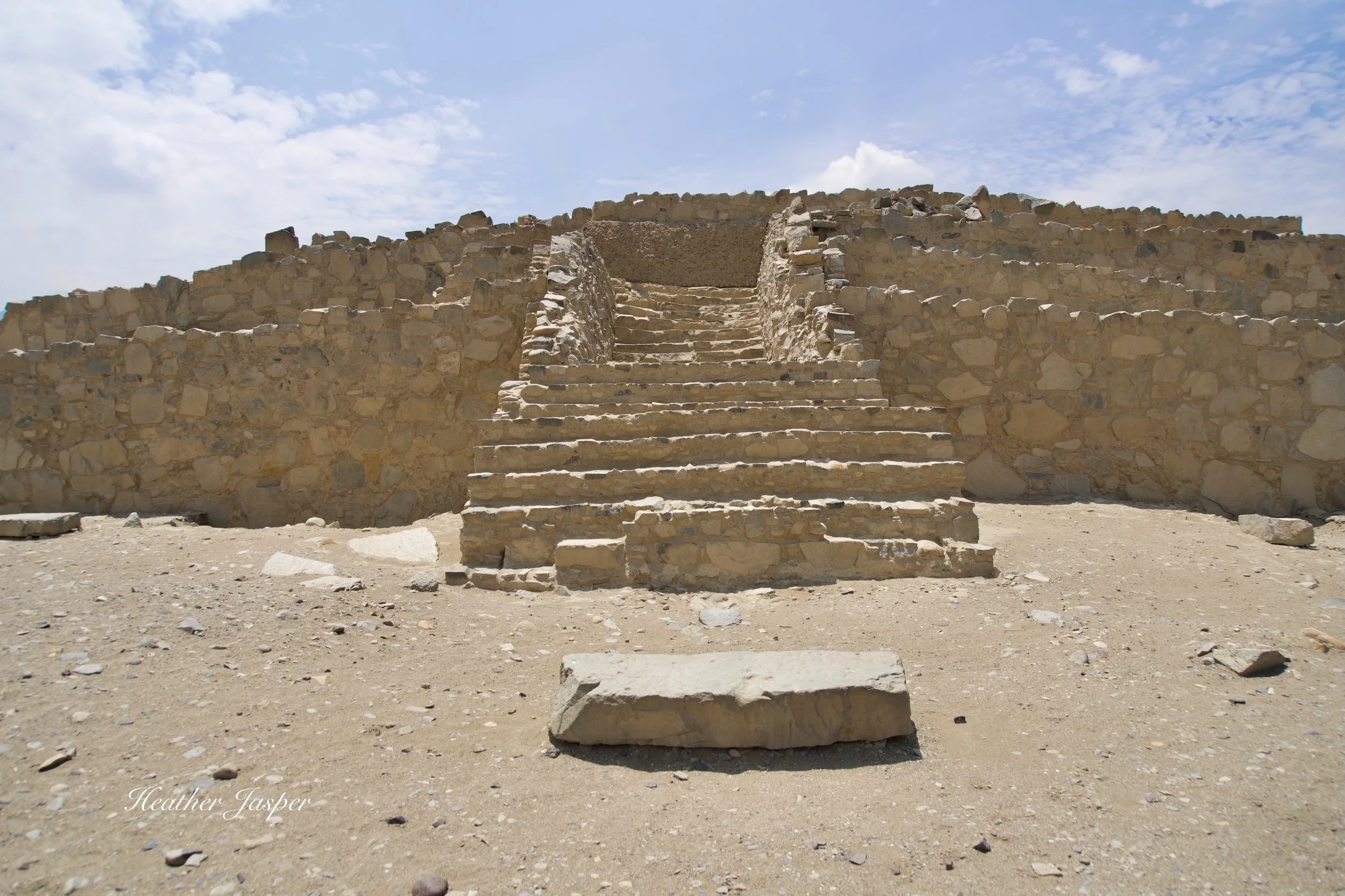
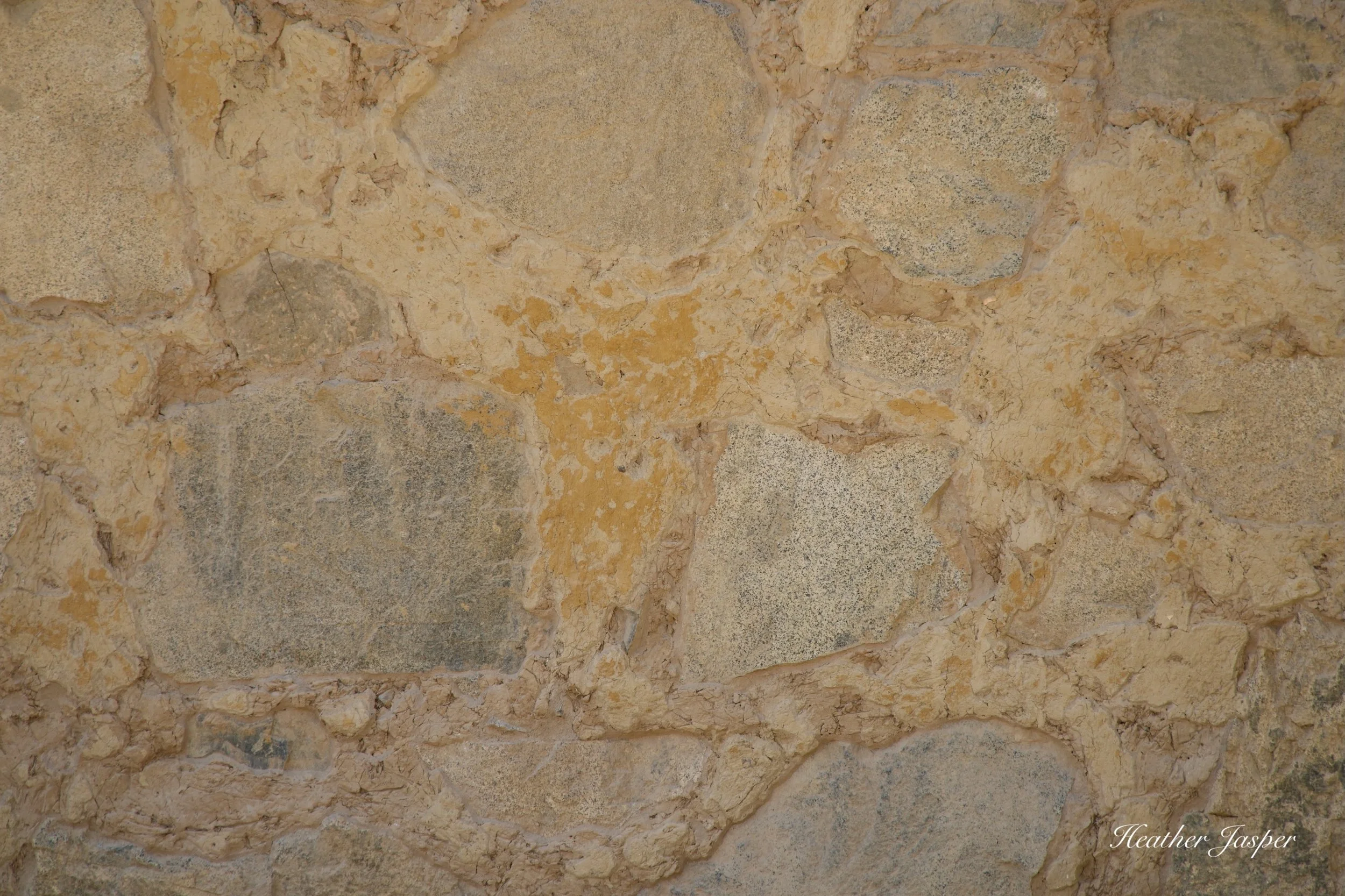
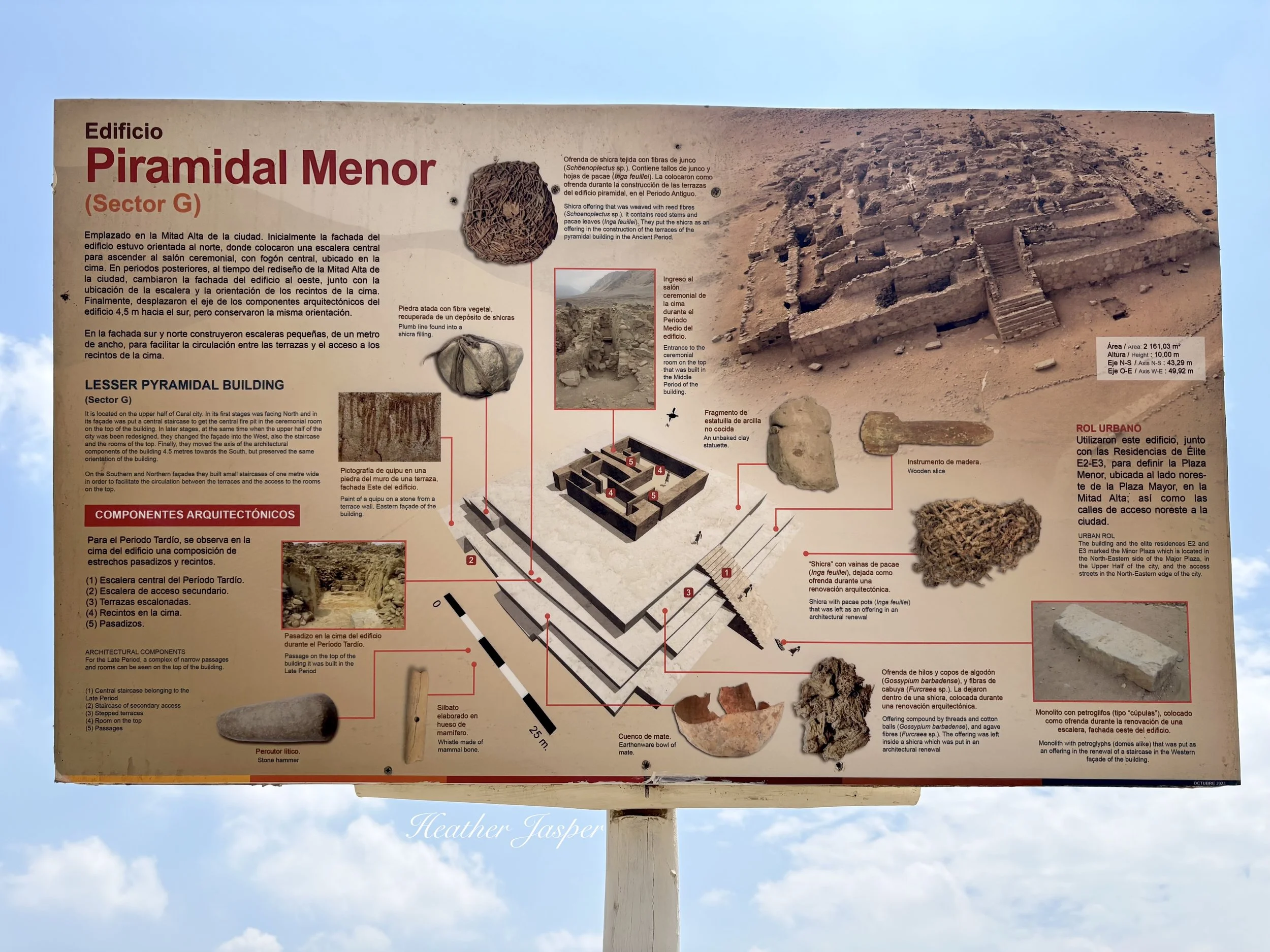
Caral was purposefully buried.
Before sand drifted over Caral’s monumental buildings for almost 4,000 years, they were purposefully buried. As the city was being abandoned, people took the time to carry rocks up from the riverbed to cover their temples. It would have been a staggering amount of work, but think of it like nailing boards over windows before a hurricane, or putting an extra padlock on the door if you plan to be gone for a while.
What’s unique about Caral?
Seven reasons why Caral is a truly astounding place, not counting that it was built 5,000 years ago.
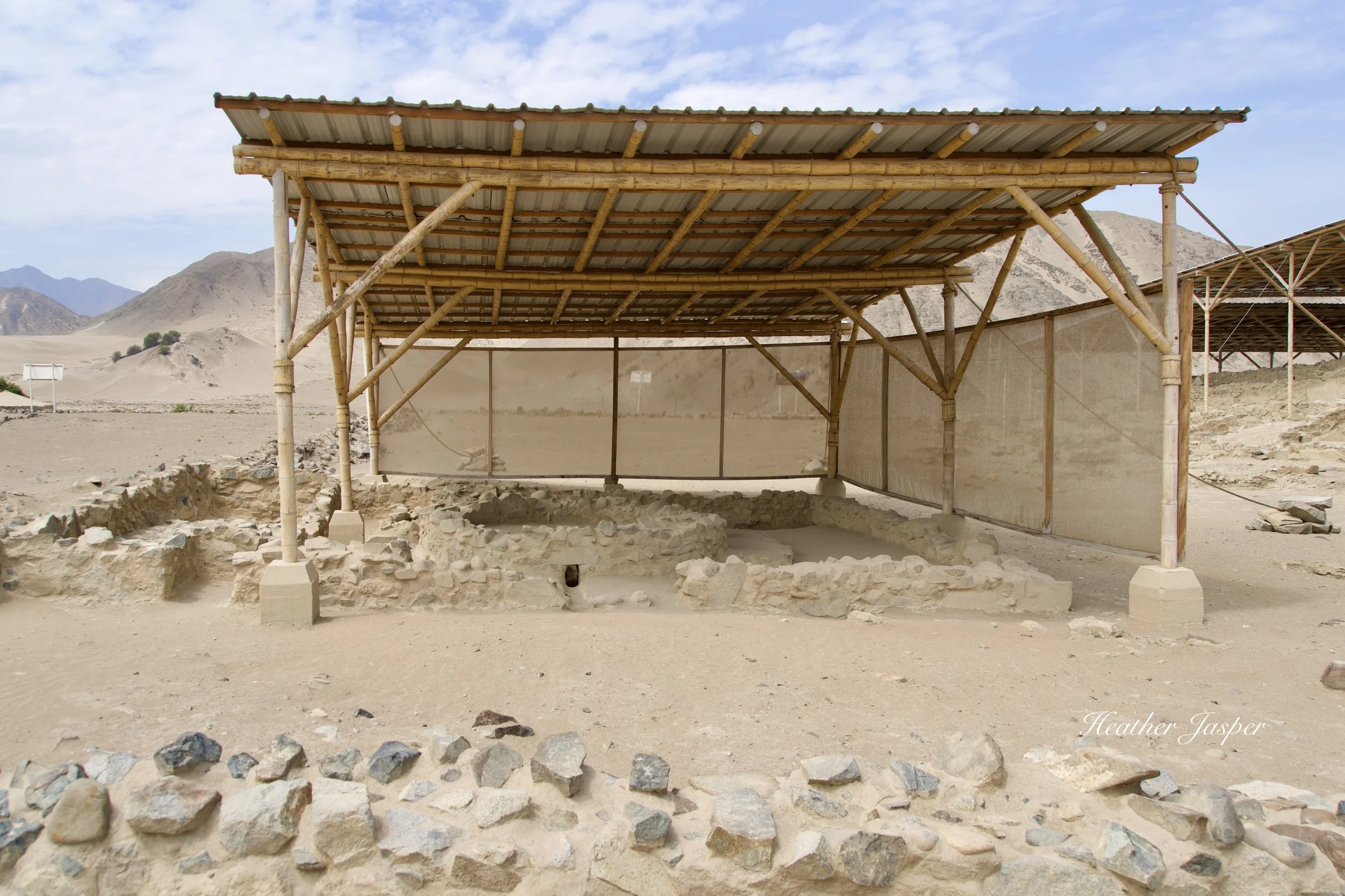
This is one of the fire altars, with the circular structure in the middle where fires burned hotter due to the Venturi effect.
1. Caral has fire-altars that used the Venturi effect.
In 1797, Italian physicist Giovanni Battista Venturi formally described what today is called the Venturi Effect. The principle explains how a fluid’s (liquid or gas) pressure decreases and its velocity increases as it passes through a constricted section of pipe.
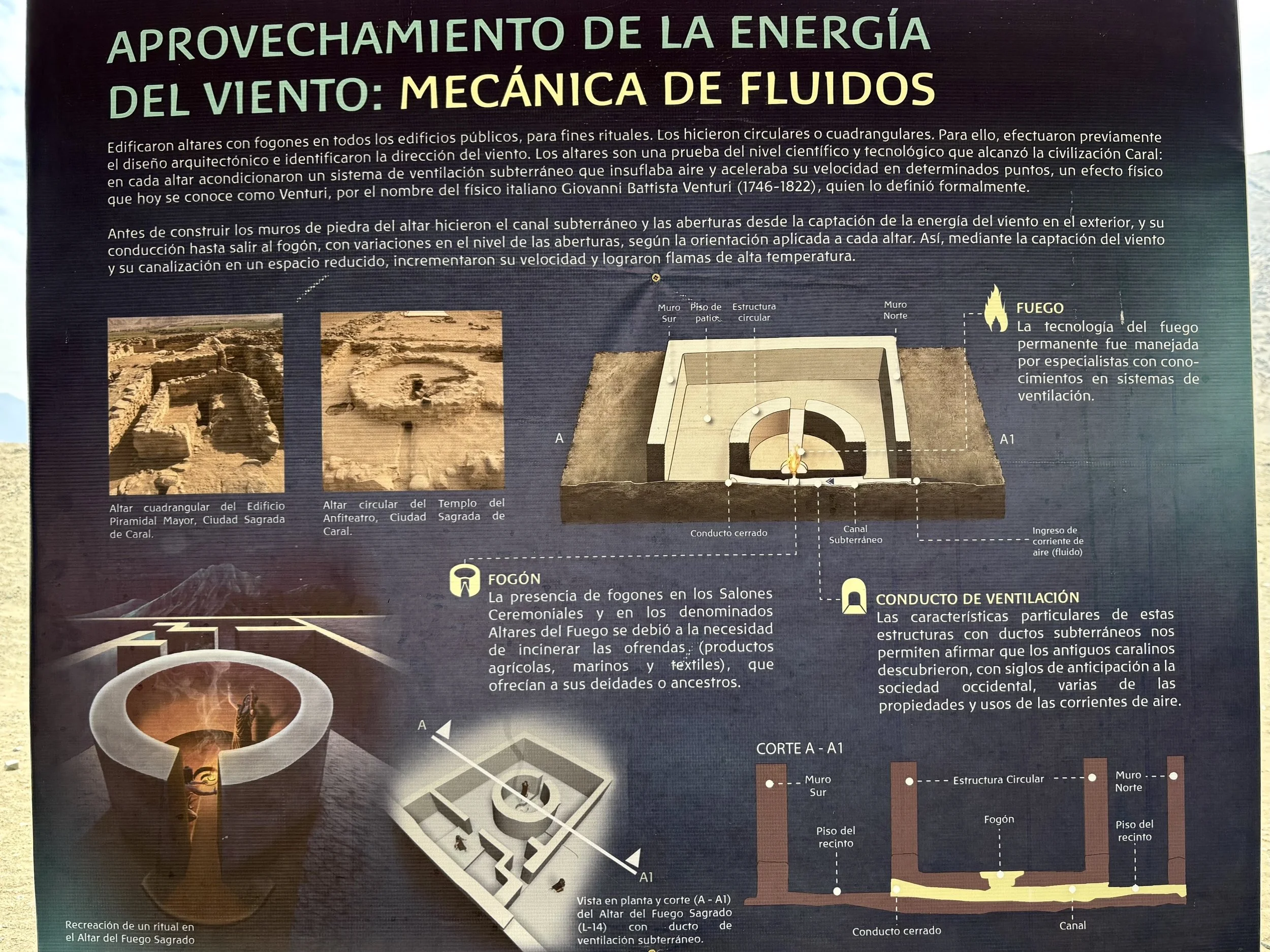
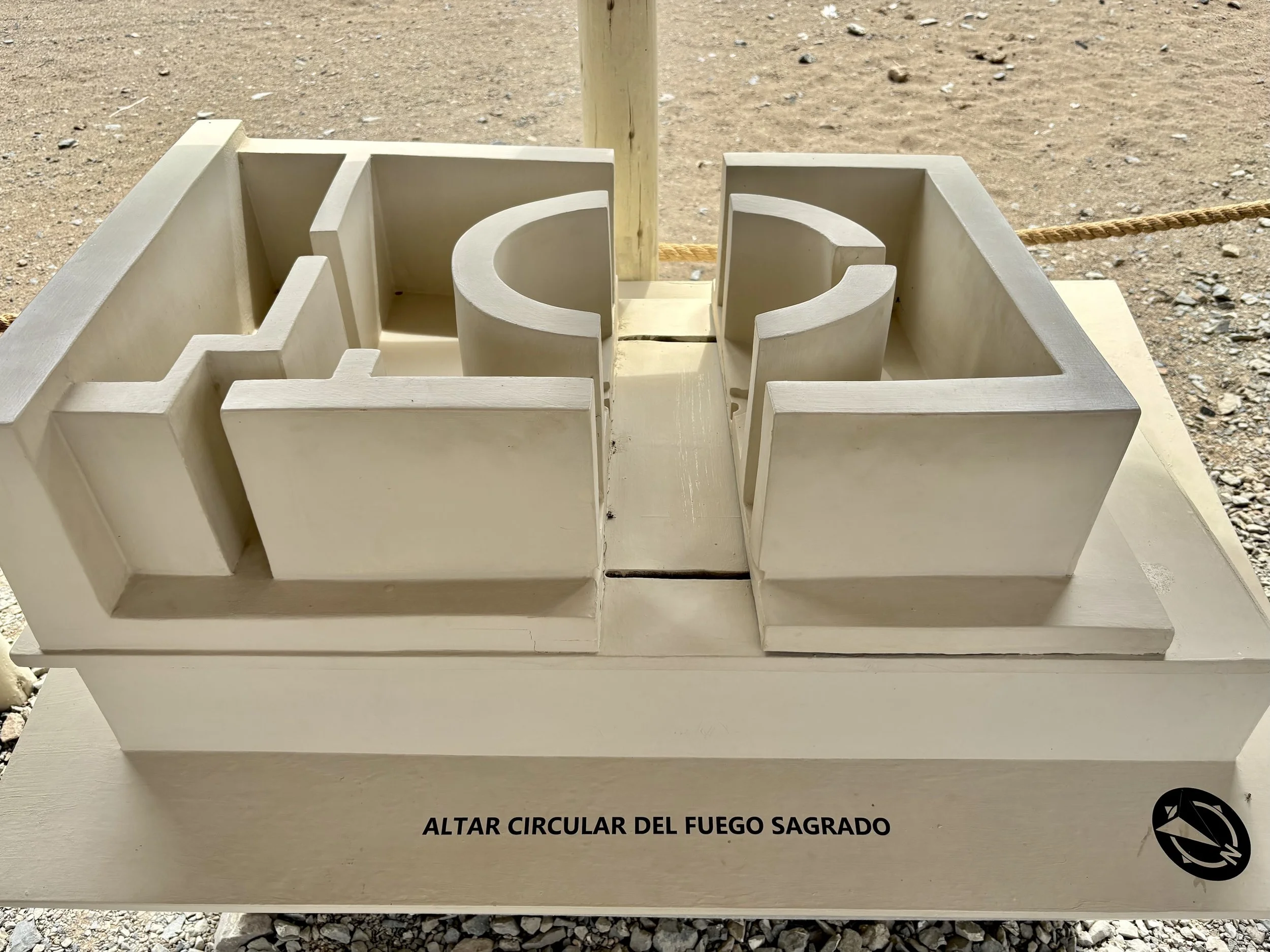
Using this principle, the fire altars at Caral were constructed according to prevailing winds so that an underground ventilation system, which functioned like a pipe, would funnel extra air to the center of the altar, where they lit fires. The fire burned hotter due to the increased oxygen, making it appear supernaturally stronger. (Click on the photos above to see them larger).
Offerings of all kinds were burned in these altars.
Archeologists have analyzed bits of ash left from fires that show traces of plant and animal matter, and even human hair. Though human sacrifices did happen at Caral, these fires were not big enough to burn a body, and the hair is likely symbolic. Many of the items burned came from far away.
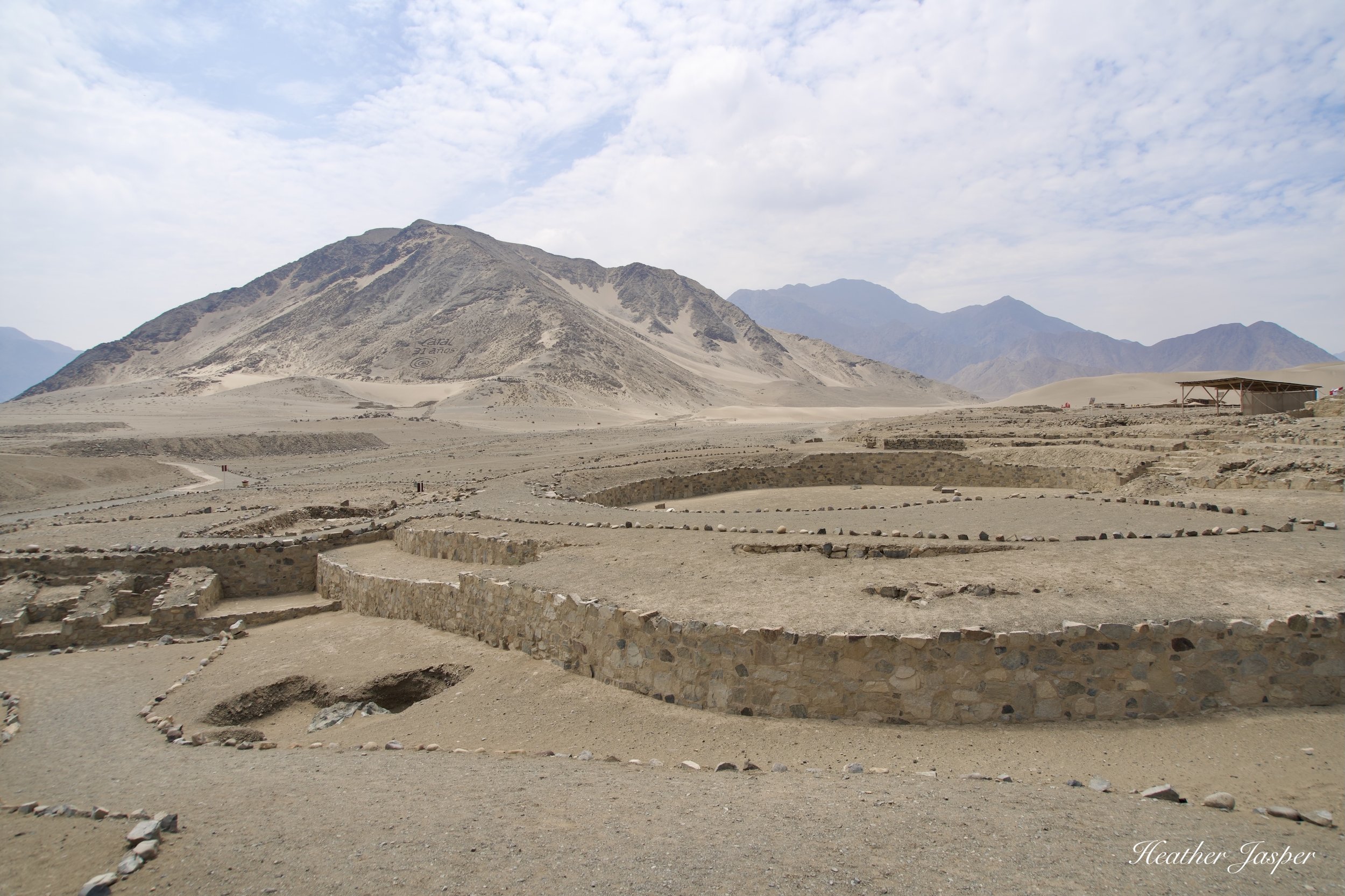
This circular plaza has excellent acoustics, even if you’re not inside. The roof on the right is the fire altar.
2. Music was an important part of Caral’s culture.
Caral was a city of music and musicians at a time when only a couple civilizations even had cities, much less open air concert halls. It has circular plazas with excellent acoustics, where my guide Armando’s lone flute echoed back to us, standing on a viewpoint above the plaza. It was clear that had we been allowed inside the plaza, the music would have surrounded us better than most modern theaters.
A set of 32 flutes made with pelican bones and decorated with carvings of monkeys was found here. A person like Armando playing alone may have been uncommon in a space clearly designed for concerts with many musicians and innumerable spectators.
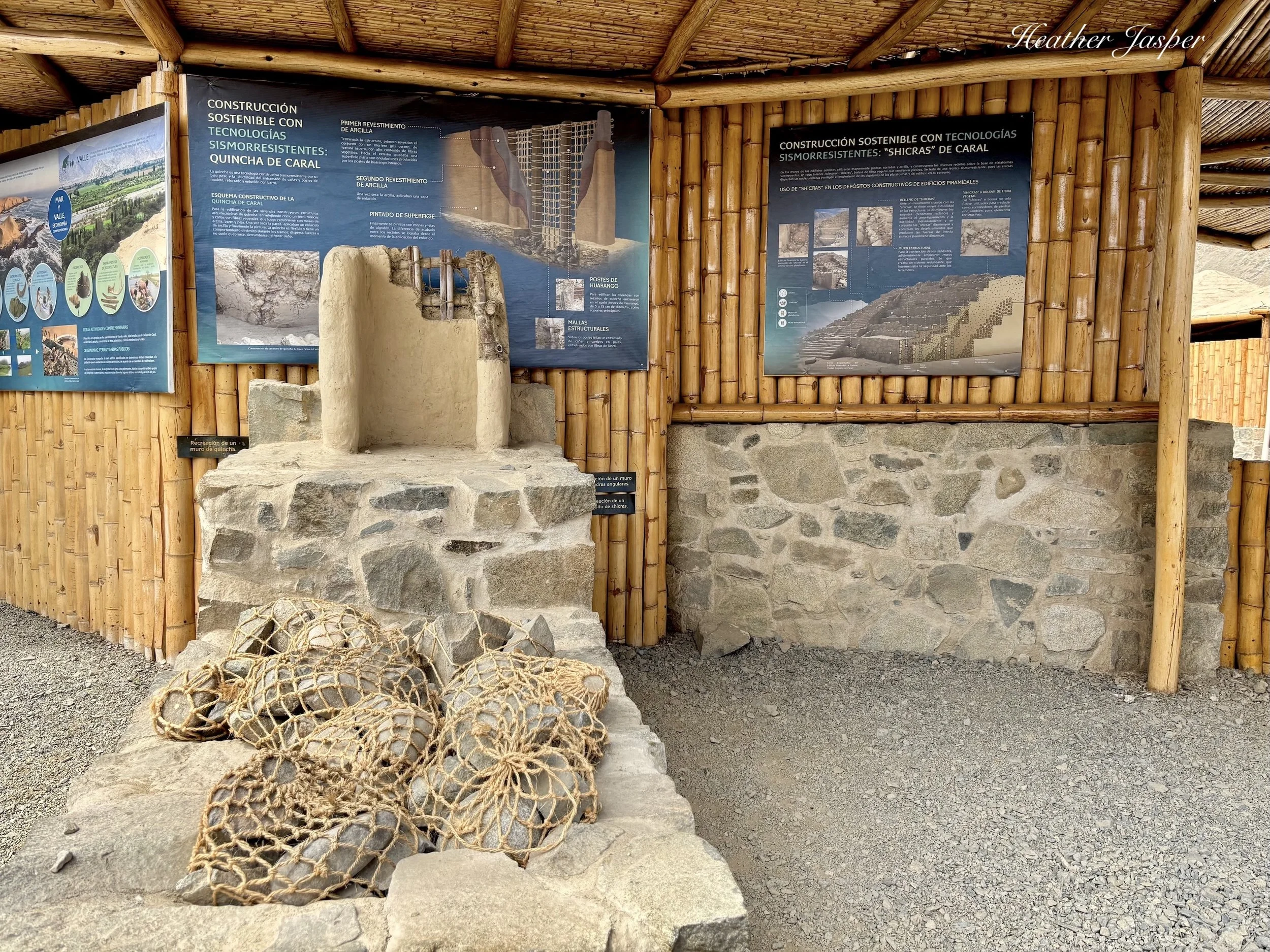
This model at the entrance to Caral shows how shicras were built into foundations to prevent earthquake damage.
3. Caral has earthquake-resistant architecture.
Curious baskets of stones called shicra were built into the bases of thick walls. The baskets were made of strong ropes of totora, a reed still used today to make surfing and fishing crafts called caballito de totora, which I wrote about for the BBC in an article about how surfing was invented in Peru. Totora is also used to make the Uros floating islands on Lake Titicaca. If it’s strong enough to build fishing boats, surf boards and islands, you can be sure it’s strong enough to tie rocks together.
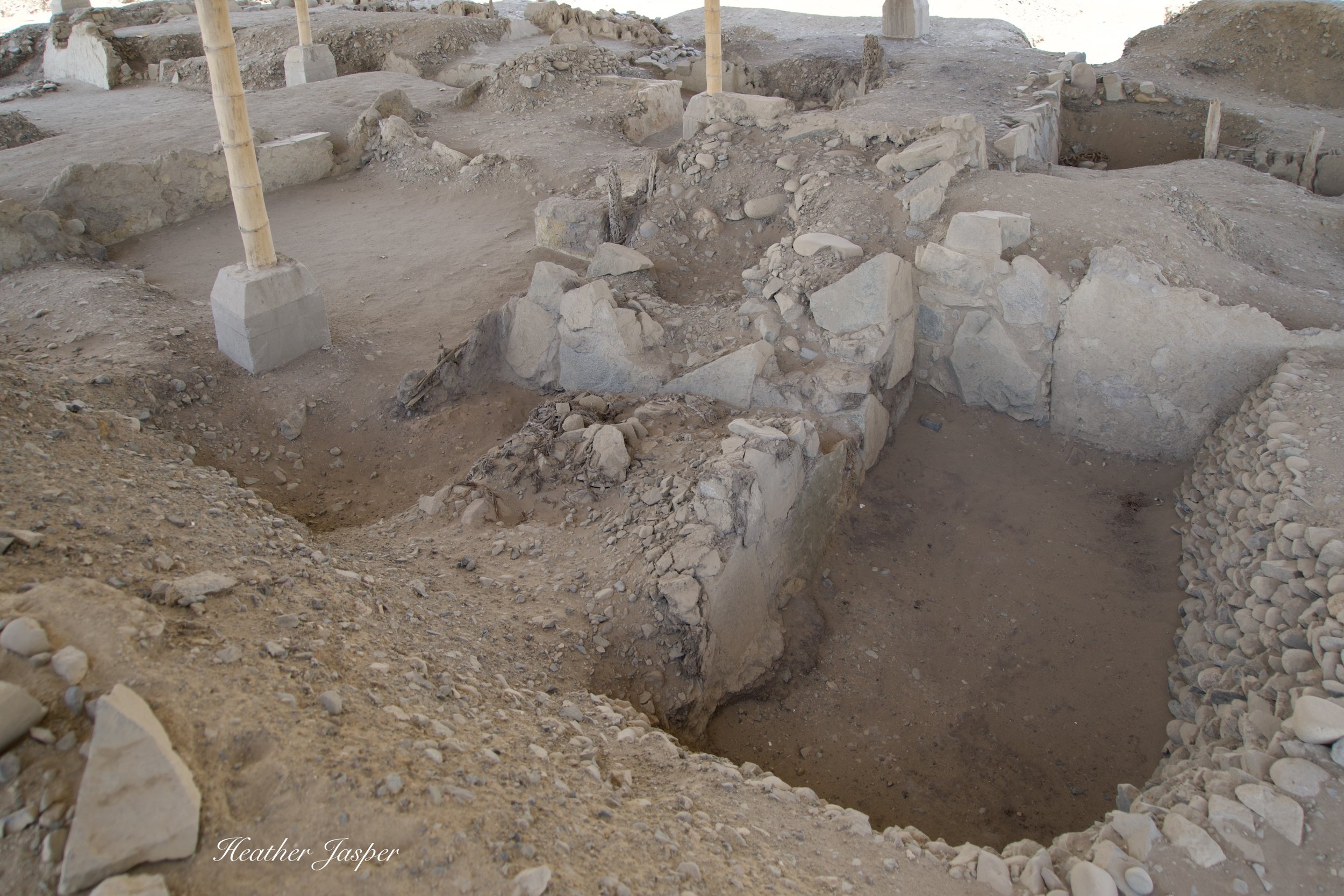
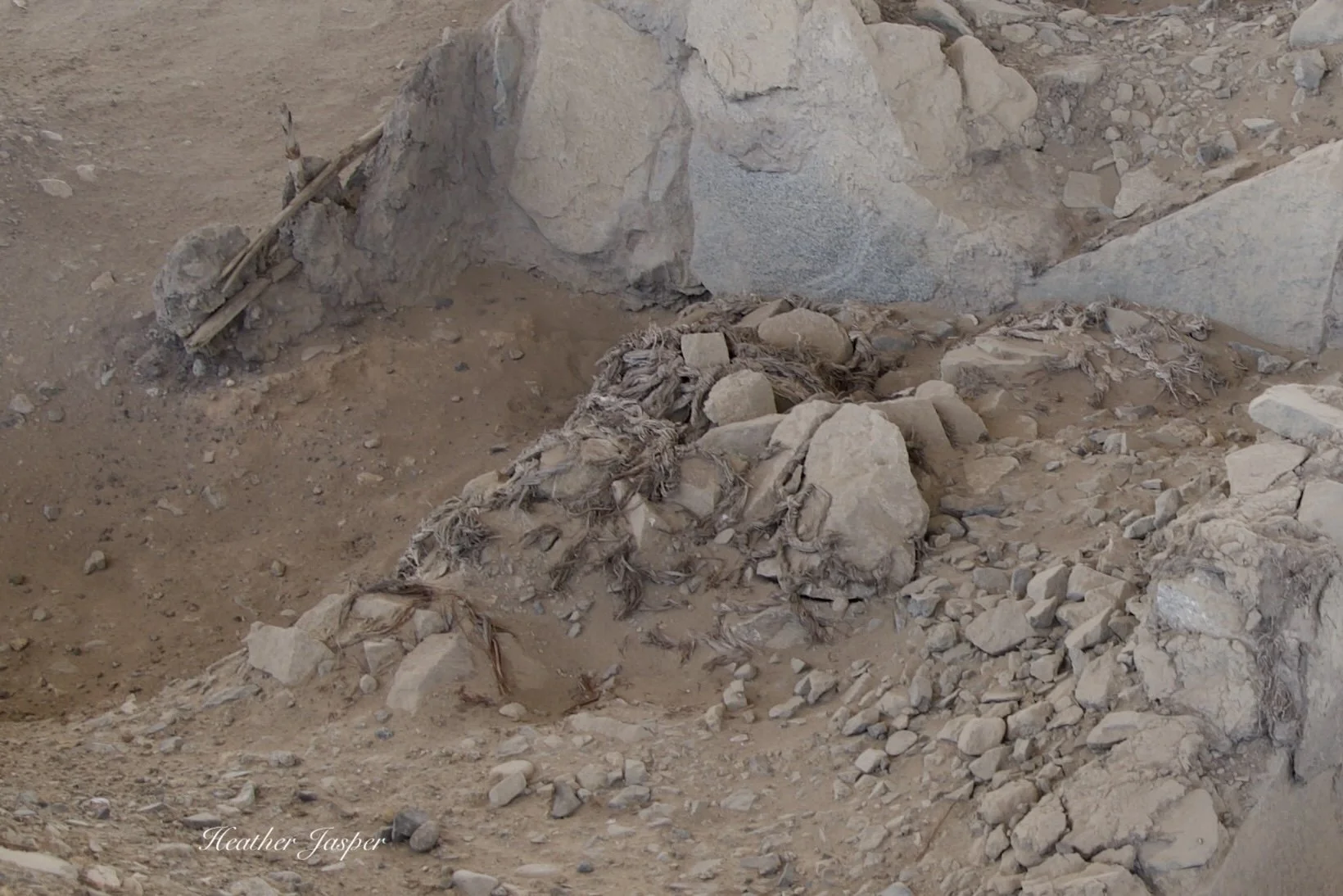
Though the rocks were tightly bound, the totora stretched just enough that during an earthquake the rocks move slightly, absorbing the quake’s shock waves without causing the wall to collapse. It’s a truly ingenious aseismic design that I’ve never seen anywhere else, not even in Peru. In the photo above, if you didn’t know about shicras, you might not realize the importance of the rope bits in the walls.
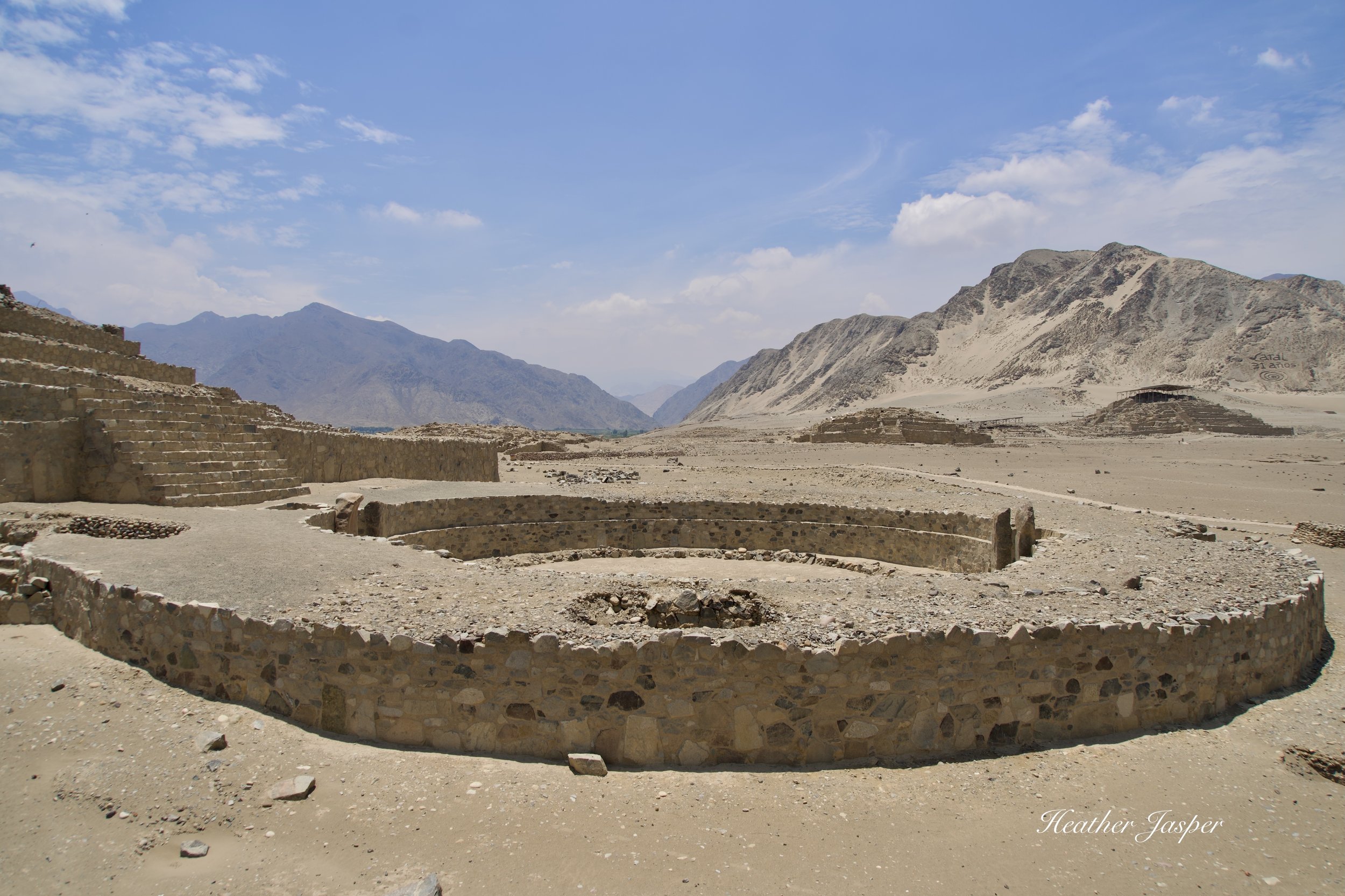
This circular plaza doesn’t have the same acoustics as others, but it’s below the largest pyramid and temple complex.
4. Caral had a strong trading network.
The city is full of evidence that this coastal culture had strong ties to the people of the Andes and the Amazon, plus distant peoples to the north and south. They had llamas (and perhaps their wild cousin the guanaco) from the mountains and monkeys and parrots from the jungle. They made jewelry with shells that came from as far away as Ecuador or possibly Panama. They had lapis lazuli from Chile and turquoise from Colombia. This was not at all an isolated city.
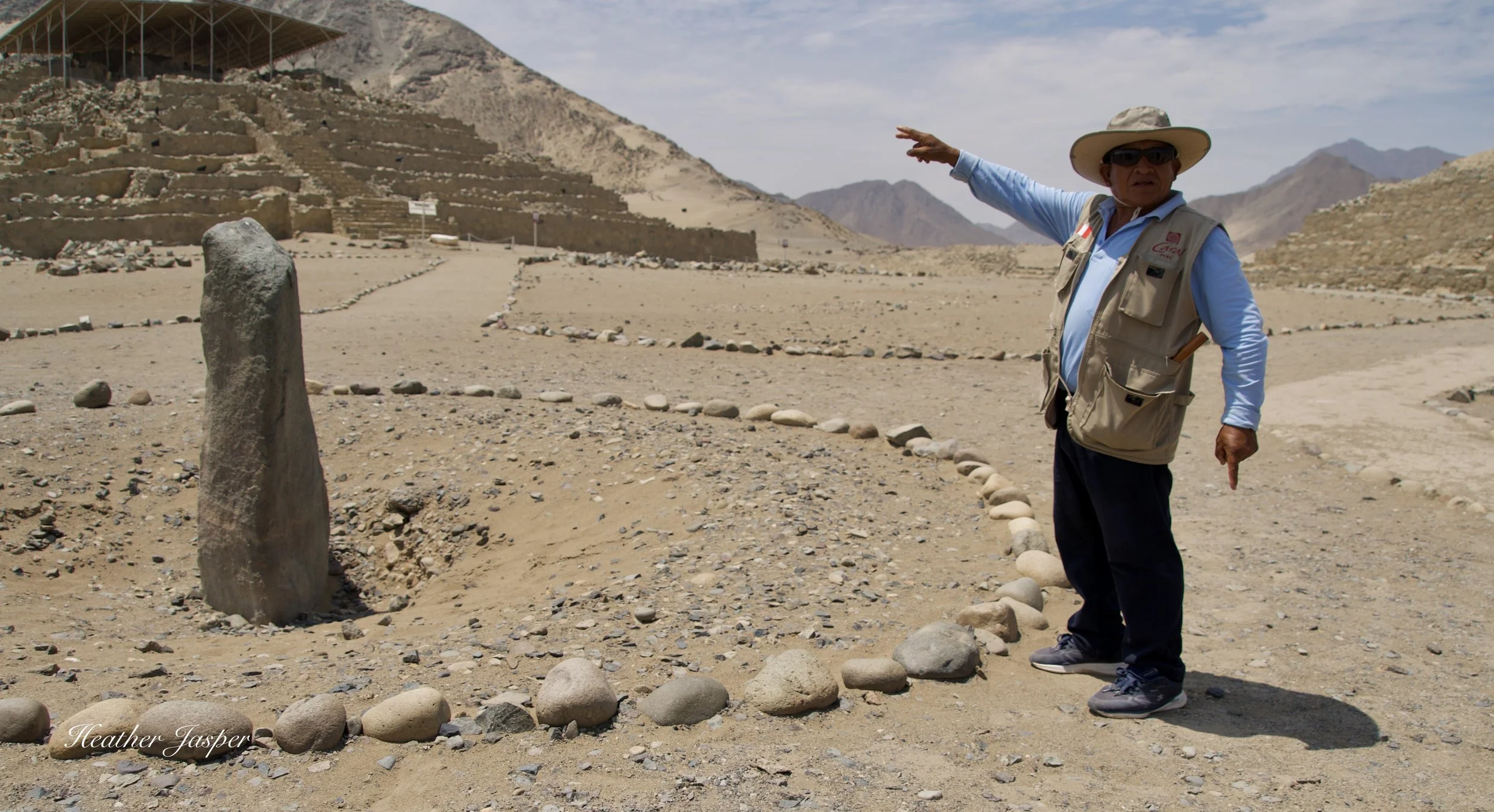
My guide, Armando, explained how this sundial show the sun’s progression on the horizon and how that’s used to track seasons.
5. Caral may have been a pacific culture.
This massive city near the Pacific Ocean had no defensive walls and no weapons of any kind have been found there. There is no evidence that they had conflict with the other peoples they had contact with. All artifacts point to strong trading relationships, offerings from other places being burned at the fire altars and music having an important role in society. It seems the collapse of Caral around 1800 BCE didn’t lead to violence. If that’s true, this may be our best example of how to adapt to climate change without fighting over land and water.
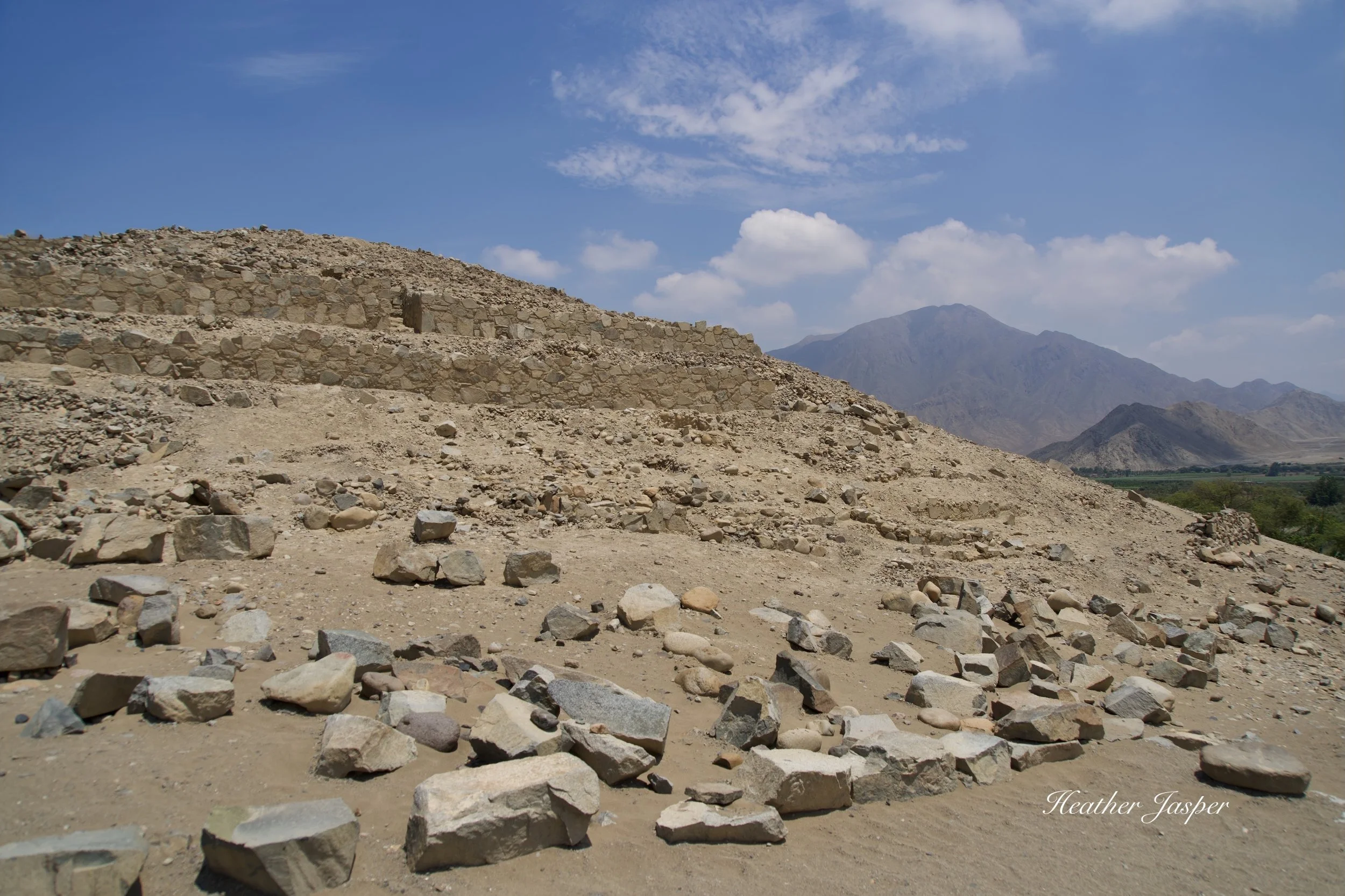
The city is all sand and stone, but the valley I saw below is lush with avocado trees and sugar cane.
Try to imagine a 130-year drought.
That’s about five generations: your great-grandparents, grandparents, parents, you and your children. Try to imagine a drought so severe that you probably had to leave your home. There wasn’t enough rain to grow anything, so probably no fruits or vegetables. You would have gone to the coast to gather seaweed, shellfish and fish.
Can humans be peaceful under stress?
We’ve all seen how quickly people will start fights when they’re hungry, even over the most inconsequential things. Though the lack of defensive walls and weapons is persuasive, it’s still hard to imagine a truly peaceful human culture. Add climate change so severe that widespread famine caused a massive population decline, i.e. people starving to death. Yet, without any evidence of violence, it may have been possible for people to work together cooperatively to survive as best they could – for 130 years of drought and famine.
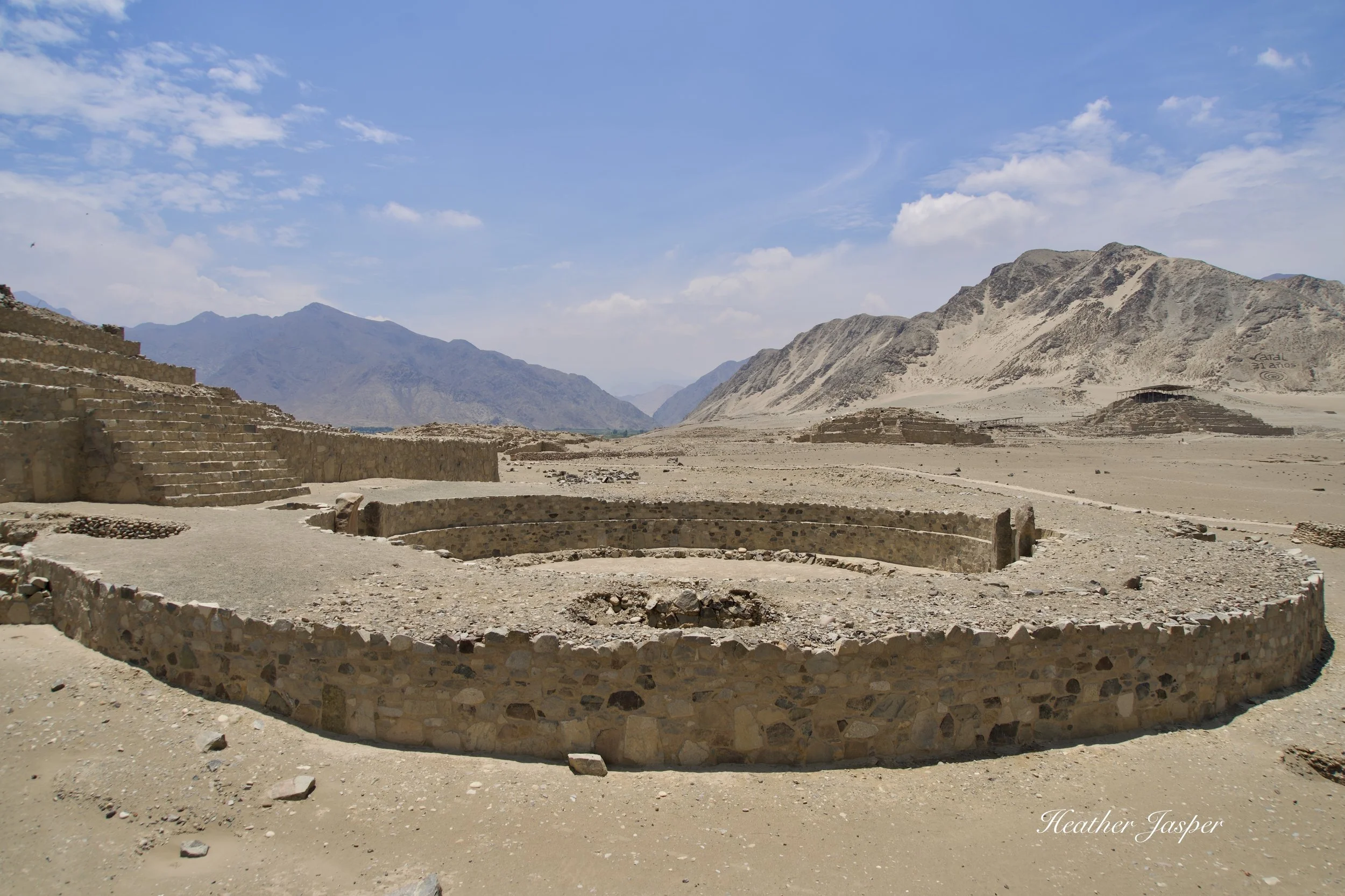
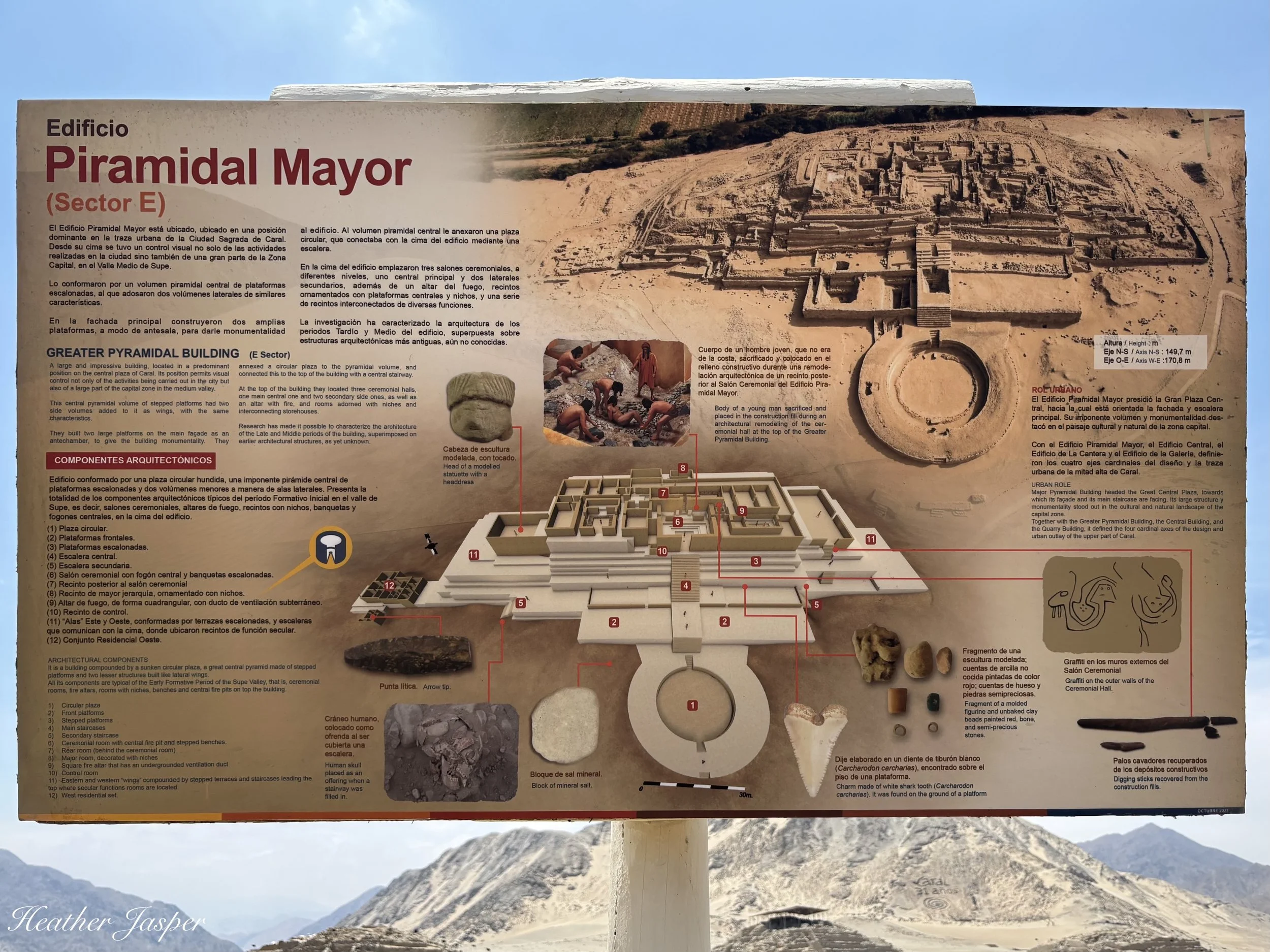
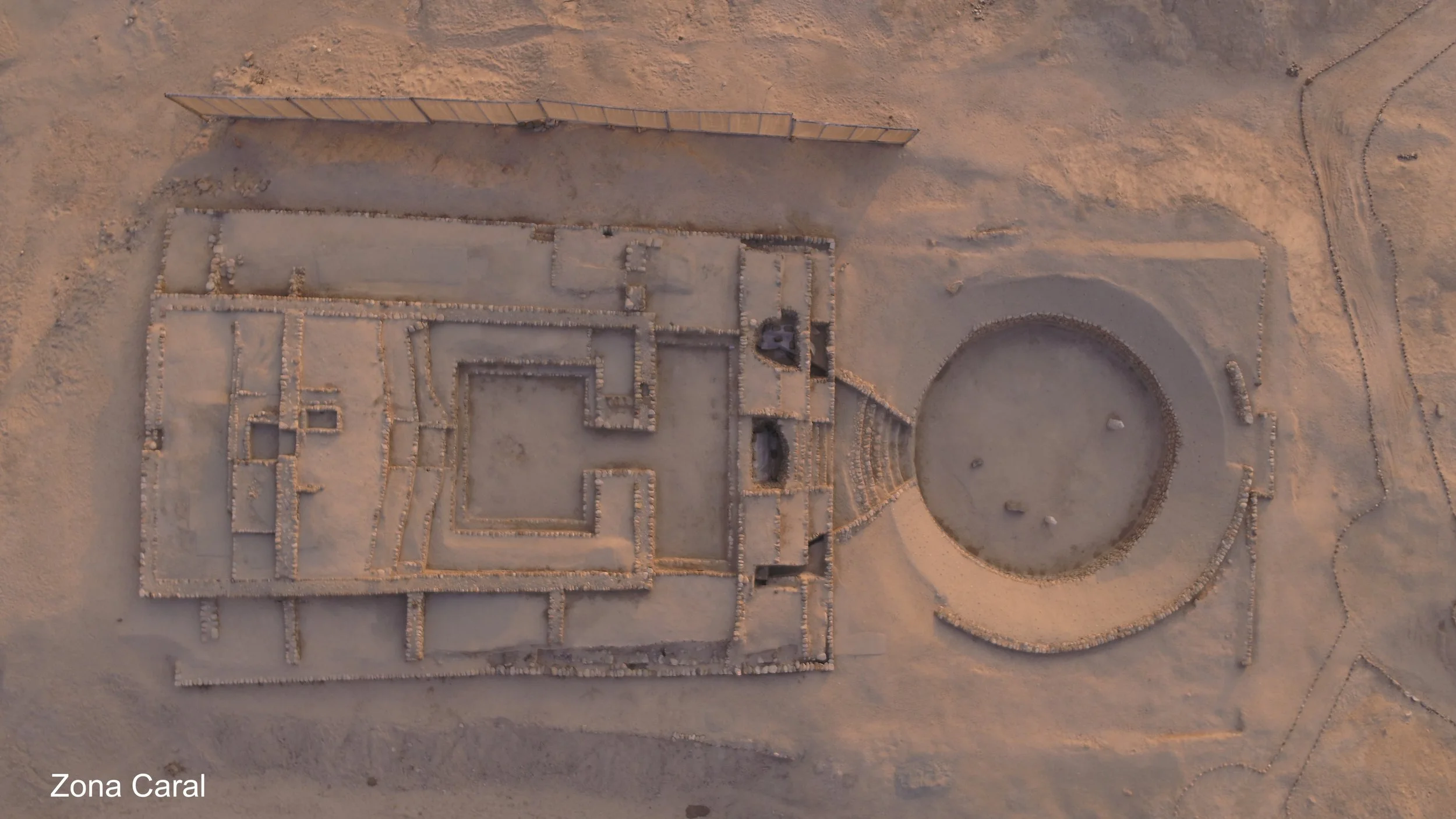
This drone shot of Peñico’s main temple and circular plaza shows they were built in the same style as Caral.
6. Caral’s culture survived.
Though we don’t know exactly how individuals reacted to the famine and drought, we do know that enough of them survived that they built more cities. Peñico, Áspero and Vichama are smaller, but the architecture and artifacts left behind show they are clearly descendants of the people of Caral, who shared the same culture.
7. Many aspects of Caral were used by later cultures.
I’ve traveled a lot in Peru and was amazed how many things I saw at Caral were copied and adapted by later cultures. Some seem obvious, like the use of terraces to stabilize buildings in earthquakes. Others show a clear cultural link between Caral and Peru’s later civilizations.
The most impressive to me was the quipu. Anybody who studies Inca culture, and most people who visit Cusco, learn that the Inca used knotted cords called quipu to record statistics, especially numbers related to population and agricultural production, but possibly much more information. I’ve almost always read about quipus as an Incan invention, but a quipu pre-dating the Inca by about 4,000 years was found at Caral.
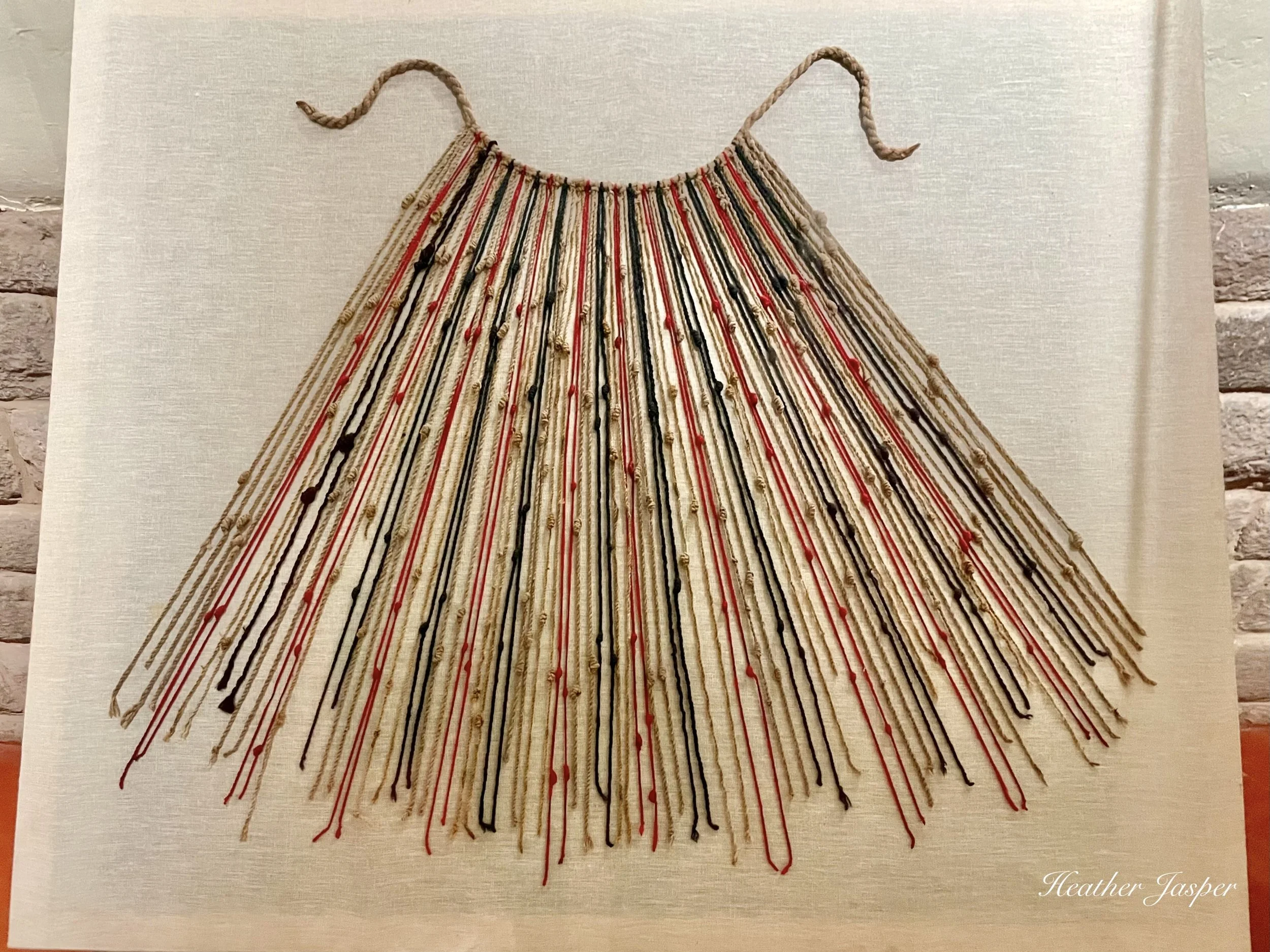
Quipu from Machu Picchu
This Inca quipu is at the Casa Concha Museum in Cusco and shows how different knots and colors were used to record information.
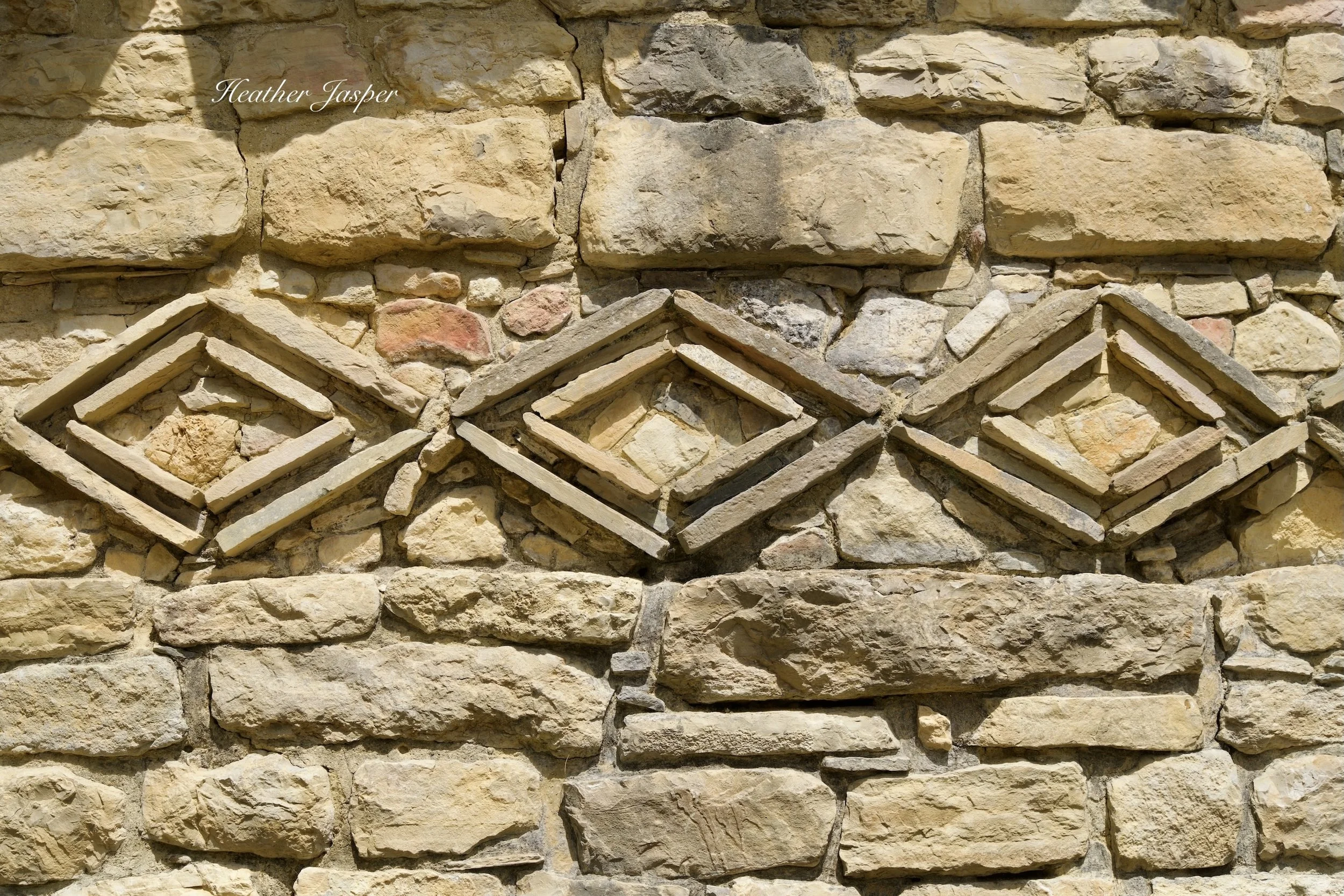
Chachapoyan architecture
The Chachapoya culture built geometric shapes into the walls at Kuélap, something also found at Caral.
Designs were built into the stone walls at Caral, similar to what I saw at Kuélap, a monumental city built by the Chachapoya people in Peru’s northern jungles about 3,000 years after Caral. There are geoglyphs in the desert around Caral, something copied by the Nazca people about 3,000 years later and now called the Nazca Lines.
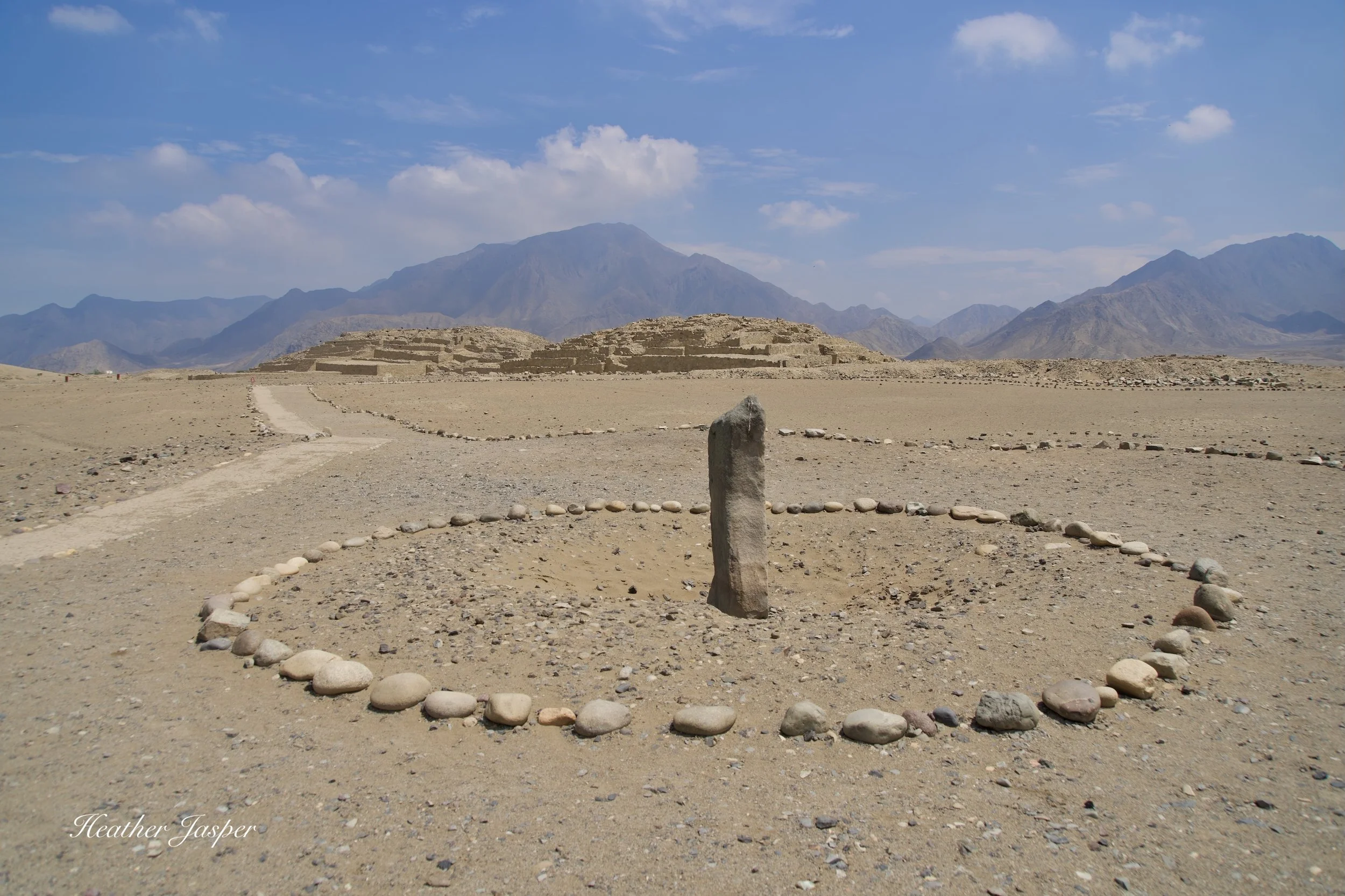
There are huge spaces between the pyramids, temples and circular plazas, without evidence of residential or other buildings.
Who lived at Caral?
Only the elite, powerful families and shamans, lived at Caral. Some homes have been identified as a sort of middle class, but most housing is in the smaller villages. So far, 25 villages have been identified in the Supe Valley, but Caral is by far the largest city and the only one with so many monumental pyramids, fire altars, circular plazas and ceremonial structures.
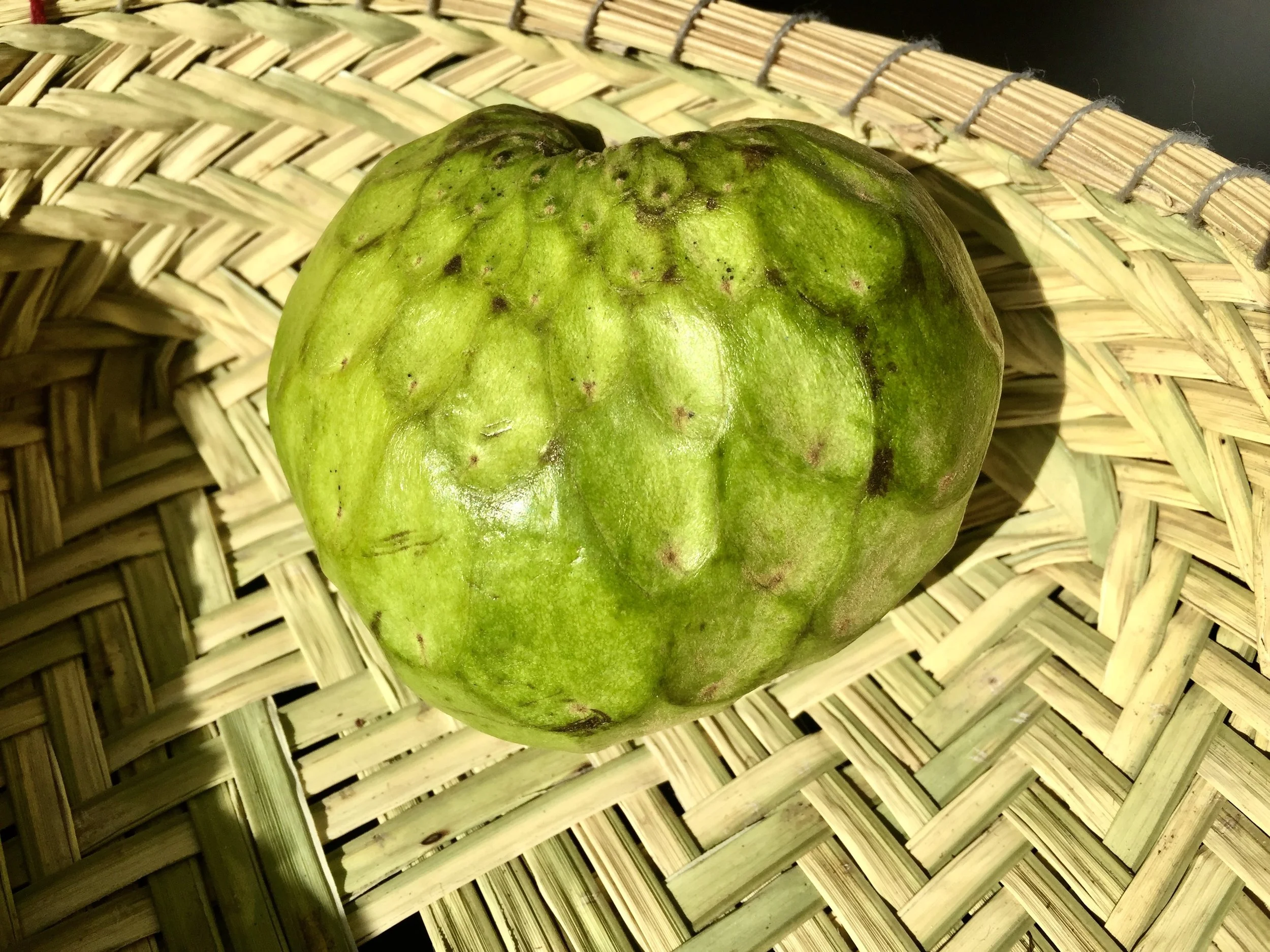
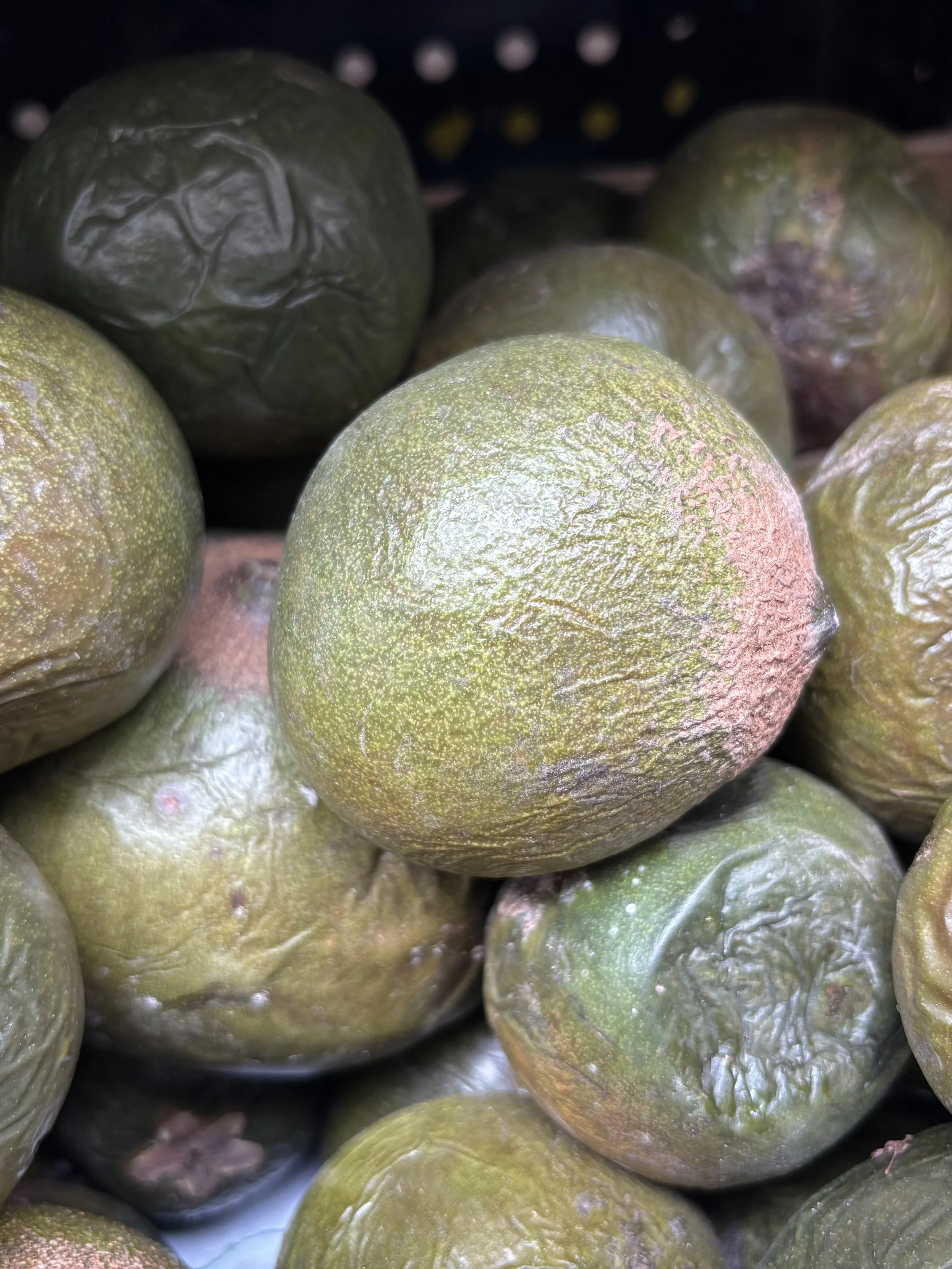
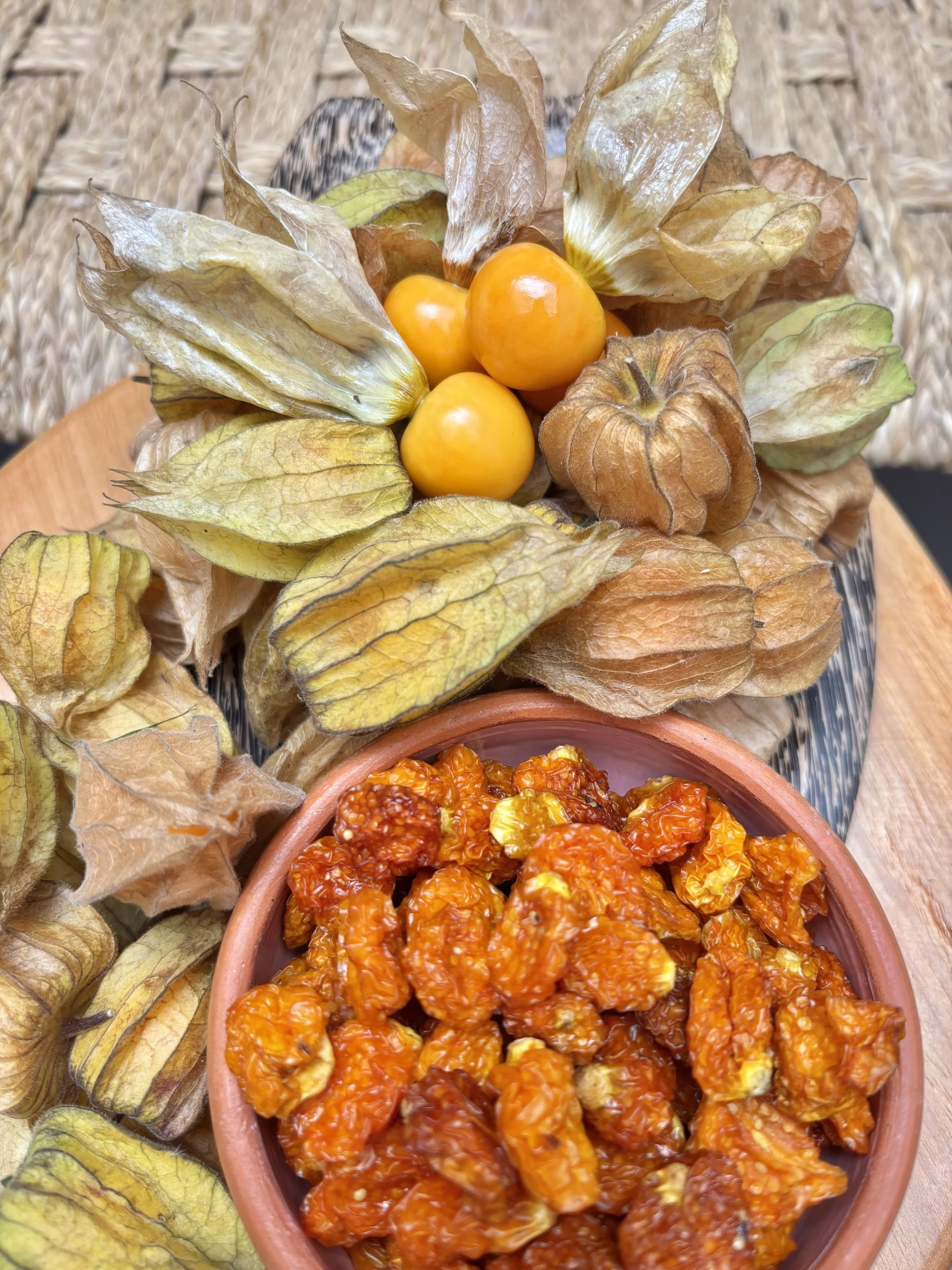
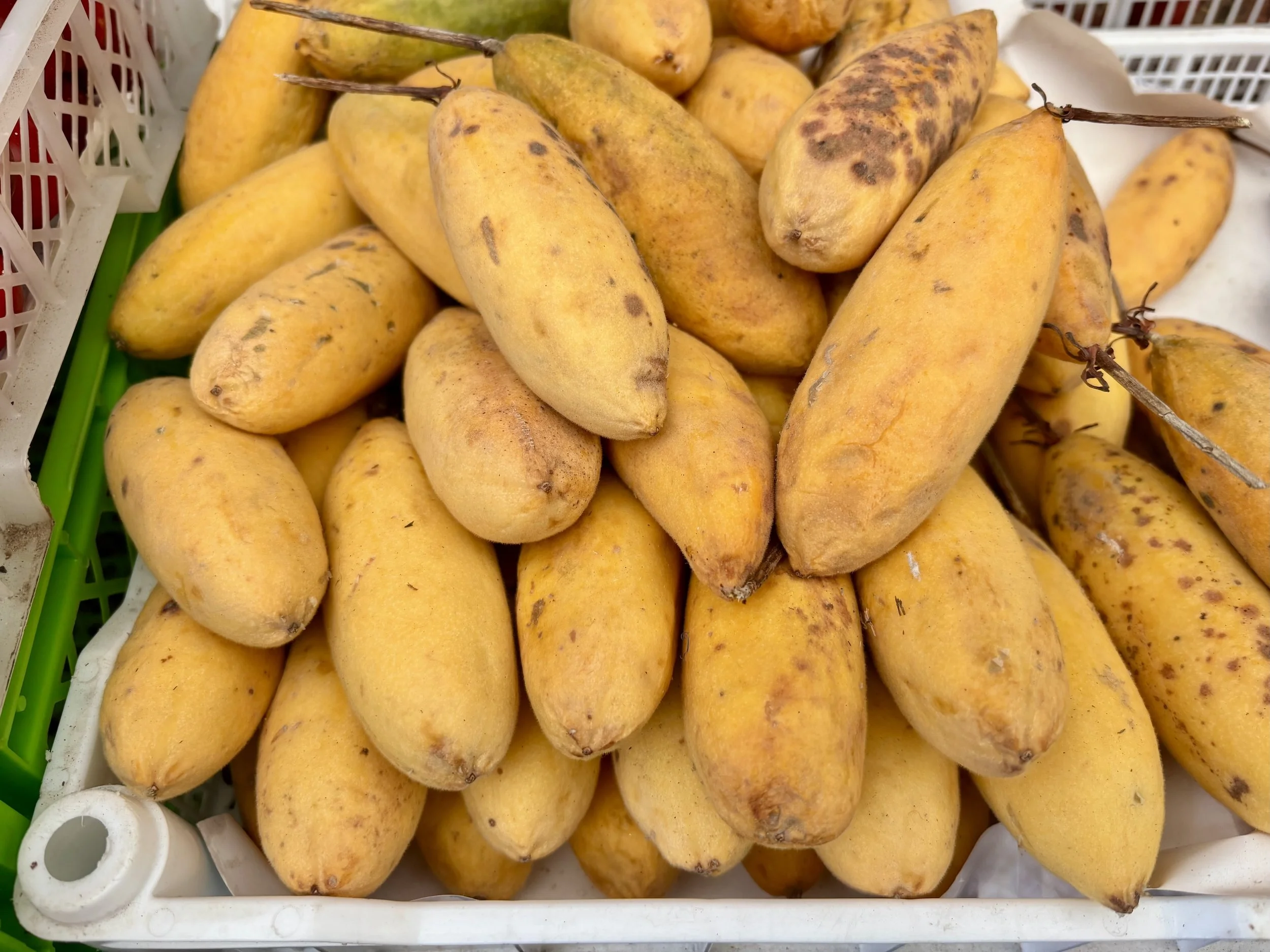
What did they eat at Caral?
Though the current location of Caral looks like an inhospitable desert, the fertile Supe Valley is only a stone’s throw away. There is evidence of seeds and dried plant matter that shows they cultivated a wide variety of vegetables: sweet potatoes, squash, chili peppers and fruit like chirimoya, lúcuma, aguaymanto and tumbo, a relative of the passion fruit. They are all common foods in Peru today and available at my local farmers market in Cusco year-round.
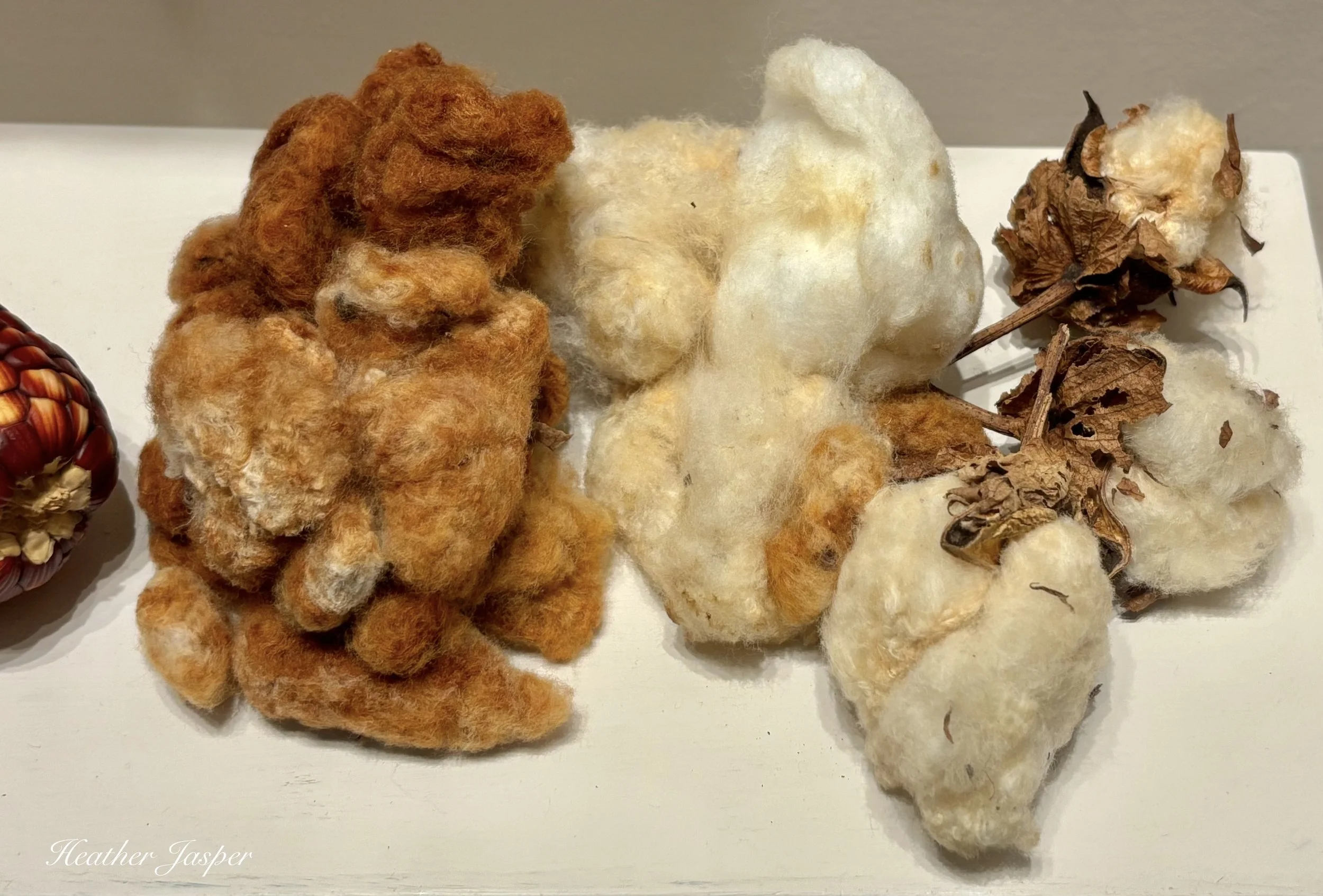

What did they wear at Caral?
They grew cotton and remnants of fabric shows they wore cotton robes. The varieties of cotton they cultivated came in a palette of cream, orange, tan and brown. They could weave patterns into their clothes without using any dyes, though archeologists have also found achiote seeds. Today, achiote is cultivated in the rainforest and used by Amazonian cultures to dye fabrics and palm fronds used to weave household articles. The seeds are also used to flavor and color cooking.
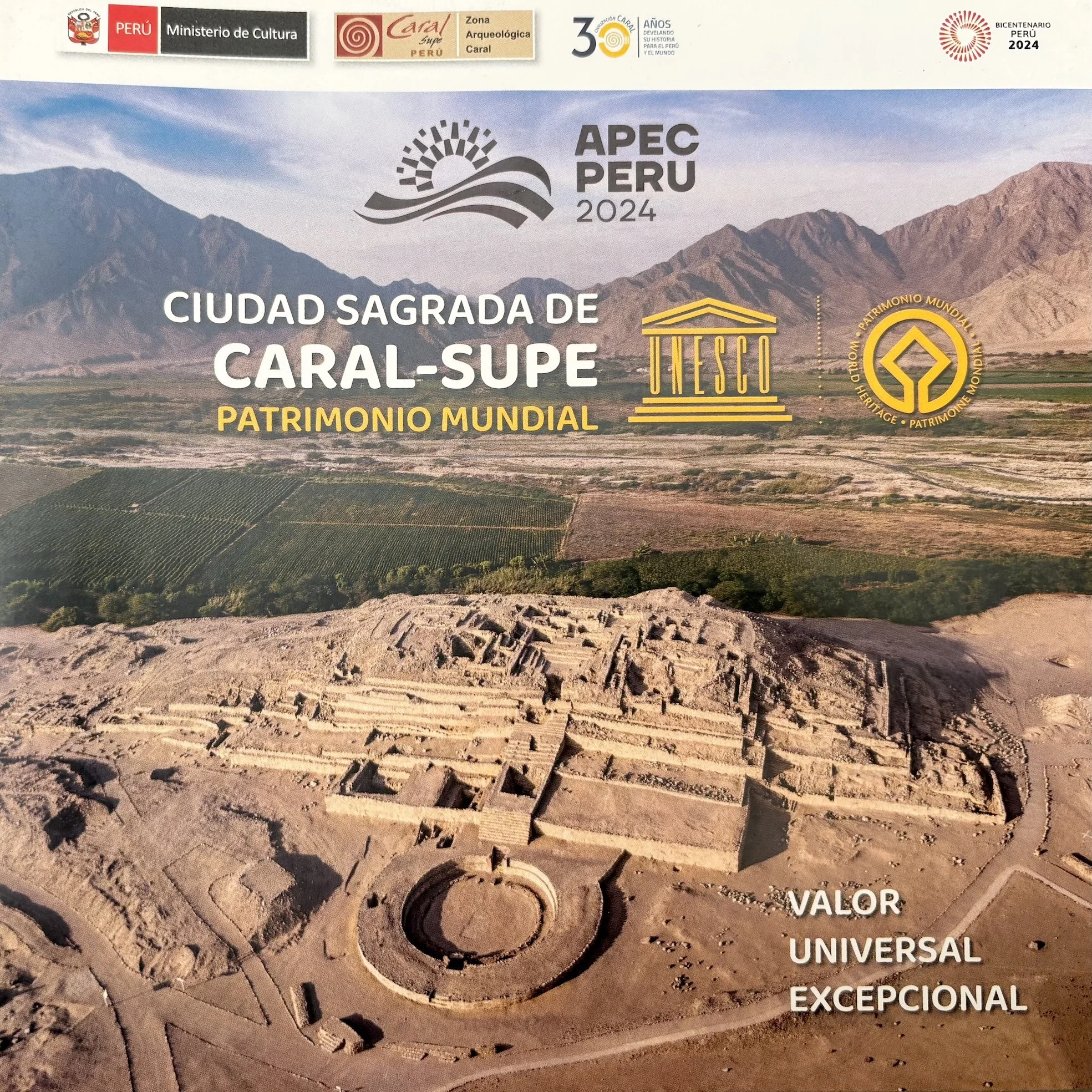
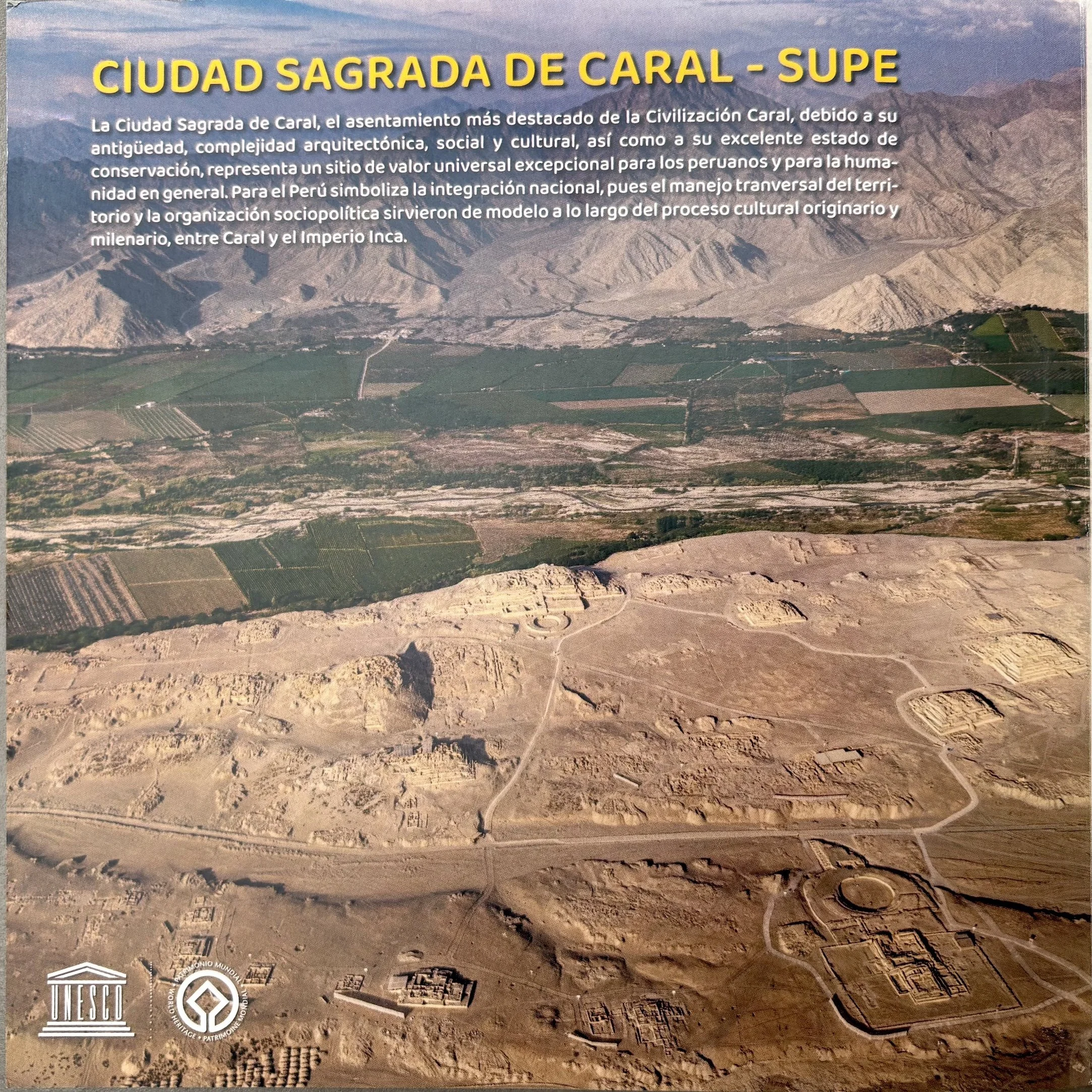
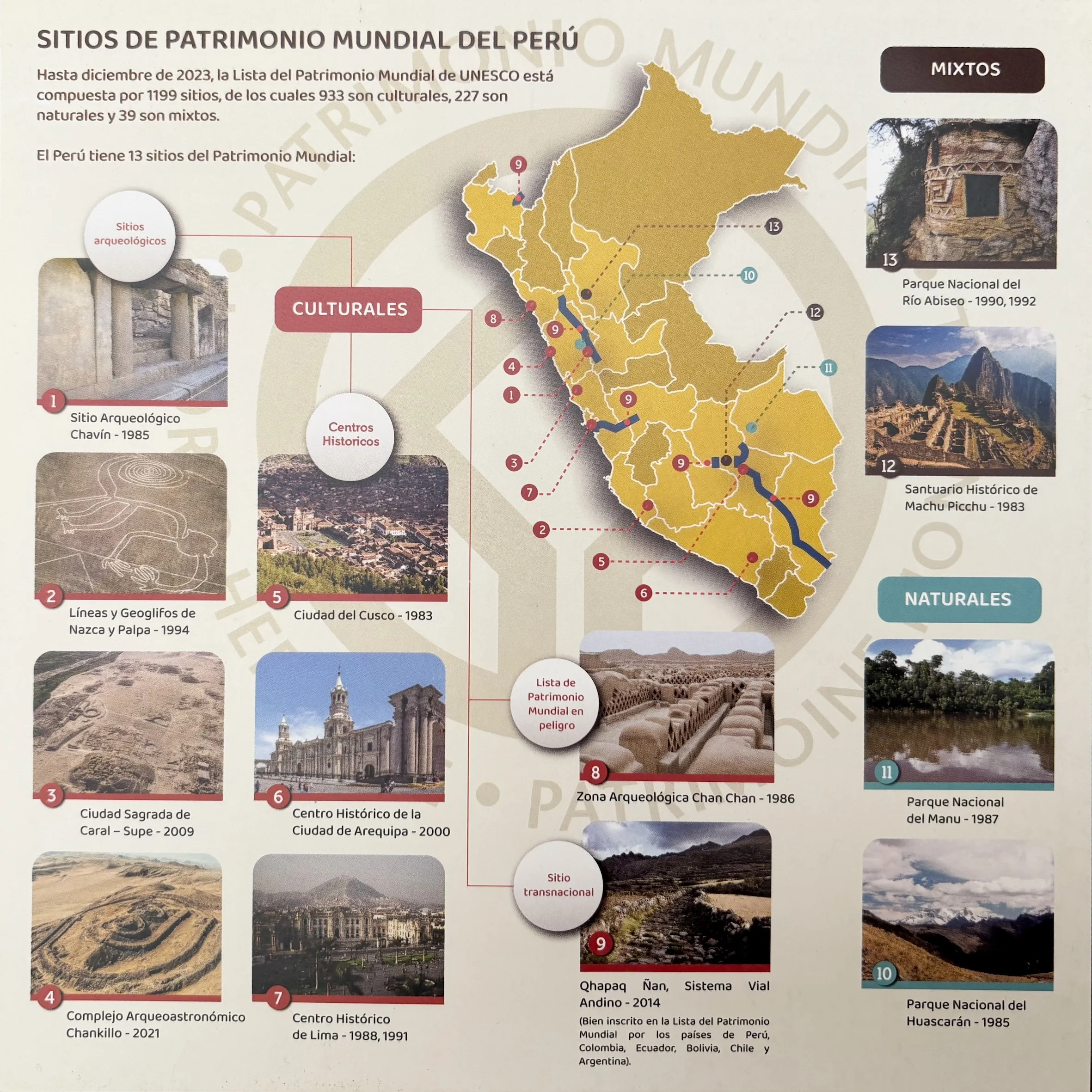
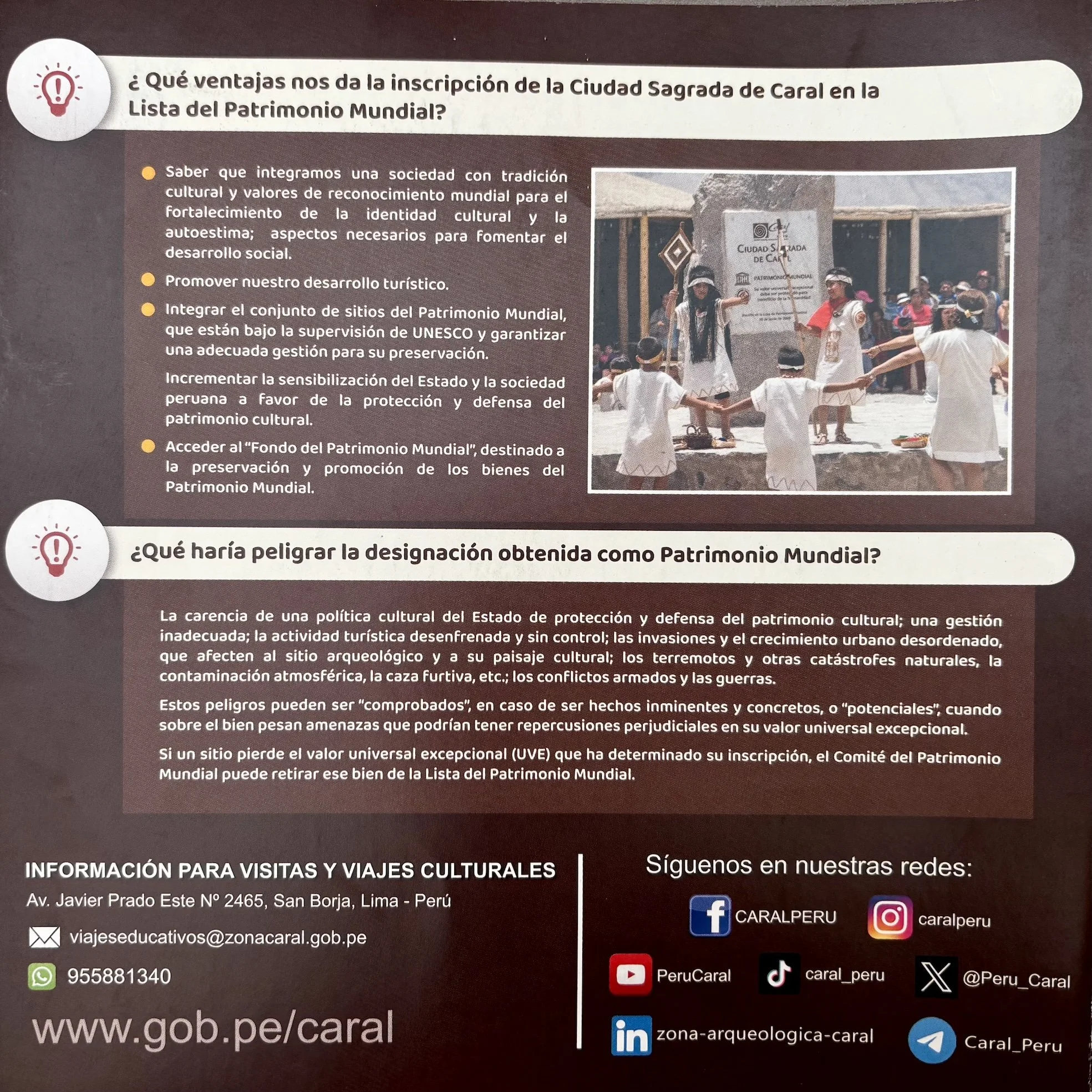
Click on the images above to read about Caral’s place in the family of Peruvian archeological sites, en español.
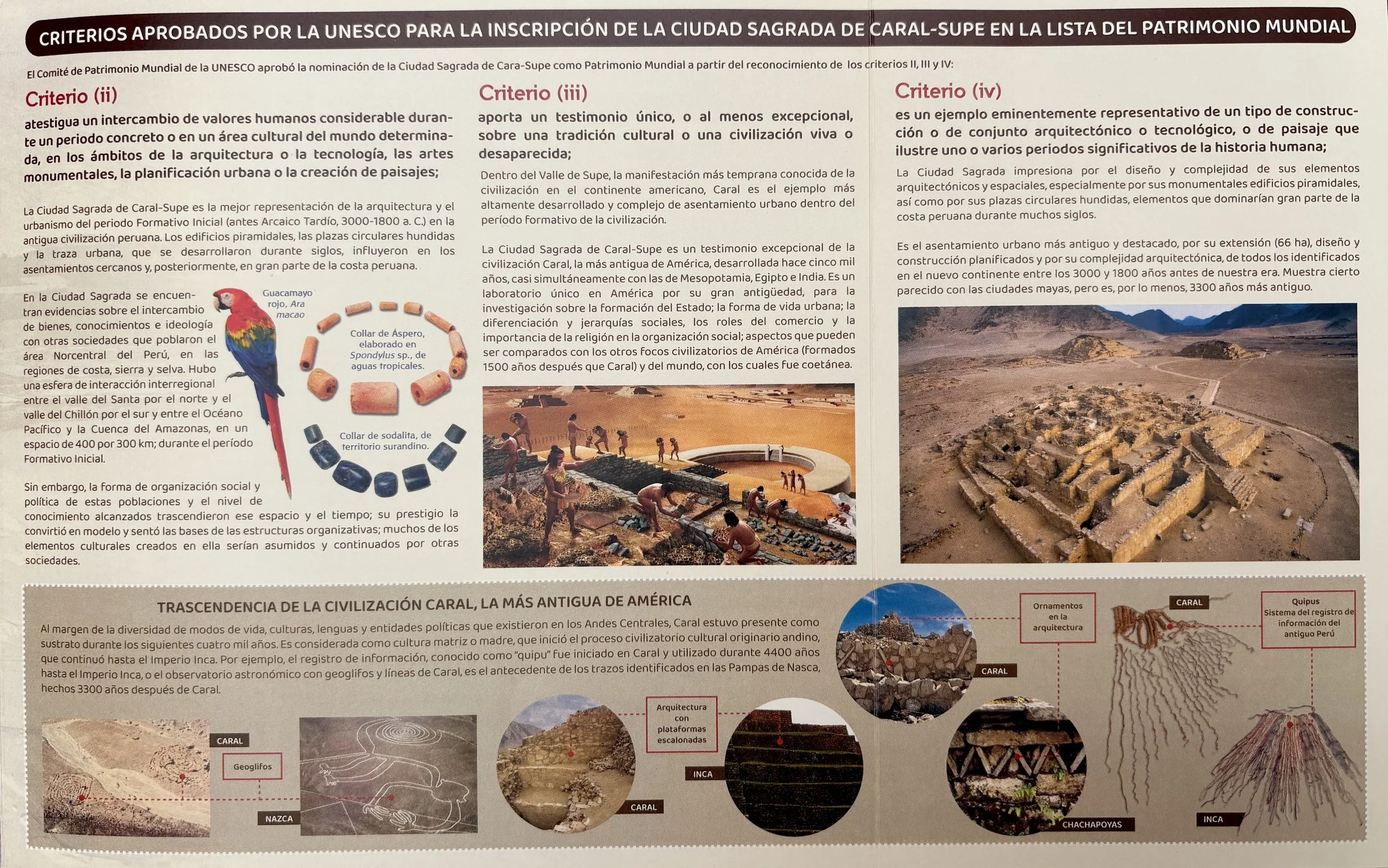
This brochure explains how Caral met the criteria to be considered a UNESCO World Heritage Site.
Controversy in the academic world.
Though nobody disputes what Dr. Shady found at Caral, some dispute her interpretations of what she found. Nobody argues with the radiocarbon dates that show this city is older than Stonehenge and built around the same time at the oldest cities of Mesopotamia. Nobody argues with the purpose of shicras, quipus and fire altars or that they understood the Venturi Effect and made geoglyphs thousands of years before the Nazca.
But is it a civilization?
One of Dr Shady’s team’s main assertions is that Caral is the oldest civilization in the Americas. Personally, I don’t understand all the finer points of what does and doesn’t qualify a culture as a civilization, so I’ll leave that to the academics. Whatever you want to call it, Caral is a truly extraordinary find and cements Peru as the cradle of civilization in the Americas.
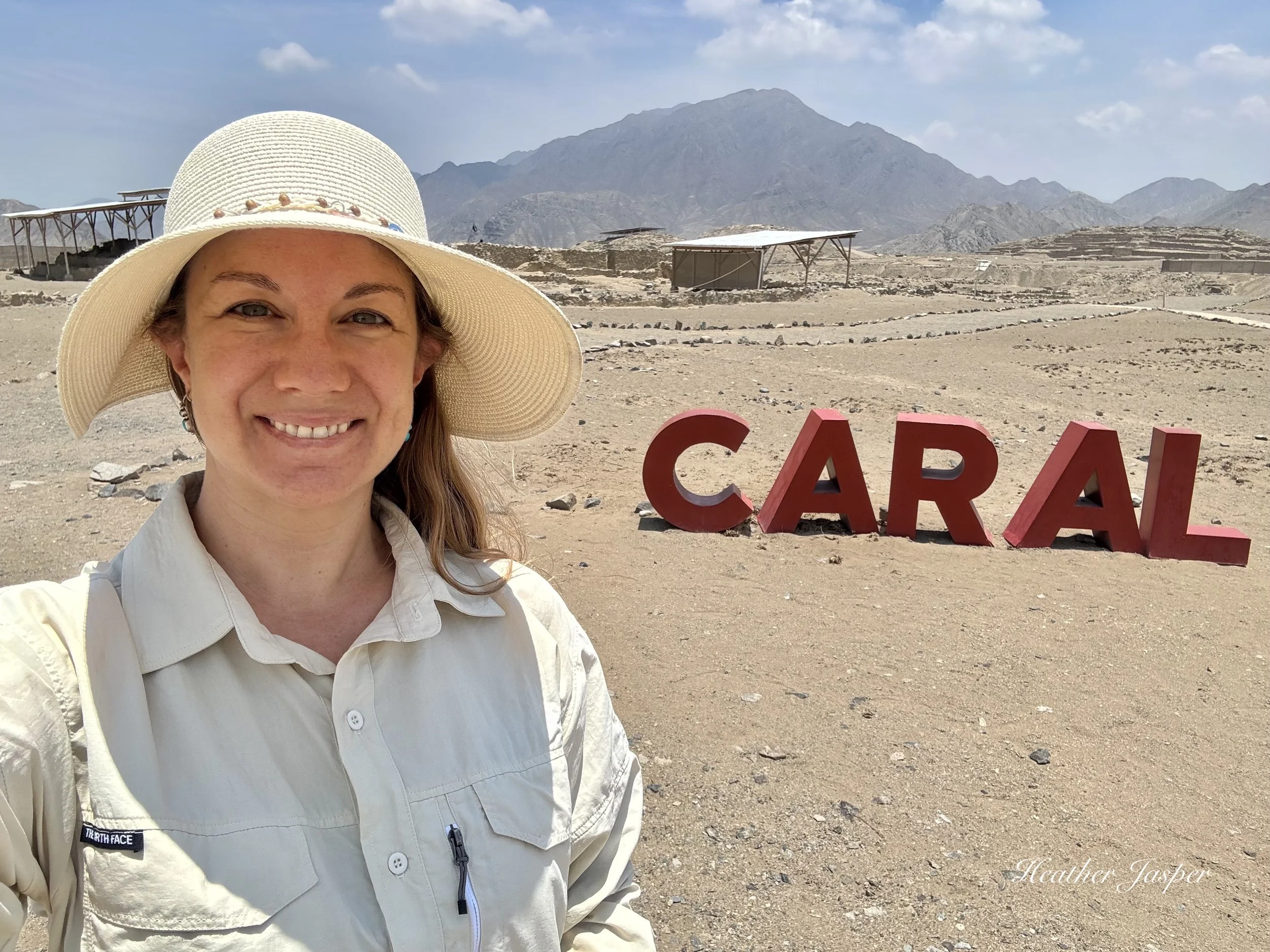
I visited in February and had to take the bumpy gravel back roads to get to Caral. It was rough, but worth it.
How to get to Caral?
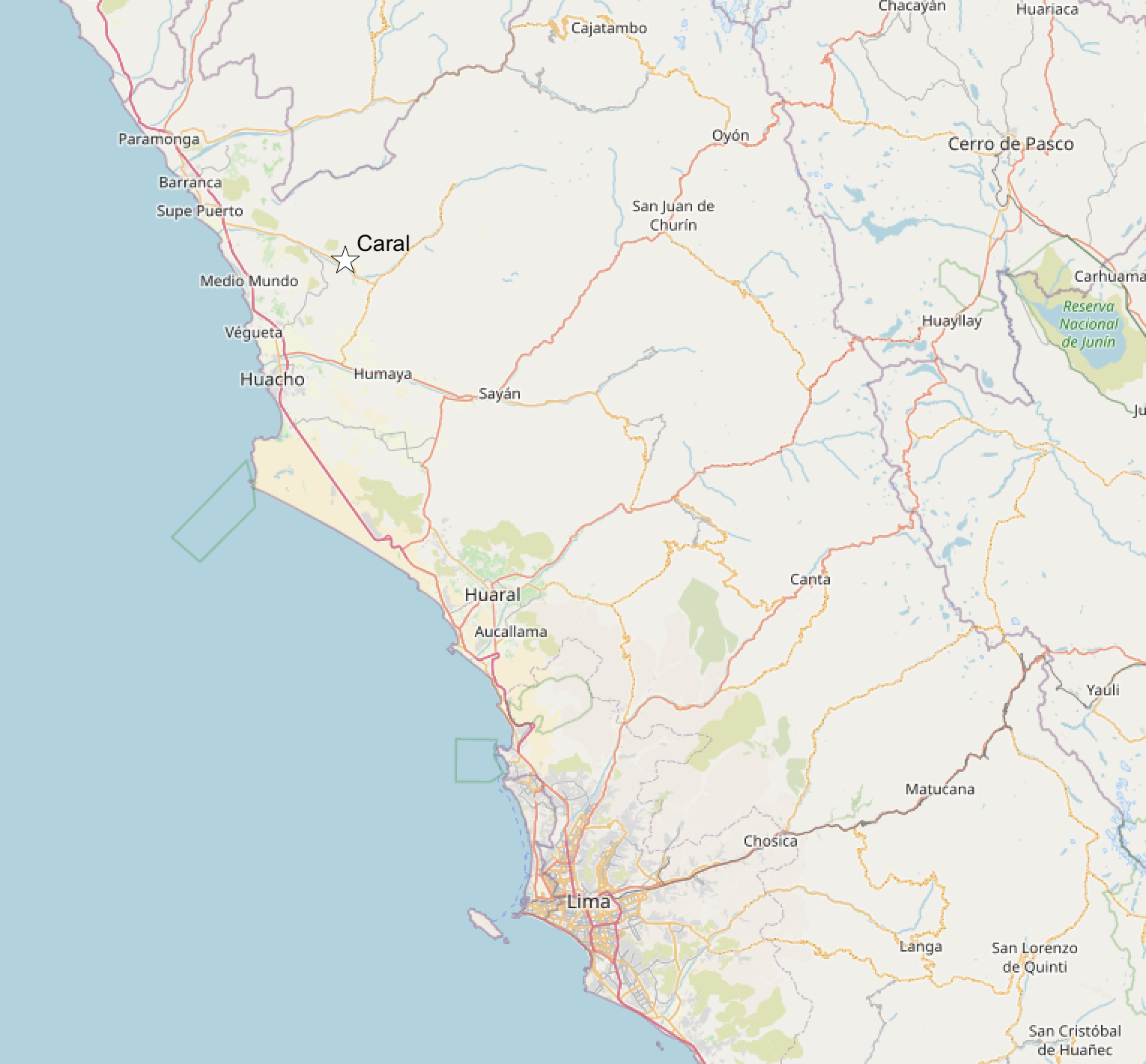
North from Lima 4 hours
The first two hours of the drive is simply inching through the traffic created by Lima’s sprawl and crowded suburbs. The next two hours are driving to either Huacho or Supe Puerto.
There is a paved road from Supe, on the coast, up to the Caral archeological site. However, that road ends at the river, which is dry from about May to December, and you can drive across to Caral. The river has water from sometime in December or January through April or May. During those months, you have to take the back road, which is long and poorly maintained. You need a 4x4 or SUV with high clearance to make it to Caral during the rainy season. It doesn’t rain much on the coast, but the river brings water from high in the Andes where it rains a lot January-March.
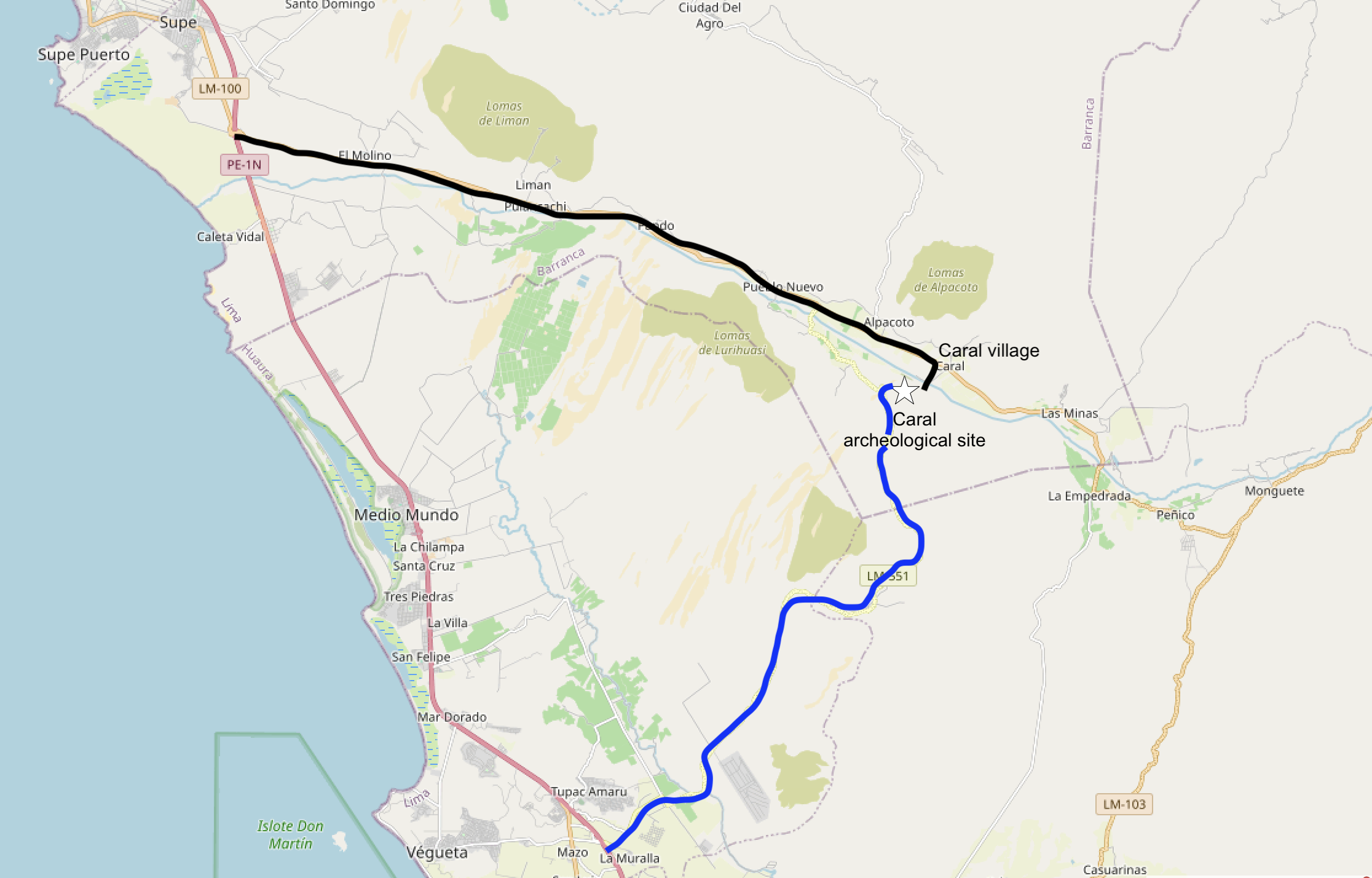
Dry vs. Rainy Seasons
Follow the black line on a paved road from May through November. If there’s water in the Supe River, you have to follow the blue line, which is a rough gravel road from La Muralla, between Végueta and Huacho.
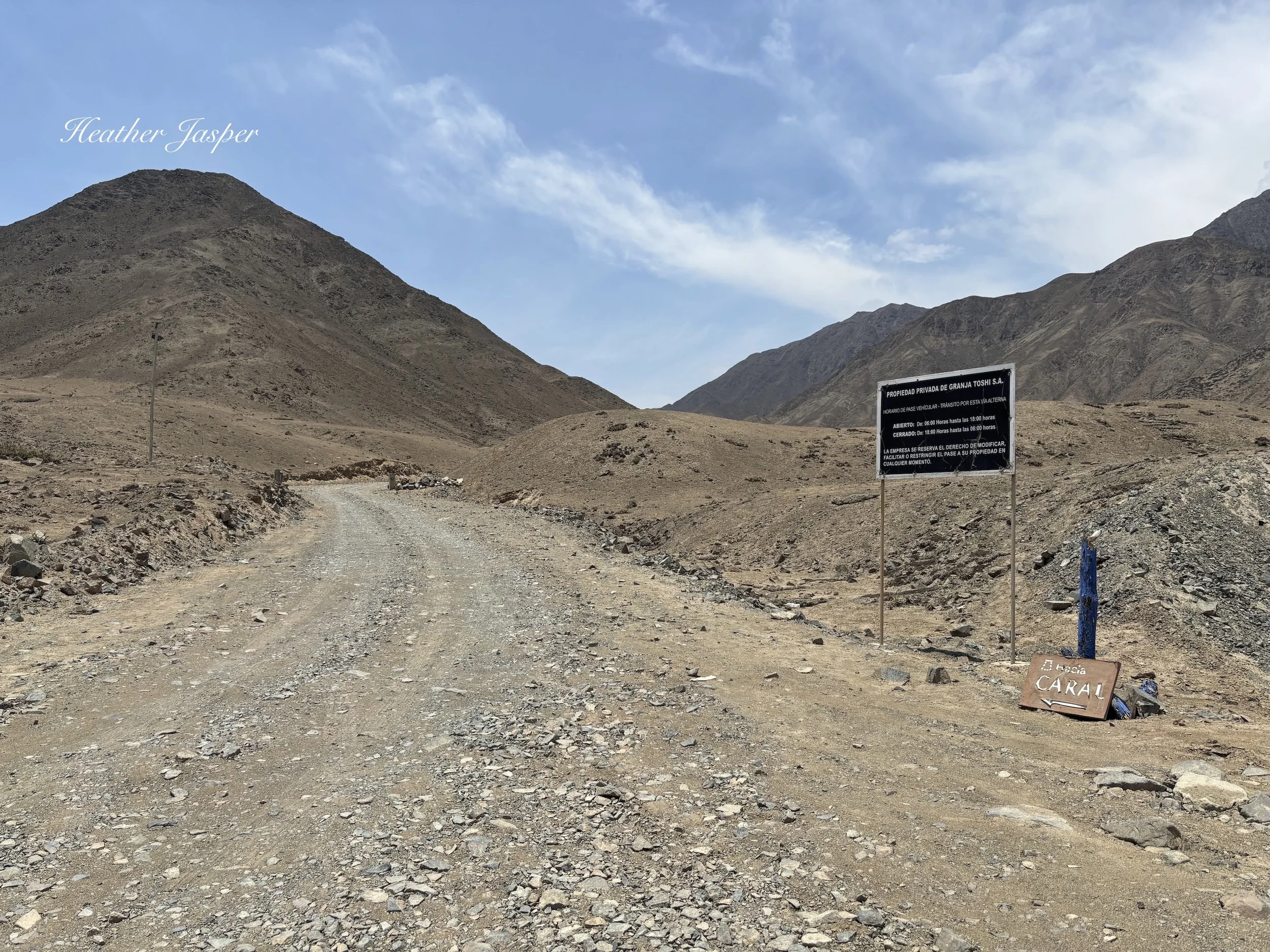
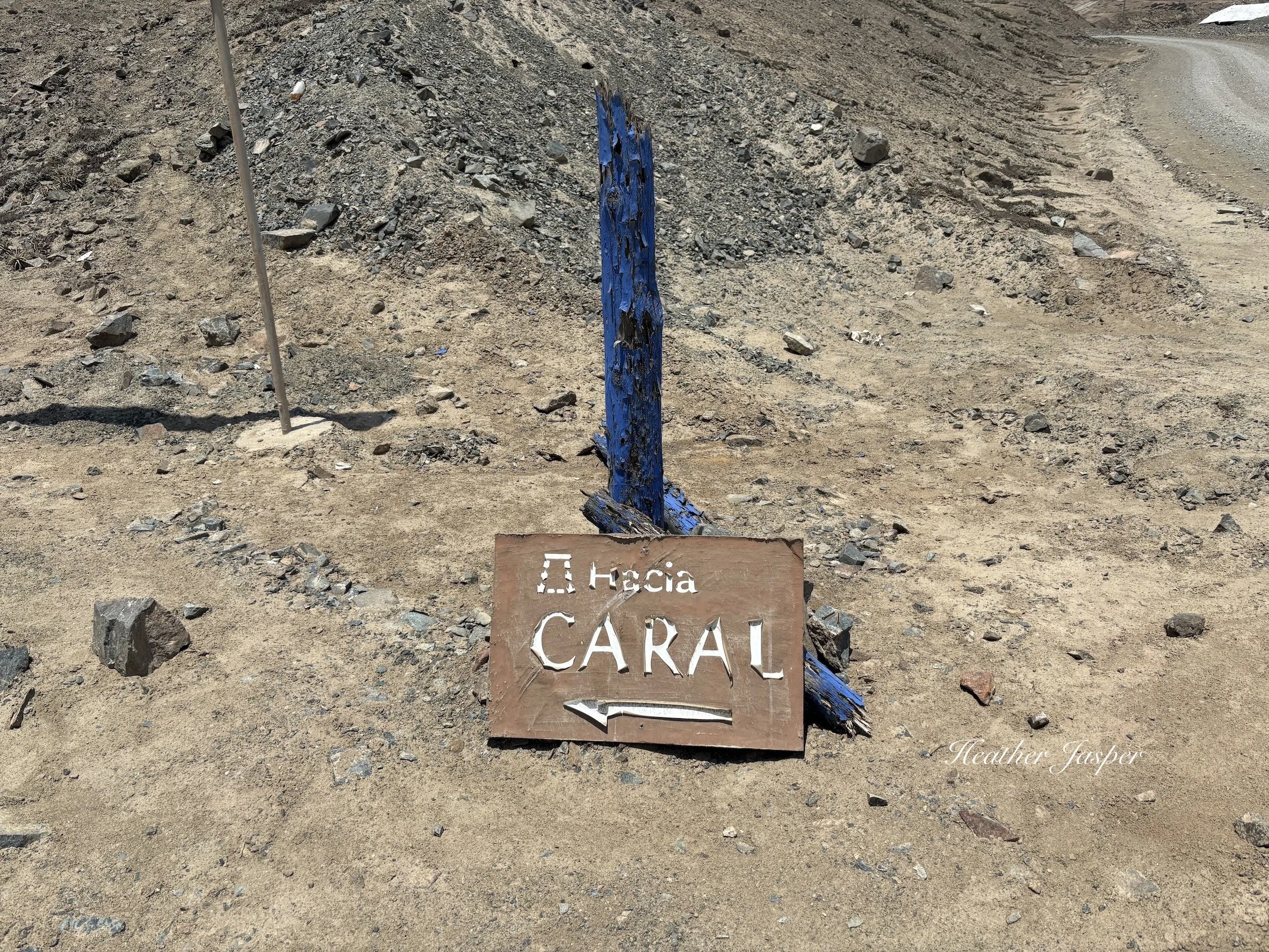
If you have to drive the back road during the rainy season, there’s an important left turn that is easy to miss. The big signs says this is private property belonging to the Toshi company. The small, faded sign on the ground, probably broken off the blue post, says Caral. The area has no cell service as of March 2026 and the drive takes about an hour and a half, depending on how fast you’re comfortable driving over washboards.