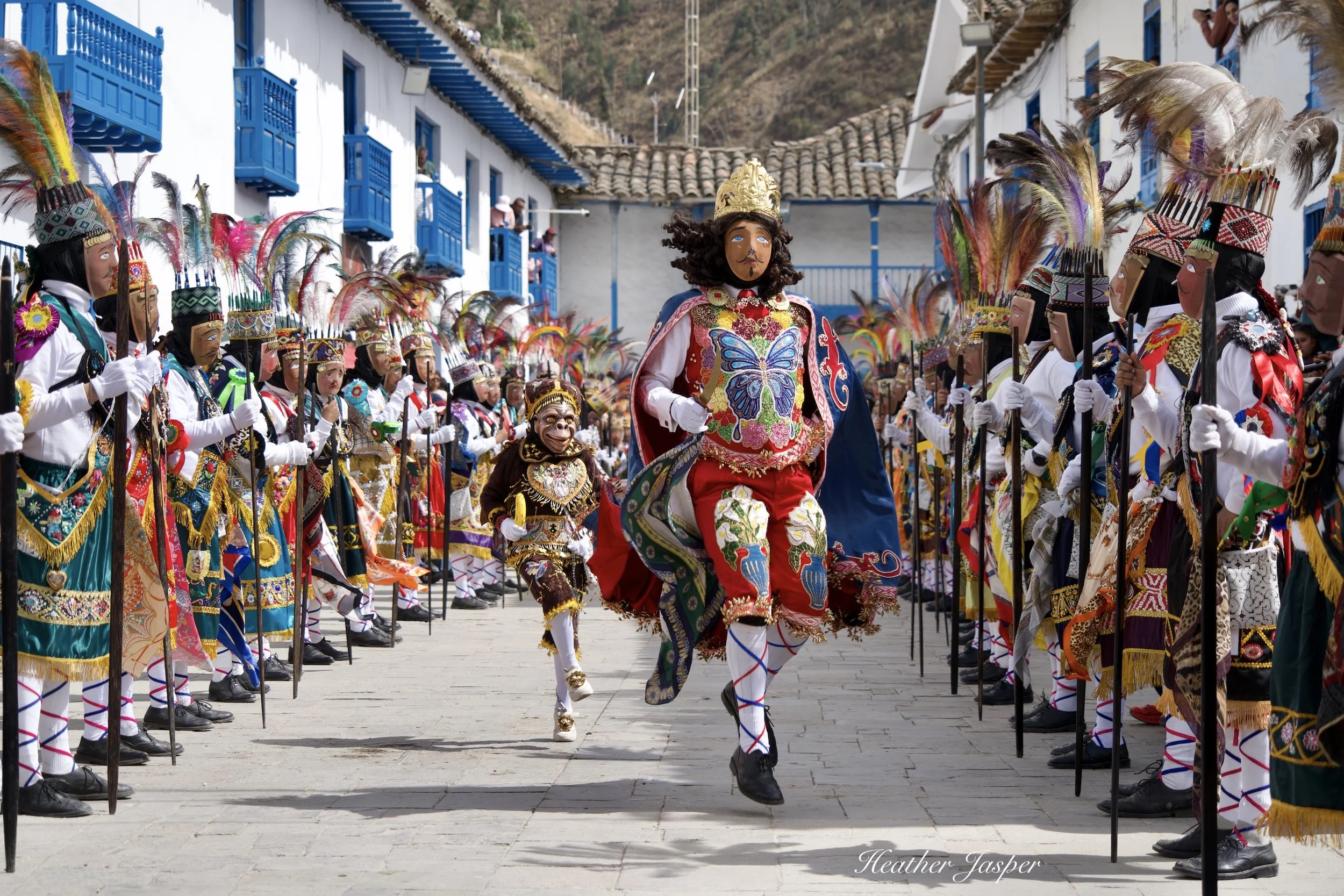
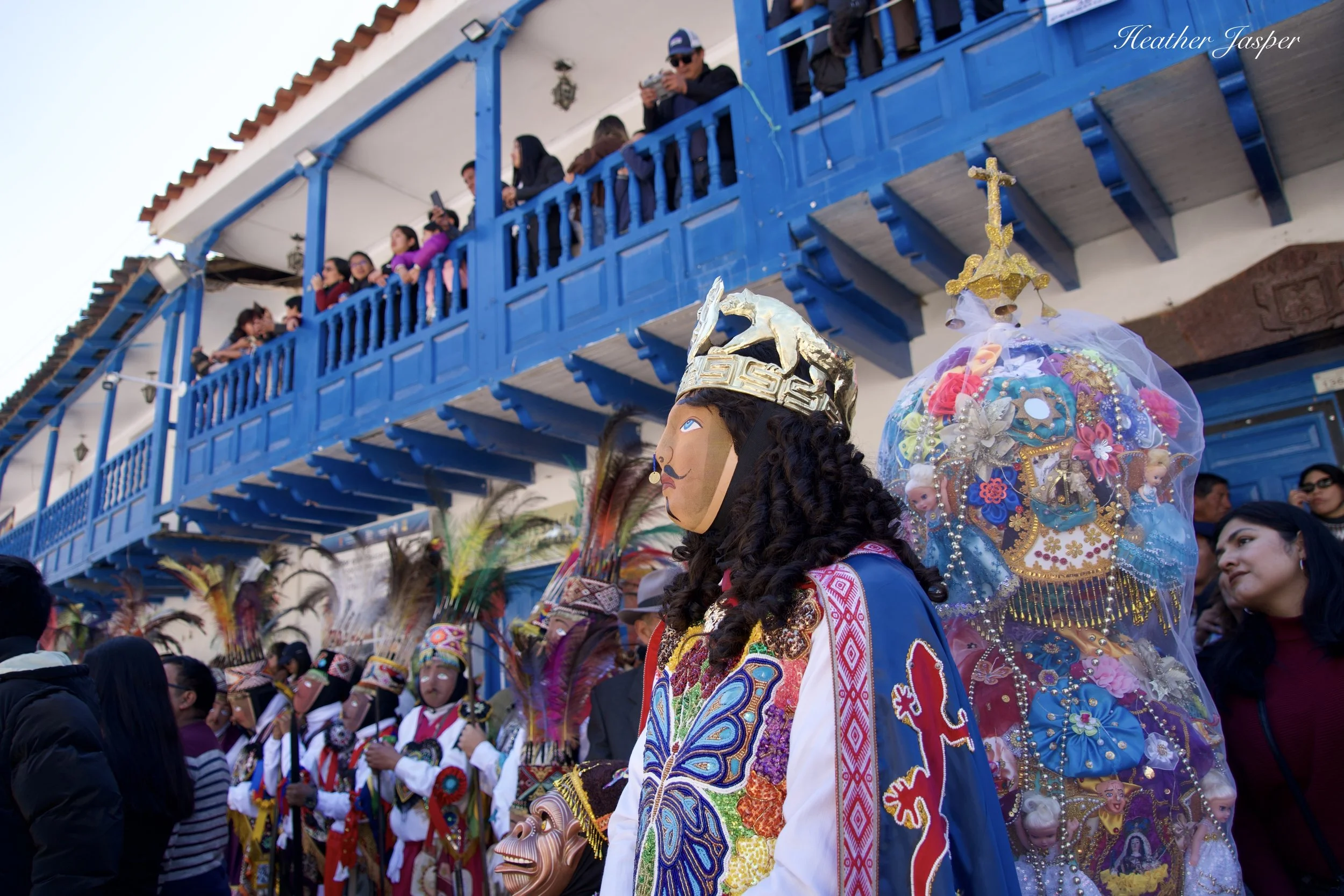
The Ch’unchu King and his pet monkey Wititi dance in front of the church in Paucartambo.
Of Paucartambo’s nineteen danzas, the Qhapaq Ch’unchu have the most important role in the Festividad de la Virgen del Carmen.
I knew very little about the Qhapaq Ch’unchu before this year and am so thankful to every one of them for making me welcome. They were unfailingly helpful and kind to me, always making sure I knew what would happen next in the complicated moving puzzle of Paucartambo’s nineteen danzas from July 15 to 18. I shadowed the Qhapaq Ch’unchu everywhere they went.
This was not my first time in Paucartambo. Read about my time with the Qhapaq Negro in 2025 and the Saqra in 2024 and 2023.
Every danza has its own complicated choreography, which shows the characters they represent and how they revere the Virgin of Carmen. Each danza also has its own music, which adds to their expression of their role in the festividad and is always played by live musicians who follow the danza everywhere.
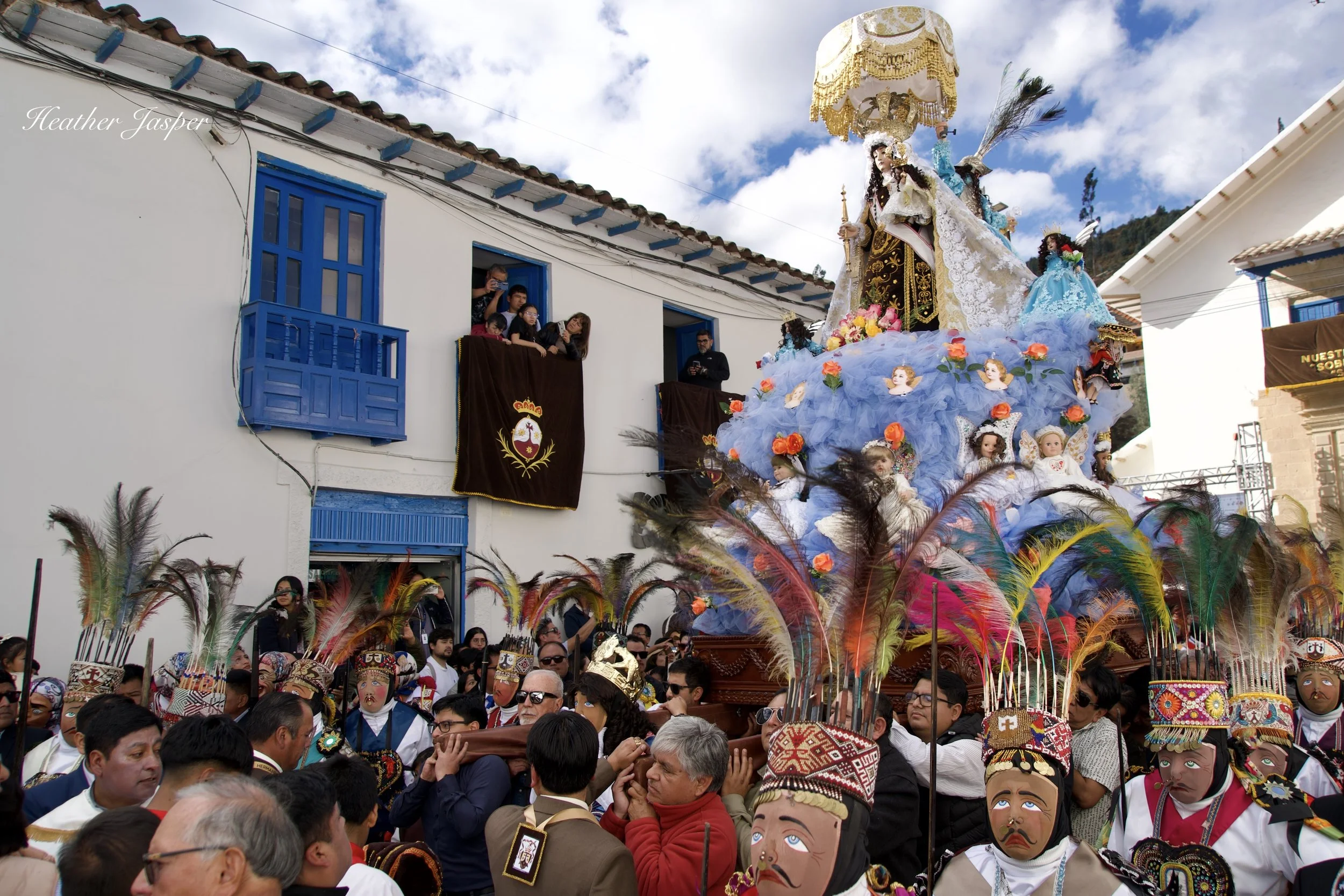
The Qhapaq Ch’unchu flank the Virgin of Carmen throughout the four days of the festividad.
Guardians of Mamacha Carmen
The Qhapaq Ch’unchu guard the Virgin of Carmen from noon on the first day through the end of the 18th. They represent Indigenous communities from the nearby jungle, part of the Peruvian Amazon rainforest.
I’ll give you a breakdown of what happens each day of the festividad, but first you need some background information and vocabulary.
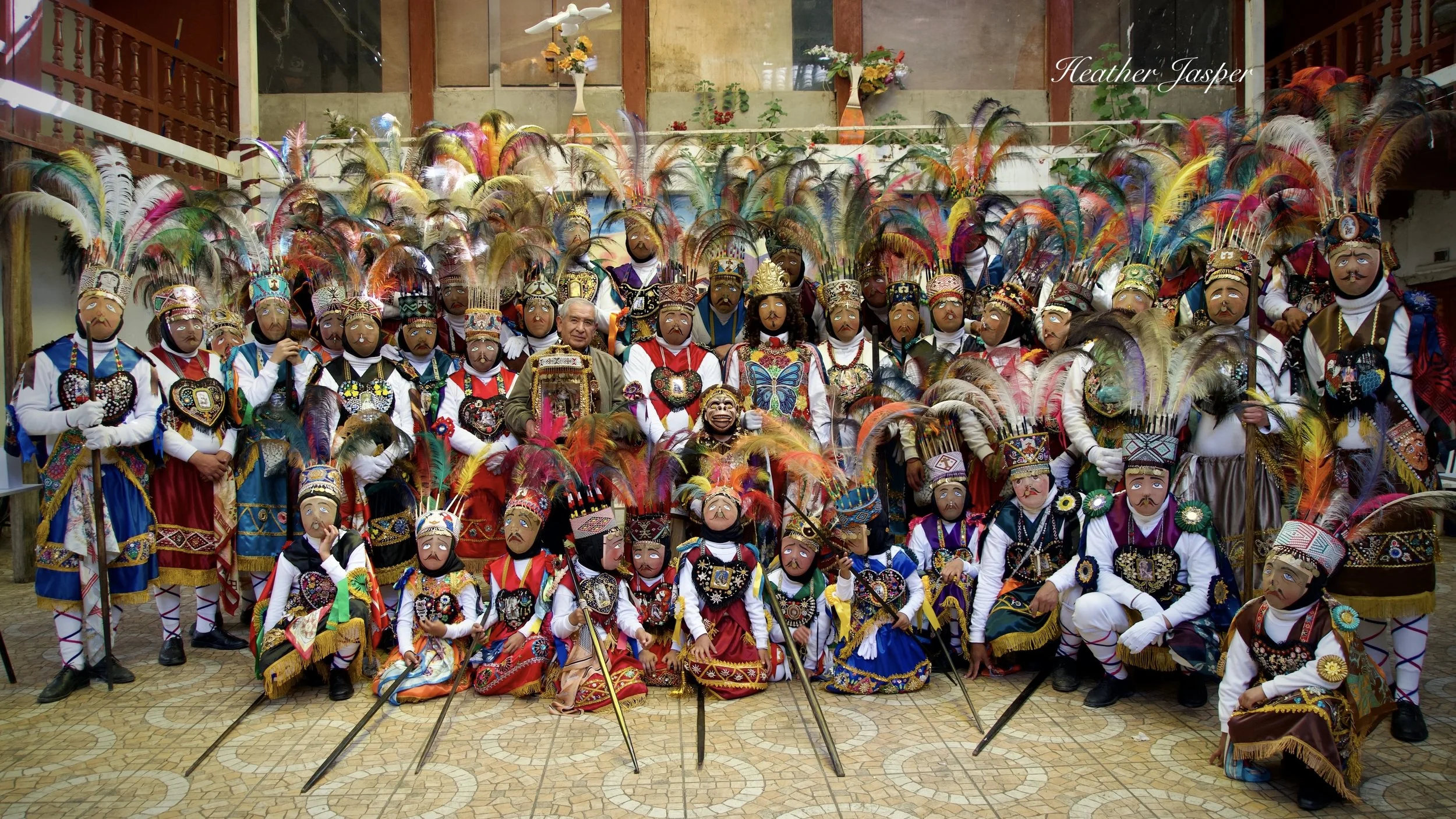
There are a few words you need to understand before I can even begin to explain the Ch’unchu.
Here are some Spanish and Quechua words that I think are better than any English translation.
Qhapaq: A Quechua word that can mean rich, important or privileged, depending on the context.
Ch’unchu: The Quechua word for wild. The Qhapaq Ch’unchu call themselves salvajes in Spanish, wild people or savages.
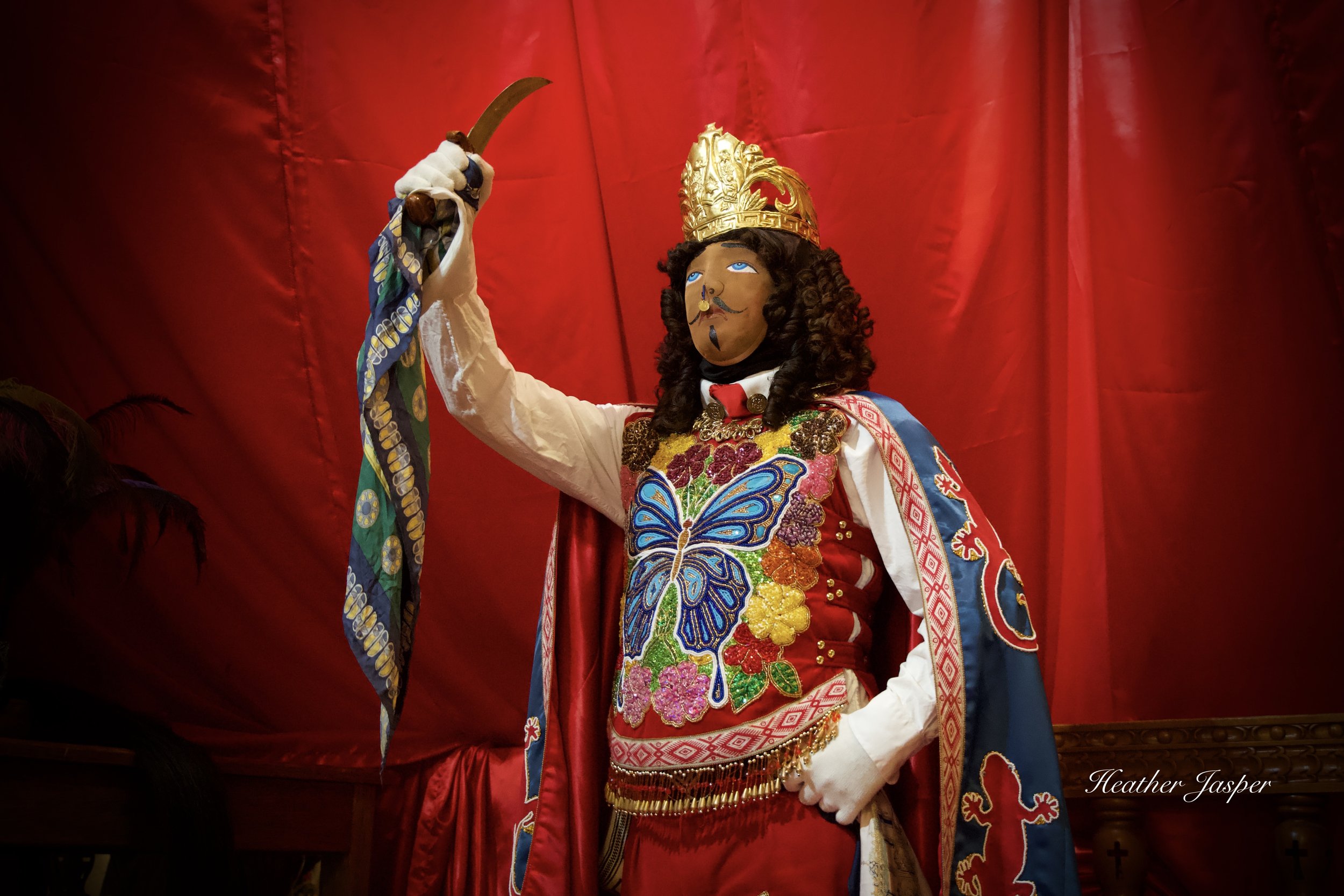
The Rey Ch’unchu is an elected position with a three year term. Yuri was elected to be King 2025-2027.
Rey Ch’unchu: The Ch’unchu King this year was Yuri Benavides Ynfantas. While the Saqra have a Caporal and the Qhapaq Negro have a Guidador, the Ch’unchu have a King. A king can be re-elected as long as the Ch’unchus want him to be king.
Danza: Both the characters the dancers represent and the dance they perform.
Mamacha: A combination of the Spanish word mamá and the Quechua suffix -cha which shows affection.
Festividad: Celebration. Padre Mijail, the former priest of Paucartambo, asked that I use festividad, rather than festivity or fiesta, because of the religious connection between festividad and Navidad (Christmas).
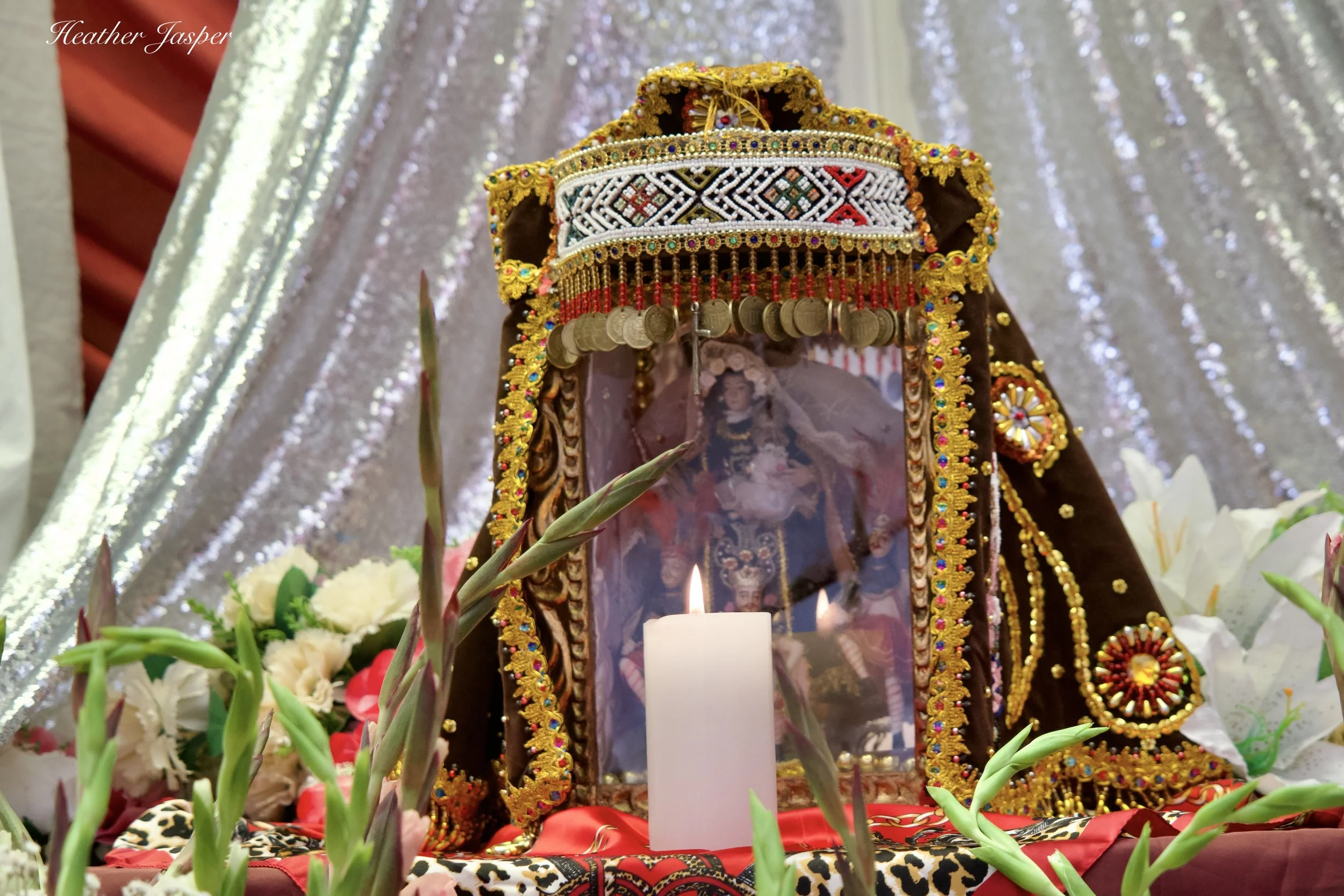
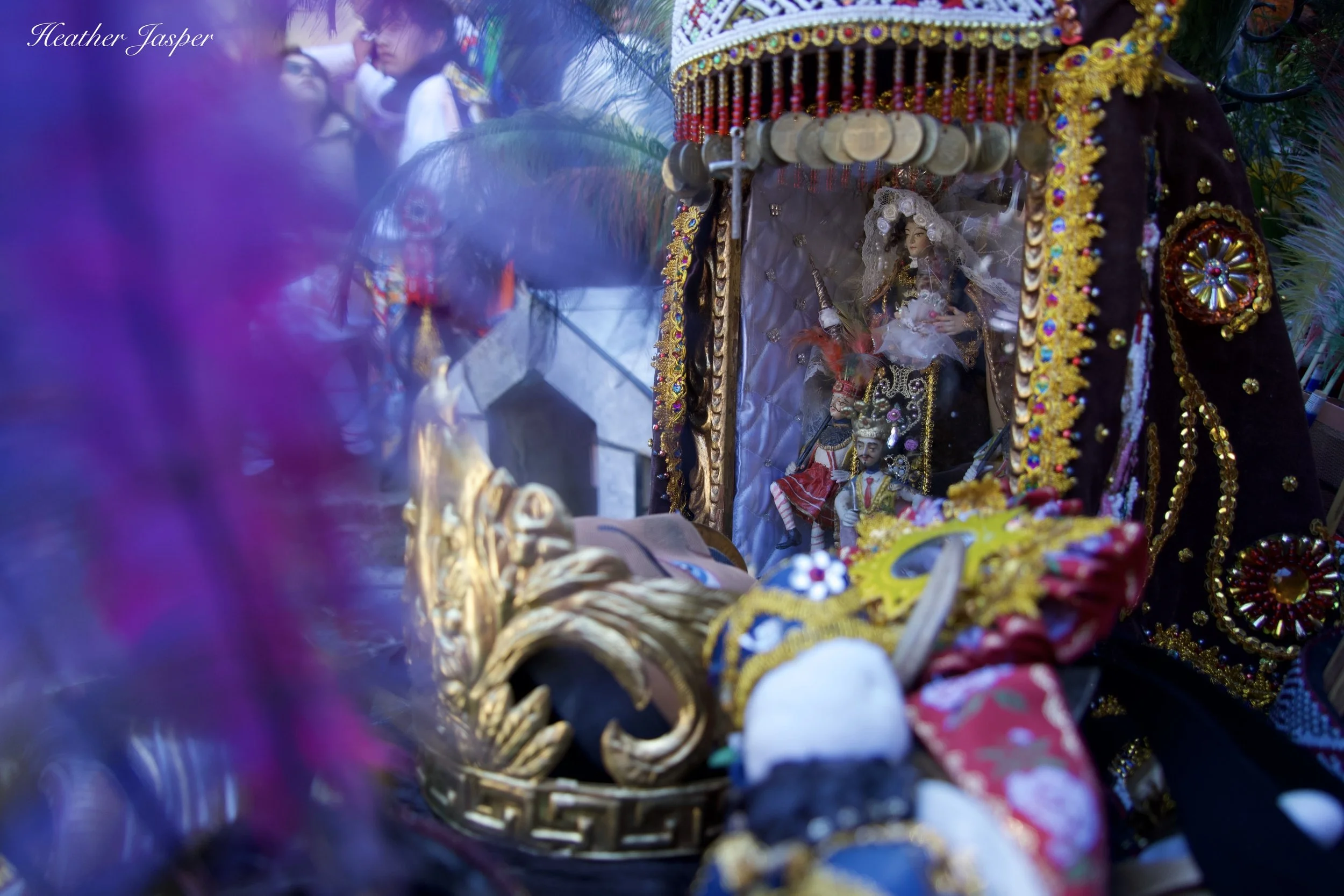
La Demanda: The miniature representation of the Virgin of Carmen. Each danza as their own Demanda, a statue of the Virgin a few inches high, usually surrounded by miniatures of the danza’s dancers. They’re in a tiny shrine with a glass front so everybody can kiss it and the glass can be cleaned, a Covid era change to tradition. Every time a danza goes to church or to an official event, the Demanda goes with them, carried by the carguyoc. Otherwise, it stays in the cargo wasi, though at night it goes home with the carguyoc.
Cargo wasi: The Spanish word cargo (burden) and Quechua wasi (house) is the name for the home each danza shares during the festividad, where they eat meals together and can take off their masks and not be in character.
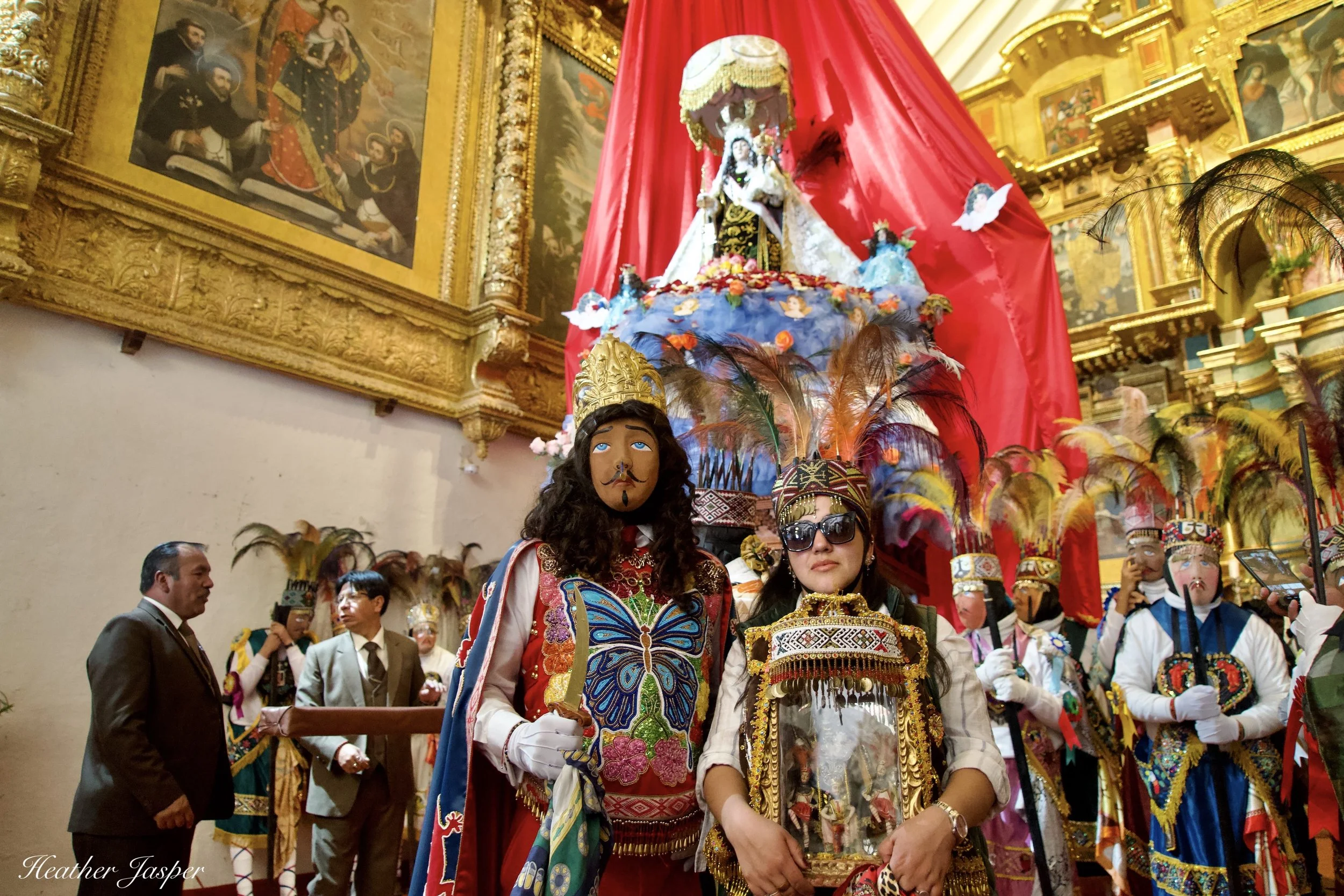
The carguyoc, Jandira Cunza, carries the Demanda, wears a chuk’u and in processions stays near the King.
Carguyoc: The Spanish word cargo (burden) and the Quechua suffix -yoc (belonging to). The carguyoc are the people, usually a family, who carry the financial burden of each danza. They rent the cargo wasi, if the danza doesn’t own a house, and pay for the musicians and food and various other expenses. This year the carguyoc was Jandira Cunza and next year it will be Patricia Peña Palomino.
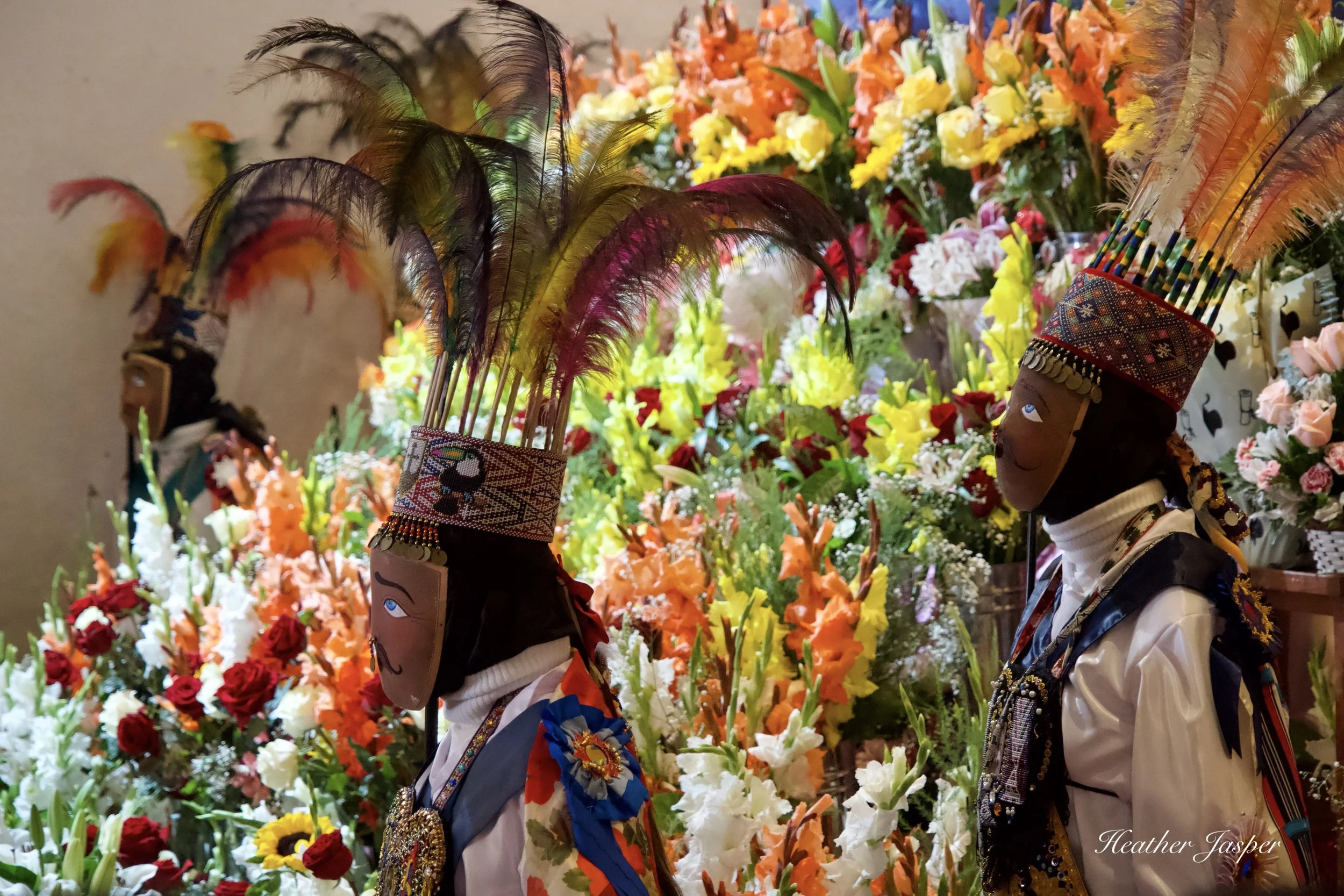
Traje: The costume that each danza wears is unique to that danza and full of meaning. Most trajes completely cover the person, including gloves, masks and wigs or complete head coverings. They each represent a character that has a role in the festividad and, for them to completely inhabit that role, individual identities shouldn’t be visible.
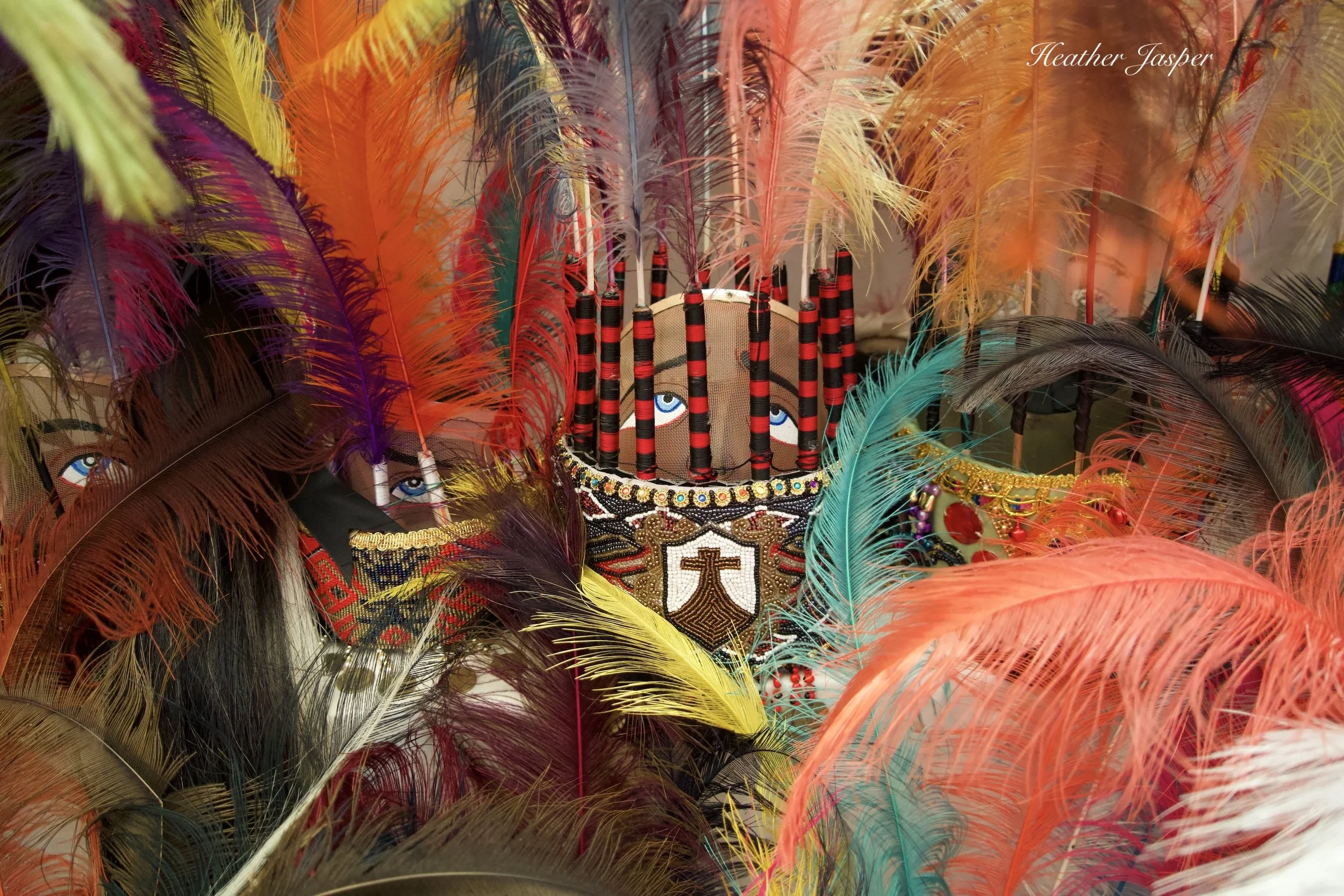
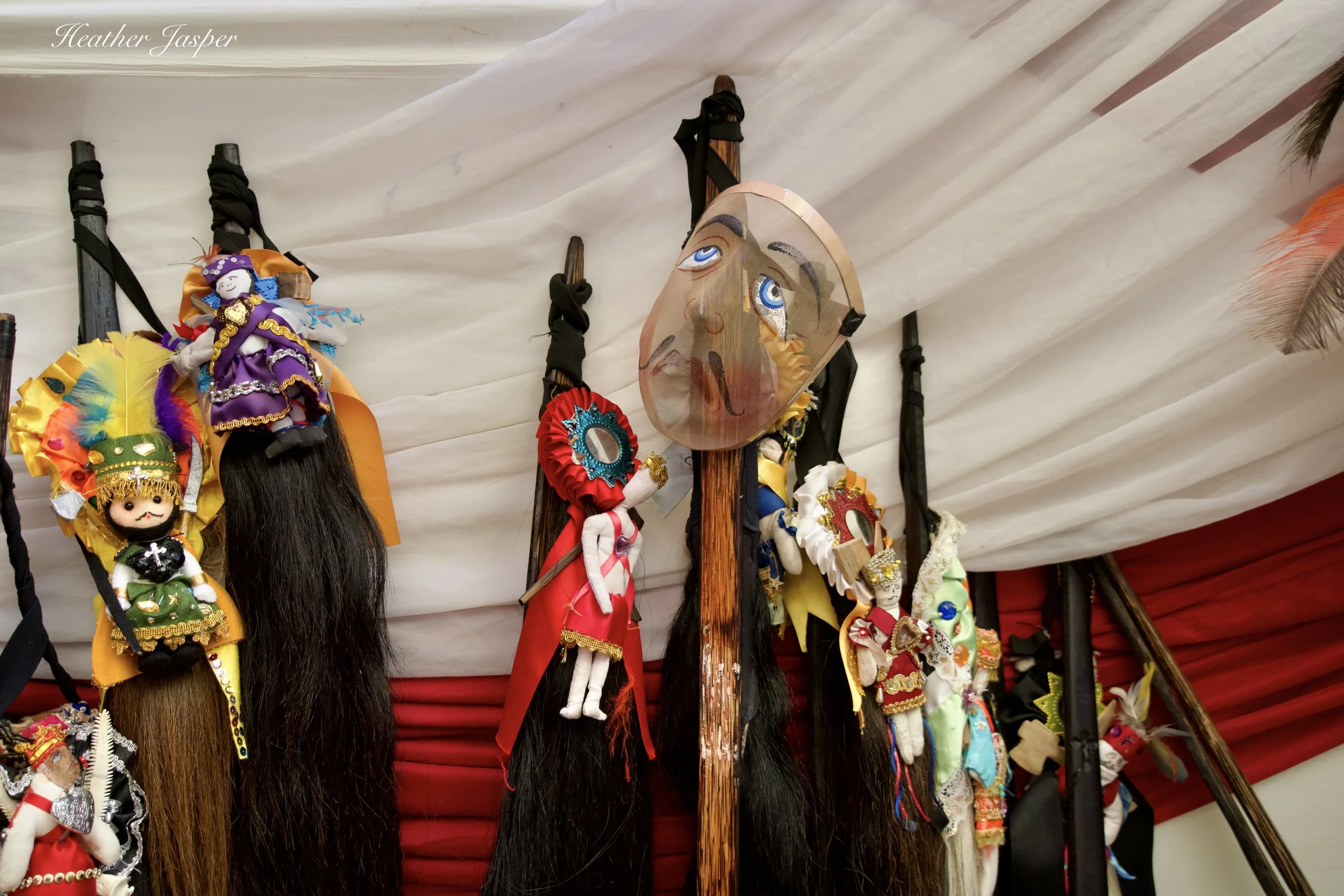
Antuta, Budú & Chuk’u: The antuta is the wooden staff that represents a bow, though the Ch’unchus don’t carry arrows. The budú, or muñeca budú, is the doll that they have like an amulet on their ponytail, which is an actual horse’s tail. The chuk’u is their feathered and beaded headdress. (Click on photos to enlarge them).
Wititi: The King’s pet monkey. The child who plays this role follows the King almost everywhere and arranges the Ch’unchus’ antutas during some dances.
See more explanations of vocabulary in my blog about the Qhapaq Negro.
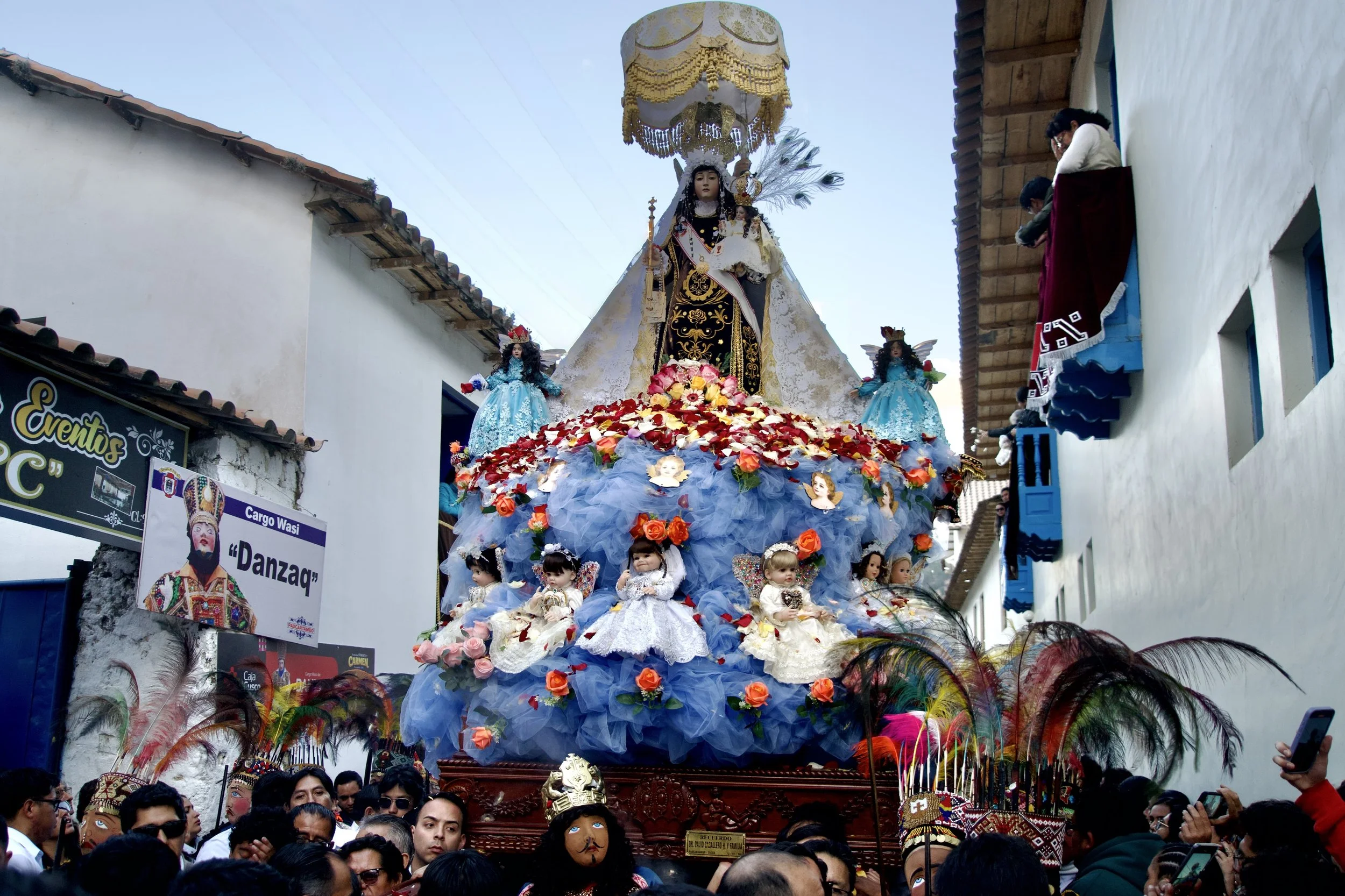
The streets of Paucartambo are narrow and it’s difficult for the danzas when there are a lot of spectators.
This is not a performance.
More than once I’ve heard members of various danzas say to each other (but never directly to me) that they hope nobody comes. The Festividad de la Virgen del Carmen is not an event staged for the audience and certainly not for the cameras. Everybody I’ve interviewed the past four years has told me they dance for the Virgin of Carmen, though each has their own reasons why.
This is a celebration where every moment is full of meaning.
The four days of the festividad are full of important traditions that the danzas carry on, often following in the footsteps of their parents and grandparents. For some, keeping Paucartambo’s traditions alive is the biggest reason they devote a week to this every year. For others, it’s because of their faith in the Virgin of Carmen. For most, it’s a combination of the two.
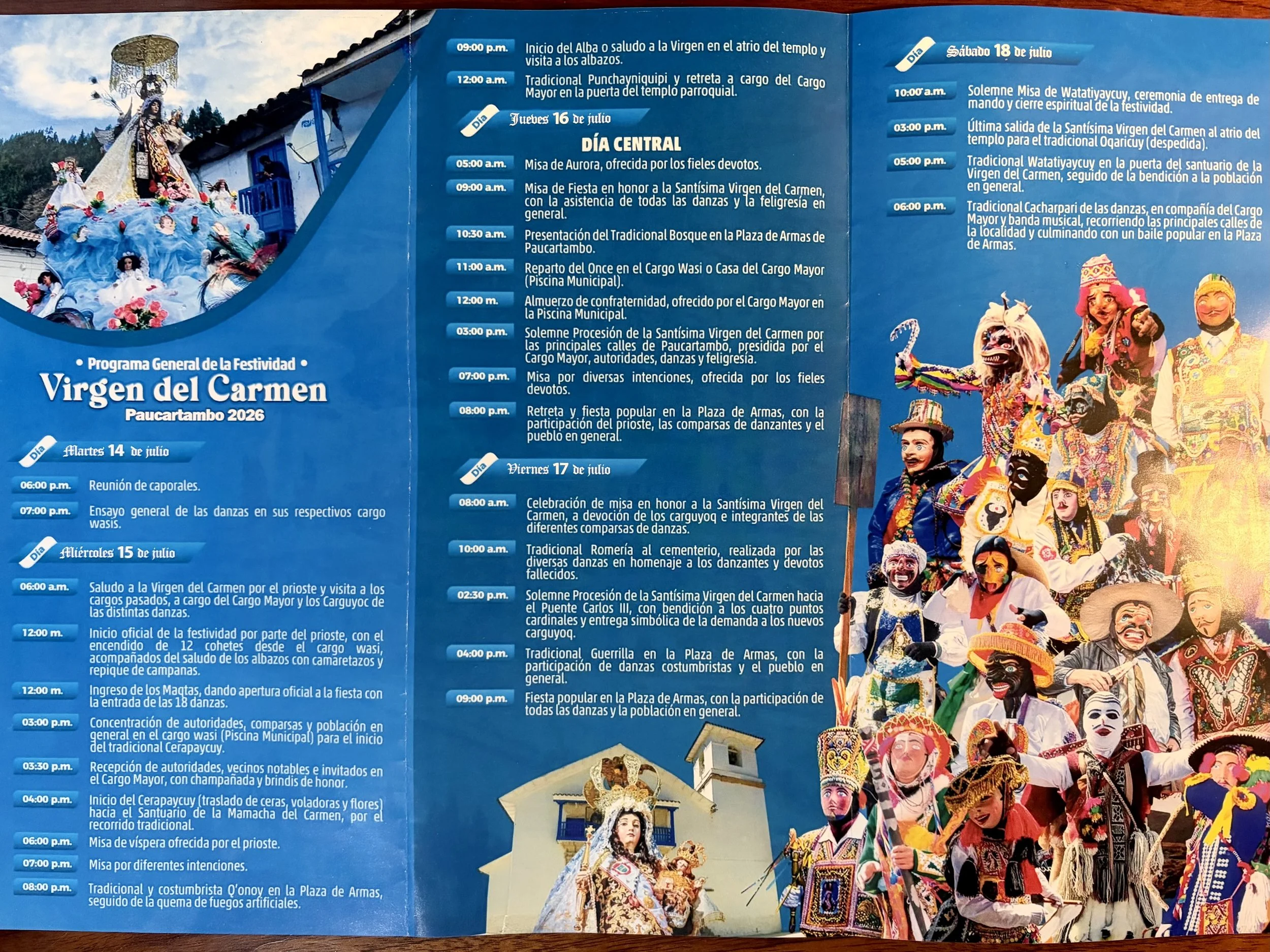
Every year the municipal government prints a program of events and it’s roughly the same every year.
What happens during the Festividad de la Virgen del Carmen?
Every year the overall schedule is about the same but every year I follow a different danza, so for me everything changes. At any given moment, some danzas are in the plaza, some are in church and others are in their cargo wasi, eating, partying or holding an event. Every danza has its own traditions and the Qhapaq Ch’unchu have some of the most essential traditions that the festividad depends on.
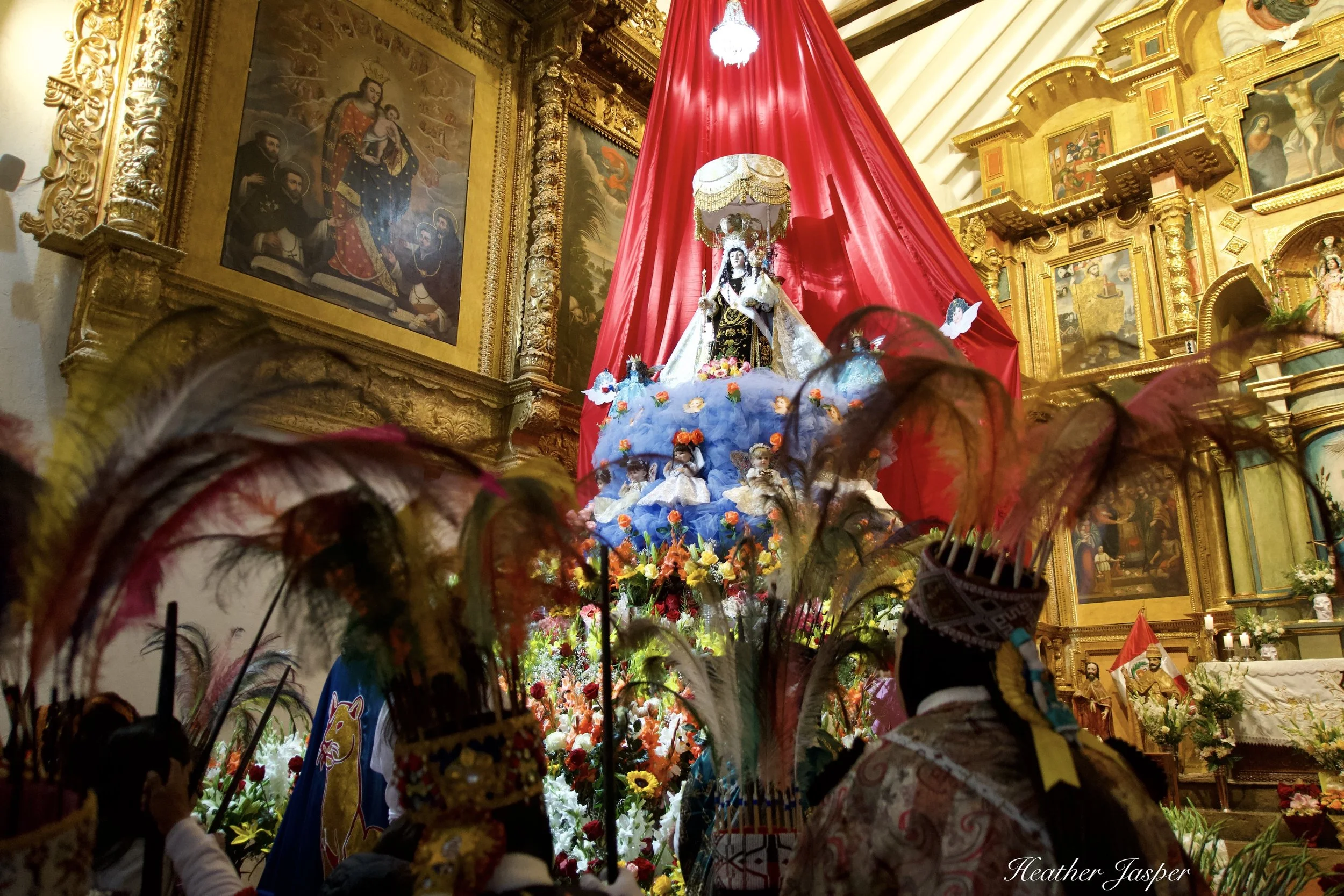
This was my first sight of the Virgin on the 15th, when the Ch’unchus enter the church in the afternoon.
July 15: Watayuyarichikuy, Entrada, Cerapaycuy and Q’onoy
We started the day at 4:30am, leaving from the cargo wasi with a giant cauldron of hot api, a drink made with purple corn, and cookies. The tradition is called Watayuyarichikuy and it’s when current members of every danza visit former dancers. We visited fifteen homes, including the homes of former kings Feliciano Flores, Lester Cuadros, Federico Hoffmeister and Víctor Huamán.
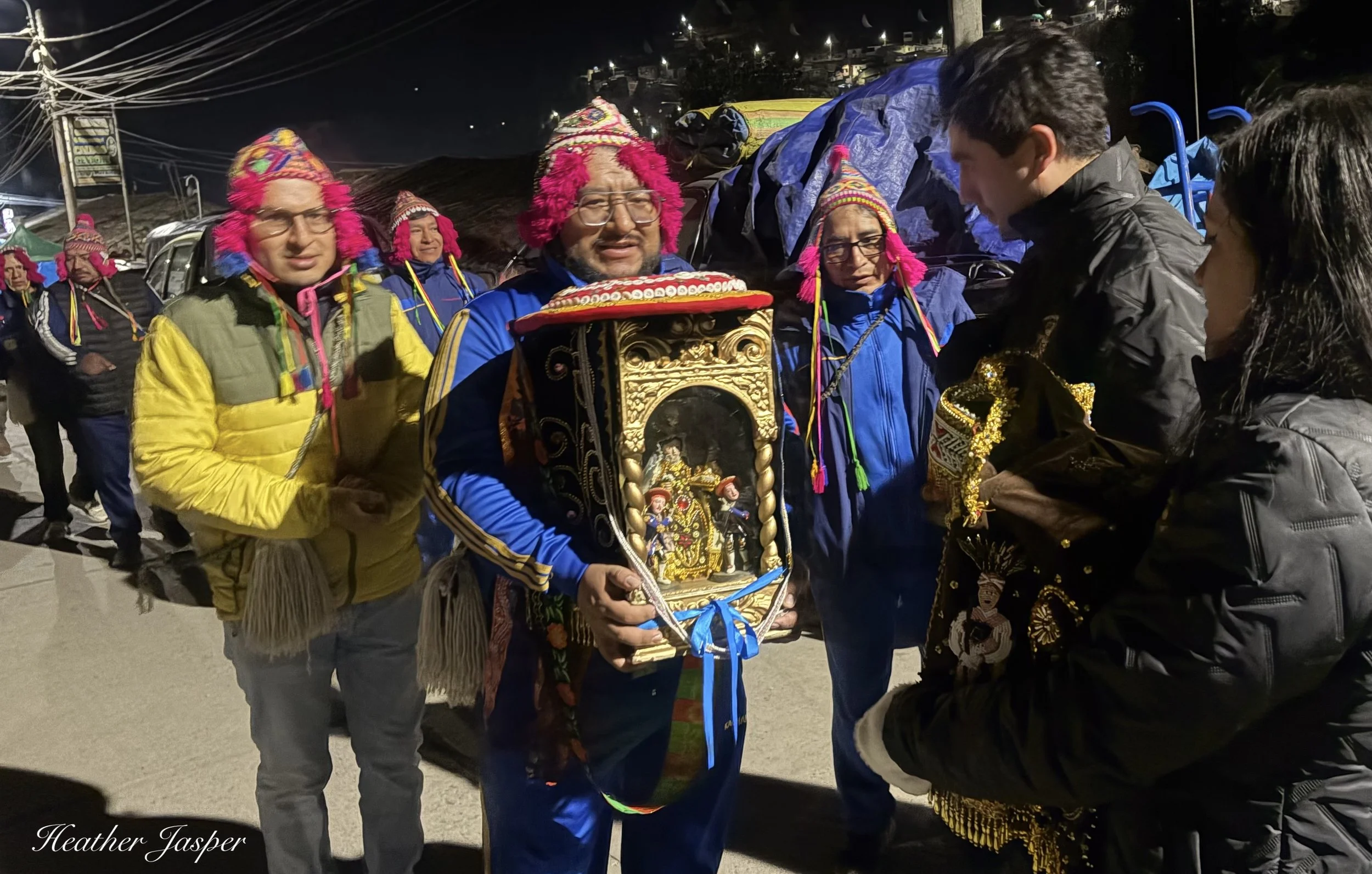
The K’achampa carguyoc takes their Demanda (left) to greet the Demanda of the Qhapaq Ch’unchus (right).
Watayuyarichikuy Greetings
Since all danzas are doing this at the same time, we crossed paths with several and each time stopped to greet them. We shared food and drinks as members of the danza greeted each other, often for the first time since the end of the festividad the previous year. Four of the danzas we crossed paths with were the Majeño, K’achampa, Panadero and Chucchu.
We barely made it to every home by the time the Ch’unchus had to get dressed for their entrance to Paucartambo. The Qhapaq Ch’unchu put on their trajes at a place called Piyoq Wayq’o, where there’s a small shrine to the Virgin of Carmen on the road that leads from Paucartambo down to the jungle, where the Ch’unchu come from. To symbolize the rainforest, they wear feathers and wayruros, red and black seeds still used today for protection by most people of the Peruvian rainforest.
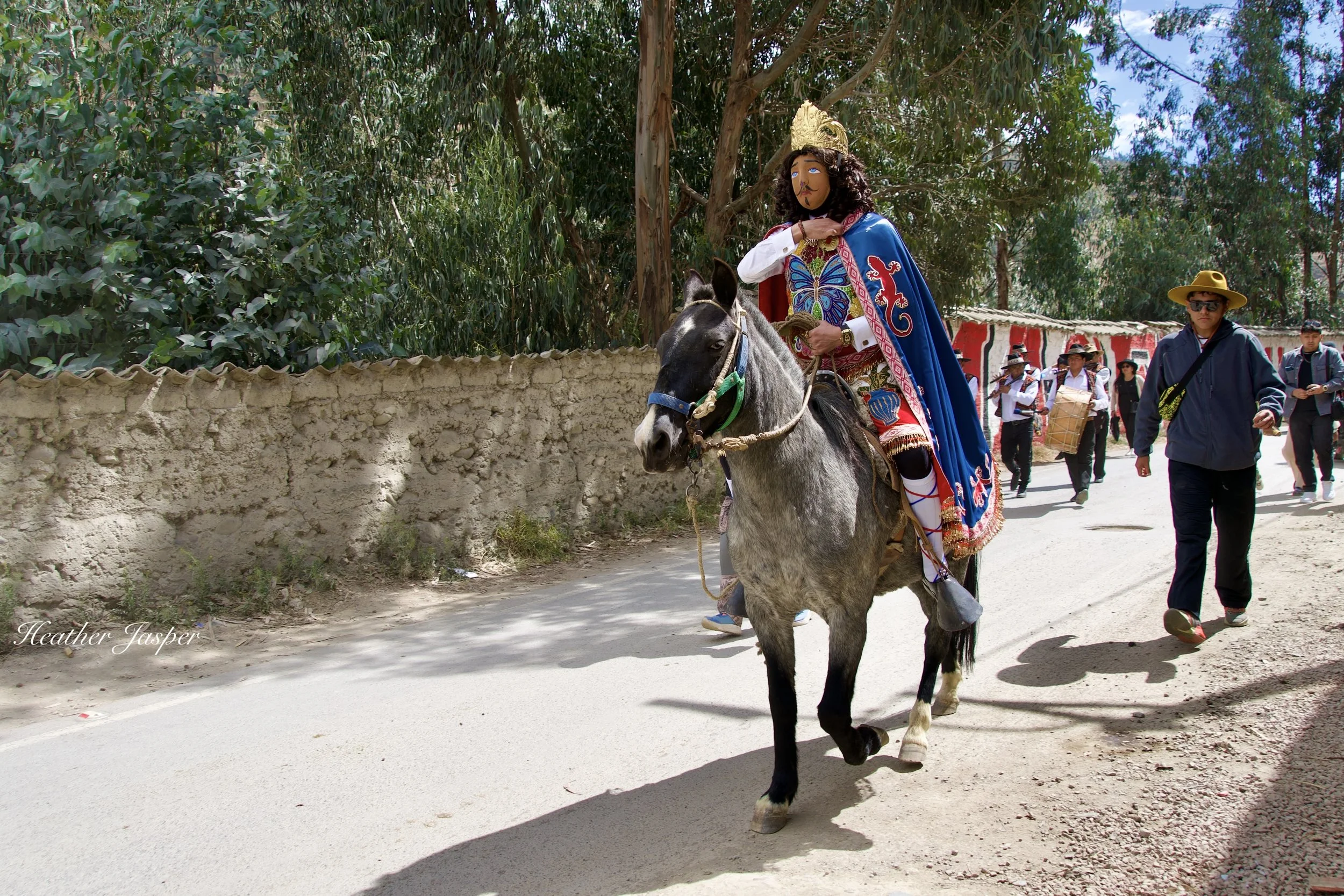
The Ch’unchu King enters Paucartambo alone - except for the band of six musicians following him.
The Ch’unchus’ entrance into Paucartambo follows three important steps.
Every year, the Entrada is the same: Rey Ch’unchu enters Paucartambo cautiously because he dreamed of an image of the Virgin Mary and he is trying to understand if this is where he can find the image he dreamed of. He goes back to Piyoq Wayq’o to bring his two captains for protection and leaves the second captain at the spot where he turned around the first time, and the first captain accompanies him farther into town, to the corner of the plaza.
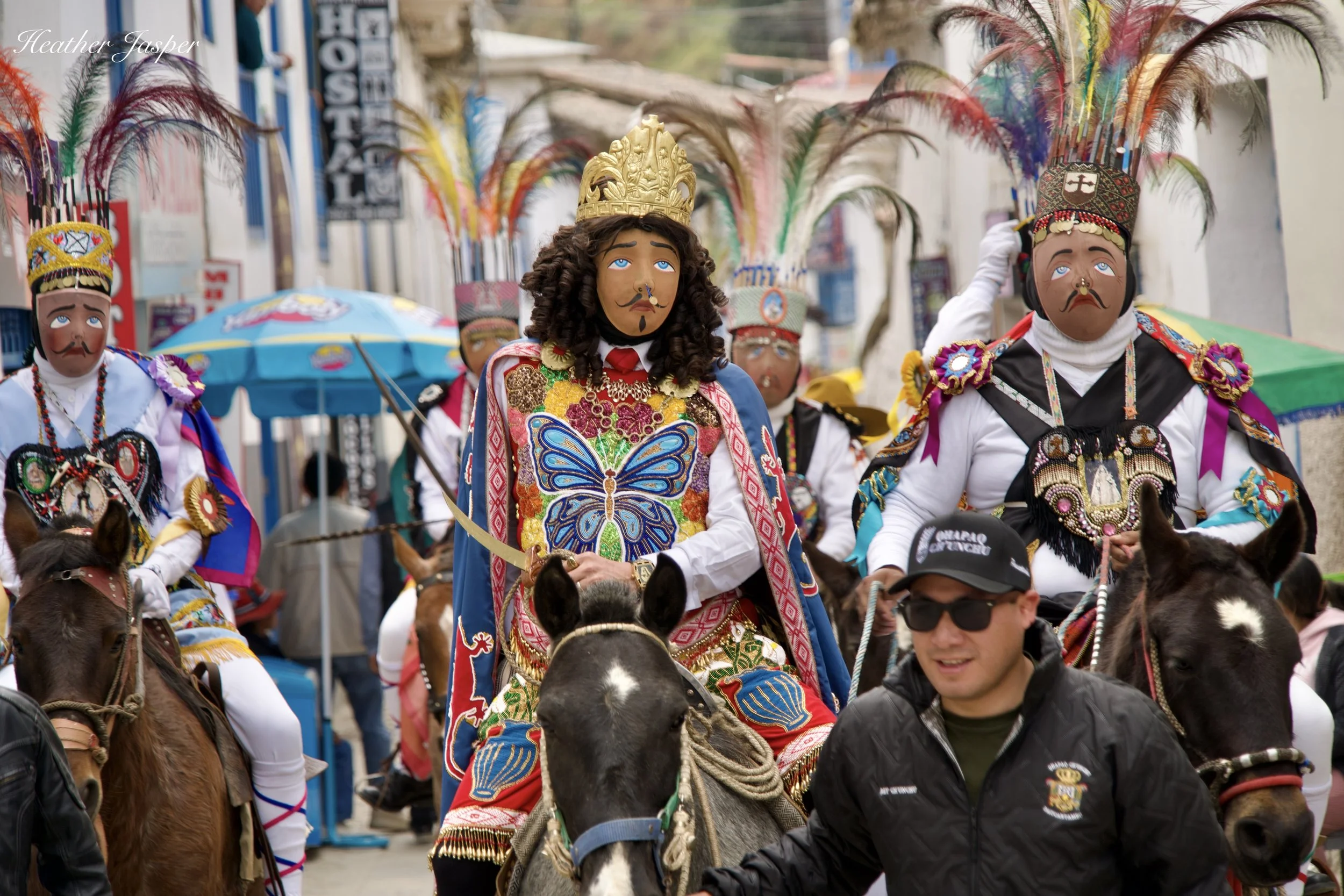
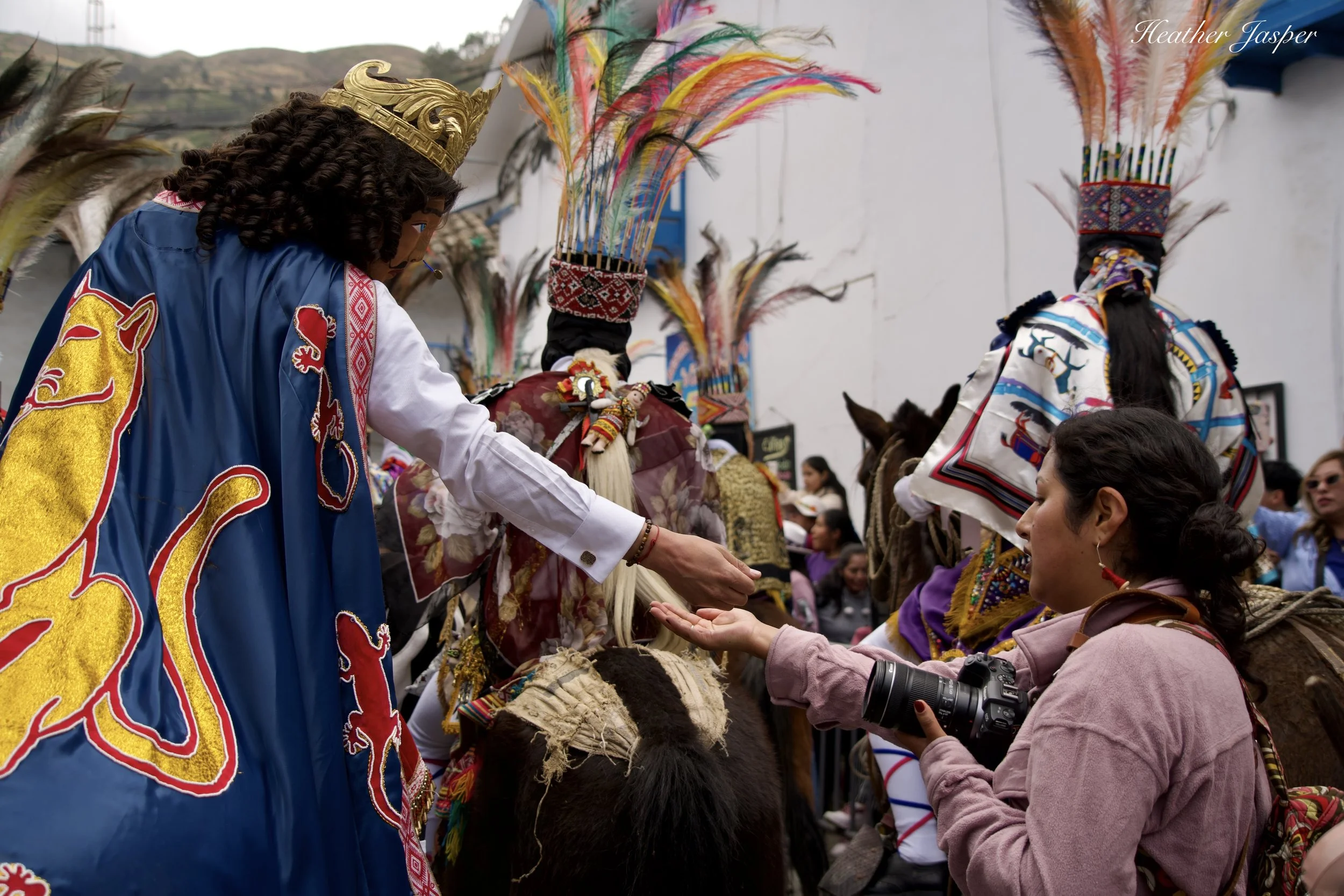
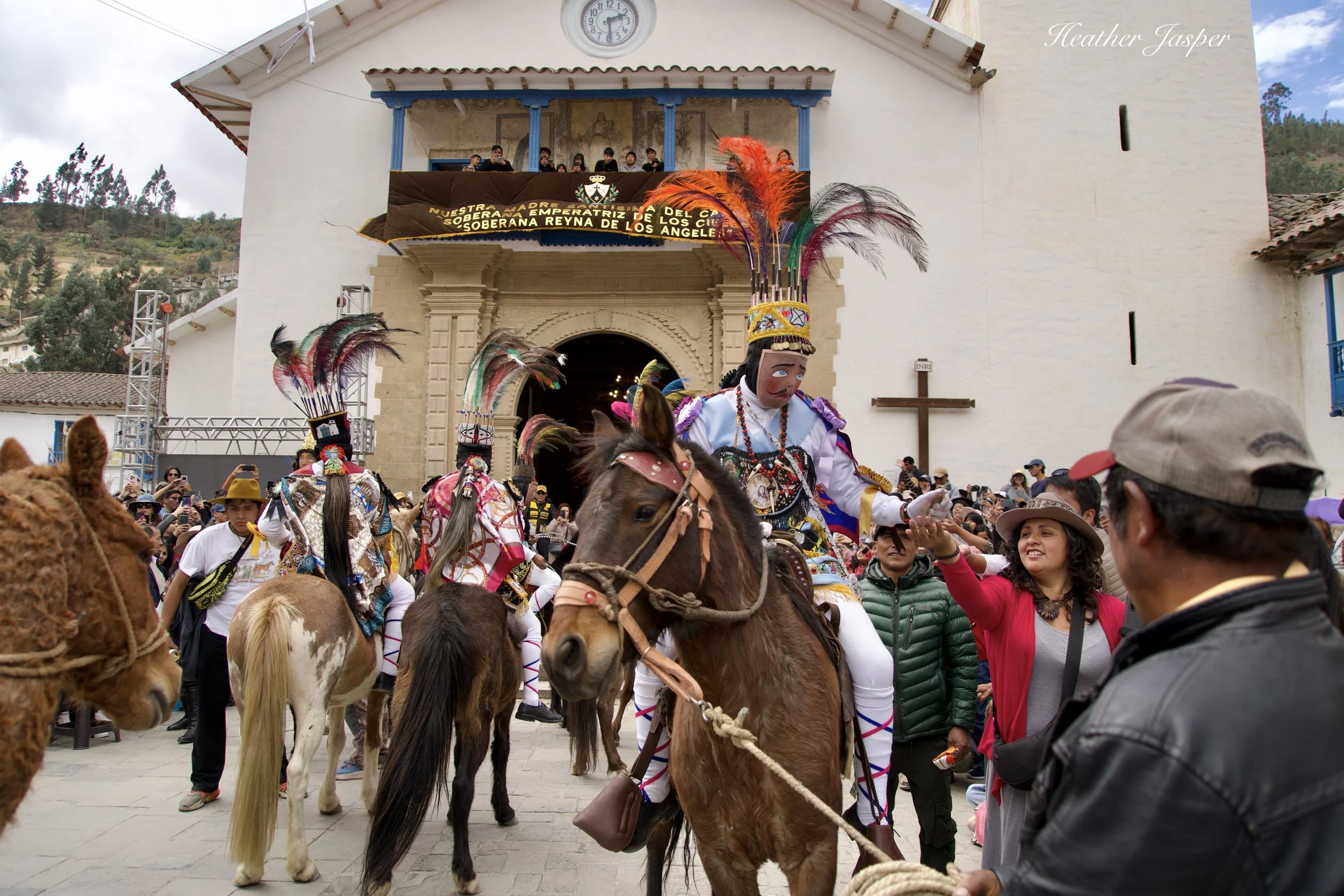
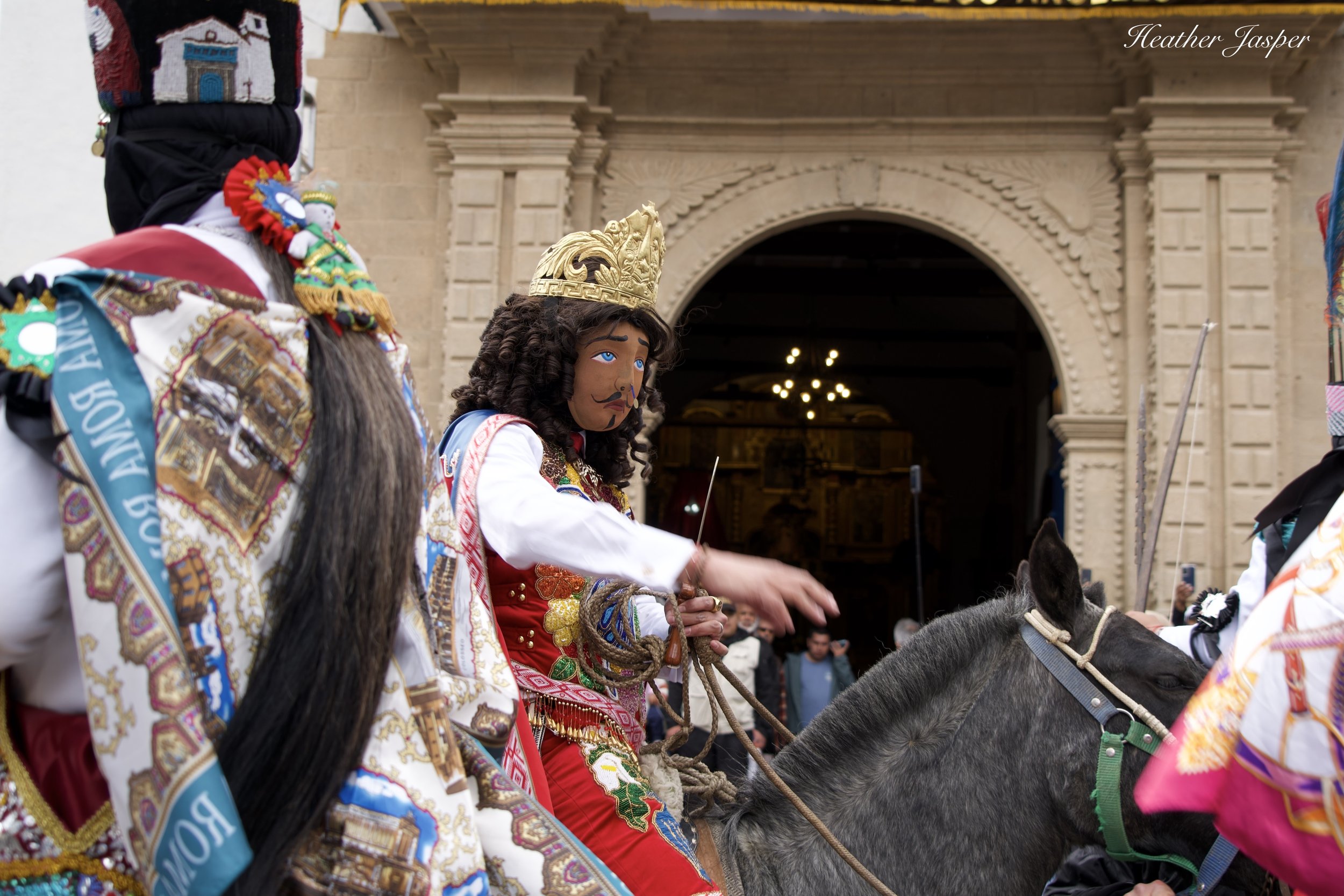
The third and final Entrada
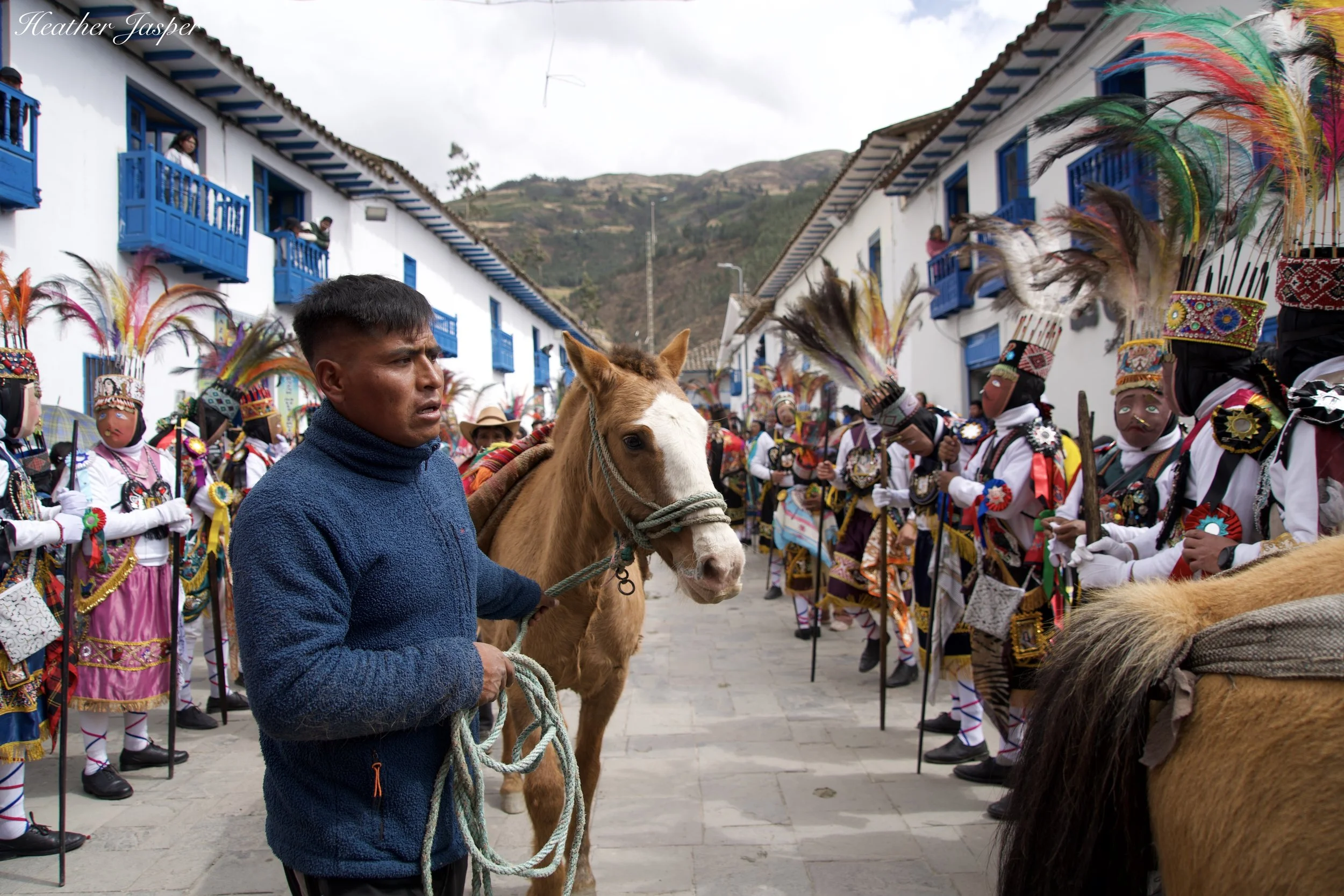
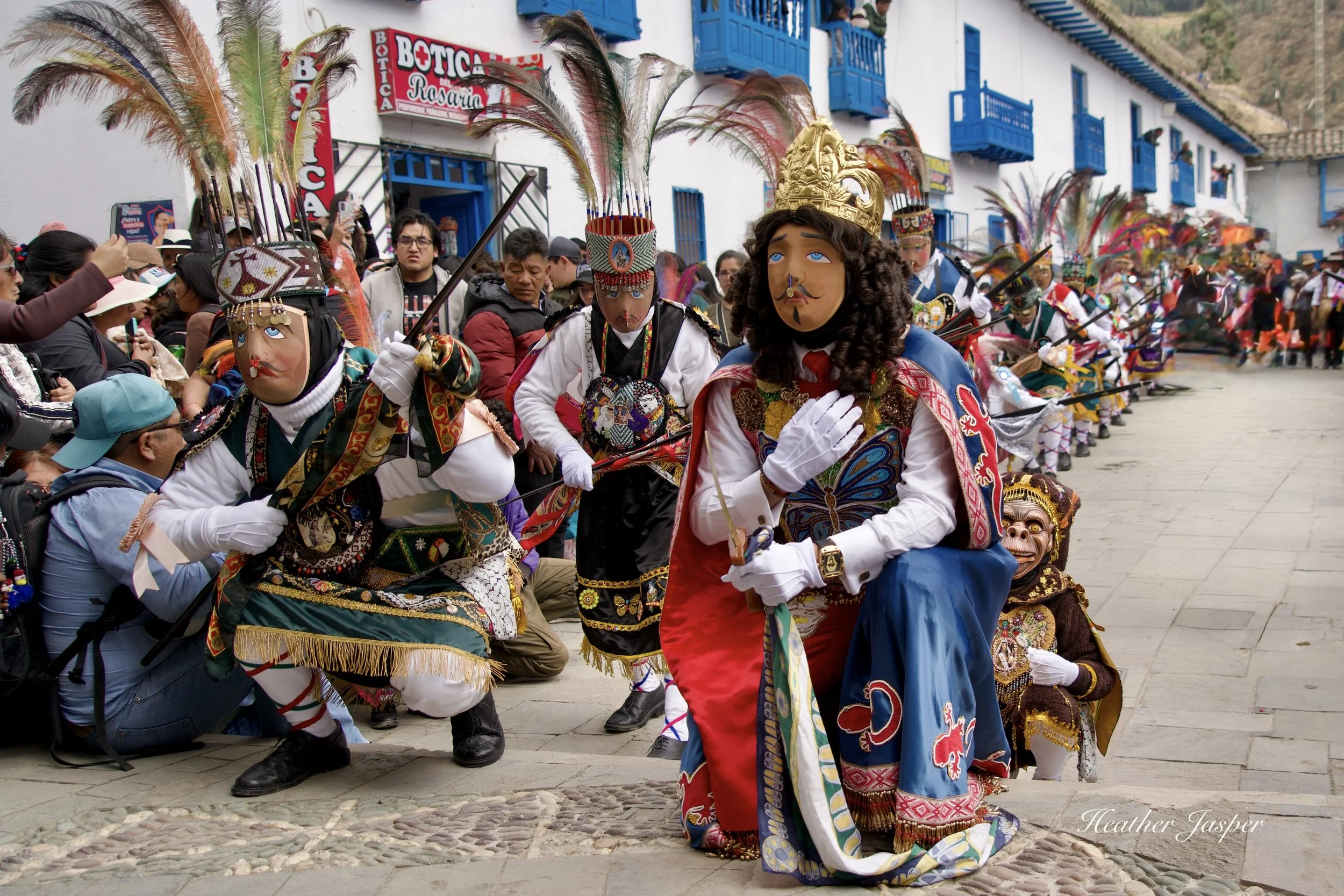
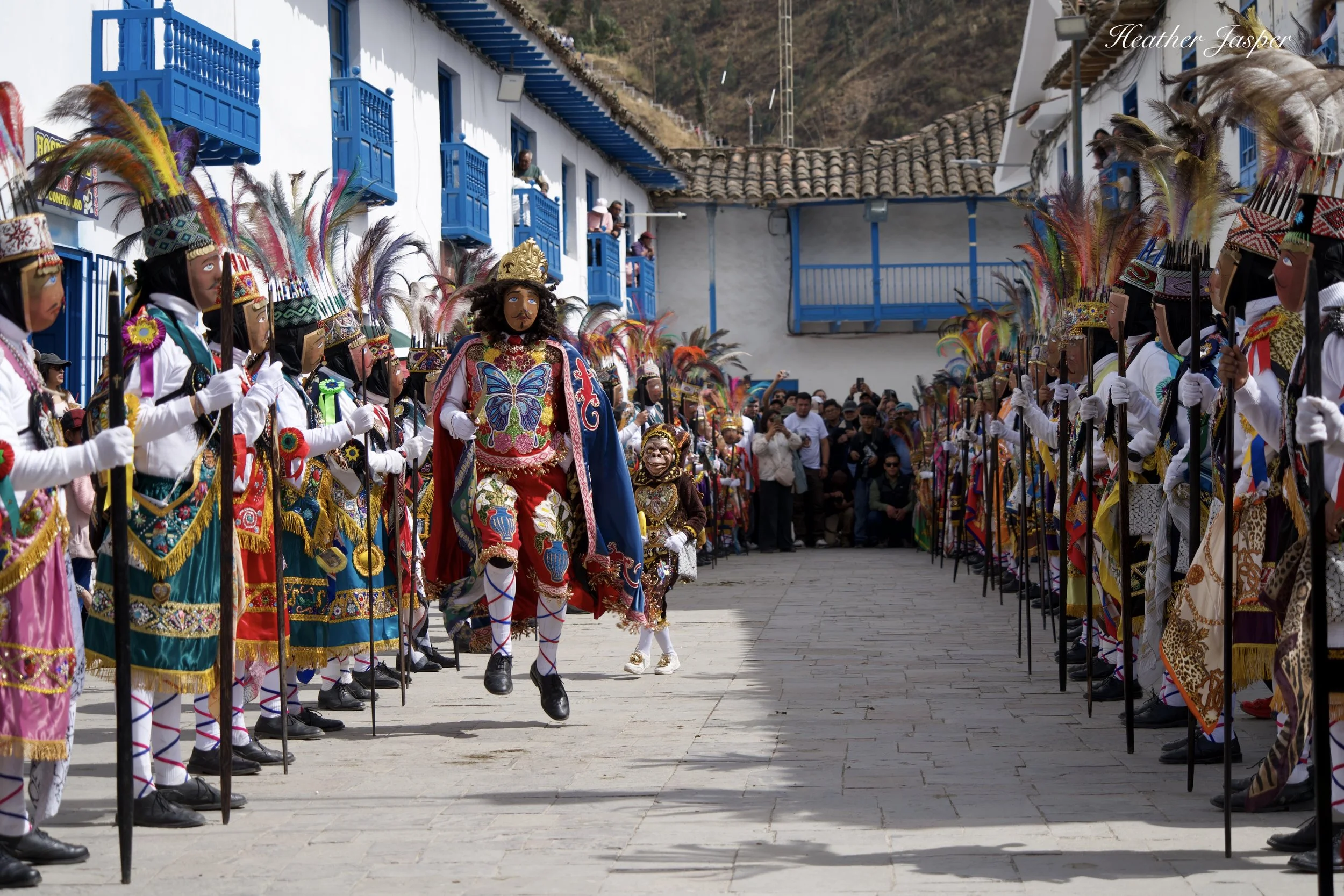
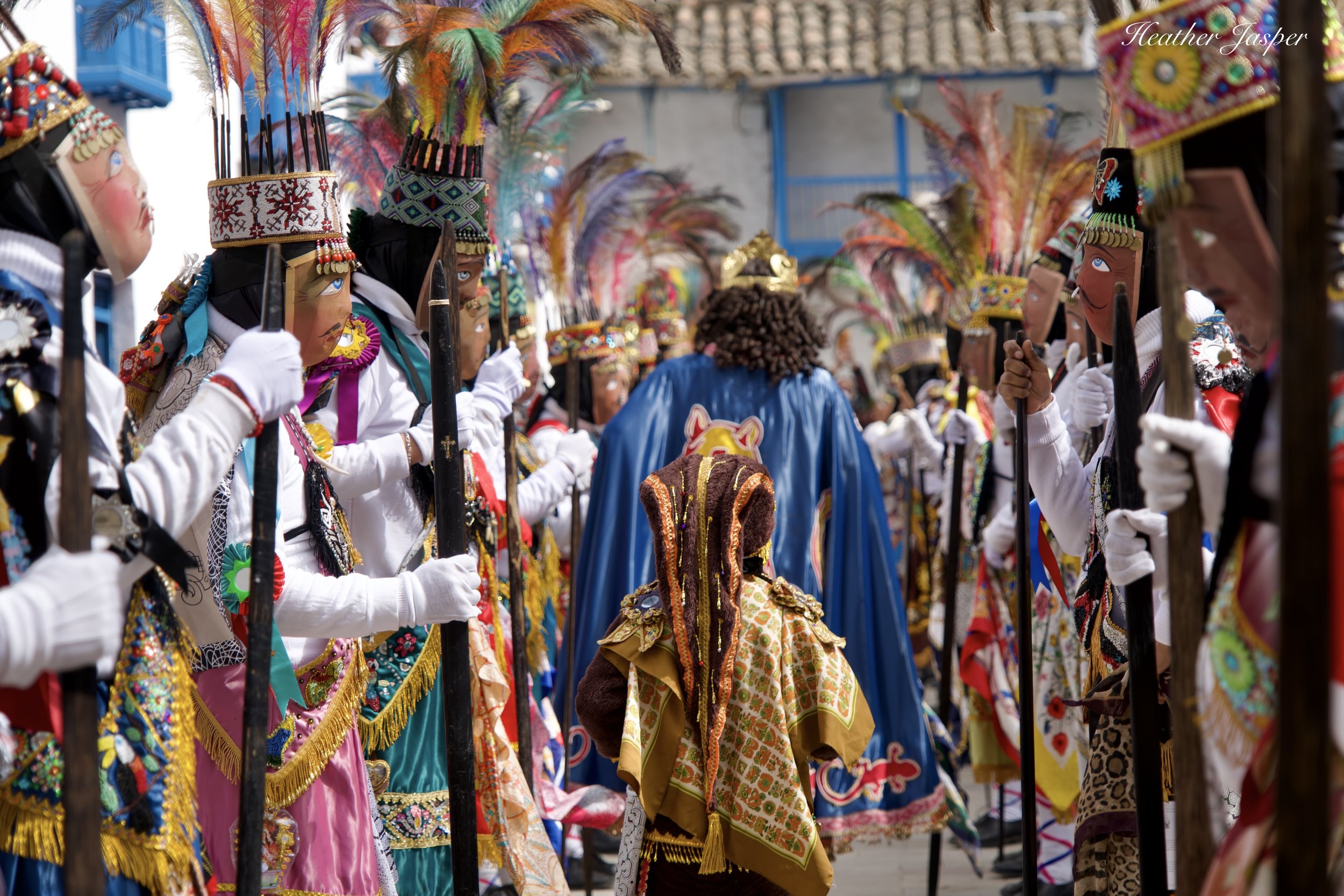
The King recognizes the place from his dream and goes back to Piyoq Wayq’o to bring all his warriors to Paucartambo with him. They all enter on horseback, giving out wayruruos to the people they pass. The King sees the Virgin of Carmen through the door of the church, recognizes her from the dream and swears loyalty to her. From this point in the festividad, the Qhapaq Ch’unchus protect her from everybody who comes near and surround her when she leaves the church in processions.
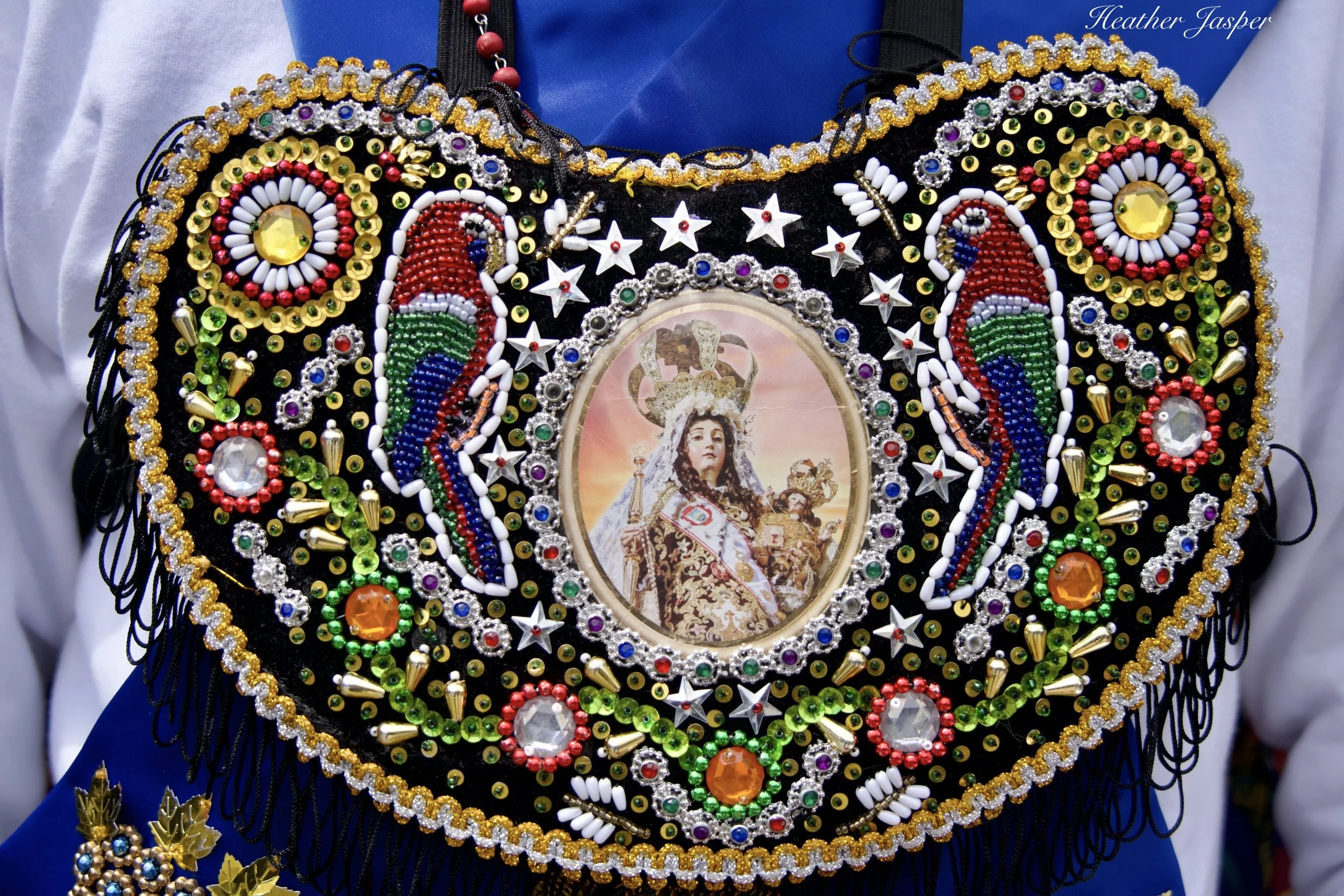
The Ch’unchus wear a pechera with an image of the Virgin of Carmen and symbols from the jungle. Each pechera is unique.
Did this really happen?
Some would ask if this was a real historical event and if it was, when did it happen? Personally, I don’t think it matters. The Festividad de la Virgen del Carmen happens every year because thousands of people believe in her, are loyal to her and come to show their faith and devotion. Depending on the year, 50,000 to 80,000 people come to Paucartambo for the Virgin of Carmen. The rest of the year the town is home to about 10,000 people.
Each danza plays a role in the festividad, showing their faith and devotion in their own way, with their own traditions. Maybe a king from the jungle really did dream of the Virgin of Carmen and travel to Paucartambo to find her, but if he did, the date has been lost to history.
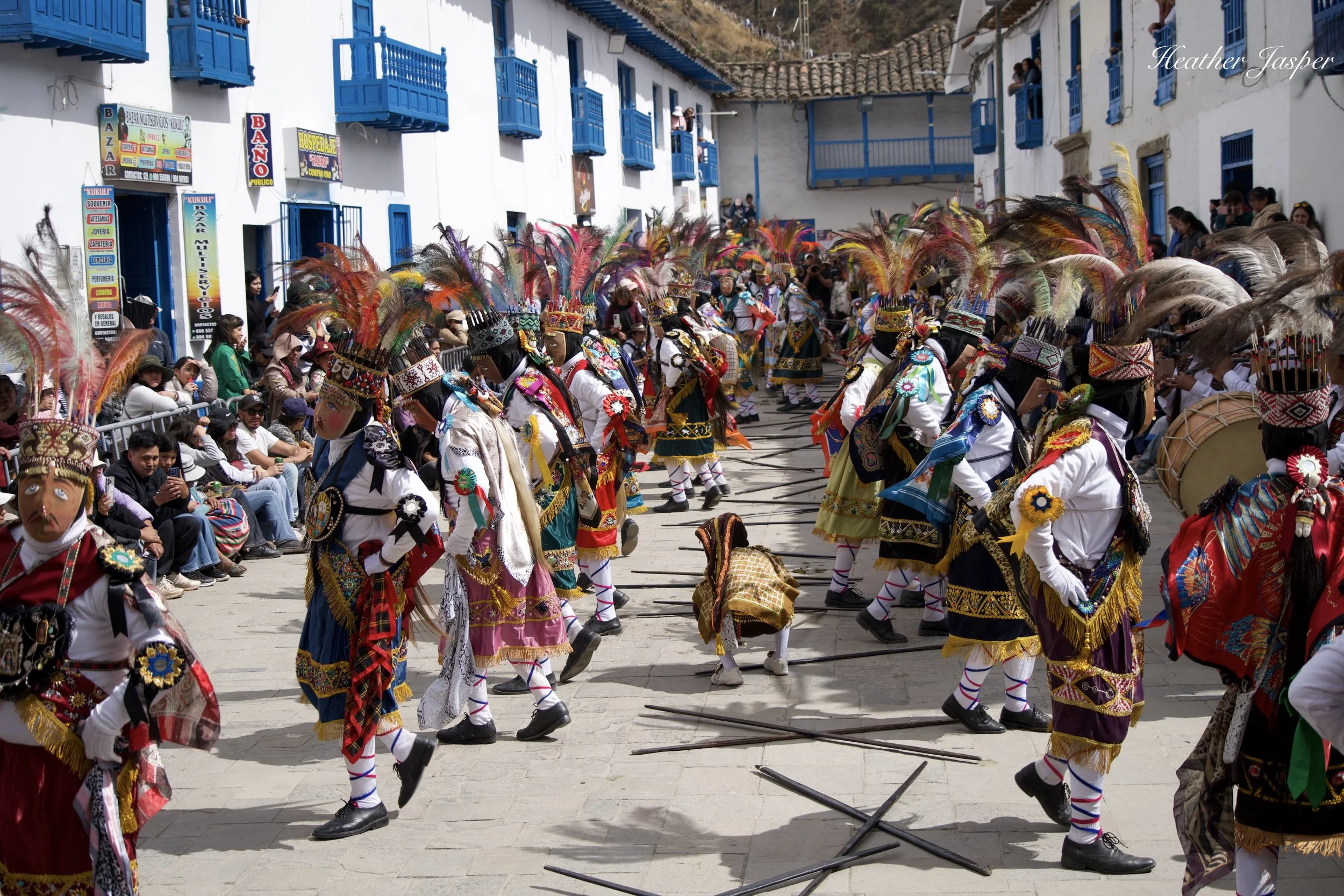
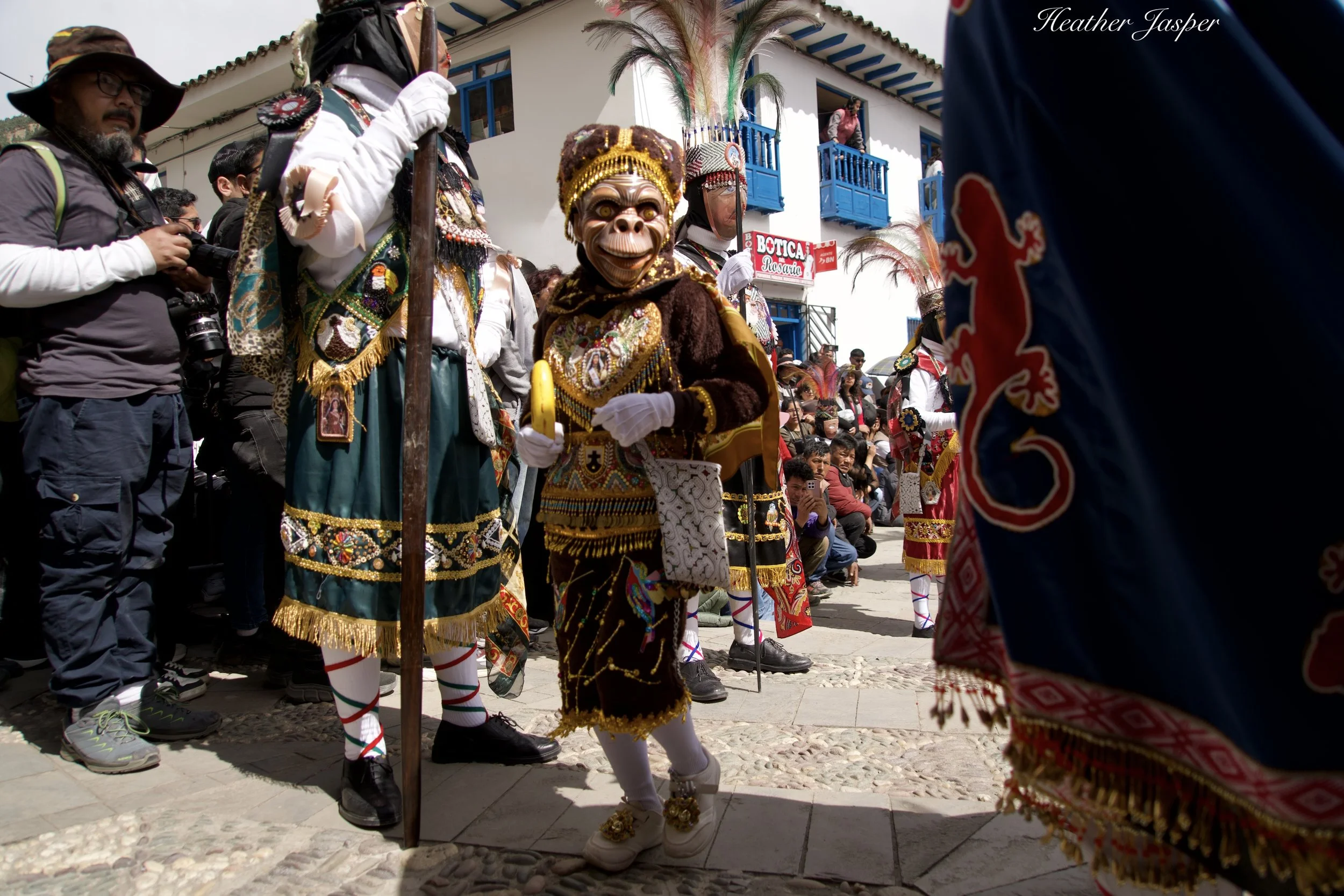
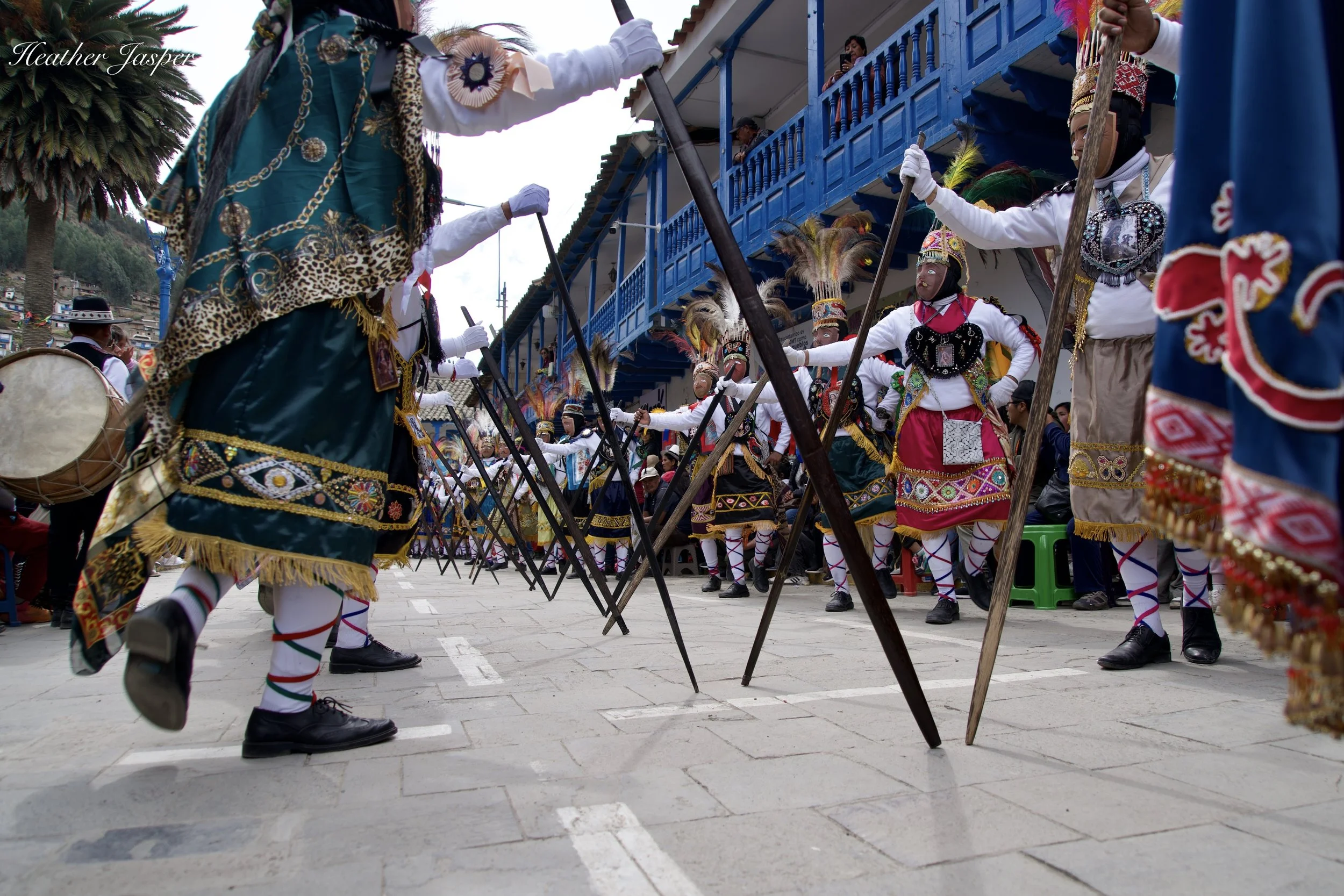
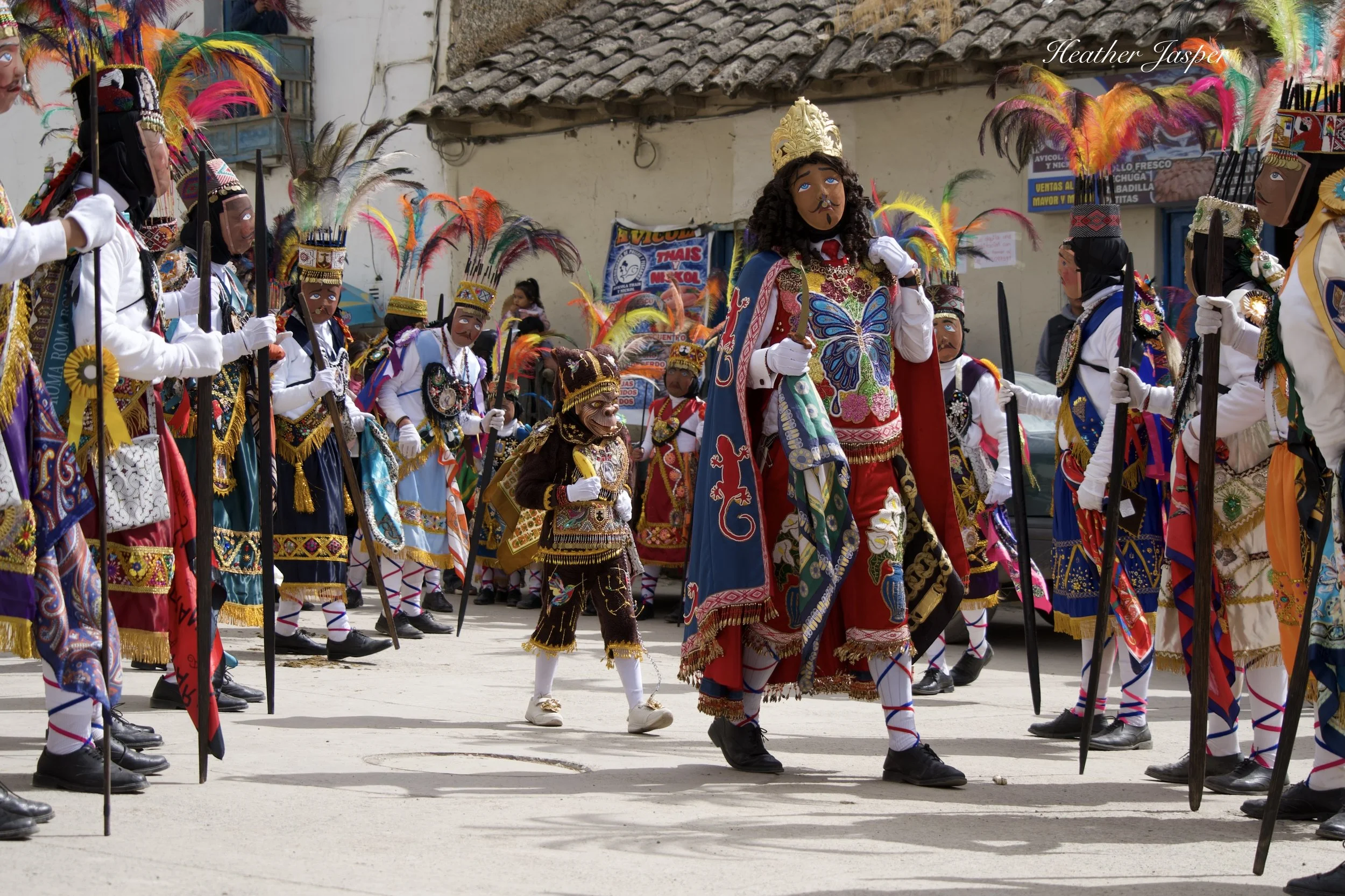
Ensuring Paucartambo is a safe place for the Ch’unchus
After their grand entrance on horseback, the Ch’unchus ride the route that the Virgin will take on her procession the next day. (Click on the photos above to enlarge them). The people who own the horses come into town to take them back and the Ch’unchus stay to dance in front of the church. This is their first dance of the festividad, and it shows their devotion to the Virgin of Carmen. Then they dance in the plaza and on the edge of town, where the King turned around the first time he came to Paucartambo.
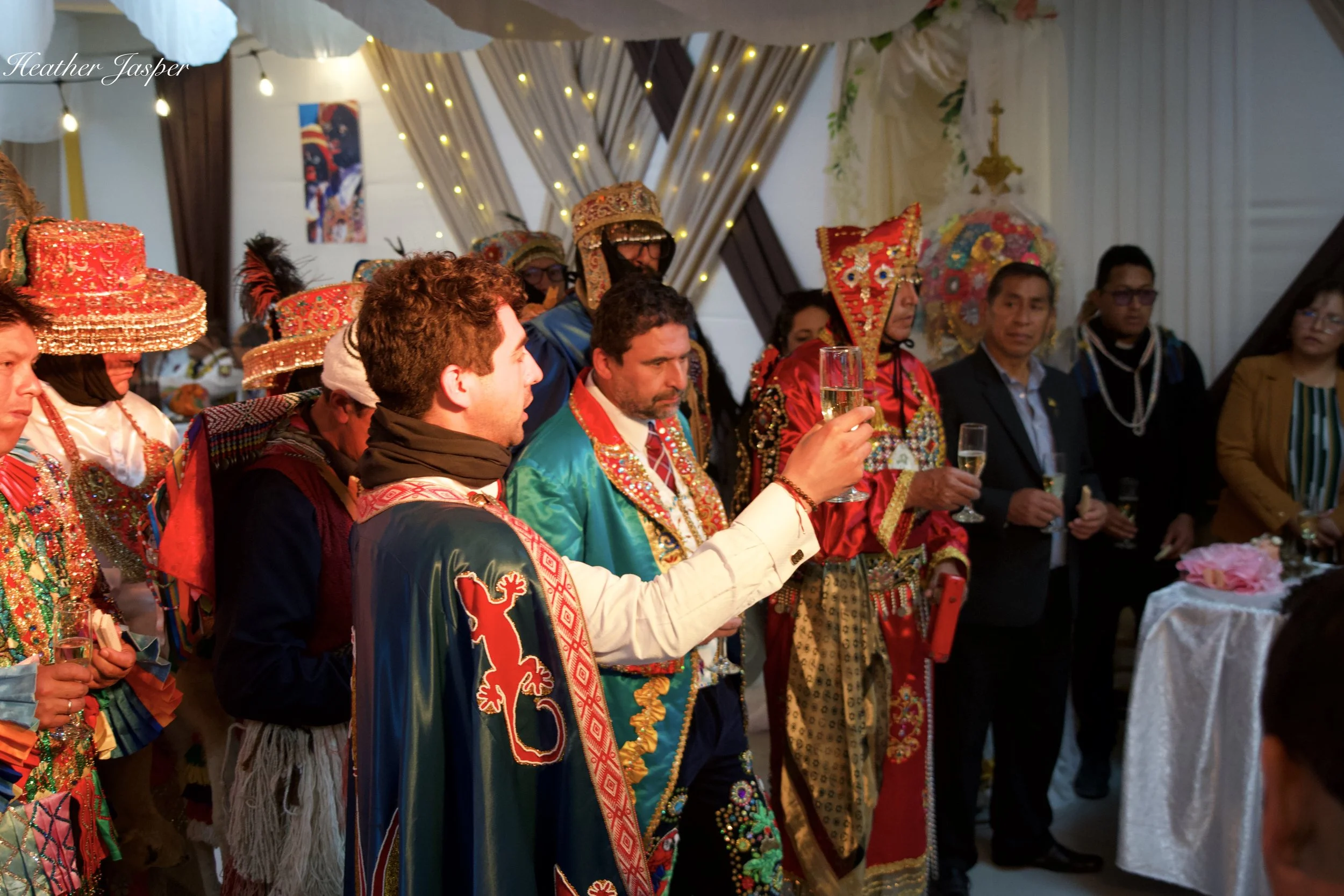
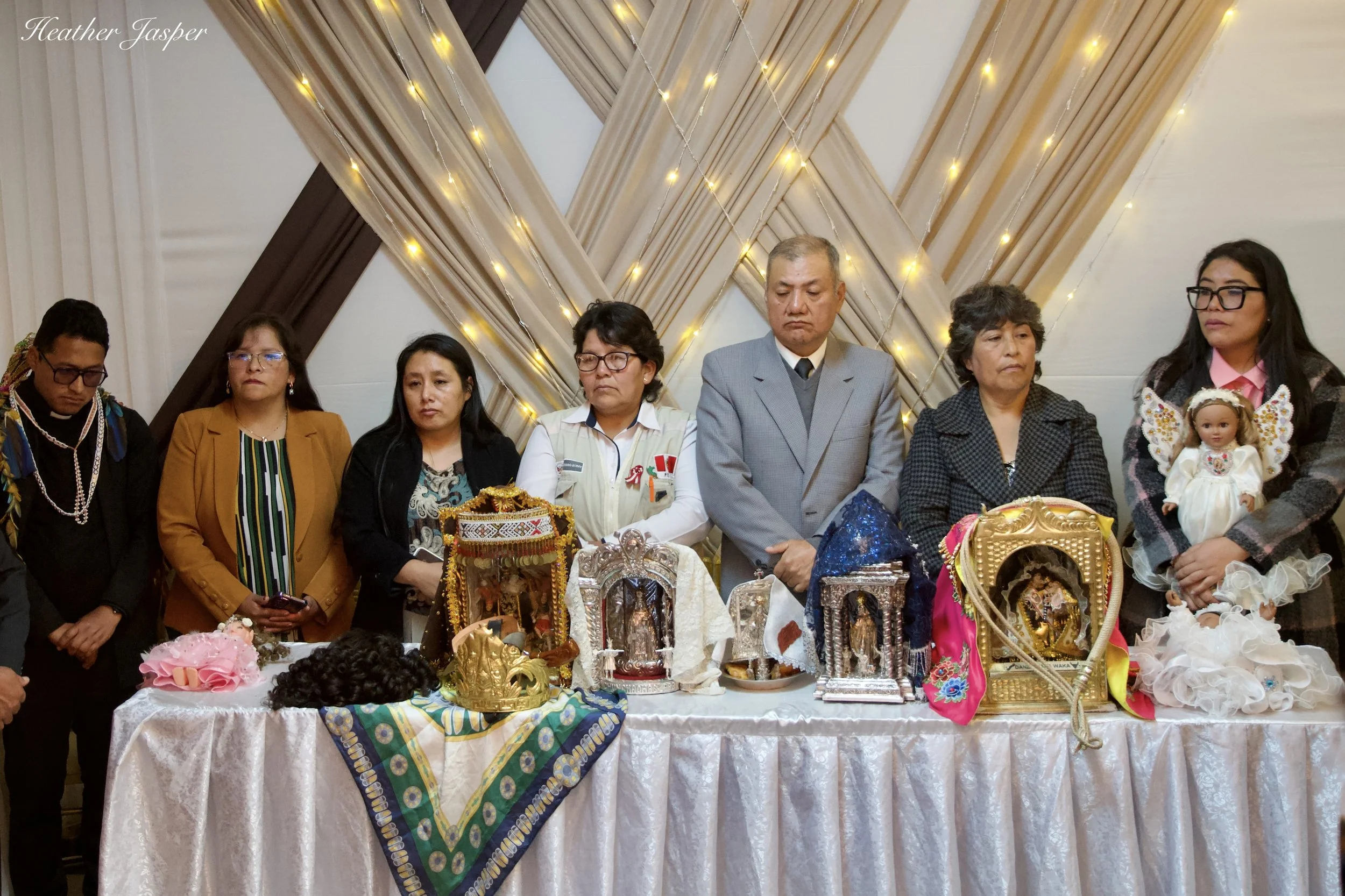
Toast at the Cargo Mayor.
Next, they go across the King Carlos III Bridge to the cargo mayor, where the King proposes a toast to the carguyoc mayor, the main sponsor of the festividad, which is attended by the leaders of all nineteen danzas. This is inside the municipal building that serves as the cargo wasi for the carguyoc mayor. It’s commonly called the Piscina Municipal, though the swimming pool was filled in years ago and now it’s just a big cement space that fills with hundreds of people during the festividad.
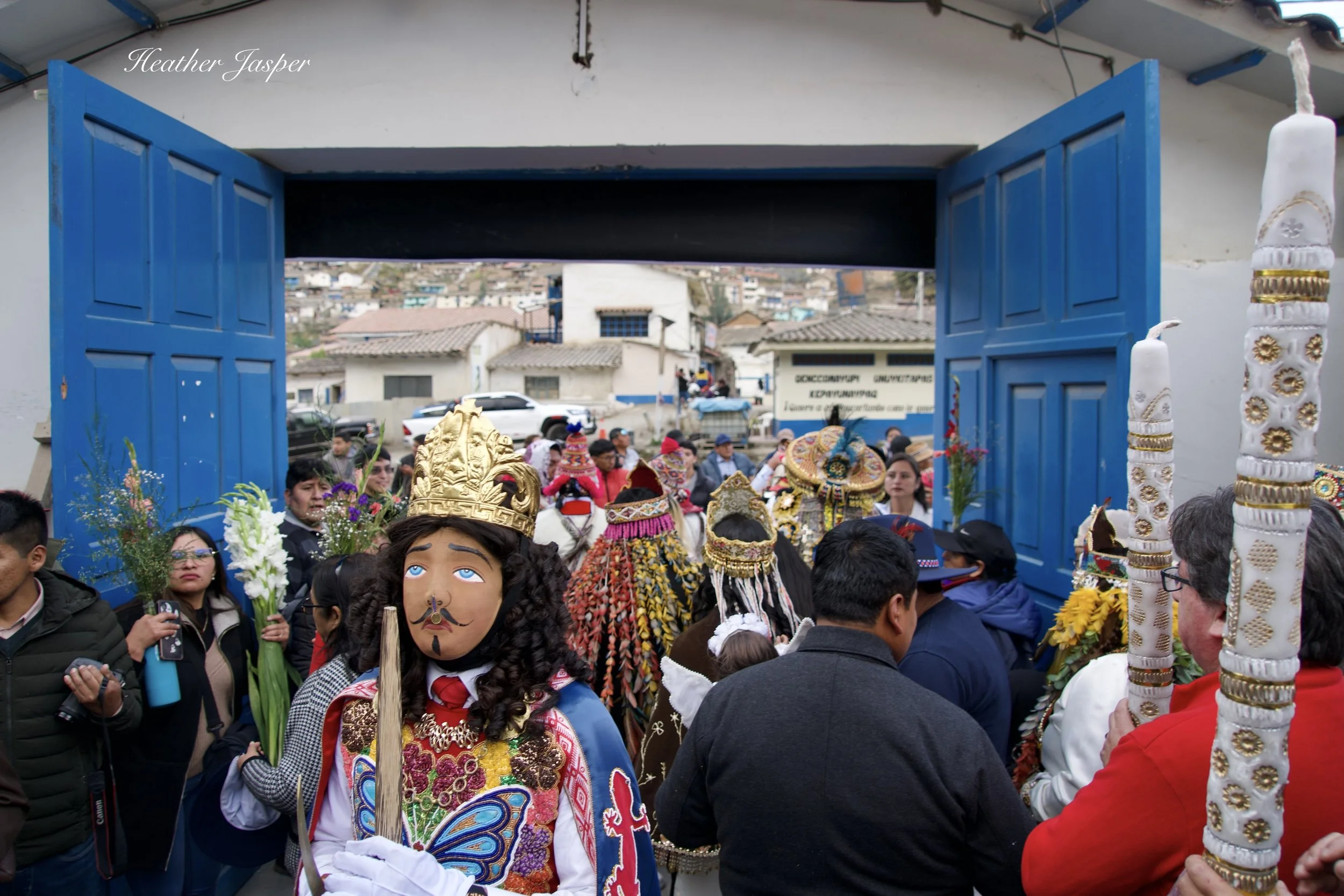
In Cerapaycuy, there are hundreds of bottles with flowers and dozens of giant candles.
The procession of candles and flowers.
When the Qhapaq Ch’unchu leave the piscina to go back to the church they lead a procession of devotees to the Virgin of Carmen who carry flowers and giant candles which will decorate the church during the festividad. The procession is called Cerapaycuy, another Spanish-Quechua word that combines cera (wax) and apaycuy (bring) and describes the candles brought during the procession.
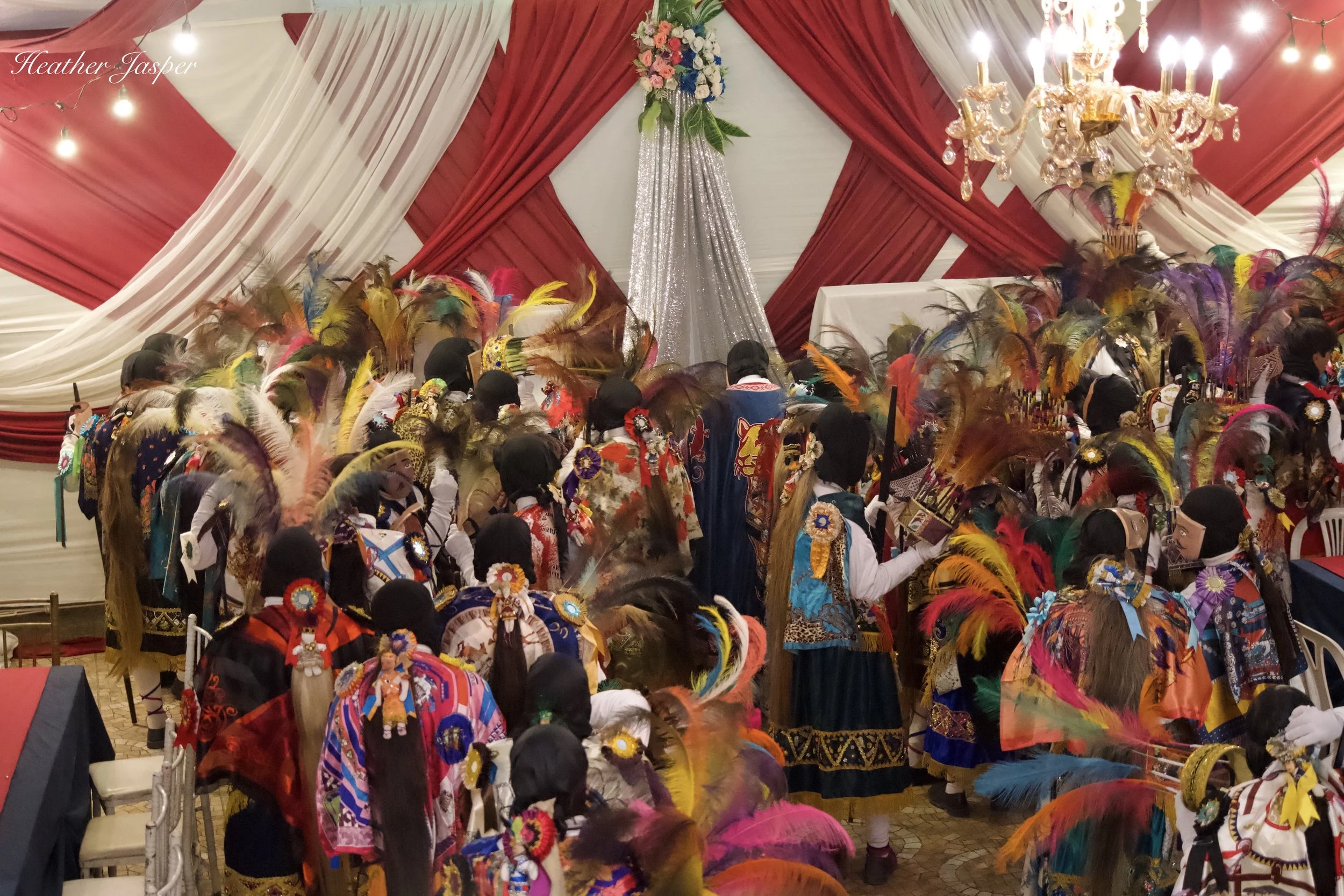
The first thing the Ch’unchus do is take off their chuk’us and set them on shelves at the front of the cargo wasi.
Back at the Cargo Wasi
After Cerapaycuy we got a little break and went back to the cargo wasi for dinner. Our carguyoc this year was Jandira Cunza, the sponsor who rented the Qhapaq Ch’unchus’ wasi, hired the cooks and bought the food and drinks for all four days, plus lots of other expenses.
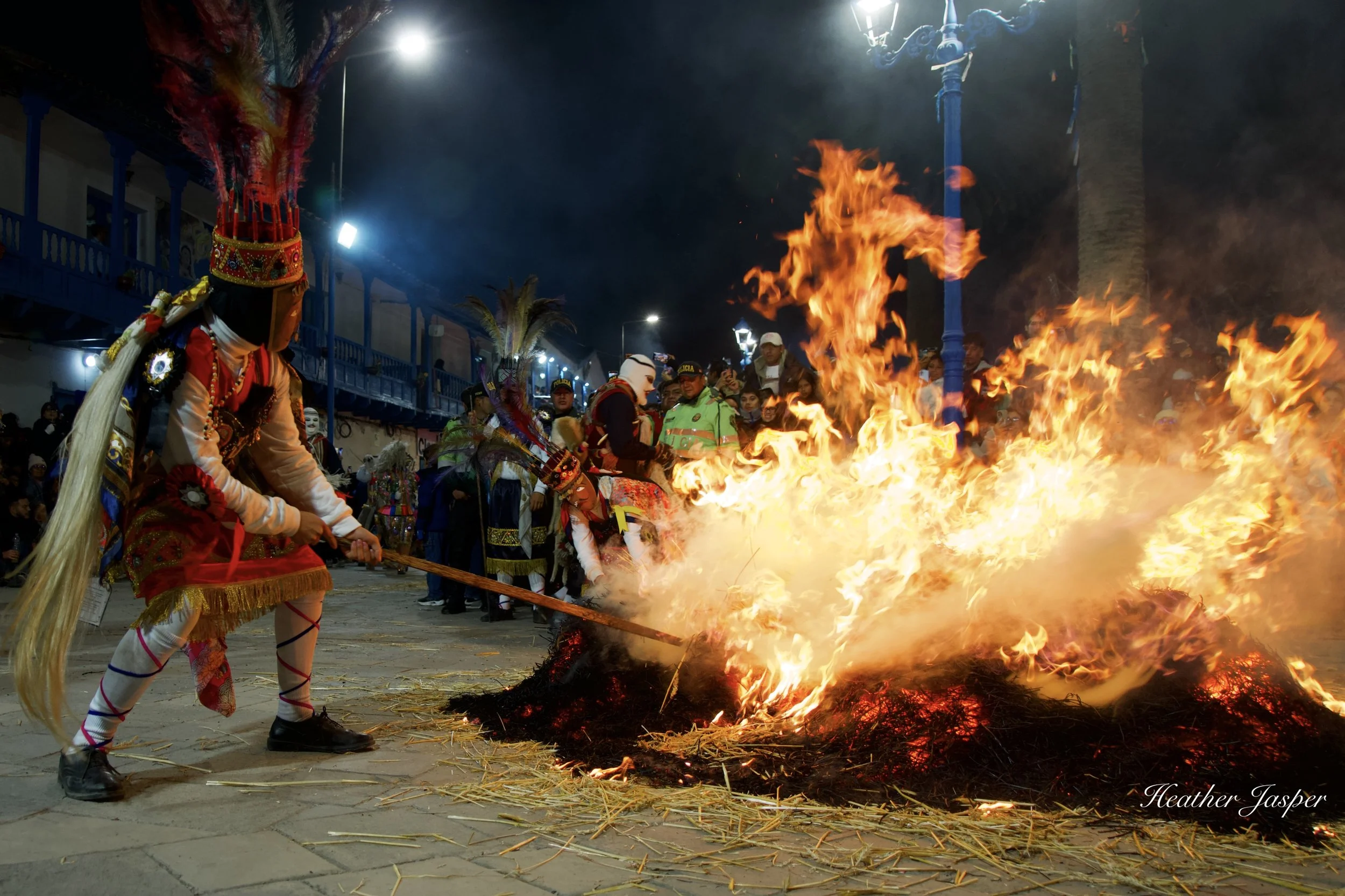
The Ch’unchus carefully stoke the fires so they burn without smoke.
The Qollas try to steal the Virgin.
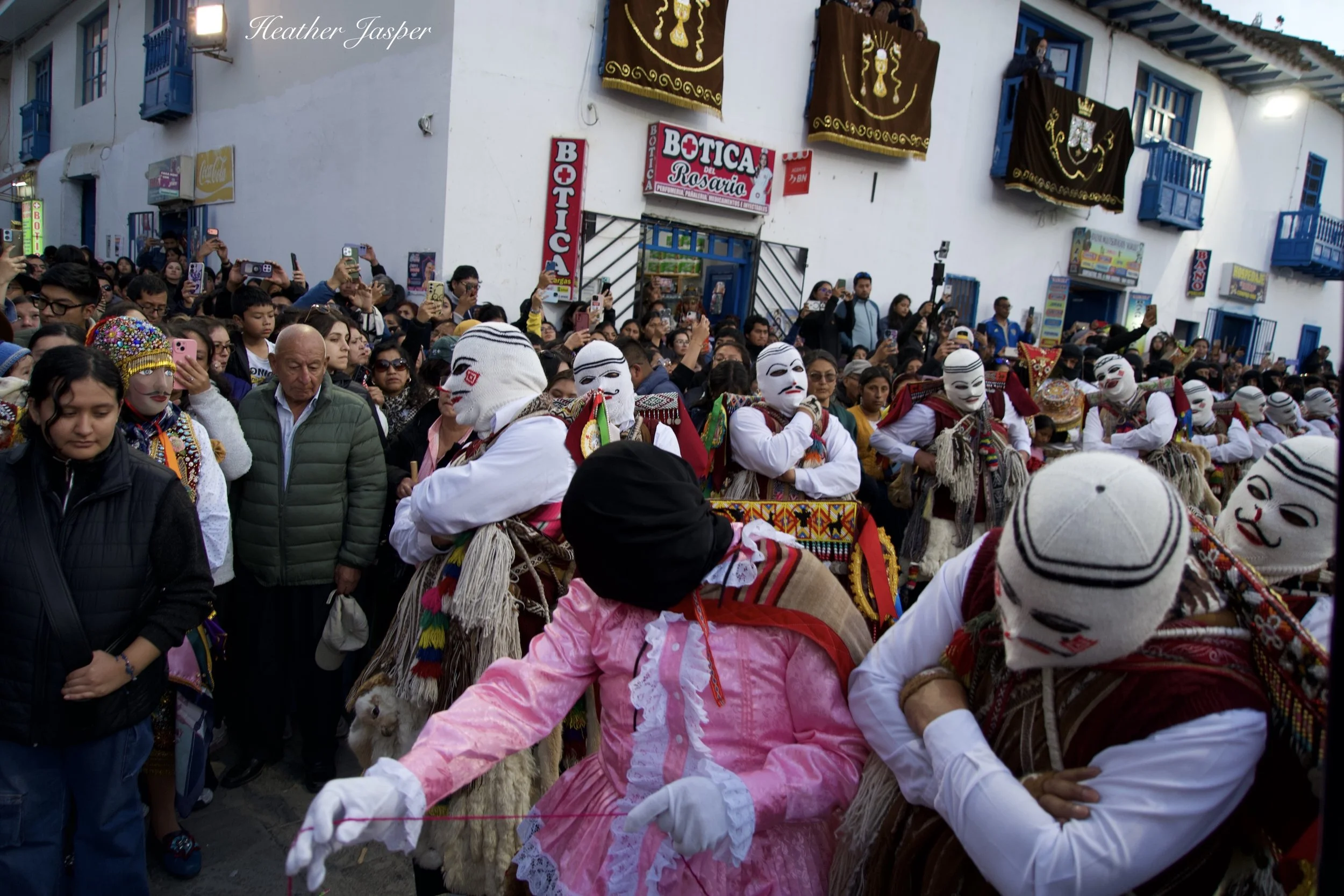
The last event on the first day is Q’onoy. The Qhapaq Qolla, who come to Paucartambo to take the Virgin of Carmen to their village, light fires in the plaza to create smoke that they can hide behind to steal the Virgin. The Ch’unchu stoke the fires with their antuta so they burn faster and with less smoke. The Qolla and Ch’unchu chase each other around the plaza, mixed in with the Saqra. It’s a fun event and I love watching the Qolla and Saqra jump over and run through the fires.
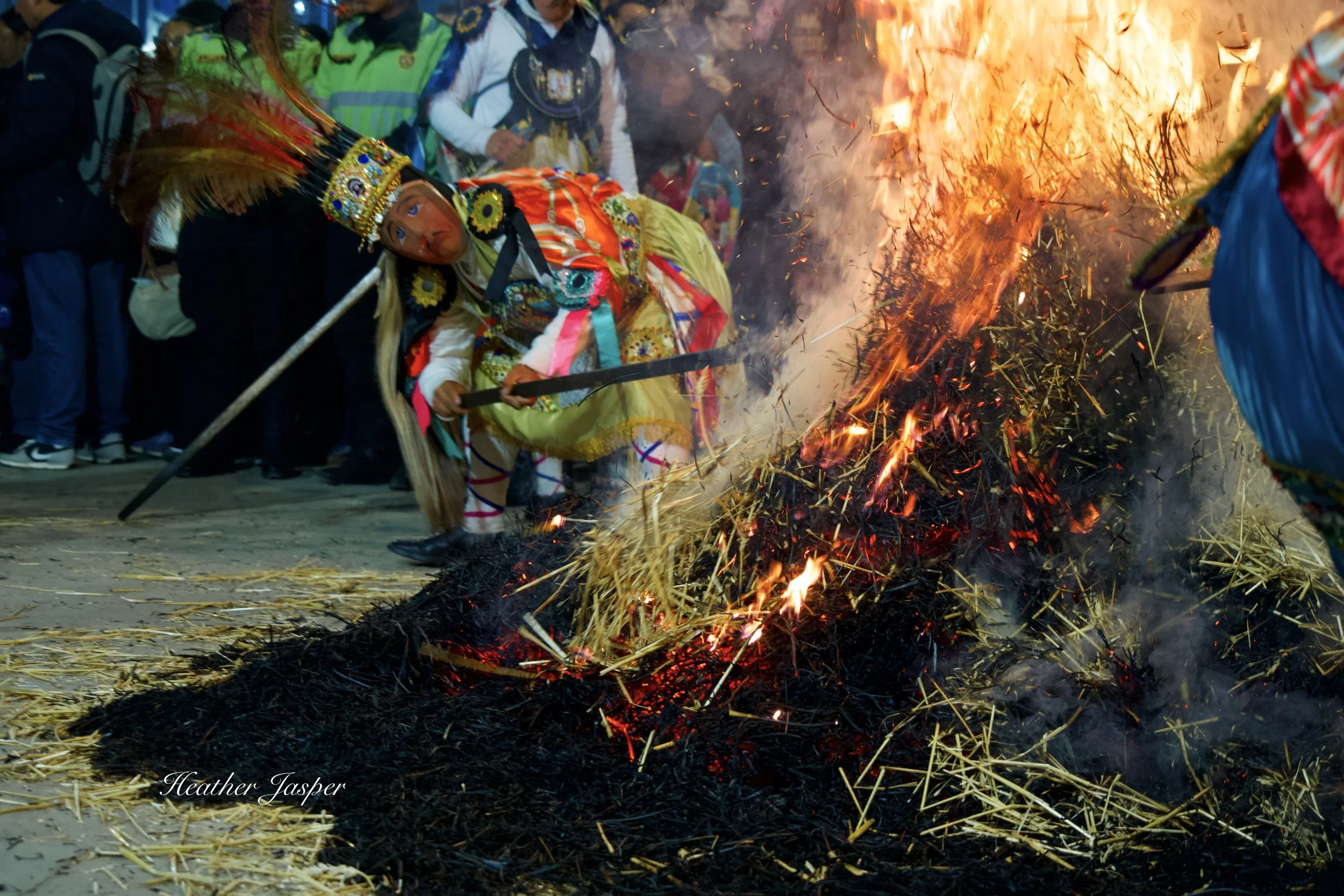
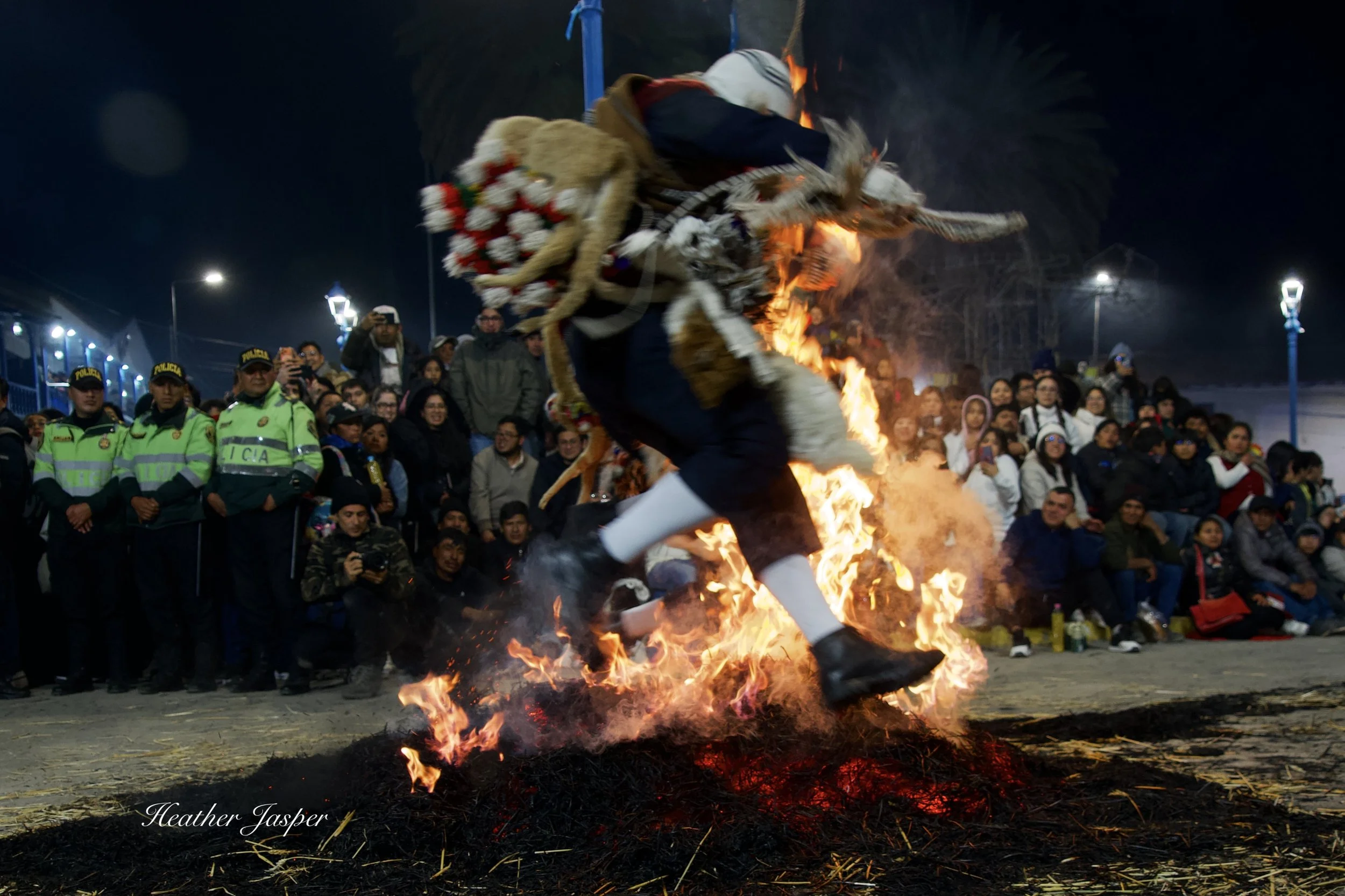
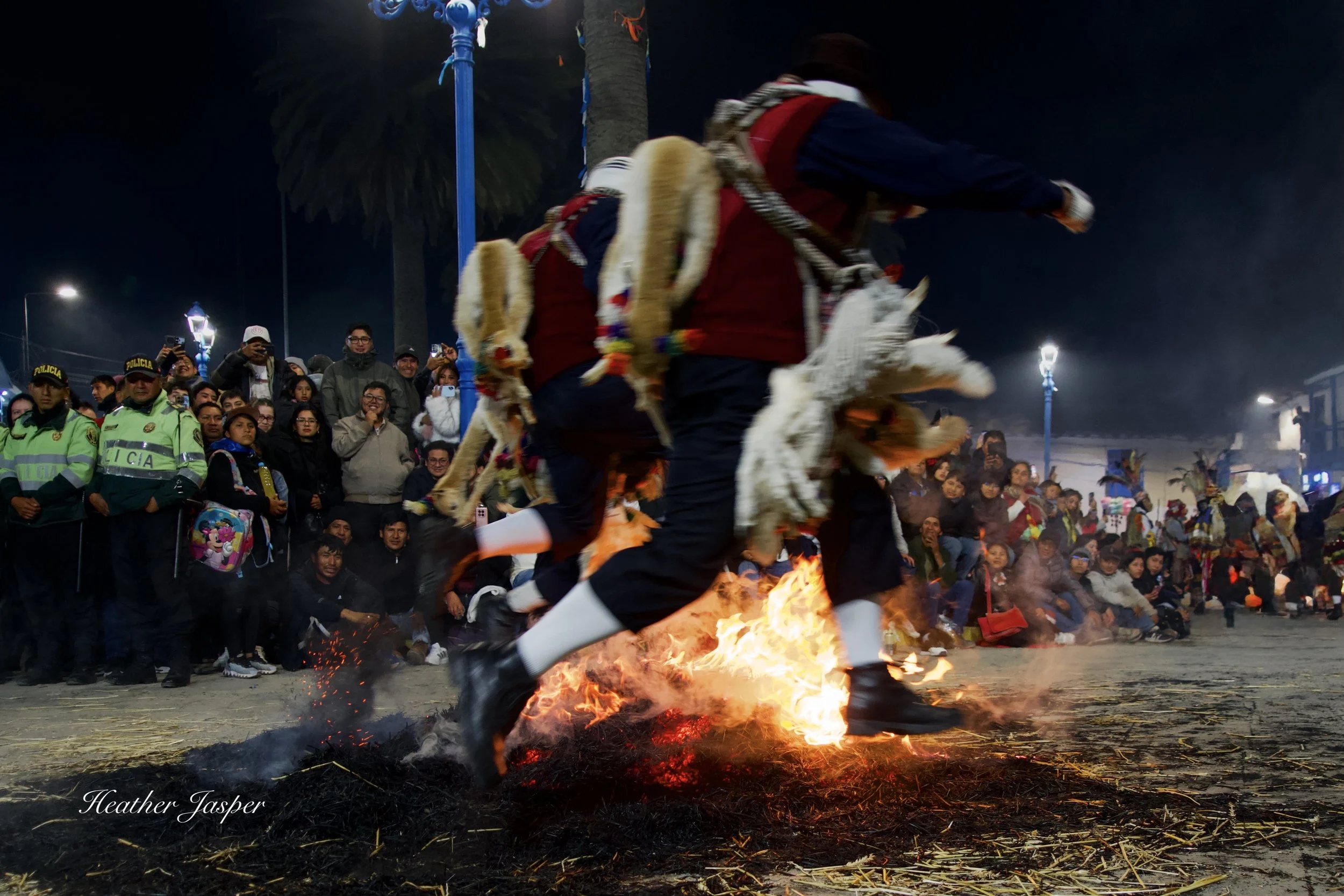
Spectators have to be ready for lots of sparks and ashes from the straw fires. Wear something made of cotton or wool because cinders that fall on synthetic fabric melt holes in them immediately.
By the end of Q’onoy, the fires have burned down and the Qollas didn’t manage to steal the Virgin. They make a final few circles around the plaza, shooting off fireworks but still failing in their quest.
July 16: Mass, Bosque, Once, Procession
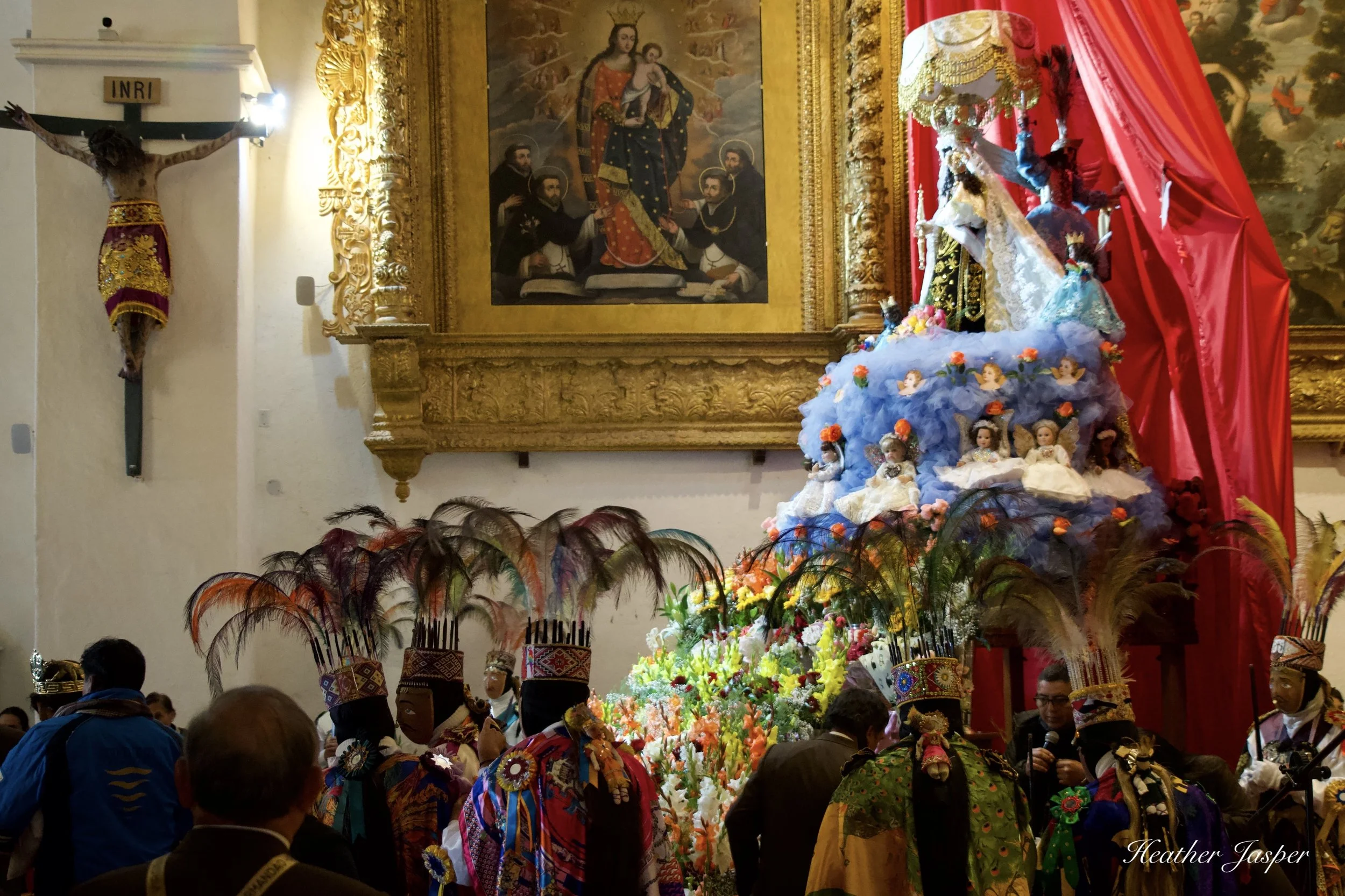
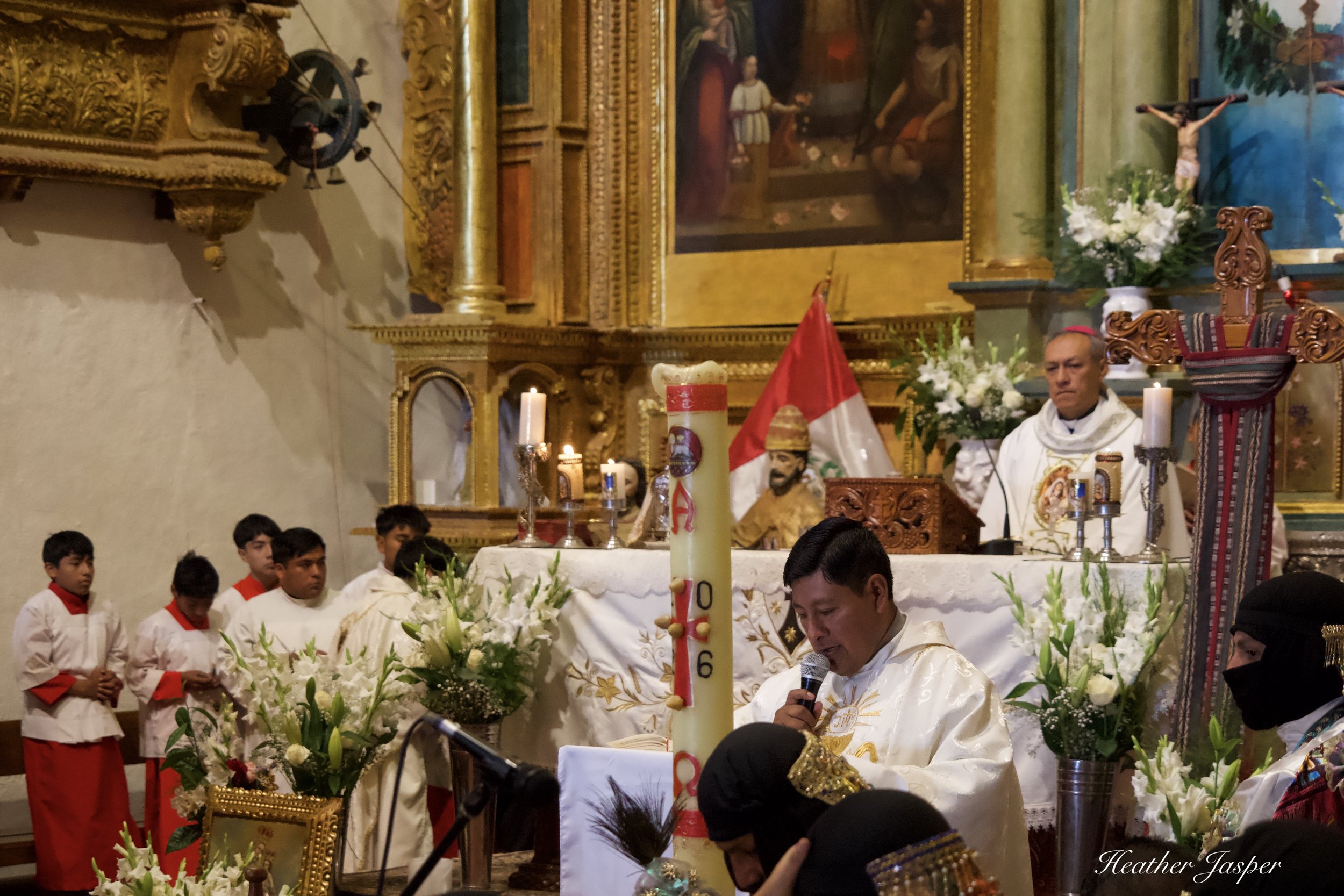
The second day of the festividad is considered the central, or most important, day and it begins with mass at 9am. It’s like no other Mass you’ve ever seen before. The danzas come in their trajes and while the priest says most of the mass in Spanish, some parts are repeated in Quechua.
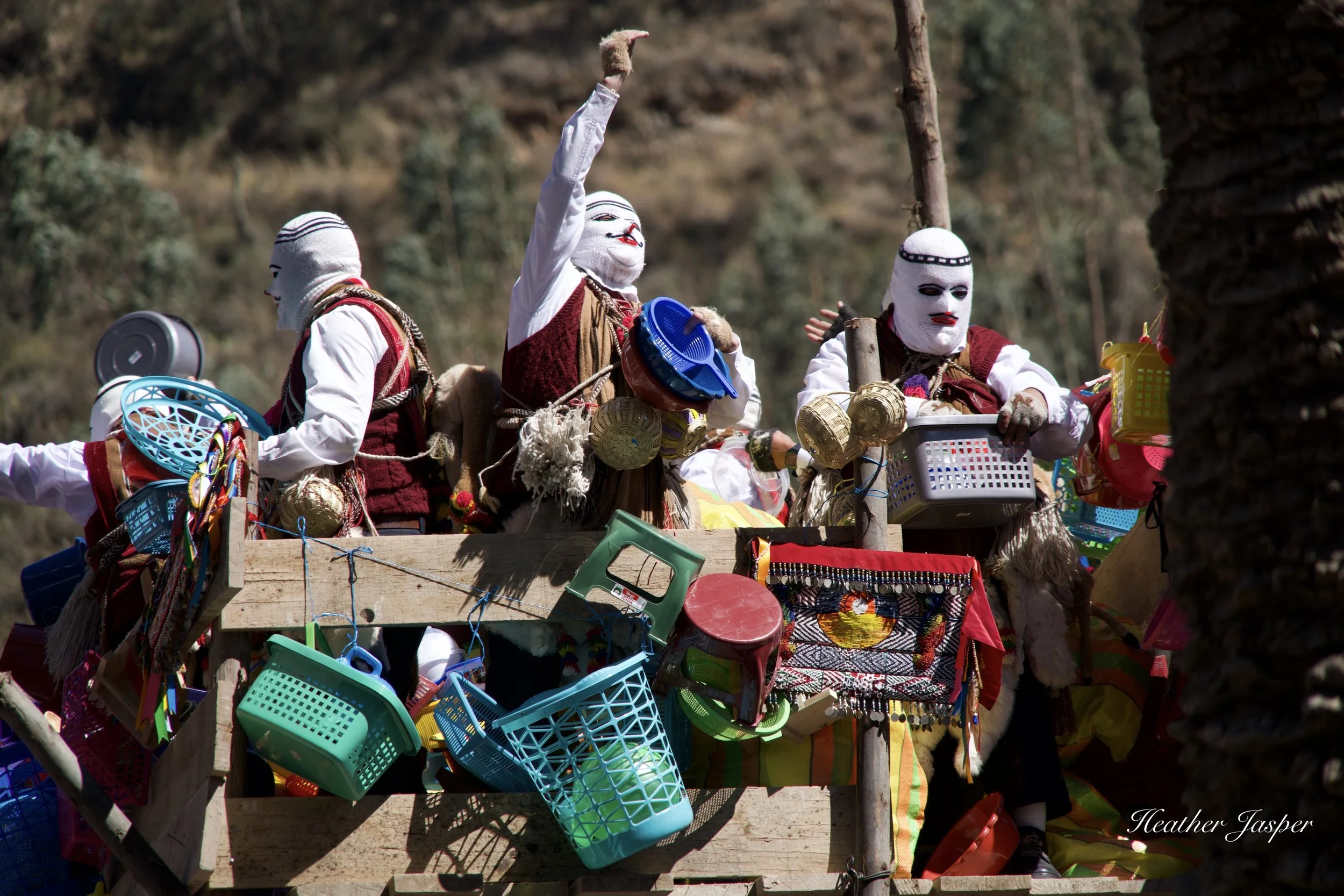
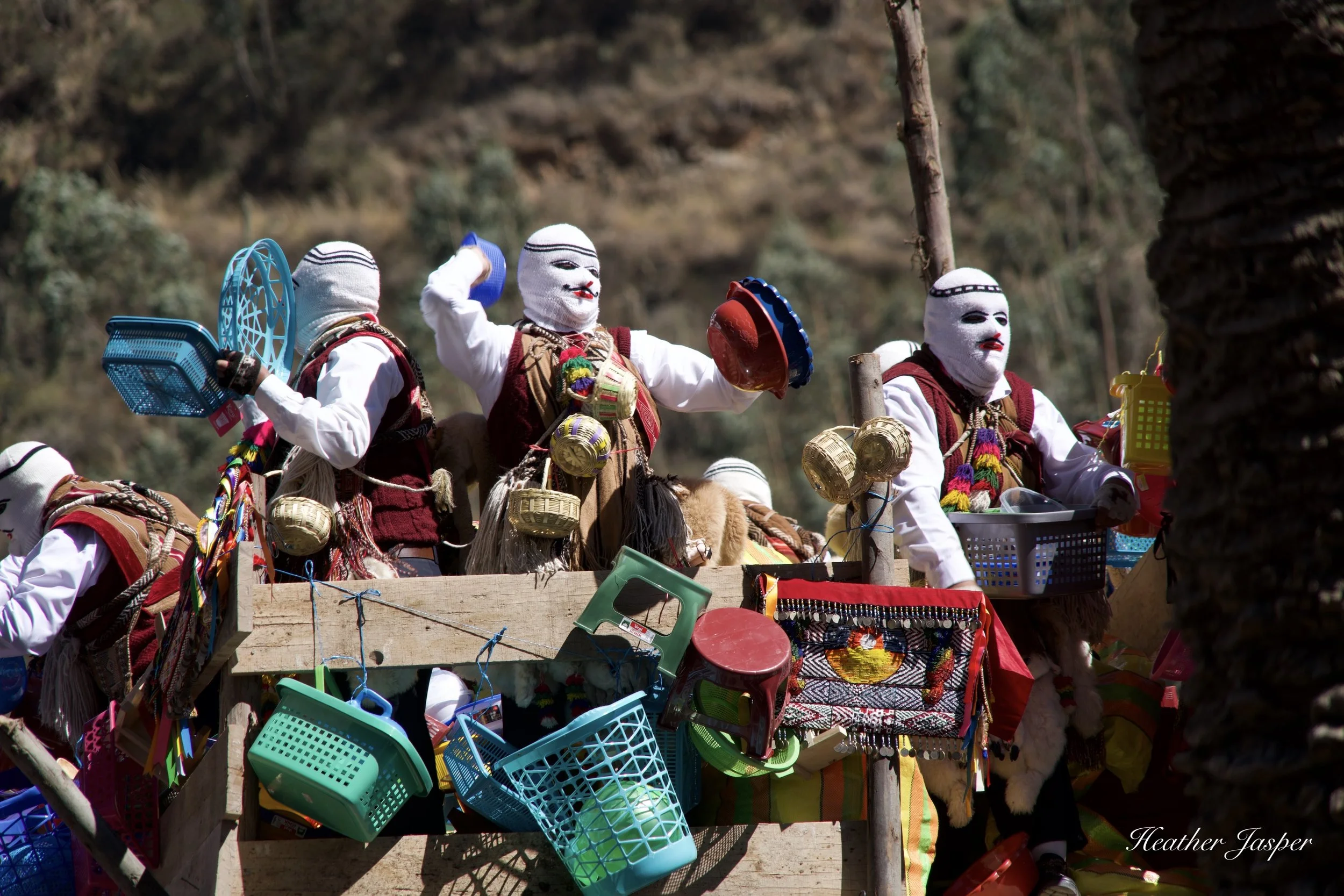
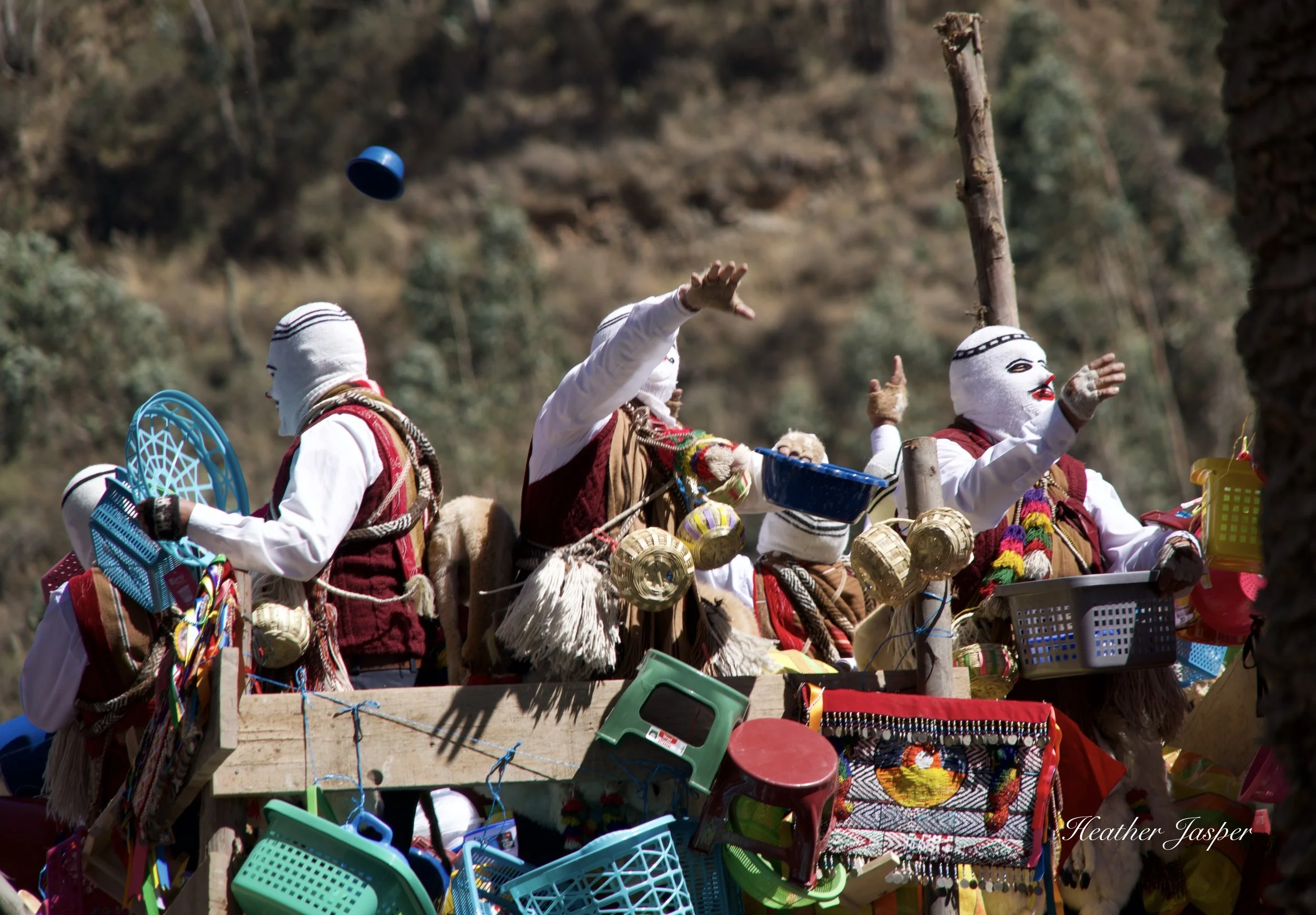
Keeping an eye on the Qollas
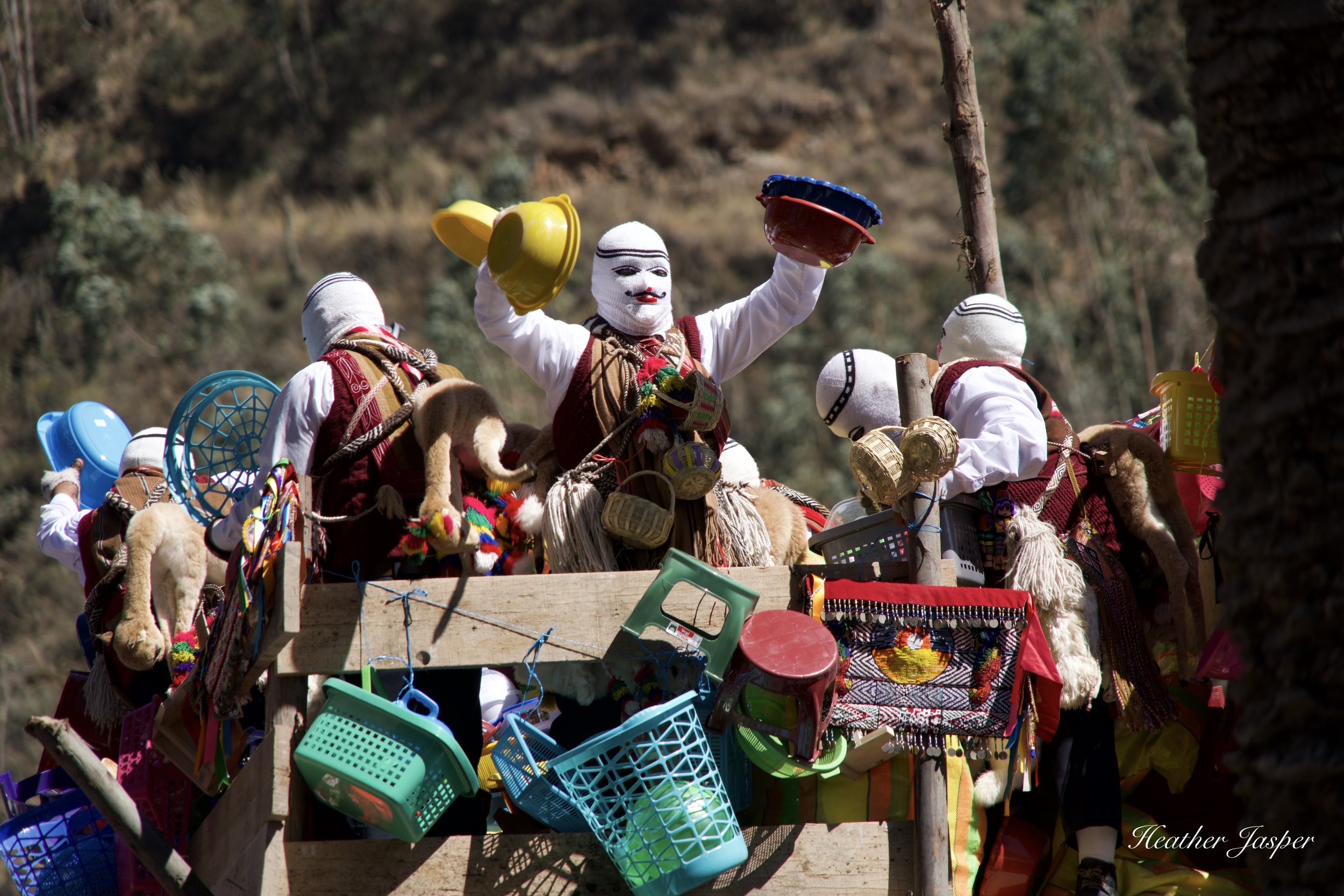
The next tradition is Bosque in the plaza, when the Qollas climb up on a platform they built in the middle of the plaza to toss presents to the townspeople. Again, they are trying to distract the Ch’unchus, who watch carefully but never run forward to catch any of the presents. This year, most of the things the Qolla threw were plastic colanders, plates, bowls, utensils but also wooden utensils and stools and lots of beach balls and frisbees. There are so many things that everybody walks away with something – except the Ch’unchus.
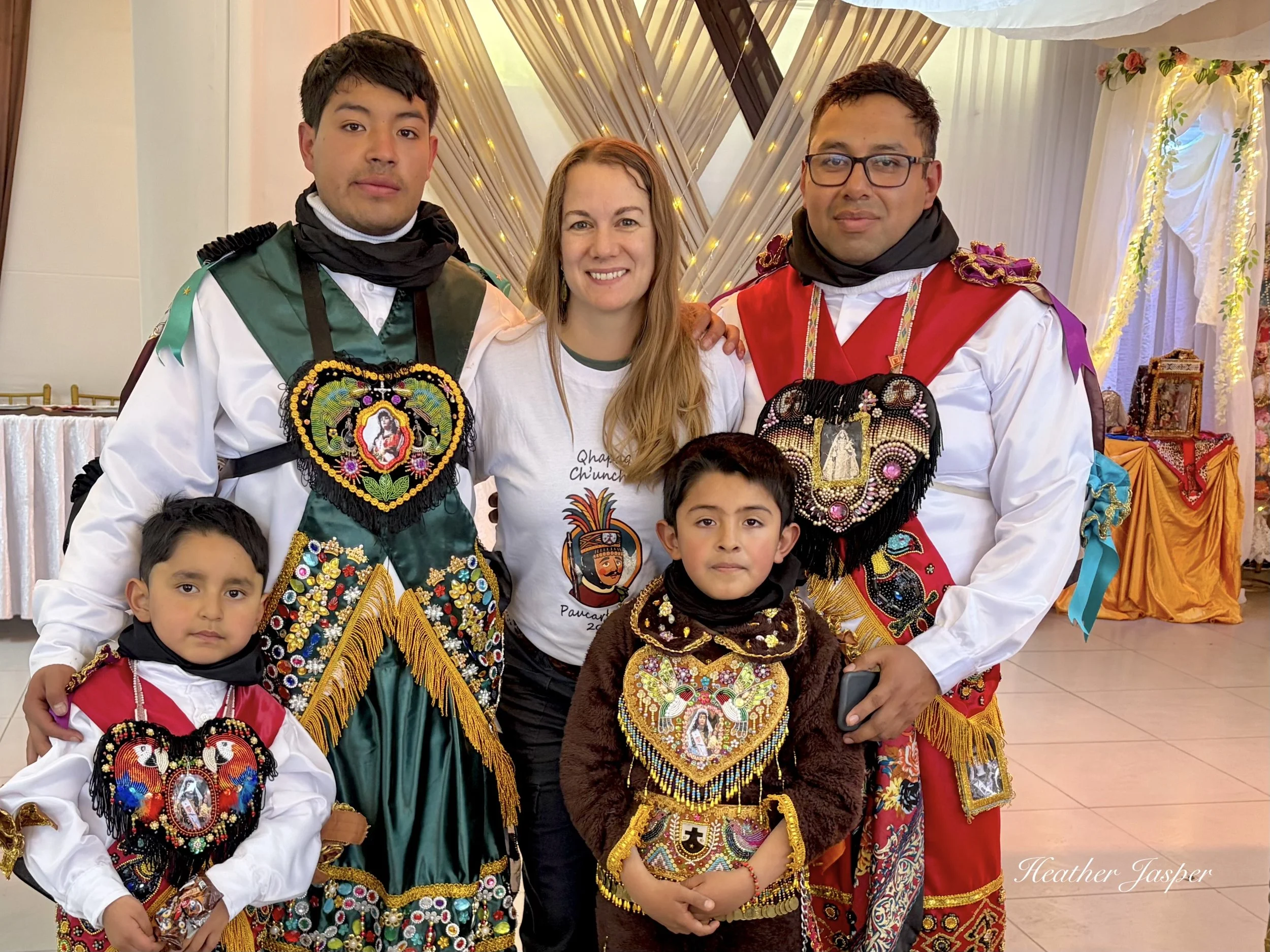
Diego, Jorge and I took a break from the chaos outside to watch over the Demanda, behind us.
Sharing Once
After the Bosque, at 11am, everybody goes back to the piscina/cargo mayor for Once. This is the Spanish word for eleven and it’s when the cargo mayor gives everybody a mid-morning snack of sweet rolls. All nineteen danzas crowd into the piscina, with all nineteen bands, having parallel parties and dancing. It is even louder and more chaotic than you can imagine. After a couple hours, we went back to the cargo wasi for a hurried lunch before the next event.
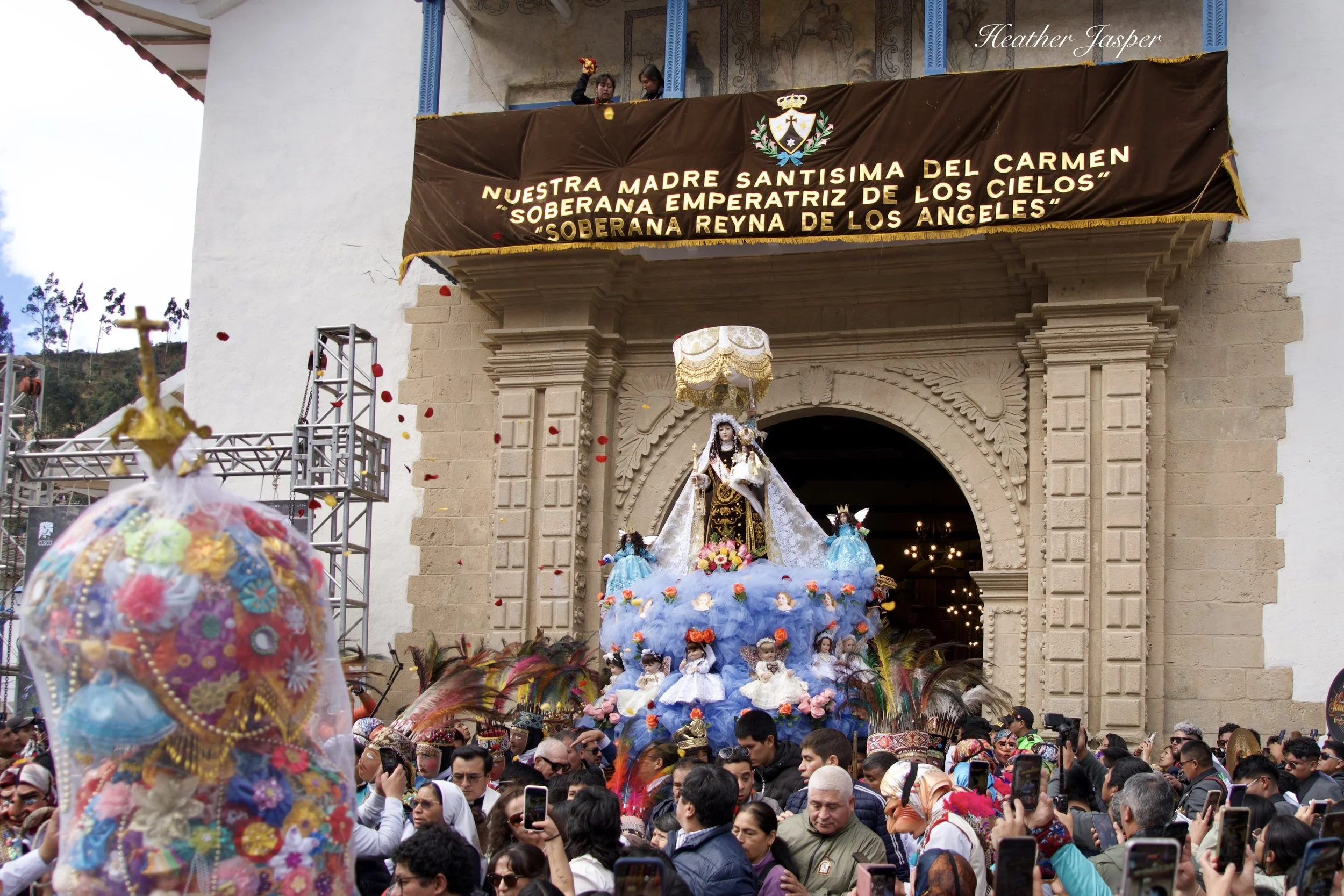
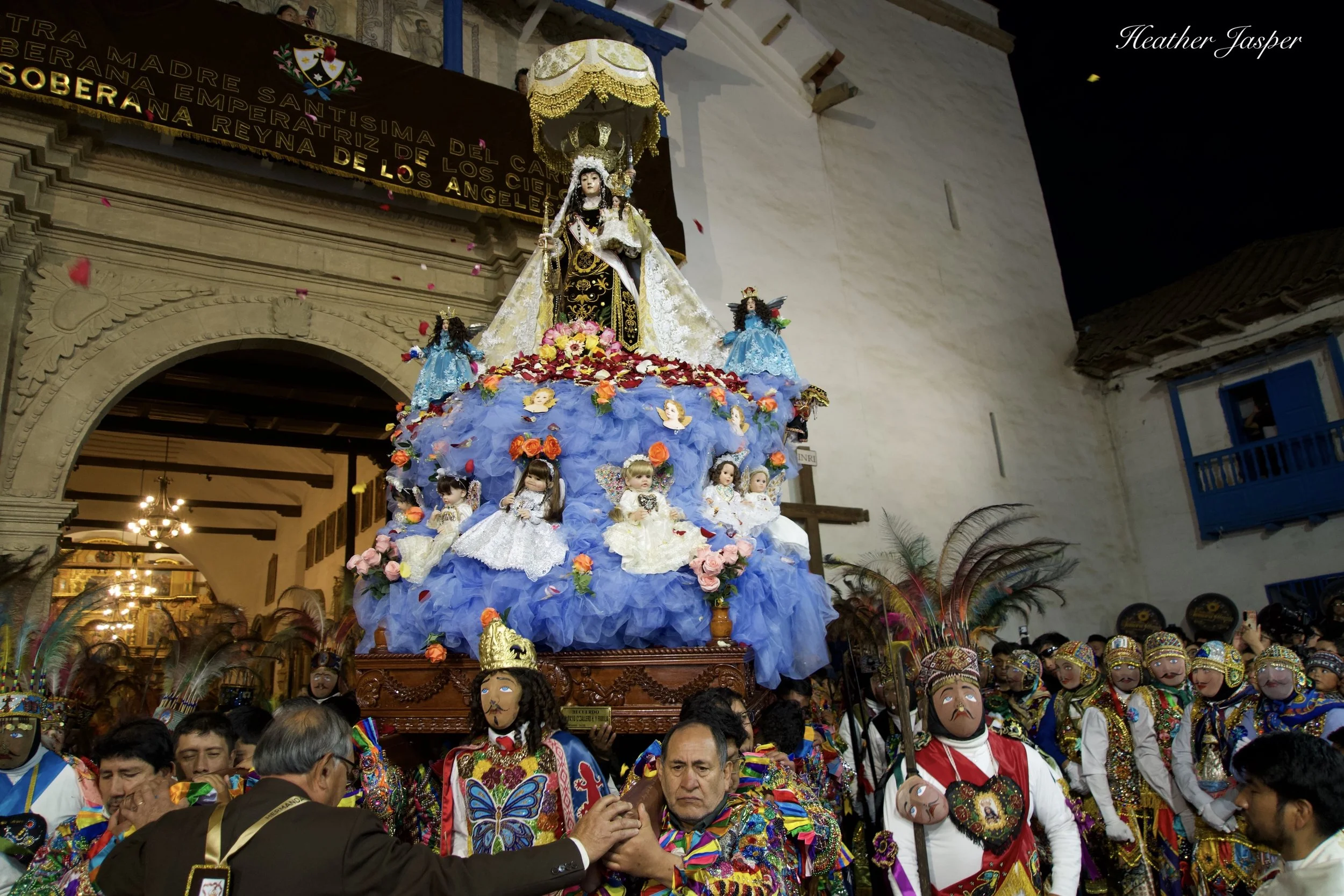
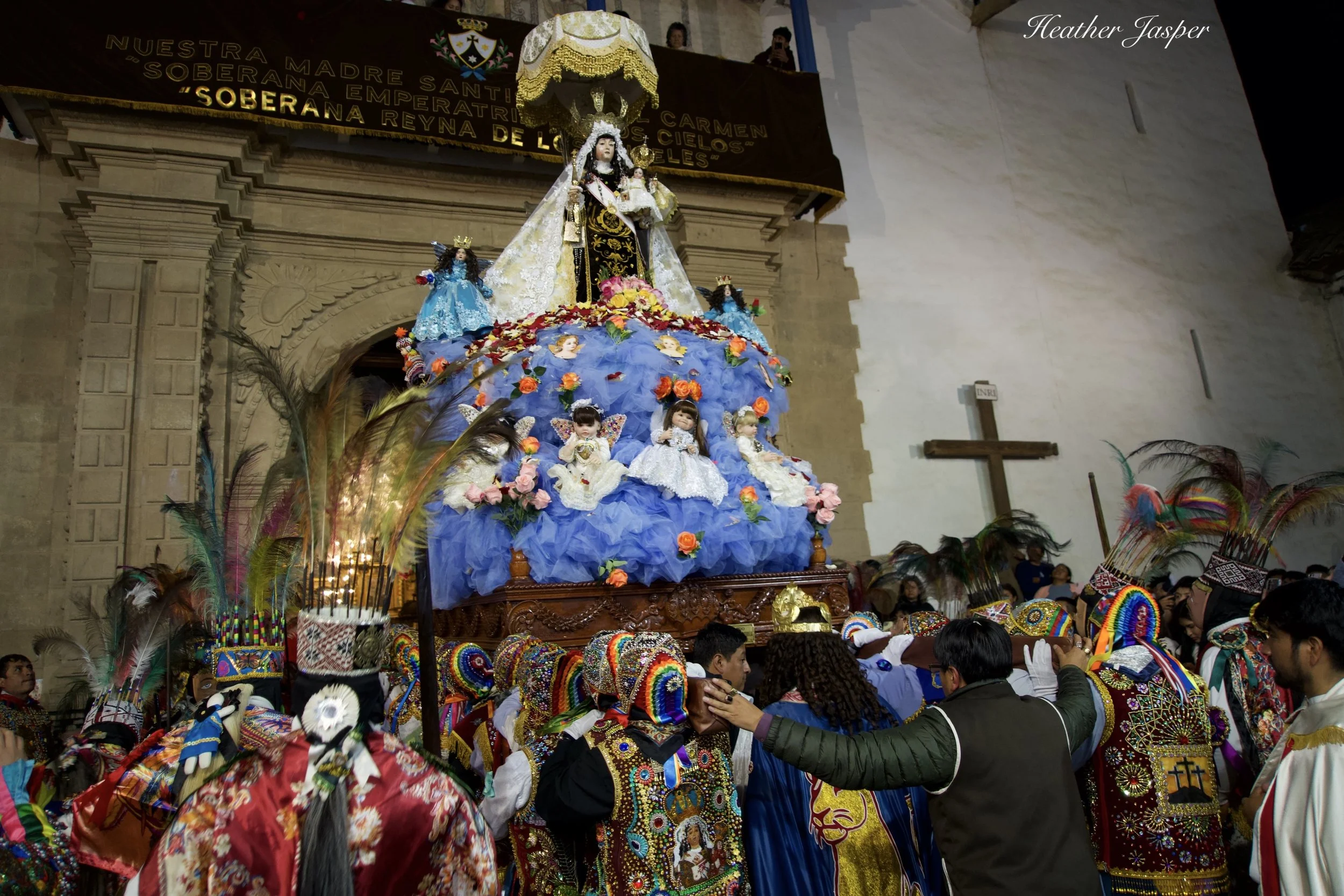
The Virgin of Carmen leaves the church, guarded by Ch’unchus and following the colorful Demanda, left.
The Virgin of Carmen’s Procession
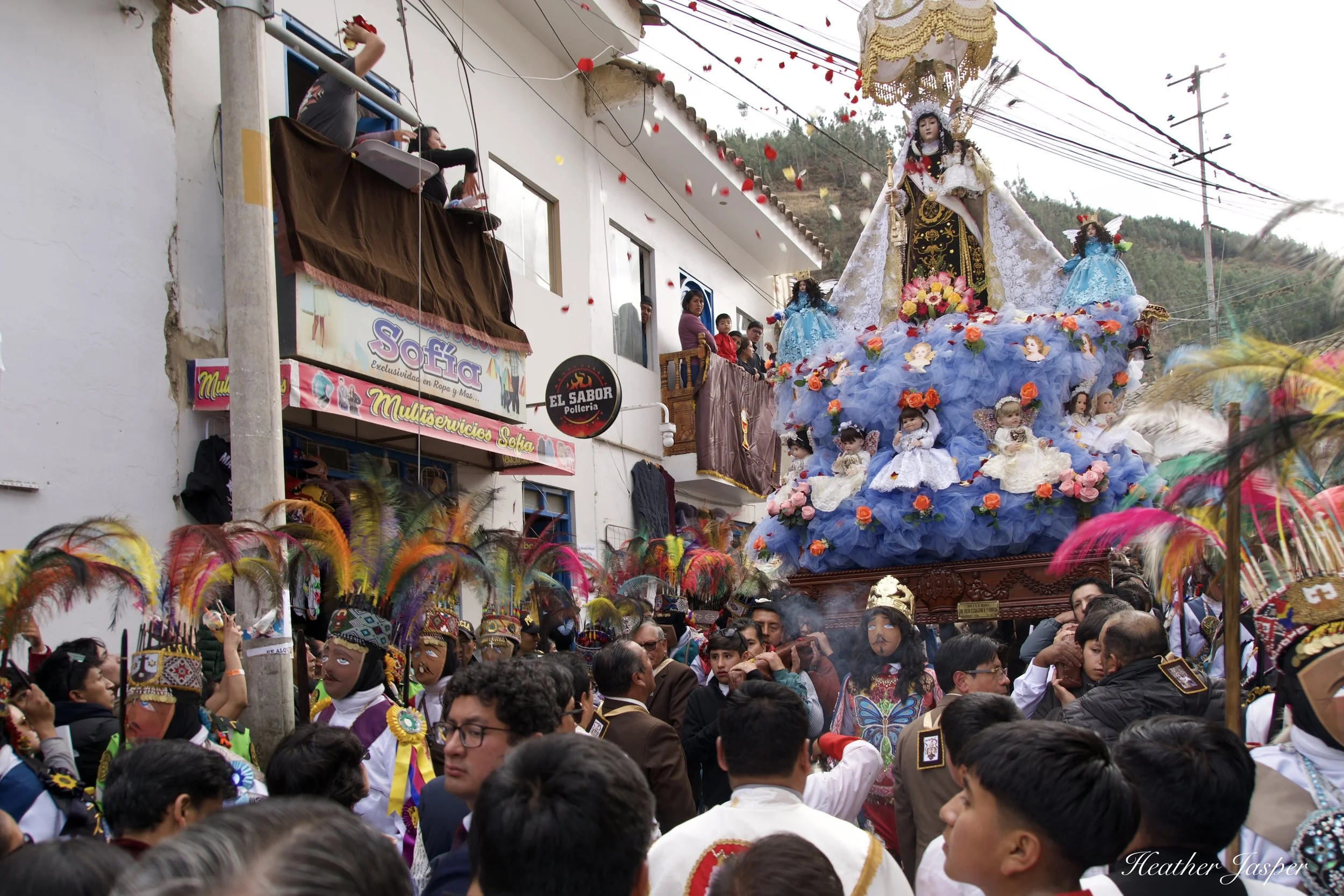
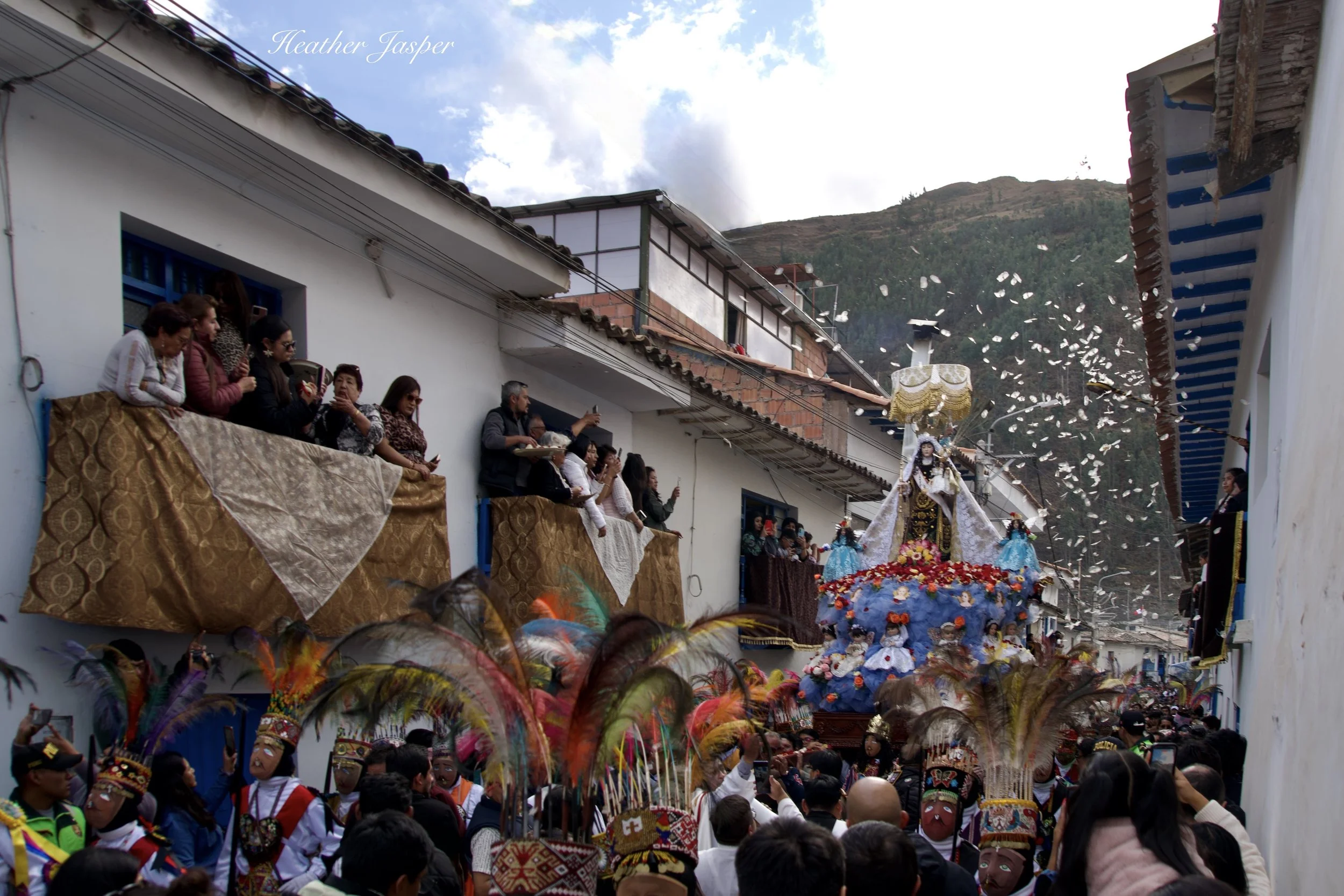
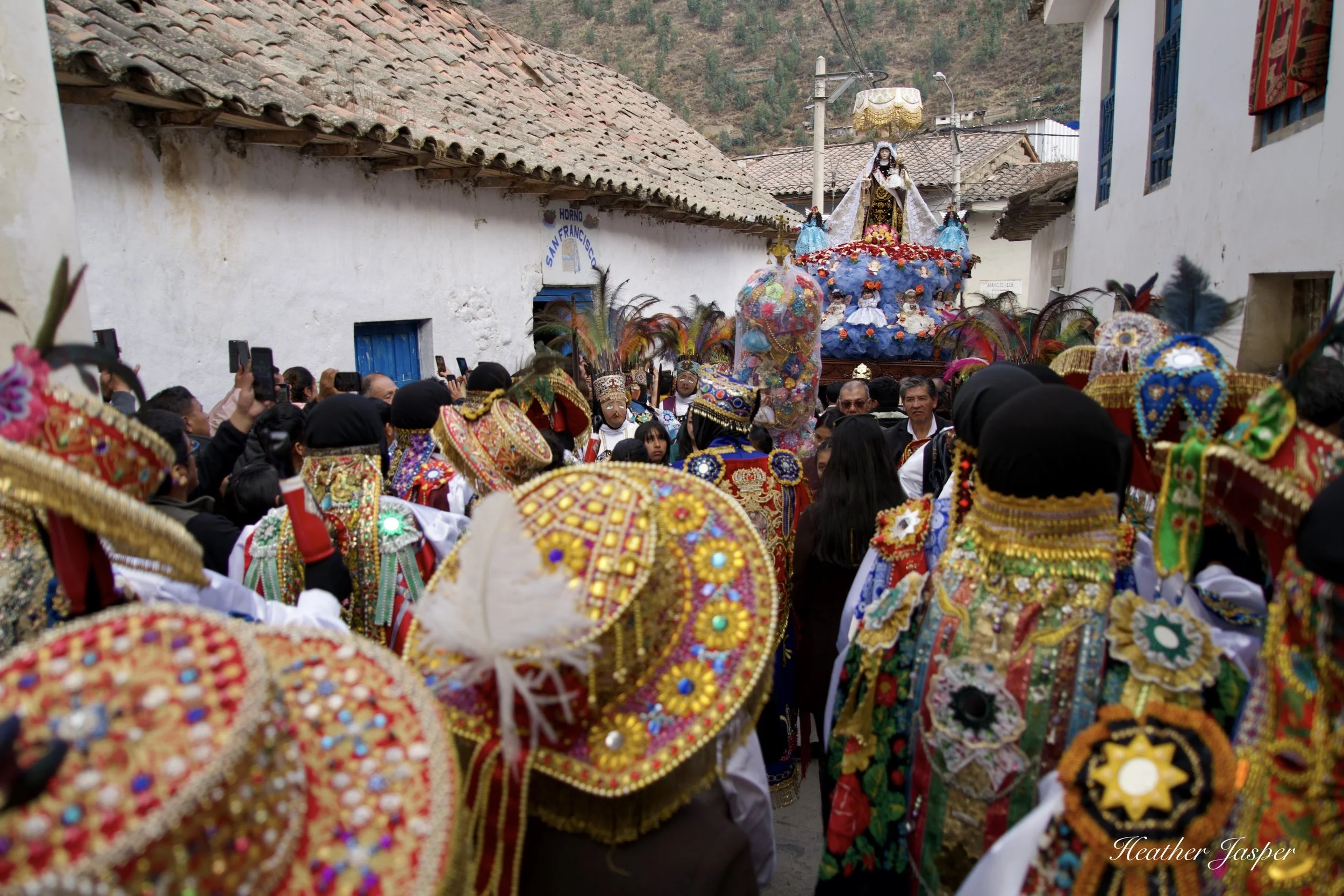
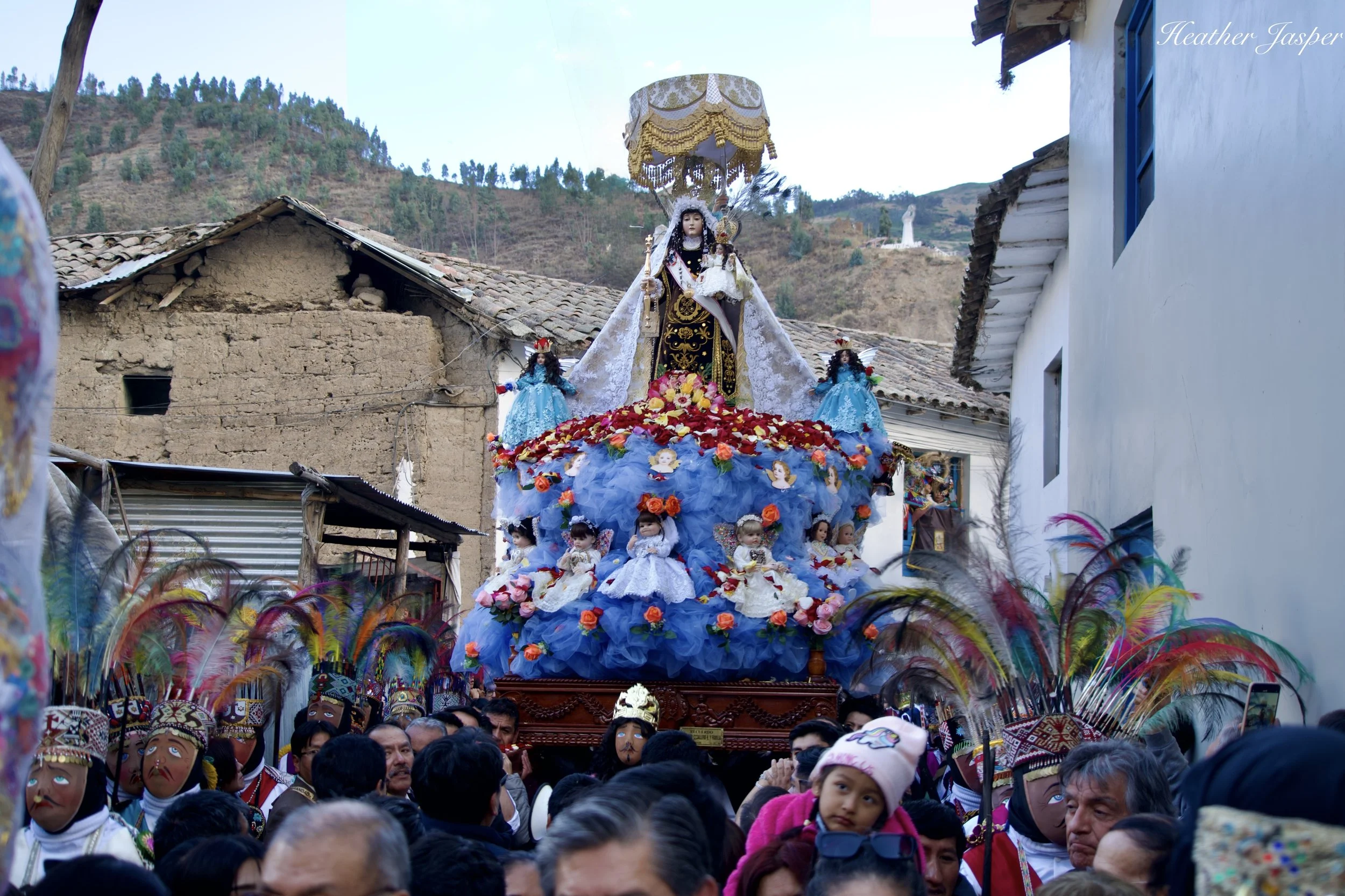
In the afternoon is the festividad’s main Procession, when the town’s most faithful (and strongest) carry her in procession for about three hours through the town. It takes place roughly 3:00 to 6:00 and in 2024 I got to see it from above because I was shadowing the Saqras and they climb up on the roofs that line her route to try to capture her with their hooks called garabatos (second picture, below). The Ch’unchus flank the Virgin, and the King guides her way, always staying right in front of her. They never stop dancing, which involves a lot of jumping, as if they’re always trying to see over the crowd to be sure no Qollas are sneaking up to try to steal her.
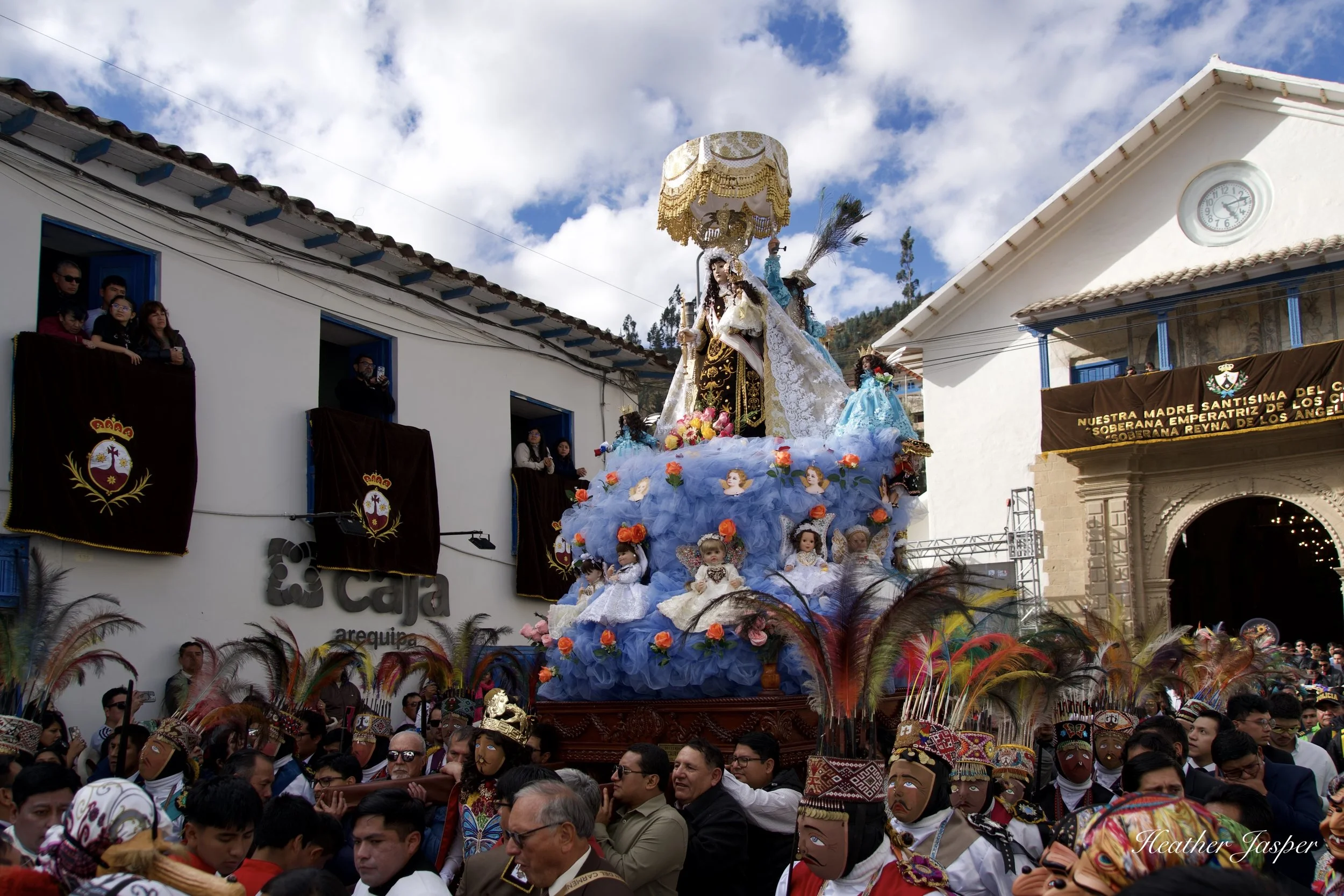
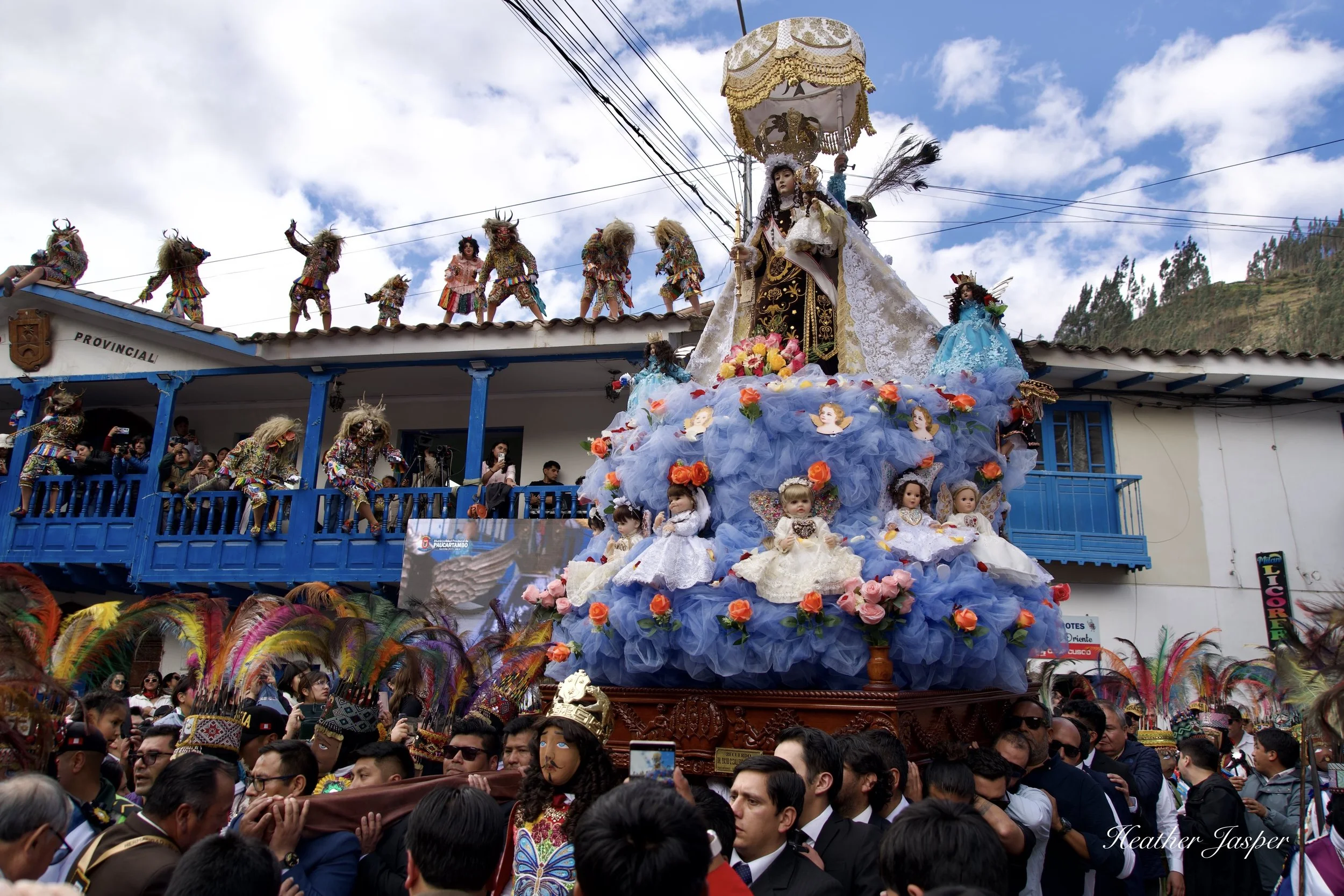
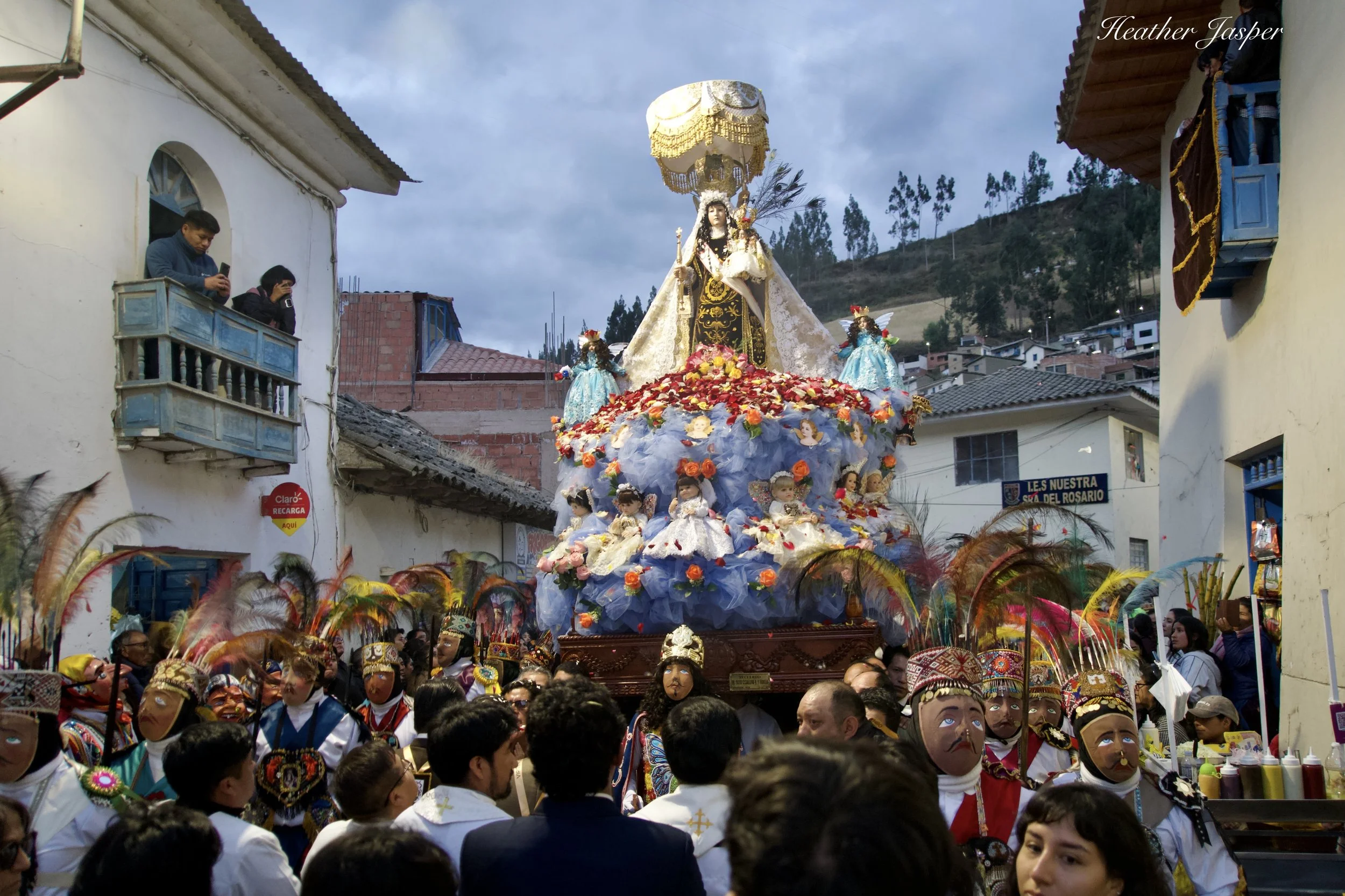
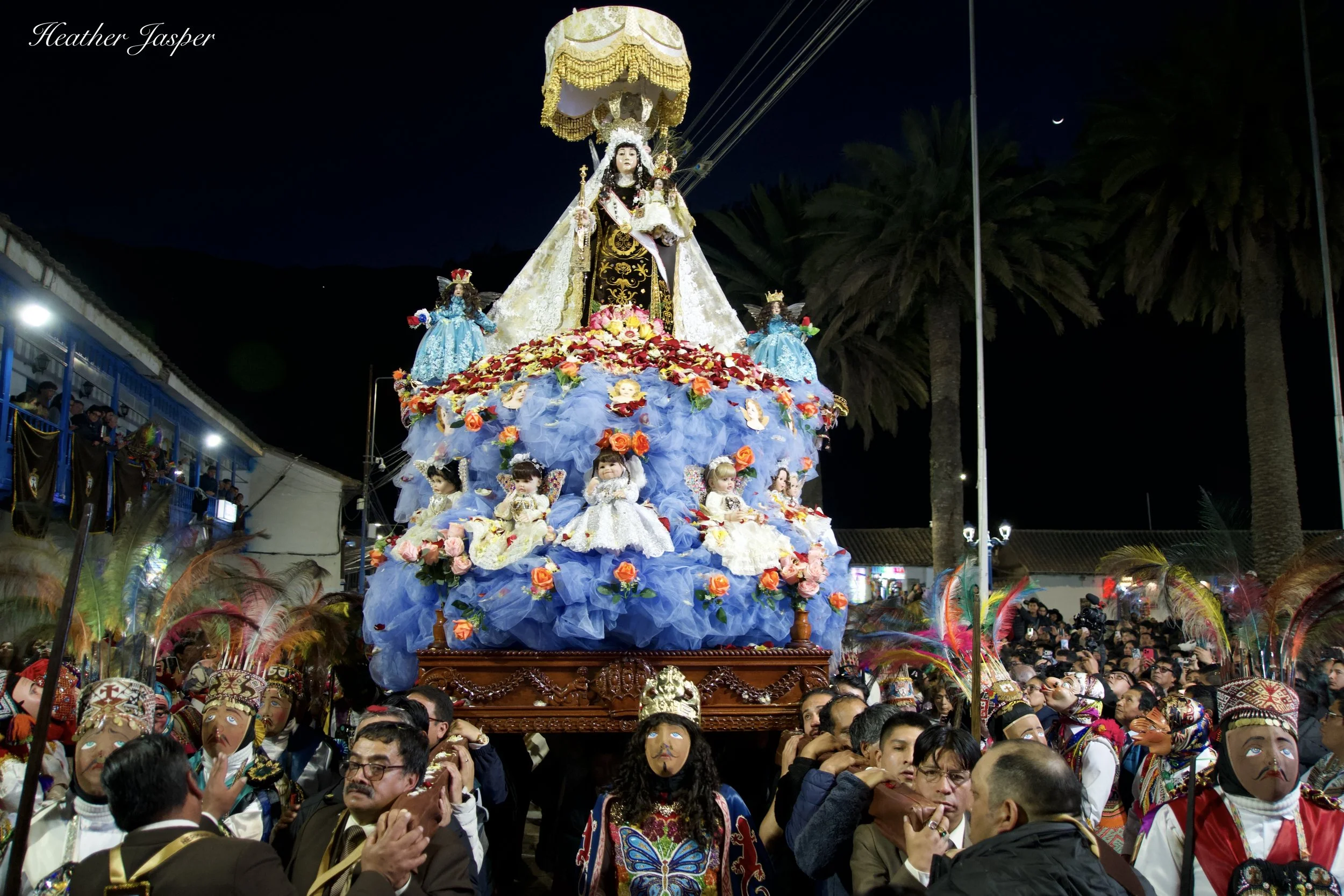
The townspeople love the Virgin of Carmen
Along her route, townspeople lean out their second story windows to throw rose petals on her. This year I also saw several people toss tree seeds that look like maple seeds, but with much bigger transparent wings, so it looks like thousands of white butterflies floating around her. (Click on the fourth picture, top right). The Qhapaq Negro walk backwards in front of her, never taking their eyes off her, fifth picture, bottom left. Click on the last photo, with a night sky, to see the tiny smile of moon above the palm trees on the right as the Virgin goes back through the plaza on her way to the church.
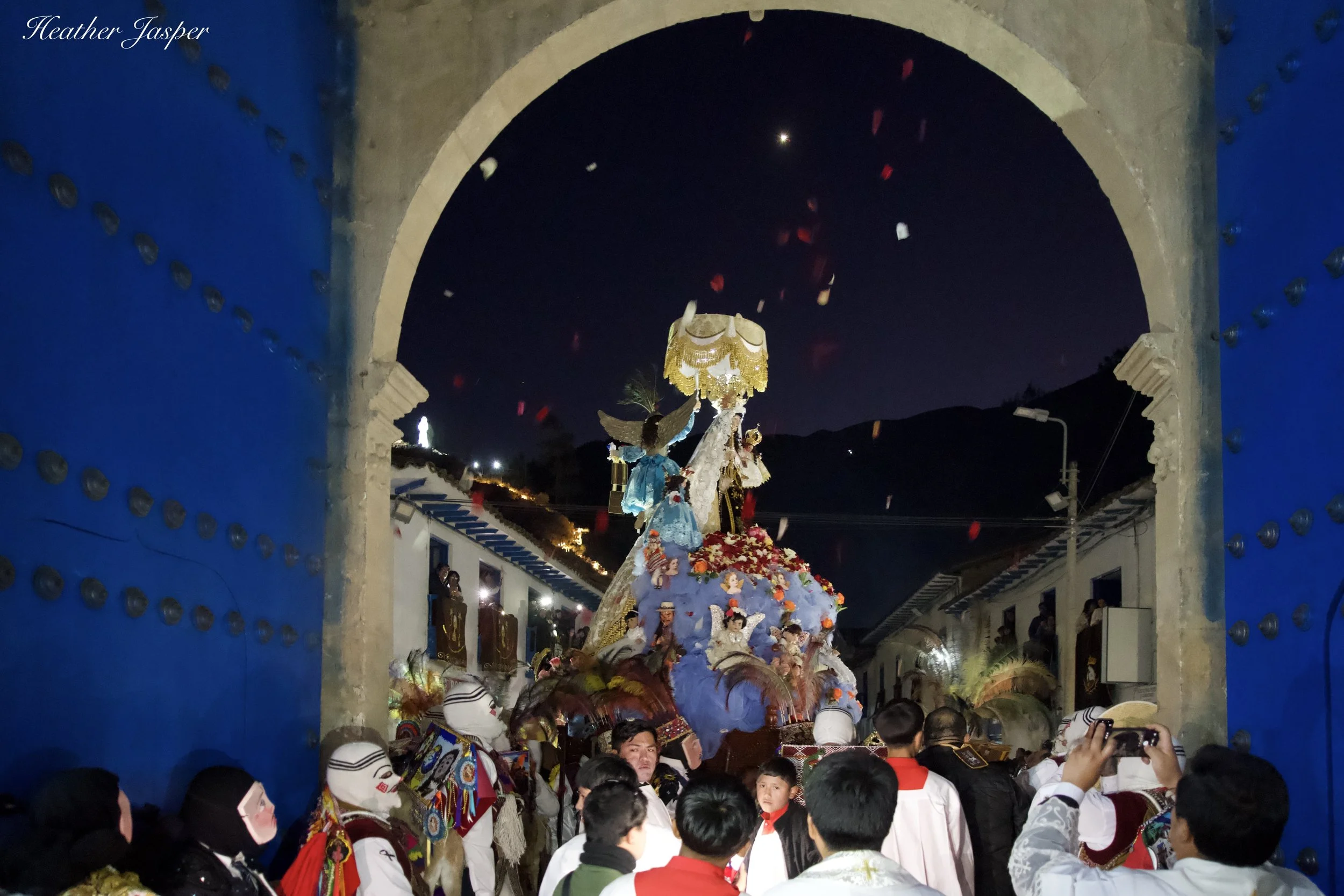
At the door of the church, the Virgin of Carmen is turned so she enters the church backwards, facing the congregation.
By the time the Virgin of Carmen is safely back in the church, everybody is exhausted. This year there was a blackout that hit almost exactly when we got back to the church, so the Qhapaq Negro sang to her in the dark after she was set back on her dais.
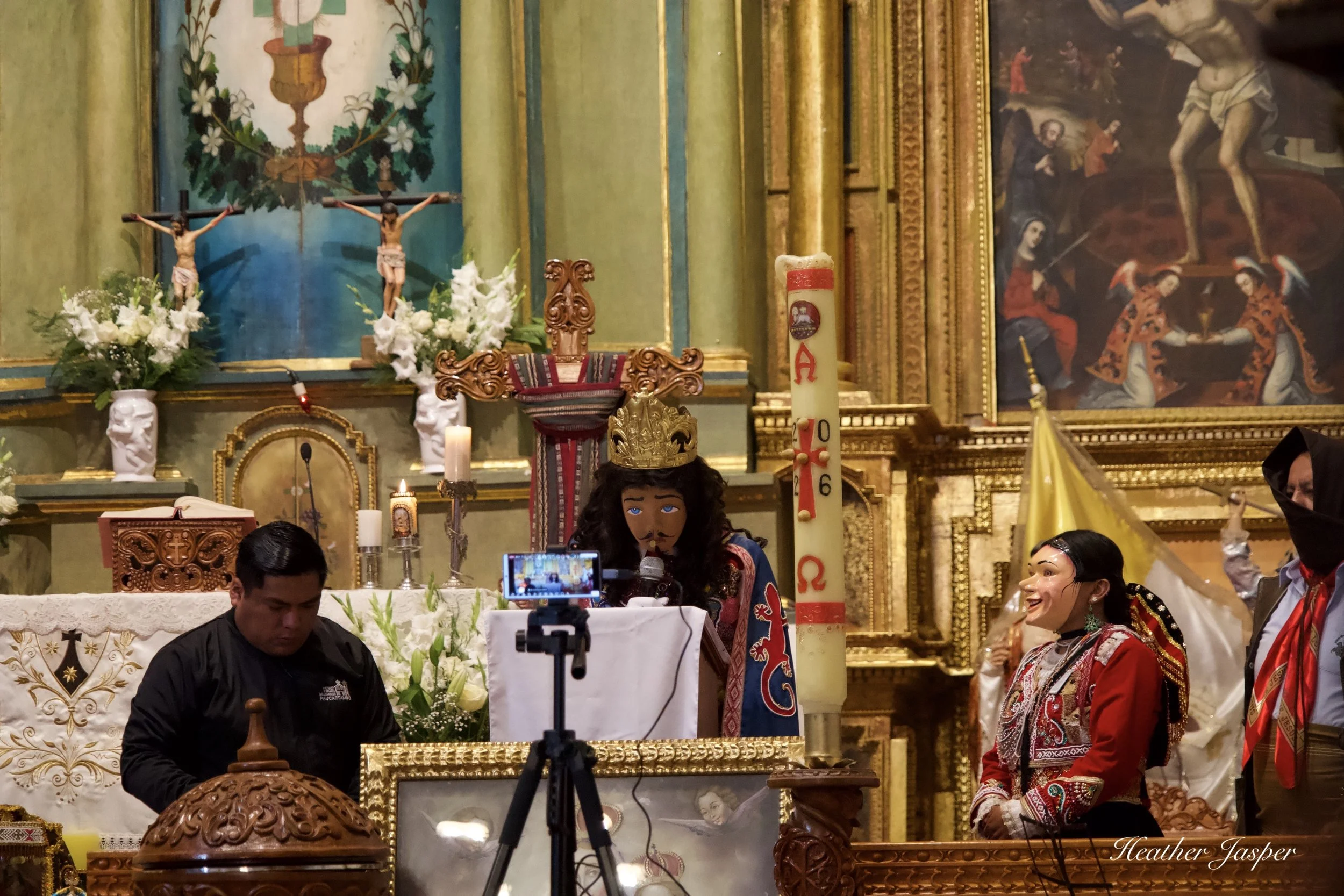
The King reads from the Bible, while two other danza leaders wait their turn.
July 17: Mass, Romería, Procession, Guerrilla
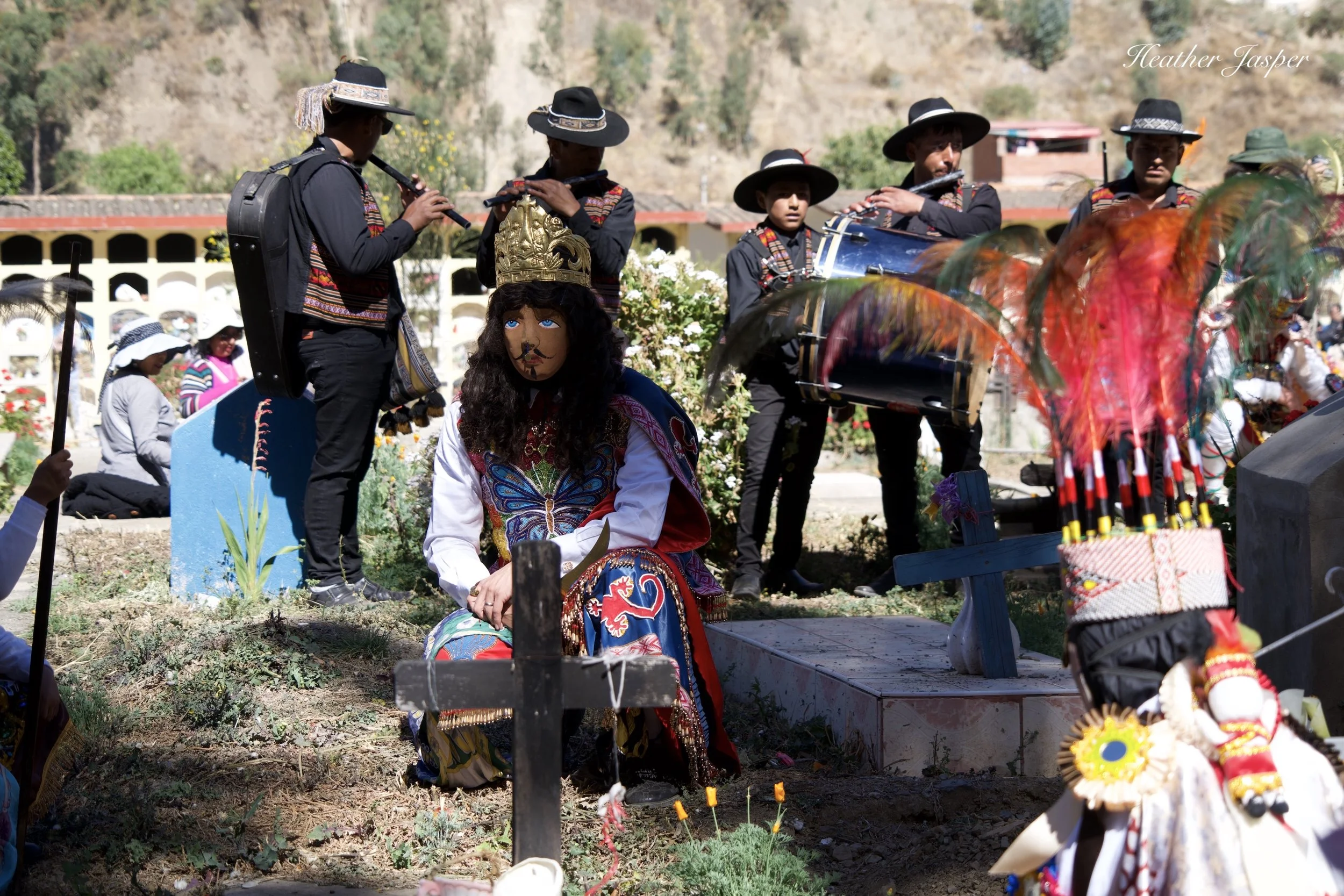
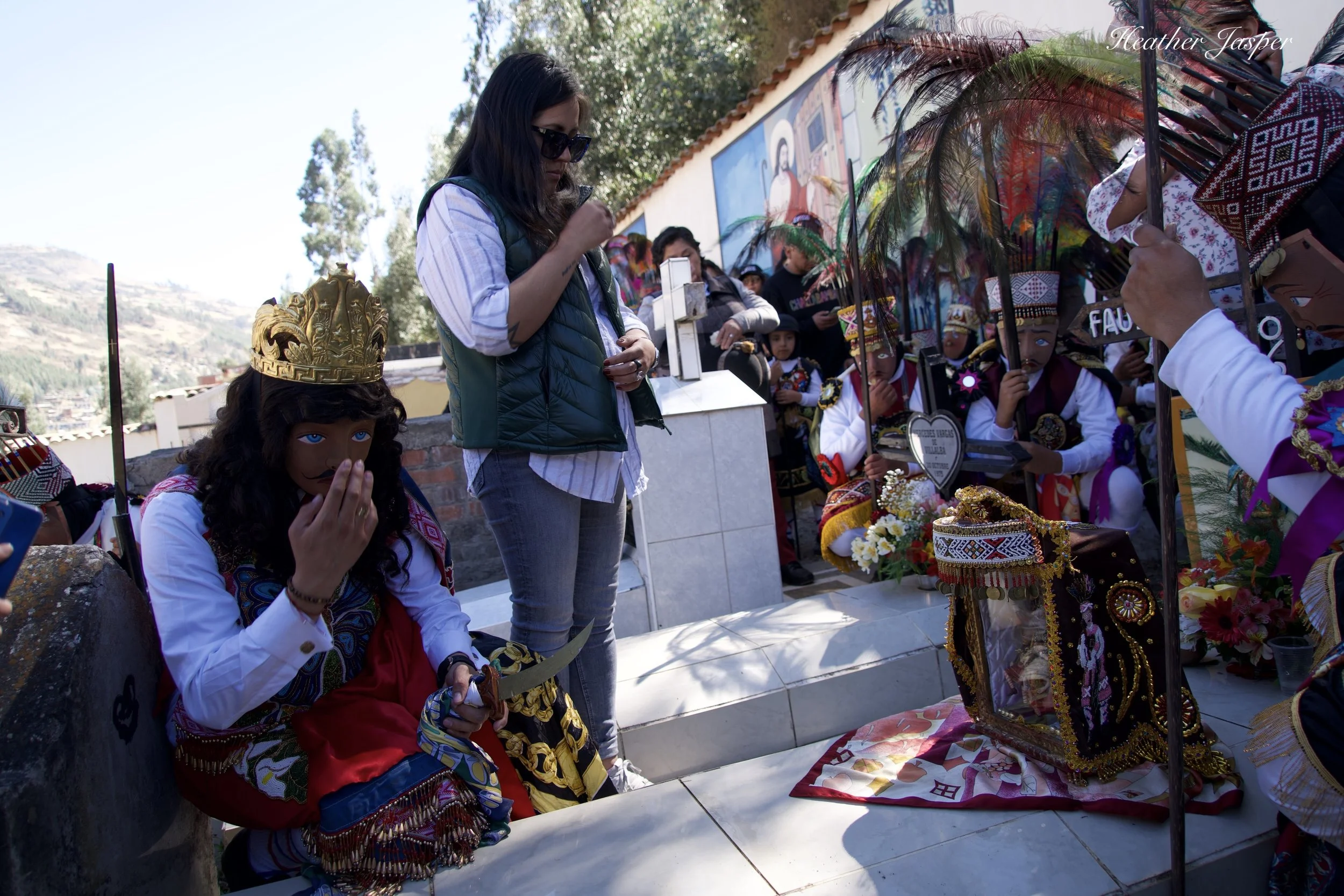
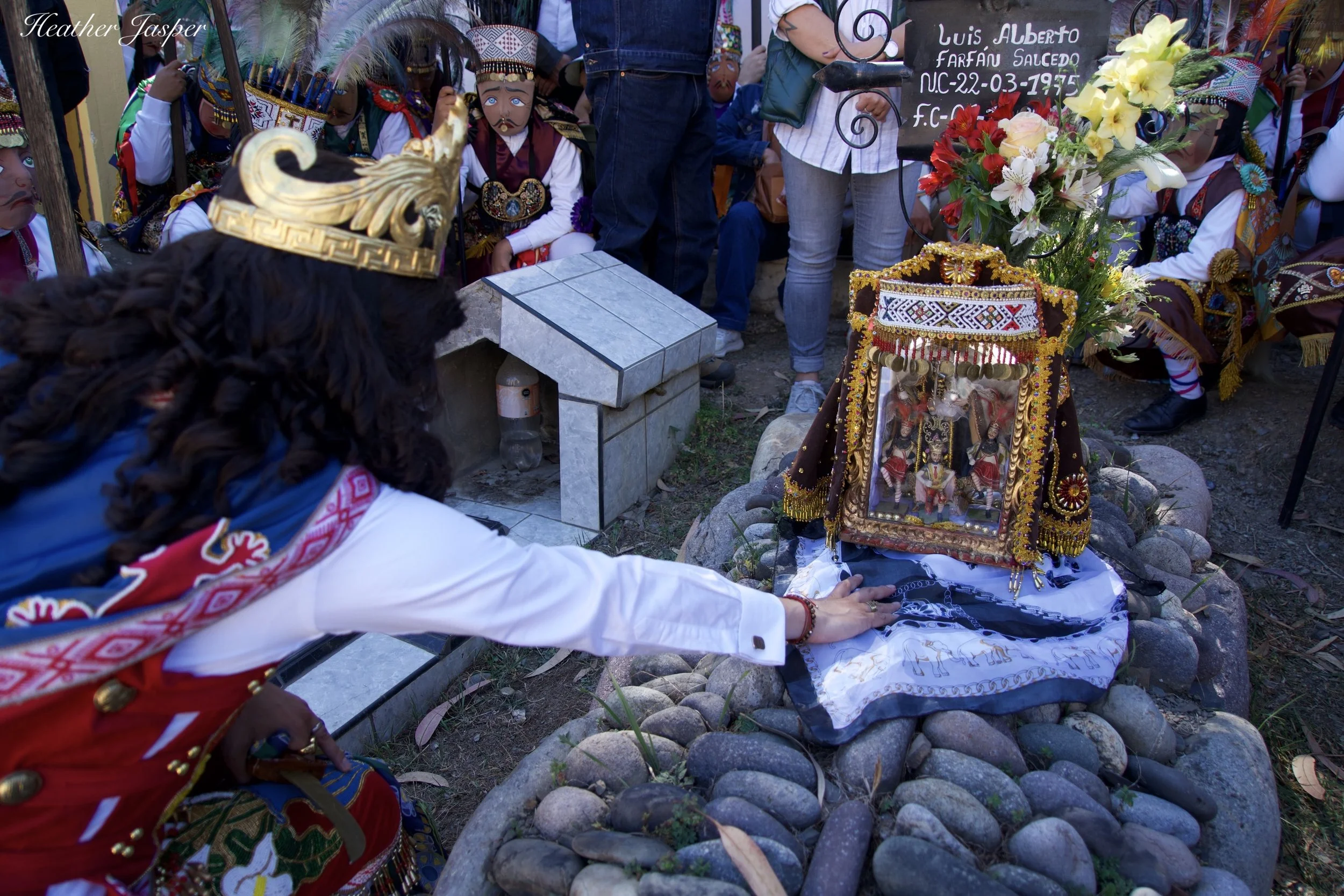
The Ch’unchus had a 7am Mass this morning and I was there with them. Afterwards, we went to the cemetery for my favorite tradition, called Romería. This is when each danza visits the tombs of former members who are buried in Paucartambo. Families arrive around 10am and sit by the graves of their loved ones, waiting for the danza’s visit.
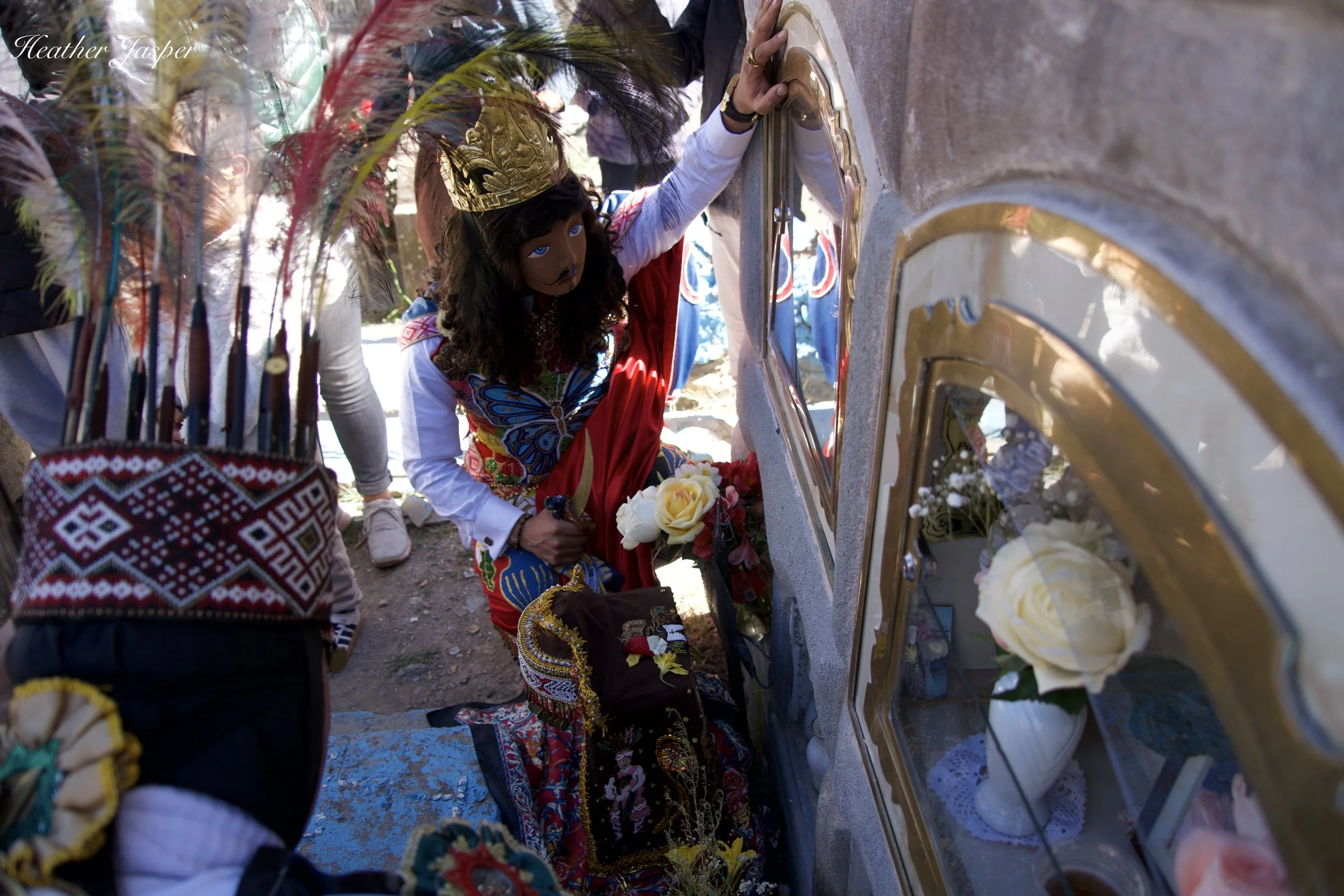
The King kneels at the tomb of a former Ch’unchu dancer to pay his respects.
Romería is a beautiful tradition.
Some former dancers are long dead, but nobody who dances in Paucartambo is ever forgotten. No matter which danza they were a member of, everybody gets a visit complete with prayers, music and often dance and song. Most danzas will put a mask or other symbol of the danza on the tomb during the visit, showing how much that person is still present with them and still a part of their danza.
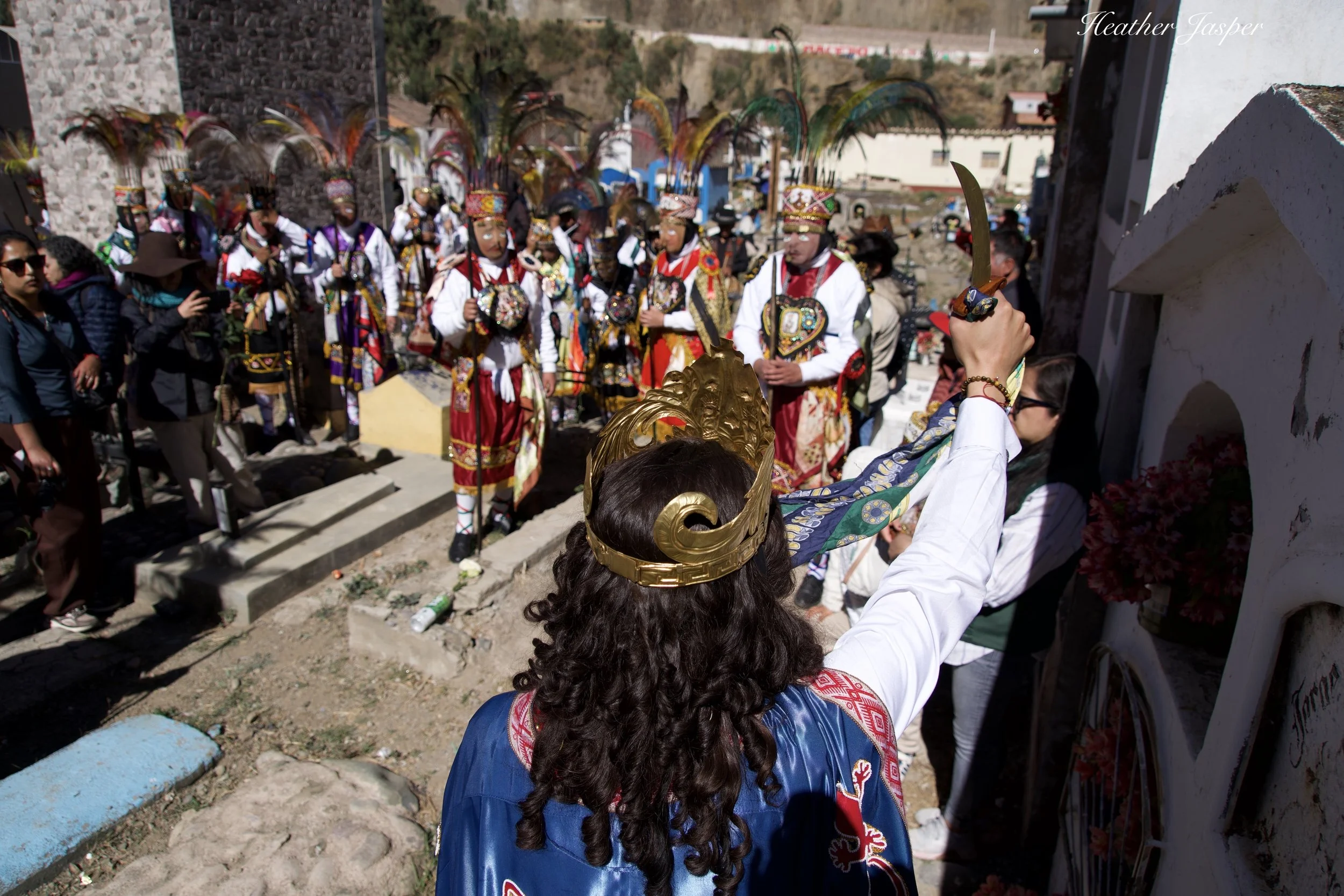
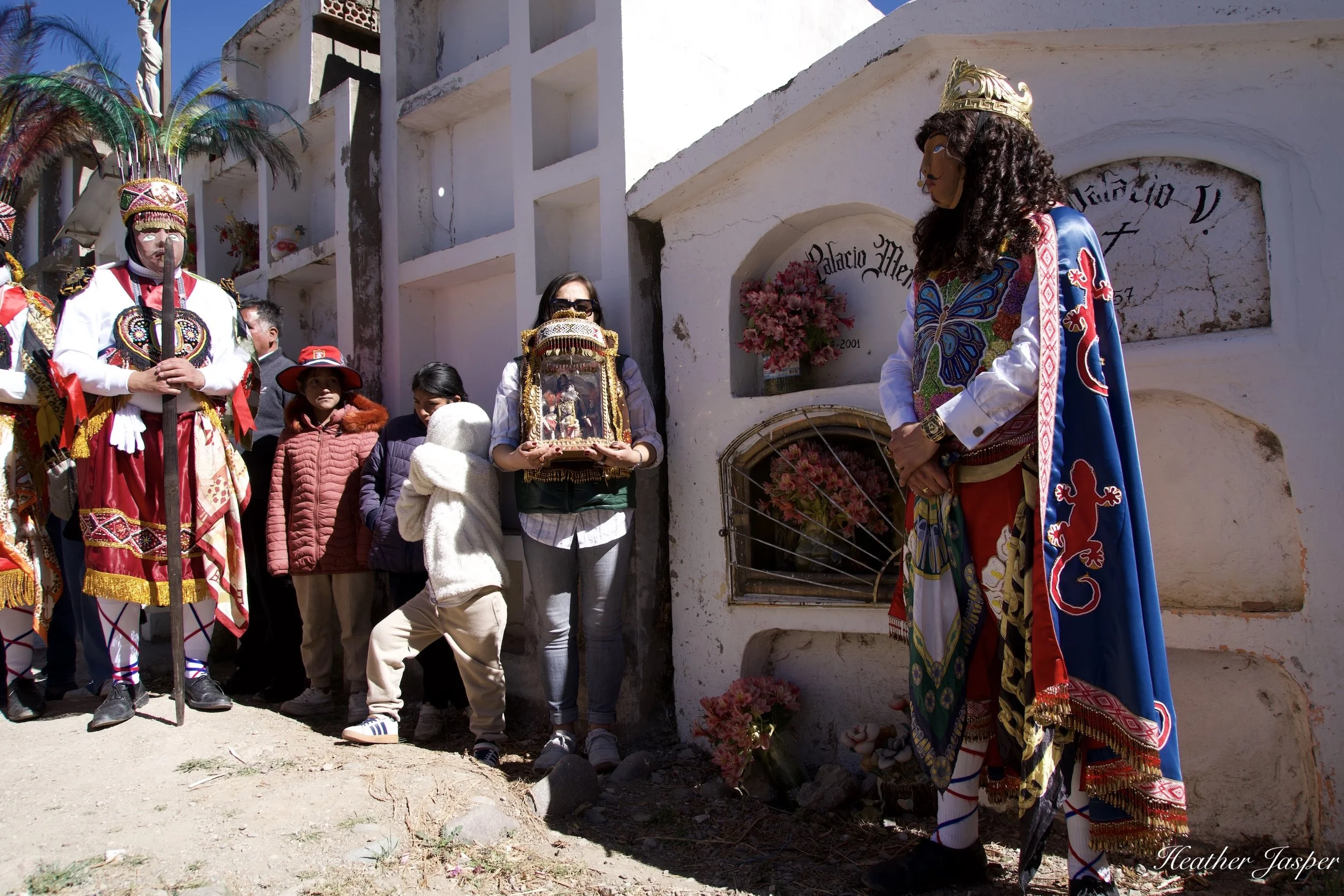
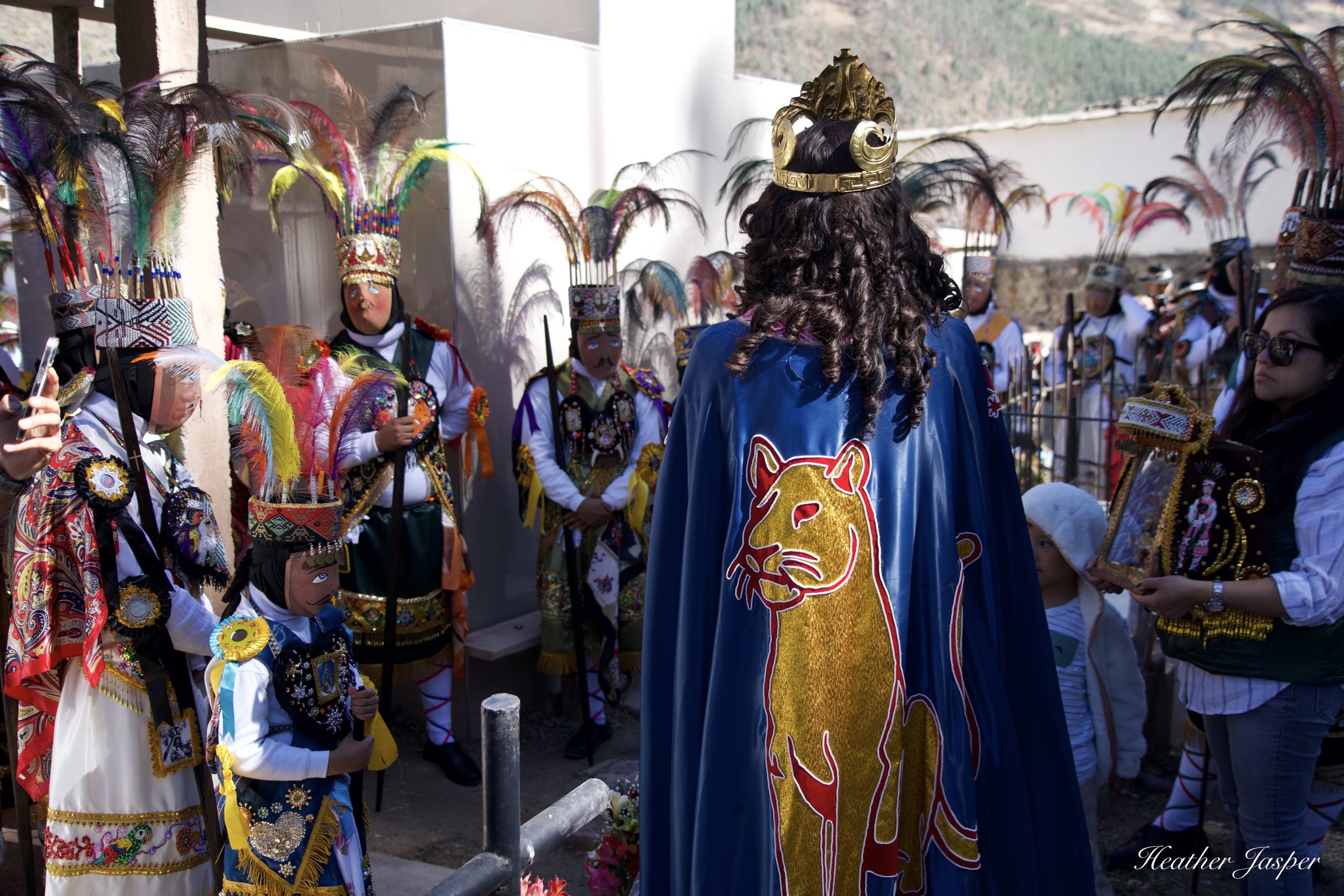
Families wait for the danza’s annual visit
It’s touching to walk through the ceremony and see all nineteen danzas visiting with families of former dancers, kneeling at their graves, singing to them and, space permitting, dancing for them. It’s a time for older members of each danza to tell younger members, or new members, who each person was. They share stories and memories, jokes and laughter, tears and hugs.
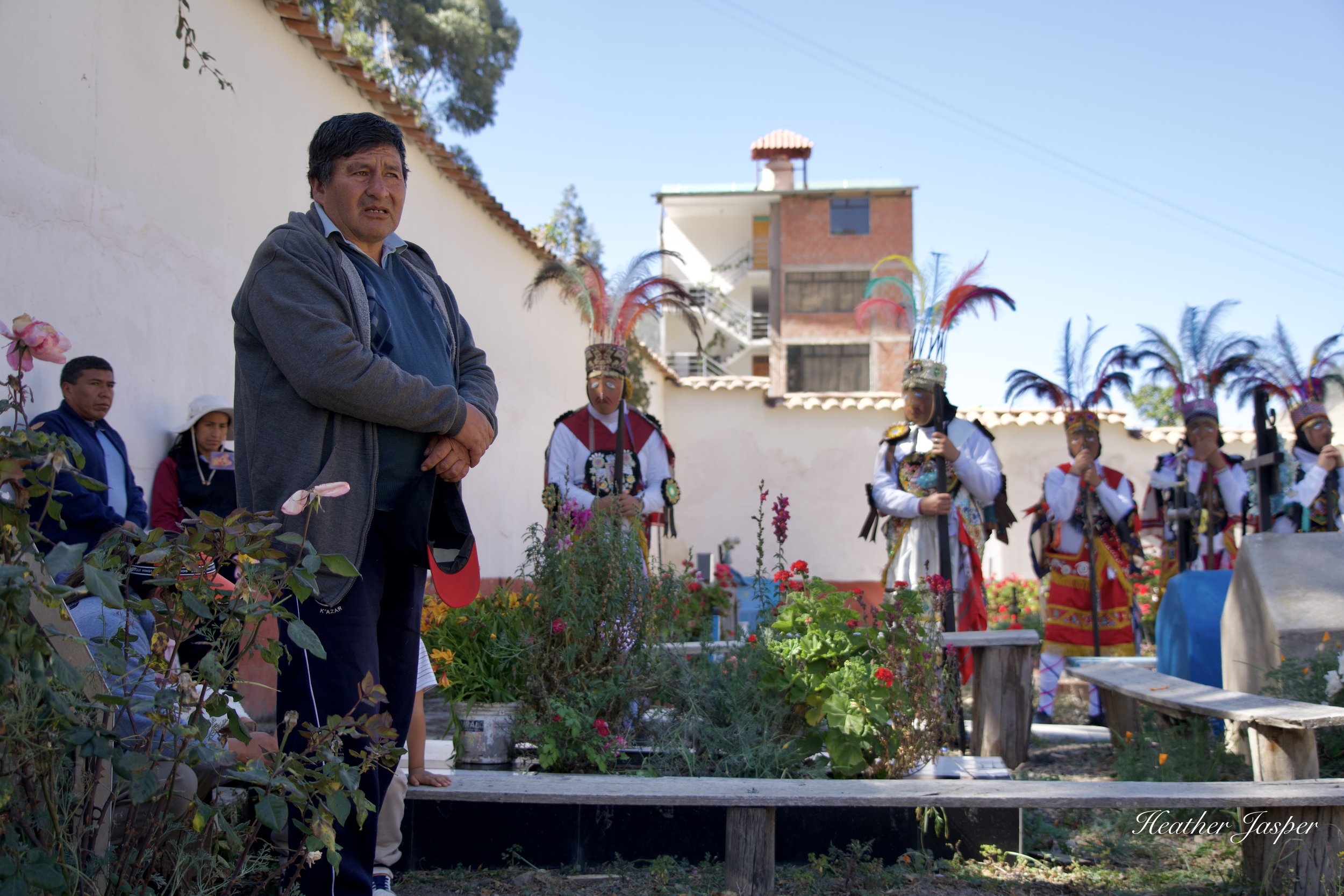
Former King Feliciano Flores tells the gathered Ch’unchus about one of their fallen comrades.
Family members thank the danza for visiting and talk about how important the danza was to their loved one. Often, they remind the danza of the year they were carguyoc or other ways in which they keep their ties to the danza.
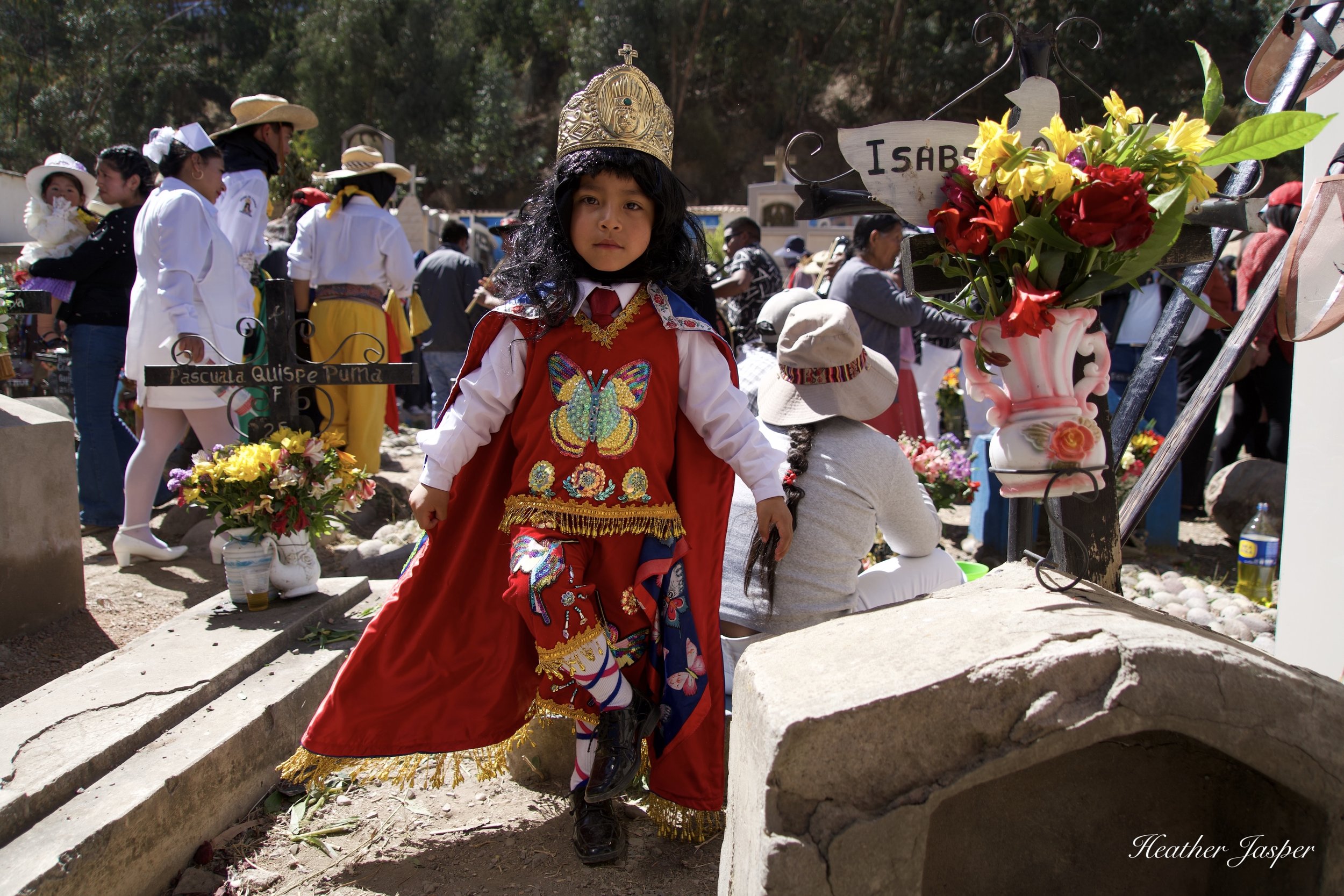
When the speeches are over, the children, called mascotas (pets), get to run around a bit.
The Ch’unchu hold baptisms and punishments.
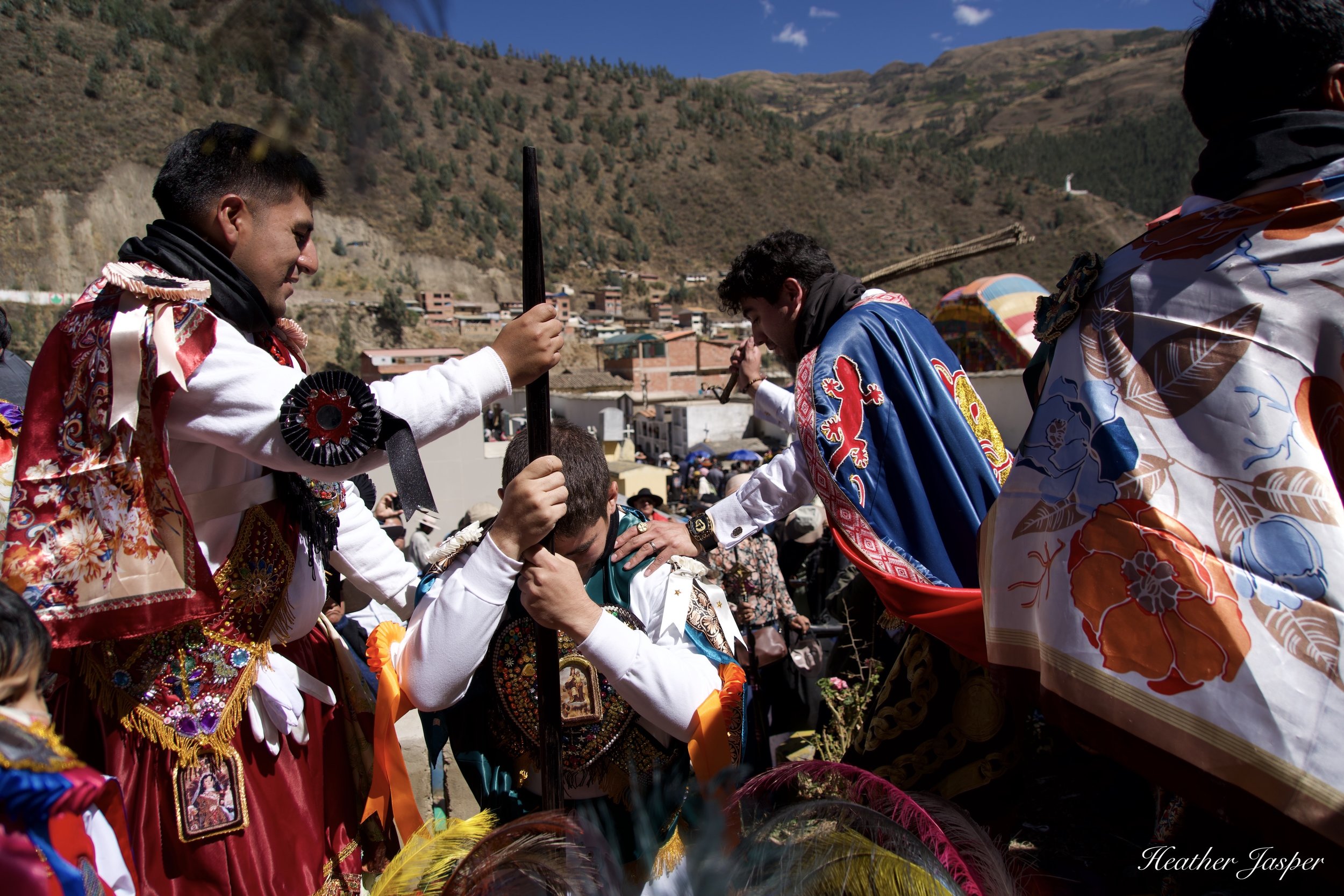
Most danzas leave it at the traditions I outlined above, but the Ch’unchus have another set of rituals that take place in the cemetery: baptisms and punishments. These are not religious baptisms, but initiation rites for new Ch’unchus. Of all the prerequisites, the biggest hurdle all Ch’unchus have to complete is the Qoyllorit’i pilgrimage. (I went to Qoyllorit’i in 2023, but it was so overwhelming I haven’t blogged it yet). I’m hoping to go to Qoyllorit’i in 2027 with the Ch’unchus, so watch for that experience at the end of May next year.
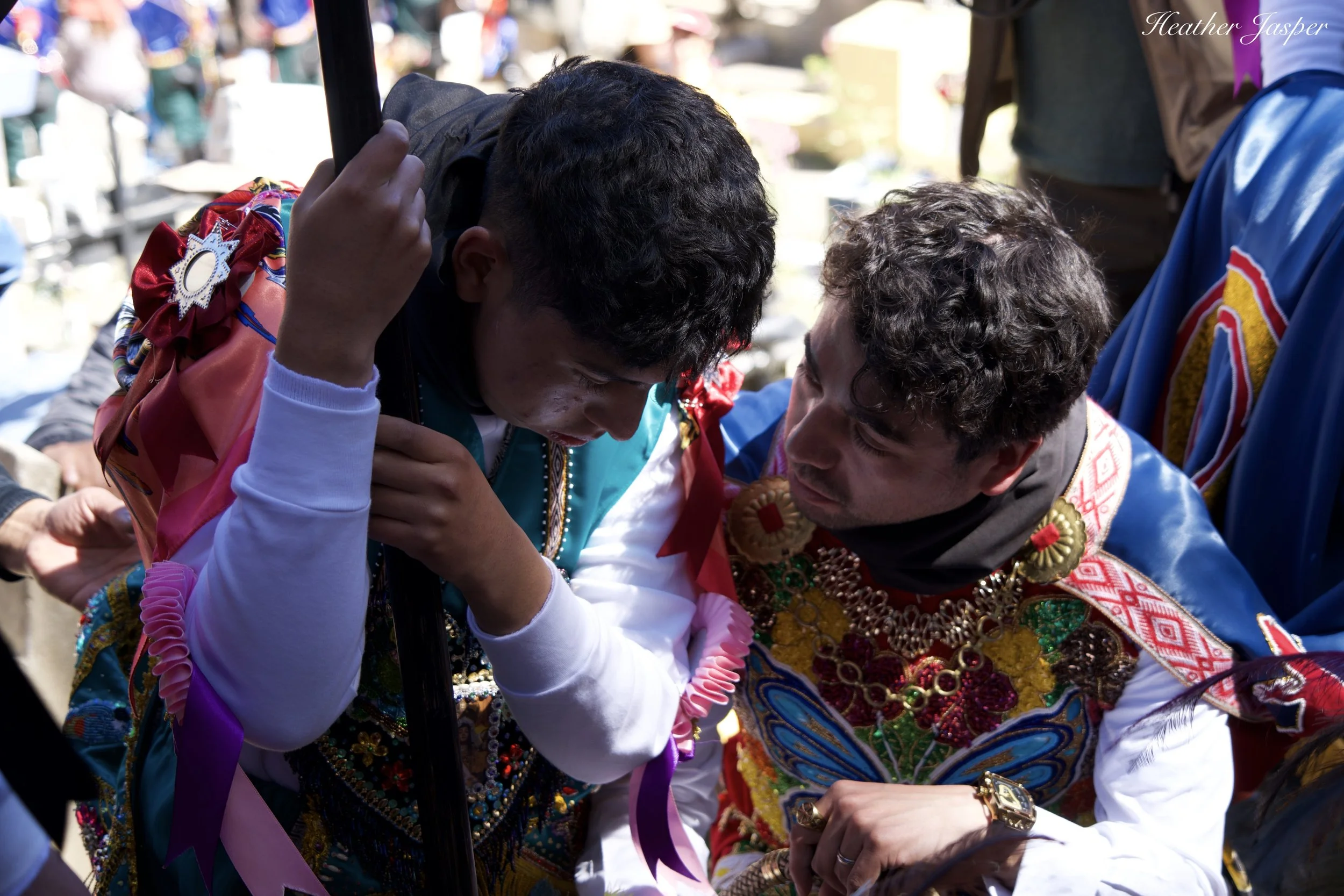
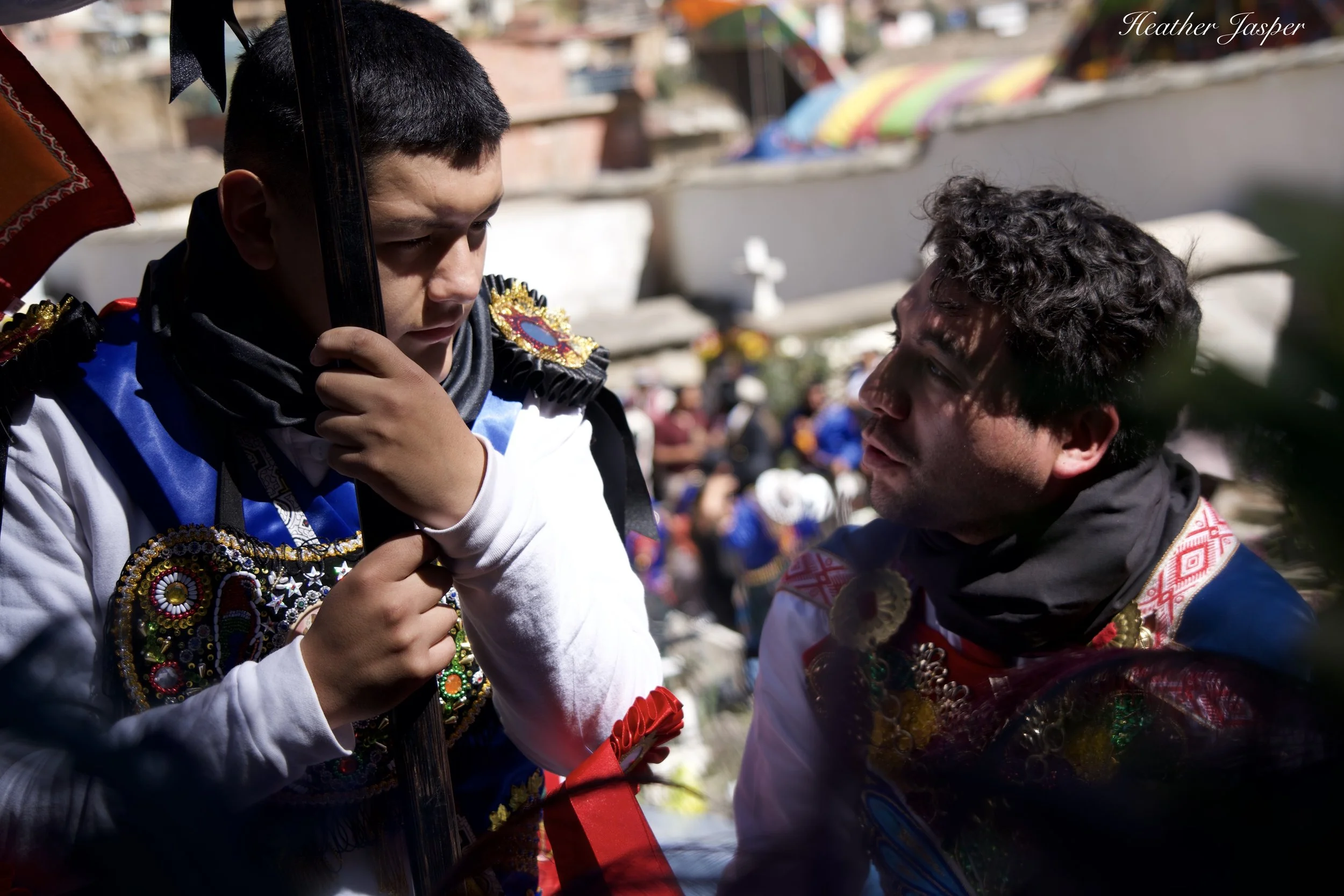
A Ch’unchu baptism requires a whip.
As barbaric as it sounds, being baptized as a new Ch’unchu involves a beating. Remember, these dancers represent savages from the jungle, and they take their character very seriously. First, the King kneels beside the new Ch’unchu and they bow their heads together for a private conversation and when the King stands back up, he announces the new name of the one being baptized. It’s usually associated with the jungle, like the name of an iconic jungle animal.
The King has a five-tailed rawhide whip and each new Ch’unchu gets three lashes on the backside. It looks like the King gives two soft hits and one hard smack, though the guys told me all three burn.
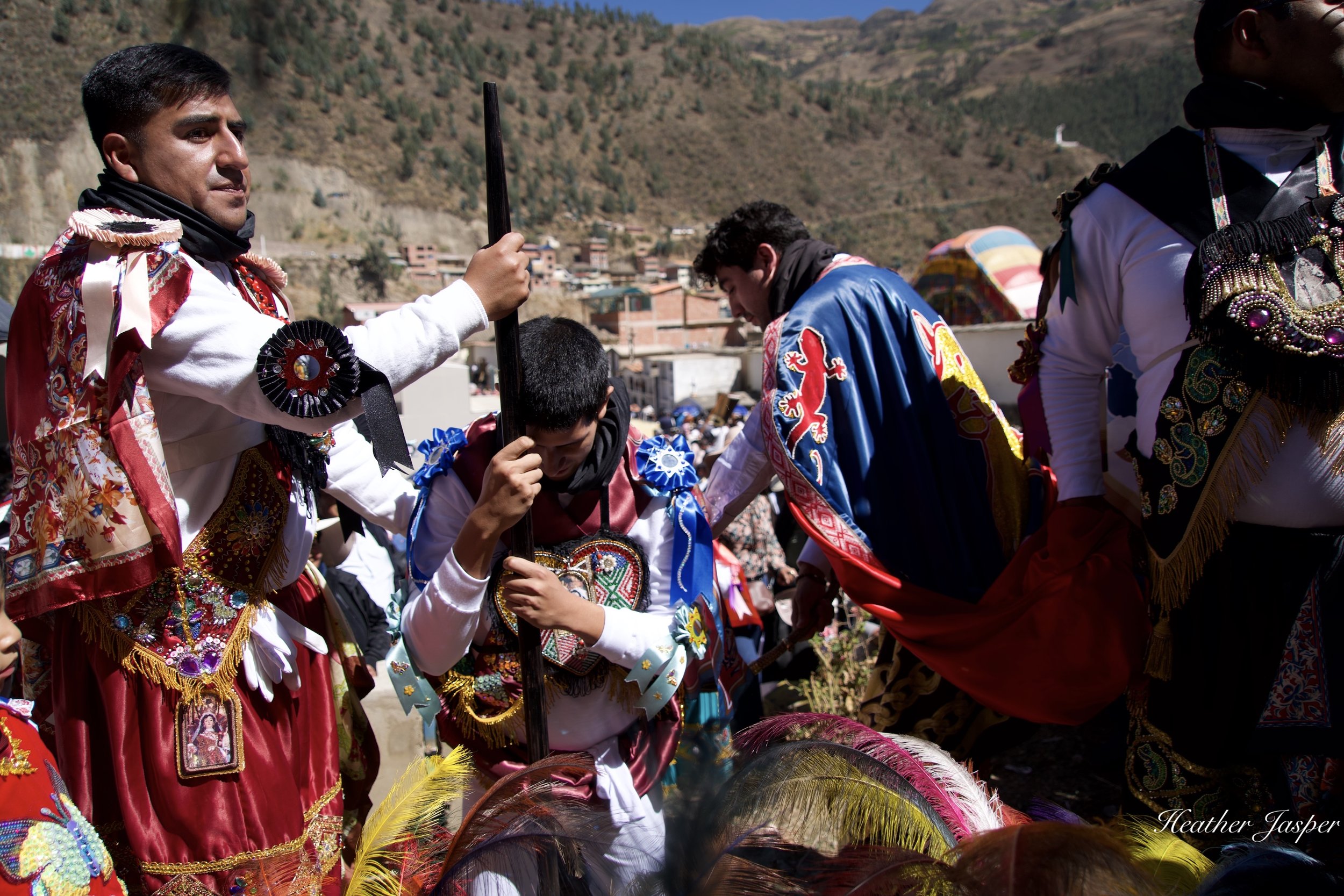
Ch’unchus get punished with the whip too.
It’s a big task keeping Ch’unchus in line and if they don’t follow directions there are two main ways of punishment. One is for one of the King’s two captains to tie a knot in the Ch’unchu’s scarf and confiscate it. At mealtimes they have to pay 5 soles for each knot in order to get the scarf back – and they can’t dance without their scarf. The other punishment is to get hit with the whip, one to three lashes depending on how bad the infraction was. Ch’unchus who didn’t go to Qoyllorit’i, or who are in the doghouse for another reason, aren’t allowed to dance until they’re punished. After their lashes, they’re allowed to put on their traje and participate in the rest of the Festividad.
Before the procession, the Ch’unchus get into position on either side of the Virgin of Carmen.
The Virgin’s Procession
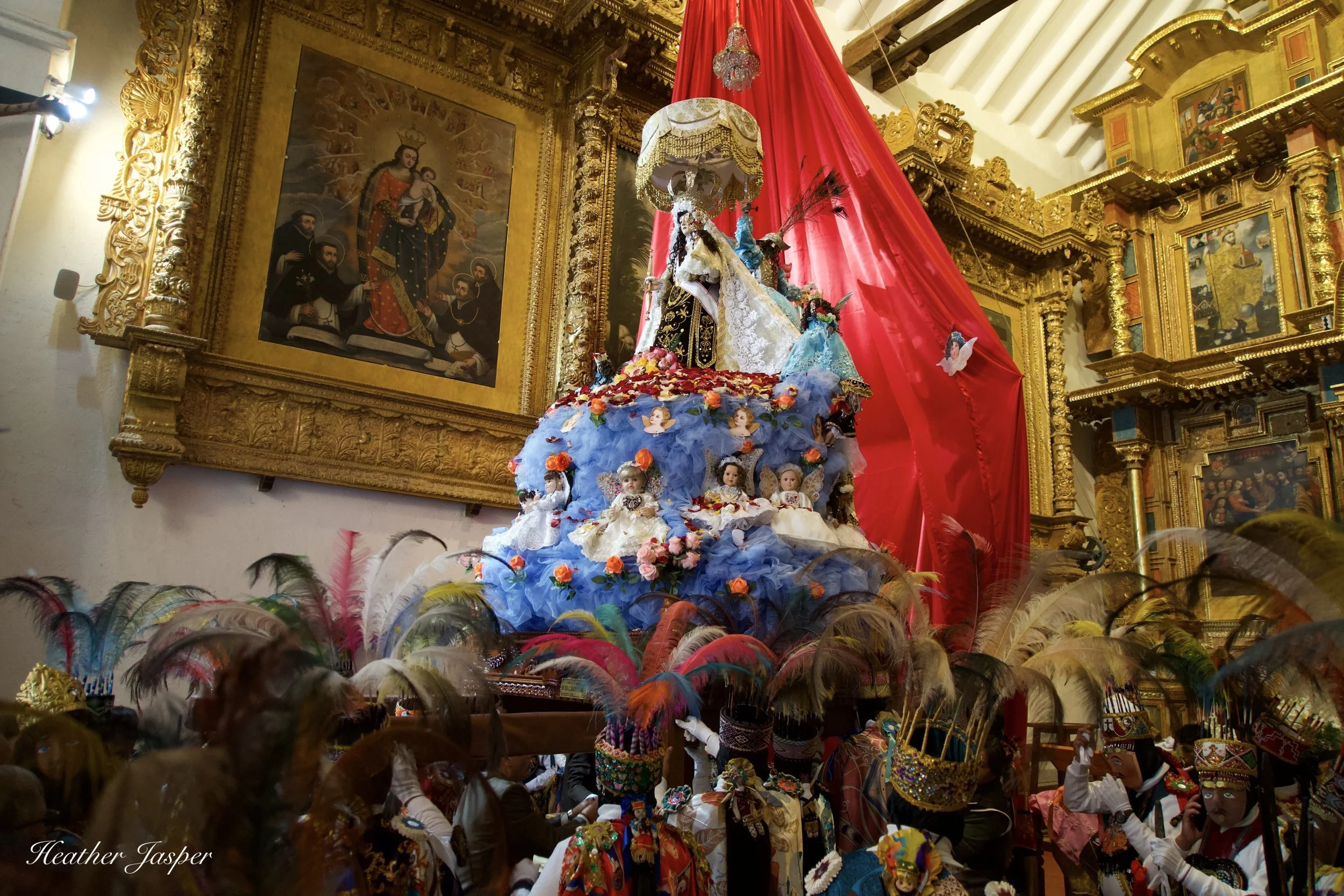
The danzas all go back to their cargo wasis for lunch and then the Ch’unchus had to hurry to the church for the Virgin’s next Procession. This is considered the most important event of the four days, so it’s essential that any Ch’unchus who were excluded from the first couple days now be ready to dance. We left the cargo wasi at 2:15 for the 5 minute walk to the church so we’d be inside and ready when the bearers picked her up and we all walked out of the church at 3:00. Rather than a long trip around town like the day before, this time she has a destination.
Rituals on the Bridge
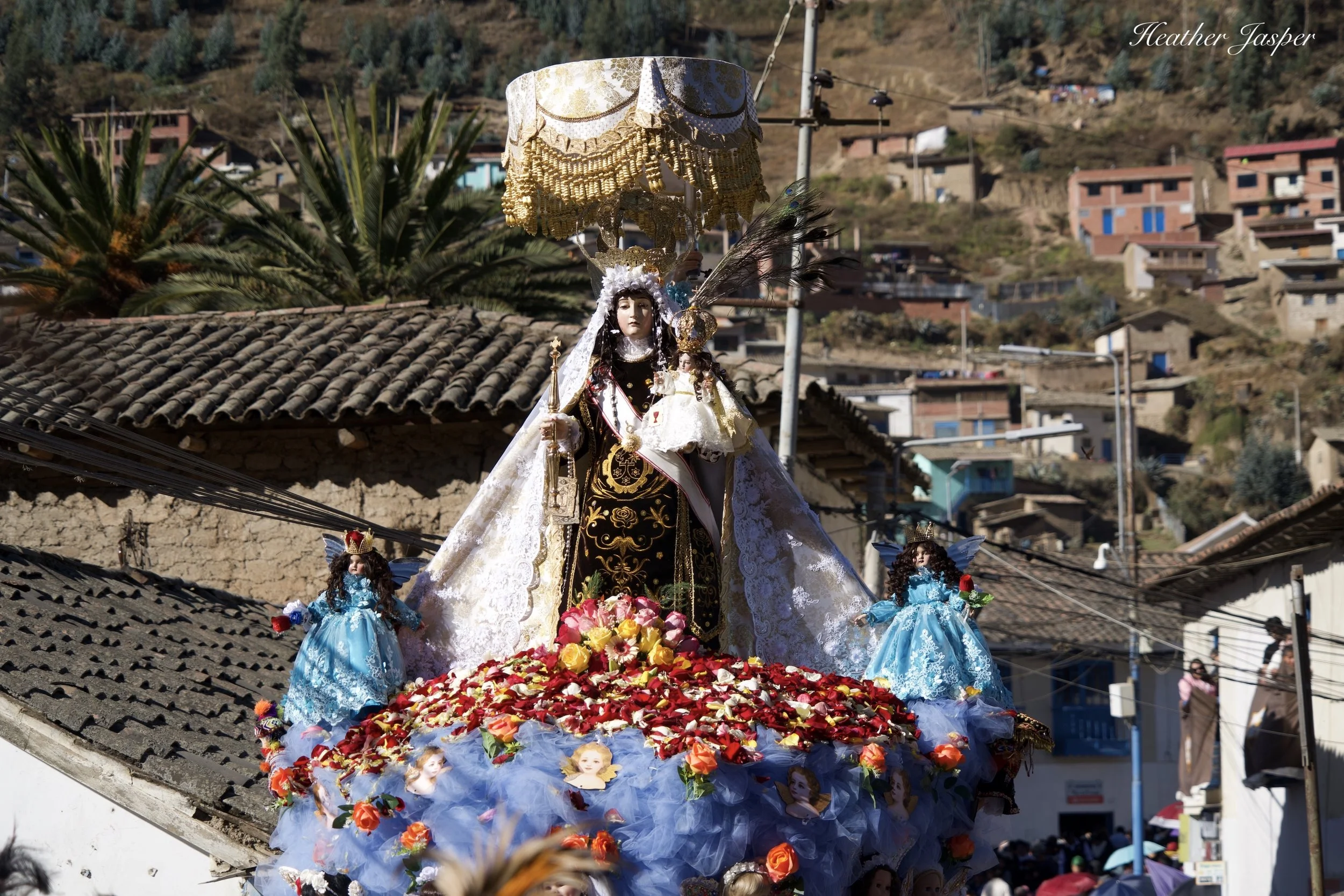
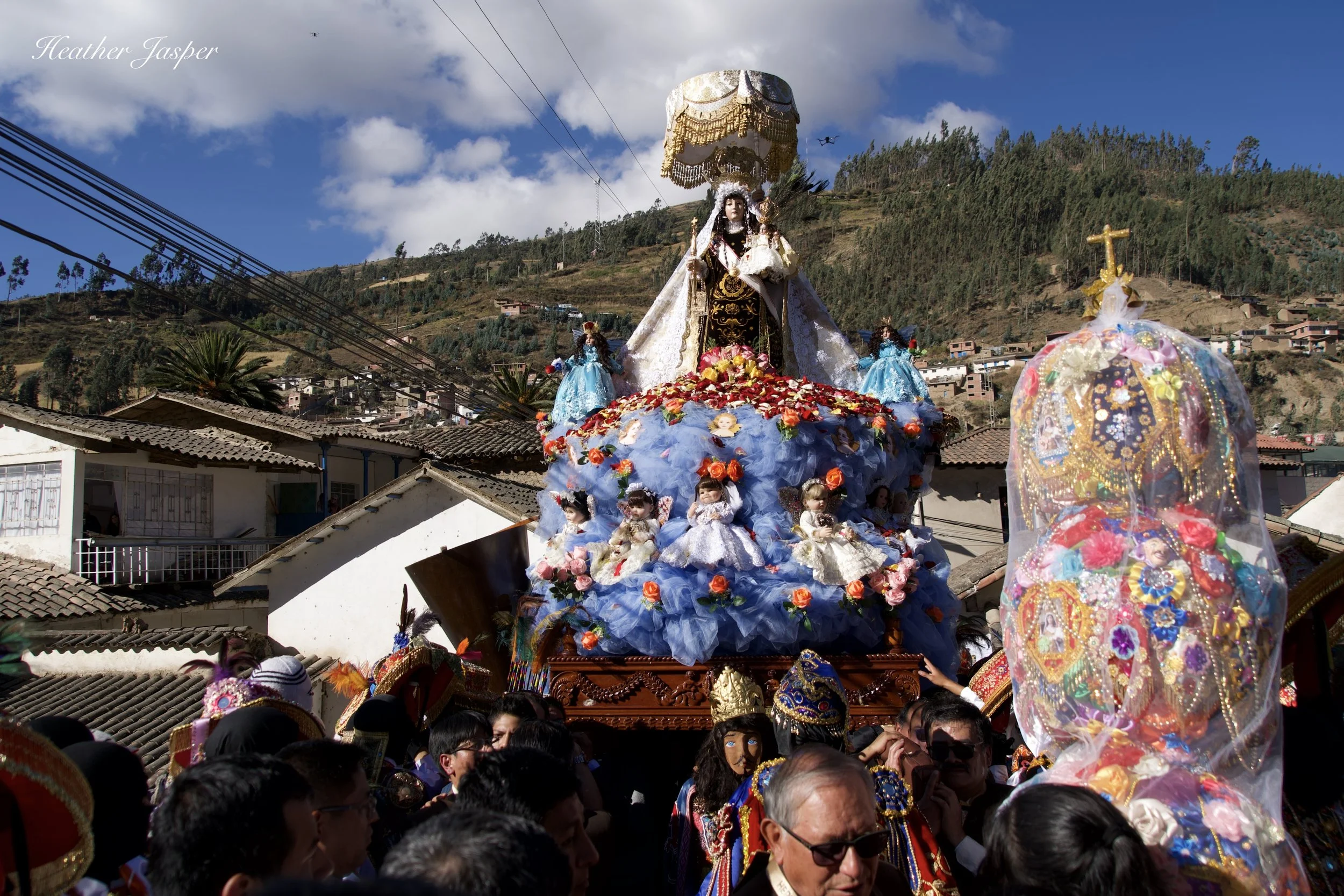
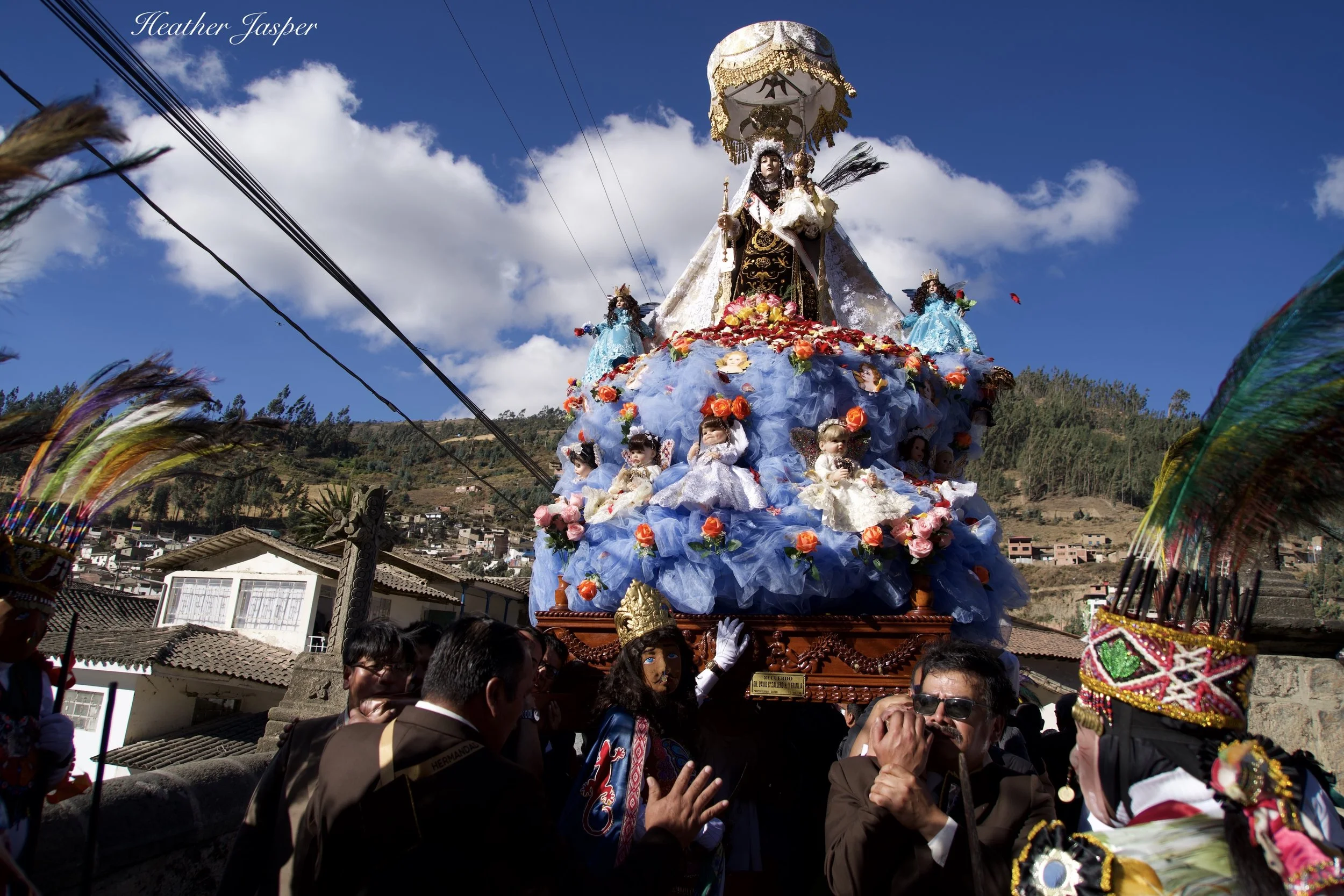
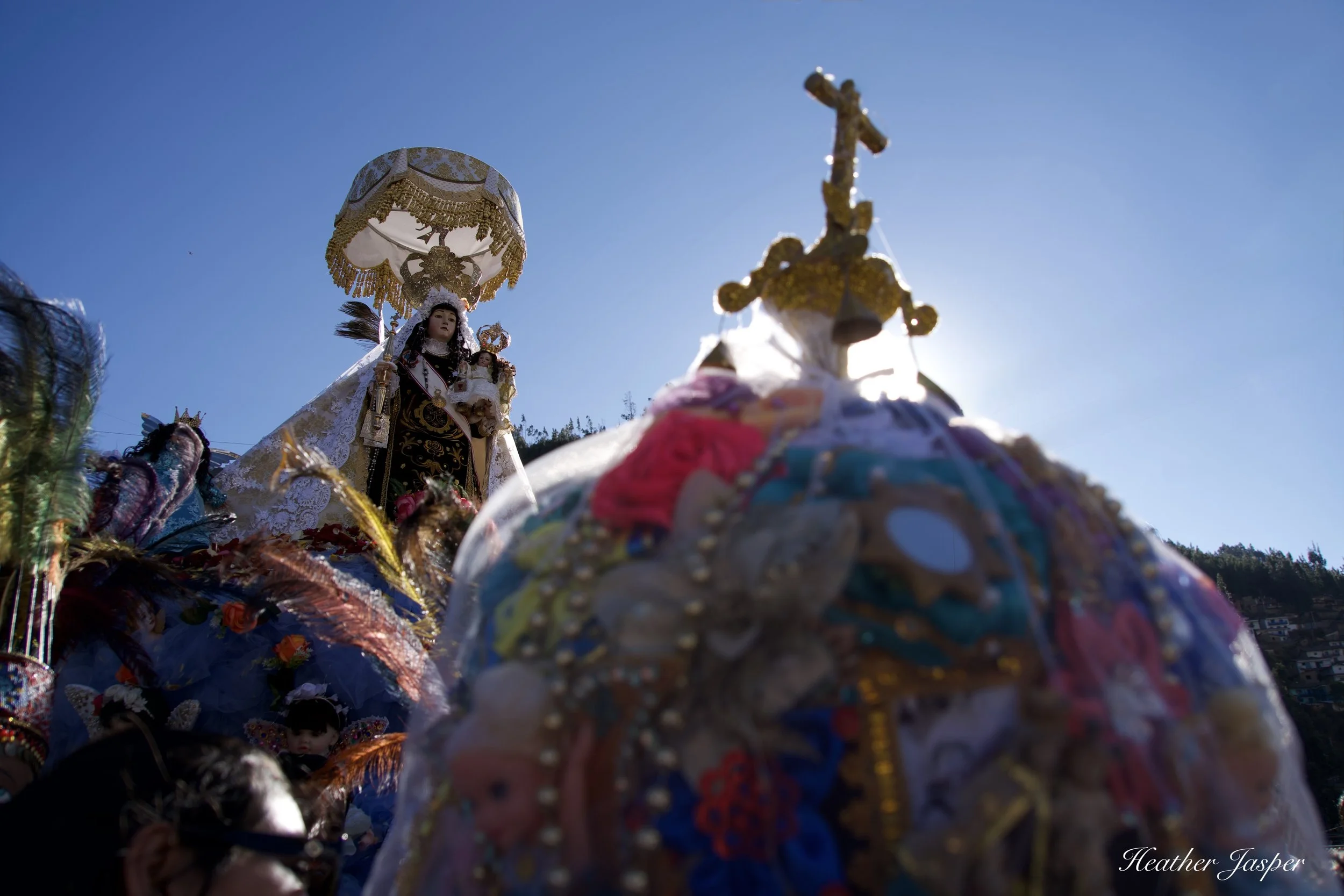
The Virgin of Carmen is carried from the church to the Carlos III Bridge, named for the Spanish King who commissioned it to be built in 1775. When she arrives, the Qhapaq Qolla sing to her, followed by the Qhapaq Negro. She’s on the bridge for about half an hour and it’s a tight squeeze to get everybody on there. It’s a narrow stone bridge, built to accommodate people, horses and llamas. Since the advent of cars another bridge has been built just downstream because cars are not allowed on the ancient bridge.
Bowing to the cardinal directions
Just before sunset, the Virgin of Carmen turns to the cardinal directions and bows three times in each direction. That means the bearers, who have been carrying her for over an hour already, have to time their own bow, letting her tip forward without falling.
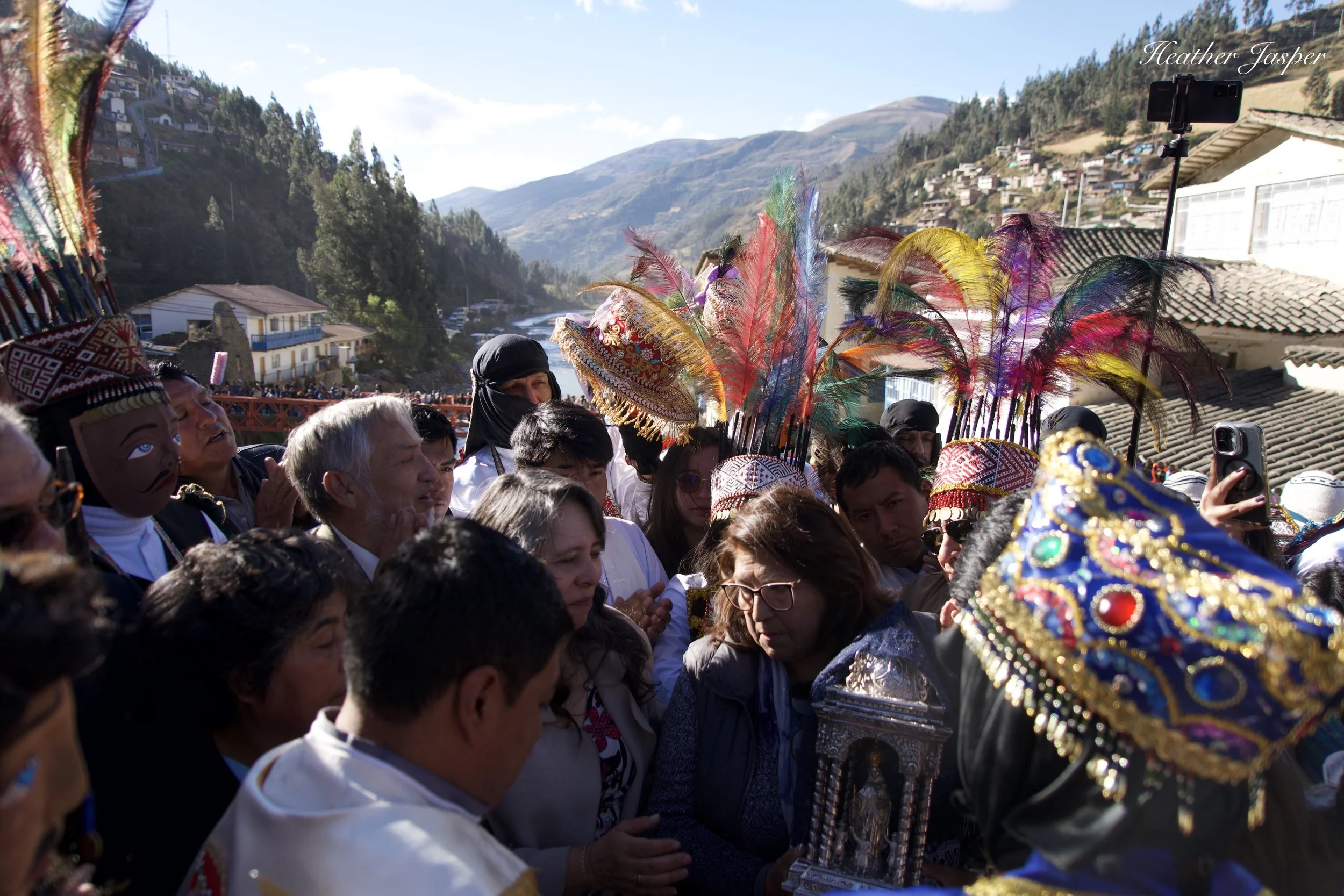
Passing on the Demanda
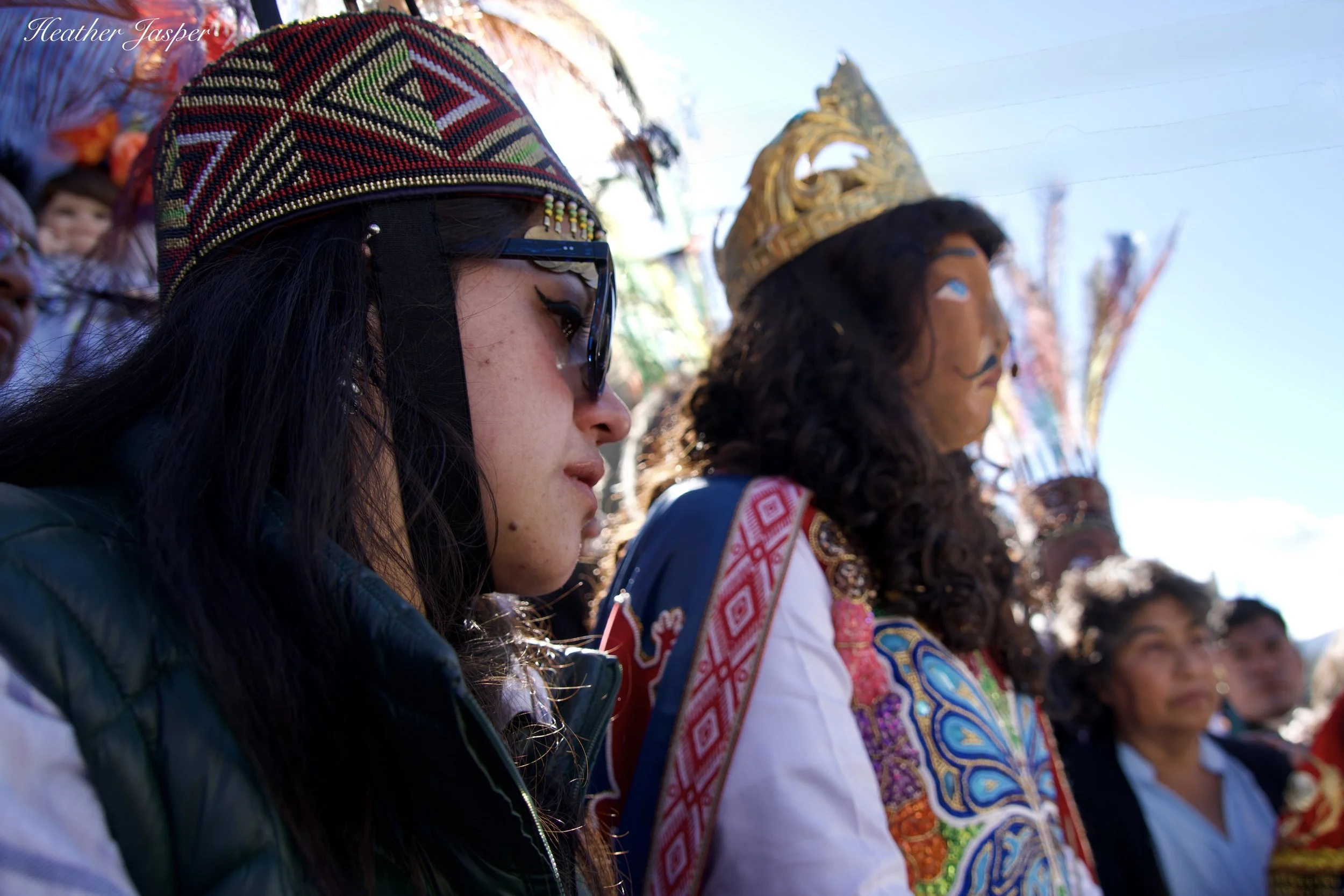
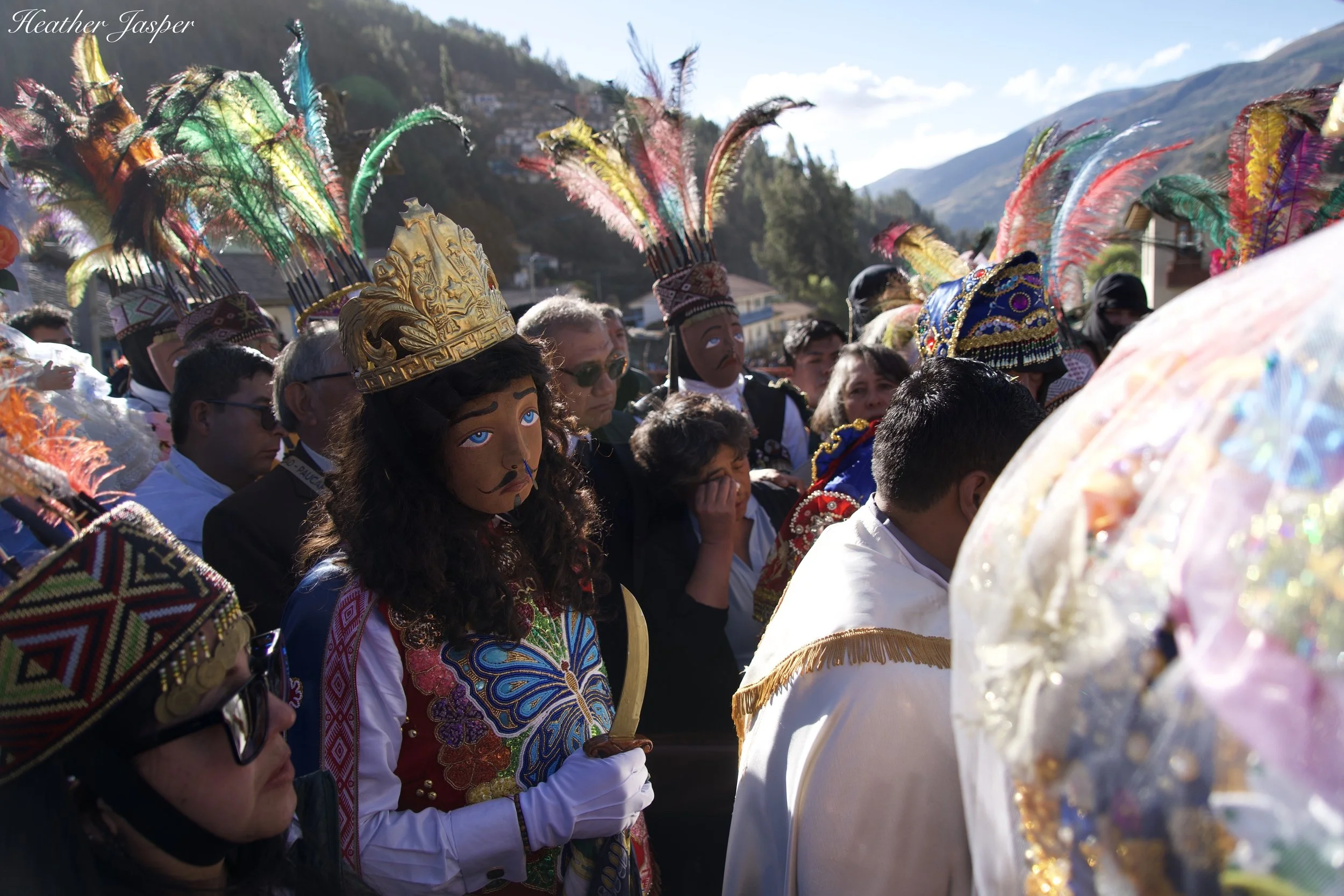
The last part of the tradition is for the current carguyoc to pass the Demanda to the next year’s carguyoc. For the cargo mayor, the Demanda is a colorful stack of three balls, protected in white netting. The carguyoc mayor passes it to the King, who ensures that the incoming carguyoc is trustworthy. If there were no incoming carguyoc or if the King didn’t trust the person presented to him, The Ch’unchus would care for the Demanda until a worthy carguyoc were found.
After the new cargo mayor is carrying their Demanda, the Qhapaq Negro and Qhapaq Ch’unchu carguyocs pass their Demandas to the incoming carguyocs. This is a big moment and I’ve seen most outgoing carguyocs cry, probably in both sadness to part with the Demanda and in relief because it is a heavy burden they carry.
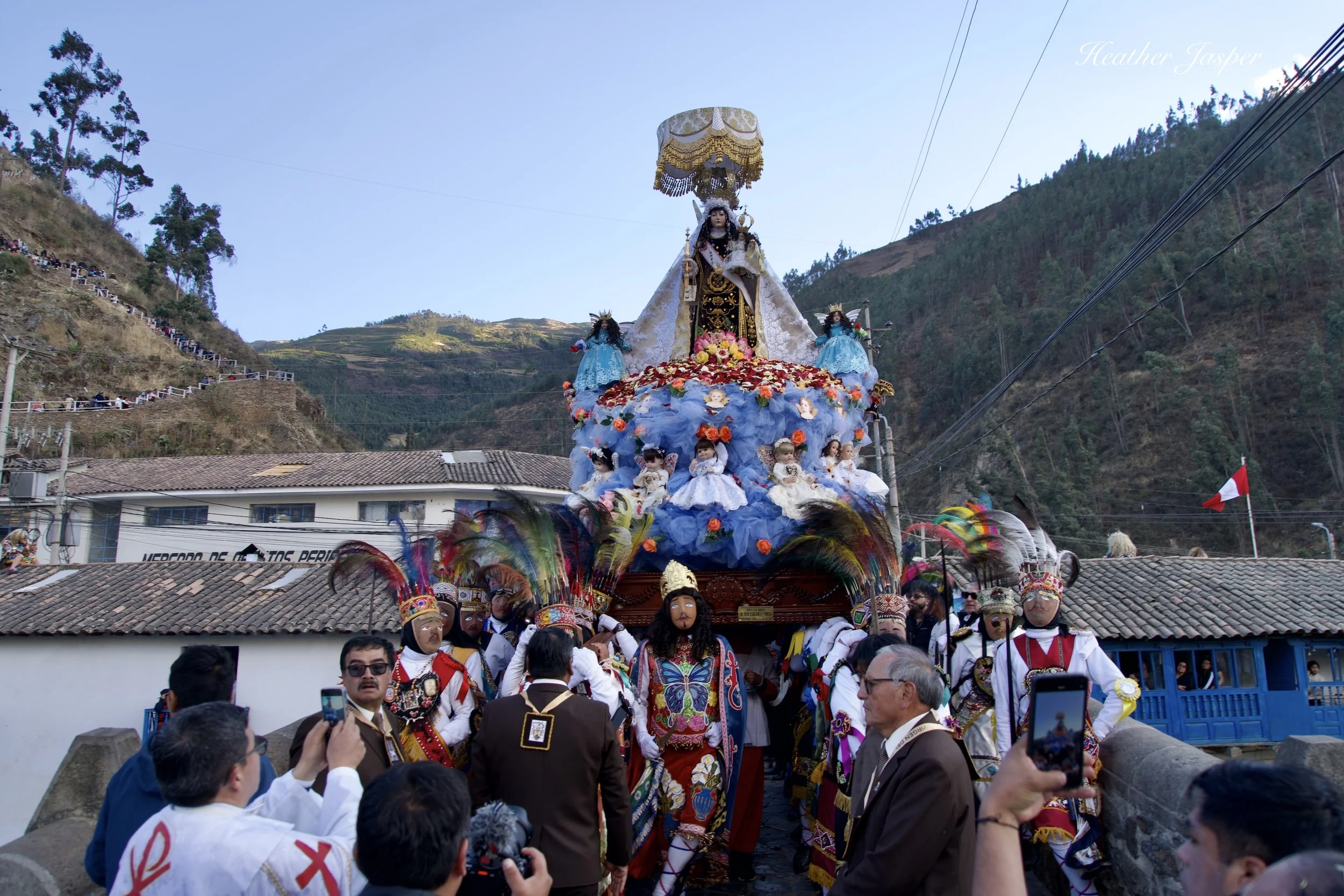
Facing back towards town, the Virgin of Carmen is carried off the bridge by the Qhapaq Ch’unchus.
There’s no room to move on the bridge.
Due to the crush of bearers, Ch’unchus, Qollas and Negros, only the carguyoc are allowed on the bridge by the Maq’tas. There are about 150 Maq’tas who keep order in Paucartambo, opening paths through the crowd for passing danzas and keeping people out of the way. Last year and this year I managed to escape the Maq’tas and sneak up onto the bridge. Last year, the Negros protected me between their two rows, but the Ch’unchus couldn’t protect me because they’re too busy protecting the Virgin.
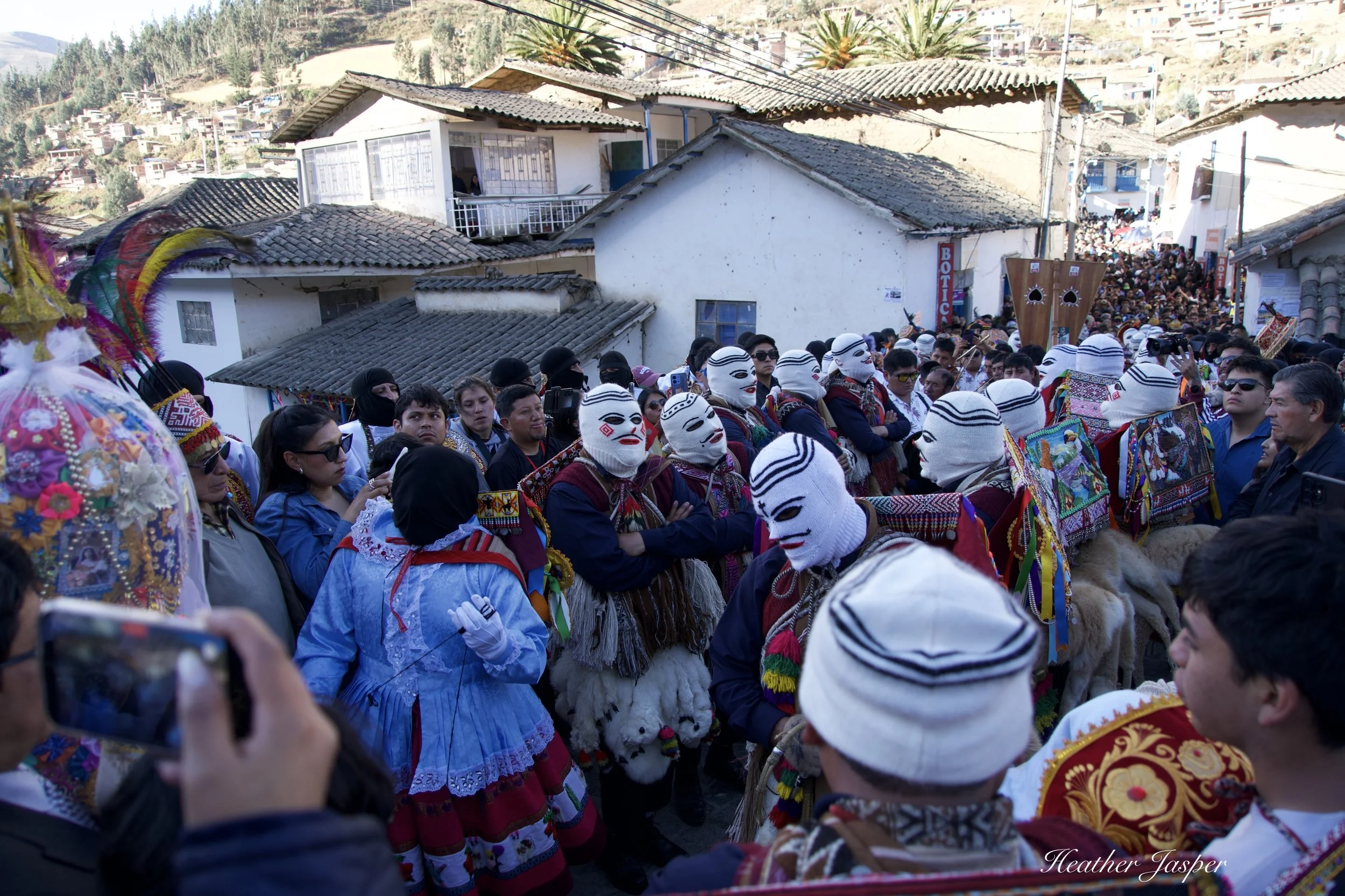
Dancing on the bridge, all the Qollas could see me. There’s nowhere to hide on the bridge.
Wearing the chuk’u
In order to get me past the Maq’tas, the King told me to wear a chuk’u, the feathered headdress that the Ch’unchus wear. This is actually a really big deal and got me in a bit of trouble with the Negros. Only dancers and carguyocs wear the headdress of the danza they represent. For a non-dancer, like me, to put on a chuk’u is the sign that I am accepting the cargo and will be carguyoc. In 2023 I didn’t know that and almost put on a Saqra wig with the deer horns but was quickly warned not to because it meant I would pay for everything the next year.
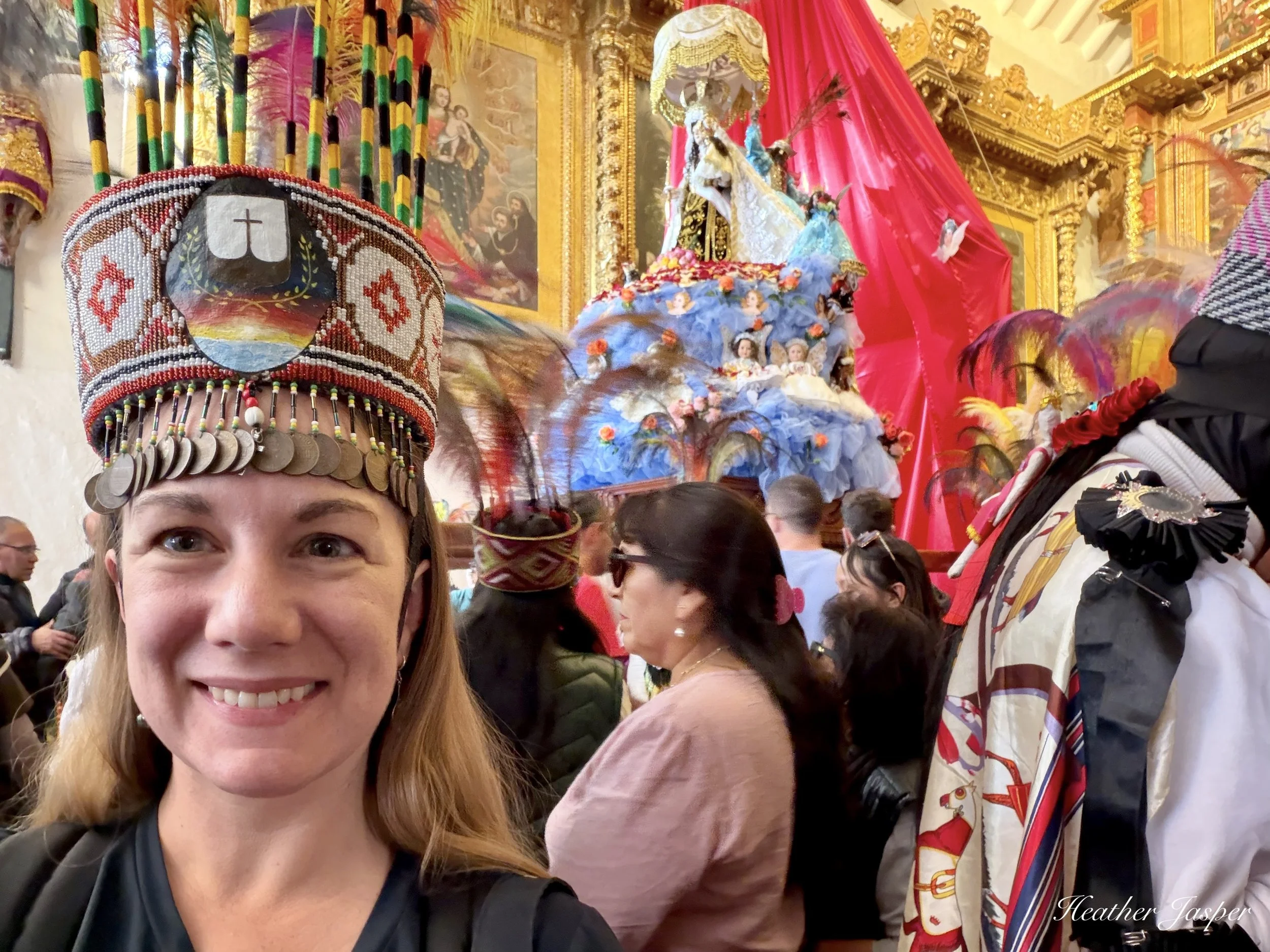
Back at the church after the procession, I dared to take a selfie with the Virgin while wearing the chuk’u.
So, there I was on the bridge, wearing a Ch’unchu chuk’u while the Qollas and the Negros danced in front of me. Wearing sunglasses didn’t fool any of them. The next few days, in person and by text message, lots of people asked when I was going to be carguyoc for the Ch’unchus. I didn’t know what to tell them because I hope someday to be carguyoc for Qoyllurit’i, but not for the Virgin of Carmen.
Finally, the Virgin got to go back to the church. Like the day before, the Saqras lean out to threaten her from rooftops, balconies and windows, trying to hook her with their garabatos. Again, they fail and are felled by her power until they all lay “dead” on the steep roofs and precarious balconies.
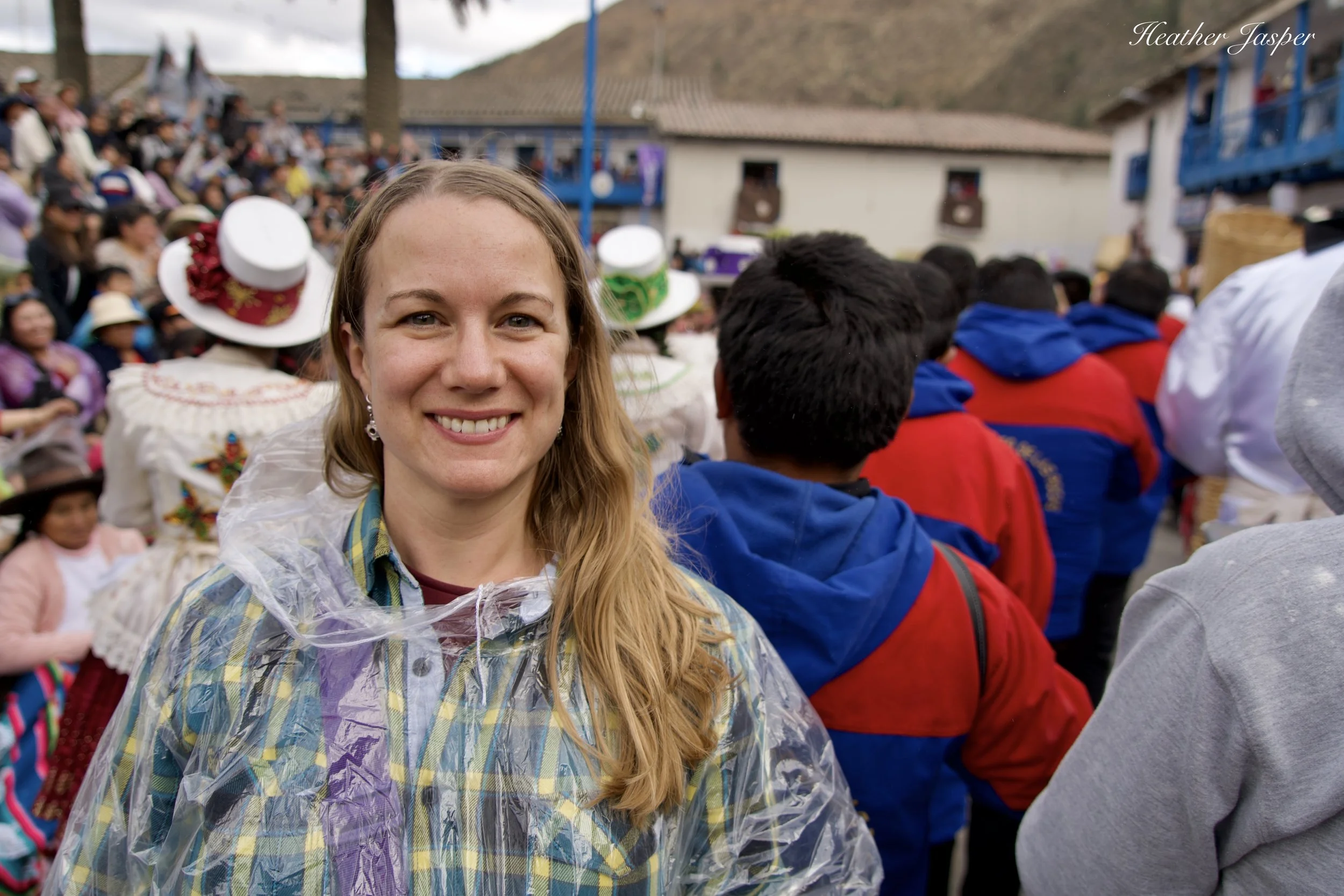
In 2023, I joined the crowd to watch the first part of the Guerrilla.
From the Procession to the Guerrilla.
Then the rest of the evening is swept up in the Guerrilla. It’s as loud and raucous as the Romería is sweet and thoughtful and the Procession is stately and reverent.
The Guerrilla is when the Qhapaq Qollas try again to steal the Virgin of Carmen.
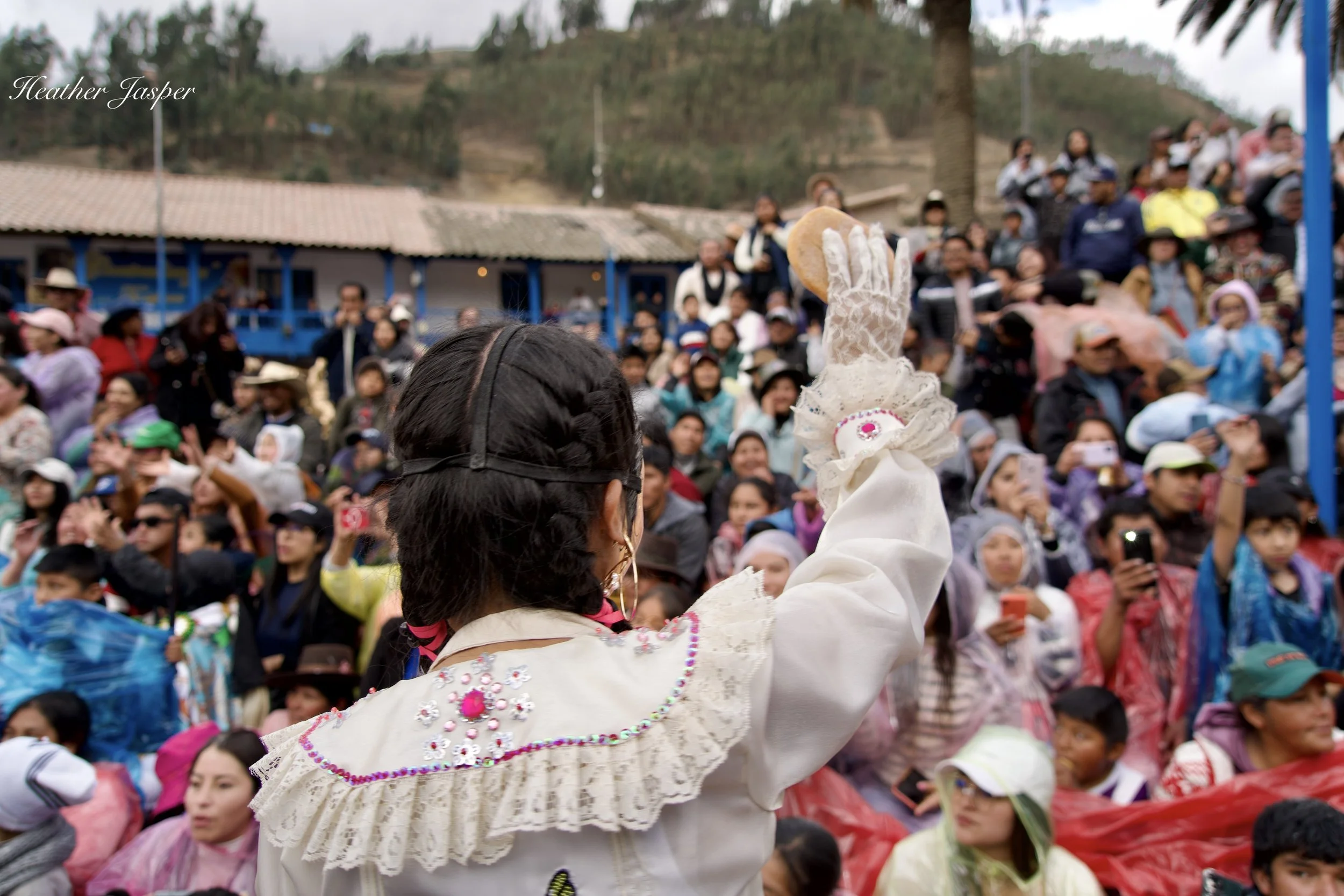
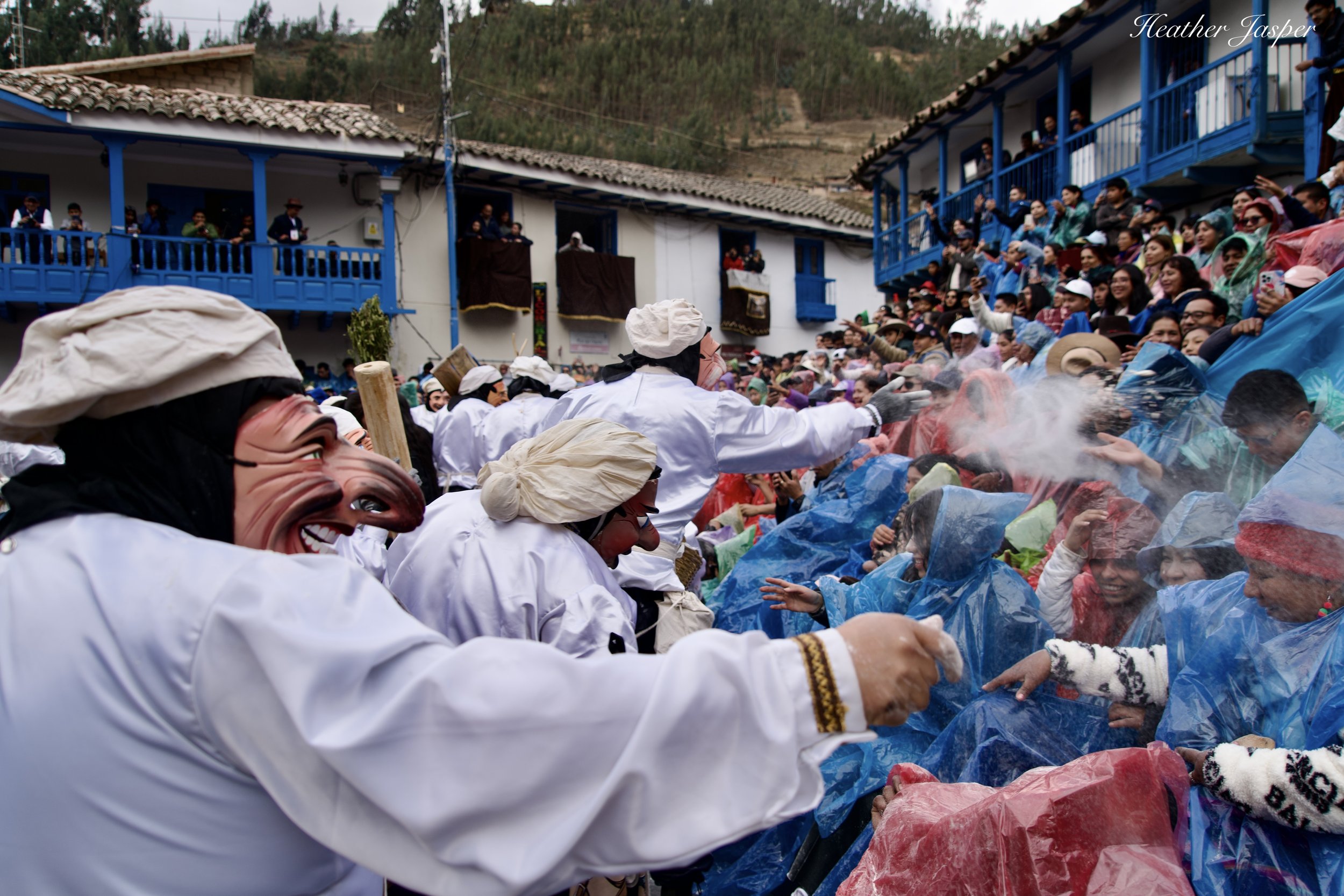
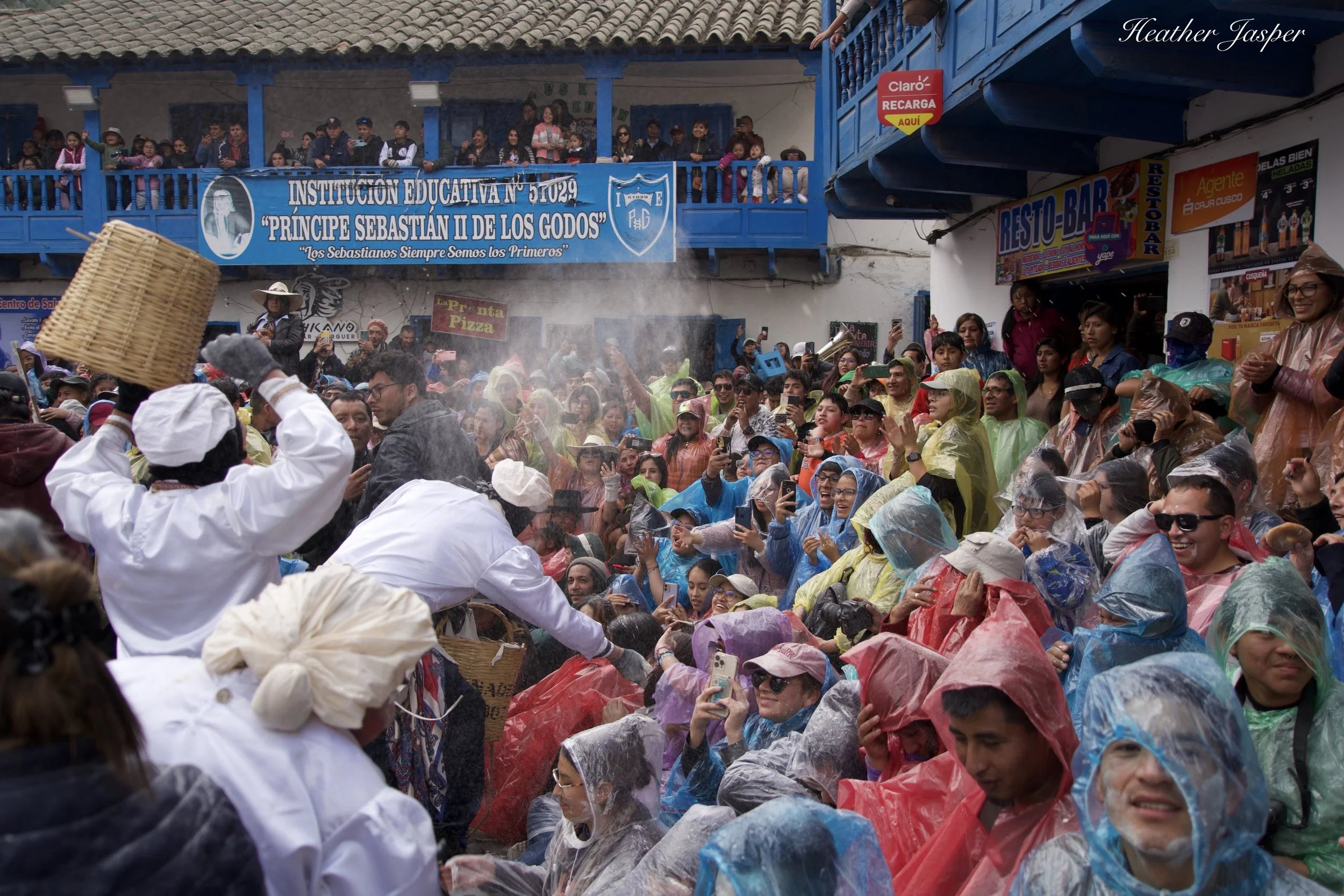
At first, it’s the danzas against the crowd.
The first part of the Guerrilla involves several danzas that I don’t know yet, so except for a bit in 2023, I haven’t seen much of the first half. Several danzas parade through the plaza, where the townspeople (and visitors) are all crowded in the middle and around the edges to watch the spectacle.
The Panaderos, bakers, come through with baskets of bread rolls, which people beg for. If you’re lucky, they’ll toss you bread. If you’re not, they’ll toss a handful of flour all over you. You can tell who was in the Guerrilla because they often have hair and clothes caked in flour. Flour is close to death for cameras, especially if your floury camera is next sprayed with beer.
Next come the Majeños, who represent the traders who used to ride horseback, bringing rum from the jungle, beer from the mountains and wine from the coast. Most people wear plastic ponchos to the Guerrilla because the Majeño will spray you with beer. In 2023 somebody also had pepper spray and even a tiny bit in the air made everybody covered in flour and beer cry for a good 10-15 minutes.
During this part of the Guerrilla in 2026, I was inside the town hall with the Saqras, who just came down from the roof, and the Ch’unchus waiting until it was their turn to take part in the Guerrilla. The streets are all crammed with spectators and after the procession it’s impossible to get back to the cargo wasi. It was a good opportunity for me to chat with Saqras I hadn’t seen for a year, so I was happy to be trapped.
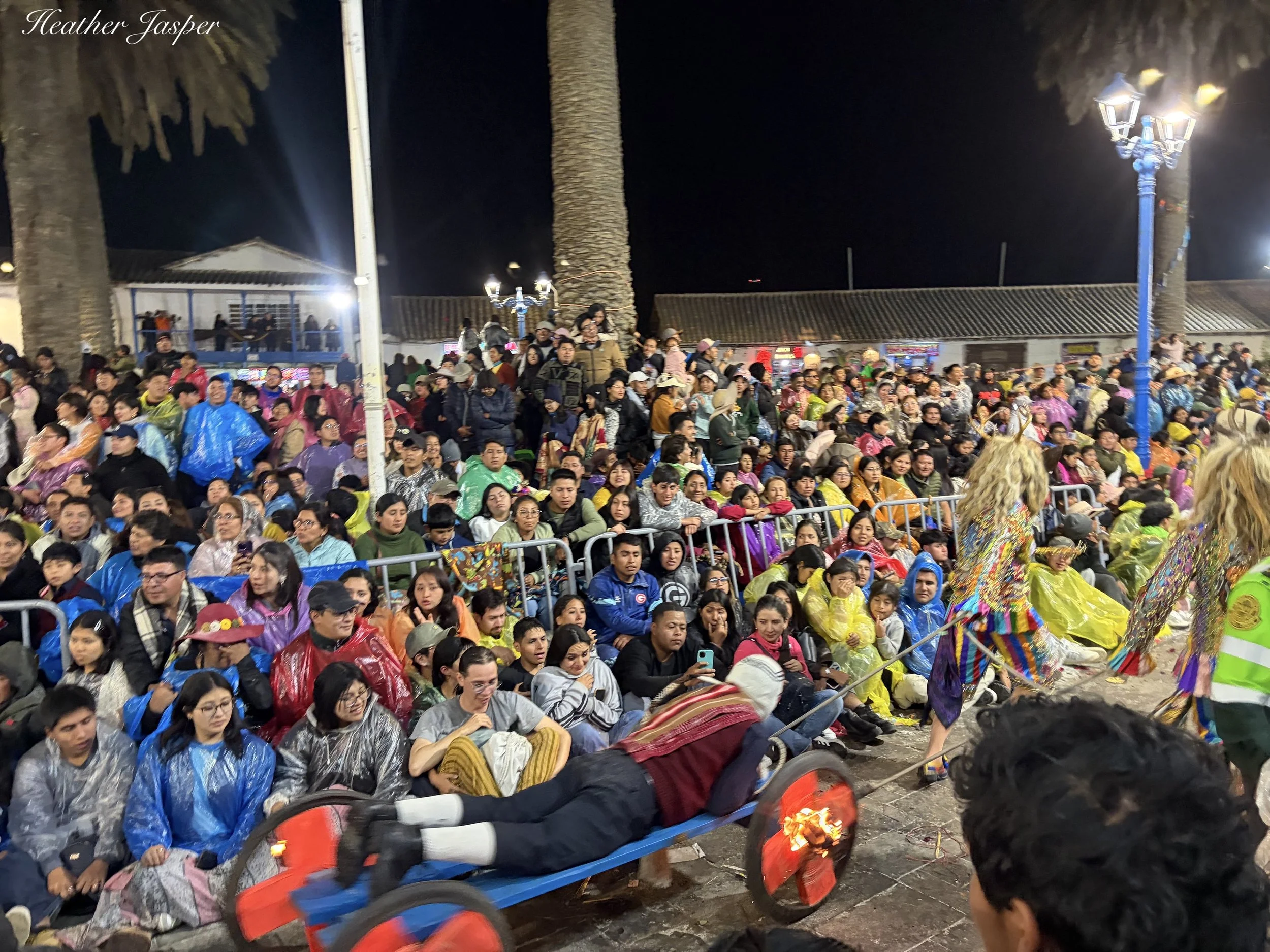
The Saqras run around the plaza picking up the “dead” Qollas to take them to hell.
Death to the Qollas
Finally, it was time for the Ch’unchus to kill all the Qollas, after which the Saqras load the “corpses” on a wooden cart and take them to hell. This is not just any wooden cart. The parts of the axels that sticks out past the wheels are coated with a flammable, sticky red substance. I know because after it was lit on fire, it came too close to me and the knees of my jeans were covered with what felt like sticky red wax. I’m just lucky the fire didn’t stick to me too. My knees were bruised from the impact and my jeans stained, but I didn’t catch fire. Flour and beer are not the worst that can get on you in the Guerrilla!
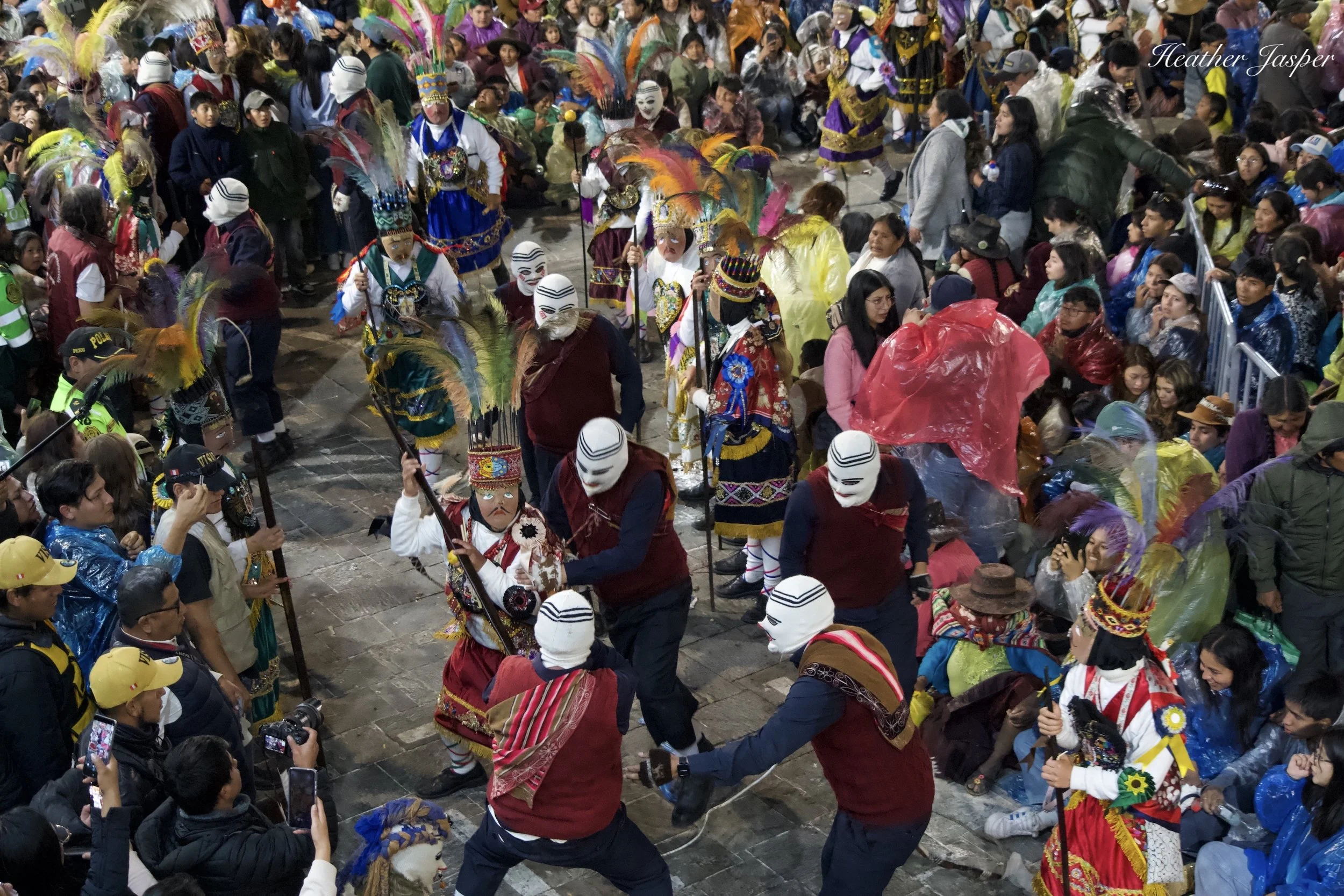
The Guerrilla is a battle to the death - though only the Qollas, in the white masks, die.
Symbols of Death
The Ch’unchus chase the Qollas armed with short sticks in their hands and oranges stuck on the tops of their antutas. The first time a Qolla is caught, the Ch’unchu that caught him puts a stick through the eye or mouth holes of the Qolla’s mask. When a Ch’unchu catches a Qolla that already has a stick through his eyes, he puts an orange in the Qolla’s mouth, like an apple in the mouth of a roast pig. The Qolla is supposed to lay down in the crowd or on the street, with the orange in his teeth, until the Saqras come to carry away his corpse.
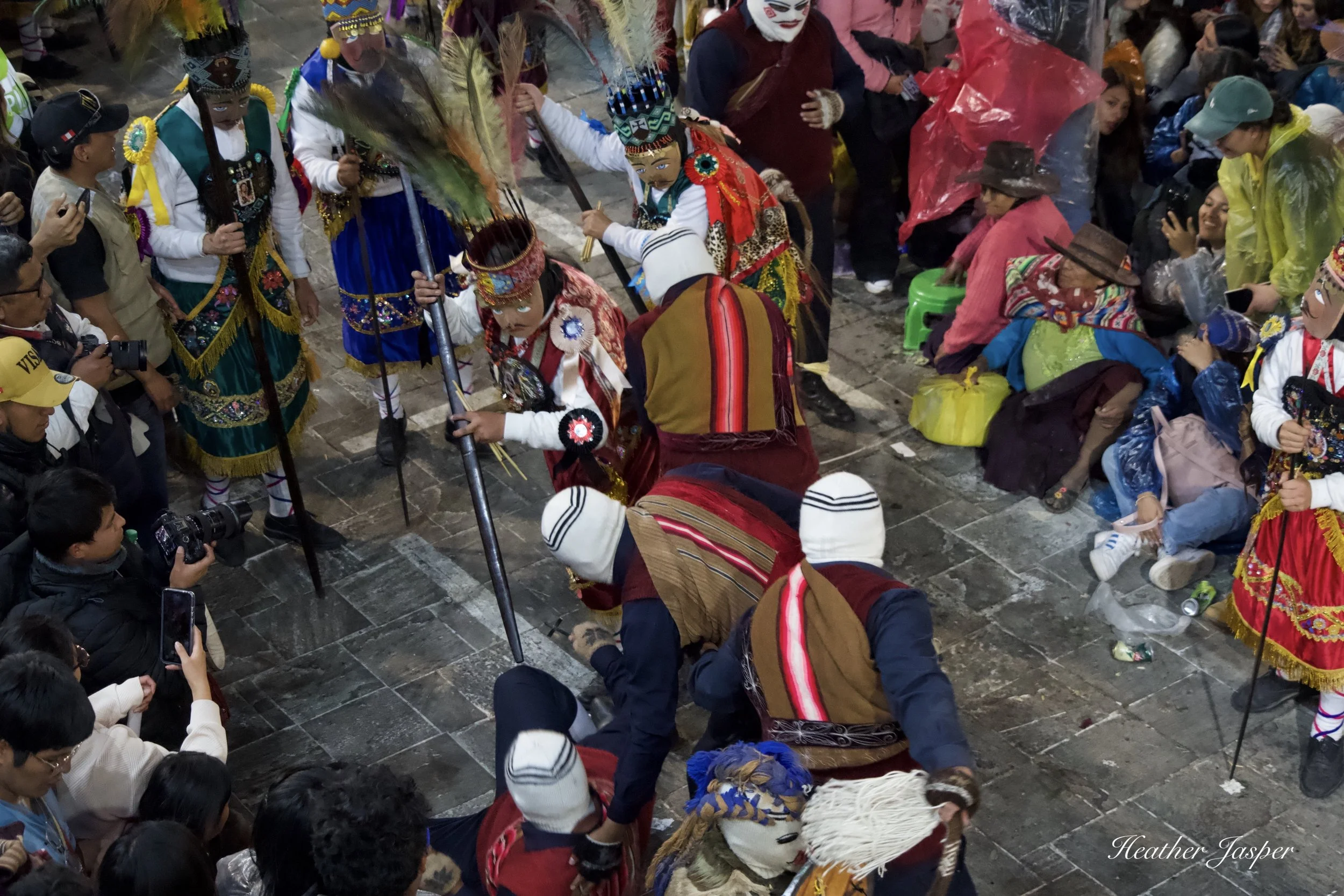
When a Qolla falls down, the Ch’unchu “kill” it with their antutas. Note the sticks in the Ch’unchus’ hands.
It’s total chaos.
The Qollas, chased by the Ch’unchus, run counterclockwise around the plaza, with the Saqra weaving in and out between the battles, looking for corpses. The crowd is covered with flour and beer, so when the dead Qollas fall onto bystanders everybody’s ponchos get torn and more and more flour and beer soak into their clothes. I’ve never seen the Saqra’s cart catch anybody on fire, but I’m sure it happens now and then.
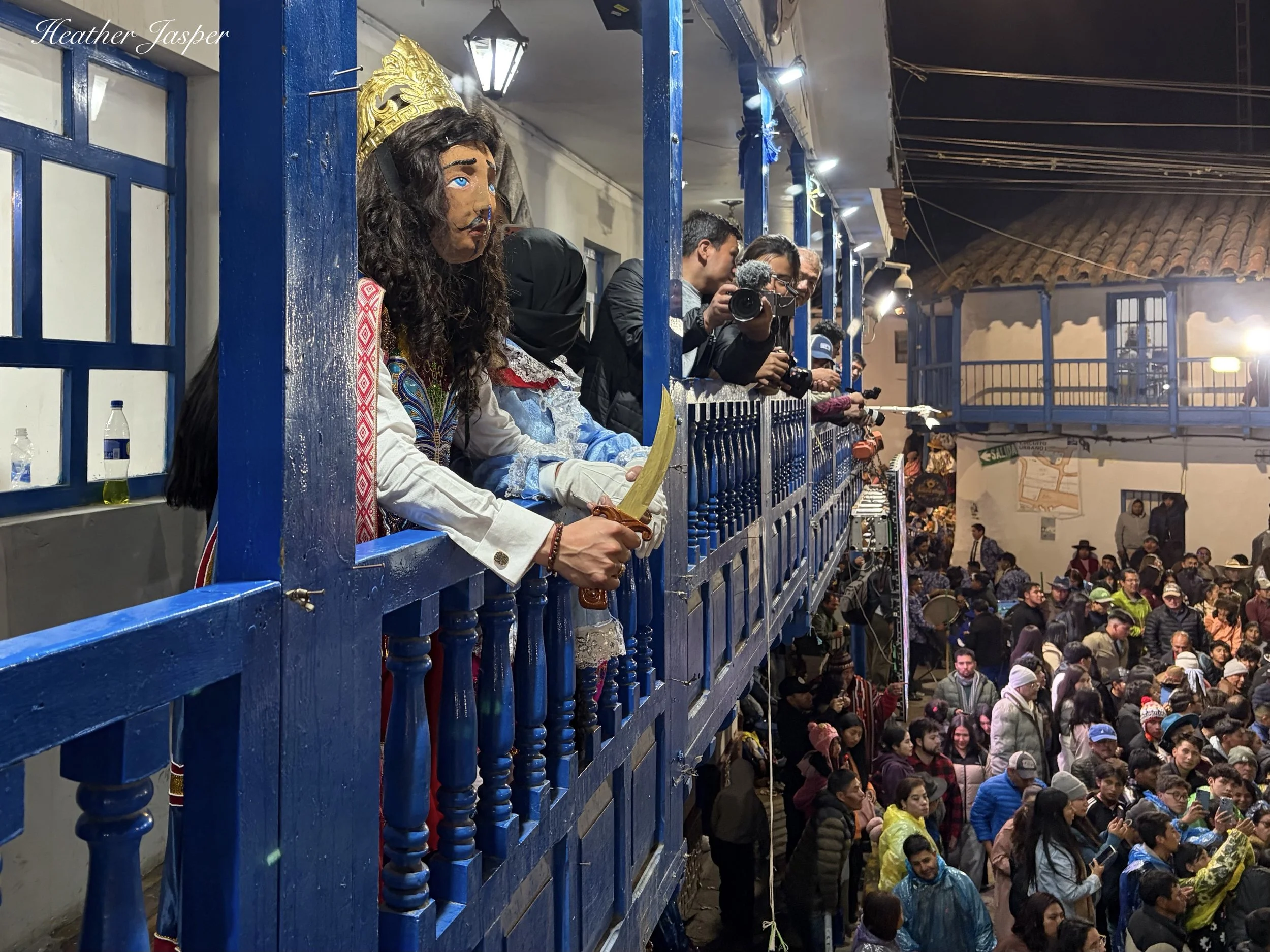
When the King takes the Imilla (with black scarf) up to the town hall balcony, the guerrilla is over.
The King catches the Imilla.
The Guerrilla doesn’t end until the King catches the Imilla, who represents the image of the Virgin of Carmen that the Qollas have stolen and that the Ch’unchus have to get back. Once the King captures the Imilla, he takes “her” into the town hall and up onto the balcony that overlooks the plaza to show everybody that he won. (I’m putting “her” in quotations because it’s a man with a black cloth over his face). At that point, the Ch’unchus finally capture the Alcalde but can’t kill him.
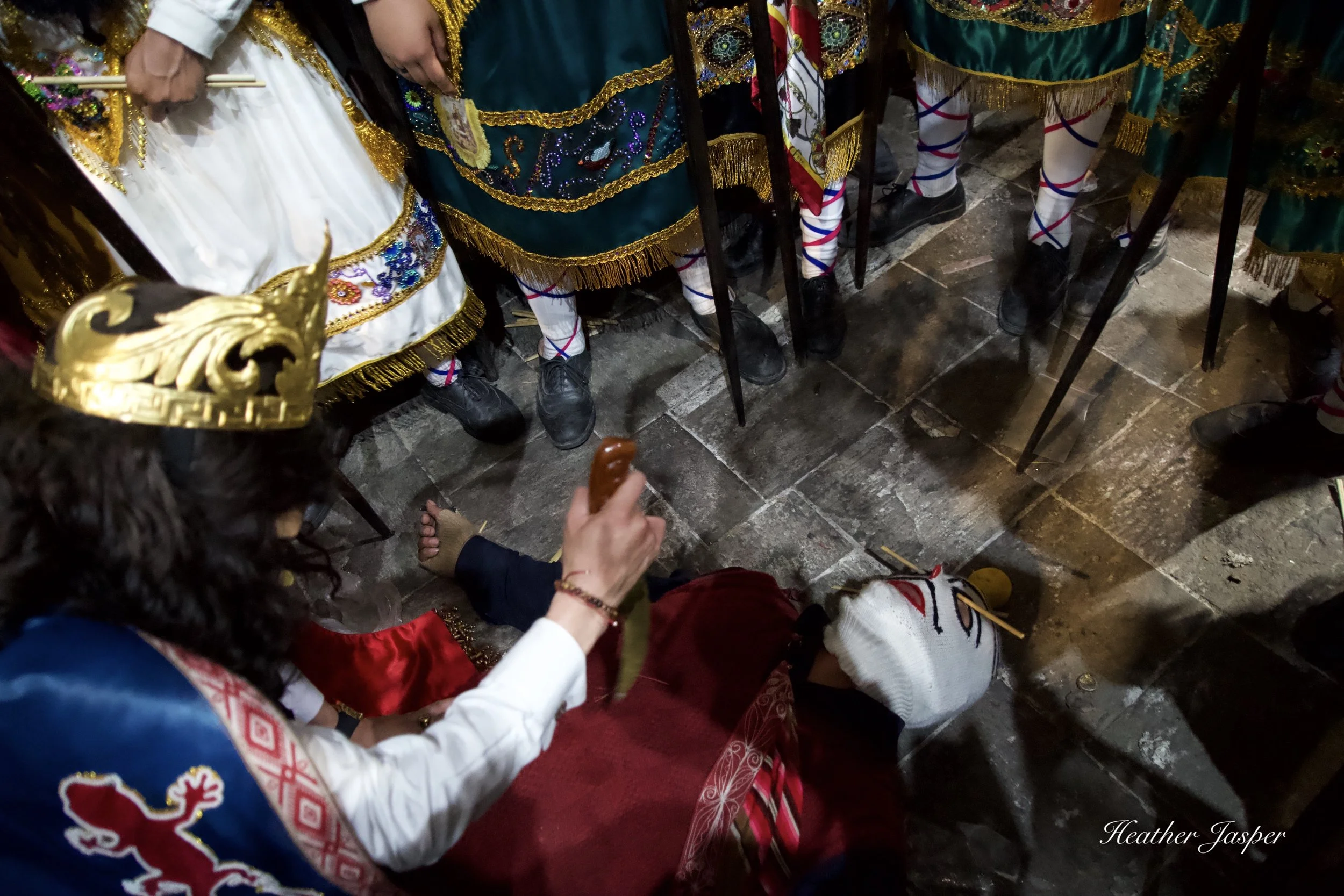
When the Alcalde is down, the King has to symbolically cut him open and eat his heart.
The King eats the Alcalde’s heart.
The Qolla’s Alcalde is so strong that regular Ch’unchus can’t kill him. The King tries to kill him but he doesn’t die, so the King cuts off his limbs and he still won’t die. Finally, the King has to cut him open, pull out his heart and eat it. Thankfully, it’s all done in pantomime, and nobody actually gets hurt. The King certainly doesn’t actually eat anything. In my videos, he brings his hands up to the mouth of his mask and tips his head back as if eating something.
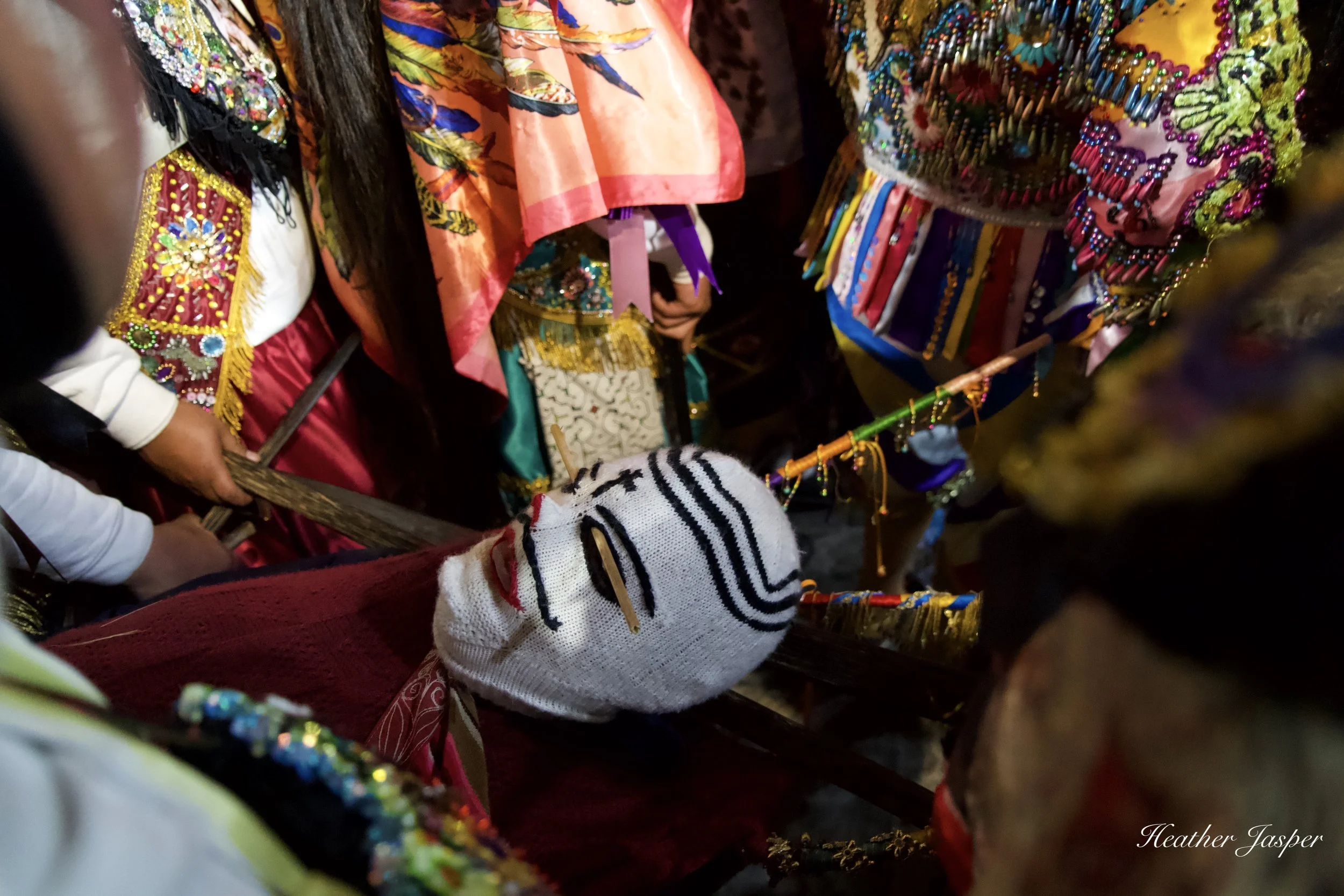
The orange fell out of his mouth, but this is the Alcalde being carried on antutas by Ch’unchus and dragged by Saqras.
Finally, the Ch’unchus parade the Alcalde’s body around the plaza. They put an orange in his mouth and slide their antutas under him until they have enough to carry him around the plaza on the antutas. The Saqras lead the way, pulling him with their garabatos to ensure they can take him with them to hell.
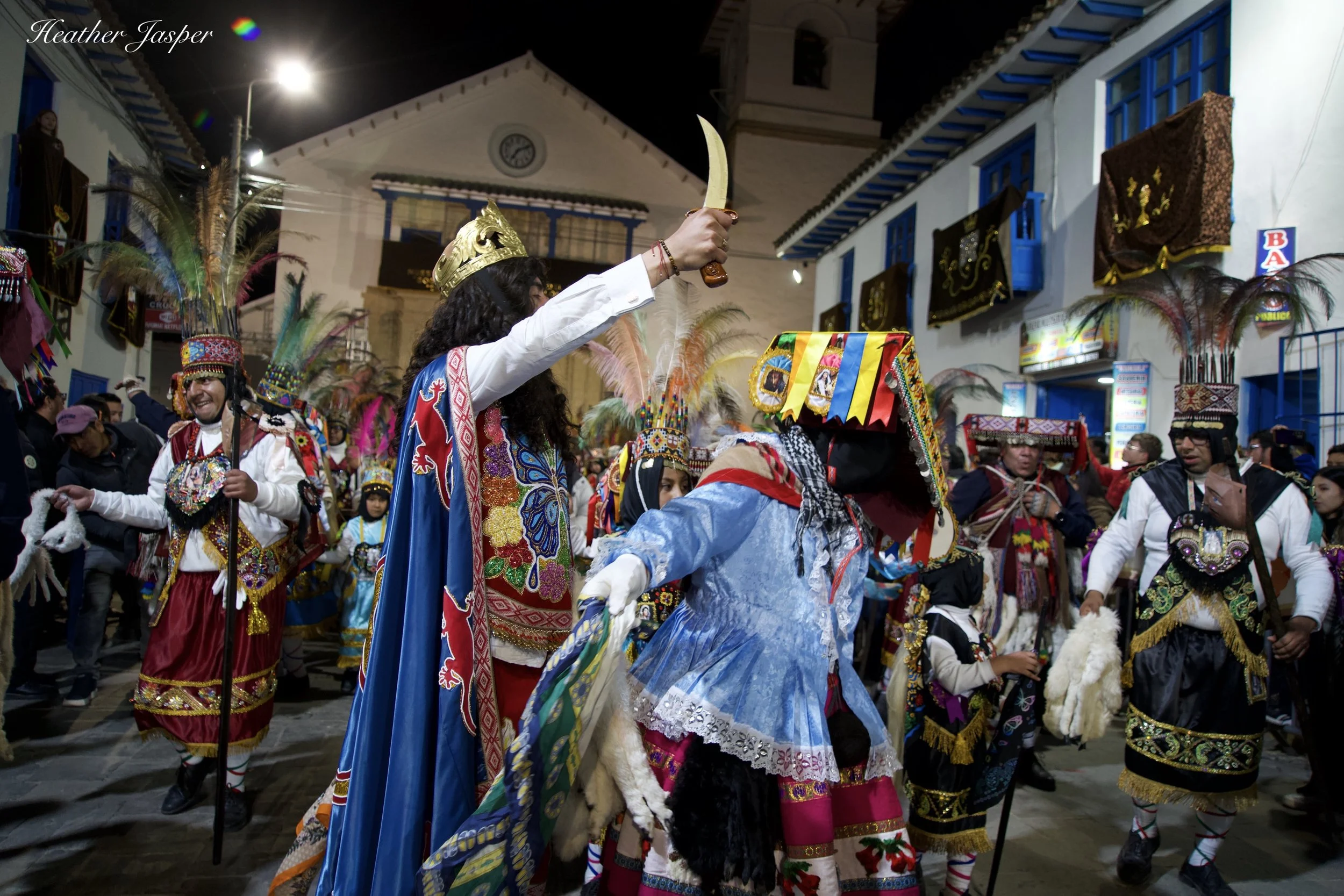
The King celebrates his capture of the Imilla at the end of the Guerrilla.
The end of the Guerrilla
To show that the war is truly over, and that the Ch’unchus have again won, the King takes the Imilla across the bridge to the market, then brings her back to town, through the plaza to the church.
July 18: Watatiyaycuy, Oqaricuy, Cacharpari & Wataskama
The last day has a slow morning, to account for hangovers and the afternoon and evening are devoted to various farewell rituals. We didn’t meet at the cargo wasi until lunchtime. I’m sure some people got up for the Watatiyaycuy mass at 10am, when the religious part of the festividad comes to a close, but I was still in bed.
I left the post-Guerrilla party around 2:30am but most people stayed until it was light out, around 5 or 6am, depending on how you define “light.” I got up at the crack of 10 but I think most Ch’unchus slept until noon.
At 1pm, six Ch’unchus went to the carguyoc’s home to bring the Demanda safely to the cargo wasi. We had lunch together then went to the church for Oraricuy.
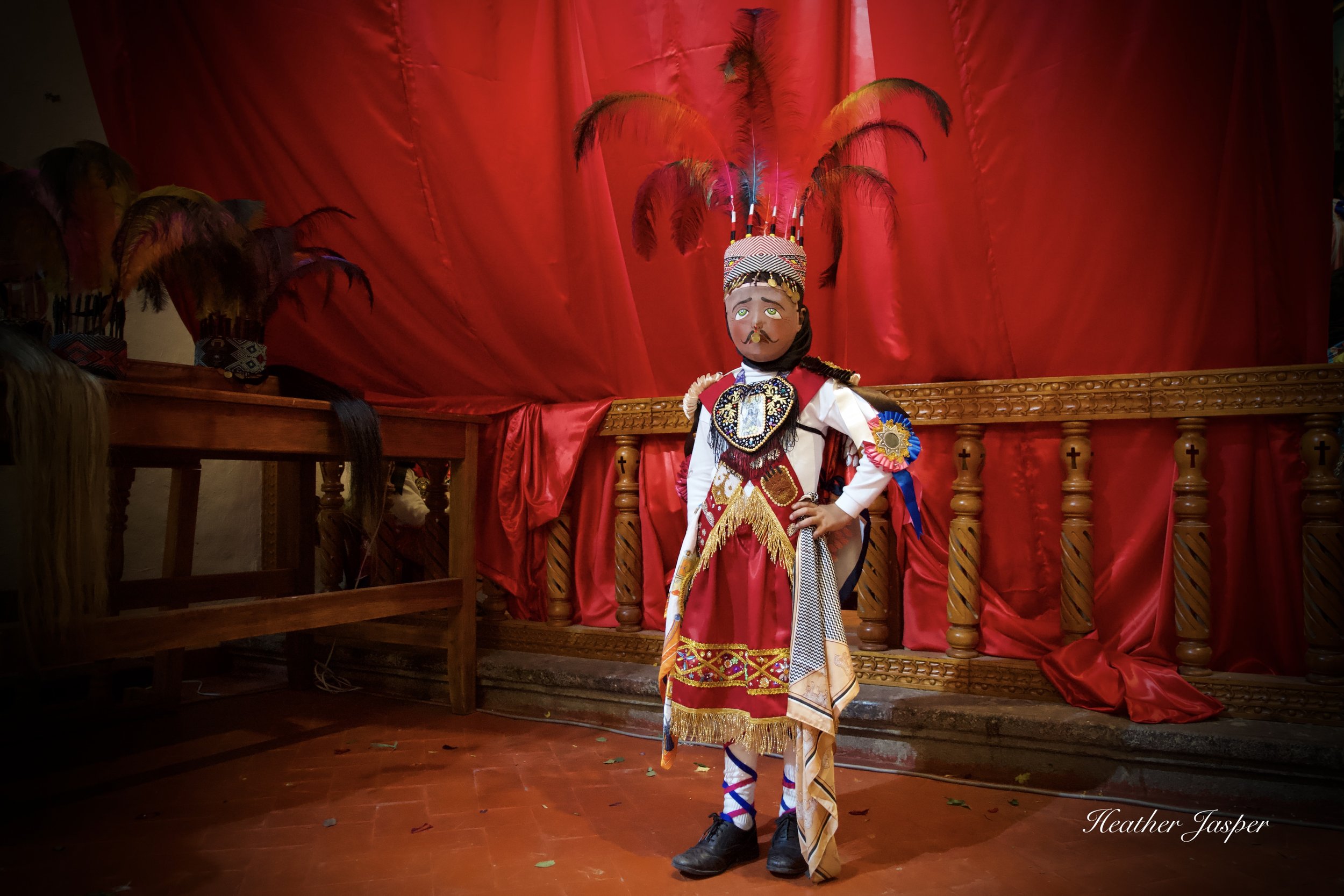
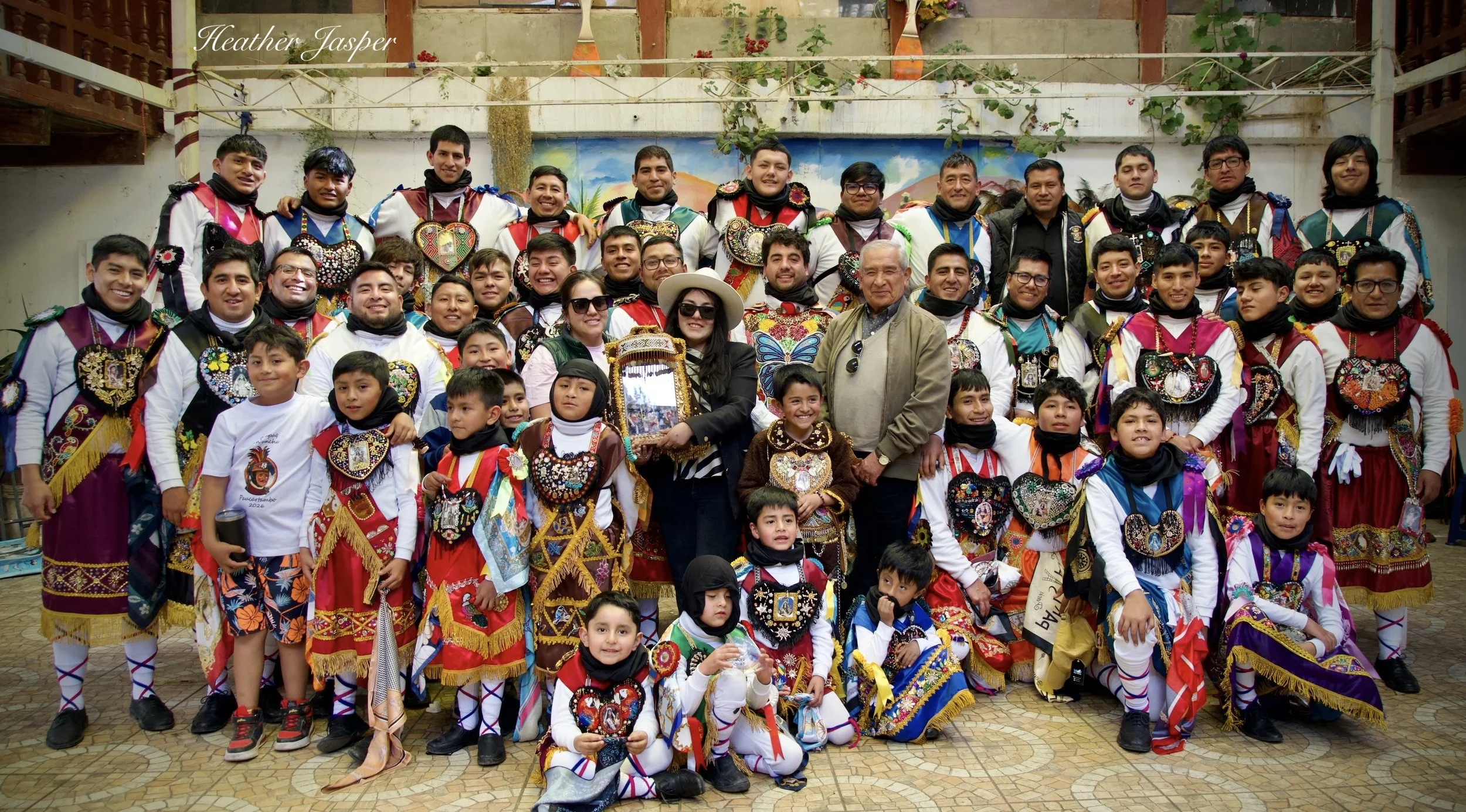
The children, called mascotas (pets), are often children of current Ch’unchus, but not always.
Oqaricuy: Farewell to the Virgin of Carmen
We all went to Oqaricuy in the church at 3pm, when everybody bids farewell to the Virgin and hundreds of people wait their turn to duck under her blanket to ask her for something. As long as we were in the church, and the Virgin wasn’t in her usual spot, I used her red backdrop for some individual portraits that I could give to the Ch’unchus to show my appreciation for them.
Watatiyaycuy: The Last Dance
At 5pm we were back at the church for the danzas’ Watatiyaycuy. The Saqras carry the Virgin out to the door of the church and stay with her, though of course the Ch’unchus are there guarding her. The Qollas and the Negros both sing to her, then the Contradanza carry her back into the church.
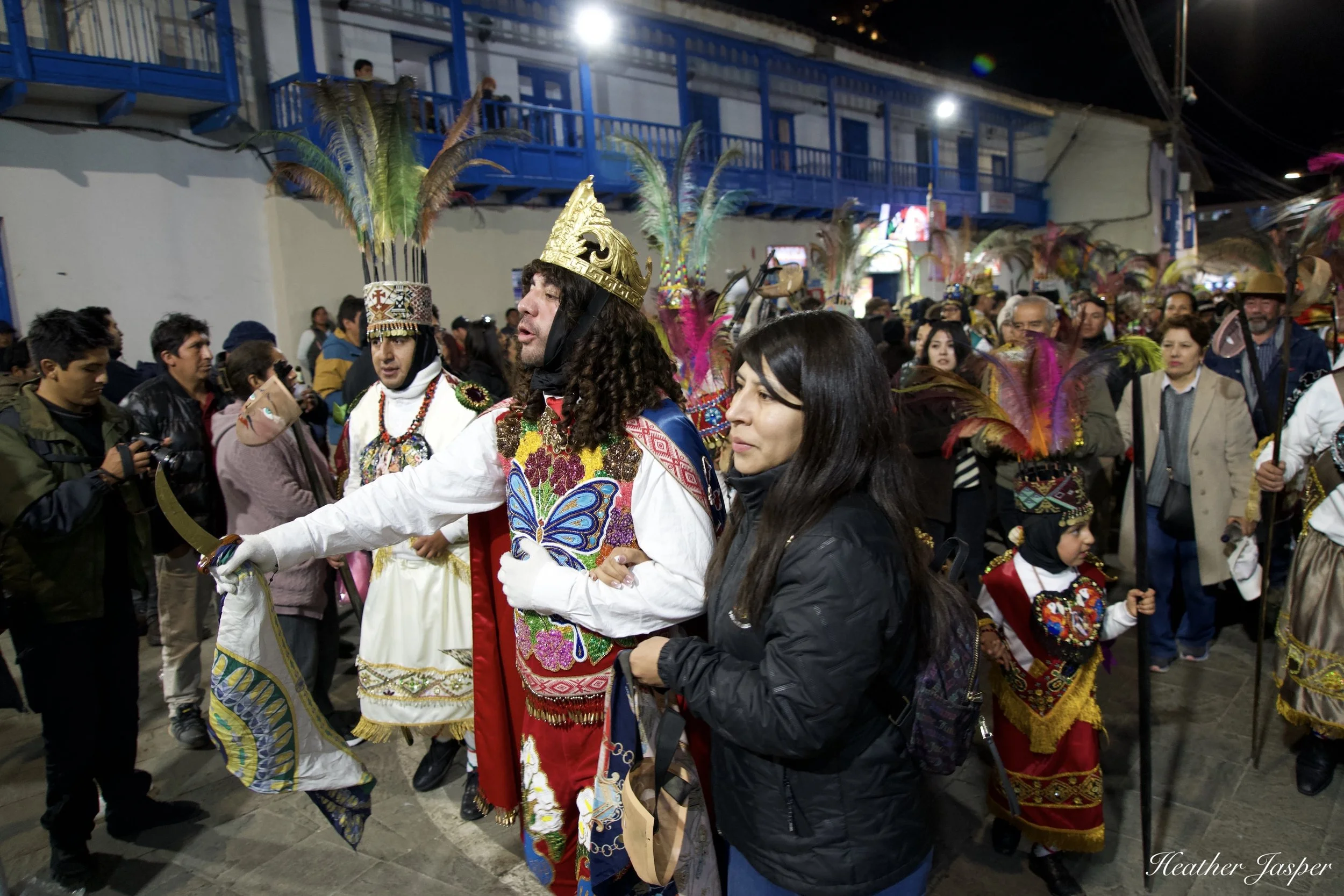
The King and his wife Angie dance through the streets wishing everybody Wataskama.
Cacharpari: Till Dawn
The last event on the last day is when everybody dances through the streets saying “Wataskama” to each other, which means “see you next year.” Most danzas bring stacks of cases of beer to the plaza, staking out their spot, but also visiting other danzas to catch up and say Wataskama. While I was free every evening to visit other danzas’ cargo wasis, most danzas only stay in their cargo wasi, so the few times they can really visit each other is at Once, on the 16th and during Cacharpari, on the 18th. They’re too busy with everything they have to do every day to have time to visit each other.
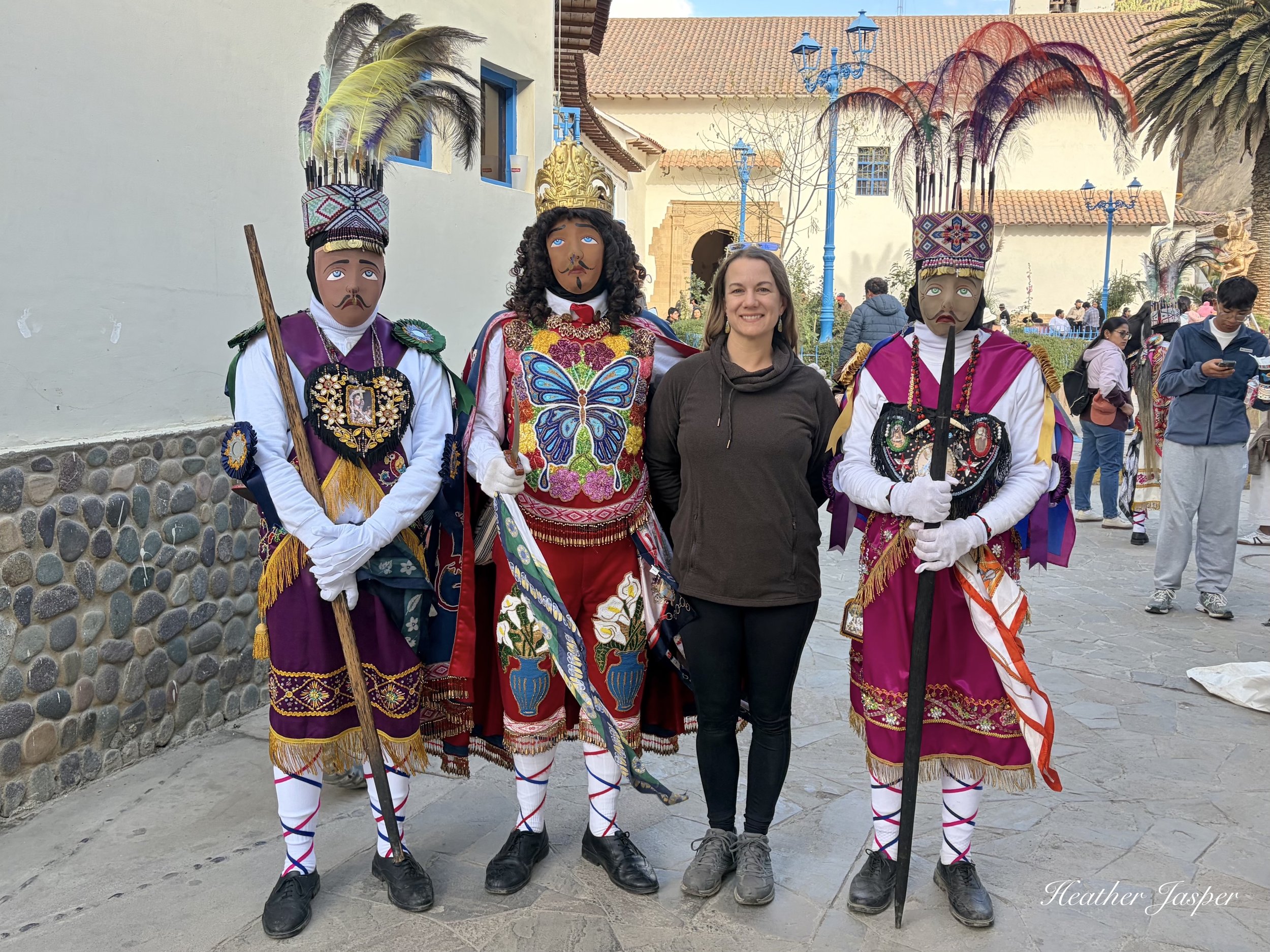
Wataskama Ch’unchus!
The aftermath: Cusco
The next morning, I got up around 9am but I suspect that those who stayed in the plaza all night didn’t go to bed until almost 9am. It’s always a bit of a culture shock to leave the small town, where by now I feel right at home. Paucartambo is loud, but only because of all the live bands following nineteen danzas everywhere they go. Arriving back in Cusco, it’s loud because it’s a city with traffic and an airport.
The hardest part of the festividad for me is saying goodbye to a danza. The Ch’unchus were all so welcoming, generous and kind to me and I am so thankful for them all. Fortunately, I’ll have another opportunity to see them in May next year at Qoyllorit’i.