Rainbow Mountain
Don’t go to Rainbow Mountain.
Spoiler alert: This blog explains, with as many details as possible, why you shouldn’t go to Rainbow Mountain.
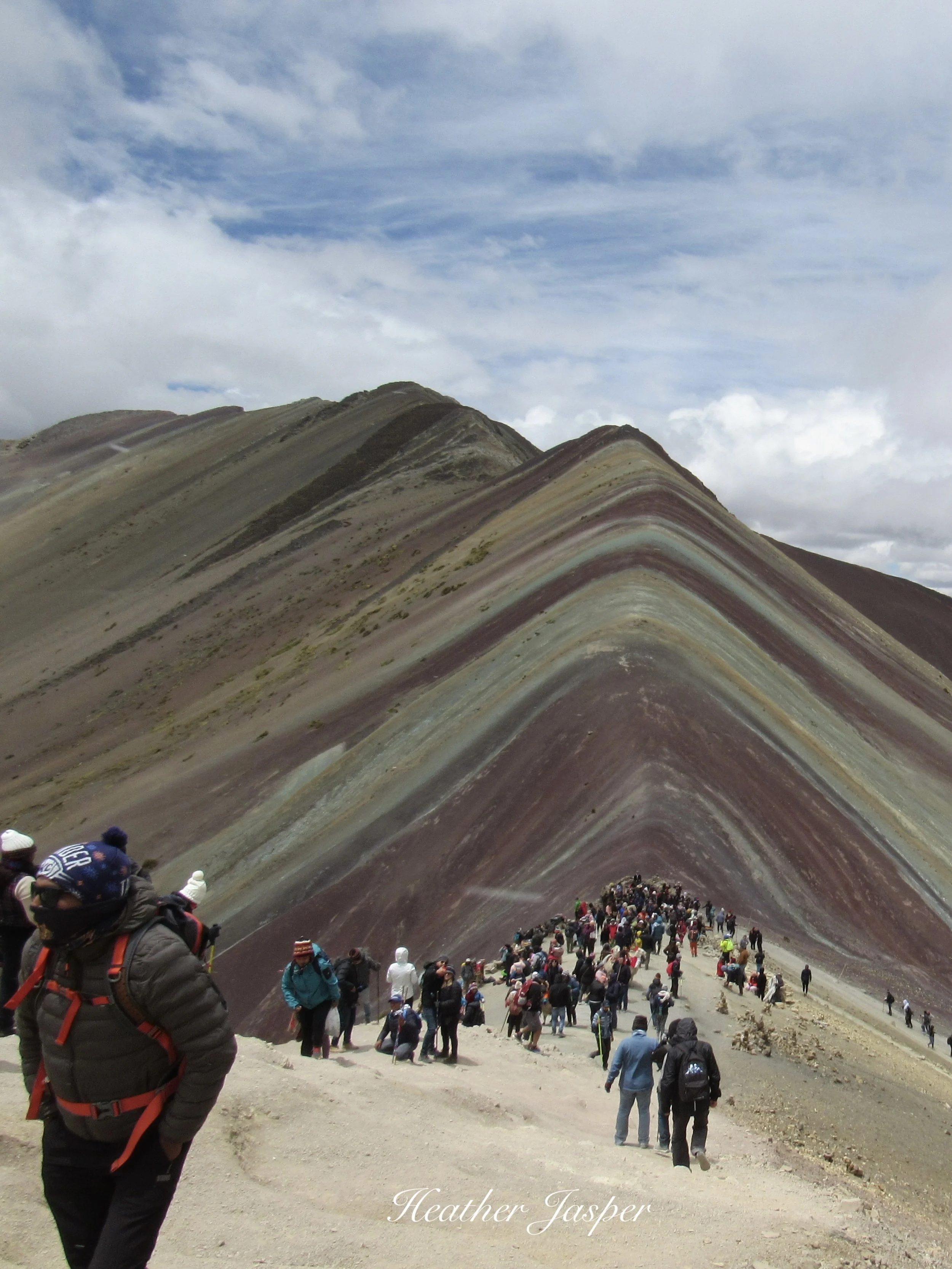
This is an unedited photo I took when I hiked Rainbow Mountain in 2019.
What is Rainbow Mountain?
Rainbow Mountain is a short hike at high altitude to a spot where you can see sedimentary layers of rock that have some color variation. The spot where you can see the rock layers is at 5,200 meters/ 17,060 feet above sea level. This is high enough to cause fatal pulmonary or cerebral edema in people who have not properly acclimated to high altitude. (More about altitude below).
The local name for Rainbow Mountain is Winikunka. You may see it spelled Vinicunca and several other variations because the European alphabet doesn’t do a great job of expressing Quechua sounds. The Quechua word wini (or vini) means pass, as in a low point between mountains where you can pass across. Cunca or kunka means small rocks. In Spanish, it’s also called Montaña de Colores (Mountain of Colors) and Montaña de 7 Colores.
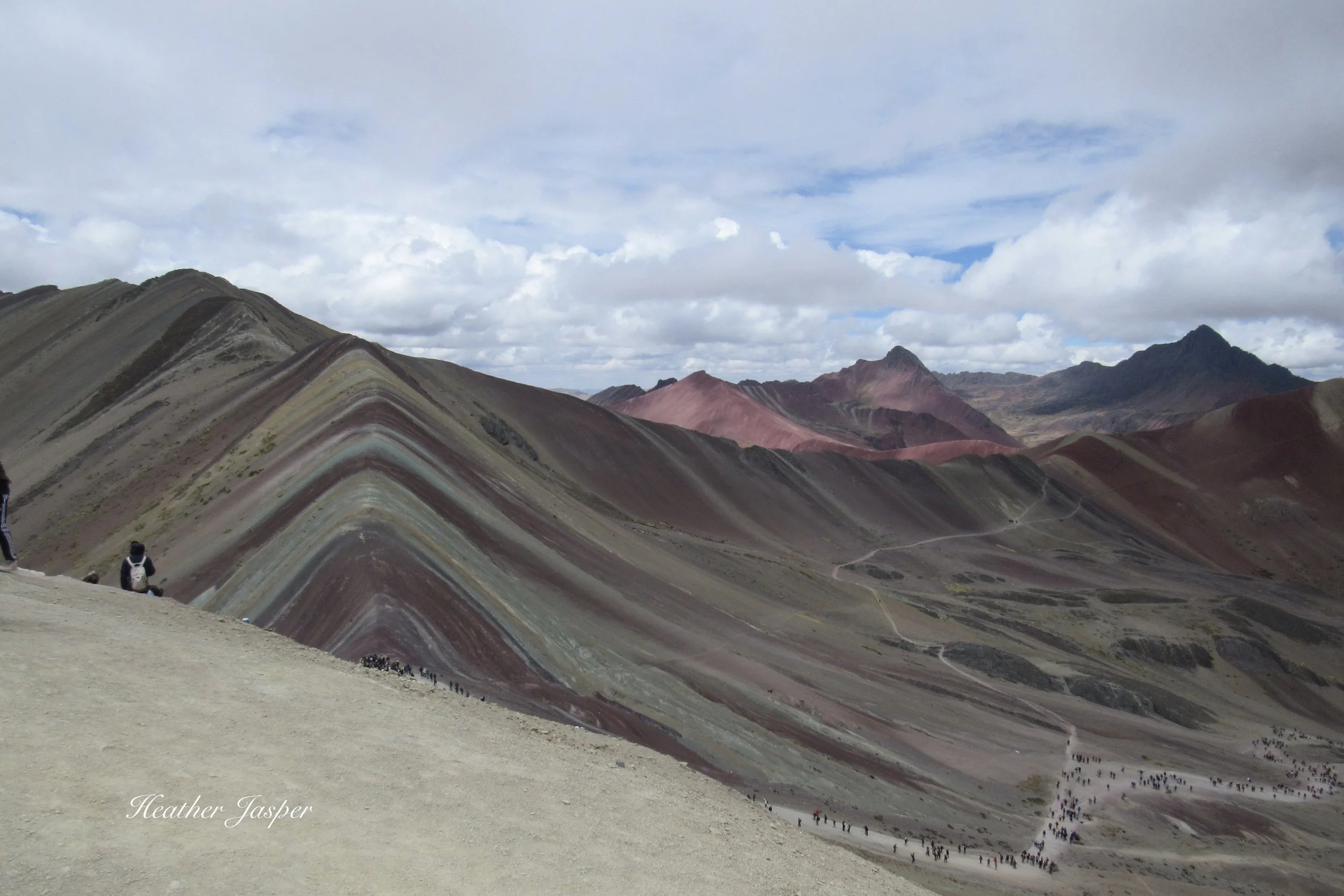
The trails around Rainbow Mountain are worn areas where people walk, not trails that were built for 1,000+ people per day.
What is the Rainbow Mountain trail like?
The trail is sand and gravel, which is the natural consistency of the mountain pass. It’s at such high altitude that there are only a few low plants along the way. If it’s windy, dust will blow around and get in your eyes. If it has snowed recently, there may be ice on the trail.
How far is the hike to Rainbow Mountain?
You can hike from either side of the Rainbow Mountain pass. One trail is 7km/4.3miles and the other is a bit less. If it was at sea level, you could run it in 30-45 minutes. It takes most people 2 hours walking up and another hour back down.
Can I ride a horse to Rainbow Mountain?
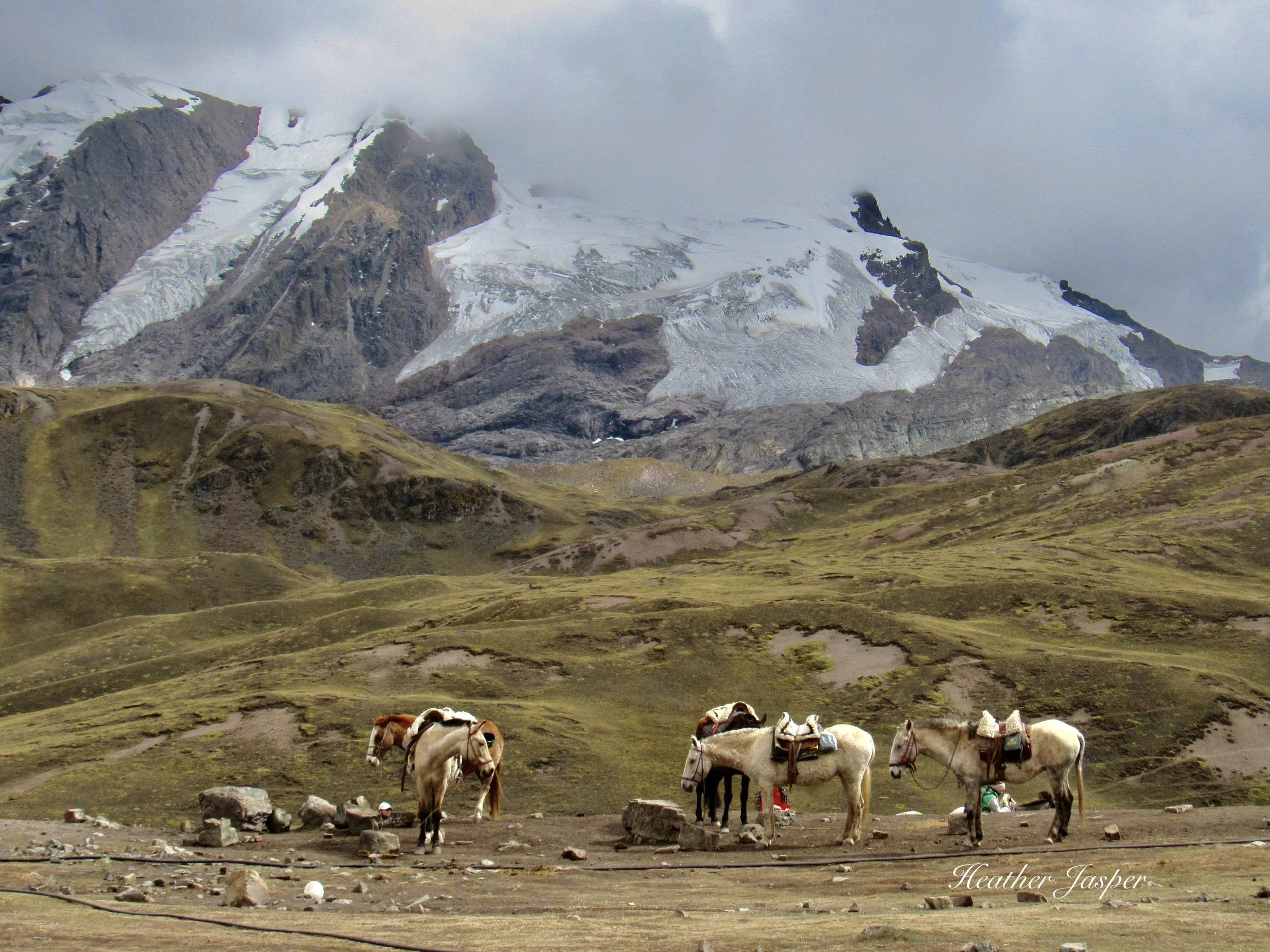
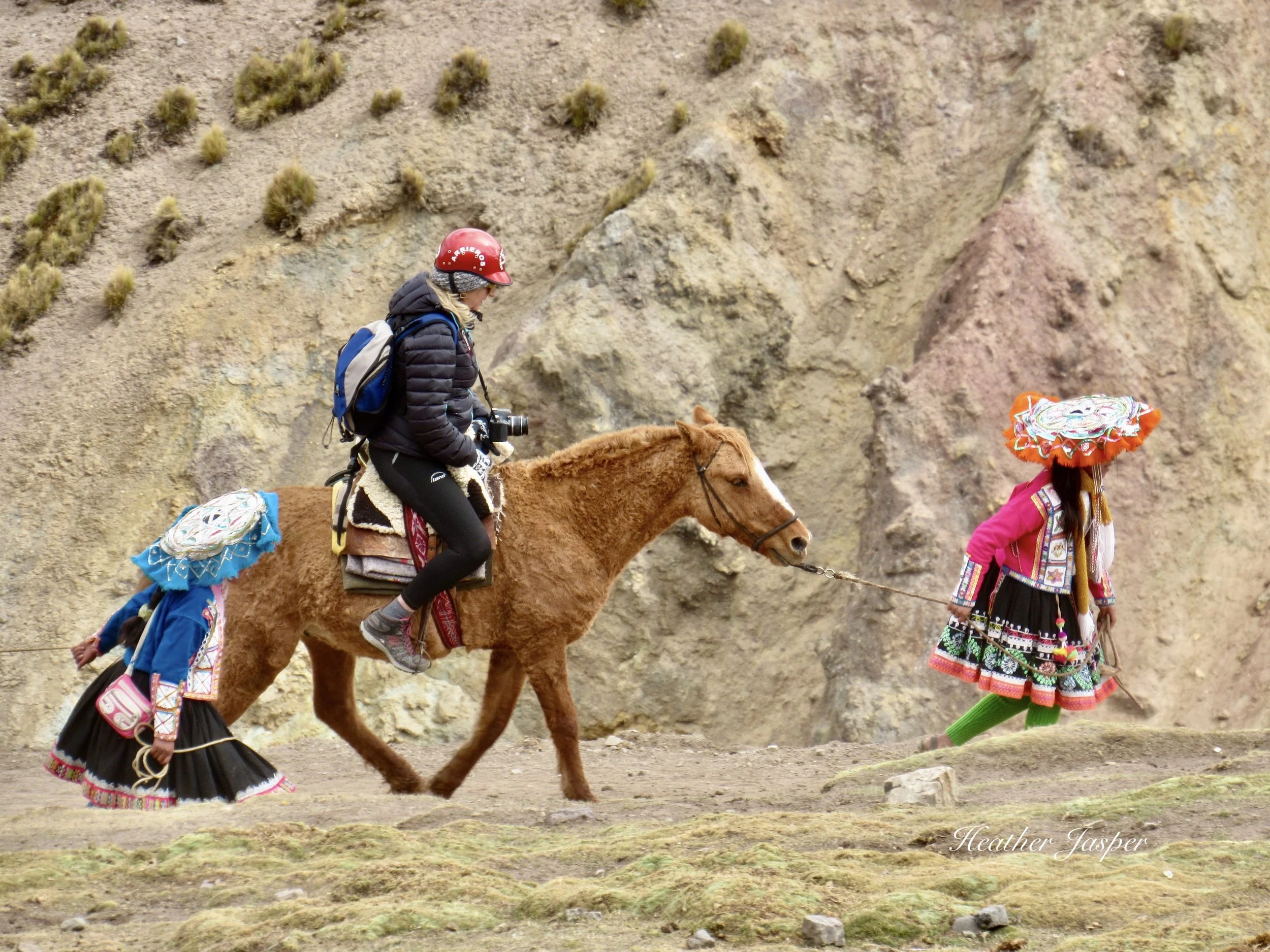
Yes, people from nearby communities bring horses to the parking lot for tourists to ride. Somebody will walk next to your horse until the last kilometer, which is too steep for horses. You will have to get off and walk the last part, while the person and horse wait for you. The last part of the trail takes 20-30 minutes to hike up, plus the time you spend at the top, plus another 15 minutes back down. So, your horse and the horse’s owner may be standing around for an hour waiting for you. The horse trail is parallel the trail that people walk on.
Where is Rainbow Mountain?
Rainbow Mountain is about a 4-hour drive southeast from Cusco, Peru. It’s near Mt. Ausangate, one of the most sacred Andean peaks, called apus in Quechua.
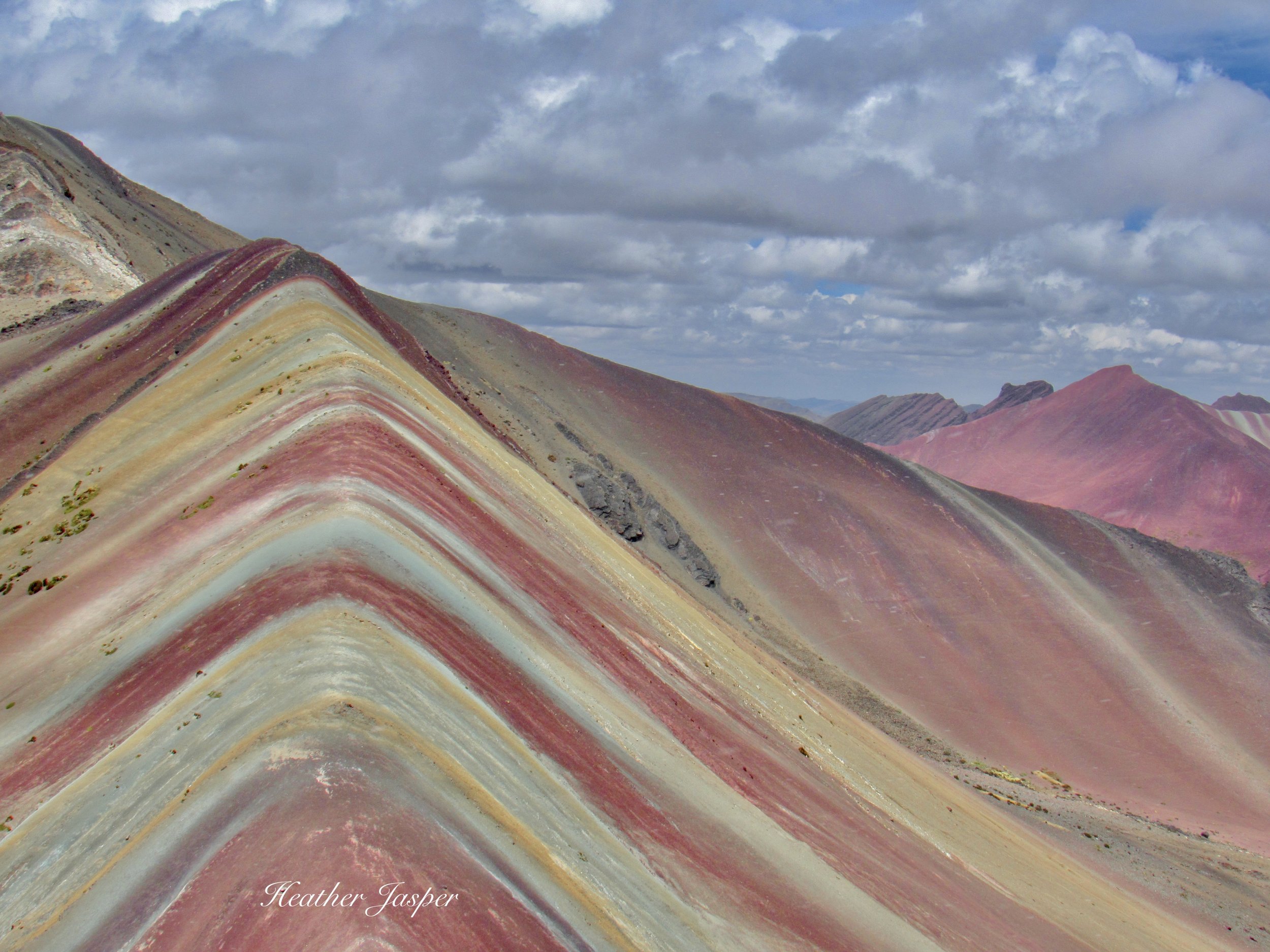
What causes the colors at Rainbow Mountain?
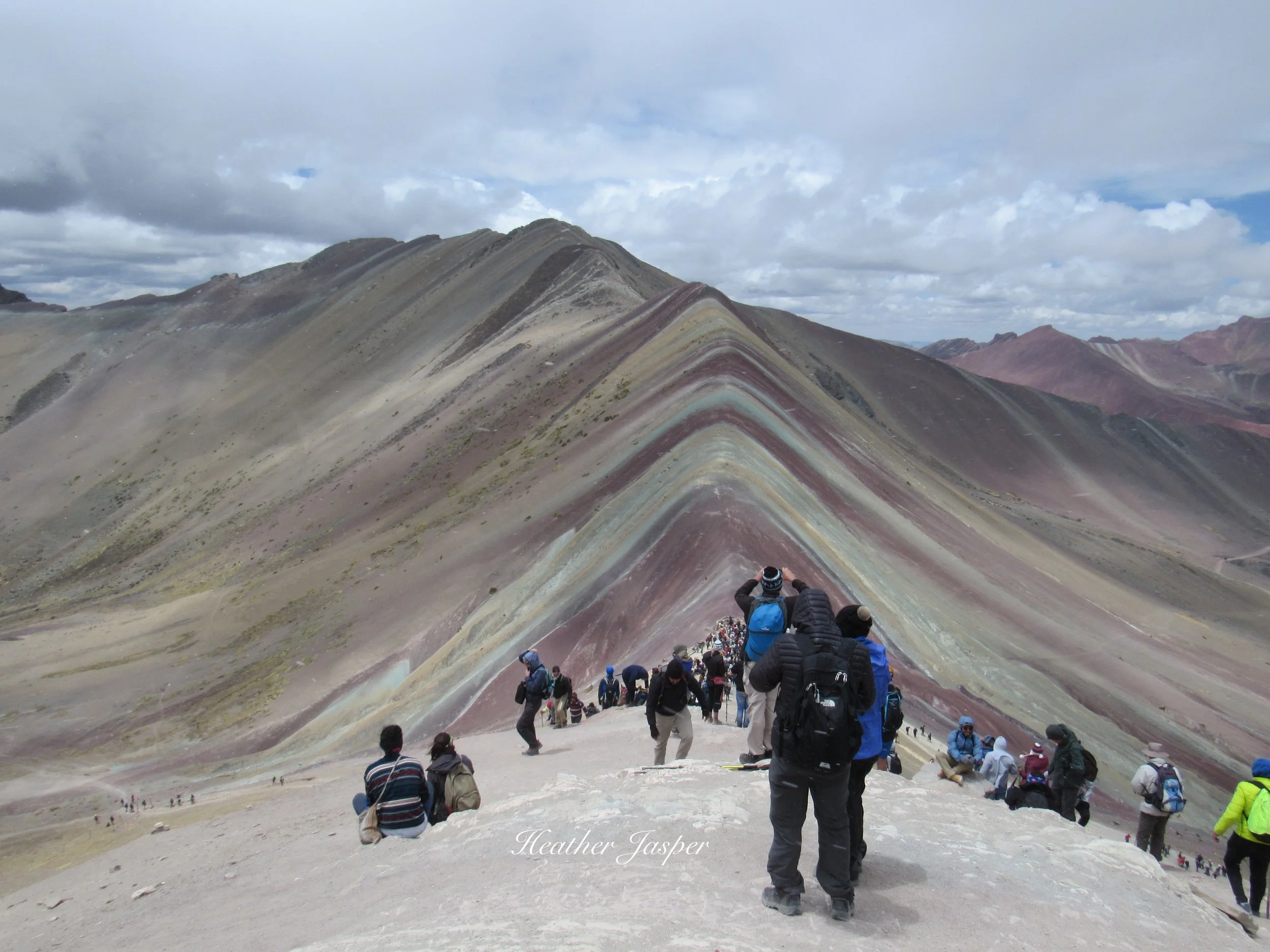
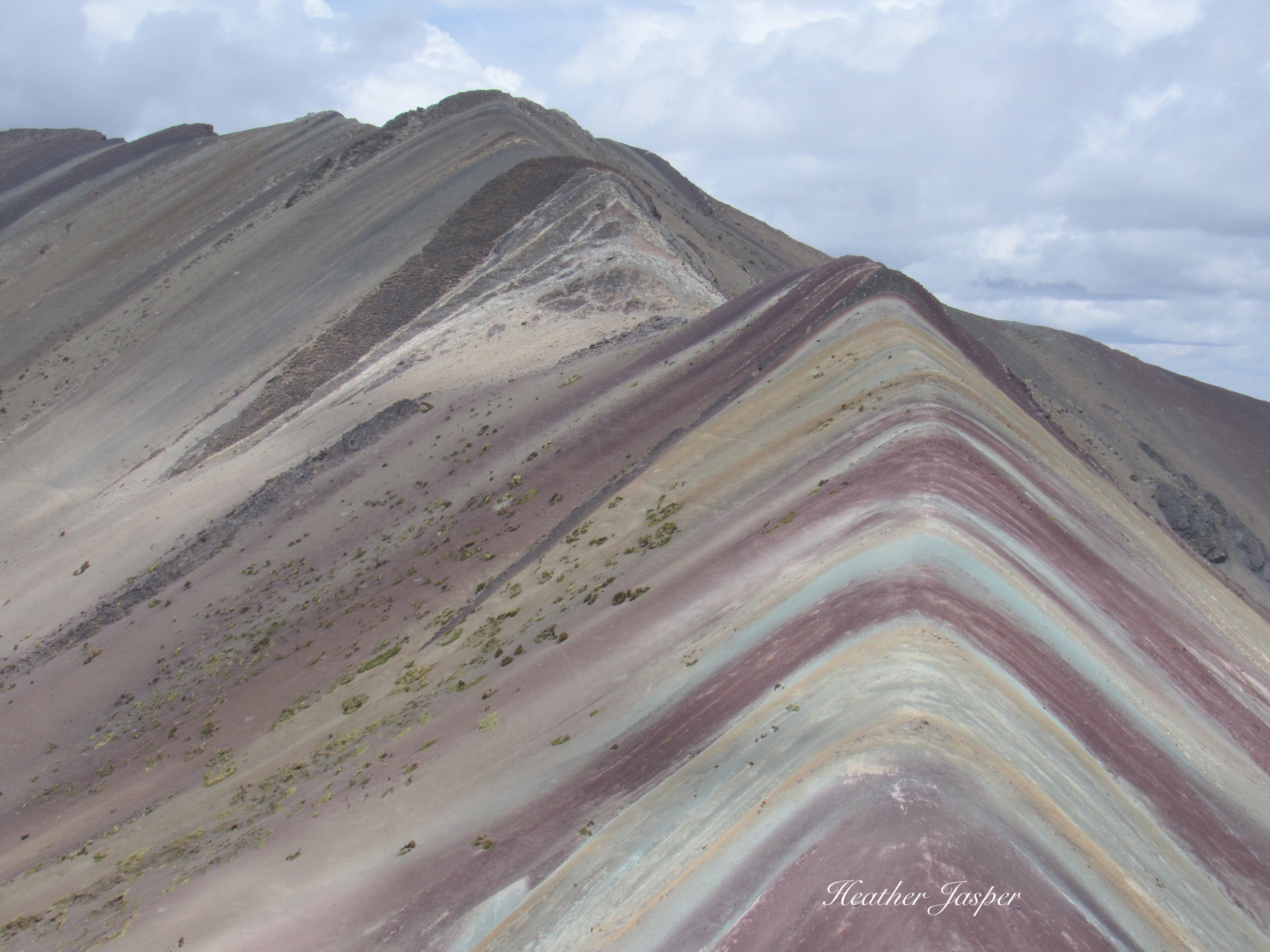
The colors at Rainbow Mountain are caused by layers of sediment that have different minerals. Green layers have copper in them. Red stripes are caused by iron. Yellow layers have sulfur. Remember, the photos you see on marketing materials, whether websites or posters, are edited and colors are highly saturated. At Rainbow Mountain, what you see (before you go) is not what you get (when you’re there).
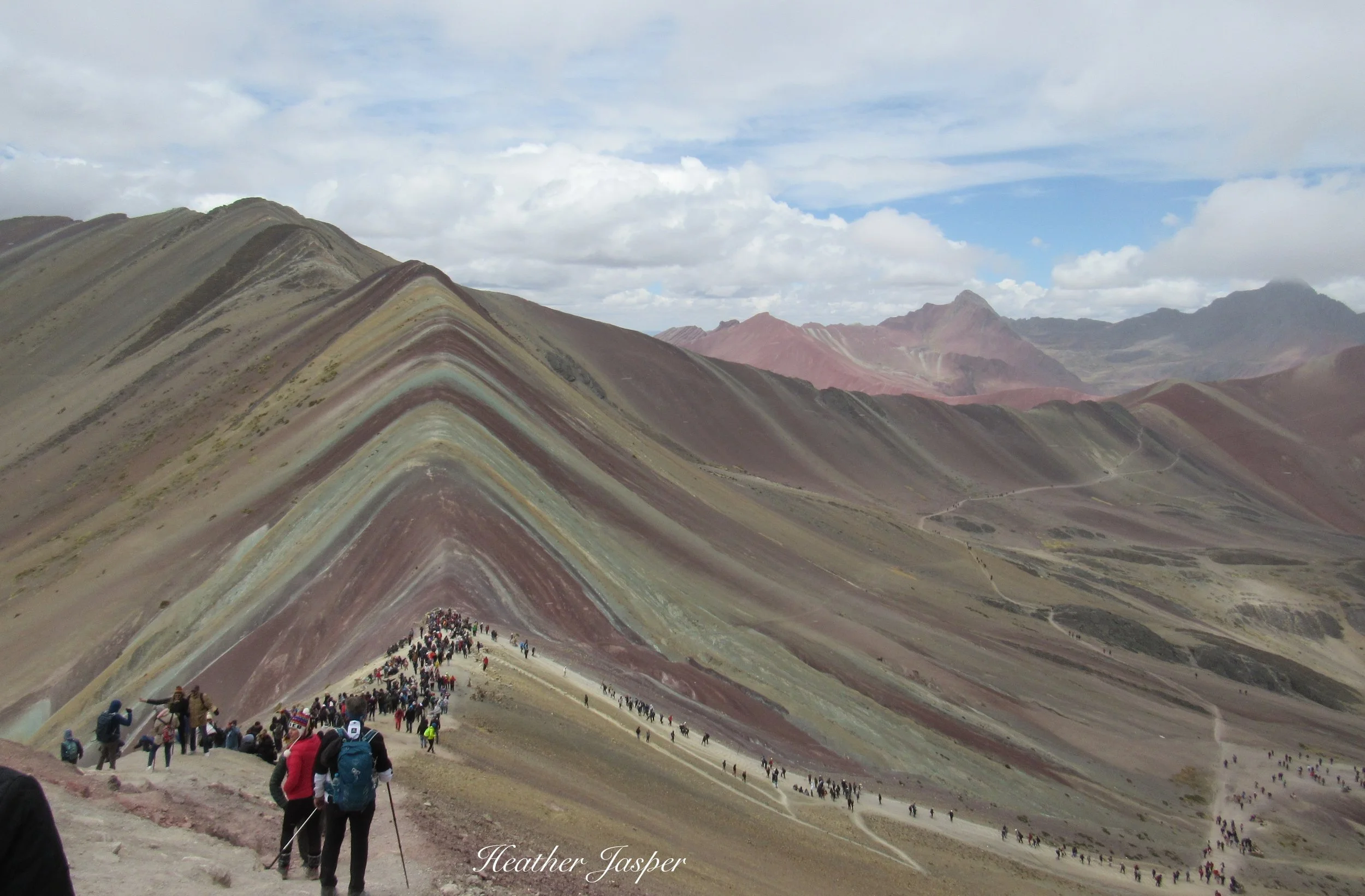
I did not edit the colors in this photo of Rainbow Mountain. It was a cloudy, but even on a sunny day the colors are muted.
When do people go to Rainbow Mountain?
Tours to Rainbow Mountain run year-round. However, during the rainy season from December to March (South American summer) fewer people go because it’s often foggy and sometimes snows. During the dry season from June to September (South American winter) it’s much colder but you’re more likely to have a blue sky.
Why are Rainbow Mountain tours so early?
Weather at high altitude changes quickly and storms are more likely in the afternoon, so tours try to get people off the mountain by 2 or 3pm. Most tours to Rainbow Mountain leave Cusco around 4am for the 4-hour drive. They calculate that if you arrive around 8am, and then eat something for breakfast, you’ll probably start walking around 9am. Slower walkers will get to the pass around 11am, hopefully not spend too long up there, then walk back down by 1pm. Always check if breakfast and lunch are included - and what they’ll feed you.
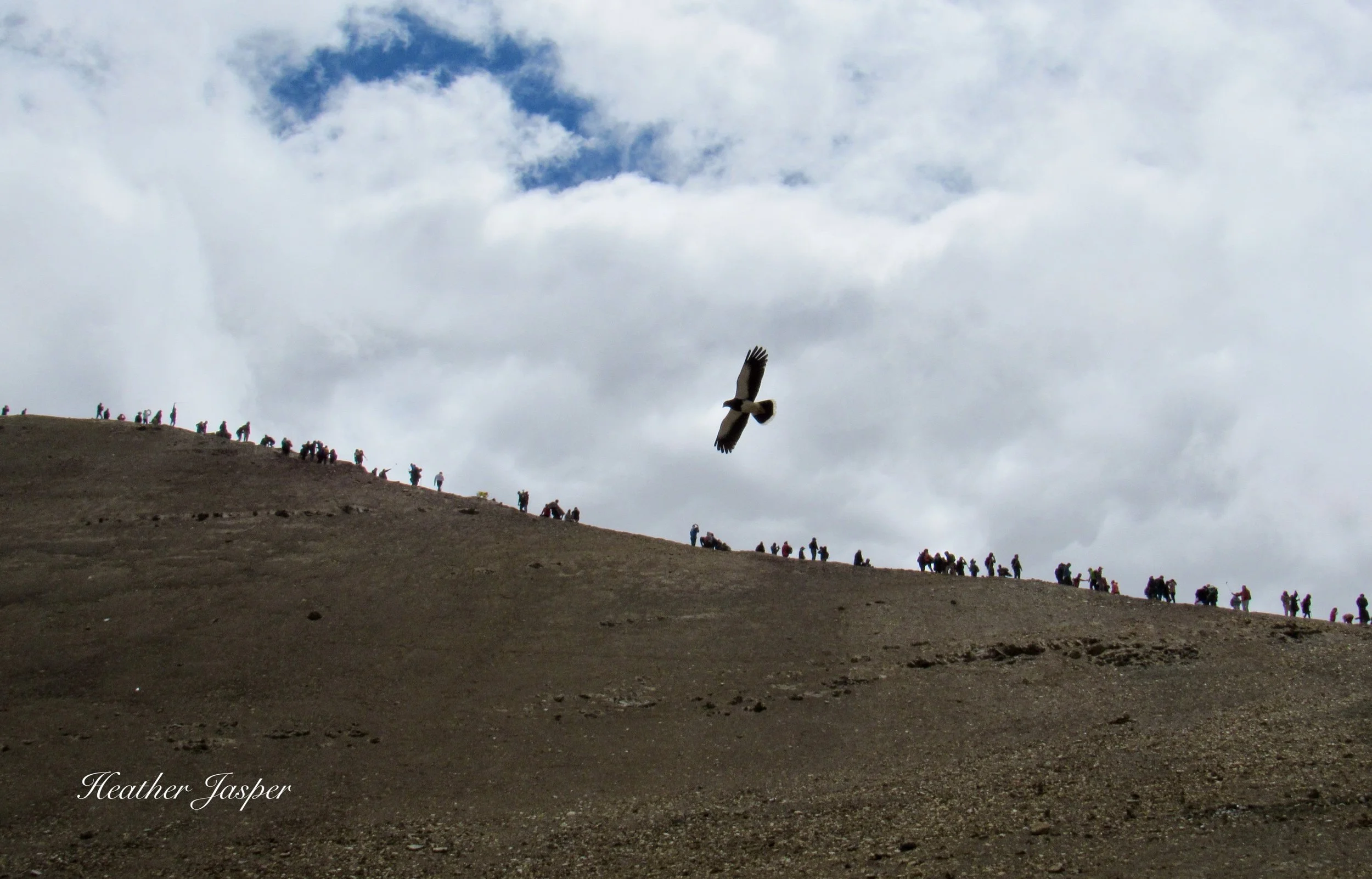
There are usually caracara falcons wheeling around the top of the hike where people take their photos.
How to get to Rainbow Mountain?
You have to sign up for a tour with a local tour agency in Cusco. There is no public transportation because, unlike most other destinations around the Cusco region, nobody lives at Rainbow Mountain. There are a few small communities in the area, but they’re not big enough to have reliable public transportation that tourists can also use.
Why is Rainbow Mountain a new destination?
Rainbow Mountain became a feature of Peruvian mass tourism in 2016, after some edited photos were published by tour agencies. Most of the peaks around Rainbow Mountain were covered by snow until recently. Mt. Ausangate still has glaciers, but most of the glaciers in the area have melted in the past 20 years or so. Snow covered the pass that locals called Winikunka/Vinicunca until around 2010. Rather than a pretty spot for a selfie, for many locals Rainbow Mountain is a sad reminder that glaciers in Peru are melting faster every year.
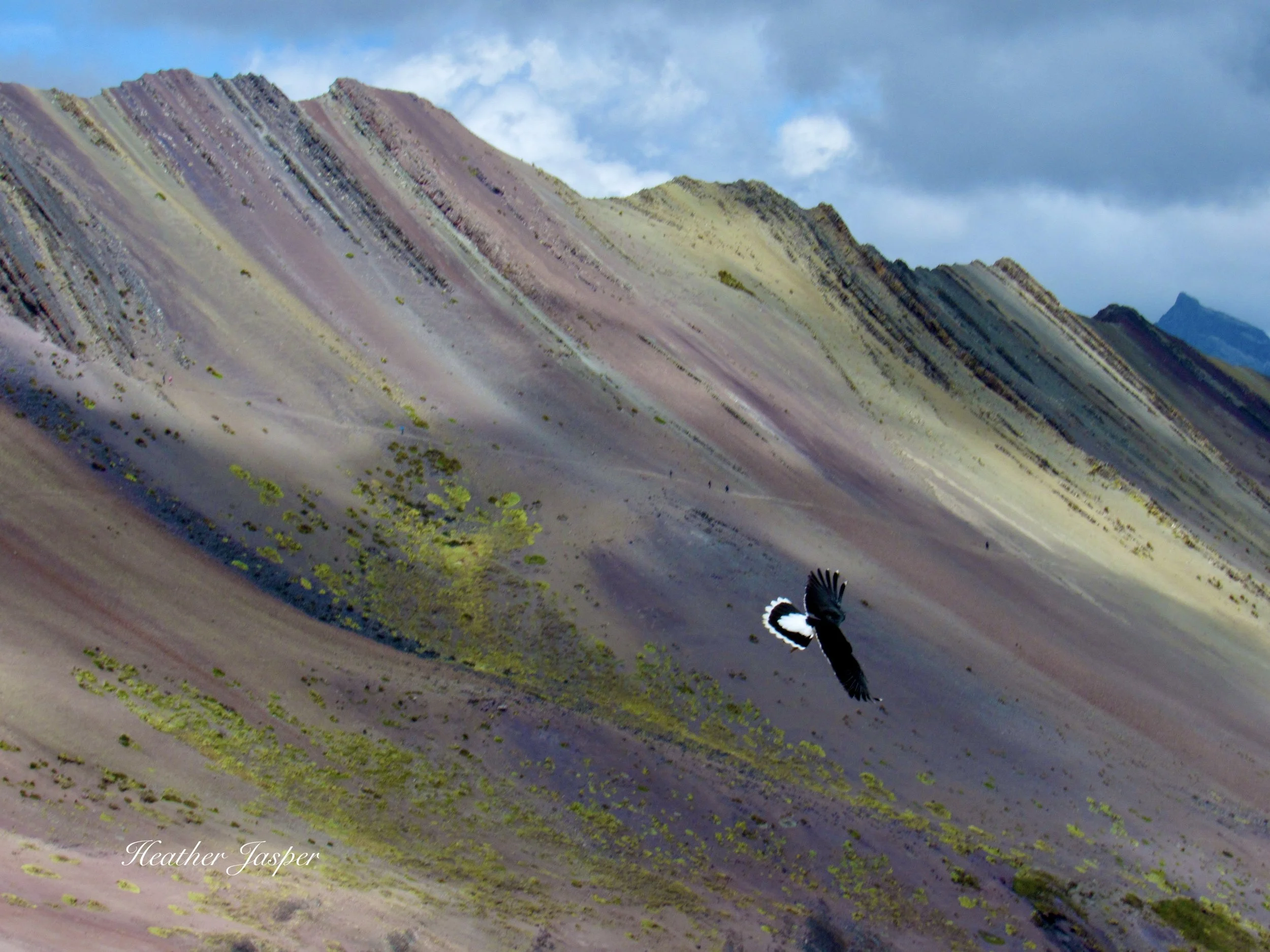
I liked seeing the caracara falcons at Rainbow Mountain, but that was about it.
Why go to Rainbow Mountain?
People go to Rainbow Mountain because they see false advertising online and at tour agencies around Cusco. Photos show a mountain pass of bright red, yellow, purple and white stripes and advertise low prices. Those photos are all highly edited and saturated. Being at Rainbow Mountain in person does not look like the marketing photos.
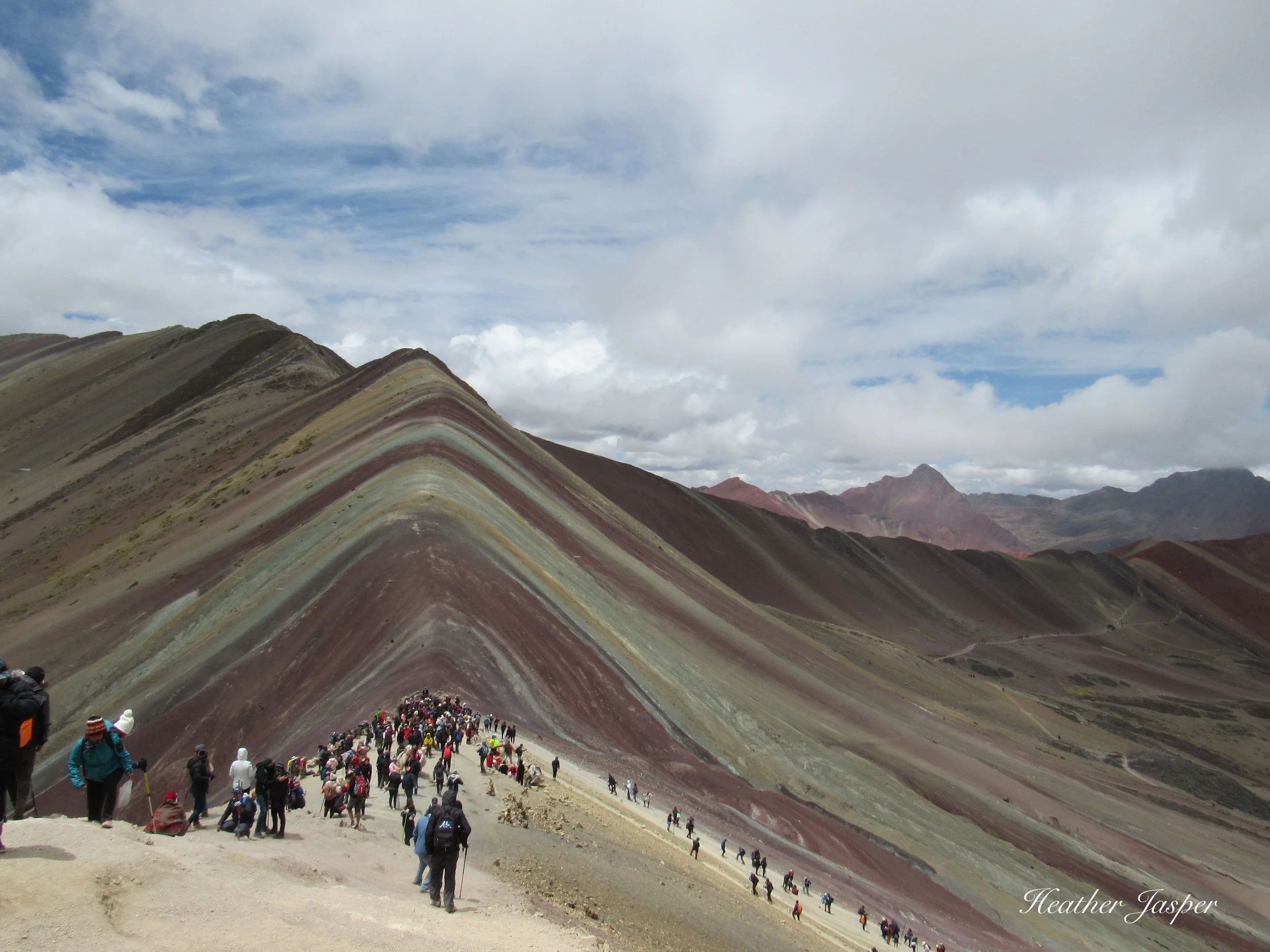
Horses are not allowed on the last section of the trail but if you don’t hike all the way to the top you can’t see the “rainbow.”
Why not go to Rainbow Mountain?
There are a lot of reasons to not go to Rainbow Mountain. Photos in advertisements are misleading, most people experience severe headaches from the altitude, many are unable to walk the last steep section to the pass, some people die because of the altitude, the roads to get there are terrible and the money generated by charging tourists an entry fee is causing conflict and violence between local communities.
The rest of this blog is devoted to why you should not go to Rainbow Mountain.
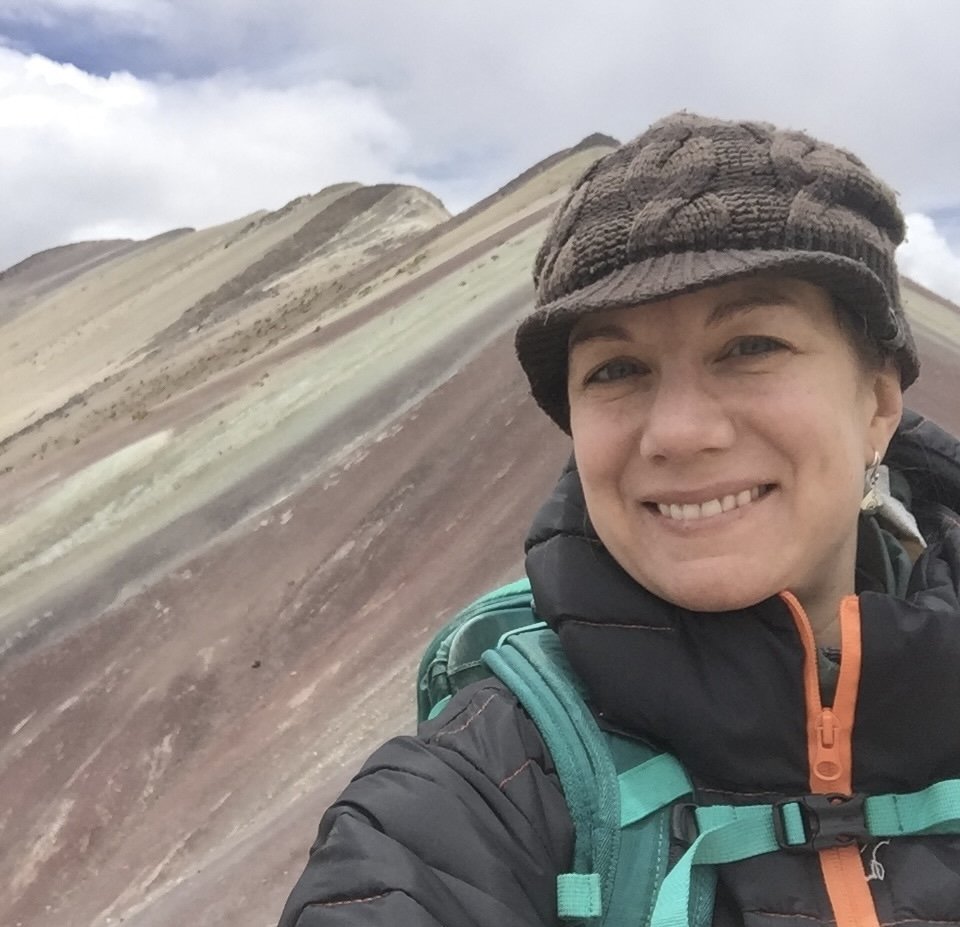
Apologies for the blurry photo. I did not have a nice phone in 2019. The other photos are from my camera.
First, my experience at Rainbow Mountain.
In October 2019, I accompanied a small group of tourists to Rainbow Mountain when I was working with a local Cusqueñian tour agency. Since I live in Cusco, at 3,400m/11,155ft above sea level, I did not experience severe altitude sickness. I took ibuprofen to prevent a headache but otherwise felt fine. The other people in the group experienced more severe symptoms including headaches, feeling breathless, nausea and dizziness.
It was a cloudy day and none of the rock layers stood out as bright colors. Also, it hailed on us when we were at the top. I stayed at the top a bit to see how people in other groups were feeling, which was mostly bad, but the others in my group took one photo and headed back down to lower altitude.
At the time, I thought it was a very lame tour and that taking tourists to such a high altitude was totally irresponsible. The hike was short, but I didn’t see any stripes I could even pretend were a rainbow until I got to the top at 5,200m/17,060ft. Also, the hail hurt because there was nowhere to take shelter.
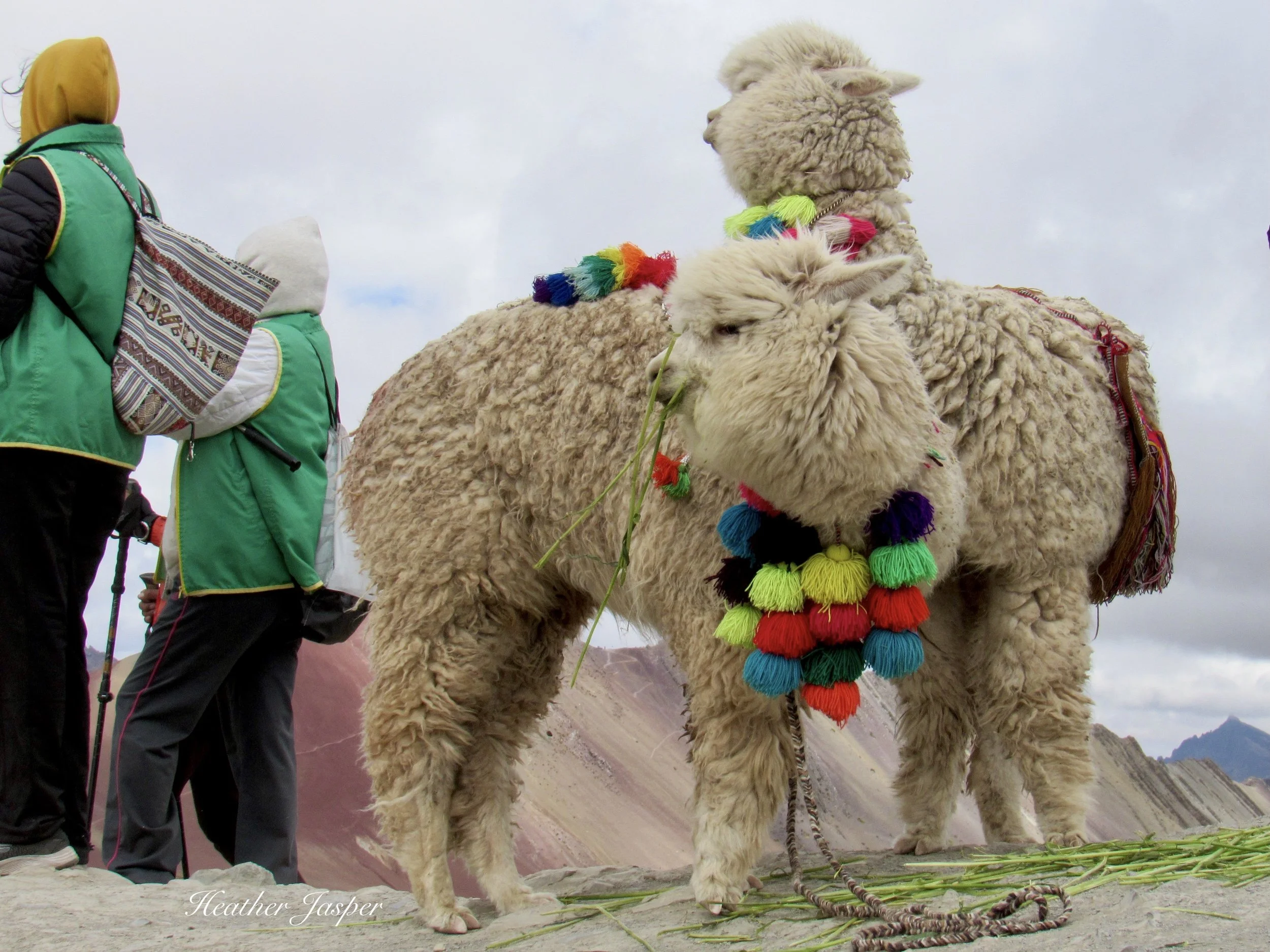
Alpacas for photos
Many people from nearby communities bring their pet alpacas to Rainbow Mountain so tourists can pay them for selfies with the alpacas.
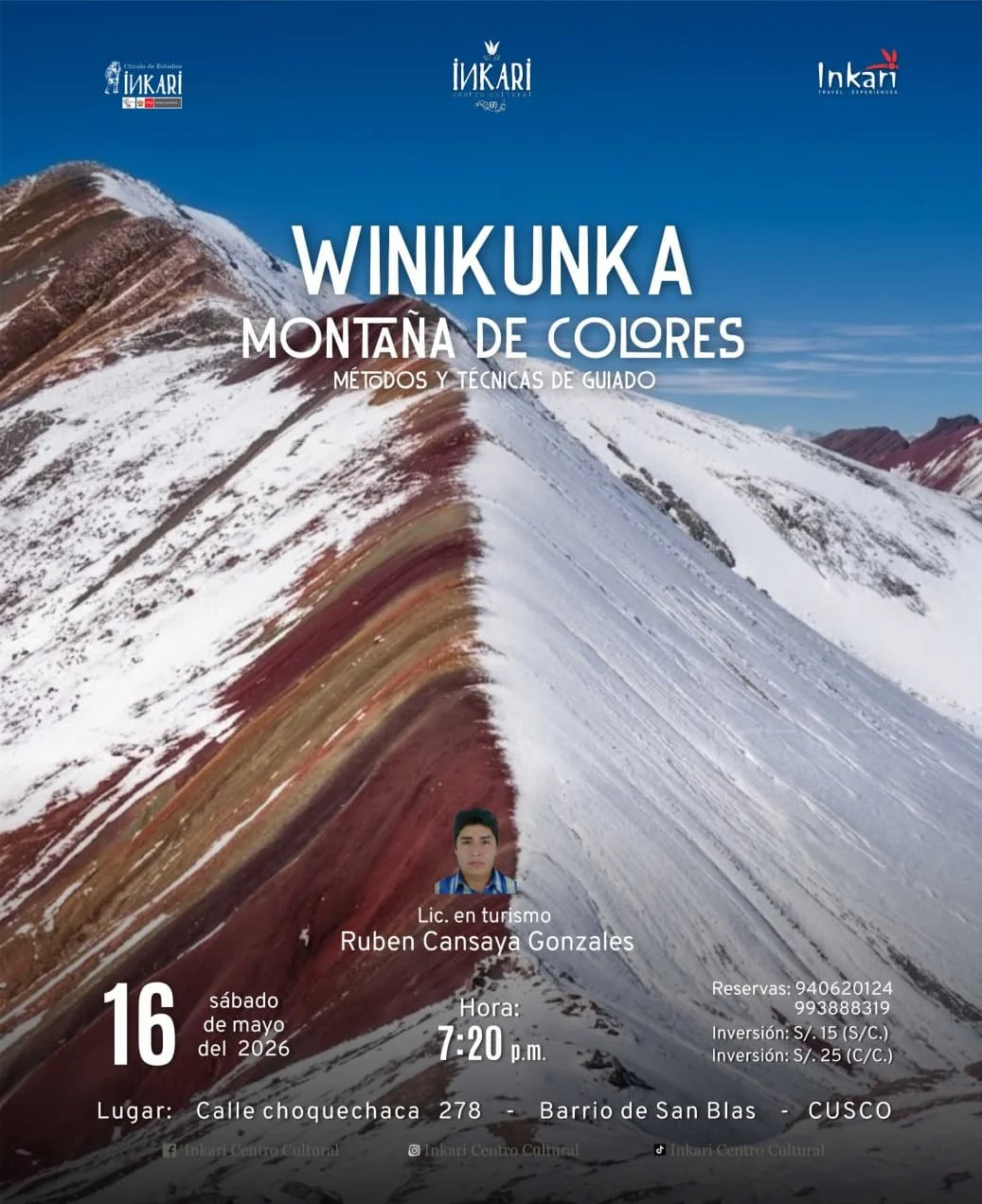
Training for tour guides
I frequently attend trainings like this because Inkari invites all kinds of experts to share their knowledge with tour guides. Ruben Cansaya Gonzales is an experienced tourism expert who had a lot of technical information to teach attendees.
Why am I writing this now?
I haven’t gone back since that 2019 visit, because everything I hear about the place is negative. I’m writing about Rainbow Mountain now because I attended a lecture yesterday by Ruben Cansaya Gonzales that was training for tour guides, part of the continuing education credits that guides in Cusco need to keep their license.
Everything I learned in the lecture reinforced my opinion that the way Rainbow Mountain is marketed and sold to tourists is misleading and borderline dangerous. I feel a responsibility to share this information and to warn international visitors coming to Peru about the reality of Rainbow Mountain.
Rainbow Mountain marketing is very different from reality.
How are guides trained for Rainbow Mountain?
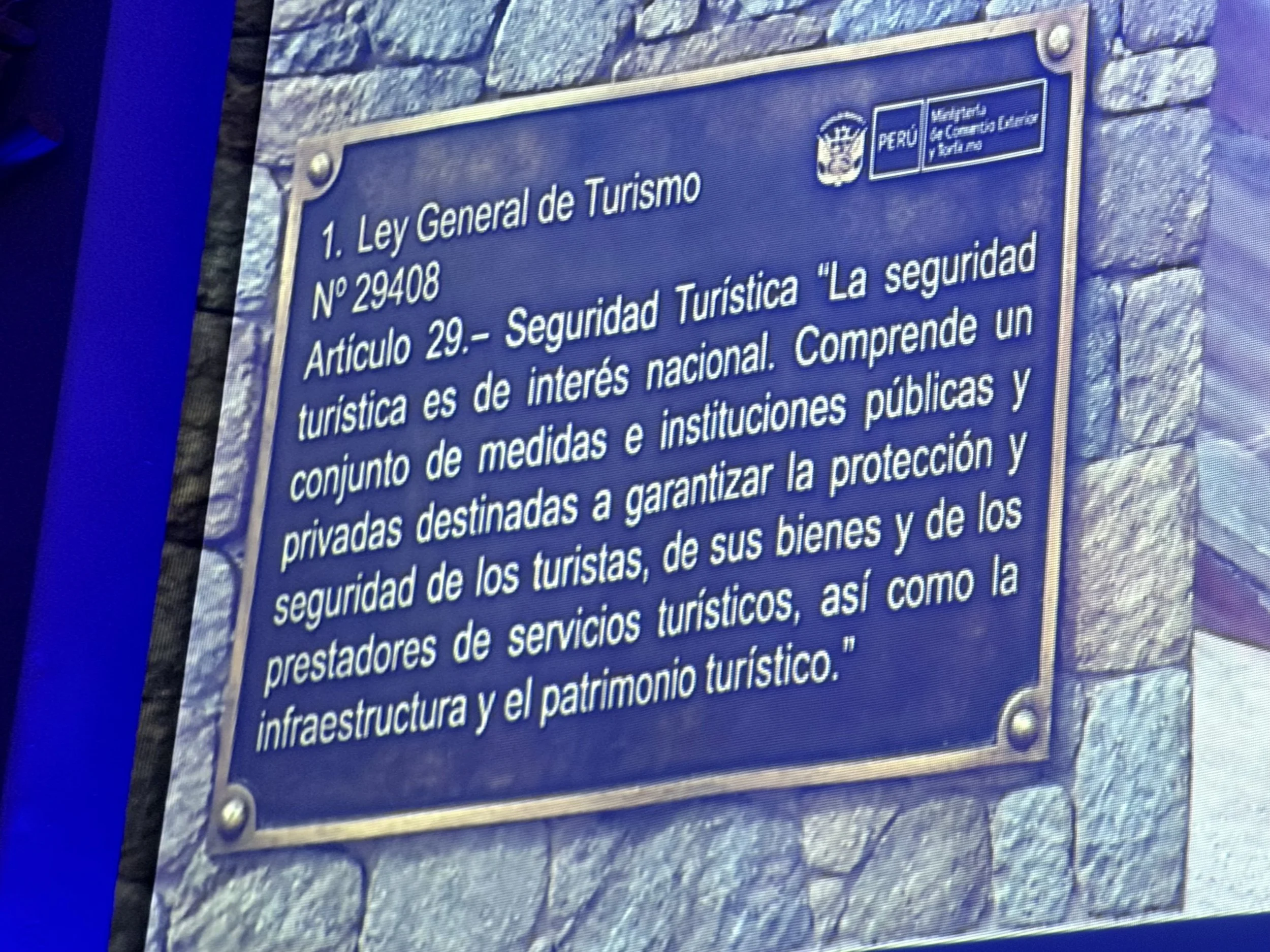
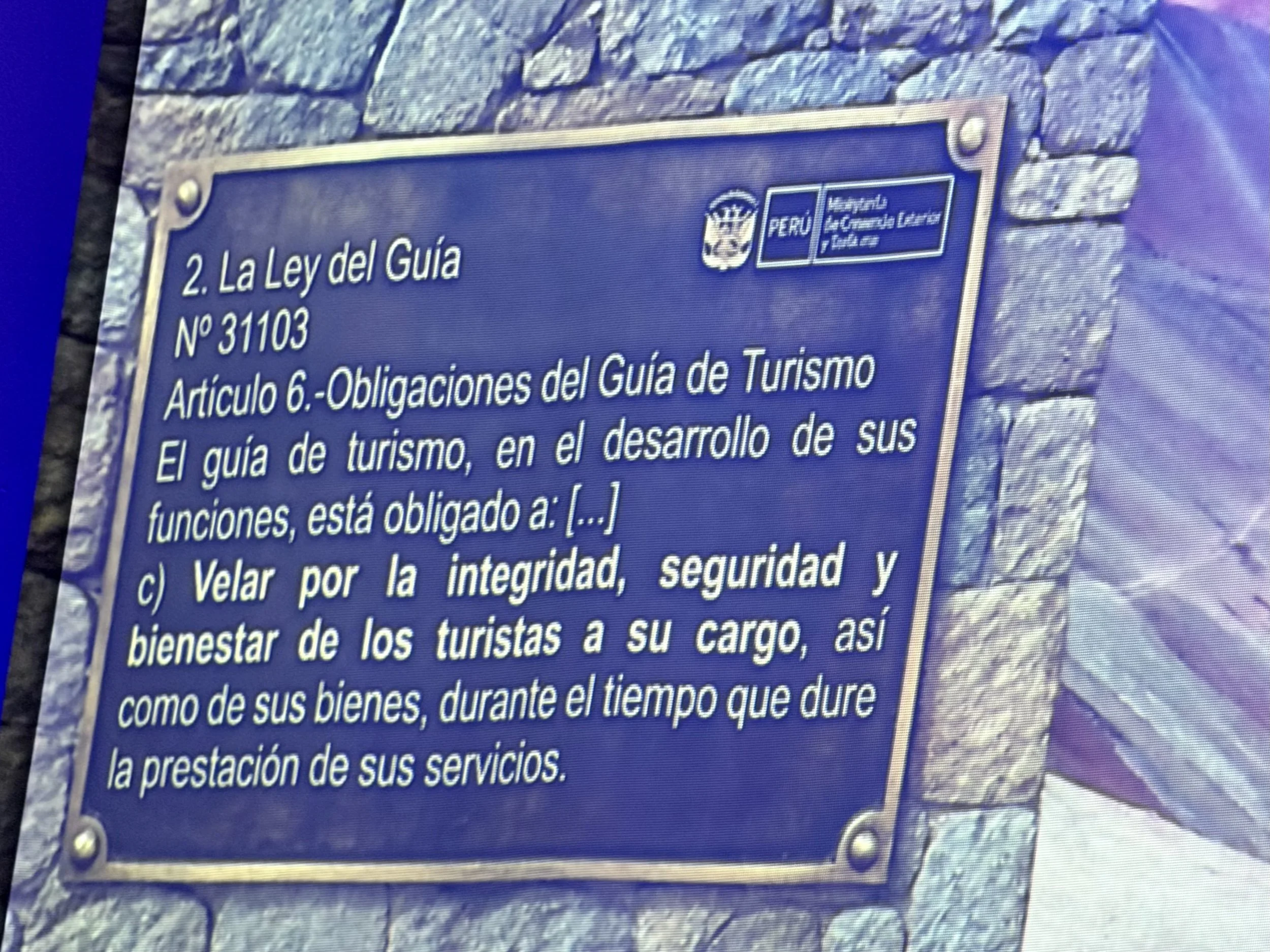
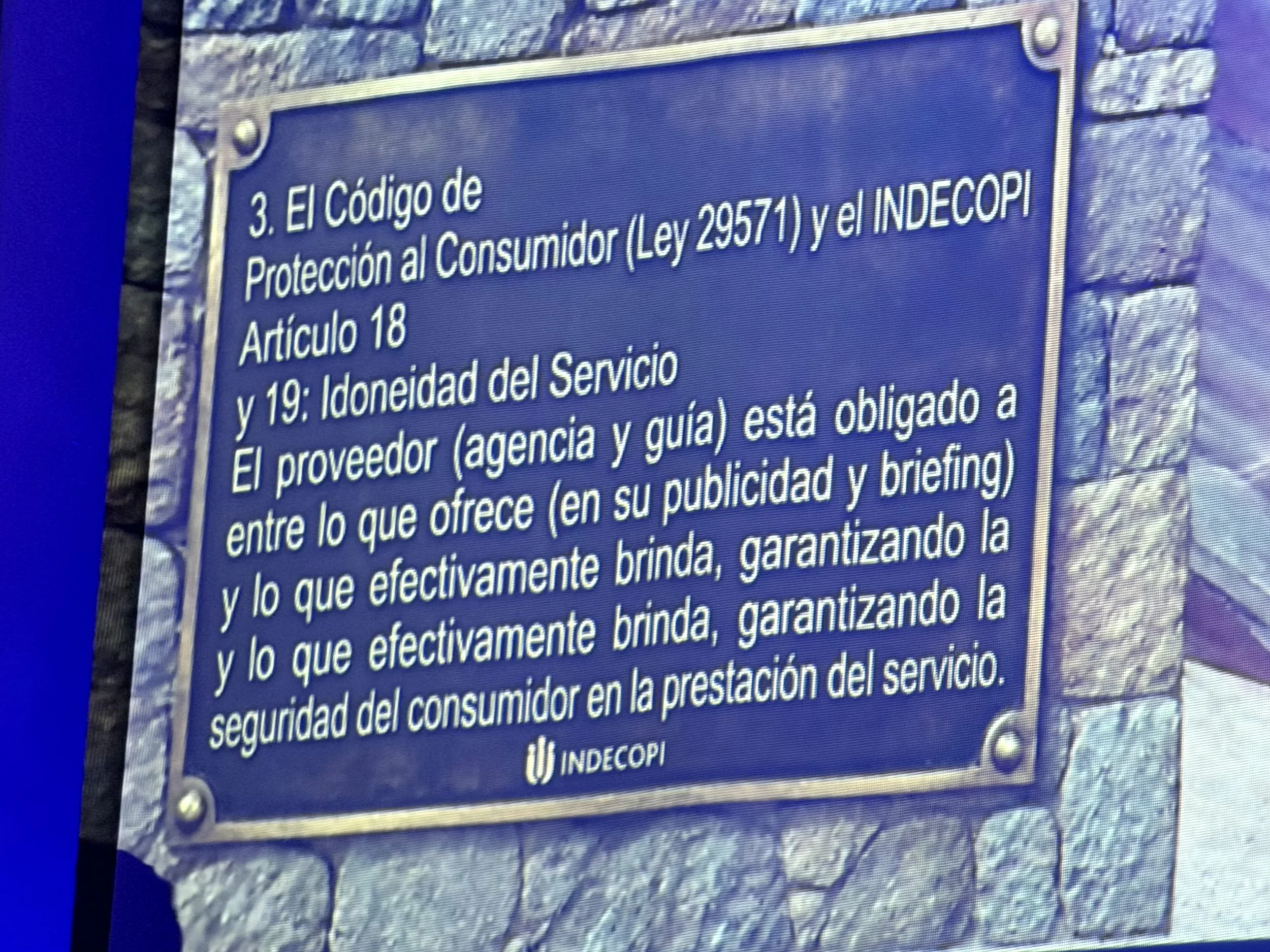
The lecture I attended, by Ruben Cansaya Gonzales, began with a review of three laws. That made me sit up and think “this isn’t going to be the typical talk about what to tell tourists about Andean culture and Incan history.” Apologies that my photos above were taken of his slides from the site.
Law 29408 states: “Tourist security is of national interest. It includes measures and public and private institutions that guarantee the security and protection of tourists, of their goods, and of tourism service providers, as well as tourist infrastructure and heritage.” Article 6 of The Guide Law 31103 states, in part: “The tourist guide is obliged to watch over the integrity, security and wellbeing of the tourists under their care.”
This part of the lecture was about how professional tour guides have a serious responsibility to take good care of their tourists. The consequences of failing to adequately care for tourists are not just bad review on TripAdvisor – they can be criminal indictments.
The third law that Ruben thought was important to discuss with the guides is the Code of Consumer Protection. In effect, what is promised (a brightly colored mountain) must be what is provided. Ruben told us that tourists should be suing for false advertising every day but that nobody wants to spend their vacation in Peru filing paperwork and dealing with bureaucracy.
There were only five guides present, though hundreds of local guides take tourists to Rainbow Mountain. Most of the trainings I attend have 20-30 guides present. From that, I think we can infer that many guides are unprepared for the reality of Rainbow Mountain.
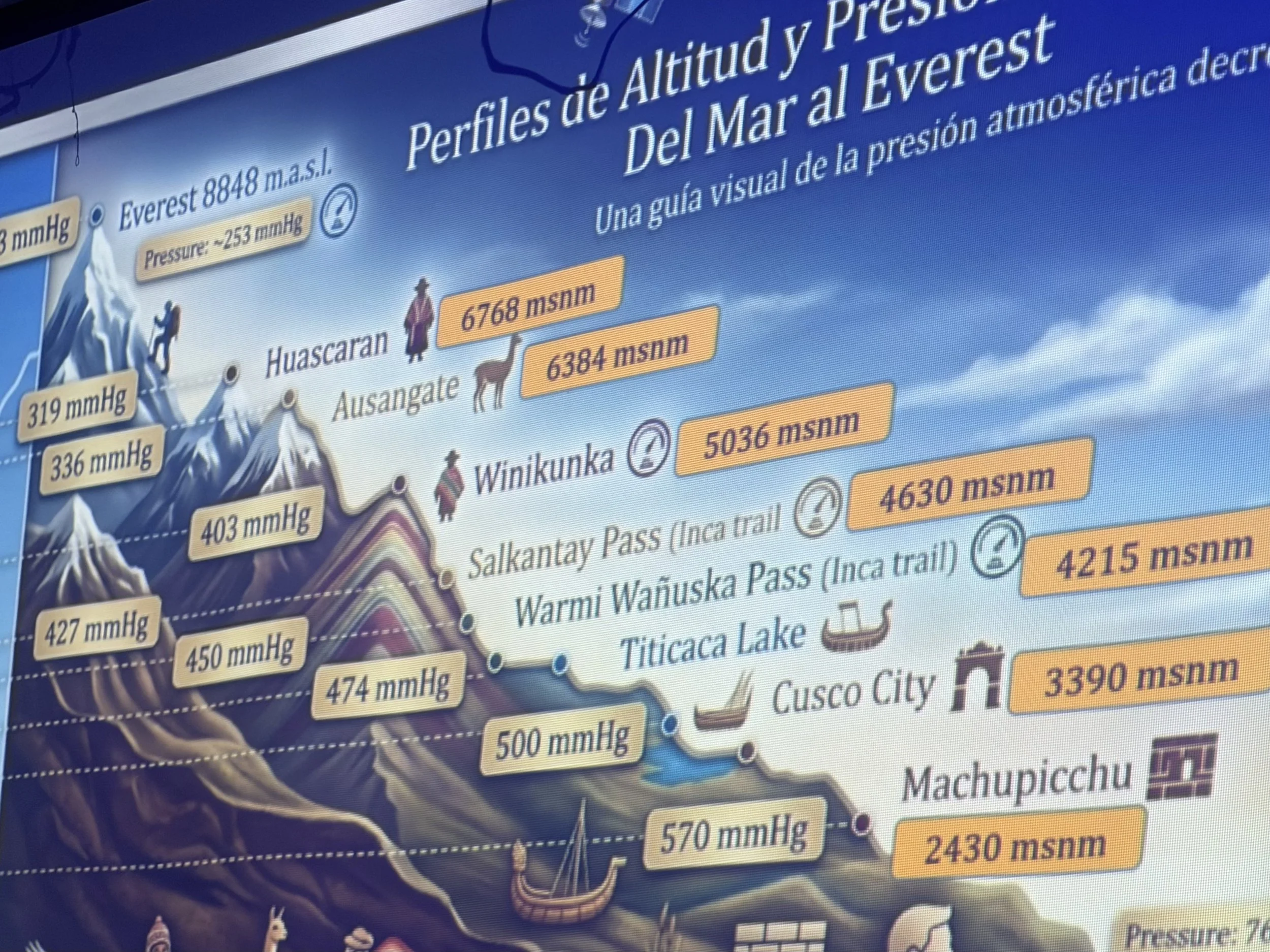
This is one of the slides from the training. MSNM is “metros sobre el nivel del mar,” meters above sea level.
The training focused on the effects of altitude.
The first hour of the training was not about how to get to Rainbow Mountain or any of the area’s history, culture or geology. Instead, it focused on how to take care of tourists who are experiencing some form of altitude sickness.
Ruben reminded the guides over and over that we underestimate the effects of altitude on tourists because we are already acclimated to living at over 11,000 feet. I know many people who play soccer in Cusco, which obviously requires a lot of running. I do cardio workouts in Cusco and jog up stairs. It’s easy for us to forget that people coming from sea level directly to Cusco can develop severe altitude sickness.
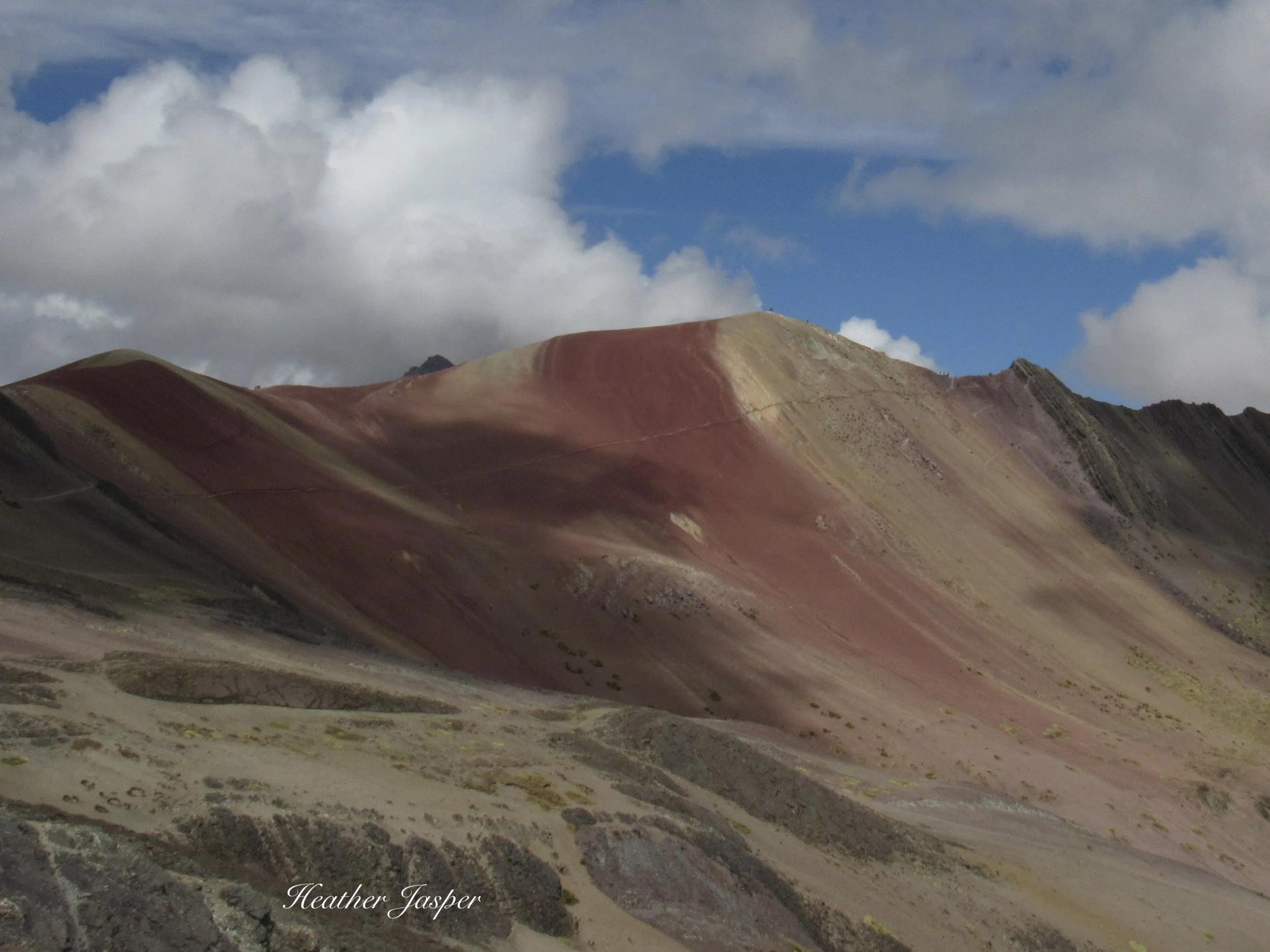
Notice that almost nothing grows up here. It is not a comfortable environment for plants, animals or humans.
Altitude sickness is a spectrum.
Mild symptoms of altitude sickness are headaches and feeling breathless, which is common at 10,000 to 11,000 feet above sea level, i.e. Cusco. If you ignore those symptoms and ascend higher, you are at risk of nausea and dizziness. Your lips, ears and fingernail beds may turn blue or purple, which is common around 13,000 feet above sea level.
If you still ignore that and keep going up, especially past 14,000 feet, you are putting yourself at risk of pulmonary edema. Your lungs fill with liquid, causing a severe cough and blood in your spit so it looks pink. Do not ignore a sudden, severe cough and pink spit. If you keep going up, you are putting yourself at risk for cerebral edema, which is when liquid forms around your brain. Symptoms include walking and talking like you’re drunk and not knowing basic information like your name or where you are.
Pulmonary and cerebral edema are possible at Rainbow Mountain, which is (again) at 5,200 meters/ 17,060 feet above sea level. If pulmonary and cerebral edema symptoms are not treated immediately with oxygen and descending to lower altitude, death can occur within a few hours or a few days.
Disclaimer: I am not a doctor and I can’t diagnose anything. I’m just sharing information I’ve learned in Wilderness First Aid and Wilderness First Responder classes I’ve attended, and what Ruben told the guides at the Rainbow Mountain training.
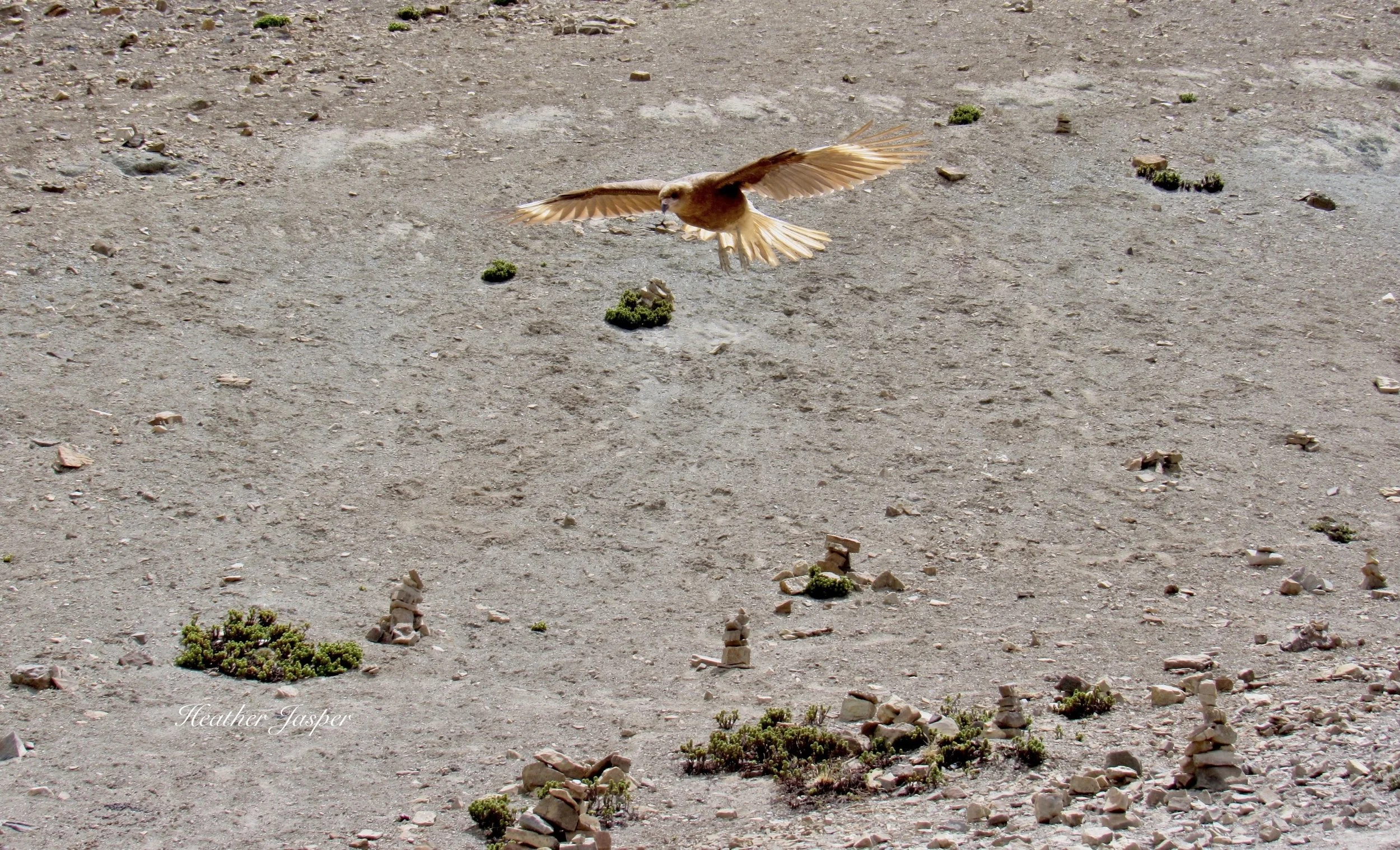
I saw some juvenile caracara falcons practicing flying around Rainbow Mountain but doubt they found much to eat.
Several tourists have died at Rainbow Mountain.
The three I know of are Rafael Miñano in February 2020 (Peruvian, 51 years old), Francesco Cuaranta in August 2022 (French, 74 years old) and Efeanyina Stewart in November 2023 (Canadian, 35 years old).
How to prevent altitude sickness?
The best way to prevent altitude sickness is to ascend slowly. For people coming from sea level, I always recommend a couple days in the Sacred Valley (around 9,000ft) before coming to Cusco at 11,000ft. If you want to hike at 14,000ft, make sure you’re comfortable being active in Cusco before you go any higher. If you want to go to Rainbow Mountain, first make sure you’re comfortable being active at 14,000 feet. By “active” I mean that you can walk up two flights of stairs without stopping and you can walk or hike at a normal pace for half an hour before you need a break.
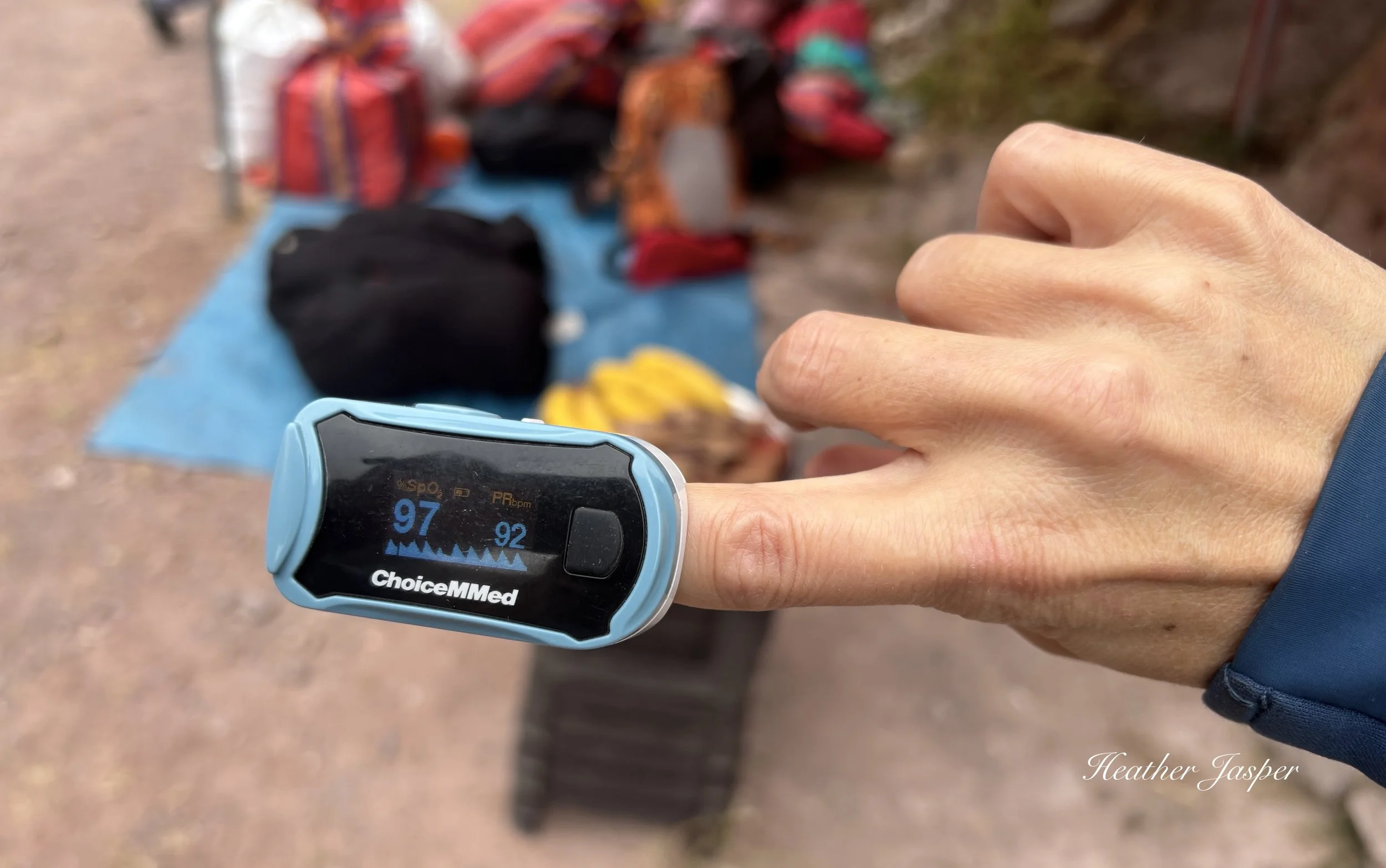
It took me months to fully adapt to living at 11,000 feet. Do not expect to be at 97% oxygen saturation after a few days in Cusco.
How can guides help clients with altitude sickness?
Guides are taught the symptoms of altitude sickness and should be constantly monitoring the wellbeing of their clients. Before you go on any day hike or overnight trek above 10,000ft, make sure your guide has an oxygen tank and a pulse oximeter. I recommend bringing a pulse oximeter with you so you can check your own levels before you leave for any hike or trek.
In Cusco, 85% blood oxygen saturation is considered normal for tourists. The standard that guides are taught is that if a client’s blood oxygen saturation dips below 85%, they’re supposed to administer oxygen and, if possible, descend to a lower altitude. People who live here (and play soccer) have adapted. I’m usually at 97% in Cusco. At sea level, healthy people have 100% oxygen saturation. People climbing Everest get used to being at 70% most of the time.
Do guides carry oxygen at Rainbow Mountain?
Most guides carry a small oxygen tank when they hike with clients to Rainbow Mountain. Before you leave Cusco, check that the car or van has a larger oxygen tank. If you need oxygen, the small tank that the guide carries will only be enough to get you back to the parking lot. You’ll need the bigger tank to get back to Cusco and a clinic or hospital.
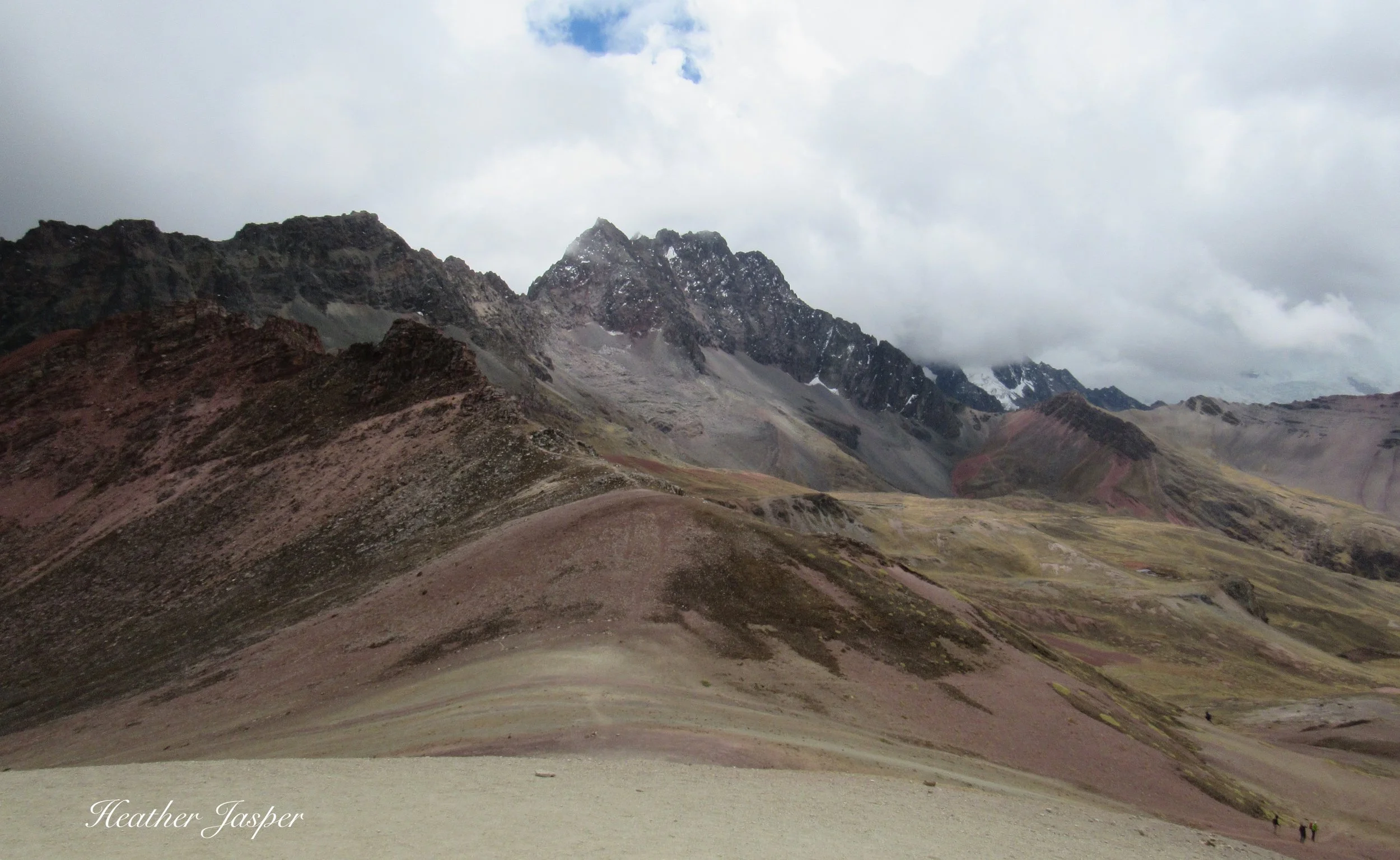
This is what you see if you turn your back on the “rainbow” and crowd and look the other way. Photo colors are unedited.
Beware cheap tours to Rainbow Mountain!
Most cheap tours ($25-50 USD) crowd more than 20 people on a bus, with one guide. With that many people, it’s impossible for the guide to effectively monitor the wellbeing of every client. Guides cannot carry enough oxygen to help more than one person at a time. Cheap tours are unlikely to have a big oxygen tank in the bus to help anybody in real distress. If anybody has a medical emergency, the bus will not rush them to a clinic or hospital. It will wait for all the stragglers who walked slowly before going back to Cusco.
Altitude is not the only problem at Rainbow Mountain.
Rainbow Mountain is a victim of its own success.
There are no limits to the daily number of people and no effective trash collection, which negatively impacts the environment. Tourism has grown too fast to be effectively managed. In 2015 about 30 people per month visited Rainbow Mountain. In 2016 it grew to 400 per day. When I visited in 2019 about 1,000 people per day went to Rainbow Mountain. Estimates for 2025 were 1,500 to 2,000 people daily.
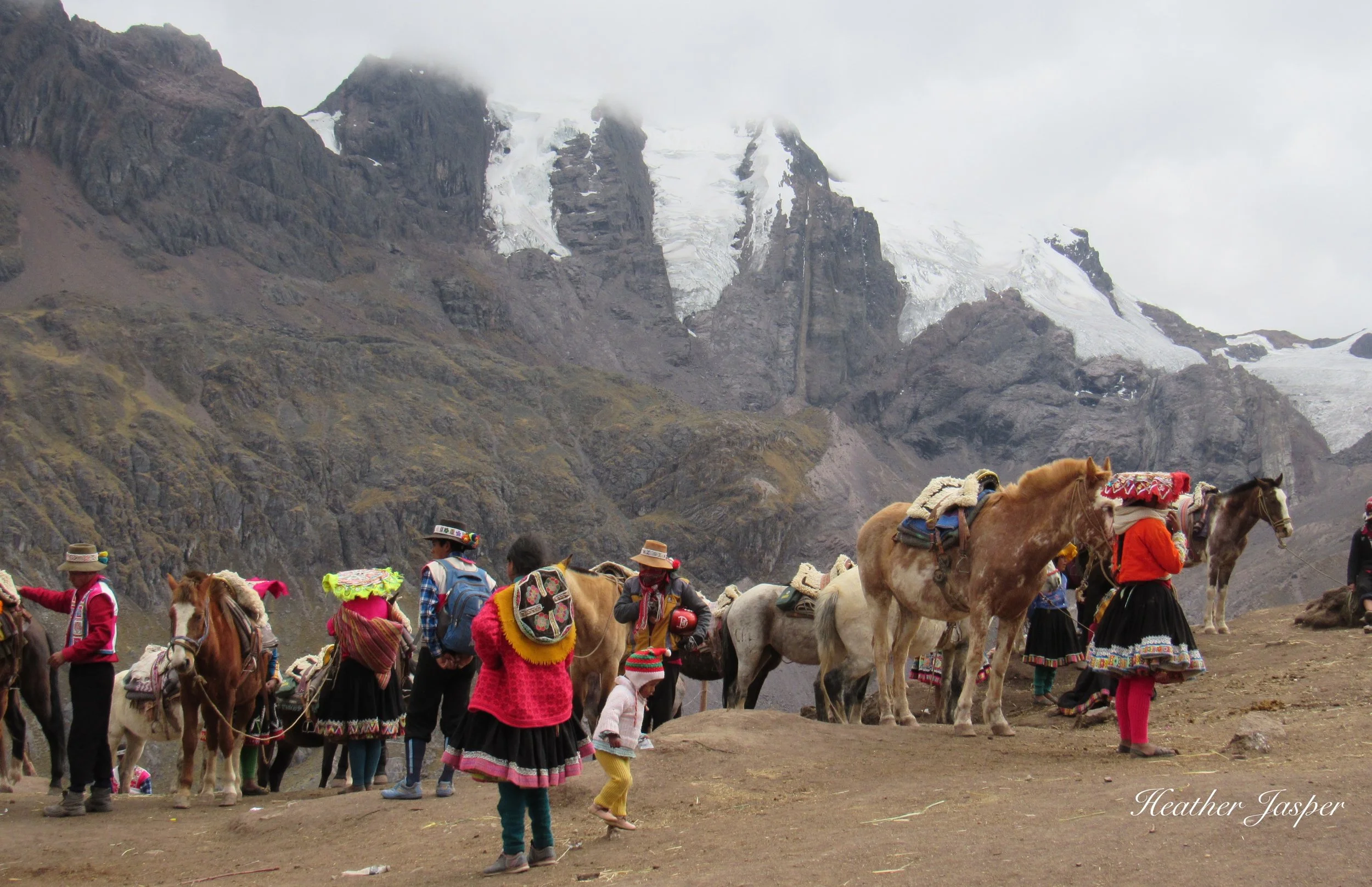
I love Andean culture and their fabulous hats but I don’t love the conflict that Rainbow Mountain has caused between and within nearby communities.
Rainbow Mountain causes conflict.
There is conflict between the nearby communities which own the land as to how to divide and manage the money generated by ticket sales.
In 2024, one local community member named Flavio Illatinco was killed over the money generated by Rainbow Mountain. If you want to know more about this problem, watch the 42-minute Bloomberg Investigates documentary from 2025: How a Killing in Peru Exposes the Dark Side of Tourism.
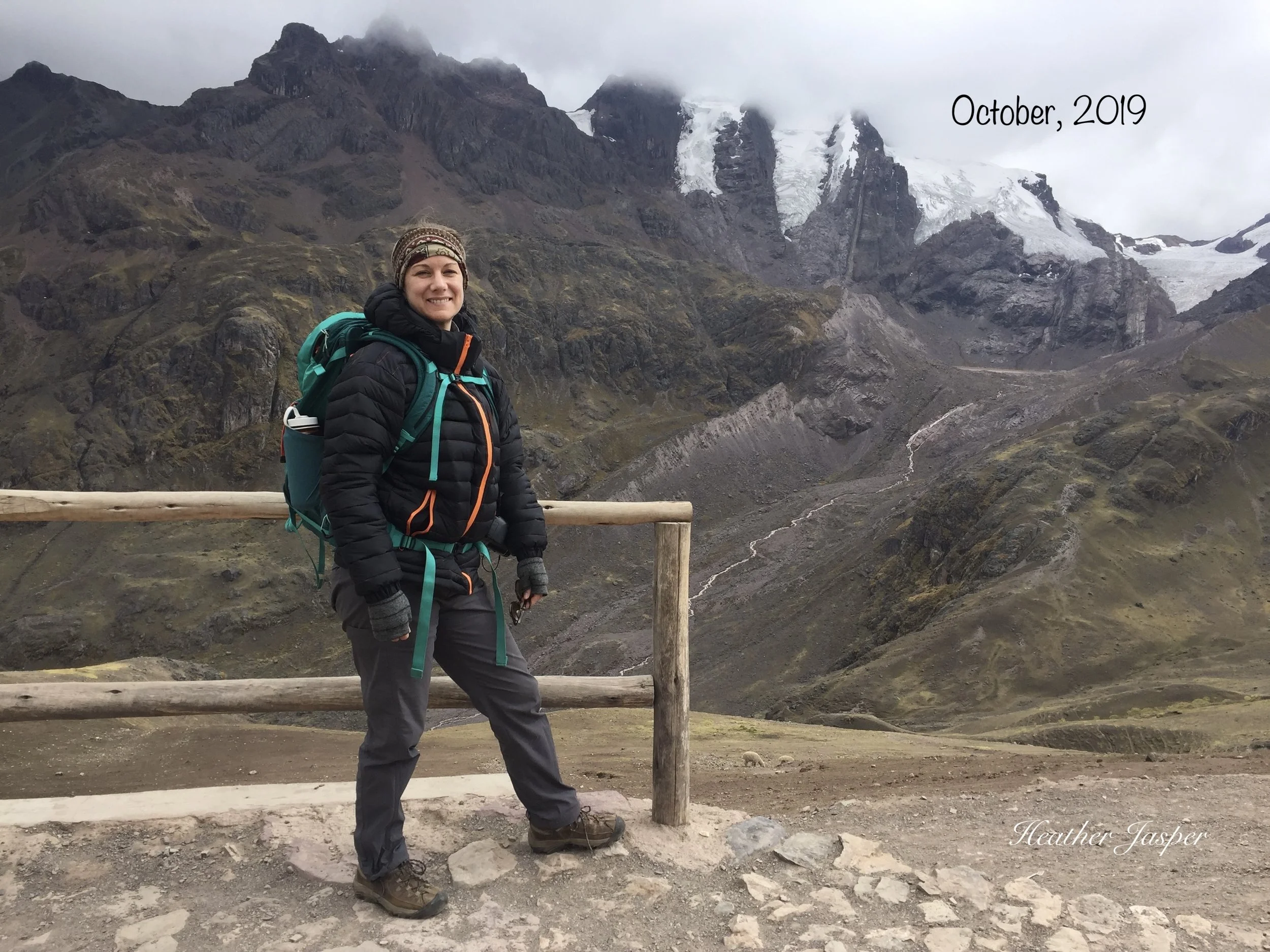
The past few years I’ve thought that I should go back to Rainbow Mountain before I write about it. But I don’t want to go back.
I’ve been telling people for years not to go to Rainbow Mountain.
At the end of the 2-hour training, I asked Ruben if I should continue to tell my readers to not go to Rainbow Mountain. He said yes, I should keep warning people about the reality of Rainbow Mountain. He also said that if people want to have a peaceful experience in the mountains near Cusco, and see colorful sedimentary layers, they should go to Palccoyo or Pallay Punchu. (I’m going to Palccoyo in June and will link that blog post here after my trip).
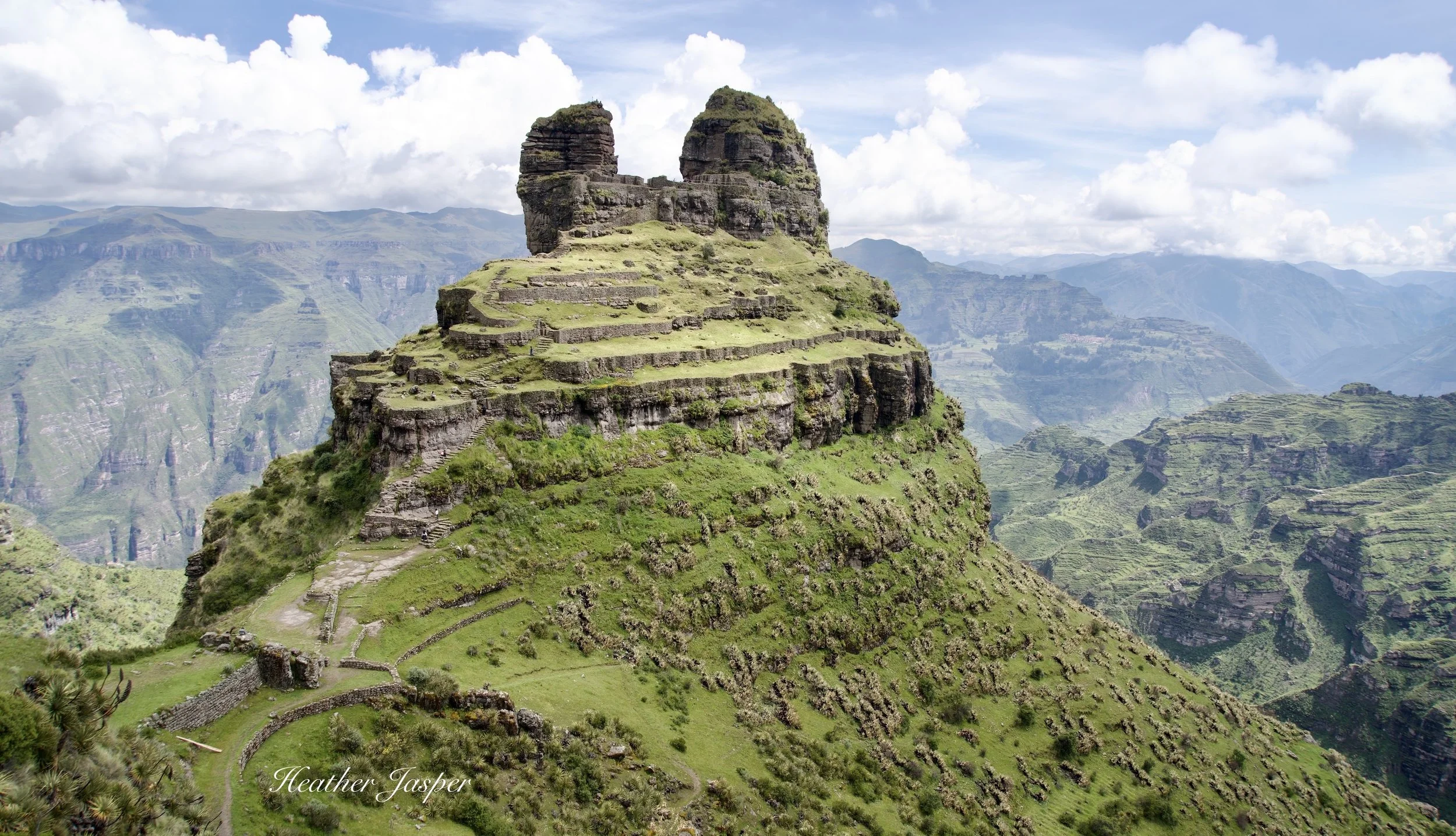
The highest point on the trail to Waqra Pukará is about 15,000 feet above sea level but you’re only that high for about 20 minutes.
What are alternatives to Rainbow Mountain?
Besides Palccoyo and Pallay Punchu, there are a lot of places around Cusco where you can do a day hike to a beautiful place. My favorites are Waqra Pukará (4,140m/13,583ft), Huchuy Qosqo (3,650m/11,975ft) and Inti Punku (4,000/13,123ft).
The bottom line:
If you really want to go to Rainbow Mountain, go prepared.
Acclimatize several days in Cusco and higher, if possible. Be active for two days at 13,000-14,000 feet. Hike to Waqra Pukará or Inti Punku. Take a pulse oximeter and make sure your guide carries a small oxygen tank and your car or van has a large oxygen tank. You should also be prepared to edit and saturate your photos if you want them to look anything like the Rainbow Mountain photos you saw on Instagram.