Sacred Valley Weekend
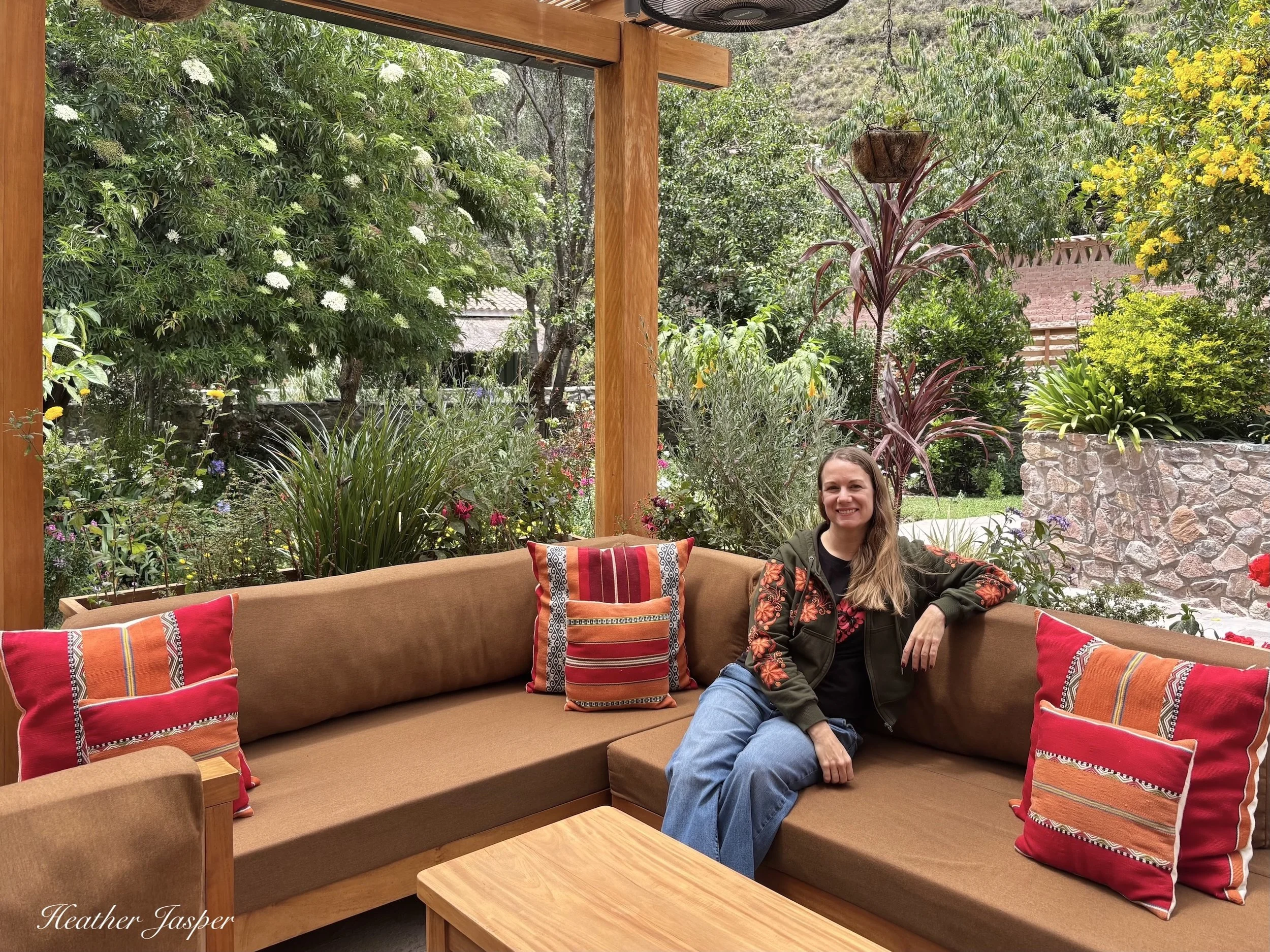
I loved how every part of Las Qolqas was partly outdoors and full of flowers and hummingbirds.
The perfect weekend in the Sacred Valley.
I found the most sustainable and perfectly located place to stay in the Sacred Valley.
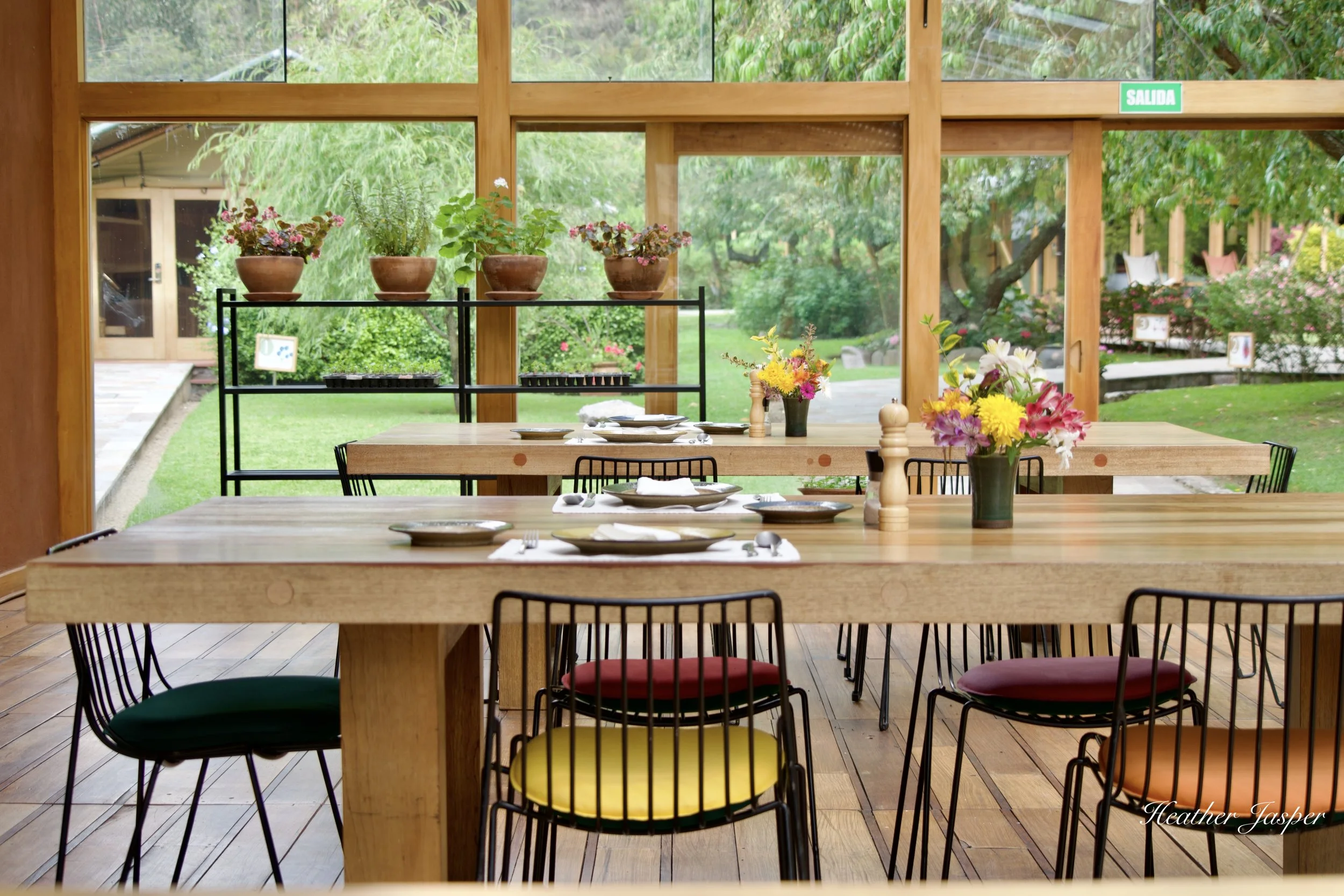
The dining room’s walls are all sliding glass doors and the tables always have fresh flowers cut on the property.
Here’s my 3-day itinerary for the perfect weekend in Ollantaytambo.
This is easy to adapt for travelers on their first trip to Peru or for my friends in Cusco who want a weekend getaway to the valley!
Day 1: Arrive at Las Qolqas in the afternoon, relax in the gardens and have a massage.
Day 2: Visit the Ollantaytambo archeological site or relax with a book in front of your tent, take a cooking class, then hike to Pinkuylluna or Pumamarka.
Day 3: Visit Machu Picchu or go to the Ensifera Ensifera hummingbird gardens in Yanahuara in the morning, have lunch at Chuncho and spend the afternoon at the Qolqas spa.
If this is your first time in the Sacred Valley, you have to see the Ollantaytambo archeological site and do a day trip to Machu Picchu. If you’ve already seen those two important sites, there’s plenty more to see in and around Ollantaytambo.
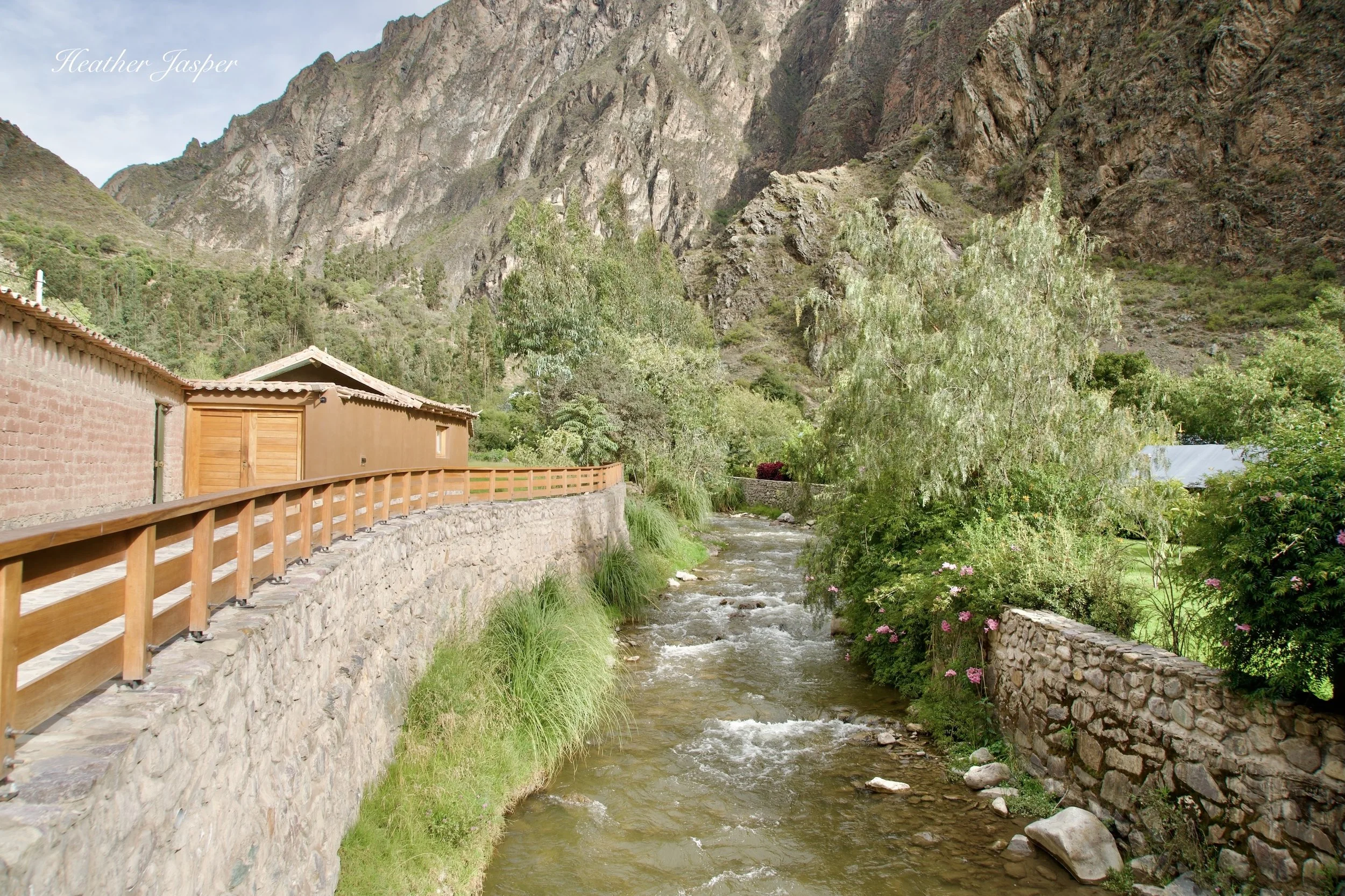
Arriving at Las Qolqas you walk across this little river on a wooden bridge.
How to get to Ollantaytambo?
If you’re in Cusco, go to Puente Grau, where you can get a taxi or shared van to Ollantaytambo or Urubamba. There will be lots of people shouting for passengers for both locations so just go to whoever says Ollantaytambo. A seat in a shared taxi is s/15 soles and in a van is s/10. If you don’t want to share a taxi, just pay for all four seats: s/60. If you’re flying into the airport, you can negotiate with taxi drivers at the airport to take you directly to Ollantaytambo. A fair rate is s/80-120, depending on the vehicle and number of passengers.
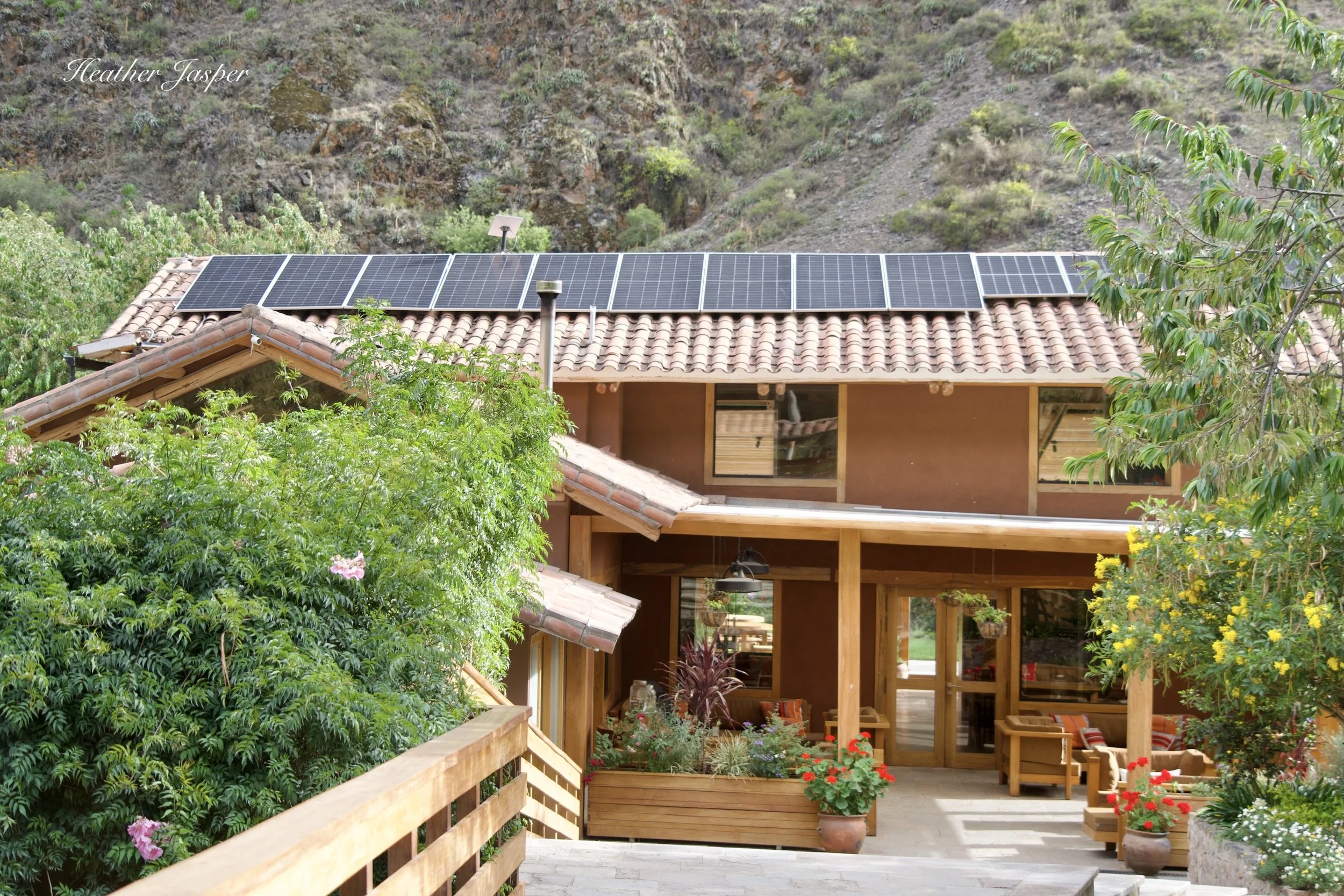
From the bridge you can see the solar panels that supply about 80% of the electricity used at Las Qolqas.
Day 1: Arrive and relax
Whether you just arrived in Peru or want a relaxing weekend getaway, take it easy on the first day. The Las Qolqas shuttle picked me up in the Ollantaytambo main square and drove me 7 minutes up a beautiful side valley to the hotel. Arriving around 3pm, I walked over a bridge that crosses the river you can hear from everywhere on the hotel’s property.
The reception, bar, restaurant and an upstairs common area were once the property’s old farmhouse. Las Qolqas kept the original building’s footprint but added on covered patios on all sides so the expansions are full of light and feel semi-outdoors.
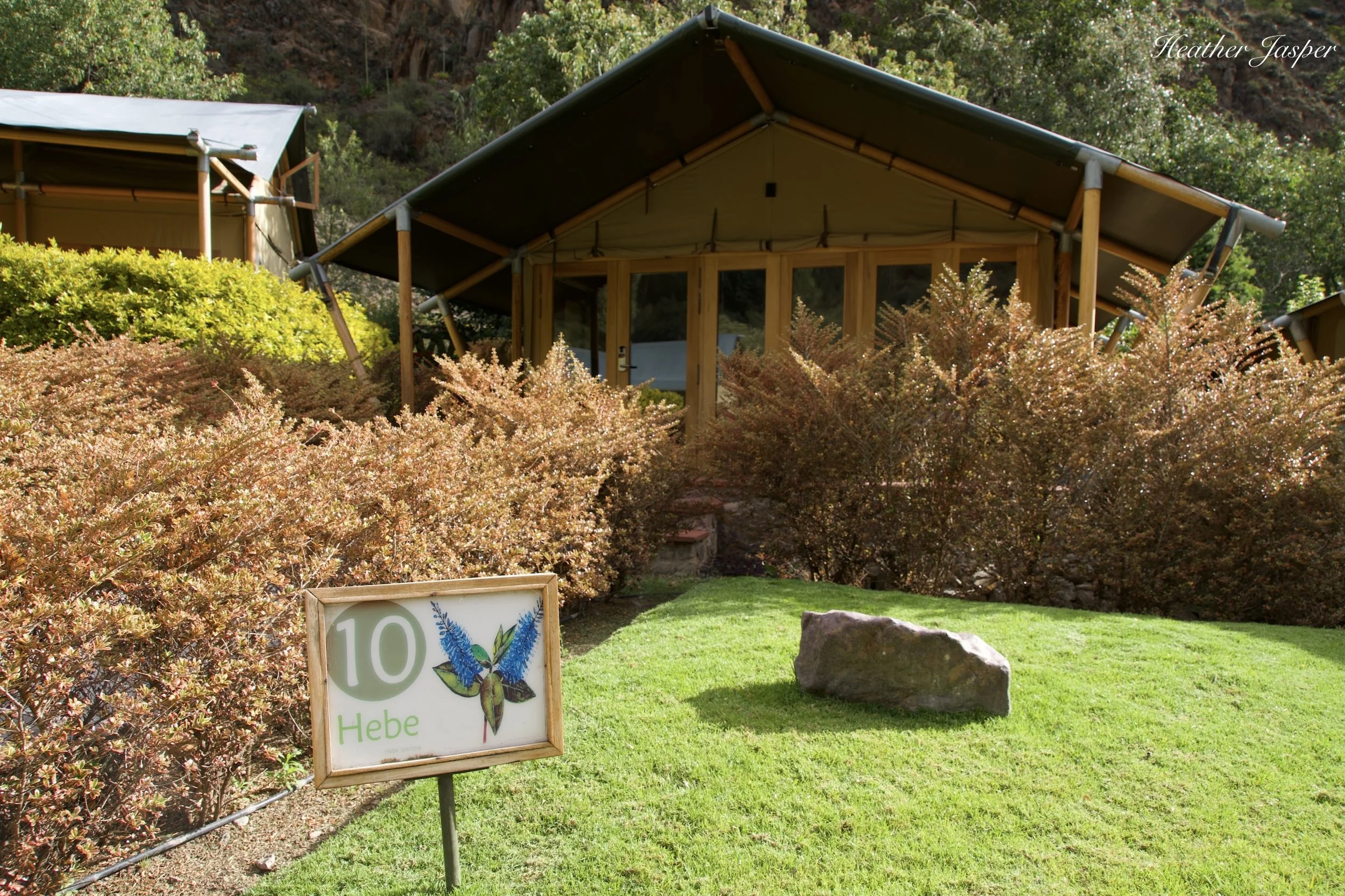
This was my tent, surrounded by pretty bushes. All tents have tall hedges and black-out curtains for privacy.
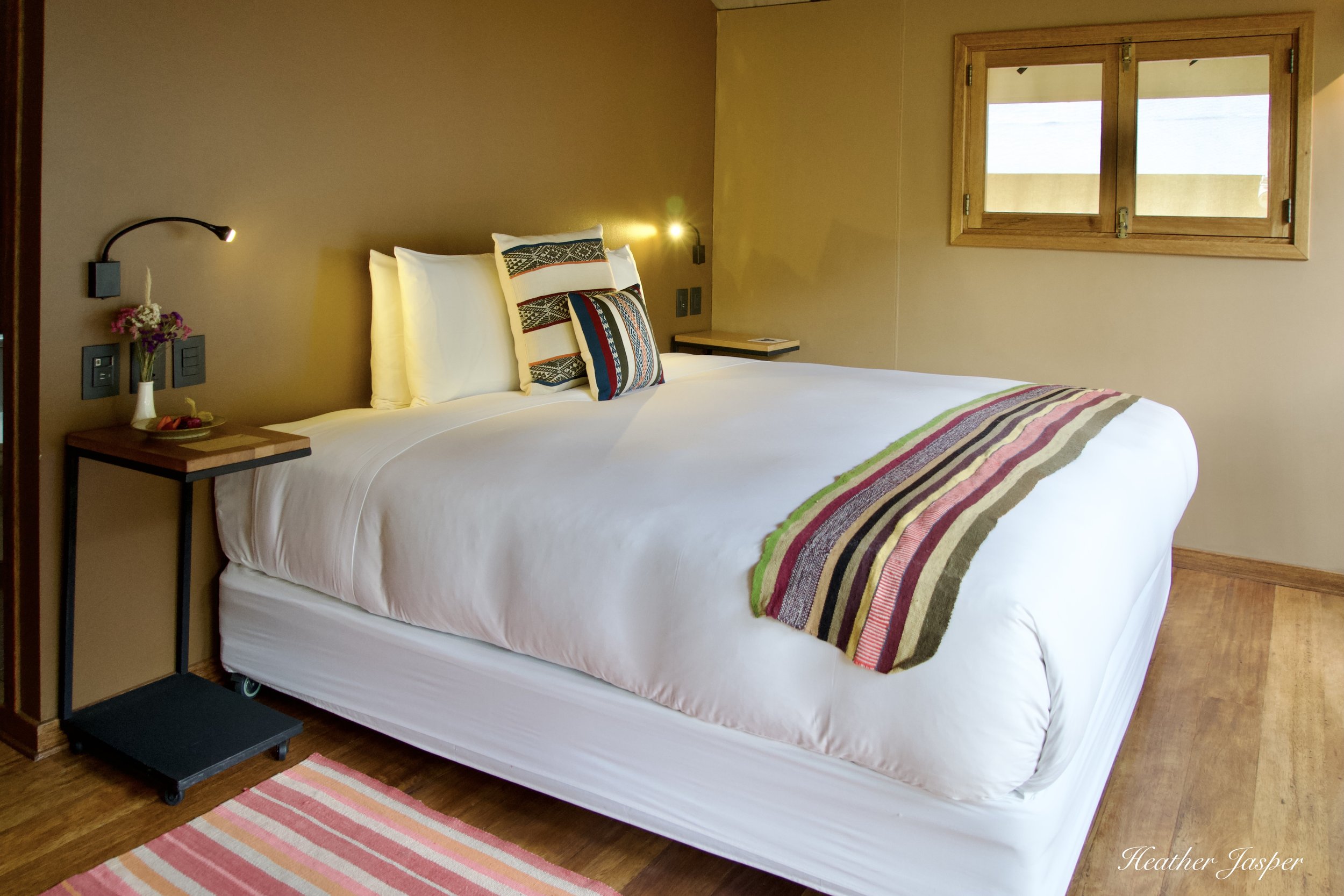
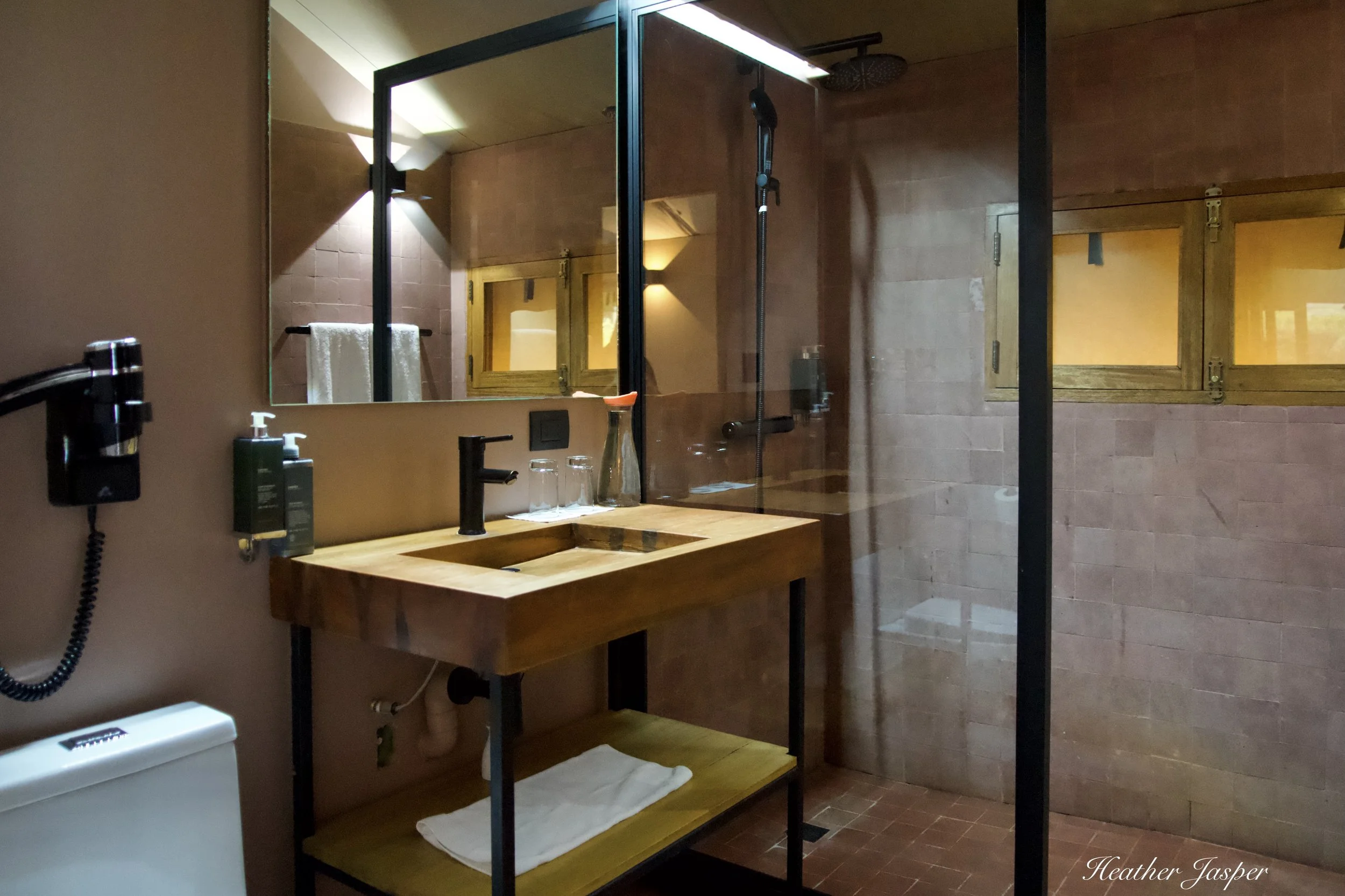
I spent a couple hours wandering the property to see all the flowering bushes and fruit trees, which were full of birds, and settling into my tent, which felt more like a cabin than a tent. The bathroom has solid walls, there is a woodburning stove, and the closet held a mini-fridge, along with plenty of shelves and hangers so I could unpack for my 3-night stay.
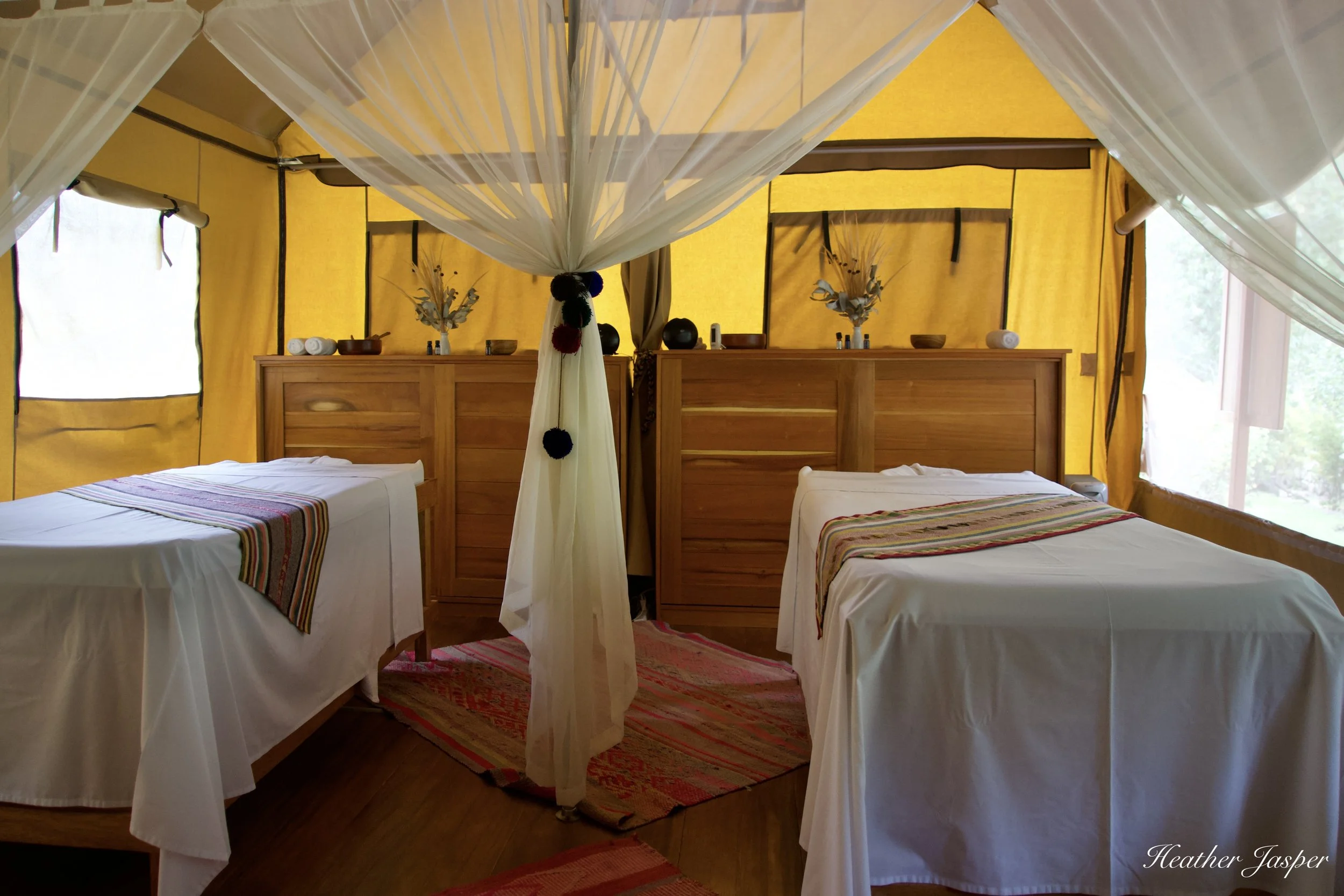
The spa tent has two heated tables, for solo or couple’s massages.
That first night I had the most relaxing massage, which really set the tone for my mini-vacation in Ollantaytambo. My masseuse, Nayda, was excellent. She’s from the Sacred Valley and has worked at Las Qolqas less than a year but told me she really likes it there. (Las Qolqas has a policy of hiring at least 80% of their staff from local communities). I scheduled the massage for 7pm, planning to have dinner afterwards but I was so relaxed afterwards I wasn’t hungry and fell asleep early. Recommendation: Have dinner before your massage or schedule the massage earlier.
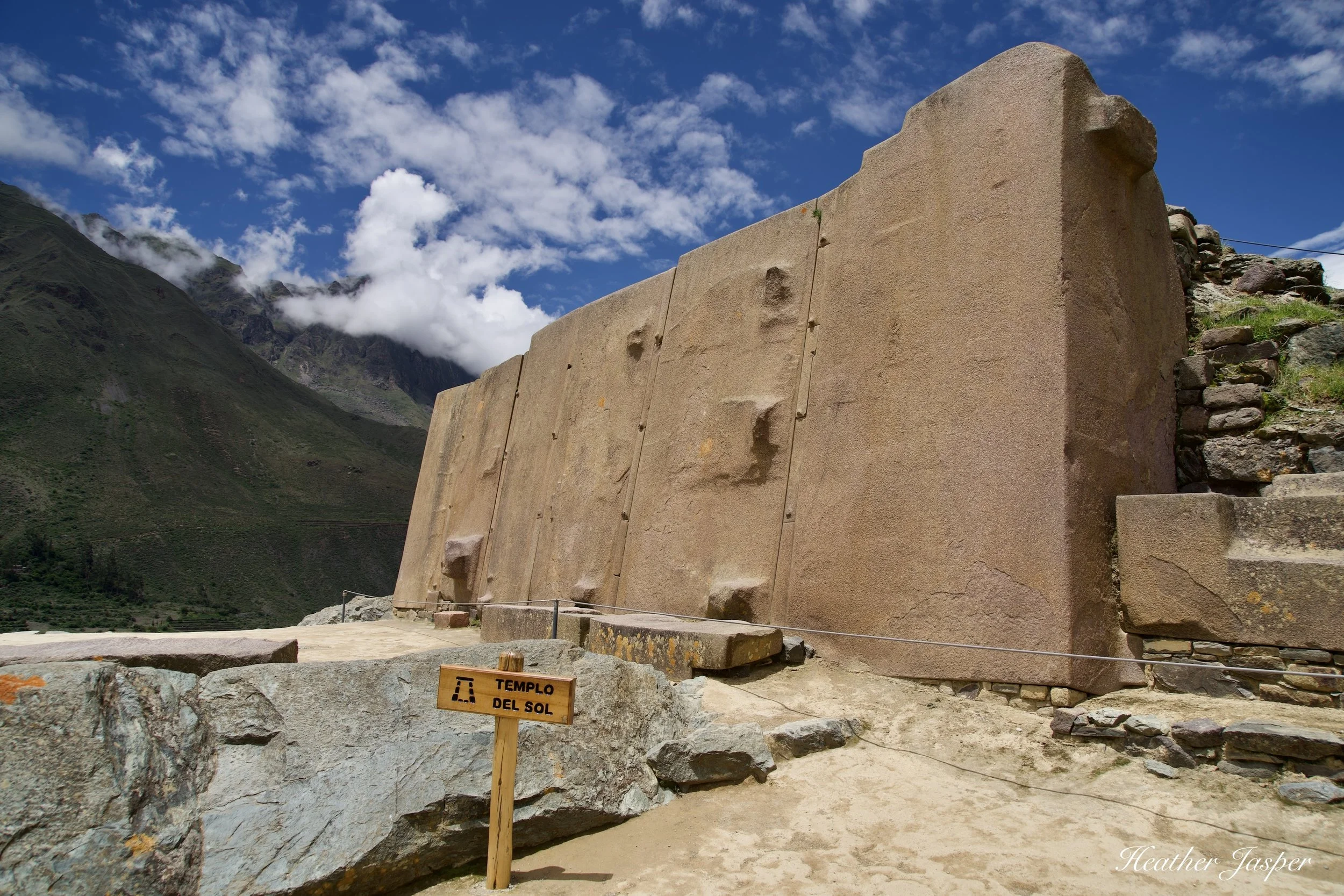
At the top of the Ollantaytambo archeological site is this impressive wall, with giant stones quarried from the distant hillside.
Day 2: Enjoy Ollantaytambo and learn to make ceviche.
If this is your first trip to Peru, after breakfast you should start out the morning at the main archeological site. Most tourists visit Ollantaytambo as part of a full day tour of the Sacred Valley, which starts at Pisac in the morning and ends with an afternoon visit to the Ollantaytambo archeological site. Visiting in the morning, you skip the crowds and the weather is always better. (Sunny days often have windy afternoons and rain is more common in the afternoon than the morning). This blog shows you just how amazing the archeological site is and why you absolutely have to visit for at least 2 hours.
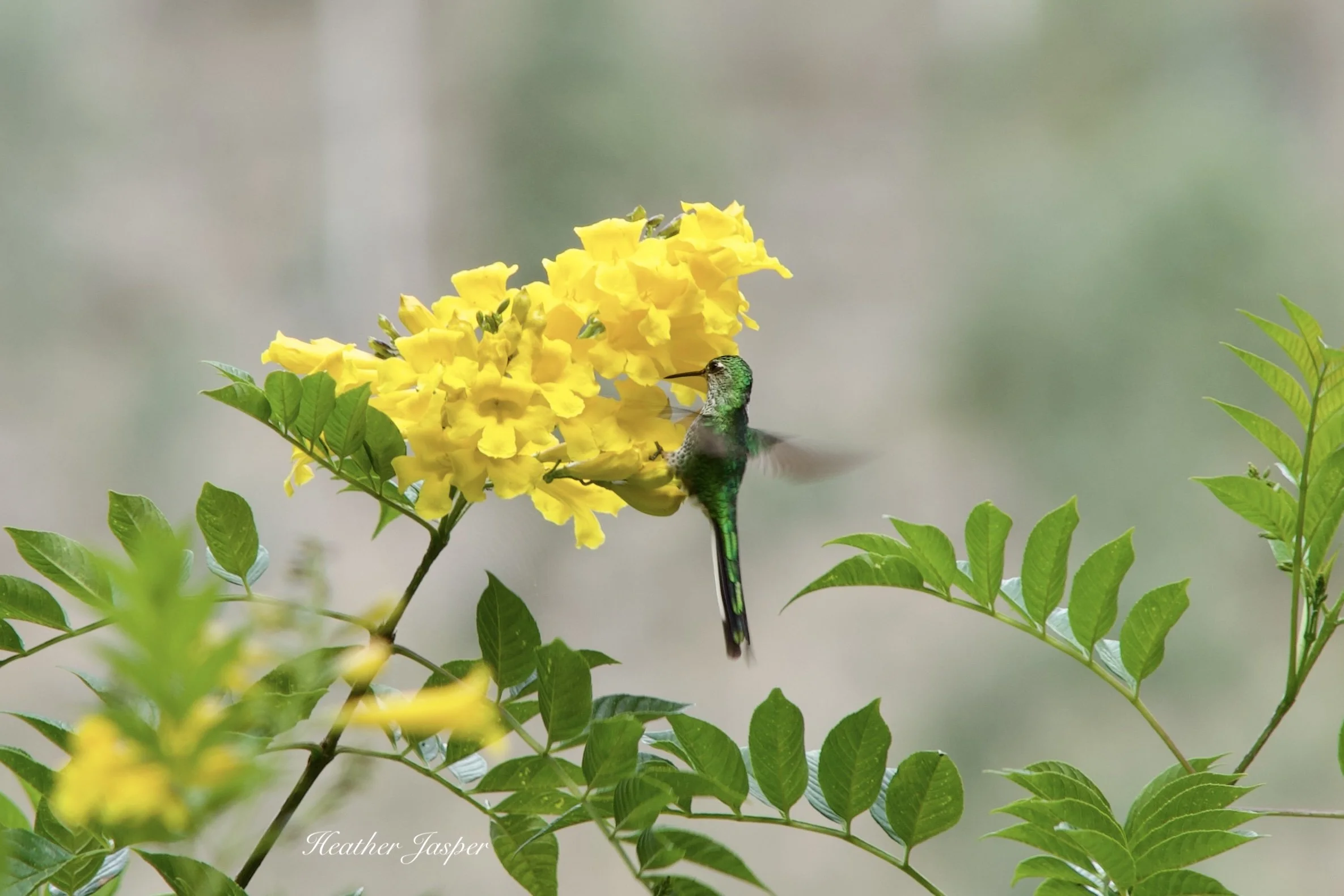
I’ve visited 10+ times already, so I decided to spend the morning reading a book and bird watching. I saw fifteen species of birds, just sitting in front of my tent in one of the comfortable canvas chairs that make each tent’s patio so inviting.
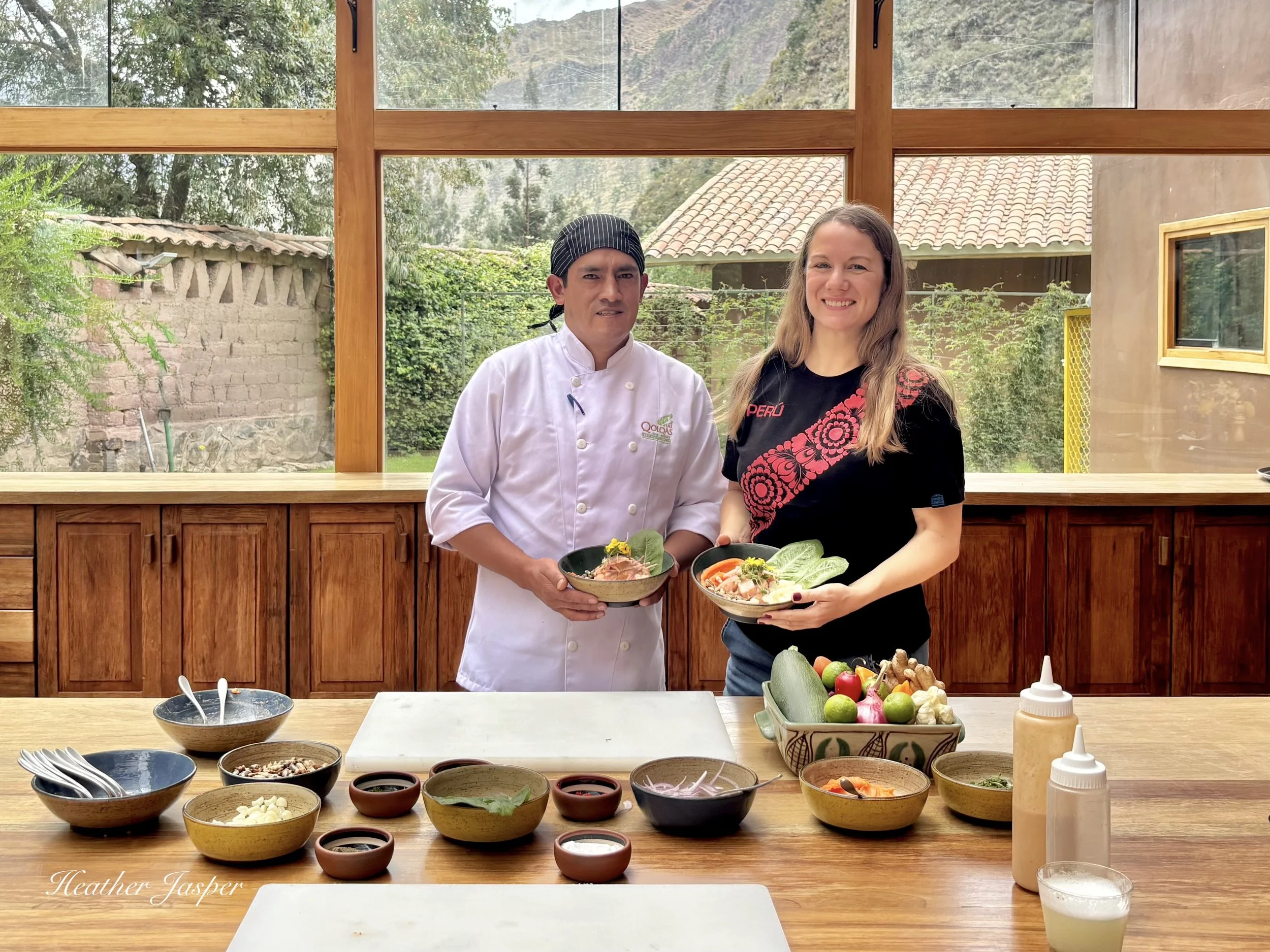
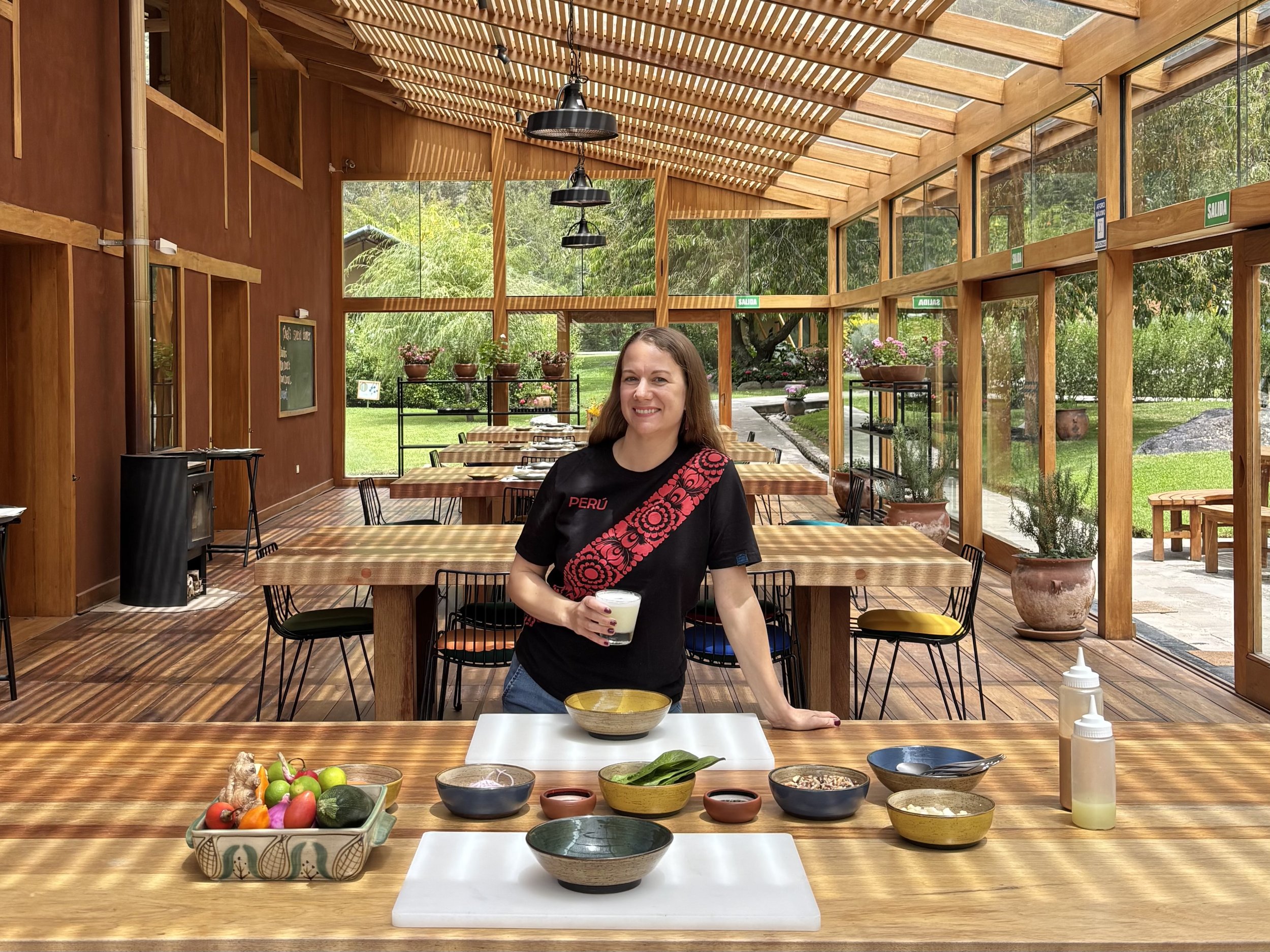
Lenin, the chef at Las Qolqas, showed me how to make ceviche with trout.
Las Qolqas has cooking experiences.
I scheduled a cooking experience at noon, because I love seeing how food is made just as much as I love eating. (Read about my favorite cooking class in Cusco on this blog). We started with a pisco sour, and of course the pisco was made in Peru but I was also happy to see that all the wine and other drinks are also Peruvian. Nothing is imported, so your drinks have a lower carbon footprint than at most hotels.
After the pisco sour, the chef, named Lenin, taught me how to make ceviche with trout. The other cooking classes I’ve done taught how to make ceviche with ocean fish but TBH there is no sustainable fishing on Peru’s coast. There are plenty of small trout farms in the Sacred Valley, so eating trout is more environmentally sustainable and supports local families rather than industrial fishing companies.
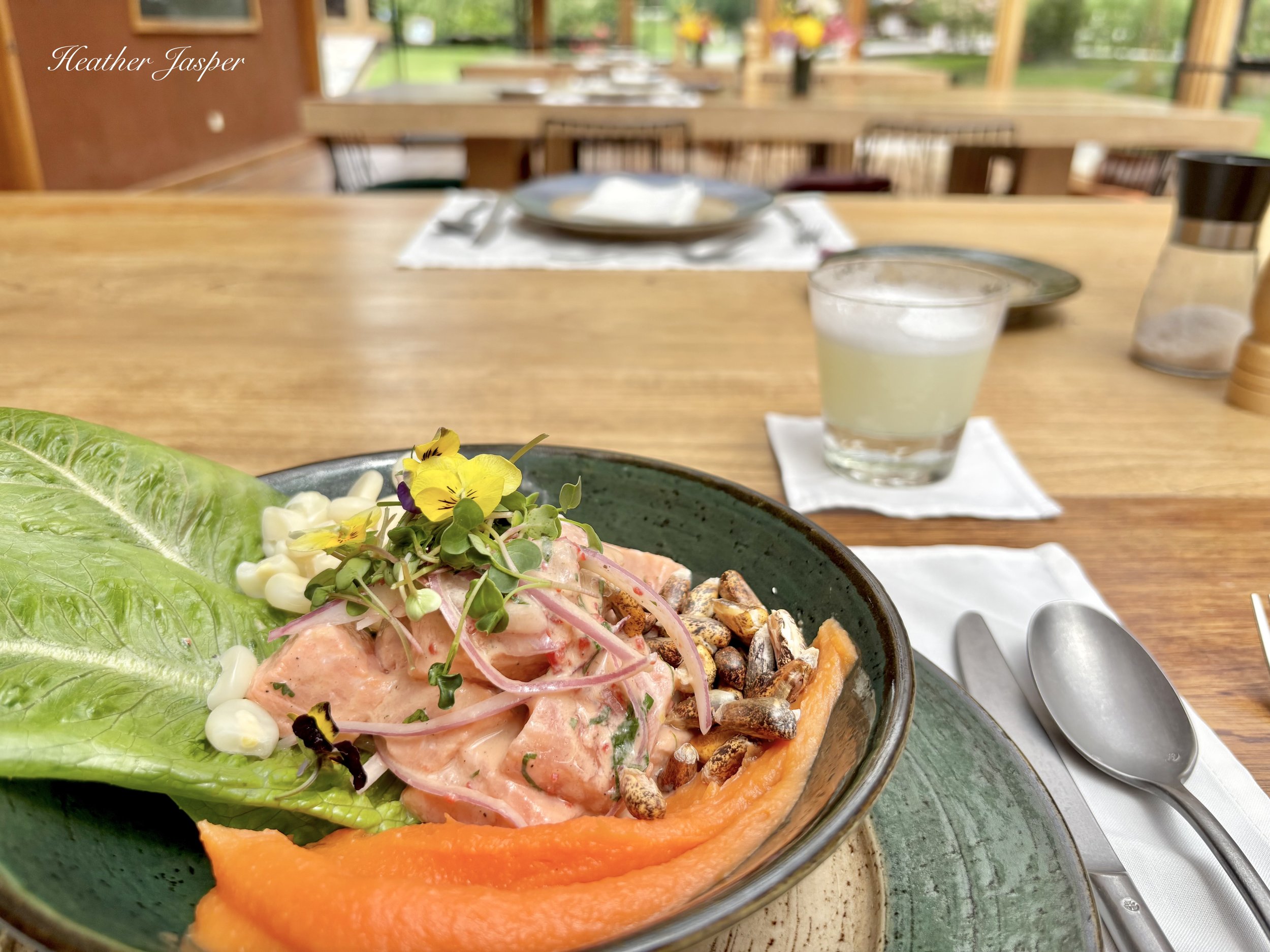
The trout comes from local family trout ponds and the lettuce, radish sprouts and edible pansies are grown at Las Qolqas. The sweet potatoes for the purée and the corn and onions were grown nearby.
Making the ceviche was fun and eating it was delicious. The next course was either locally raised alpaca or a vegetarian or vegan option. I asked for the vegetarian dish, which was like the lomo saltado I learned to make in other cooking classes, but with locally grown oyster mushrooms. It was delicious and would have been vegan except for the egg on top. The final course was dessert.
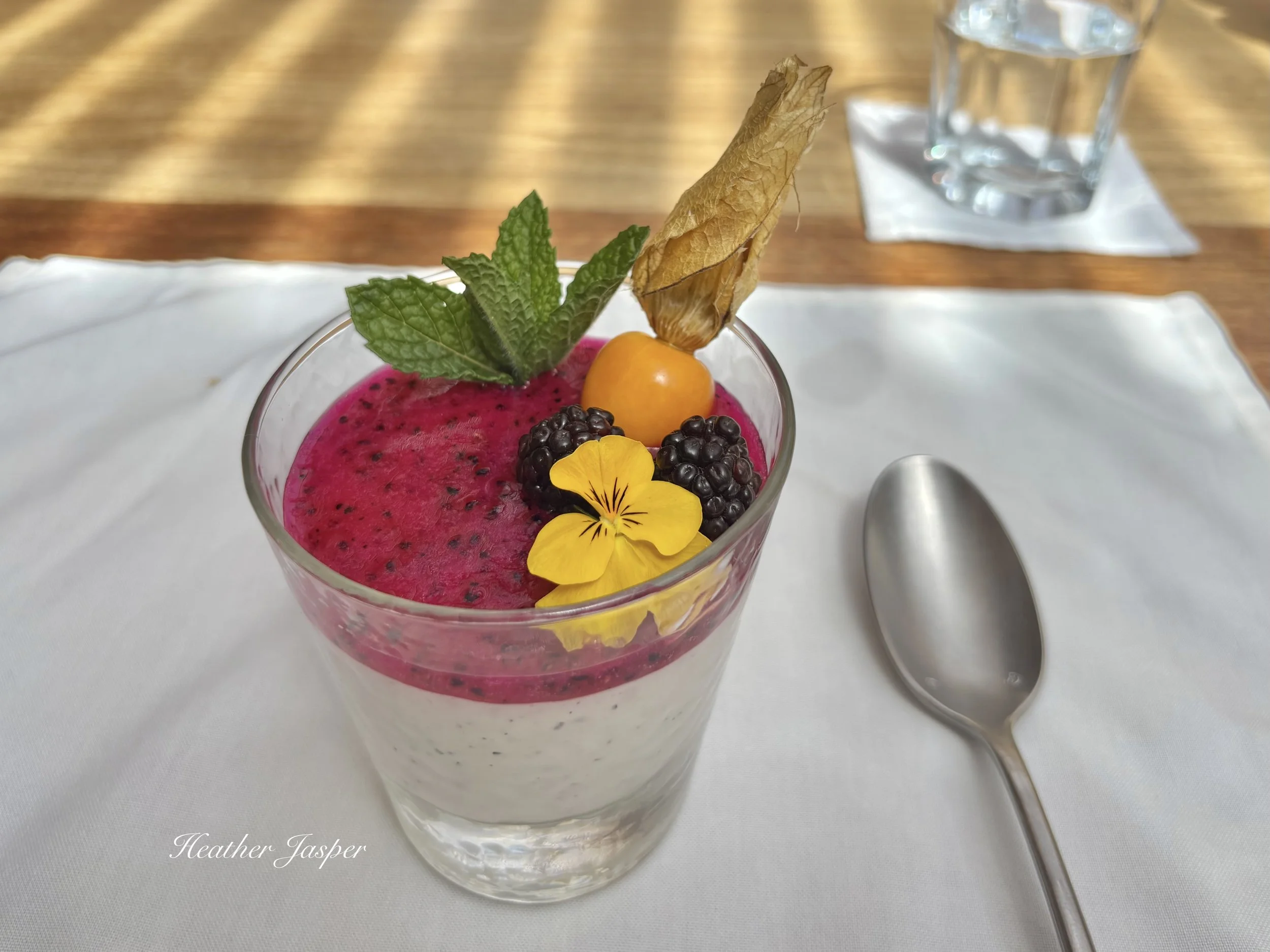
The ingredients for this mind-blowing desert, and all food served at Las Qolqas, comes from Cusco region.
This was the best dessert I’ve ever had at a restaurant.
I’m not exaggerating. I’ll try not to gush too much. The texture, flavor and combination of the dessert truly was the best dessert a restaurant has ever served me. (A close second is the wine-poached pear I had at Treehouse Lodge https://heatherjasper.com/peru-blogs-travel-tips/treehouse-lodge). This looked like a traditional Peruvian mazamorra morada with white on the bottom and purple on top, but instead of rice pudding on the bottom, this was a light and foamy mousse made with pitahaya fruit and flavored with wild vanilla. (I visited a family that cultivates vanilla orchids that are native to the Peruvian rainforest in September, and this vanilla came from somewhere similar https://heatherjasper.com/peru-blogs-travel-tips/tingana-nature-preserve-moyobamba). It was topped with a semi-liquid jelly also made of pitahaya, colored with airampo and set with locally grown aguaymanto, berries and an edible pansy.
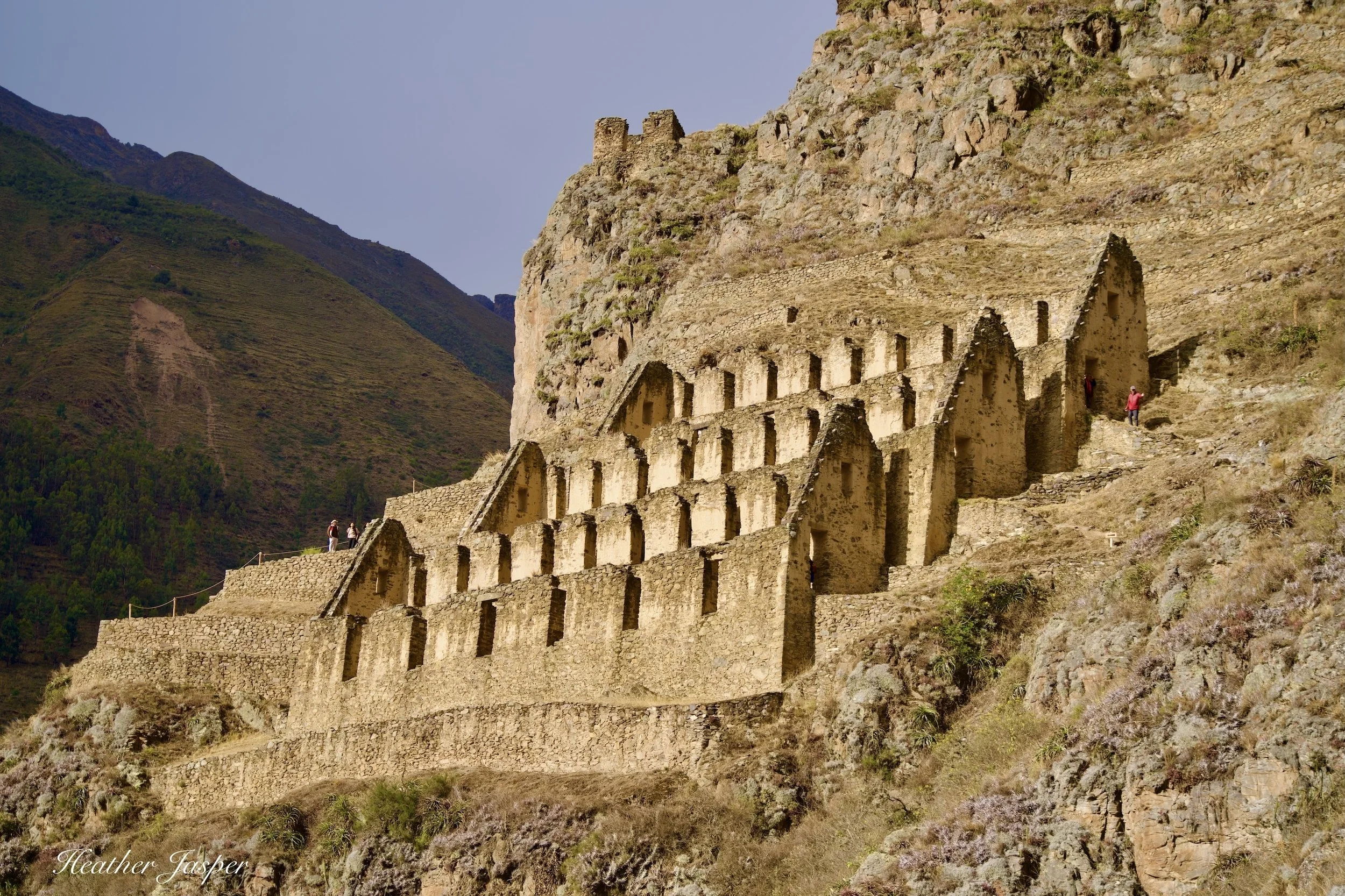
It only takes an hour to hike up to the Pinkuylluna qolqas and back down, and there is no entrance fee.
After the three course meal, I should have gone for a walk. I recommend taking the shuttle down to Ollantaytambo and walking up to the Pinkuylluna ruins, which are storehouses, called qolqa in Quechua and the namesake of Las Qolqas. (Read my blog about visiting Pinkuylluna). If you’ve already visited Pinkuylluna, head the opposite way and from Las Qolqas walk uphill to the Pumamarka archeological site.
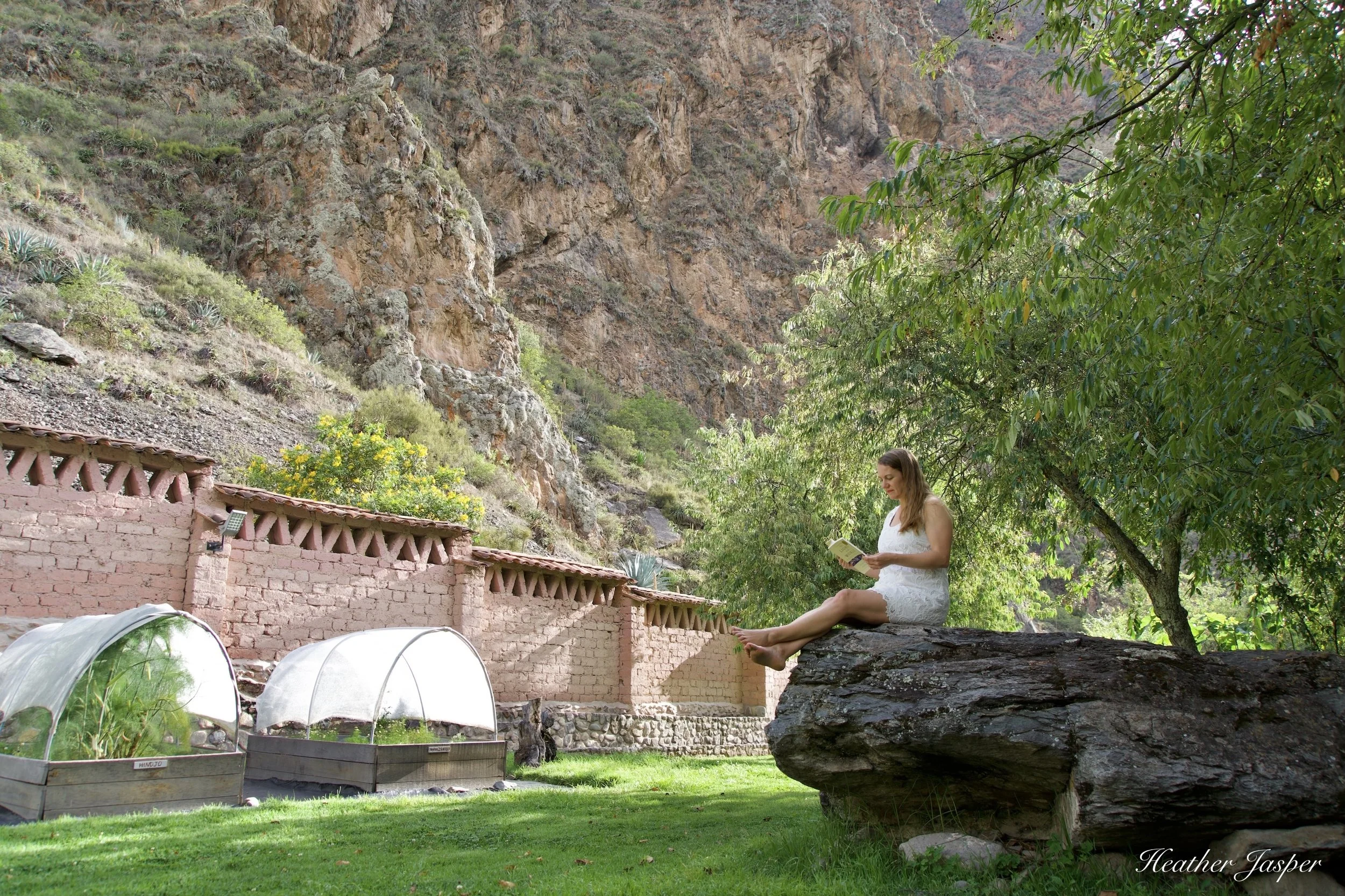
Besides my tent, the herb gardens was also a fantastic place for bird watching and reading.
Instead of going for a walk, I went back to the comfortable chairs in front of my tent and finished the book I was reading. Afterall, what’s a vacation without being a bit lazy?
If you go to Pinkuylluna, have dinner at Chuncho before calling the shuttle to pick you up again. If you hiked up to Pumamarka, have dinner back at Las Qolqas.
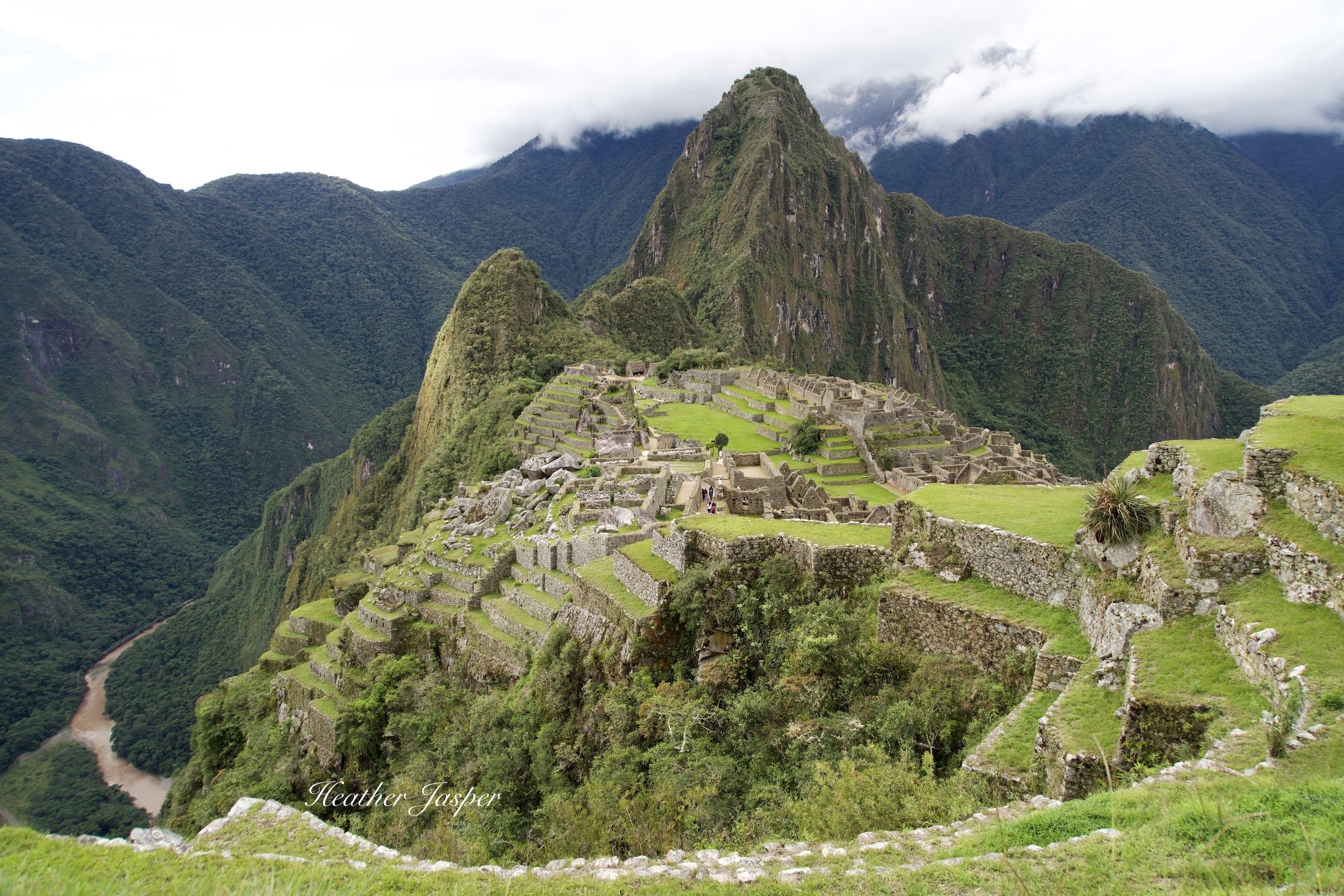
Machu Picchu is beautiful any time of year, and since it’s close to the rainforest, it can rain any time of year.
Day 3: Machu Picchu or the Ensifera Ensifera hummingbird gardens
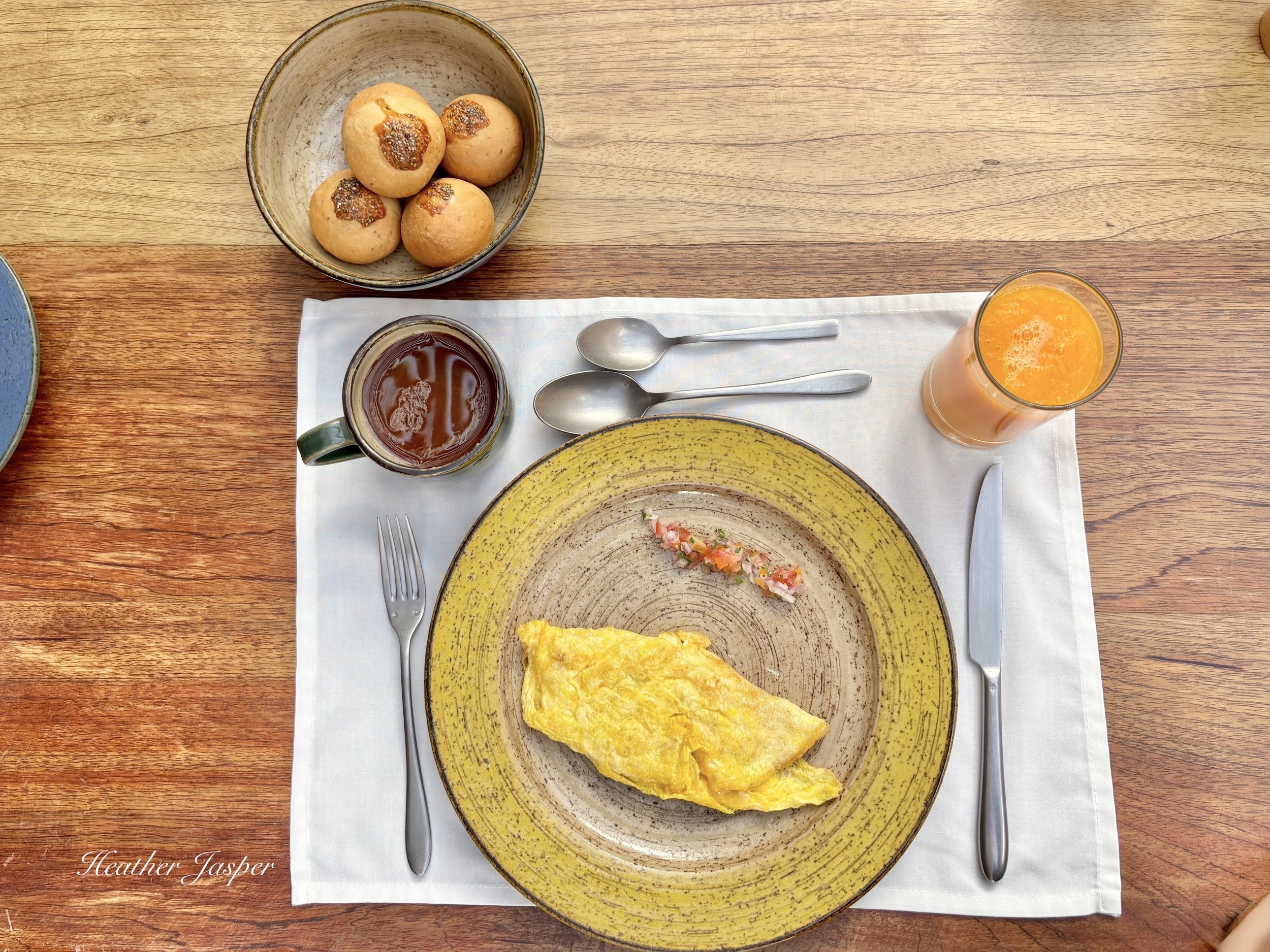
If you haven’t been, and don’t mind some crowds and standing in line, Machu Picchu is absolutely worth a day trip. Take an early morning train from Ollantaytambo, and then an evening train back. (Buy your tickets online well in advance). Breakfast at Las Qolqas is fantastic, but if you have an early train they’ll pack you a picnic breakfast to eat on the train. My breakfasts from the first two mornings and below and I got a picnic breakfast for my third morning, since I had to leave at 5am.
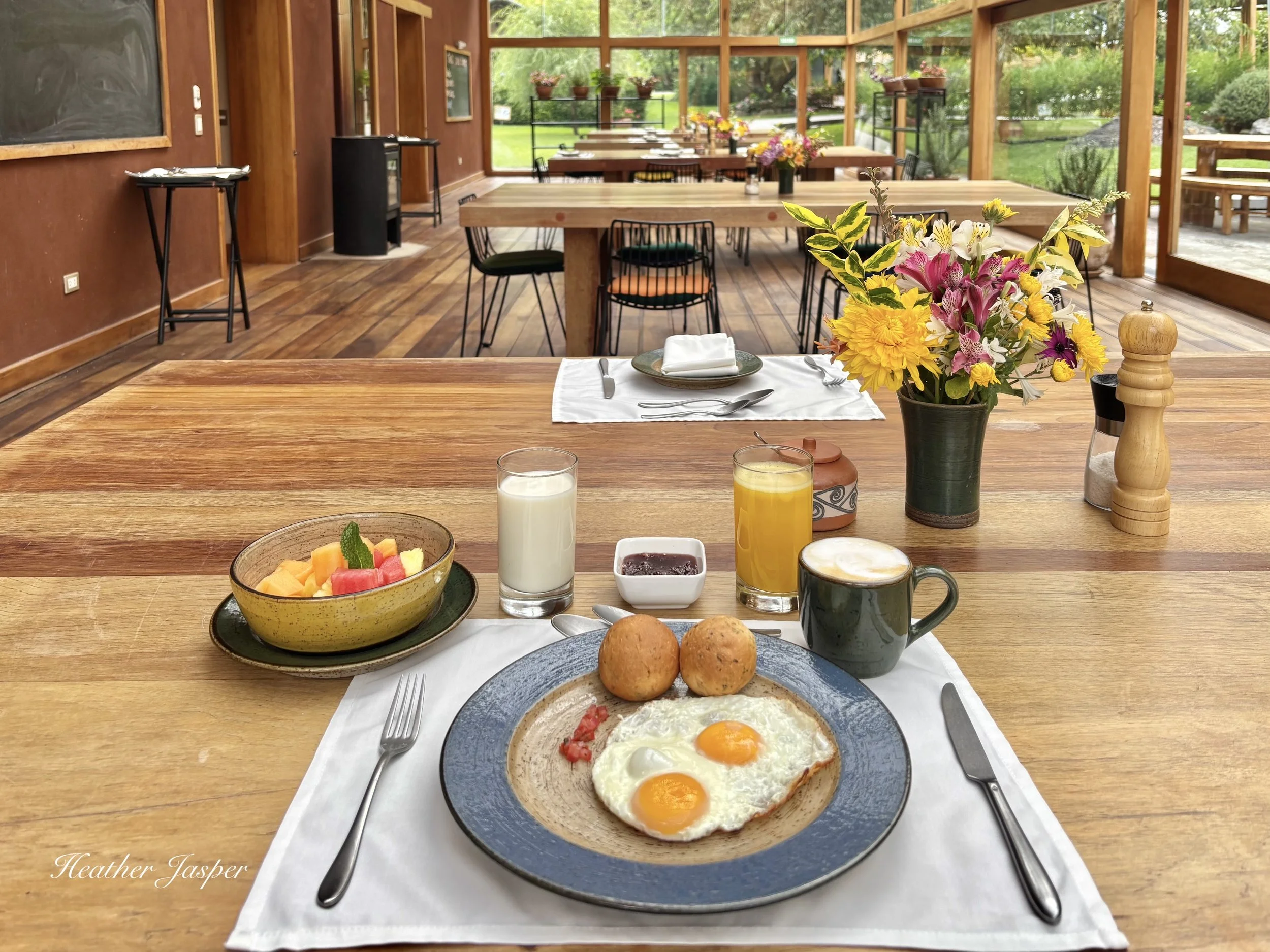
If you’ve already been, or if you’re averse to standing in long lines on vacation, go to the hummingbird gardens in Yanahuara, only half an hour from Las Qolqas. I’ve been to Machu Picchu a dozen times and can never get enough of hummingbirds, so I went to Yanahuara. Read my blog about the hummingbird gardens here.
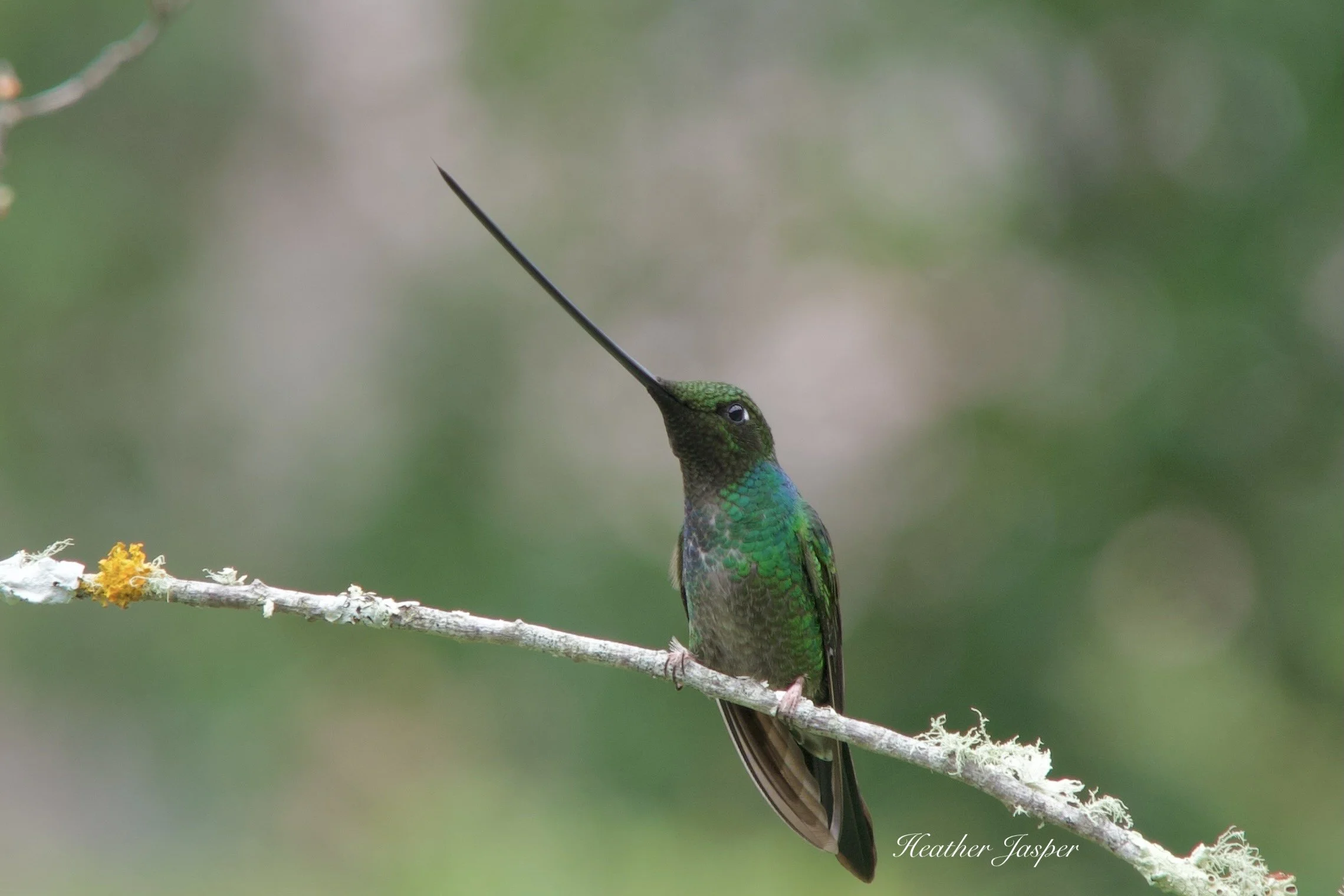
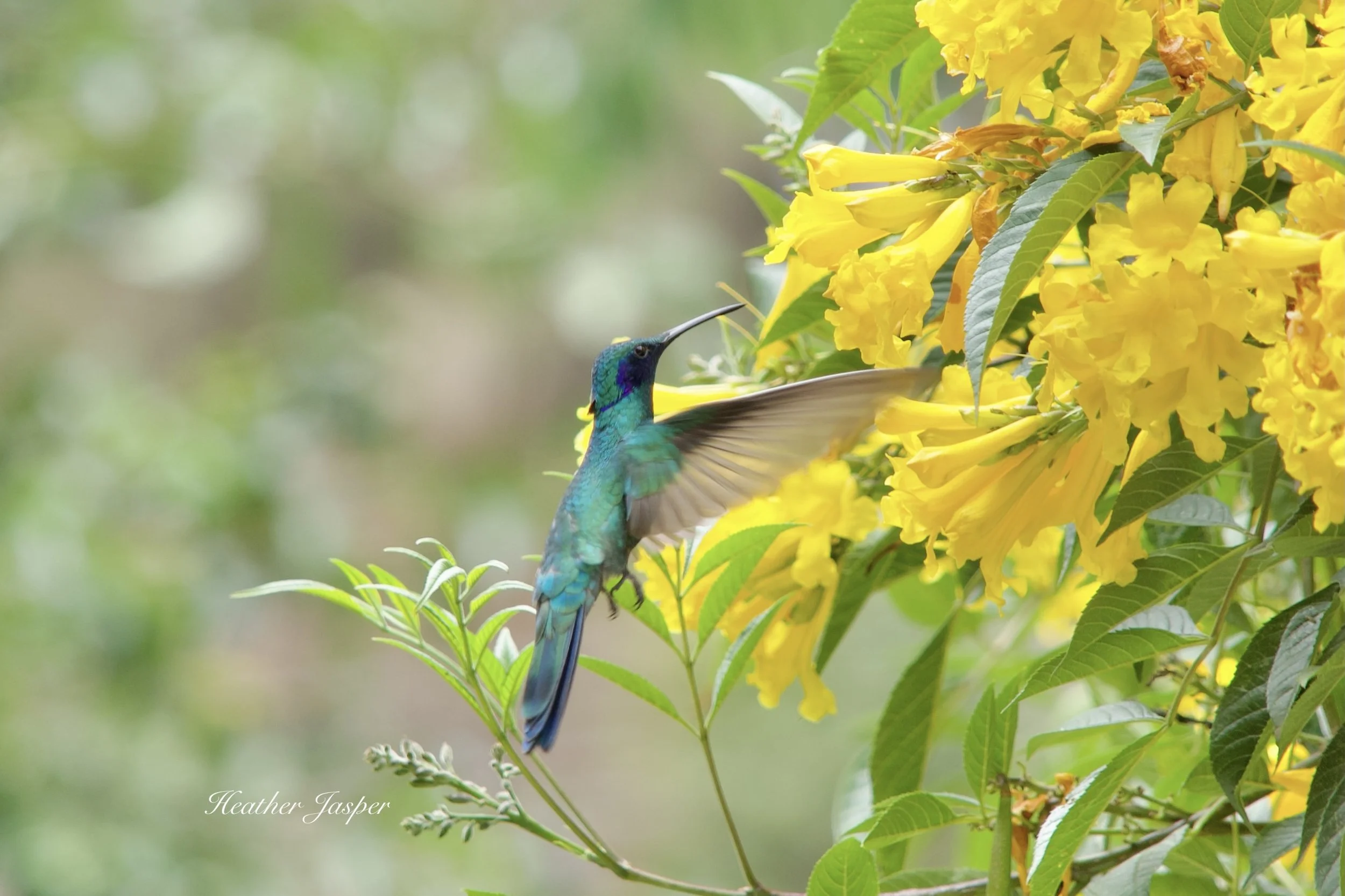
The Sword-billed Hummingbird’s scientific name is Ensifera Ensifera and you can find it year round in Yanahuara.
After a few hours watching hummingbirds, I went back to Ollantaytambo for lunch. My favorite restaurants in Ollantaytambo are Chuncho, Alqa and Apu Veronica, but there’s a new one in town that I’m excited to try next time: Wayta.
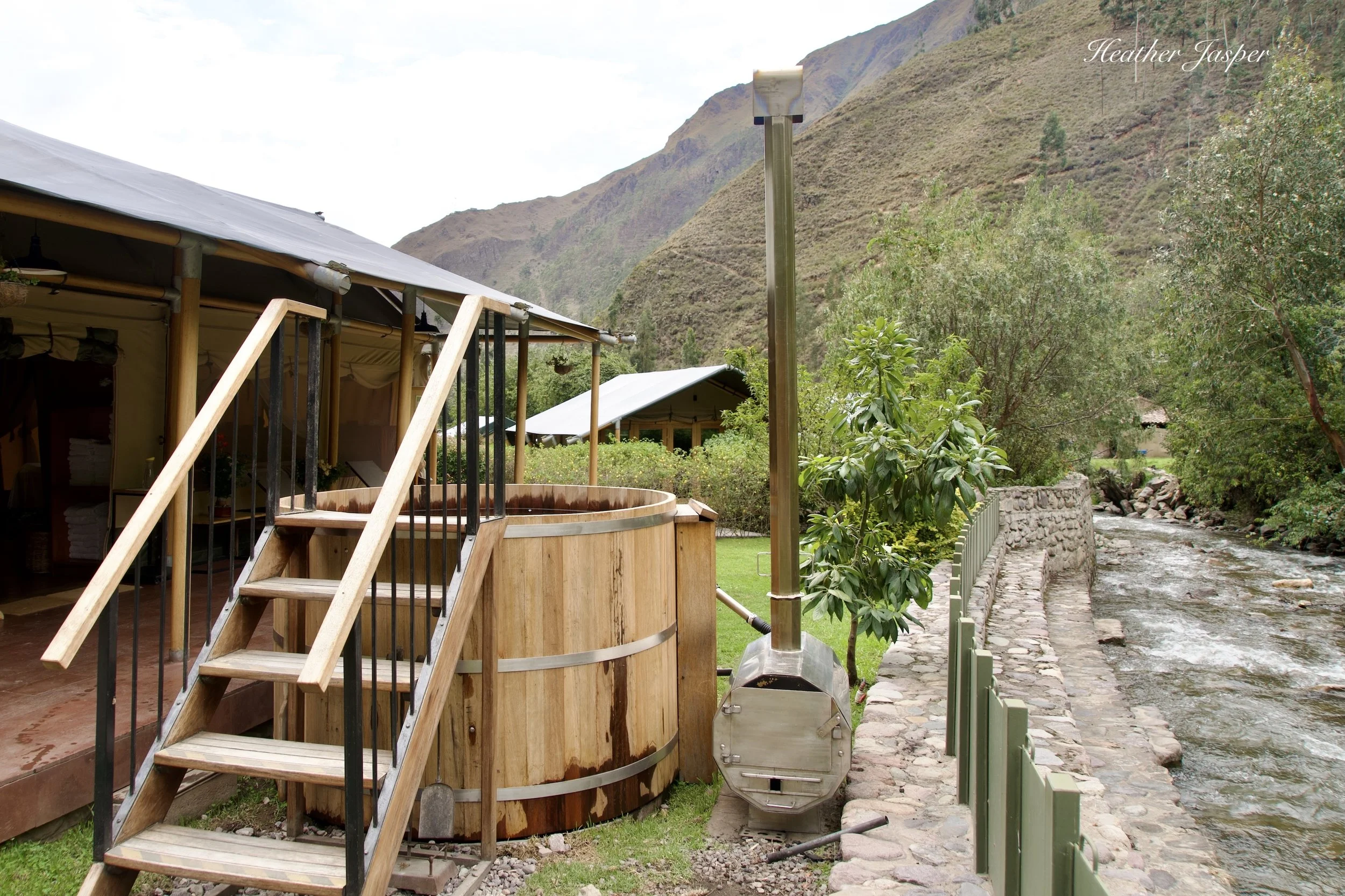
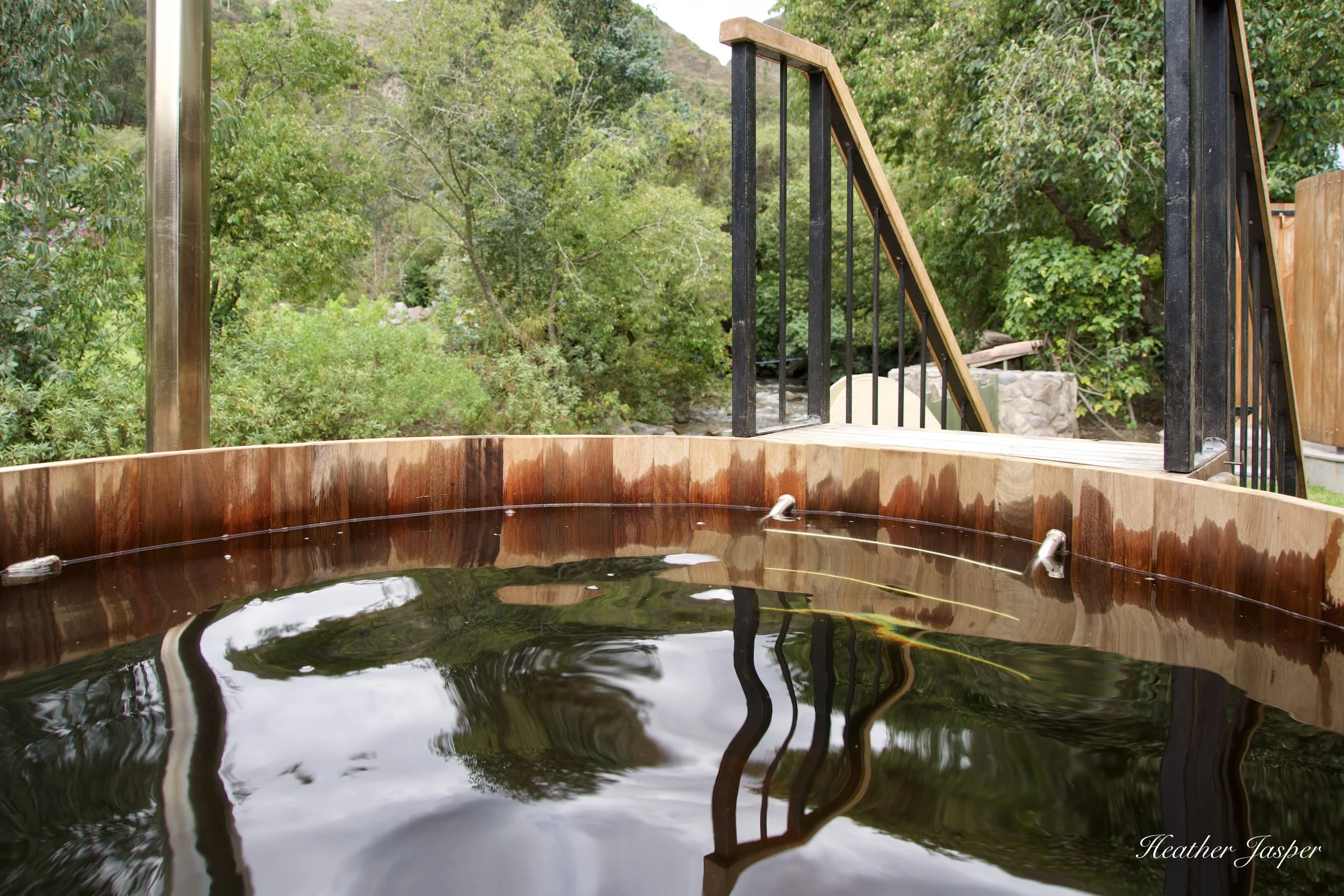
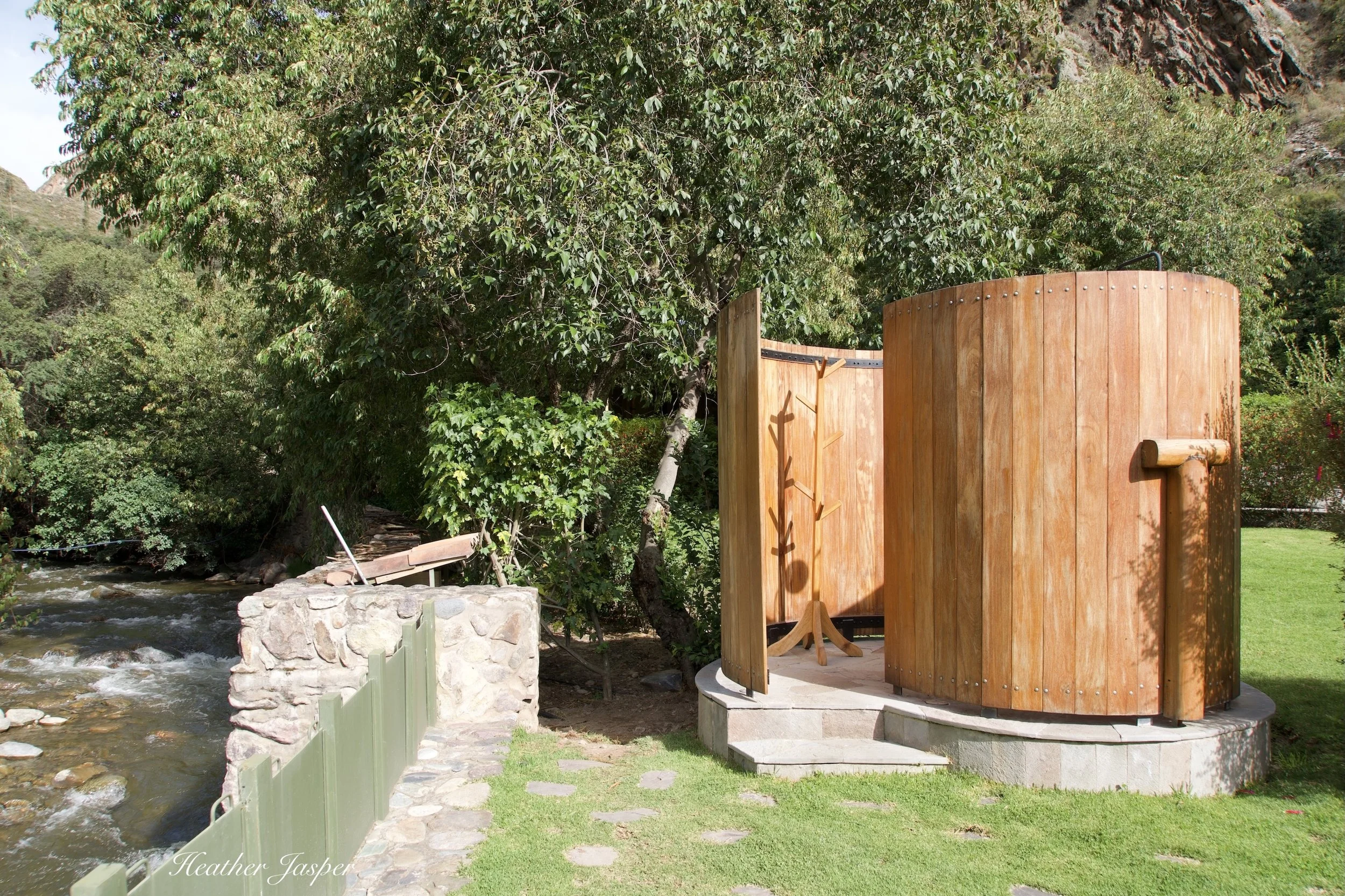
Go back to the spa in the afternoon.
I reserved the sauna and hot tub, which is on the spa menu as hydrotherapy. The spa is right next to the river, which was relaxing to listen to for my massage on the first night, but I was inside the tent and couldn’t see it. The outdoor shower, sauna and hot tub are right on the river, so you get to see the calming effect of water while you’re soaking.
I started with the outdoor shower, which opens like a snail shell, so you’re hidden from sight even while you can see the rocky peaks above. Next, I sat in the sauna for about 10 minutes. It’s a beautiful, round wooden structure, with a layered hot stove of volcanic rocks where Nayda poured water that fresh eucalyptus leaves had been soaking in. After that was another outdoor shower and another 15 minutes in the sauna. I took a cold shower after that, while Nayda stirred the water in the tub to make sure it was evenly mixed.
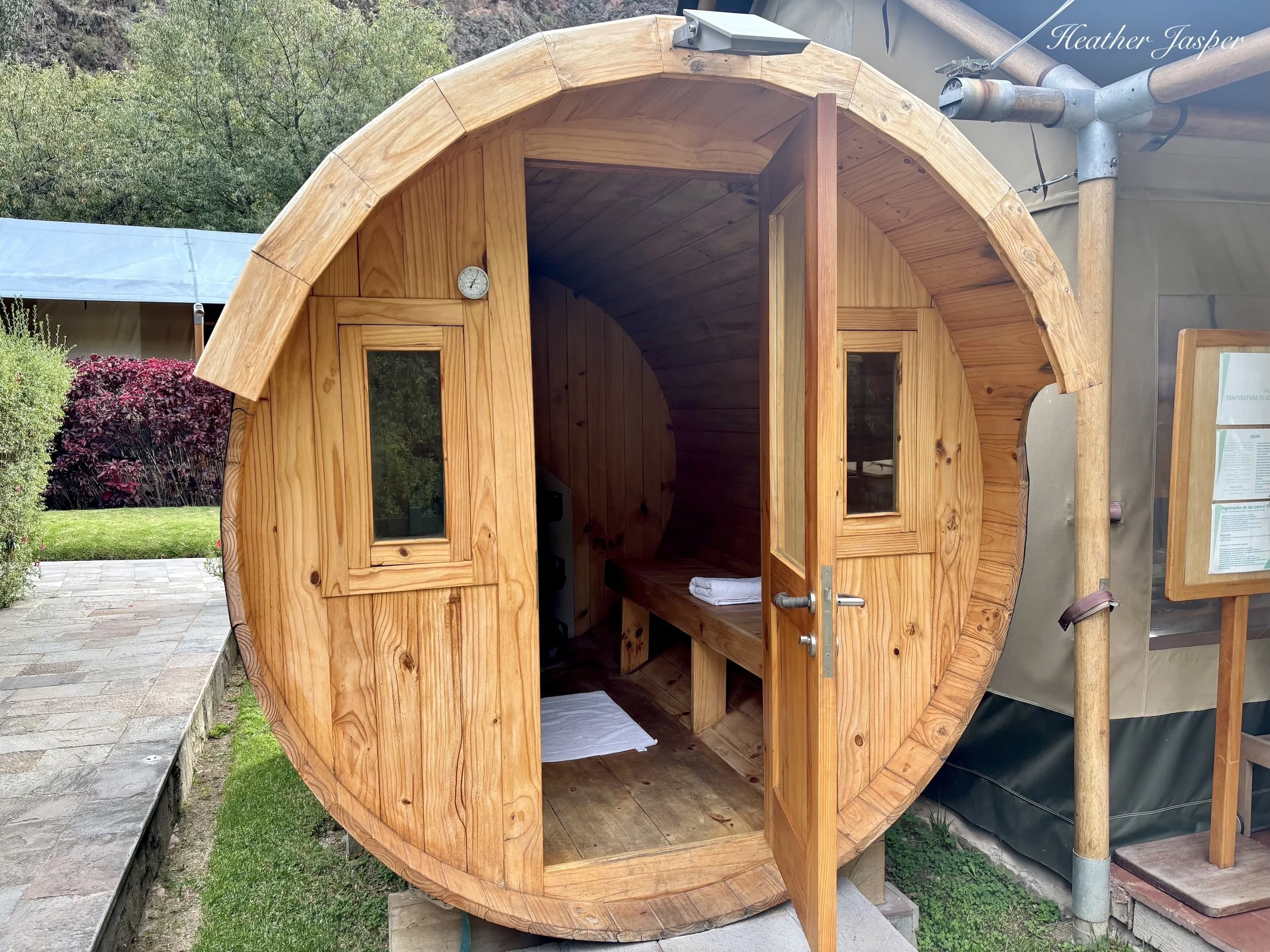
The hobbit-like sauna at Las Qolqas feels whimsical and the small size means it heats up quickly.
The hot tub and sauna are heated by wood stoves. Eucalyptus is easy to come by for firewood in the Sacred Valley, especially as people are starting to remove invasive eucalyptus and replant native tree species like queñua and other polylepis.
I leaned back in the hot tub to watch the river, the hummingbirds in the flowers surrounding the shower and a condor circling the peaks high above. It was the perfect end to a beautiful mini-vacation.
Want help planning your trip to Peru? Download my travel guide app Peru’s Best or contact me!