Travel Tip 143
How to Find Community Tourism
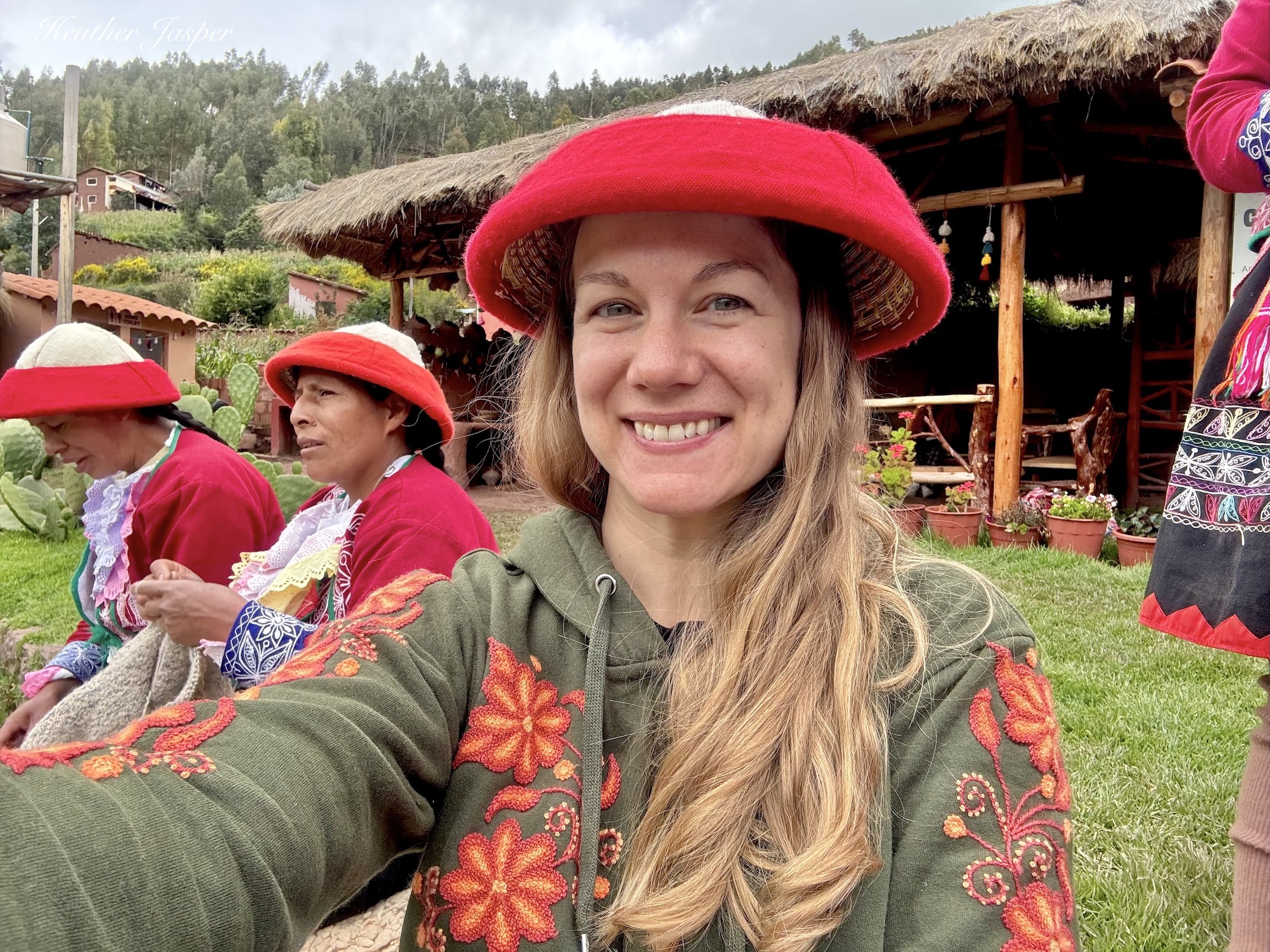
I think it’s always worth the effort to find community tourism projects. There’s so much more to the world than the average bucket list.
It’s easy to find a tour for vineyards in France or the Great Wall in China.
Visiting “bucket list” destinations and all the most popular places you see on social media is easy. There are hundreds of companies that have big marketing budgets to make sure you find them online or wherever potential travelers might be looking.
How to escape mass tourism?
Finding community tourism takes more effort, but it’s always worth it. The deeper you dig, the more likely you are to escape crowded places full of tourists and find community tourism. Where to start digging? Keep reading!
What is community tourism? Read last week’s community tourism travel tip 142.
My top three tips for finding community tourism:
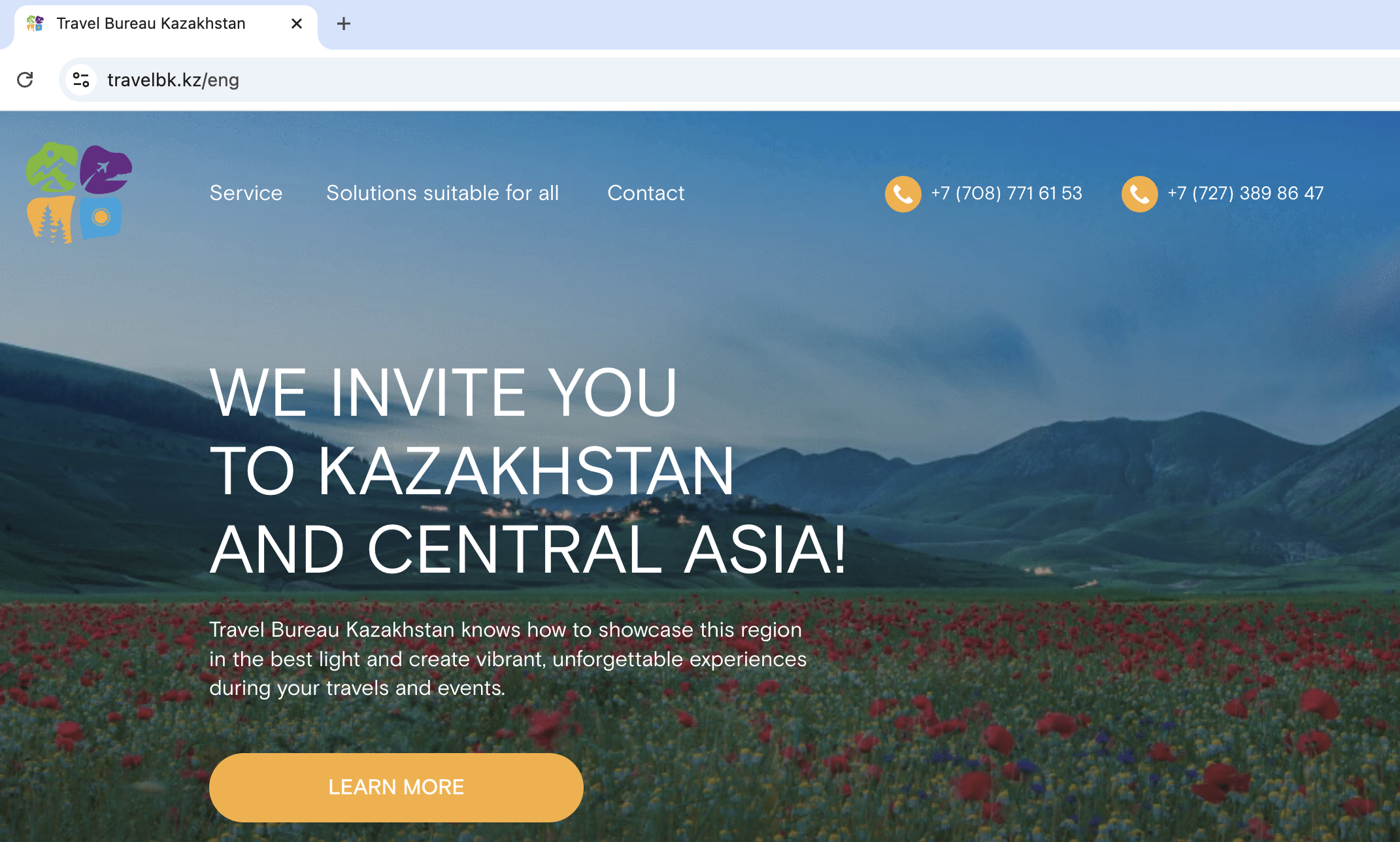
Pick any country or city in the world and they probably have a tourism board, even if it doesn’t have a website as snazzy as Kazakhstan.
1. Contact local tourism boards
These days, most tourism boards are easy to find online, and they have direct contacts in the places they represent beyond for-profit tour companies. Most now have employees whose job is to promote community tourism projects, also called community-based tourism.
The first result for a search of “Colombia tourism board” comes up with Colombia.travel which has a contact button. Not all countries are quite so easy. When I searched for “Kazakhstan tourism board,” the first four results were for-profit tour companies or unhelpful government websites, but the fifth result was Kazakhstan.travel, the country’s official tourism board website, with a contact button.
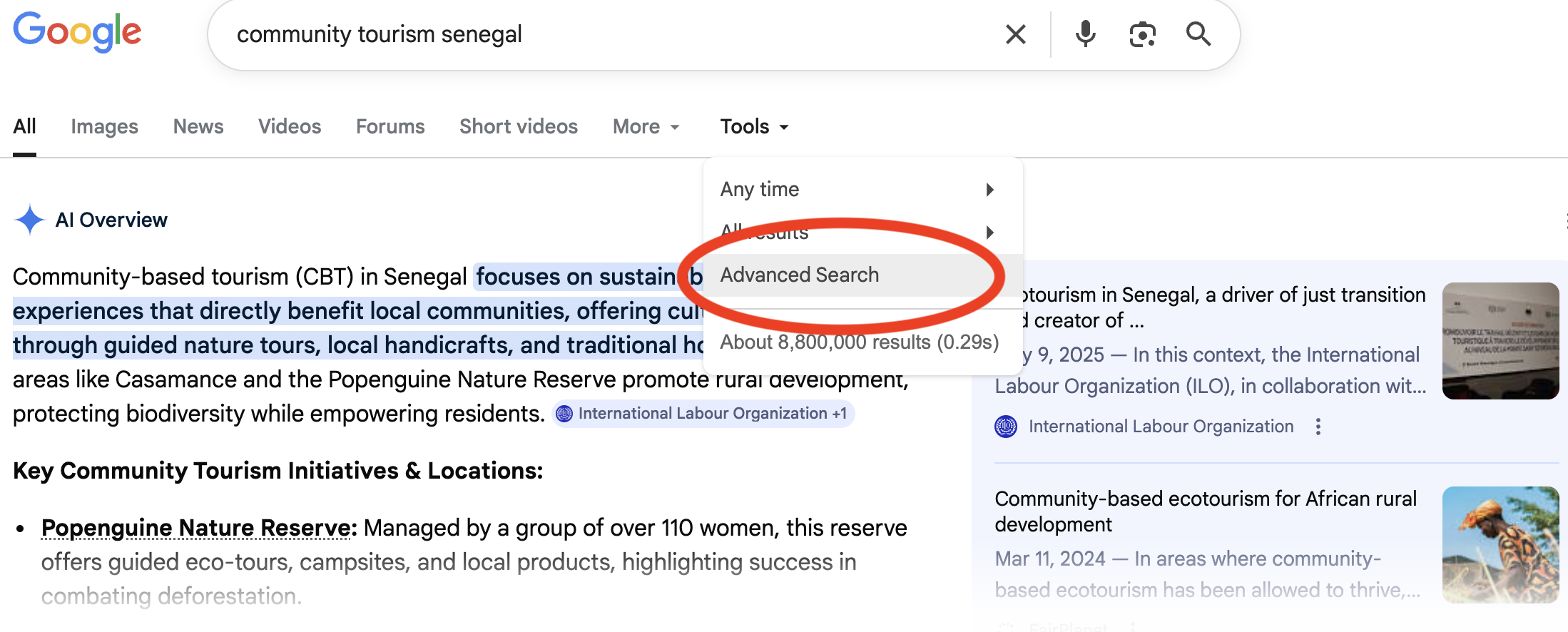
Depending on the language of the country you’re going to, you may need to click on Advanced Search and set it to show you websites in any language to find local companies.
2. Look for local companies
If the tourism board wasn’t helpful, or you didn’t like the options they suggested, you need to keep looking. If you’re going somewhere that doesn’t speak English, you may need to change your search options to look for pages in any language. When I did that, my search for “community tourism Senegal” came up with results in both French and English.
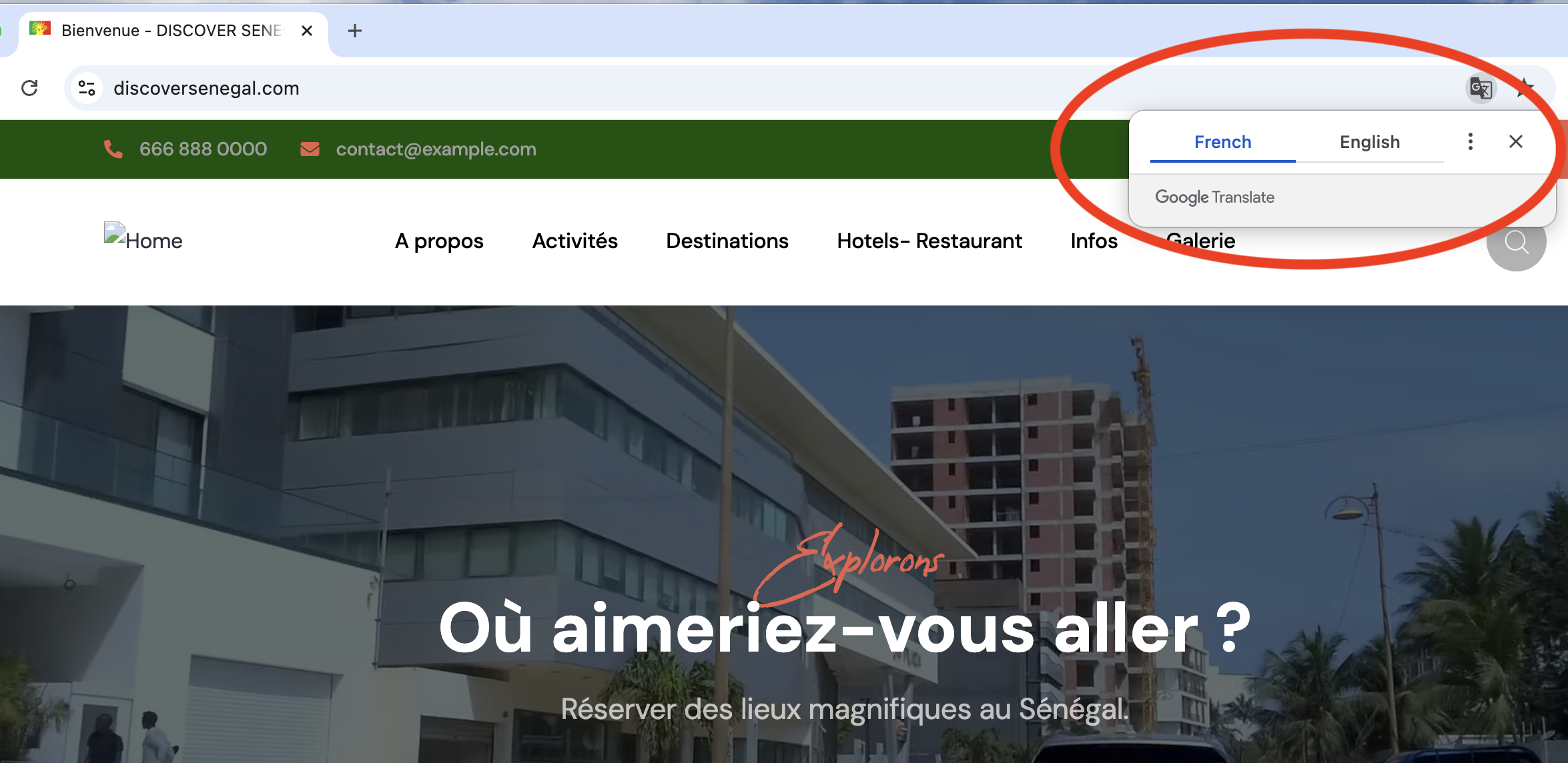
Though far from perfect, Google Translate is a great tool for understanding tourism websites in another language.
As a former French teacher, I feel a little guilty telling you to use Google translate. However, I think when people to travel to countries where they don’t speak the language, it creates more opportunities to learn language. Don’t limit yourself to only places you already speak the language. I don’t speak more than a few words of Quechua but their villages are the highlight of my travels in Peru.
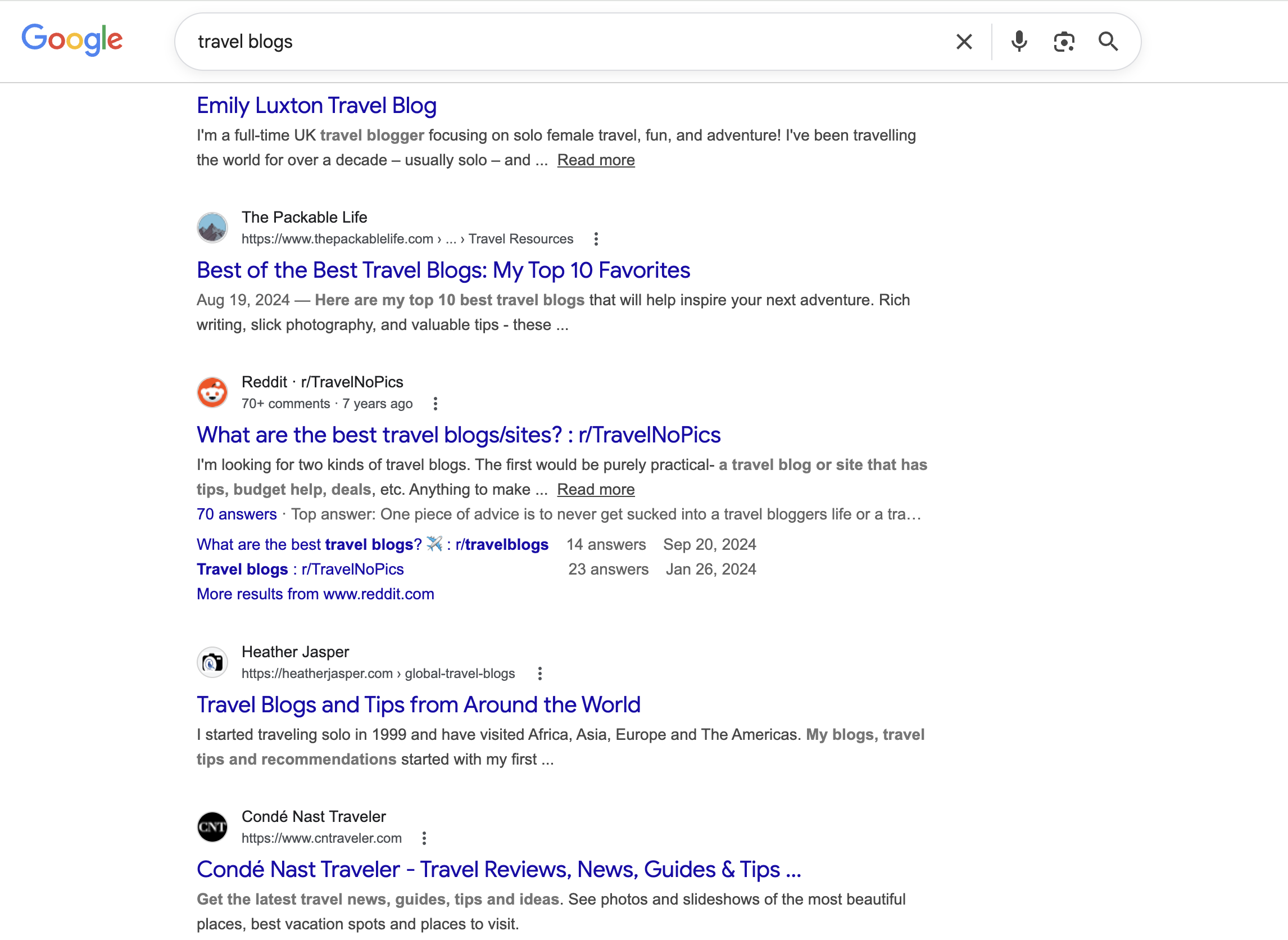
A generic travel blog search puts me in 8th place, after Reddit but before CondéNast, which isn’t blogs so I don’t know why they rate 9th place.
3. Scan blogs and social media
You need your BS detectors on high alert when dealing with blogs and social media, especially social media. Many of the top results are people trying to sell you travel insurance or something like that. Try to dig through the advertising posing as blogs to find real traveler experiences of the kind of community tourism you’re looking for.
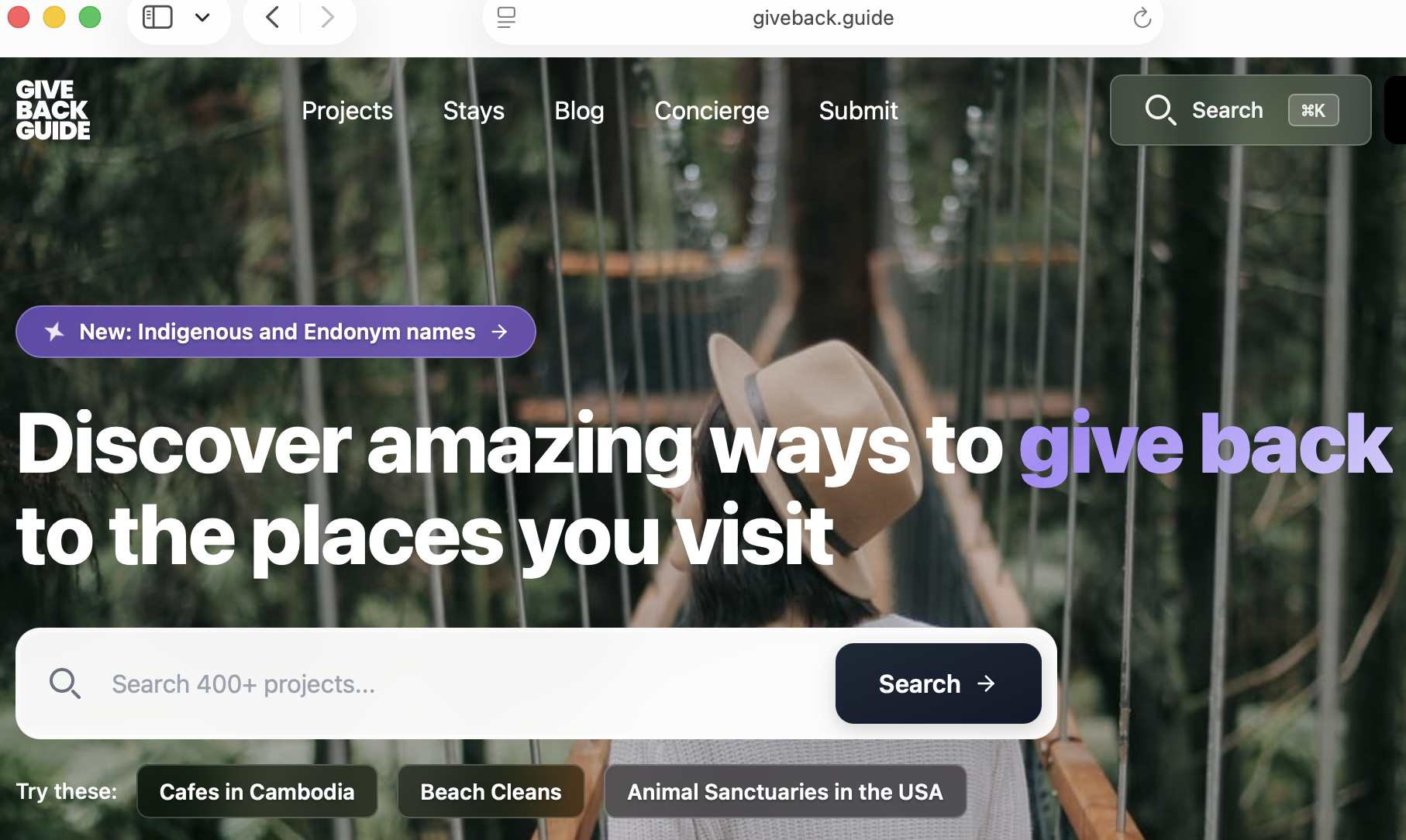
Sometimes social media gives you gems, like Give Back Guide, which I found on Instagram.
Most blogs are simply a traveler’s opinions about their experience, which is highly subjective. If you see a blog that says a city was horrible because it didn’t have any bars open past 10pm, consider how much that particular details matters to you. If you see a glowing blog about a wonderful town that has amazing surfing, but you want a calm beach for snorkeling, you probably don’t want to go there no matter how much the blog raves about their wonderful time on the waves.
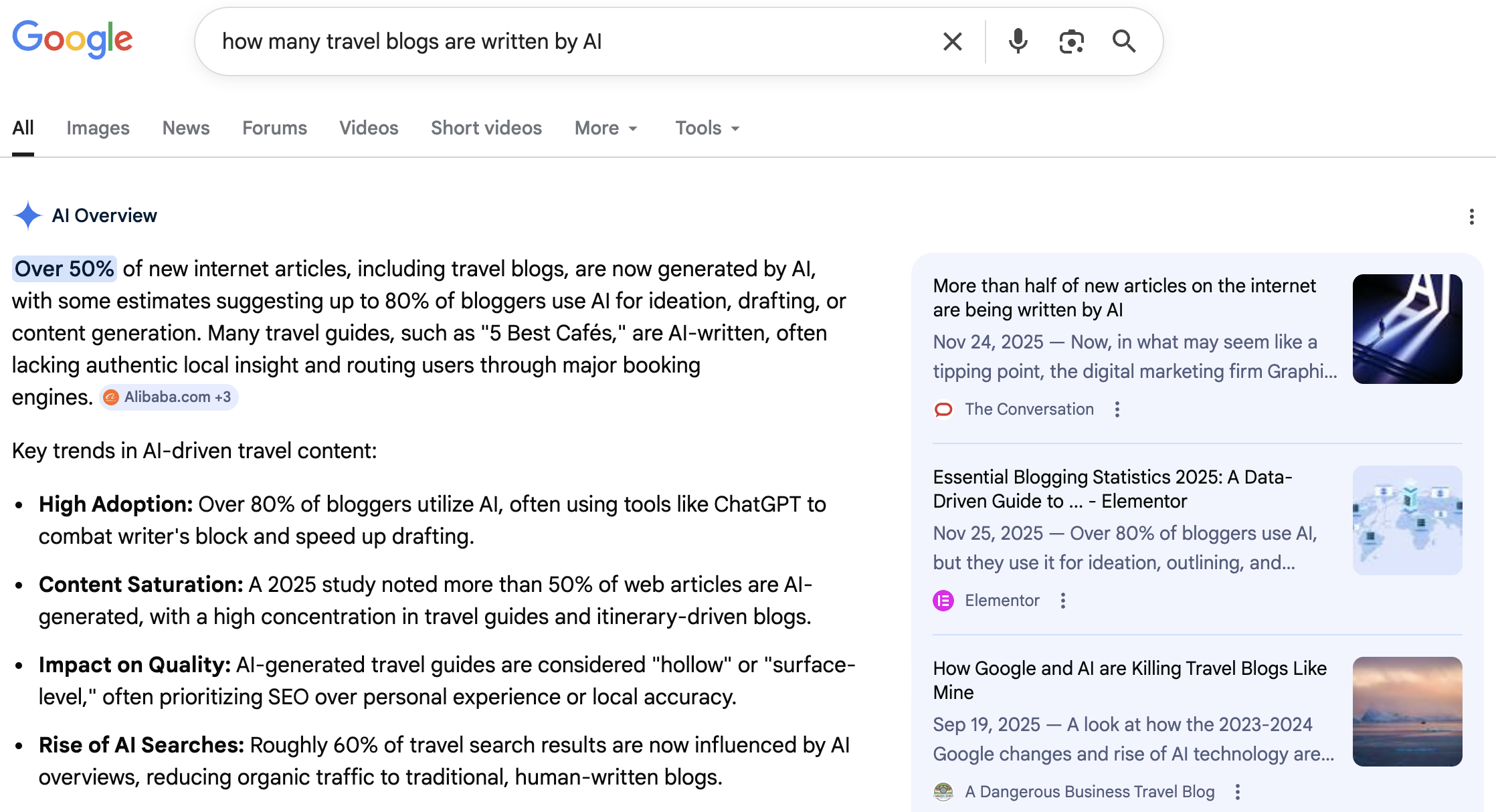
AI is ratting itself out: beware the AI slop in travel blogs. For the record, I do not use AI in my blogs in any way for both ethical content and ethical environmental reasons.
Sadly, AI has infested blogs and social media. Thankfully, it’s still new enough that in just a few minutes you can tell if something was written by a human who has been to the place they’re writing about, or if it seems like AI. Be aware that AI is still not good enough at travel information to give you reliably accurate information - especially about the kind of off the beaten path destinations that have community tourism. Take any information you get from AI with a bucket of salt.
The bottom line: Pace yourself.
Maybe the tourism board will have a pdf of community tourism options or maybe you’ll have to do a lot of digging. If you keep running up against advertising and AI-generated slop, take a break and go back to the search another day.

New Blog: Ccaccaccollo
Yes, that’s really how they spell it. This is a lovely community where I saw a weaving demonstration and a 2-day old llama that was just learning to use its legs. The blog also has a pronunciation guide to help you say Ccaccaccollo.