Huánuco
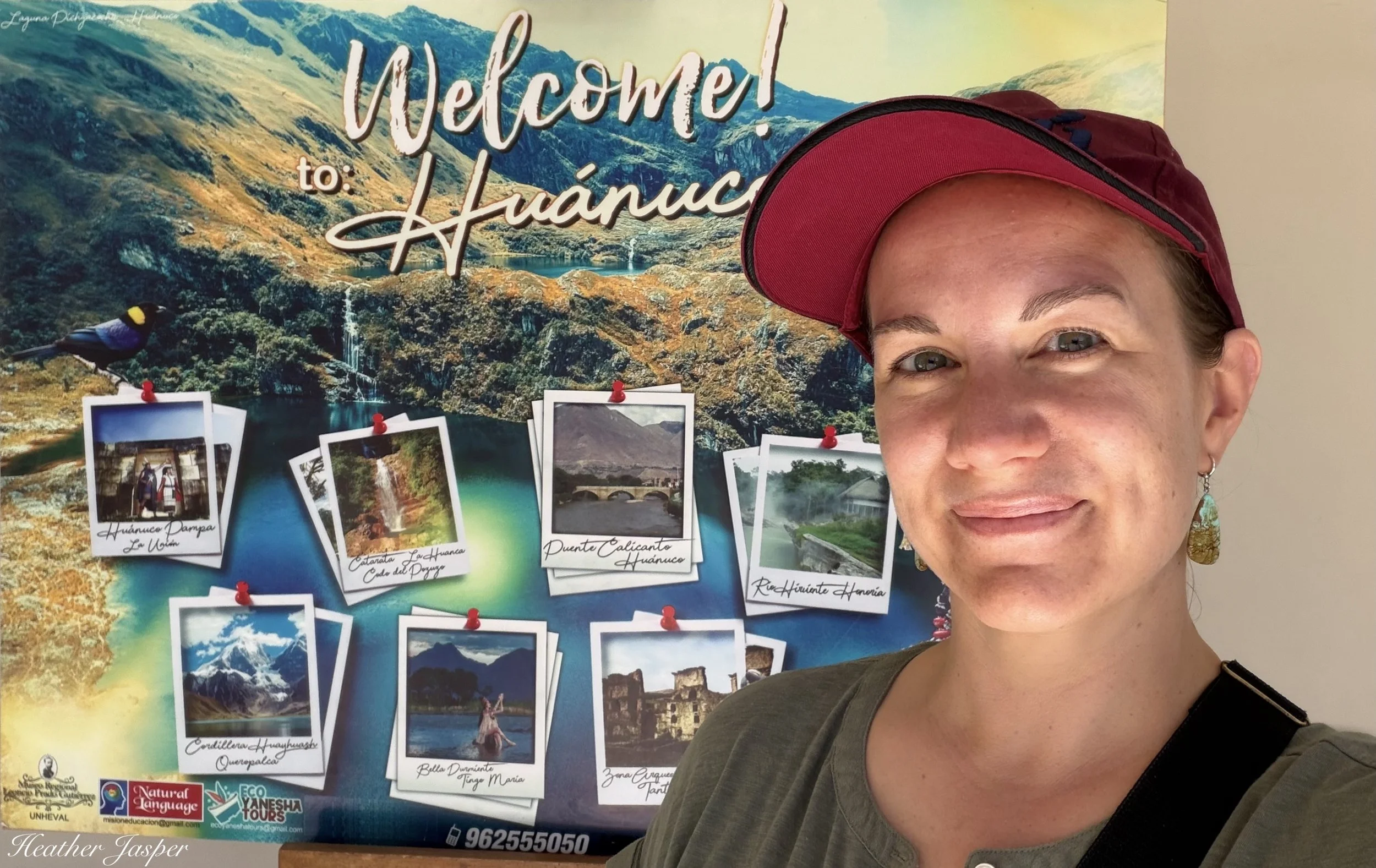
I only did three of the things on the poster this trip and the others are on the list for my next Huánuco trip! Top of the list are Tingo María and Huayhuash Mountains.
Huánuco was my 20th region in Peru but with only five days I barely scratched the surface and will definitely go back. Top of the list for my return is Tingo María, a jungle town I’m really excited to see.
Here’s what I loved most about my first Huánuco trip!
Like New York, Huánuco is both the name of the city and the region. (Peru has 24 regions, also called departments, rather than states).
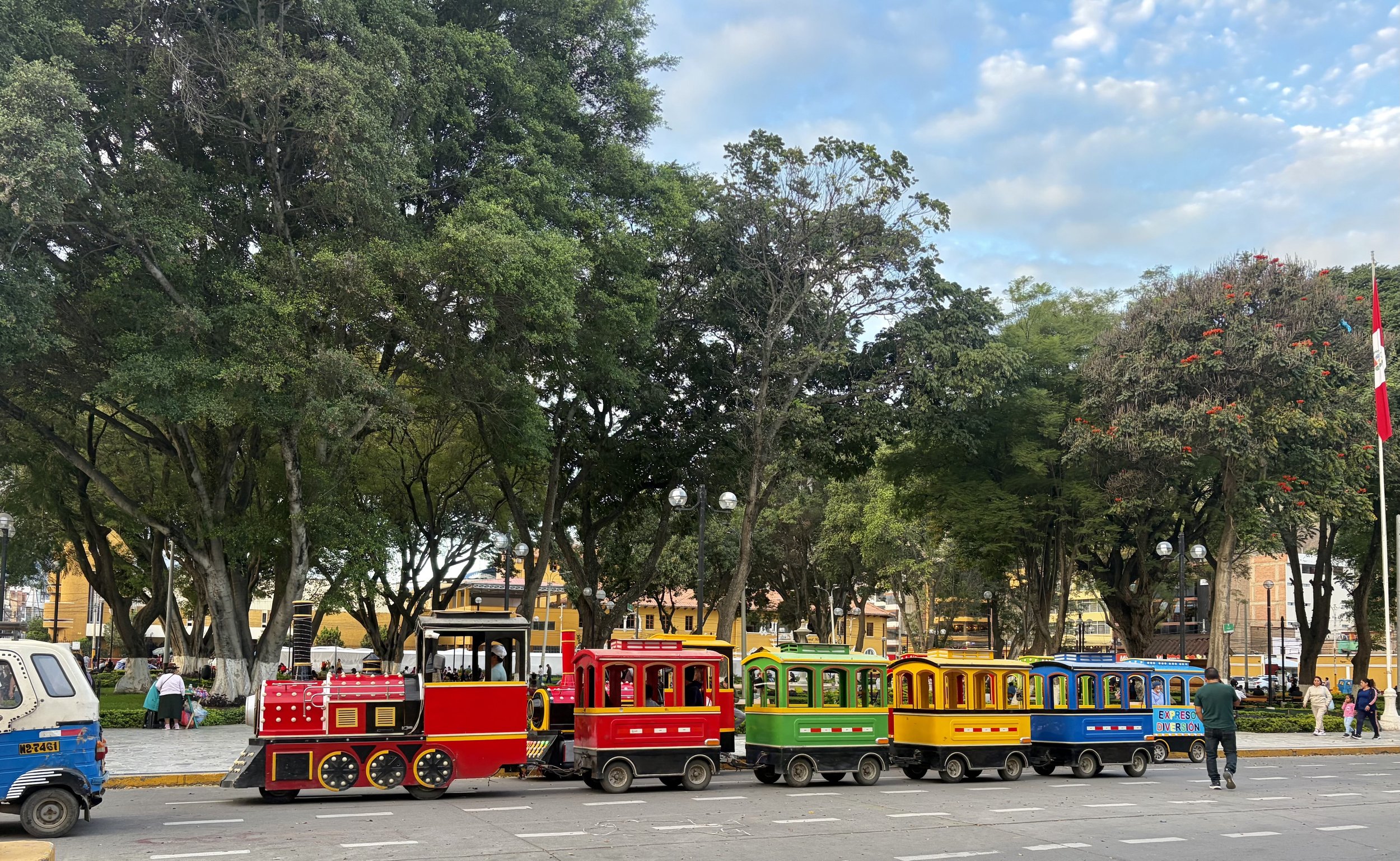
This adorable train did a loop around the plaza all day on weekends and during the evening on weekdays.
What to do in Huánuco?
Visit the plazas and museums
Huánuco’s Plaza de Armas is delightful, especially in the morning when the trees are full of parakeets and everybody is walking across on their way to work or school. The city of Huánuco is famous for perfect weather most of the year and mornings are invariably warm and sunny. It has at least a dozen plazas and they were all shaded with tall trees.
From about 4pm to 5pm it’s less pleasant as a strong wind blows through town, following the river upstream. The beautiful fountain in the middle of the plaza is turned off for a couple hours, so people walking by don’t get drenched with every gust. The wind stops around 6pm and the plaza fills with people meeting friends and children playing.
There are several great museums around town, and I really enjoyed the Museo Regional Leoncio Prado Gutiérez. It has a combination of history, archeology and small scale models of important archeological sites and historic buildings around the region. A sign at the entrance said entrance was s/5 soles but there was nobody there to charge me, so I just walked in. Nobody was there on the way out either.
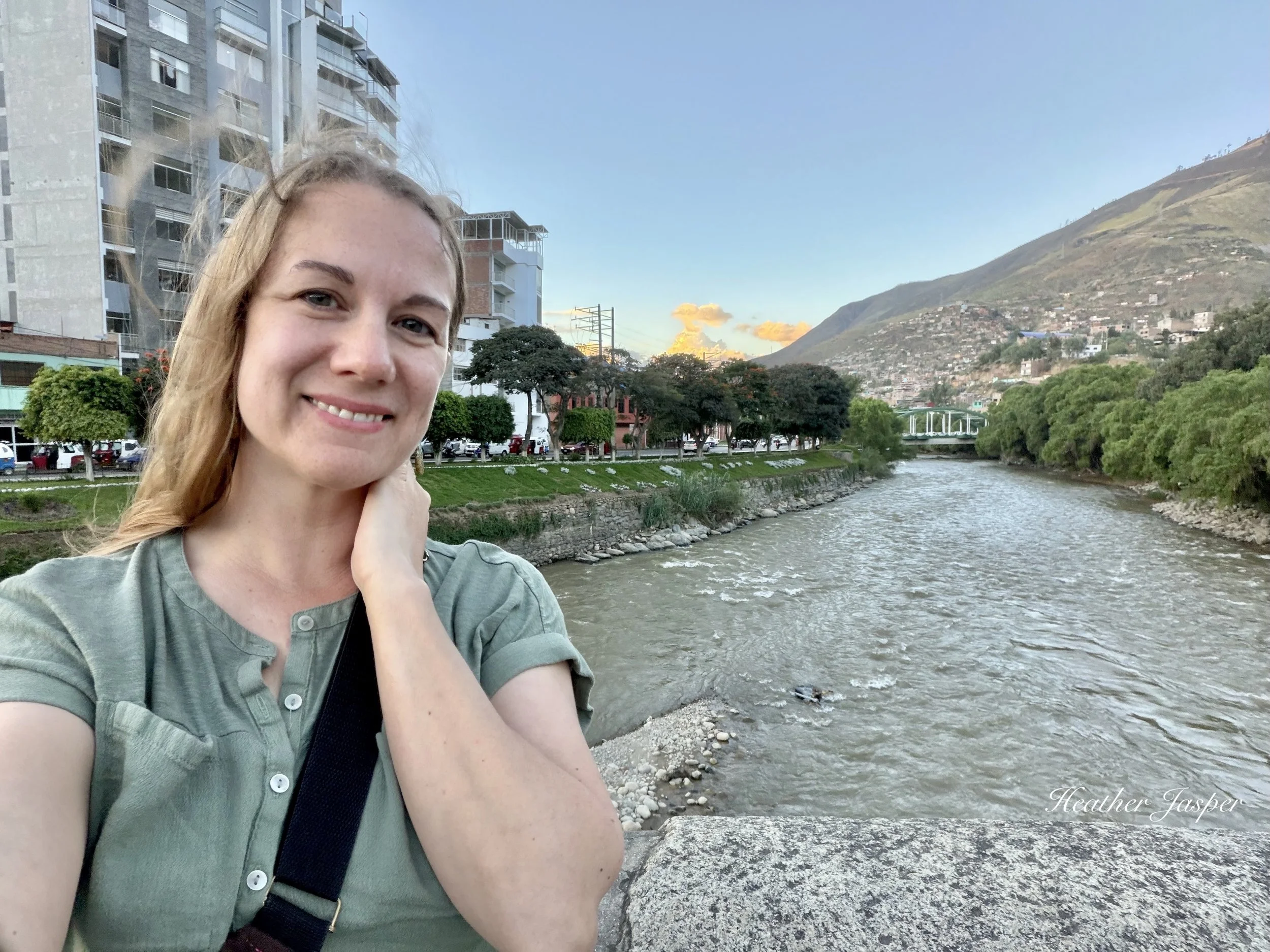
I waited till sunset and the wind drove me off the Calicanto Bridge before I got any other photos. Go in the morning.
Walk across the Huallaga River
The Huallaga River causes the strong afternoon wind, and I recommend going to see it in the morning from the Calicanto Bridge. The bridge was built between 1879 and 1884 and is famous for it’s unique construction materials. It was built entirely with limestone, sand and thousands of egg whites instead of regular cement. Tens of thousands of chicken eggs were donated by the city’s residents, which must have been quite a spectacle.
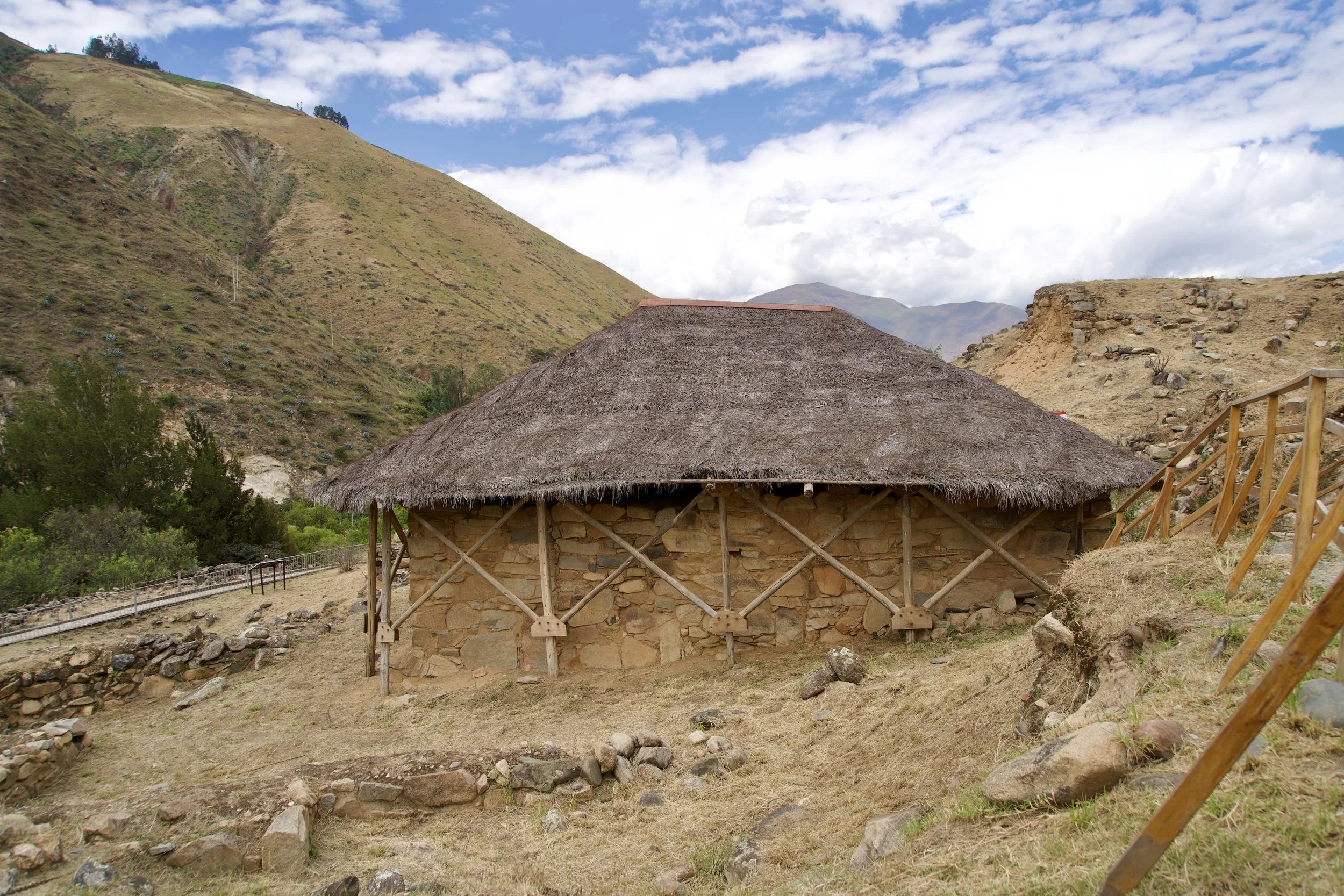
The Temple of the Crossed Hands is protected under this thatch roof and wooden scaffold.
Visit the Kotosh Archeological Site
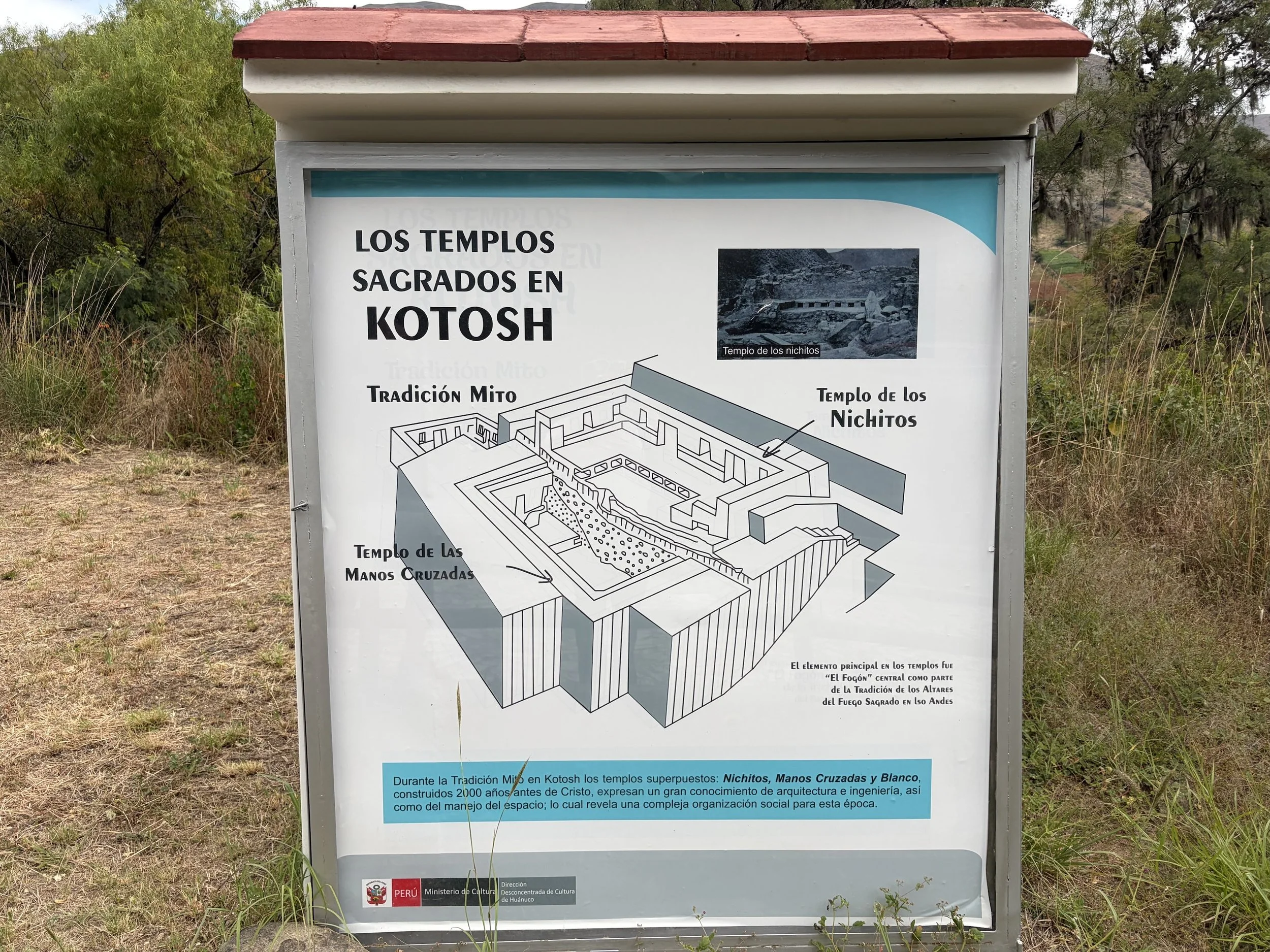
The Kotosh Temple of Crossed Hands was the only thing I knew about Huánuco before visiting. It’s famous as one of the oldest cultures in Peru, roughly concurrent with Chavín, which was considered the oldest culture in Peru until Dr. Ruth Shady discovered Caral in 1994.
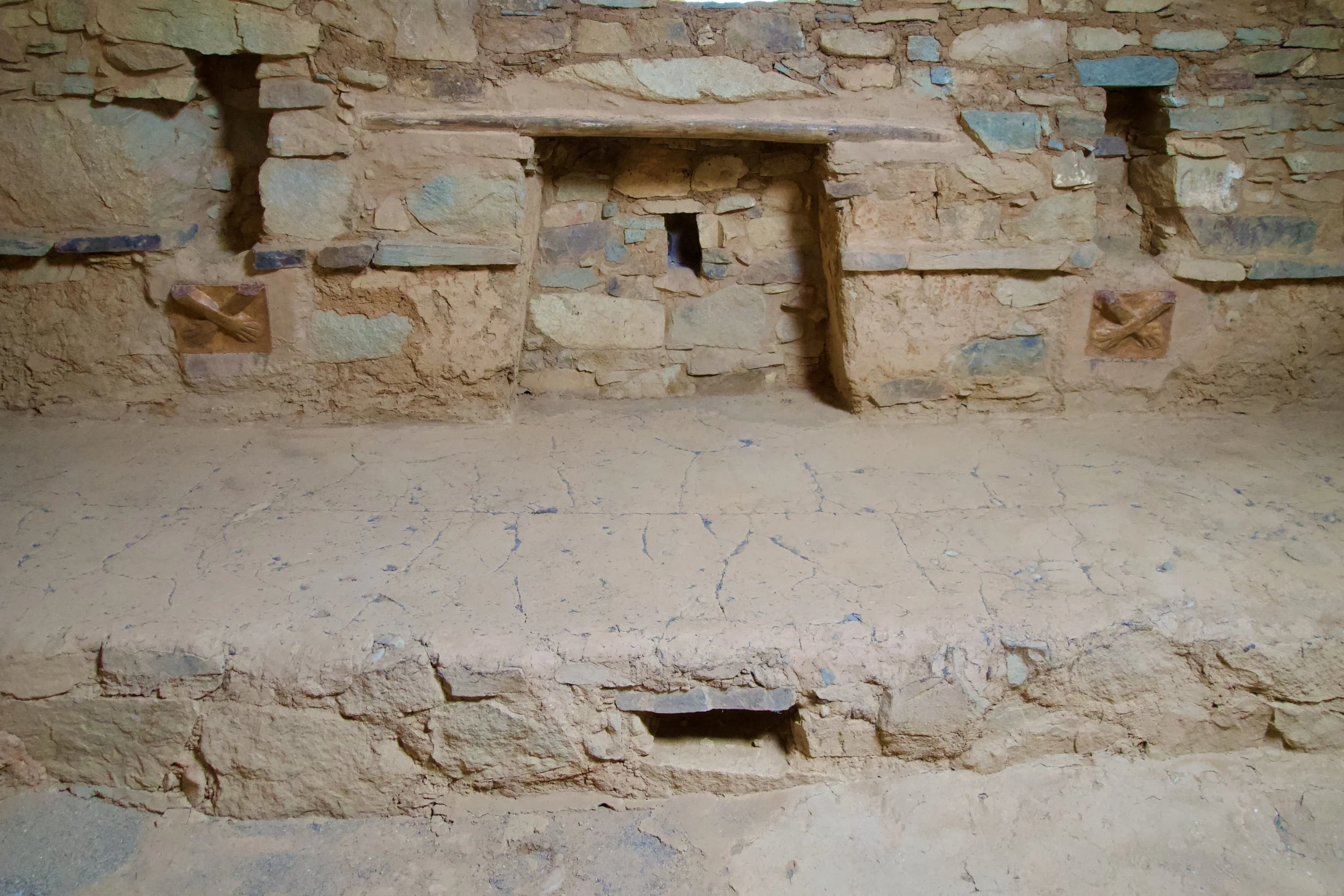
Archeologists believe that the two sets of crossed hands show where two people would stand in a wedding.
Kotosh was well known as an archeological site for decades, if not centuries, because of the thousands of years of populations that built on top of previous cities. It’s only 5.4km (3.3 miles) from Huánuco’s Plaza de Armas, but during colonization the Spanish never built there. Serious archeological studies at Kotosh didn’t begin until the 1930s and the Temple of the Crossed Hands was first excavated in 1960.
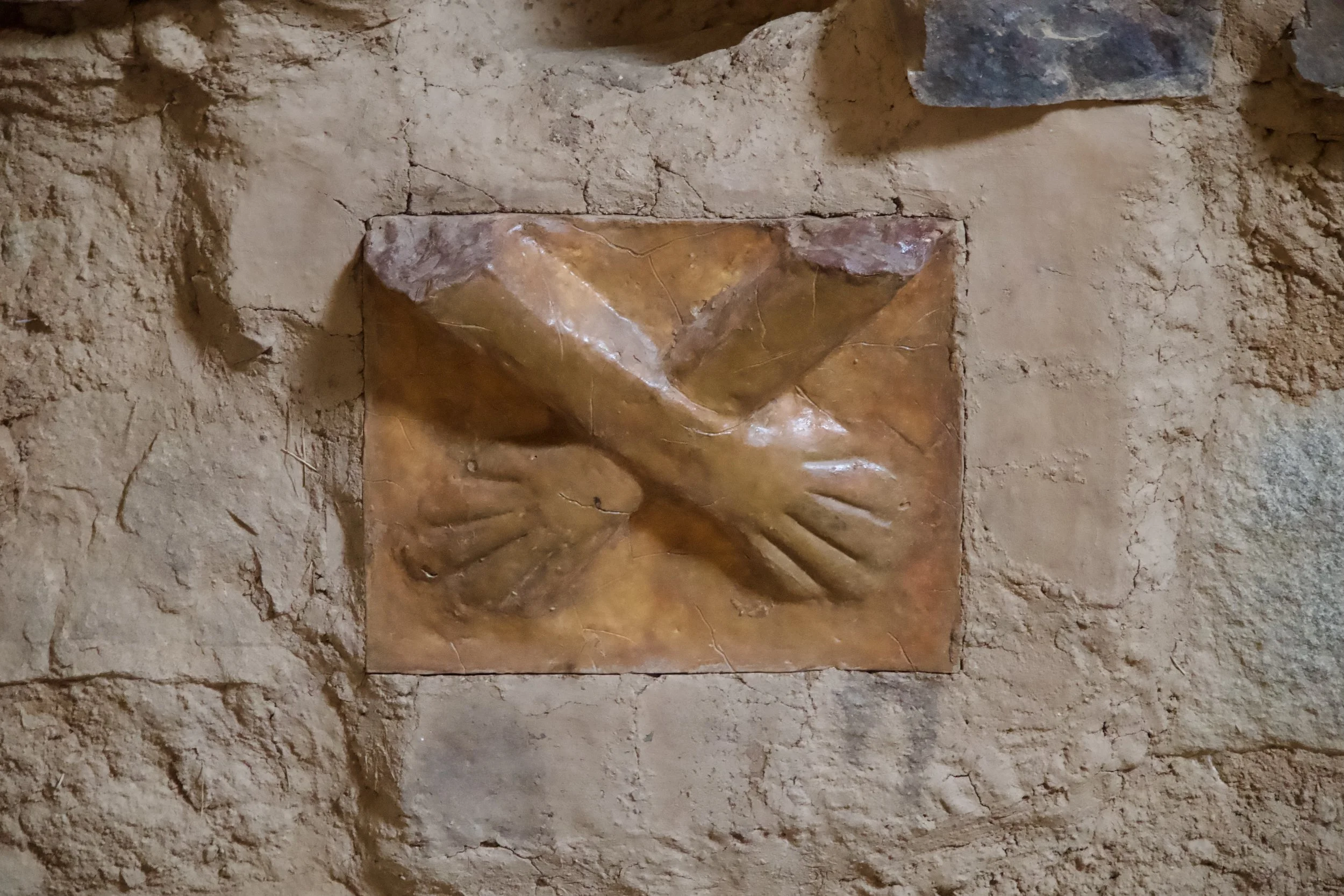
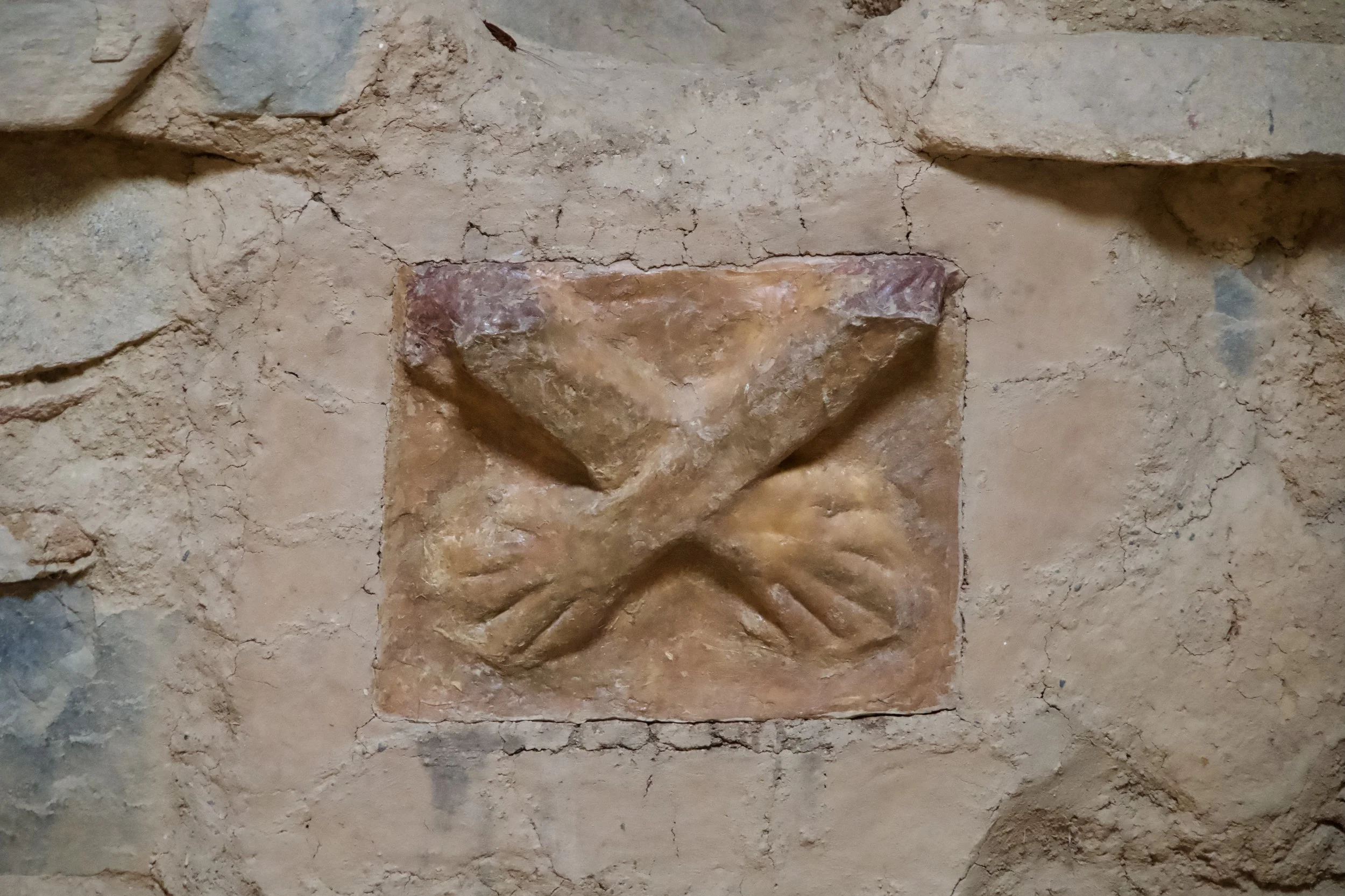
The hands are made of clay, mounted on an adobe wall in a temple that archeologists believe was used for ceremonies and weddings. The commonly accepted theory is that the hands represent two people being married and showed how they would hold their hands during the wedding.
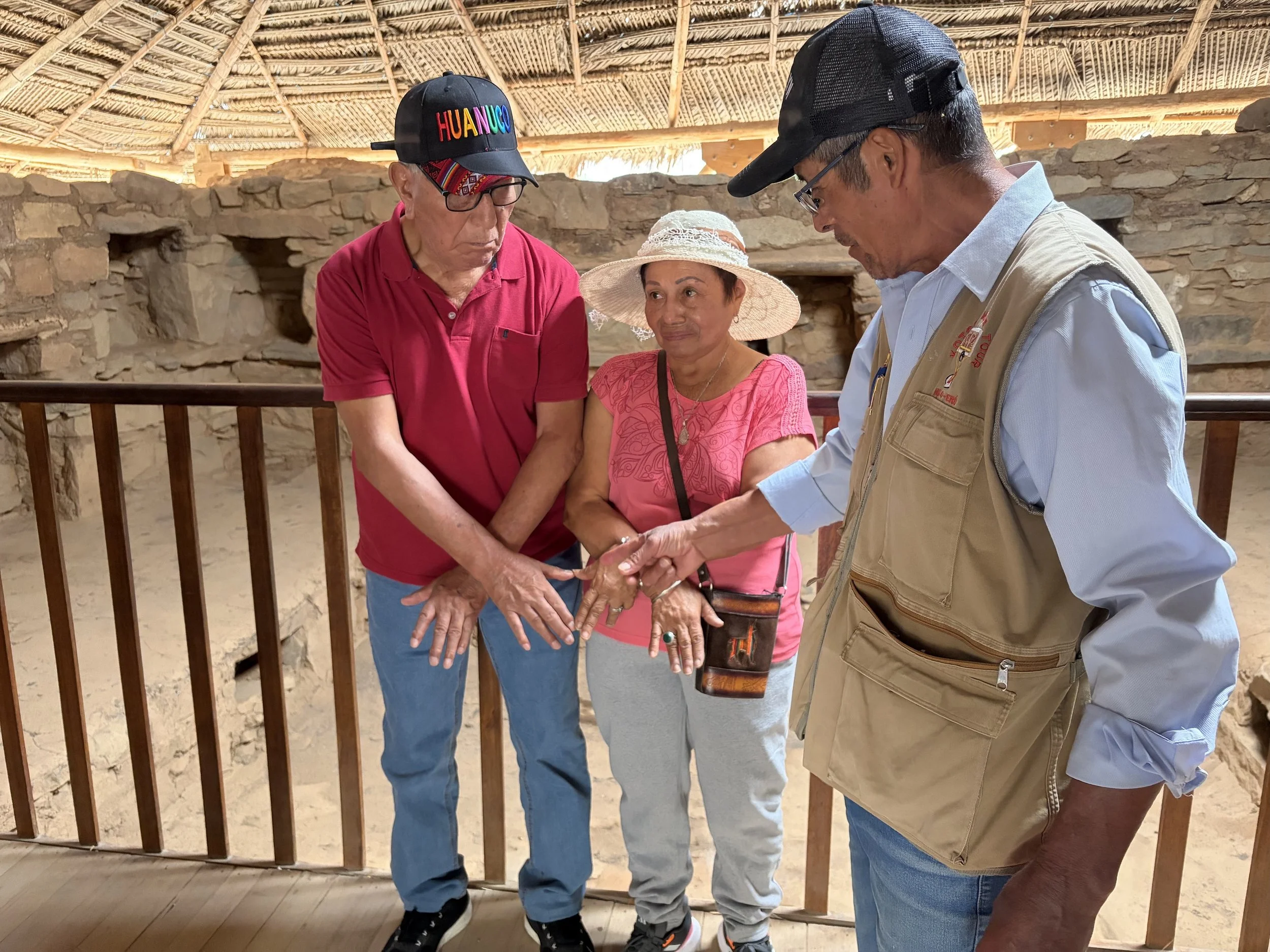
Antonio Mais Silva works at Kotosh, guarding the temple and explaining the findings and theories to visitors. His father was part of the original archeological study in the 1960s and he wrote a book about Kotosh, which I bought and think is well written.
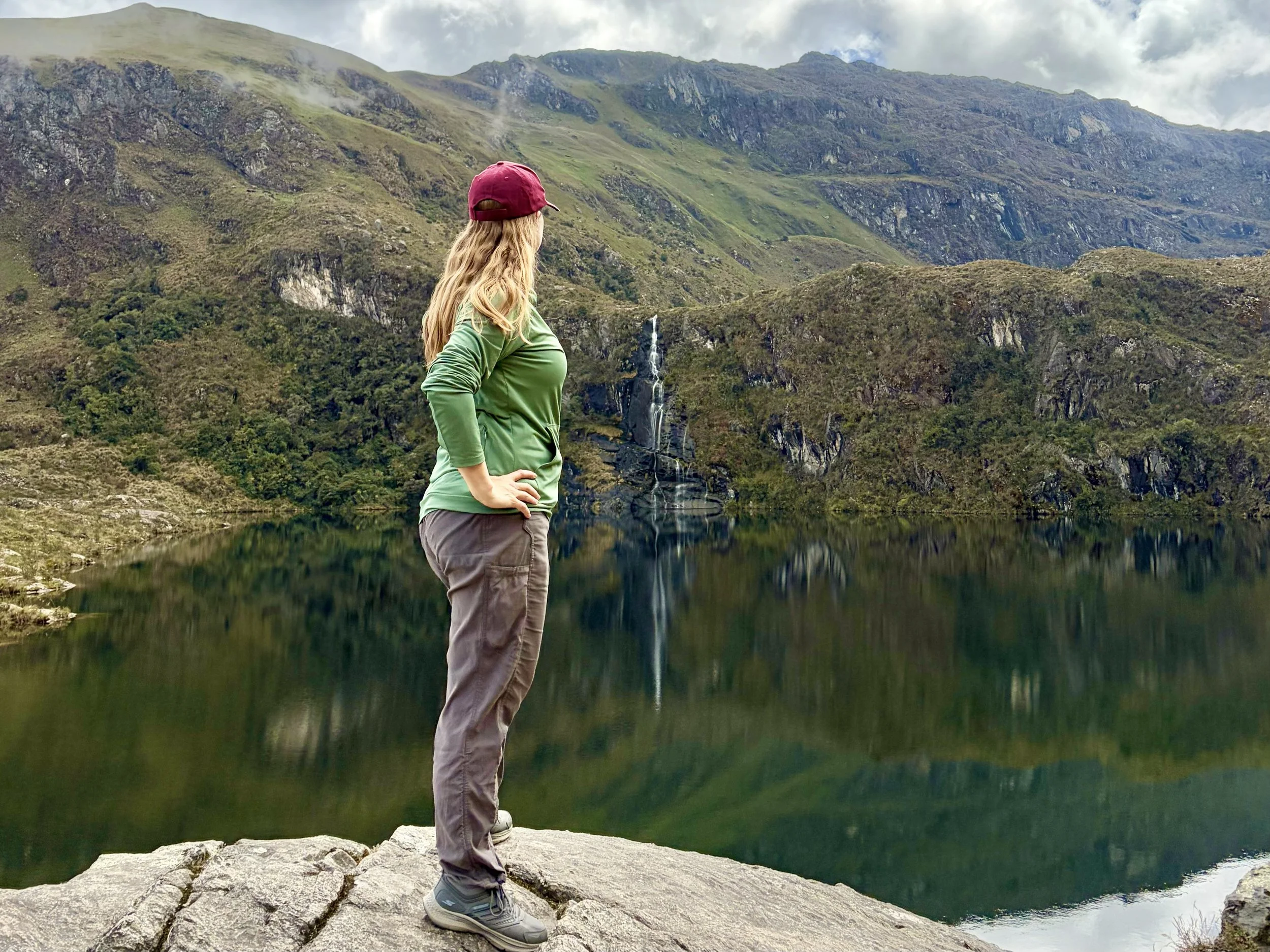
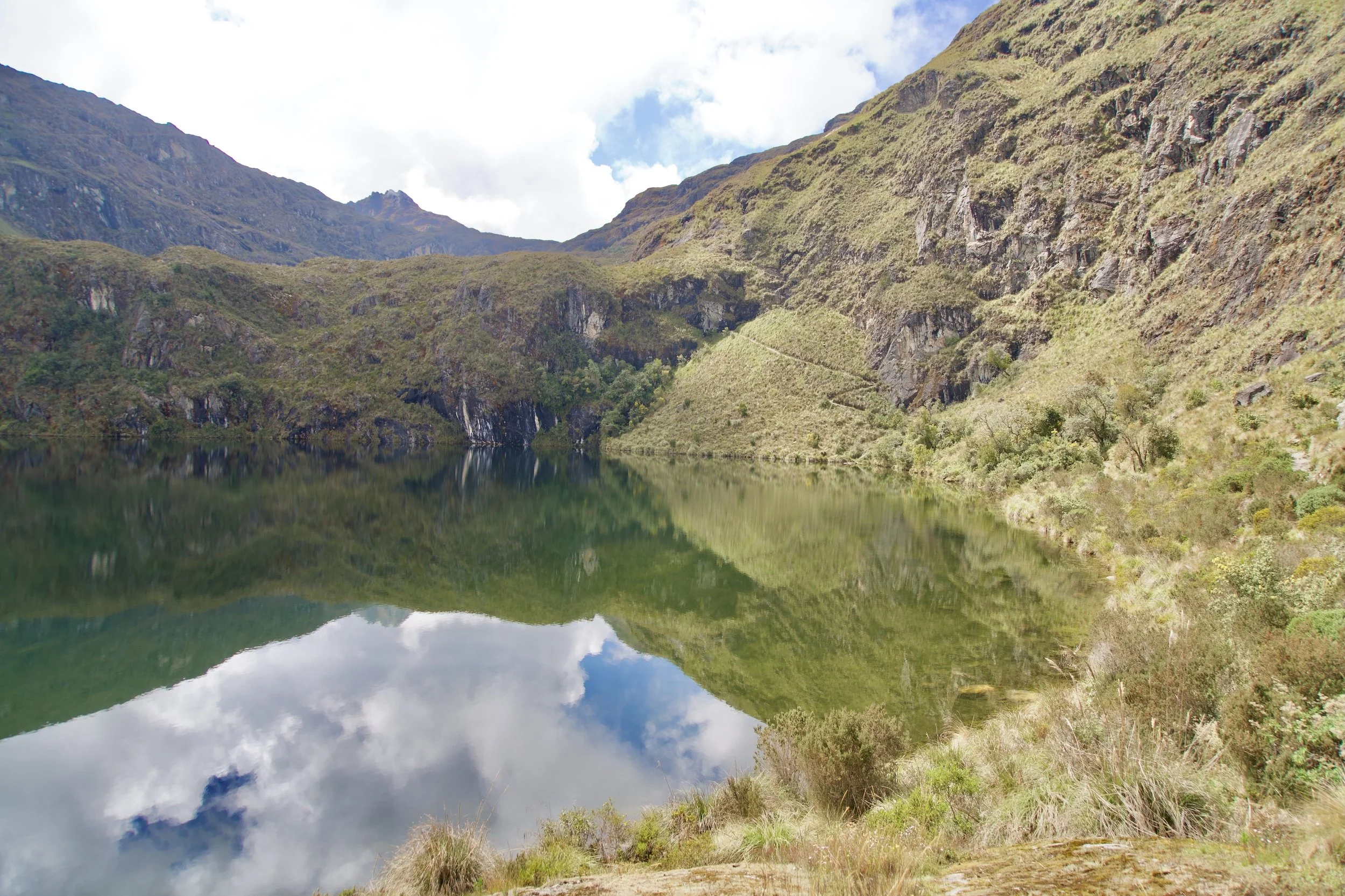
This first lake is called Jucocha, which just means Lake One in Quechua.
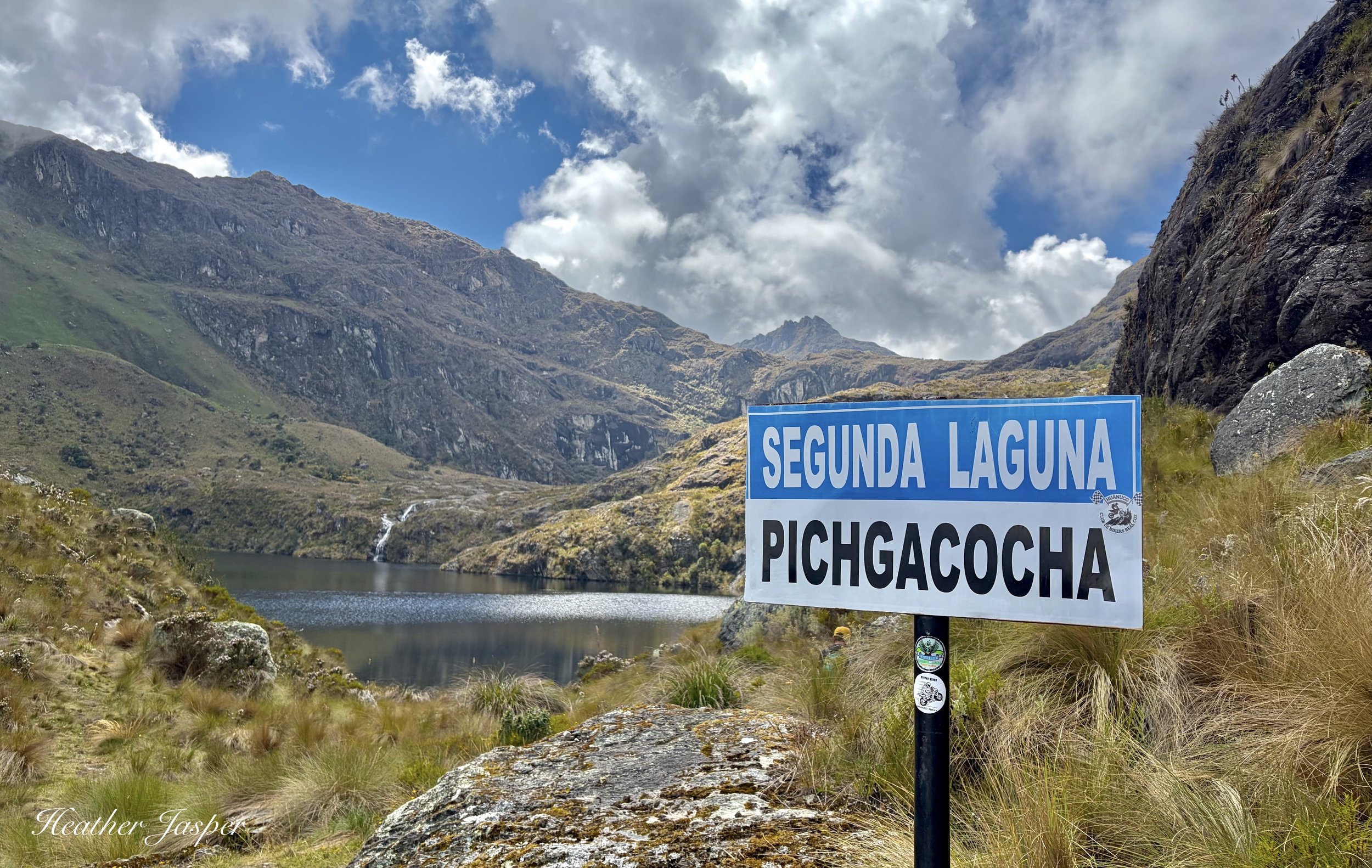
Pichgacocha 5 Lakes hike
Only an hour south of Huánuco is a series of lakes called Pichgacocha, which is a beautiful hike. I was lucky to have my friend Gaspar join me for Kotosh and Pichgacocha. He’s great company and the tour agency wouldn’t have done the tour for just me alone.
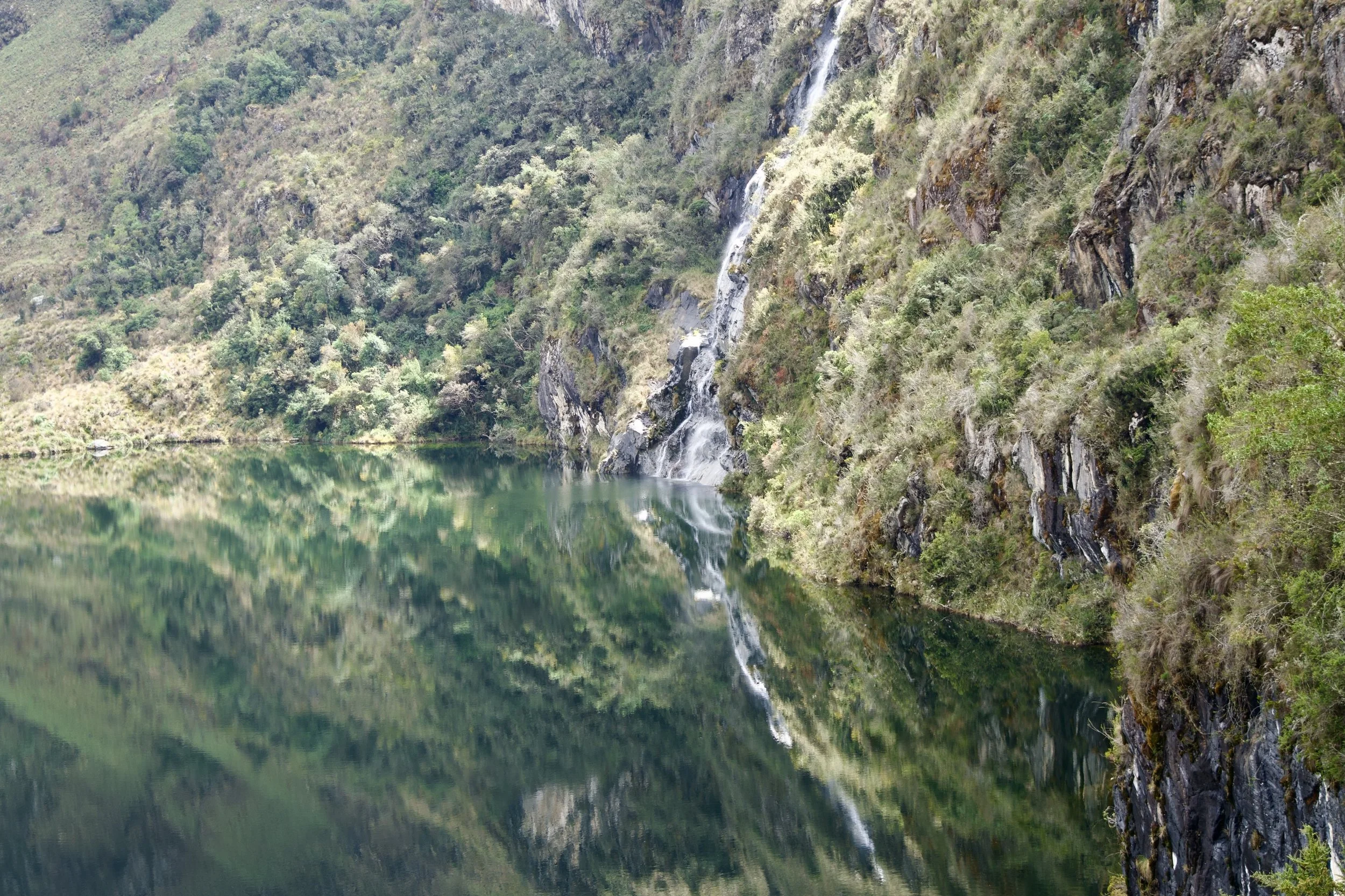
The drive up to the Pichgacocha trailhead isn’t far, but the road is rough with lots of loose rocks, so it was slow going. From the tiny parking lot, the trail starts steeply up a cliff with a spectacular view of a waterfall that flows from the first lake.
Ishkaycocha, Lake Two, with a smaller waterfall than Jucocha but this lake had islands.
Near the first lake is a spot where people leave offerings to the Pachamama (Mother Earth) and a wishing well. The guide, Henry, made sure we had coca leaves for the hike and instructed us to each leave a handful of leaves at the offering spot and said at the wishing well we could either toss in a coin or more coca. I tossed in another handful of coca, which is also the most common offering in the Cusco region and what most of my Peruvian friends leave on hikes.
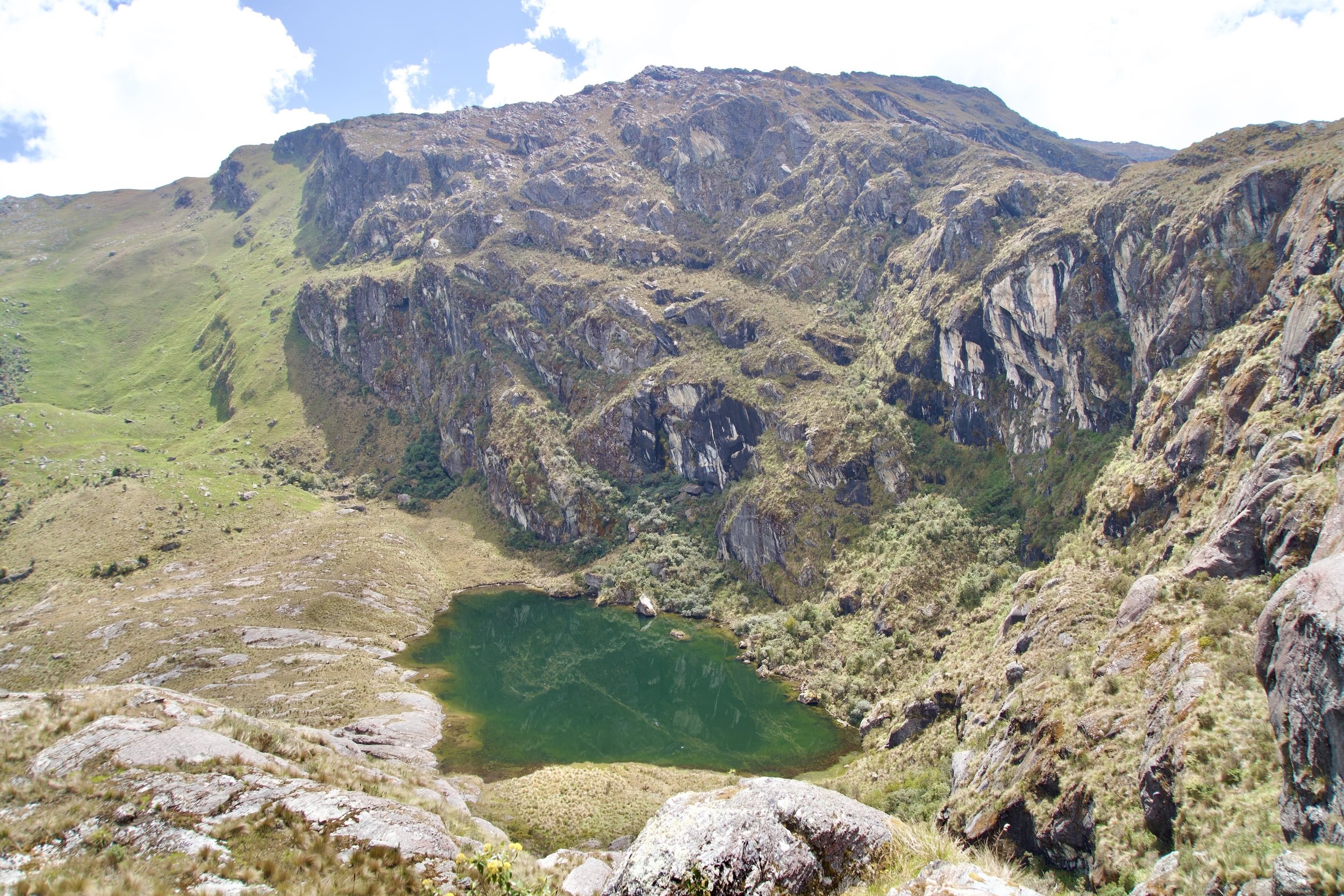
The third lake, Kinsacocha, has a dramatic glacial scoop that made a pretty stream down to Ishkaycocha.
The second lake and third lakes were pretty green ponds at the base of steep cliffs with waterfalls. The whole chain of lakes was a beautiful series of glacial drops, where thousands of years ago heavy rivers of ice scraped the rock ledges bare. Today some vegetation has grown between the cracks, but much of the drops are still bare rock.
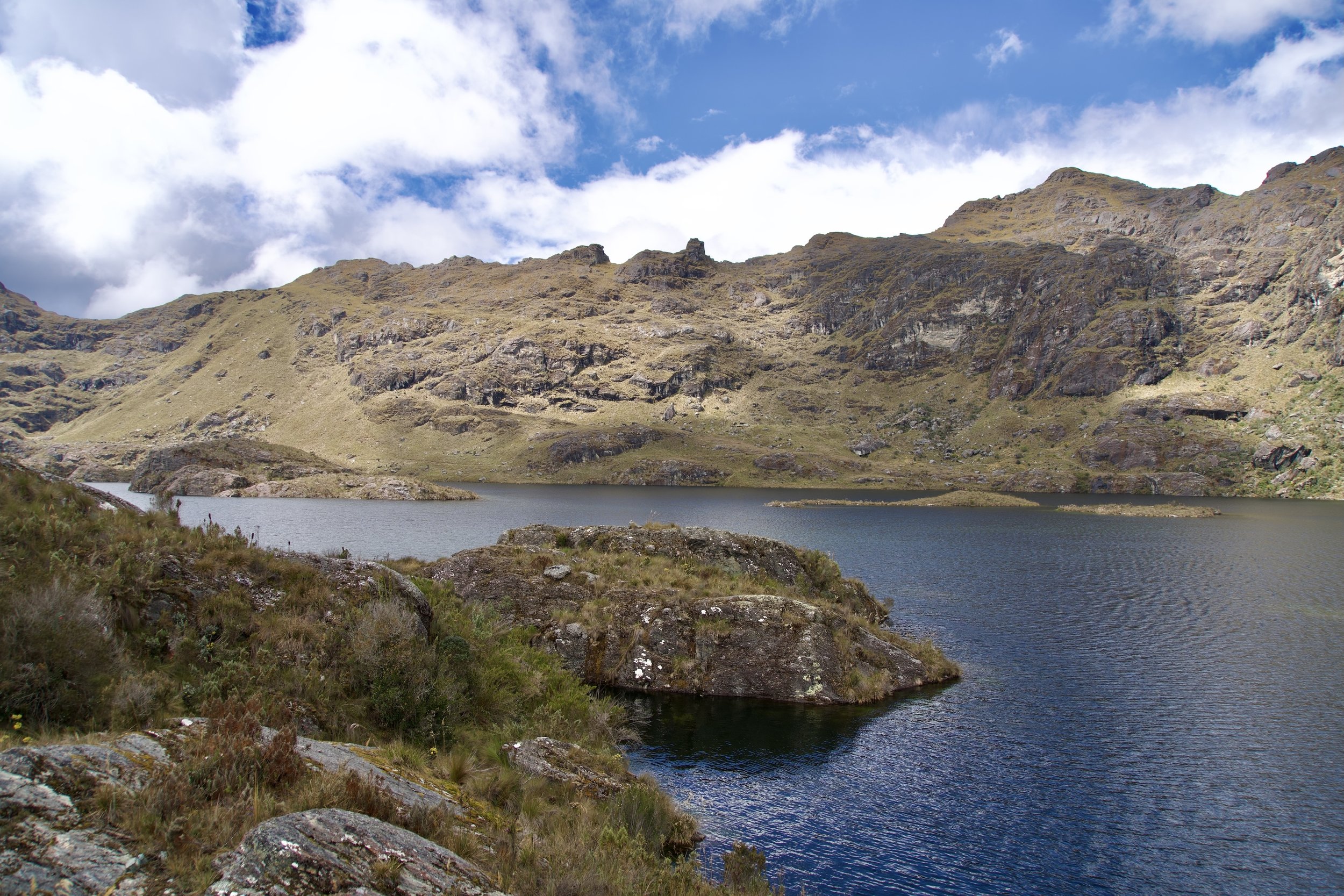
Chuskucocha, Lake Four, was by far the biggest lake and had the most islands. The wind started to hit us here.
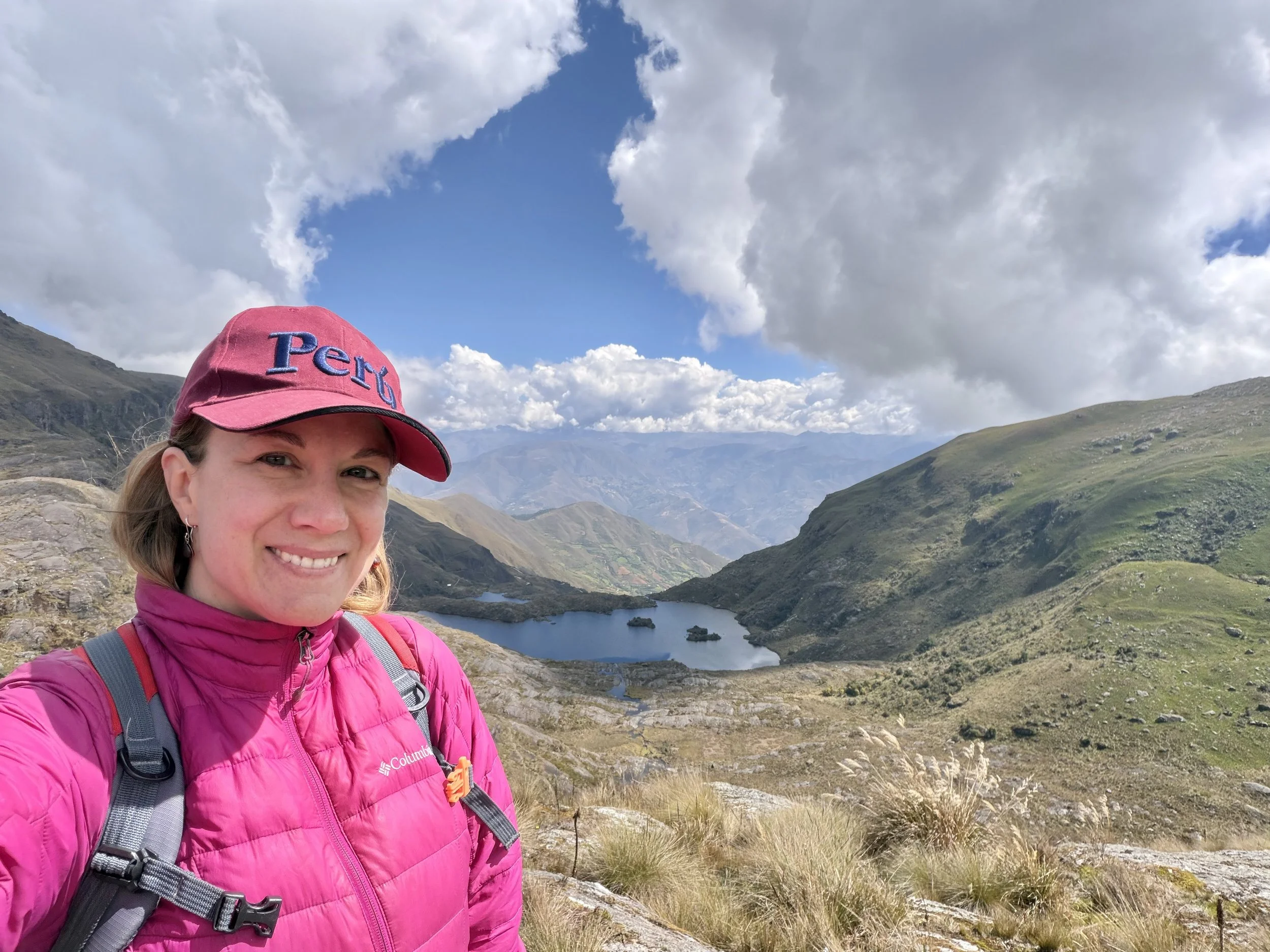
We made it up to the fifth lake just as the weather was starting to turn. Heavy gray clouds rolled in and a chill wind hit. There are a total of fourteen lakes in the chain, but most hikers only go as far as the fifth and I was ready to turn around. The trail started around 3,500 meters (11,480 feet) above sea level and the fifth lake was at 3,993m (13,100ft). Cloudy skies and a strong wind at that altitude is a good sign that it’s time to head back down.
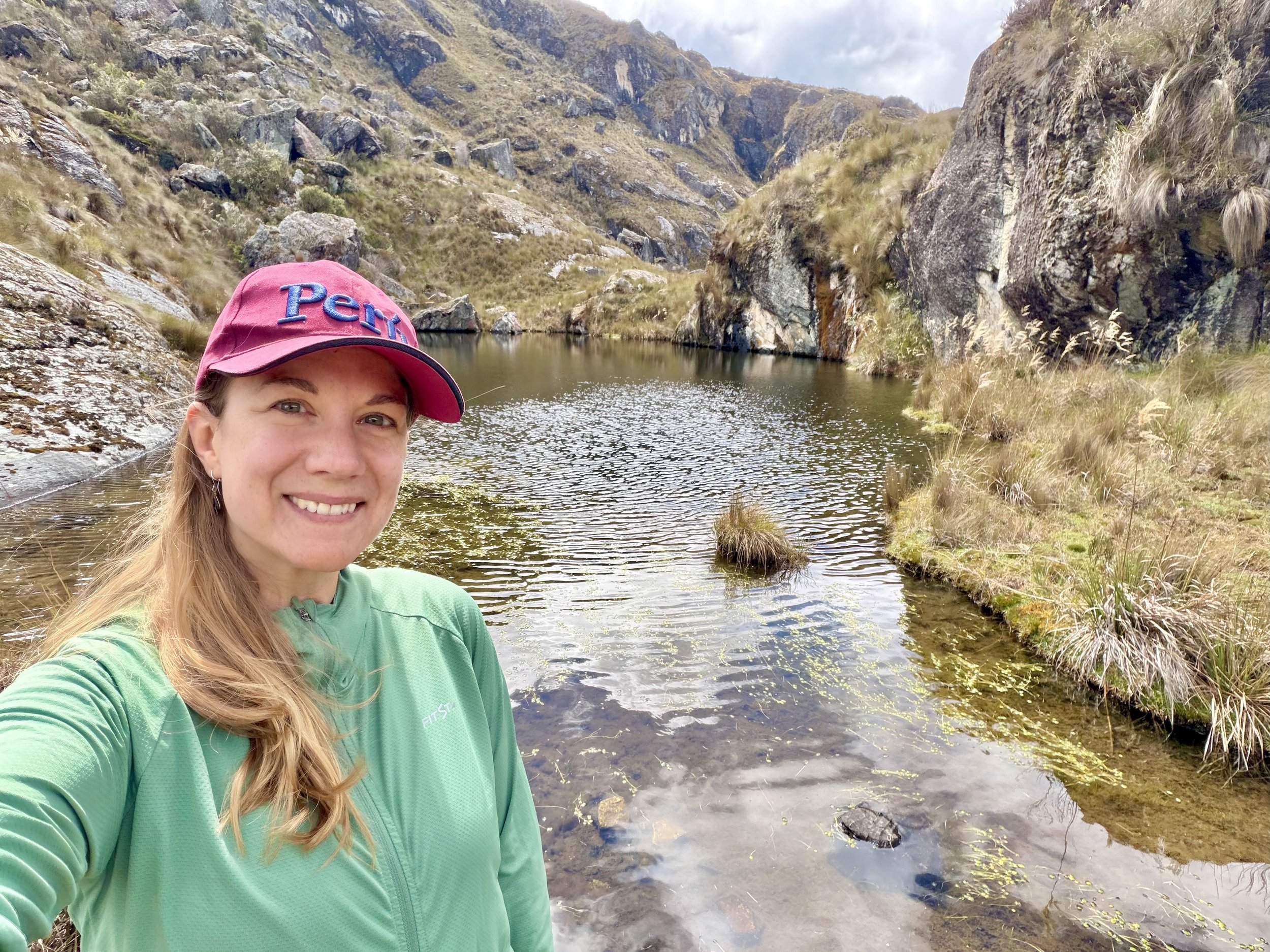
The 5th lake, Pichgacocha, was the smallest if I go back I’ll start earlier to see if I can make it to more lakes higher up.
Below the first lake, at the base of the first waterfall we saw, is a family with a trout farm. They have several ponds with cold, clear water and hundreds of trout. Henry wanted us to stop here for lunch and since it was already 3pm we agreed. After a hike, waiting till we got back to Huánuco for lunch after 4pm didn’t seem like a good idea.
It was a simple lunch of fried trout, rice and potatoes, basically what every trout farm I’ve visited in Peru serves. One of the family’s dogs waited patiently under the table for us to give him the fish heads and tails.
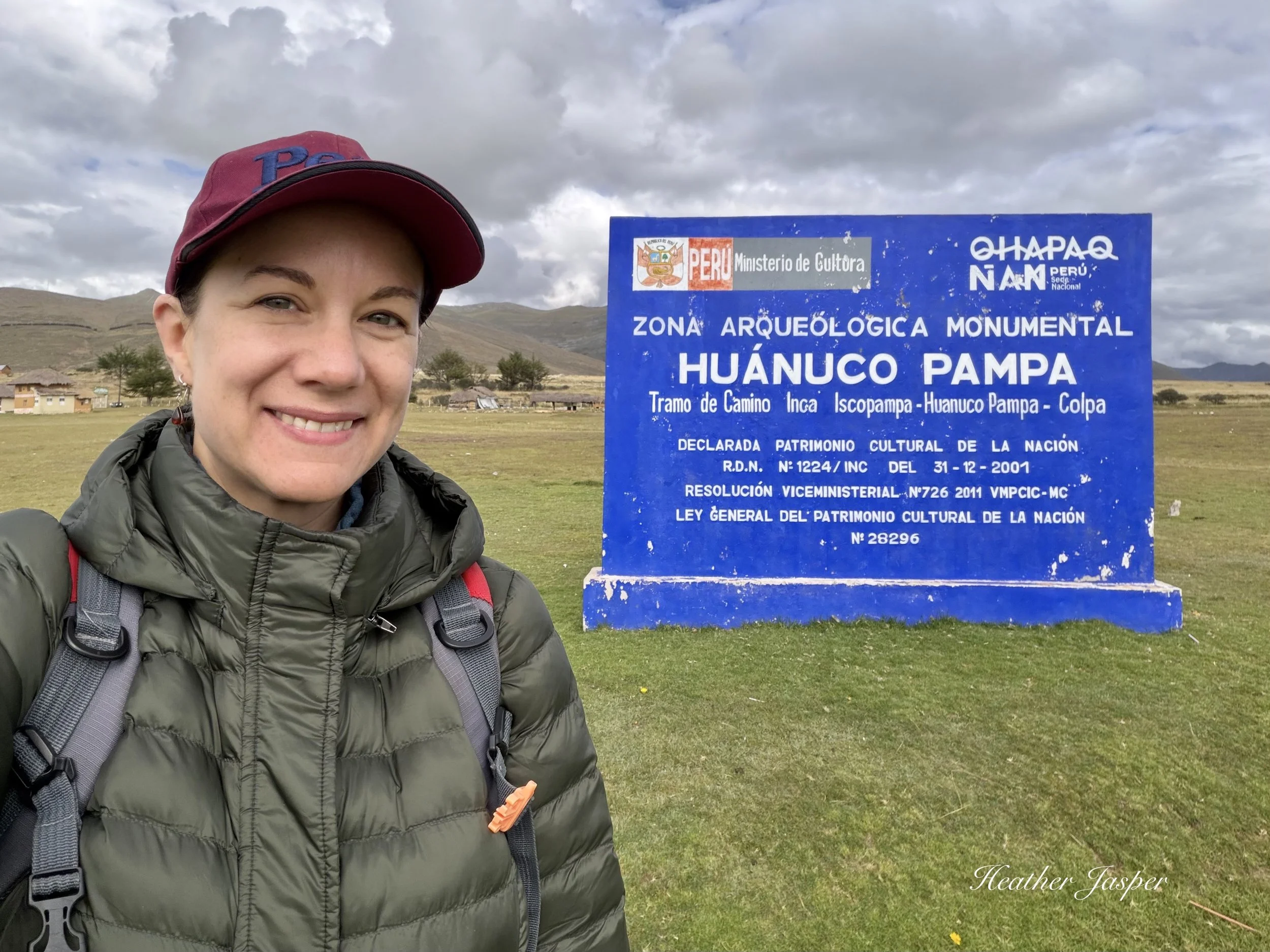
The buildings behind me are the entrance but there wasn’t a road to get there.
Huánuco Pampa
The week before my Huánuco trip I was in Huaraz and went by Chavín and Huánuco Pampa on my way to Huánuco city. Gaspar had told me if I was going to Huánuco, to be sure I stopped by the pampa on the way, since it has a giant Inca city. I spent the night in a tiny town called La Unión and the next morning visited the pampa before I went the rest of the way to Huánuco.
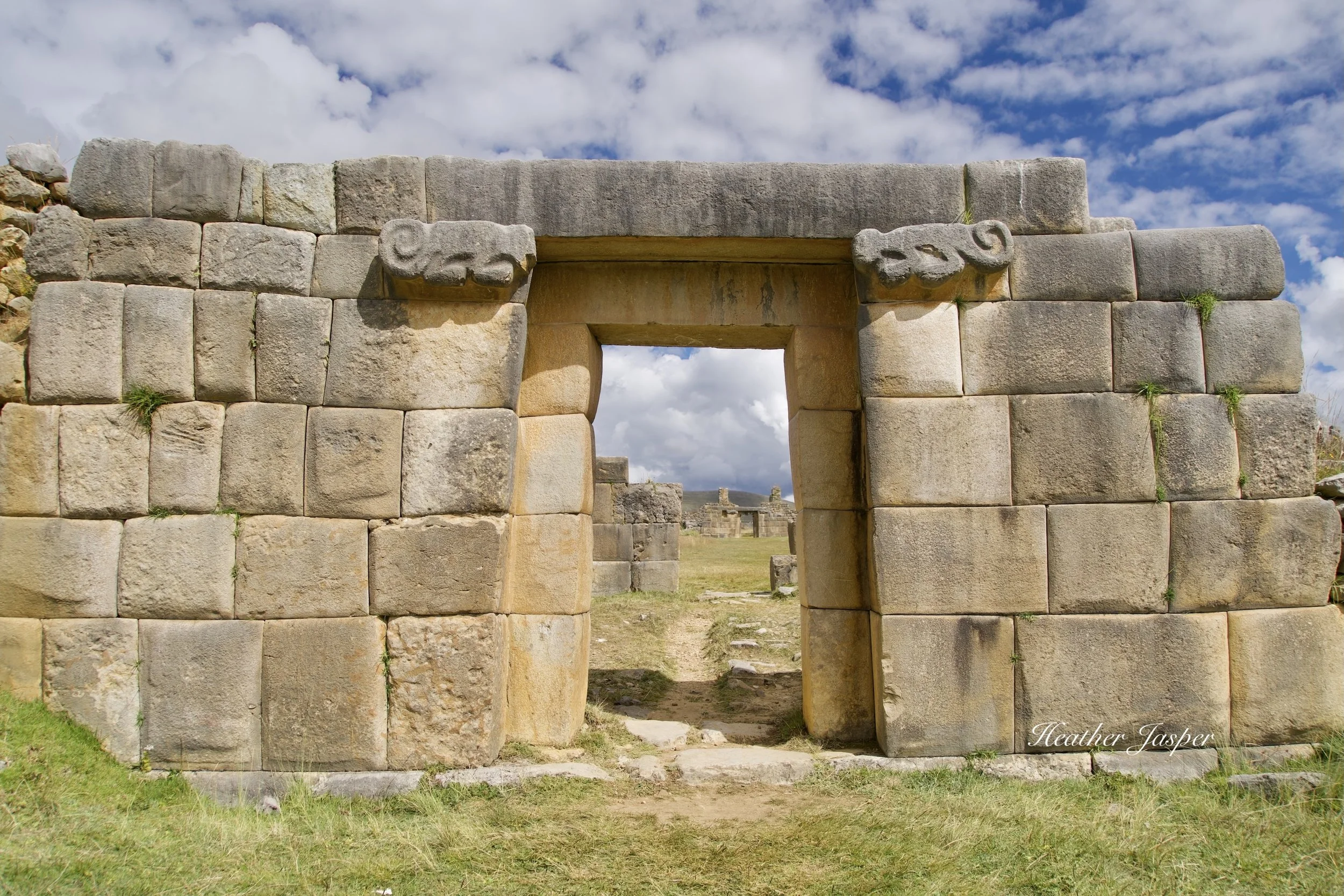
Entrance to the Inca’s quarters, with two animals that look more like monkeys than felines to me.
Huánuco Pampa is an Inca city.
It follows the clear pattern of important cities built by the Inca throughout Peru: an area of fine architecture with fountains and baths for the Inca and royal family when they visit, a residential area, a kallanka meeting house and a big ushnu platform for ceremonies and events.
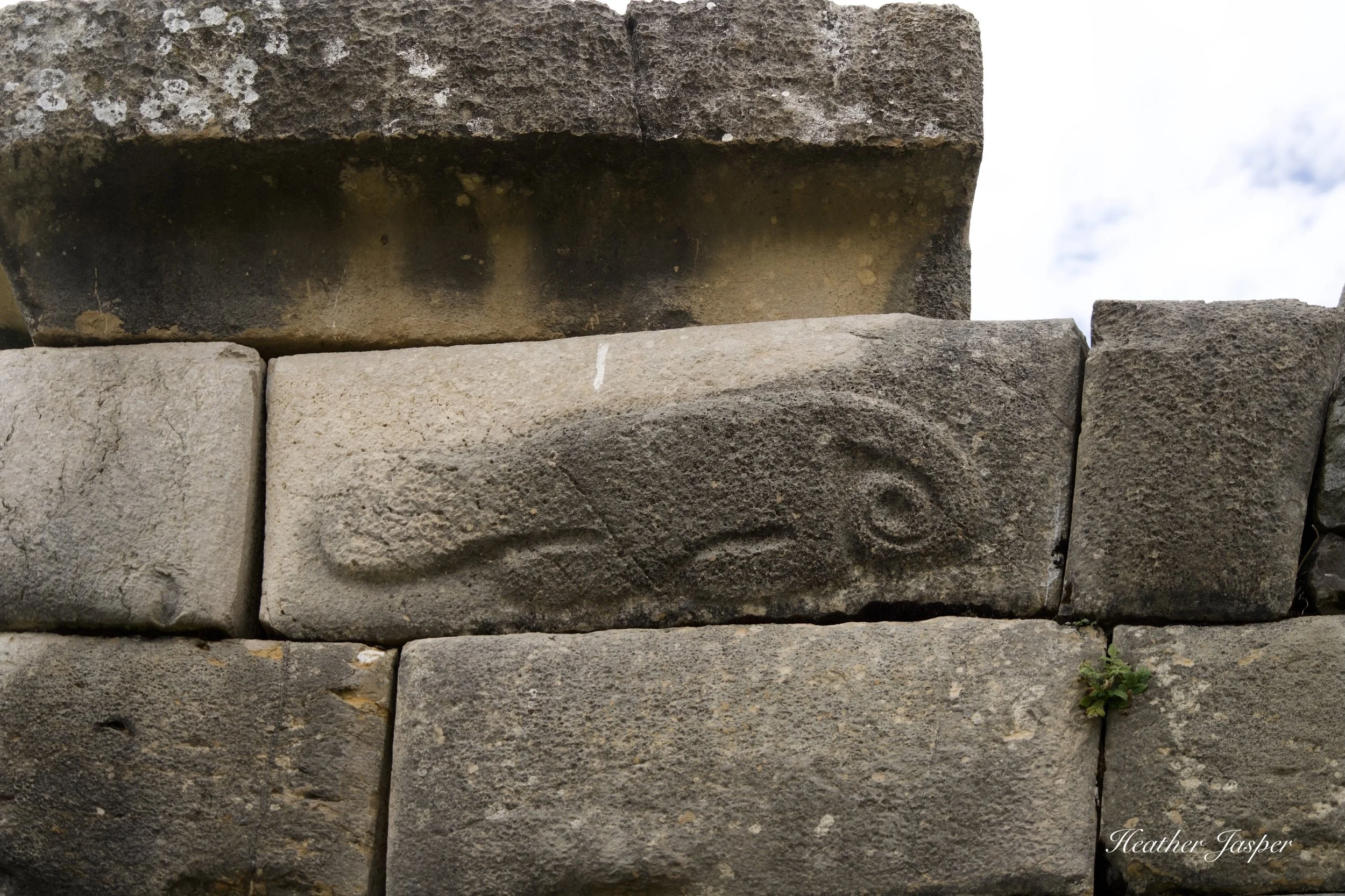
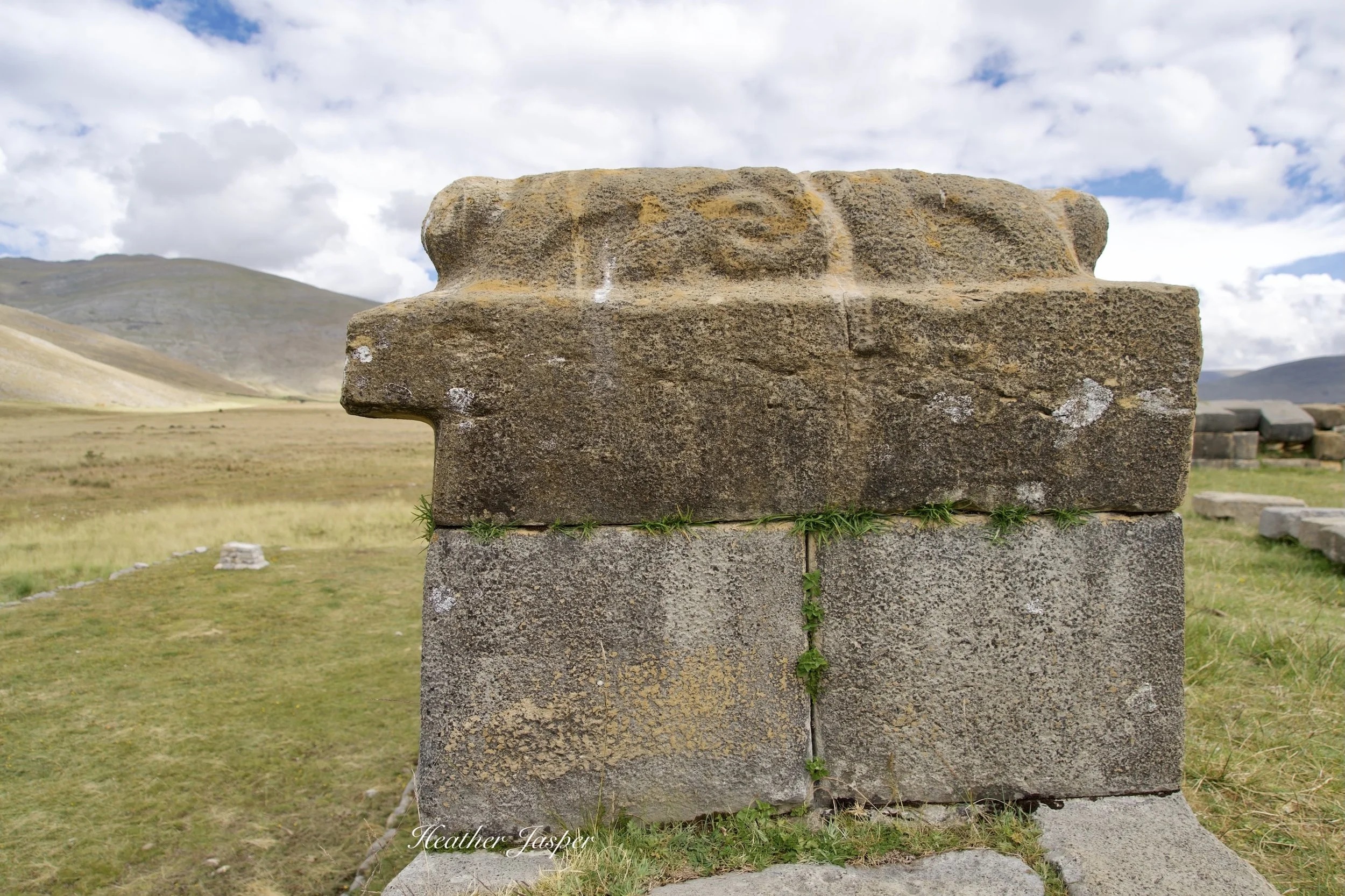
Animal carvings at Huánuco Pampa.
The signs told me that the animal carvings represented felines, but I have my doubts. I’ve never seen felines carved during Incan times that have curly tails. The animals I see around Peru with curly tails are monkeys and one of the carvings looked to me like the animal’s head was shaped like a howler monkey. There are no monkeys around Huánuco Pampa, but it is located in an area that leads from the mountains down to the jungle, so monkeys seem logical to me. And yet, archeologists know a lot more than me so I’ll stick with: the carvings represent felines but with curly tails that look like monkeys to me.
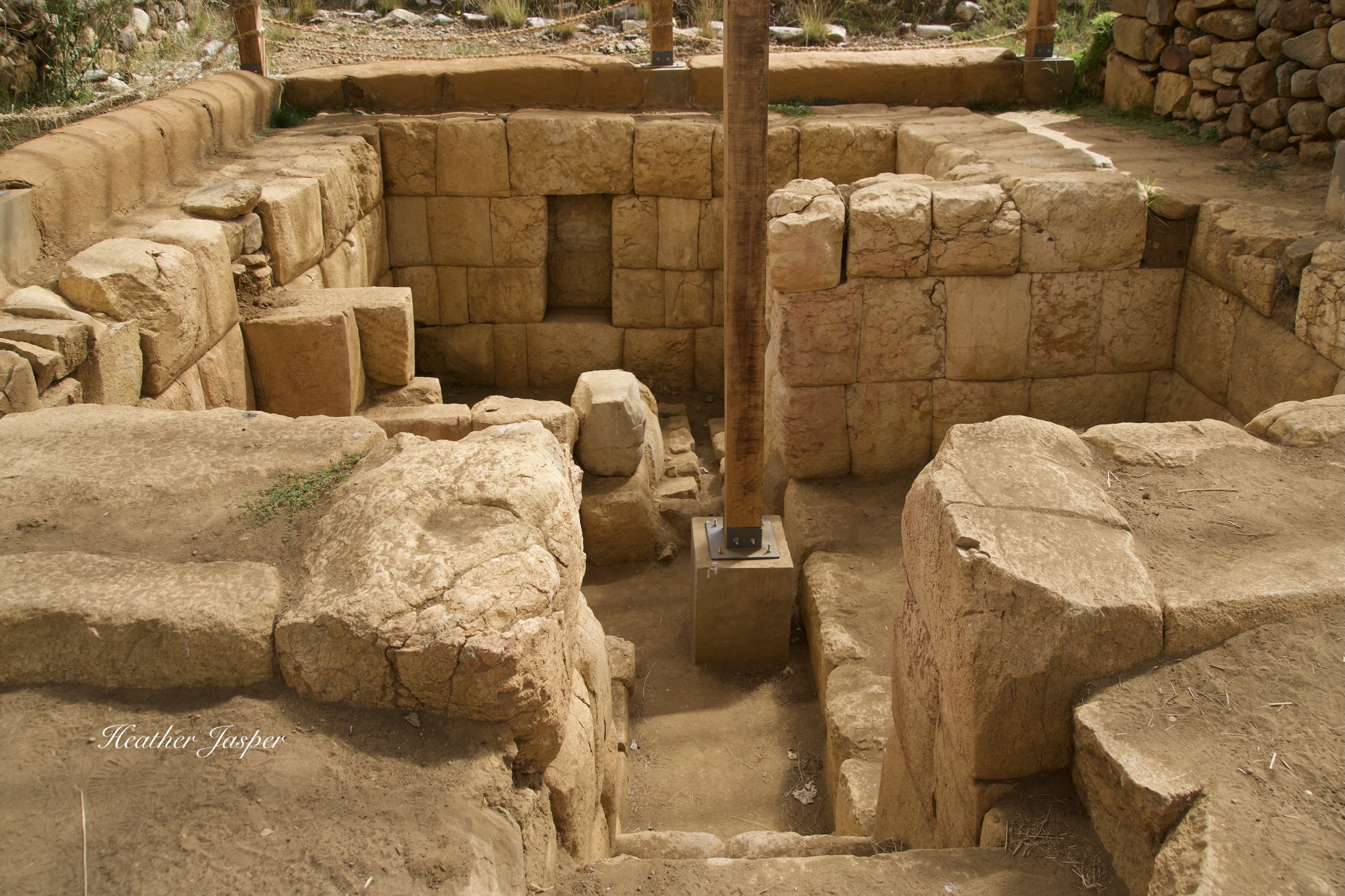
There were two spouts where water would have flowed out of the wall on the left and a drain in the right back corner.
I was the only person at Huánuco Pampa.
There was a person at the entrance who sold me a ticket (s/5 soles) but seemed puzzled why I was there. Besides him, the only living things I saw were alpacas, sparrows, caracara falcons and two species of ibis.
Signs are bilingual Spanish & Quechua.
If you don’t know Spanish or Quechua, you should try to find a guide. Unfortunately, I don’t know how you would do that. La Unión is so small I didn’t find any tour agencies and the way to get up to the pampa is to hang out in the plaza until a car arrives. All transportation leaving from the La Unión plaza is going up to the communities on the pampa and can drop you off at the entrance to the archeological site, s/5 soles each way to the pampa but s/8 to the archeological site.
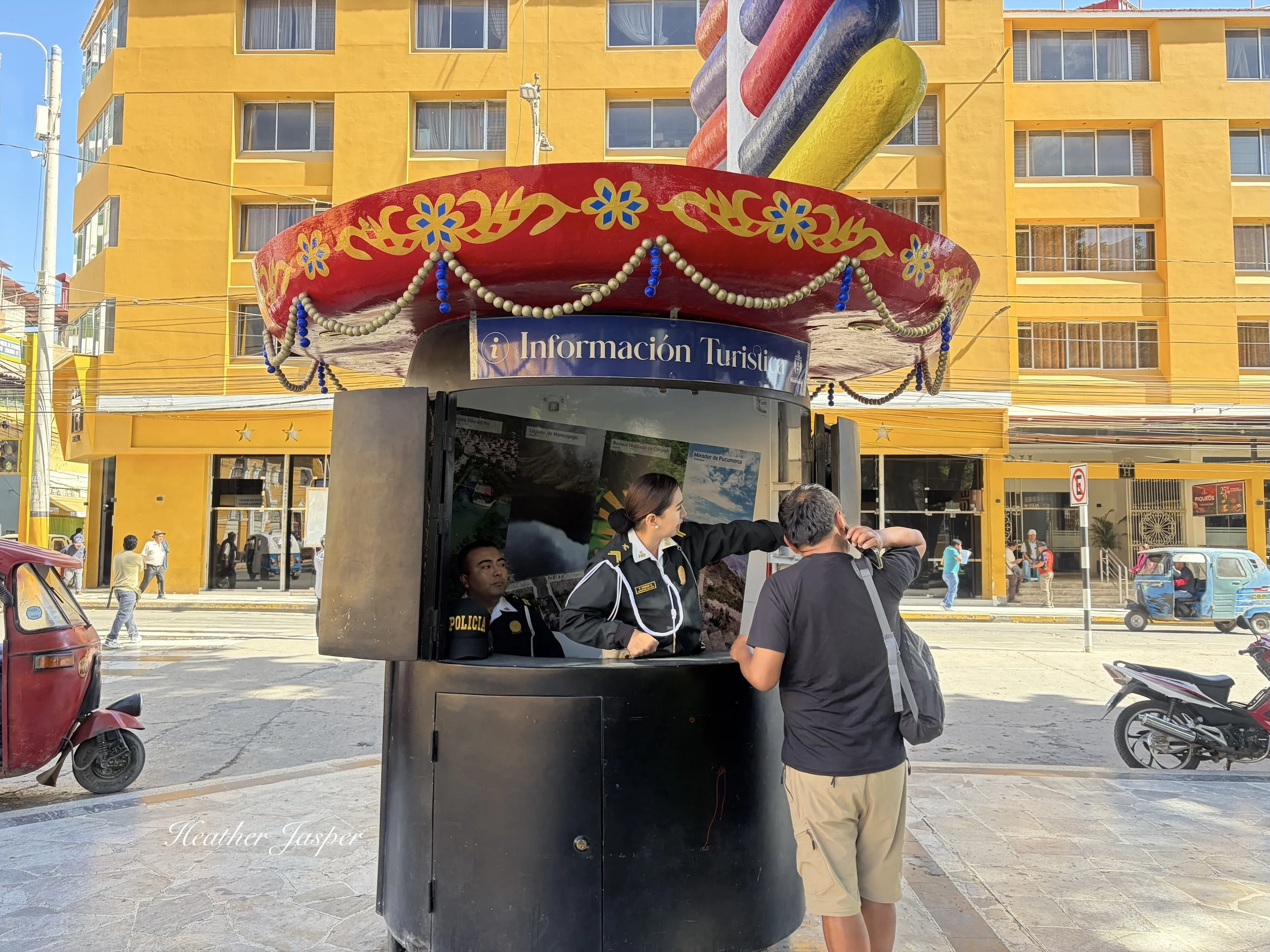
The corner of Huánuco’s Plaza de Armas has a tourist information kiosk.
Travel Tips for Huánuco
Where to stay: near the plaza
I stayed at the Plaza Hotel, on the corner of the Plaza de Armas and Gaspar stayed at a hotel about seven blocks from the plaza. There are plenty of hotels within a block of the plaza and I recommend staying as close to there as you can. The neighborhood around the plaza is nice and has lots of restaurants.
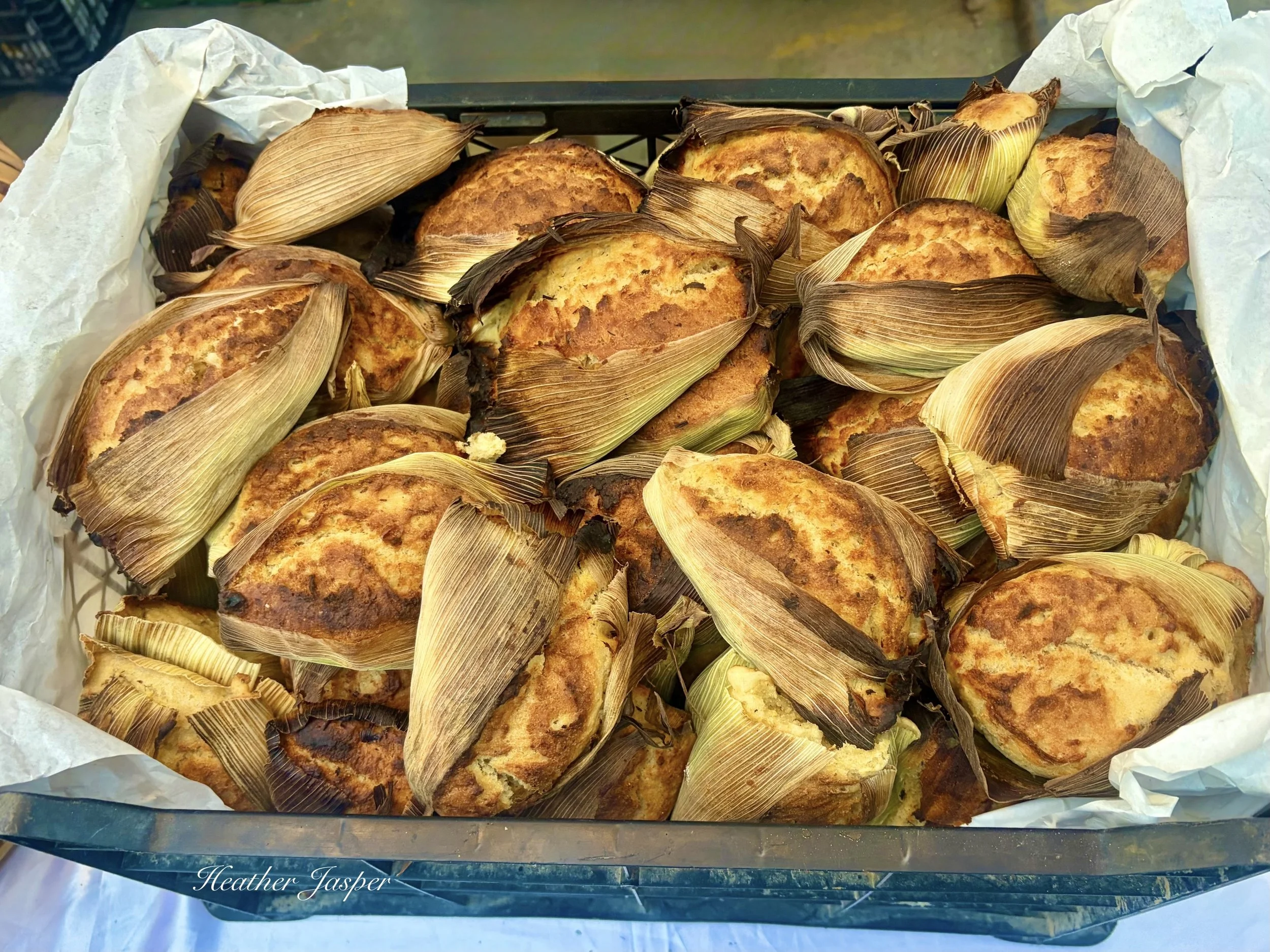
Humitas are like tamales, but without filling. When baked they’re like delicious little corn cakes and I loved them!
What to eat: baked humitas, jungle food, fresh fruit, emoliente
There are a lot of jungle-themed restaurants that serve traditional jungle food, with an emphasis on pork, chicken and yuca. I don’t eat pork, but there were plenty of restaurants I liked and lots of great cafés. The coffee I tried was excellent and most comes from the nearby jungle.
Emoliente is a hot drink found throughout Peru and made with herbs added to a hot broth made of boiling flax seeds. I love having a hot glass of emoliente in the evening and the emoliente I had in Huánuco was the best I’ve had.
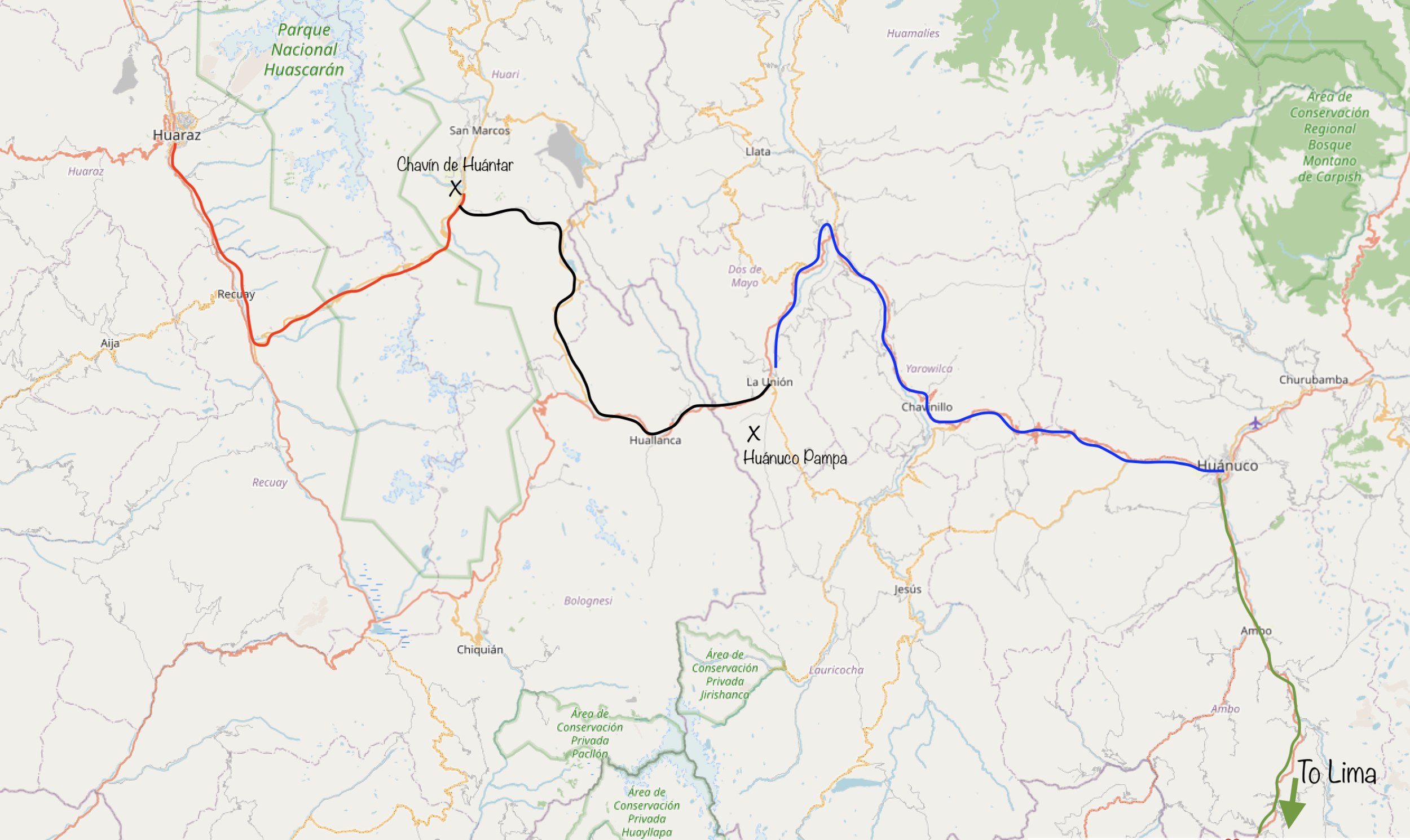
The roads to and from Huánuco were very rough, with lots of landslides. I’d fly next time.
How to get there: bus or plane
I did not like the roads to Huánuco. The road from La Unión had literally hundreds of landslides covering part or all of the road and it seemed we spent as much time on paved road as we did bumping over dirt and rocks that had slid down to cover the road. I did that section in a car, during the day, and would not do it again.
To go from Huánuco back to Lima for my flight to Cusco, I took the bus. Unfortunately, all buses are overnight buses. I avoid overnight buses partly because I never sleep well on a bus and partly because more accidents happen at night than during the day. On this trip, I slept only a couple hours and spent most of the night being jostled back and forth as the bus drove fast around curves on paved sections and bumped along unpaved sections. I assume those unpaved bits were landslides like the ones I saw on the way from La Unión. I would definitely not go to Huánuco by bus in the rainy season. There’s an airport and I plan to fly next time.
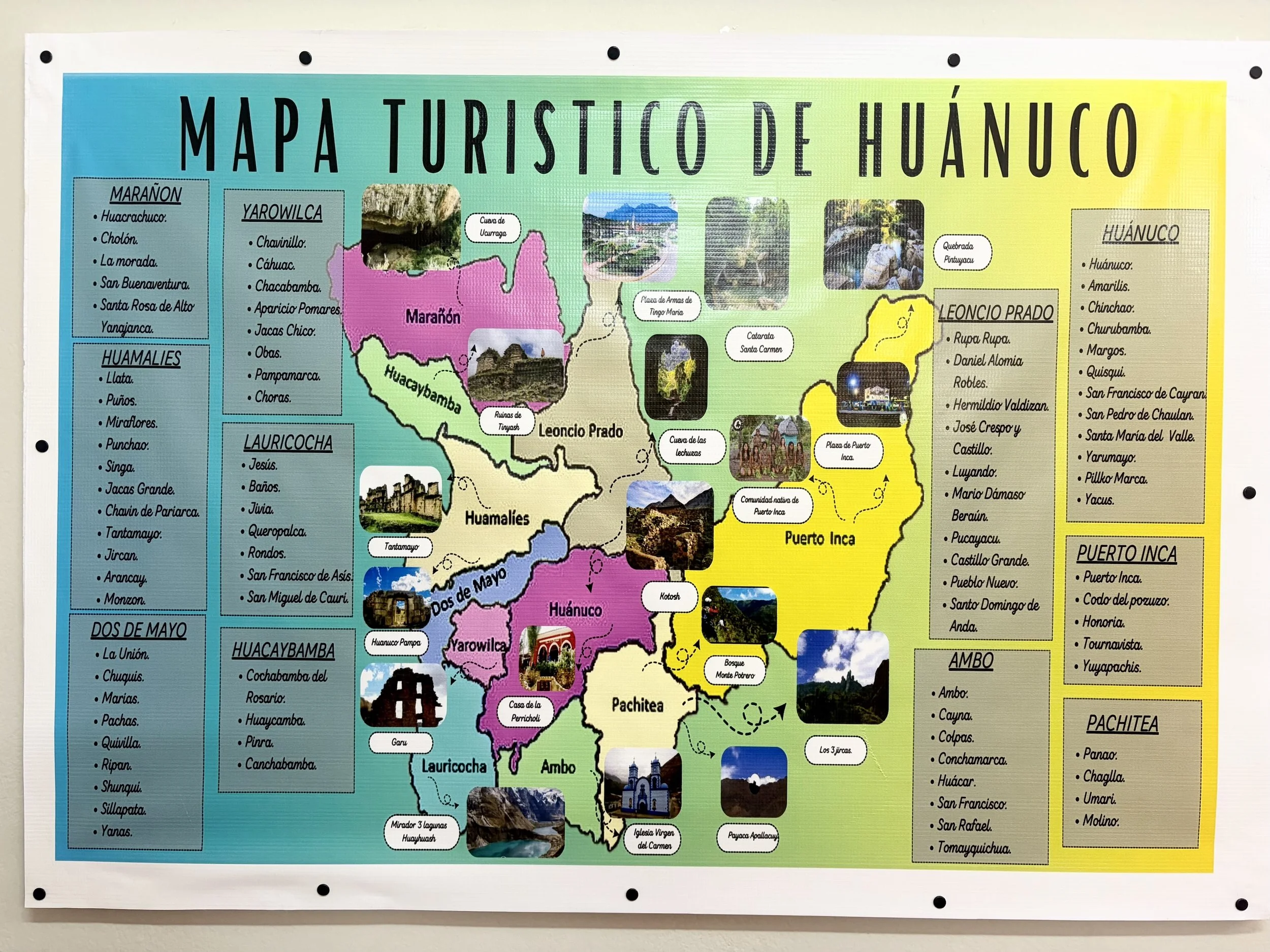
This Huánuco Region map shows the tourist destinations in each province. So far, I’ve only visited two provinces: Dos de Mayo and Huánuco.