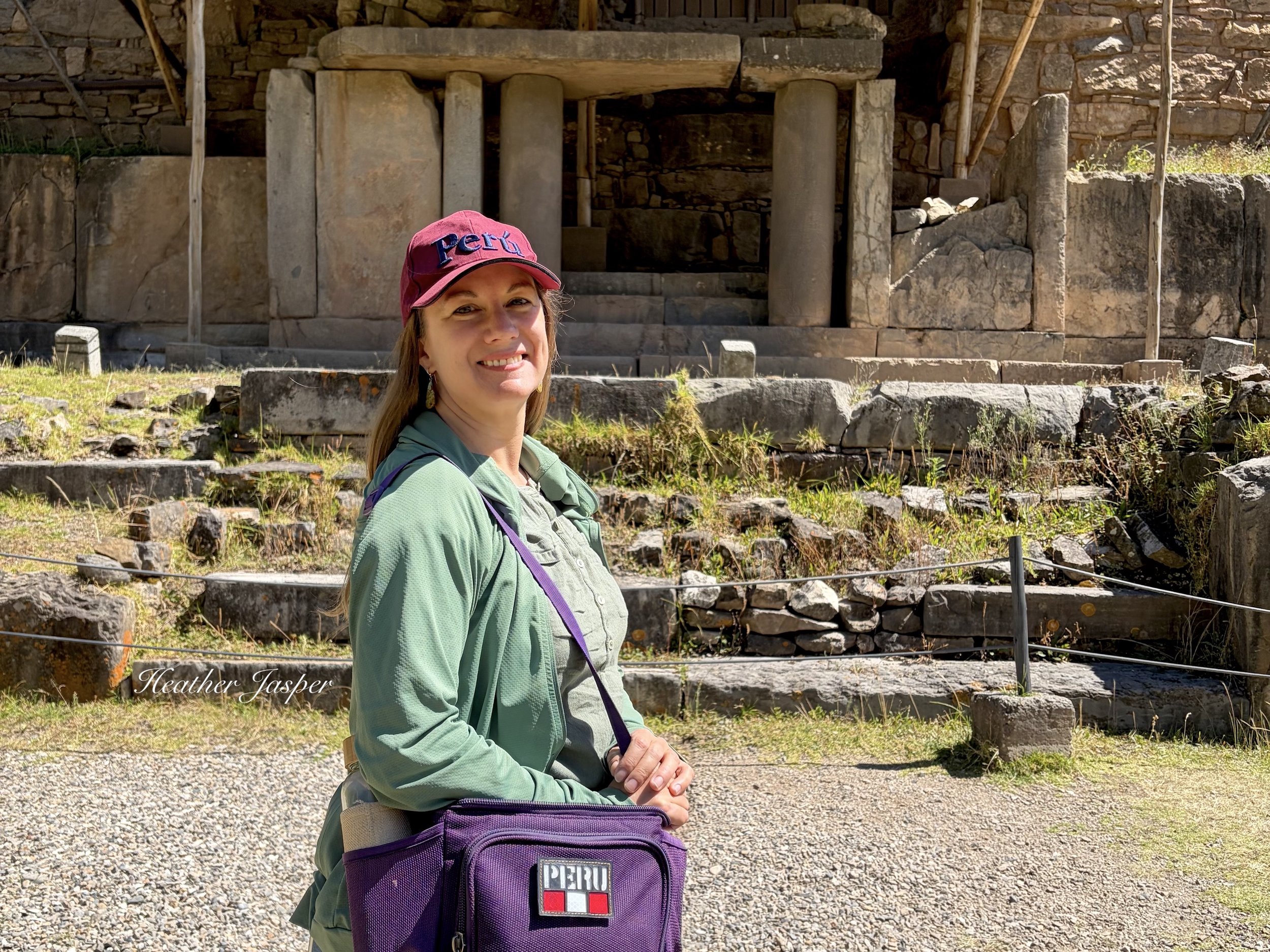
Archeologists believed that Chavín de Huántar held South America’s oldest culture - until Caral was discovered in 1994.
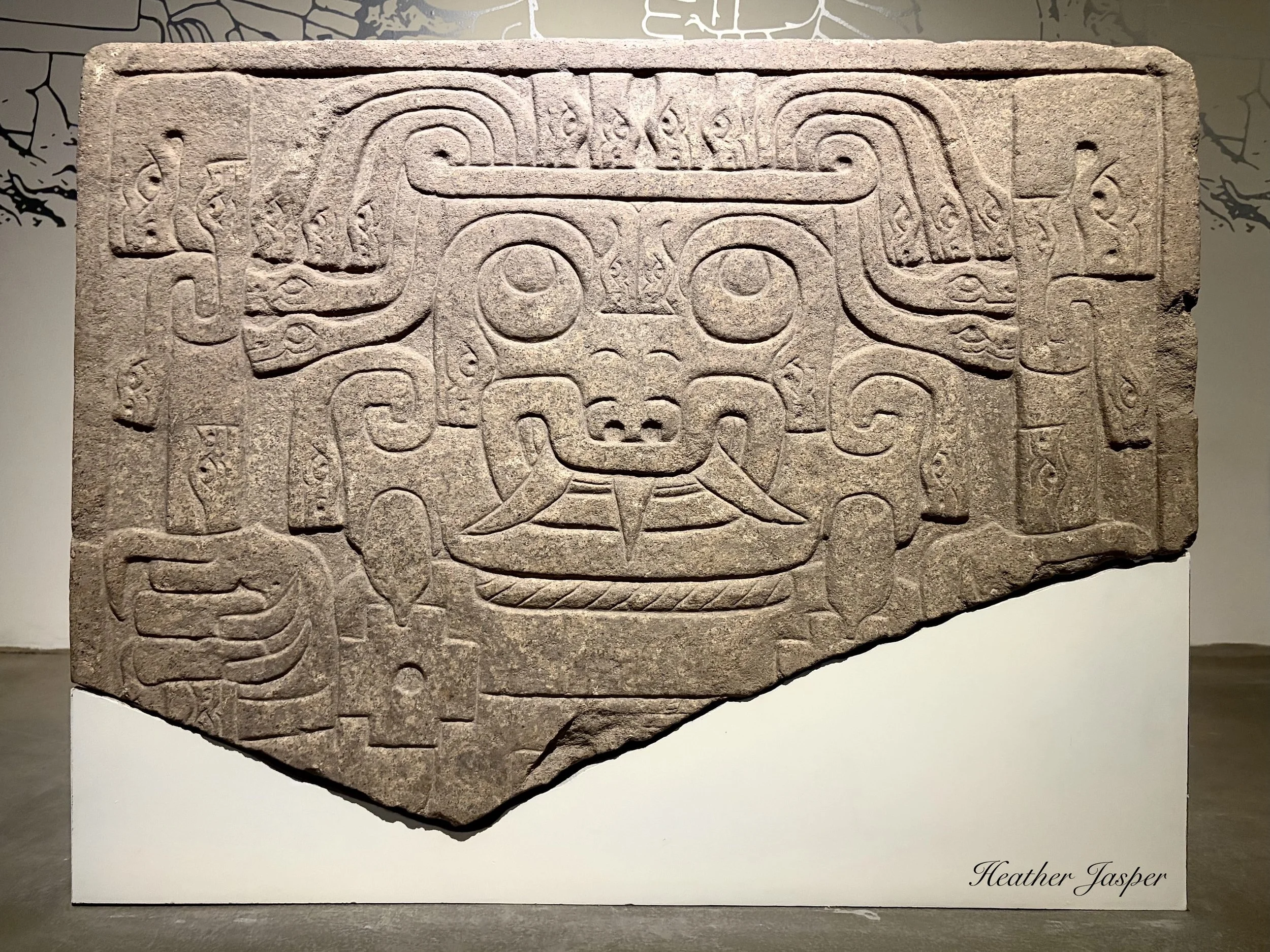
The most representative sculpture at Chavín: a being with dilated eyes rolled up, jaguar fangs, snakes and eagle claws.
What is Chavín?
Chavín de Huántar, also simply called Chavín, is one of the world’s oldest cultures – and by far the trippiest. Chavín’s architecture and art all point to ritualistic use of hallucinogens. Their use of the San Pedro cactus, which contains mescaline, is legendary and the evidence is everywhere.
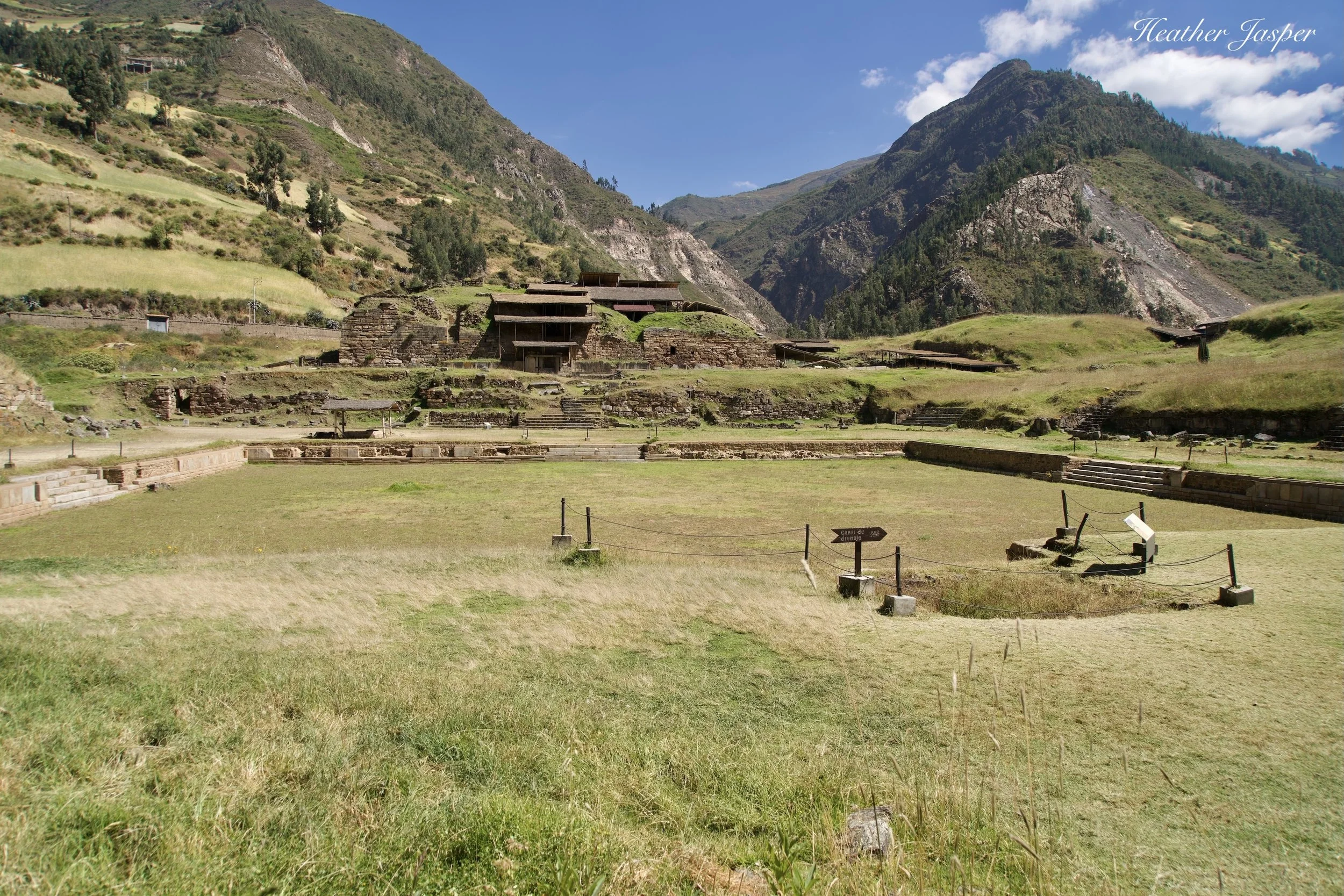
The stonework at this square plaza and on the building across need an expert guide to explain the significance.
What can you see at Chavín?
Like many ruins over 3,000 years old, a lot has been lost to time, and, on the surface, it doesn’t look like much. Initially, what you see are some small hills and flat places between them, but the site’s bilingual Spanish & English signs are minimal. It takes a closer look, and a good guide, to understand what you’re seeing. It also requires venturing down into the claustrophobia-inducing tunnels and chambers.
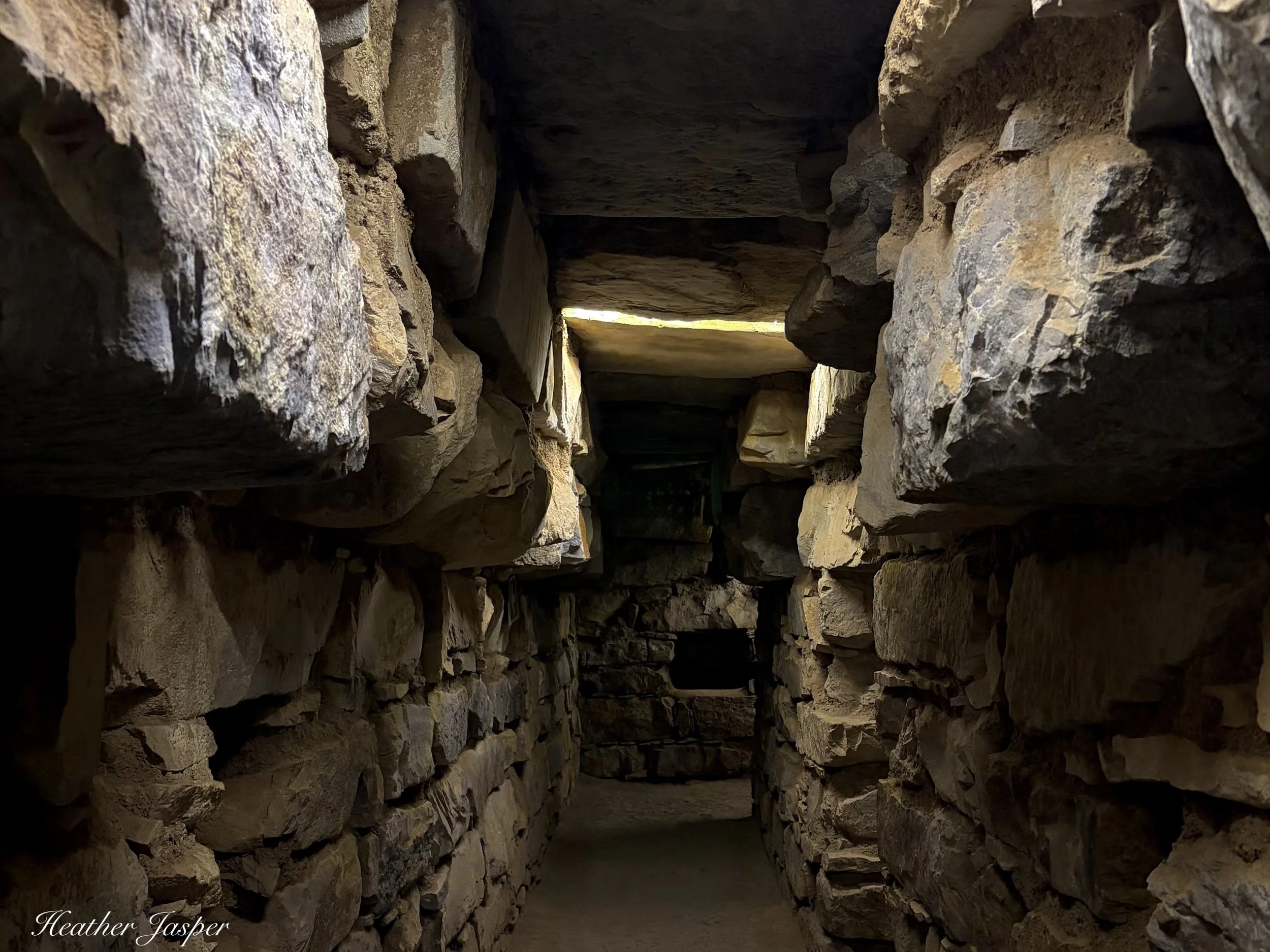
Modern lighting today shows us what people 3,000 years ago would have only experienced in the dark.
You have to get underground to understand Chavín.
The tunnels, chambers and galleries under the temples are where you’ll understand what Chavín was all about: hallucinations. The narrow spaces, especially the passageway leading to the Lanzón, the main deity, are wild enough today. They would be downright scary 3,000 years ago, in the dark. There is no evidence in the tunnels or underground chambers that torches or candles were used for light.
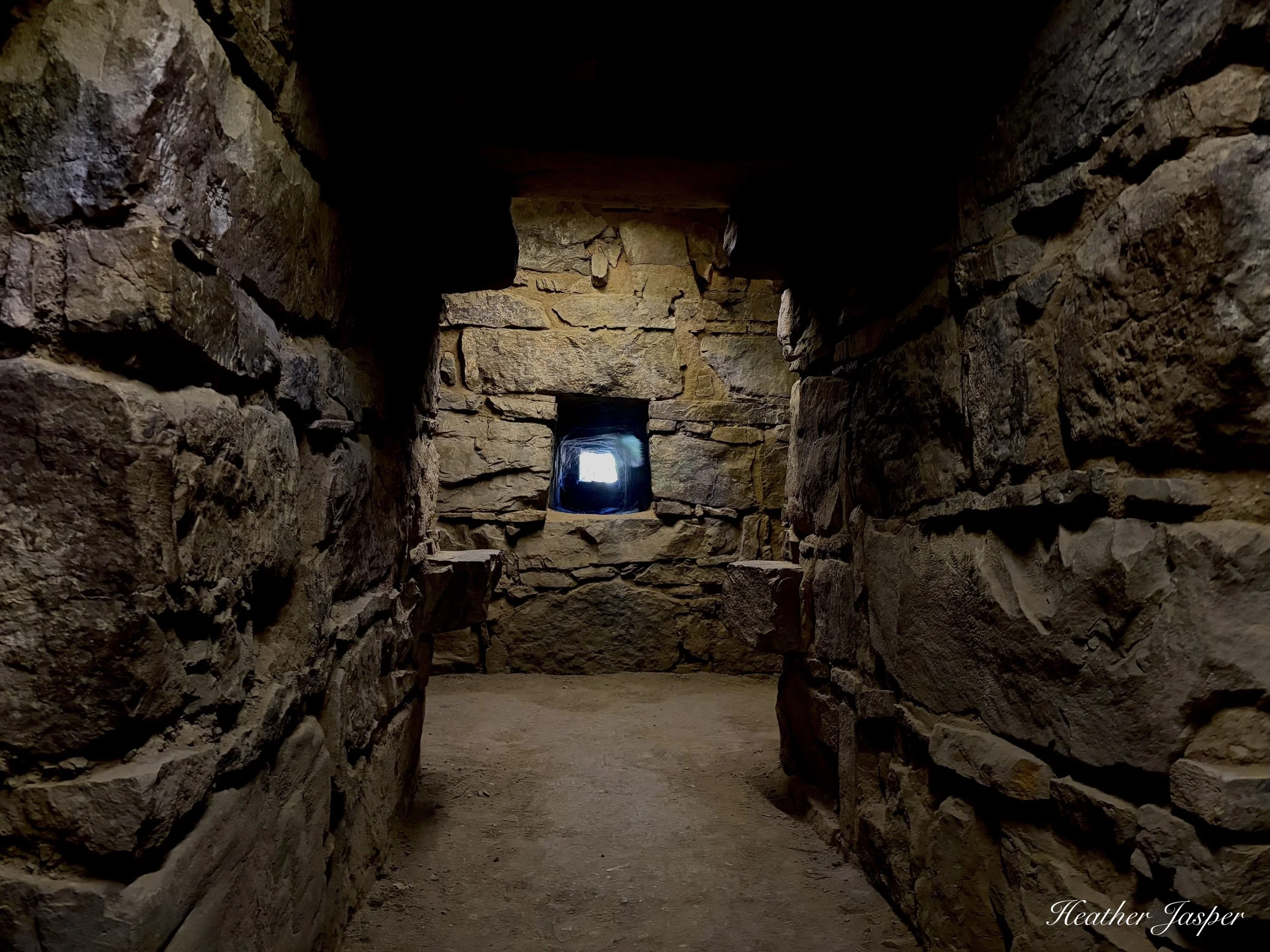
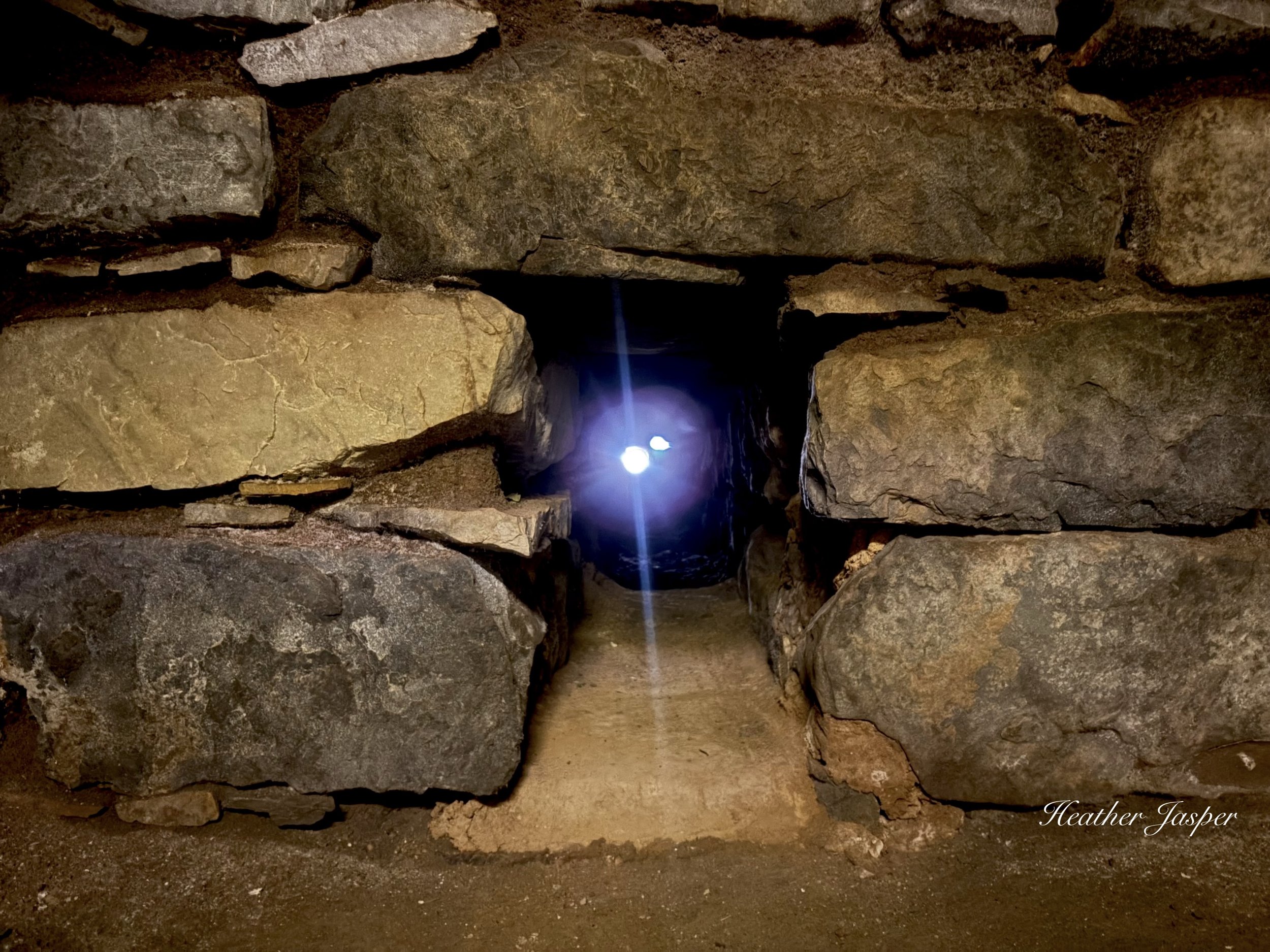
What are Chavín’s underground chambers like?
There are several underground areas and only three are currently open to the public. The first you’ll enter has the Lanzón and the second is called the labyrinth, which is exactly what it feels like. The third has more sophisticated architecture and eight rooms, each with an air shaft designed to suck air from outside into each chamber. A person could “meditate” or trip on mescaline, for hours or days without running out of fresh air.
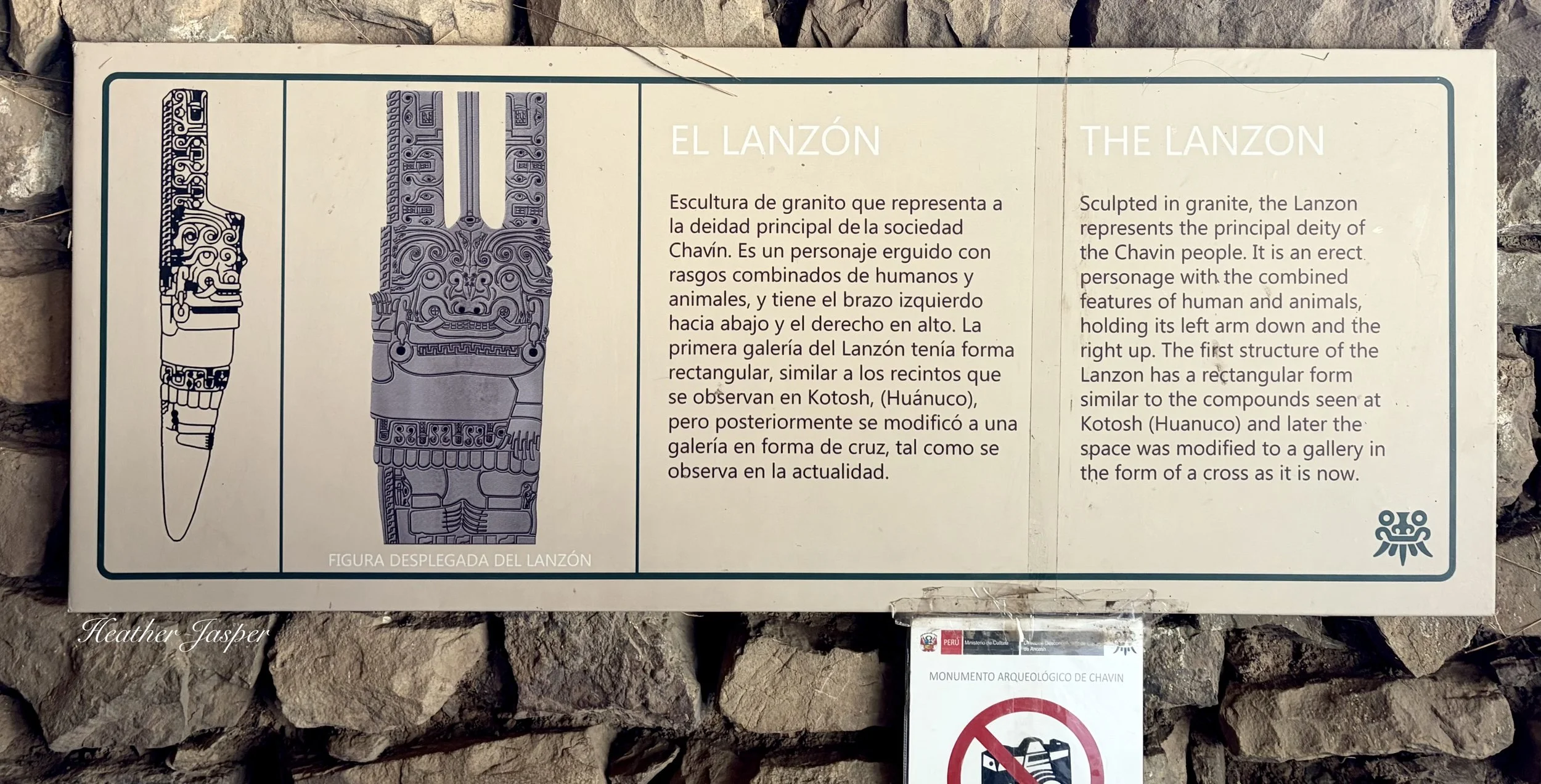
This sign outside the tunnel to the Lanzón shows a flattened image of what the sculpture would look like if opened.
What is the Lanzón?
The Lanzón was named for its lance-like shape, but it was probably never moved from its central location inside the tunnels and certainly never used as a lance. It’s 4.5 meters tall (almost 15 feet) and weighs about 32 tons. The narrow passage that leads to it seems designed for only one person at a time to come face to face with its depiction of a hybrid human-animal being with features of jaguar, snake and eagle, though some say condor.
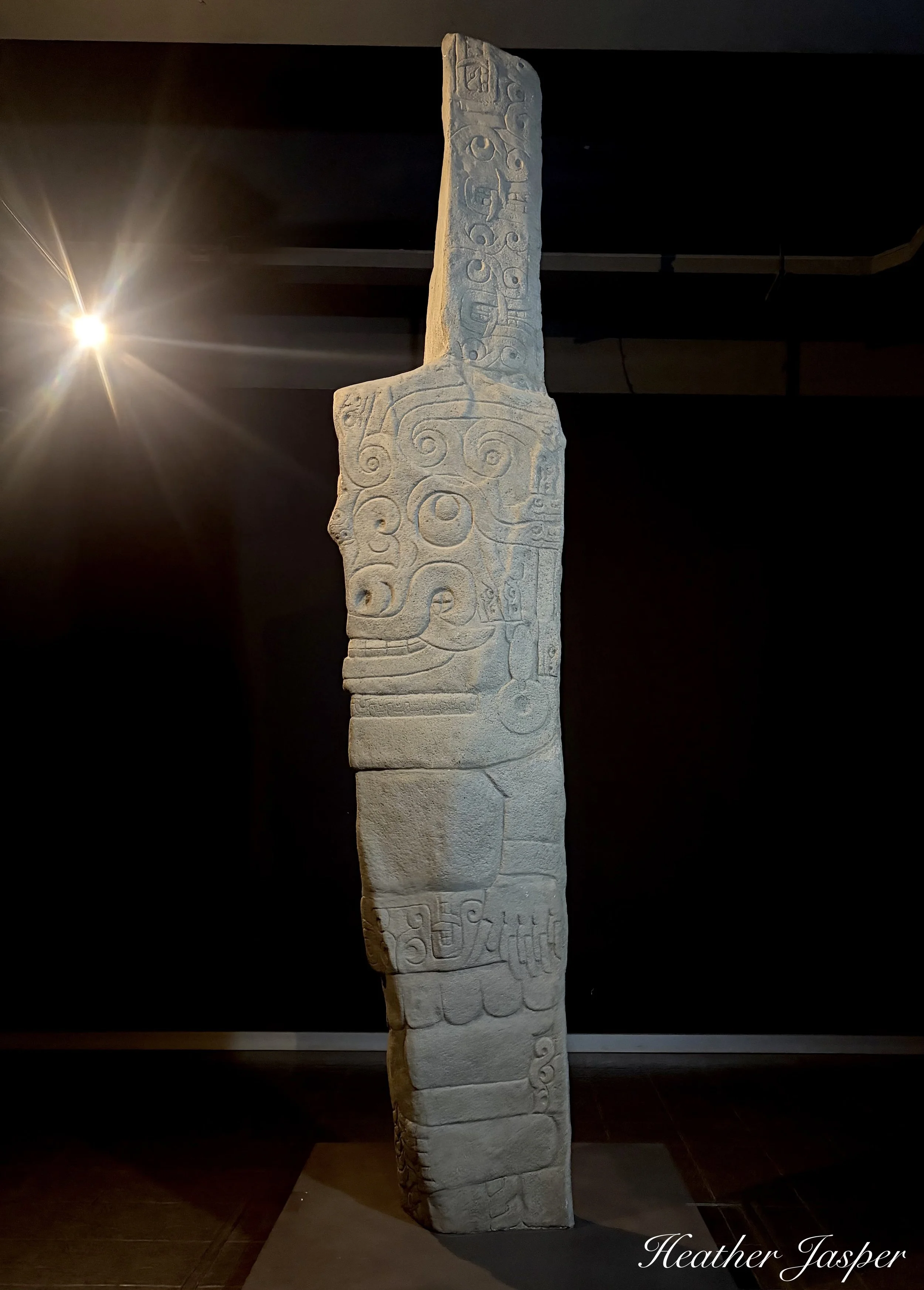
The Lanzón Replica
Photography of the Lanzón is prohibited but there’s a replica in the museum, which you really have to visit. (More on the museum below)
Note the eyes rolled up, the feline fangs, snakes on the head and avian claws on the fingers.
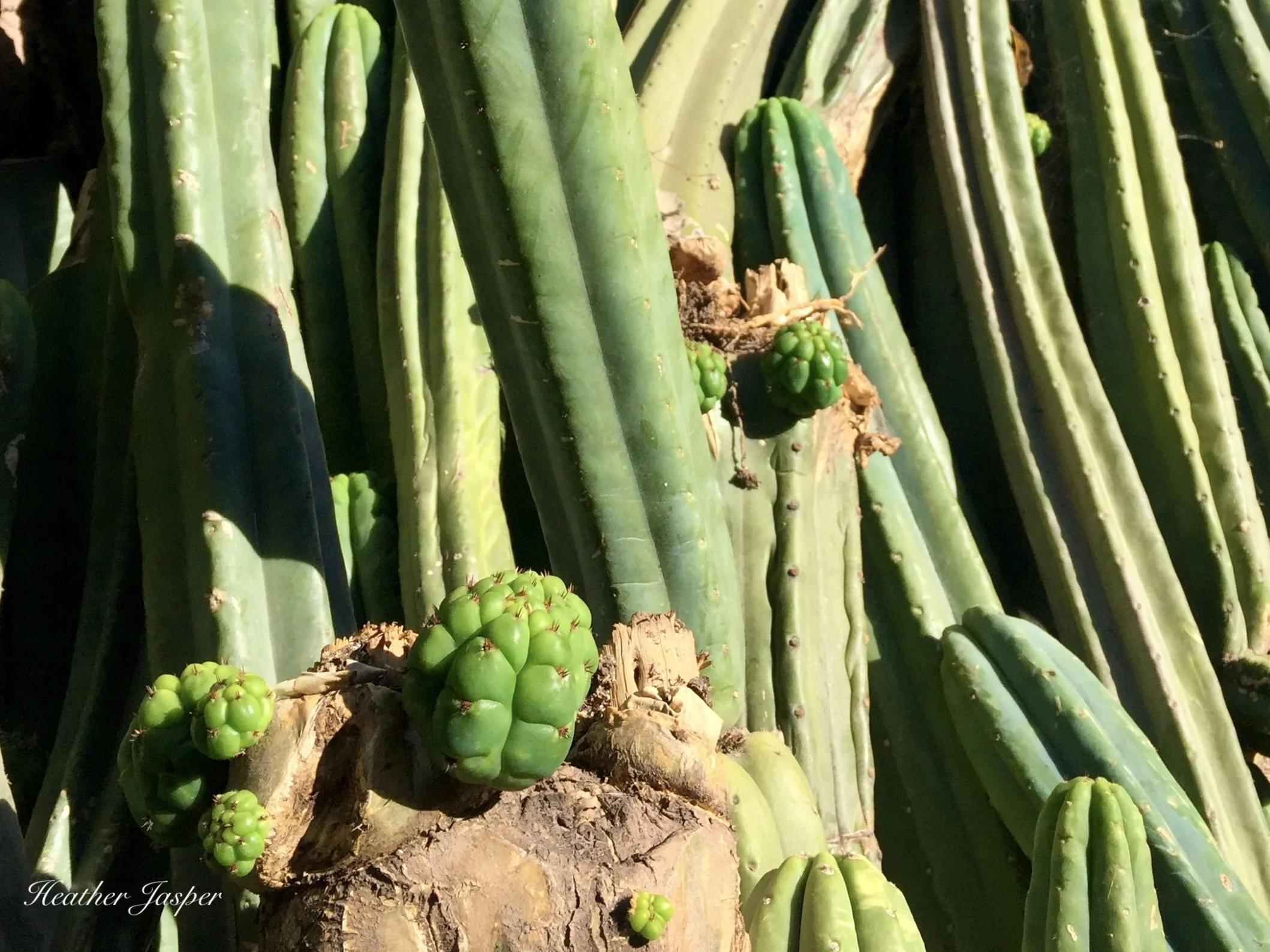
San Pedro cactus is everywhere. I took this photo in the Sacred Valley and have some in my garden in Cusco too.
What is San Pedro cactus?
Common throughout Peru, the San Pedro cactus has a type of mescaline, also called wachuma, and it has been used to induce hallucinations for well over 3,000 years. It’s used today in modern versions of ancient ceremonies and has become popular as hallucinogens are getting more attention in treating mental illness in other countries. For the record, I have not taken wachuma and do not recommend it - unless you really know what you’re doing, are in a safe place and have trained people to guide your trip.
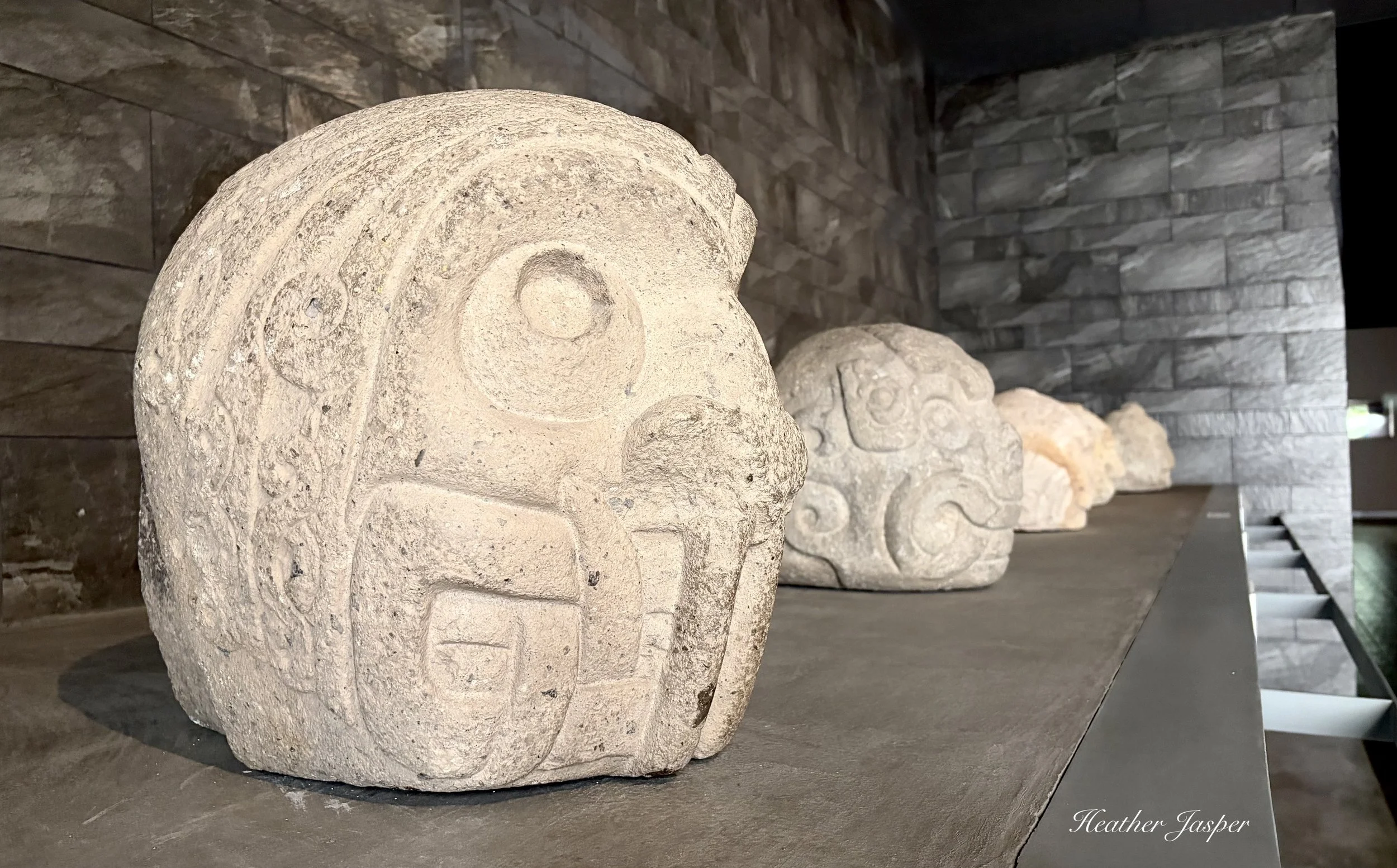
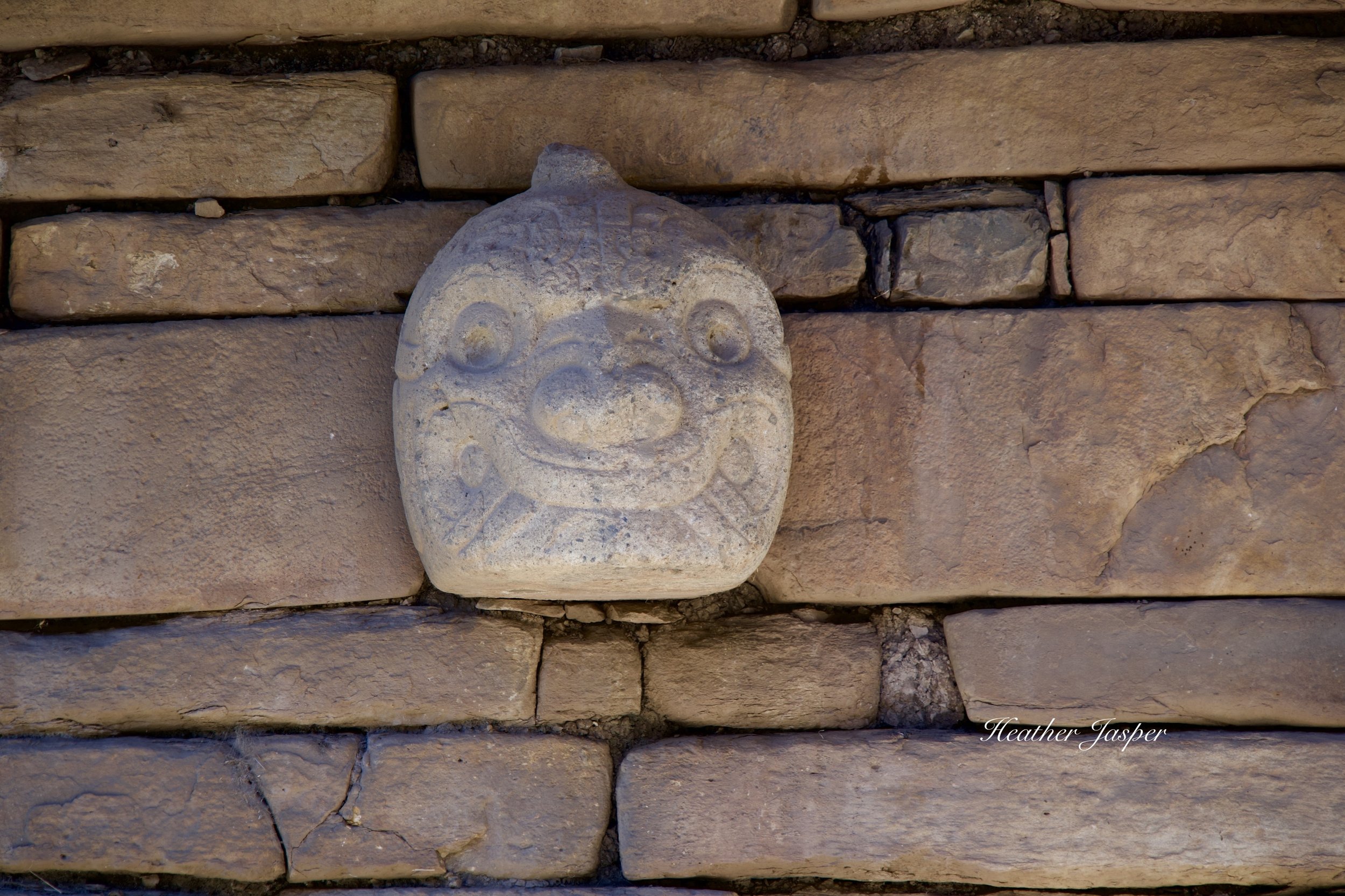
This head shows eyes rolled up, a human nose with snot or blood running down, plus feline fangs and snakes for hair.
How do we know people took San Pedro at Chavín?
Besides the trippy nature of the tunnels and underground chambers, most of the art depicts humans and creatures with dilated eyes rolled upwards, which is common in people taking San Pedro. Some carvings show faces with liquid running out the nose or with plugs in the nose, another common result of taking San Pedro. Some of these faces are carved on flat stones but even more graphic are the faces of the Cabeza Clava.
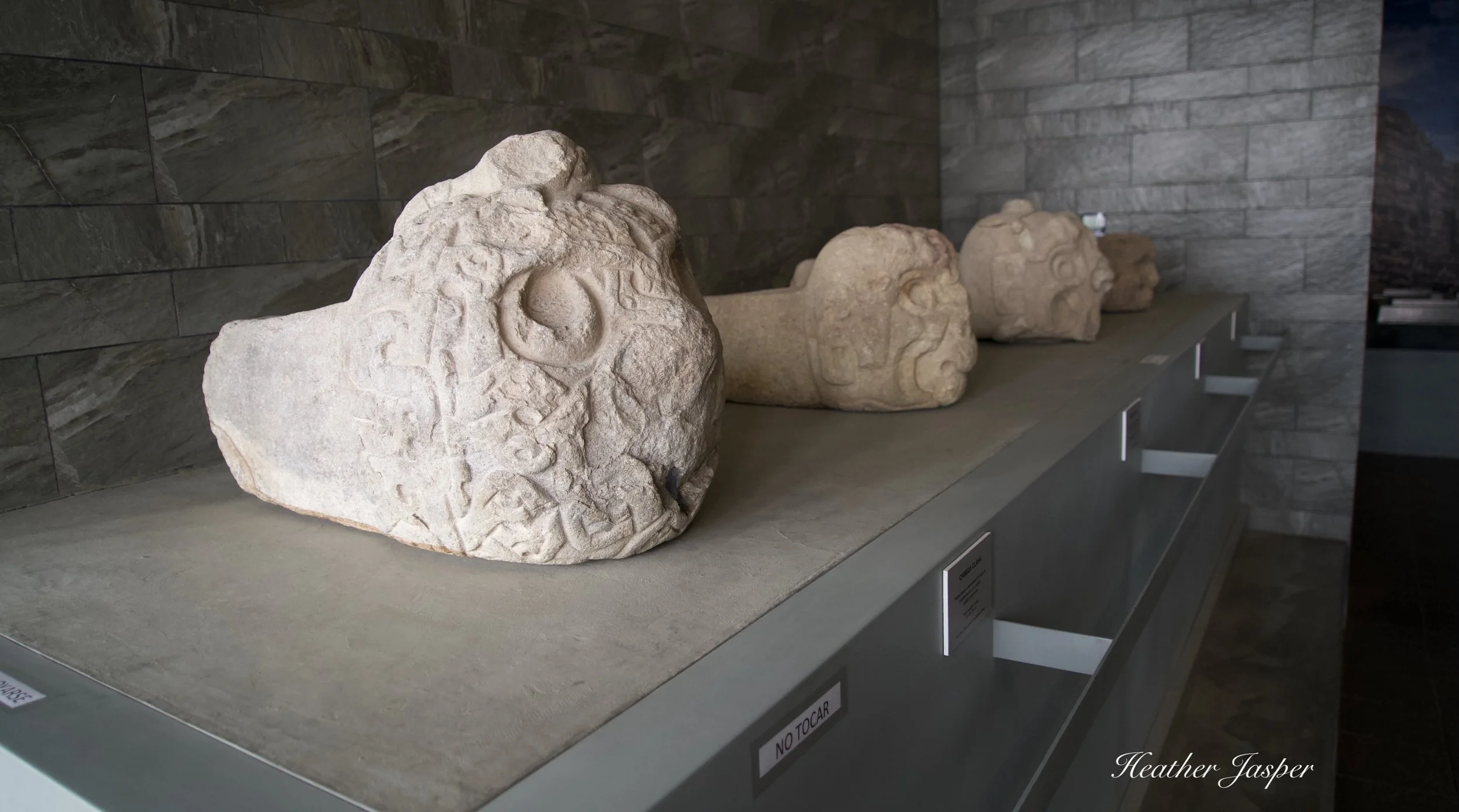
The stone protruding from the back of each head fit into exterior walls on the temples at Chavín.
What are Cabeza Clava?
The Cabeza Clava are stone heads, mostly showing human and human-animal hybrid beings, that fit into walls. The back of the head is elongated and squared so it would fit like a stone into a wall. The word clava is related to both clavo, a nail that would be part of a wall, and clave, the key for understanding something. The heads are clavada, nailed, into the wall with the stone projection out the back of the head.
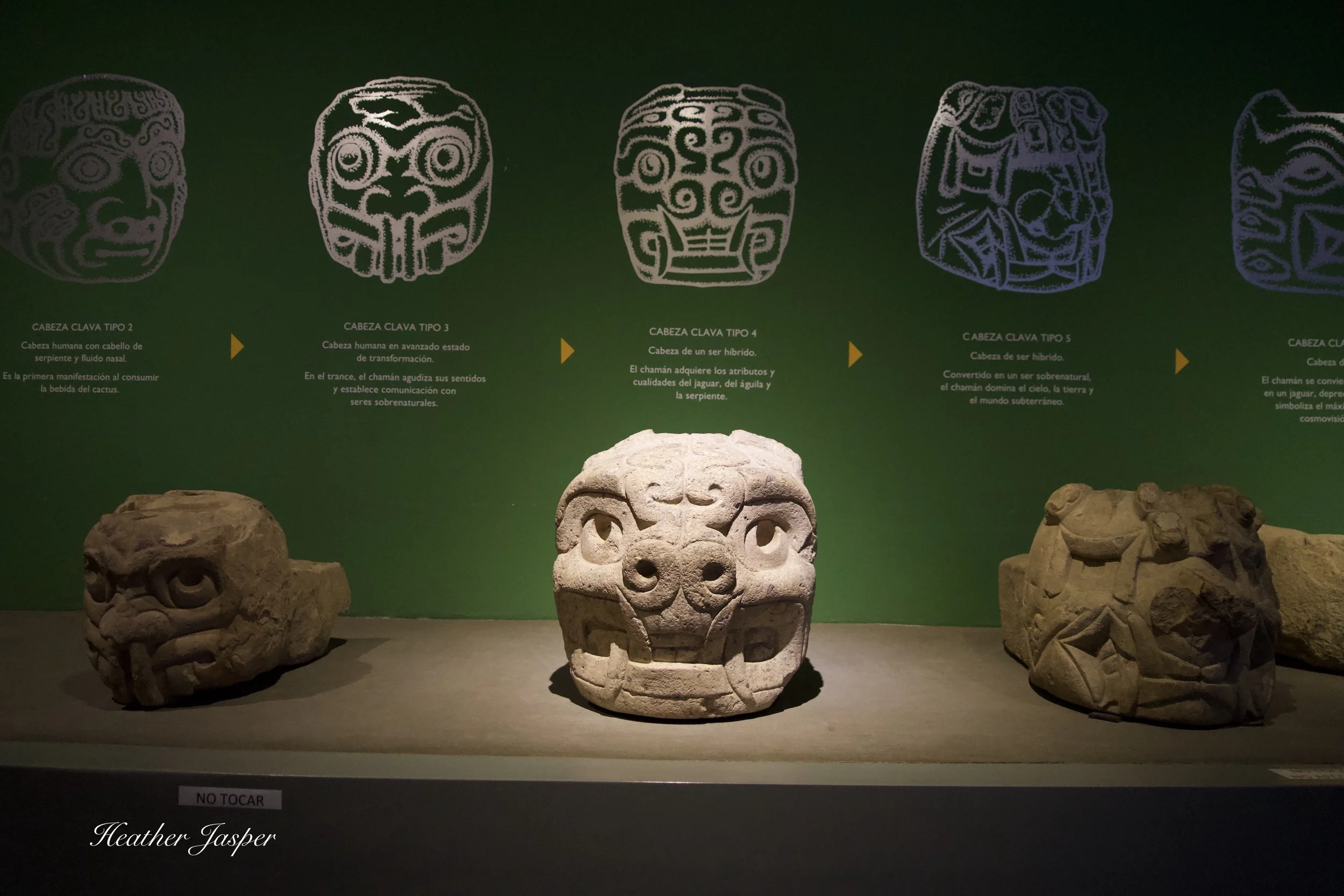
The third type of cabeza clava (left) shows a human face but the fourth type shows the shaman has converted to a hybrid being.
What do the Cabeza Clava show?
Some Cabeza Clava show human faces, but others look like animals, especially felines. Most show some hybrid between human and animal. Feline features are usually fangs, while snakes are often present in place of hair and avian features like claws and feathers show the link to birds.
Archeologists have classified the heads into different stages of transformation, showing a powerful person, likely a shaman, transforming into a jaguar. Each stage of transformation shows the animal characteristics a shaman would acquire through the use of wachuma.
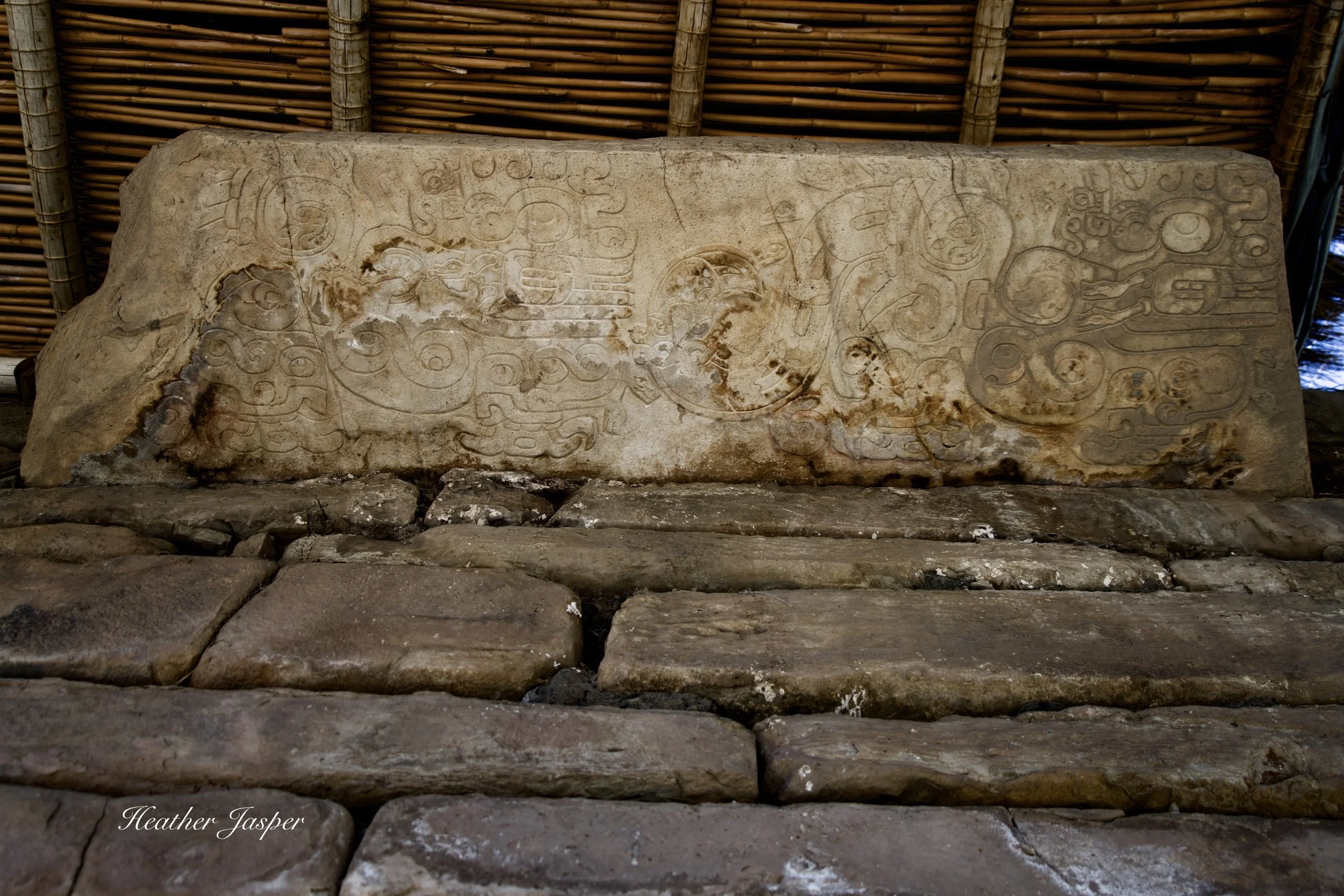
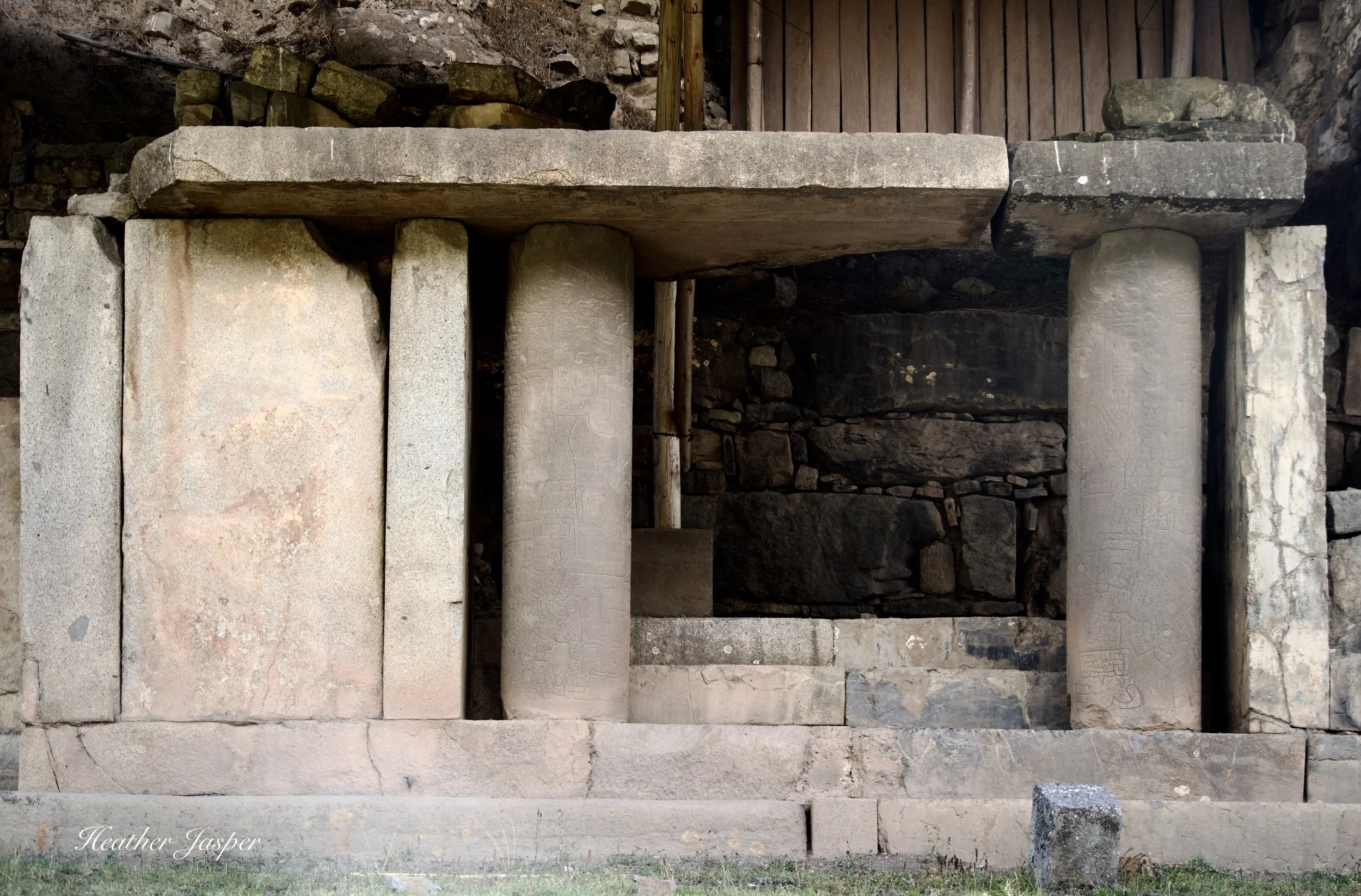
This ceremonial portal shows that white stone was used on the left and black on the right. You can barely make out the carvings on the rounded columns.
What does the Black & White Portal show?
This is the most fascinating part of Chavín that’s out in the open, presiding over the square plaza. The portal didn’t lead to anything behind it but was likely used as a stage for ceremonies and rituals. The steps are made with black and white stone, mirroring the use of black and white stones around the plaza and on the columns. The two round columns are particularly interesting because they have intricate carvings and are the only rounded columns from this time period in Peru. The white column on the left has a hybrid human-animal being similar to the Lanzón, but obviously female because of its vagina. The black column depicts another hybrid being with a penis. Both have attributes of jaguars, snakes and eagles and show the importance of duality at Chavín.
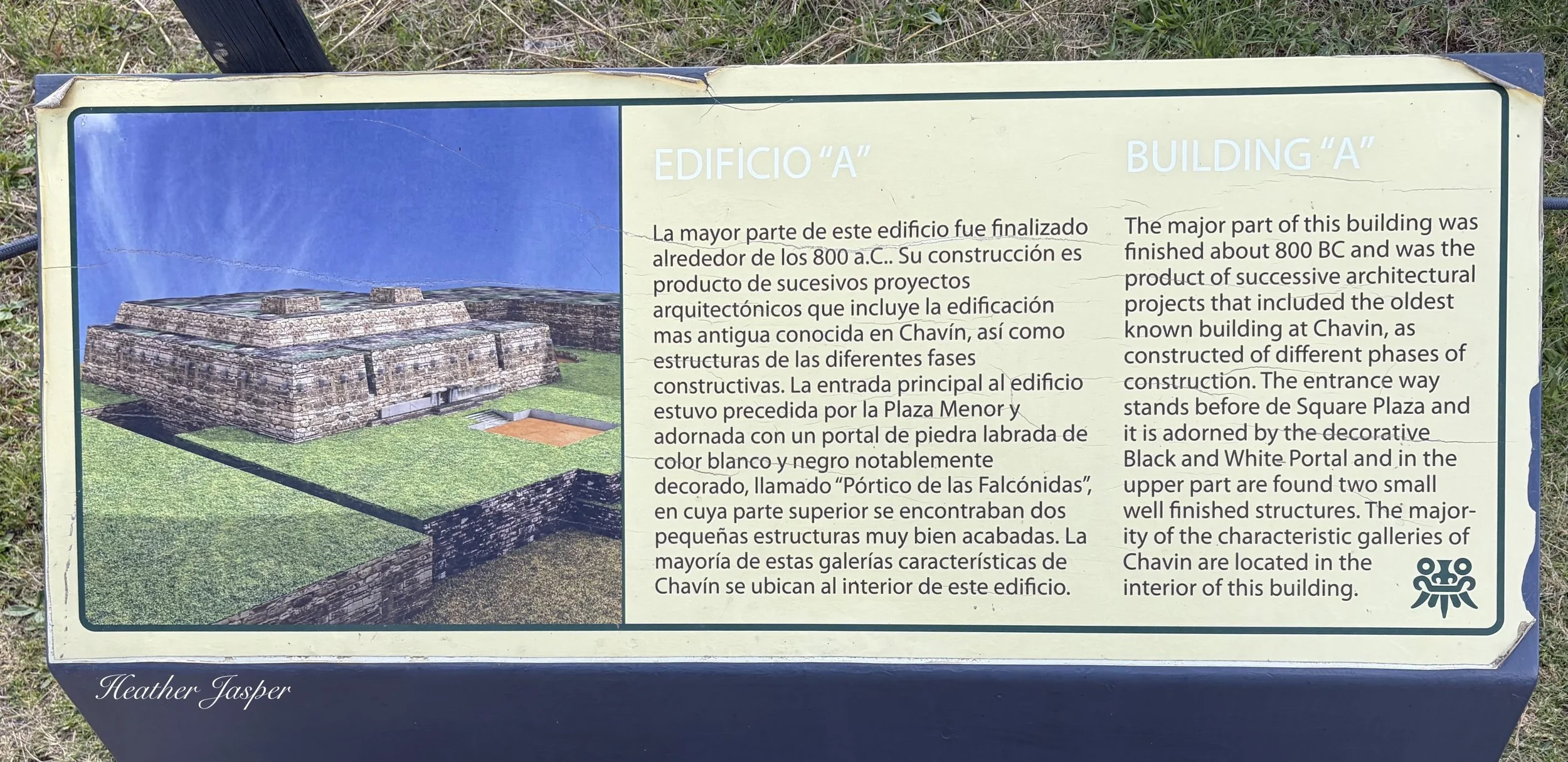
There aren’t many of these signs around the archeological site, which is one reason I recommend getting a good guide.
When was Chavín built?
Starting around 1200 BCE, temples, plazas and tunnels were built at Chavín. Archeologist Silvia Kembel worked for years studying and measuring everything at Chavín and concluded that it was built in five phases of construction and fifteen stages between 1200 and 500 BCE.
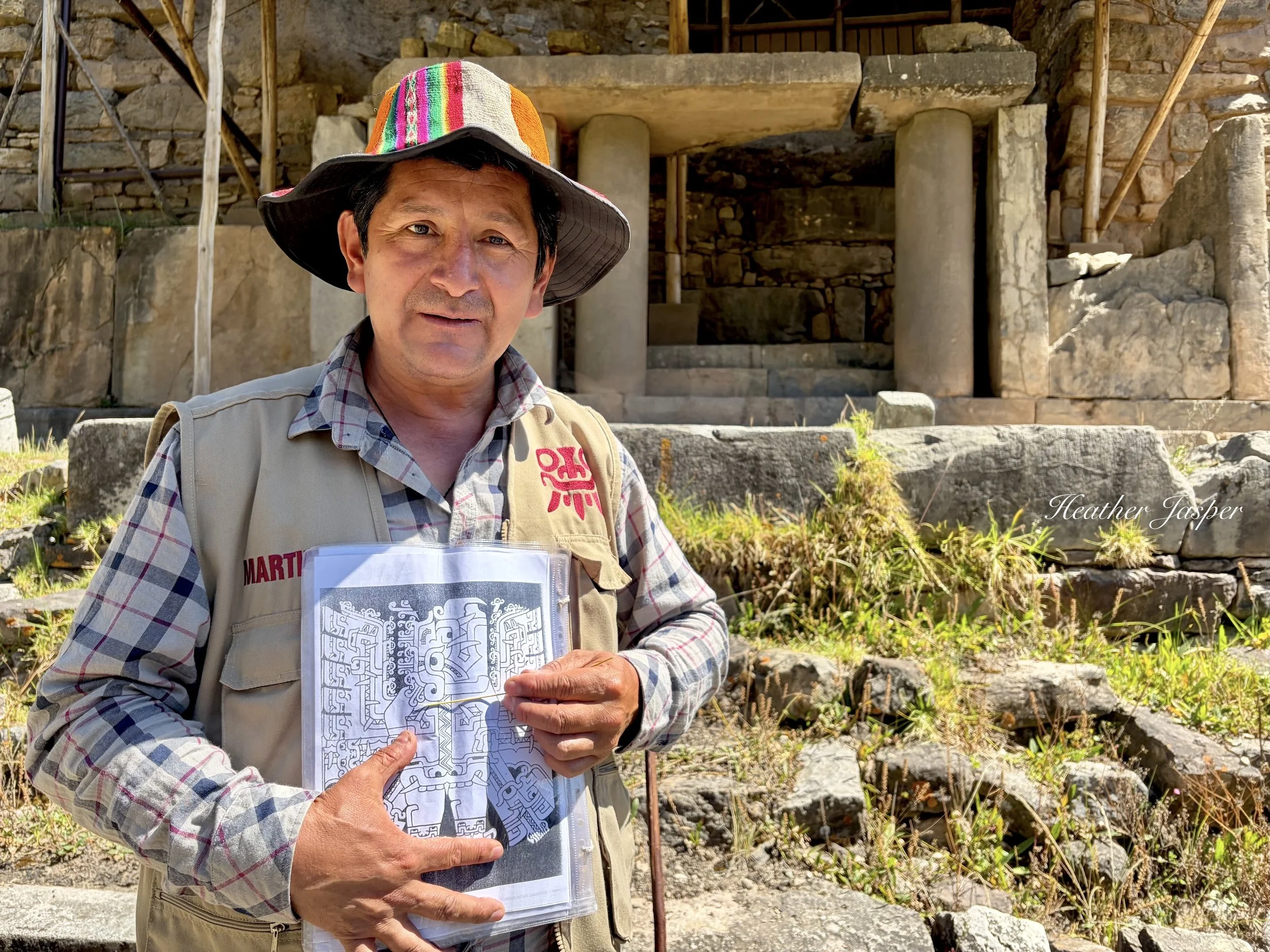
Martín Loarte Valenzuela showed us the columns’ images if they were flattened out. This one is the male on the black stone column.
Who came to Chavín?
As shown at Caral, Peñico, Sipán and other sites around Peru, Andean cultures had close ties with coastal and jungle cultures, with trading routes reaching as far as Panama, Colombia and Chile. Important people and shamans from throughout South America likely made pilgrimages to Chavín to pay homage to and learn from the oracle or deity, today called Lanzón. Evidence shows they probably brought offerings to the Lanzón and local shamans would have led their “meditation” or trip with San Pedro in the underground chambers.
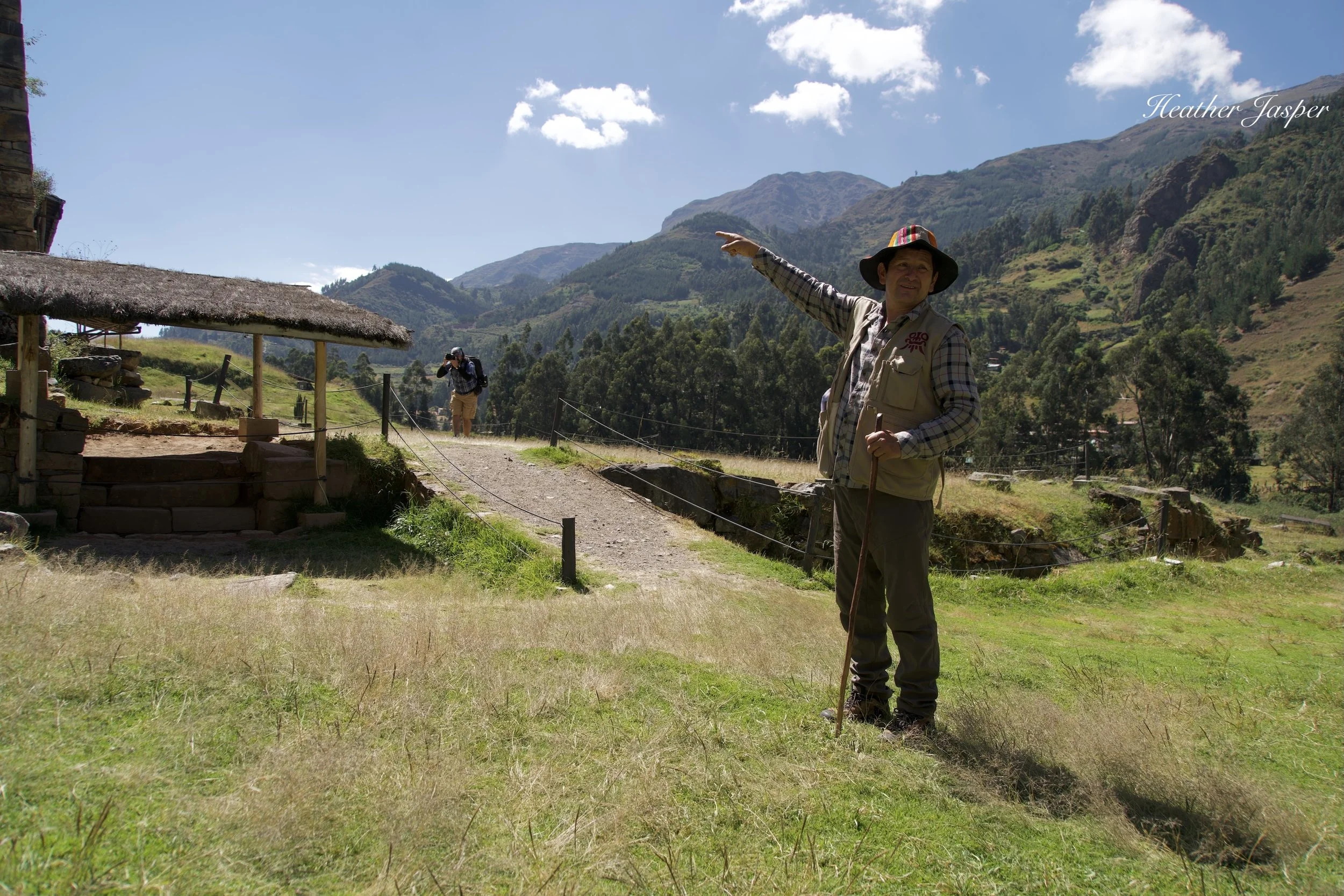
Landslides have covered Chavín several times so from outside a lot of the site just looks like grassy hills.
Was Chavín destroyed?
Yes, Chavín has been covered by several disasters caused by the two rivers it was built between. At least two major landslides, one caused by an avalanche that triggered a mudslide of debris, have covered the entire site in layers of sediment. There is evidence that one of the rivers was purposefully channeled around Chavín, though it’s the other river that has brought the worst destruction.
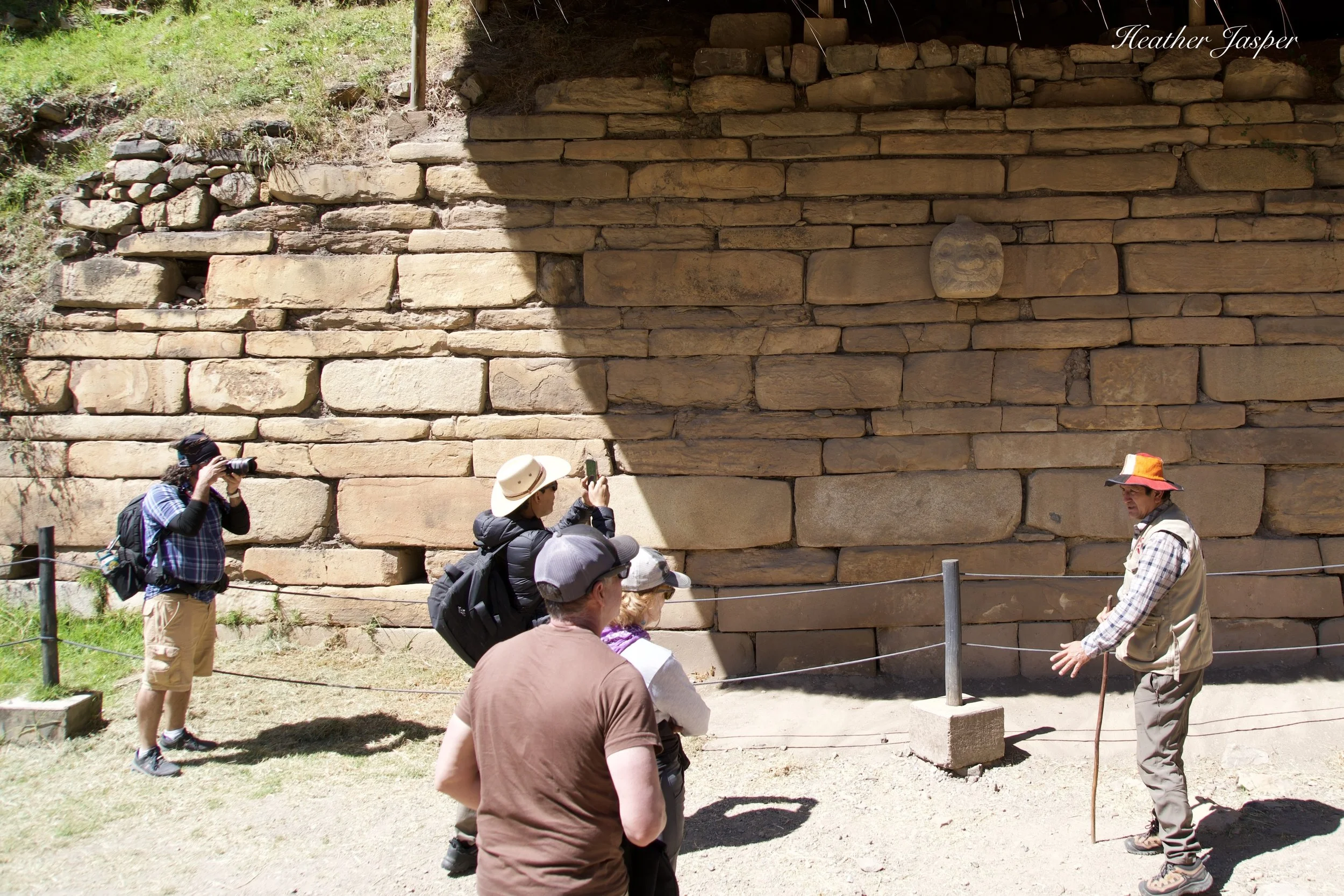
You can see holes to the left of the Cabeza Clava where other heads would have been placed. The hole in the bottom left is one of the air shafts that goes into the meditation chambers inside the temple.
When to visit Chavín?
The archeological site is open Tuesday – Sunday from 9am to 4pm. It’s open year round and while the roads to get there are better in the dry season (May to September) you understand the genius of Chavín’s construction better in the rainy season (December to March) because you can see how the underground drainage channels were so well designed that they still work.
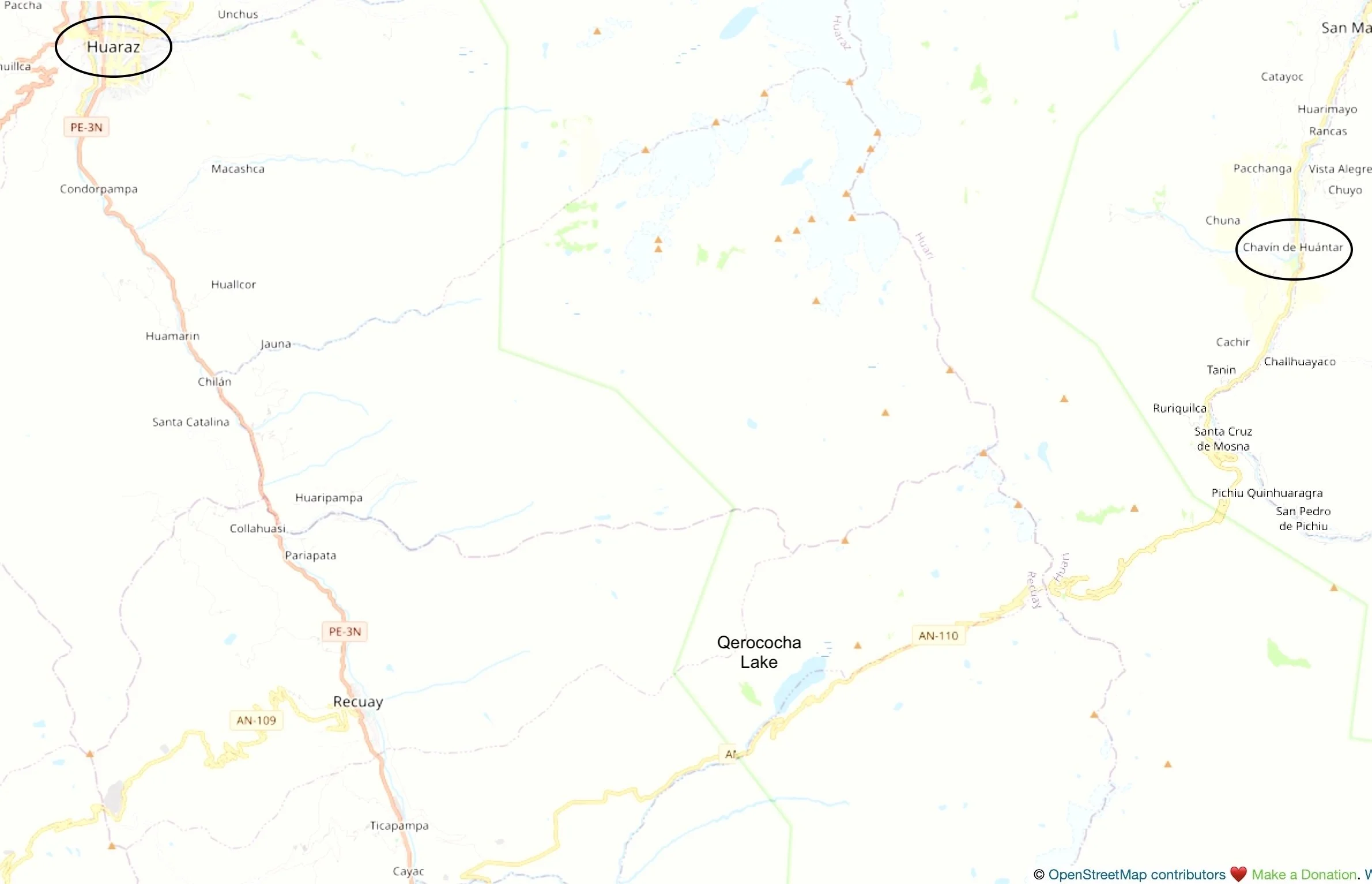
You can get there in less than 3 hours but most people stop along the way at Qerococha Lake.
How to get to Chavín?
This is the tricky part. It’s a 3 hour drive from the closest city, Huaraz and most tours are a day trip form Huaraz. That’s six hours on windy mountain roads, which is too much unless you’re really into history and archeology. However, if you have your own transportation, you can spend a night or two in the small town of Chavín. There are lots of small hospedajes, guesthouses, and a retreat center called Andean Ancestral Highlands, which has San Pedro retreats. Arguably, to fully understand Chavín, you’d need to take the San Pedro cactus, called wachuma, to have the experience that people came to Chavín for thousands of years ago.
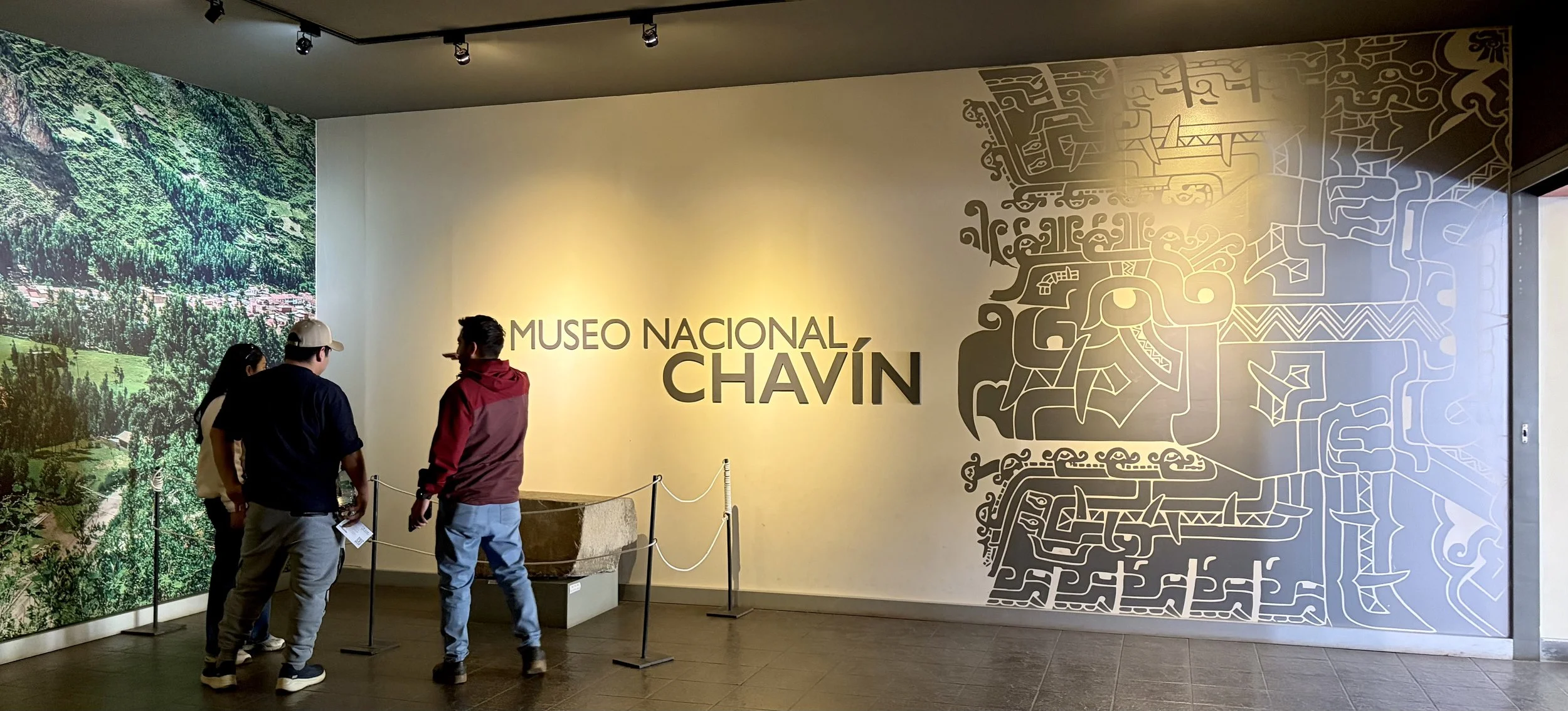
How to visit the Chavín museum?
I recommend visiting the museum after you see the archeological site. It’s easier to imagine the impact of the hallucinogenic sculptures after you’ve experienced the tunnels and underground “meditation” chambers. However, since most groups do the museum second, you can go there first if you want to do the visit opposite the crowds. Chavín is rarely crowded, but on weekends you might get several buses of tourists at the same time.
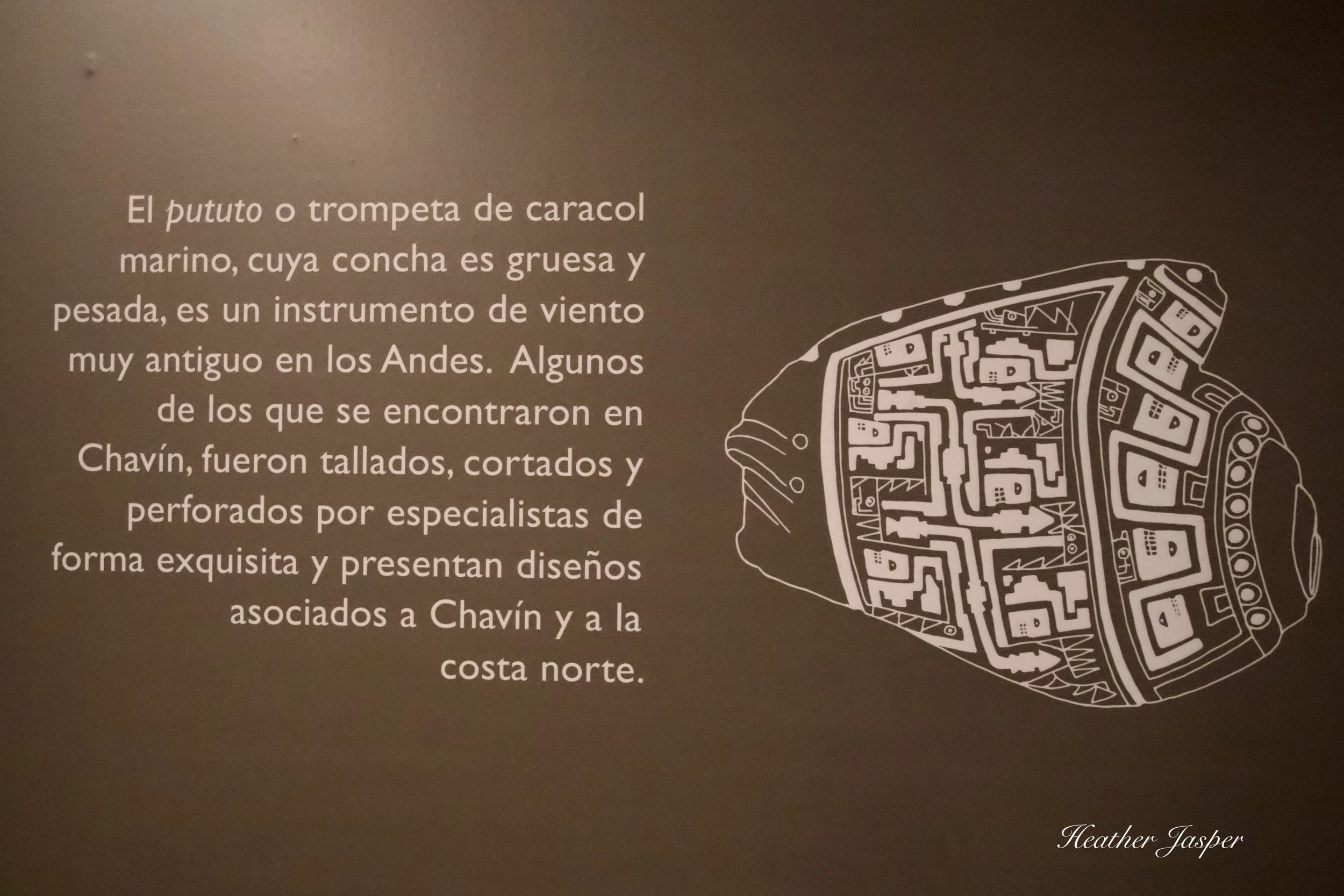
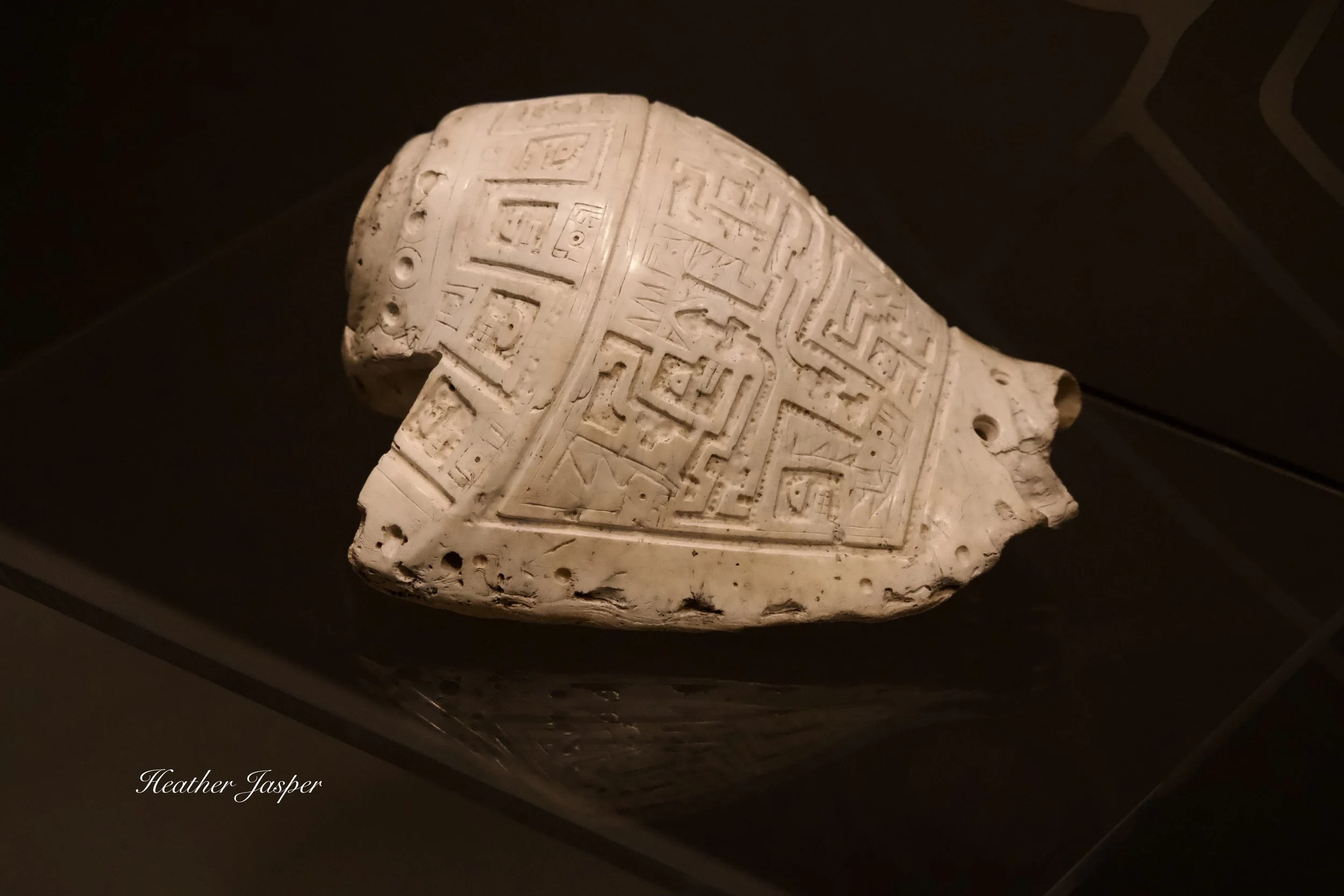
There is a collection of pututus at the Chavín museum, some with intricate carvings. The pututu was used like a horn, usually to announce the arrival of somebody important, in every Andean culture I’ve seen, from Caral to Peñico to Sipán to Kotosh. It’s a link between all of Peru’s ancient cultures and evidence of connections between cultures and populations from both the coast and the mountains.
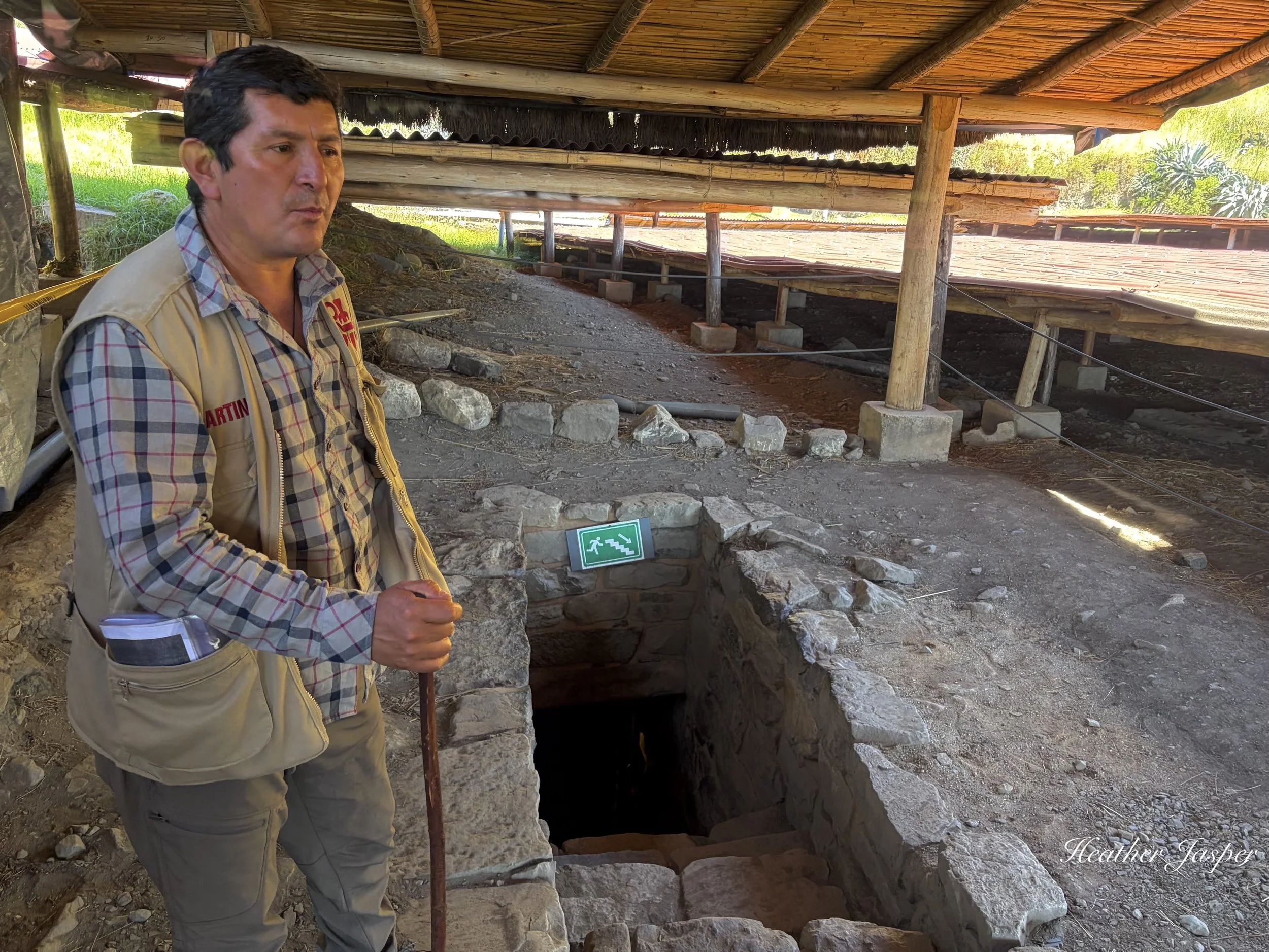
Martín took us to a third underground area that I didn’t get to see on my first visit and that had the best tunnels, chambers and ventilation shafts. Having a good guide at Chavín makes a huge difference.
I’ve been to Chavín twice and had two very different experiences.
My first trip, in May this year, was the typical day trip from Huaraz. I signed up with a random agency that I knew would lump me in with tourists from several agencies. Since I speak Spanish and didn’t need an English-speaking guide, I figured it would be fine. It was mostly fine, but not something I would recommend. (More on that below)
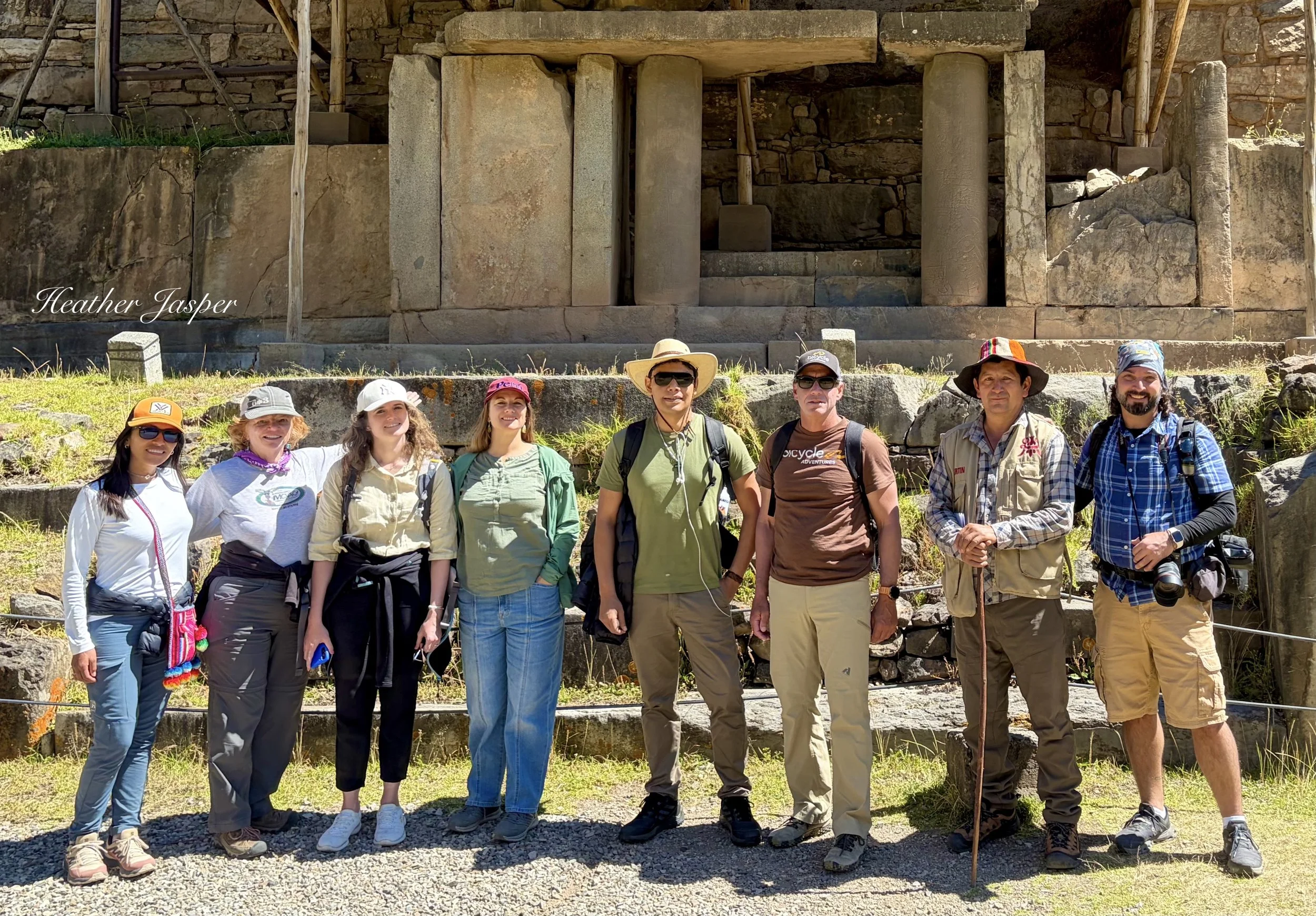
My adventure in Huaraz and Chavín was organized by the Adventure Travel Association, which I highly recommend to anybody who works in adventure travel and tourism.
My second visit to Chavín was the best!
My second trip, in June, was with Explorandes who connected our group with Martín Loarte Valenzuela, the person who probably has the most experience at Chavín and an excellent guide. Martín grew up at Chavín because his father worked with Julio C. Tello, a fascinating Peruvian archeologist that I really should write a blog post about. Tello began excavating at Chavín in 1919 and worked on most major sites in Peru. I feel like every time I go to an archeological site in Peru there’s something named Tello and plaques saying what he discovered there. Even at Caral, which he didn’t discover, he found some Chancay ruins nearby.
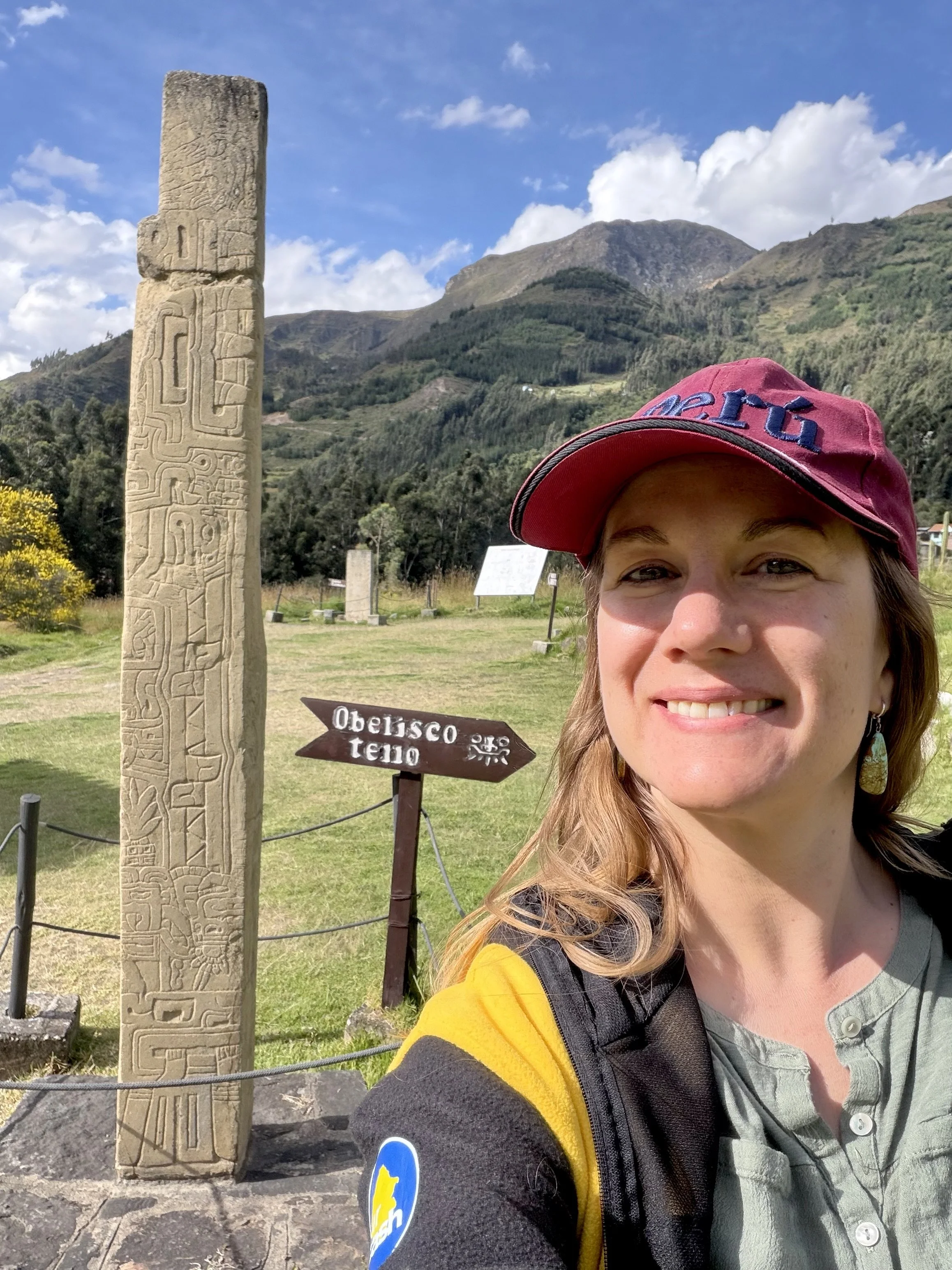
Julio C Tello got there first.
Everywhere I go in Peru there’s something named after Julio C. Tello.
Tello did amazing work and anybody who worked with him must have learned a lot. Martín shared an incredible amount of information at every step of the tour.
Even if you speak Spanish, I recommend signing up with a tour operator.
Tour operators like Explorandes are more reliable than tour agencies. The agencies around the Huaraz Plaza de Armas are fine for people who just want to do a day trip to Chavín and don’t care much how accurate the information is. If you’re reading my blog, you probably want the most accurate information available. Go to a reputable company like Explorandes with English-speaking guides. They will have more training, better information and are more likely to hire local guides like Martín Loarte Valenzuela.
Want to know more about the use of hallucinogens?
Read this article published by Science. High Culture: How psychoactive substances helped spur Andean civilization.