
The 69th of 434 glacial lakes.
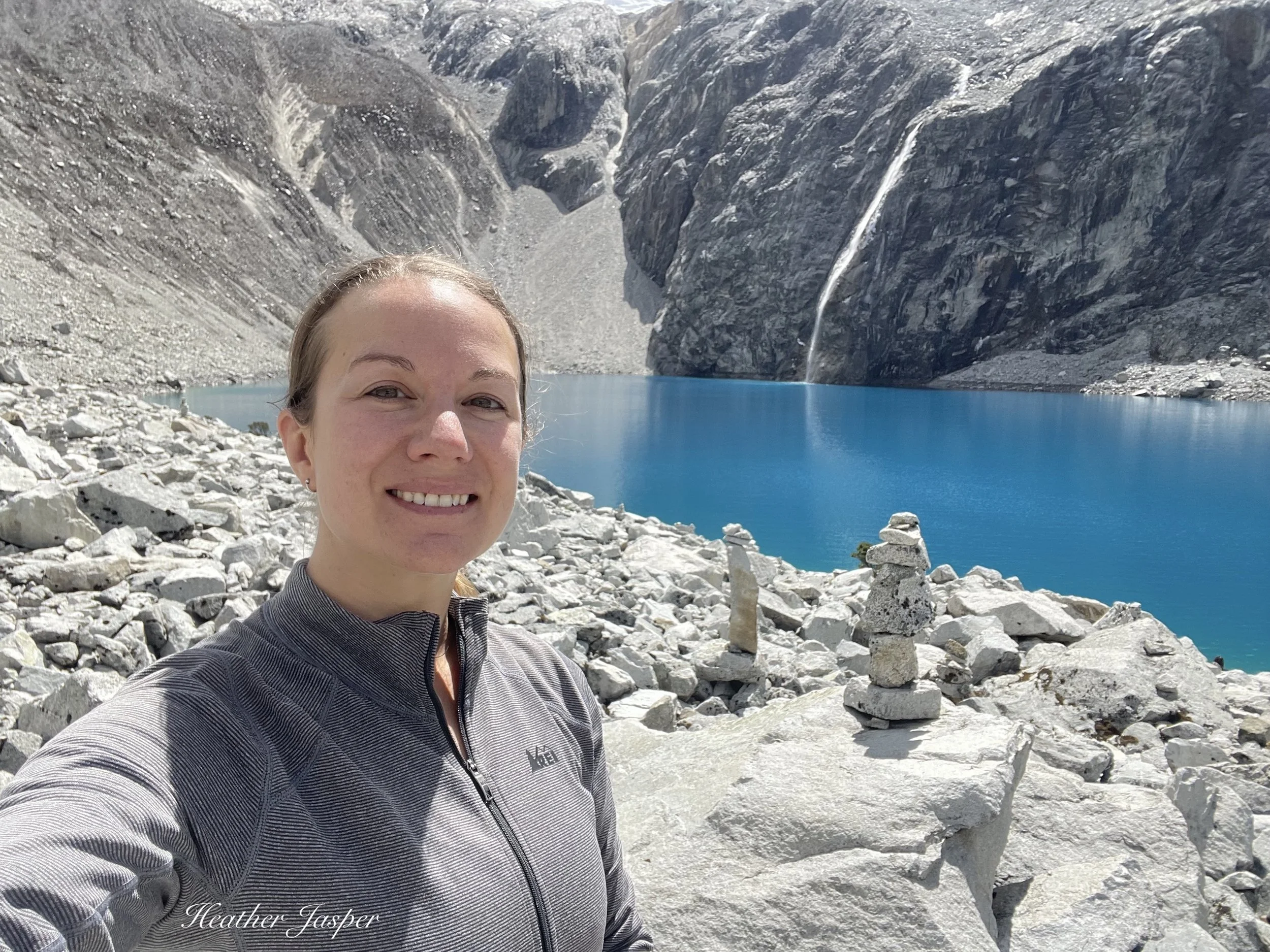
How far (and how high) would you hike to see a lake this color?
What is Laguna 69?
The short answer is that Laguna 69 is the 69th lake on the list of Huascarán National Park’s 434 lakes. Laguna 69 is so beautiful, and so famous for being beautiful, that I don’t understand why it didn’t get a name. Like the Little Prince’s Asteroid B612, I think it deserves a name. If you have a suggestion, drop it in the comments at the bottom and I’ll see if I can get park management at Huascarán National Park to consider our ideas. Side note: In Peru, laguna means small lake, not lagoon.
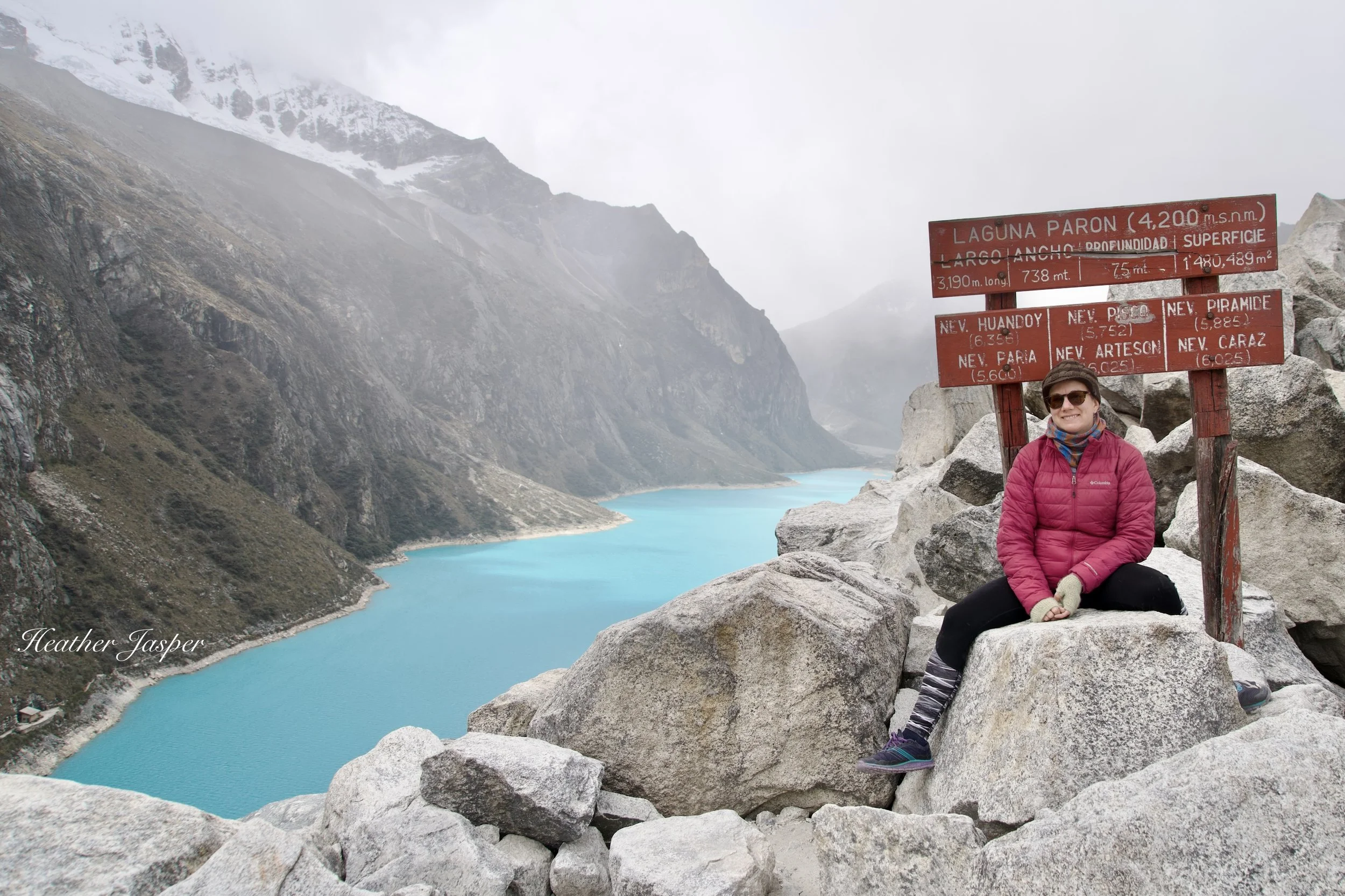
Parón is one of the lakes in Huascarán National Park that got a name. You can drive to Parón and the hike to this sign is optional.
What are lakes like in Huascarán National Park?
All 434 lakes in Huascarán National Park are beautiful and most glow with that special milky turquoise that you only find in glacial lakes. They’re surrounded by stunning snow-capped peaks, held by rugged moraines and perched high in steep-sided valleys formed in classic glacial u-shapes. I’ve seen over a dozen and loved them all.
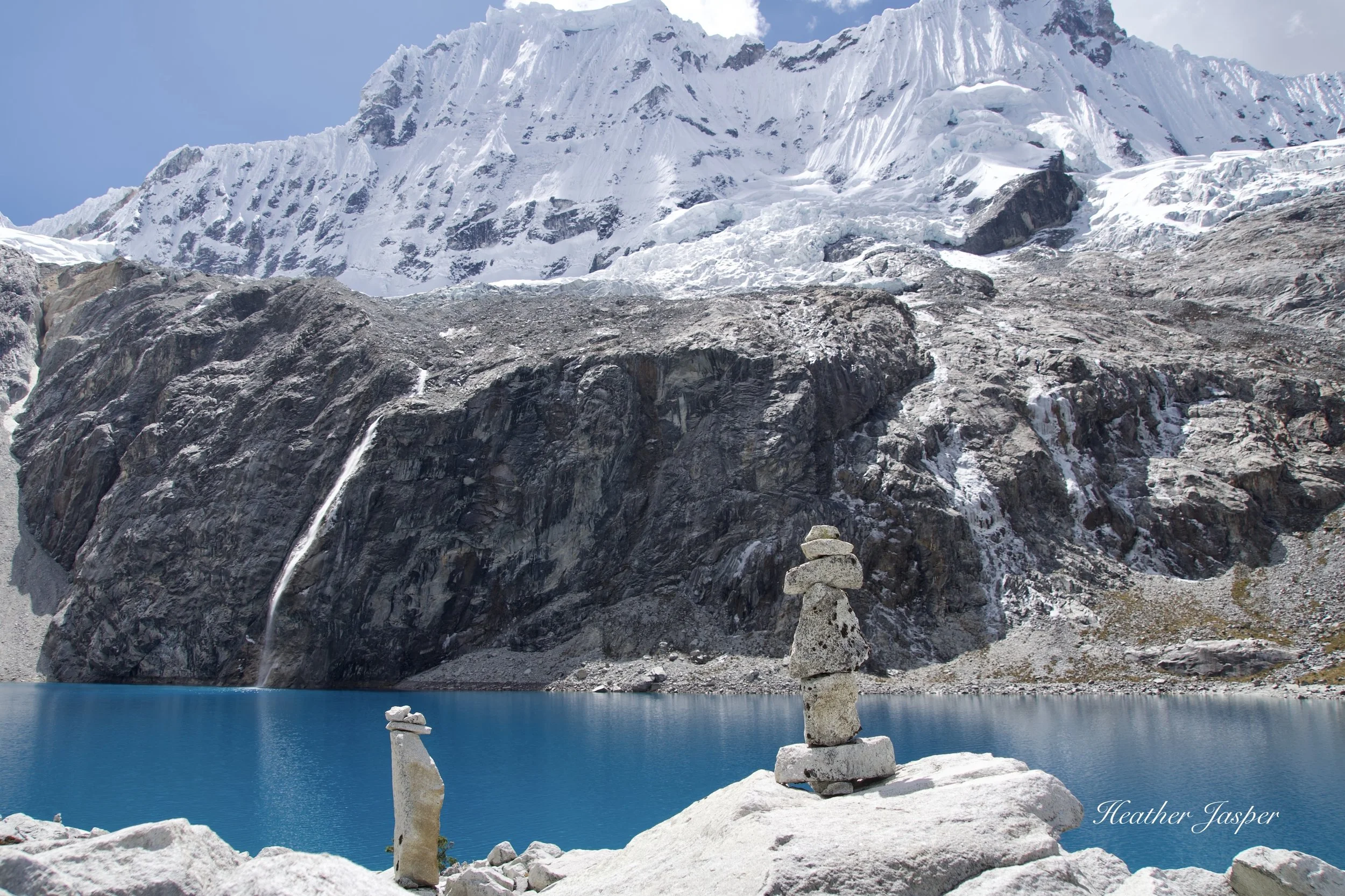
The color, waterfall and looming peaks of Chacraraju all make Laguna 69 one of the most beautiful in the world.
What makes Laguna 69 so special?
Of all these beautiful lakes, Laguna 69 stands out for its clear turquoise water that shines a deeper sapphire on sunny days. It also has a hike that’s challenging, yet accessible for hikers who are acclimated to the altitude. At 4,604 meters (15,105ft) above sea level, the lake’s altitude is high enough to give you a real sense of adventure without being so dangerously high that you risk health problems (like at Rainbow Mountain).
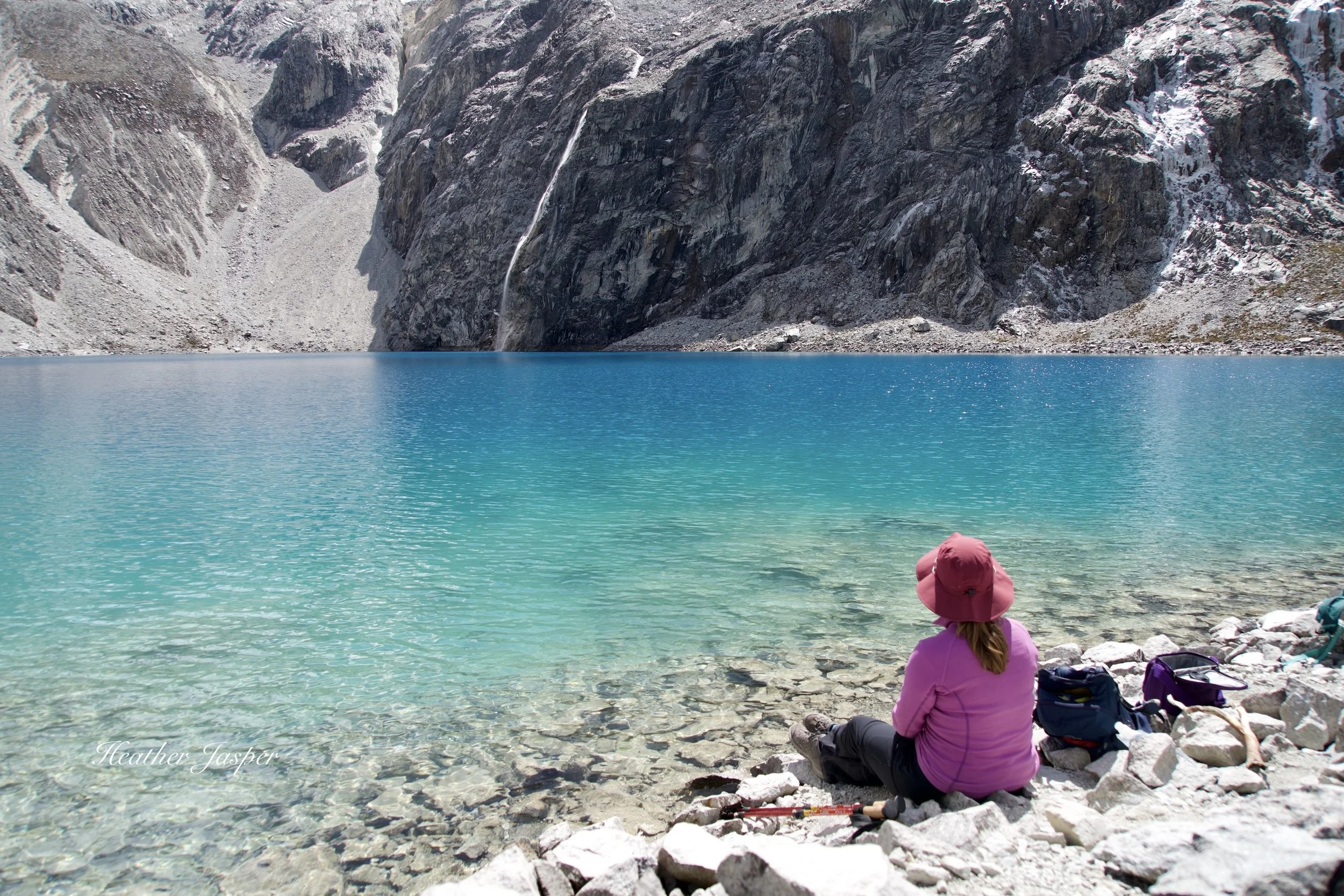
On a sunny day, it’s easy to sit for a long time by Lake 69, just watching the waterfall and soaking up the scenery.
Where is Laguna 69?
Lake 69, or Laguna 69 if you prefer the Spanish, is almost directly north of Huascarán, the highest peak in Peru. It’s part of the Cordillera Blanca mountain range and inside Huascarán National Park. Per day, Huascarán National Park entrance fee is s/30 soles. The trailhead at Cebollapampa is 86km/53mi from Huaraz, which takes 2.5 to 3 hours to drive.
How to get to Laguna 69?
Unless you have your own car, you need to sign up for a tour because there isn’t any decent public transportation that goes by the trailhead. I recommend signing up with a reputable tour operator (like Explorandes) rather than a tour agency, which will pass you off to an operator. Going directly to a tour operator usually gets you smaller groups and better guides. My first experience at Lake 69 in 2022 was with through a random agency I found in Huaraz and my second in 2026 was with Explorandes and the Adventure Travel Association.
Read on to see how different these two experiences were!
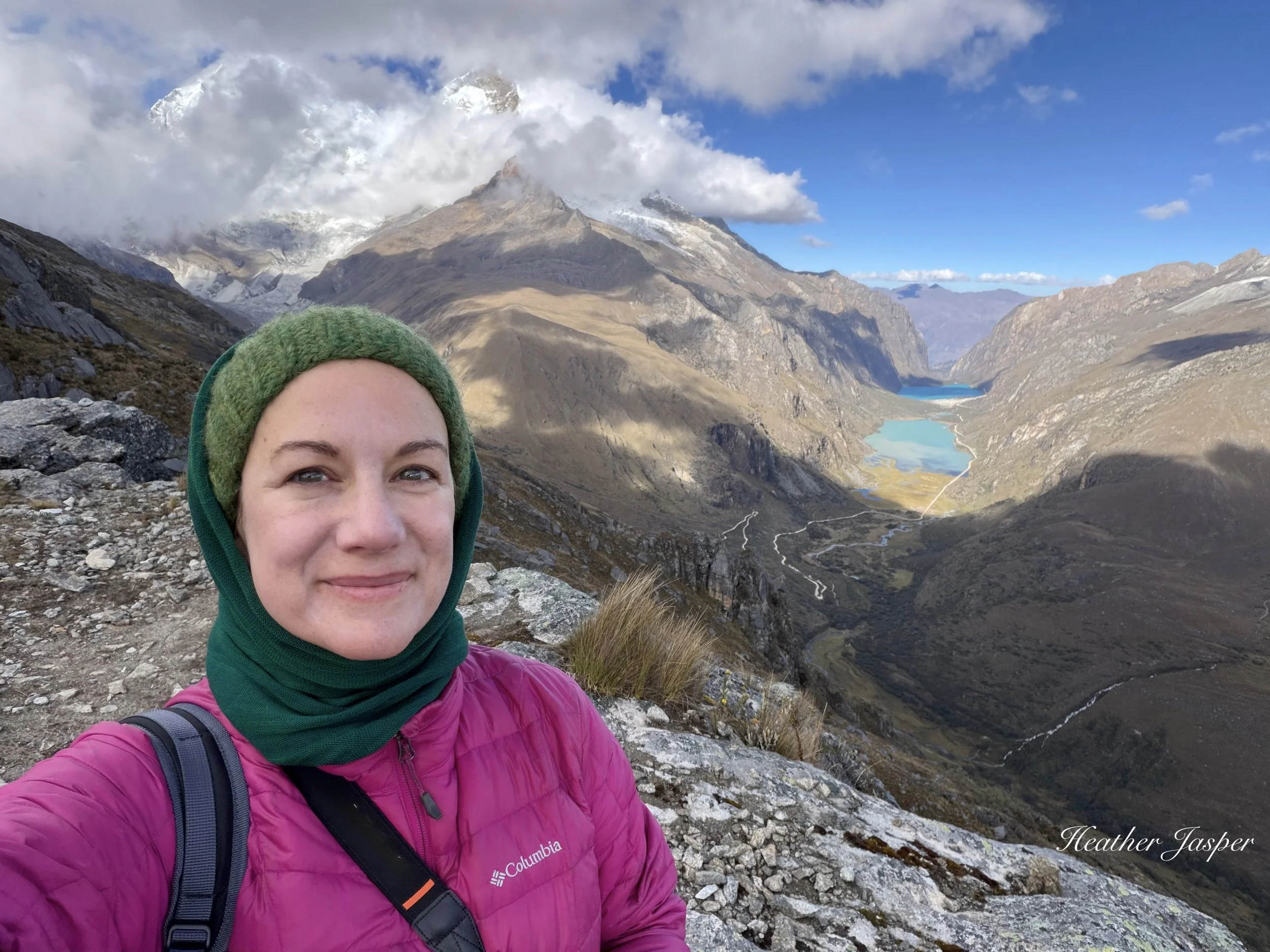
In 2026, I started the hike here, but in 2022 I started in the valley below, at Cebollapampa near the two lakes Chinacocha and Orconcocha.
A tale of two hikes to Lake 69.
I had two very different experiences on my two hikes to Lake 69. One had perfect weather and was a good experience. The other had colder and cloudier weather but was a better experience.
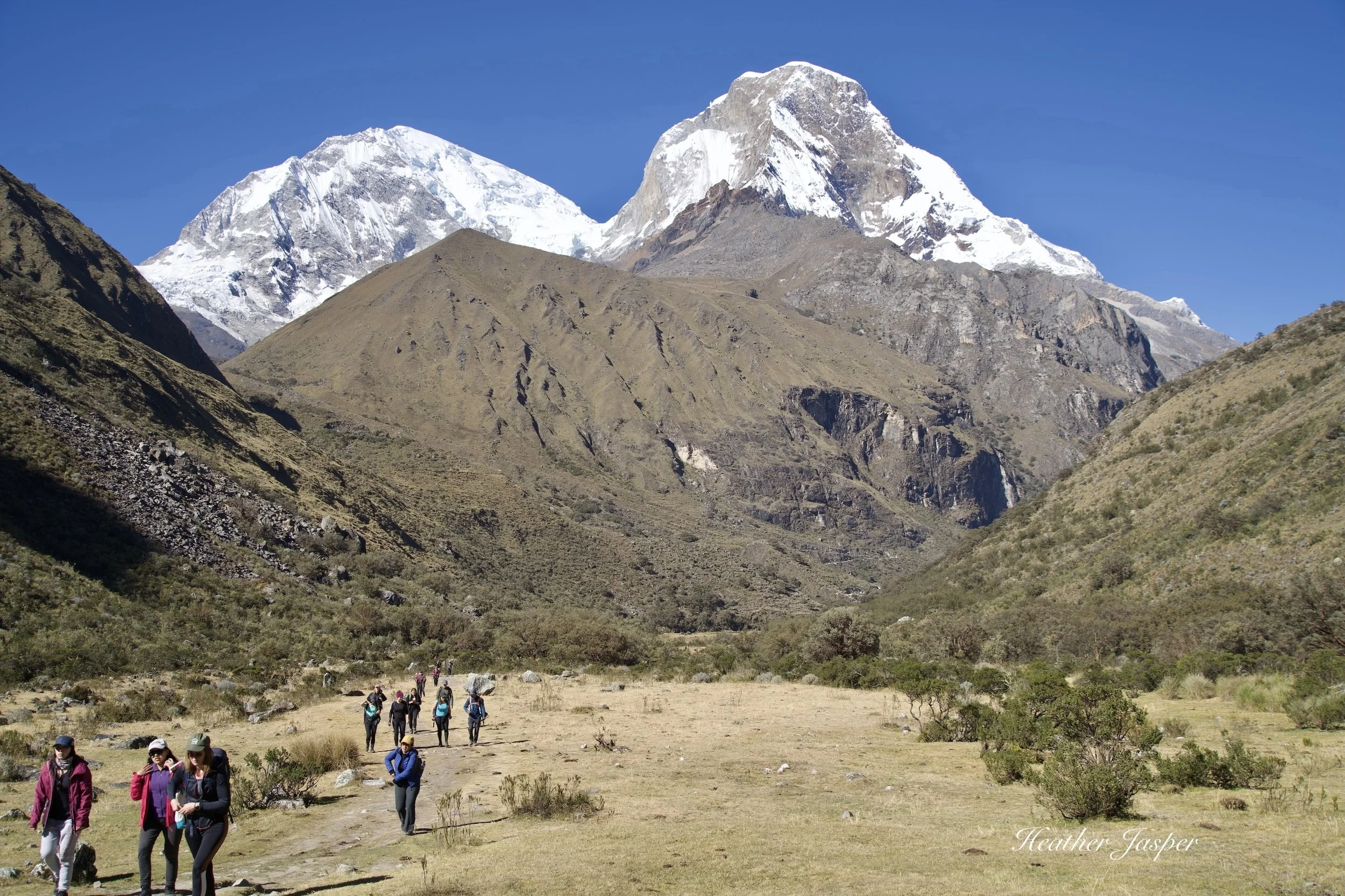
In July 2022 there were a lot of people on the trail and I was so caught up in the crowd I almost forgot to look behind me at Huascarán.
Laguna 69: Take 1
In 2022, I signed up for a group tour in Huaraz and left town at 5am on a bus with about 30 people. It was a beautiful, sunny day but the guide was MIA for most of the day and not everybody in the group made it to the lake. I was lucky to have brought enough water and food with me because it was a very challenging hike. We started and ended at Cebollapampa at 3,850m (12,631ft) which made the morning exhausting because of the uphill slog.
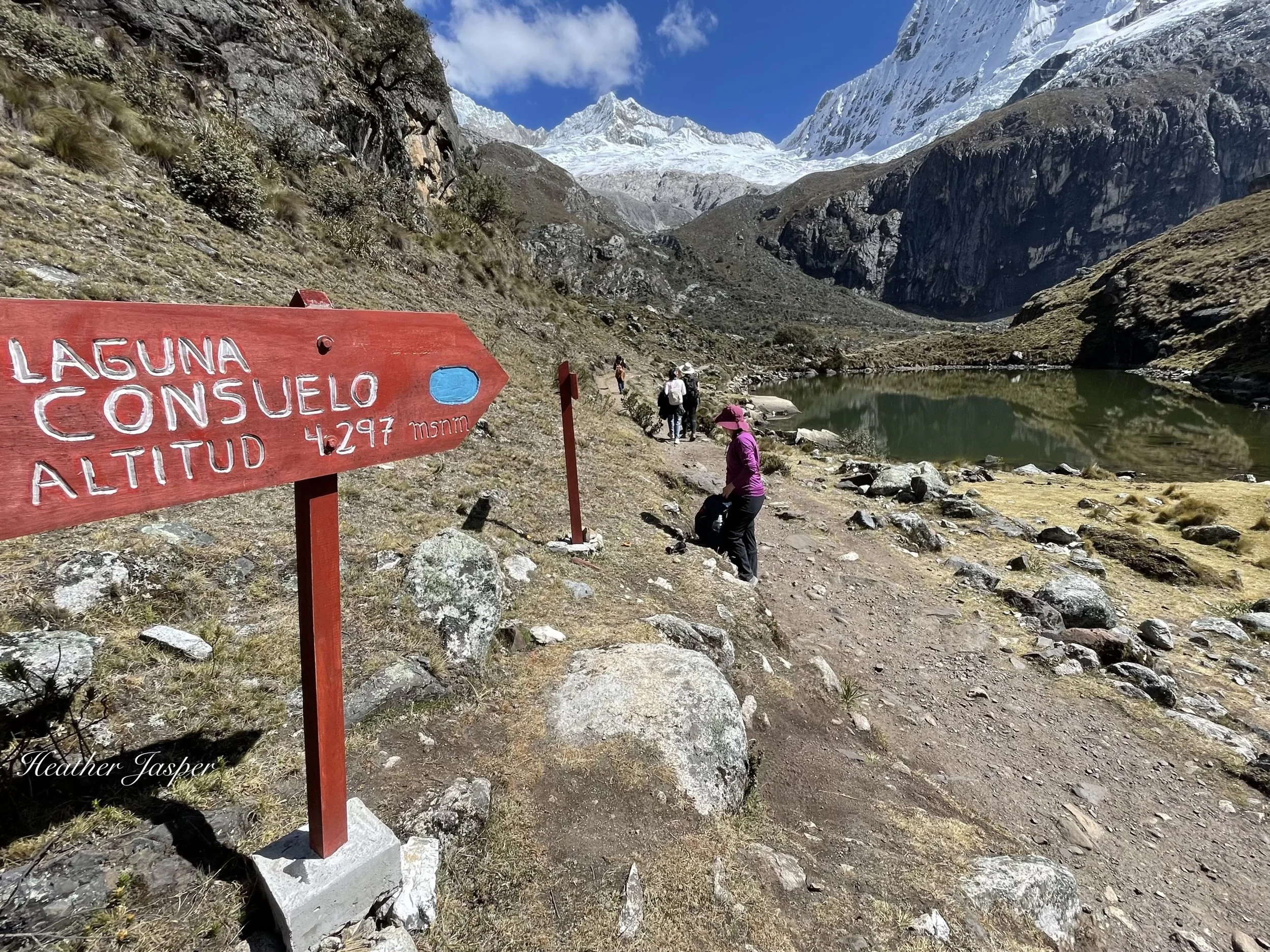
Getting the consolation prize is still hard.
Some people stopped at Laguna Consuelo, a small lake literally named Consolation Lake. It’s the consolation prize if you can’t make it past 4,297m (14,426ft) above sea level. Honestly, even if you acclimated for two days, getting to Laguna Consuelo is a big accomplishment. Not everybody can hike up past 14,000ft. Plenty of people get that far and turn back either because the altitude is too much or because it took them so long to get there that they don’t have time to get all the way to Lake 69.
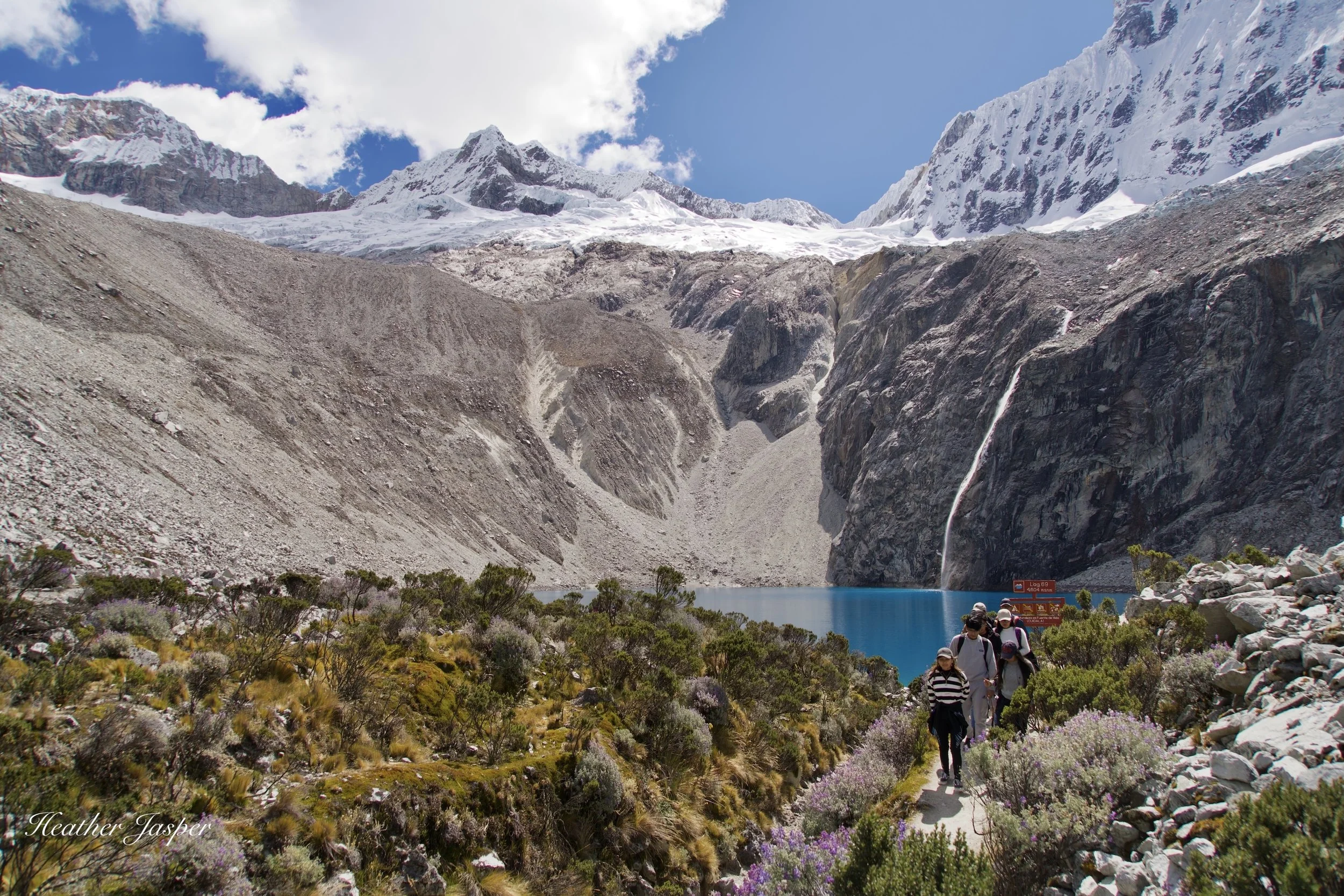
That first view of Lake 69 is priceless, no matter how many people are on the trail.
The altitude makes this hike particularly challenging.
The last steep section, past Laguna Consuelo, is the moraine that holds Lake 69 up against the base of Chacraraju, an imposing mountain whose peak reaches 6,108m (20,040ft) above sea level. Getting to the top of that moraine, you finally get a view of the lake’s famously bright sapphire waters.
The hike from Cebollapampa up to Lake 69 and back is about 14km (8.7mi) and you have to climb up 754m (2,474ft) of elevation. Hiking from sea level up to 754m may be nothing, but hiking from 3,850m to 4,604m is really hard. Do not underestimate the effects of altitude!
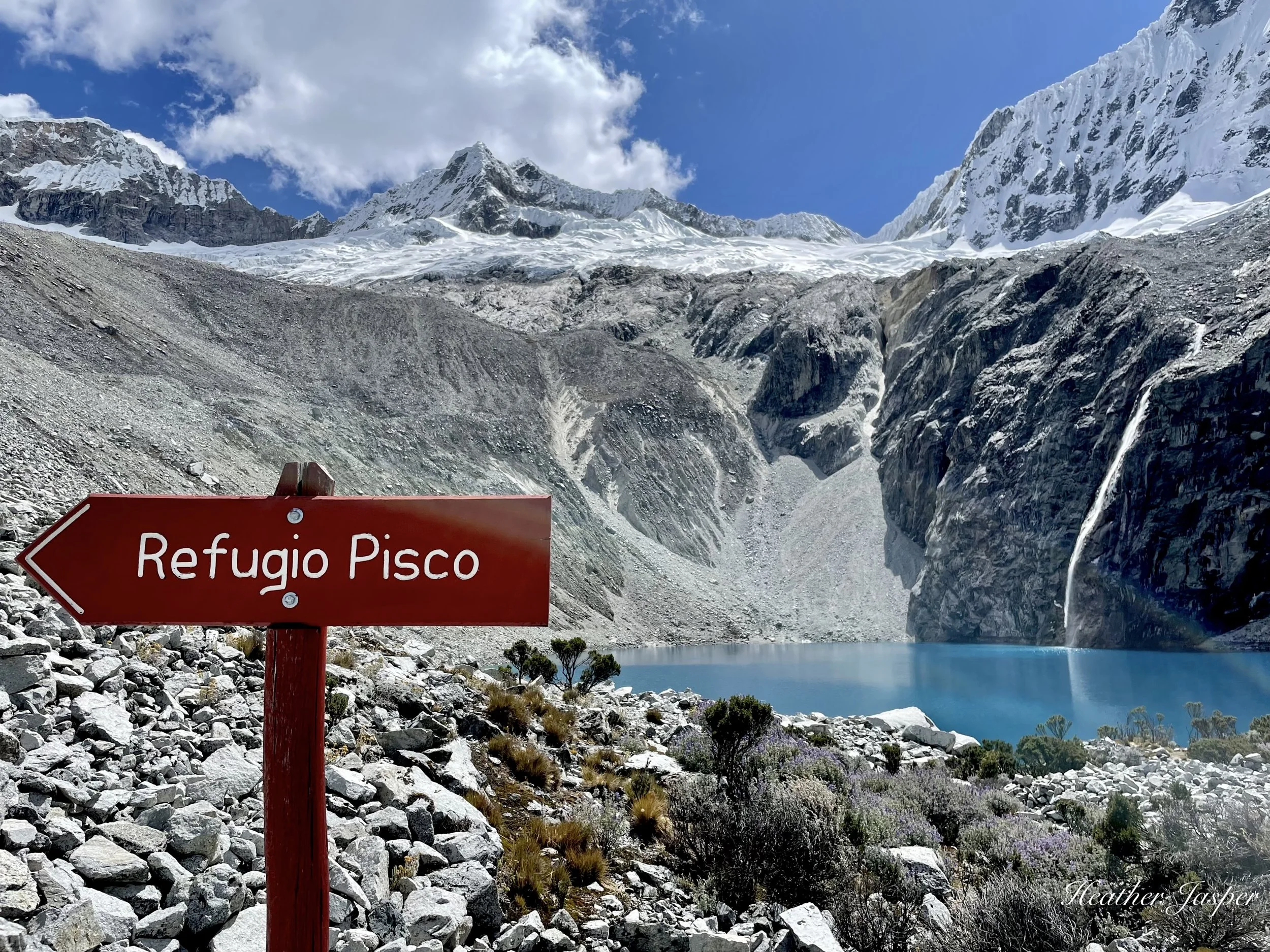
If you’re hoping to summit Pisco (5,752m/18,871ft), the trail to the refuge departs near Laguna 69.
Laguna 69 is still an amazing hike.
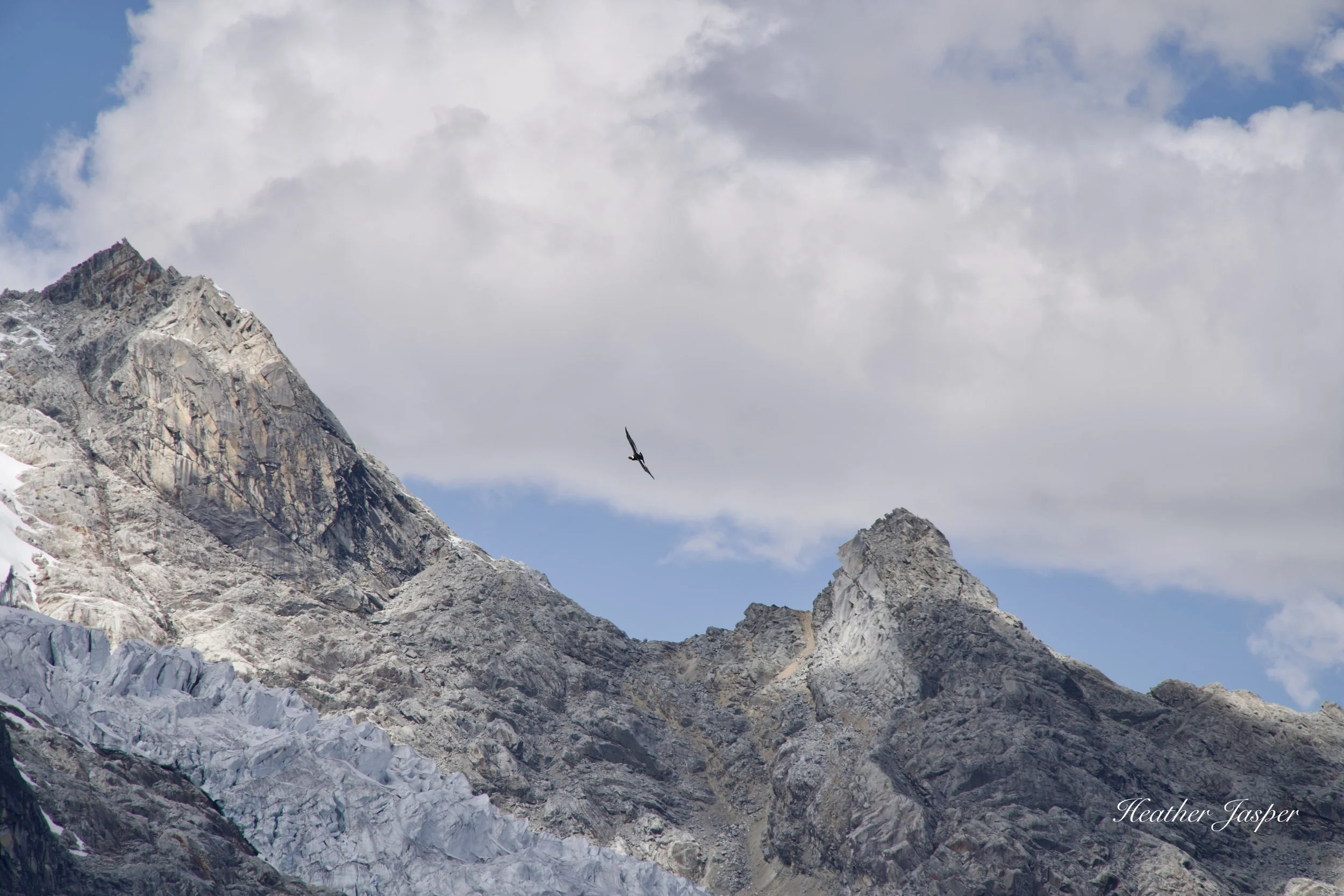
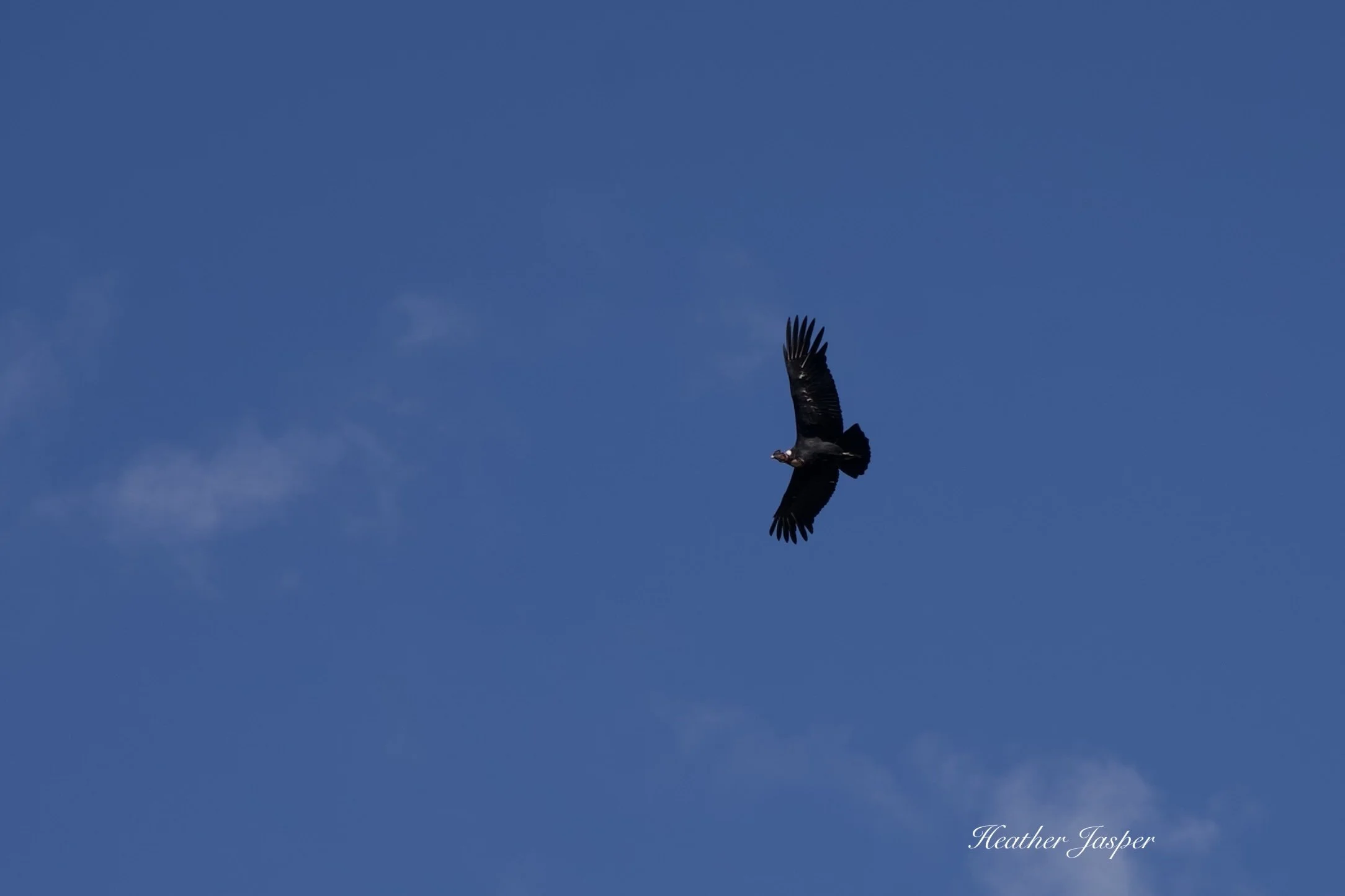
All that said, you can see from my photos that it’s worth it. The valley you hike through is beautiful and on the way back down (or if you look behind you on the way up) you get stunning views of Huascarán, the highest peak in Peru at 6,768m (22,205ft). On the way back down in 2022 I saw two condors and got a couple decent photos, below.
The Explorandes camp was basically glamping, considering how comfortable my bed was and how great the team was.
Laguna 69: Take 2
My second hike up to Lake 69 was completely different. I camped with Explorandes the night before at around 4,270m (14,000ft) and we started hiking the next morning at 4,594m (15,070ft). Sleeping that high made us much better acclimated for the hike and sleeping that close meant that we didn’t have to drive far to the trailhead. (In 2022, I slept in Huaraz at 3,052m/10,013ft and had to get up at 4am).


This was the better way to hike Laguna 69.
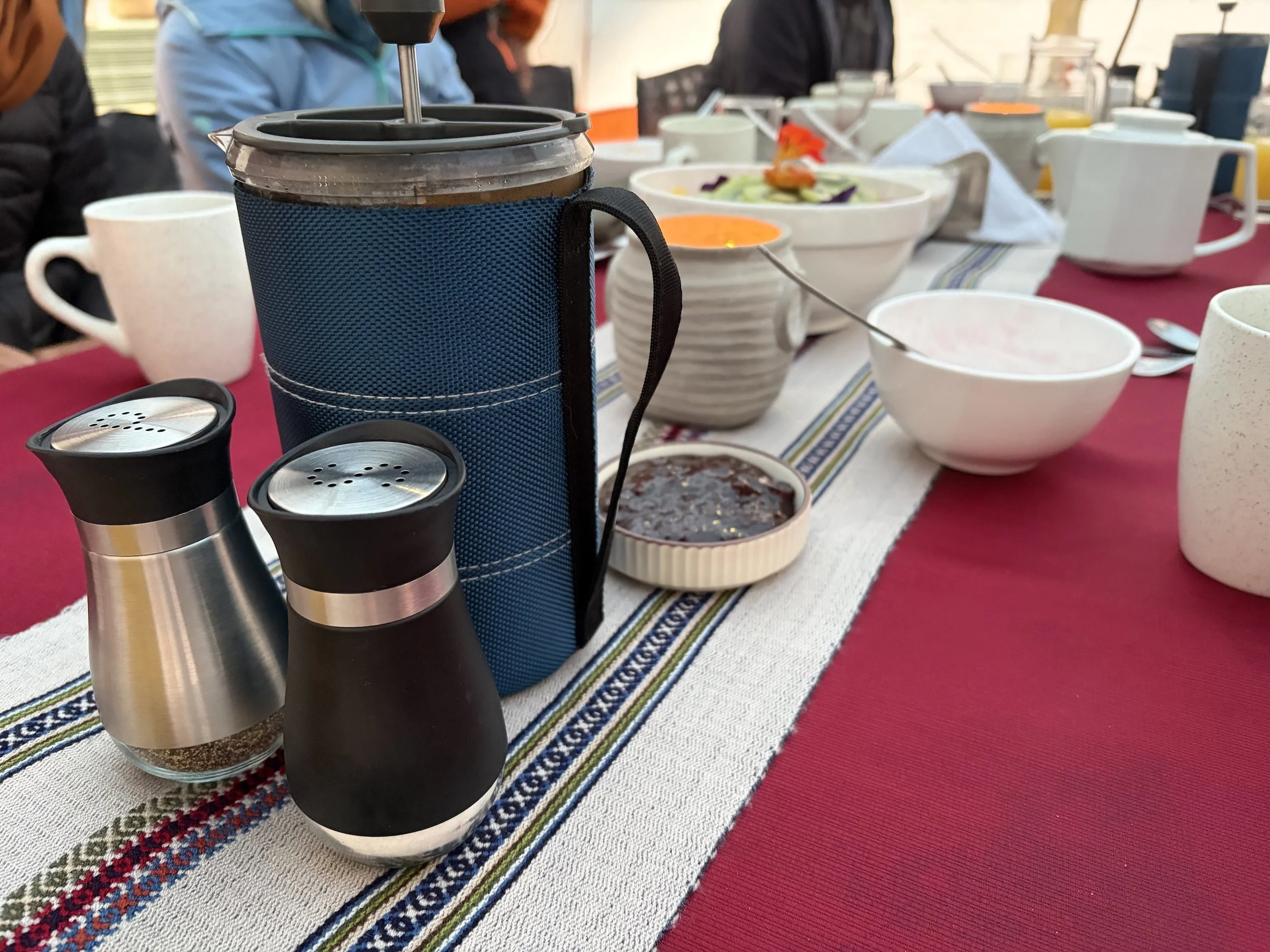
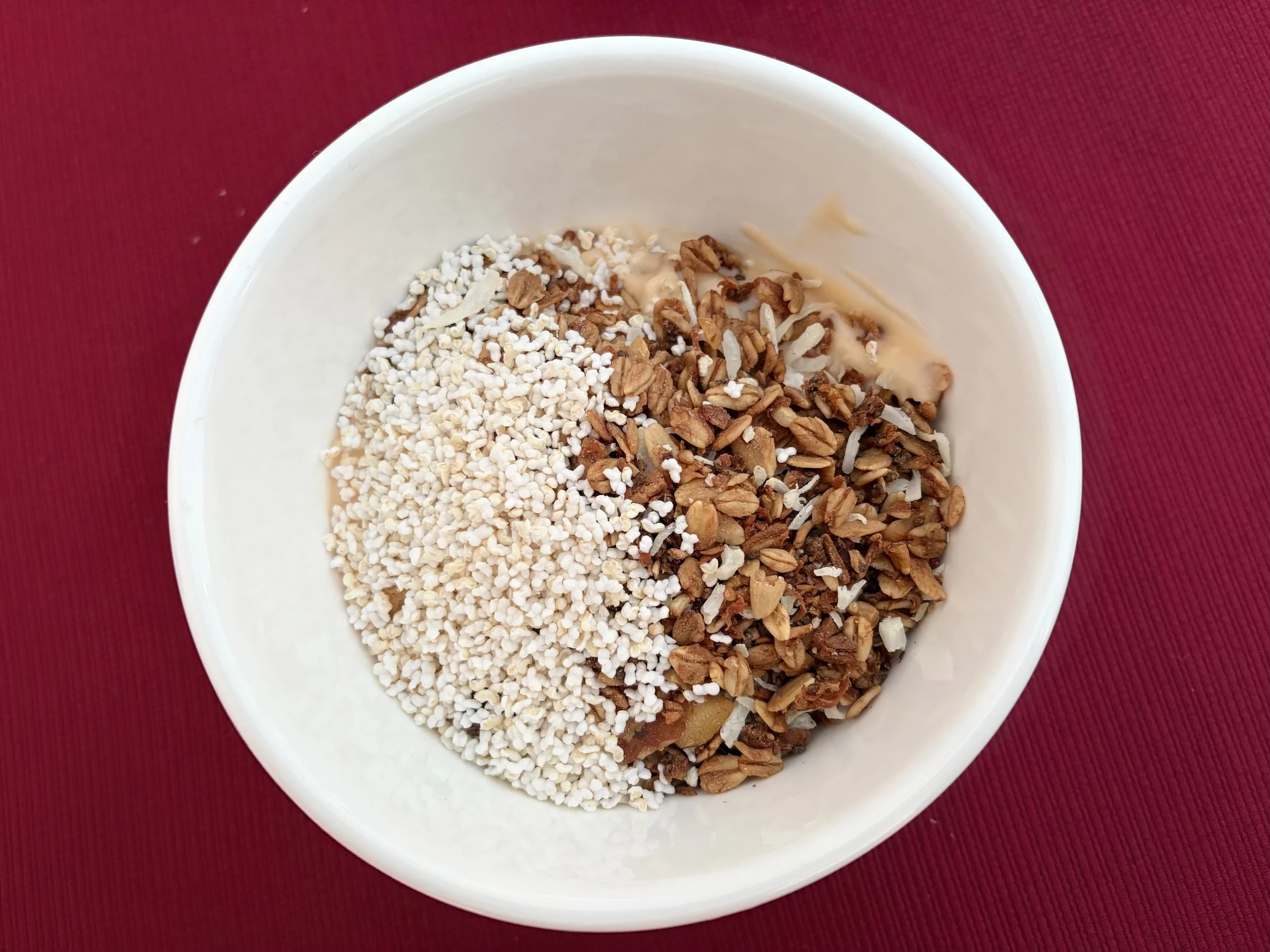
I started the morning with a 3-course breakfast of eggs, granola and fresh fruit, plus lots of excellent coffee. I didn’t get out of bed until almost 7am and we started hiking around 8:15. From where we started, I could look across at Chacraraju and see we were almost even with Lake 69, though we couldn’t see the lake from the trail.
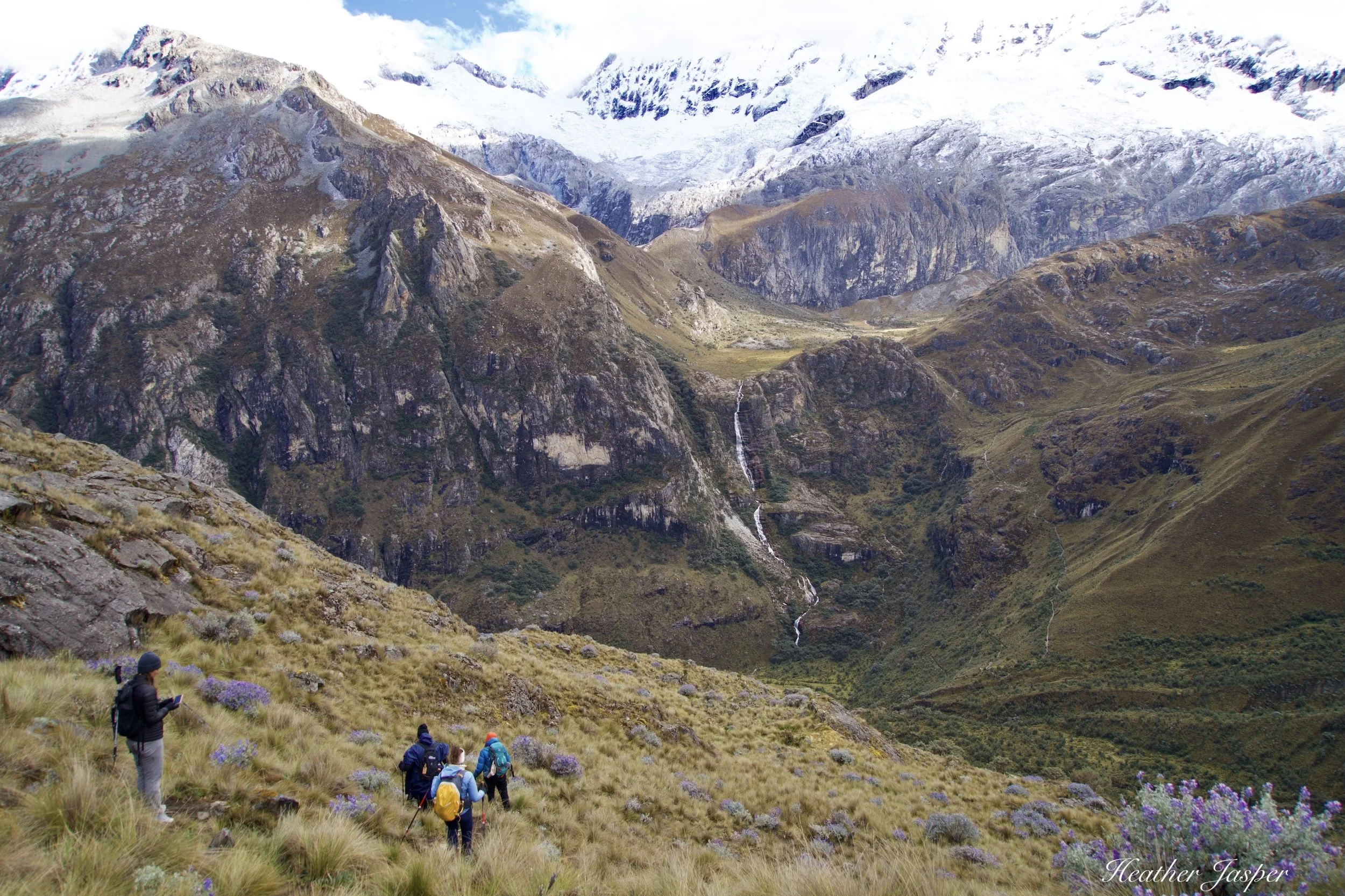
We hiked down to the trail you can see that goes up to the right of the waterfall, then across the sunny meadow and up the final moraine to Lake 69, tucked right at the bottom of the peak in the background.
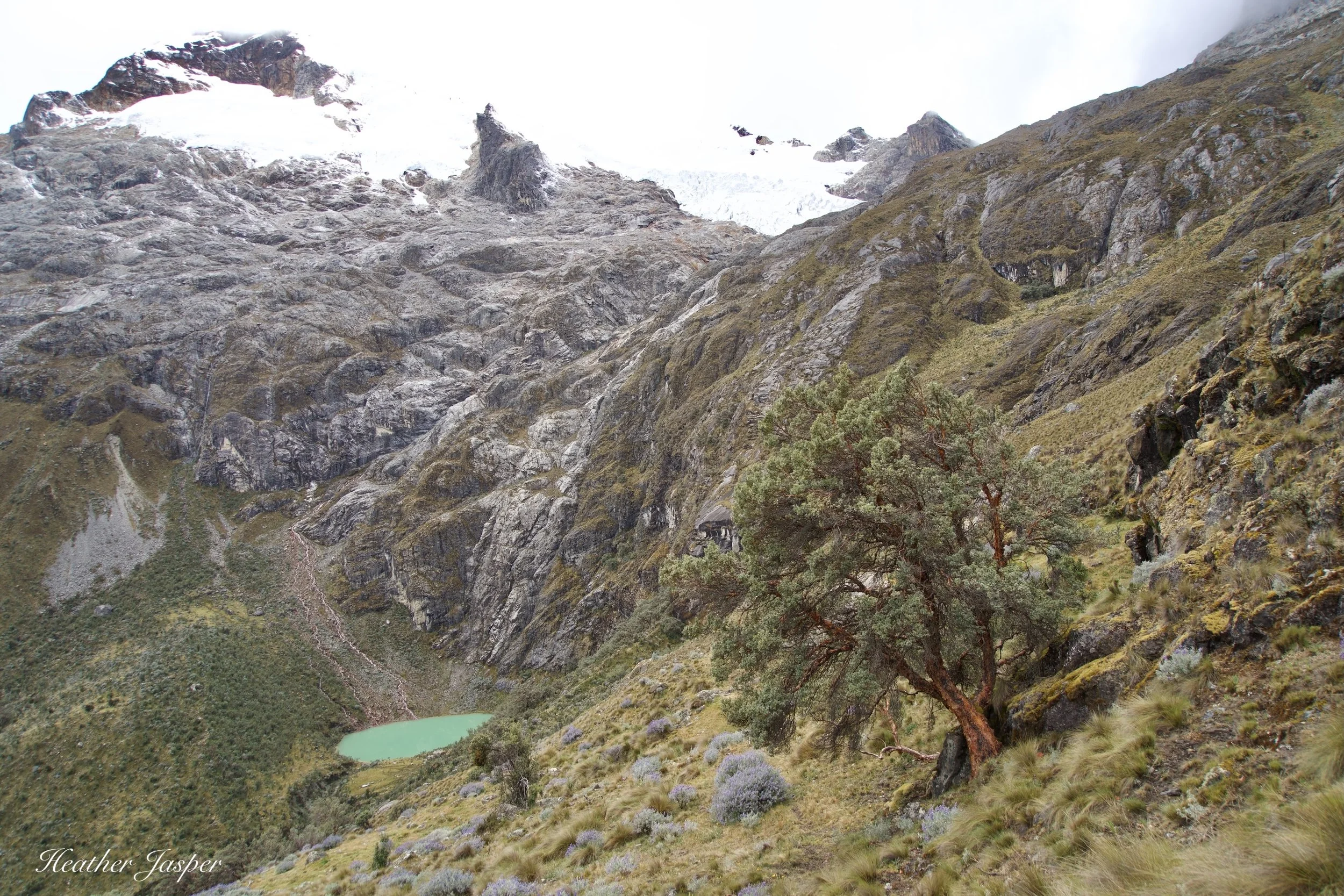
Pacchacocha glows a glacial turquoise and is surrounded by beautiful queñua trees. Yanapaccha is hidden in the clouds above.
The morning hike was easier.
We hiked across the hillside, gradually going down to Pacchacocha where we stopped for snacks around 10am. Pacchacocha is a tiny lake that catches the snowmelt from Yanapaccha at 5,464m (17,927ft) above. It’s in an area of queñua (or queuña) trees, a species of Polylepis that creates biodiverse forests at high altitudes throughout the Andes. The trees were full of singing, bright blue birds called tit-like Dacnis. Their song is beautiful – listen on e-Bird! It was a lovely hike, and I was happy to start the day with some gradual downhill.
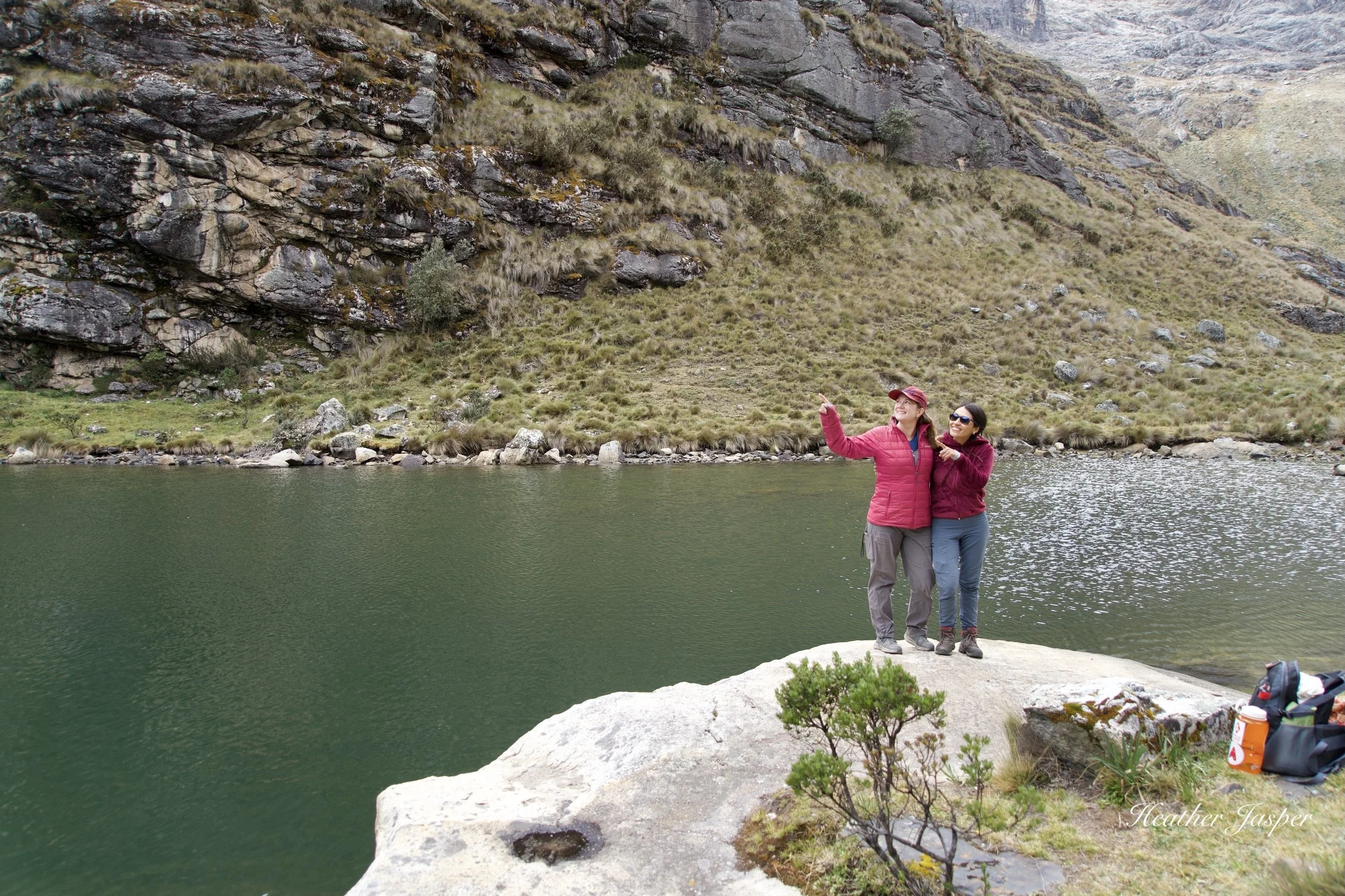
Explorandes send us with excellent guides, including Banesa Arahualpa, with me here at Laguna Consuelo.
Hiking up to Laguna Consuelo was still hard.
I needed a break by the time we climbed up past the waterfall to Laguna Consuelo. We paused for another snack break, watched a Silvery grebe diving and I got to chat with our guide Banesa Arahualpa, who made this whole trip so much fun.
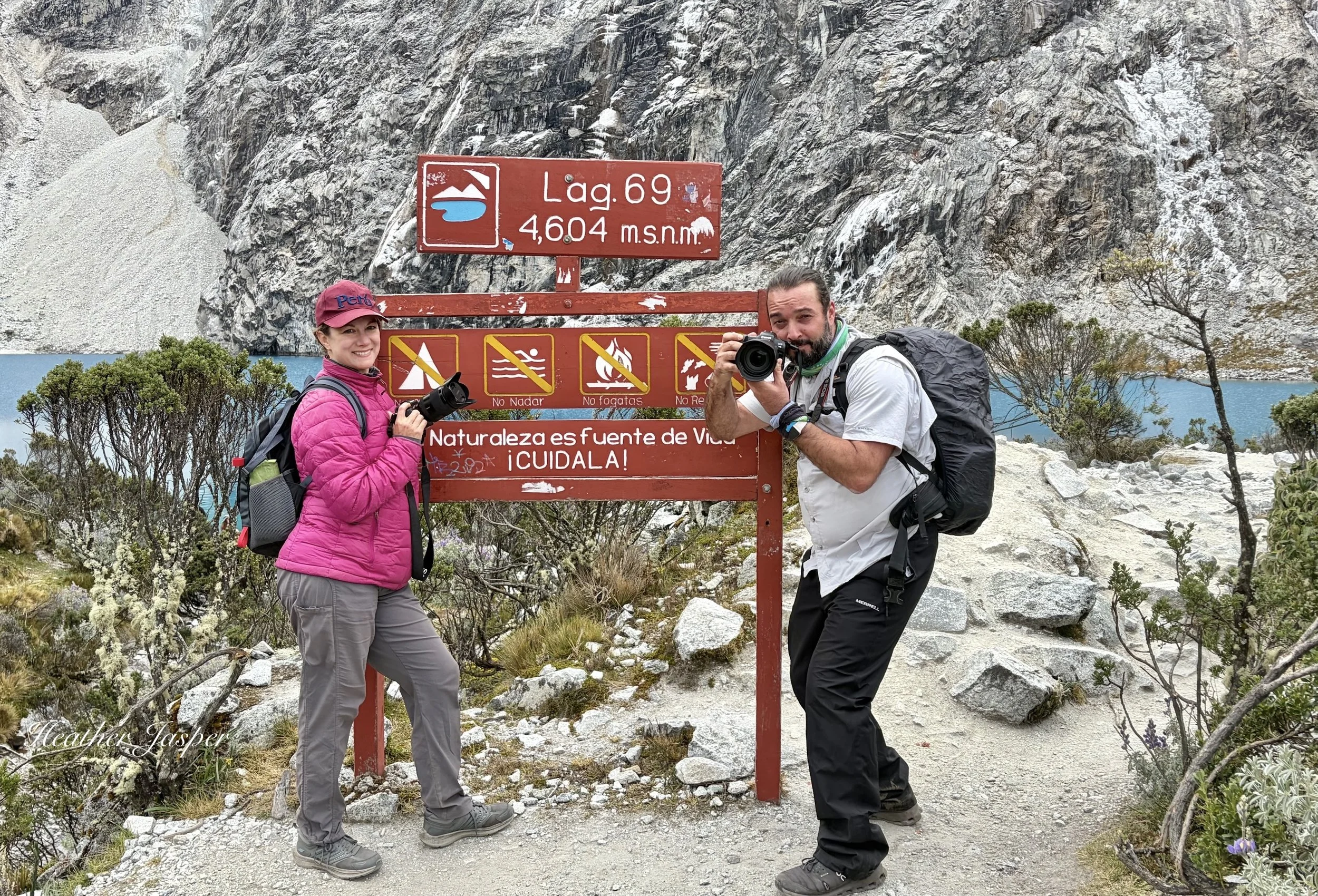
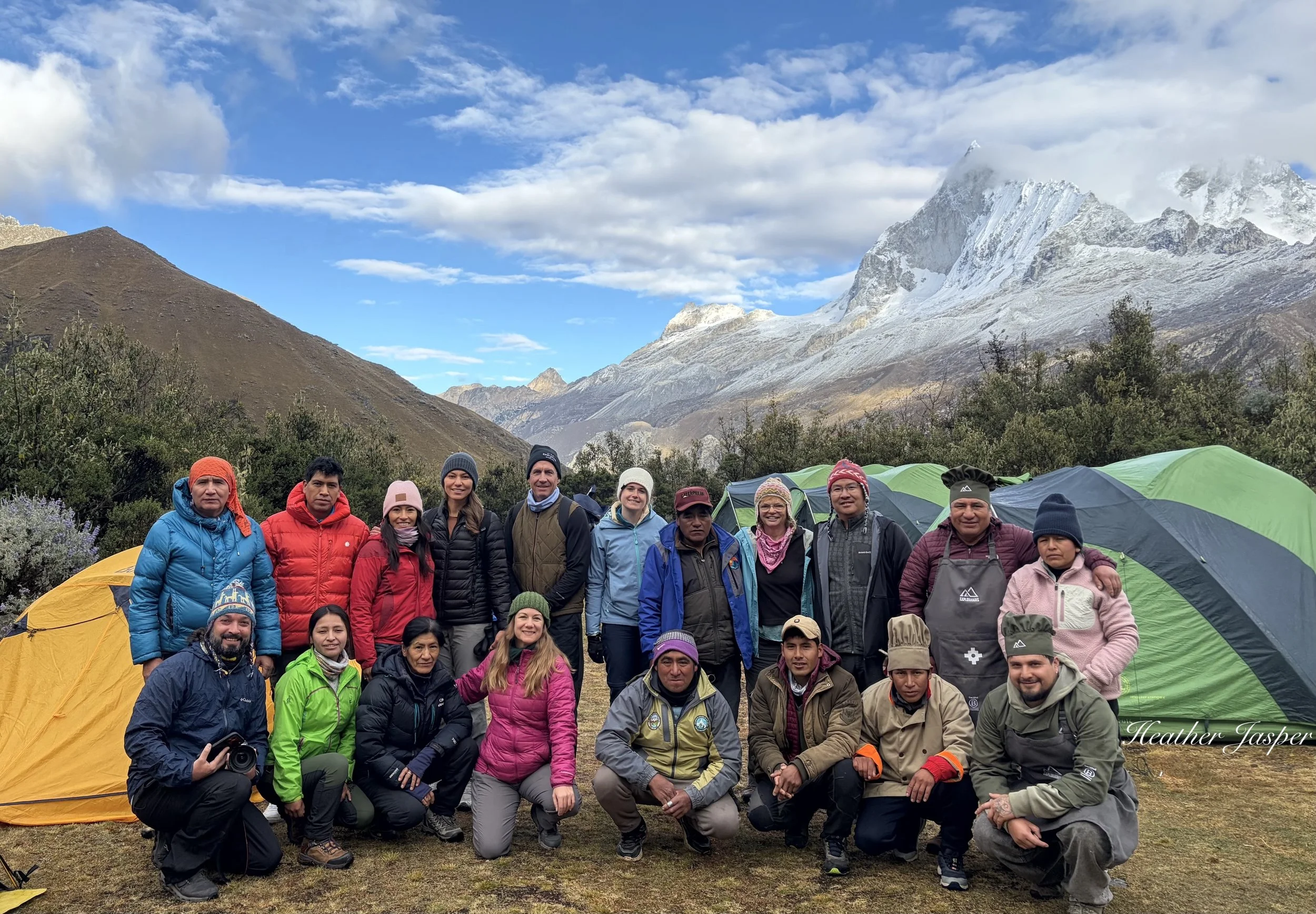
That last bit of trail is so steep we were all elated to arrive and Hass Salum got great shots of the group at the lake.
Hiking up the moraine was even harder.
That last push up to Lake 69 is not for the faint of heart and we didn’t make it until 1pm.
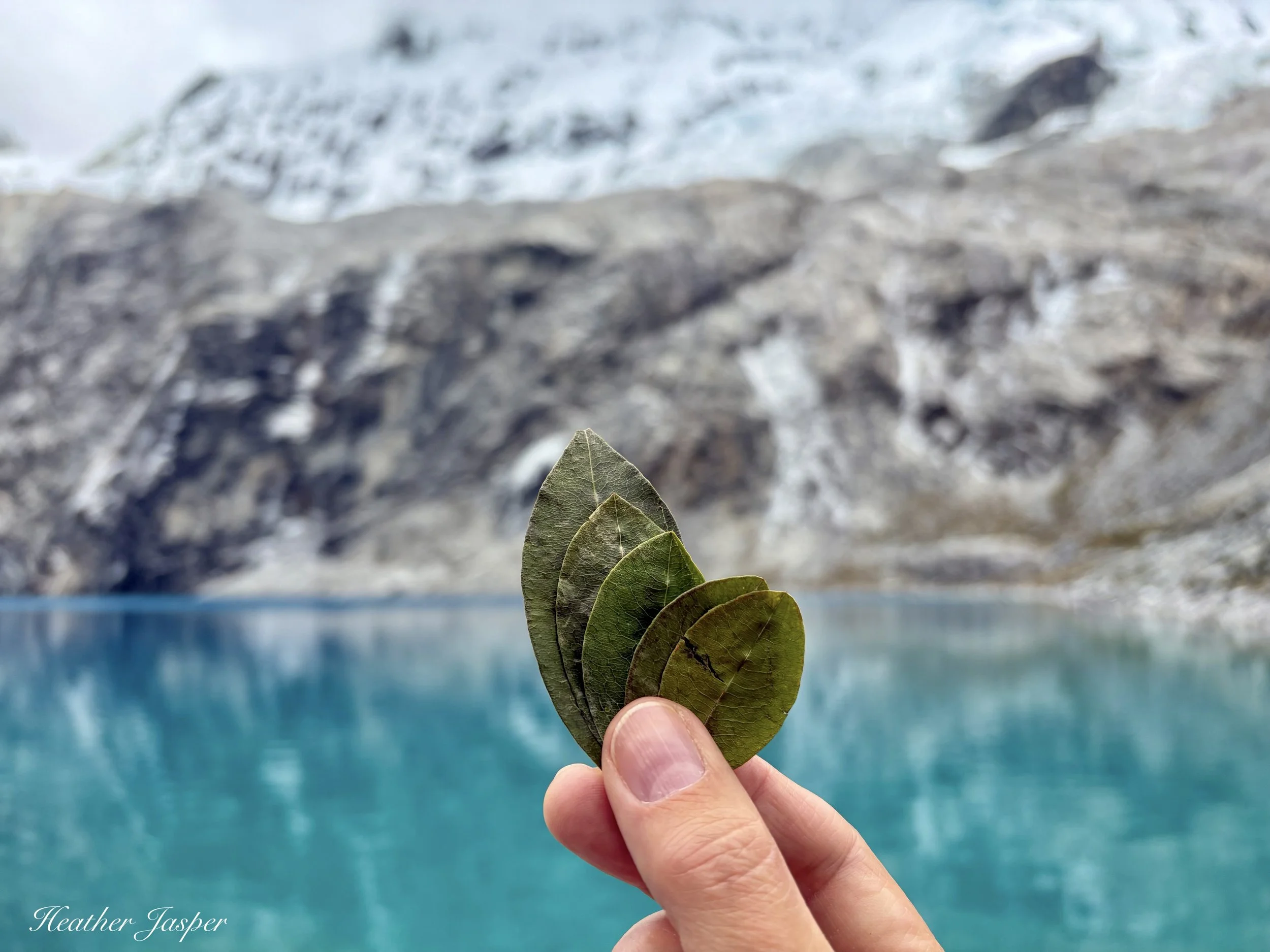
I was so thankful to be back at Laguna 69 and so thankful that Banesa thought to bring coca leaves to share.
Laguna 69 is beautiful, even when cloudy.
Lake 69 still glows that glacial turquoise, even under a cloudy sky. We stopped by the lake for a bit and Banesa gave me some coca leaves to thank the Apus (sacred mountains) and the Pachamama (Mother Earth). Cusqueñians usually give me three coca leaves for this, but Banesa said any odd number is fine and picked out five leaves for me. I thanked the Apus hidden by the clouds above for watching over us and for everybody in the group getting safely up to the lake, then tucked the leaves between the roots of a nearby tree. Sometimes offerings are buried or burned, but my Peruvian friends tell me that sacrifices can be left in other ways. What’s most important is showing our appreciation and gratitude for the Pachamama.
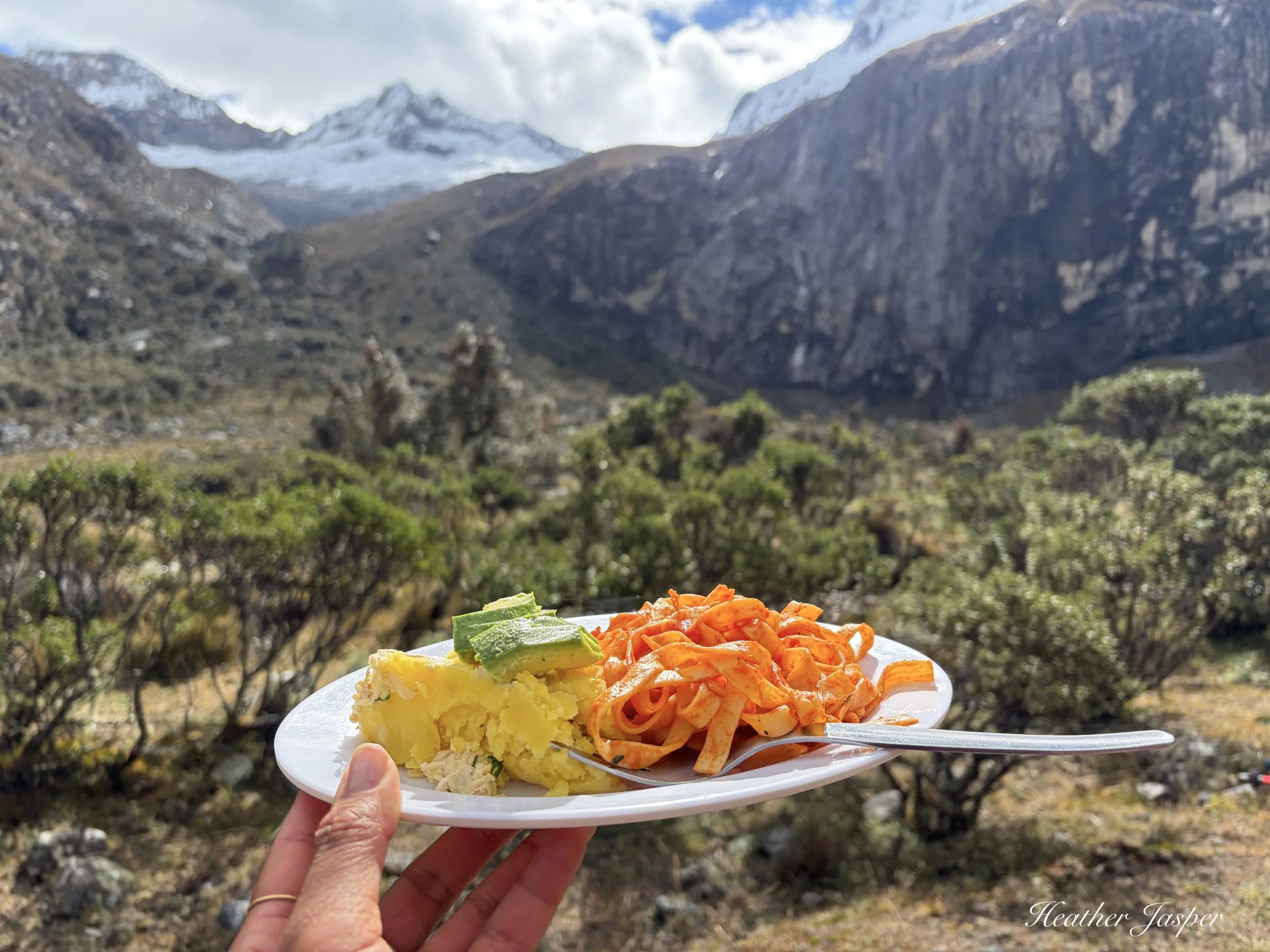
Lunch was a yellow potato causa and pasta, with plenty of hot coca tea.
Lunchtime with Explorandes
I was ready for lunch when we go to the lake, but that was waiting for us at the meadow below. Since it was cold and cloudy, we spent less than half an hour by the lake and then headed down. That part of the hike went quickly and by 2:00 we were in the meadow being served lunch.
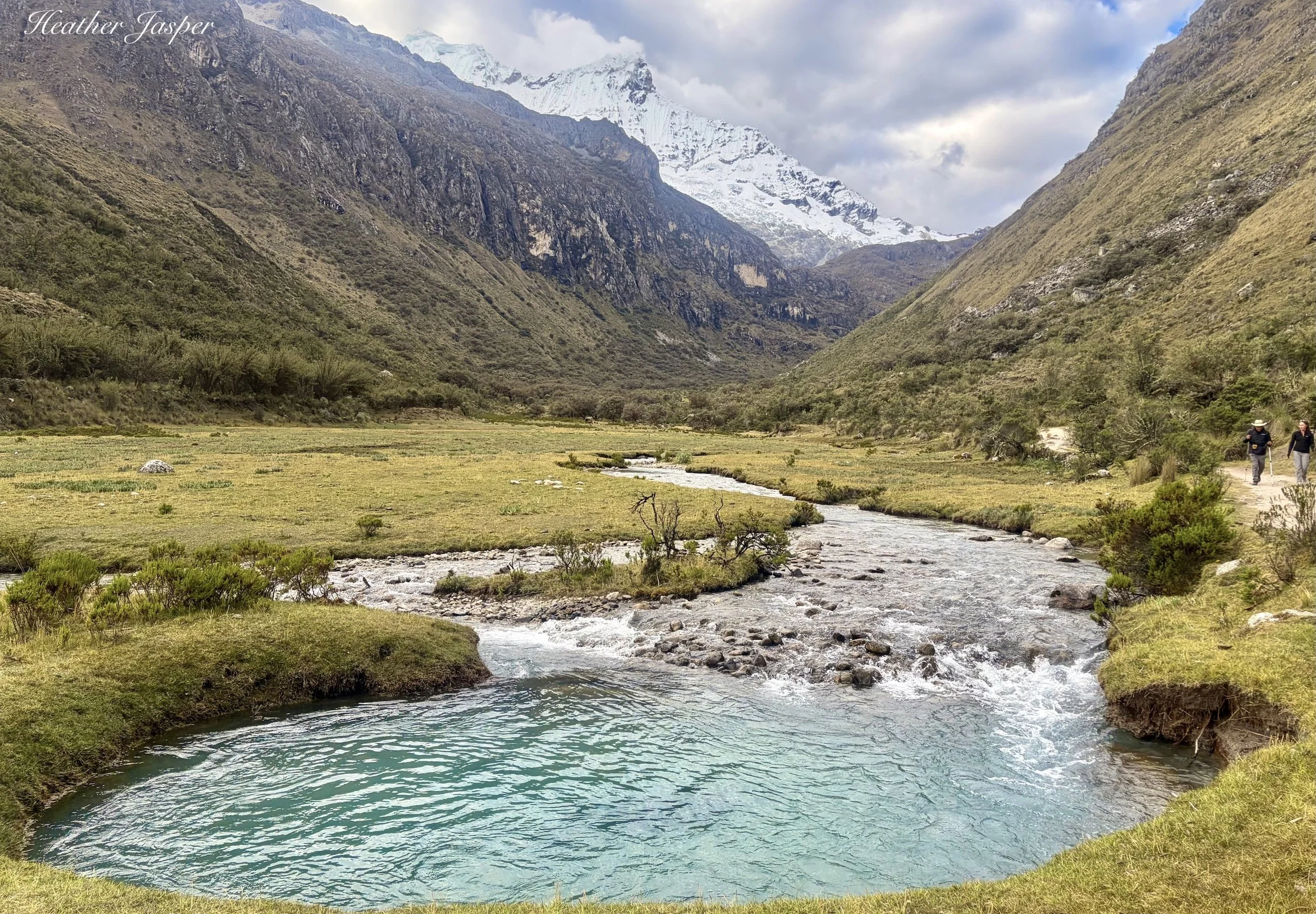
The last part of the trail down to Cebollapampa is mercifully flat and we had that beautiful glacial water with us the whole way.
The trail back down is long
This part of the experience was the same both times: that hike down to the road at Cebollapampa is very long. In 2022, I felt like the last part of the hike took forever and it wasn’t very different four years later. However, the van Explorandes had for us in 2026 was much more comfortable than the bus my group had in 2022.
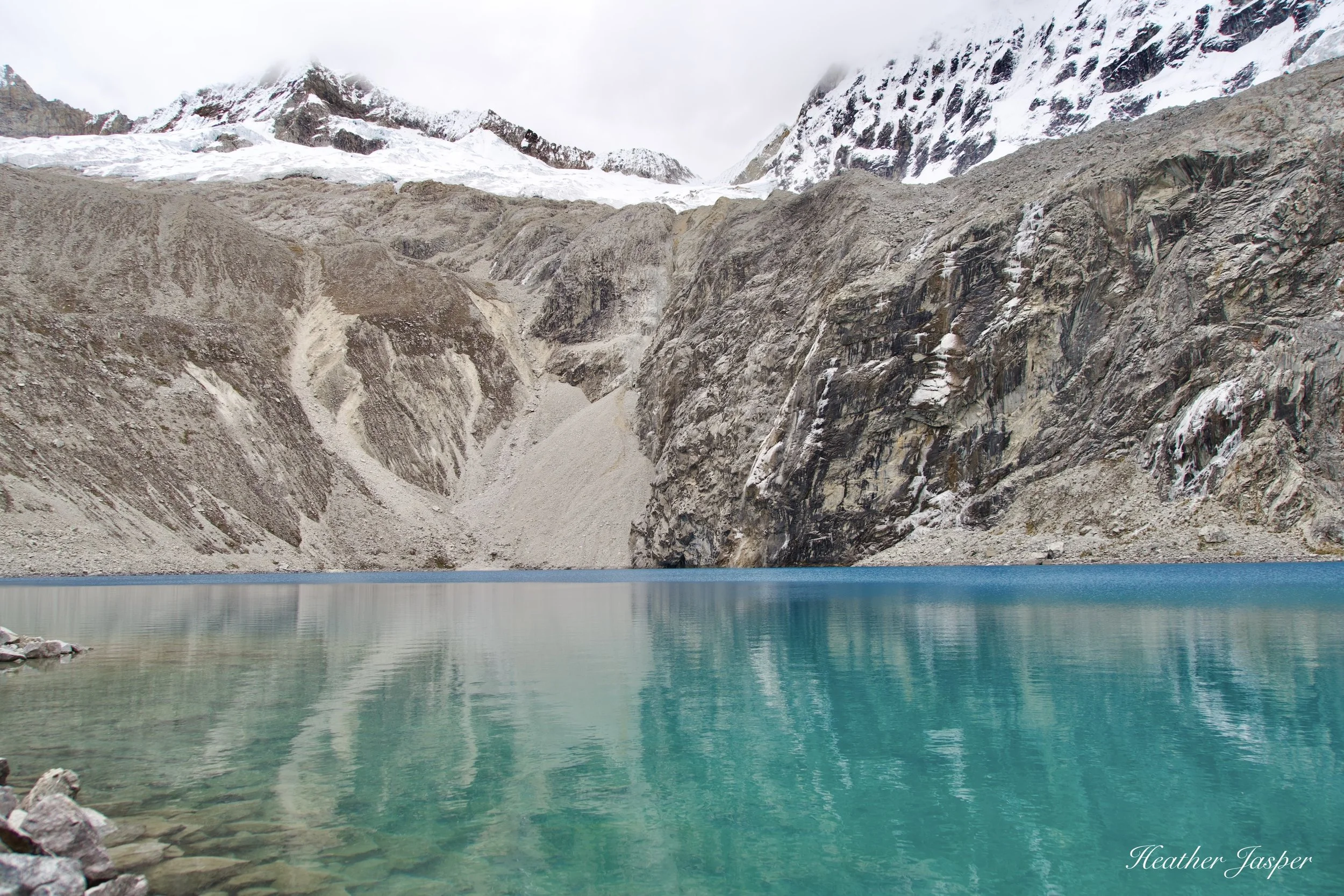
You don’t have to have a sunny day to appreciate Lake 69’s beauty and cloudy days bring fewer crowds.
The bottom line: Lake 69 is pretty.
Sunny days, cloudy days, you will always get a beautiful lake. On sunny days, expect the trail to be crowded and the lake shore even more crowded. Prepare for the altitude by spending several days hiking over 4,000m (13,000ft) and bring plenty of water and snacks. Sign up with a tour operator like Explorandes and avoid the cheap tour agencies that cluster along Av. Luzuriaga in Huaraz. Pack for all seasons because the weather changes fast at high altitude and you can go from sunburn to snow in an hour.
My second Laguna 69 experience was thanks to the Adventure Travel Association! I’m so happy they hosted AdventureELEVATE in Peru so travel advisors from around the world could come see how amazing adventure travel is here.