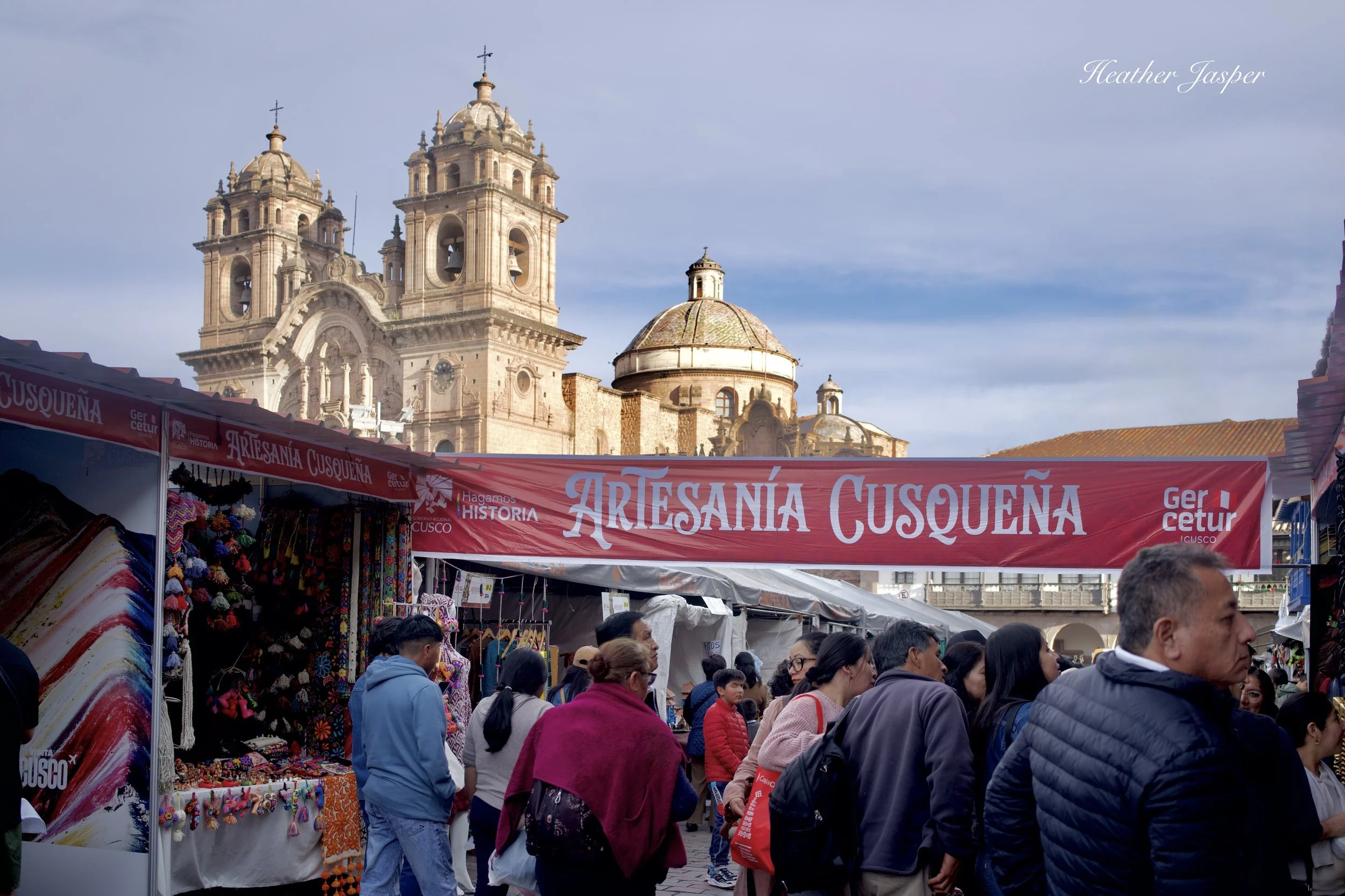
Every year Cusco’s Plaza de Armas fills with hundreds of stalls selling all kinds of art and gifts.
Peru’s best Christmas market is Cusco’s Santurantikuy.
Every year, for the week before Christmas, artisans of all kinds gather in Cusco’s main square, the Plaza de Armas. Santurantikuy is a very particular kind of shopping extravaganza, explained in the event’s name. The Spanish word santo, meaning saint, and the Quechua word ranti, meaning to buy, get the Quechua suffix -kuy and become “buy saints here.”
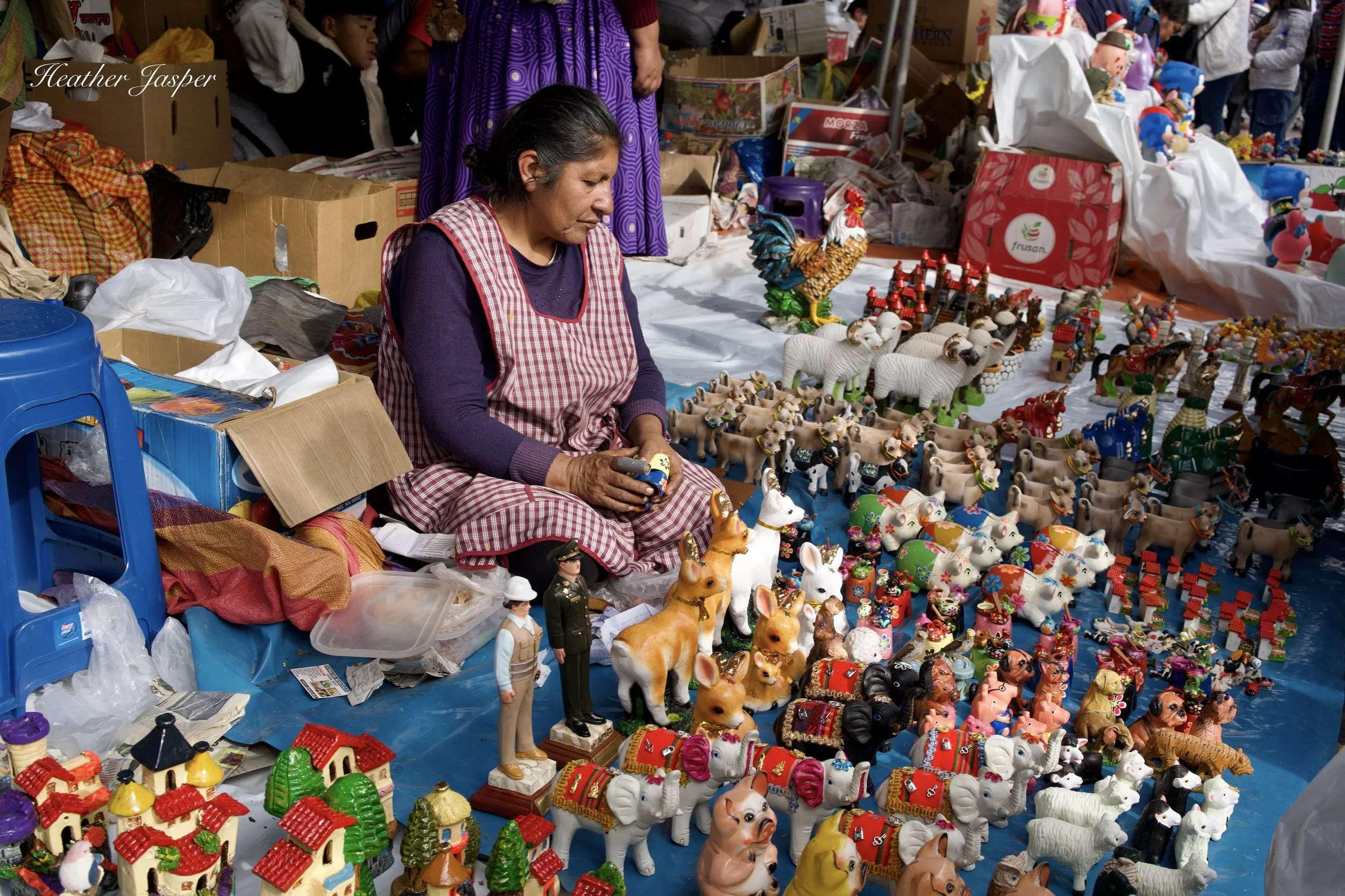
At Santurantikuy you’ll find all kinds of art, from ceramics and paintings to handmade blankets and clothes, but what Santurantikuy is best known for are the baby Jesus figurines.
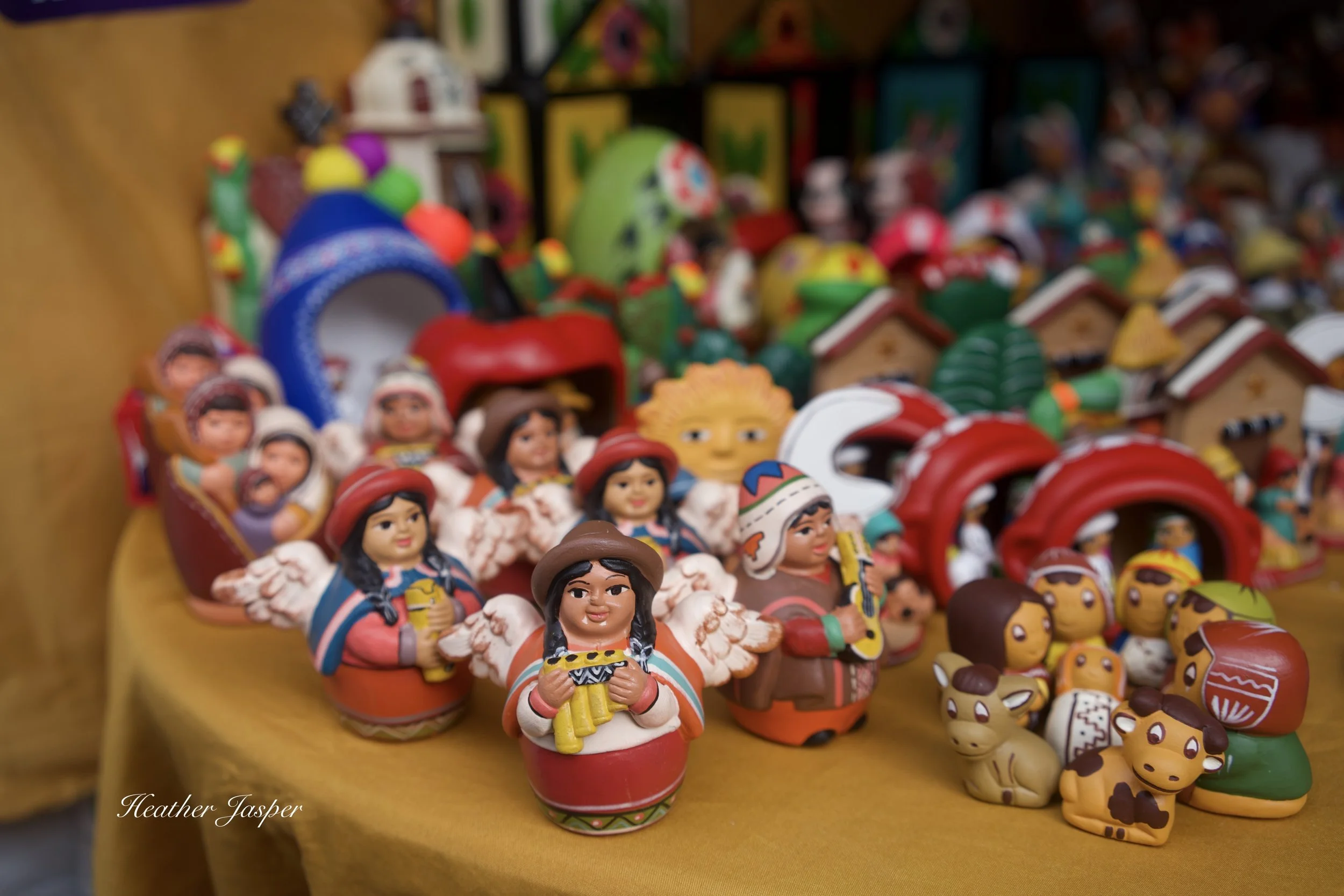
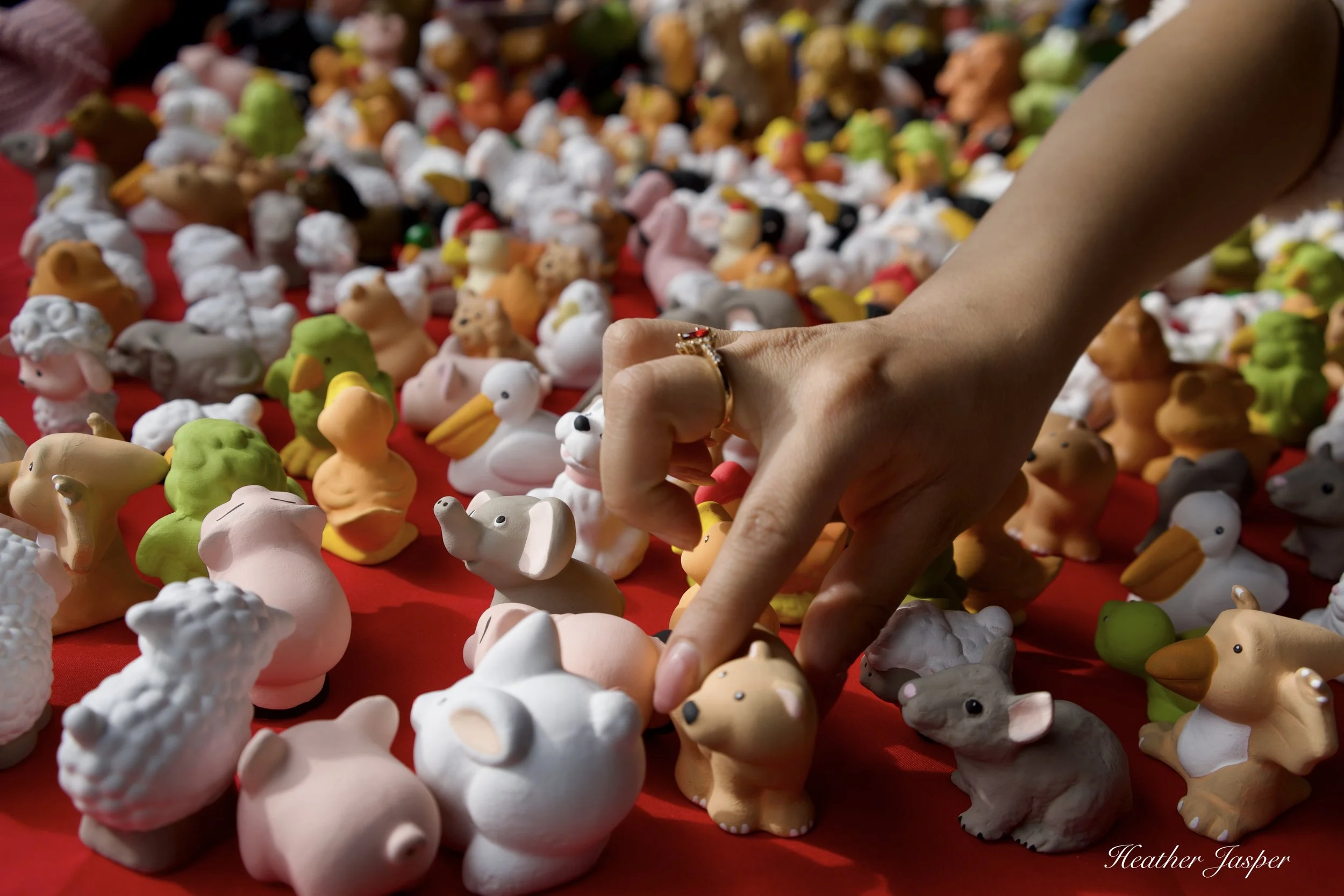
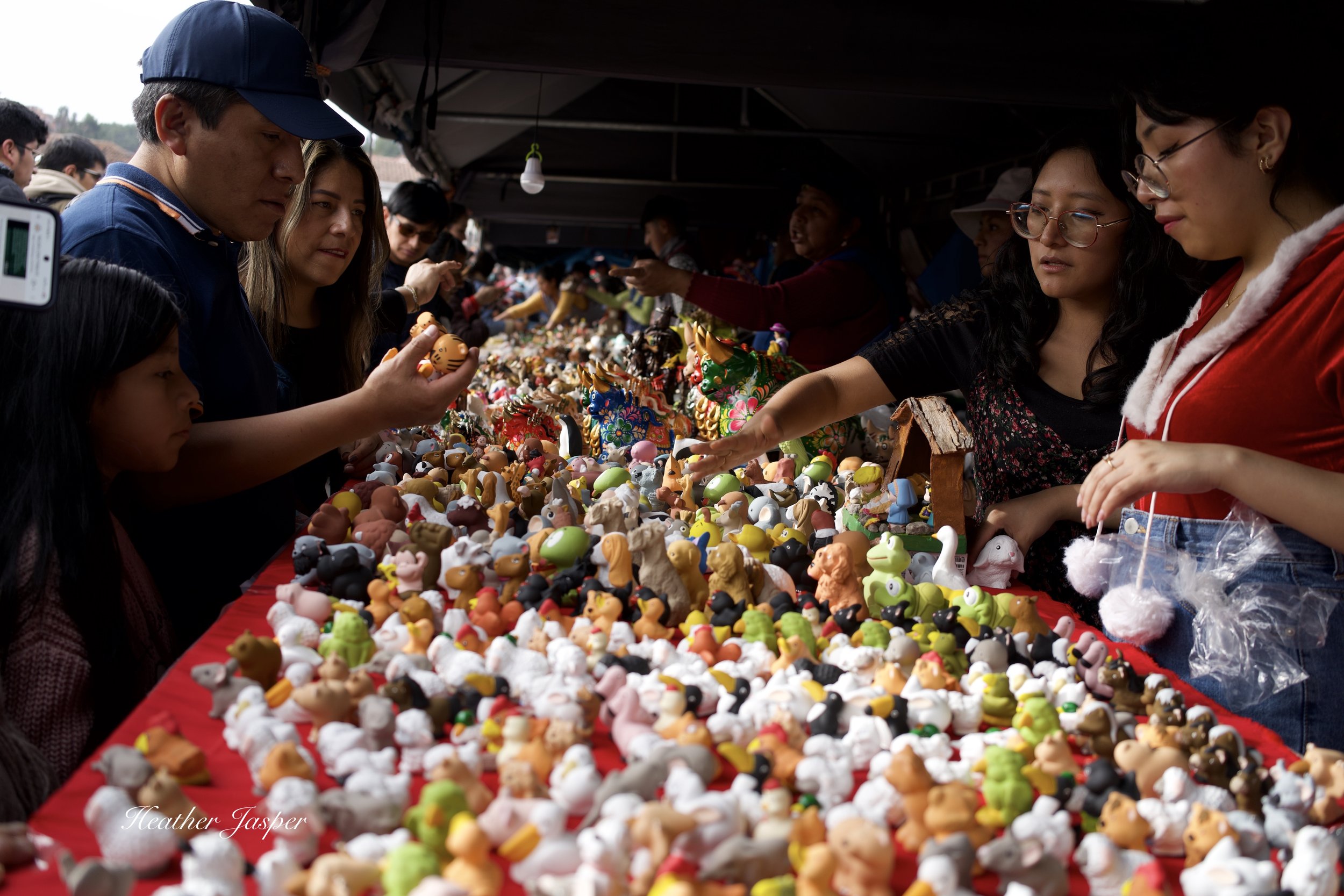
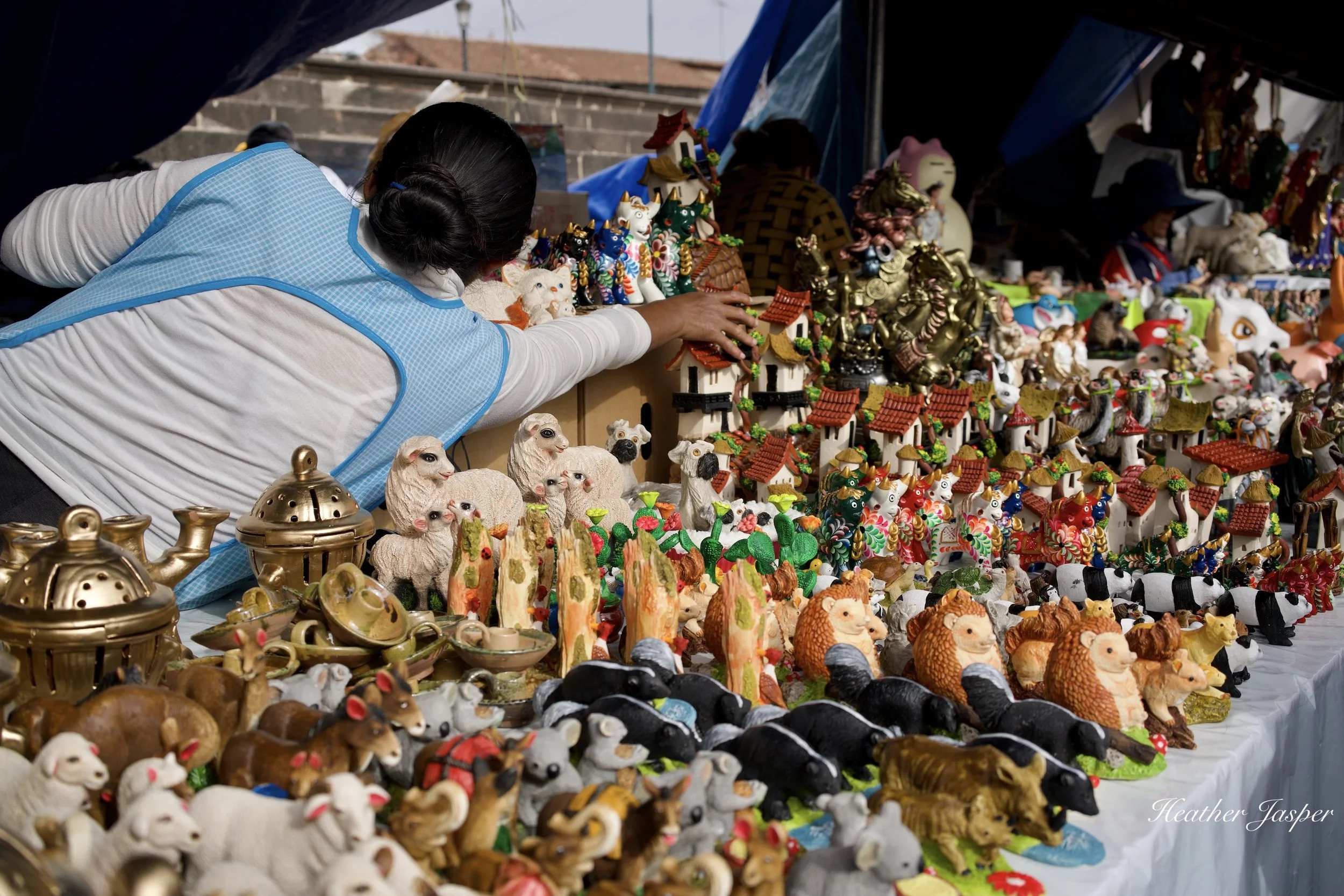
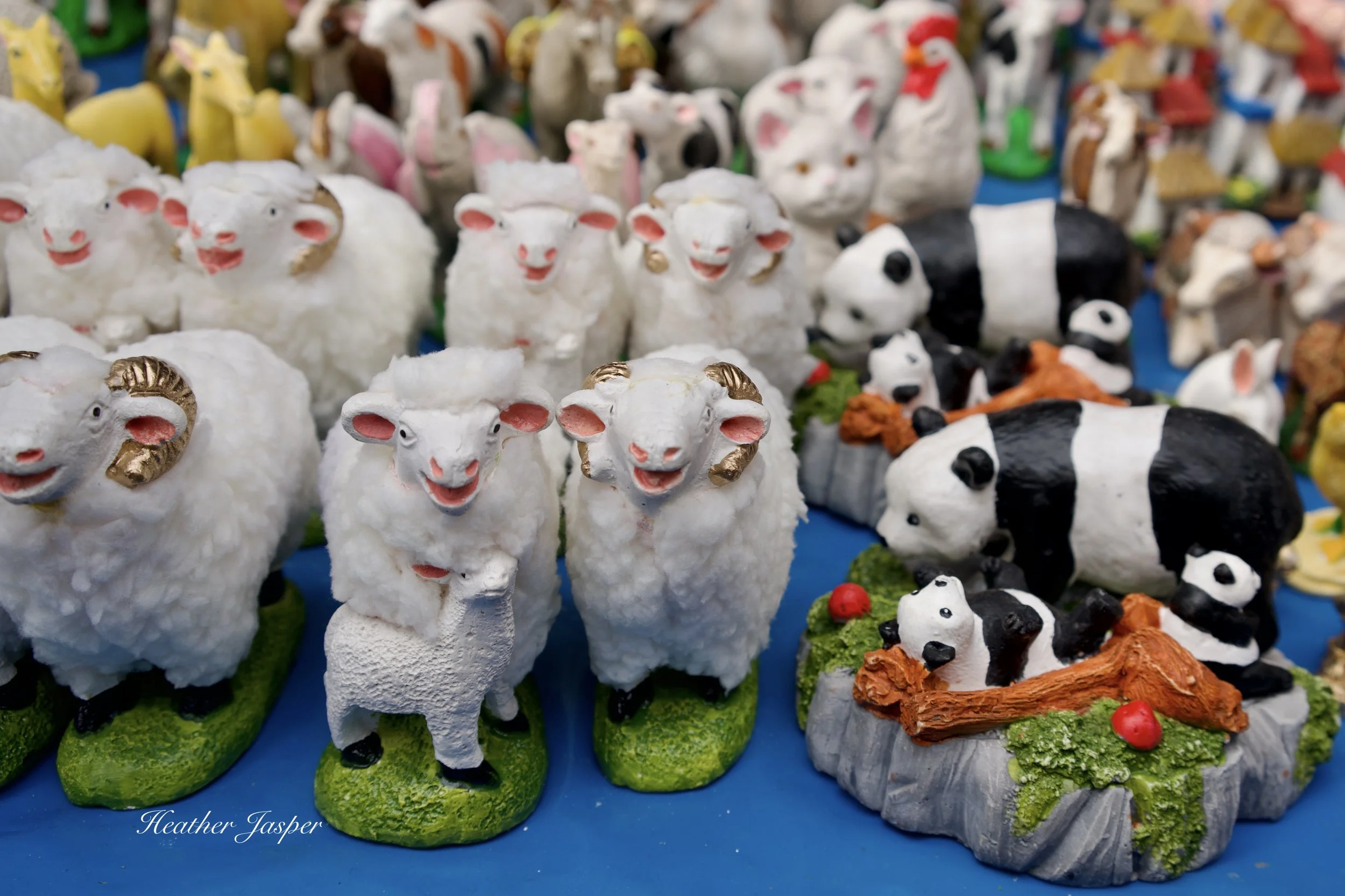
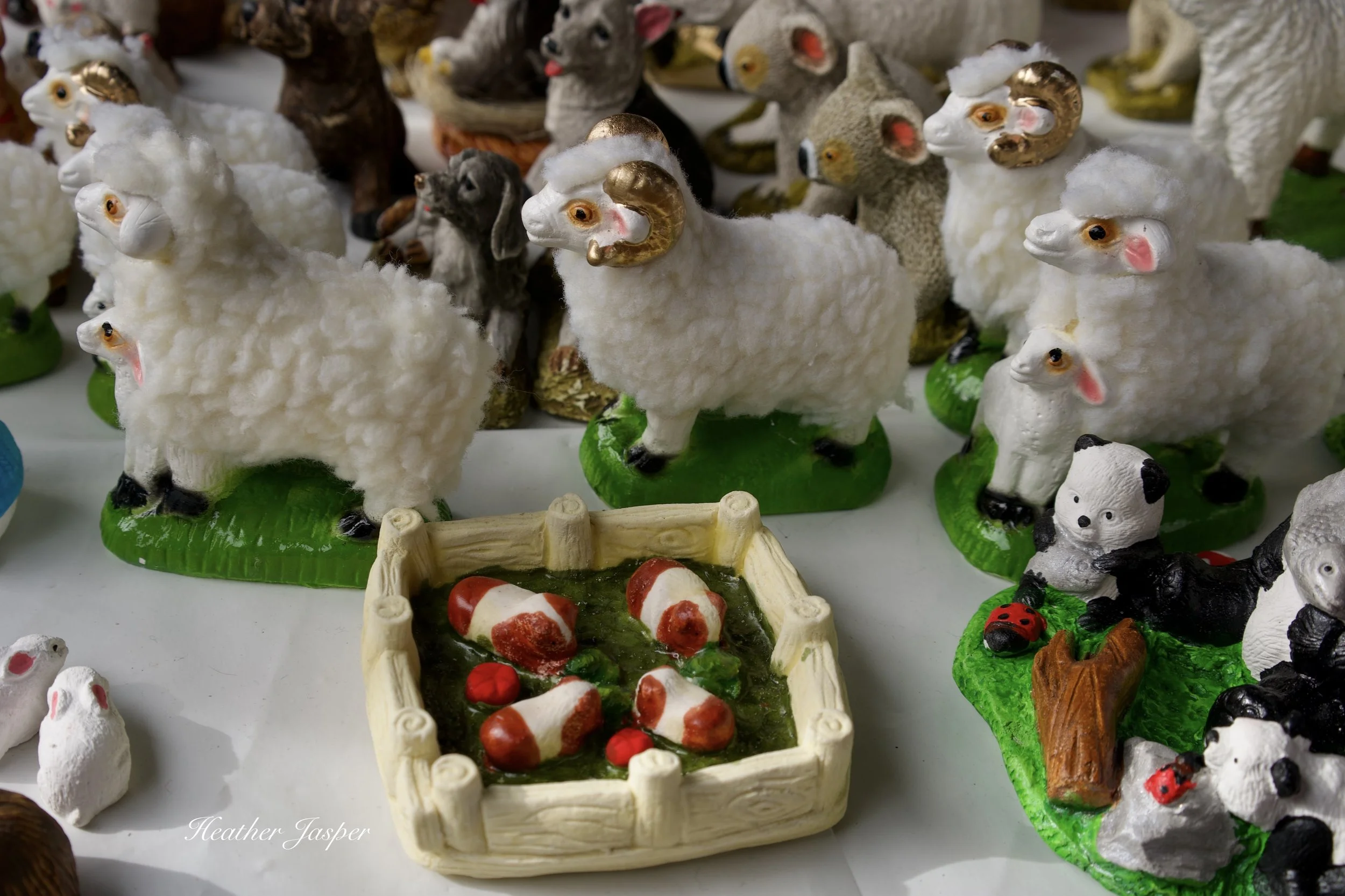
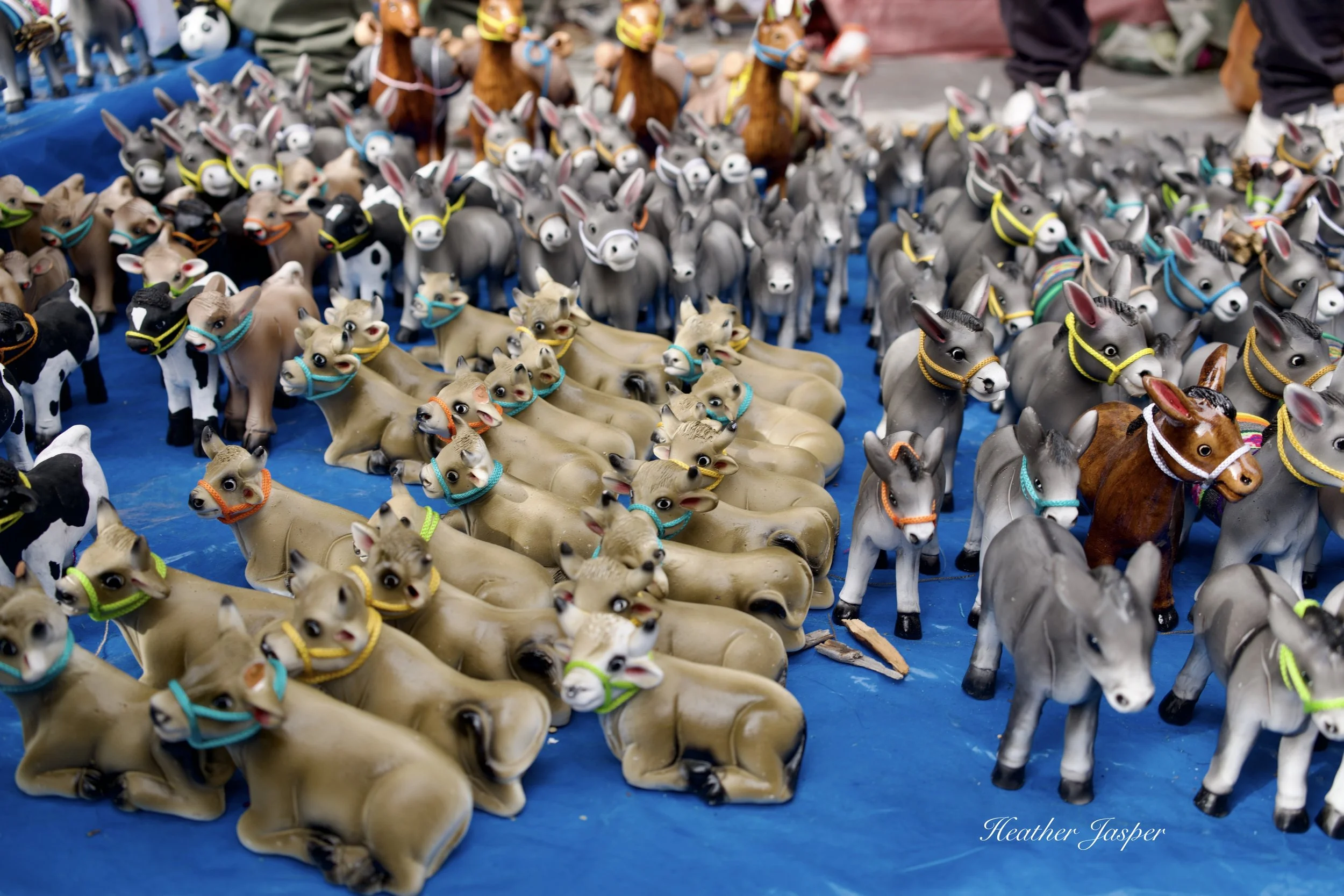
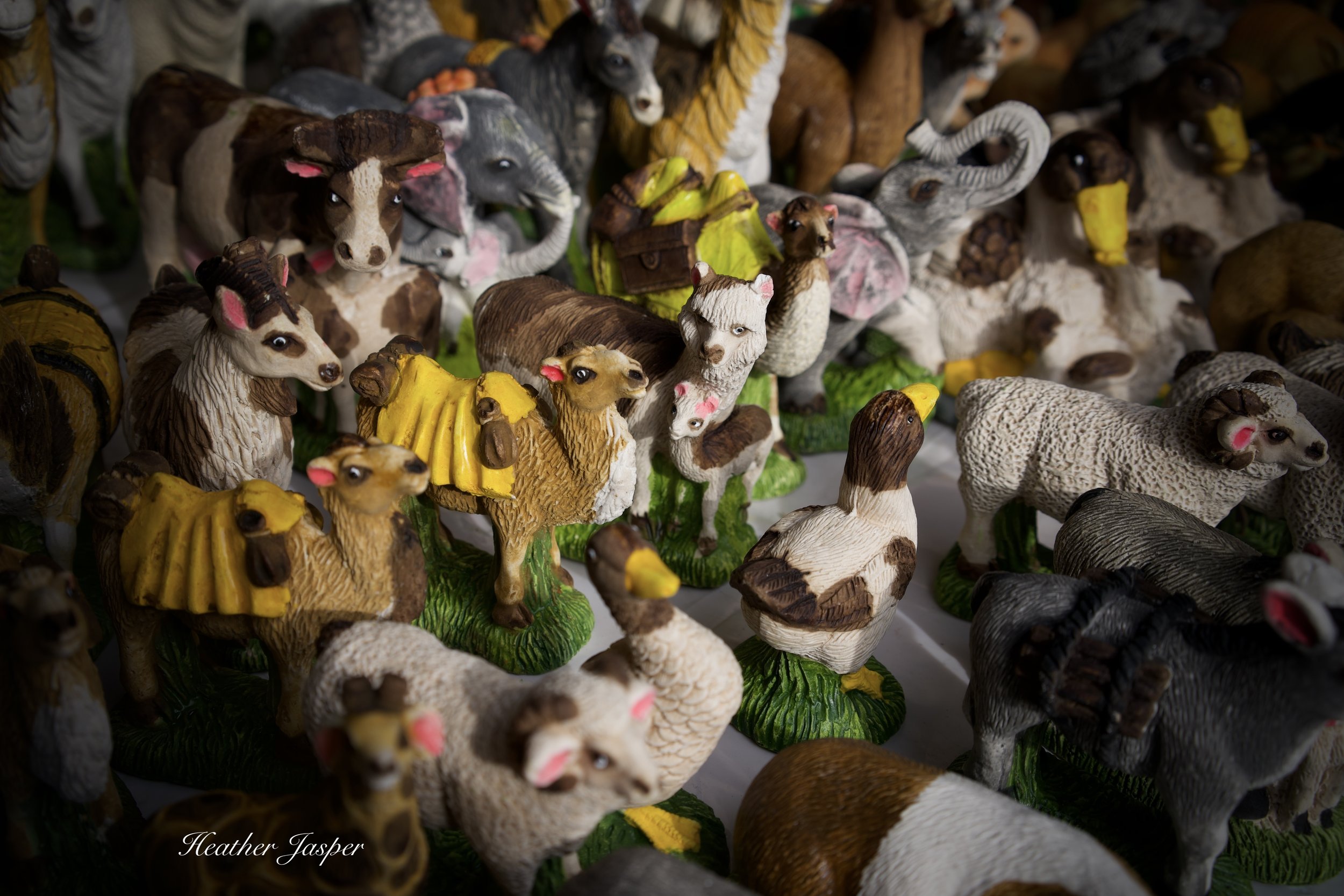
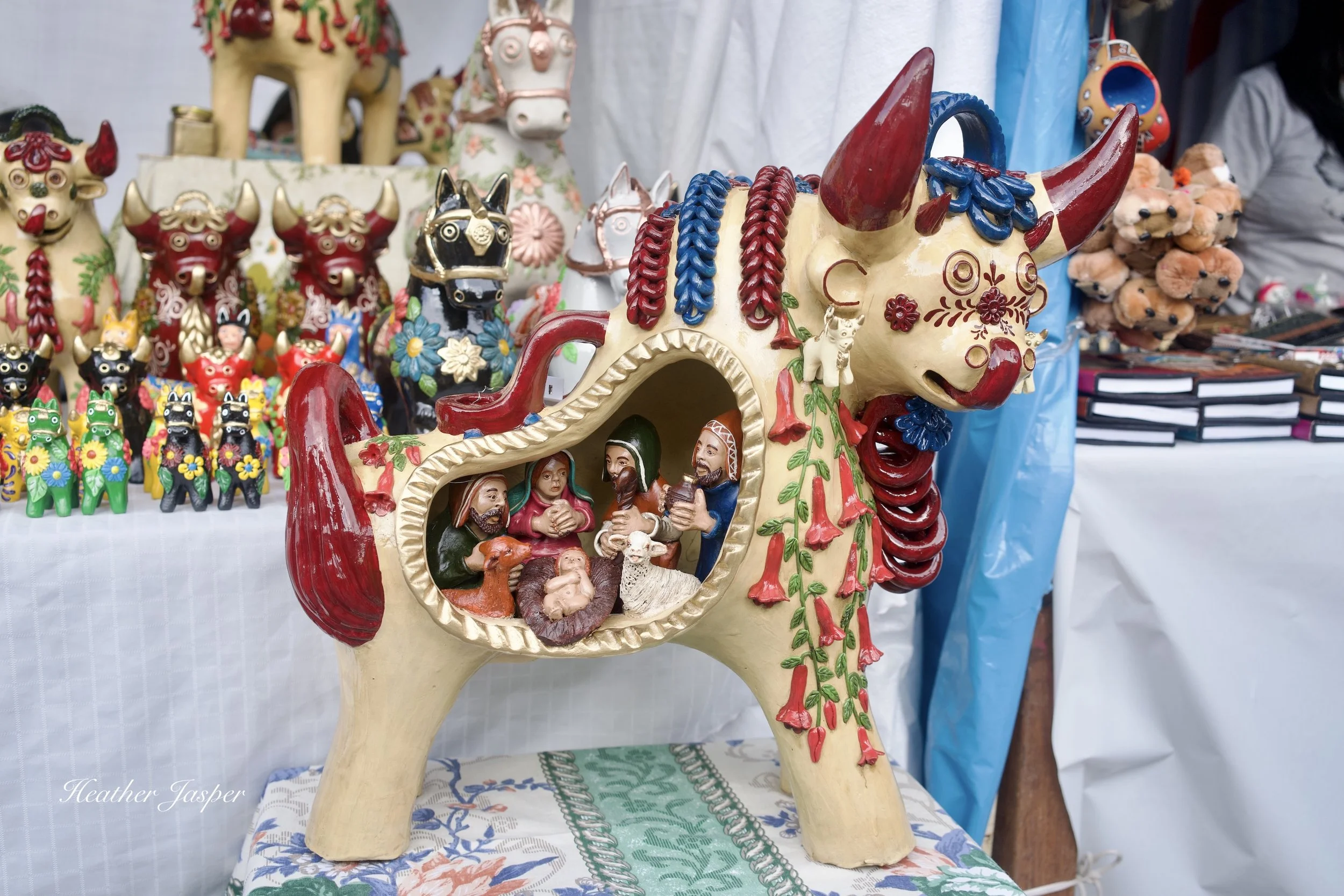
What every nativity scene needs and maybe doesn’t need.
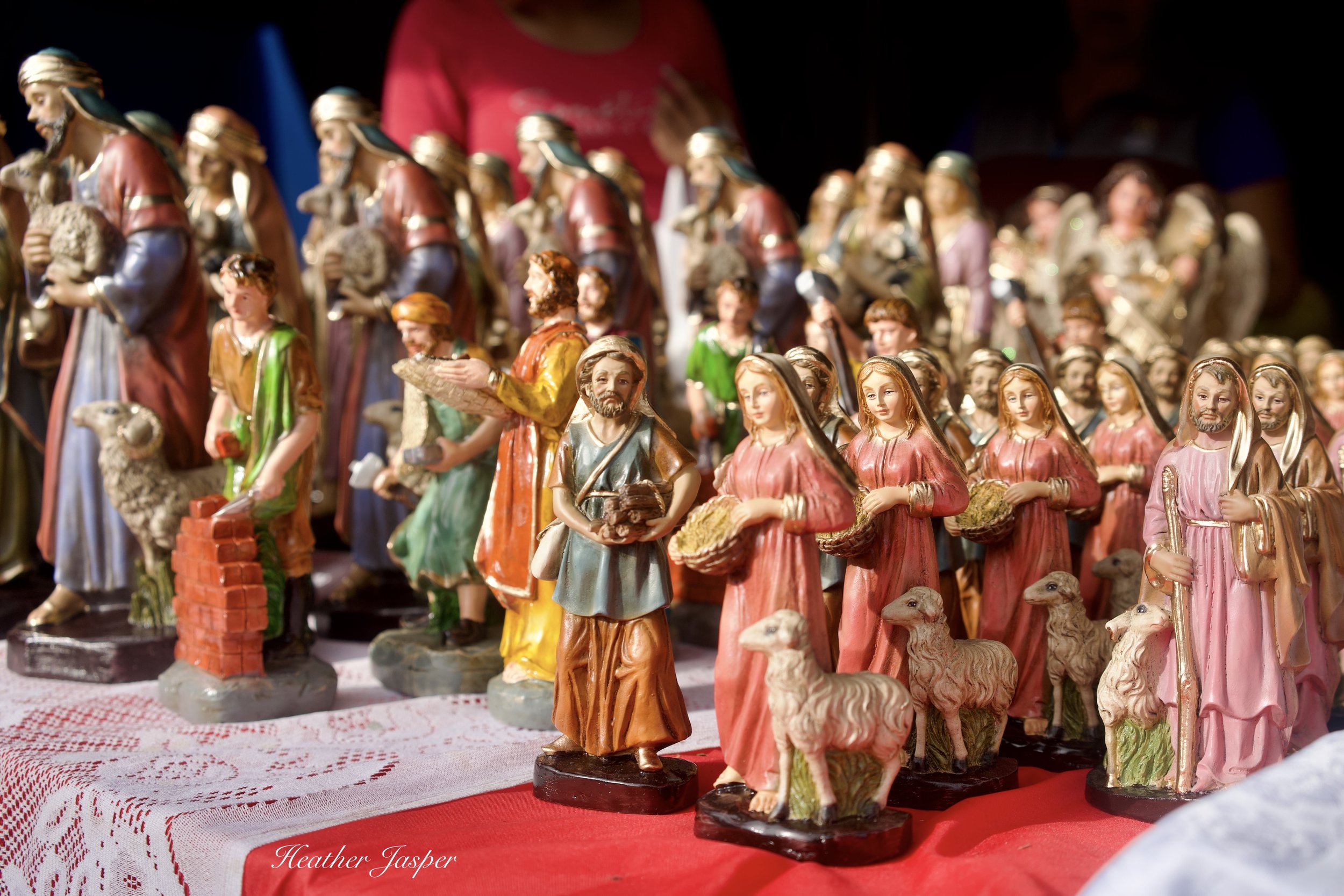
The center of any nativity scene, the statue of baby Jesus, is always surrounded by Mary and Joseph, and some barnyard animals, at least a donkey but usually also a lamb and cow. The three kings are often included, either presenting their gifts or on the scene’s periphery, symbolically following the star to Bethlehem.
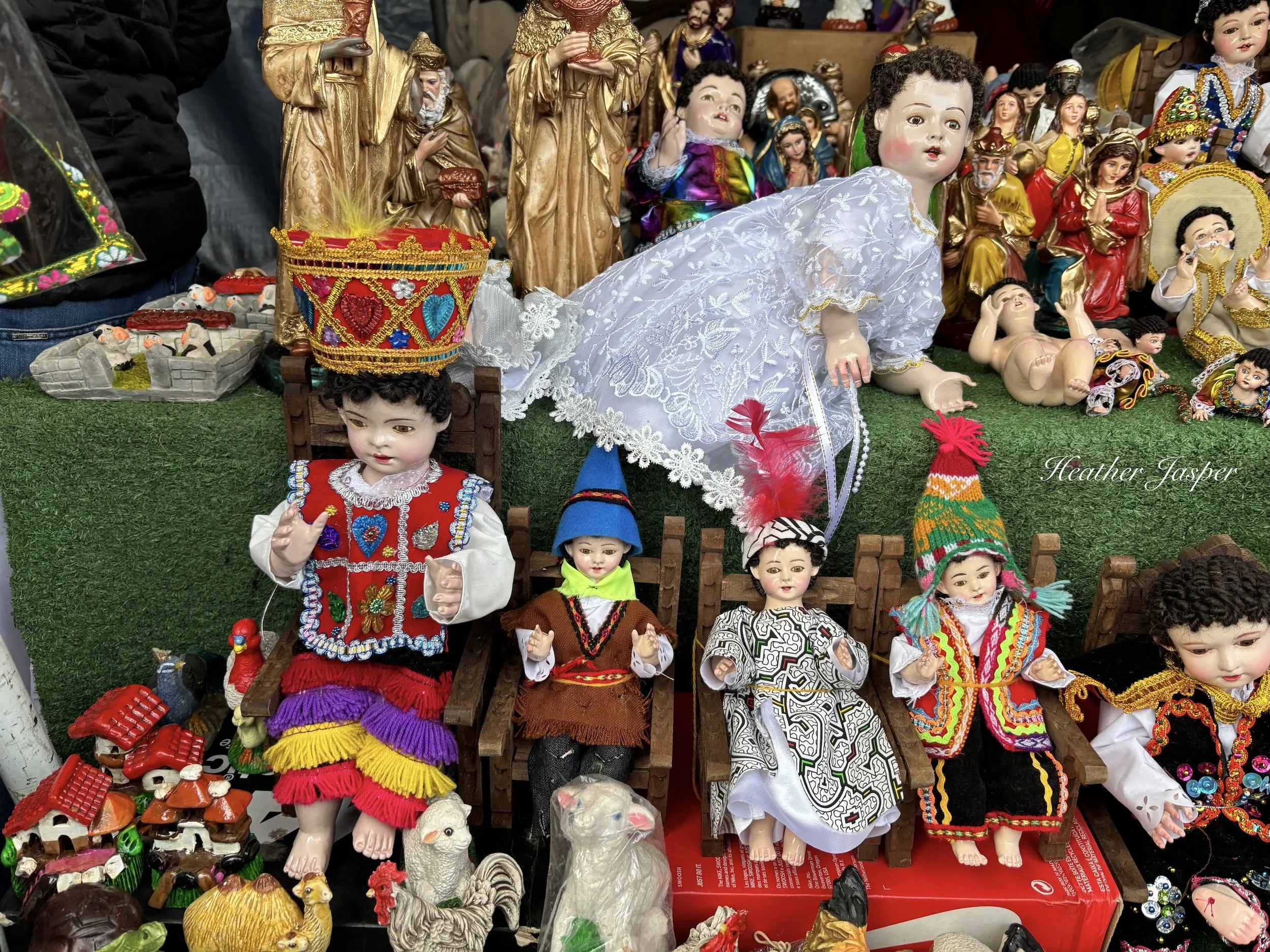
Nativity scenes in Cusco also have that as their base, but the extras that get added on every year can be as exotic as pandas and elephants or as South American as sloths and guinea pigs. I saw all that, and much, much more, at Santurantikuy this year.
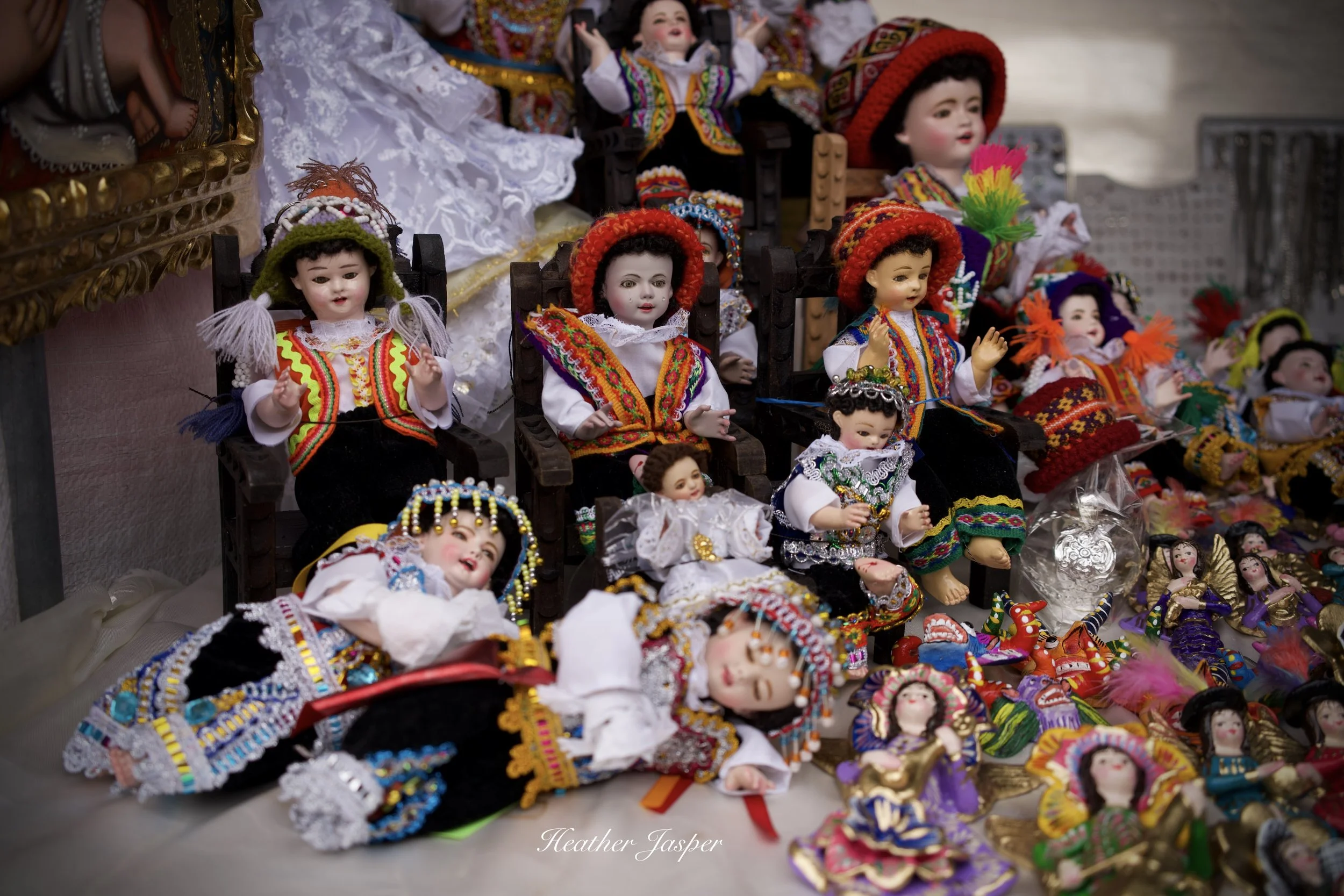
El Niño Manuelito
The baby Jesus figurines in Cusco are deeply symbolic and passed down from generation to generation. Some of the oldest, and most prized, were sculpted with rice flour. More commonly, they’re made with a local plaster called yeso, made from baking the region’s prolific gypsum in a kiln at high temperature. The most traditional have the mouth slightly open and a tiny mirror inside, like saints in Peruvian churches. Some also have dots of red paint on their palms and feet to show where Jesus will be crucified. They’re very fragile and guarded carefully, but every year they inevitably need repairs for chipped noses or broken fingers.
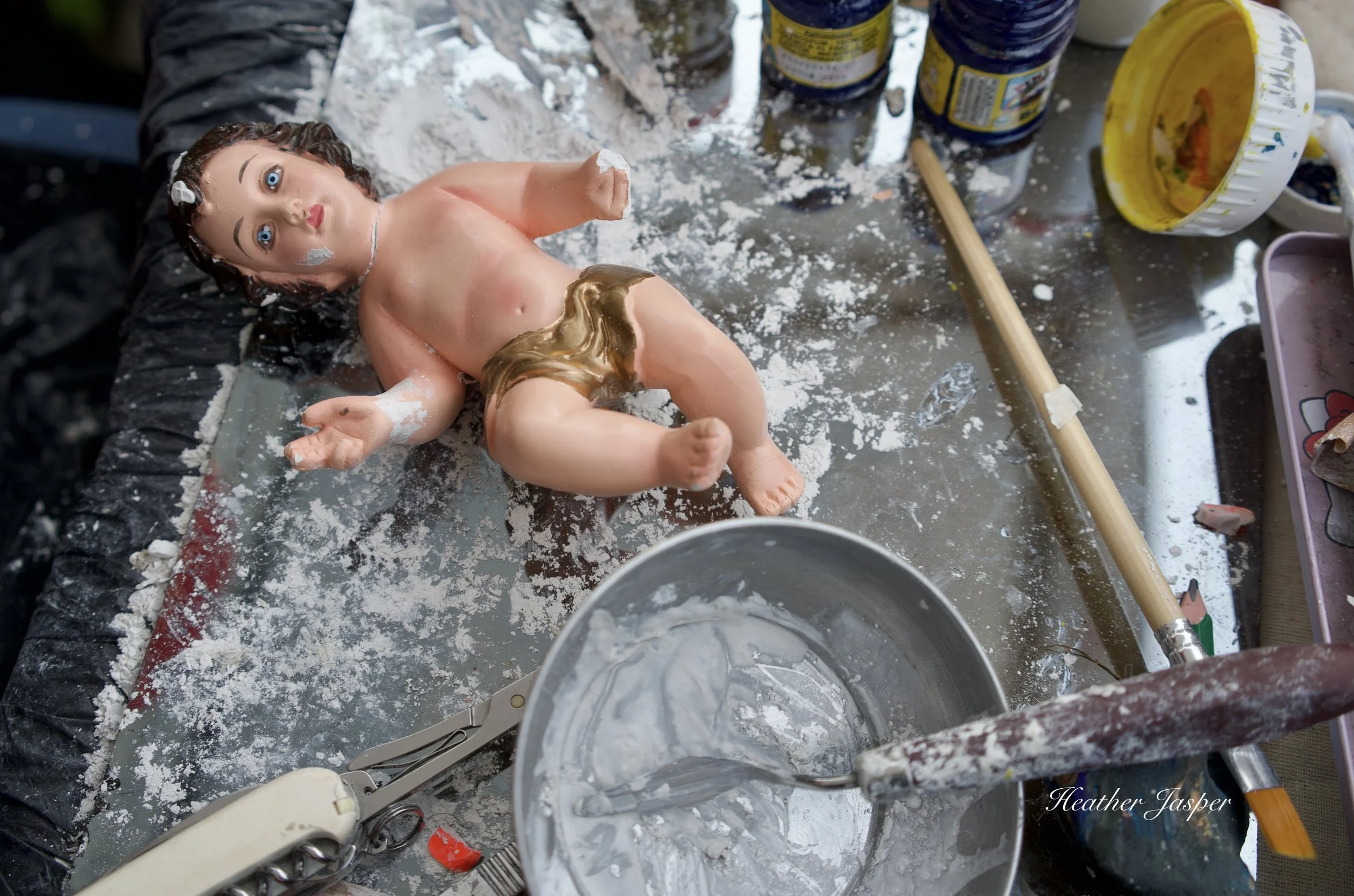
This poor Niño Manuelito needed his head glued back on and new fingers on his left hand.
El Niño Manuelito’s escapades
Long before the invention of Elf on a Shelf, the Niño Manuelito moved around the house at night, keeping track of who is naughty and nice, but also being a bit mischievous himself. So, it’s not just people failing to take good enough care of their Niño Manuelito that necessitates repairs, it can be the Niño’s fault, too.
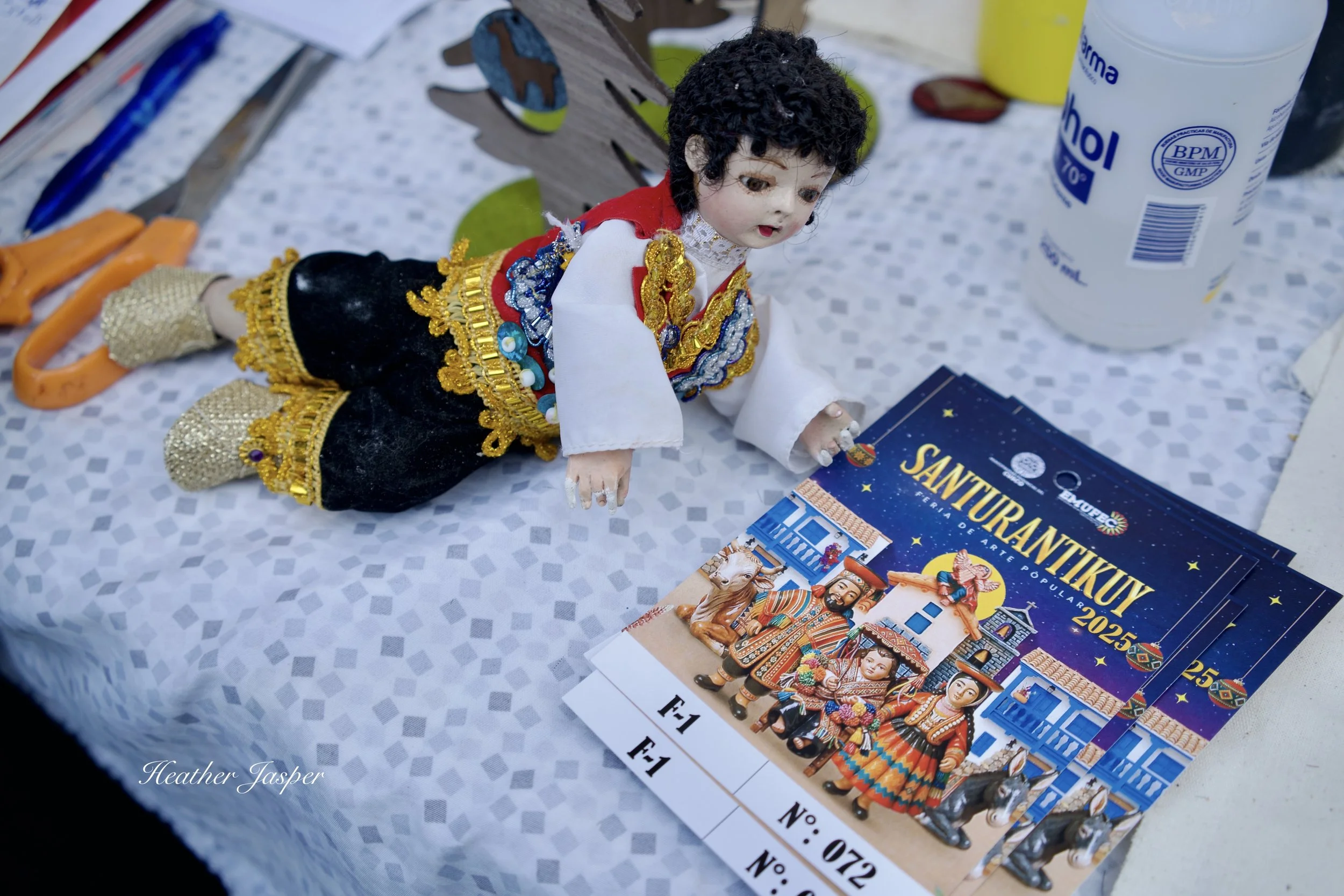
This Niño Manuelito needed several new fingers, which need to dry before they can be painted.
Repairing El Niño Manuelito
For hundreds of years, Cusqueñians have gone to plazas around the city, but especially to Santurantikuy in the Plaza de Armas, to find people to repair their precious little Niño Manuelito. It takes skills to use fresh plaster just right to either paste back on broken digits or limbs, or make new ones. It’s certainly an art to mix paint just right to match each baby’s skin color and hide the repair.
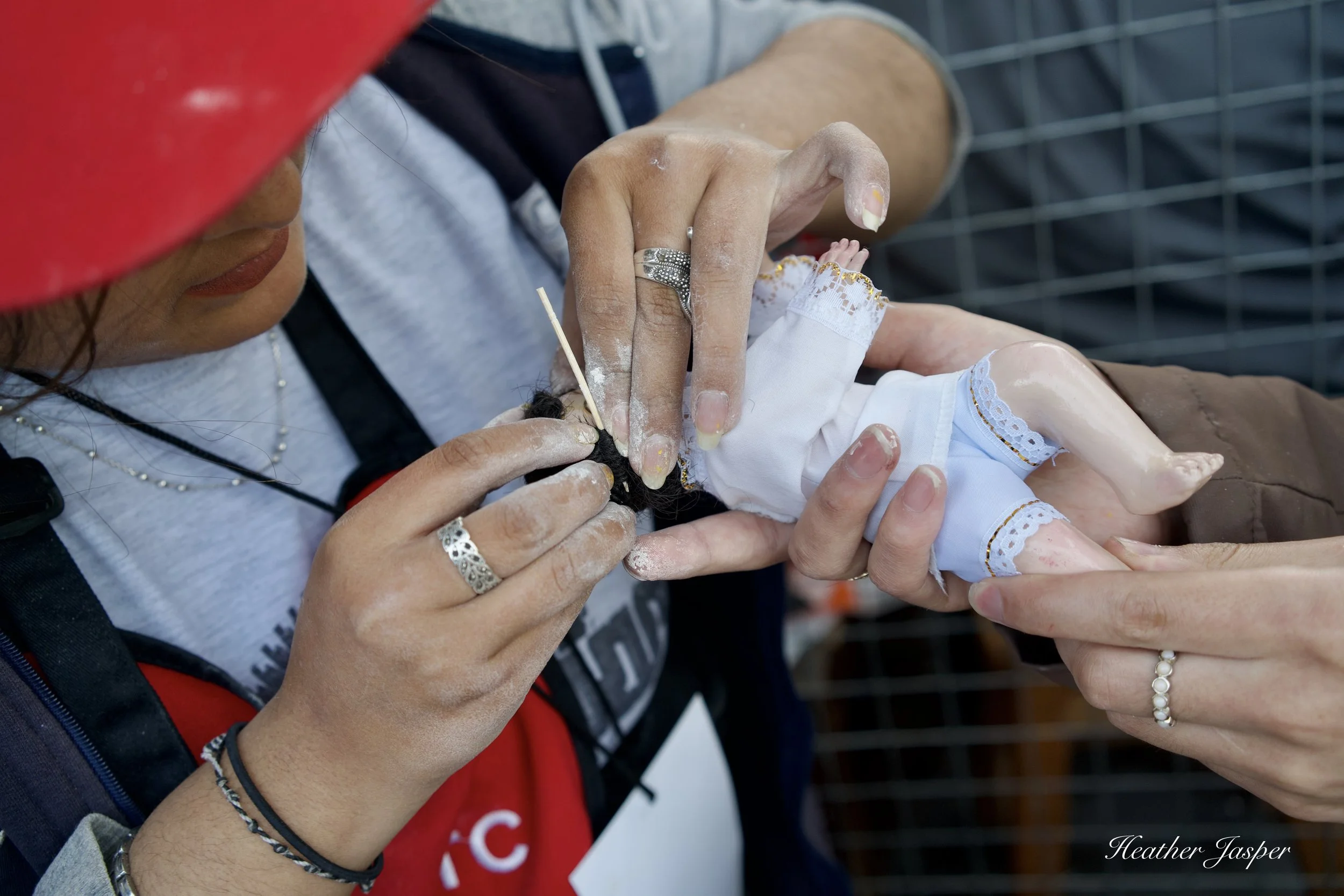
These two artists are holding the niño until his new curls are properly set and they can take out the toothpick.
El Niño Manuelito’s hair
Most heirloom niños have real human hair, curled into tight spirals and glued on carefully. Repairing detached curls or adding new ones is a careful process that often needs three or four hands. Few people are talented enough to do all the repairs a niño needs without a second set of hands. The hair must be twisted just right, then wrapped around a toothpick. A fine layer of silicone or other natural kind of glue is applied to the head and then the row of curls is pressed into it, taking the toothpick out carefully after the glue has set. Some modern niños have hair painted on, though the oldest ones, passed down for hundreds of years, inevitably have real hair, always a dark brown, since the only practical source is somebody in the family.
El Niño Manuelito’s outfits
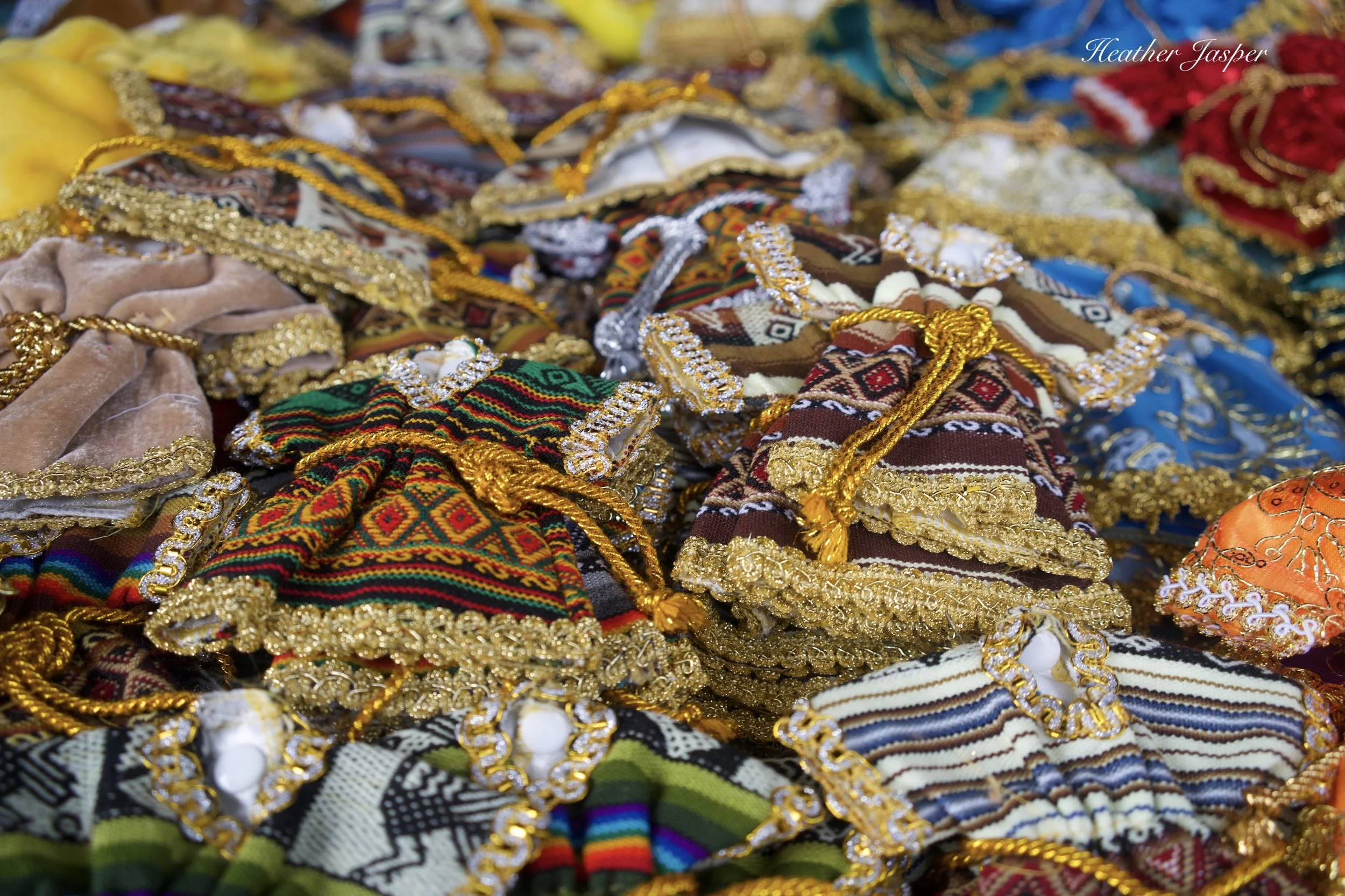
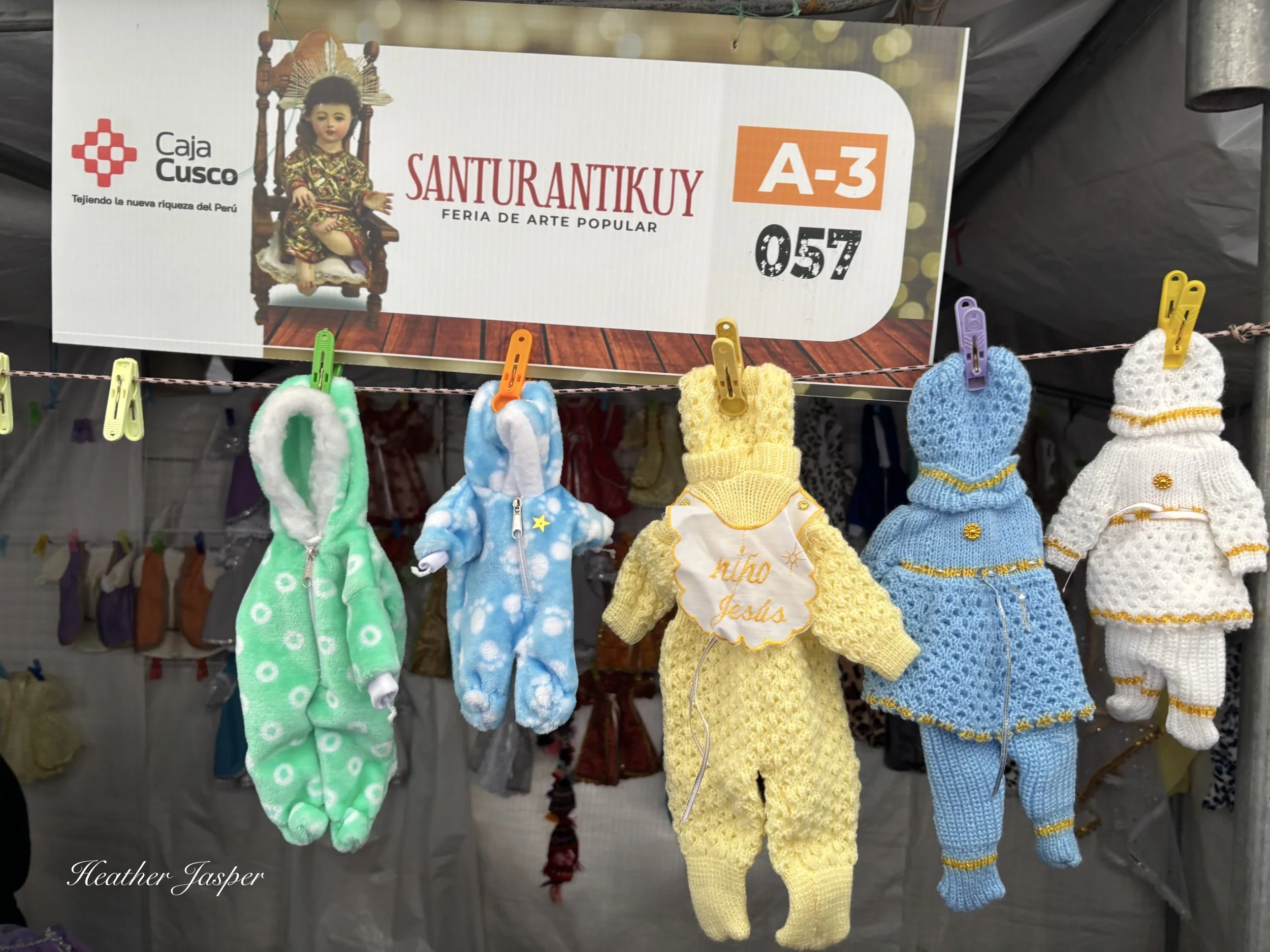
Every year, the niño needs a new outfit, either because the previous year’s outfit doesn’t seem like the right style anymore, or because he’s damaged it too much in his nightly escapades. Some families change the niño’s clothes, giving him a new outfit each day or new pajamas at night.
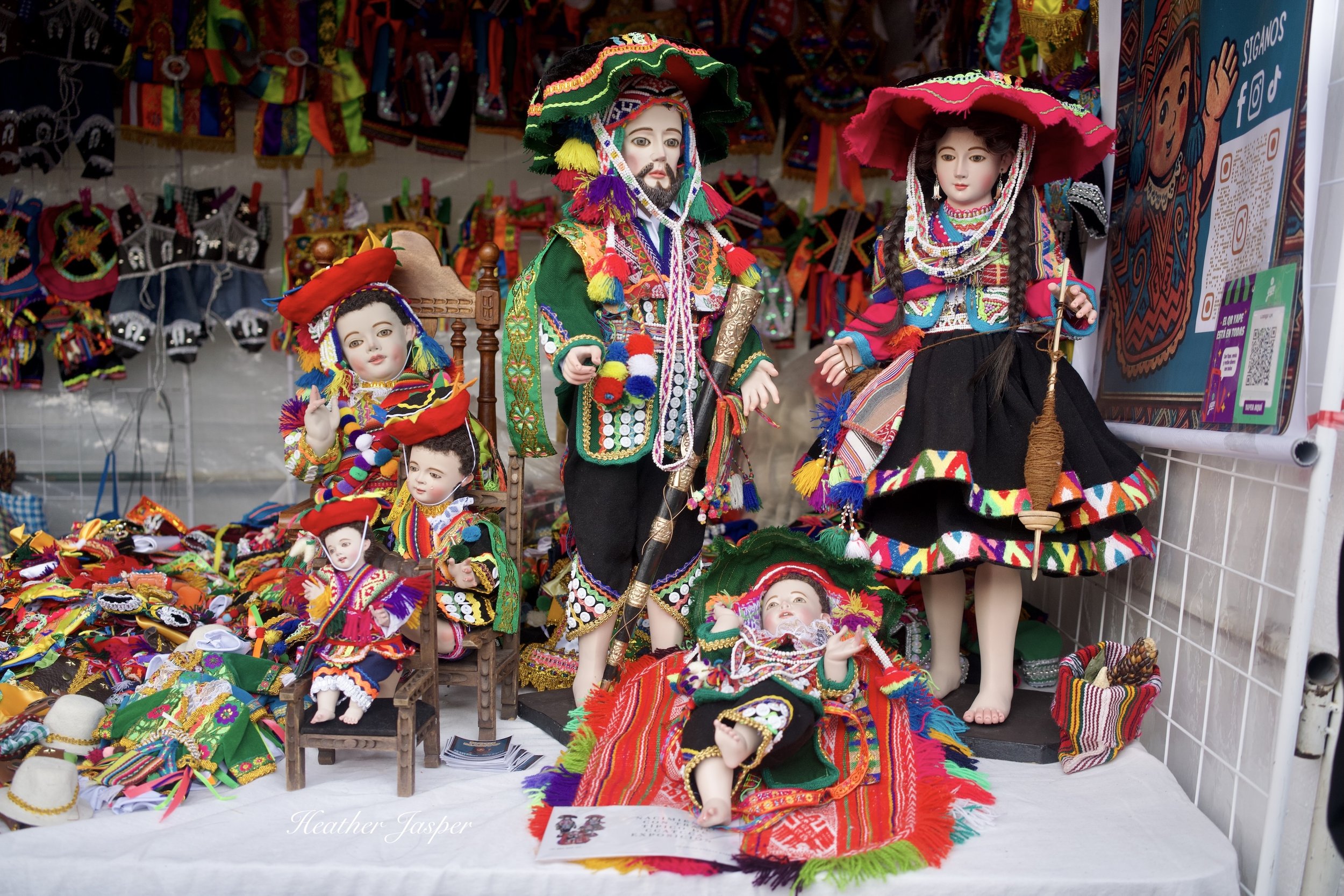
Santurantikuy has dozens of stalls selling outfits for El Niño Manuelito.
There are plenty of white outfits, trimmed in gold like an angel, and plenty traditional Andean outfits of brightly colored ponchos and chullu hats with tassels hanging below the ear flaps.
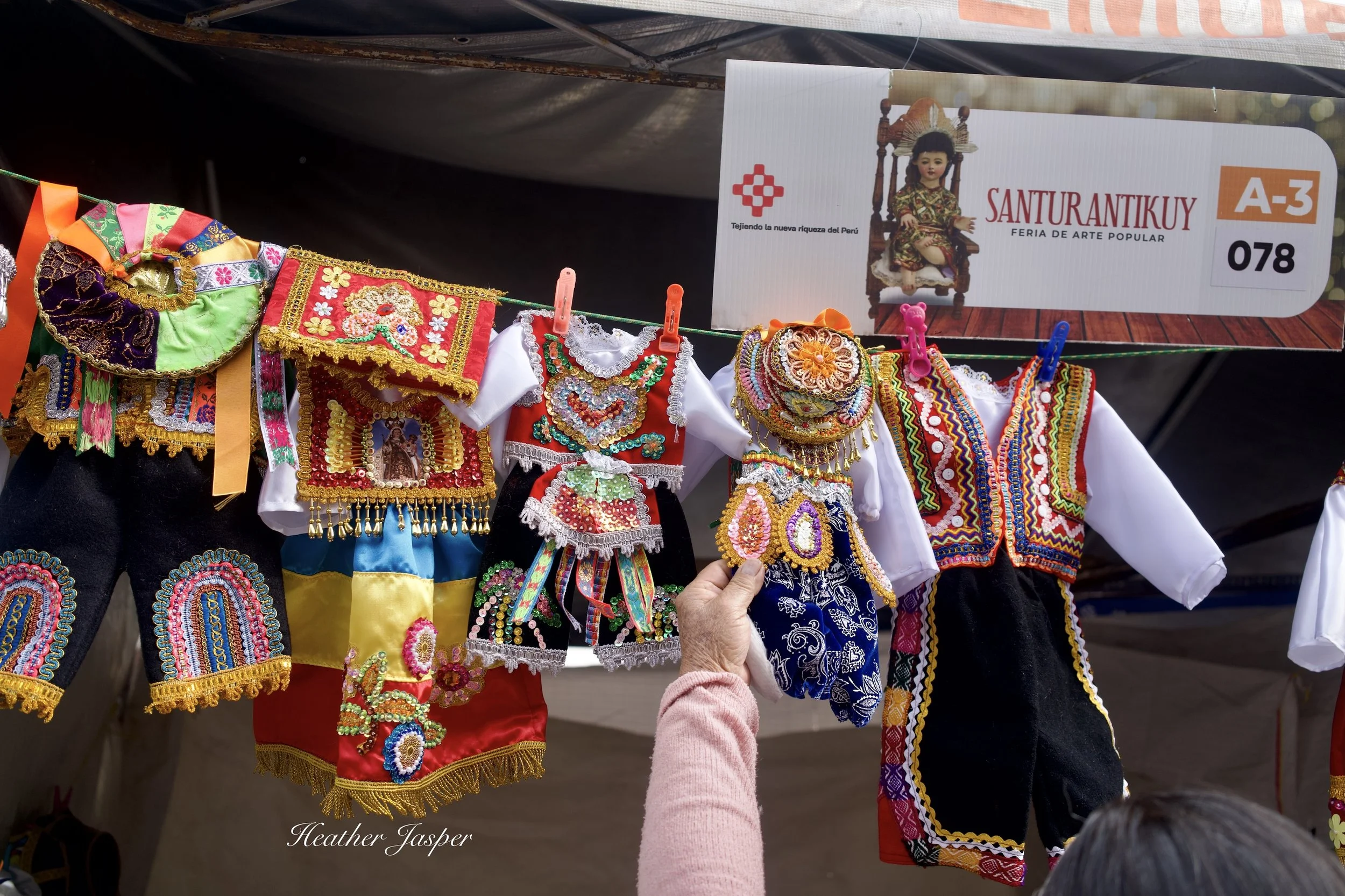
Outfits from Cusco’s traditional dances.
The Cusco region is fabulously rich in folklore and traditional dances, each with its own elaborate costume, many of which are represented among the 19 dances at Paucartambo’s Festividad de la Virgen del Carmen. Read about my experience with Paucartambo’s 19 dances in 2025, 2024 and 2023.
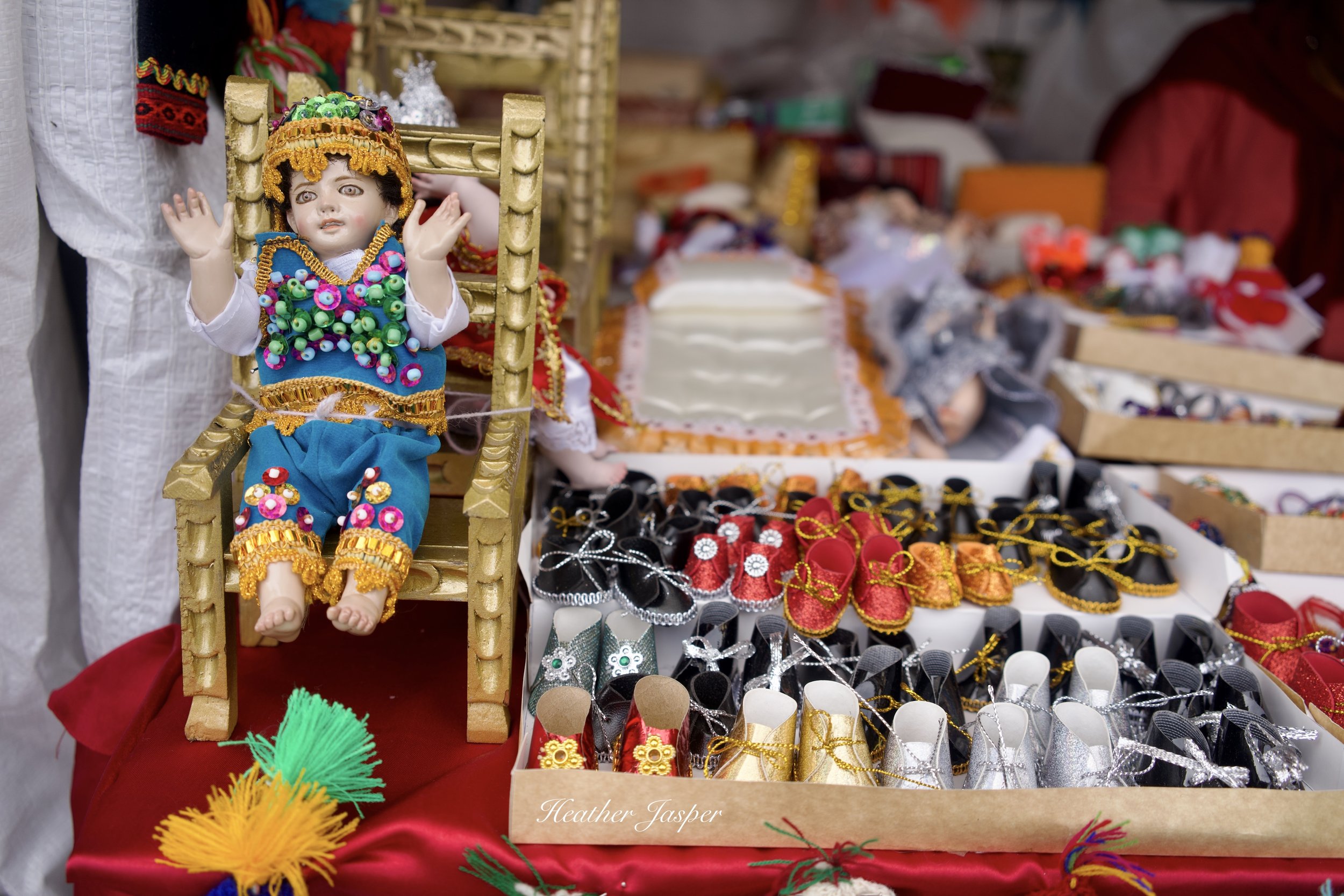
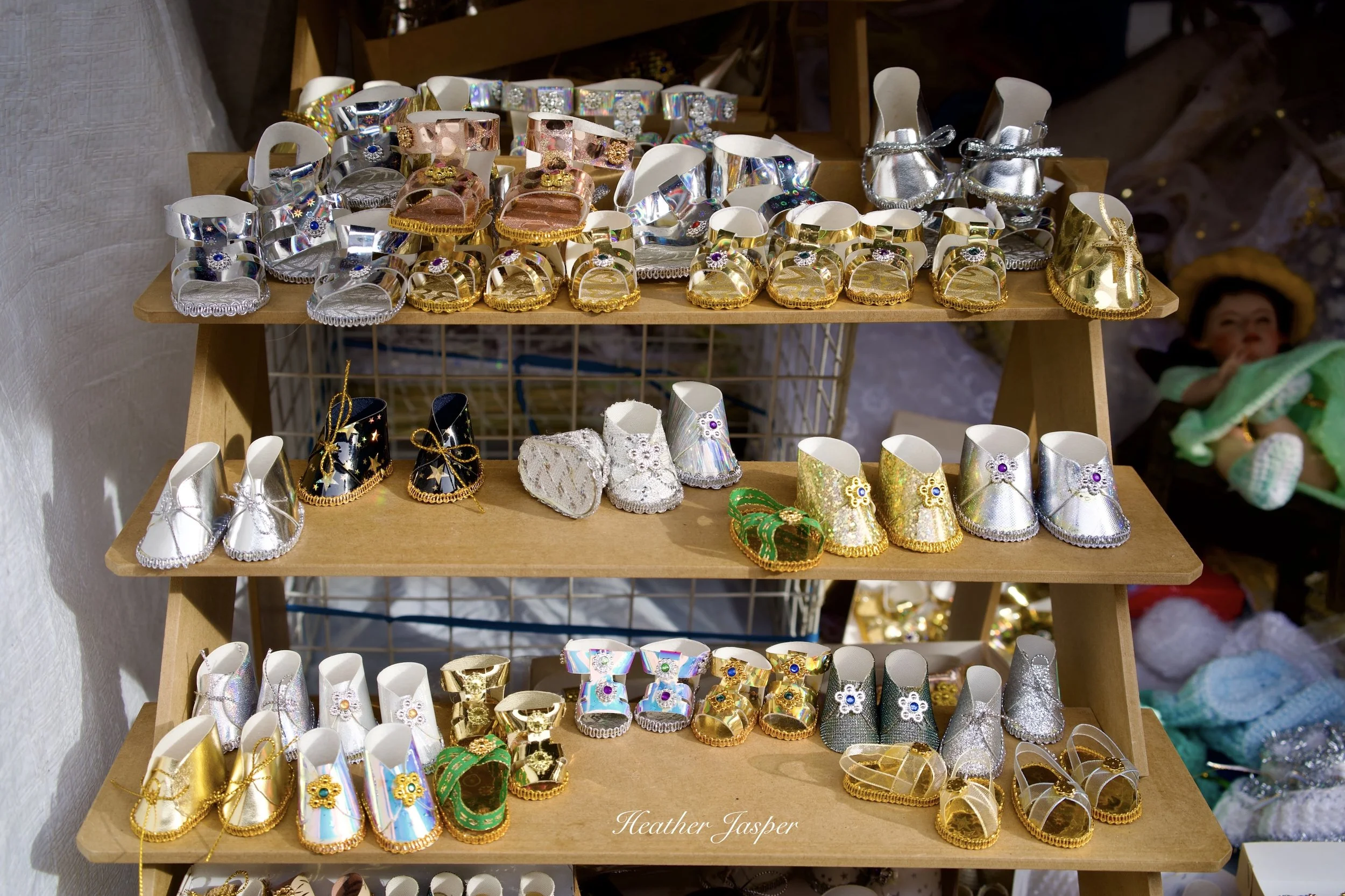
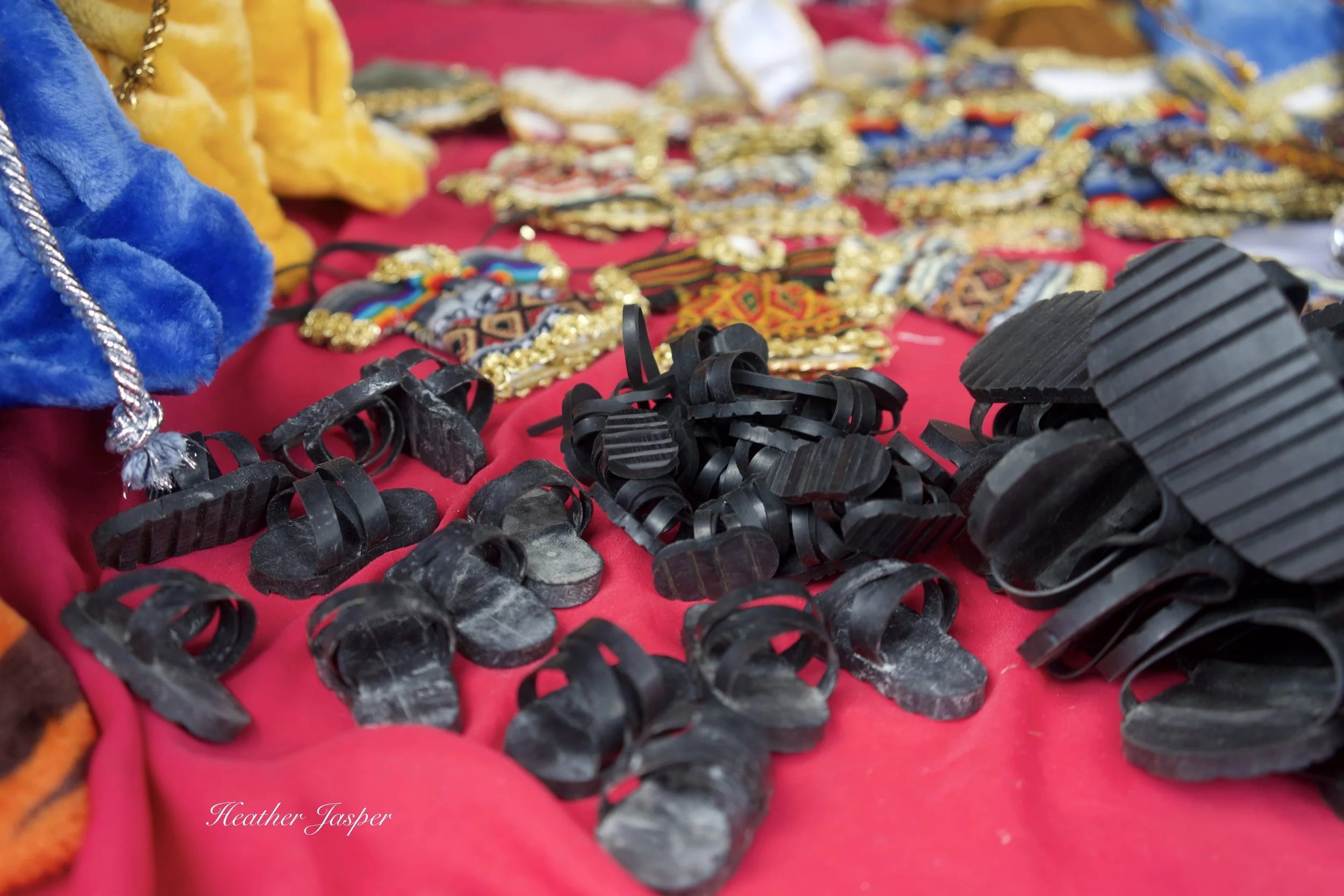
El Niño Manuelito needs shoes.
Along with a new outfit, the niño often needs new shoes and Santurantikuy has more stalls selling shoes than most malls have shoe stores. They come in sizes, just like regular shoes, though the smallest ones, size 1, barely fit on your finger tip.
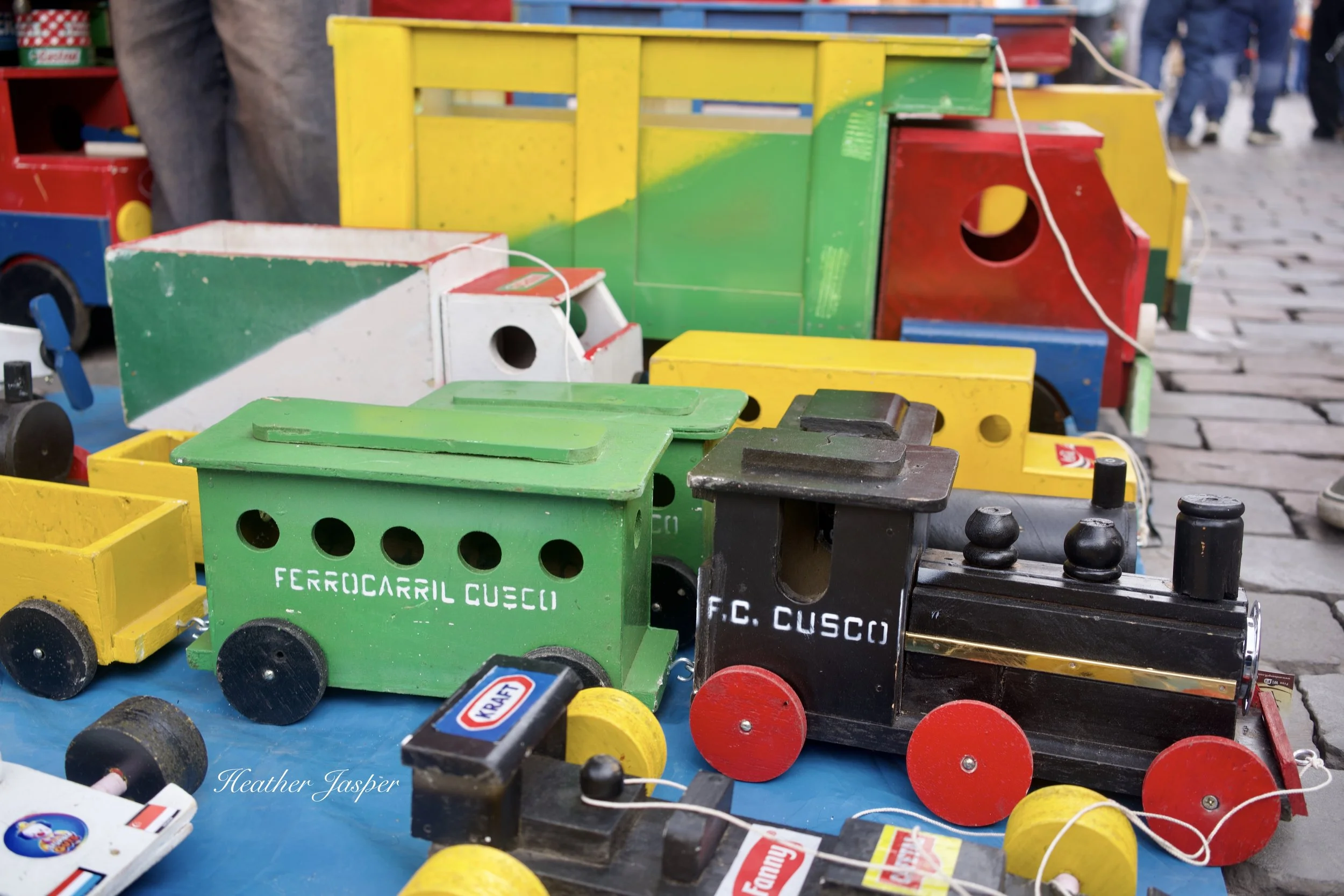
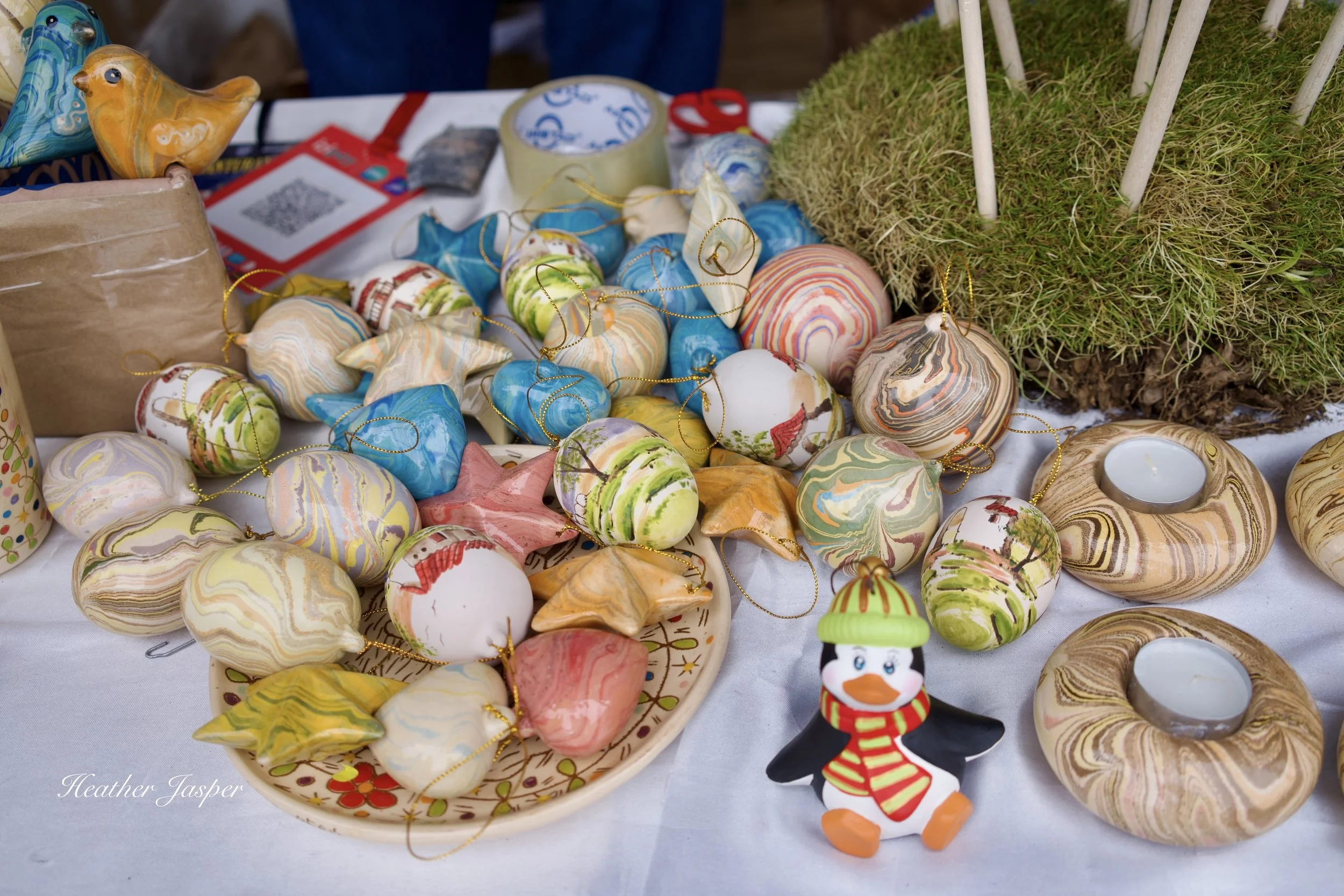
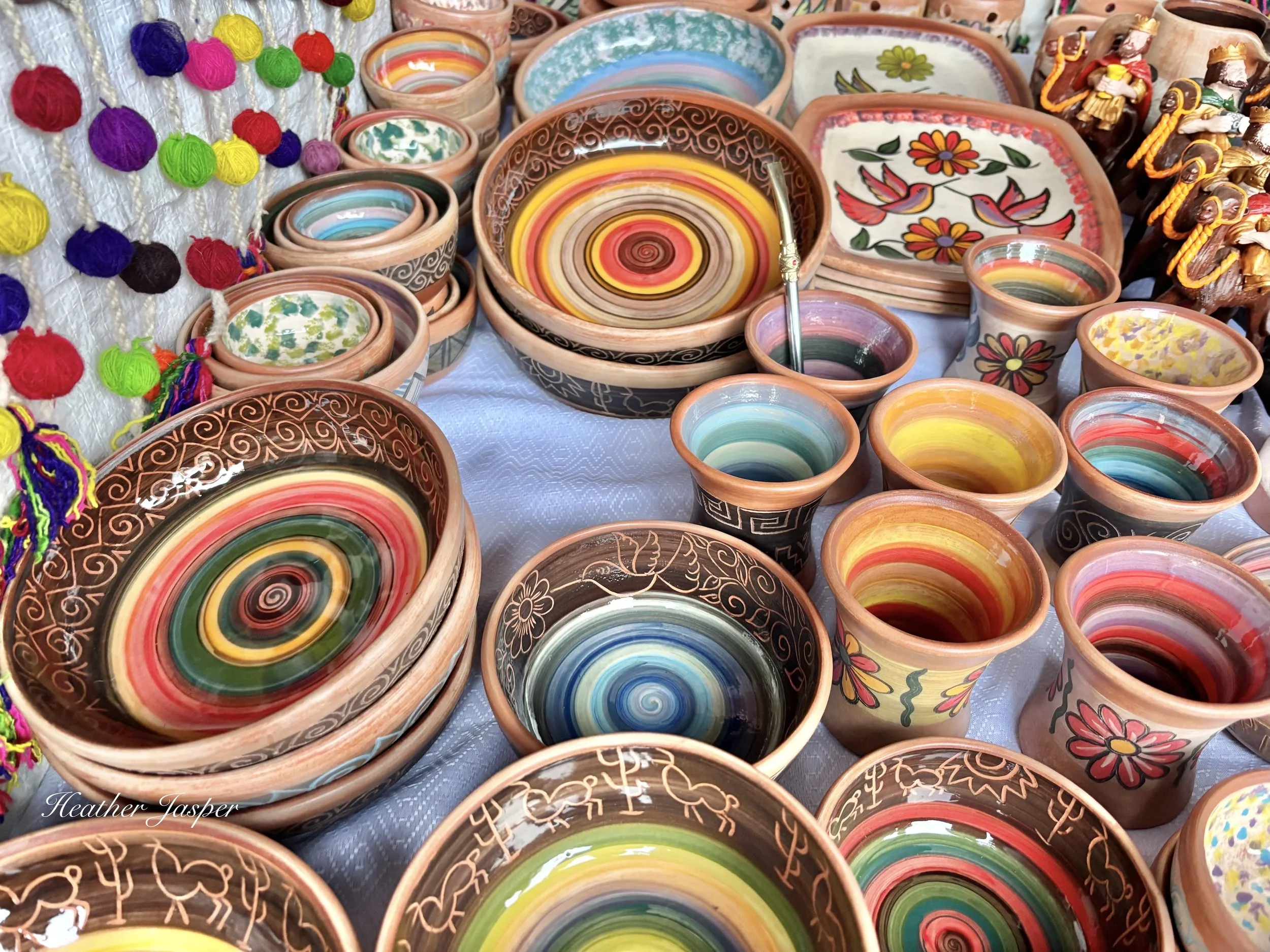
Gifts at Santurantikuy
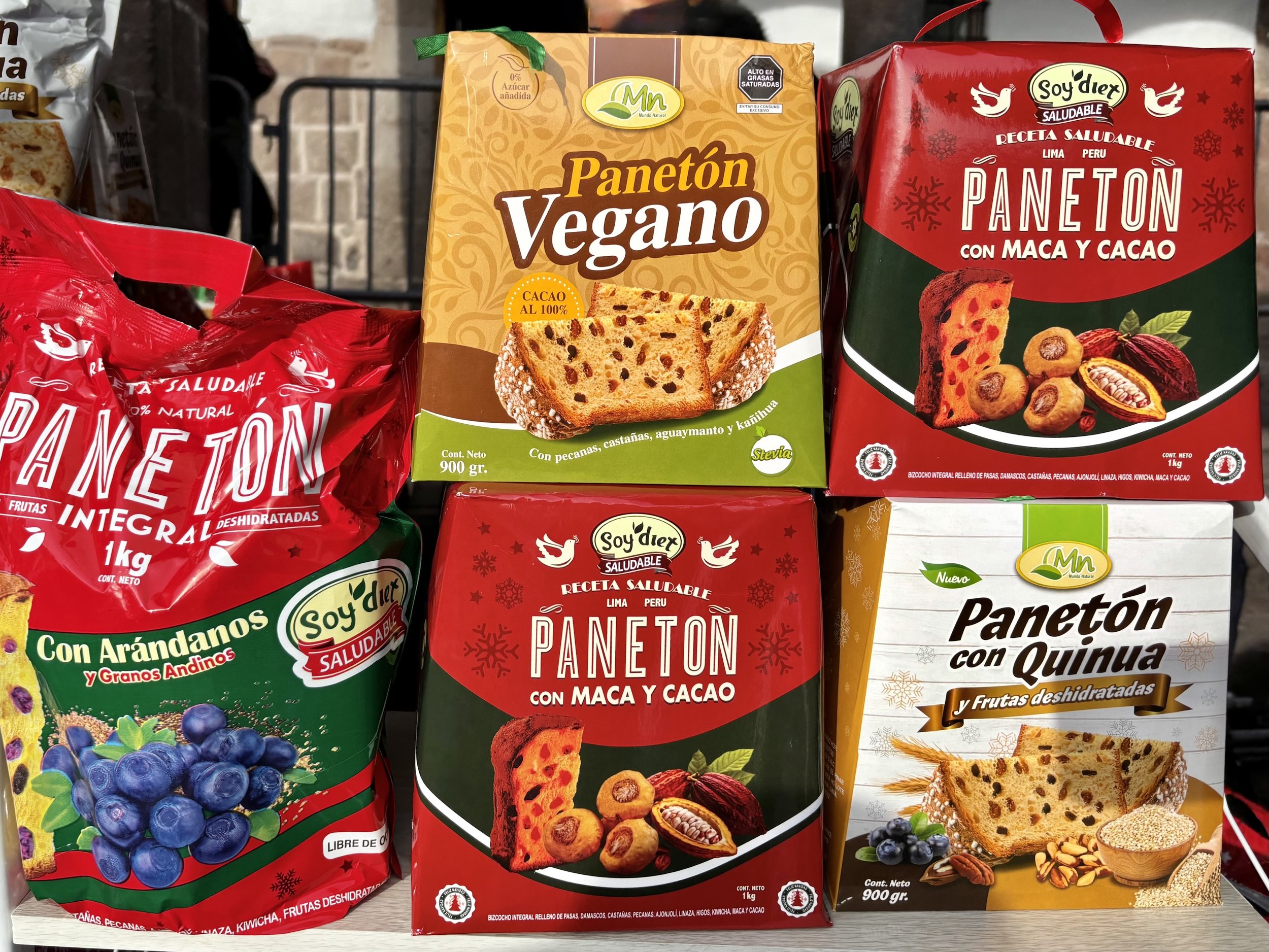
If you’ll be in Cusco the week before Christmas, you can do all your gift shopping at Santurantikuy. There is plenty of modern art, clothes, toys for kids, jewelry and home decorations. Most is from the Cusco region, but I saw some clothes and retablos that were clearly from Ayacucho. Read my blog about Ayacucho and retablos here.
Tips for Santurantikuy
Go early. Earlier in the day it’s less crowded and you have more to choose from since all the vendors have gone home to replenish their stock overnight. By late in the afternoon some have sold out and the crowds can make it hard to move at more than a snail’s pace.
Bring cash. Very few people are able to take credit cards but if you have a Peruvian bank account you can use Yape or Plin (like Venmo). If you can, bring small bills since not everybody has enough small stuff on hand to make change for s/100.
Bring water. There are plenty of people selling snacks, mostly either very sweet or very salty. Restaurants are open until the afternoon of the 24th so you can easily get a meal nearby.
Watch your stuff. I didn’t hear anybody accusing someone in the crowd of pickpocketing, but there was probably a thief there somewhere good enough to go unnoticed. I kept my phone and wallet zipped into an inner pocket of my purse and had both hands on my camera at all times.