How to decolonize tourism?
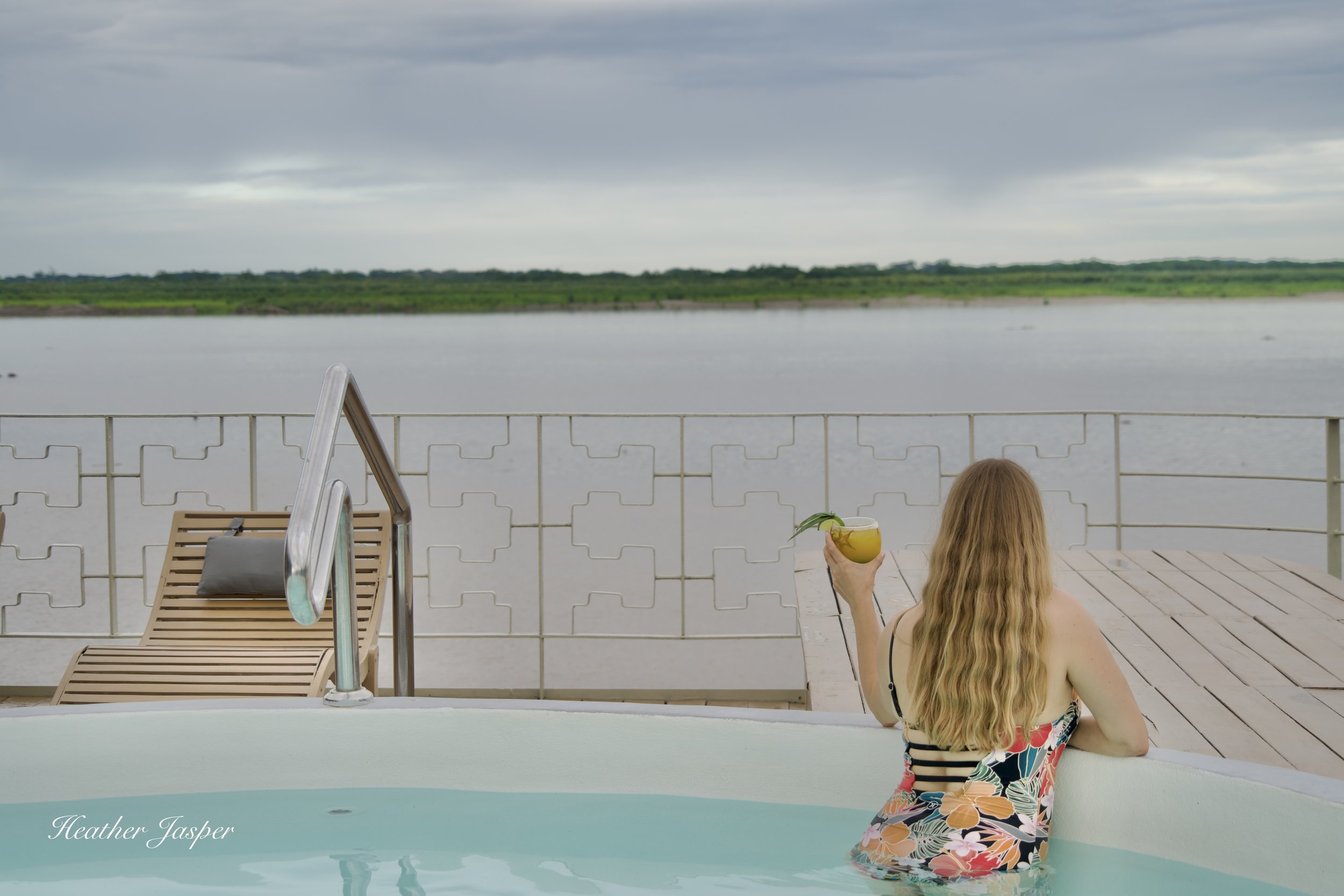
This cruise on the Amazon River was the most overtly colonial experience I’ve had in Peru. The company is highly sustainable environmentally and financially supports local communities, but two years later I am still troubled by the experience.
Tourism buzz words have come a long way.
It wasn’t that long ago we started talking about eco-tourism, then sustainable tourism, then regenerative tourism and we have finally graduated to the discussion of decolonizing tourism. Congratulations! We’ve come a long way in how we think about making tourism better for everybody involved, including the planet.
First, I have to thank Emma.
Most things I know about decolonizing tourism, I first saw on Emma’s IG That_Travel. Follow her!
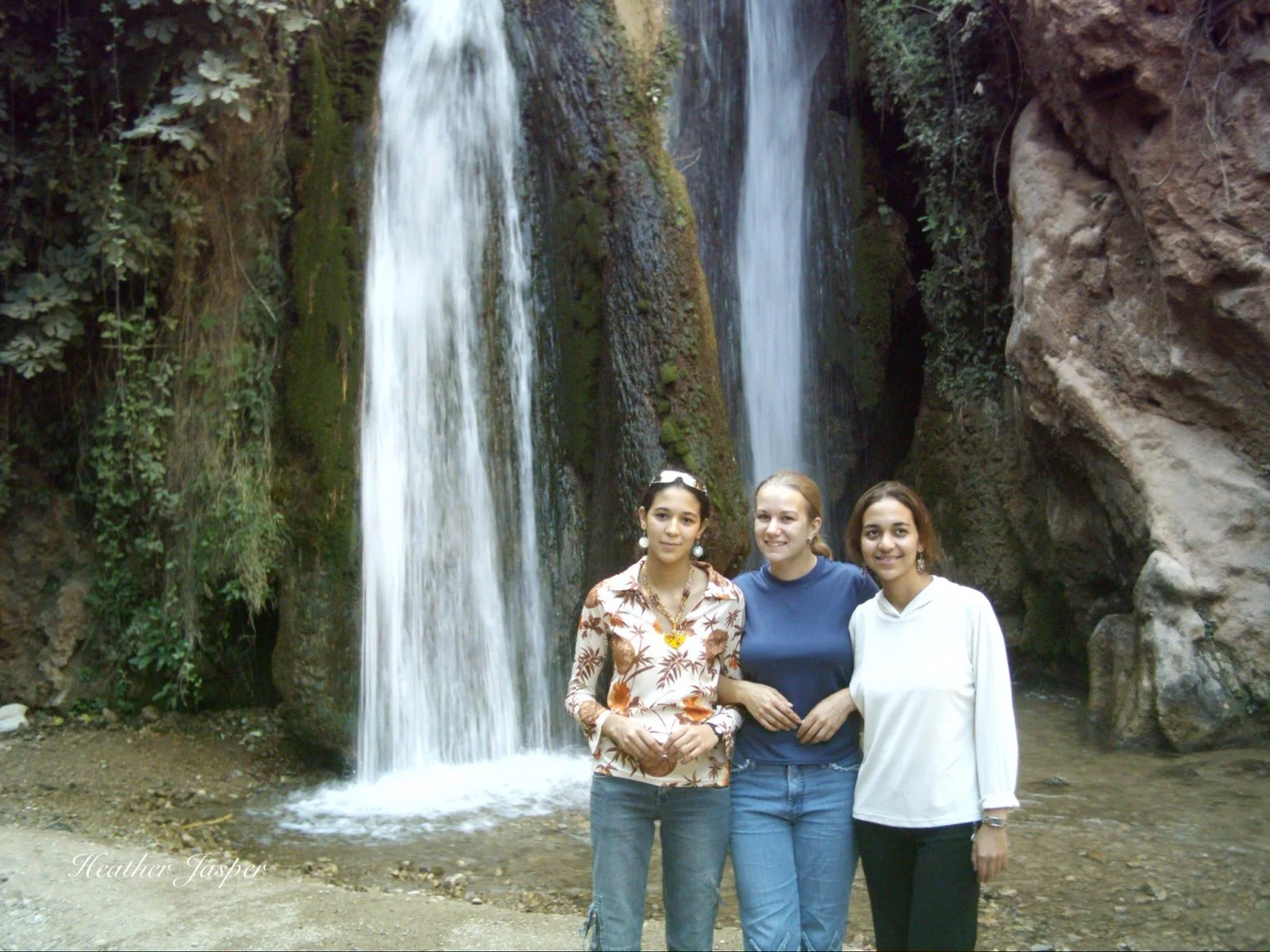
This photo of me in Morocco in 2005 with Asmae and Aicha, my host family sisters, reminds me how much I didn’t know then.
Second, here’s where I’m coming from.
I have traveled a lot, but I’ve also lived in several countries and most of my opinions come from the countries that I lived in long enough to know deeply. I was in Peace Corps Morocco 2005-2007. I lived in Istanbul 2011-2012 and in Bangladesh 2013-2014. I have now lived in Peru since 2019. I don’t usually base my opinions on countries I visited for a few days or even a few weeks, because there’s so much context that is unknowable as a tourist. It takes a lot of time listening to locals and learning about their lives before I think I understand a place well enough to have opinions worth sharing.
Third, I think a lot about tourism.
I spend a lot of time every day thinking and writing about tourism. I started blogging about my travels in 2005 in Cambodia and then started publishing articles about tourism in 2021 here in Peru. I mostly write about Peru, Chile and Argentina, but my perspective comes from every experience I’ve had as a tourist and solo female traveler since I first went to France alone in 1999. I almost always travel alone, so most of my writing is about solo travel.
Fourth, I’m still not the expert.
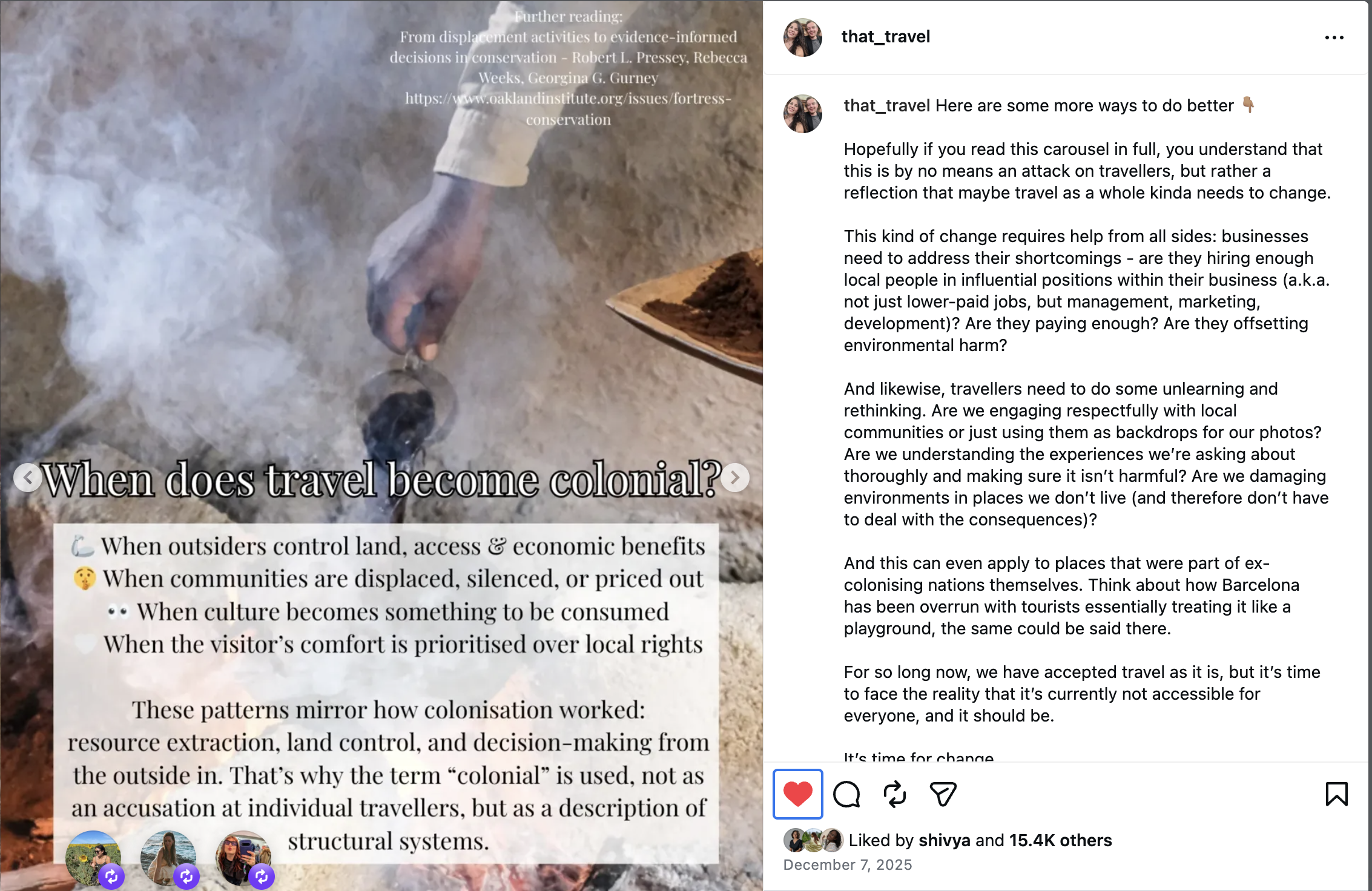
I have traveled a lot and written a lot about tourism but I’m not an expert in decolonizing tourism. There are some things that Emma says so well I won’t try to rephrase her. Screenshots taken with permission. Please read her every word.
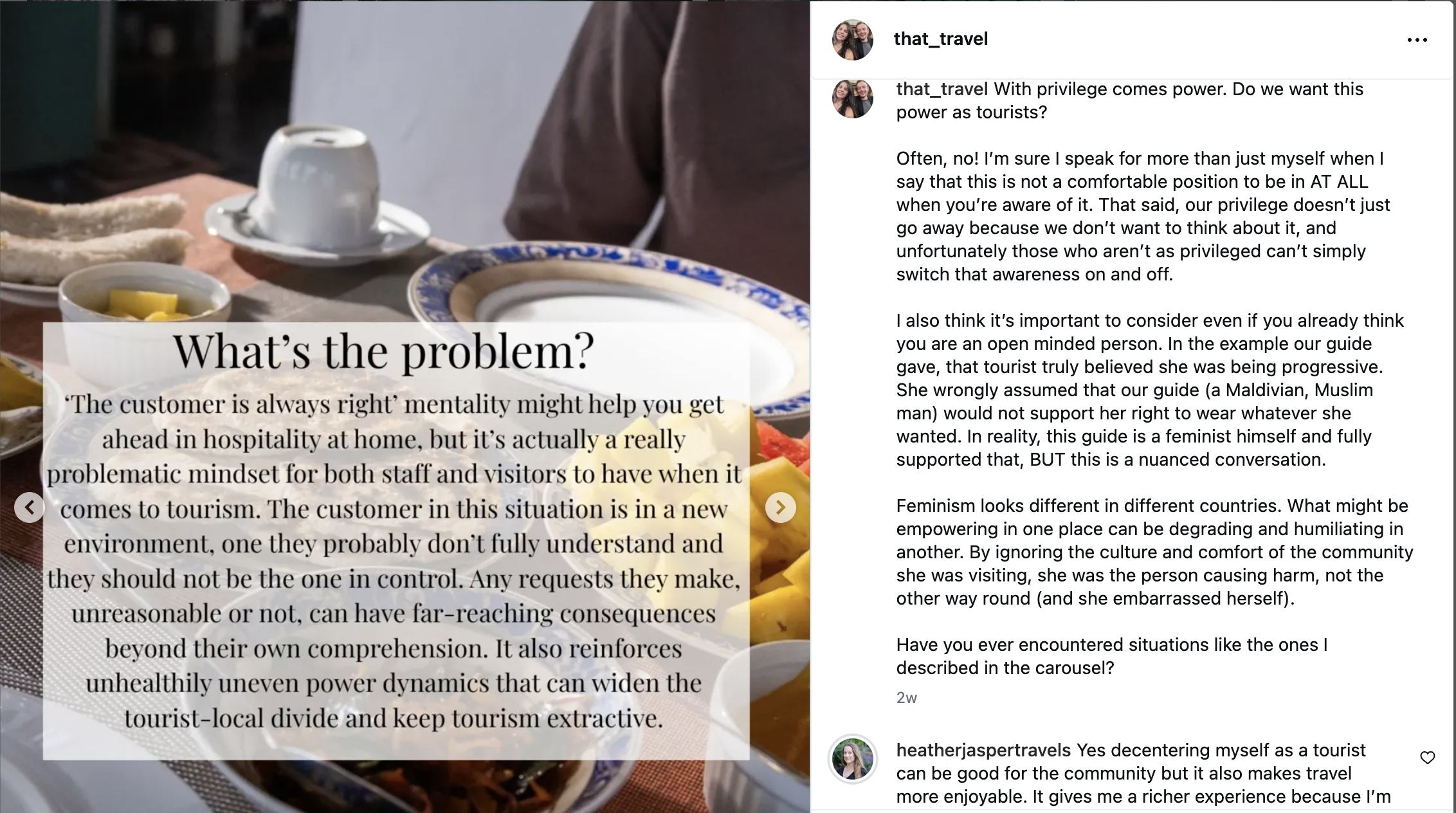
Colonial systems are extractive.
The whole purpose of a colony is to generate resources and money for the colonizer. If we can keep the money we spend in the community we visit, then we’re breaking that cycle. Hire local guides and tour companies. Stay at locally owned hotels and guesthouses. Eat at locally owned restaurants. Buy souvenirs from the people who make them.
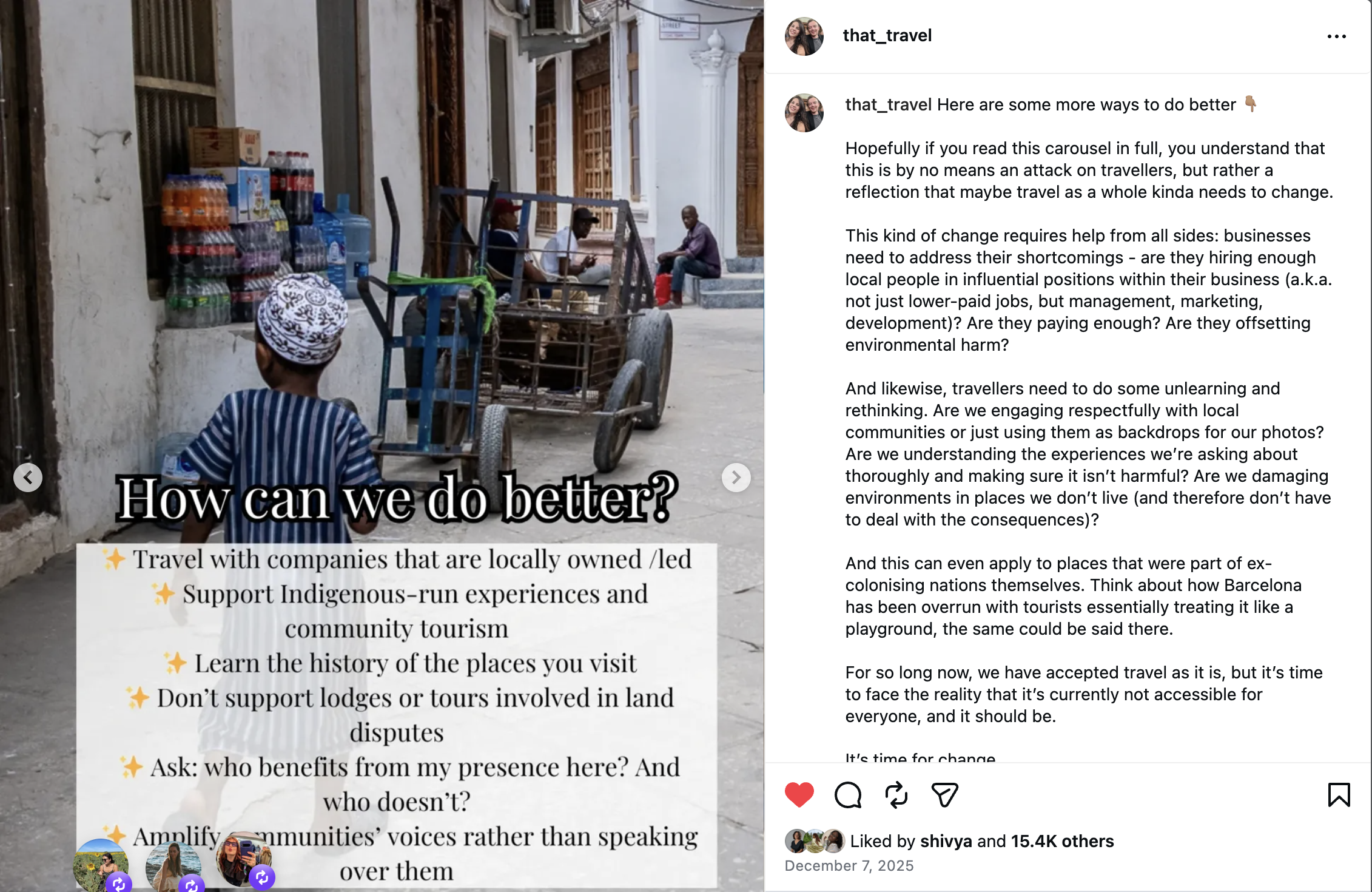
How can we do better?
If you care enough to get to the end of this newsletter, you’re already on the right track. Start learning about how tourism is colonial and then you’ll find ideas of what you can do personally. How to decolonize travel depends entirely on who we are and how we move through the world. Some people never travel outside their own country, so decolonizing tourism may be much more personal and on the local level. Some of us write about tourism for global publications and we need to be writing about this as a global problem.
The bottom line:
Learn more, think more and find ways to act (and listen to Emma’s podcast).
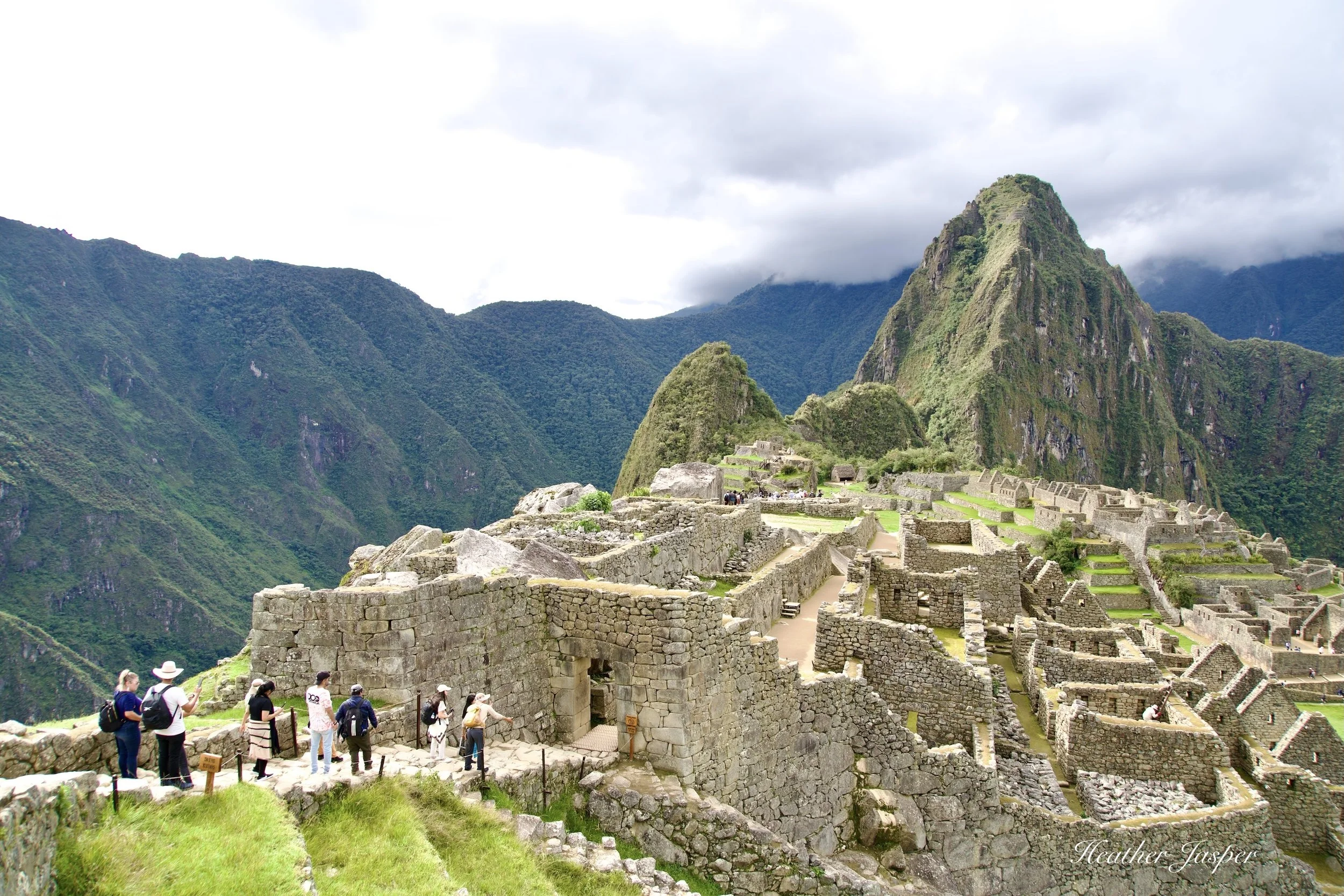
Blog: The Problem with Machu Picchu
You’ve probably heard about overtourism at Machu Picchu, but do you know how much of a chokehold Machu Picchu has over the entire tourism industry in Peru? This blog post breaks down the root of all problems at Machu Picchu.