Cabo Blanco is unique in so many ways.
This piece of Pacific coastline has a history that sets it apart from the rest of Peru.
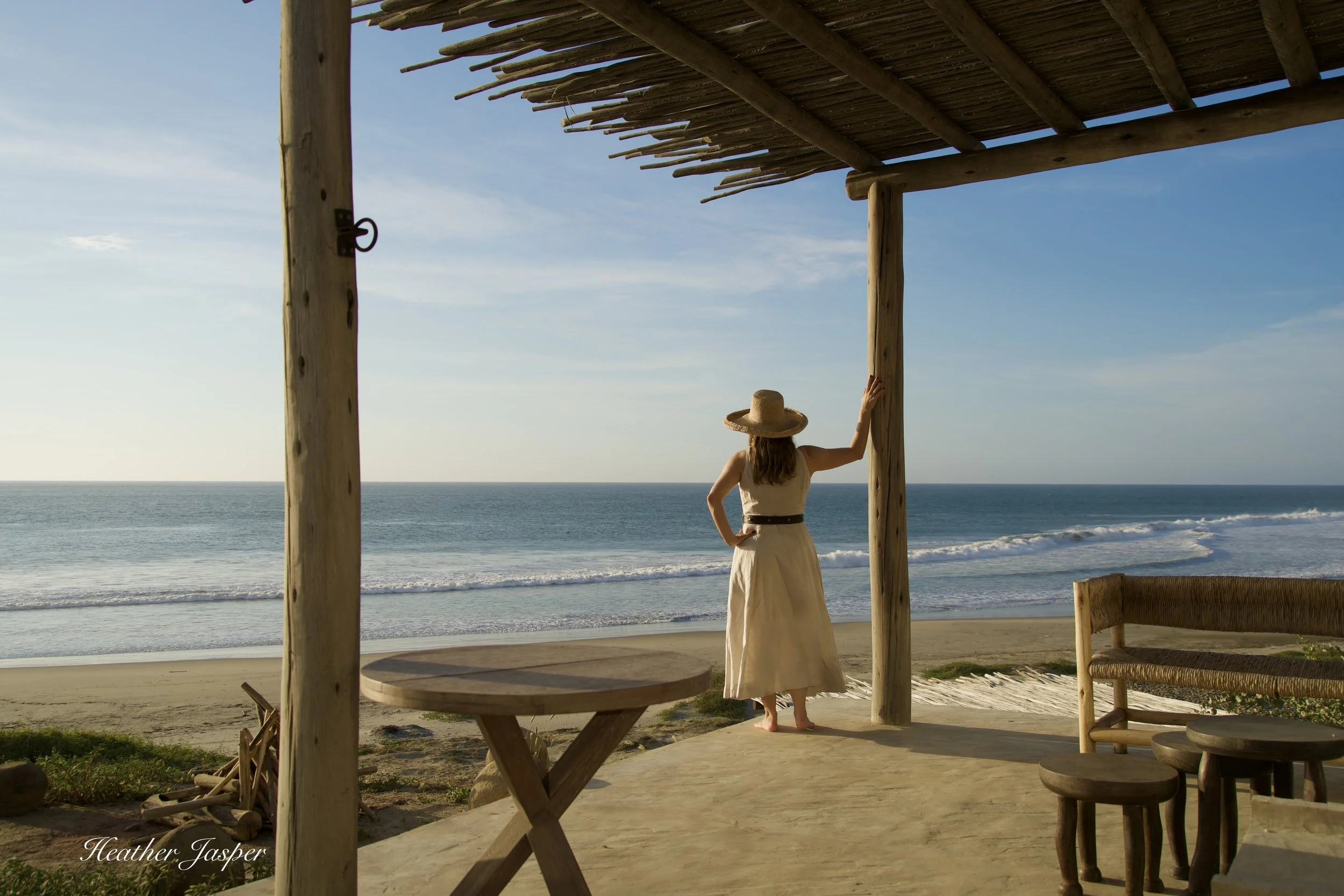
While I spent my time at the most exclusive and luxurious beach resort I’ve ever been to, that was only part of what I loved about Cabo Blanco.
The ocean here is one of the most important biodiversity hotspots on the planet. The cold Humboldt Current brings rich sea life from Antarctica, starting with plankton and building up to all the sea creatures that eat plankton and that eat the plankton-eaters. There are humpback whales, black marlin, octopus and seahorses.
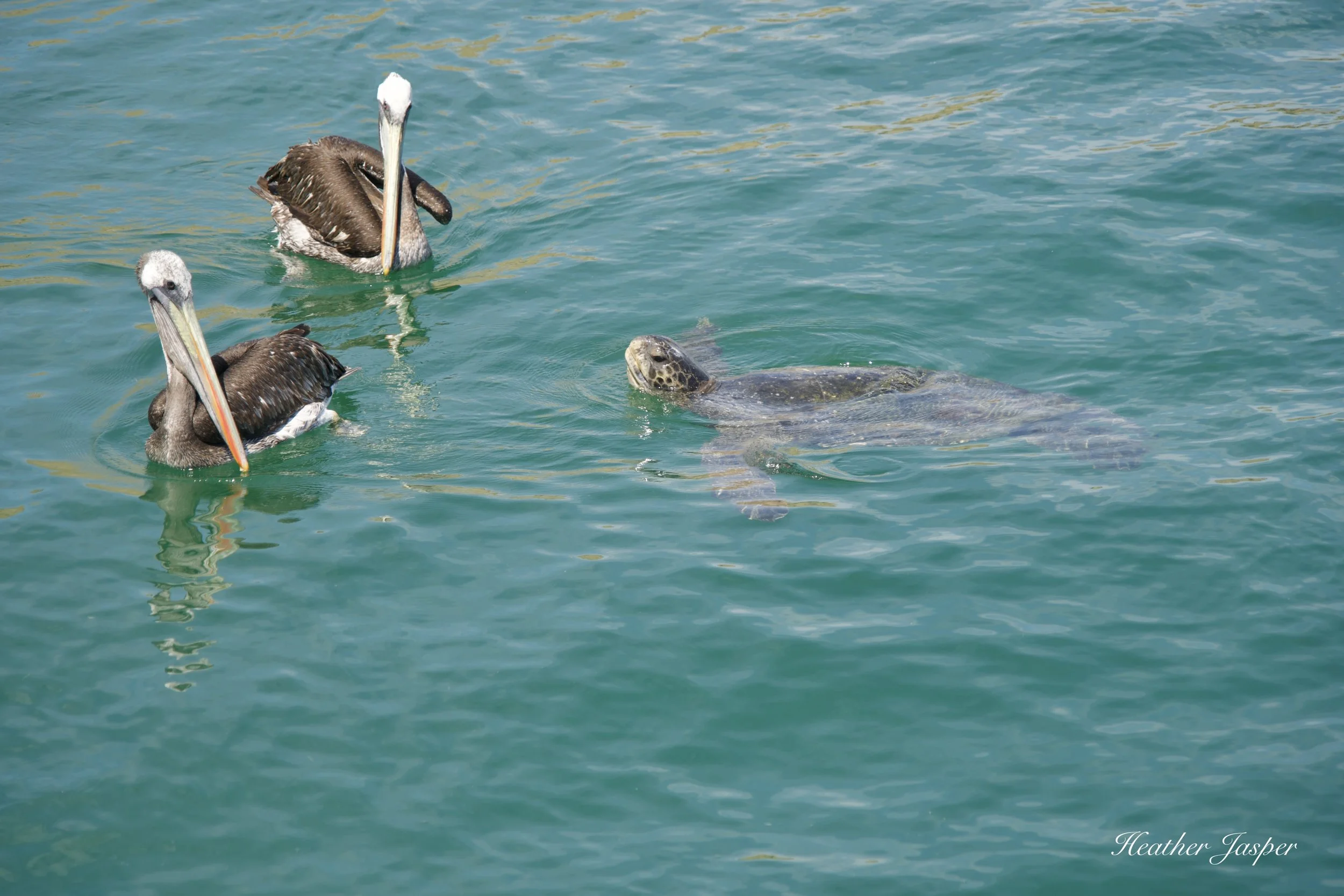
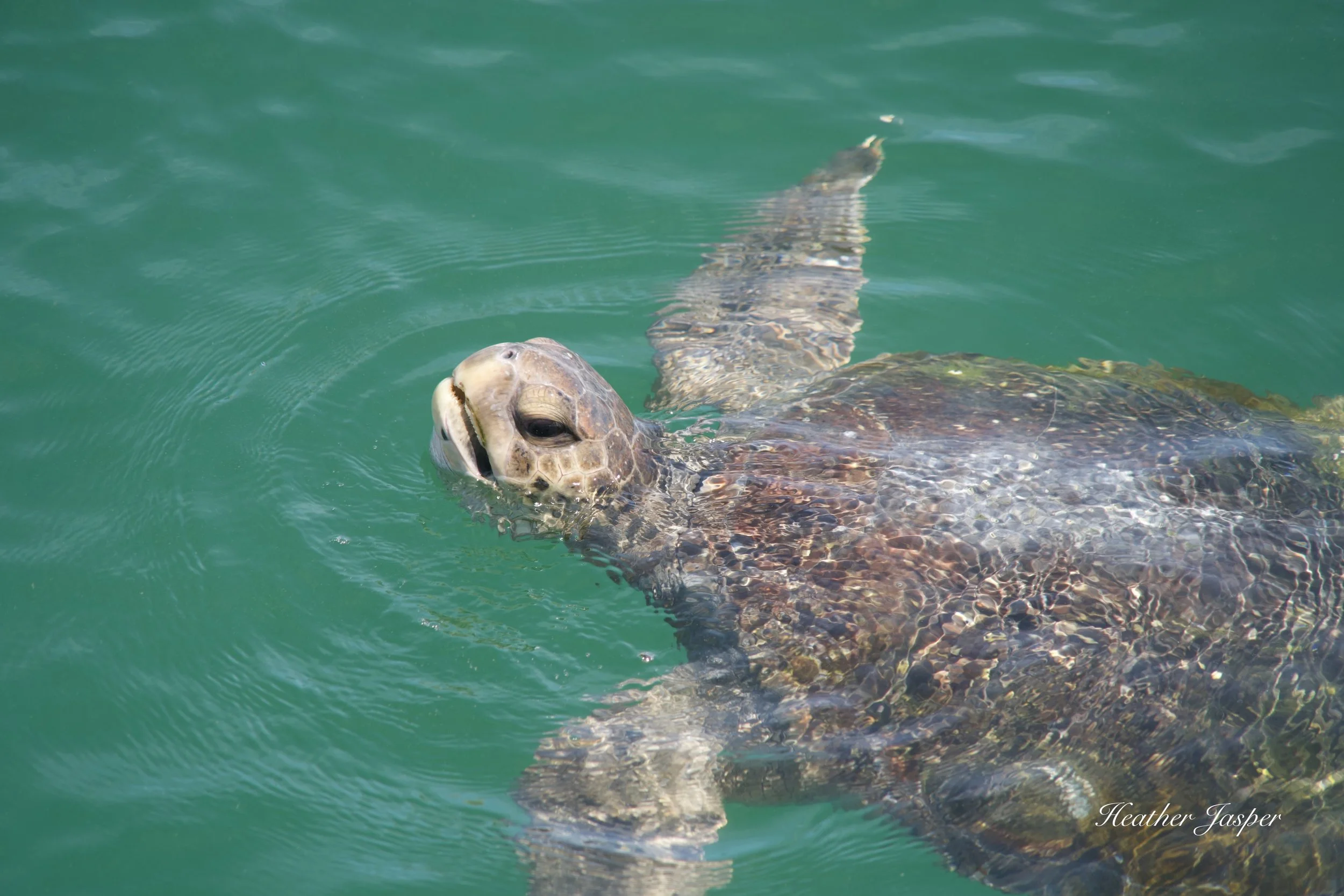
I spent over an hour at the pier watching sea turtles surprise pelicans when they came up for a breath.
Right at Cabo Blanco, this cold current hits the equatorial waters that bring brightly colored tropical fish, sea turtles and blue-footed boobies. This bit of Pacific coast drops off quickly, so there’s deep water very close to shore. It’s paradise for marine biologists and for anybody who loves sea life.
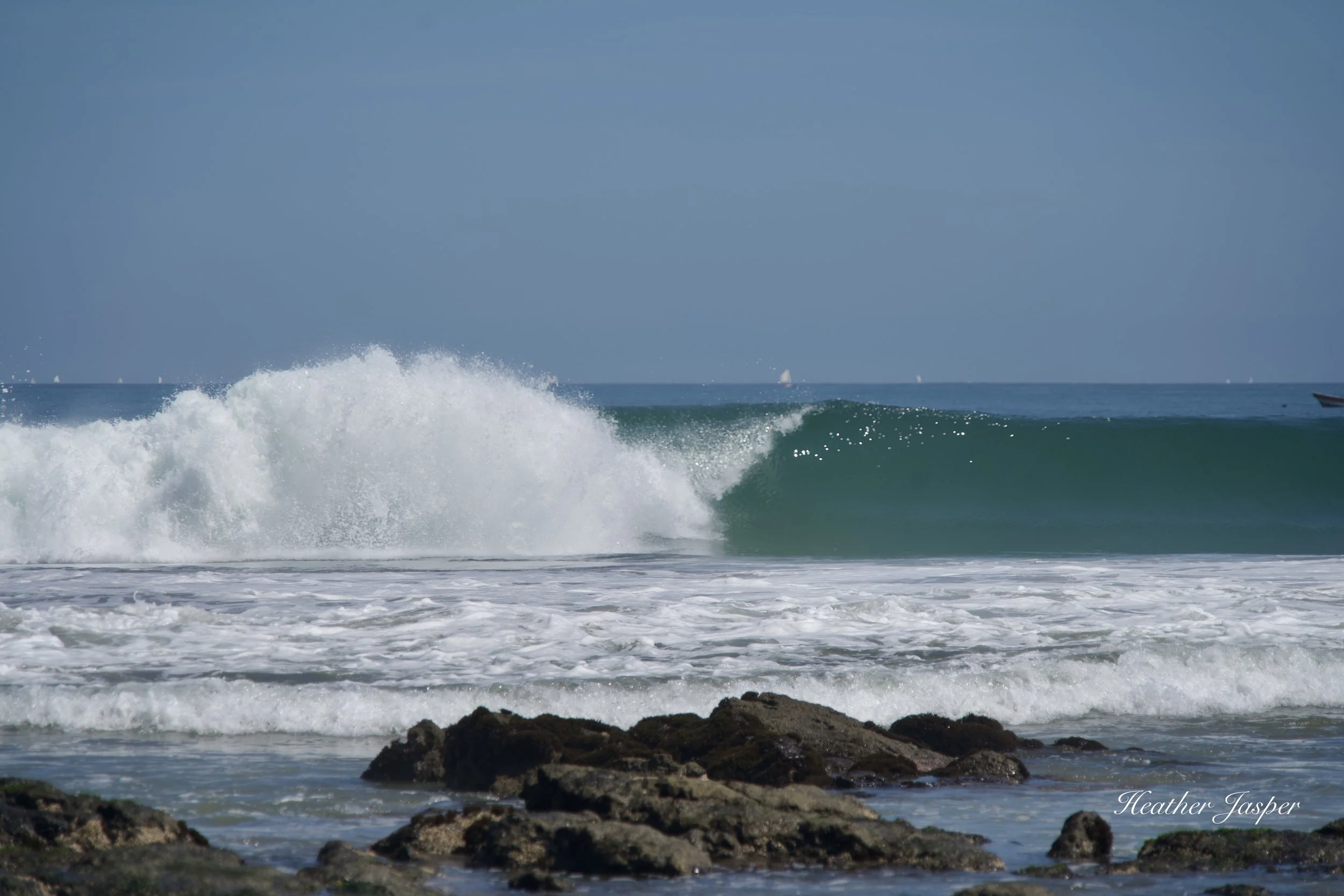
Cabo Blanco is Famous for Surfing
That deep water close to shore makes the beaches narrow and the surfing particularly good. In fact, Peruvians have been surfing this coast for at least 3,500 years and some archeologists say up to 5,000 years. Read my BBC Travel article about Huanchaco and the caballito de totora, a reed craft that is made almost exactly the same today as it was 3,000 years ago.
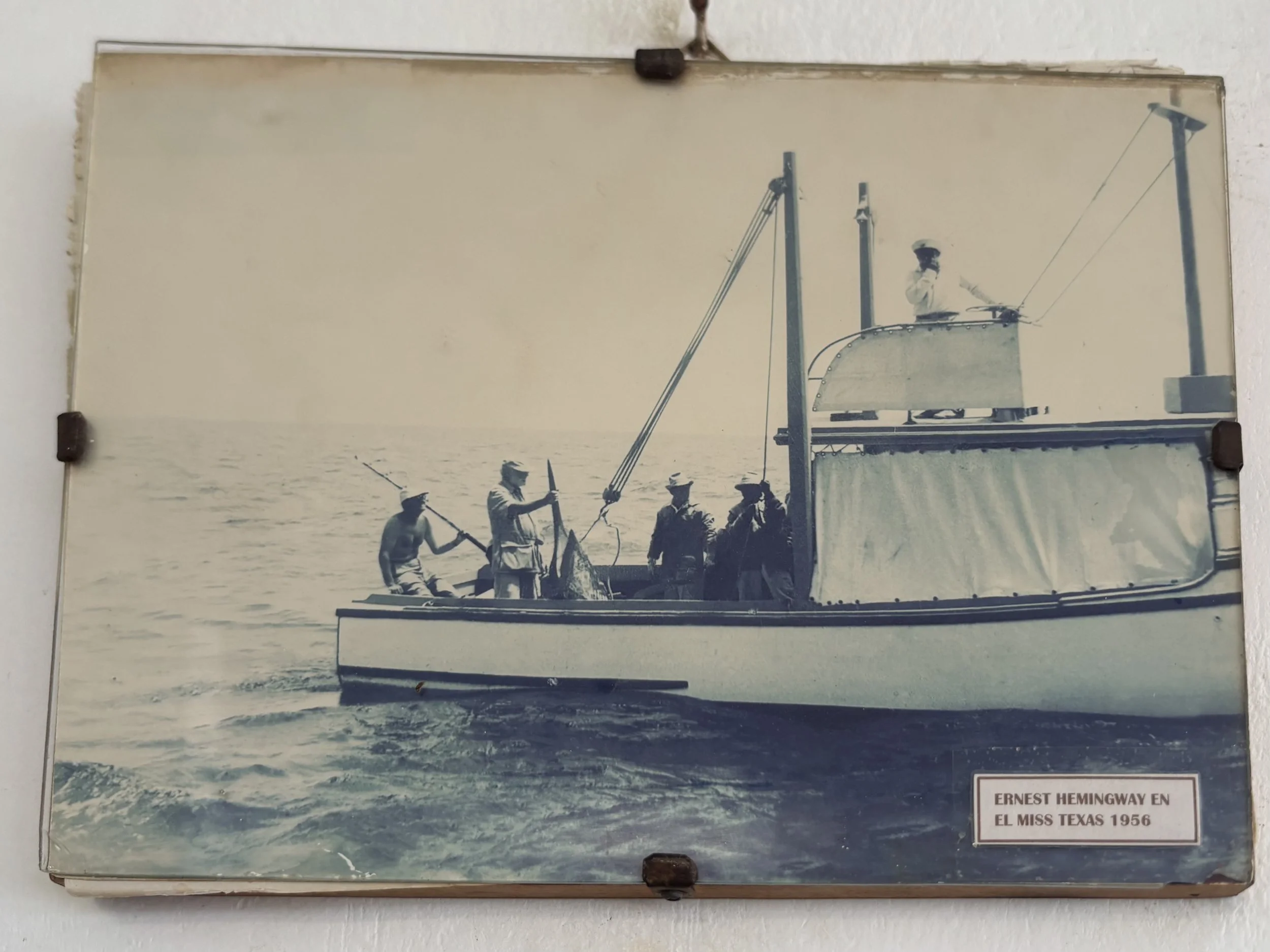
This photo of Hemingway fishing on the Miss Texas is on the wall of the Cabo Blanco Restaurant.
The World Record for Black Marlin
In more modern history, Alfred C. Glassell Jr. set the world record for black marlin on August 4, 1953, landing a 1,560-pound (707.6 kg) marlin that measured 14 feet 6 inches. That record drew the author Ernest Hemingway, who loved fishing and was scouting locations to film his book The Old Man and the Sea.
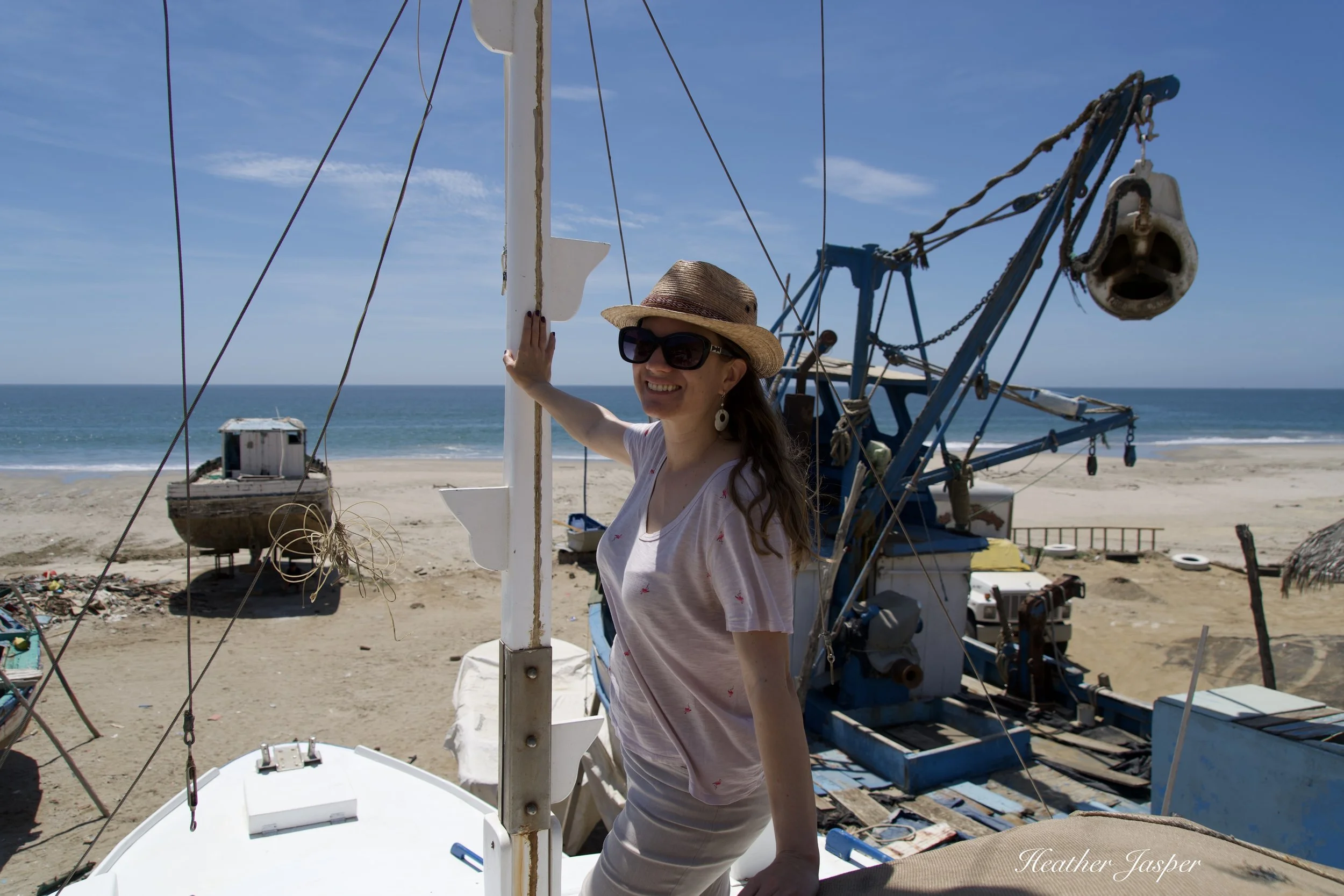
The Miss Texas was still on dry land when I saw her, but she was only missing some final details before setting out to sea again.
In the Footsteps of a Great Writer
As a writer, I was thrilled to get to see the boat Hemingway fished on, the Miss Texas. It was owned by the Cabo Blanco Fishing Club when Hemingway was here in 1956 and is now being refitted by Inkaterra, Peru’s best eco-luxury company that’s celebrating 50 years of conservation.
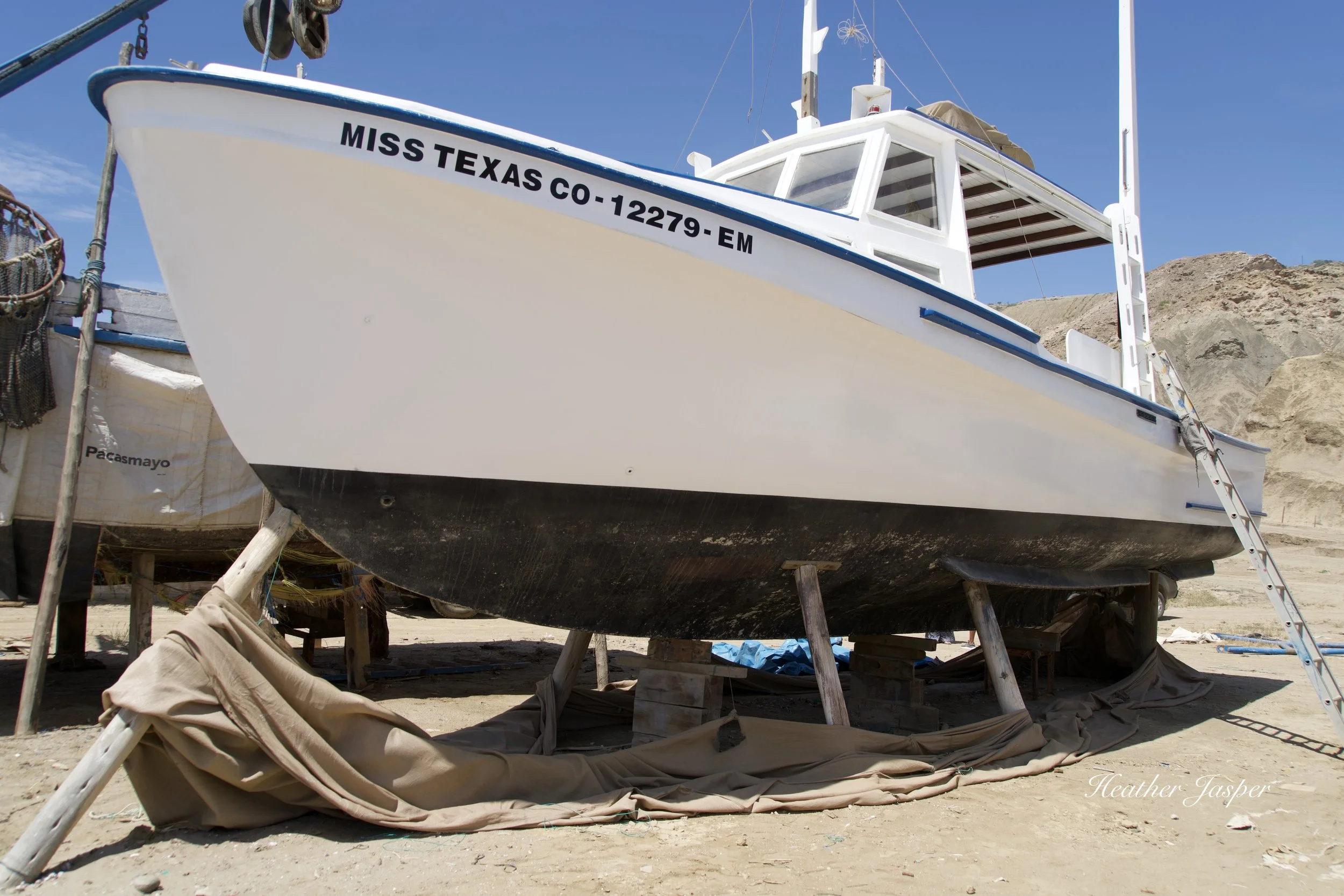
The cabin inside still needed finishing touches but the most important parts of the boat were already rebuilt.
Why is there a boat in Peru named the Miss Texas?
The Cabo Blanco Fishing Club, and most of the land around Cabo Blanco, was owned by the British Petroleum Company. The Talara airport and the town of Lobitos were built for BP and its employees, as was the fishing club. The oil drilling business was expropriated in 1969 and most of the buildings were abandoned, though even today there are drilling rigs all over the area.
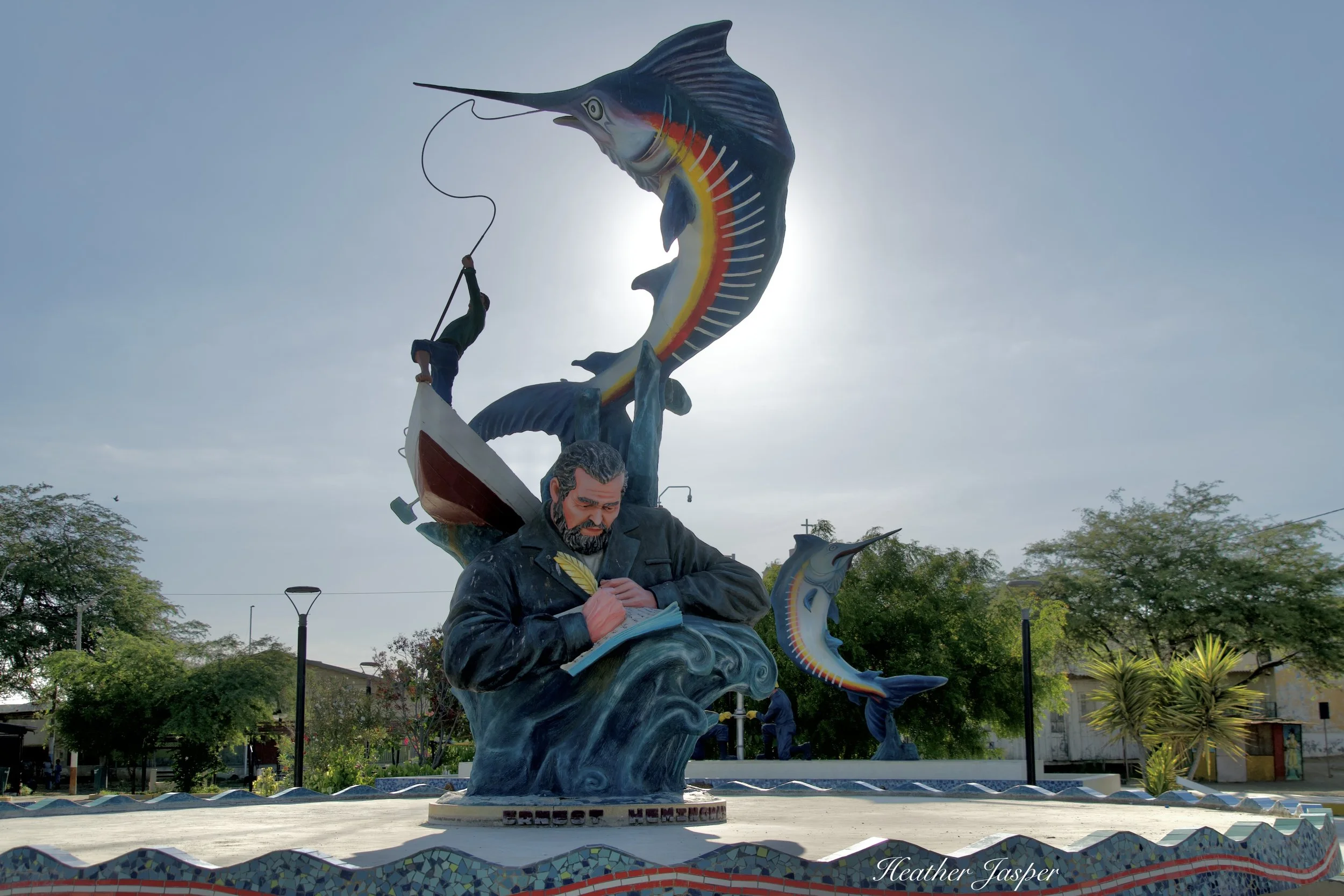
Alto Cabo Blanco is a village up above the coast, where the plaza has a sculpture of Hemingway both writing and fishing.
What to do in Cabo Blanco?
You can visit the two halves of the village: Alto Cabo Blanco up on the bluff, and Cabo Blanco, which is a few houses and bars clustered around the pier.
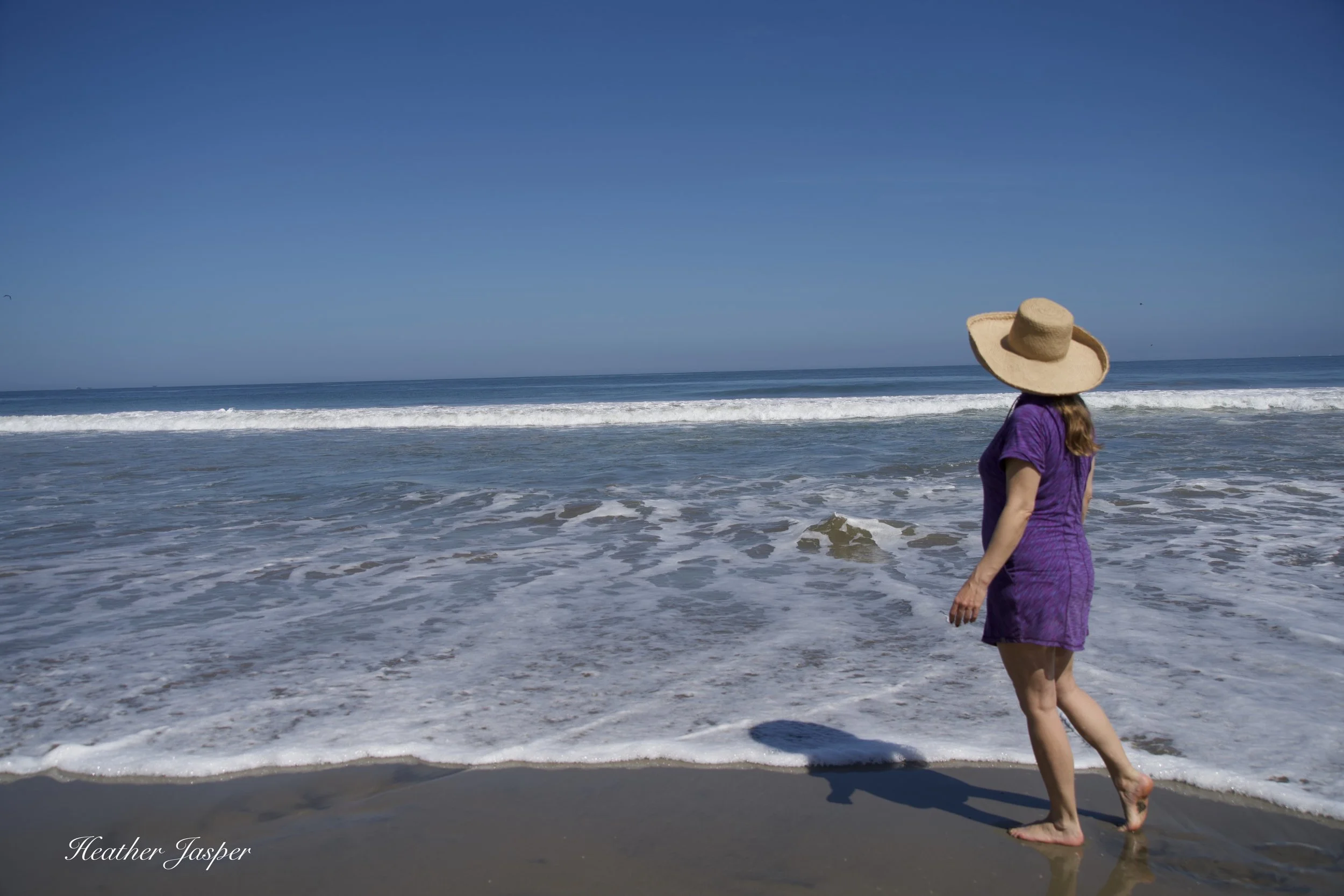
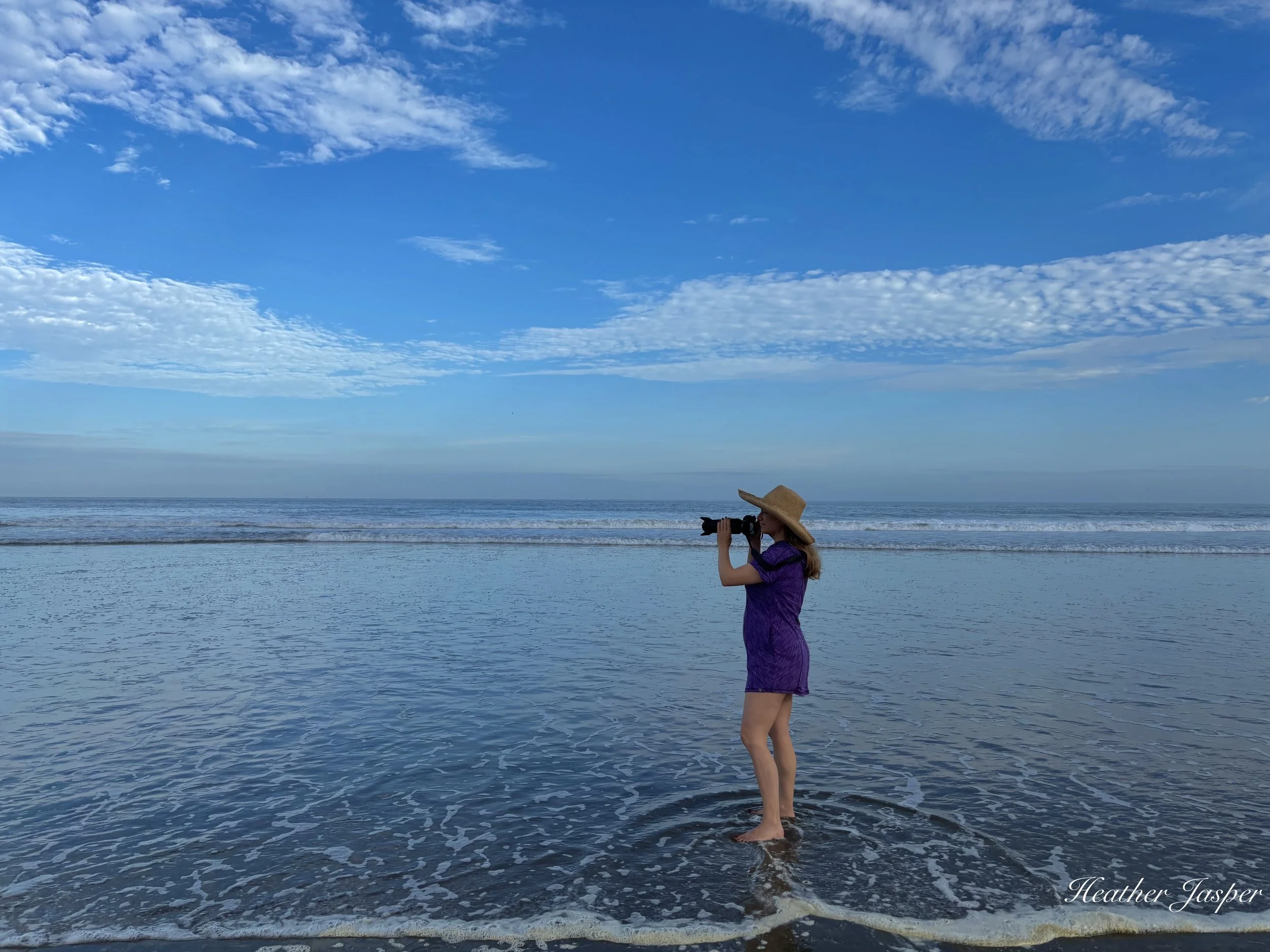
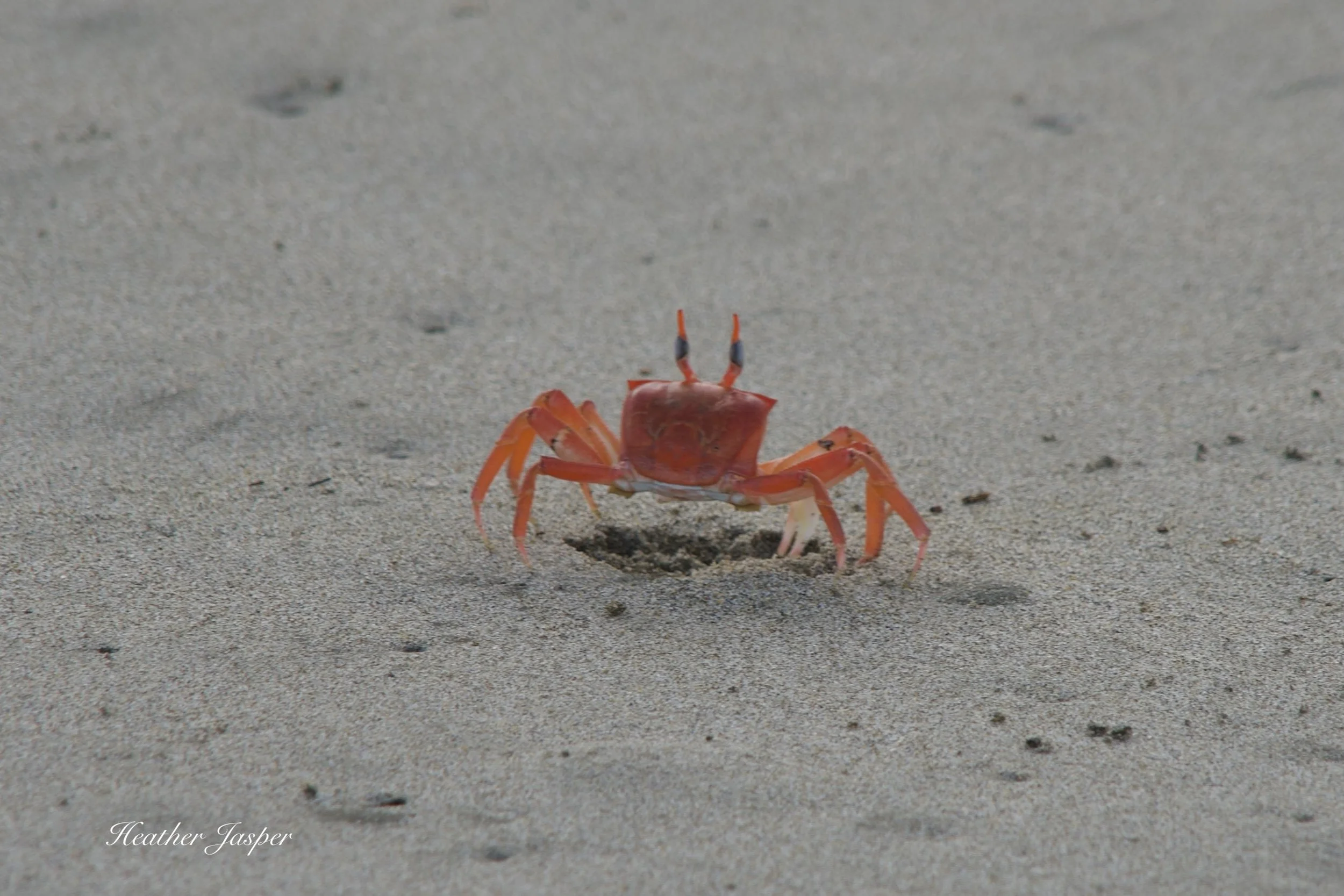
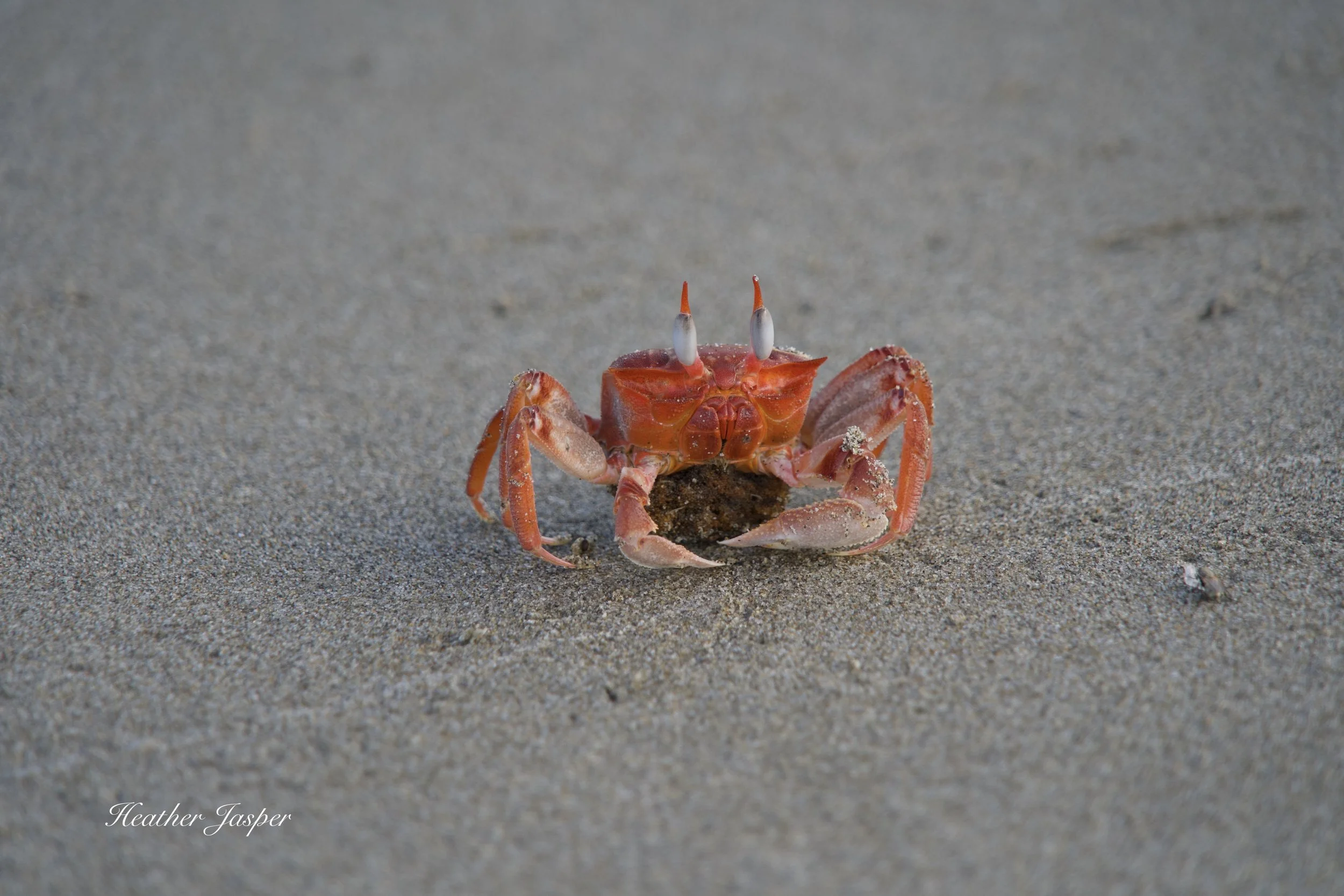
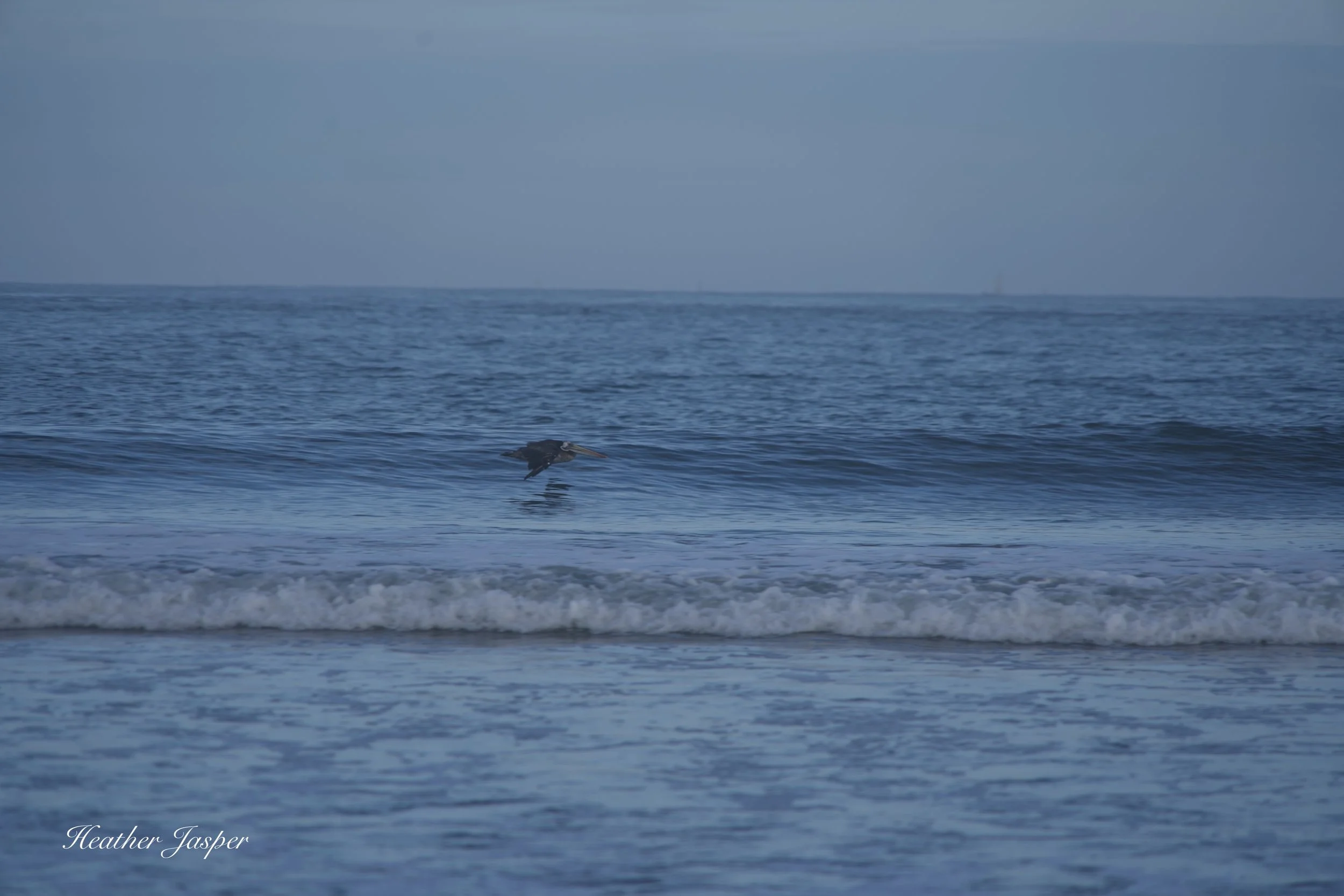
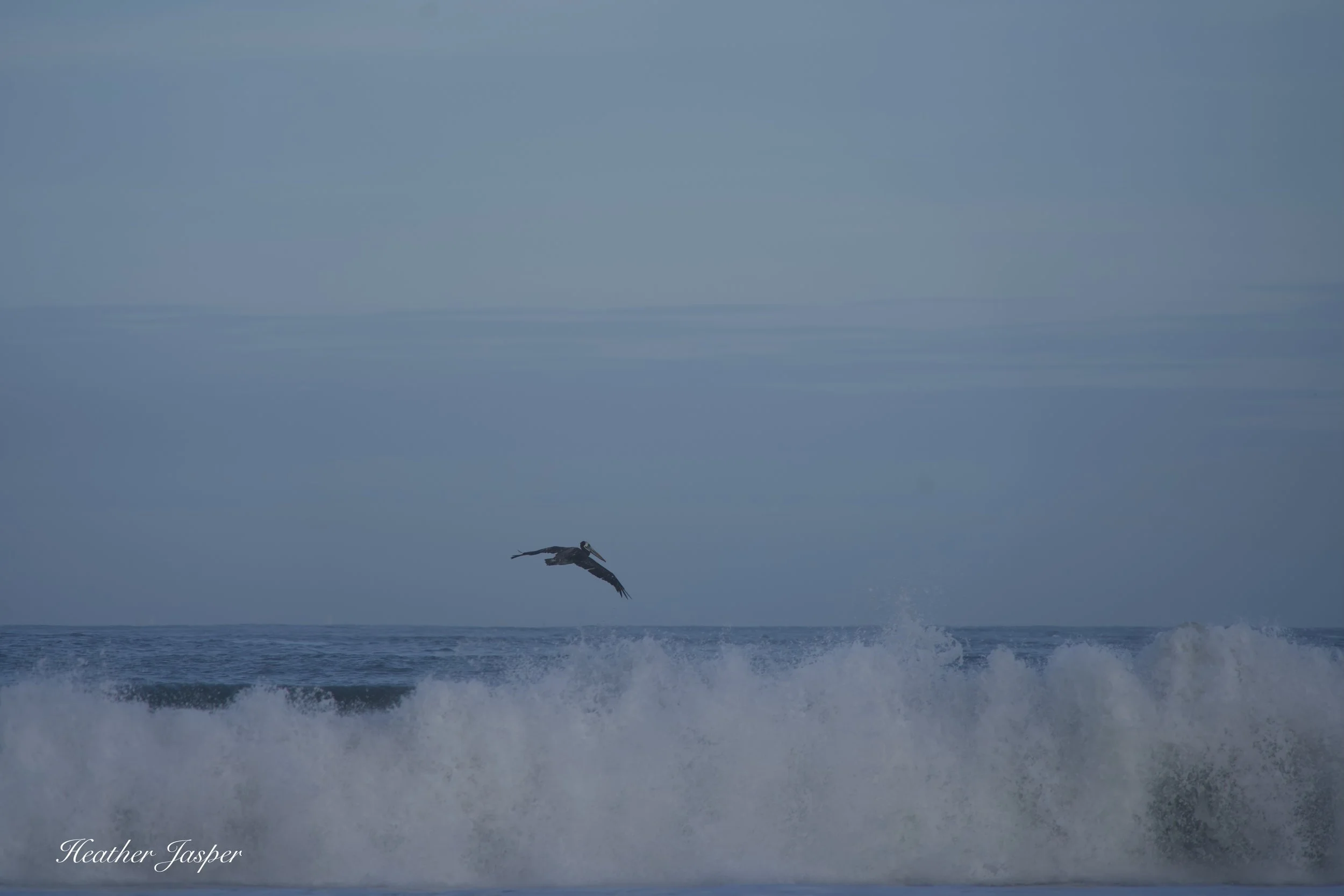
The most obvious thing to do is walk on the beach and play in the waves. Early in the morning it was easier to see crabs on the beach and pelicans gliding low over the water. I have to say this was the cleanest beach I’ve seen in Peru. I picked up a few seashells but there was practically no trash on the beach, which was such a relief.
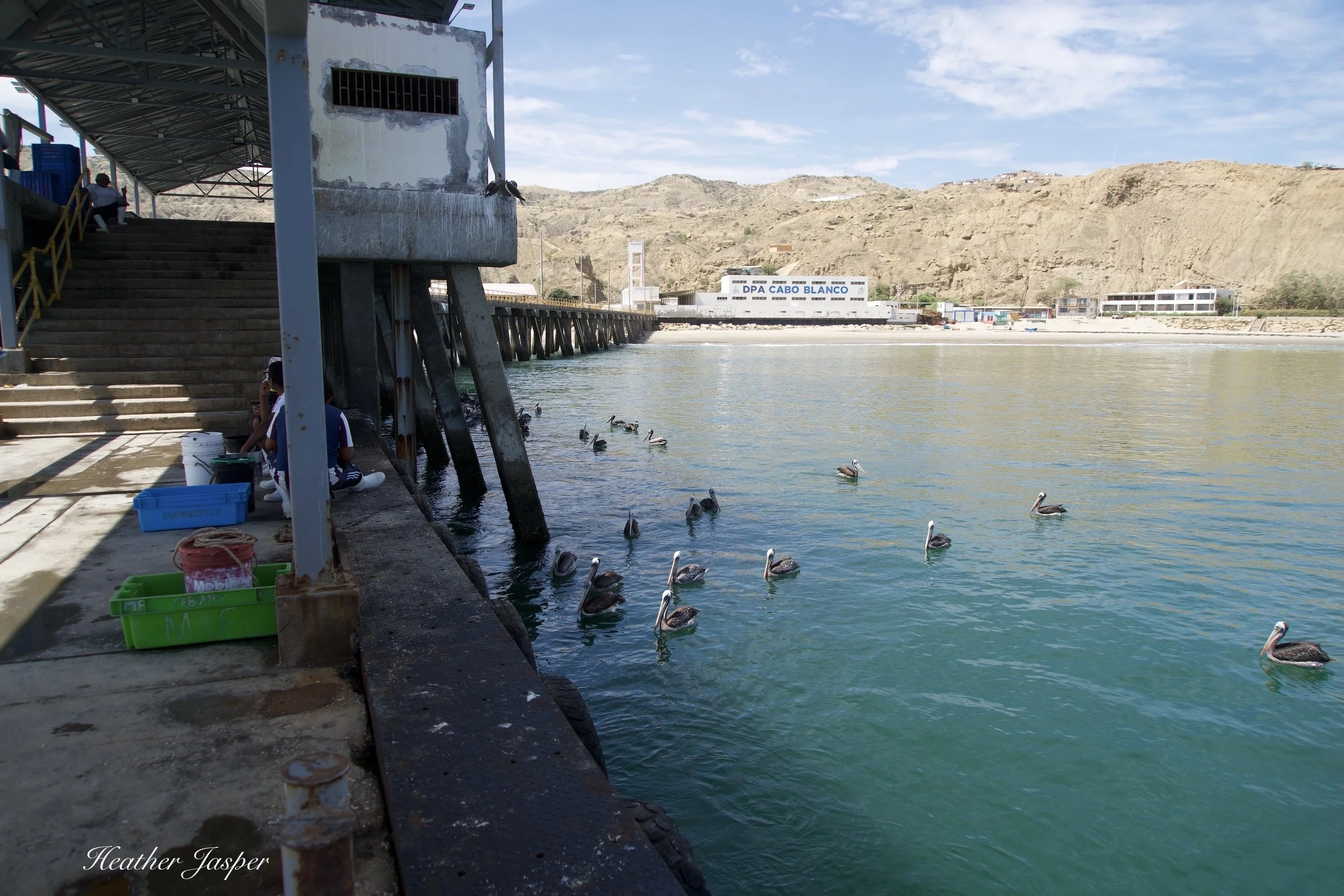
The pelicans were waiting for fish guts and whatever other bits of fish that were tossed to them.
Besides surf and walk on the beach, you can visit the pier. It costs s/2 soles and you have to pay in cash at the entrance. The pier is always surrounded by pelicans, sea turtles and blue-footed boobies. Overhead you’ll see black frigate birds with red neck pouches.
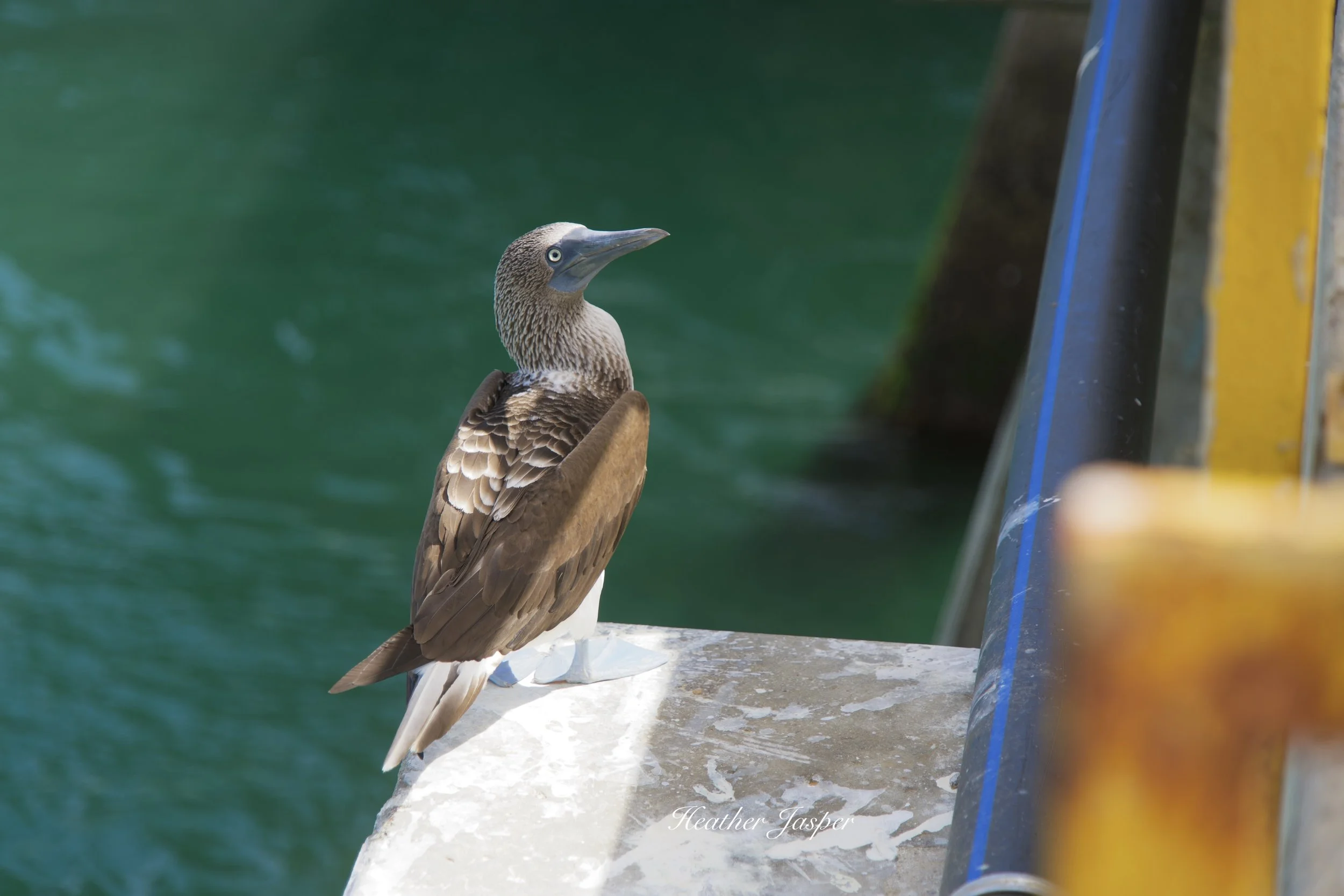
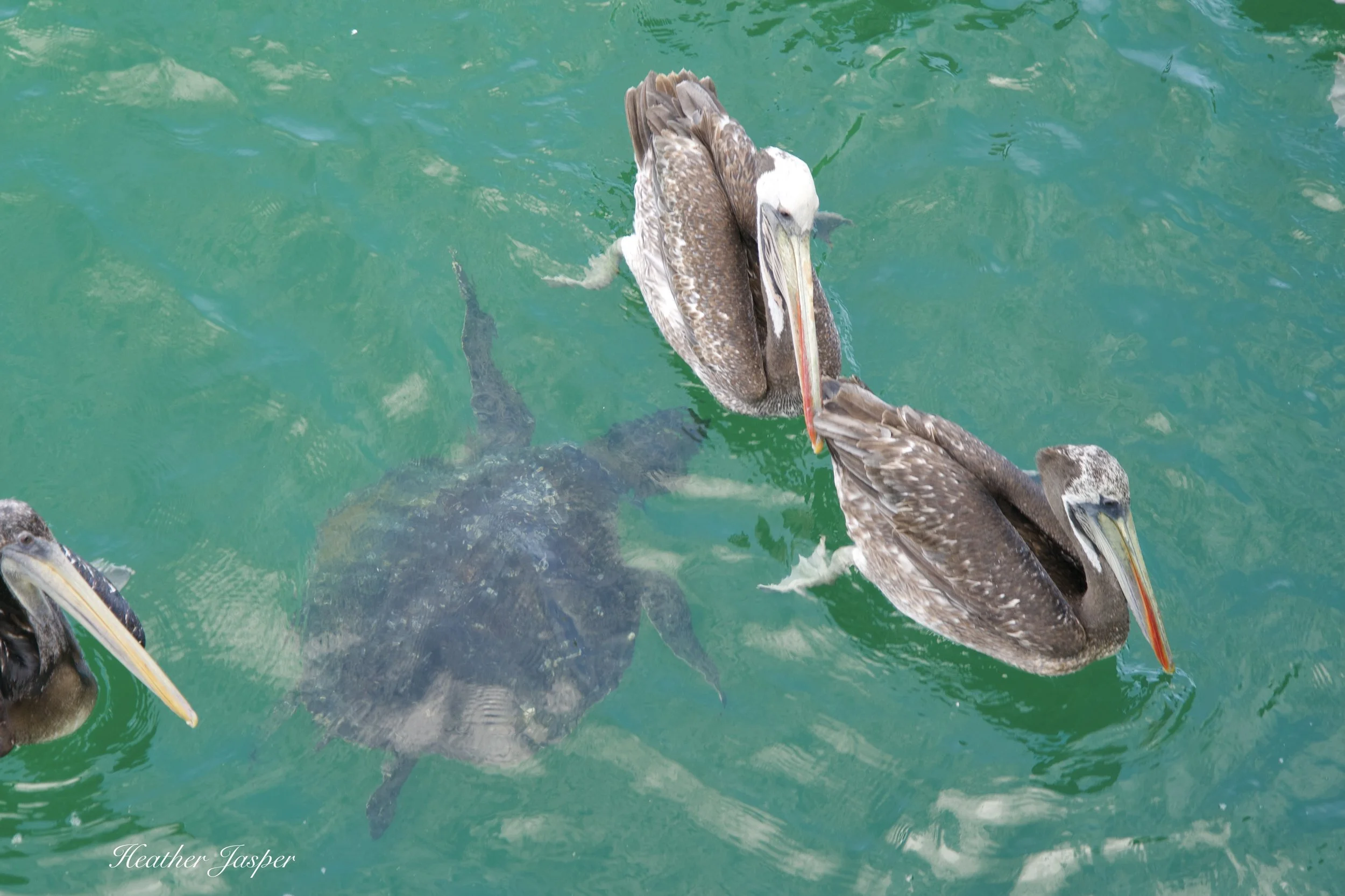
Did you know there were blue-footed boobies on the mainland? I’d only ever heard of them in the Galapagos and haven’t seen them on other beaches in Peru. I could have spent all day watching the turtles, birds and fish from the pier but only had time to be there about an hour because it was lunch time.
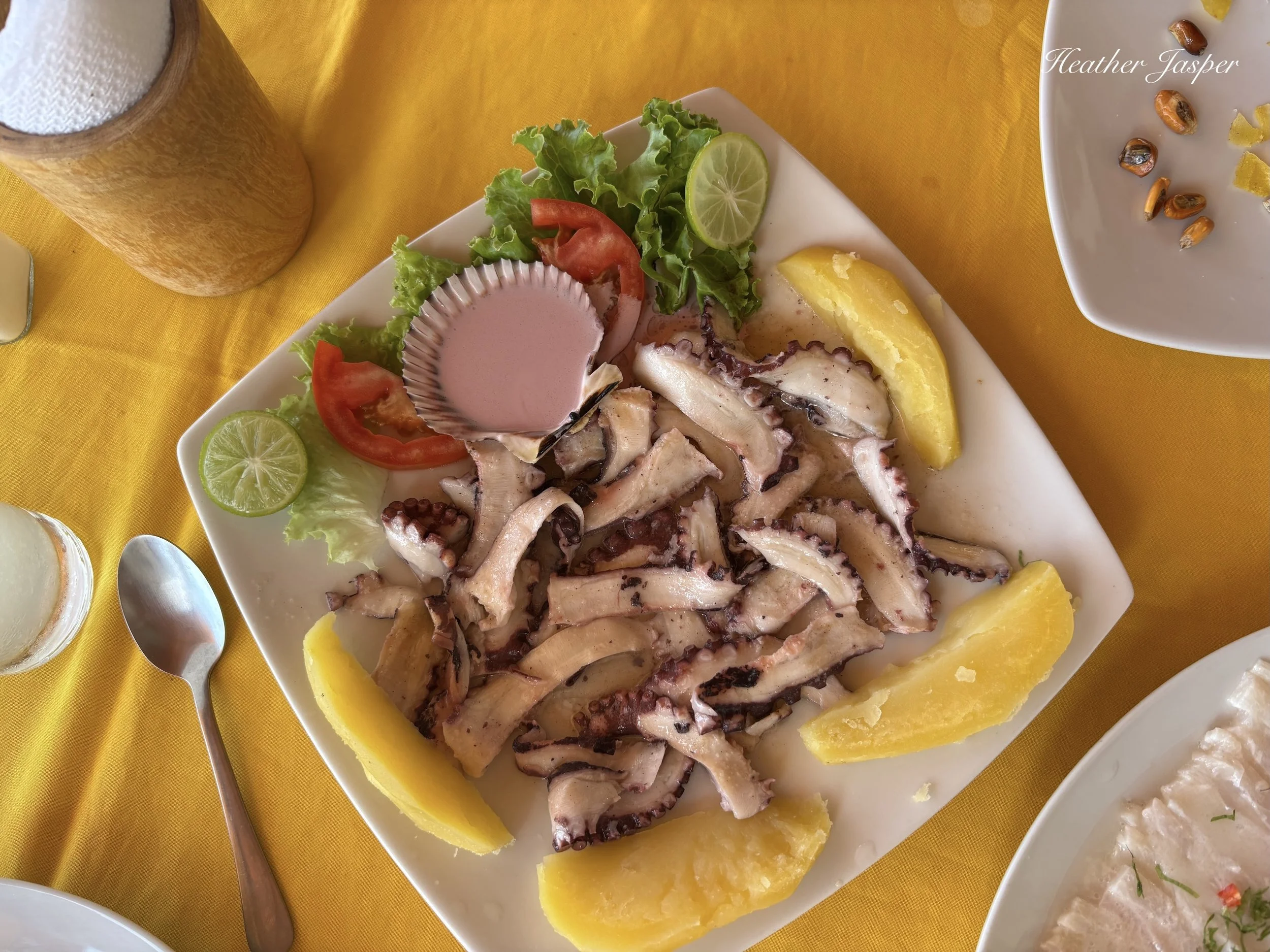
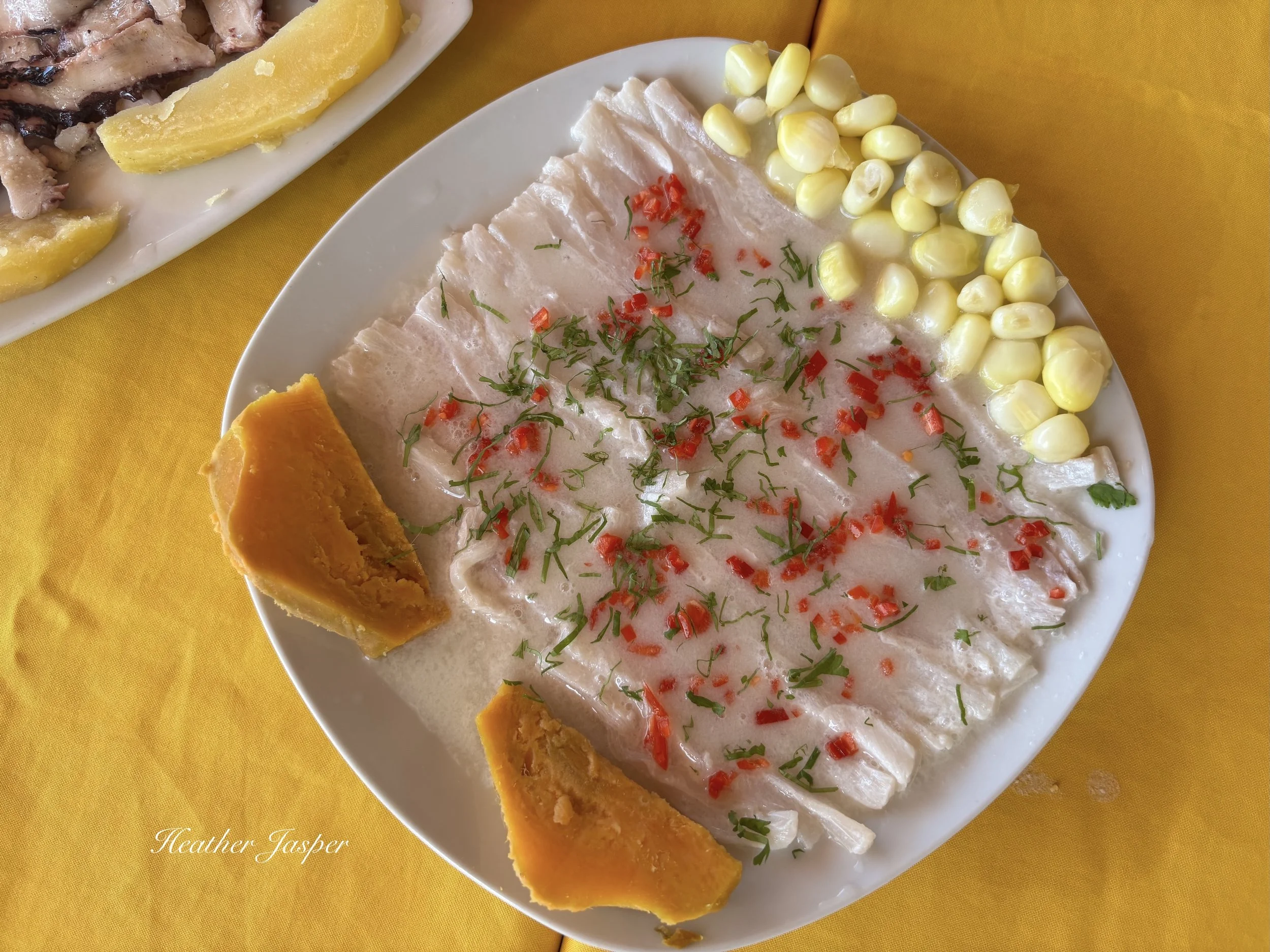
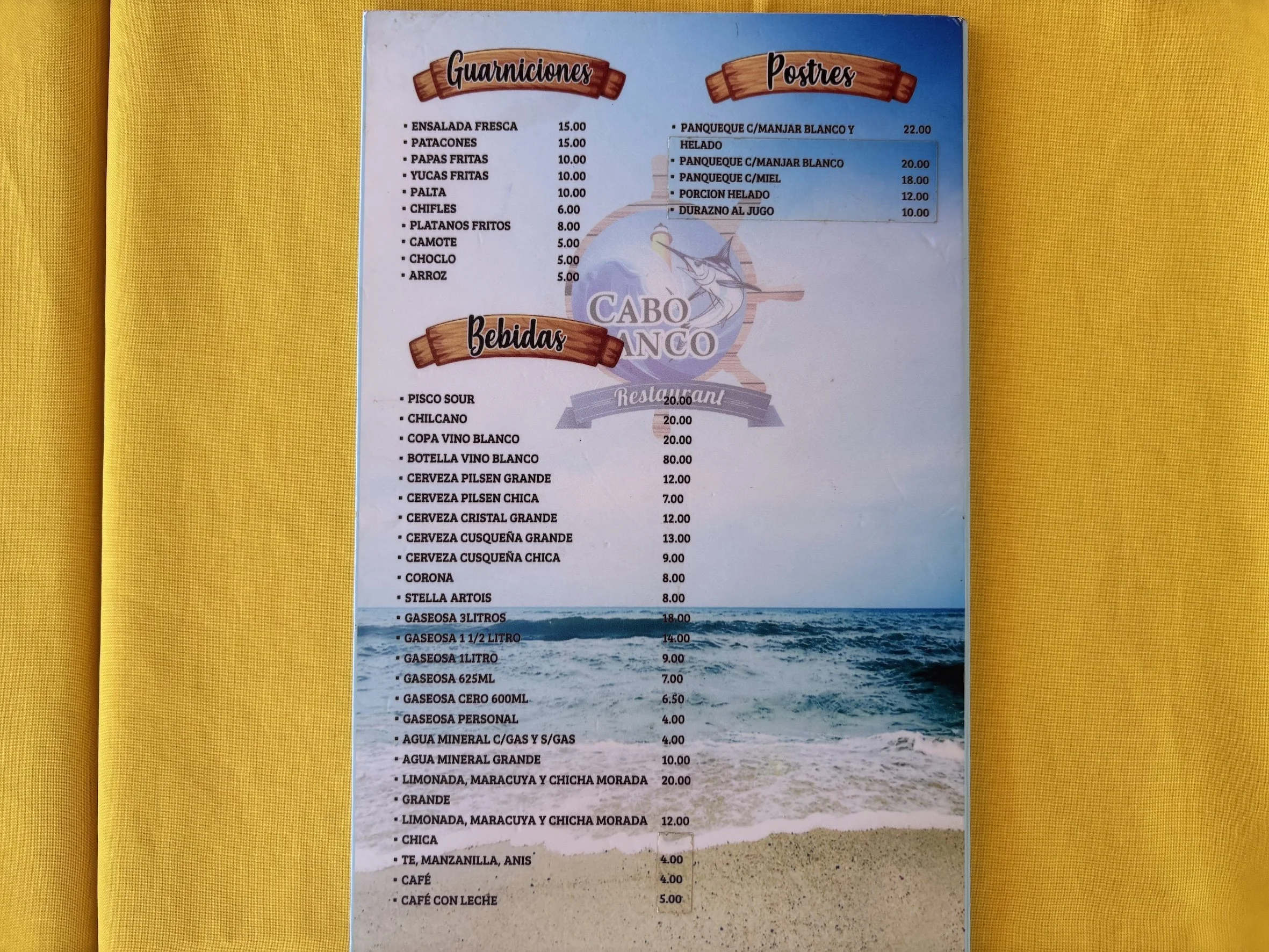
Where to eat in Cabo Blanco?
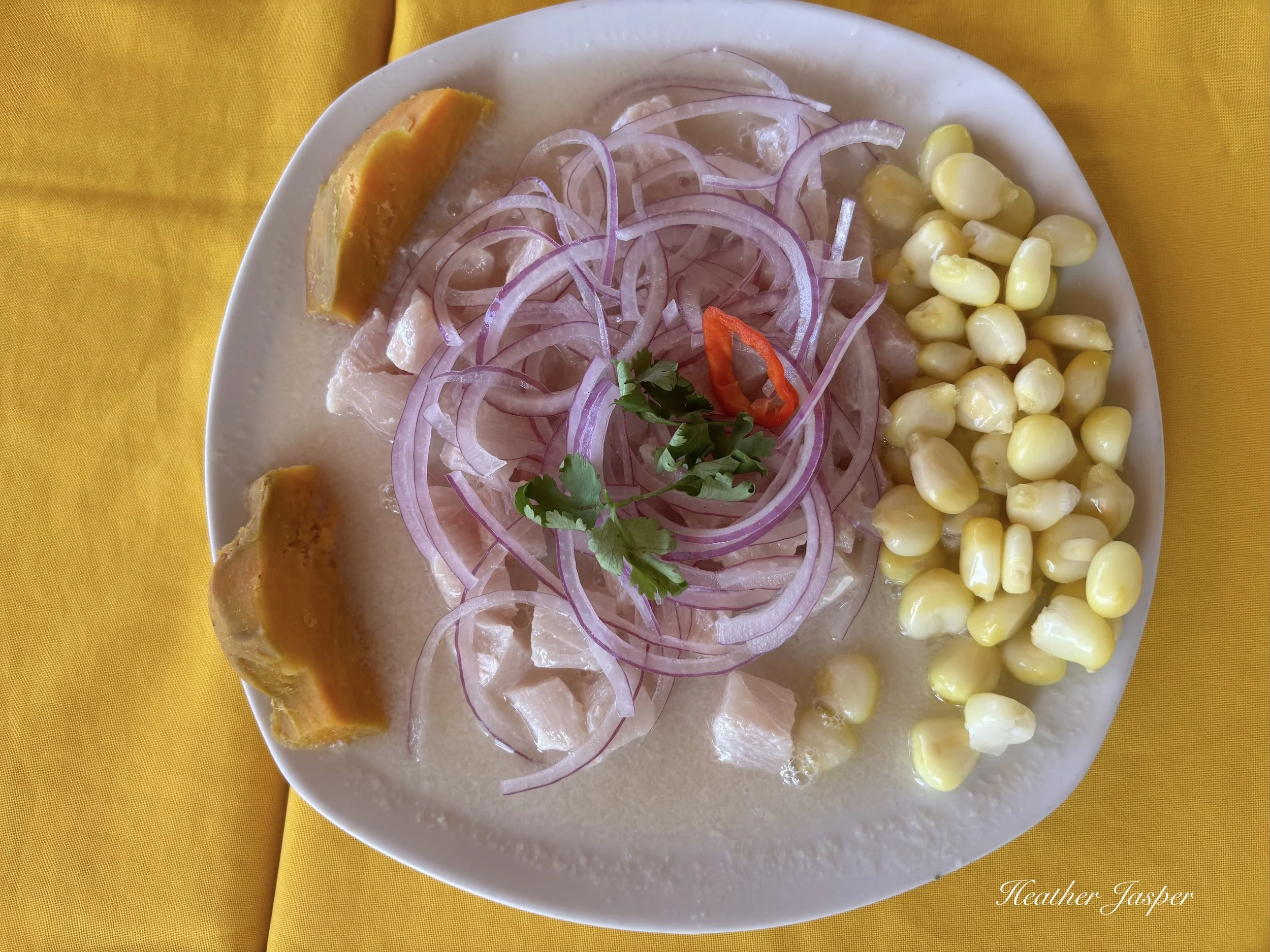
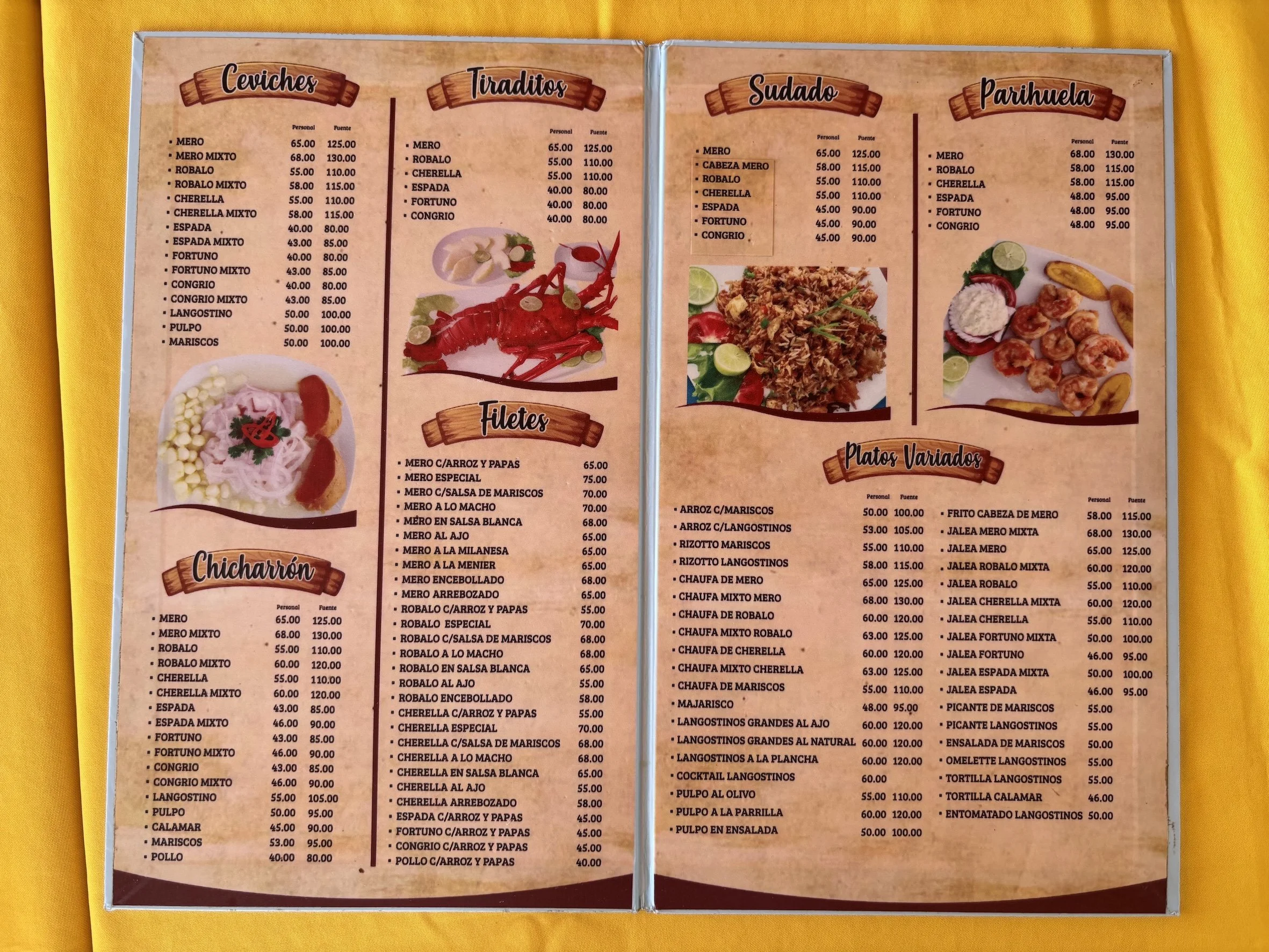
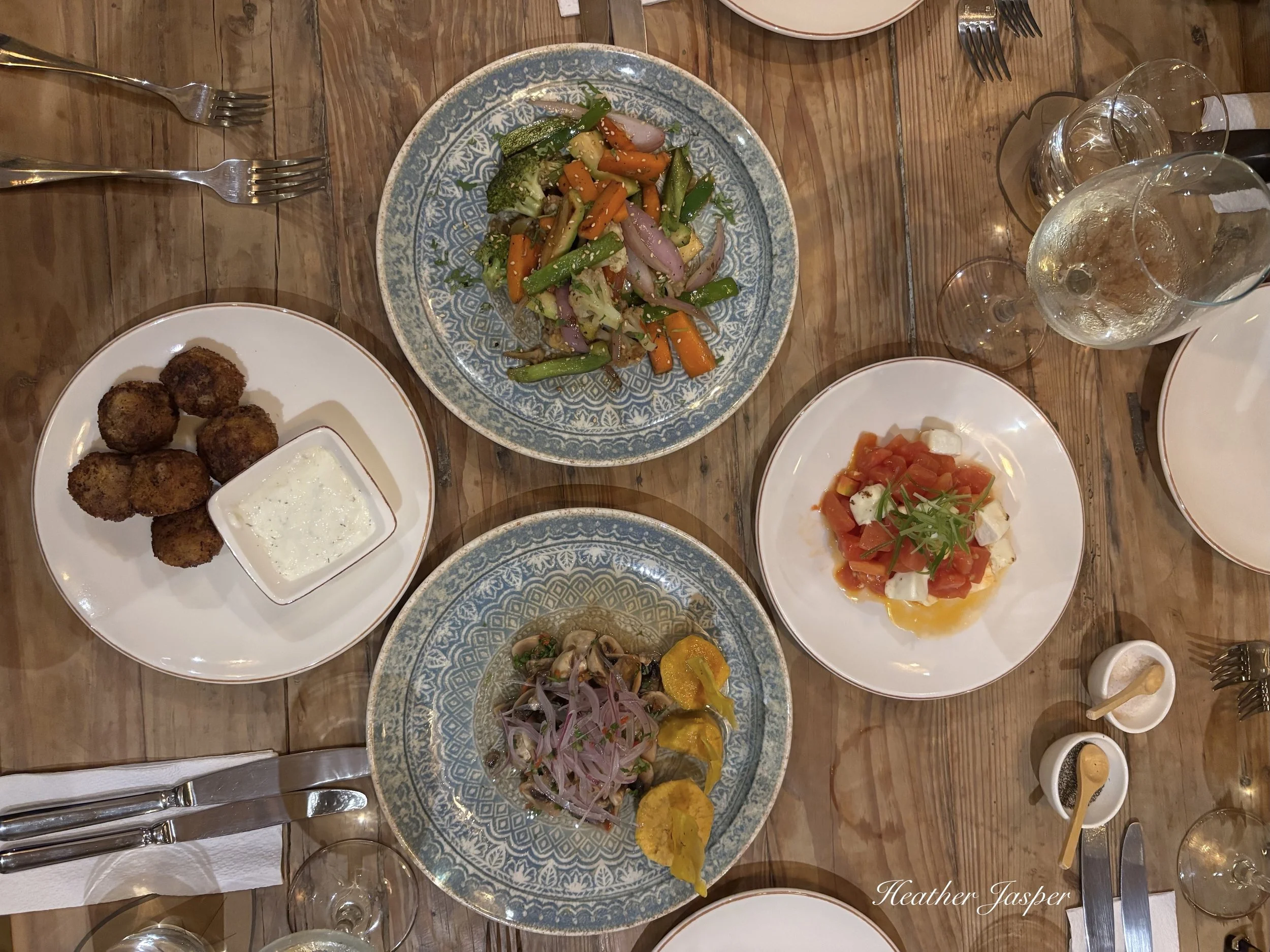
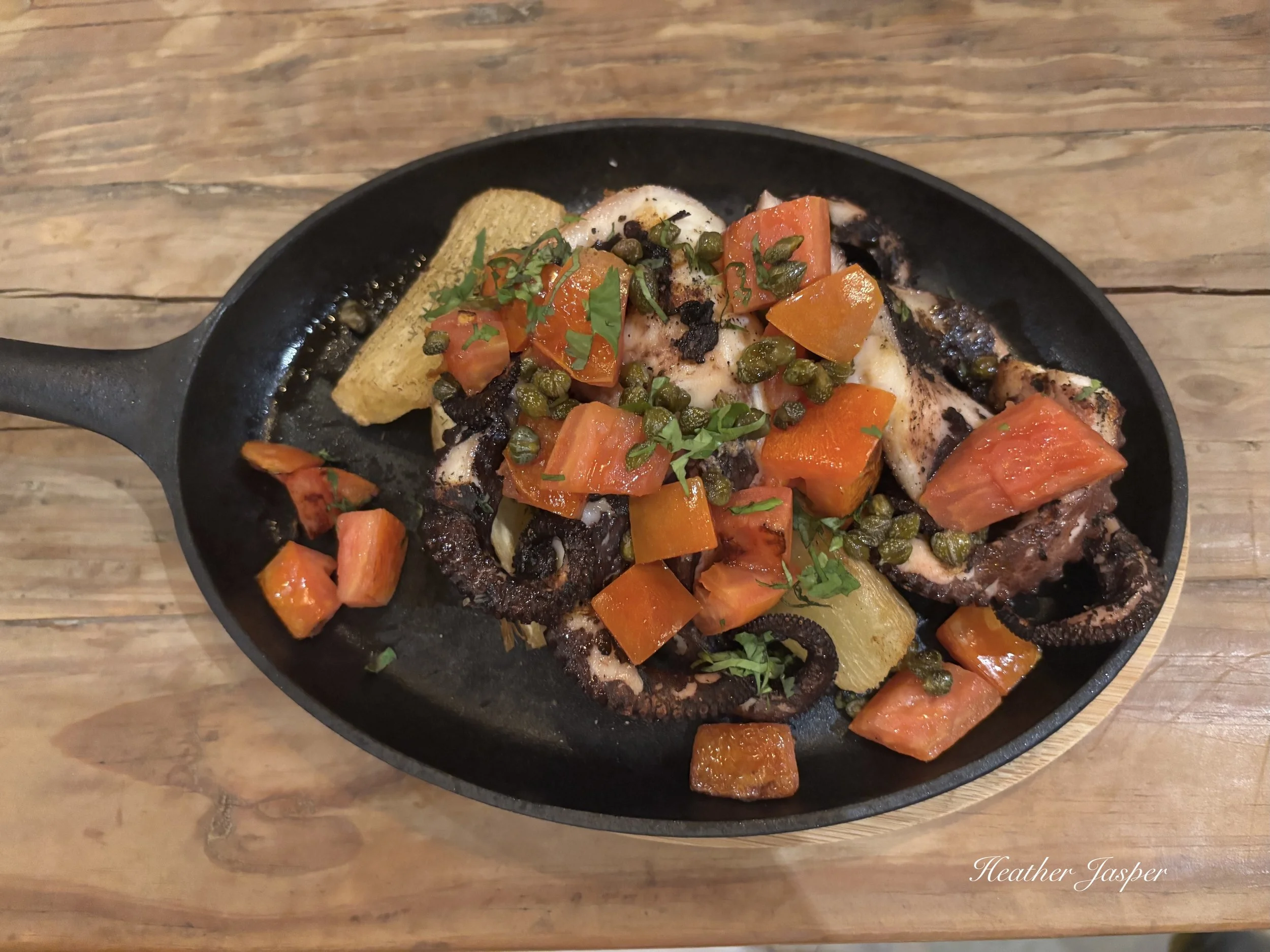
This recommendation couldn’t be easier. Eat at Cabo Blanco Restaurante. The tiradito (bottom middle photo) was the best I’ve had, even after eating a lot of tiradito the past seven years I’ve lived in Peru. Tiradito is cured in lime juice like ceviche, but presented like sashimi. The chaufa was also the best I’ve had – and I’ve eaten a lot of chaufa in the past seven years too. Chaufa is fried rice and I didn’t even get a photo of the chaufa because it smelled so good we all attacked it before I could pull my phone out.
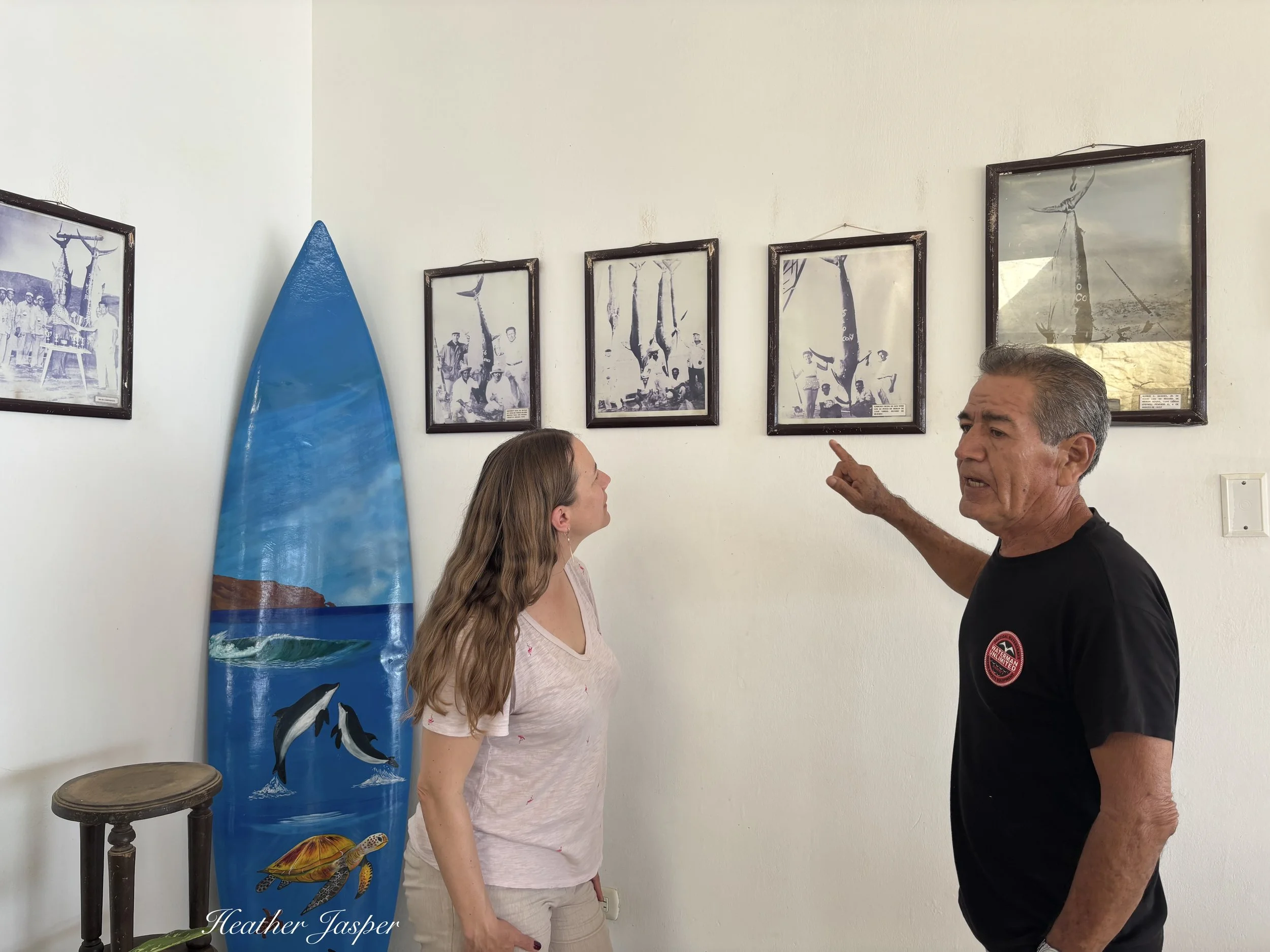
Orlando’s father was the Cabo Blanco Fishing Club bartender during the heyday of giant marlin fishing.
Who is the chef at Cabo Blanco Restaurante?
After we had eaten our way through big plates of ceviche, tiradito, octopus and chaufa, the chef came out to chat. Orlando Cordova Tume learned to cook from his parents, who are also from Cabo Blanco. His mother was an outstanding cook, and his father was both cook and bartender. In fact, he was Hemingway’s favorite bartender in 1956 and is pictured in many of the news articles about the author’s time in Peru.
Where to stay in Cabo Blanco?
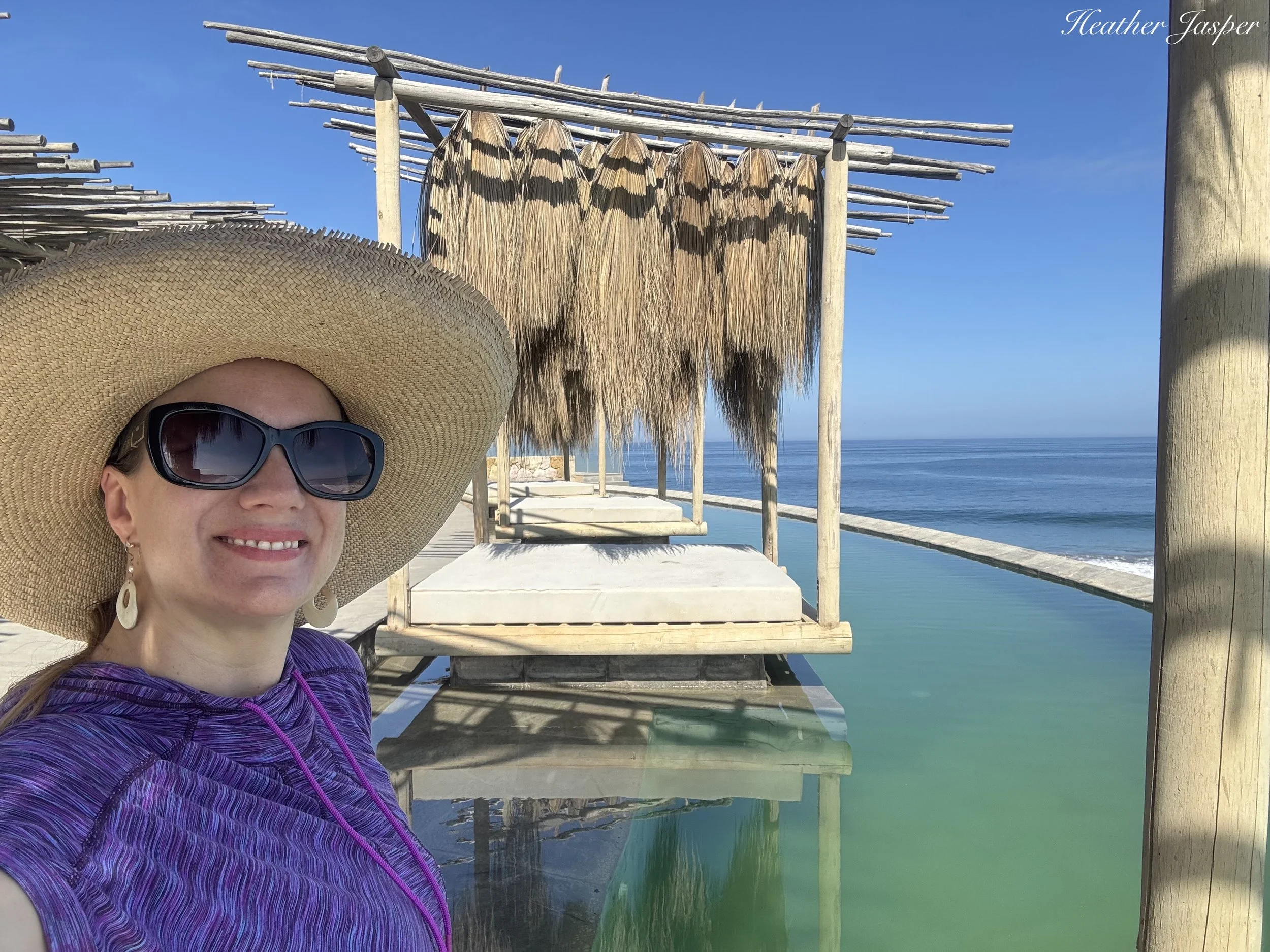
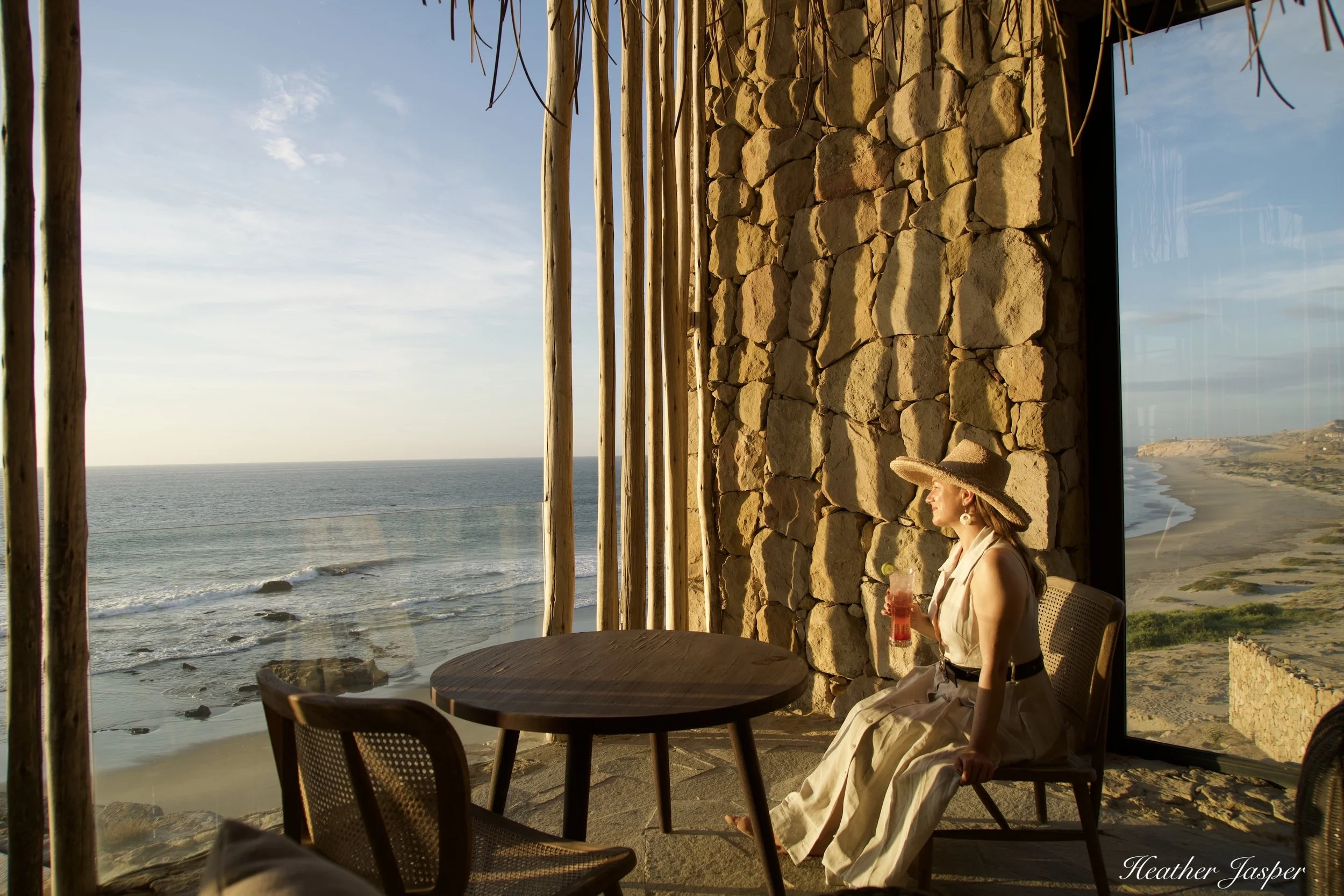
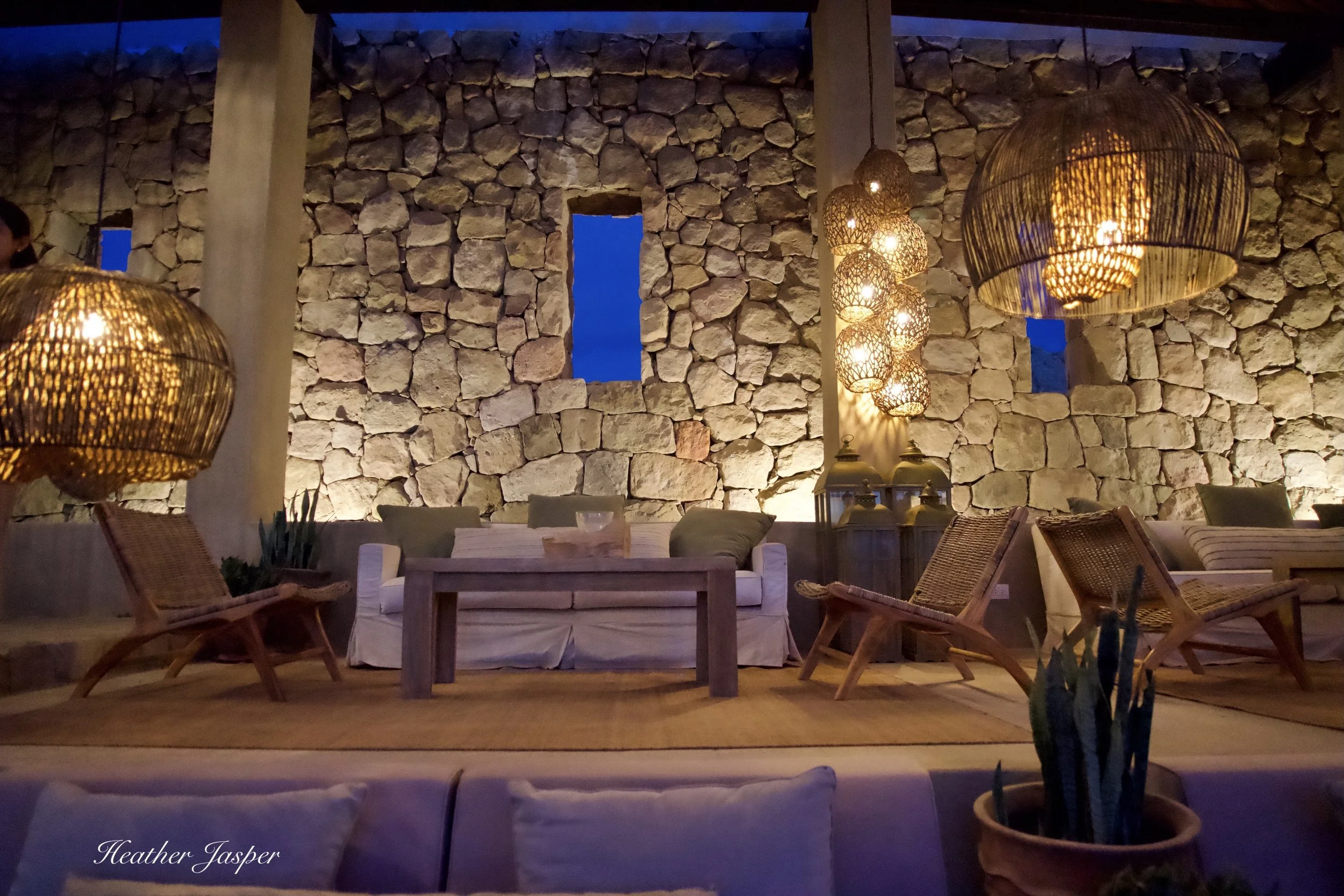
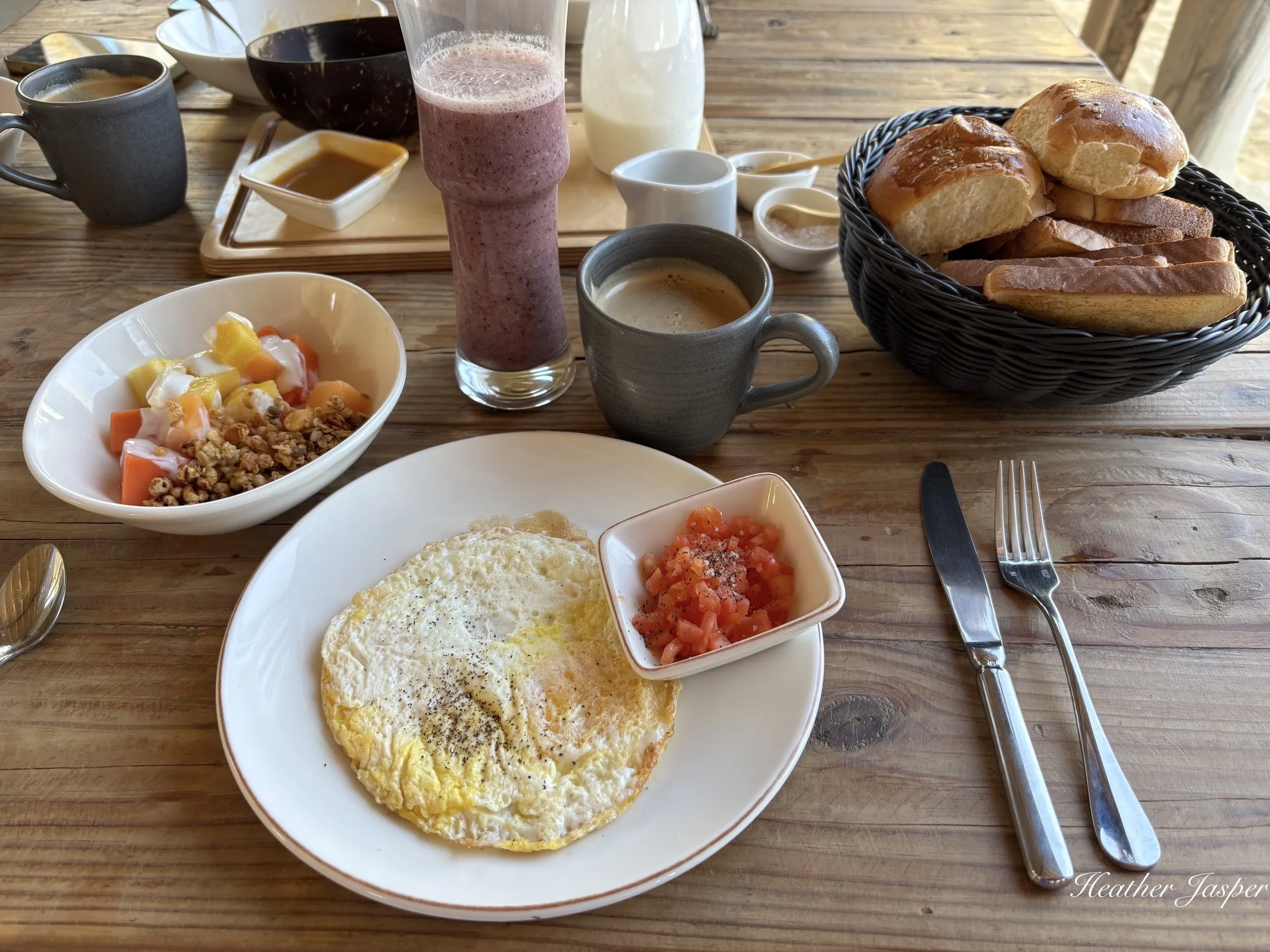
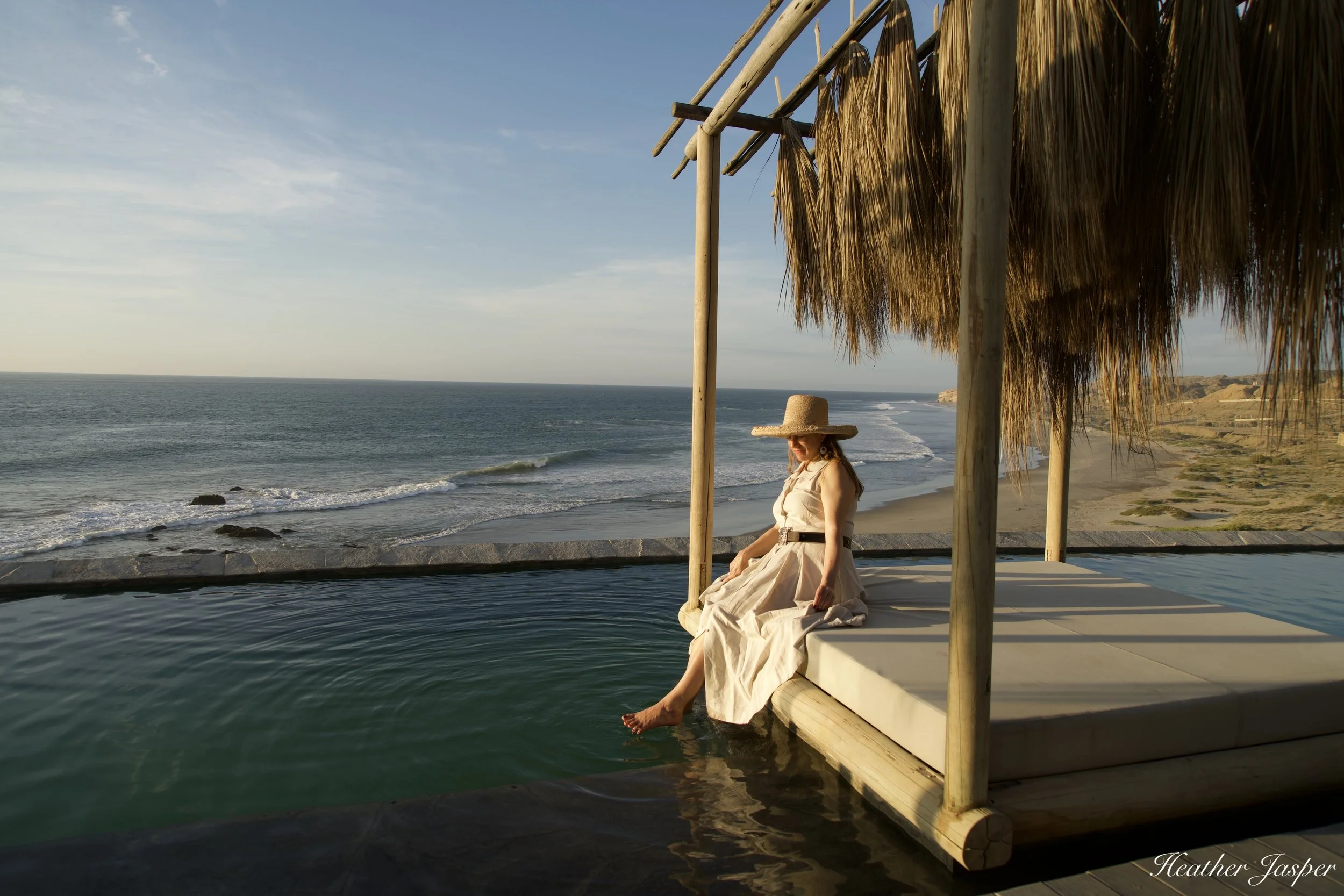
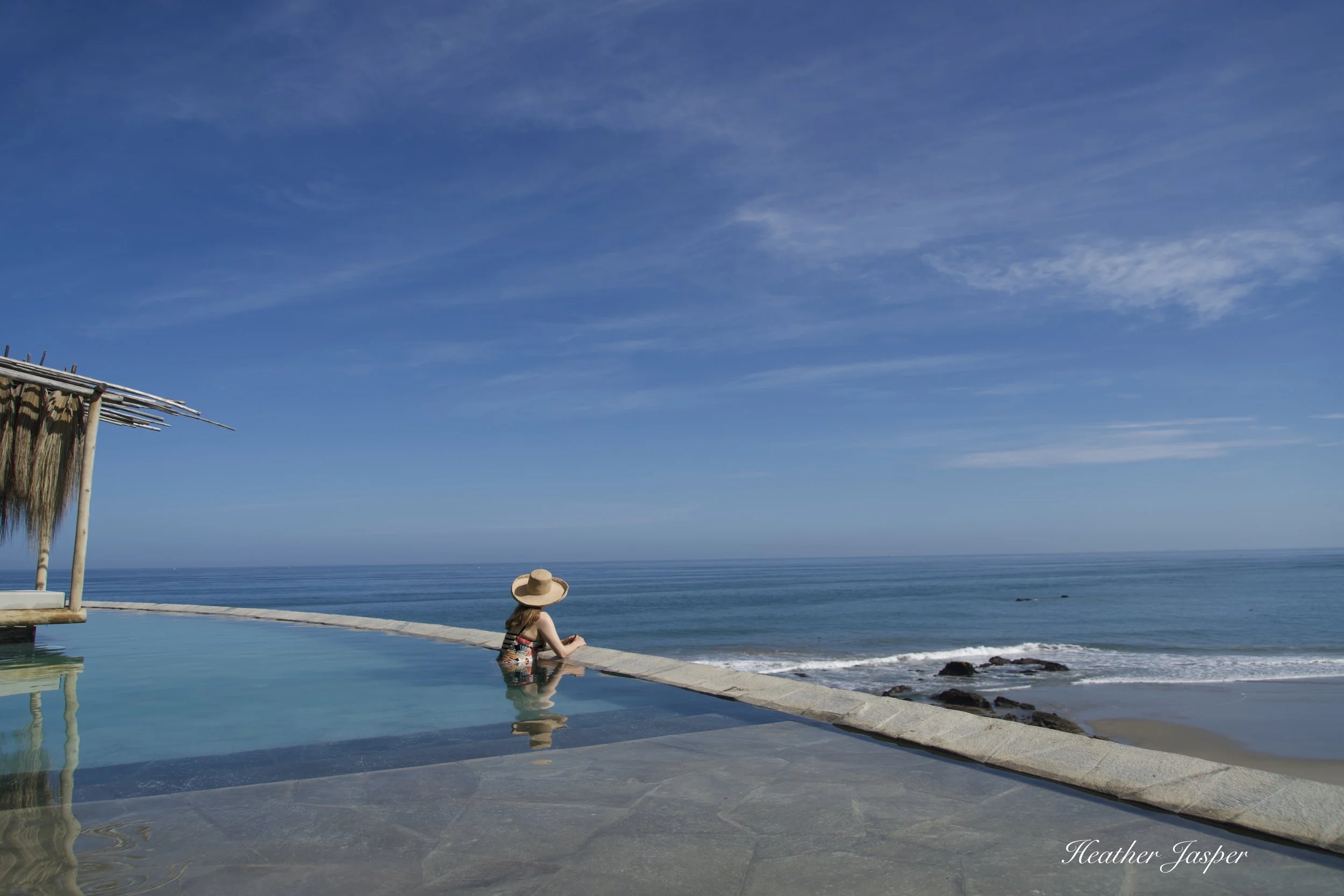
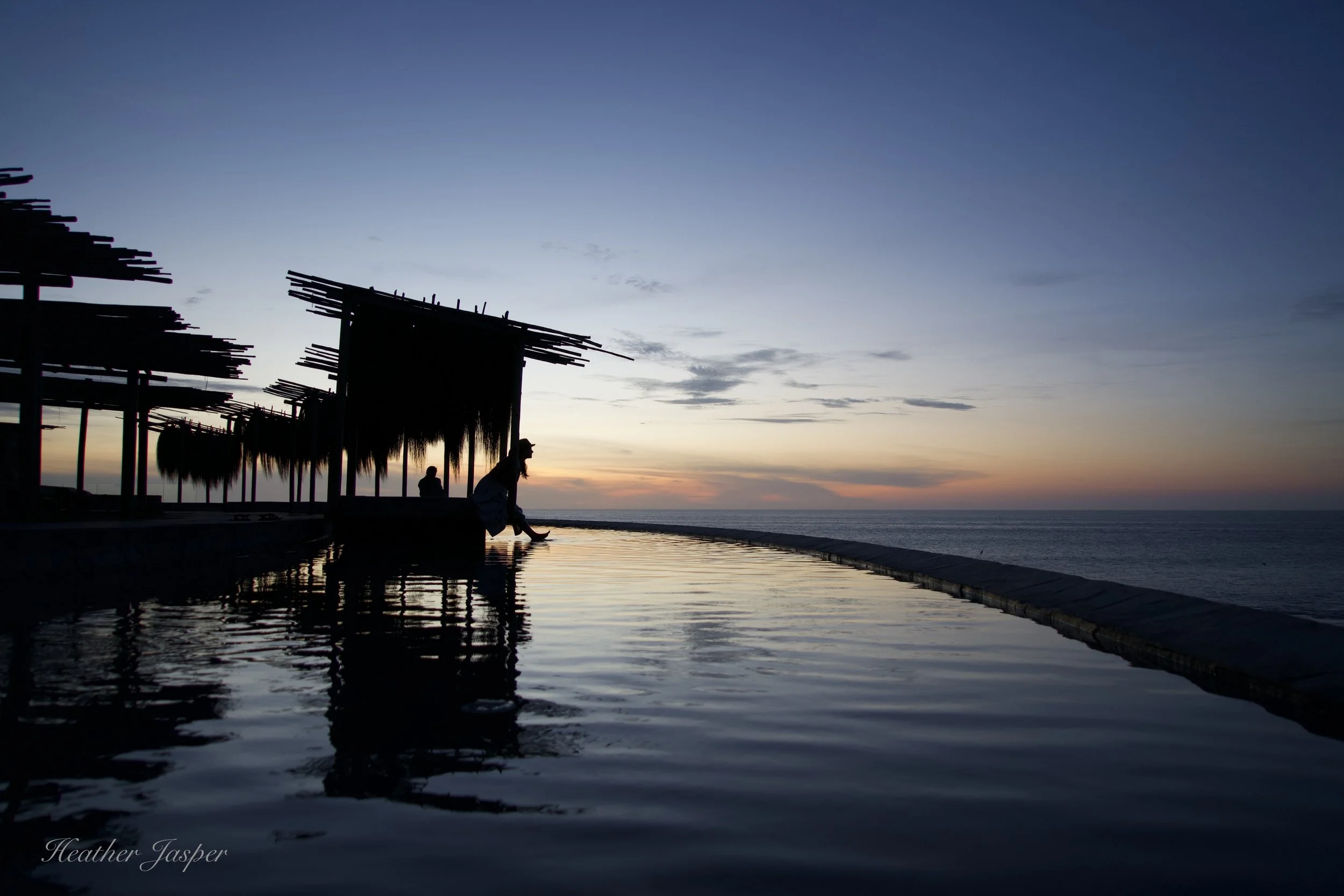
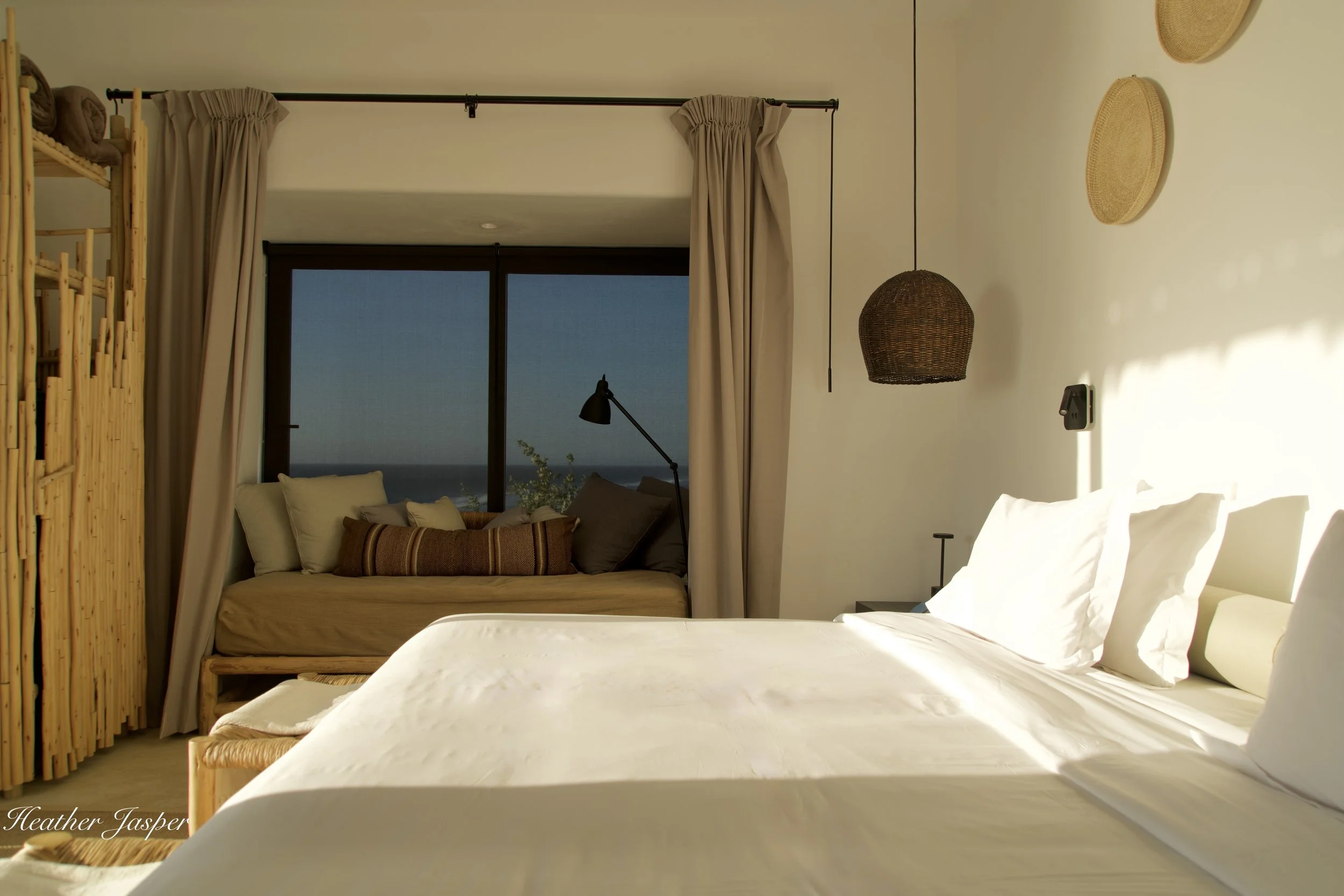
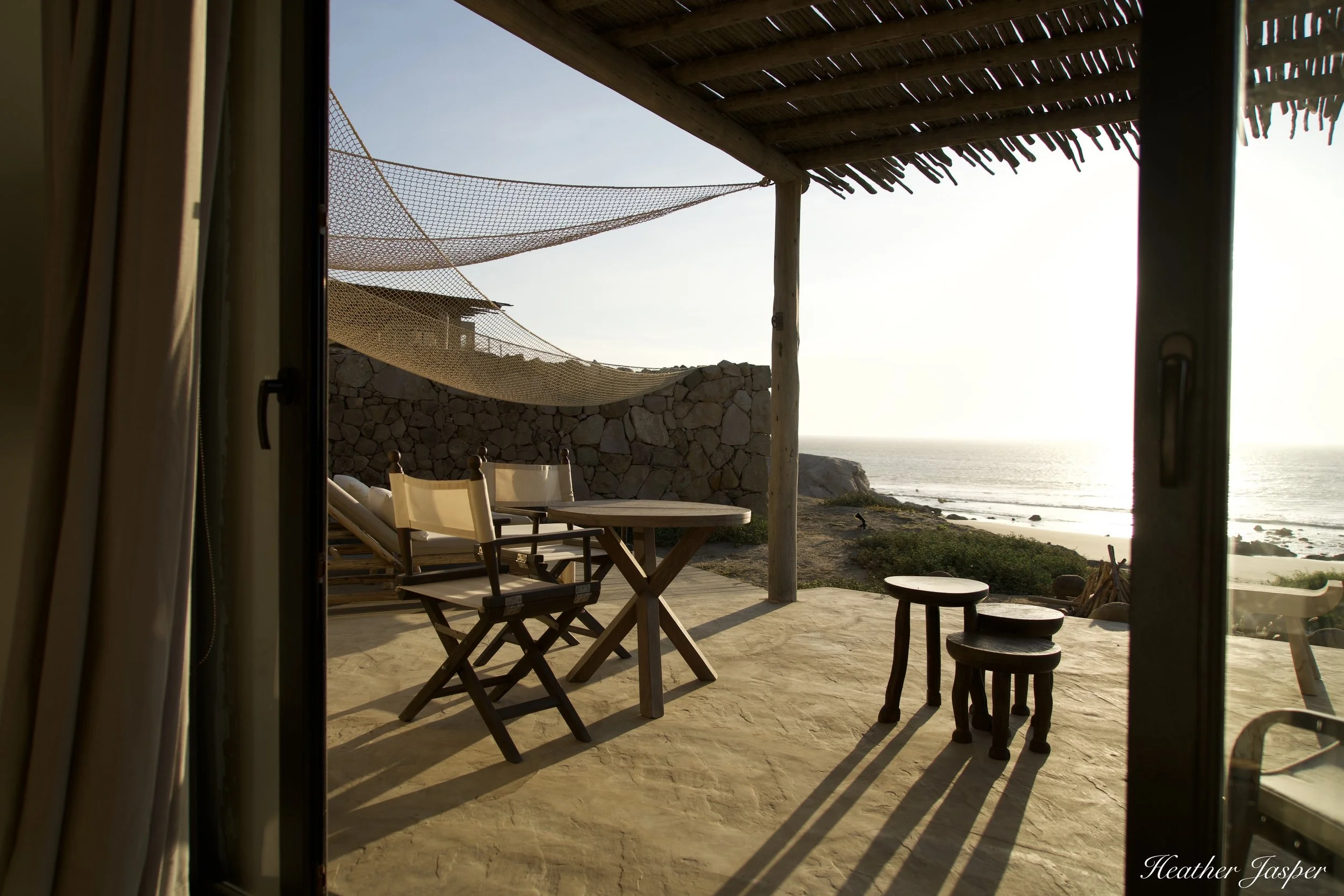
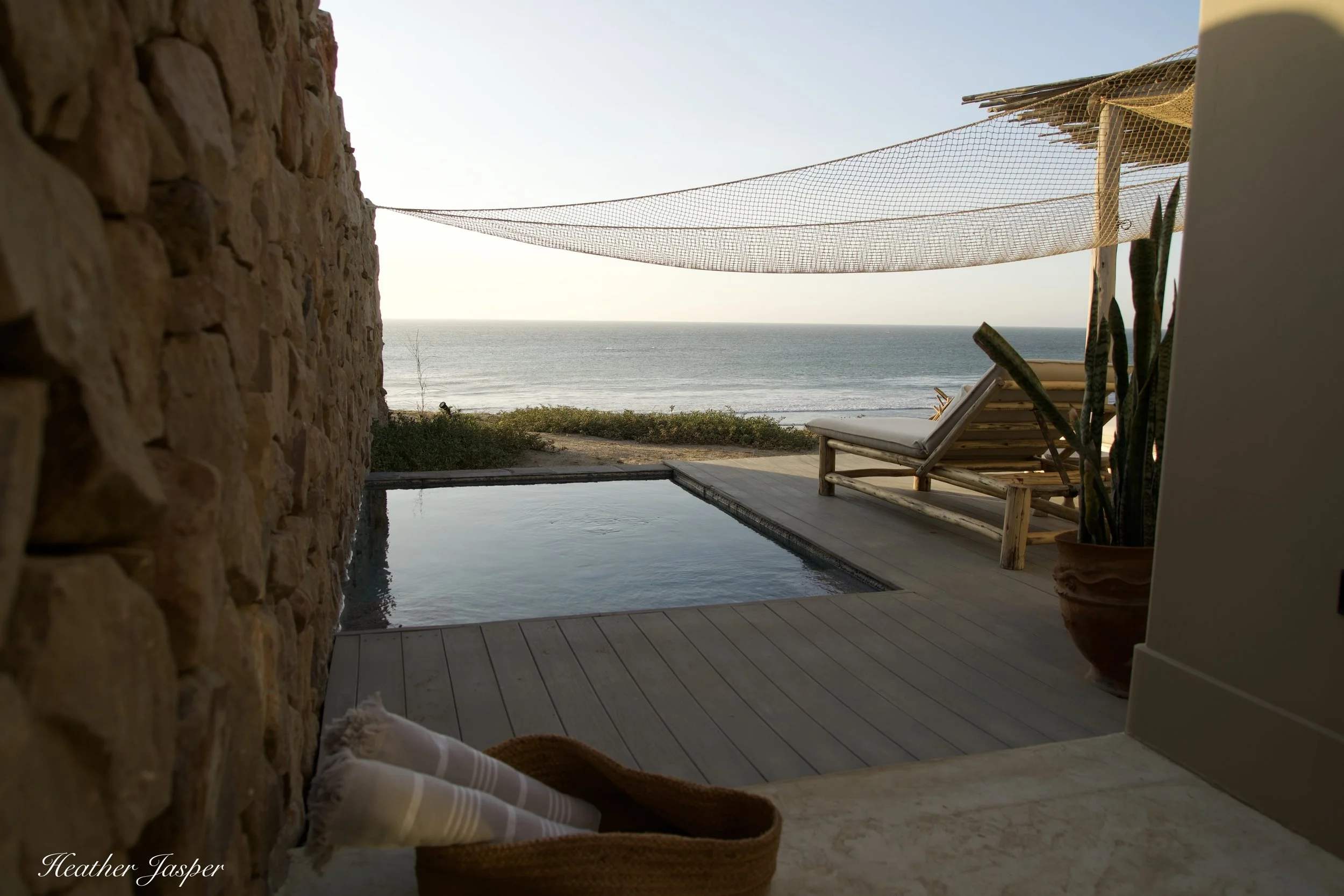
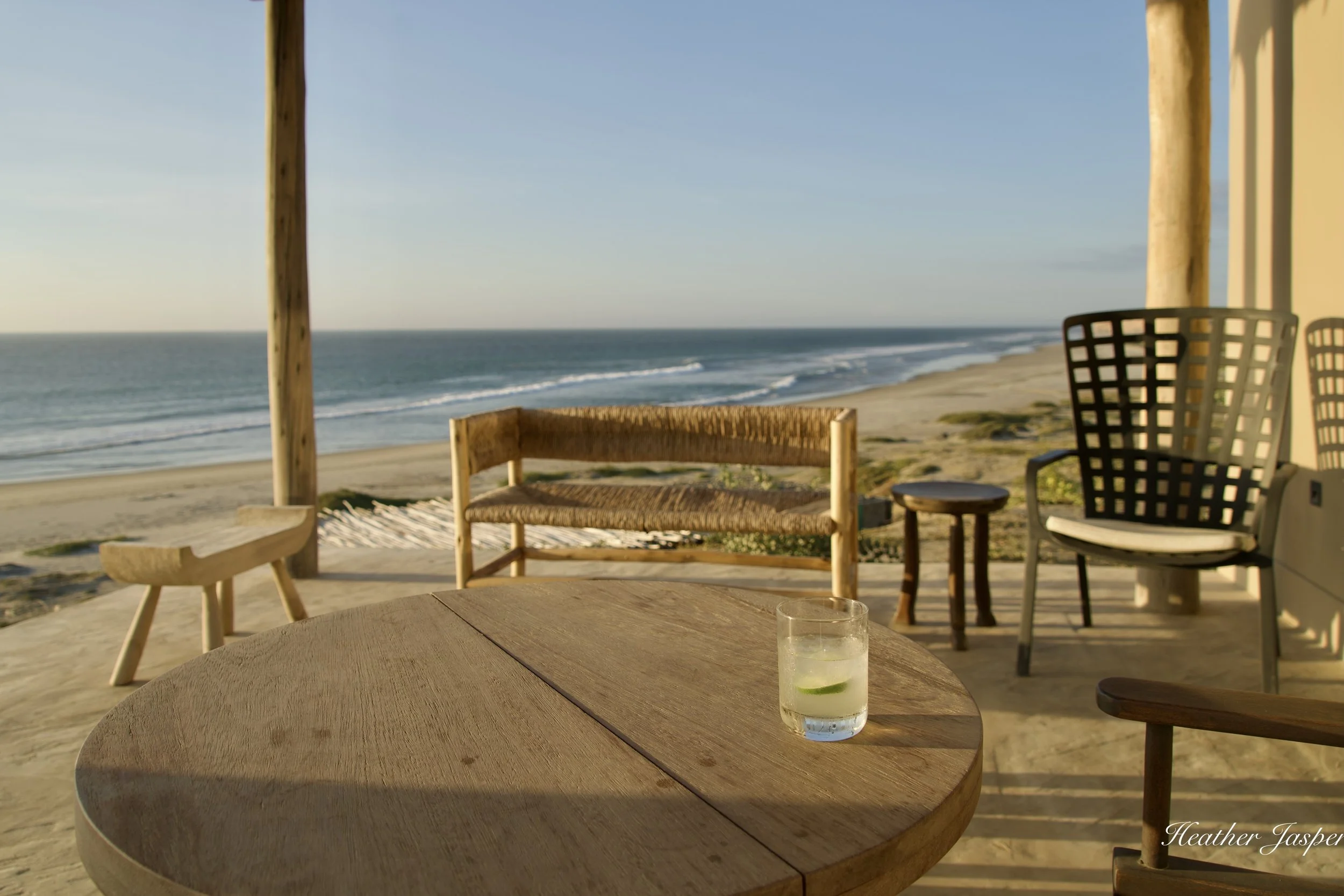
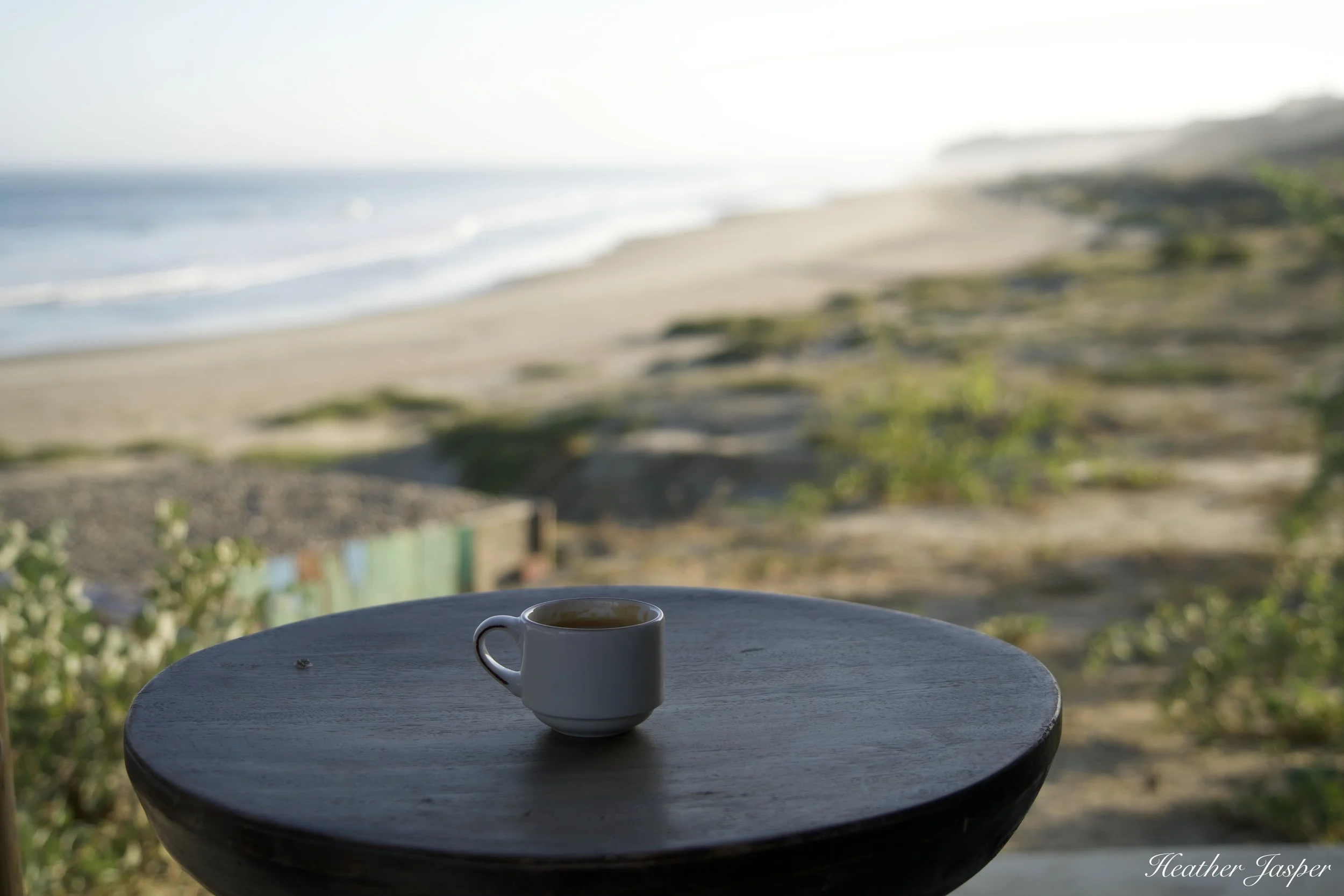
I cannot recommend Inkaterra Cabo Blanco more highly. It has thirteen suites set above a deserted section of beach that was cleaner than any other beach I’ve seen in Peru. My suite was luxurious, especially my private plunge pool. The food was excellent, especially the lunch menu which lists the morning’s catch with the kind of fish, weight, time it was caught and name of the fisher.
In such an important biodiversity hotspot, I am so glad to see Inkaterra taking an active role in conservation.
Even more important to me personally, this is Peru’s most sustainable beach resort. Inkaterra began eco-tourism in Peru 50 years ago in the rainforest and is now conserving 700 hectares (1,730 acres) of land along the coast plus another 100 hectares (250 acres) in the ocean.
There are a couple guesthouses in the village of Cabo Blanco, near Orlando’s restaurant, but they’re very basic.
How to get to Cabo Blanco?
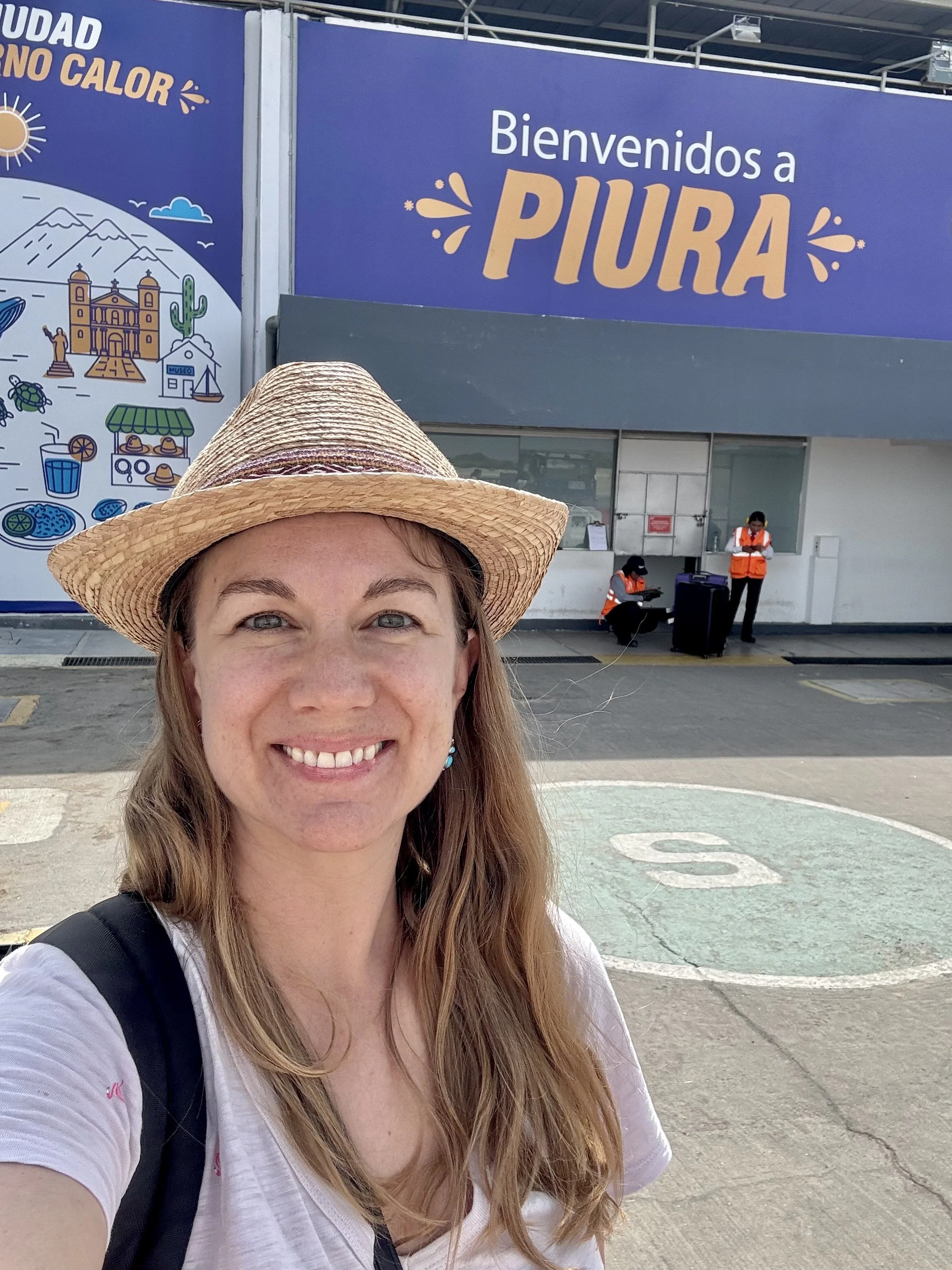
It’s less than an hour driving from the Talara airport to Cabo Blanco but almost three hours from Piura, so unless you want to see the Catacaos market in Piura, fly into Talara. I flew into Piura because of flight times coming from Cusco (and connecting in Lima) but will go to Talara next time.