
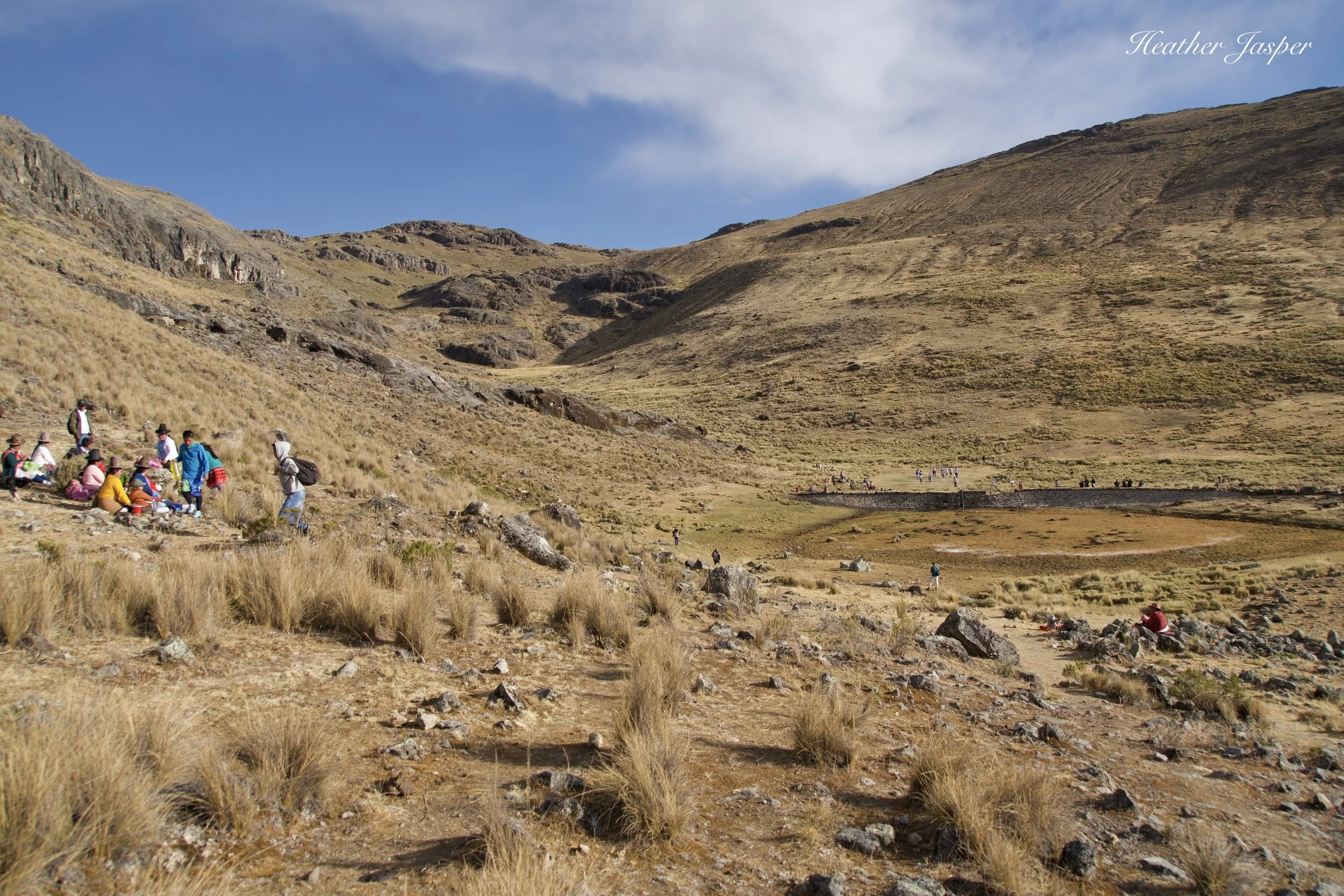
The flat, grassy area will fill with water as soon as the rainy season starts.
Peru’s Cordillera Negra is already getting hit by climate change.
(Sometimes I get to do fascinating things in Peru that have nothing to do with tourism).
On August 27 I was invited to attend the inauguration of a pre-Inca dam in Peru’s Cordillera Negra.
If you’re wondering “what’s a pre-Inca dam” or “why does a dam get an inauguration” or “how do you inaugurate a dam” or “where is the Cordillera Negra,” read on!
I’ll also explain why ancient dams in the Cordillera Negra matter, in case you’re wondering that too.
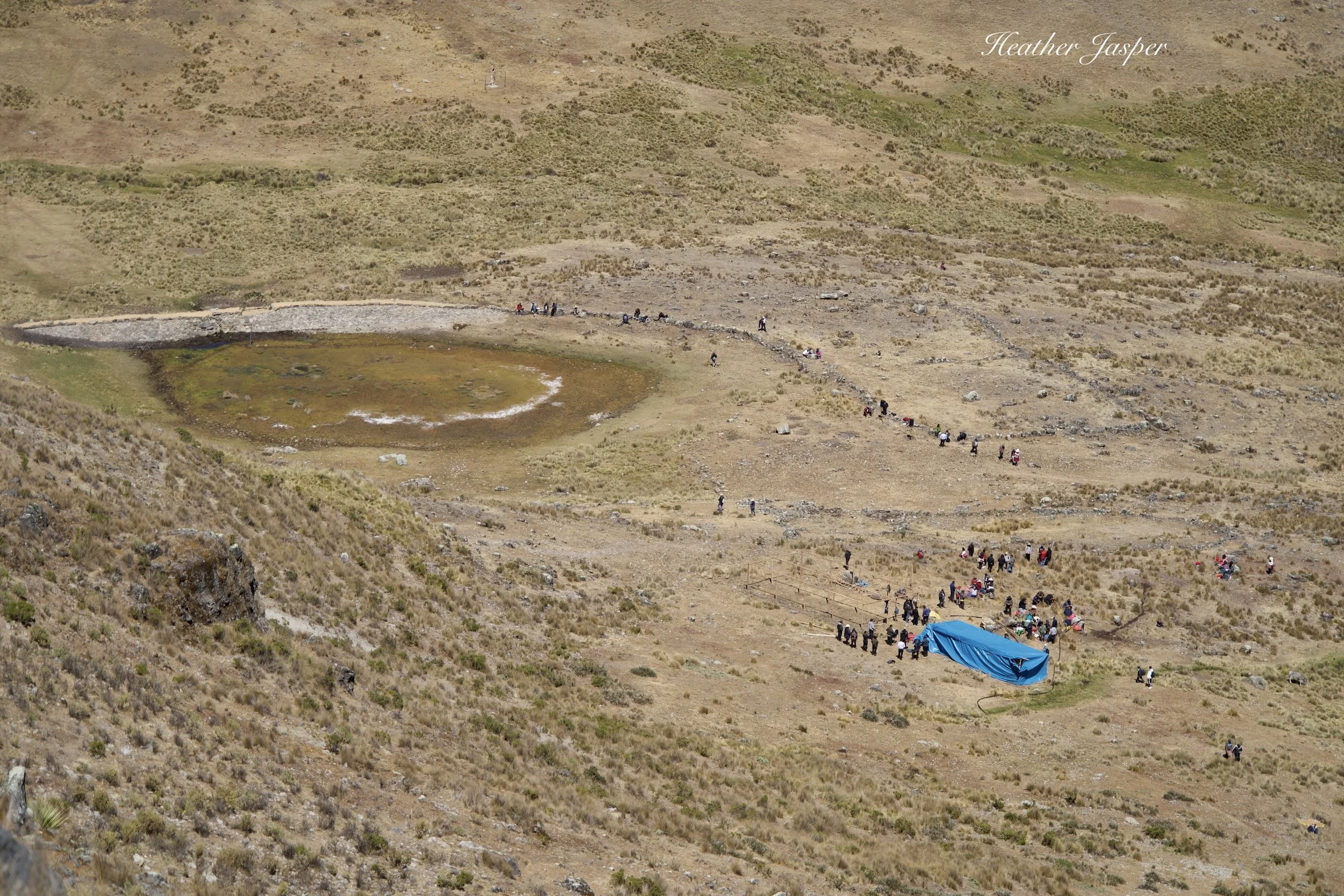
The stone wall on the left side of the photo is the reconstructed ancient dam called Shuclluyoc. The blue tent is where the cooks are preparing pachamanca.
What’s a pre-Inca dam?
Long before the Inca ruled much of South America, advanced civilizations lived throughout the Andes. Some of their most important technology was designed to manage water resources, with complex systems of dams and canals.
Pre-Inca dams were constructed before 1200 CE, more than 800 years ago and many were constructed much earlier than that. They were generally made with materials quarried near the damsite, especially stone and clay. The Shuclluyoc dam (pronounced shouk-you-yolk) is a prime example.
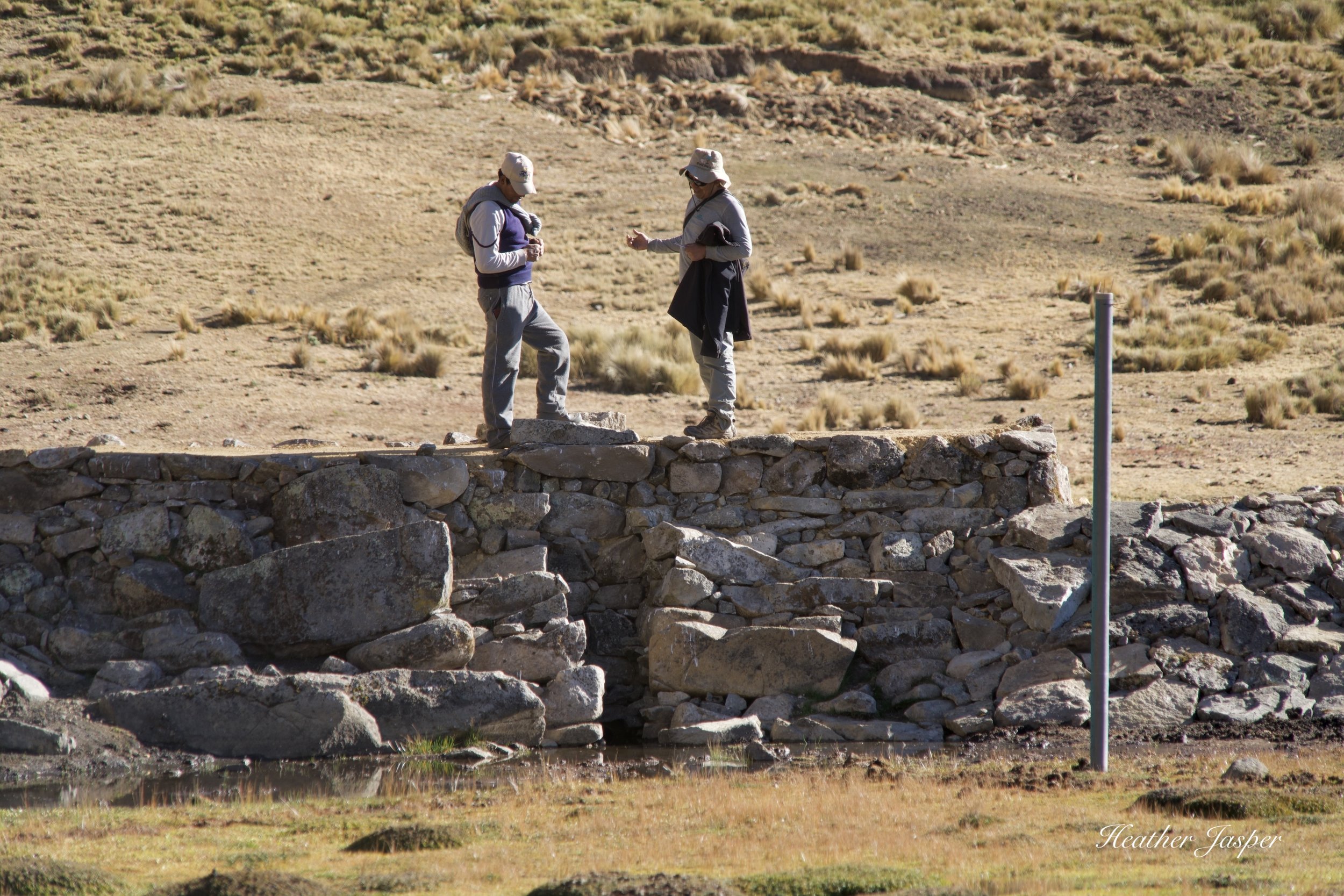
The original pre-Inca structure
Christian Florencio of Diaconía shows a Cajamarquilla community member how Shuclluyoc’s original structure was preserved as part of the reconstruction. The vertical pipe has pressure sensors to monitor the dam.
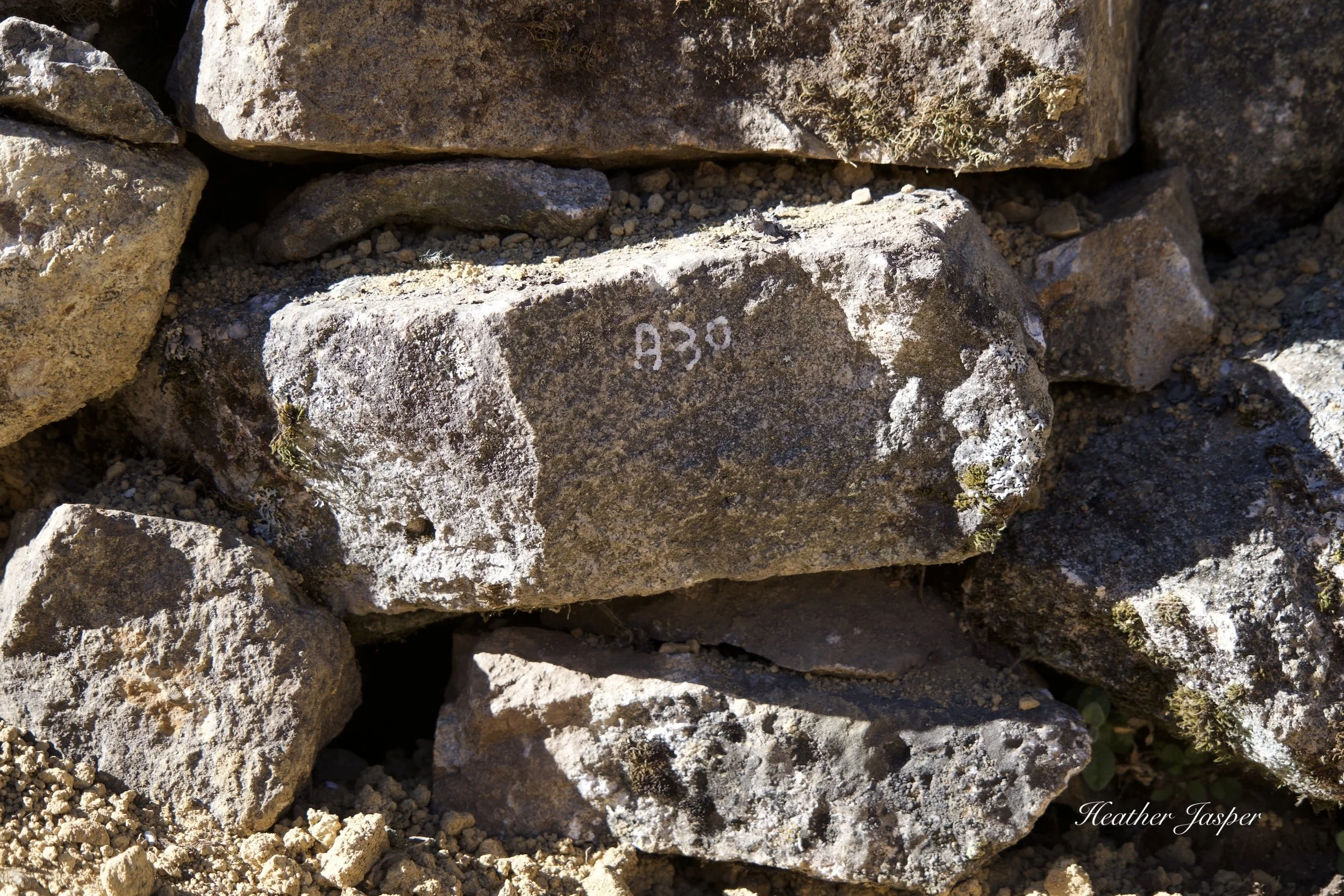
Preserving history
The part of Shuclluyoc that survived 500 years of neglect was carefully documented, studied and then the stones were numbered so they could be put back in the right place during reconstruction.
The Andes are on the Pacific Ring of Fire and have always been very seismically active. The cultures that developed in the Andes understood that and invented unique technologies to make their buildings earthquake resistant, with examples as old as the shicras of Caral some 5,000 years ago.
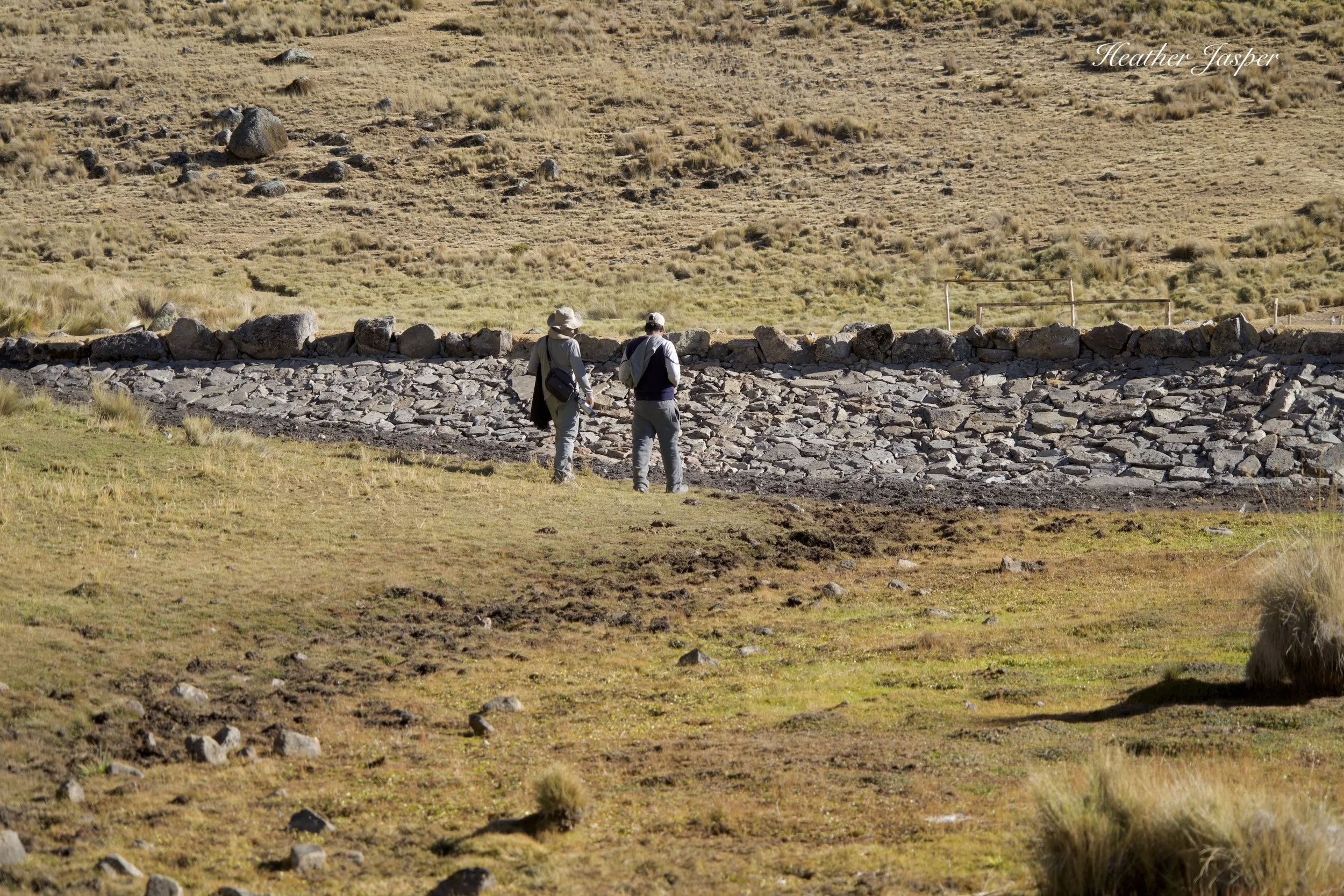
It’s not a tall dam because the most effective water management systems in the Andes include many small structures rather than one big reservoir.
Pre-Hispanic dams in the Andes were very earthquake resistant, whether they were built during Incan times or whether they were pre-Inca. Europe is not as seismically active as the Andes, so the invading Spanish conquistadors and colonists did not value Andean technology, nor did they make their buildings as earthquake resistant.
Andean water management systems integrate many small structures designed to fill both reservoirs and aquifers. Many structures do not make ponds or reservoirs but instead create mechanisms for rainwater to soak into aquifers so it’s released slowly through springs, rather than just running down to streams and rivers. This banks water for later in areas that don’t get snowfall and also prevents floods by stopping all rainfall from becoming runoff.
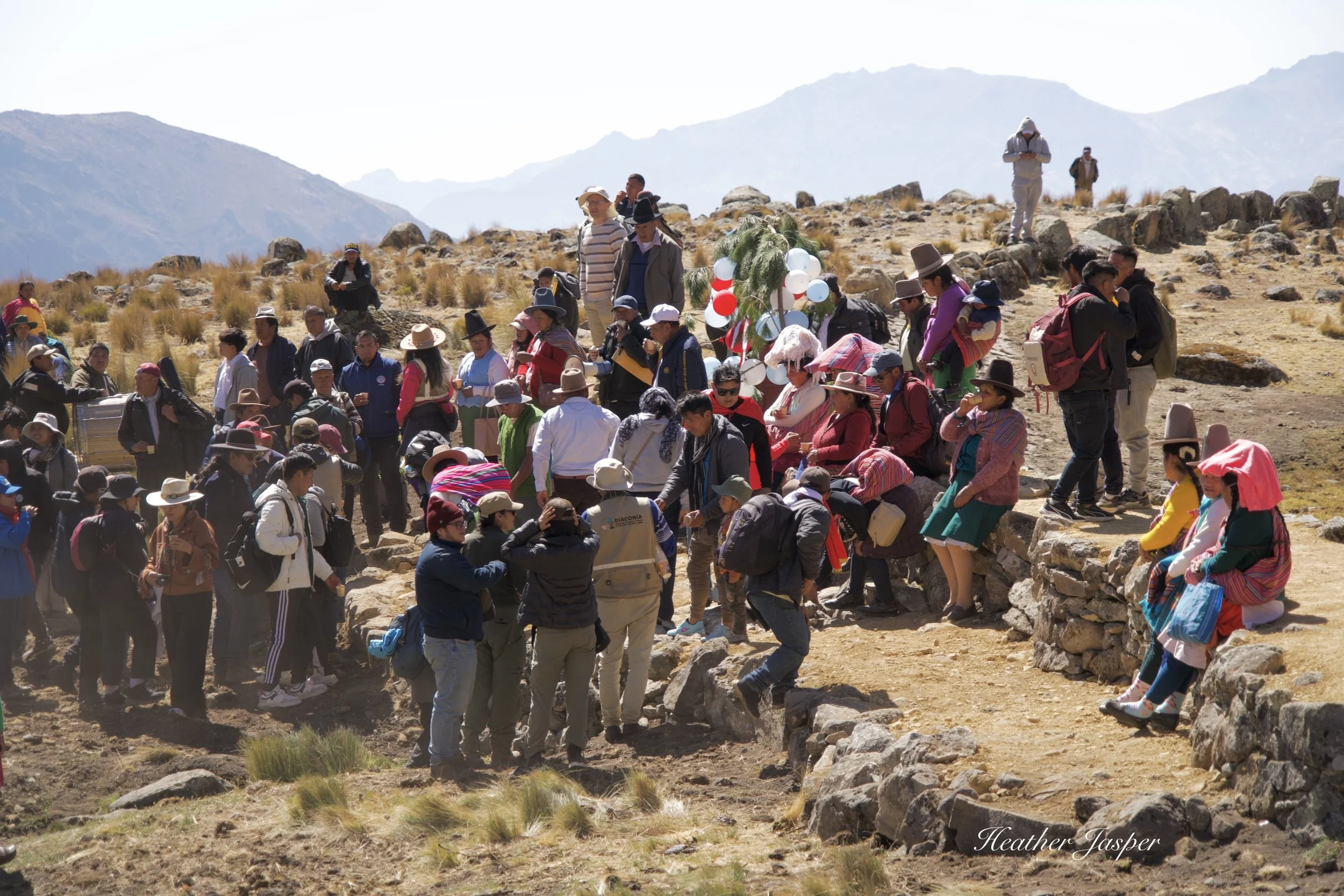
The community of Cajamarquilla is far downhill from Shuclluyoc, but that’s exactly why they need as many parts of their ancestors’ water management system as possible.
Why does a dam get an inauguration?
This particular dam, called Shuclluyoc, is above the community of Cajamarquilla and will provide much needed water to the people who live there.
Most families in and around Cajamarquilla make a living from raising livestock, mostly sheep and cows. Cows especially need a lot of water and restoring ancient water management systems will allow the community to increase their livestock.
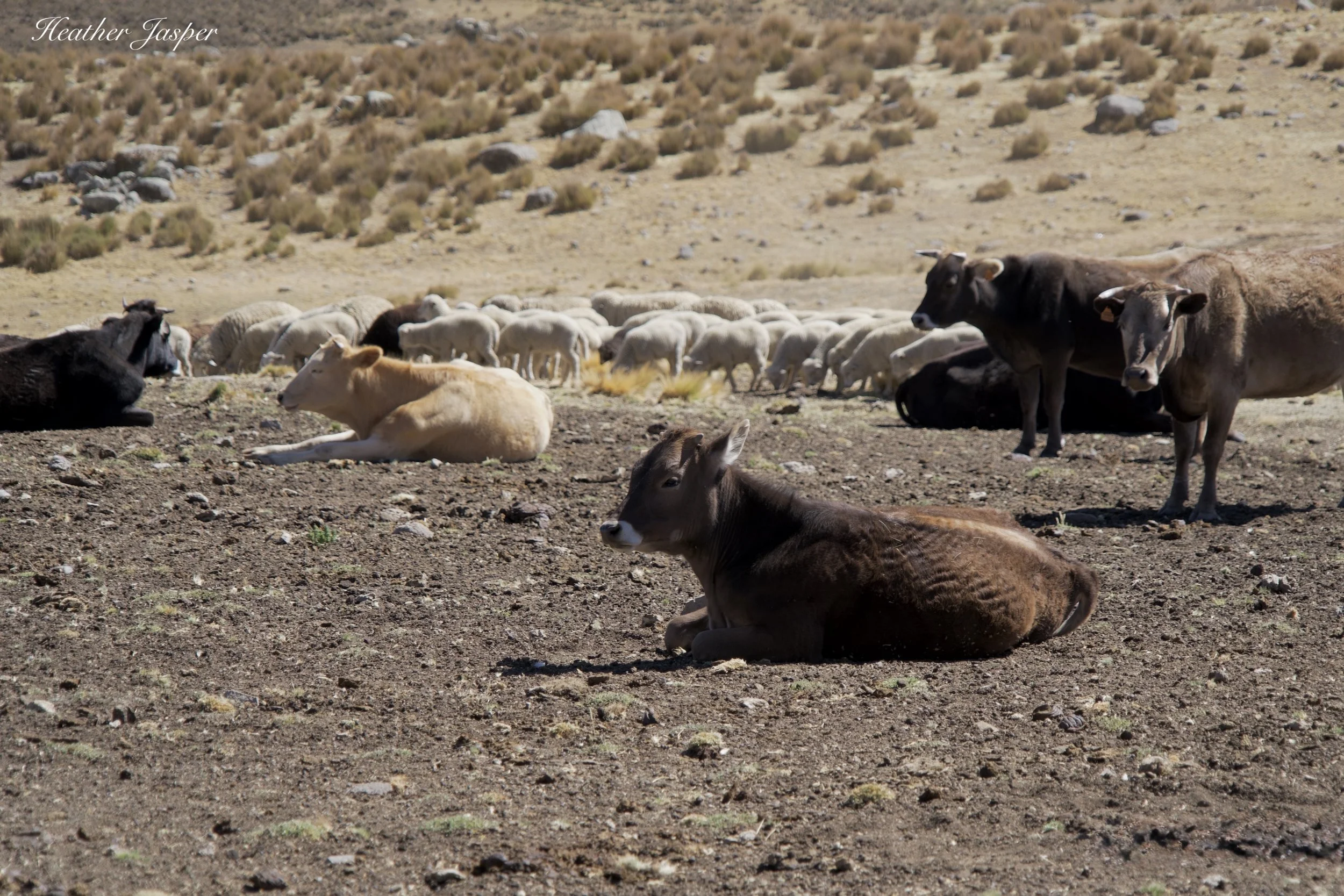
Cajamarquilla’s livestock
This area was always used for grazing. Cajamarquilla’s livestock today is cows and sheep but their ancestors had massive herds of alpacas and llamas.
The people of Cajamarquilla worked hard to restore the dam, which is important for their current water use but also for honoring their ancestors’ past and preparing for a future of climate change.
After about 500 years of colonizers telling Andeans that their technology isn’t as good as European technology, we now have scientific proof that the dams designed by the ancestors of Cajamarquilla are better than modern cement dams designed with European techniques. Culturally, that is something to celebrate in the Andes.
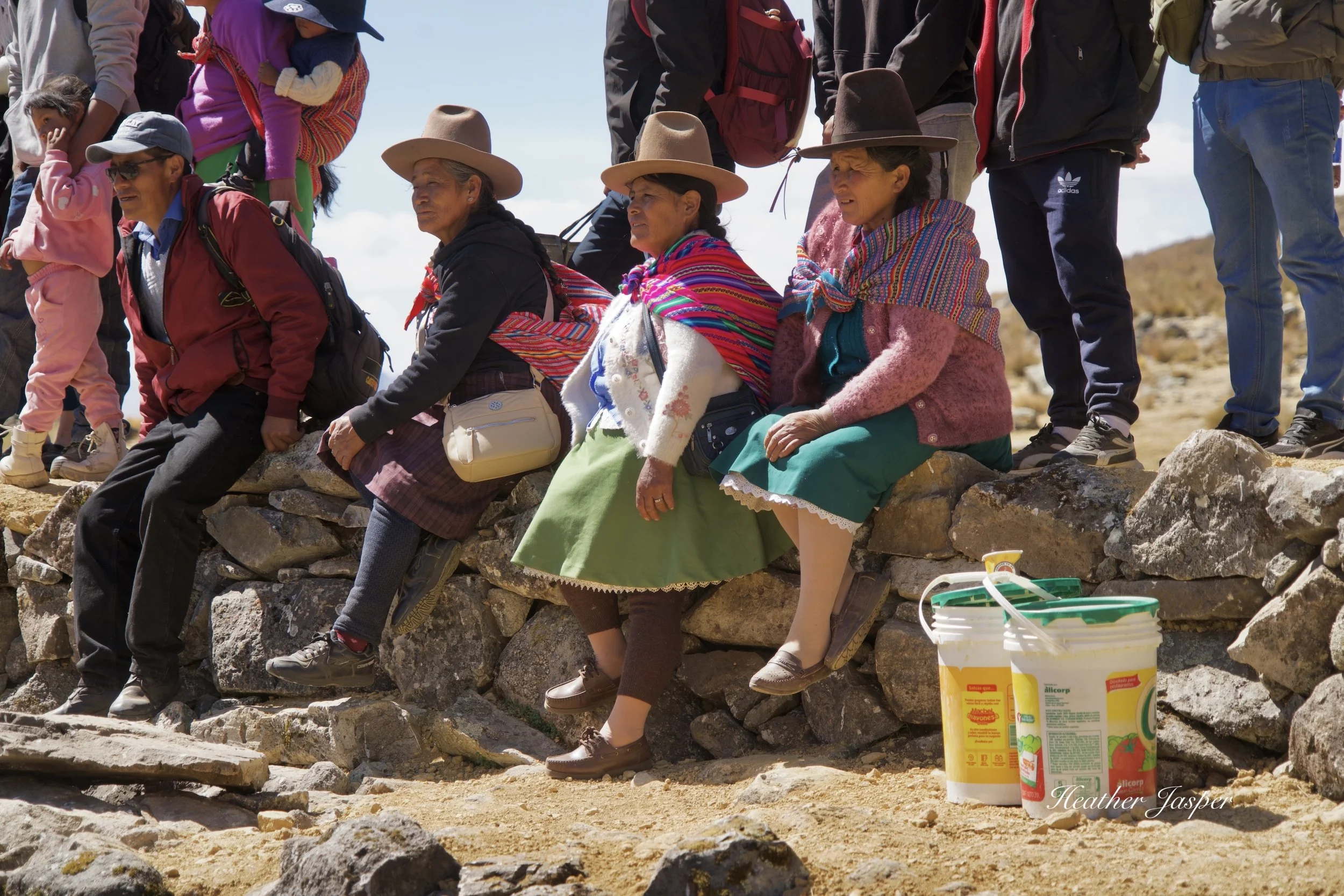
Saving Cajamarquilla
Without water for their livestock, Cajamarquilla risks being abandoned. Peru’s cities are already filling with climate refugees looking for work and depopulated areas are at high risk of illegal mining, which creates toxic runoff.
The restoration of an ancestral dam is something to celebrate because climate change is reducing Cajamarquilla’s water supply. Peru is already suffering the consequences of climate change, with more frequent and more severe droughts, which exacerbate the Andes’ retreating glaciers. Peru has the highest number of tropical glaciers in the world, with over 700 in the Cordillera Blanca, the mountain range parallel and to the east of the Cordillera Negra.

All Peruvian events require lots of food and the Shuclluyoc pachamanca was one of the best I’ve had.
How do you inaugurate a dam?
This was an impressive celebration, with about 200 people, who hiked several miles at 13,000-14,000 feet above sea level. Early in the morning community members began making a giant pachamanca to feed everybody. They led packhorses carrying huge sacks of potatoes and fresh fava beans, still in the pod. They also brought dozens of freshly killed chickens and several lambs. Everything was baked underground, the traditional way to make a pachamanca.
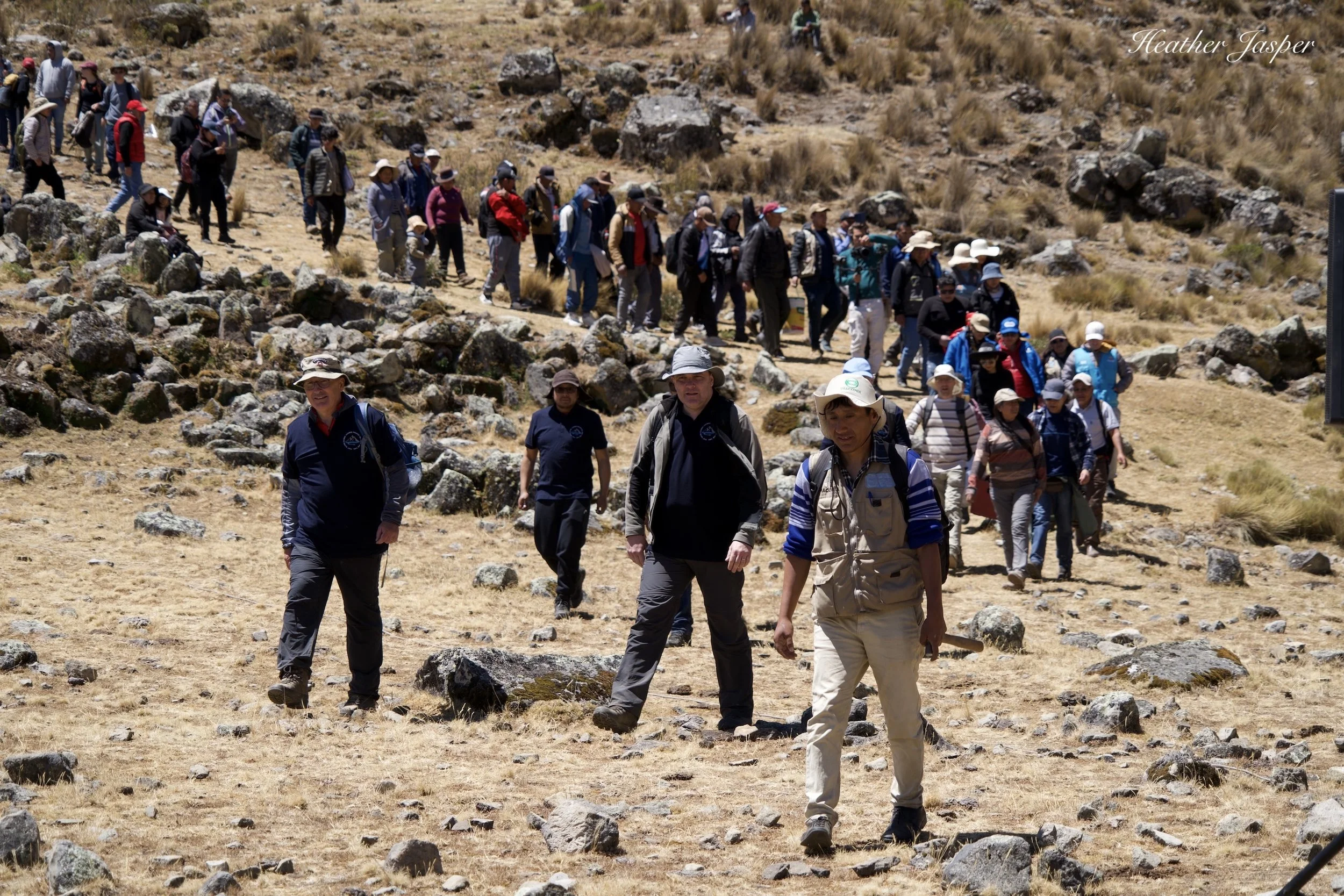
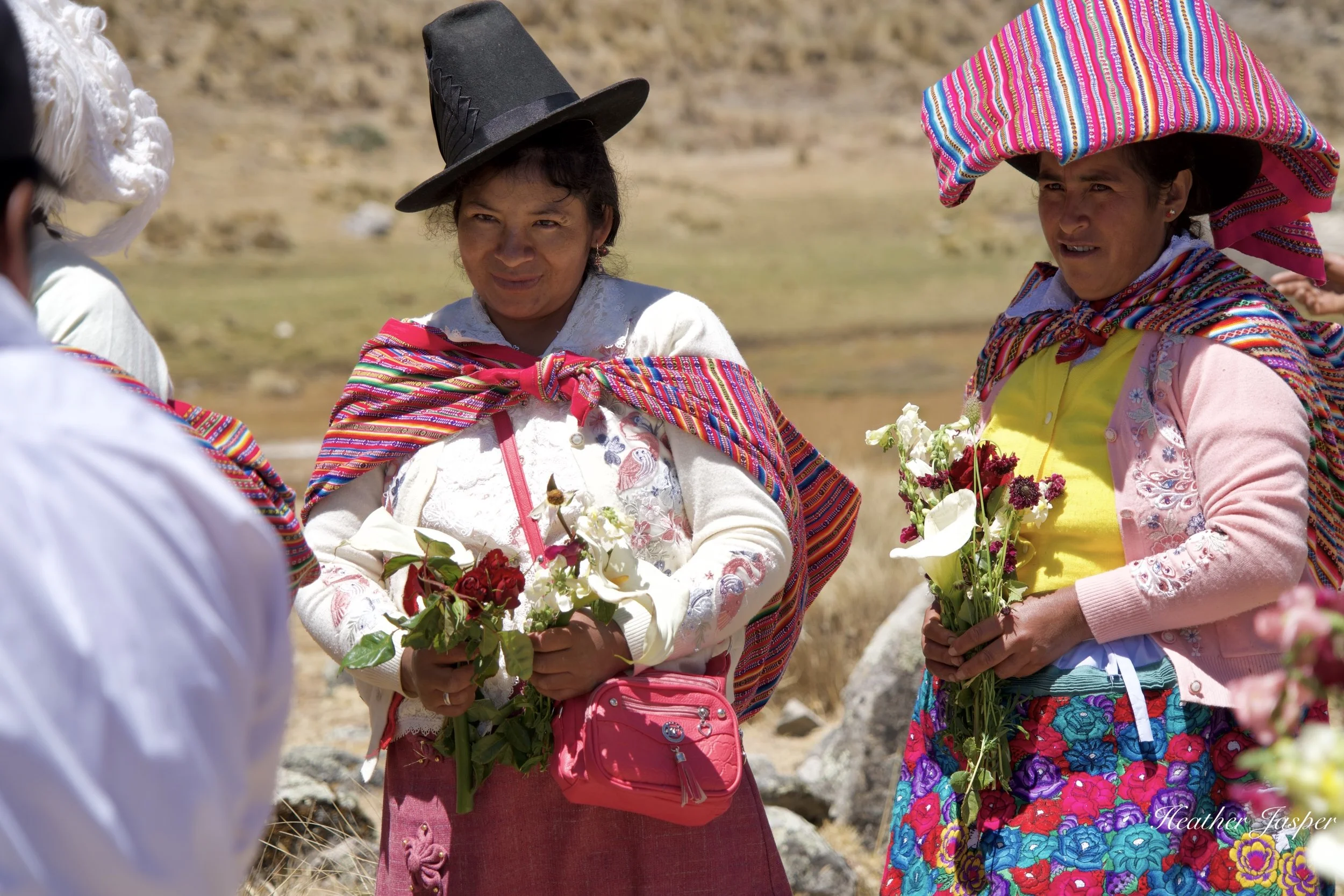
There was also a reception ceremony, where they community members lined up with chicha, flowers, potatoes and other gifts for the visitors, especially the archeologists who led the study and the local NGO workers who led the reconstruction. It was a touching moment to see how much the people of Cajamarquilla appreciated the hard work of people from as far away as Argentina and England.
Kevin Lane is the archeologist who started the Past Water Futures project and has committed to it far beyond his archeological studies. He won the UNESCO-ICOMOS Culture-Nature Prize for his research, which you should read more about in this Buenos Aires Herald article.
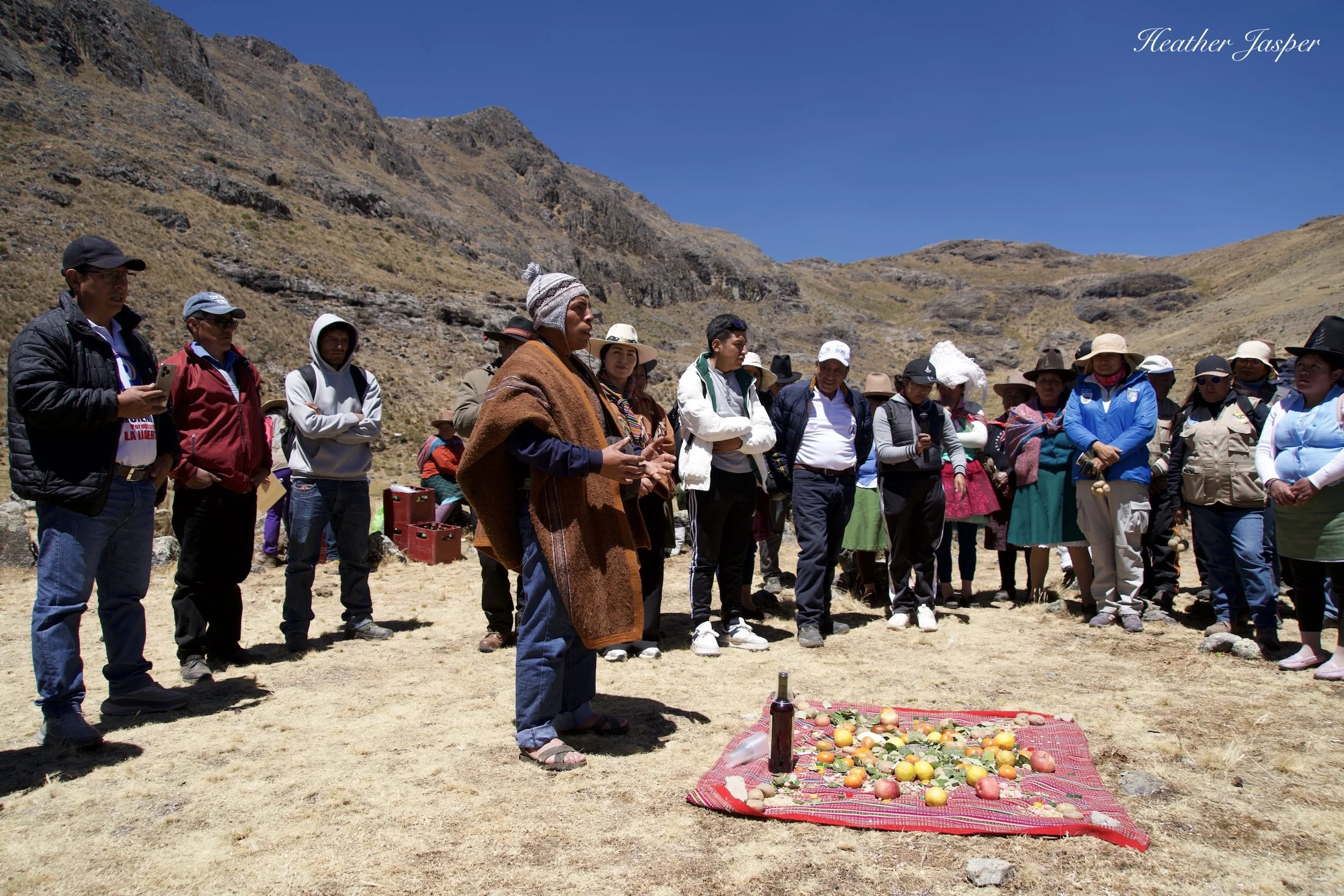
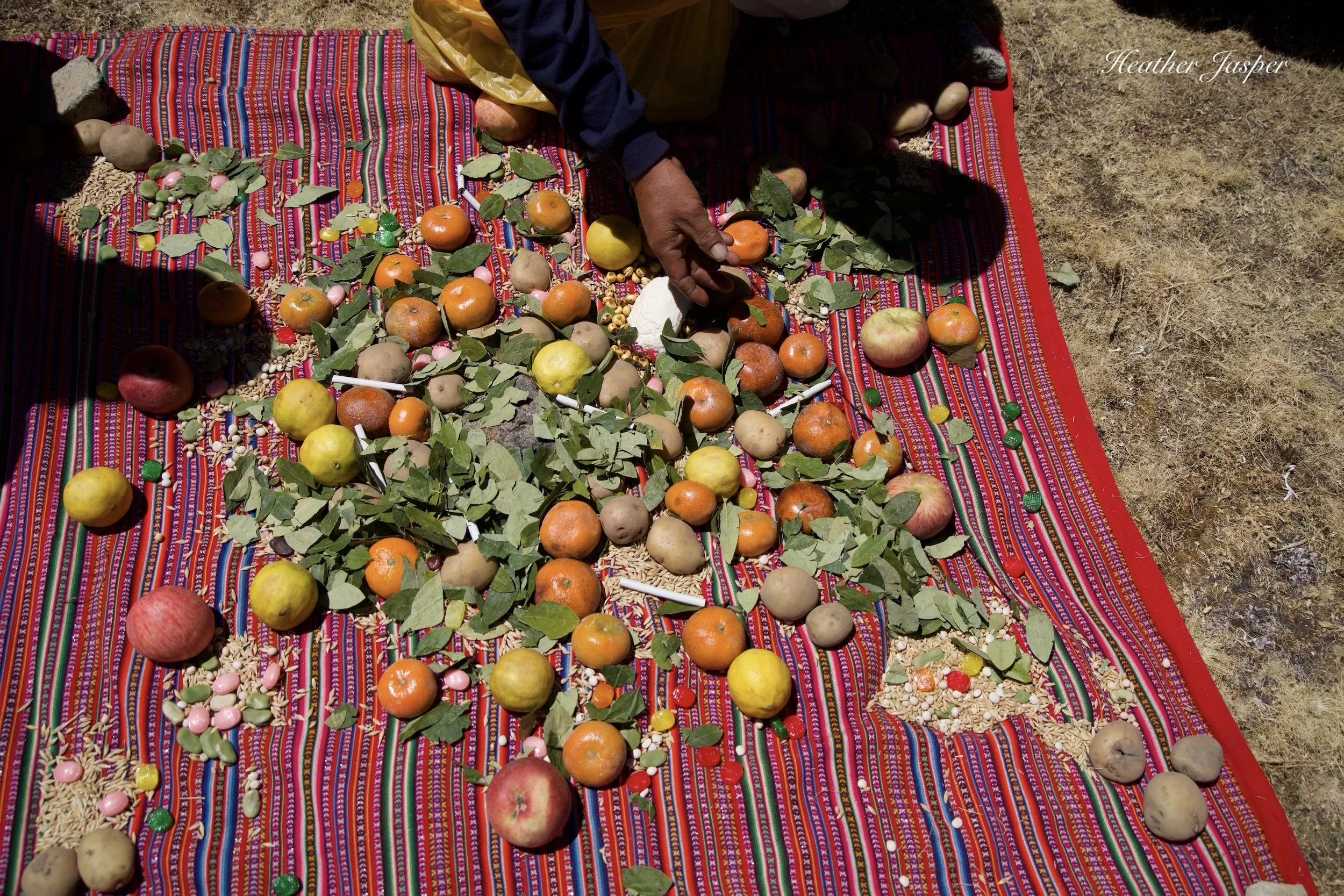
After the reception, a local shaman, who was also a former community president of Cajamarquilla, made an offering to Pachamama as gratitude and perhaps in supplication that rains soon fill the new reservoir. He spread a blanket out and first laid down the most common ingredients of an offering: potatoes, grains, beans, fruit, coca leaves and sweets. There was also a large lump of llama fat, symbolizing the traditional sacrifice of a llama.
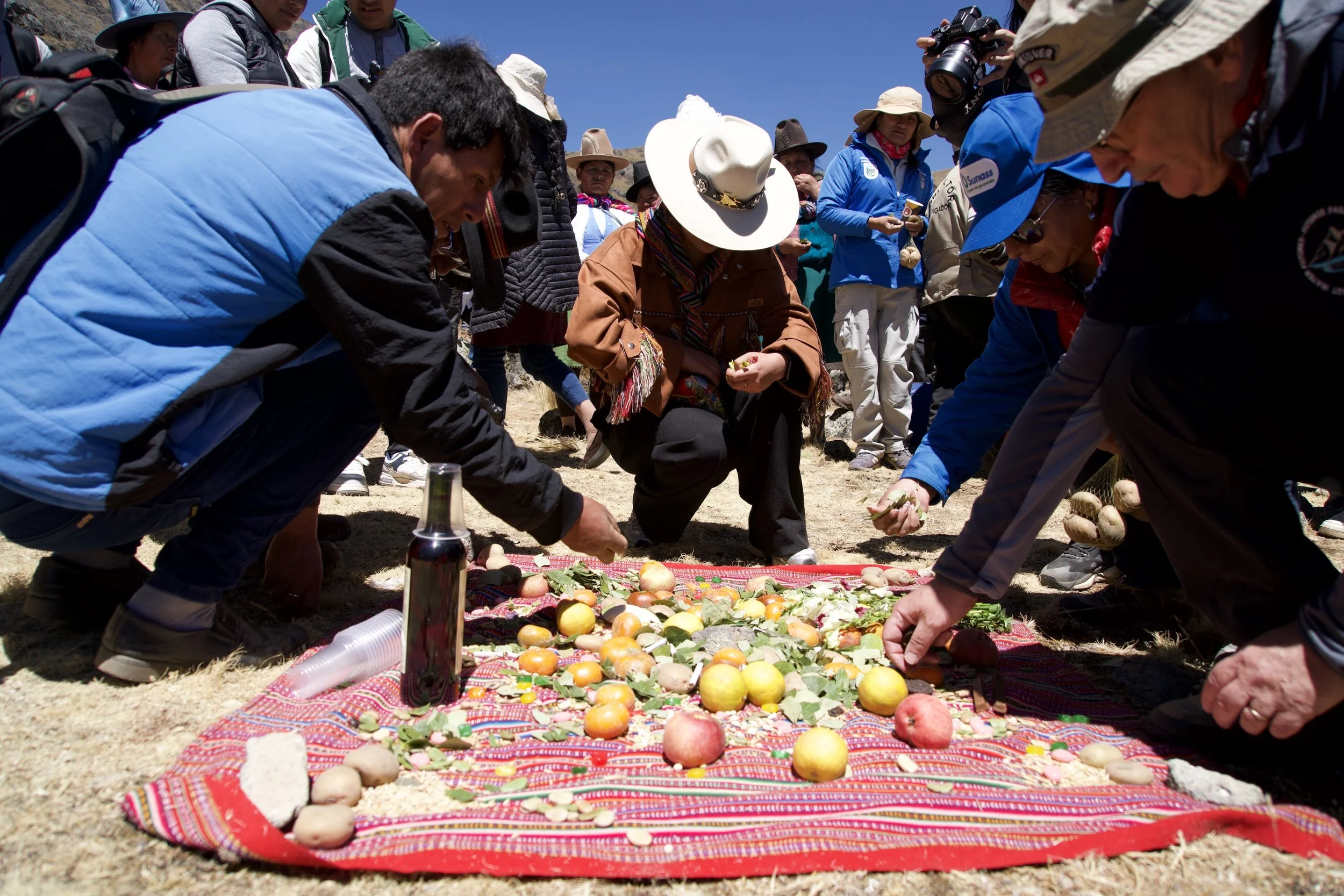
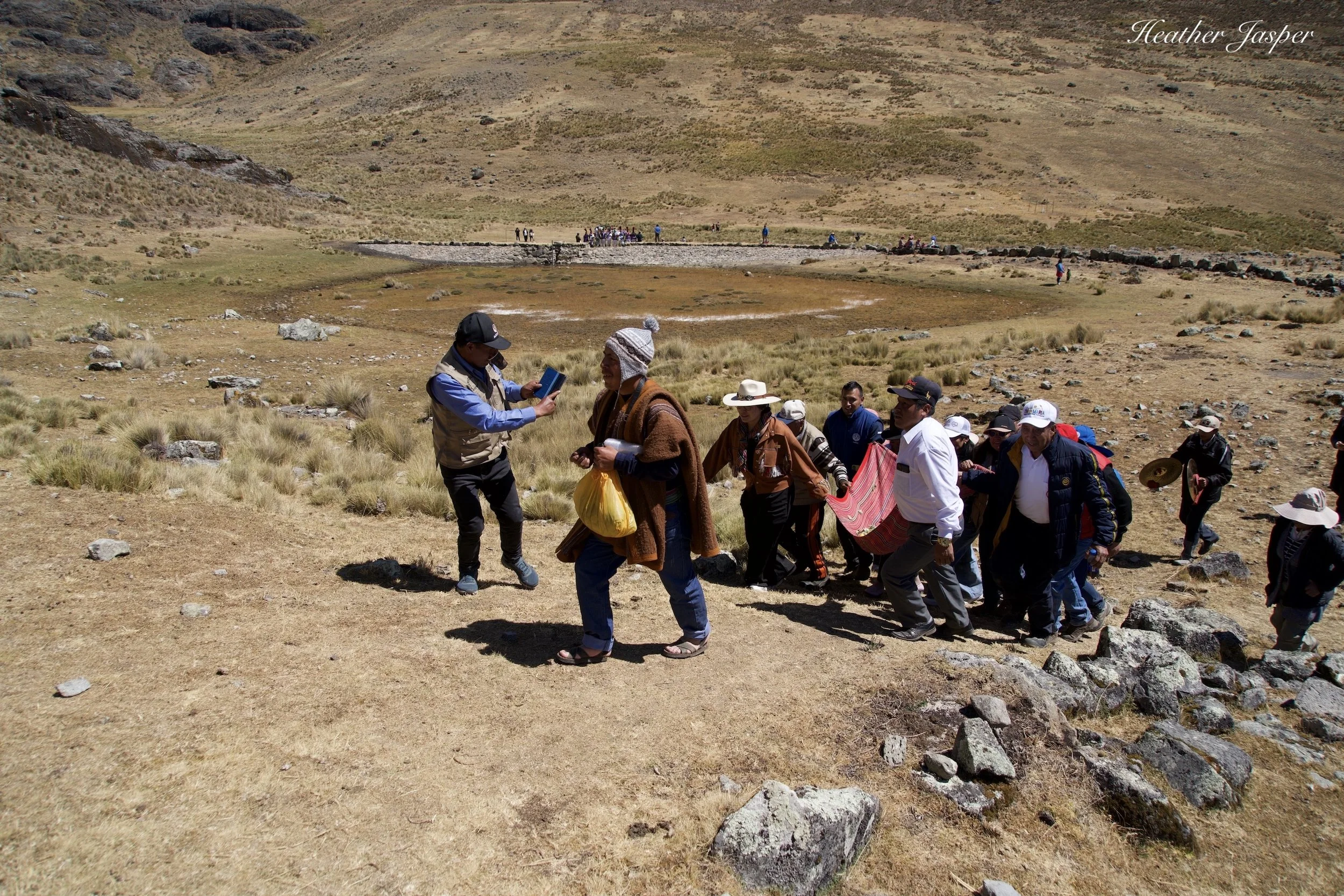
Then he stepped back and asked others to leave any offerings they wanted. People came forward to offer bread, tobacco and lots more coca leaves and candies. Everything was ceremonially buried on the hillside overlooking the dam and empty reservoir.
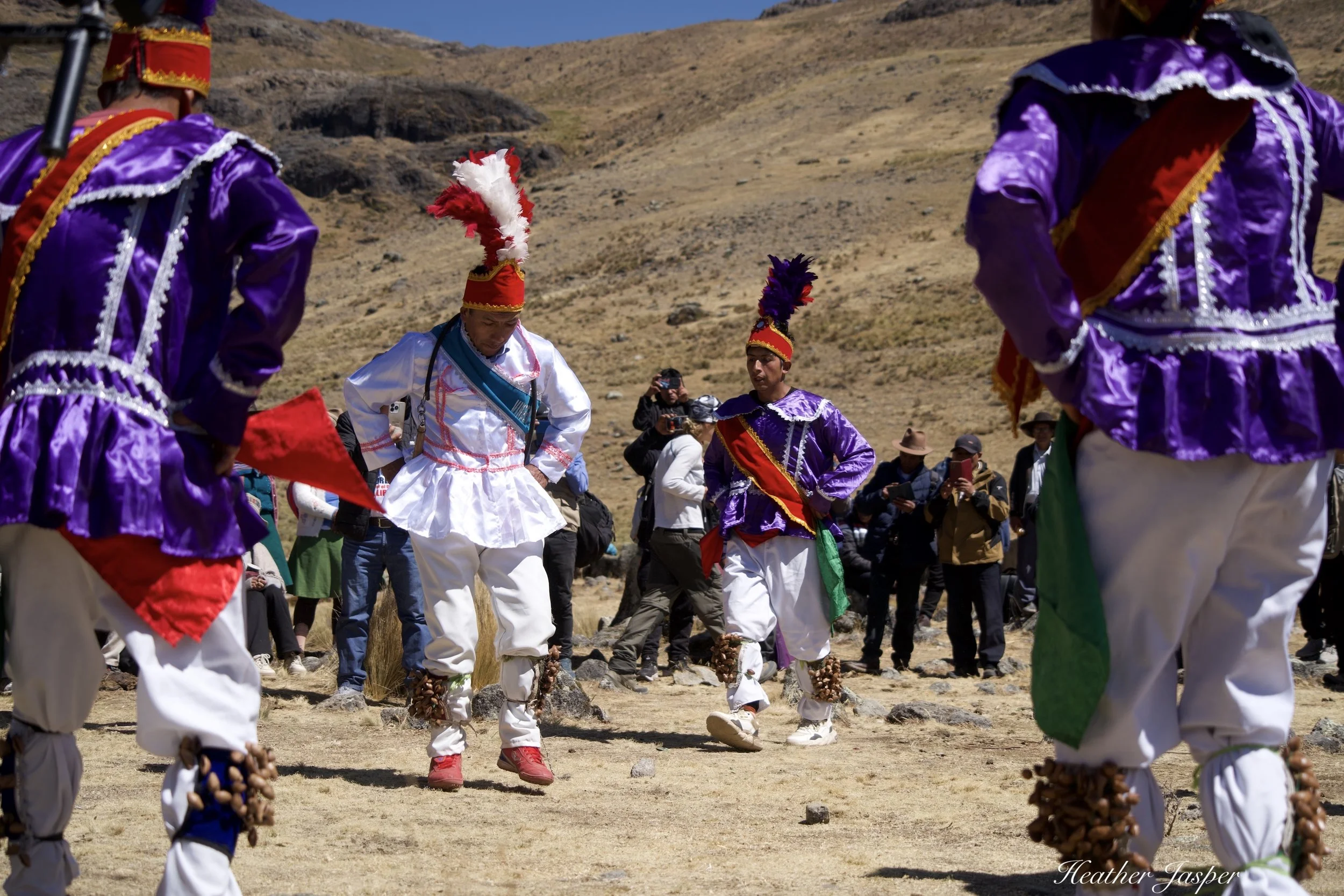
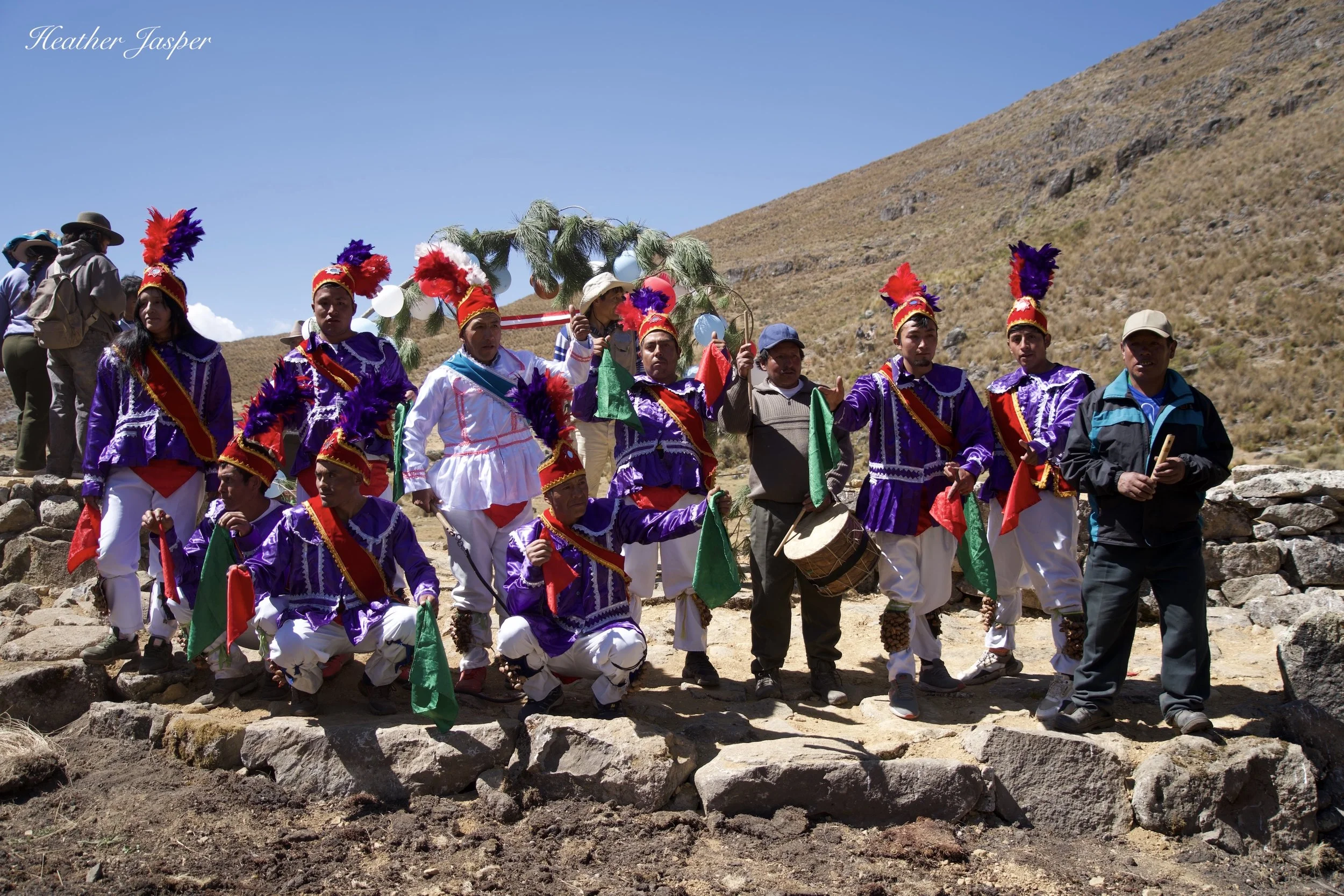
Next, a group from Cajamarquilla performed a dance that’s traditional in this part of the Cordillera Negra and then we all walked over to the dam. An arch made of branches was decorated with balloons, a ribbon to cut and a ceramic jar of chicha to break, as in other places some would break a bottle of champagne.
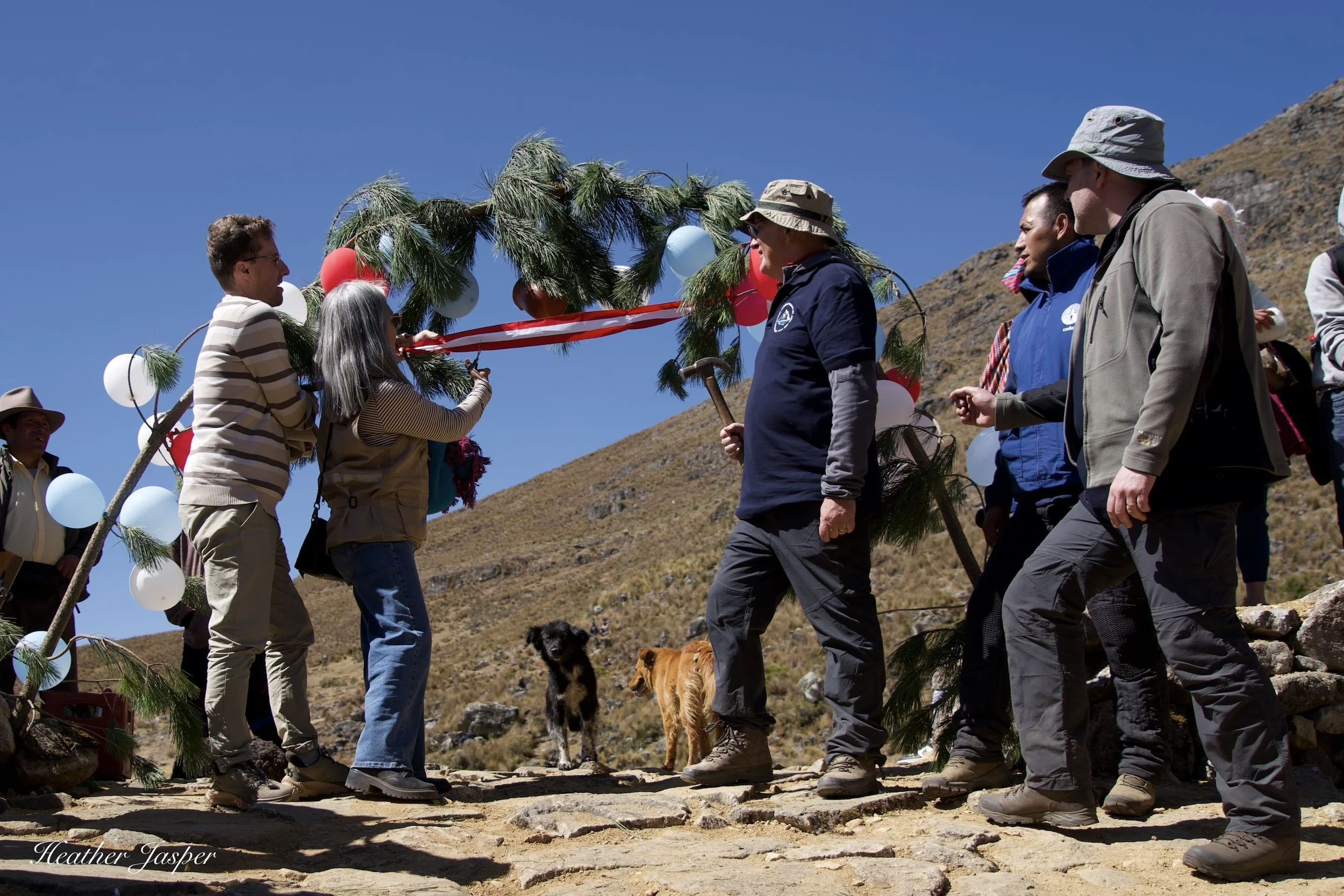
From left: Eric Capoen, Edelvia Rodríguez, Nicholas Branch, Juan Carlos Quiroz Romero and Kevin Lane.
Edelvia Rodríguez of the NGO Diaconía and Eric Capoen of the NGO Ucoopia cut the ribbon, then Nicholas Branch of the University of Reading and Juan Carlos Quiroz Romero of the NGO CEDEP broke the chicha jar.
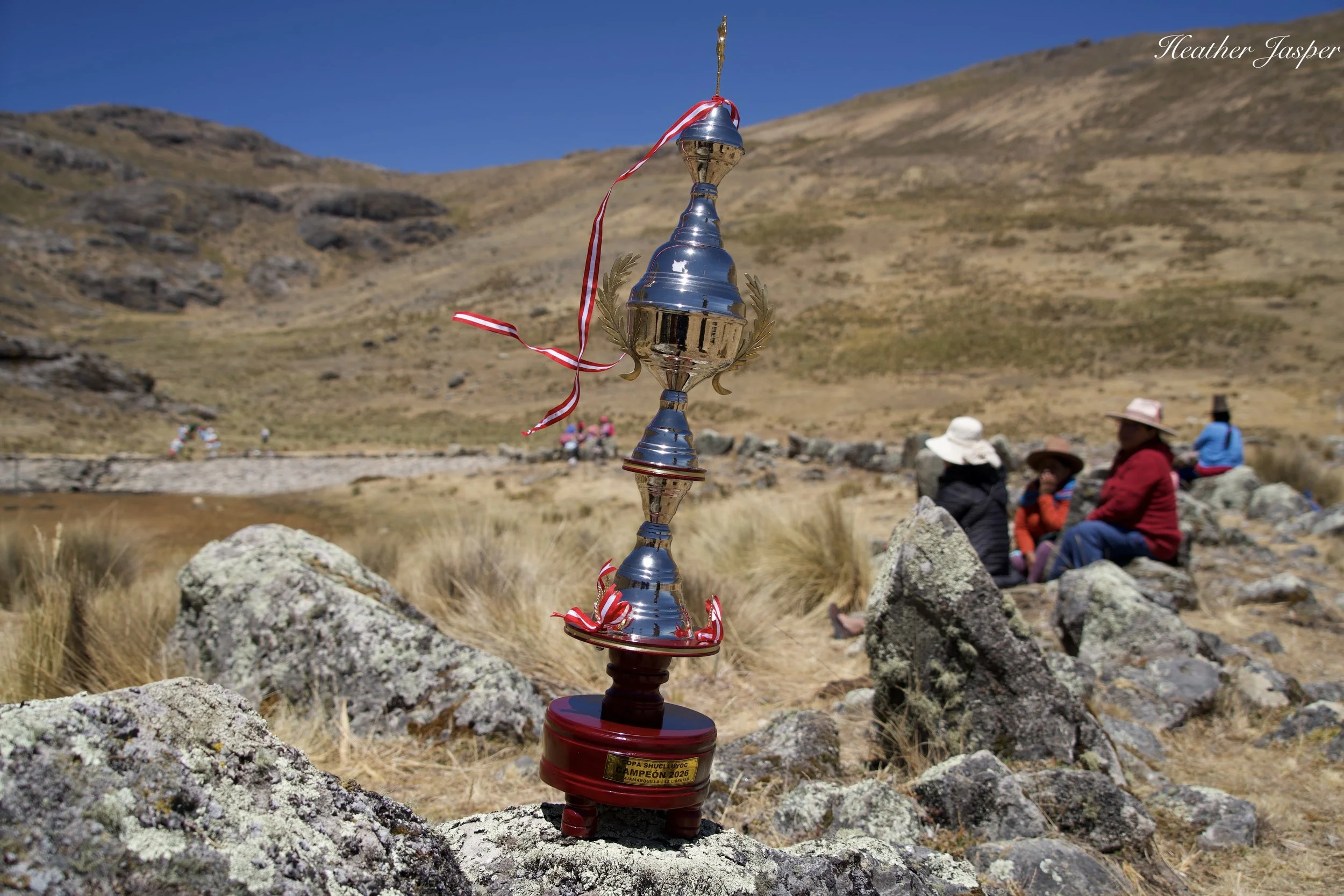
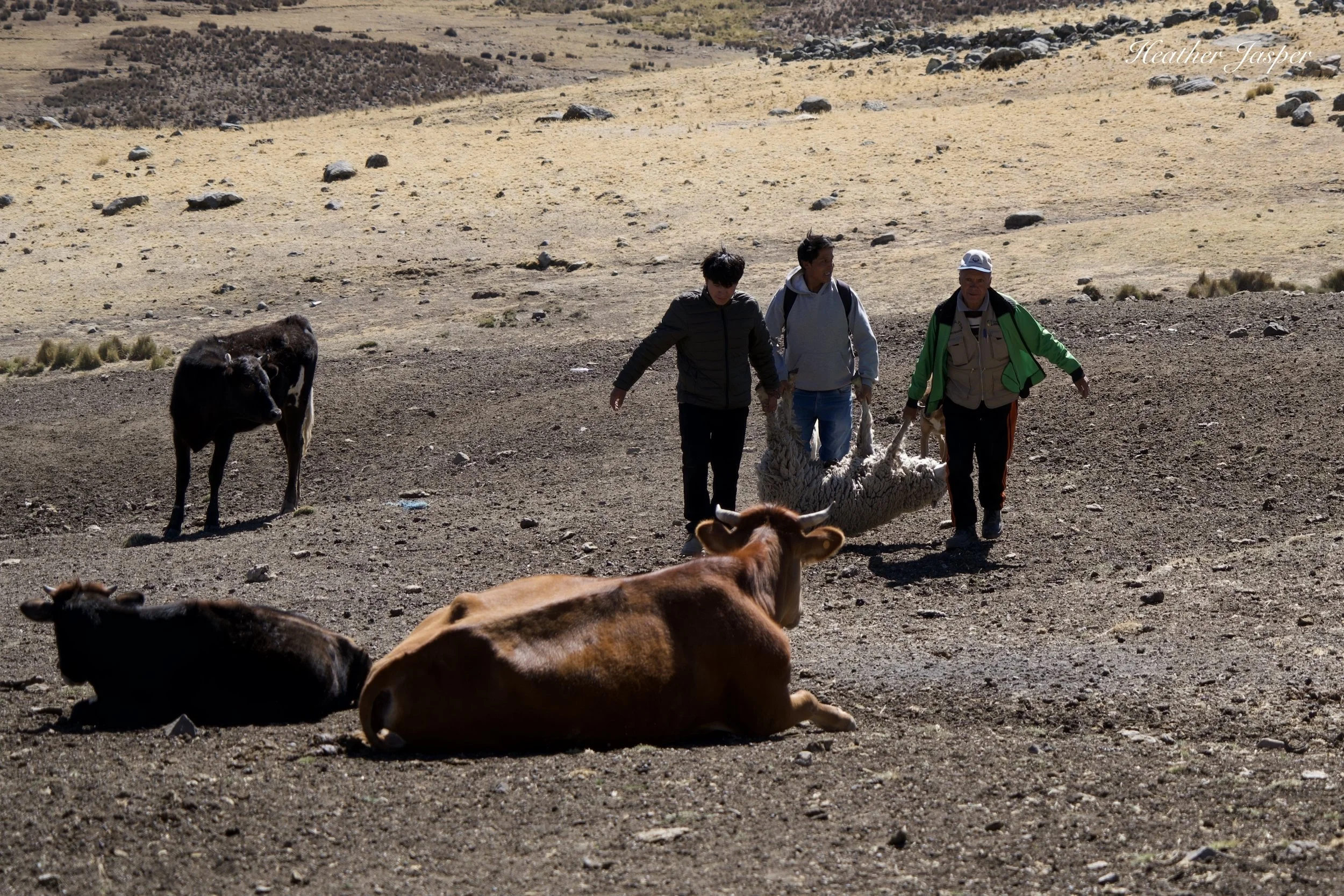
Besides food, chicha, music, dancing and an offering to Pachamama, no big event in Peru is complete without a soccer/football tournament. Five teams played at an impressive 13,800 feet above sea level to win a trophy and a live ram, above.
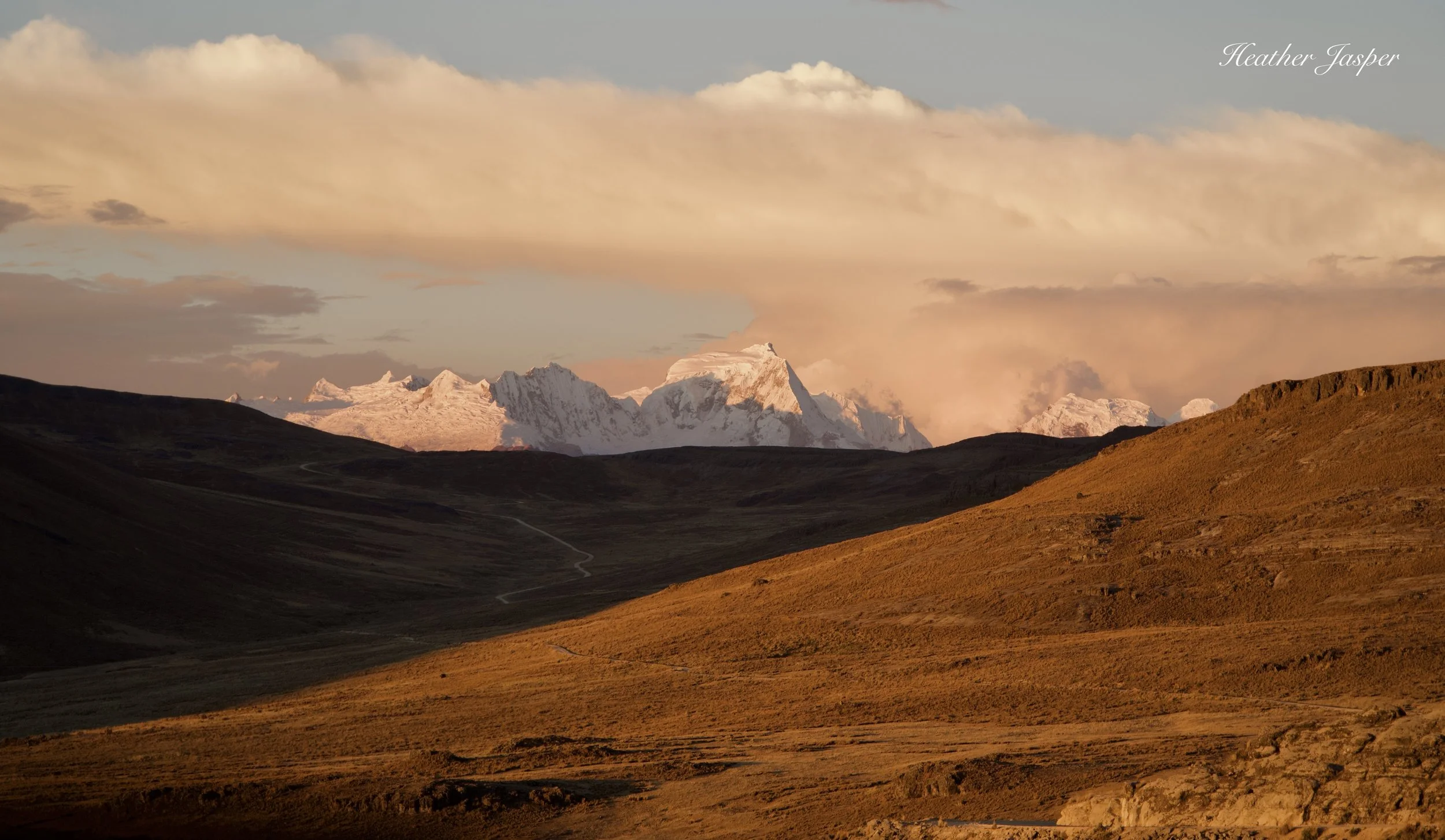
The snowy peaks of the Cordillera Blanca, as seen from the Cordillera Negra. I took this driving back to Huaraz from Shuclluyoc.
Where is the Cordillera Negra?
The Cordillera Negra is north of Lima, just inland from Peru’s Pacific coast and parallel the Cordillera Blanca. The two mountain ranges’ names are best explained together, as they contrast so perfectly. The Cordillera Blanca is predominantly made of white granite, and the peaks have been capped with glaciers for at least 115,000 years, since the last ice age that lasted from about 115,000 to 11,700 years ago. It has over 20 peaks over 20,000 feet above sea level.
The Cordillera Negra is predominantly made with black basalt and is much lower, with peaks reaching around 15,000 feet above sea level. This close to the equator, it is very rare to get snow below 15,000 feet and getting rarer every year. The Cordillera Negra’s dry mountains look black from a distance, especially when contrasted with its neighboring Cordillera Blanca.
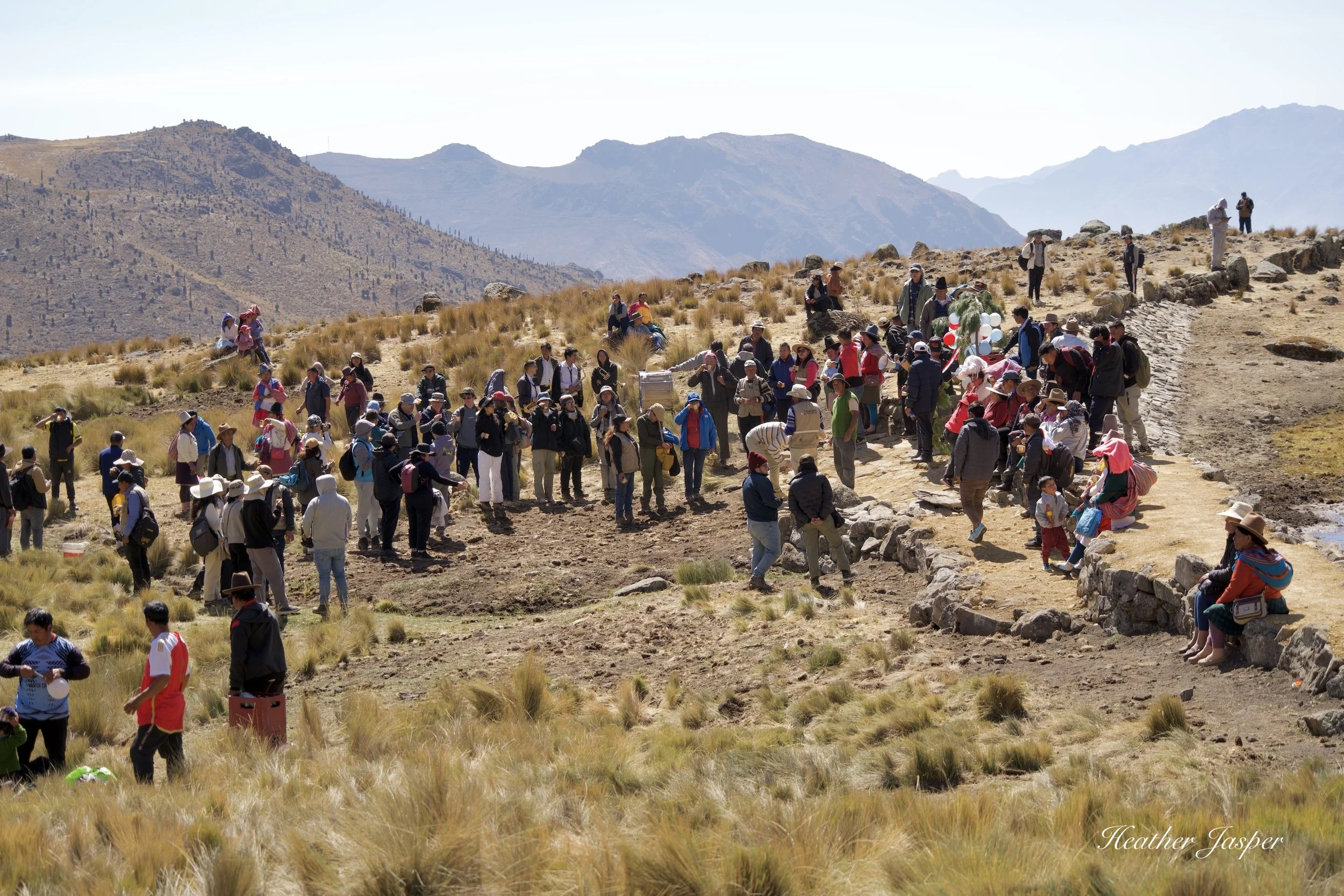
This part of the Cordillera Negra never had enough water for agriculture. It has plenty of grass for grazing but that isn’t much good unless the animals also have water to drink.
Why do ancient dams in the Cordillera Negra matter?
While a low dam of rocks and clay may not seem like much to celebrate in other parts of the world, this was truly a momentous occasion for the people of Cajamarquilla. It’s also an important example for other rural communities high in the Andes, especially in Peru.
Two hundred people didn’t hike up to the Shuclluyoc dam to see who would win the ram in the soccer/football tournament. They went to celebrate a rural community taking back their cultural heritage, ancestral technology and the water they’ll need to confront climate change.
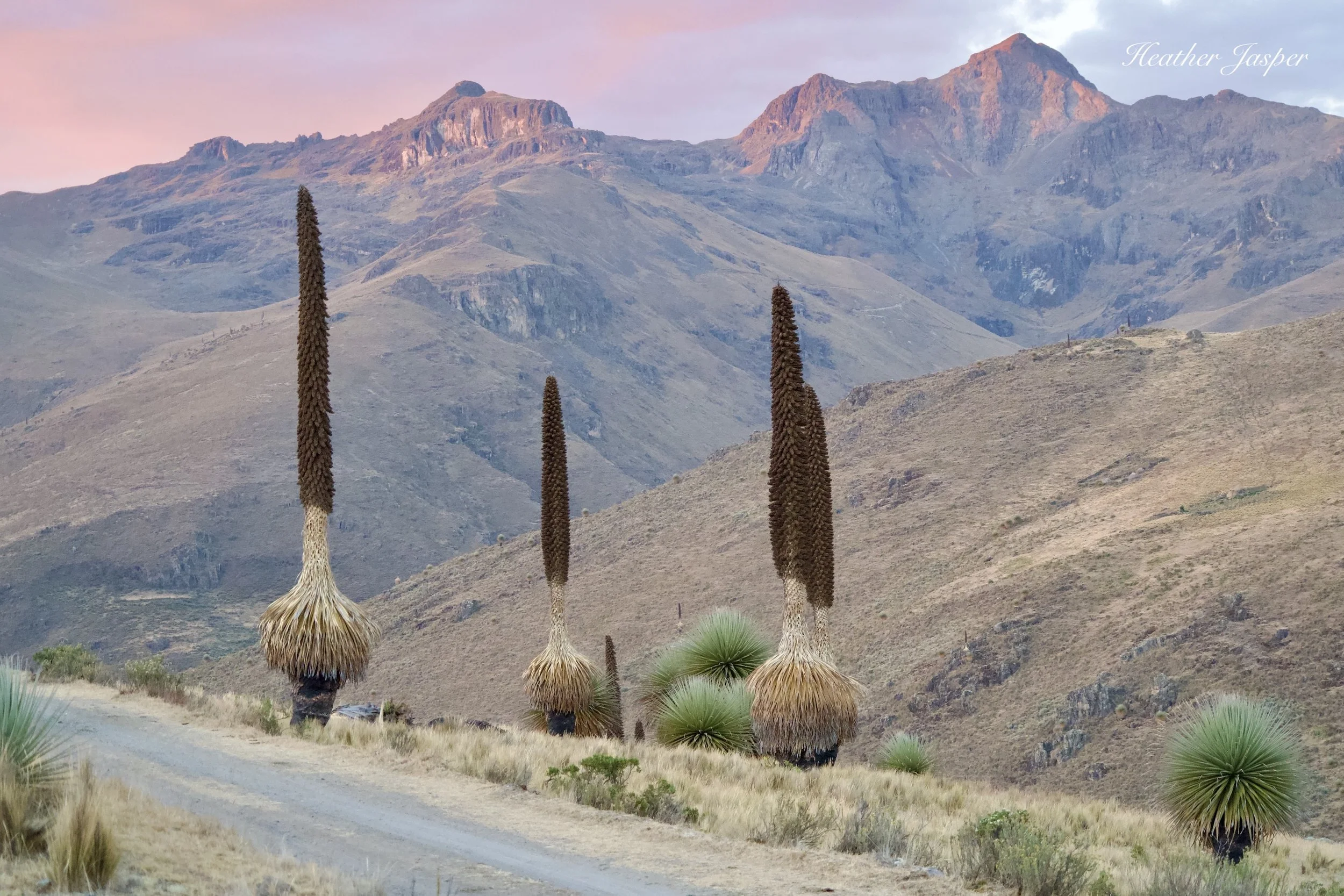
The dry slopes of the Cordillera Negra don’t have trees but rather puya raimondii, the world’s largest bromeliad.
Questions?
I’m busy writing an article about Shuclluyoc for New Internationalist and Rotary Magazine! Subscribe to my newsletter to be notified when it’s published.
Planning a trip to Peru? Download my travel guide app Peru’s Best!