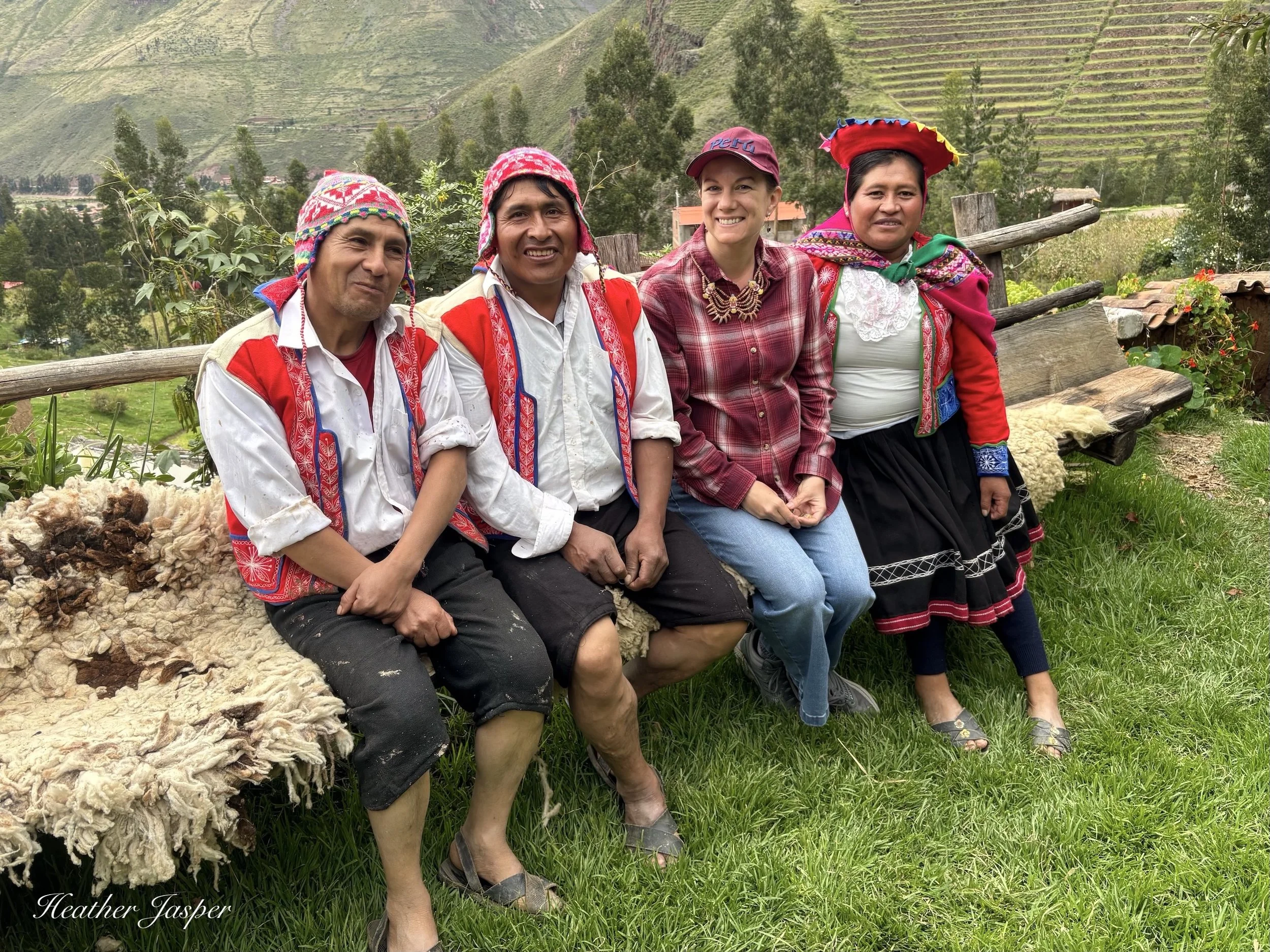
Eloy, Faustino and Mabel taught us so much about traditional life and Quechua culture in the Sacred Valley.
Sacred Valley Community Tourism
This week I visited a village named Cuyo Chico in the Sacred Valley, near Cusco, which has great community tourism projects. Cuyo Chico is a beautiful place with friendly people where you can learn about life for Indigenous Andeans. Here’s everything you need to know about community tourism in Peru and visiting Cuyo Chico.
What is community tourism?
Community tourism projects are created by a community, in this case a group of families in the village of Cuyo Chico in the Sacred Valley. Tourists have an opportunity to learn about the culture and daily life of the place they’re visiting. Sometimes the activities are just for the tourists to learn about the community and sometimes they’re activities that benefit the community in more concrete ways. (Find community tourism projects in Peru on this map).
Is turismo vivencial the same as community tourism?
The Spanish term turismo vivencial, translates to “experiential tourism” and in Peru it almost always refers to community tourism. It can simply be a homestay in a rural village, but it usually includes activities in the community and provides opportunities to learn about life for local families.
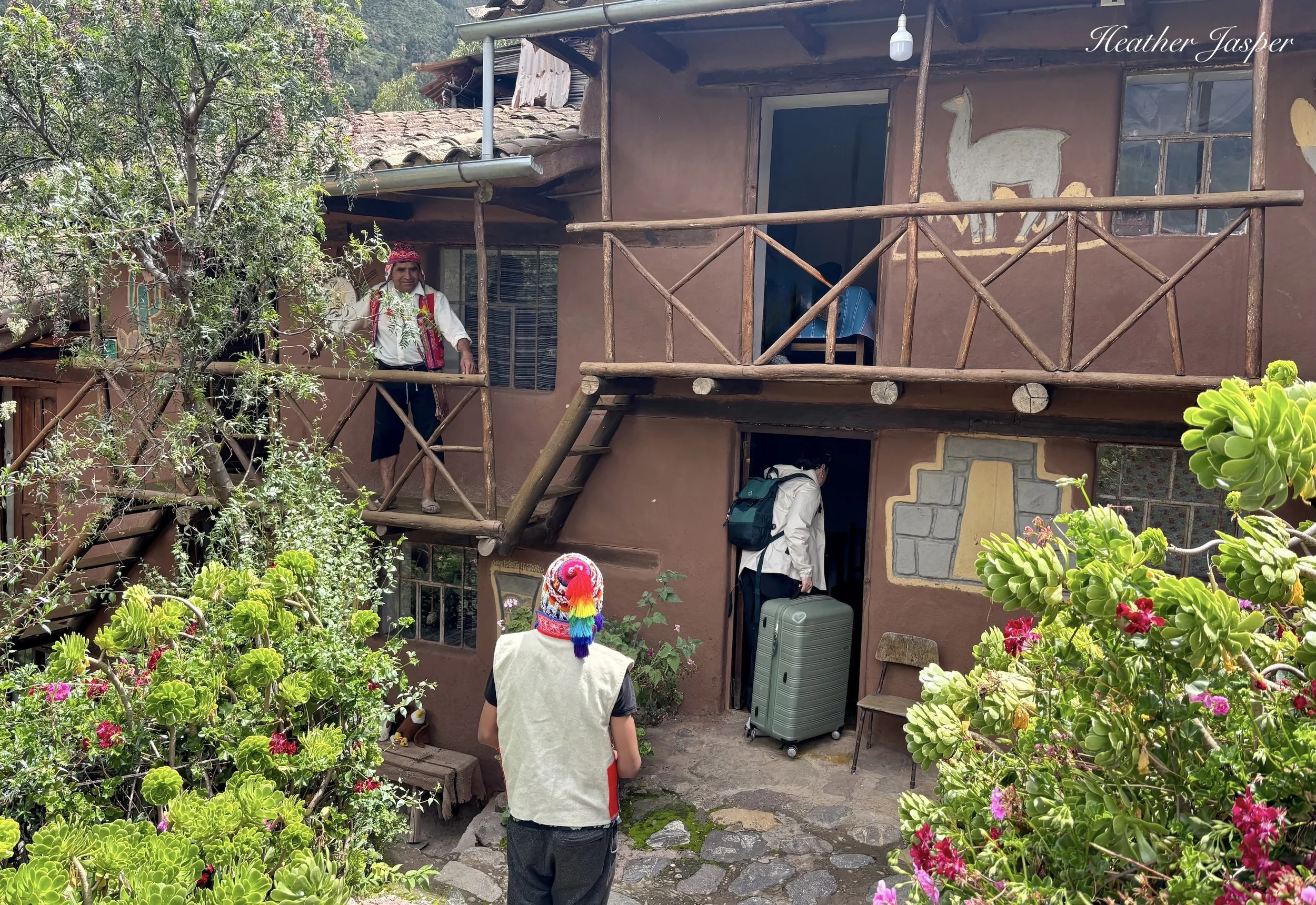
Renato’s home is one of the houses where tourists can do a homestay in Cuyo Chico.
What is a community in Peru?
In Peru, the word comunidad usually refers to a village of Indigenous people, on the coast, in the mountains or in the jungle. Peruvians almost never use the word tribu, tribe, to describe Indigenous people.
Since the land reform of 1969, much of rural Peru is owned by communities. Prior to the land reform, land was owned by the descendants of Spanish colonizers. In 1969, the land was given back to the people who have lived on and worked it for over 500 years. Most of this land does not have titles with the names of individual people, but of the community as a whole. This usually protects the land from commercial development and from being sold to outsiders, either foreigners or Peruvians from other places.
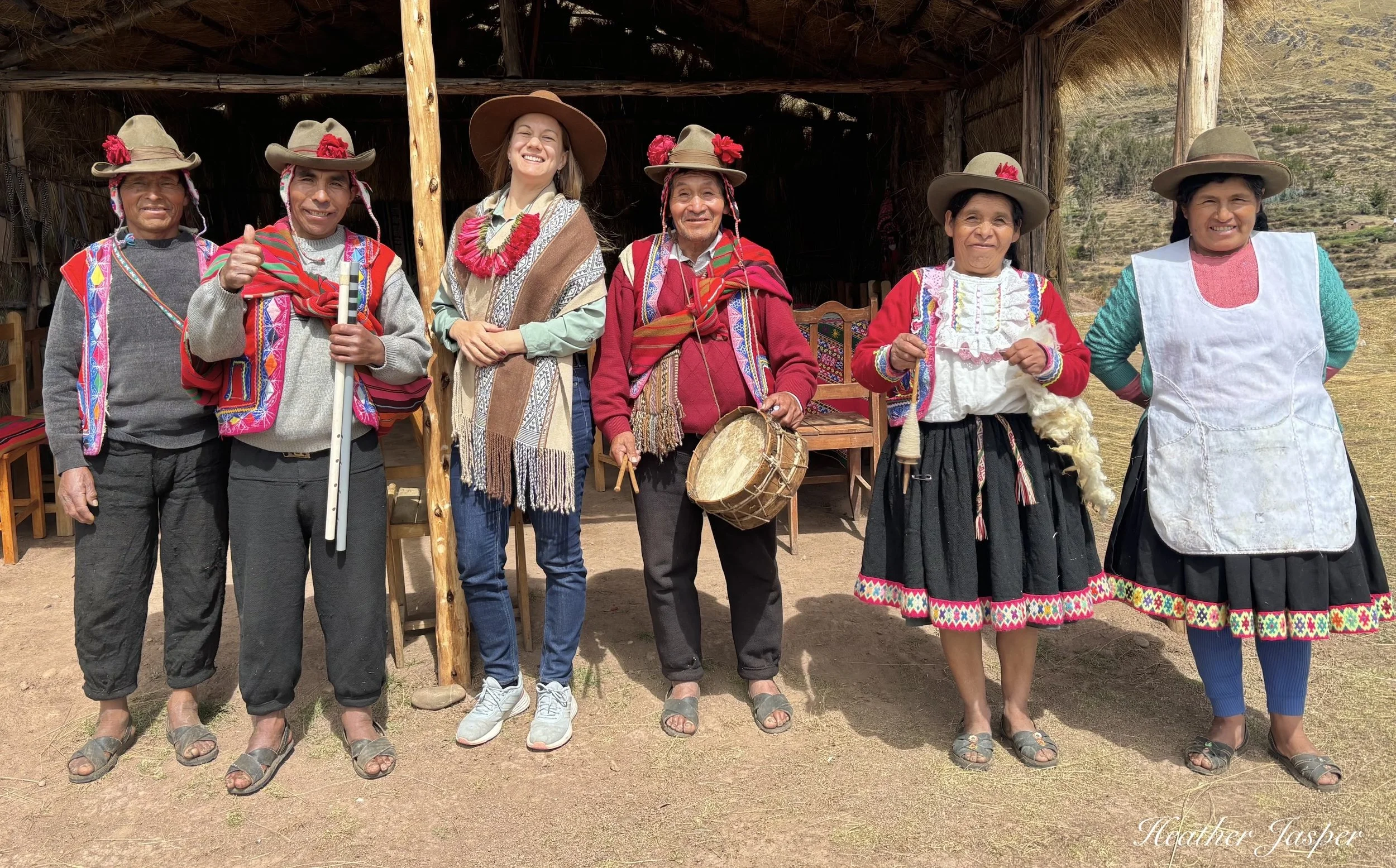
In Huama, community elders showed me the traditional way they plant potatoes and how they weave.
Where is there community tourism in Peru?
I have had the privilege to visit several community tourism projects in Peru already. On the coast, a community in the Paracas National Reserve invites tourists to learn about fishing and shellfish gathering at Atenas Beach. In the Sacred Valley, La Base Lamay connects tourists with communities like Huama, which has community tourism that really integrates visitors into the life of the village. Another village that welcomes tourists with turismo vivencial is Chahuaytire, just up the road from Cuyo Chico. Choquecancha and Chinchero have weaving workshops and teach tourists about traditional Andean weaving and plants used to naturally dye alpaca wool. One family I know from the Q’ero Nation community of Quiqo is developing community tourism in the high Andes.
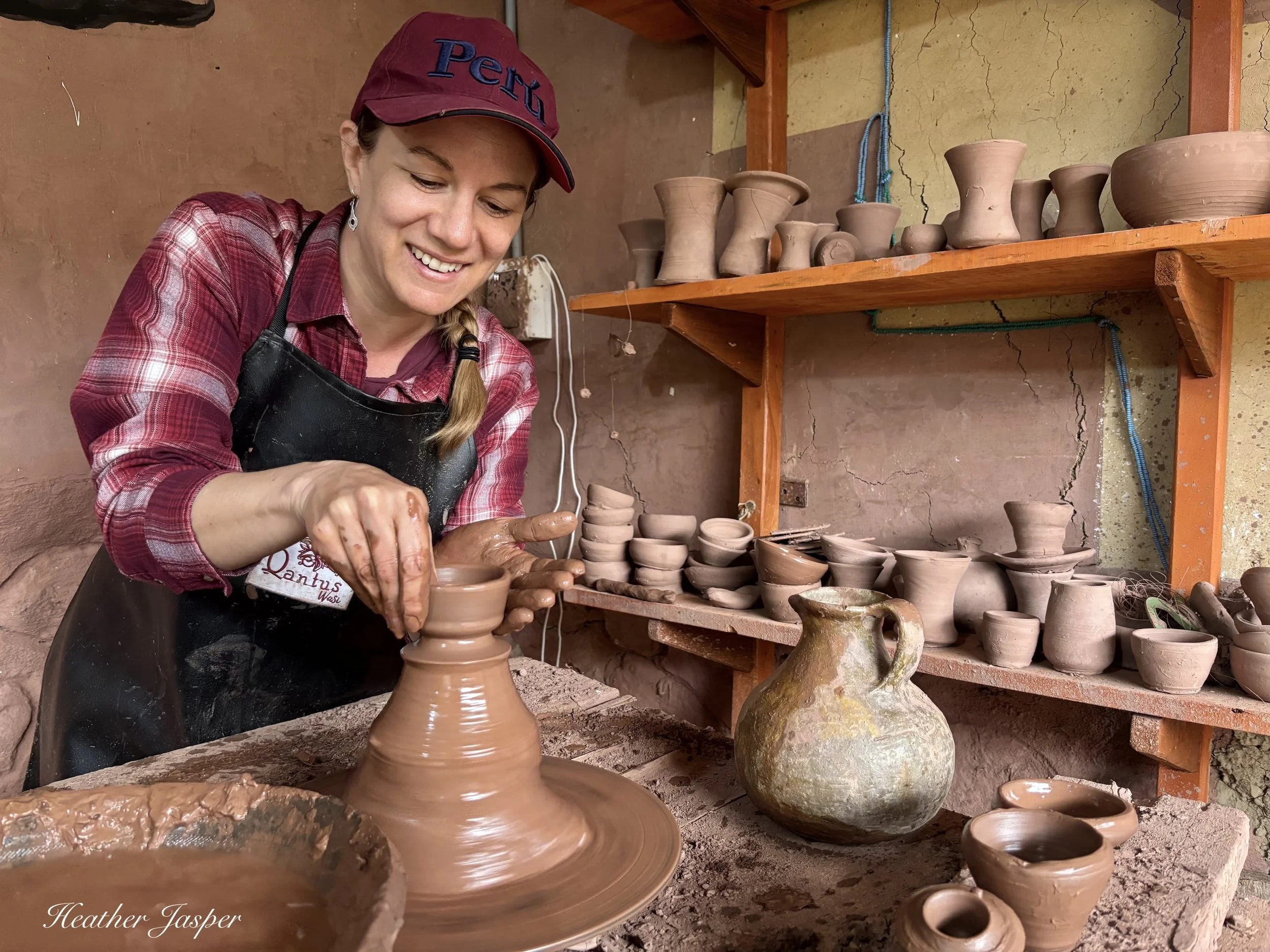
Eloy taught me how to use a potter’s wheel to make dishes with the clay sourced near the village.
What community tourism projects are in Cuyo Chico?
I went to Cuyo Chico with CAS Trips and a group of high school students from Canada. First, the CAS Trips guide, Mónica, taught the students about the Quechua concept of ayni, reciprocity that has been integral to Andean culture for hundreds, if not thousands, of years. Big tasks, like building a new house or planting potatoes often need the participation of the whole community, not just the people who will live in that house or who own the field. Those who receive ayni are expected to pay it back, or pay it forward, depending on how you look at it.
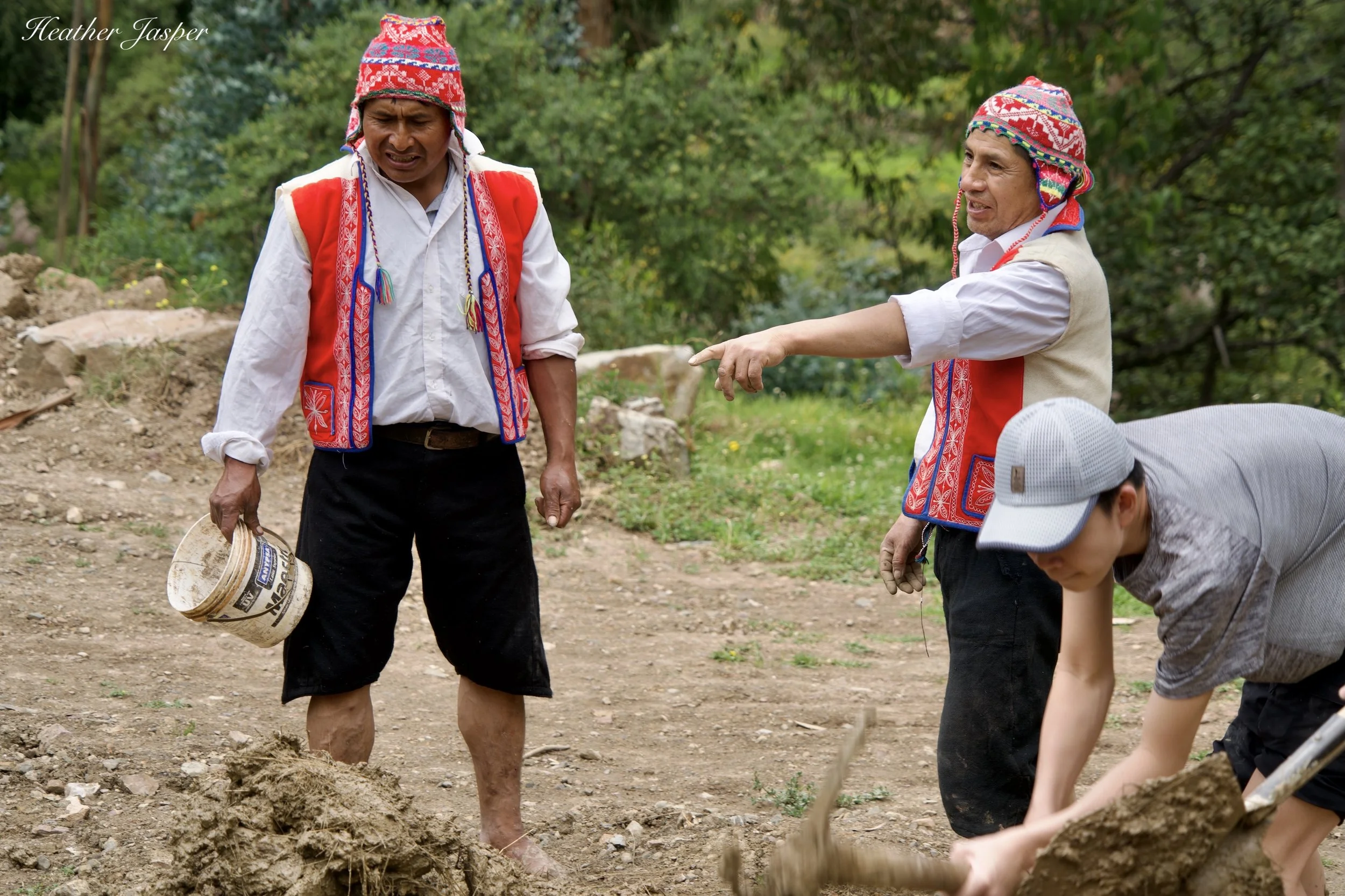
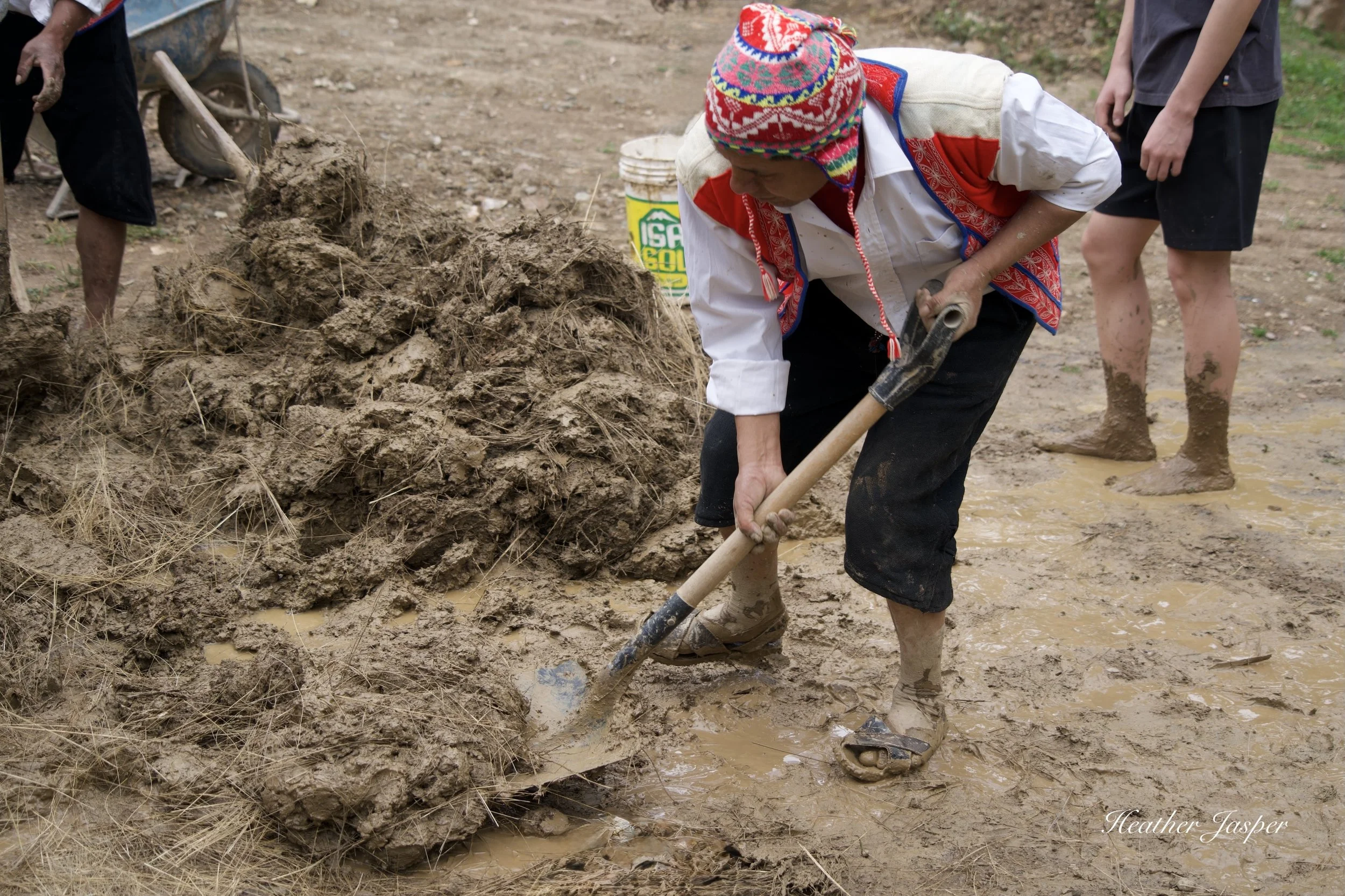
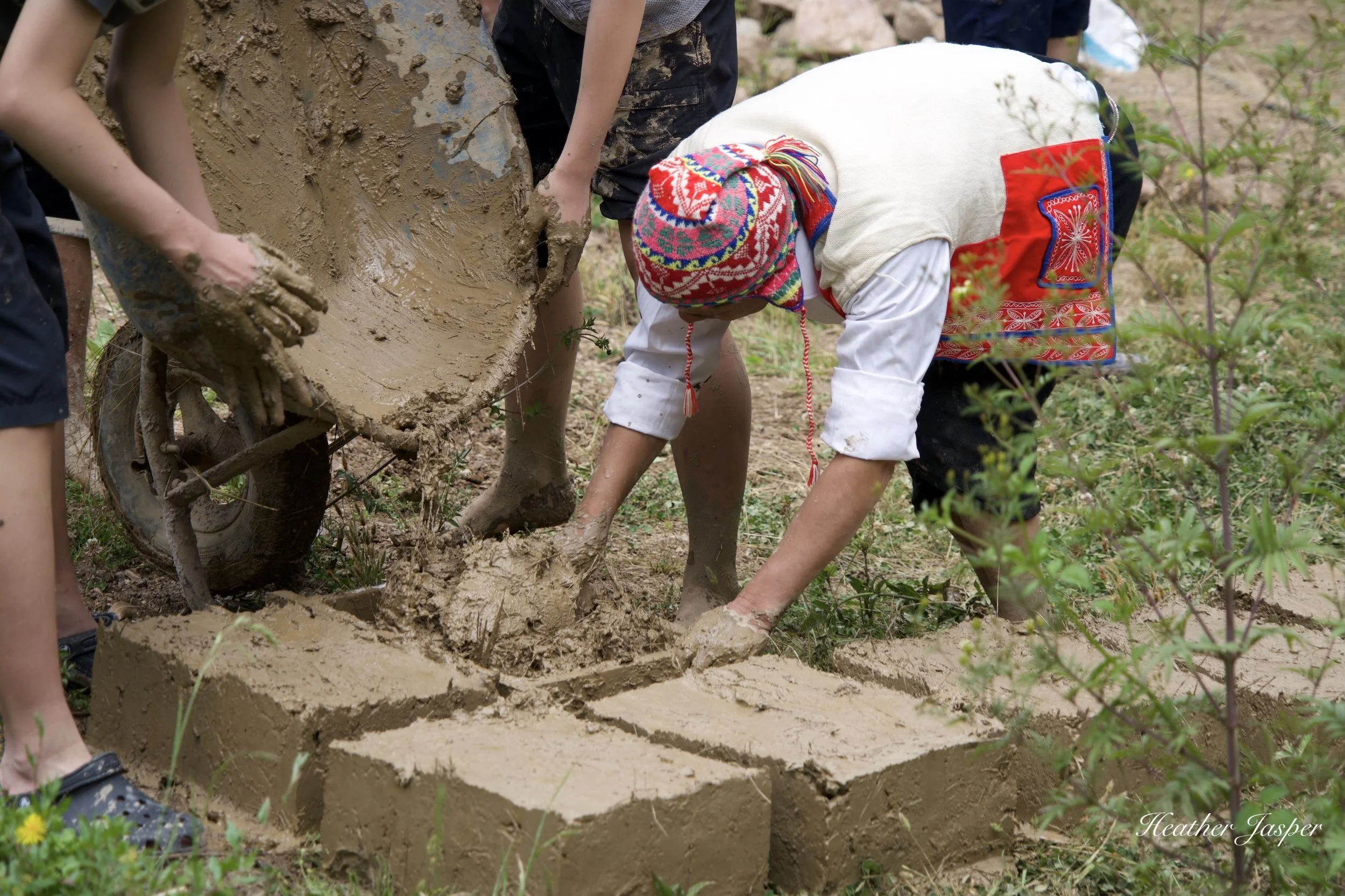
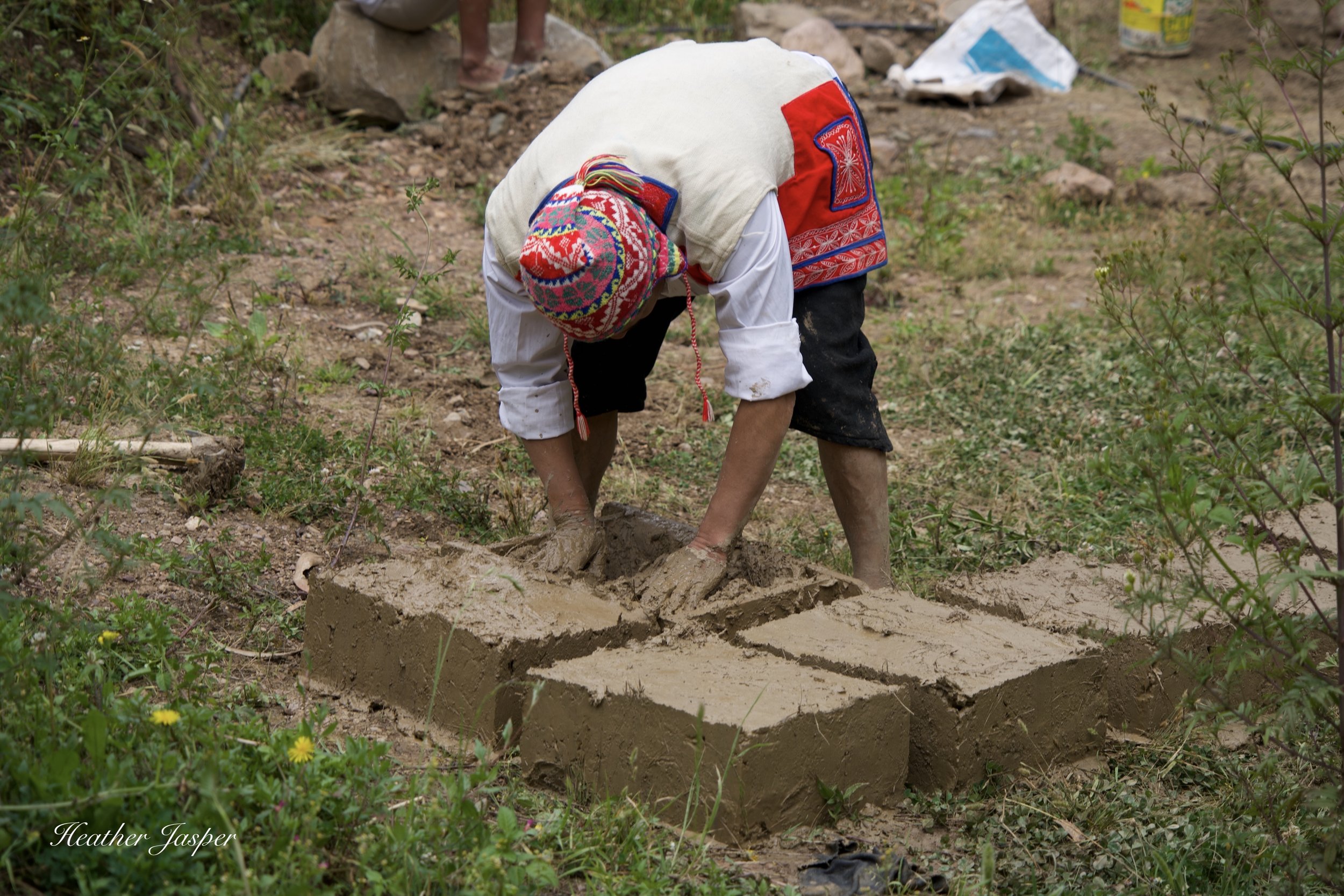
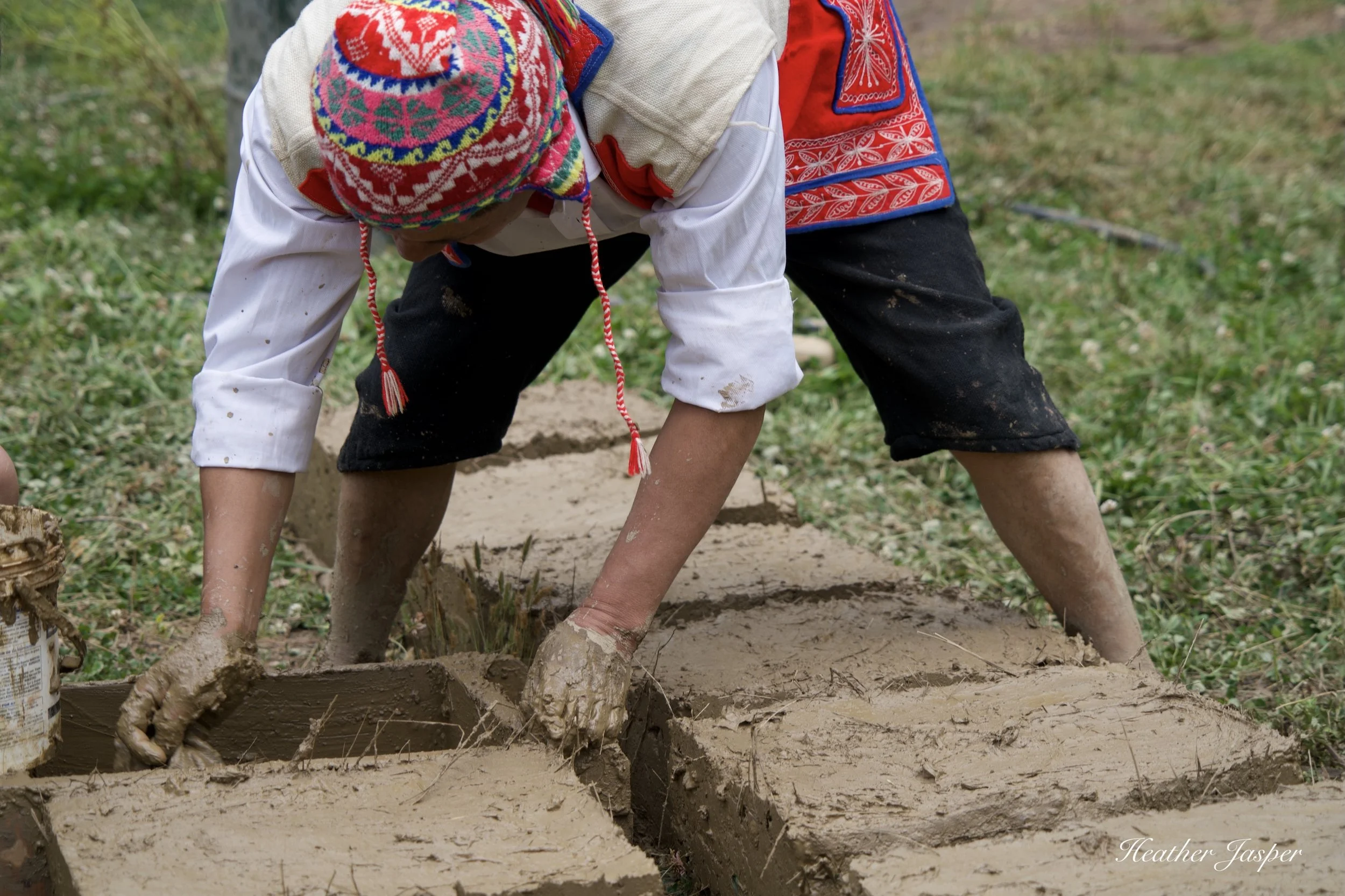
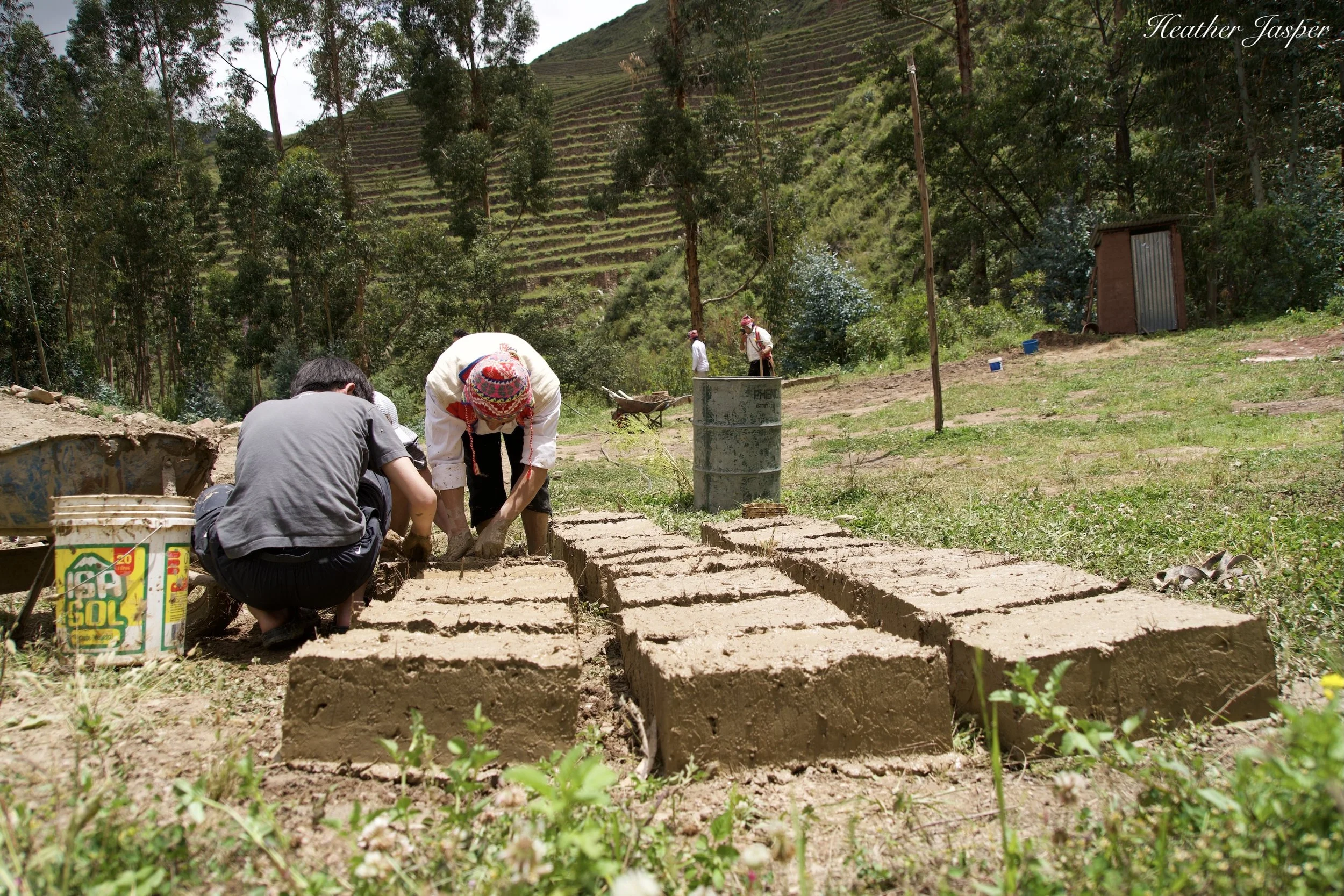
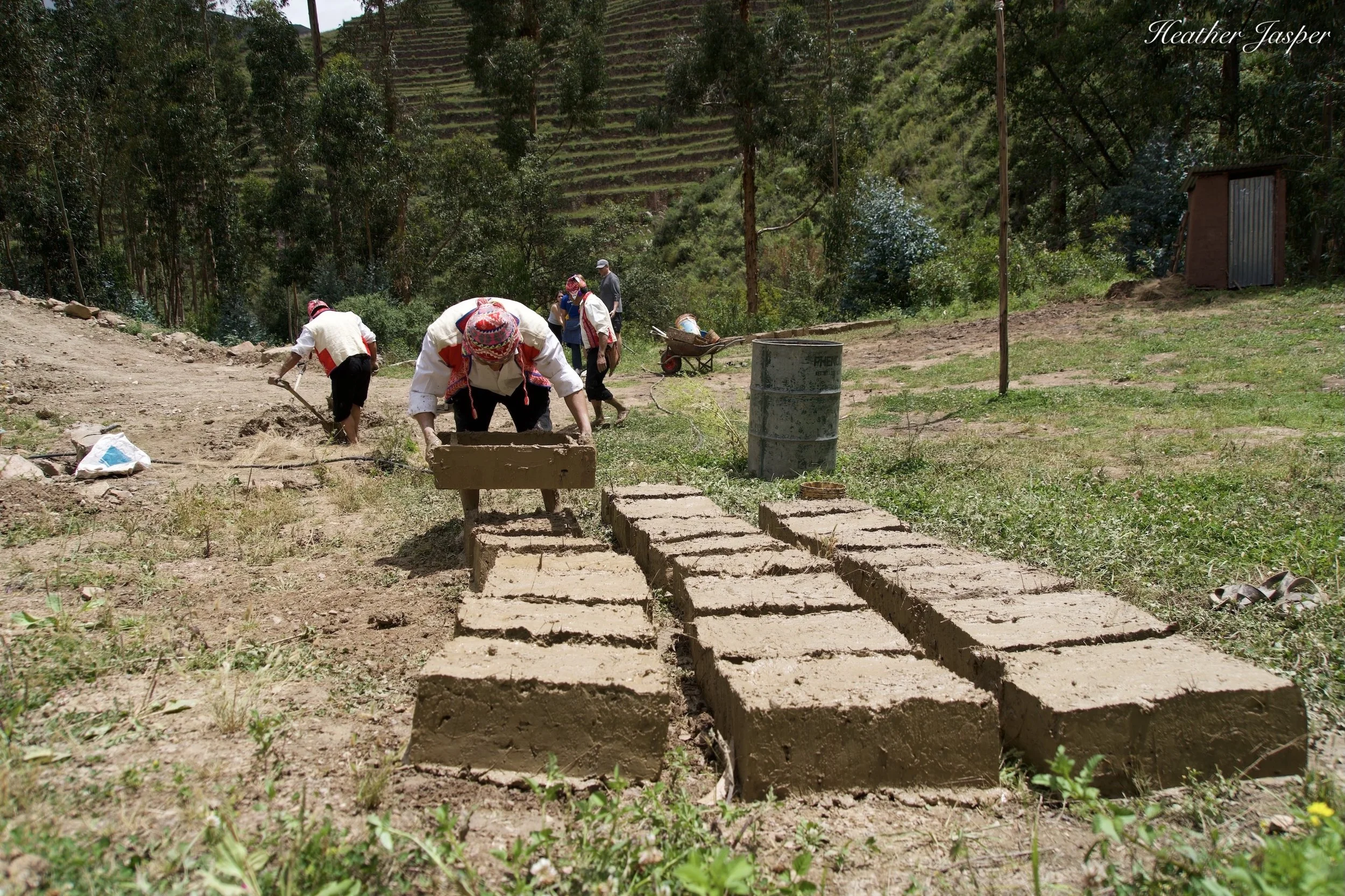
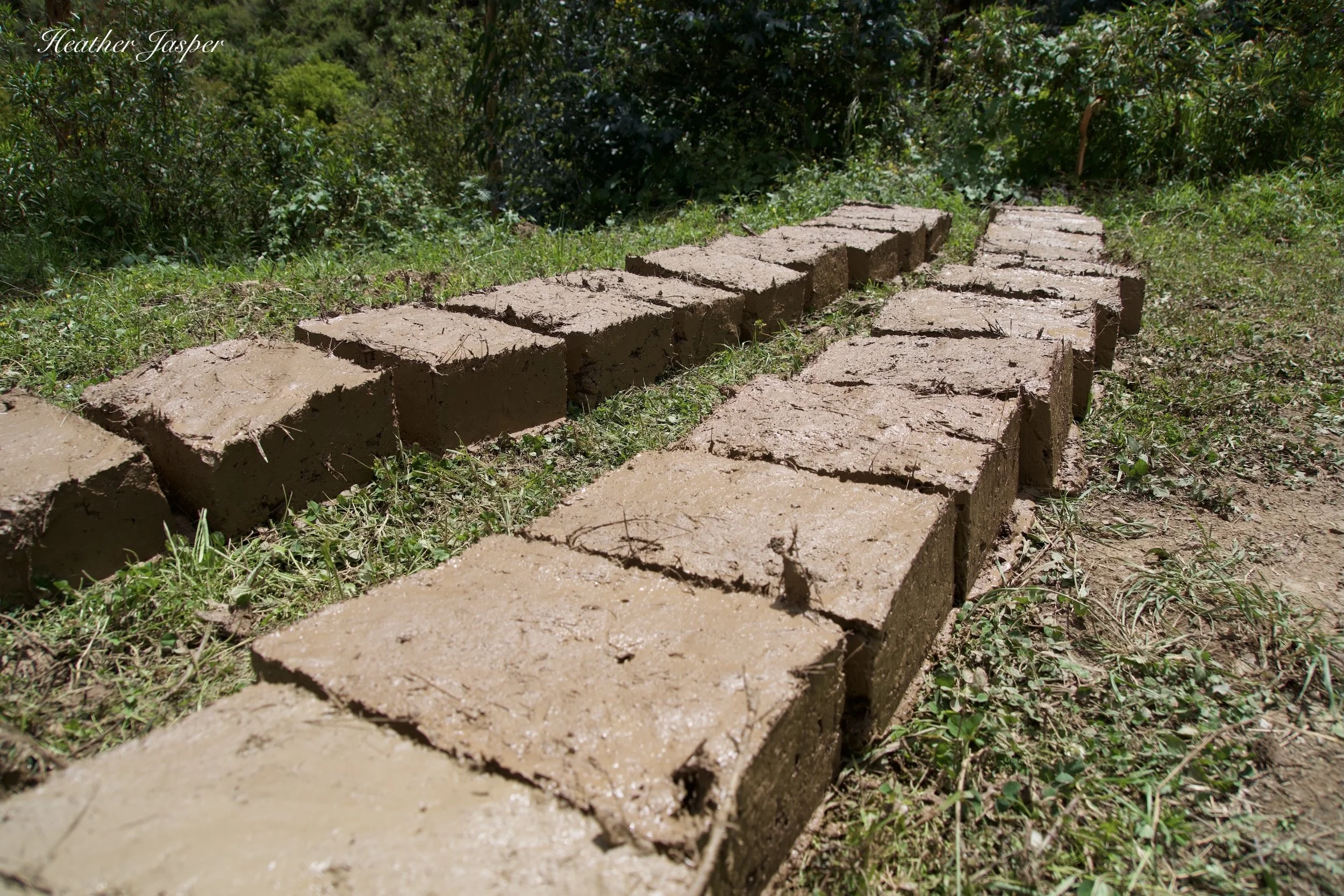
How to make adobe bricks?
For the first activity, community leaders Renato, Faustino and Eloy explained how adobe bricks are made and how this is a big job that usually gets ayni from neighbors and family. They had prepared two piles of dirt with rocks and sticks sifted out, each pile next to a mound of cut grass called ichu. (This is the same grass used to make the Q’eswachaka bridge). Divided into two groups, the students got to experience mixing the dirt with the right amount of ichu and water, then using a mold to create the adobe bricks.
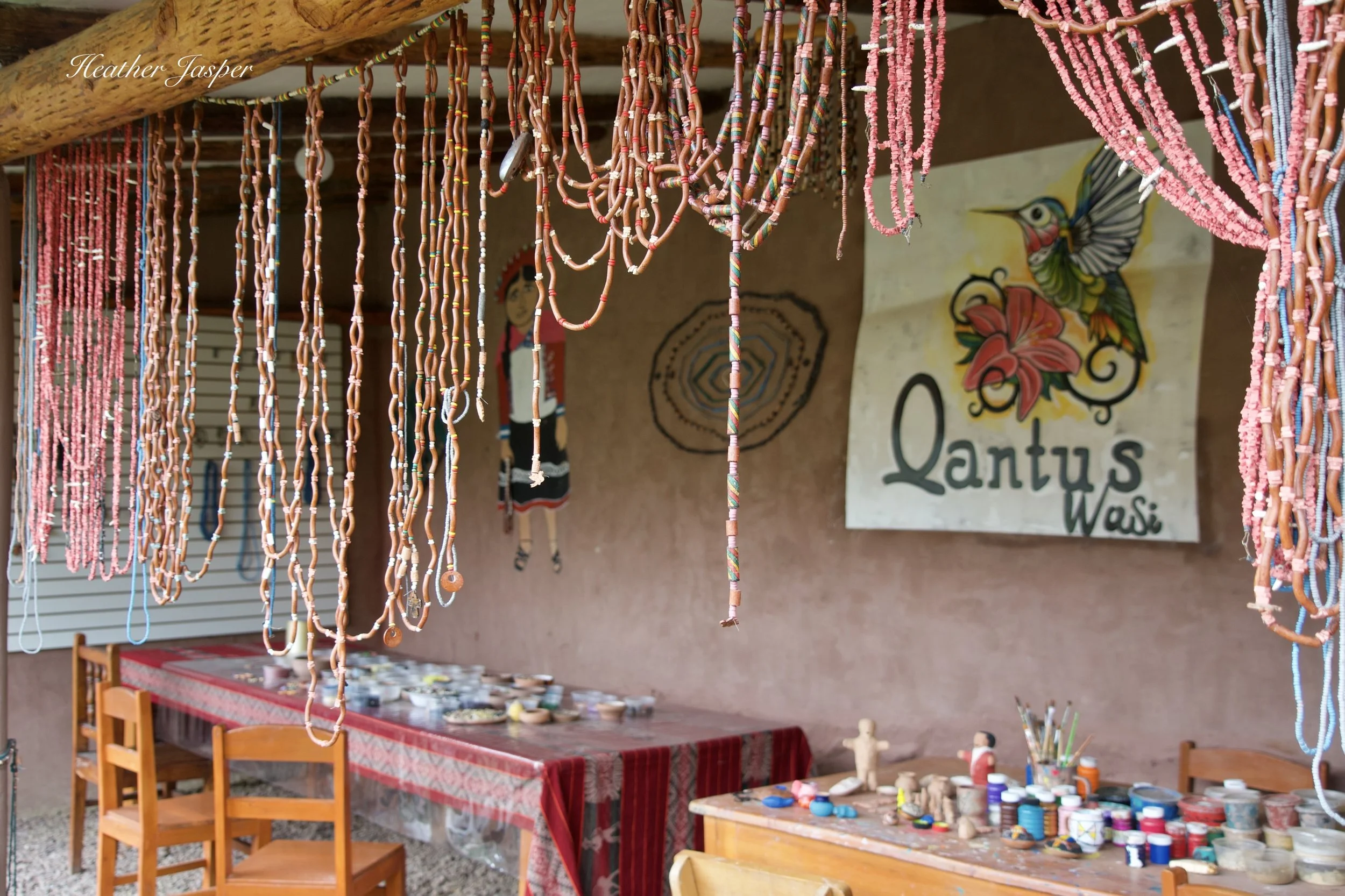
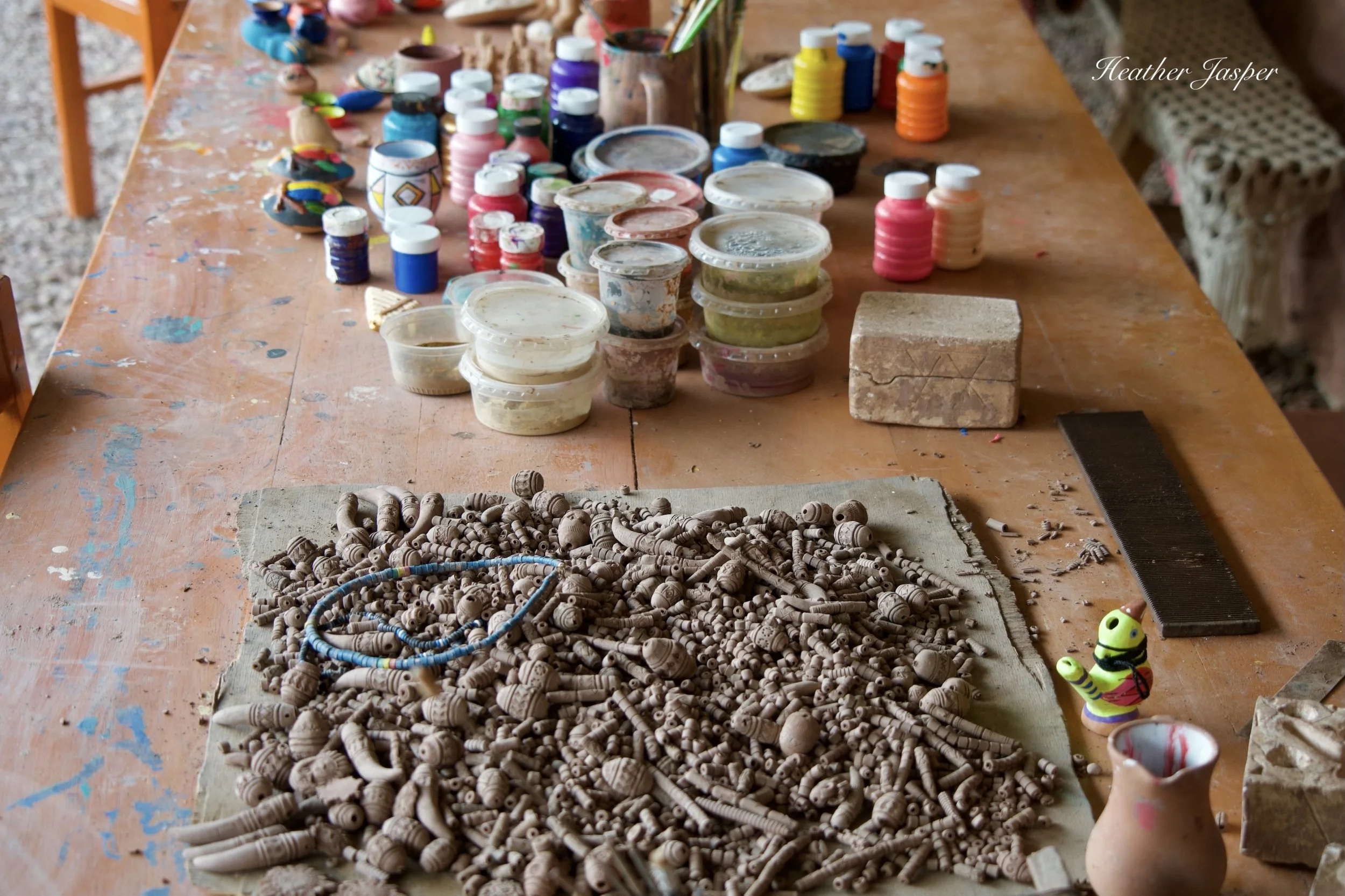
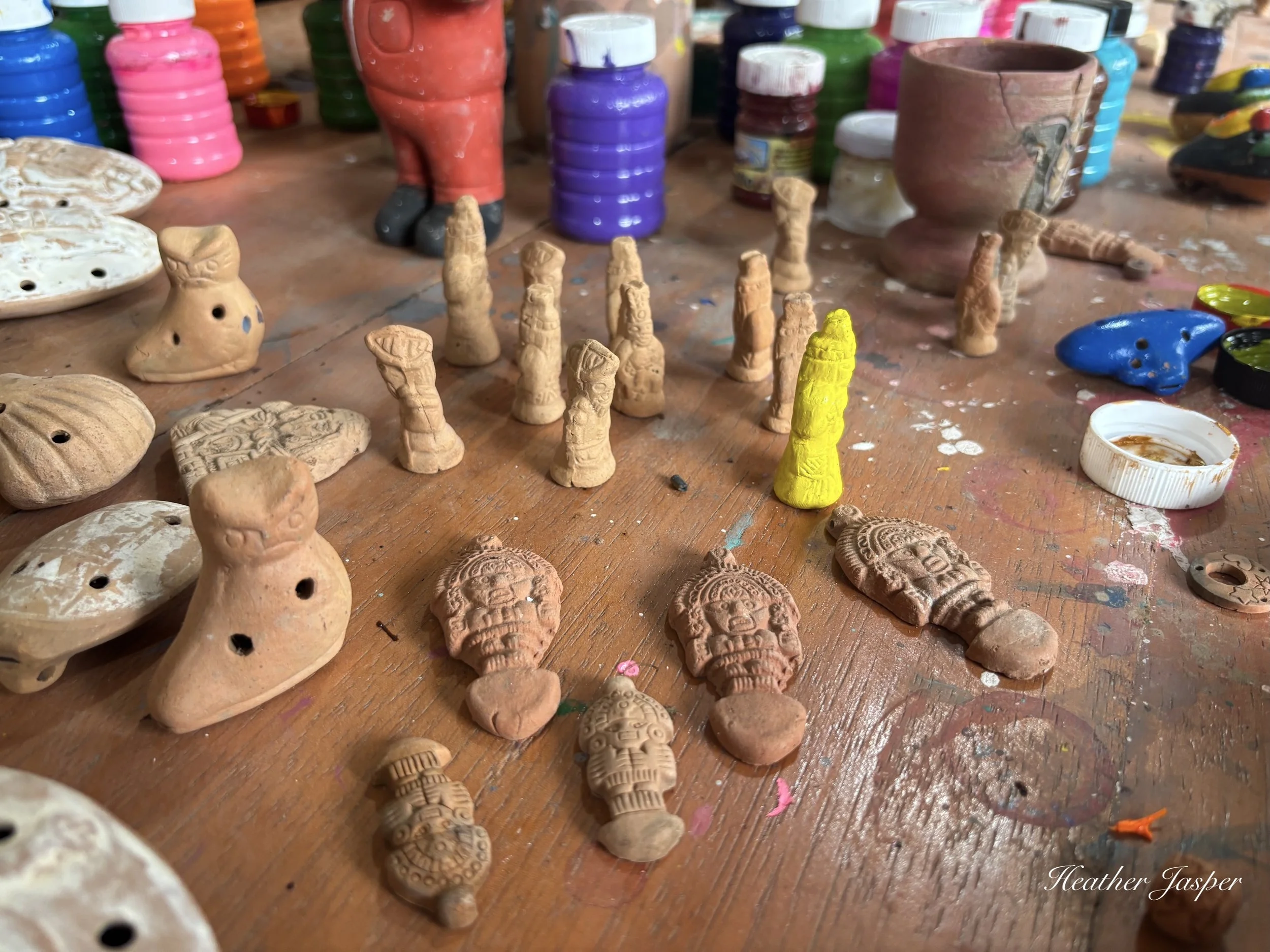
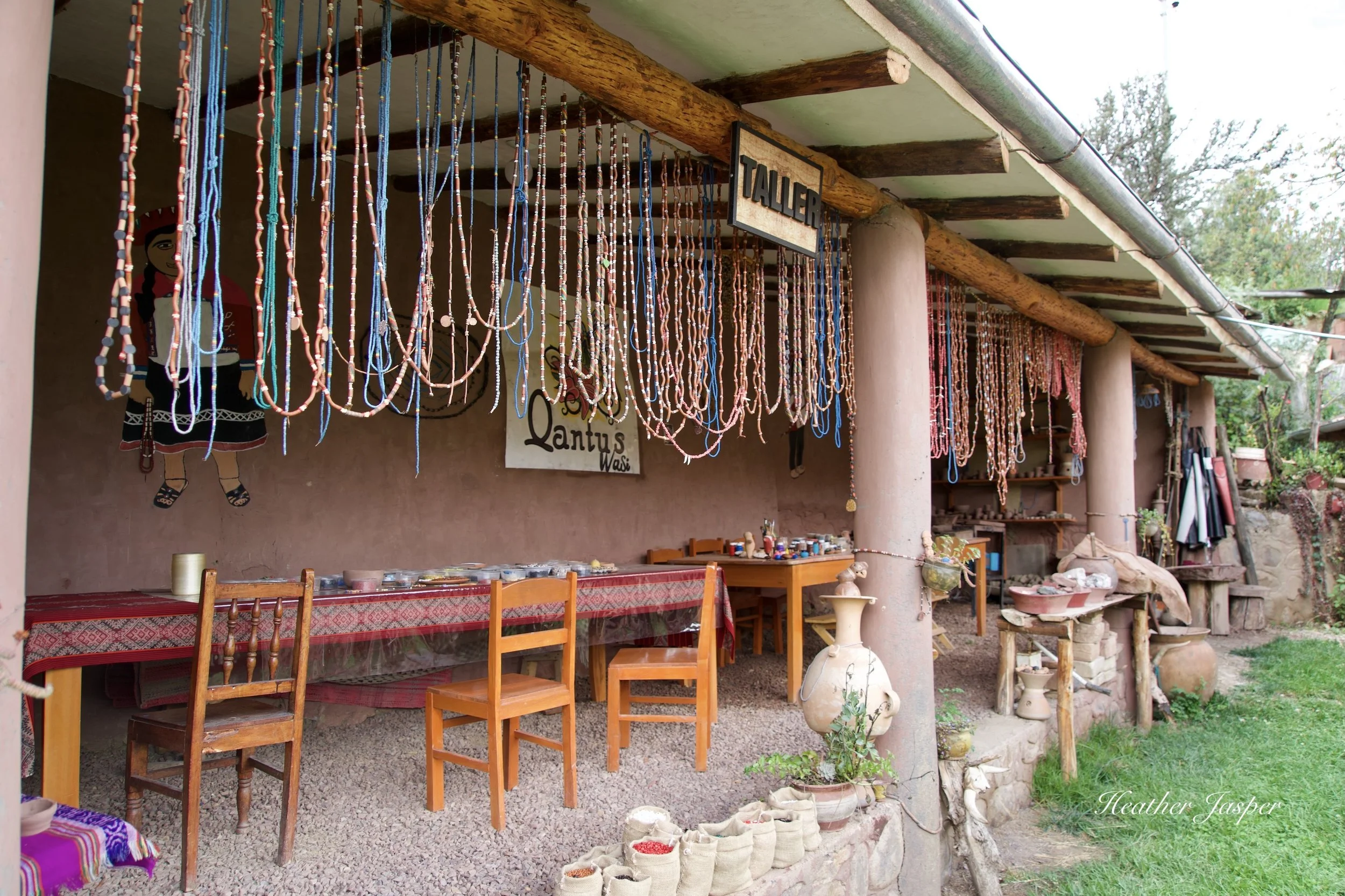
The traditional way to make pottery.
The second activity, after lunch, was to learn about the community’s traditional pottery in their workshop named Qantus Wasi. Since Incan times, and probably before, the families in this area of the Sacred Valley have made ceramics. Renato explained how they gather clay and showed them the natural colors that can be found in the Sacred Valley: red, white, yellow and brown. He showed how they strain and purify the clay, then make beads and dishes with it. Today they have a motor for the potter’s wheel, but Eloy told me that it wasn’t long ago that they had a foot-powered wheel.
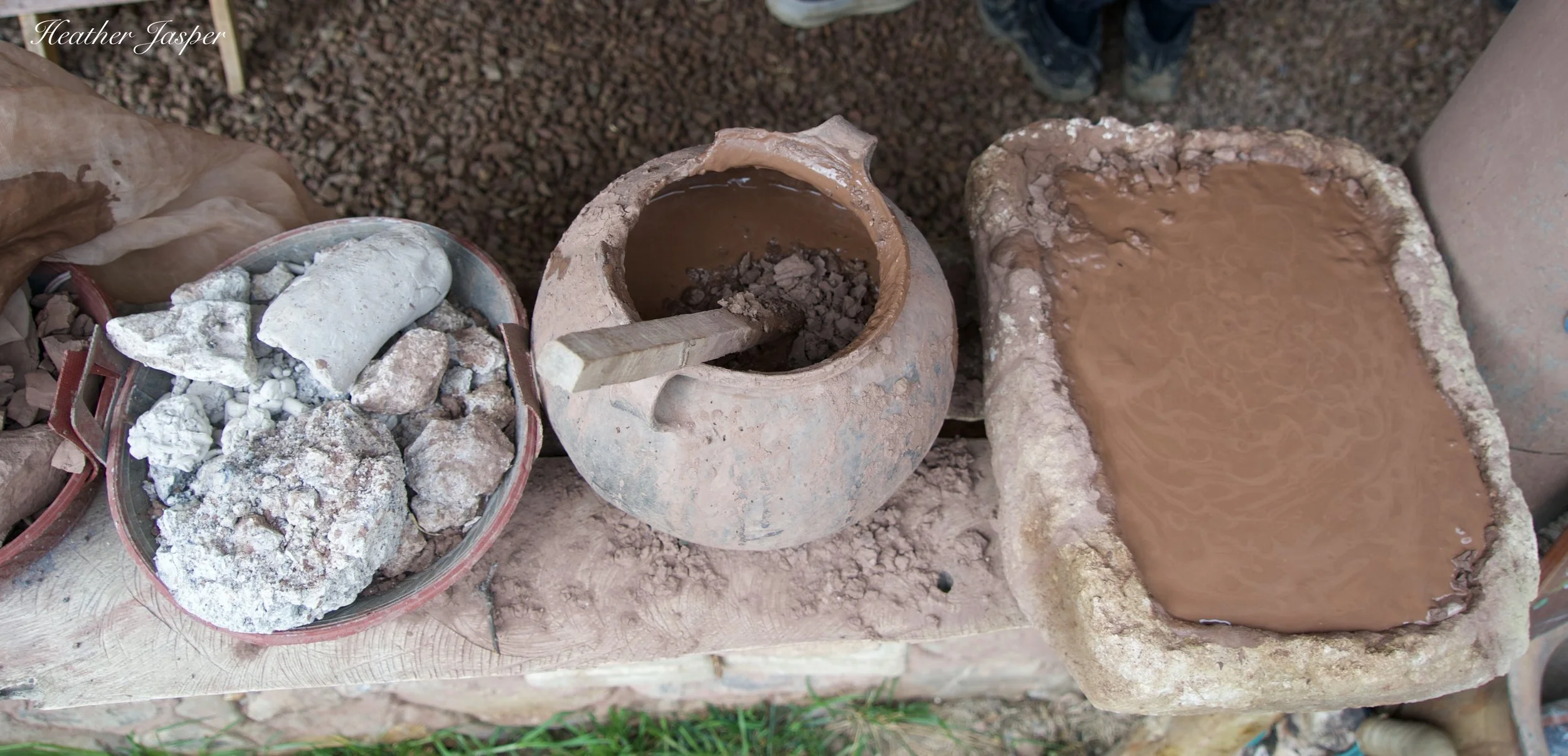
How to get clay from nature
Renato explained how they find clay in nature and clean it so it can be used for pottery.
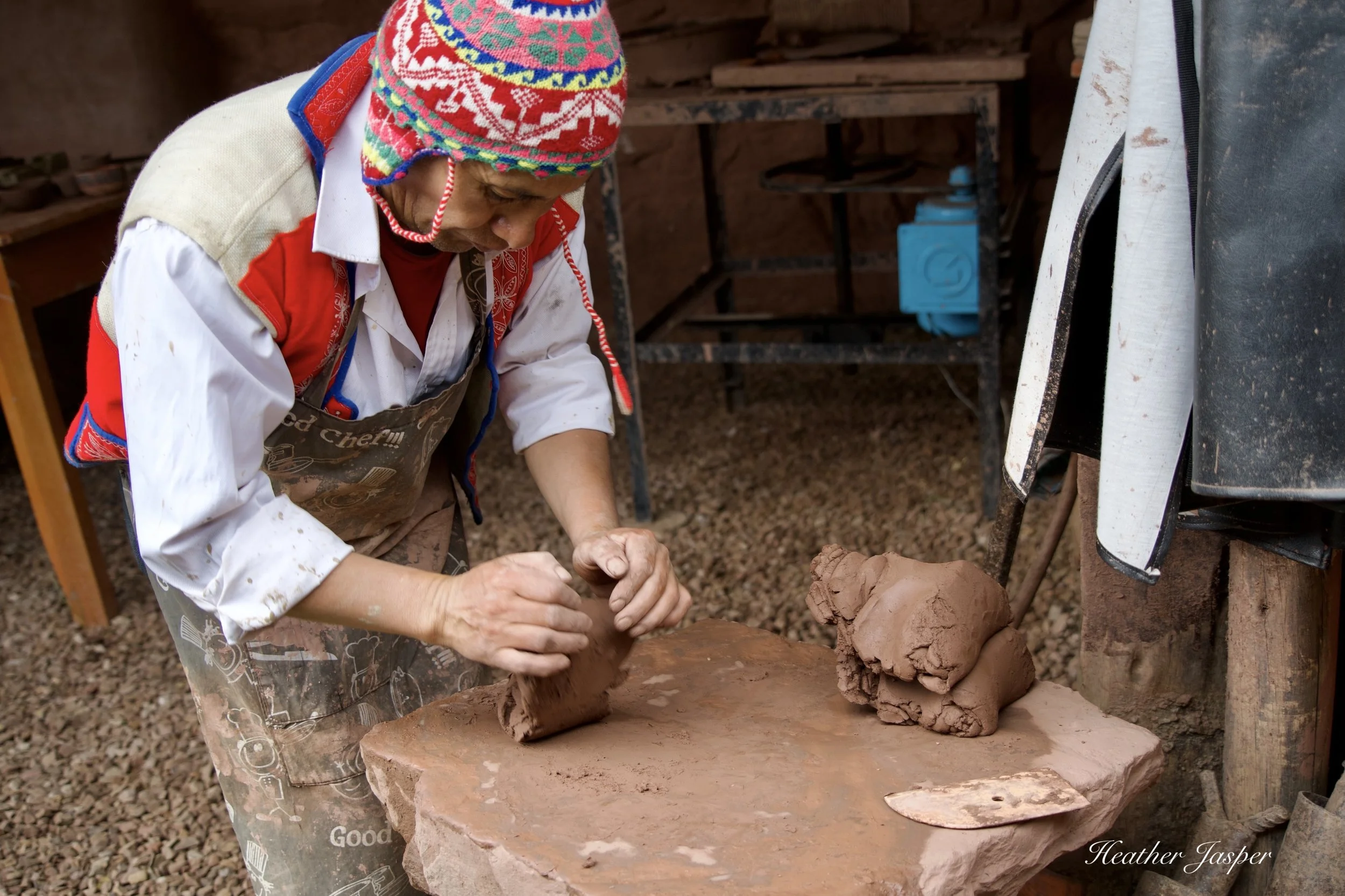
Preparing the clay
Eloy showed us how he prepares the clay before it’s pressed through their bead-maker or set on the potter’s wheel.
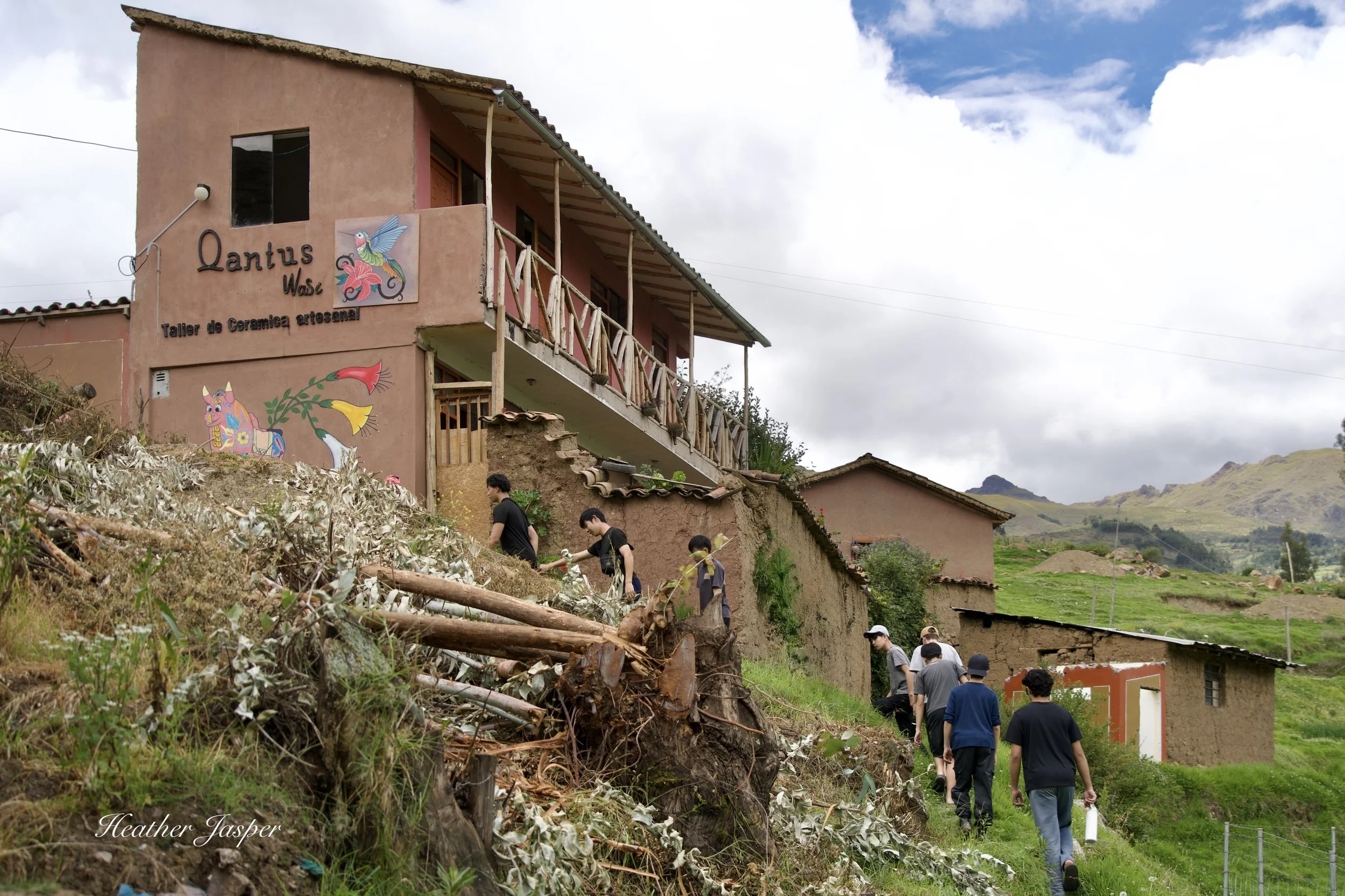
The Canadian students walked from where they learned to make adobe bricks to the pottery workshop.
What is CAS Trips?
CAS Trips is a global company built around the International Baccalaureate program Community, Action, Service. Called CAS for short, this is a program I’m very familiar with because I was the CAS Coordinator at International School Dhaka 2012-2014. The program is much better at engaging students in community service than the usual hour-counting programs that most schools have for volunteering.
Part of my job as CAS Coordinator was to assess high school juniors’ and seniors’ completion of specific learning goals, rather than just check off on a number of hours logged. It was one of the best jobs I’ve ever had, and I’m thrilled to see CAS programs here in Peru.
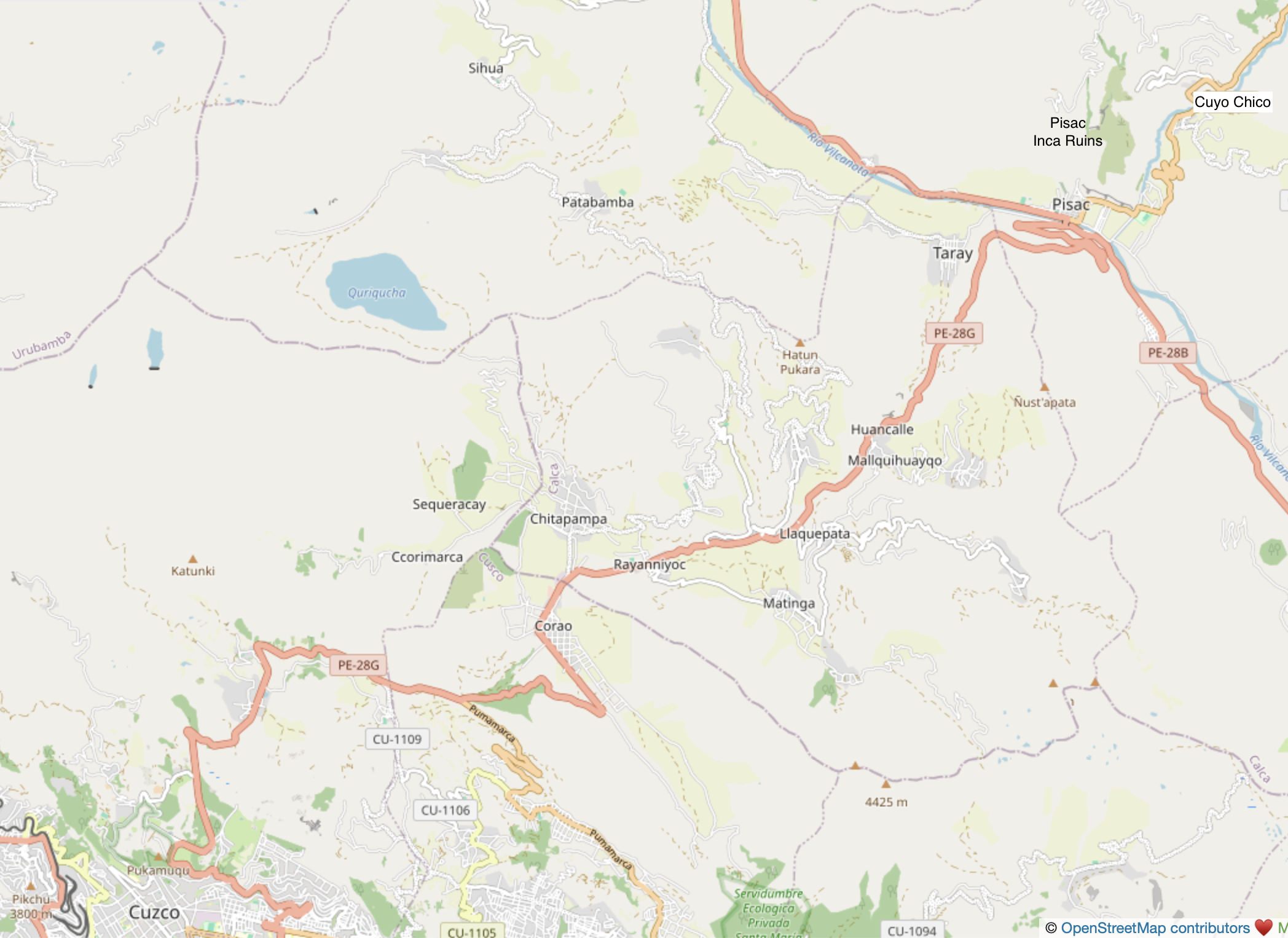
Keep going uphill from Pisac and in just 10 minutes you’ll be in Cuyo Chico.
Where is Cuyo Chico?
Cuyo Chico is a 10-minute drive from Pisac, on the east end of the Sacred Valley and about an hour from Cusco. If you are at the Pisac archeological site and look across the valley at the nearest village, that’s Cuyo Chico. (Cuyo Grande is higher up the valley). You have a beautiful view of the Inca ruins from just about everywhere in the village.
How to get to Cuyo Chico?
Once you get to the town of Pisac, it’s easy to find transportation. You can find taxis by the bridge, where the road from Cusco crosses the Urubamba River. There are also moto-taxis, little 3-wheeled vehicles like a tuktuk, on the main road in front of the market. If you drive directly from Cusco, it takes about an hour.
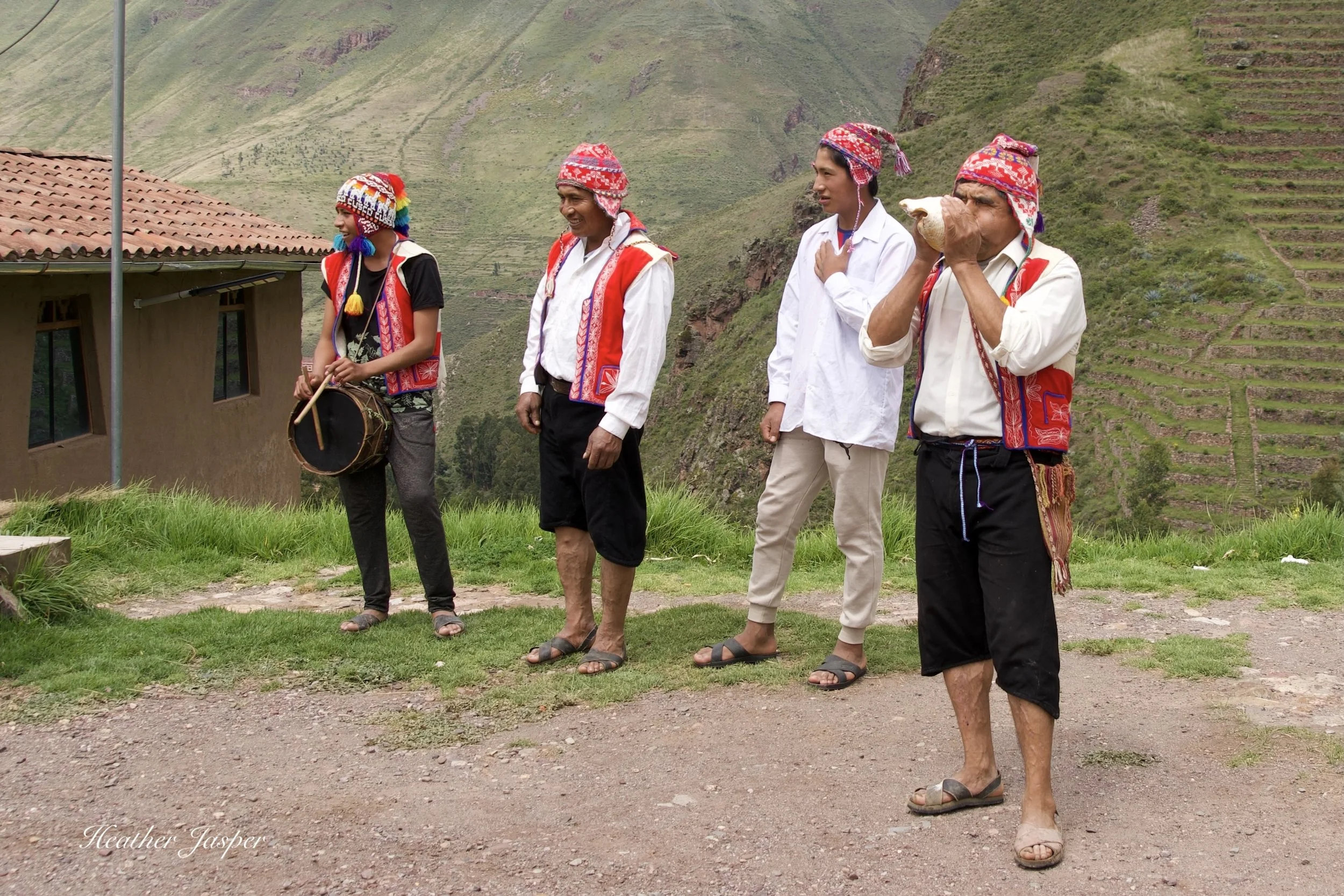
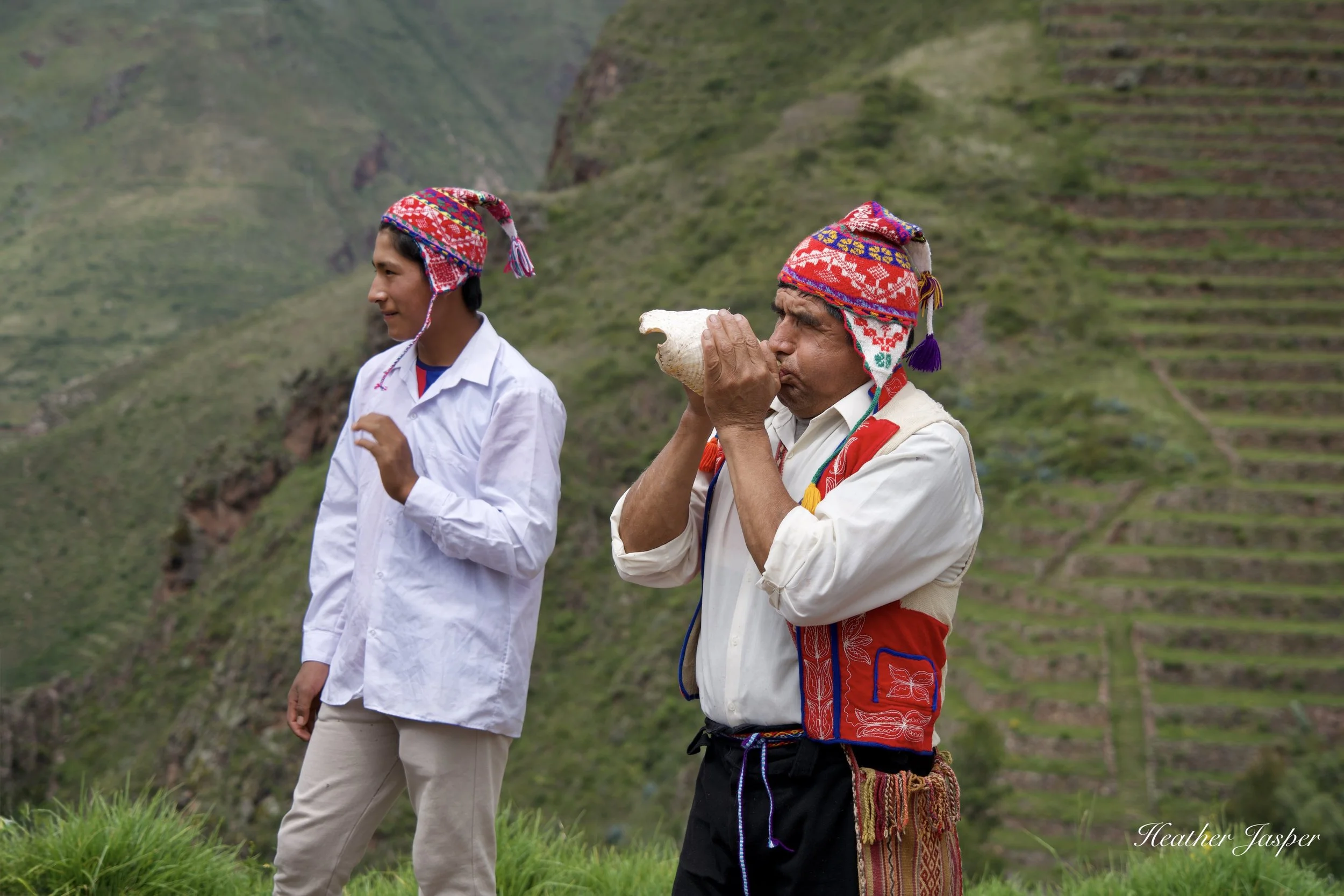
Renato, with the pututu, Faustino and their sons welcomed us to Cuyo Chico.
Who to contact in Cuyo Chico?
If you want to contact the community directly, especially for homestays, you can call Renato (+51 950 475 531) or Faustino (+51 918 156 384). If you don’t speak Spanish, I recommend texting on Whatsapp, which will be easier for them to translate than a phone call.