
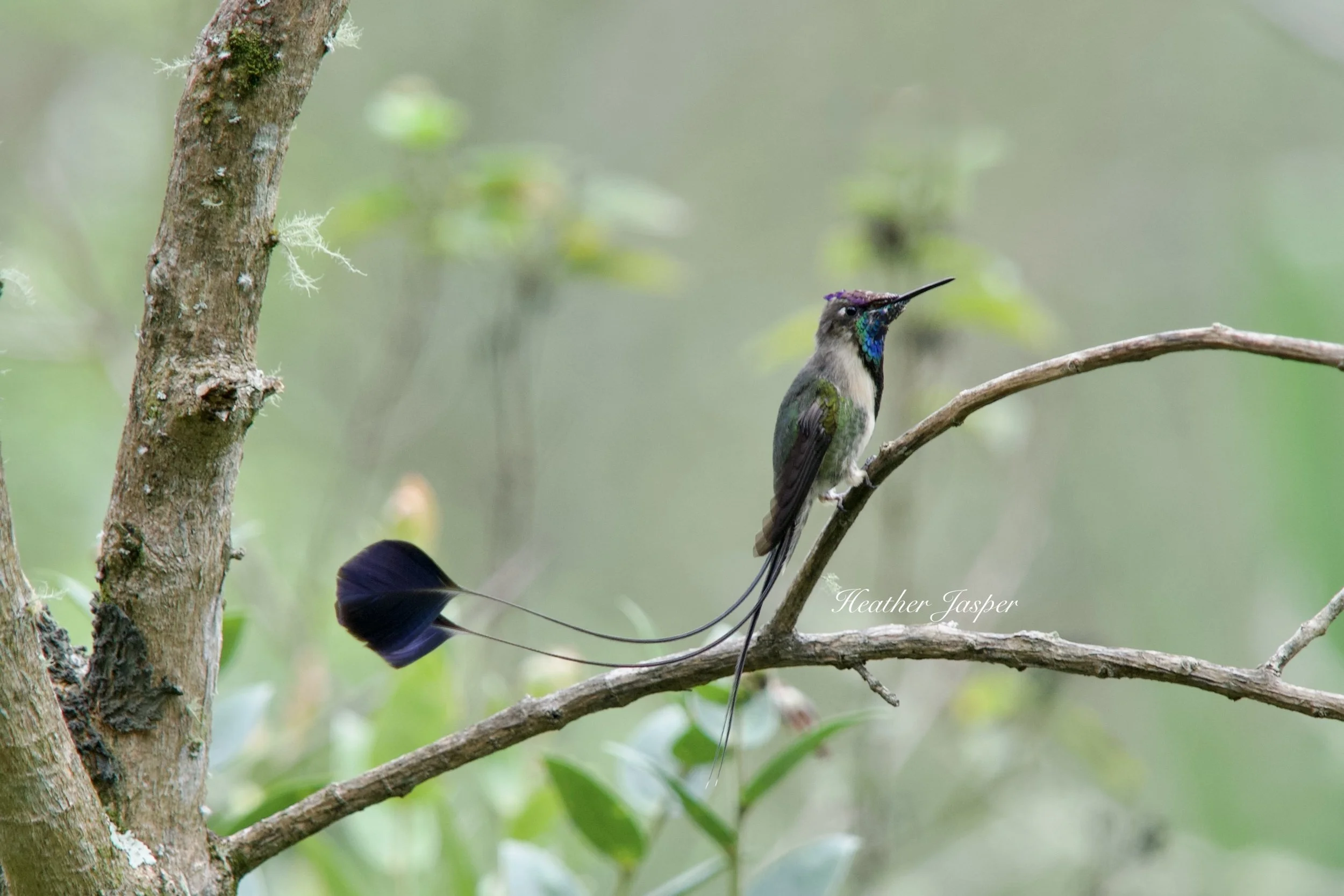
Have you ever seen a Marvelous Spatuletail?
The Marvelous Spatuletail Hummingbird isn’t Peru’s national bird, but it’s a close second to the beloved Gallito de las Rocas, Tunqui in Quechua. My second visit to the Marvelous Spatuletail Refuge was just as exciting as the first, and the lighting was better for photography. (See my 2025 Marvelous Spatuletail blog post here).
What is the Marvelous Spatuletail Refuge?
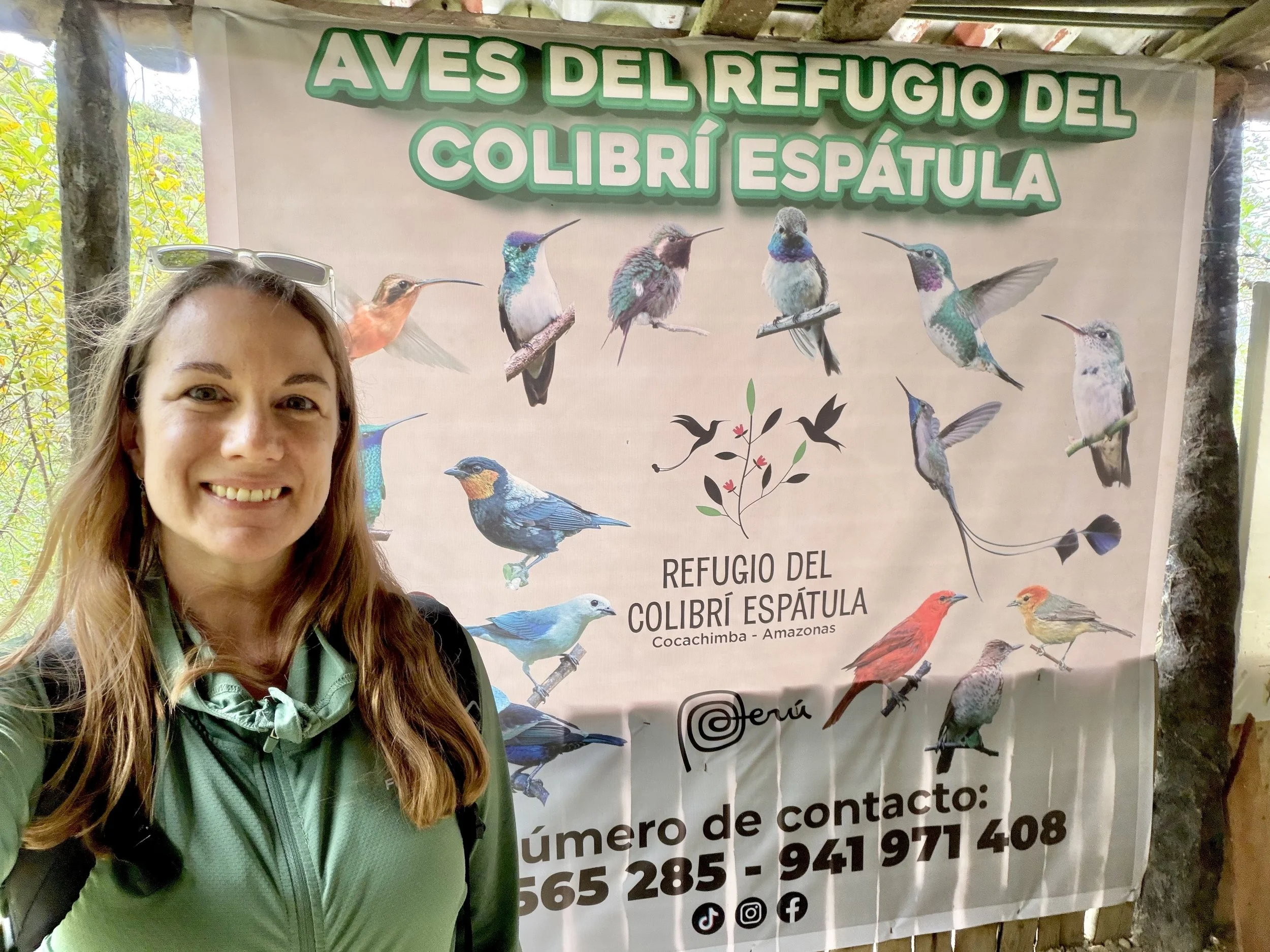
The refuge, called Refugio del Colibrí Cola Espatula in Spanish, is a small piece of land right at the entrance to the village of Cocachimba. It’s owned by Sadit and Elmer, who have day jobs and open their refuge at dawn and dusk, when birds are most active and you have the best chance of seeing lots of species. While many of the birds that visit are endemic, none draw visitors as much as the Marvelous Spatuletail.
There is only one bird blind, with two benches, so you need to make reservations ahead of time. (Contact info below). Seating is limited to 15-20 people per viewing, i.e. morning or evening.
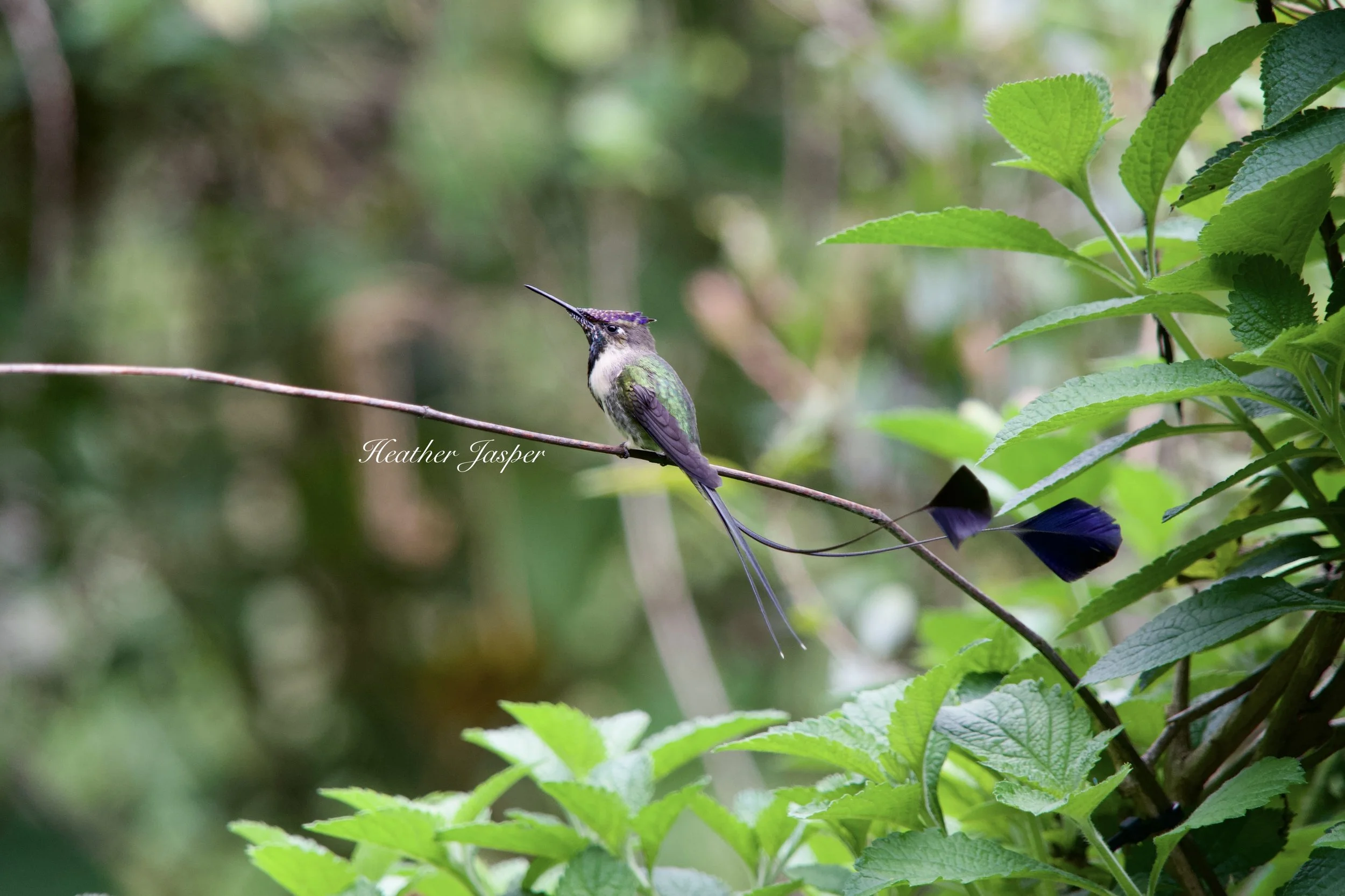
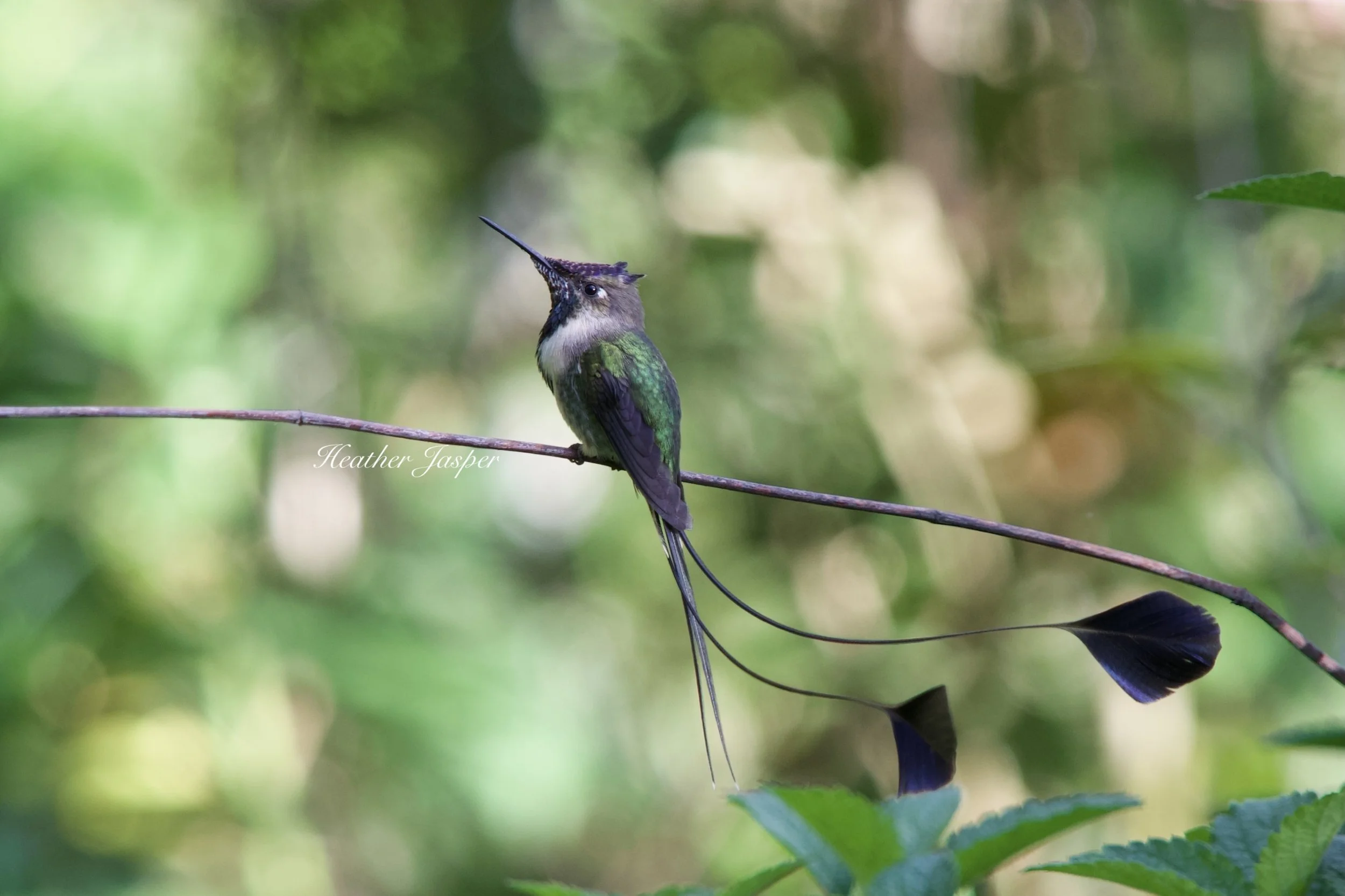
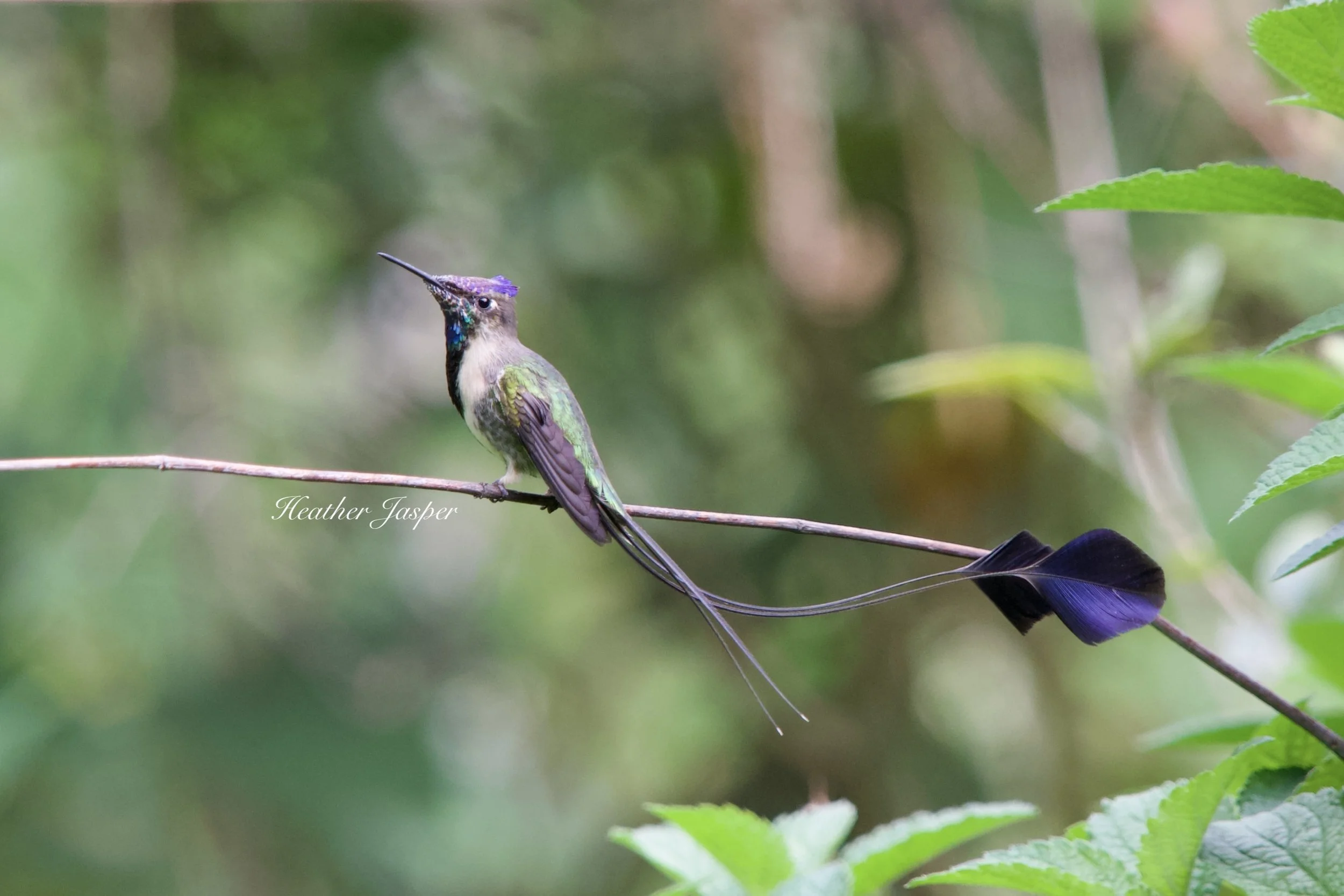
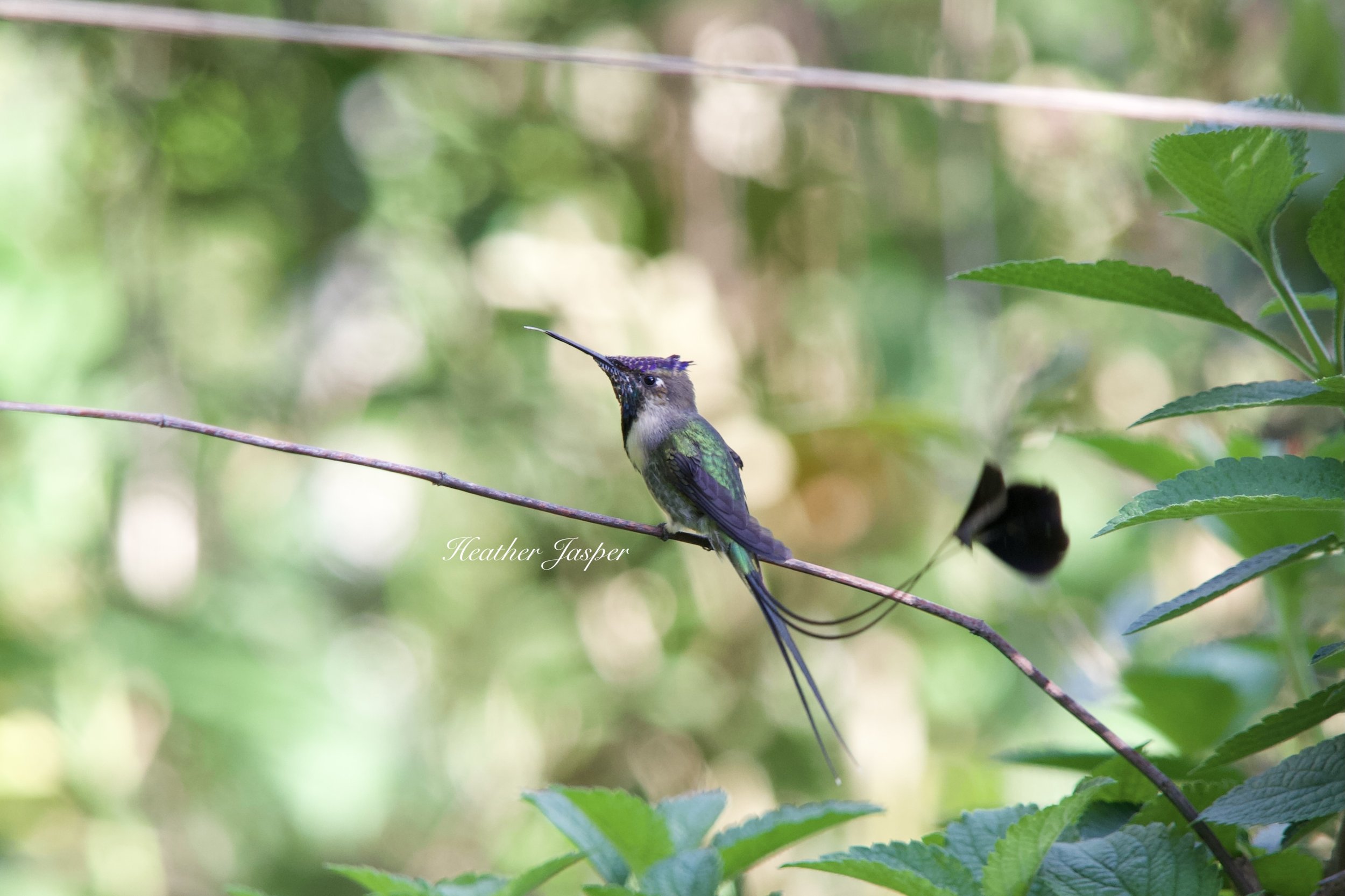
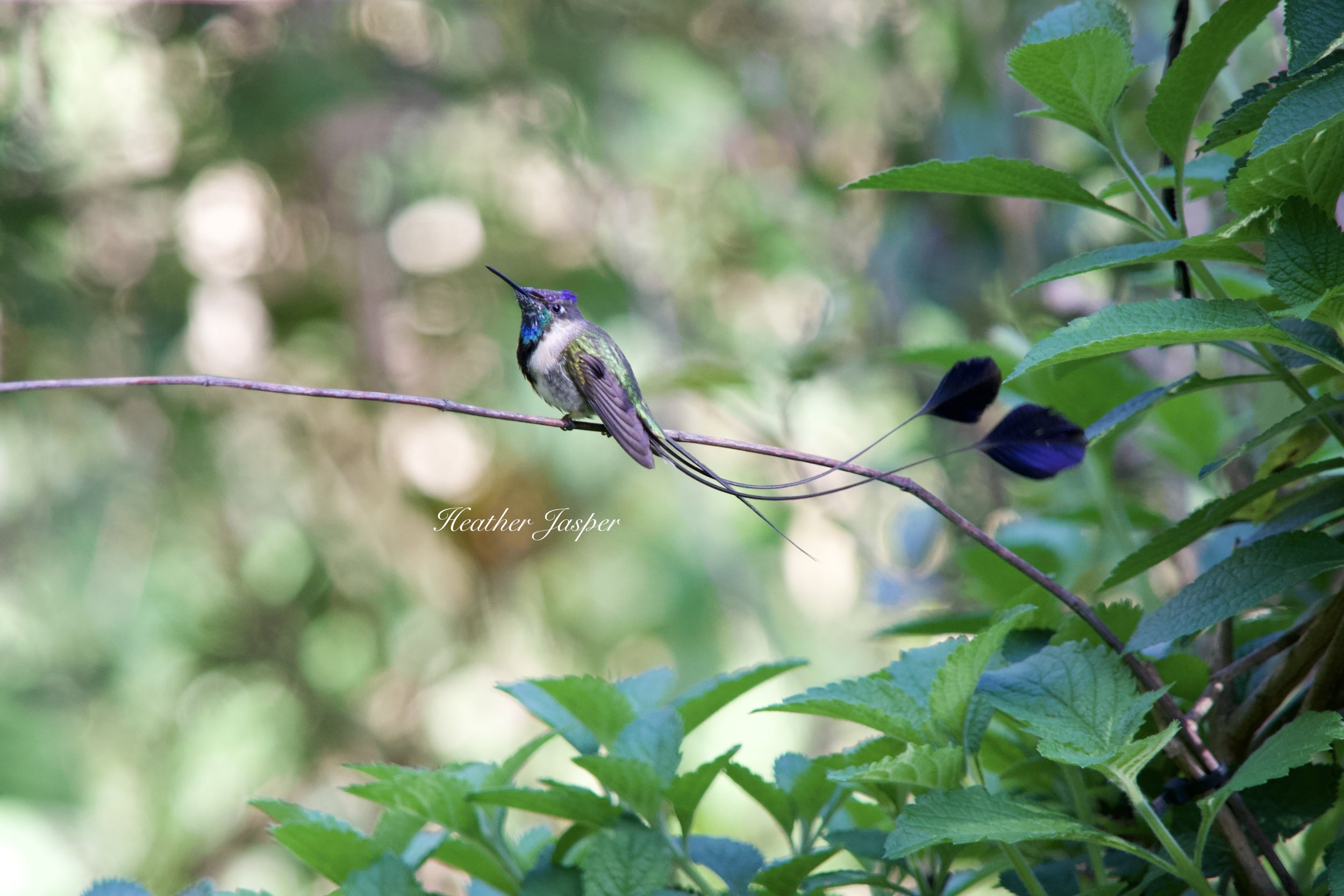
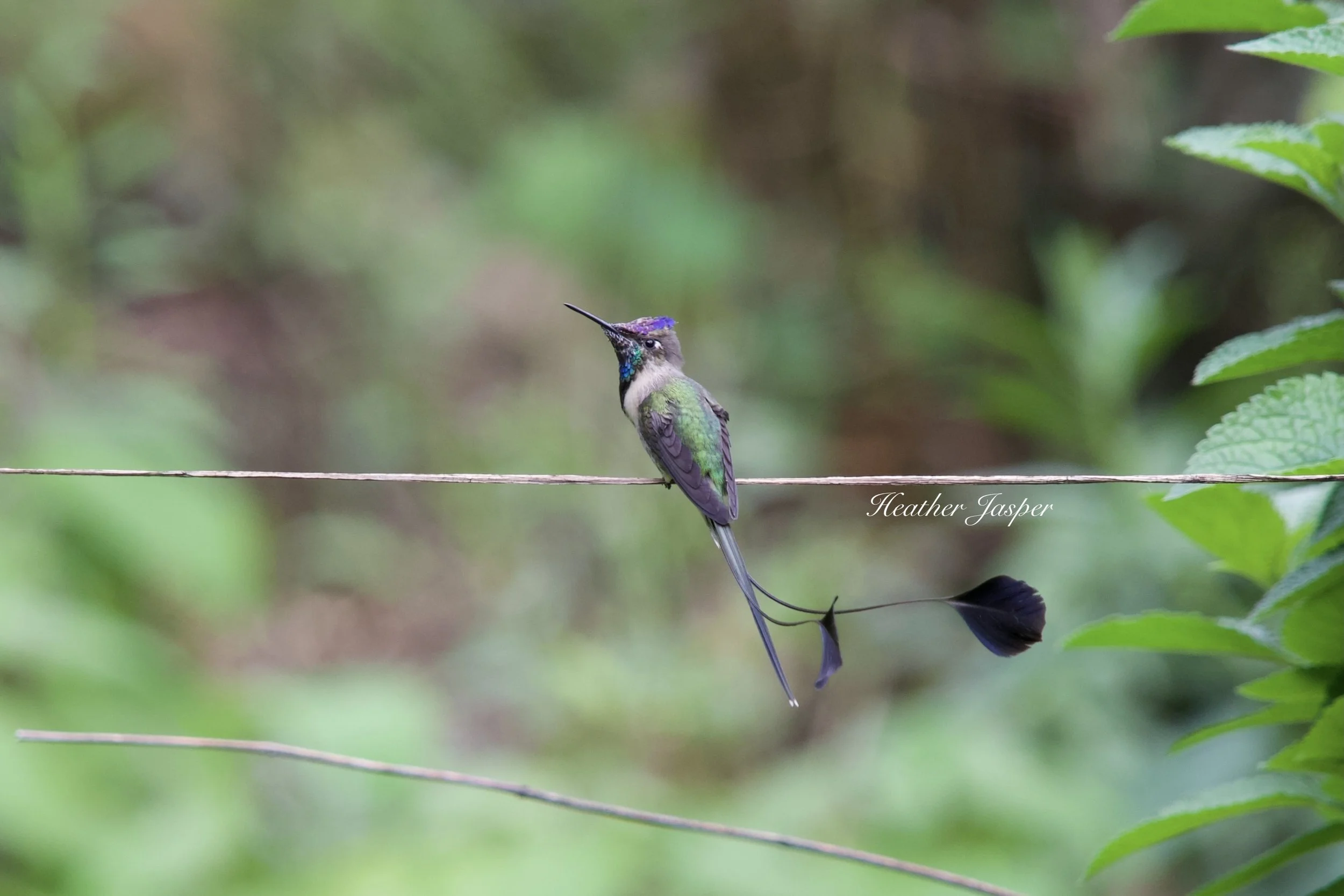
I love everything about the Marvelous Spatuletail.
I love its tiny body size compared to its long tail feathers. I love how it can move the tail feathers in a complicated dance without moving the rest of its body. I love its black throat stripe and turquoise iridescence. I love its cute little feet.
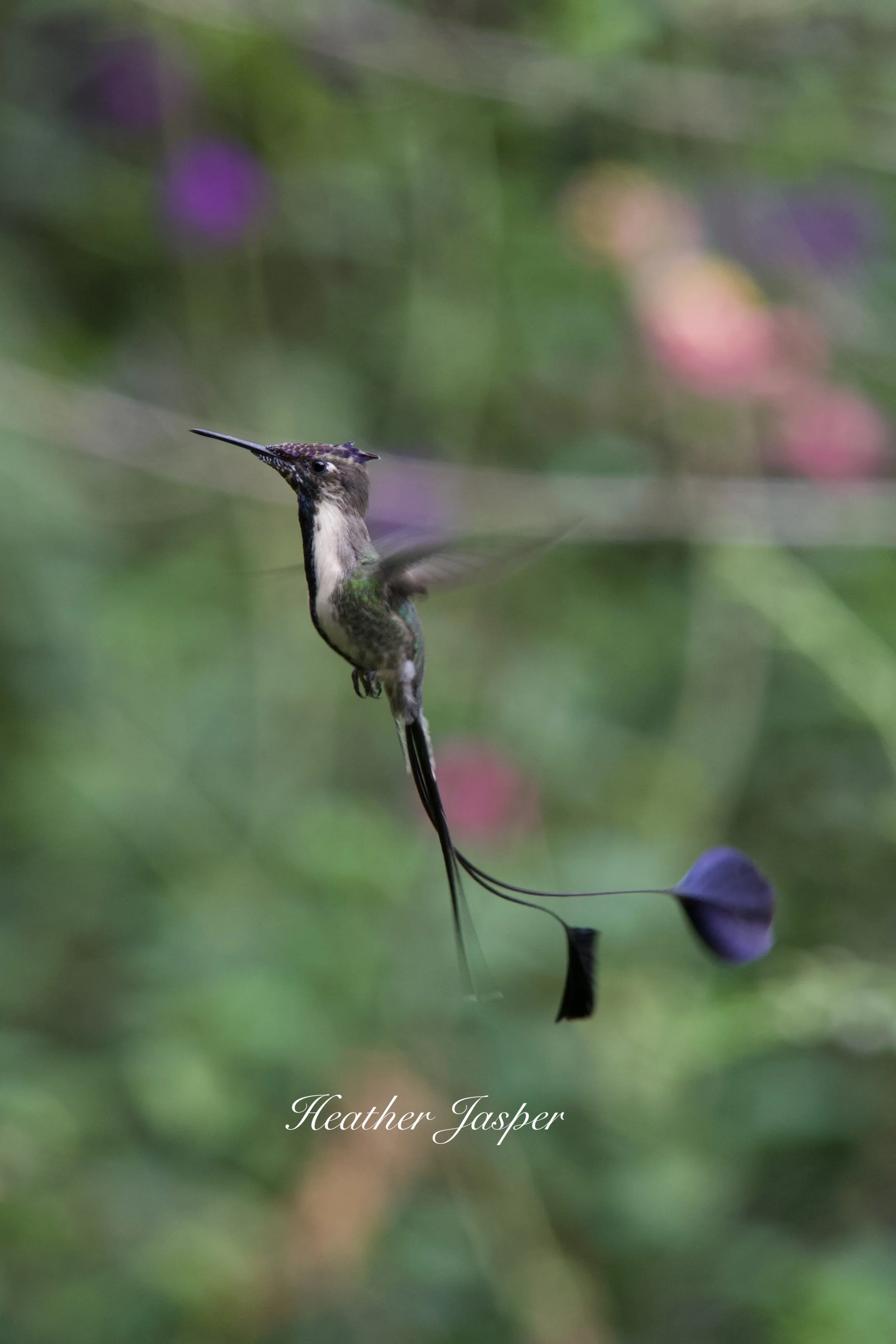
The Marvelous Spatuletail
These hummingbirds are tiny: the male’s body is 14cm (5.5in) long and the female is even smaller at 10cm (4in) long, not including their bill or tails.
They only live in the Utcubamba River Valley, in northern Peru. The best places to see them are the Refugio Colibrí Cola Espatula and Huembo Lodge, about an hour from Cocachimba.
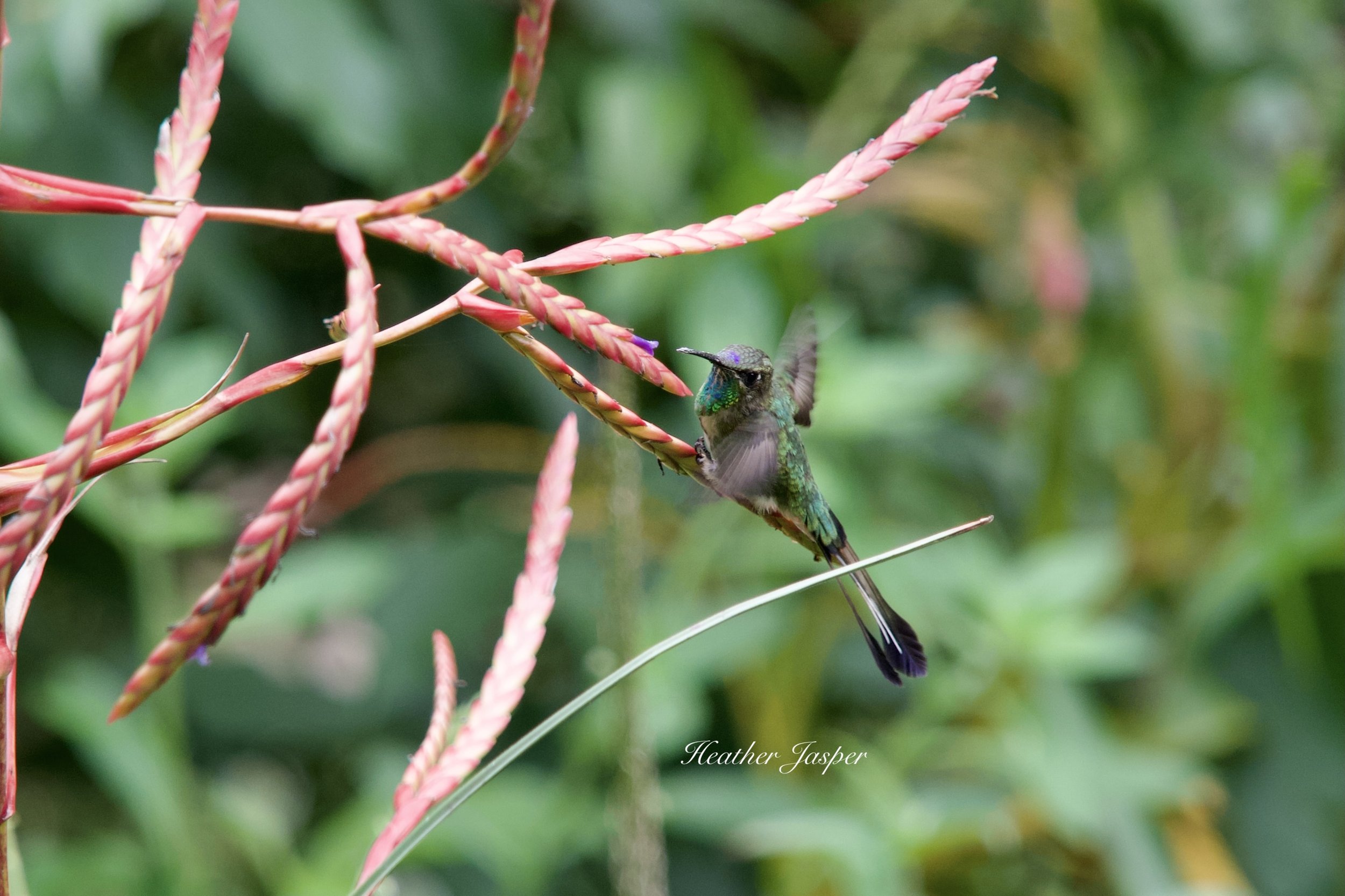
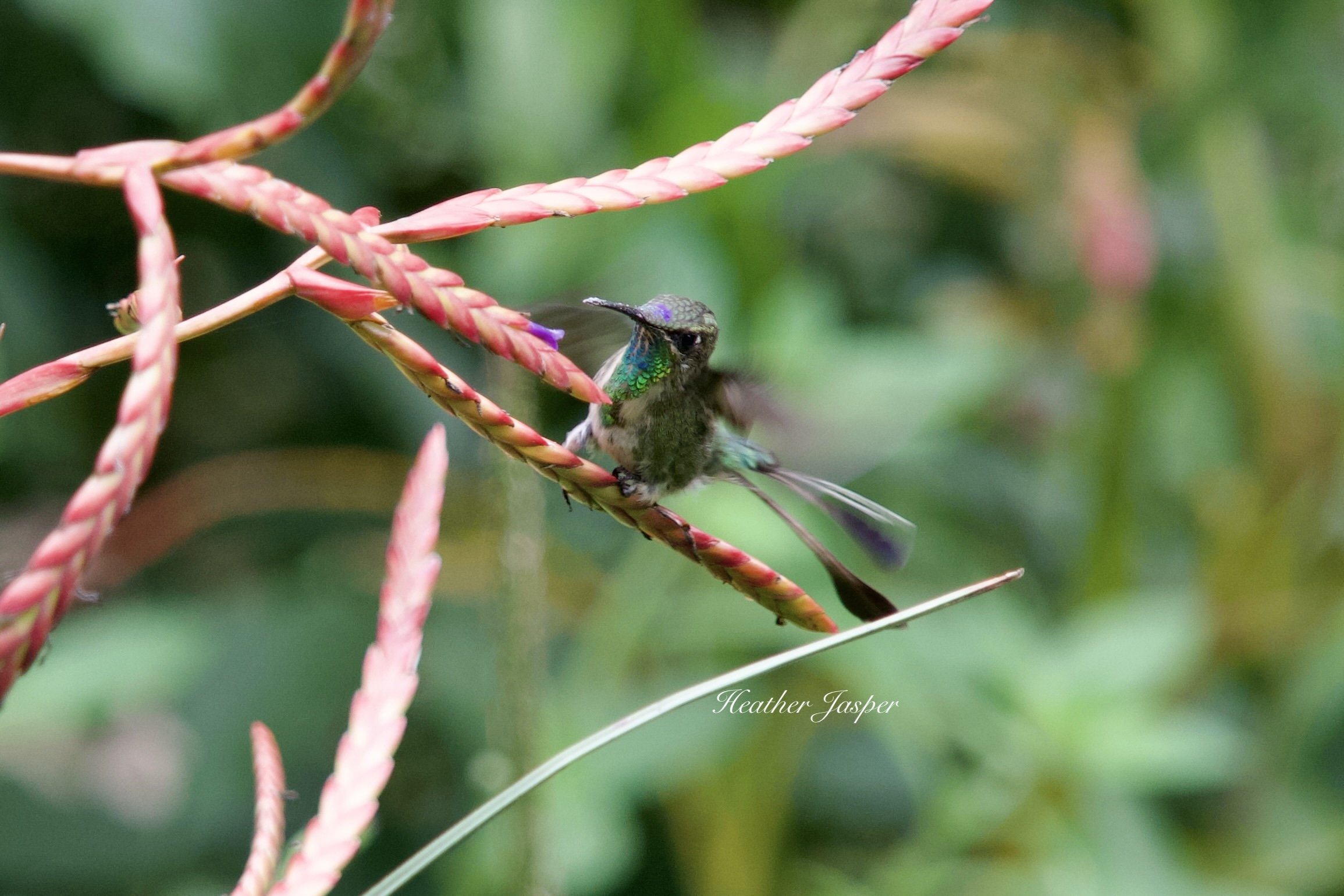
The Immature Male Marvelous Spatuletail
This immature male Marvelous Spatuletail was mostly among the flowers but also visited the feeder a bit. The other two males were teaching him to dance but he couldn’t match all their fancy tail waving because his long tail feathers haven’t grown in yet. The dance lessons were behind some shrubs so I didn’t get any photos. It was fascinating enough to get that peek-a-book view of their lessons.
What other birds are at the Marvelous Spatuletail Refuge?
Some of my favorite tanagers and endemic birds are regular visitors.
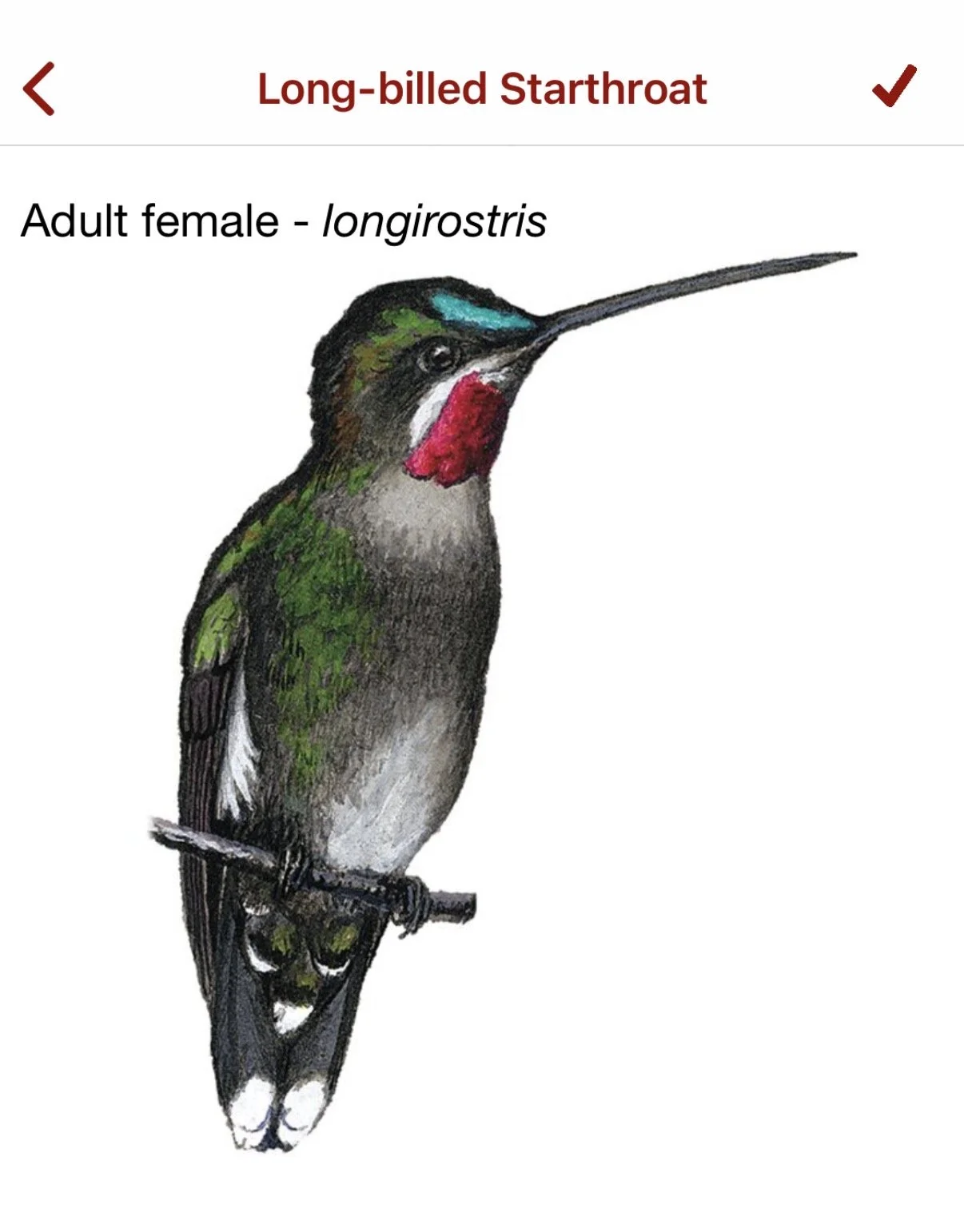
I didn’t see any new species this time, though I did see a species that is newly visiting the refuge: the Long-billed Starthroat (below). According to Sadit, one of the refuge’s owners, the Starthroat only recently started coming to the refuge. I only saw it at some flowers and perched in the top of a distant tree, not up close at a feeder. The red iridescence on its throat doesn’t show in the photo below, but that’s only due to the light’s angle, not to the feathers.
Below are a few of the birds that I saw at the refuge.
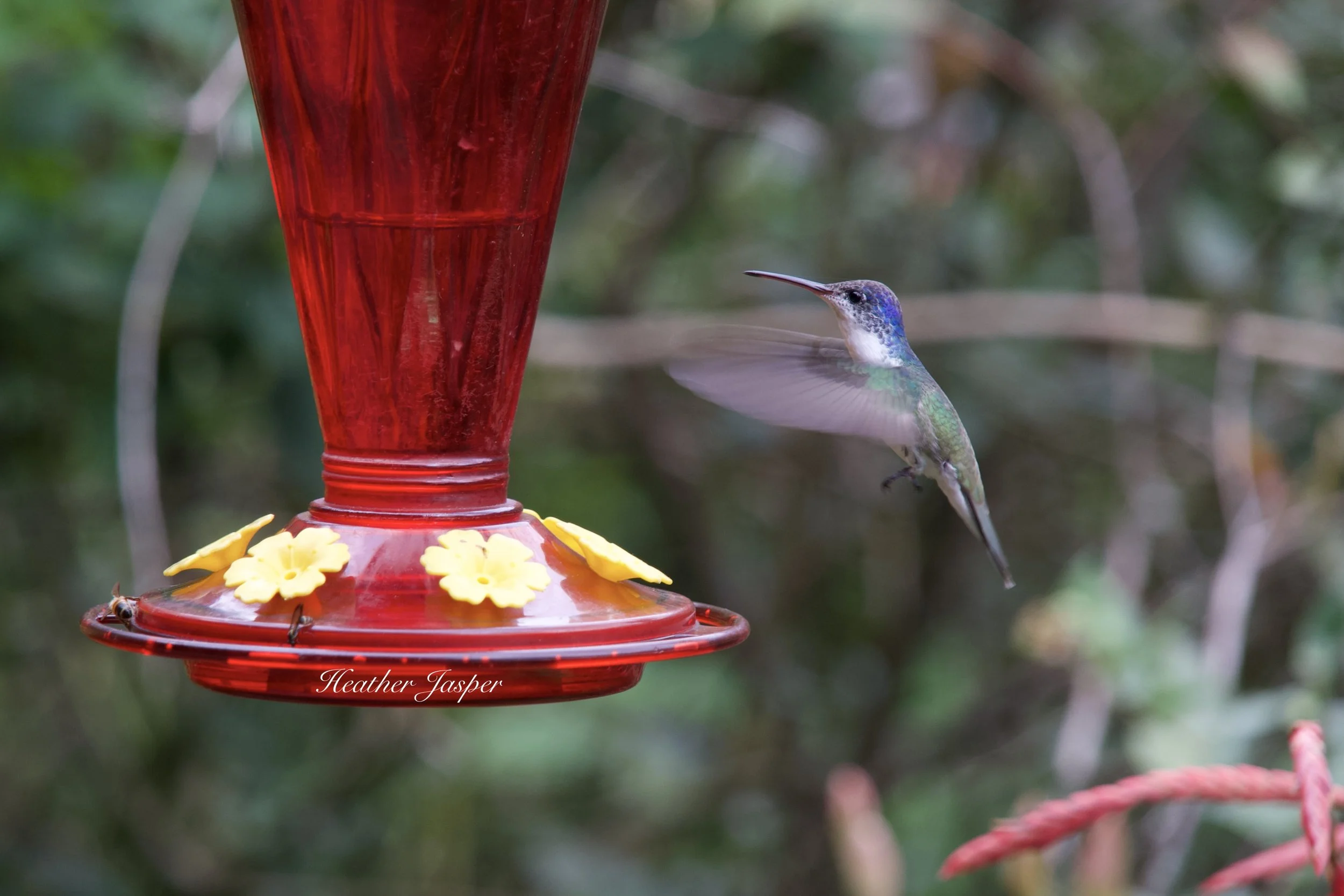
The Andean Emerald
This Andean Emerald, and his mate, were at the refuge for over an hour, flitting between the flowers and the feeder.
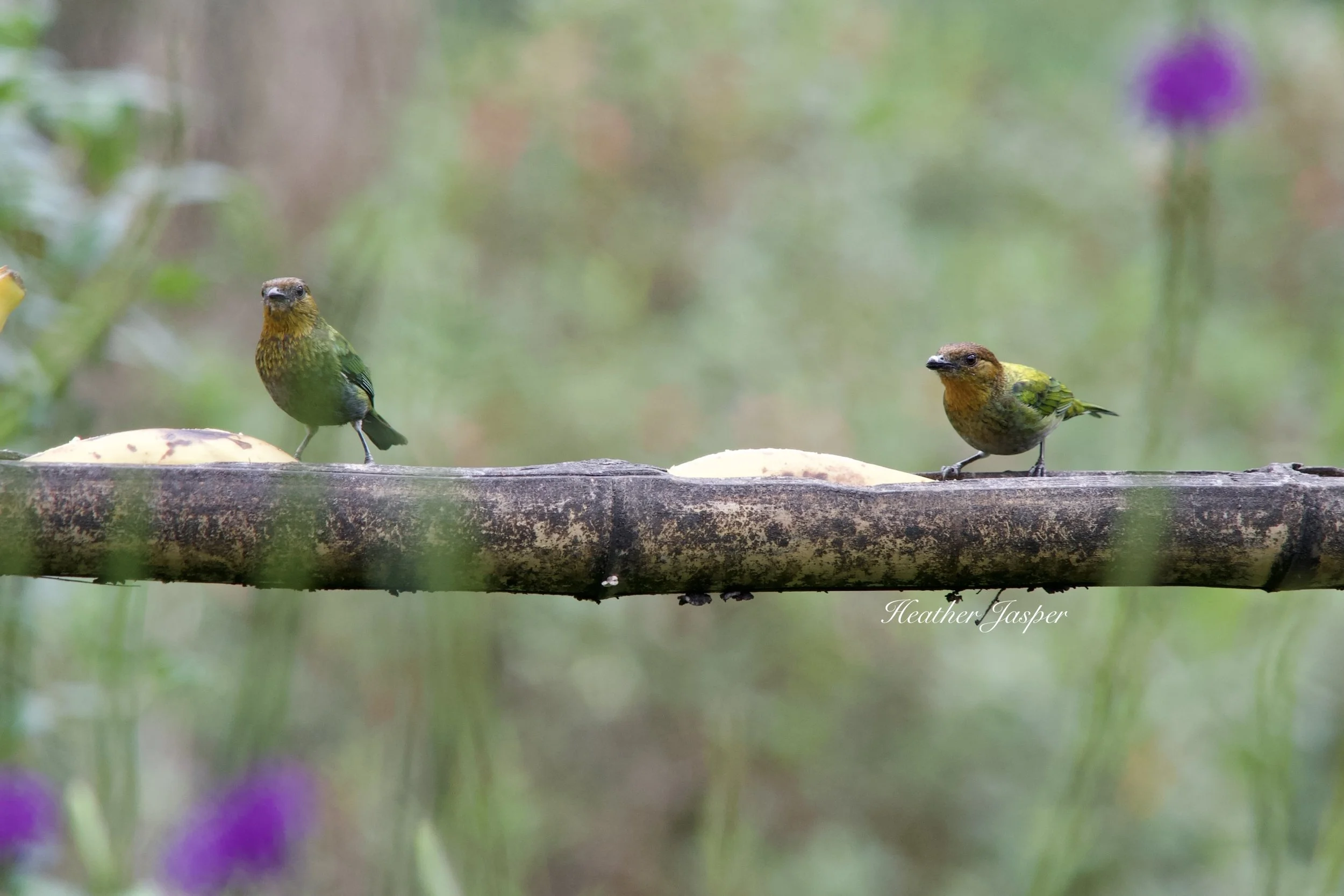
Silvery Tanager females
These two female Silvery Tanagers came for the bananas that are put out every morning and evening for all the fruit-eating birds.
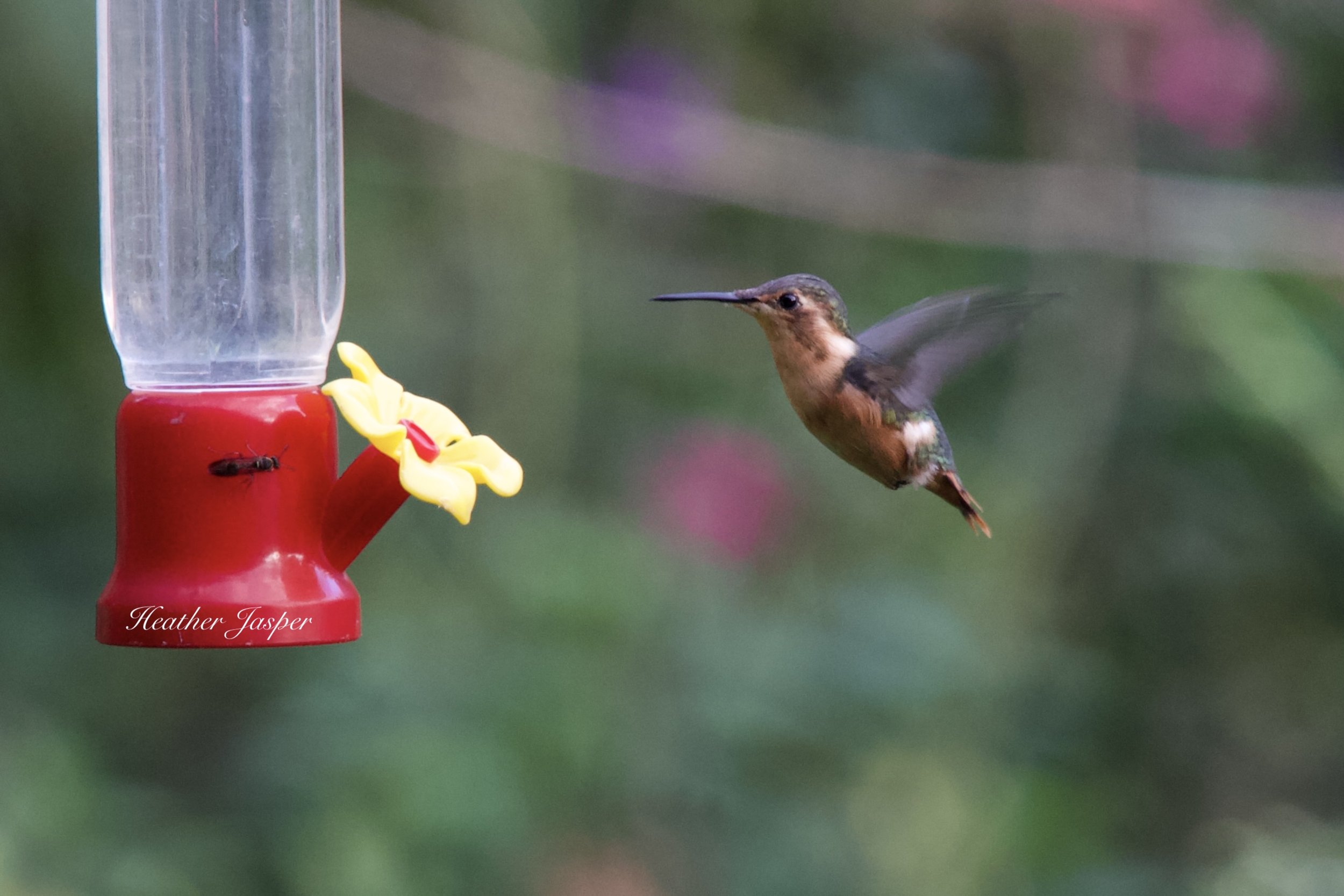
Little Woodstar
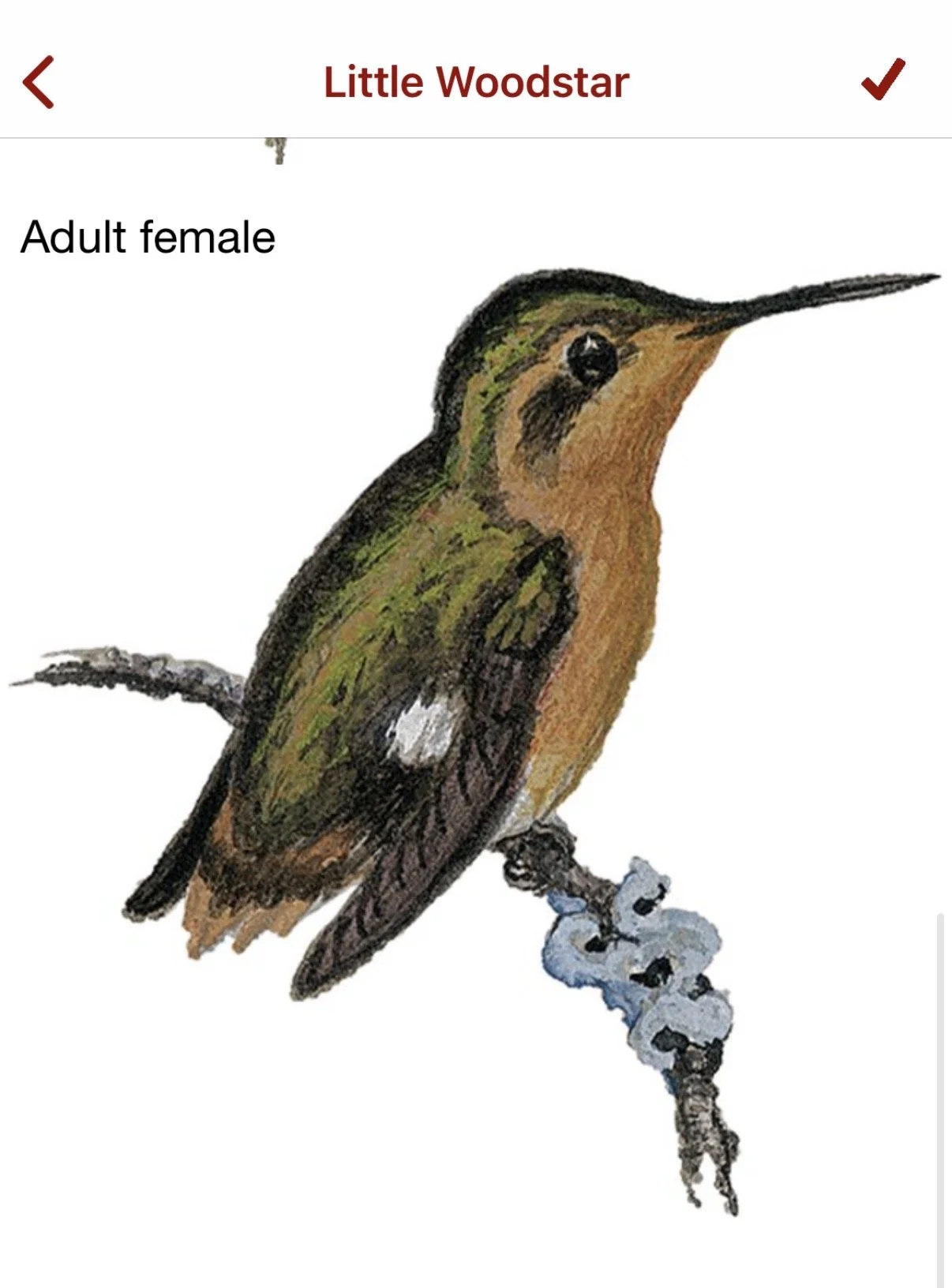
As dusk fell, I mistook this Little Woodstar for a moth a few times. Among the flowers it moved like a moth but at the feeder, it was obviously a tiny bird.
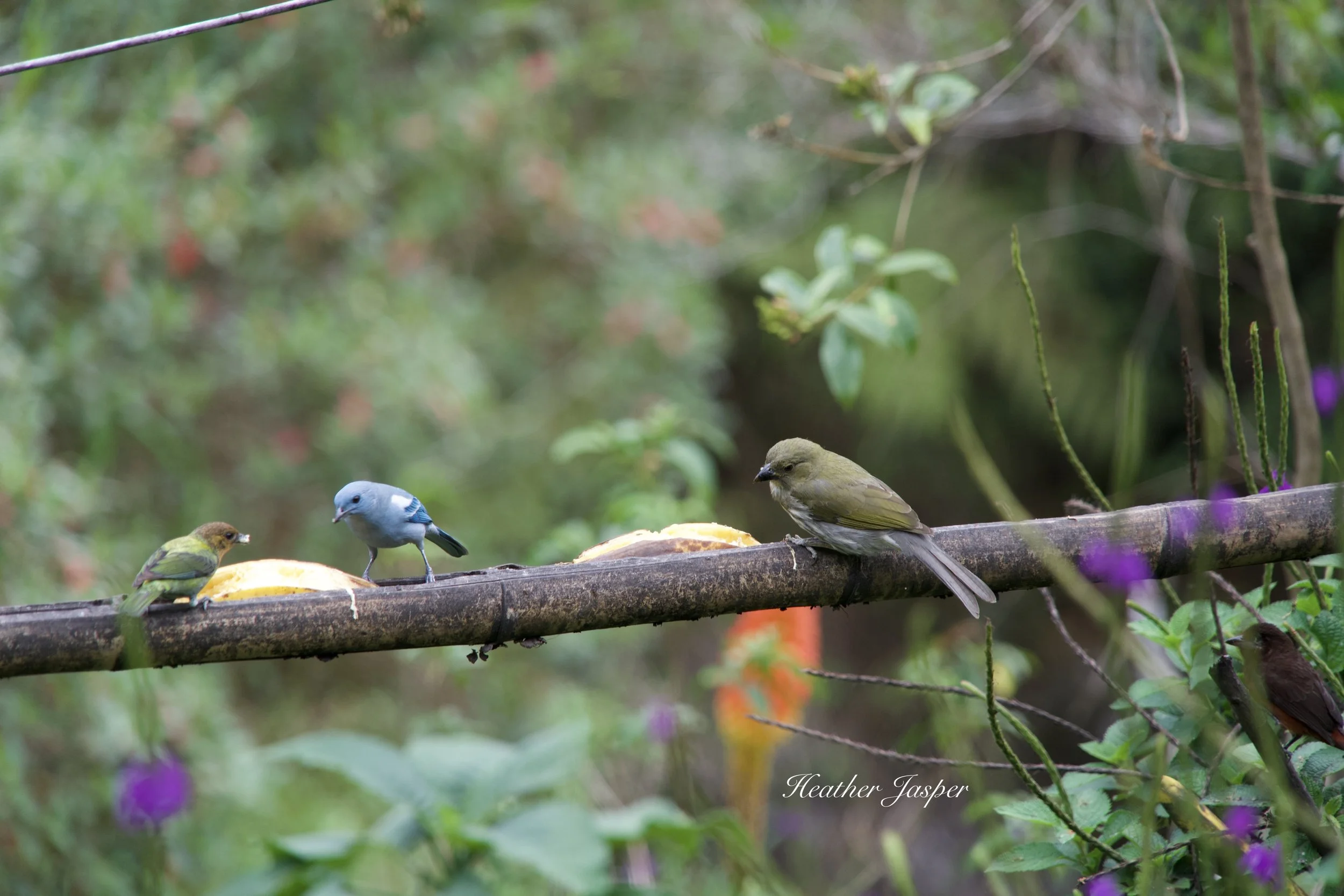
Streaked Saltator
The larger bird on the right is a Streaked Saltator, which isn’t as colorful as the Silvery Tanager and the Blue-and-gray Tanager, but more exciting for me because I see those tanagers near Cusco but not the saltator.
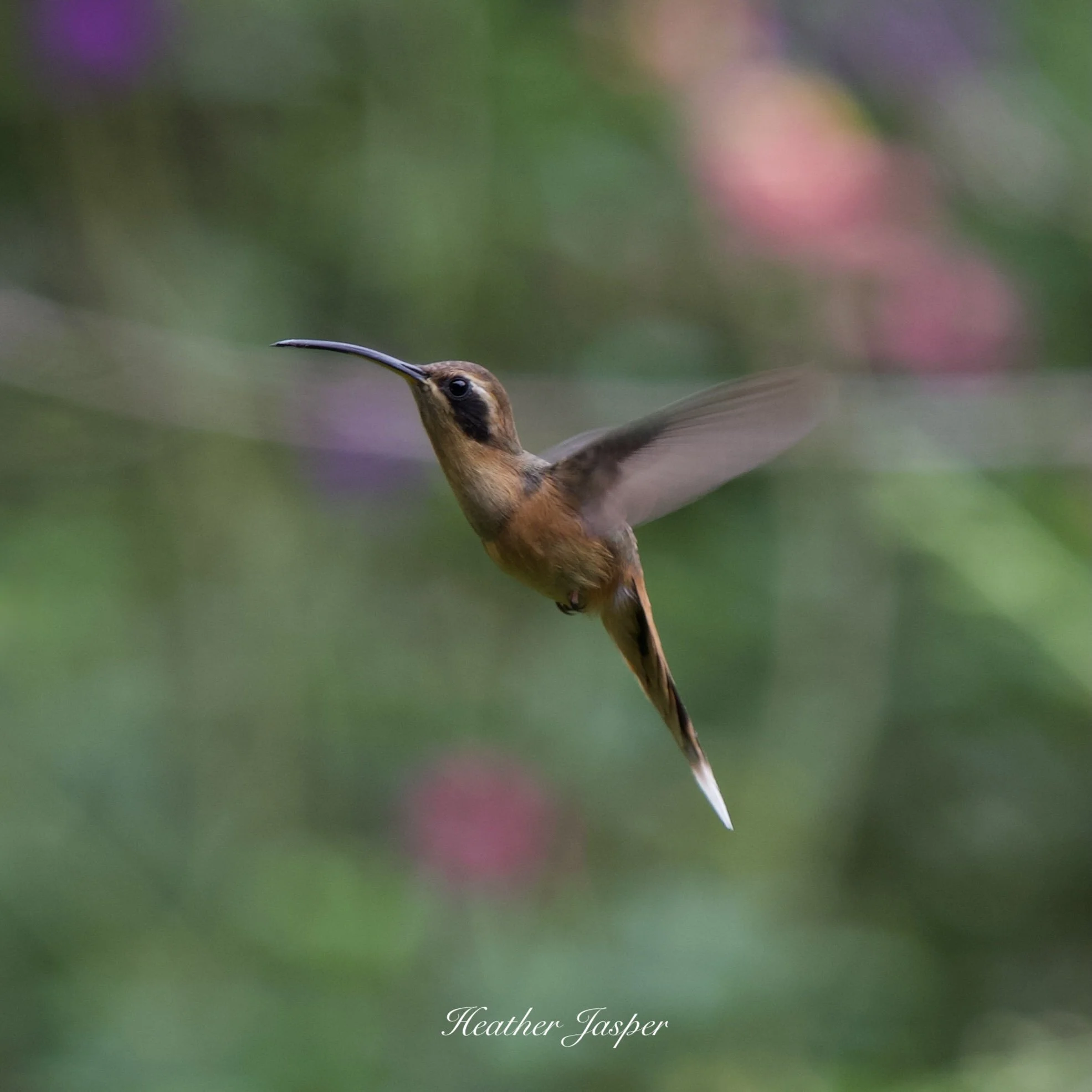
Gray-chinned Hermit
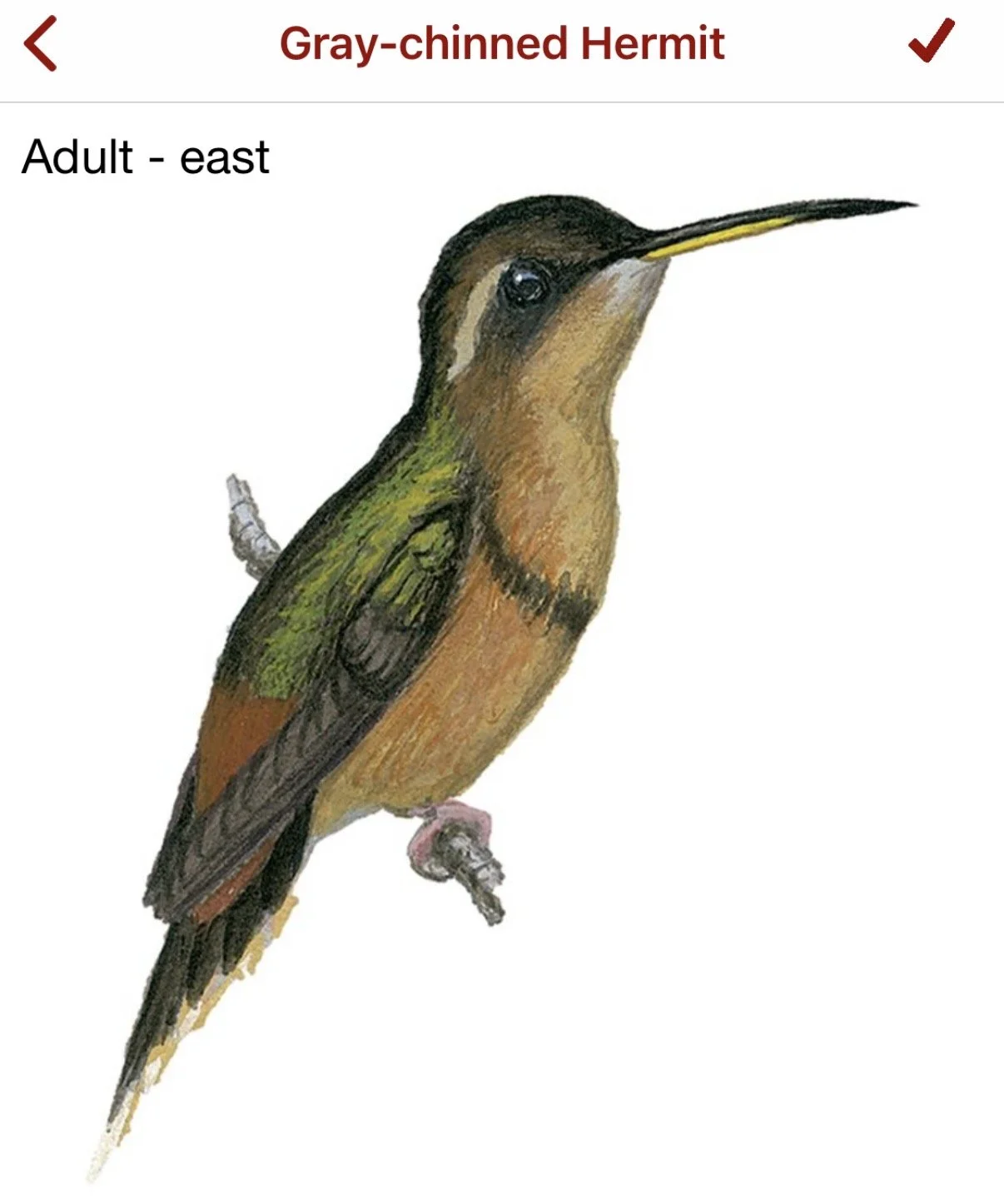
Hermit hummingbirds are hard to see because they hide in dense undergrowth and hard to identify because Peru’s 15 species are all fairly similar. Thankfully, Sadit can identify any birds that come to her refuge at a glance.
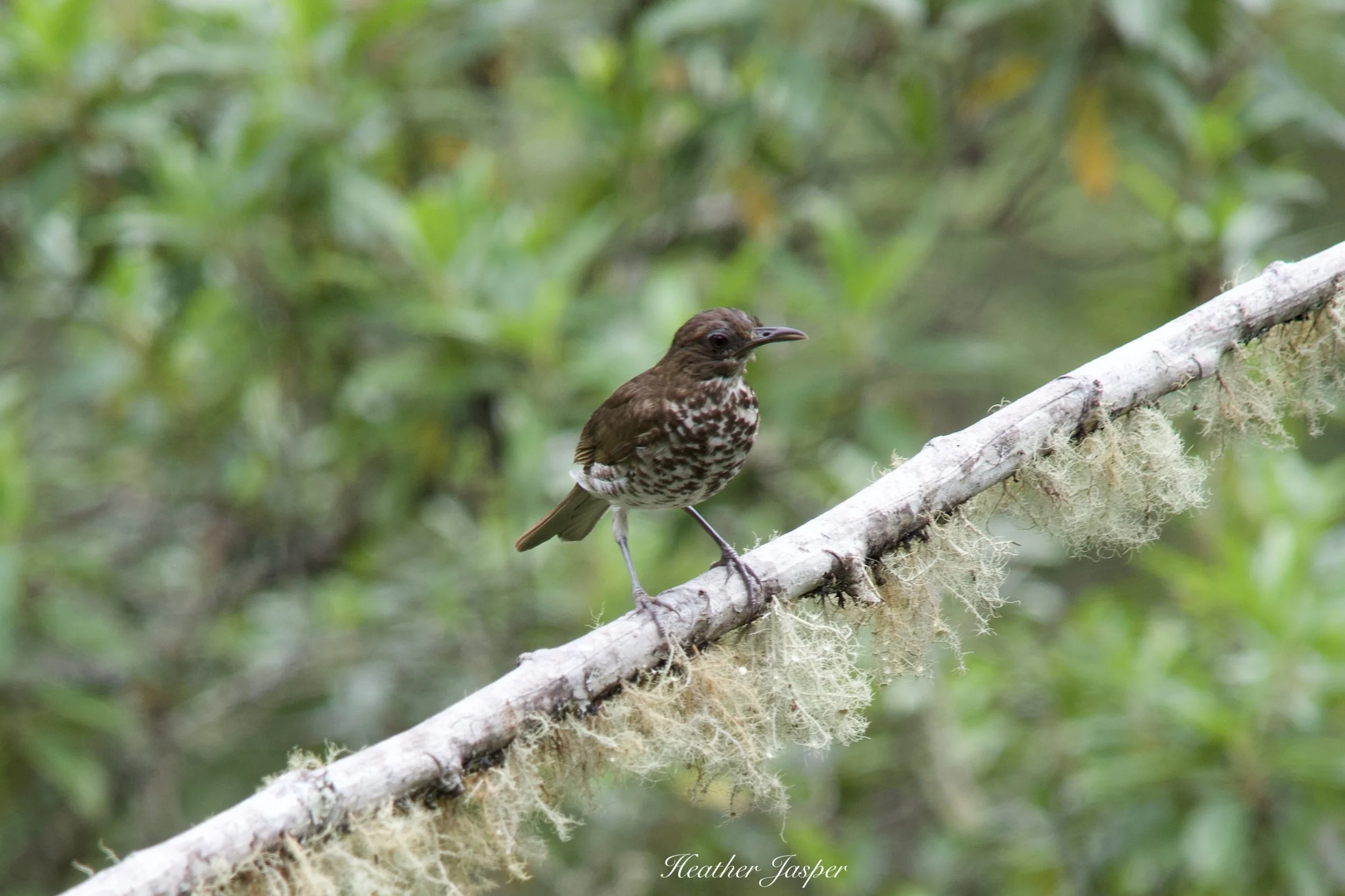
Marañon Thrush
While not as spectacular as the Marvelous Spatuletail, this is another endemic species that you’ll only see in a small area of northern Peru.
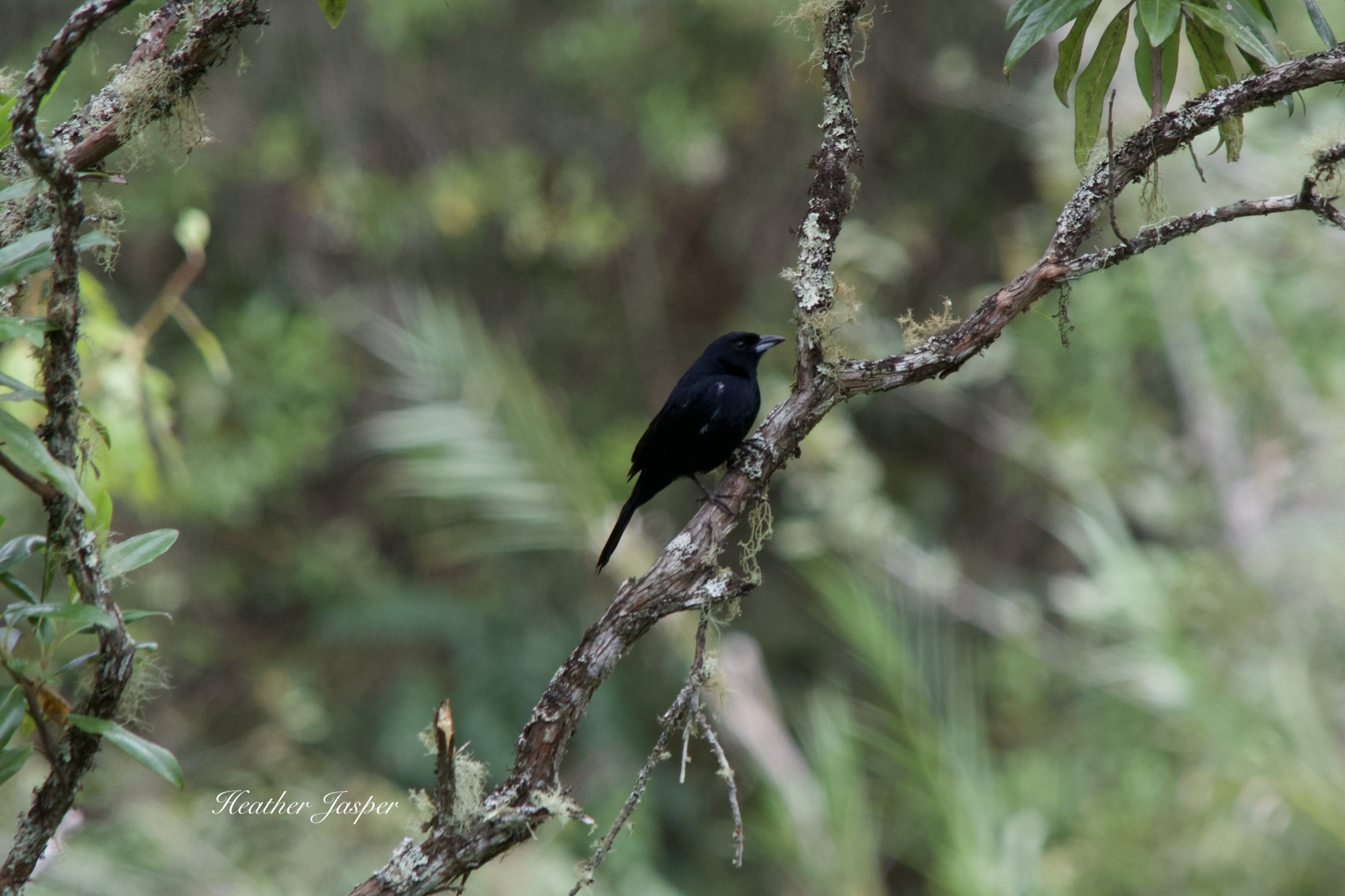
White-lined Tanager
You can barely see this tanager’s thin white line on his shoulder. This species isn’t endemic but in Peru only lives in a few, sparse dots on the map.
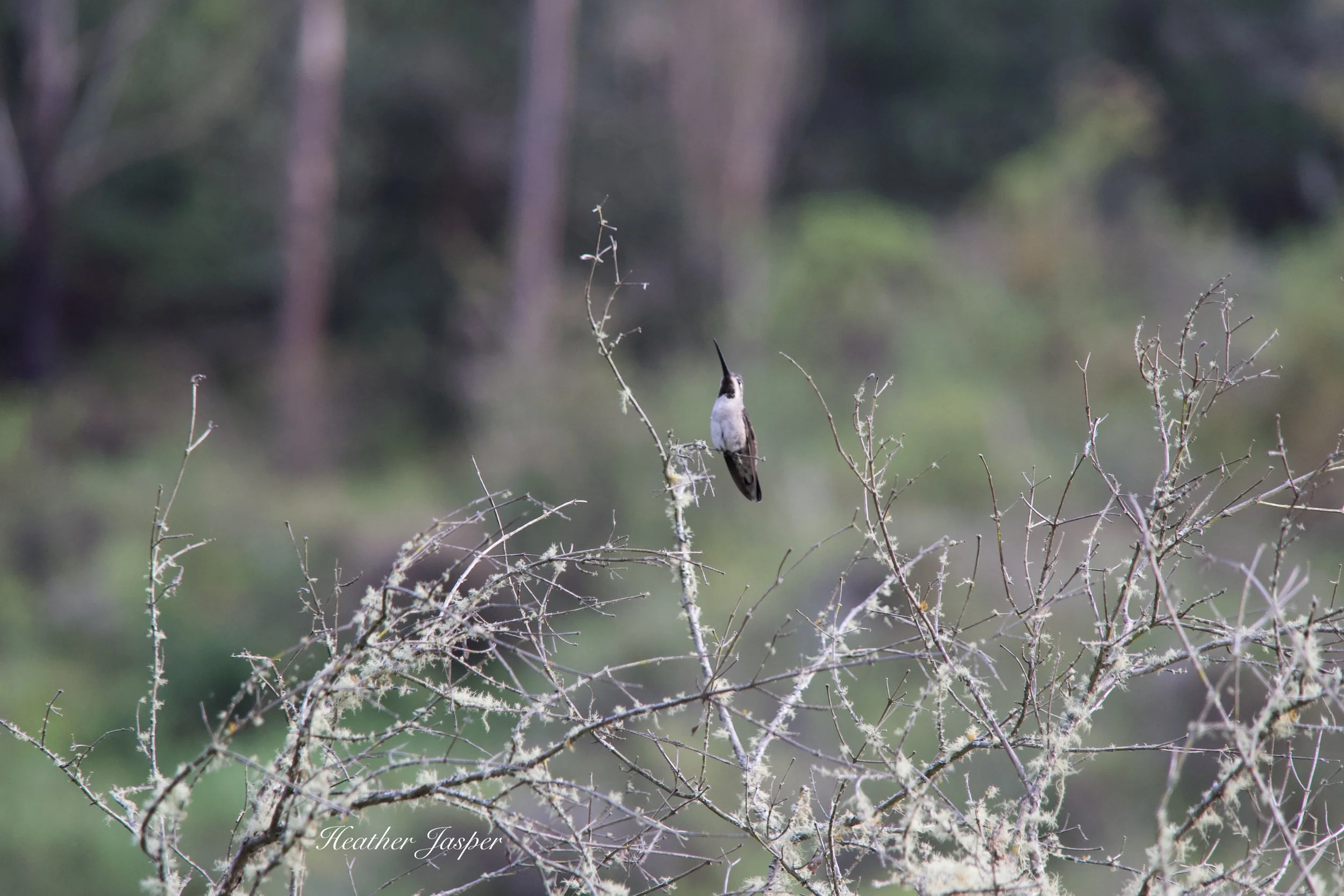
Long-billed Starthroat
Without the light at the right angle, you can’t see the ruby feathers at this throat, but Sadit assured me that this is her newest visitor: the Long-billed Starthroat.
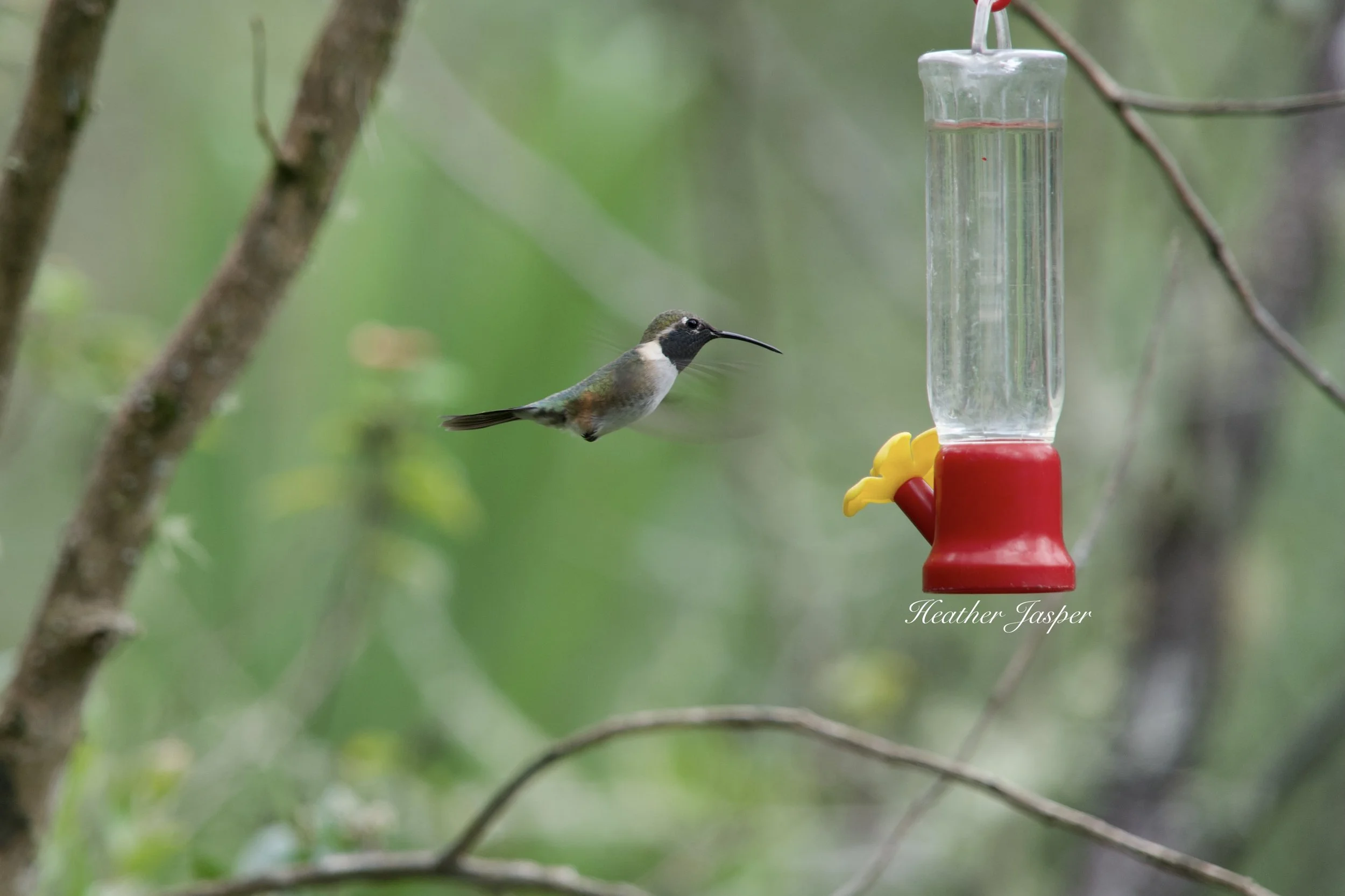
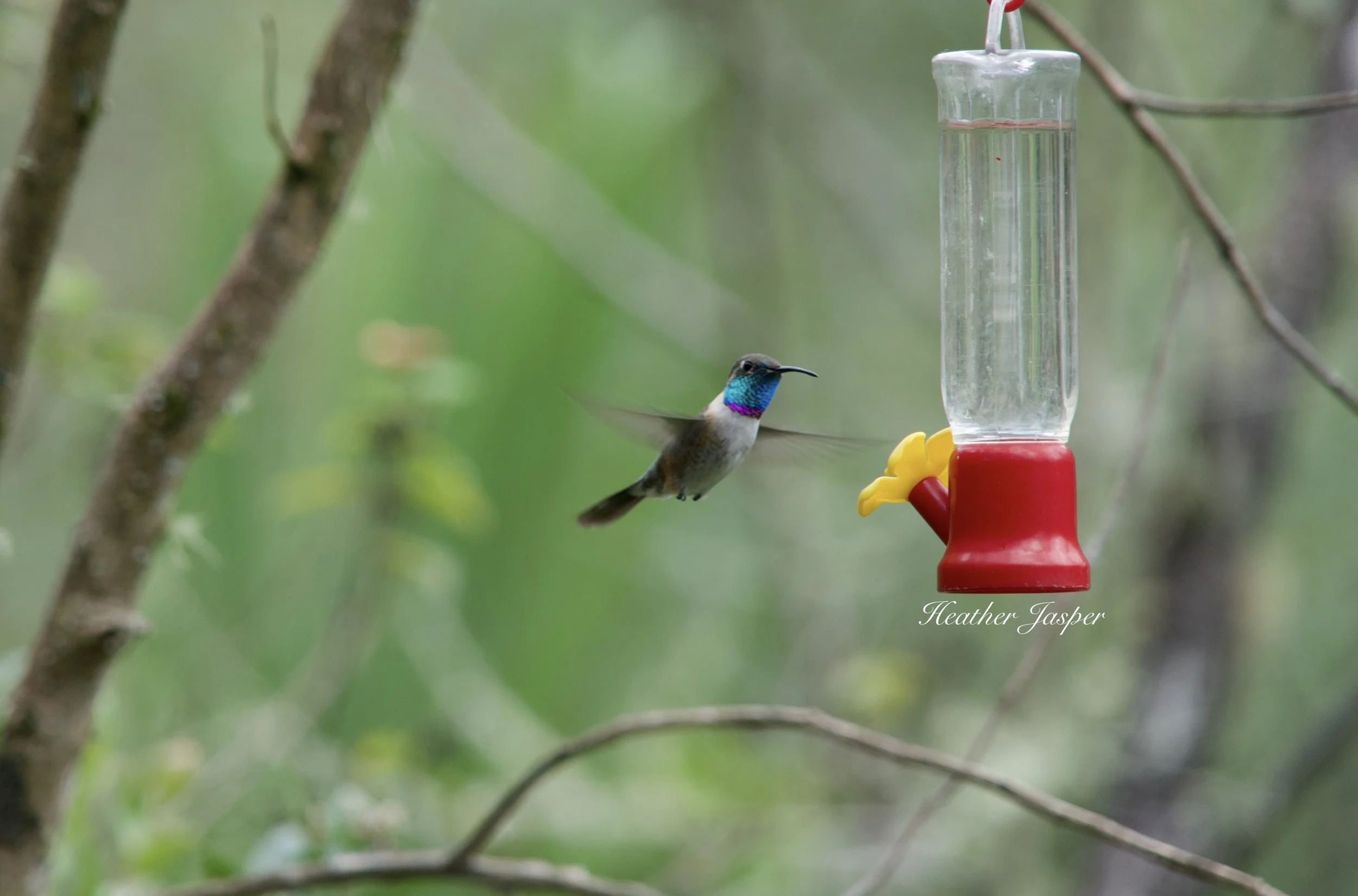
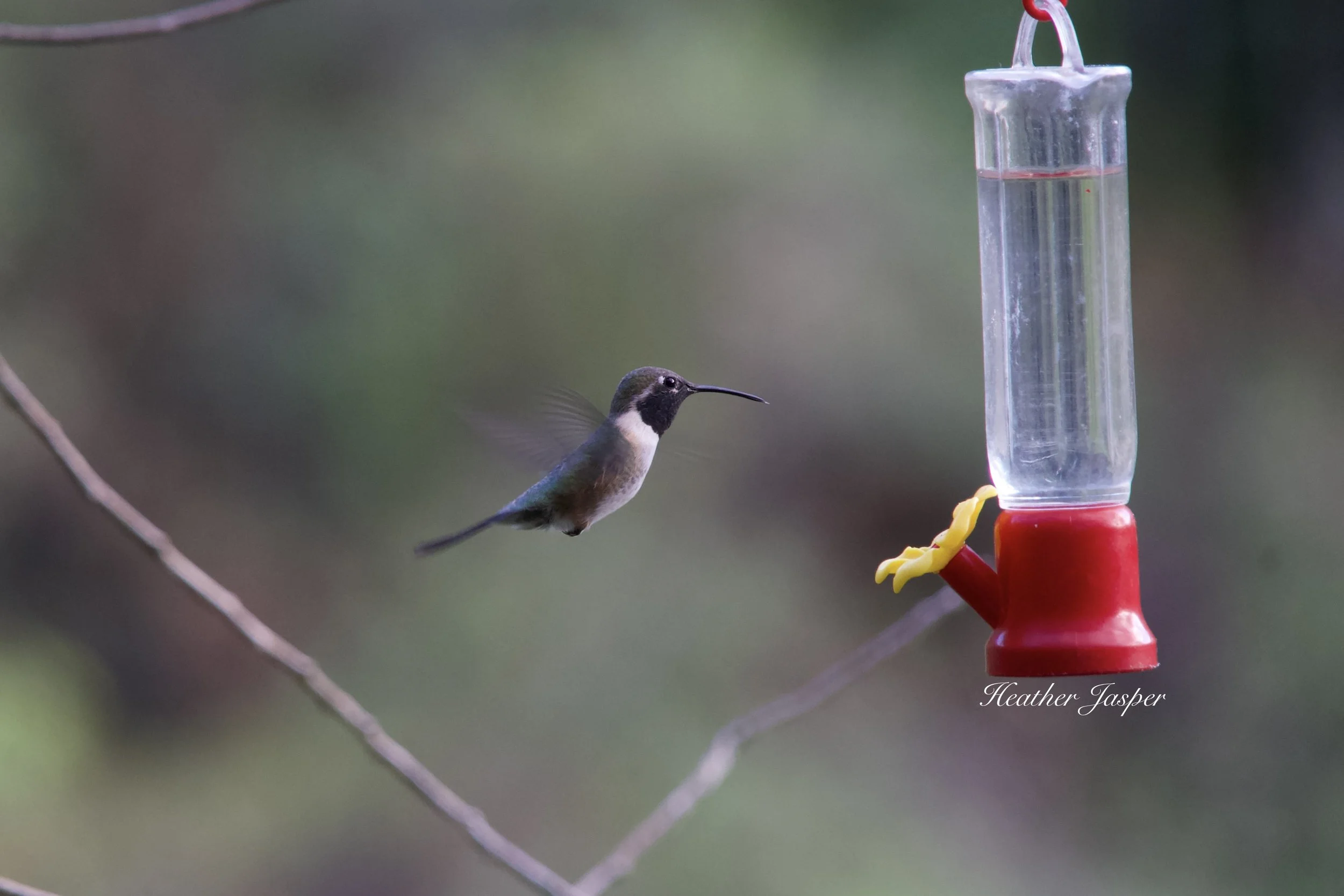
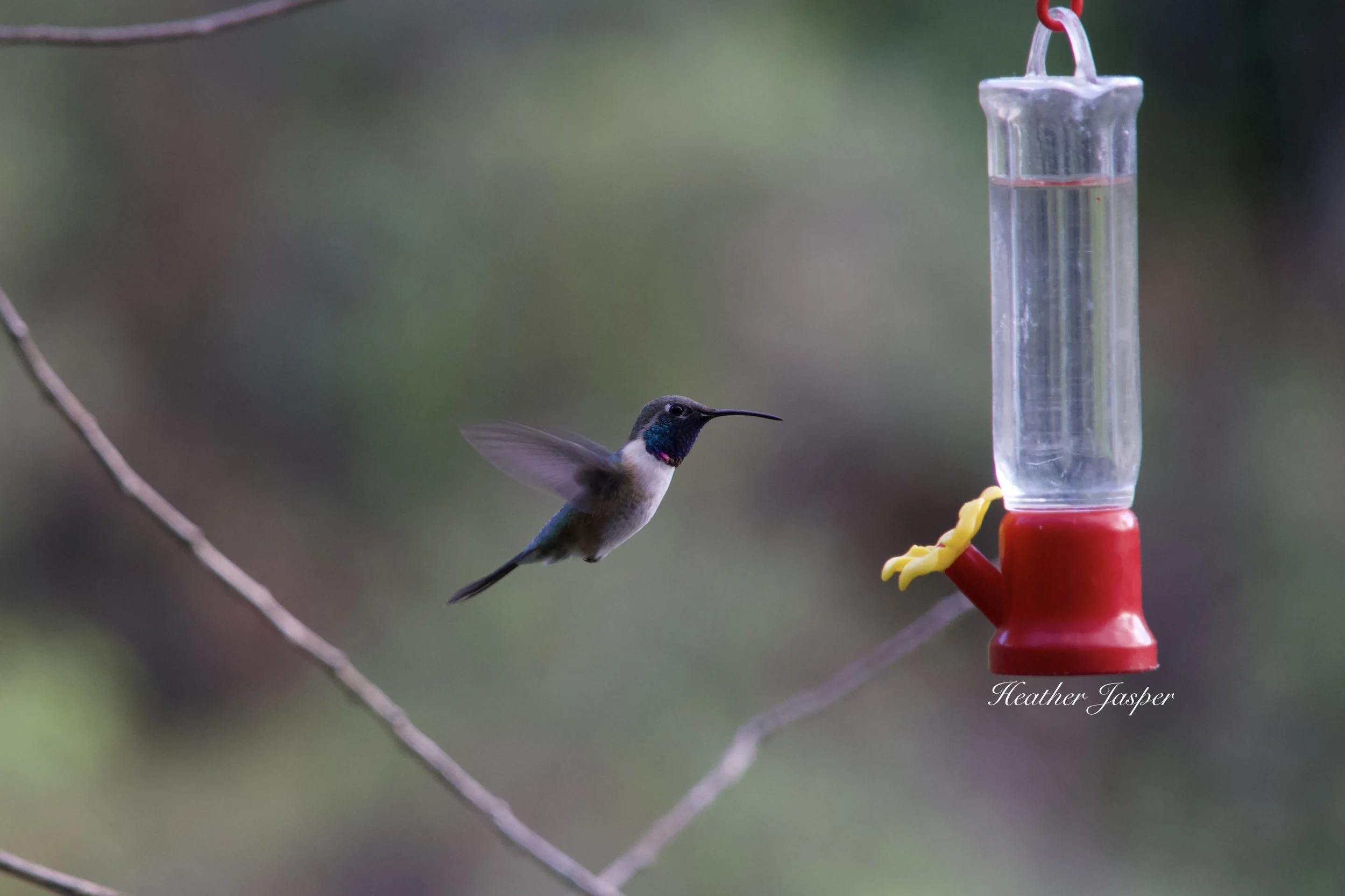
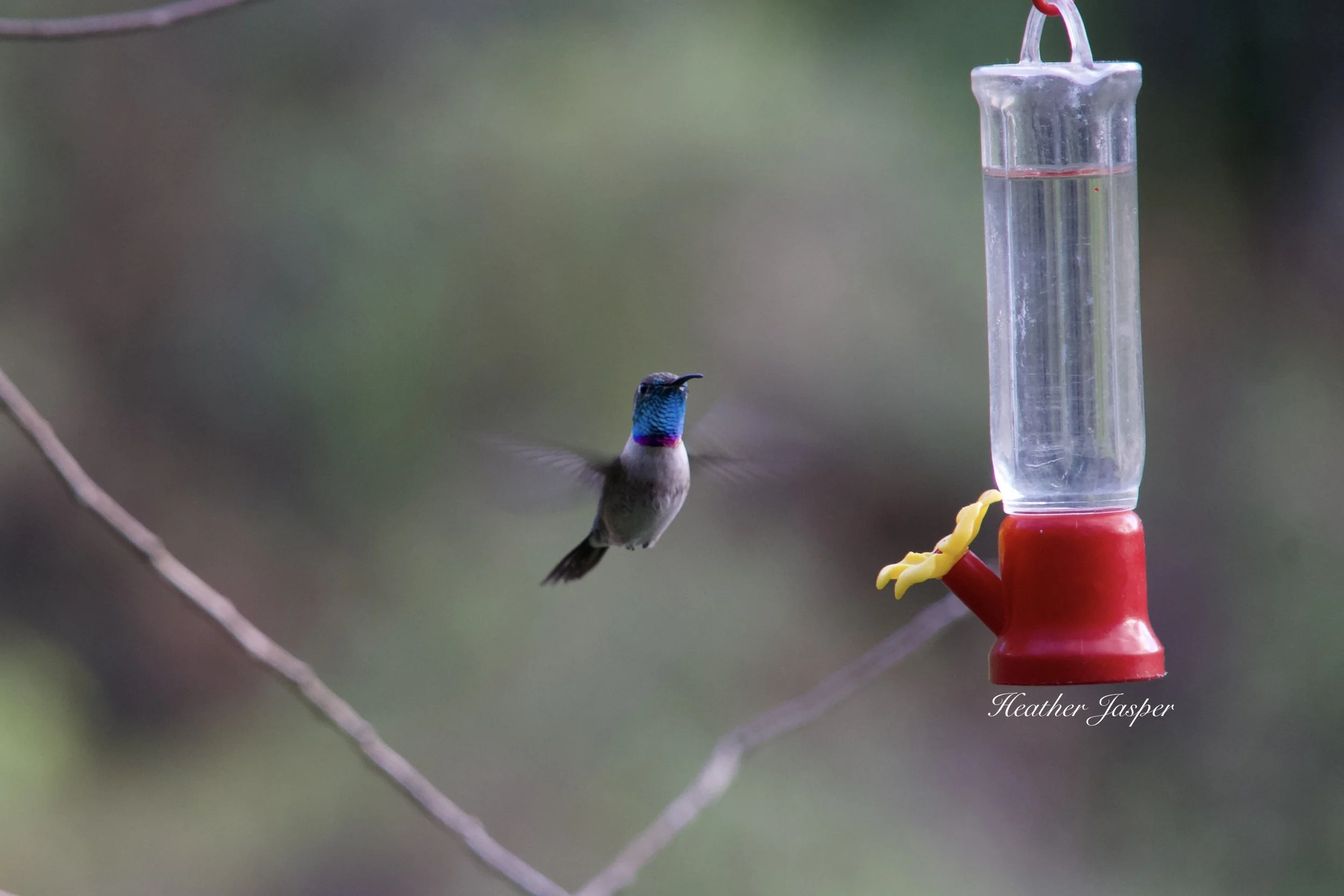
Hummingbird Iridescence
These five photos I took during this second visit to the refuge, of the same Purple-collared Woodstar, are my favorite example of how much iridescence changes. Hummingbirds look completely different depending on if the iridescent feathers flash color or look dark. (I promise, all five photos are the exact same bird). Hummingbird iridescence includes more colors than the human eye can detect.
Bear with me as I dive into this fascinating rabbit hole. (More info about the refuge is below).
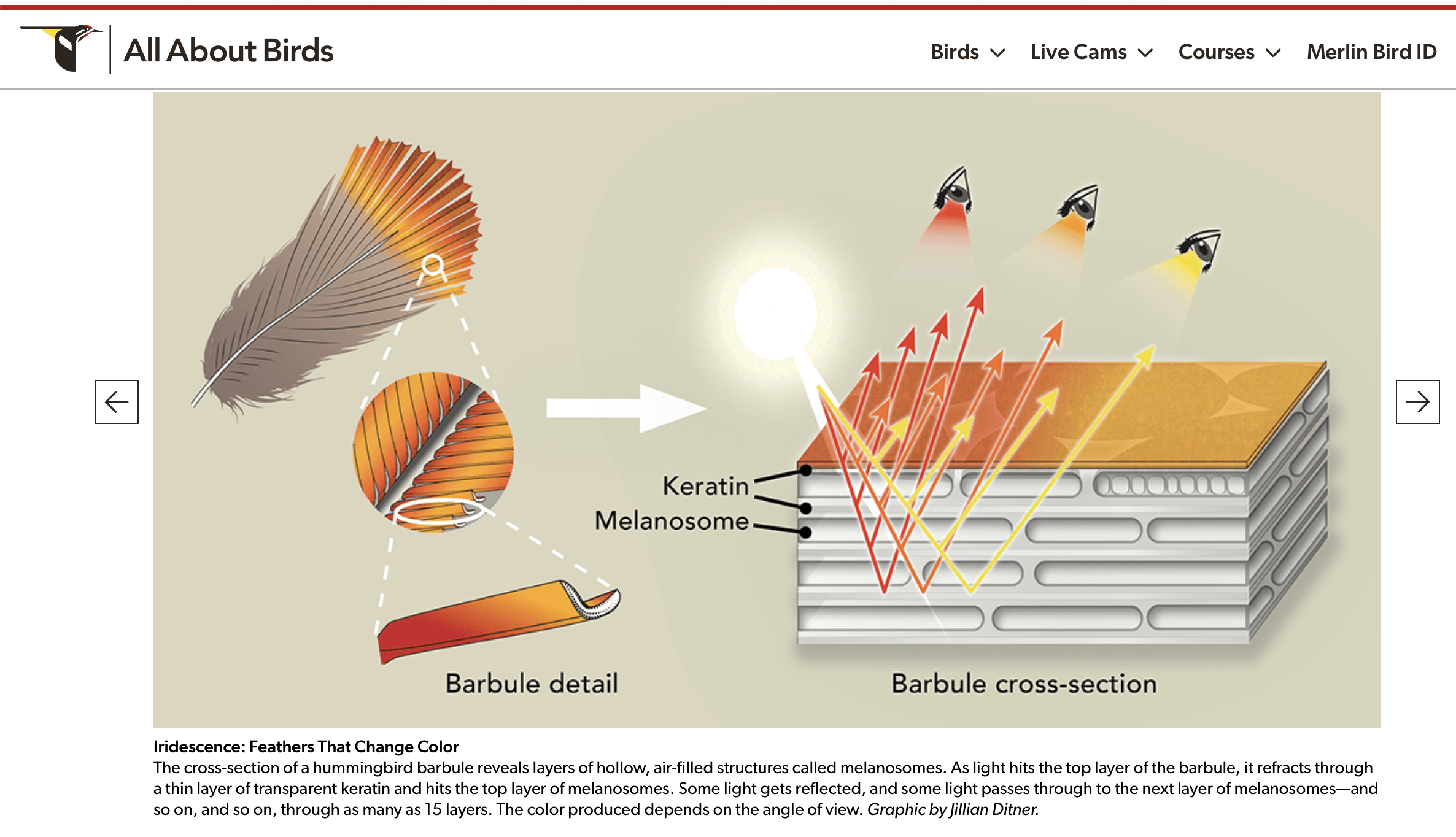
Image from an article about hummingbird iridescence on All About Birds by Marc Devokaitis.
Have you ever looked at a feather up close?
“Most birds have round barbules, but hummingbird barbules are flattened, and contain layer after layer of flattened, air-filled discs called melanosomes, stacked on top of each other like pancakes. There can be as many as 15 of these melanosome layers per barbule, and this is where the magic happens. As light hits the top edge of the barbule, it refracts through a thin layer of transparent keratin and hits the top layer of melanosomes. Some light gets reflected, and some passes through, refracting (or bending) as it goes. The same thing happens as the passed-through light reaches the next layer, and the next, and the next: some light is reflected back, while some of it passes through. When waves from these multifaceted reflections line up, it creates the brilliant colors we see.” - Juan Parra, assistant Professor of Biology at the University of Antioquia in Colombia, All About Birds.
The same article explains how hummingbirds can control the iridescence and use it to communicate. Consider how many muscles humans have around our eyes and all the different emotions we can communicate. We can completely change the message our eyes convey without moving any other muscles in our body, simply by shifting a few muscles around our eyes. I think of iridescence like that. Hummingbirds can change the color you see, and the message you’d get if you were a hummingbird, simply by shifting the angle of their feathers.
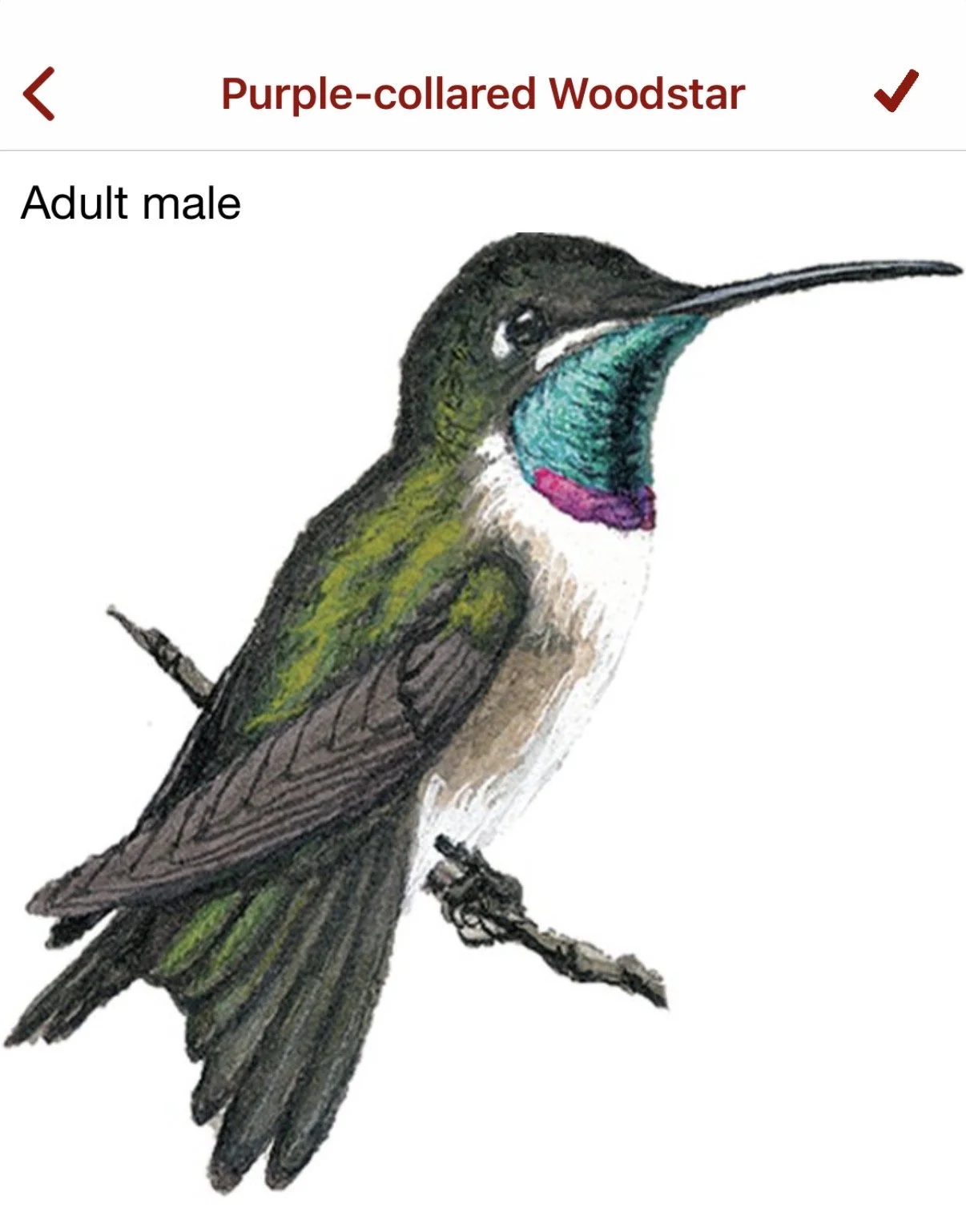
Why visit Cocachimba?
There is a wonderful diversity of birds in Cocachimba, and many of them stop by the Marvelous Spatuletail Refuge. (The images above are from the app Birds of Peru). Cocachimba draws lots of visitors for birds but also for Gocta Falls and the area’s yoga retreats and other wellness travel. Some tourists are more interested in history and archeology, especially Kuélap and the Chachapoya culture’s fascinating mausoleums and sarcophagi. No matter what you come to northern Peru for, plan at least two days in Cocachimba for the waterfall and the birds.
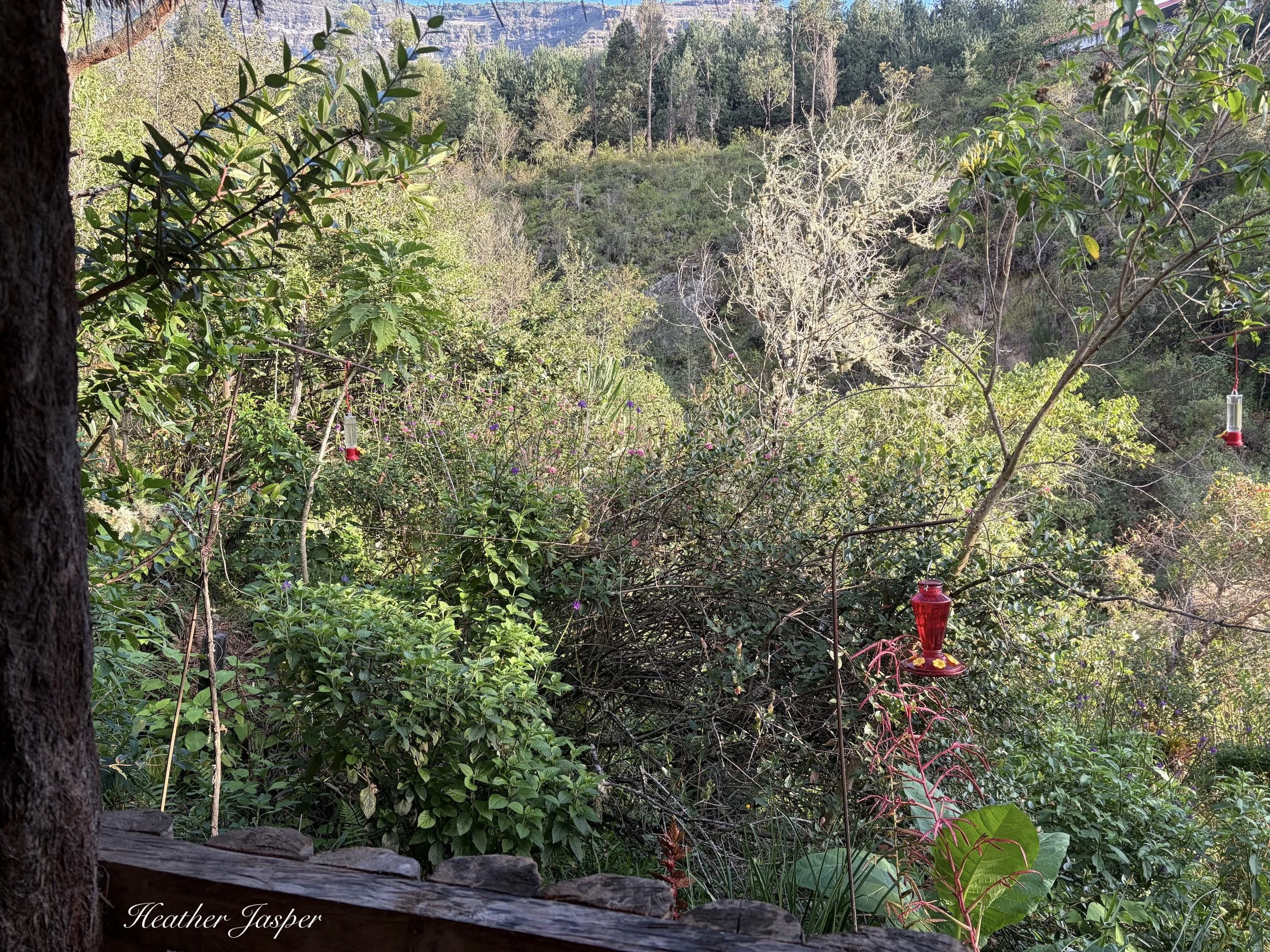
When you arrive at the refuge, sit on the far left for closer photos of the Marvelous Spatuletail and on the right for closer photos of the tanagers. The hummingbird’s favorite flower, musgol, is the dark shrub in the middle. Just outside this shot, on the right, is where bananas are set out for tanagers.
How to visit the Marvelous Spatuletail Refuge?
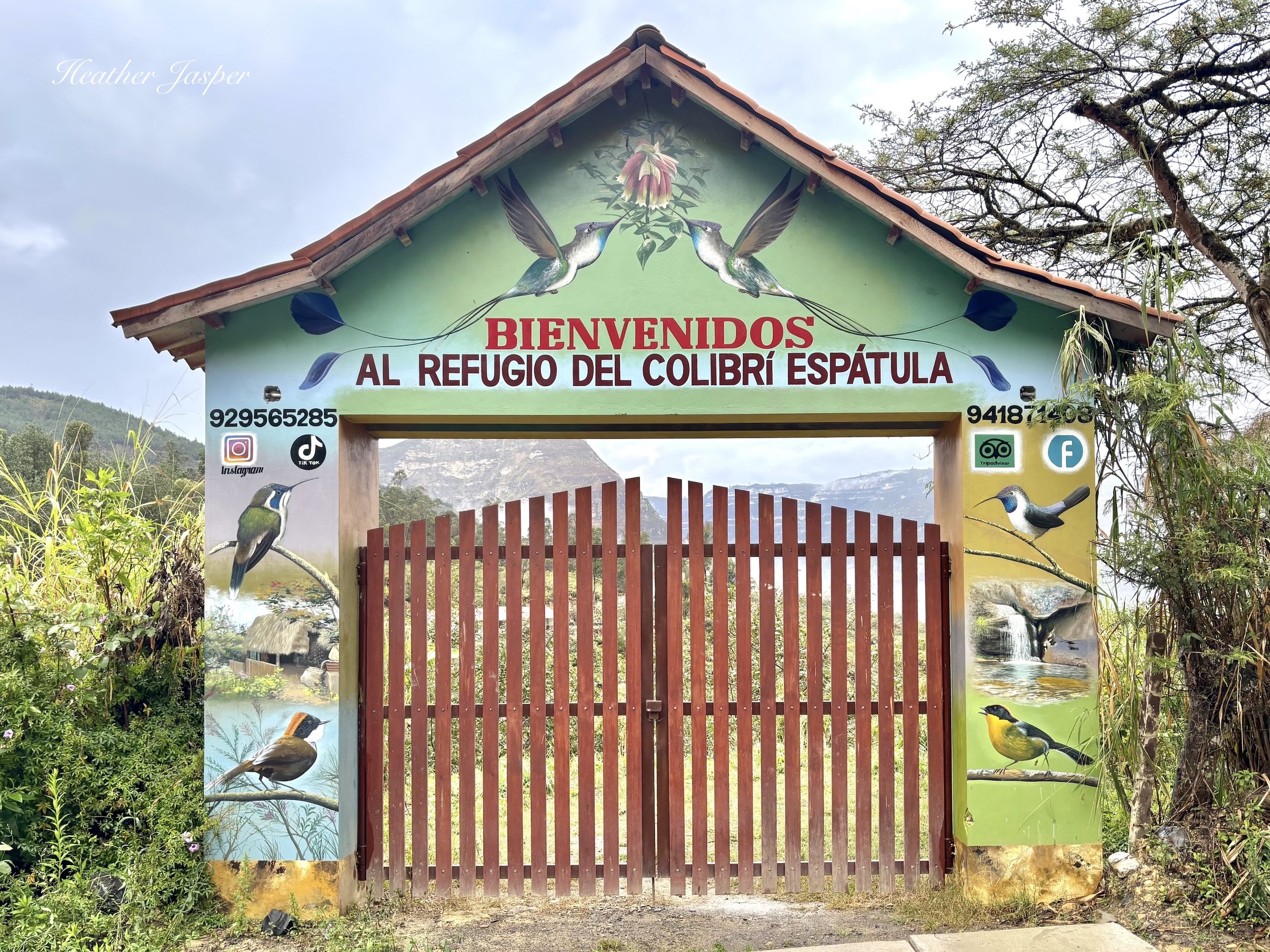
When you’re arriving at Cocachimba, the refuge is on the left with a giant gate you can’t miss. Call ahead to make a reservation or write to Sadit on Instagram. She or her husband Elmer are at the refuge when it’s viewing time, 5:00-6:10pm. Text or call Sadit on WhatsApp +51 929 565 285 or Elmer +51 941 871 408. Sadit is more likely to reply quickly because Elmer drives a taxi - call him for transportation to or from Cocachimba.
How much does the Marvelous Spatuletail Refuge cost?
Cost per person for birdwatching is s/50 soles, payable in advance to confirm the reservation. If you’re going with a guide, they will pay in advance by Yape, (the Peruvian Venmo) or bank transfer, the usual way to pay in Peru. If you’re traveling without a guide, ask Sadit if you can pay cash when you arrive. Professional photographers pay s/60, which allows you to set up a tripod and take up more space in the viewing area.
Where is the Marvelous Spatuletail Refuge?
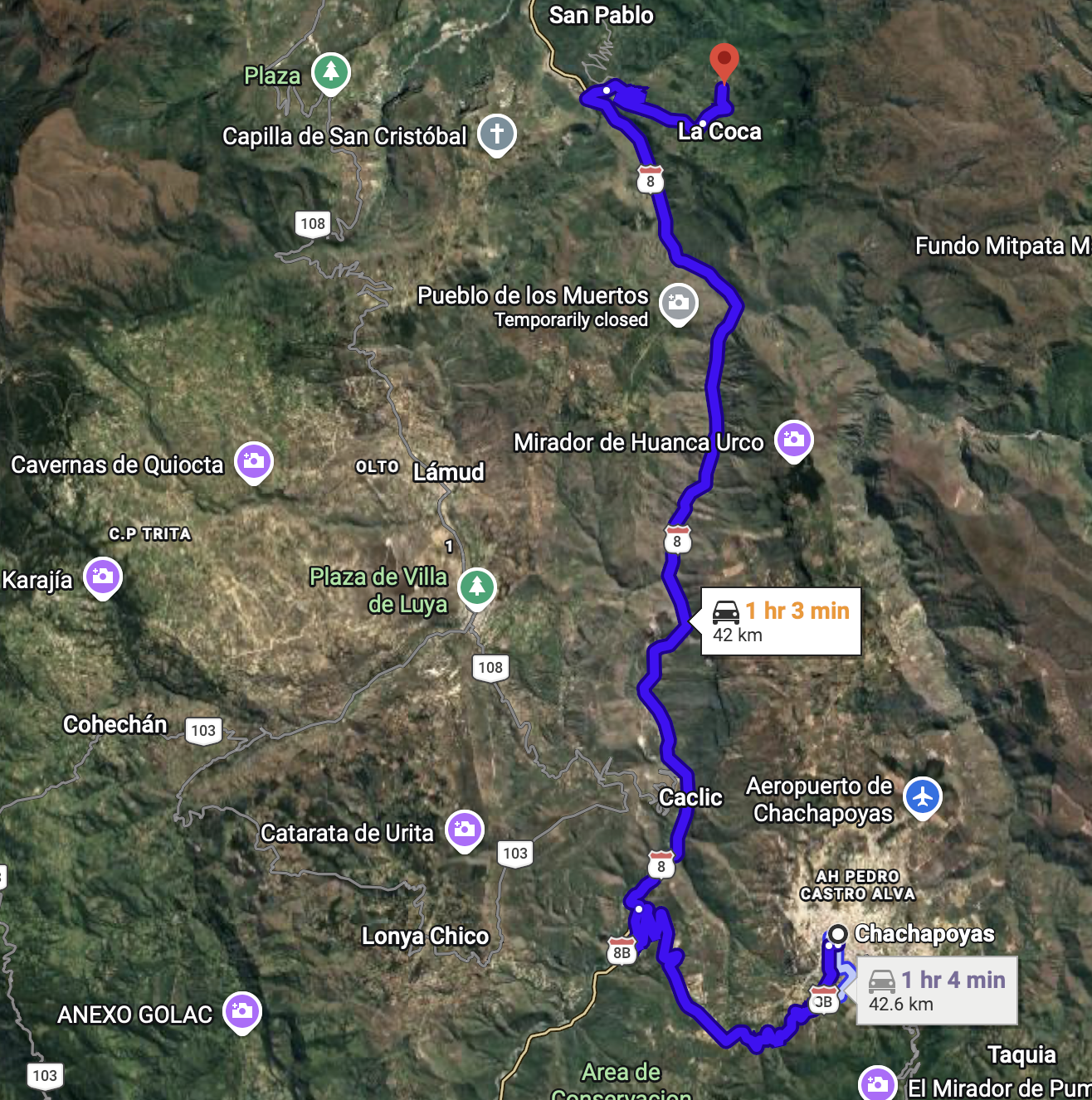
An hour north of Chachapoyas
Cocachimba, next to the town La Coca, has wonderful places to stay like GoctaLab, Gocta Natura and Gocta Lodge. All three places have exactly what you want: spectacular views of Gocta Falls.
Questions?
Contact Sadit +51 929 565 285 or ask me.