I felt right at home in Moyobamba and would have happily stayed two weeks rather than two nights.
The second stop on the Peru Outdoor Expo route through the San Martín region was the town of Moyobamba.
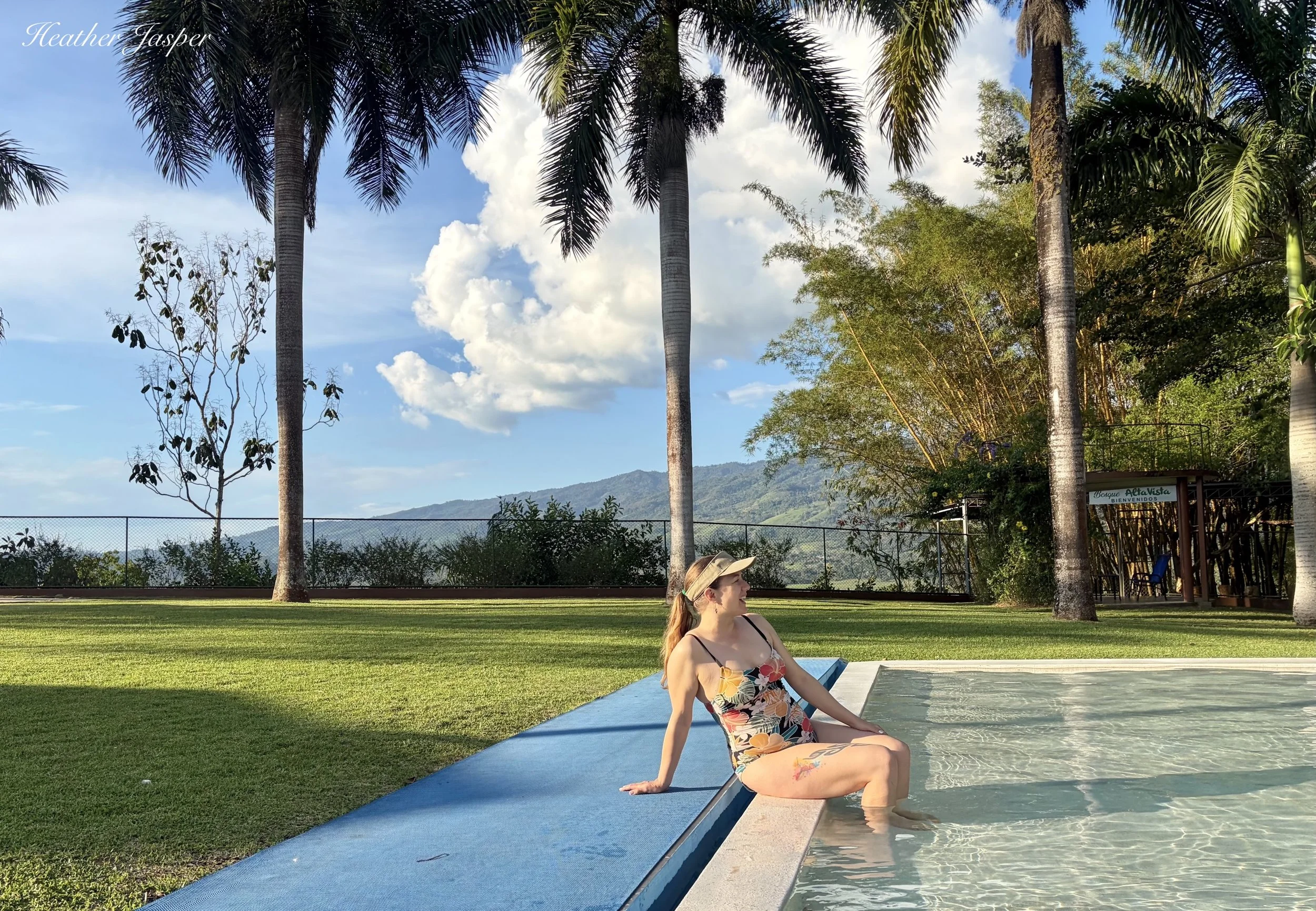
We got to spend two nights in Moyobamba, with one very full day. We stayed at Alta Vista (hotel review at the end of this blog post) and started the morning at Santa Elena Ecological Reserve, followed by birding at Waqanki Ecolodge, lunch at Olla de Barro and a visit to the town orchid garden. Afterwards we had our first bit of free time, so I hit the pool before dinner.
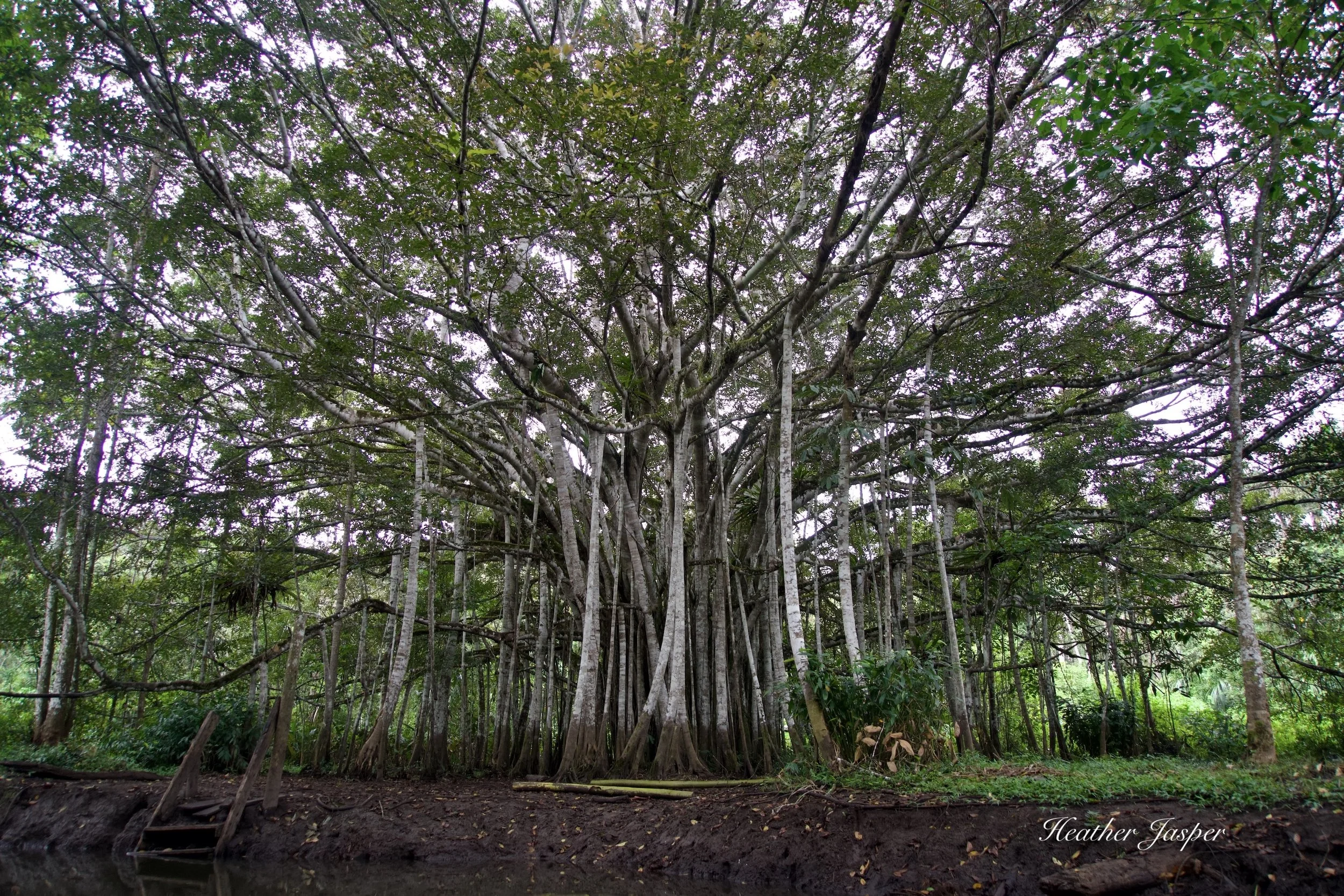
Moyobamba has several high-altitude wetlands nearby, like Santa Elena and Tingana, with truly amazing trees, like this ficus.
My first time in Moyobamba, in 2025, I absolutely fell in love with the town. Besides Cusco, it’s the only place where I thought “I could live here” as soon as I arrived.
One thing I love is the biodiversity. Moyobamba is known as the “City of Orchids” because about 10% of the world’s orchid species are native to the area. The valley has over 500 species of birds, including several endemic species, plus the endemic and critically endangered San Martín Titi Monkey.
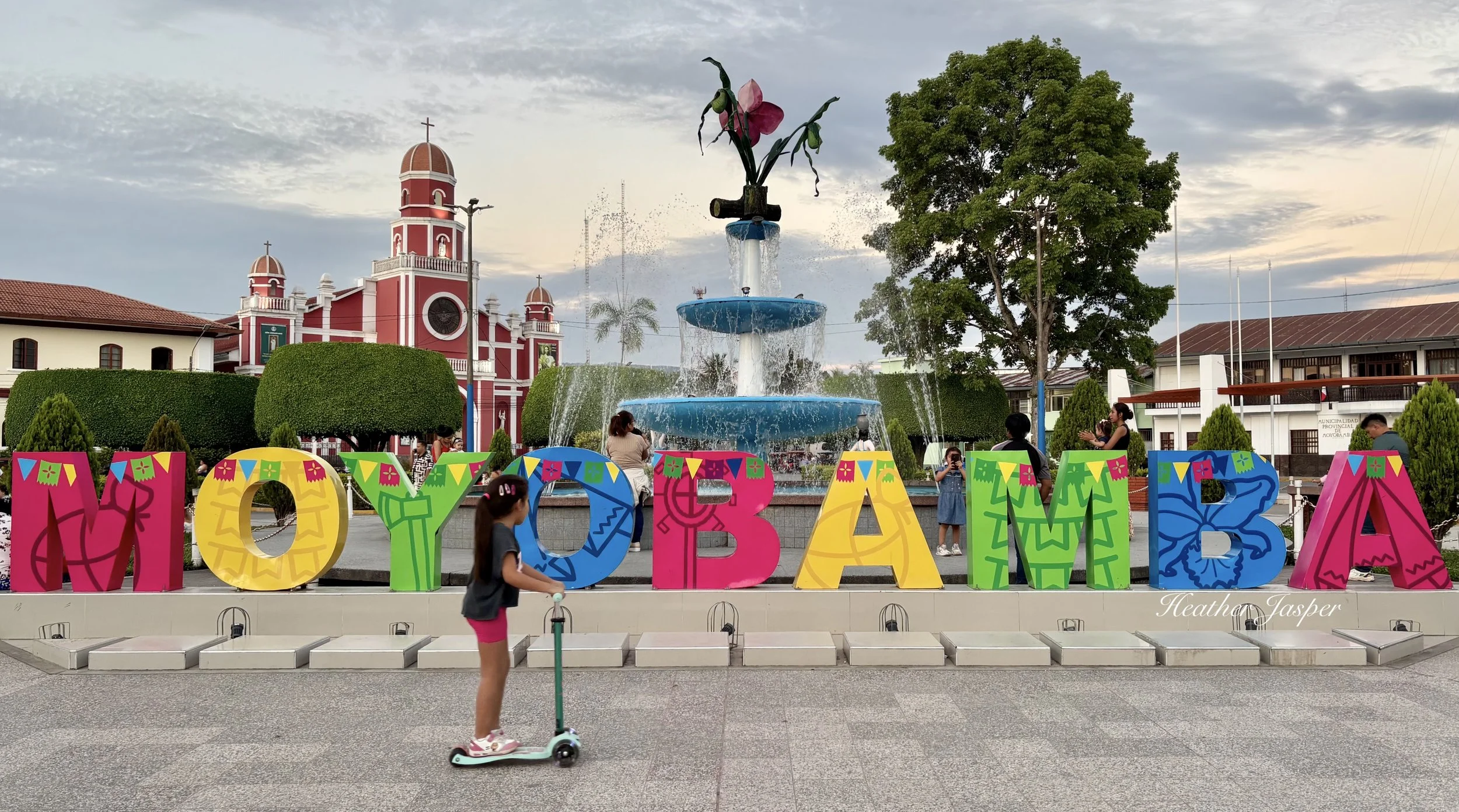
I love Moyobamba’s cute plaza, with its colorful church and giant orchid sculptures.
Moyobamba also has a pleasant climate and is a nice size. It’s at 860m/ 2822ft above sea level, which means it’s warm year-round but not as hot as selva baja, which is usually less than 200m/656ft above sea level. The district of Moyobamba, which includes the city and the surrounding towns, has about 89,000 people.
If you want to read about my first trip to Moyobamba in 2025, check out my blog posts about Moyobamba, birding at Morro de Calzada with Ikam Expeditions and the Tingana Nature Preserve.
This year I returned to Moyobamba with Peru Outdoor Expo and got to see several new places. Here’s what to do, where to eat and where to stay in Moyobamba.
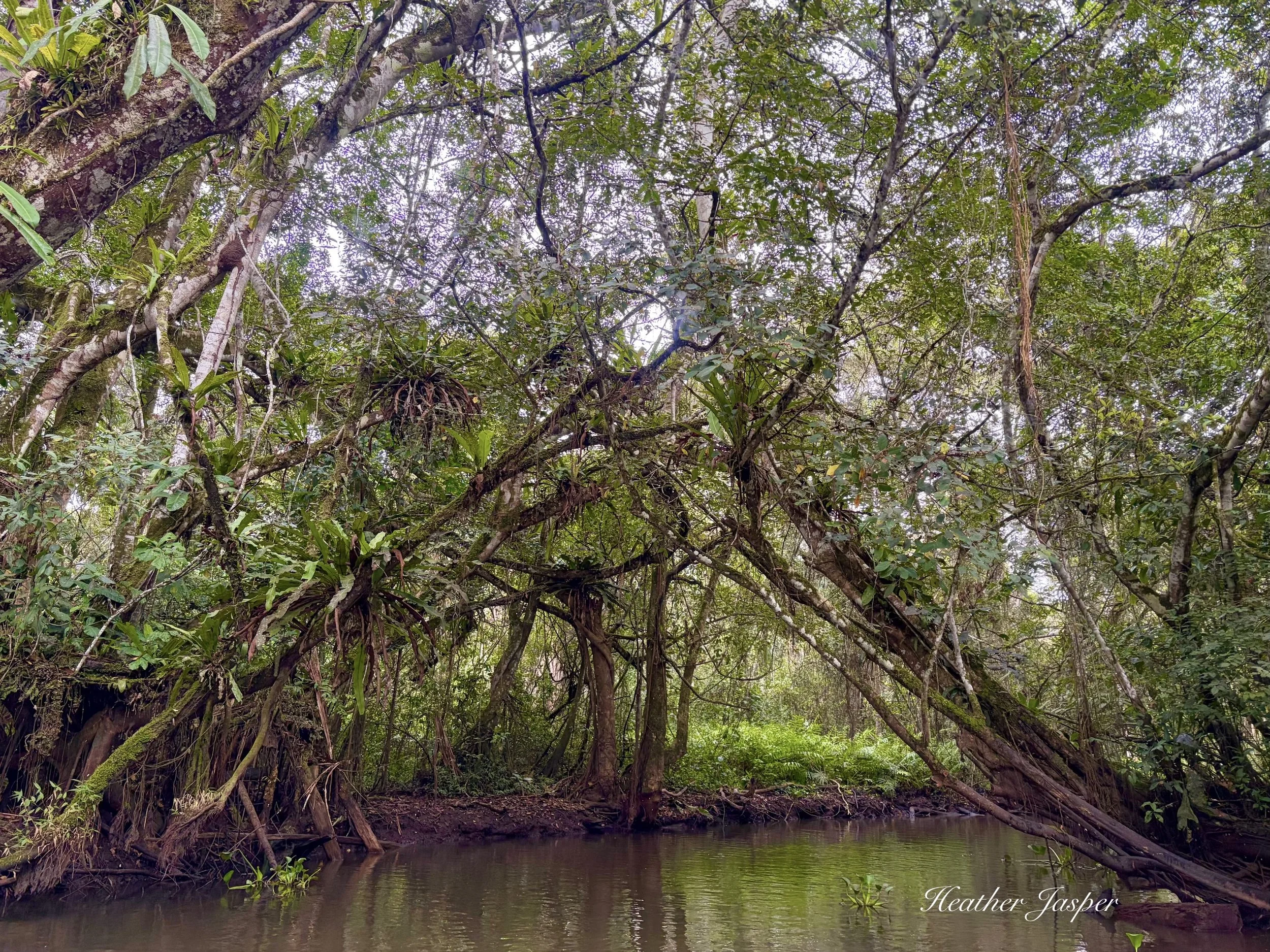
A boat ride on the Río Romero will take you under trees that stretch across the river, filled with ferns, bromeliads and occasionally monkeys.
What to do in Moyobamba
Santa Elena Ecological Reserve
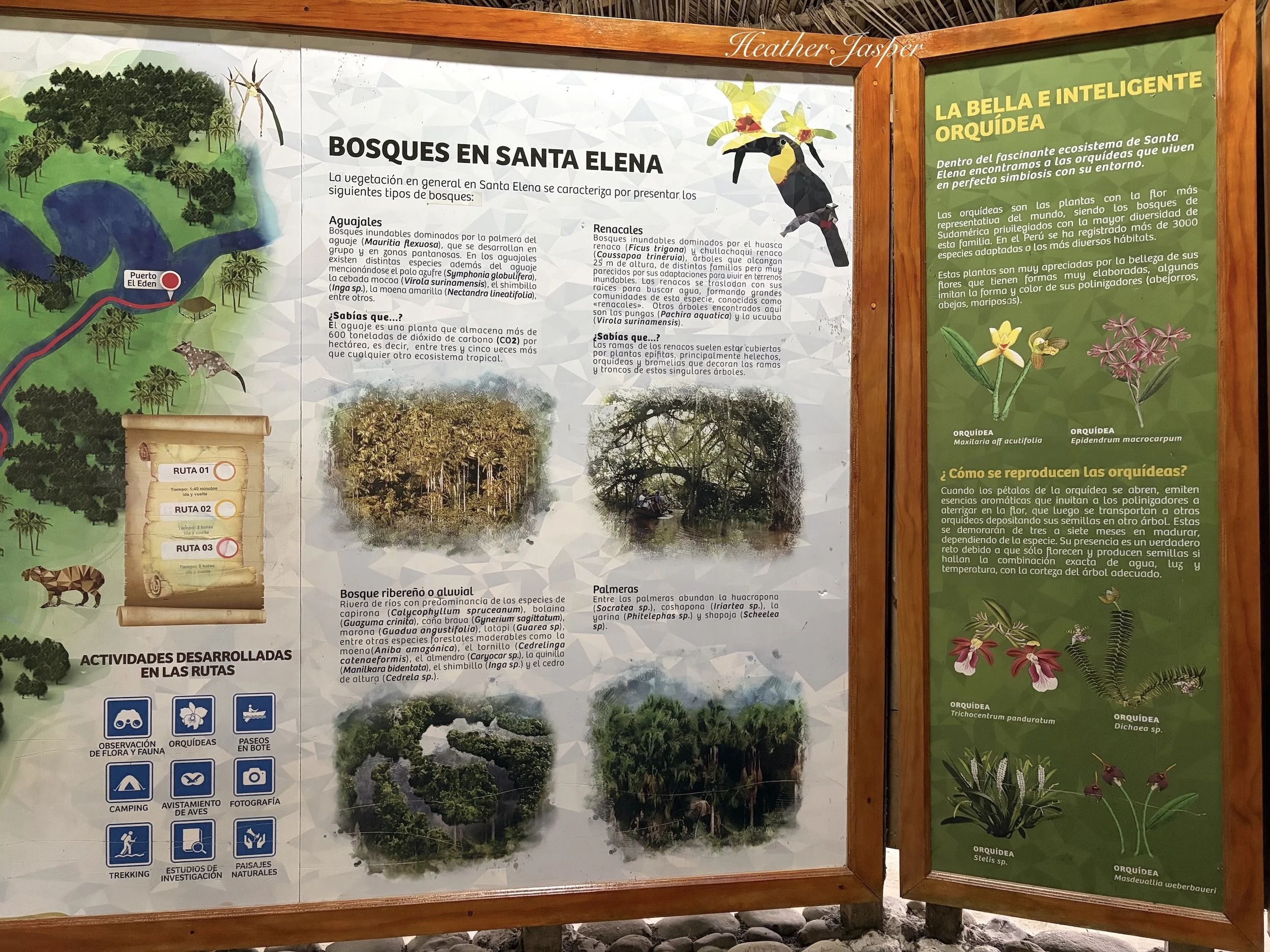
We left the hotel at the crack of 5am to see the birds at Santa Elena. The reserve is protected by the Santa Elena community and includes the Río Romero and Río Negro, which both flow into the Río Mayo, which eventually flows into the Amazon River. Fun fact: mayo means river in Quechua, so Río Mayo means River River.
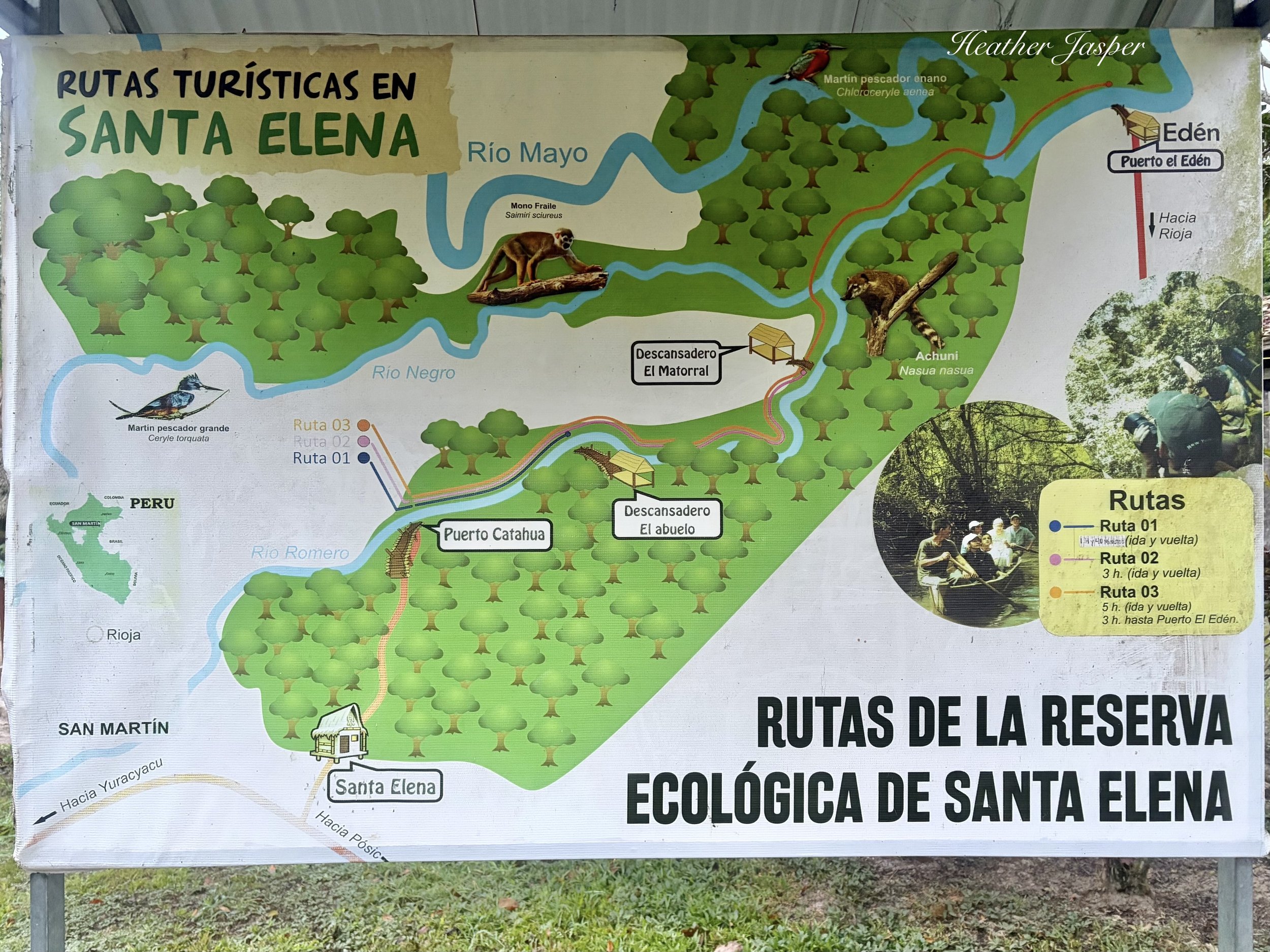
We drove to the little house marked Santa Elena and walked to Puerto Catahua, where we got on the boat.
We started with a tour of the interpretive center, which explains the wetland ecosystem, biodiversity and the timeline of the community’s work to protect the area. Then our guide, Geiser, took us on a 2-hour boat ride along the Río Romero where we saw lots of birds and a few monkeys.
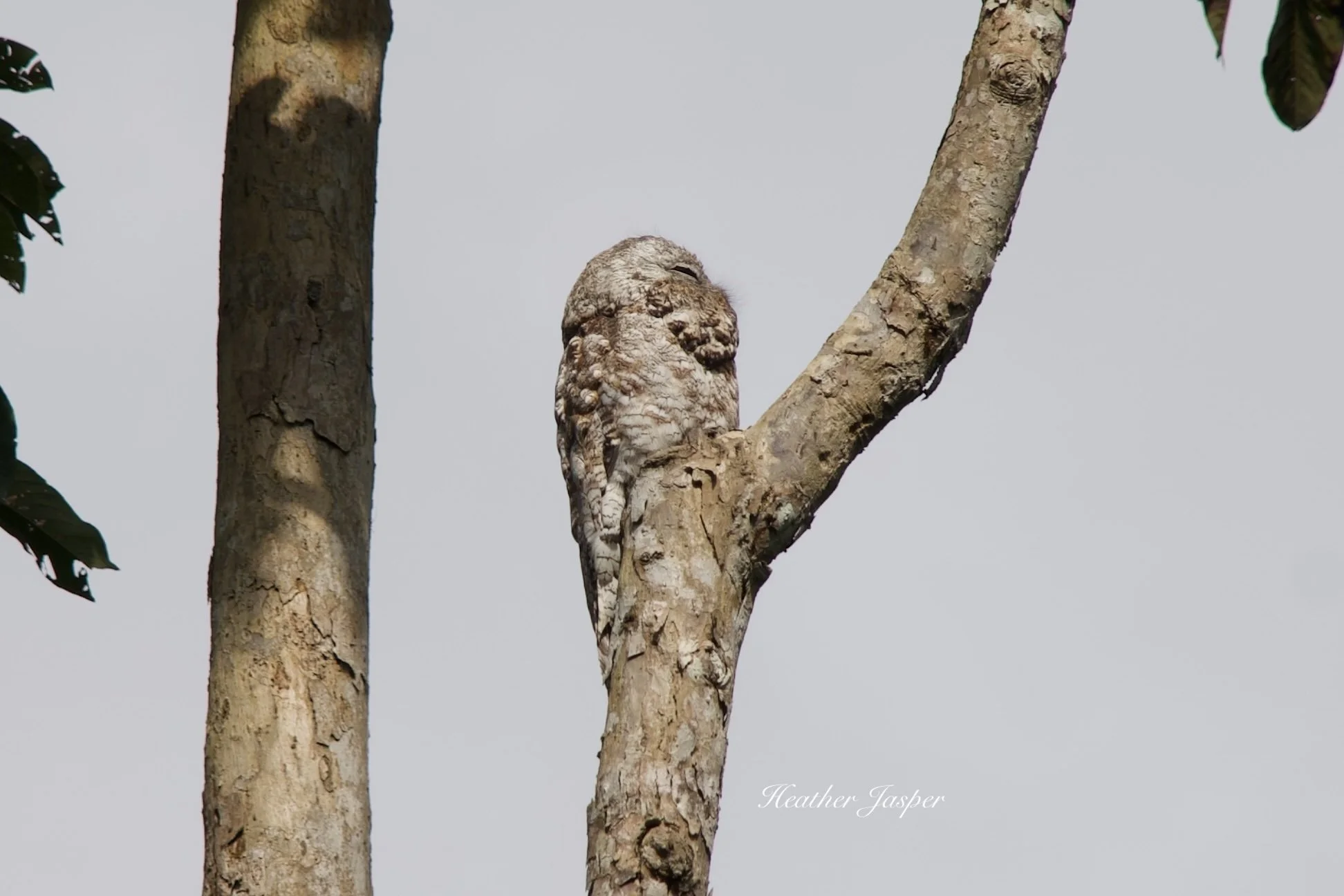
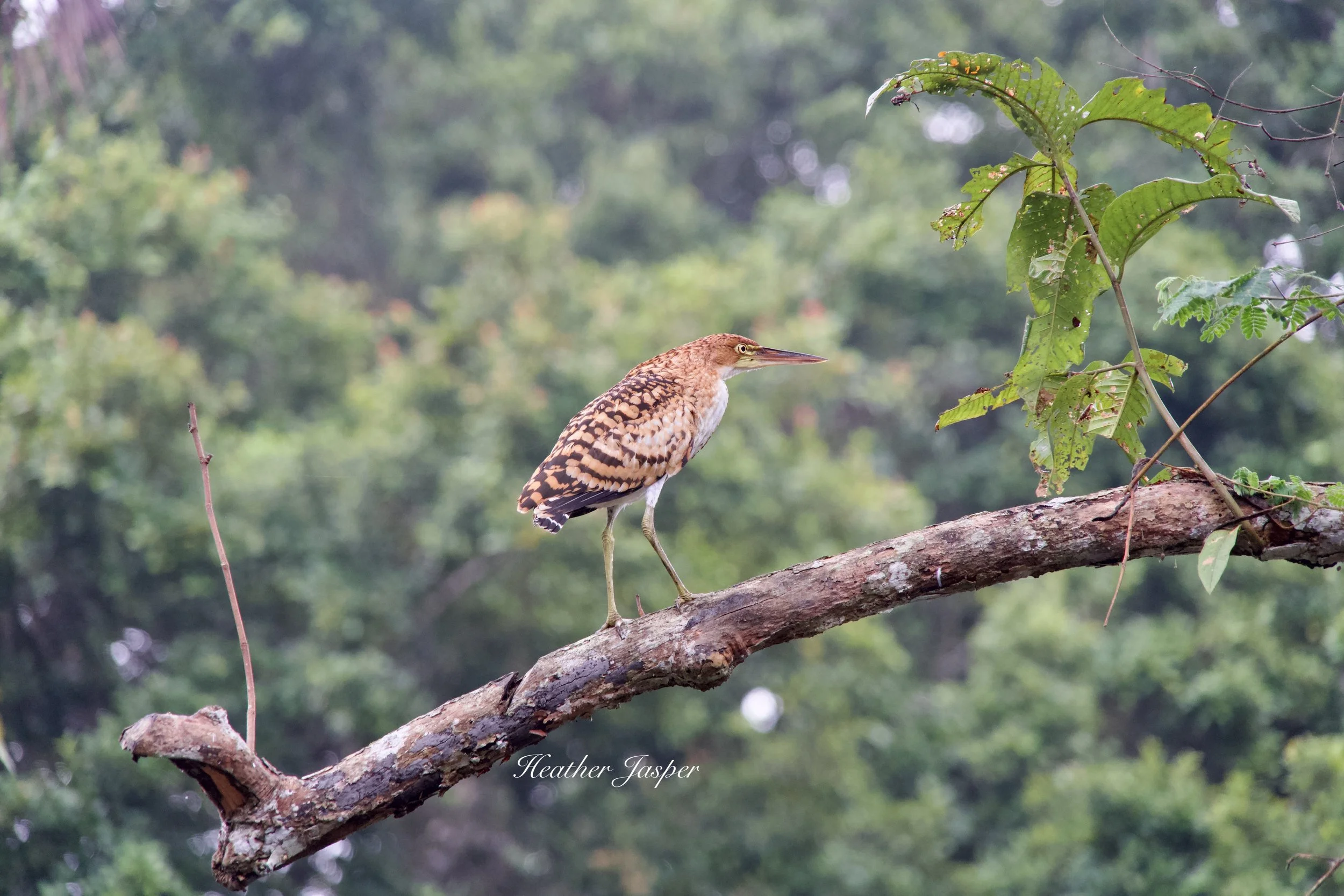
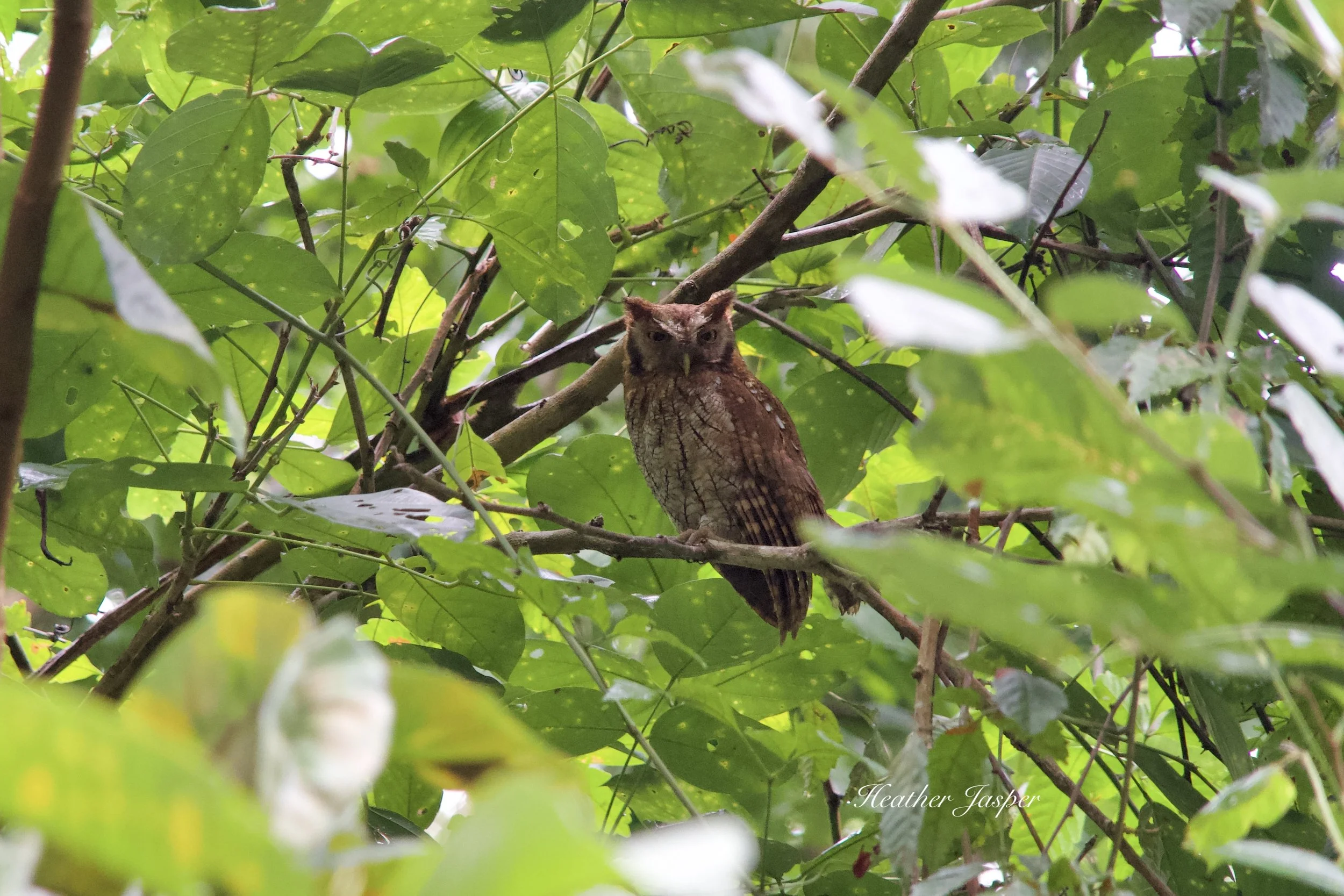
Over 300 species of birds have been registered in the reserve, including all five of Peru’s species of kingfishers. This morning I finally saw the Pygmy Kingfisher, which is only 13cm/5in, hummingbird size. I saw the other four species last year at Tingana, so now I’ve seen all five.
We also saw three species of primates: squirrel monkeys, capuchin monkeys and saddleback tamarins. The reserve has six species of monkeys and another twenty mammals.
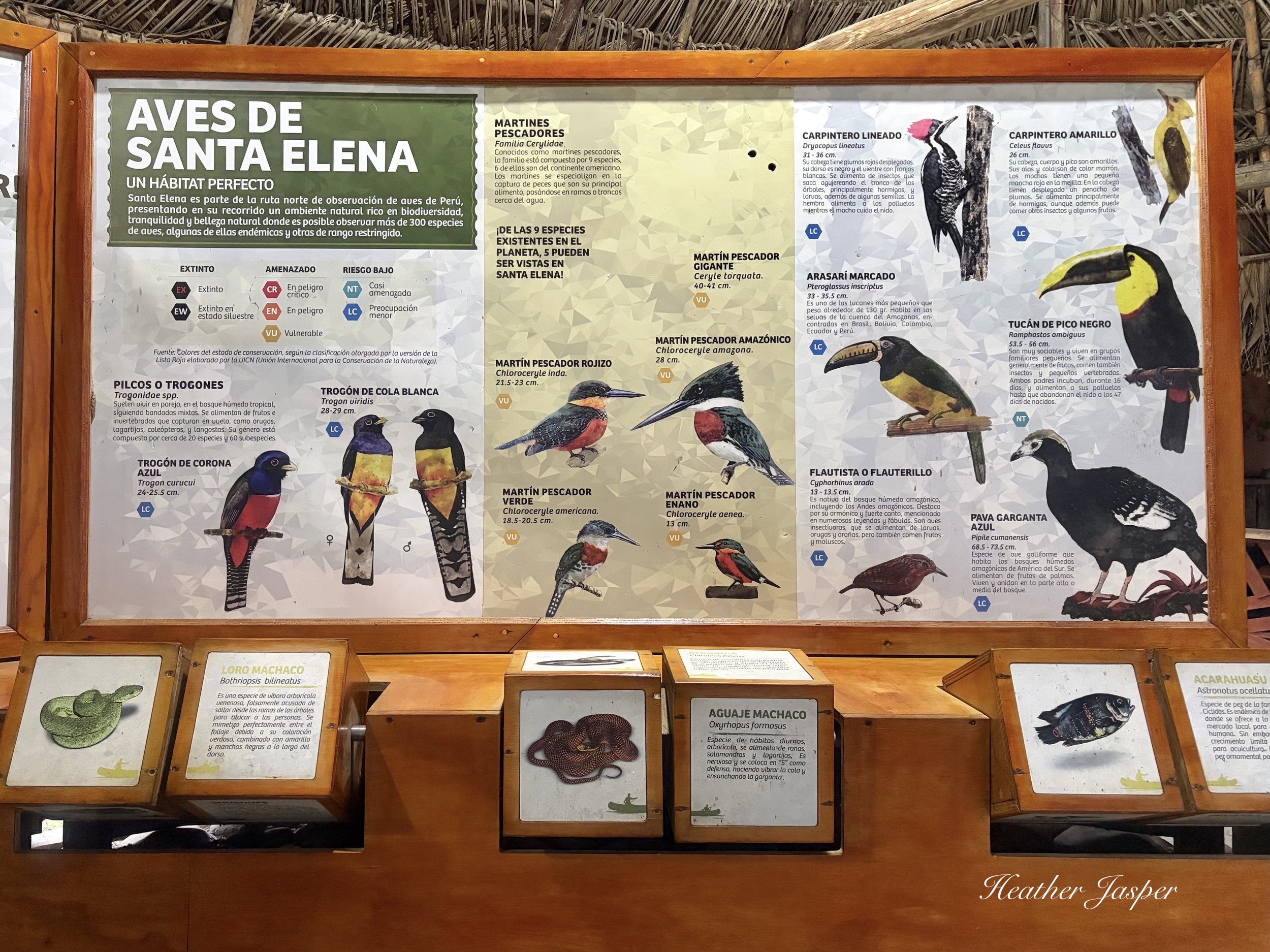
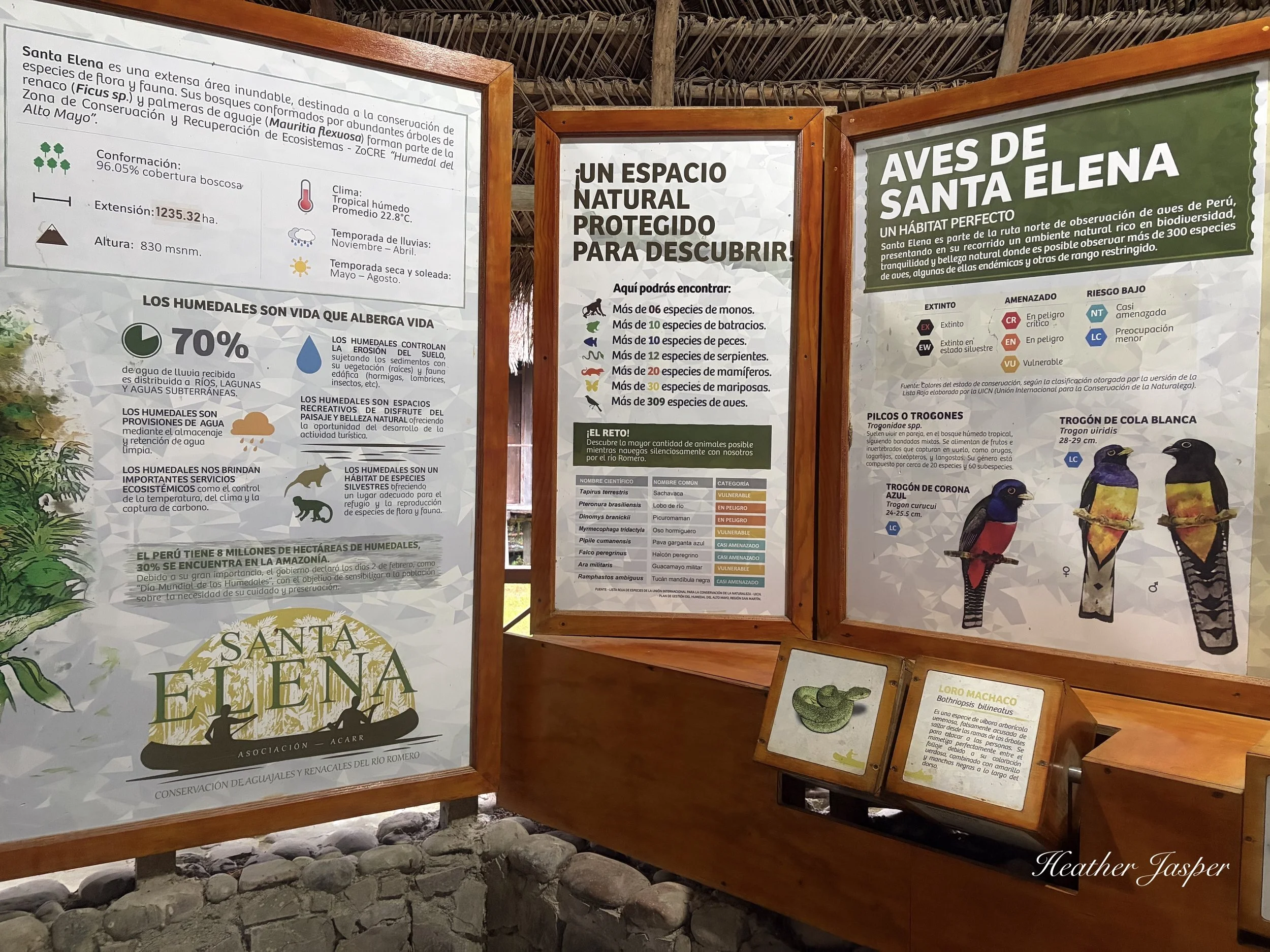
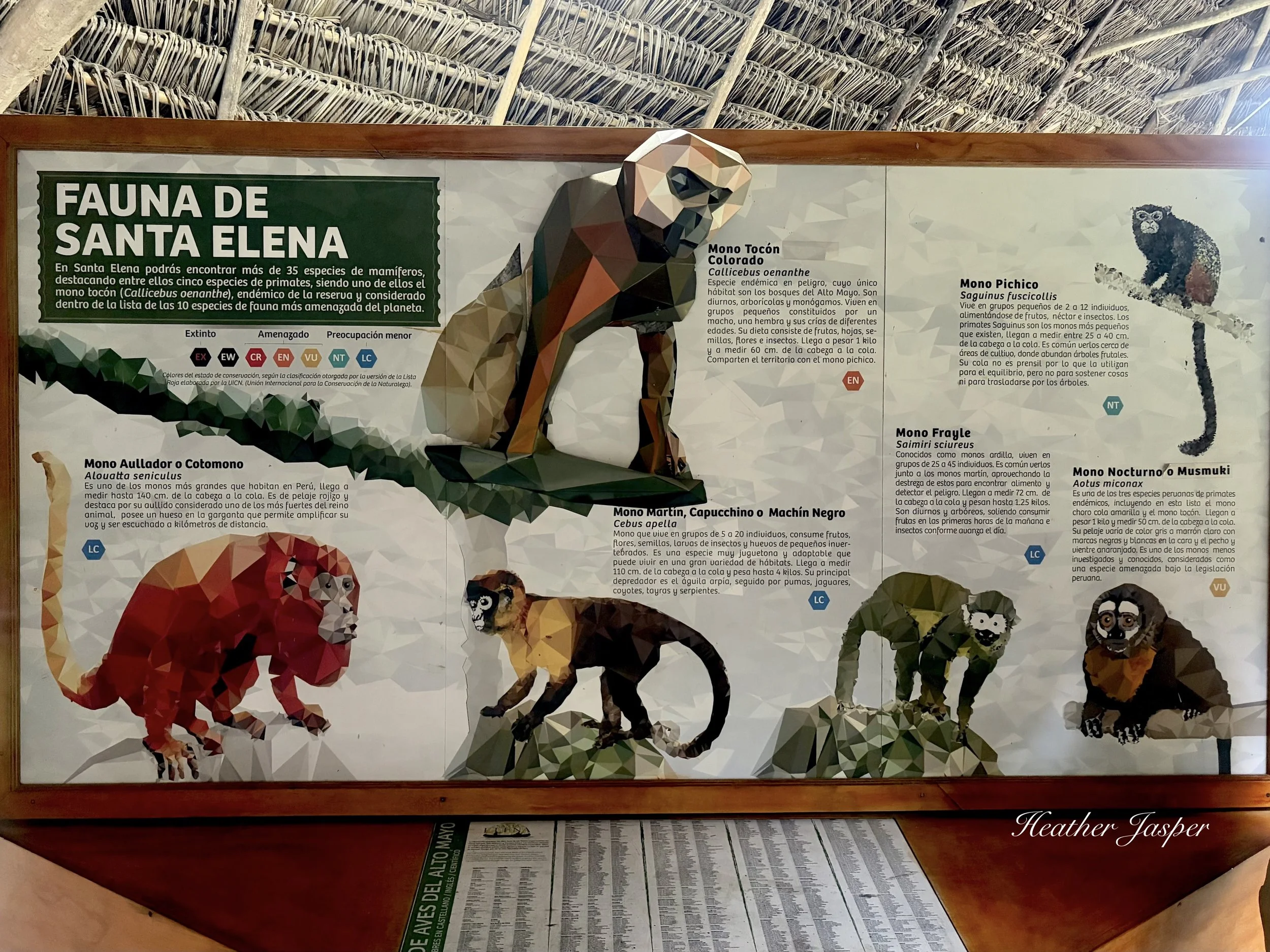
Back at Santa Elena, we had breakfast and then got in the van to drive about an hour back to Moyobamba. The place and people were wonderful, but I wish we’d had breakfast at the hotel or when we arrived at 6, and then visited the interpretive center after the boat ride.
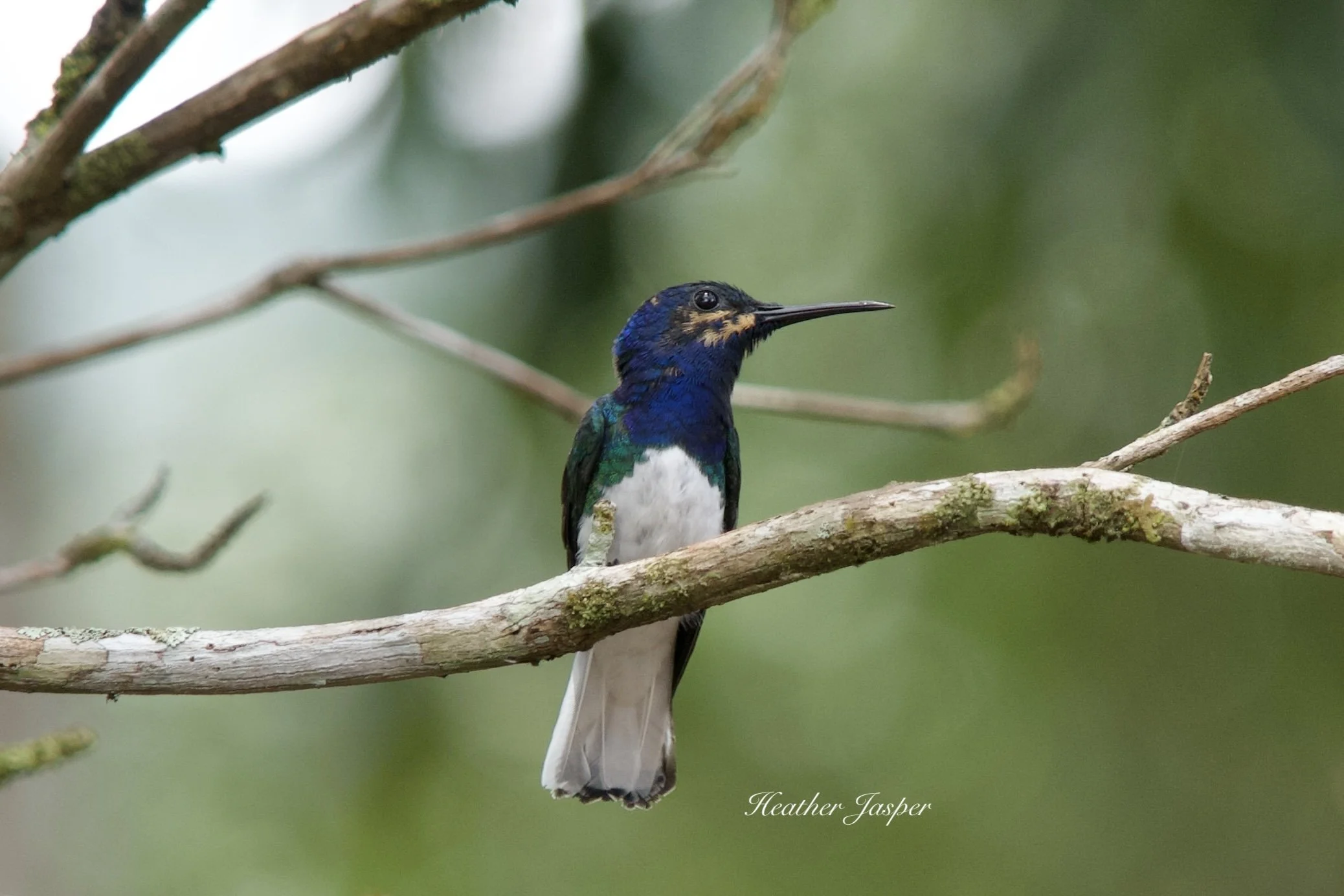
There were at least a dozen White-necked Jacobins flitting around, including a few juveniles, like this one.
Waqanki Ecolodge
Waqanki is the closest hummingbird garden to Moyobamba, just 10 minutes from the center of town. It has 22 hummingbirds that are commonly seen, plus another 5 that are rare but possible to see. I sat in the shade, up in a wooden platform with a bit of a breeze and saw eleven species without moving an inch.
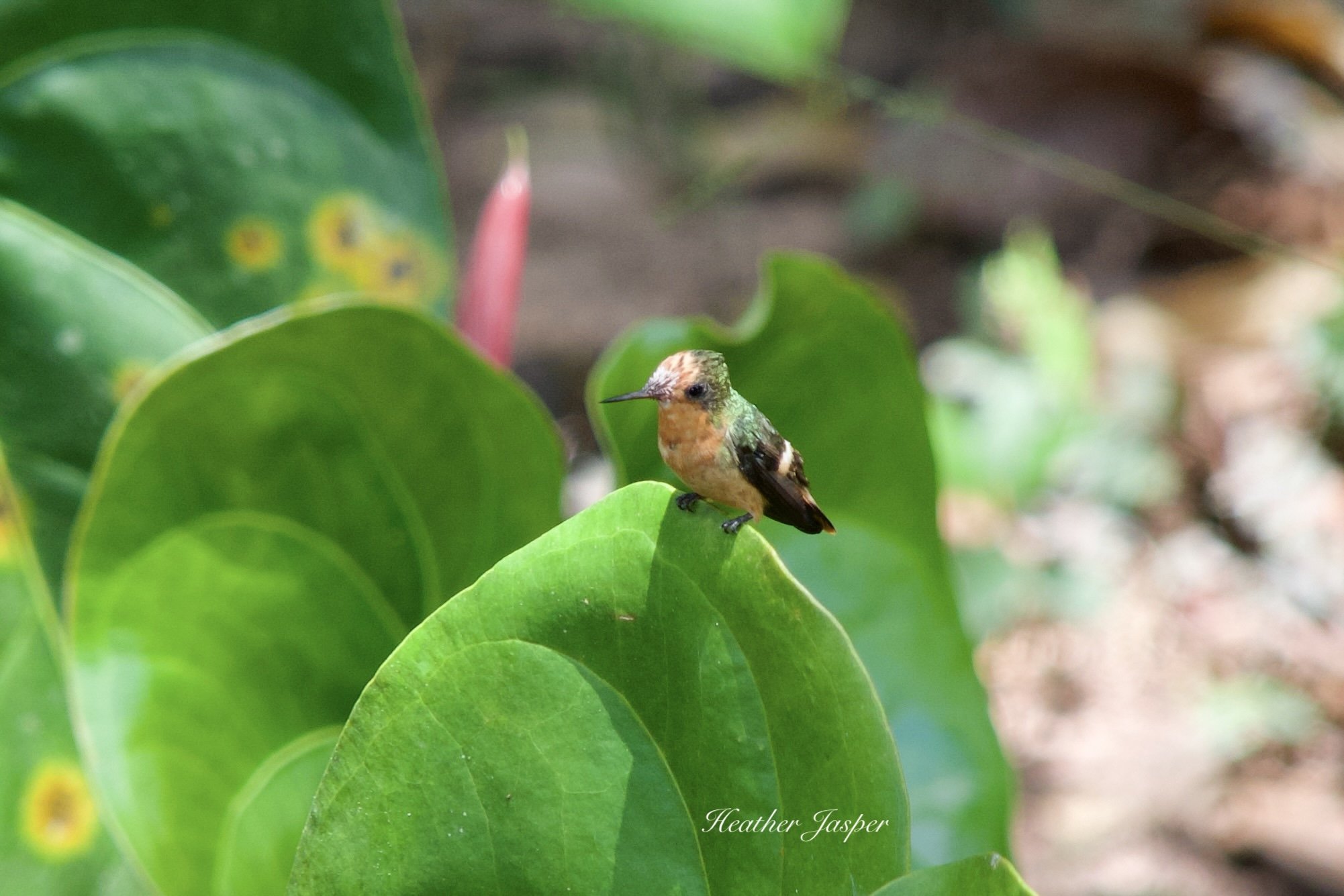
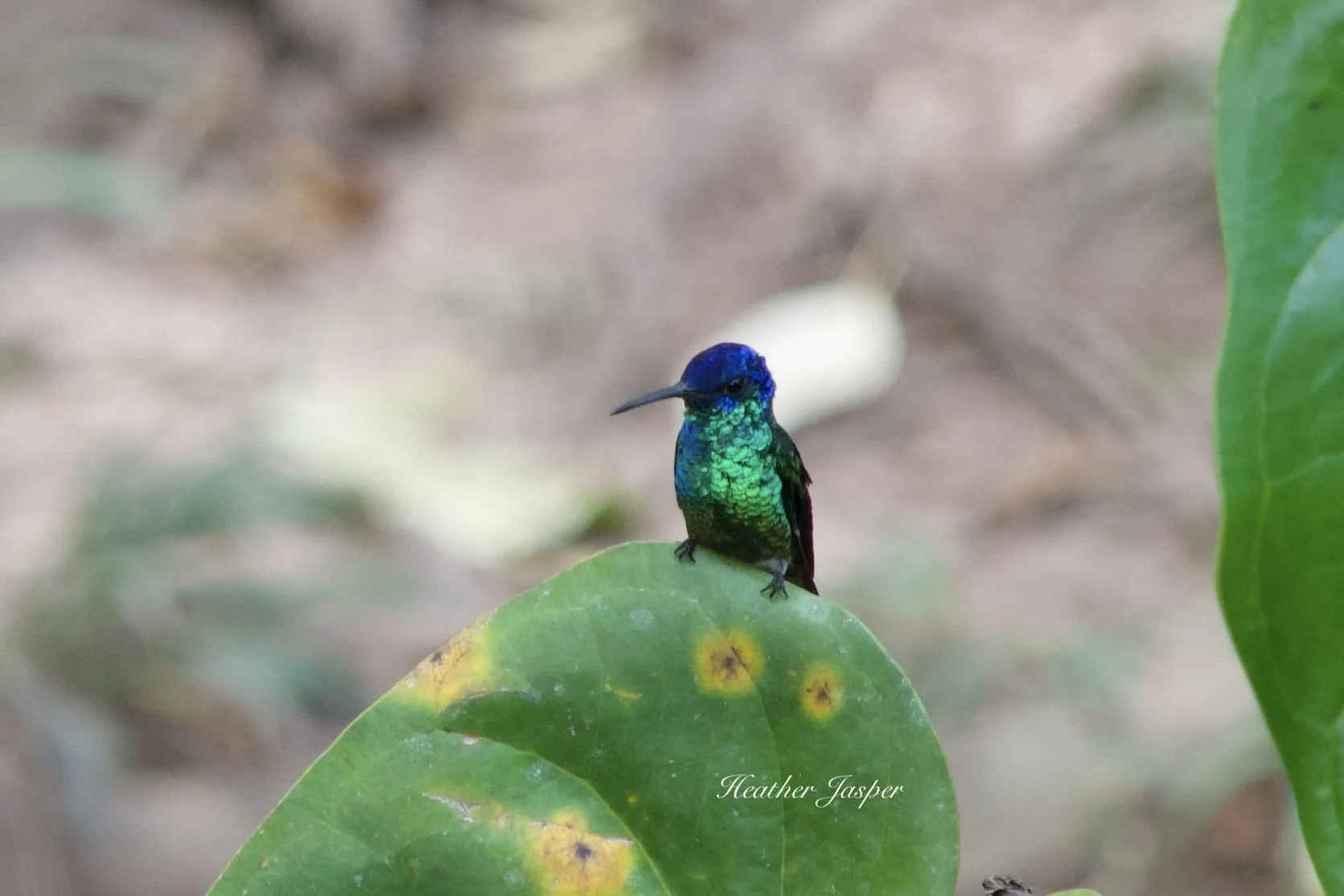
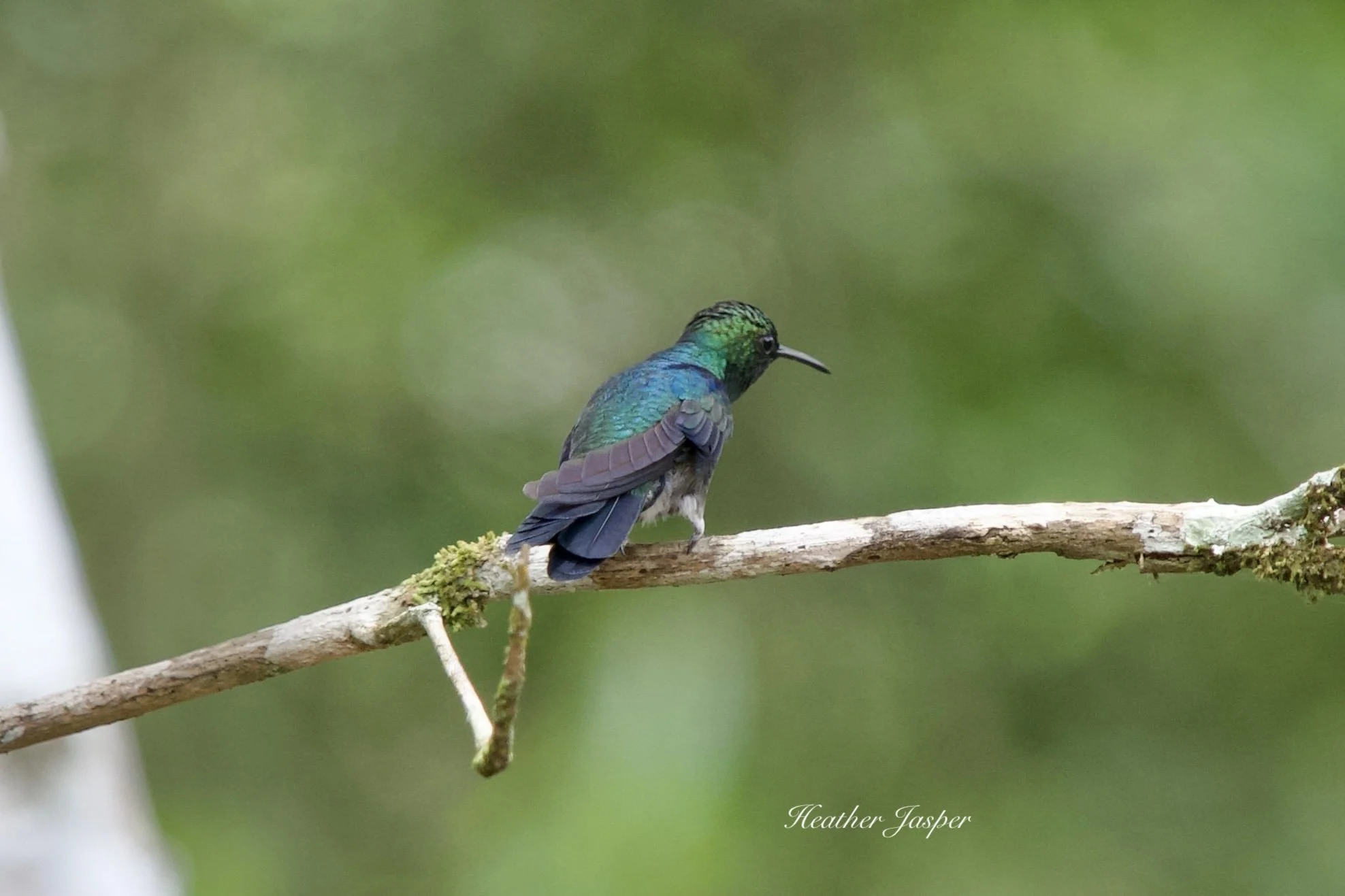
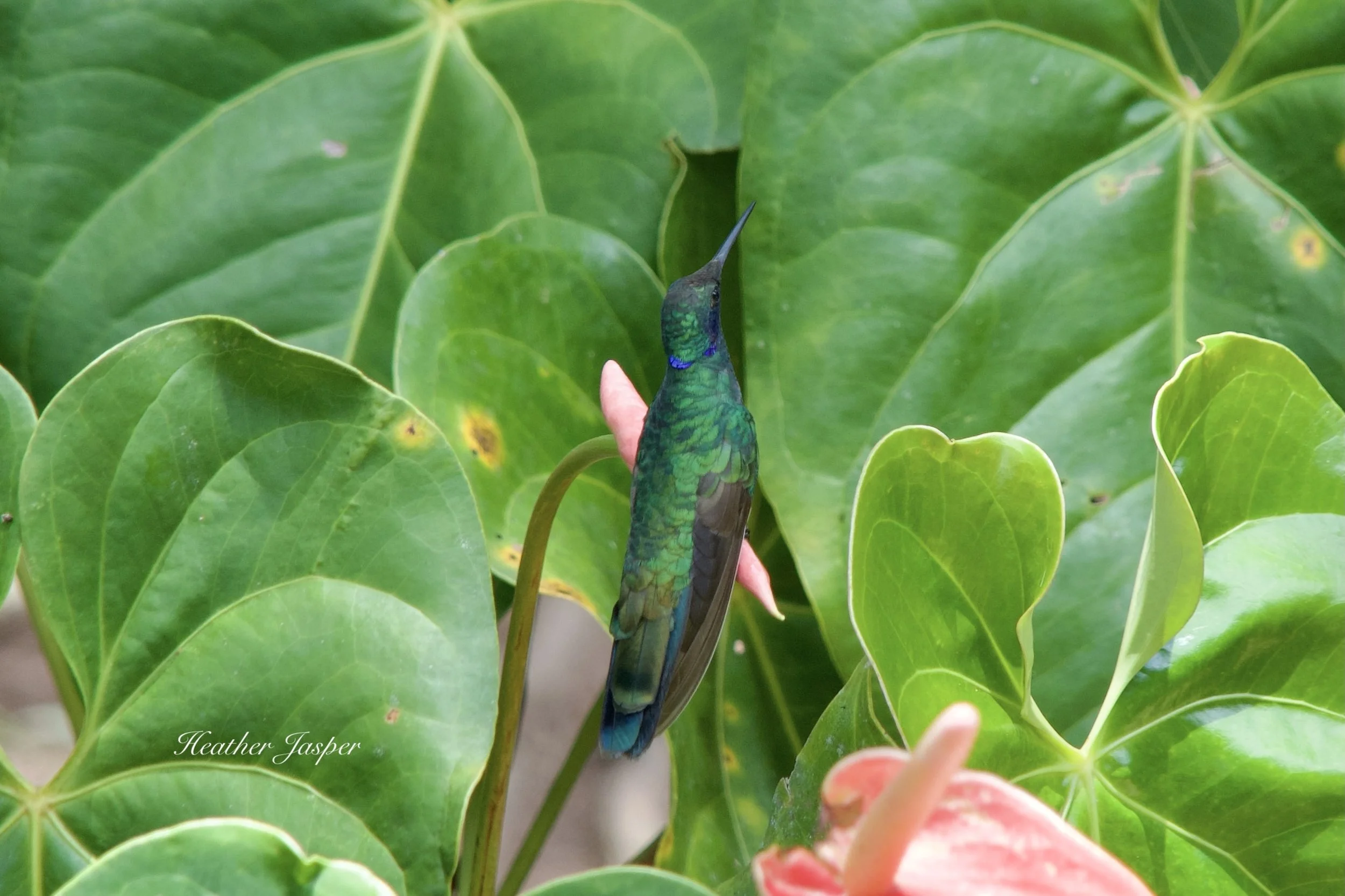
I liked how we were up above the flowers and hummingbird feeders because it meant that none of my photos were backlit. Hummingbirds are so brightly colored that it’s frustrating when photos are backlit and you can’t see their iridescence. Of course, that doesn’t mean that the hummingbirds always faced the camera.
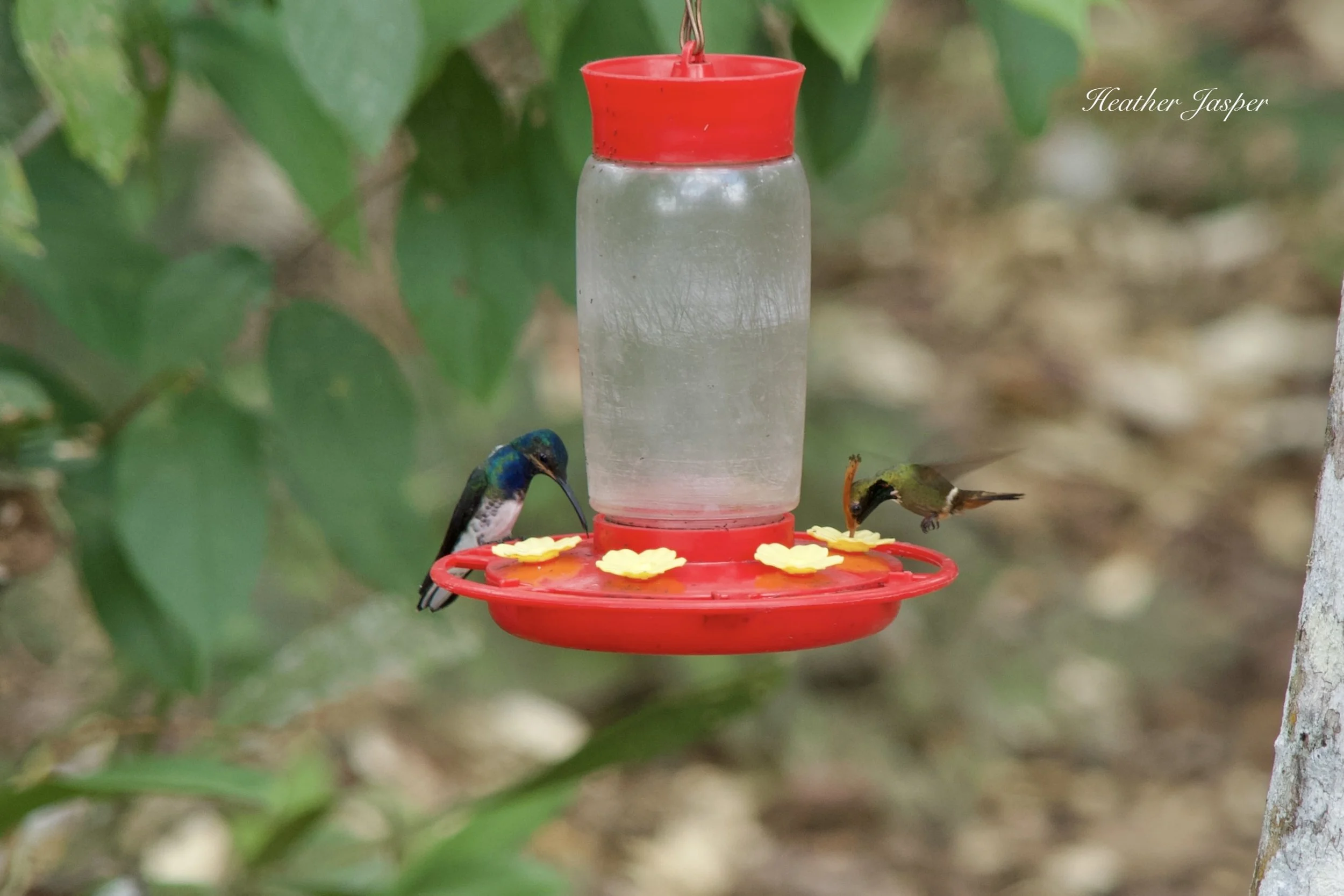
The White-necked Jacobin on the left is a relatively small hummingbird, which shows you just how tiny that male Rufous-crested Coquette is.
I know people have mixed feelings about hummingbird feeders but as long as they’re properly cleaned, they pose very little risk to the birds’ health. The problem is when they fill with wasps, which poison the nectar, or when they’re not cleaned daily and develop black mold.
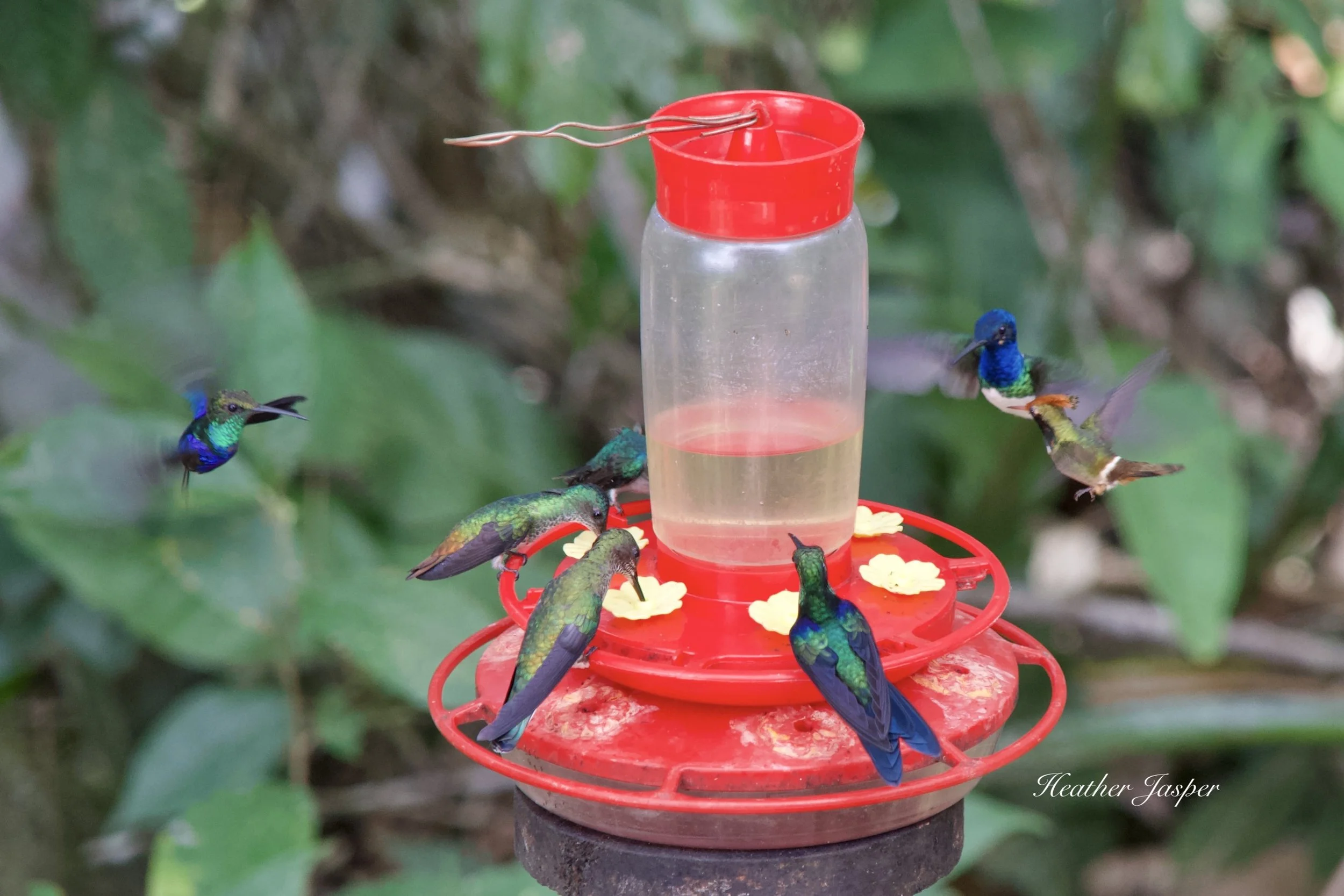
From left: Fork-tailed Woodnymph, Golden-tailed Sapphire, Gray-breasted Sabrewing, Sparkling Violetear, White-necked Jacobin and Rufous-crested Coquette.
One thing I like about feeders is that you can see several species together, which allows you to see how they interact and how their sizes compare. The Rufous-crested Coquette is small, but you really see just how small it is when it’s next to other hummingbirds.
Waqanki Ecolodge also has a restaurant and accommodation, though we didn’t have time to eat there and didn’t get to see the rooms.
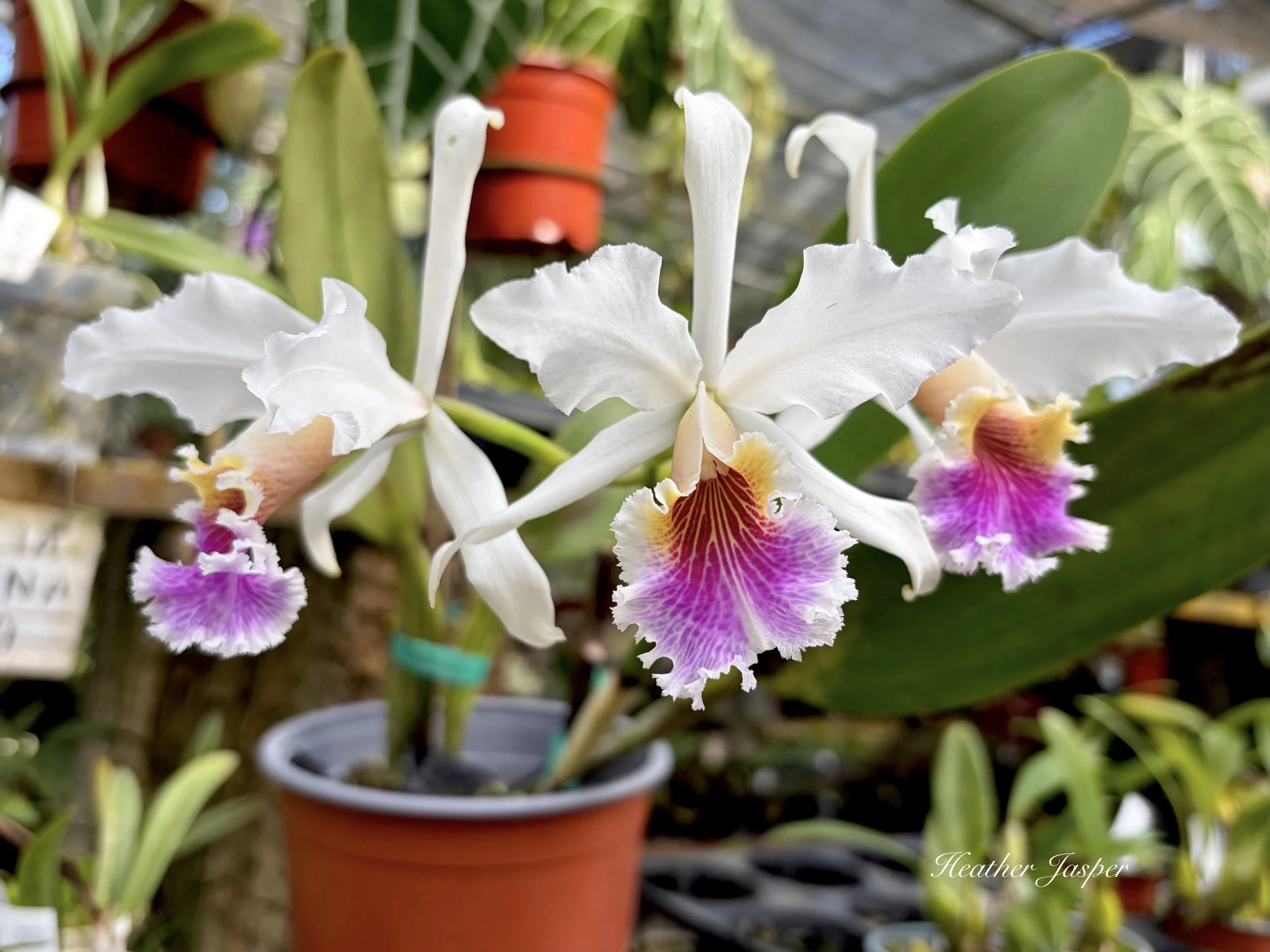
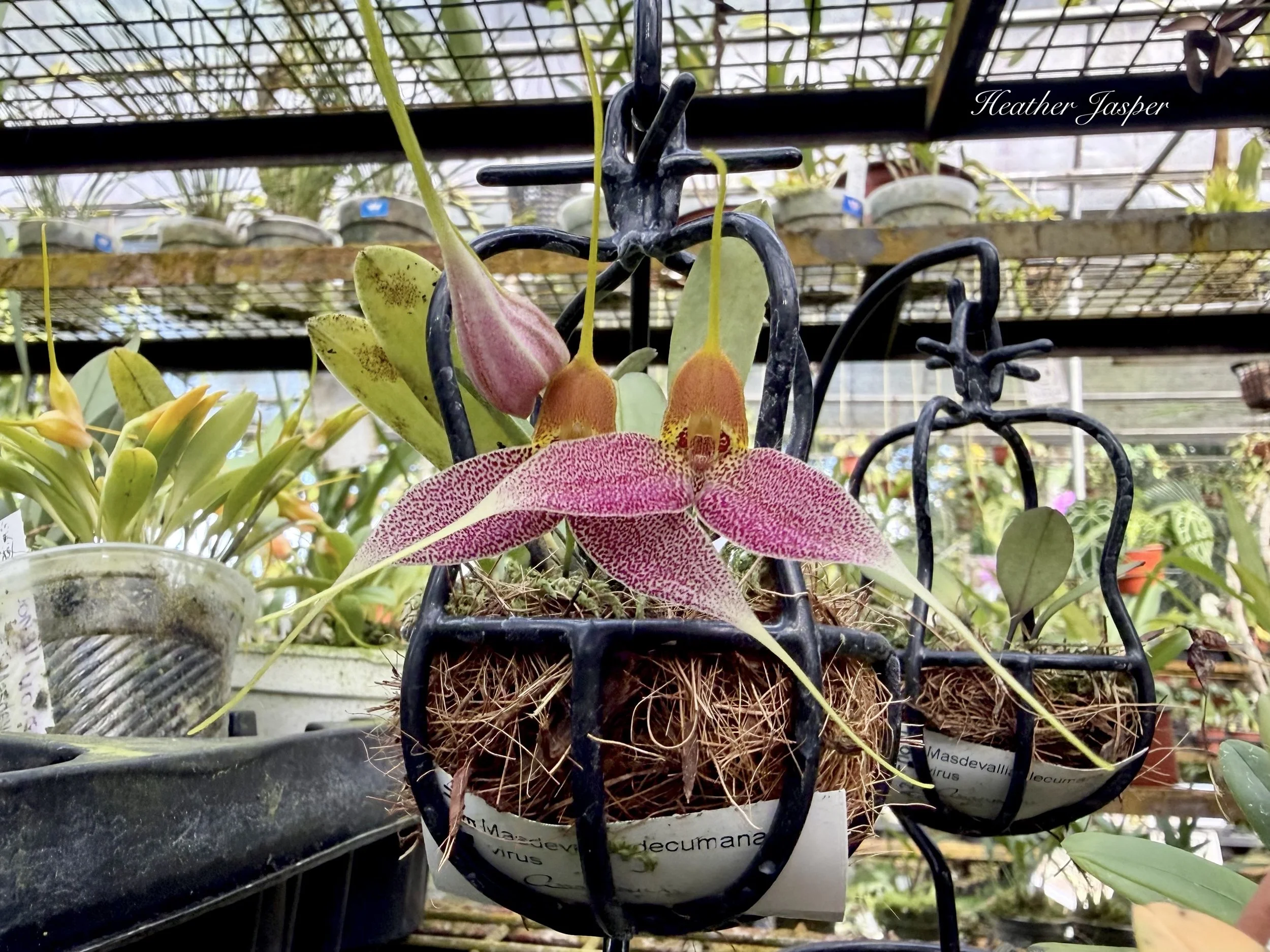
Orquideas Amazonicas Garden
The Orquideas Amazonicas garden is on the edge of town and has hundreds of orchid species that you can walk among. Employees give tours, explaining which species are the most emblematic of the region, like the Cattleaya Rex, the symbol of Moyobamba, above left.
Behind the garden, the bluff drops off into forest, which has great birdwatching. This year I saw a Squirrel Cuckoo and Green Jays. Last year I saw Paradise and Silver-beaked Tanagers.
Where to eat in Moyobamba
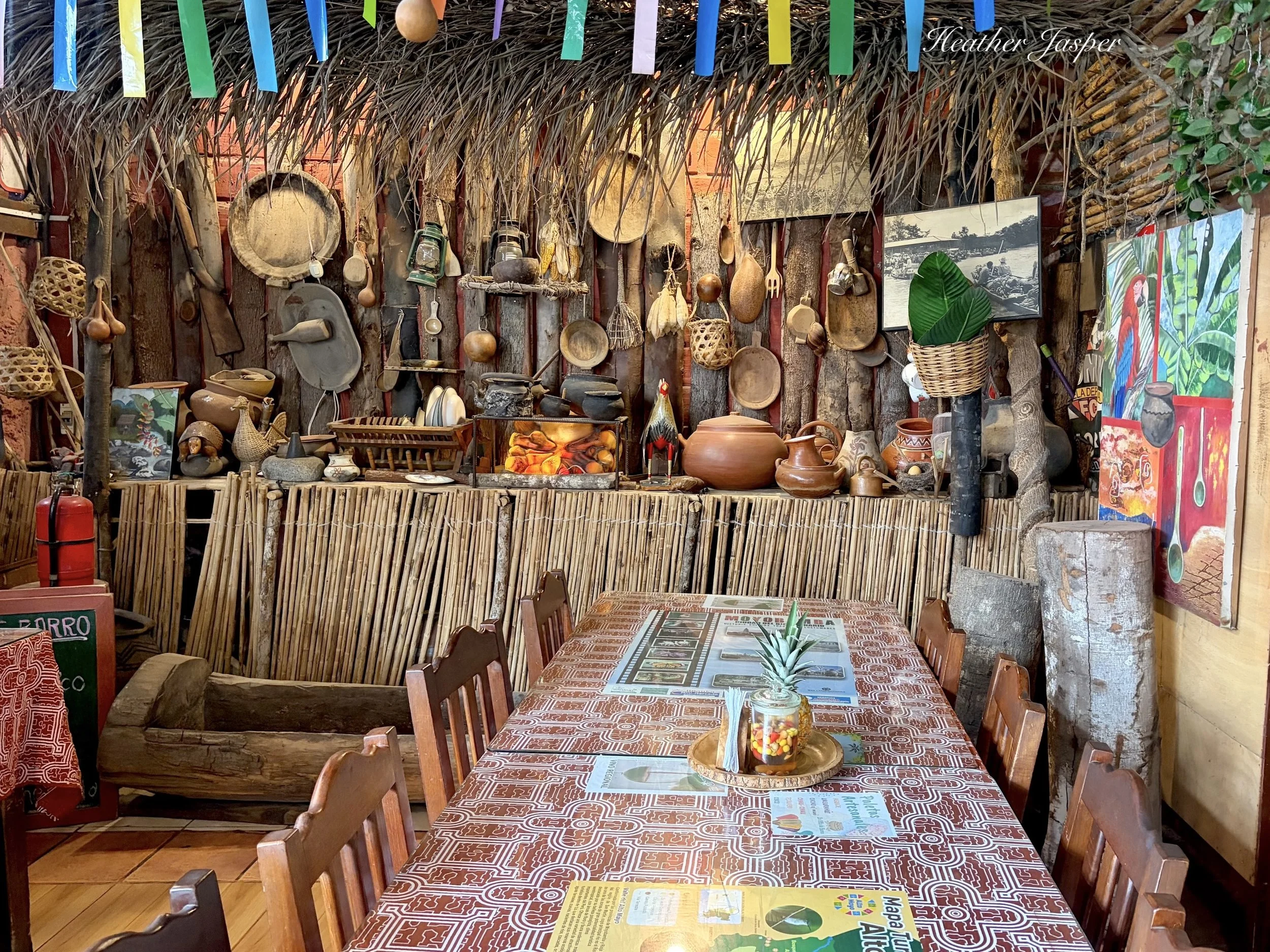
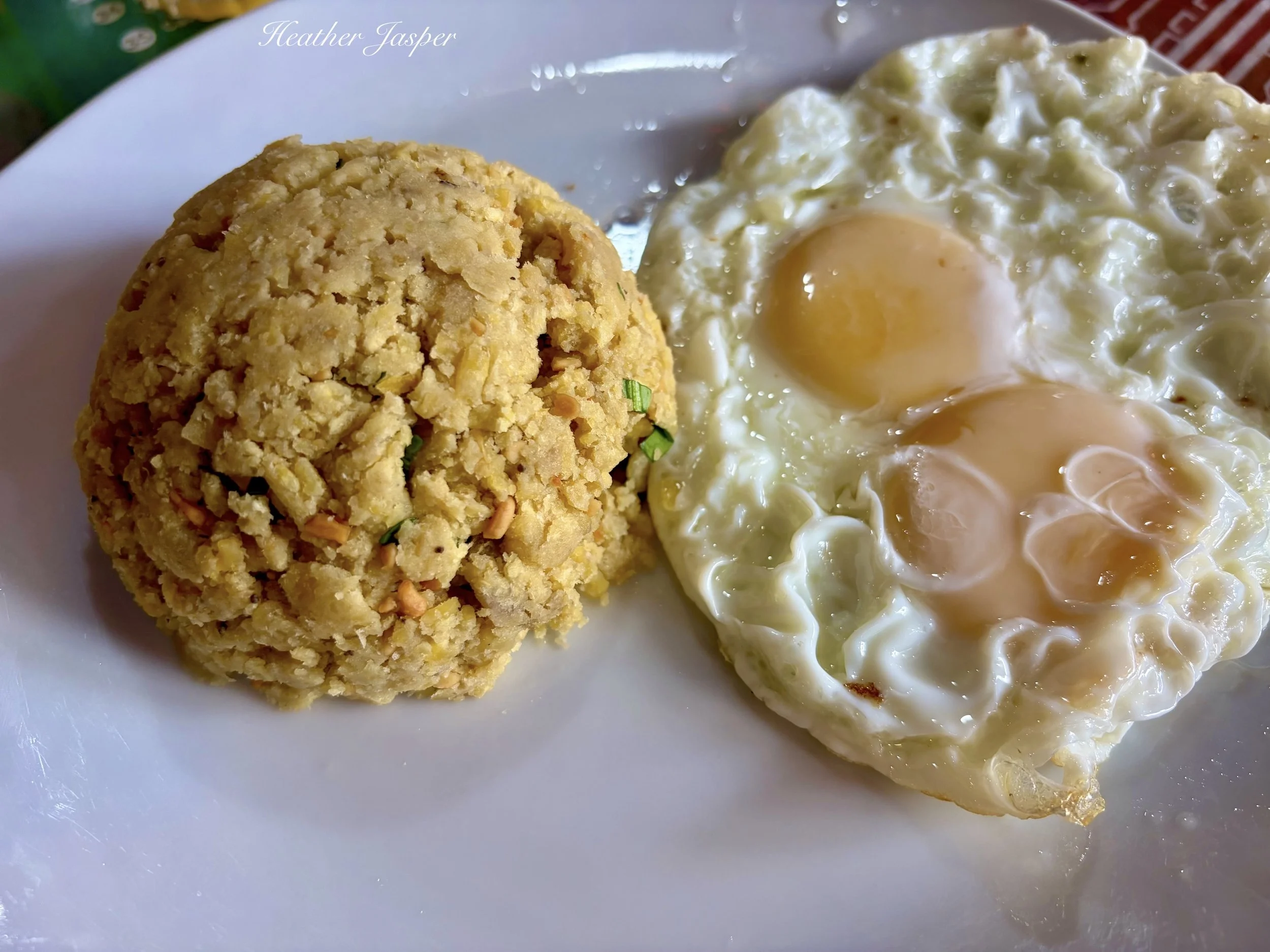
Olla de Barro
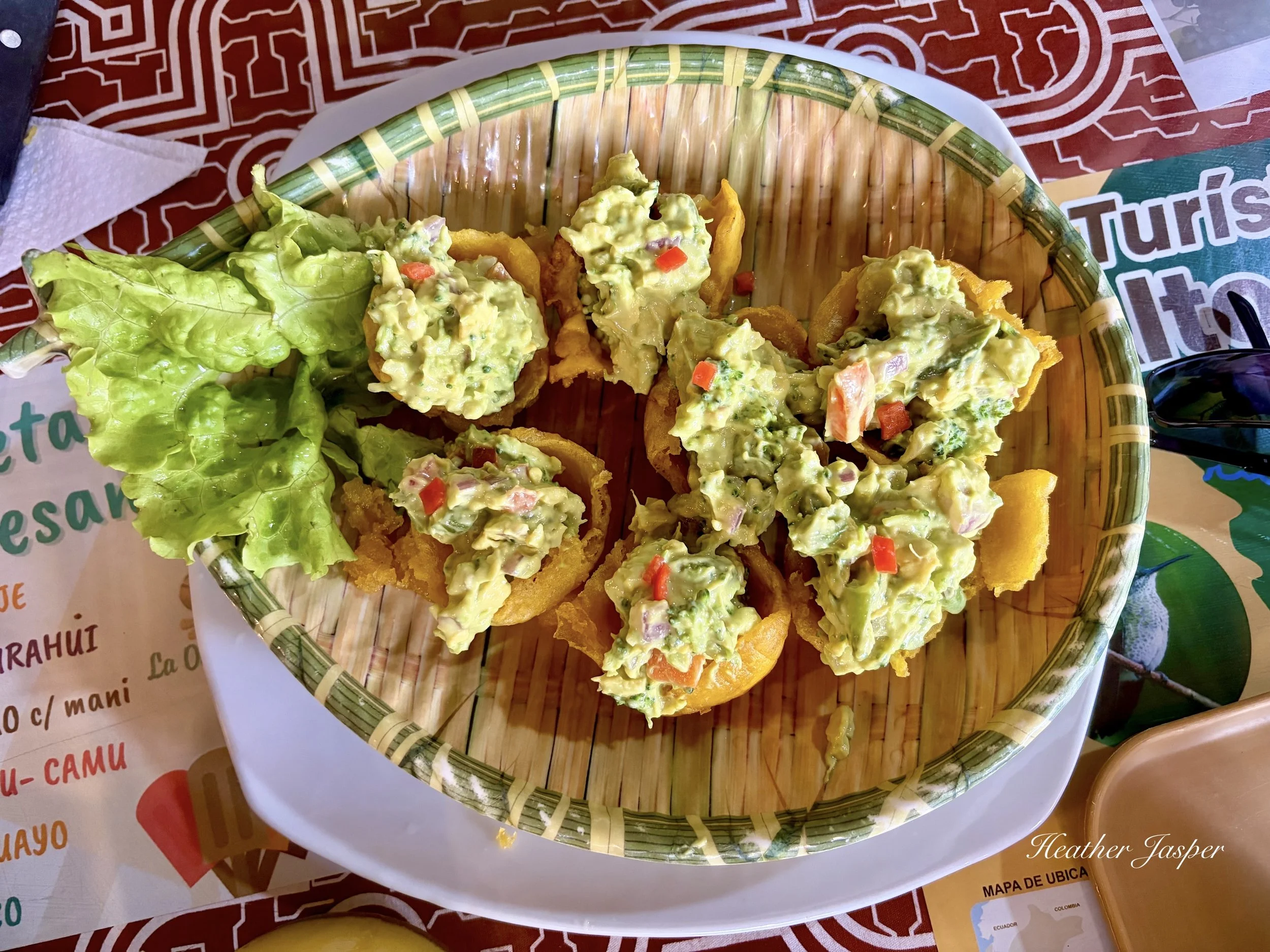
This is by far the best restaurant in Moyobamba and also my favorite place in 2025. The menu is mostly regional dishes with an impressive eleven dishes on their list of vegetarian options. The regional dishes I highly recommend, either traditional or vegetarian, are patacones, tacachito, cutacho, juane and chonta. If you eat fish, go for the paiche, a giant Amazonian fish. If you like pork, try the cecina, a dried and smoked local ham. If you’re feeling adventurous try their dishes with ants and wasps, in season.
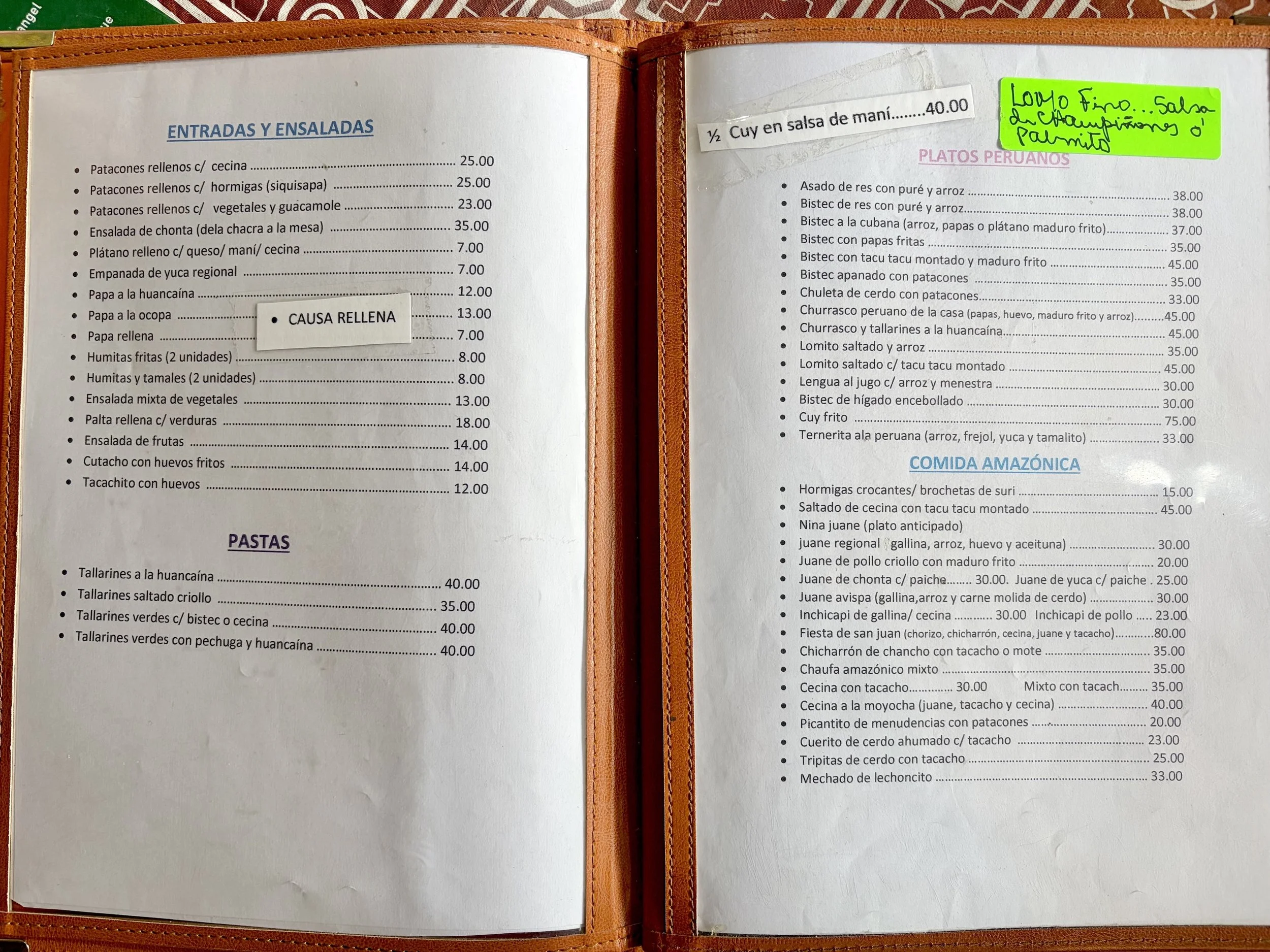
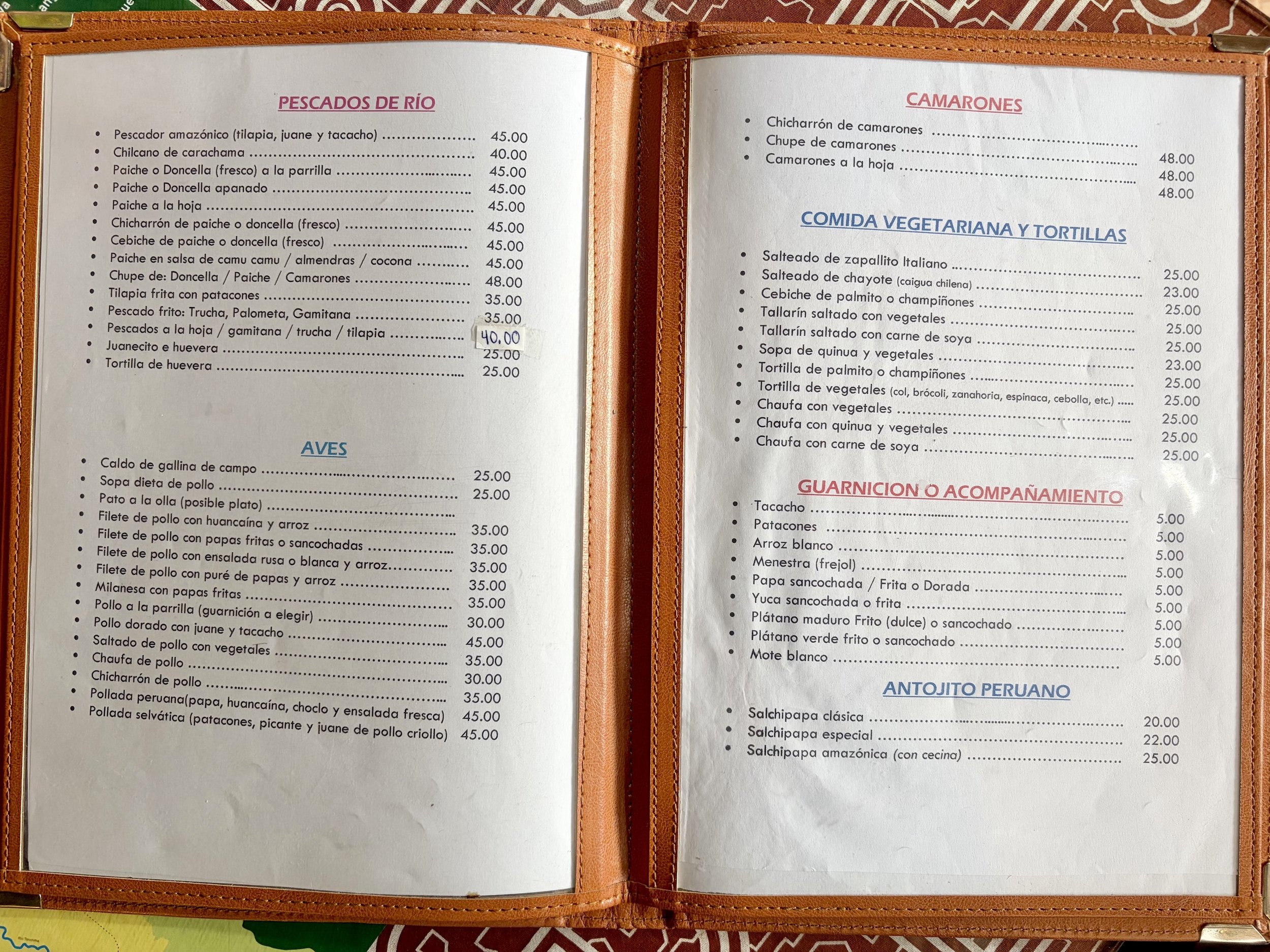
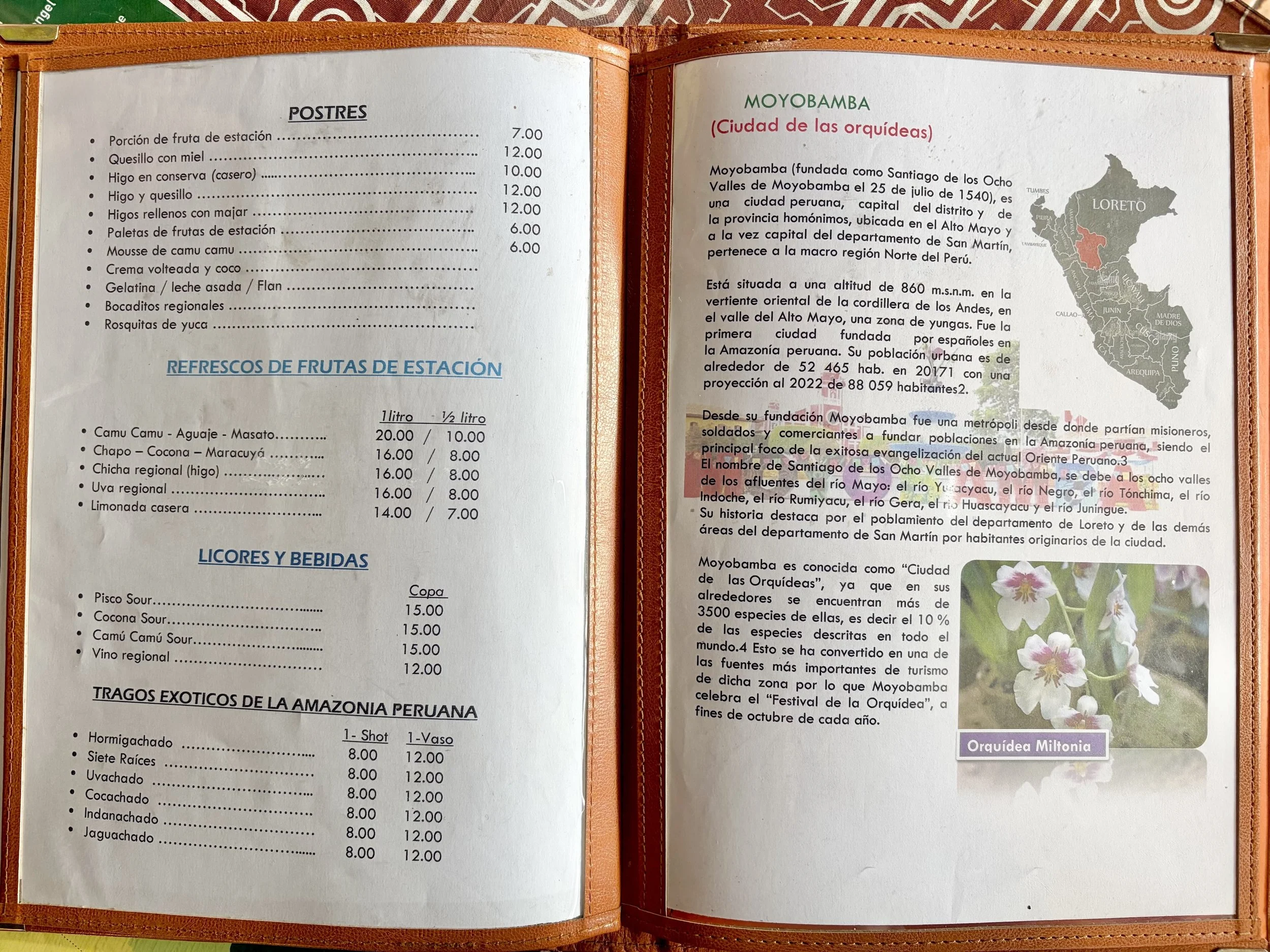
There are also several regional drinks that I recommend, including the fruit juices camu camu, cocona and aguaje. The local fig chicha is also delicious and lightly fermented so it has a bit of a bite and isn’t too sweet.
Where to stay in Moyobamba
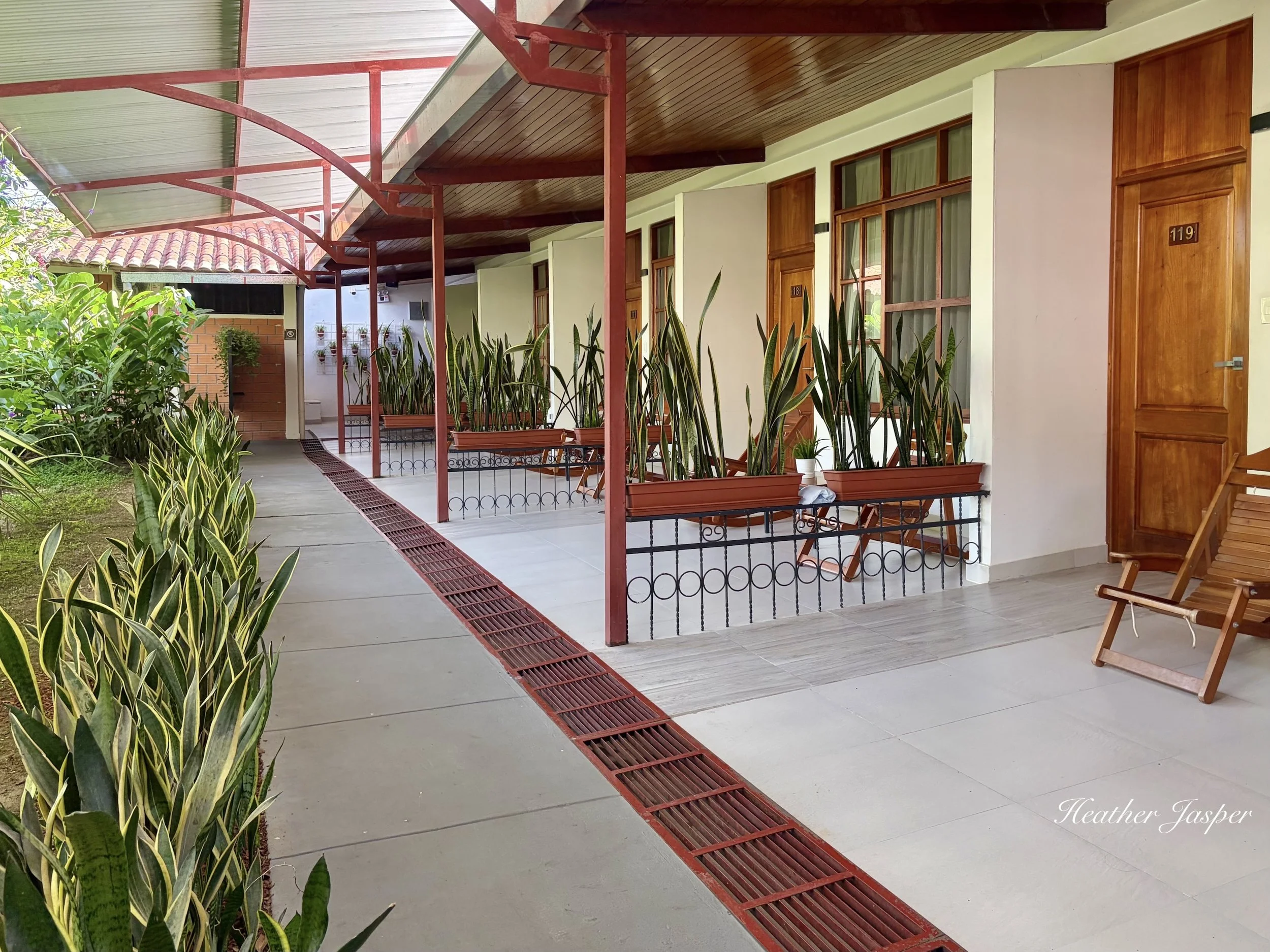
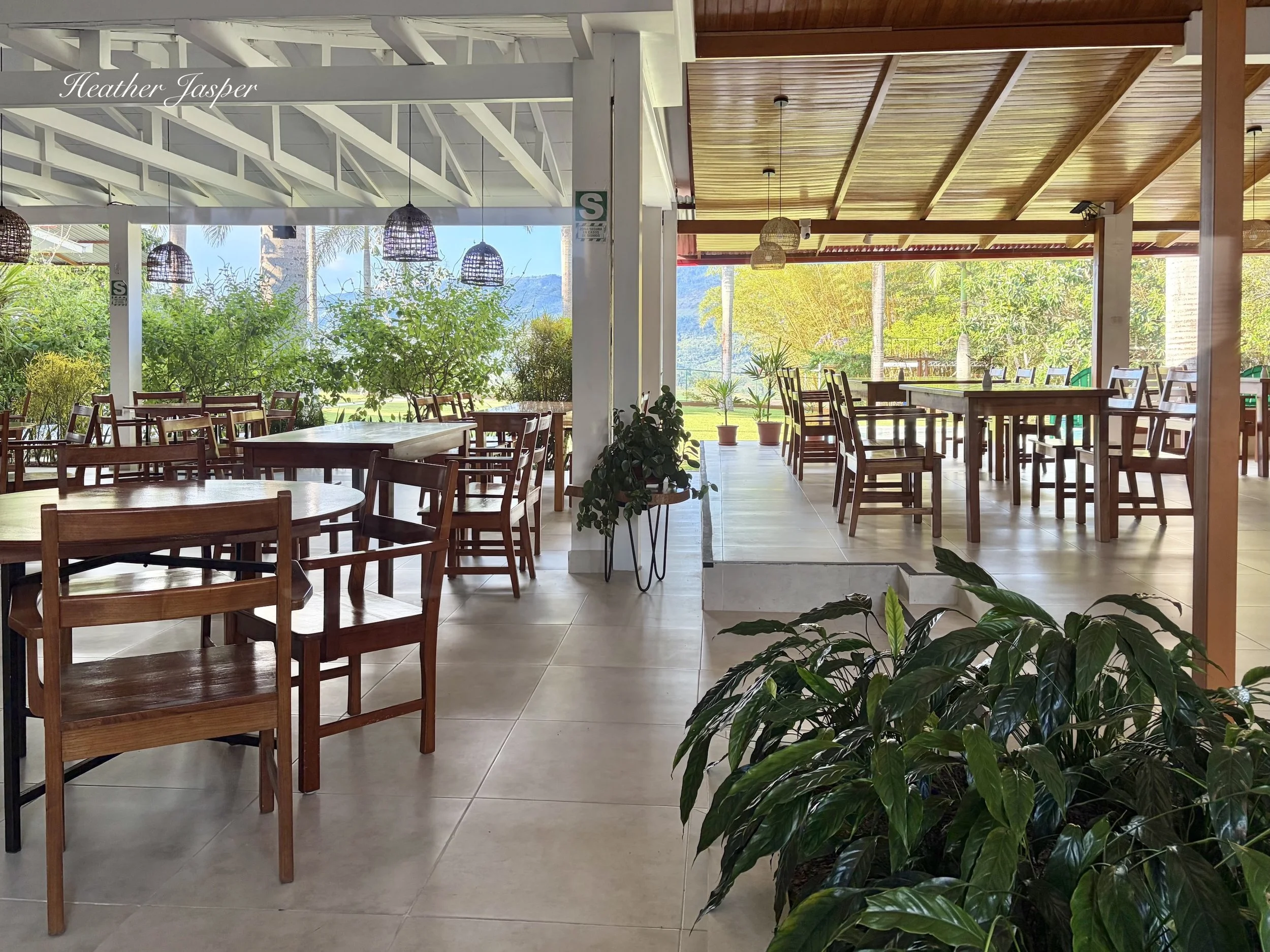
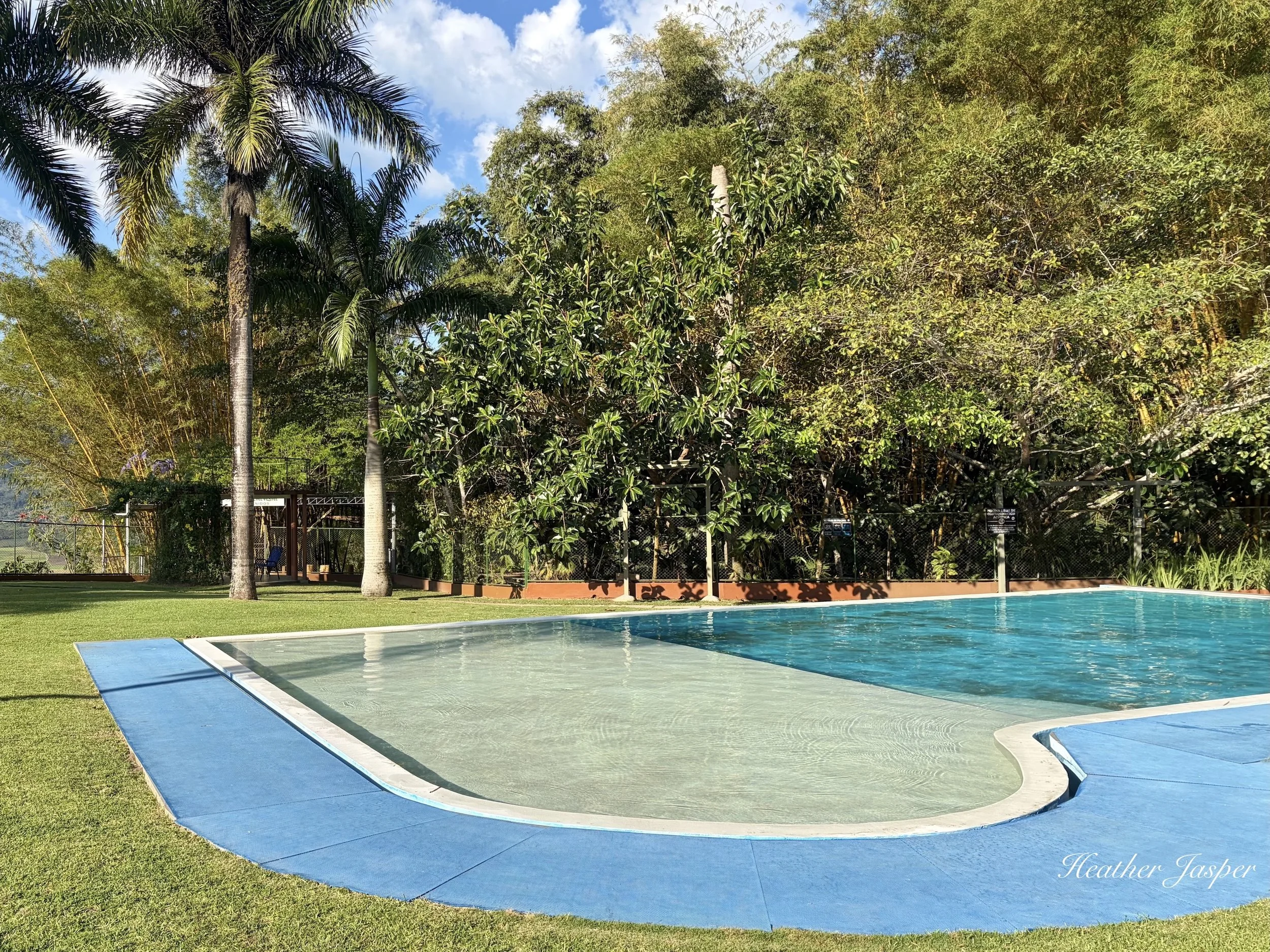
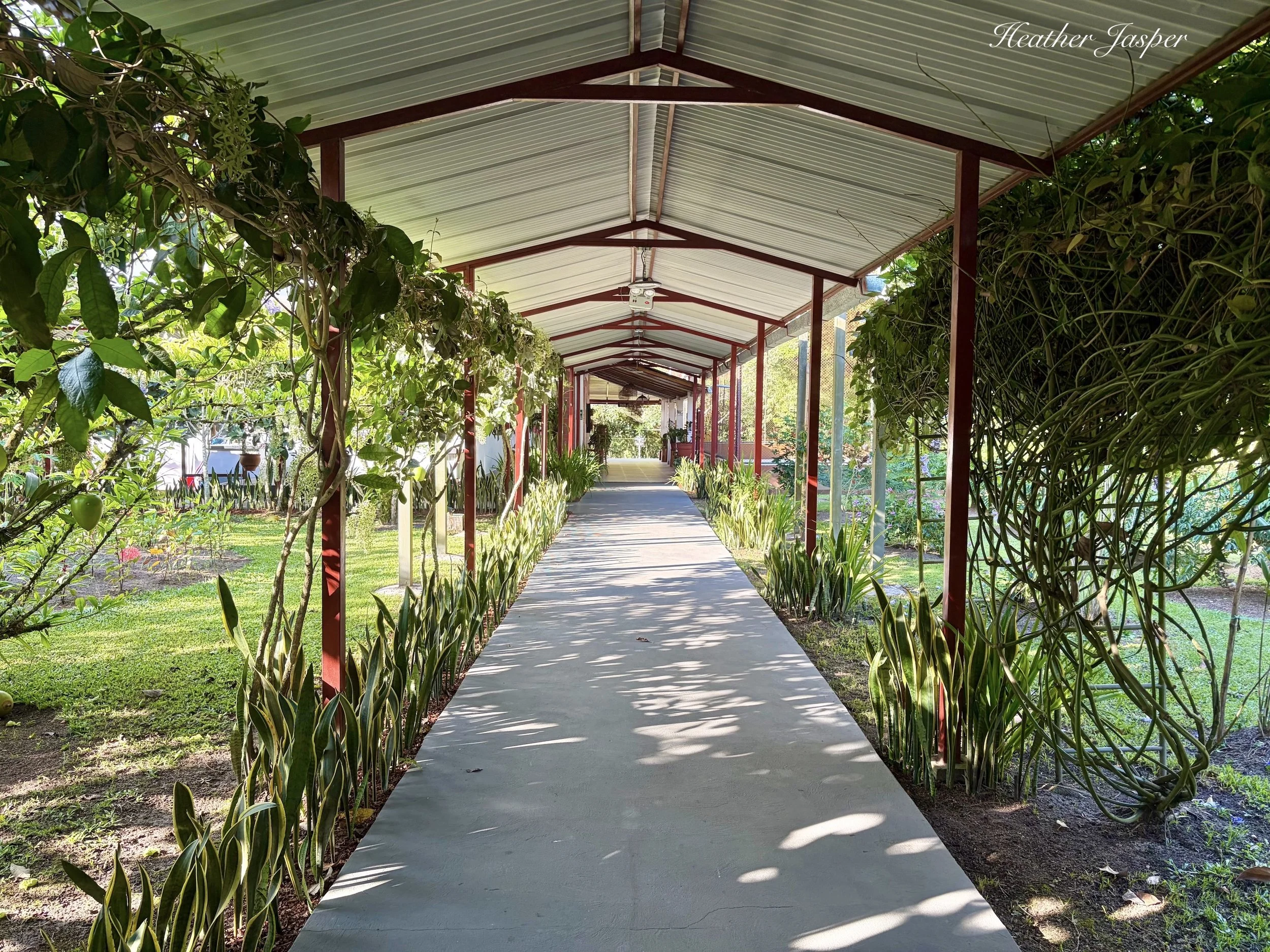
Alta Vista Casa Hotel
I loved this hotel for the flower-covered walkways, spacious rooms, lovely swimming pool, extensive breakfast with excellent coffee and the friendly and helpful staff. Behind the swimming pool is a small forest where we saw the endangered and endemic San Martín Titi monkey and a family of Saddleback tamarins. There’s also a nice path through that forest and down to the river.
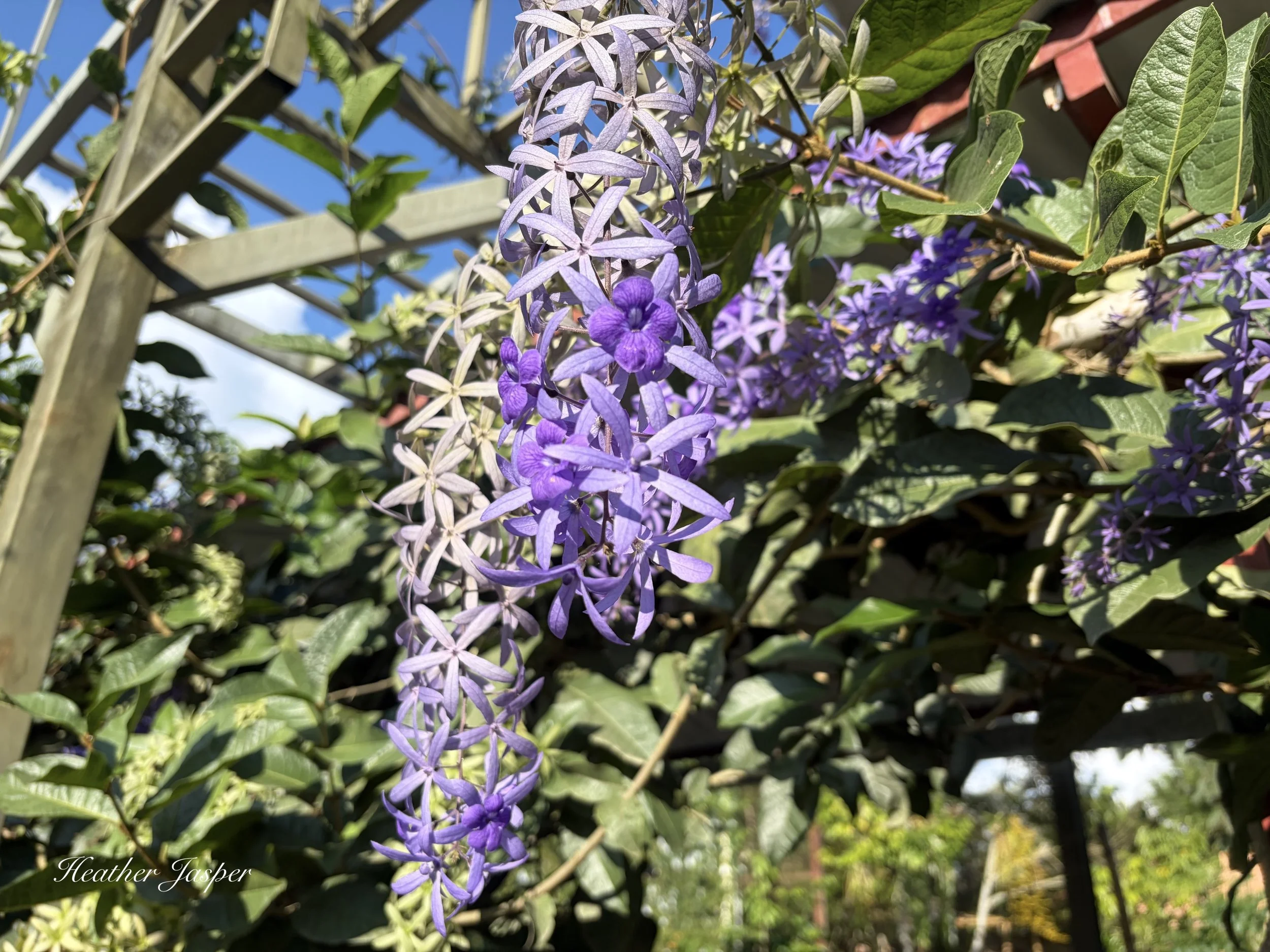
Overflowing Gardens
I loved the gardens at Alta Vista and these giant purple flowers that spilled over the walkways and rooflines.
The restaurant is great and because our days were so long, and we were so exhausted in the evenings, we got to have dinner at the hotel both nights. Their pumpkin soup was the best I’ve had in Peru and comforting after a long day.
Last year I stayed at the Country Club, which is nice, but I liked Alta Vista a lot more.